 Ομοιοπαθητική Βιβλιοθήκη
Apis Mellifica
Apis · Hering - Οδηγώντα Συμπτώματα της Materia Medica μας · Constantine Hering · 154,910 χαρακτήρες
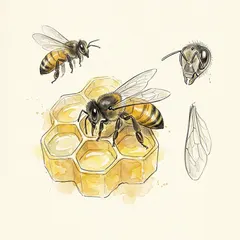 Όλα τα βιβλία για Apis Mellifica →
Αντιδοτείται απόAmmoniacum GummiAnthracinumCantharis VesicatoriaCinchona OfficinalisDigitalis PurpureaIodiumIpecacuanhaLachesisLachesis MutusLactuca Virosa
Όλα τα βιβλία για Apis Mellifica →
Αντιδοτείται απόAmmoniacum GummiAnthracinumCantharis VesicatoriaCinchona OfficinalisDigitalis PurpureaIodiumIpecacuanhaLachesisLachesis MutusLactuca VirosaGeneral EN
Poison of the Honey Bee. Apium villus.
Among all our di'ugs this is the one of which we have the most different preparations. There is but one right kind. It is the pure poison, which is obtained by grasping the bee with a small forceps, and catching the mi- nute drop of virus suspended from the point of the sting, in a vial or watch crystal. After collecting a sufficient quantity it may be potentized in alco- hol, distilled water, or prepared in oil or pure glycerine, for external use
It is absurd to dispute the solubility of the poison in alcohol, and foolish to take the whole bee with all the foreign matter and impurities, which color the tincture.
In 1835 a clergyman in Thuringia, the Rev. Brauns, the publisher of the first popular homoeopathic paper, mentioned cures he had made with the pure poison of the honey bee, which he called Apisin. The same year he commenced a work, an attempt at treating homoeopathically domestic animals: Part I, horses, 1835; Part II, cattle, 1836; and Part III, sheep, 1843. A second edition of Part I was printed in 1837. He reported numerous cures with Apis, particularly of most obstinate diseases of horses.
The great problem to be solved with regard to the snake poison (and of course also the nosodes), was: can we use the symptoms from inoculation, as well as the symptoms obtained by proving the alcoholic tinctures. It was thought that the proving of the bee-poison would solve the problem.
In 1850 dried and powdered bees were introduced by E. E. Marcy, in his Theory and Practice. In January, 1852, we received a pamphlet containing real provings, by the New York Central Hom. Society, reprinted in the N. A. Quarterly, same year, p. 184 — 203, and Aug. 10, 1852.
Tliis was translated into German, and numerous provings with the pure poison added ; also all notices of effects of the sting, that could be found, these being considered most important. The whole was printed in the form of a monography, in the Arnerikanische Arzneiprilfungen (American Provings), Vol. I, p. 171 — 422, and forms the most complete collection of the effects of any animal poison in medical literature.
In 1858, Dr. C. W. Wolf published a book on bee-poison, declaring it a polychrest, but he also used the tincture from the whole bee. It happened, at the time to correspond to the genius epidemicus in Berlin, but Wolf recommended it in all intermittent fevers. His little book was translated in the same year and printed in New York; the author, however, was not allowed to add his notes, or he would have given the first provers in this country credit for what they had done.
The greater number of confirmed symptoms were observed from the pure virus.
^ Mind. Loss of consciousness.
Lost all consciousness of things around him, and sank into a state of insensibility.
APIS. 378
Loss of consciousness in eruptive disease.
iLoss of consciousness and delirium. ^Meningitis infantum. d Scarlatina.
I Unconsciousness, stupor, with muttering delirium, d Typhus.
1 Sopor. ^Scarlatina.
I i Sopor, interrupted by piercing shrieks. ^ Tubercular men- ingitis.
I Child lies in torpor.
■ Impaired memory. ^Prosopalgia. B I Absent-mindedness.
I Lets everything fall out of her hand, or breaks things and laughs over it. 6 Amenorrhoea.
■ Very busy; restless, changing kind of work, with awkward-
ness, breaking things ; lets everything fall out of his hands. Dullness of mind. Difficulty of thinking.
■ Could not bring his thoughts to bear upon anything definite.
d Diarrhoea.
I I Cannot bring his thoughts to bear on any subject continu- ously.
Imbecility, more frequent than insanity.
■ Thinks he will die. ^Organic disease of heart.
A strange boy lying in bed with him prevents sleep. 6 Typhus. I I Anticipation of death.
■ After midnight, slightly delirious. ^Typhus.
I I Delirium : with congestion ; eruptions ; heat ; during sleep.
■ Slightly delirious. ^Diphtheria.
■ Muttering delirium. ^Measles.
■ Delirium. ^ After suppressed scarlet eruption. ^Amenor-
rhoea.
■ Muttering delirium alternating with stupor, d Cancer of
mamma.
■ Violent delirium, amounting to phrenzy. d Paralysis. Mania. ■Nymphomania.
■ ■Manias, especially proceeding from a sexual cause in women. Insanity, particularly nymphomania and apathy depending on
or alternating with sore throat, indigestion or bladder affections. Loquacity. Happy expression. " ■Acts foolishly or with a good deal of frivolous levity.
6 Hysteria. I I Busy, frivolous, disposed to laugh, excessively cheerful.
■ Muttering. ^Gastroenteritis.
■ Continual moaning and screaming. ^Diarrhoea.
■ Sudden thrilling cries. ^Hydrocephalus.
■ Shrill screaming " oh my baby." d Pneumonia.
■ Crying out and screaming loudly as from stabbing pain.
d Cerebro-spinal meningitis.
3T9 , APIS.
I Screaming spells. 6 Dysentery of infants.
I Sudden sharp outcry during sleep. ^Scarlatina.
■ Children scream out suddenly and sharply during sleep, most
at night; if asked what hurt them, they reply "nothing." 6 Dentition.
I Single sharp shrill screams while sleeping or waking. 6 In- cipient meningitis.
I B Shrill, sudden piercing screams. 6 Hydrocephalus, pneumo- nia, and many other complaints.
i Scream out very sharply and shrilly during sleep or when awake, "crie cerebrale." ^Encephalitis.
■ Shrieking. 6* Eclampsia.
■ Violent shrieking and screaming spells at longer or shorter in-
tervals, d Infantile marasmus.
■ ■Great tearfulness, cannot help crying.
■ Constantly busily engaged doing this or that, but do nothing
right ; young girls, d Amenorrhoea.
■ Cannot bear to be left alone. 6 Organic disease of heart.
■ Dreamy and indolent. ^ Acute Bright's disease.
■ Feels too lazy to get the water, but thirsty. ^Catarrh of
Θώρακας
Υπερβολική ευθυμία· σπανιότερα απογοήτευση· Εκκεντρτική ευθυμία, απογοήτευση ή απελπισία. I I Ψυχική καταθλίπωση.
■ Δακρύρροη διάθεση, αποθαρρυμένη, απογοητευτική διάθεση.
d Αμυγδαλίτιδα, d Στηθάγχη.
Ευαισθησία διάθεσης.
Αίσθημα άγχους στο κεφάλι.
Προαίσθηση θανάτου εμφανίστηκε μετά από λίγα λεπτά· «πιστεύει
ότι φεύγει»,
■ Δέος θανάτου ή αίσθημα σαν να μην θα μπορούσε να αναπνεύσει ξανά. Δέος αποπληξίας.
■ Δεν δέχεται να πάρει καμφορά, φοβάται ότι θα δηλητηριαστεί.
6 Νυμφομανία. I I Άγχος.
■ ■Αδιαφορία.
Απάθεια, απώλεια συνείδησης, ξαπλωμένος στο κρεβάτι σε ληθαργική κατάσταση με παραλήρημα και μουρμουρητό, βαρήκοια, αδυναμία να προβάλει τη γλώσσα, d Τυφοειδής πυρετός.
■ Νωθρός και απρόθυμος, d Διάρροια.
■ Όταν ρωτηθεί αν είναι άρρωστος, λέει: «Τίποτα δεν συμβαίνει.»
d Τυφοειδής πυρετός. Ασταθής και αντιφατική συμπεριφορά.
■ Αποθαρρυμένος, απογοητευτική διάθεση. ^Στηθάγχη.
I I Ευερέθιστη, αντιφατική διάθεση, τίποτα δεν τον ευχαριστεί.
■ I Ευερέθιστη.
Ευερέθιστη και οργίλη διάθεση· σπανιότερα μελαγχολία.
APIS. 380
llΕυερέθιστη διάθεση. 6 Εγκεφαλονωτιακή μηνιγγίτιδα.
Είναι ευερέθικτος· δύσκολο να ευχαριστηθεί· νευρικός· ανήσυχος.
I Πολύ ευερέθικτος και ανήσυχος εξαιτίας των κιρσών στον πρωκτό, d Αιμορροΐδες.
Βία, φτάνοντας σε μανία.
I Ζήλεια (σε γυναίκες).
I Όλες οι ιδέες της περιστρέφονται γύρω από τη ζήλεια, πολύ ομιλητική, καμιά φορά αηδιαστικές salajeitas. 6 Μανία.
I I Ανησυχία· σωματική και ψυχική.
■ Ταραγμένος, ανυπόμονος, με προαισθήματα. 6 Οργανική νόσος του
Heart EN
I I Mental excitement.
■ Ailments from fright, rage, vexation, jealousy, or hearing bad
news.
■ After a severe mental shock, paralyzed on the whole r. side,
with a swelling of the r. half of body, closing up the r. eye. ^ Sensorium.
Vertigo on closing the eyes, disappearing on open- ing them.
I I Vertigo when standing, sitting, lying down, shutting the eves, with obscuration of vision, nausea, headache and sneezing.
Spells of vertigo in the Spring, after least effort.
■ Confused vertigo, worse when sitting than when walking, ex-
treme when lying and on closing the eyes ; nausea and head- ache.
■ Frequently vertigo, as if she would fall, with obscuration of
sight, nausea and disgust for food. 6 Erysipelas.
■ Head confused and dizzy, with constant pressive pain above
and around the eyes; somewhat > by pressure of the hands.
I I Dull confusion of head, especially over the eyes.
Dullness of head ; dull, stupid state during the day. 6 Tuber- cular meningitis, d Incipient hydrocephalus, d Paunus.
■ Loss of consciousness.
^ Inner Head.
Heat in head.
Anxious feeling in head.
Threatened effusion in cerebral diseases.
■ ■Congestion to head and face; fullness in head, pressure.
d Suppressed menses, d Albuminuria during pregnancy. I I Head as if too full, it seems too large.
■ Head dull and so heavy that she could not move it on the pil-
low, d Typhus.
■ ■General aching through the head. ^Ascites.
■ Sudden stabbing pain in the head. ^ Dysmenorrhoea. Jerking headache, d Catarrh of chest.
■ Periodical headaches.
I I Brain feels tired ; as if " gone to sleep," tingling.
Pain from gums into head.
Pain in the head and eyeballs.
^^^ ' APIS.
BDull, heavy, tensive headache over the eyes, with pain through the orbits. °
I I Pains in head, through the eyes, above and around the eyes.
I Dull heavy headache, slight erysipelatous inflammation about left orbit and down left side of nose.
I Frontal headache. ^Tonsillitis.
■ Pressing, sometimes stinging pain in forehead, d Typhus. Sense of weight and fullness in forepart of head.
Dull aching in forehead.
Violent pressive pain in forehead and temples.
■ Violent headache, stitching in temples, throbbing in forehead.
u iyphus. I I Sharp shooting pain in temples.
■ Violent pain in temples.
(?
Tonsillitis.
■ Severe attack of neuralgia in and about the 1. temple, with pain
as if a bee had stung her, with frequent vomiting, d During pregnancy. Violent drawing from the back of neck, extending behind the left ear, spreading over left half of head.
■ Headache mostly on the right side. 6 Ovarian tumor. Heaviness and fullness in vertex.
Pressure, fullness and heaviness in occiput.
■ Great pain in occiput, d Cerebro-spinal meningitis.
■ Burning and throbbing in the head, < by motion and stoop-
ing, temporarily > by pressing the head firmly with the
hands ; occasional sweat. I I Heaviness, aching and pressure in the head, especially on
rising from the sitting or lying posture, increased in the warm
room, relieved by compression with the hands. Headaches are better by exercise out-of-doors ; by looking up
and bending the head backwards ; pressing head between the
hands; < when reading, in a warm room, from motion,
stooping.
■ Dull pain over the whole head is relieved by pressure.
■ Forehead aches from the exertion of coughing foin
^Catarrh. & *= v y
Dull pain in occiput < from shaking the head.
■ ■Child lies in torpor ; delirium, sudden shrilling cries, squint-
ing, grinding teeth, boring head in pillow ; one side twitch- ing, the other paralyzed; head wet from sweating; urine scanty, milky; big toe turns up; nausea while lying; breath offensive; tongue sore. ^ Acute hydrocephalus. 0 After erysipelatous eruptions.
■ ■Pain in occiput with occasional sharp shrieks. ^Hydroce-
phalus. "^
■ Violent headache and rush of blood to head with delirium.
y Amenorrhoea.
■ ■Headache with vertigo.
APIS. 382
Particularly disagreeable pain in the forehead with dullness and confusion.
I Chronic headache, violent pain in forehead and temples, at times involving the eyes, attended by vertigo, nausea and vomiting, must hold the head and eyes down.
I Nervous headaches with indigestion. Chronic sick headache.
■ Severe attacks of neuralgia in and about the left temple, with
pains as if a bee had stung her ; with frequent vomiting.
6 During pregnancy. Pain over left eye, over whole left side of head, with nausea and
vomiting, d Hemicrania. Her whole brain feels as if tired, gone to sleep, and crawling ;
she feels it at the same time in both arms, especially the left,
and from the left knee down to the foot.
■ Threatening cerebral symptoms after scarlatina; if it was
fairly out and recedes, d Arachnitis, d Meningitis. iCerebro-spinal meningitis in the earlier stages.
■ Meningitis; after fully developed effusion.
I I Chronic meningitis with considerable cephalic disturbance and symptoms indicating threatening if not actual effusion of serum into the cavity of the arachnoid.
lApoplexia sanguinea and serosa.
I Apoplexy in old persons.
Hydrocephalus ; the child screams out very sharply in its sleep. Hydrocephaloid symptoms, d Scarlatina.
I I Hydrocephalus of children ; meningitis infantum.
■ Hydrocephalus occurring suddenly after erysipelatous erup-
tions; prostration; unconscious; one side lame or jerking;
big toe turning up ; squinting ; nausea while lying ; breath
offensive; tongue sore. 1 1 Hydrocephalus acutus ; before the stage of exudation. Hydrocephalic condition following summer complaint of
children. 1 1 Hydrocephaloid; stupor; eyes red, head hot, shrill shrieks;
tongue dry, skin dry, hands cold and blue ; urine suppressed ;
abdomen tender; diarrhoea mucous, offensive, involuntary,
containing flakes of pus. See 20.
■ Inflammation of brain ; they run the head furiously against the
wall (horses).
I Horses kick, and show inclination to run off.
* Outer Head. Hydrocephalic enlargement of head.
Large head and large prominent eyes, d Incipient hydroce- phalus. iFontanelles re-open at from 6 to 10 months, with great rest- lessness and putting hand to head.
I I Bores head into pillow. ^Incipient hydrocephalus. 6 Eclampsia, d Meningitis infantum.
383 APIS.
Bending back and rolling of the head. 6 Hydrocephalus.
Ilnability to hold the head erect. ^Meningitis infantum.
I Scalp very sensitive. ^Erysipelas traumatica.
I I Drawing and tension in scalp.
I I Acute burning shooting in scalp.
1 Burning in back of head and neck, once or twice a week with
nausea. I Head and whole surface of body hot and dry. d Typhus.
■ Copious sweat of the head, of musk-like odor. ^Hydroce-
phalus. I I Itching prickling in scalp.
■ Itching on scalp (oil), d Catarrh.
I Whitish violently itching swelling on the head, sometimes on
the neck, d Paralysis.
Sensation as if head were too large.
I B Head feels swollen ; integuments feel swollen and stiif. llPufBness of scalp, forehead, and around the eyes.
I Innumerable spots on his head. ^Paralysis.
■ Erysipelas of the scalp spreading to the face; sphacelous
spots. See 8.
■ Erysipelas in head followed by staphyloma.
I I Hair falls out ;
Ibald places.
Hair had to be cut short as the pediculi increased too much
(oil), d Spinal disease. ^ Sight and Eyes. I Photophobia, d Ophthalmia, d Keratitis,
6 Ophthalmia arthritica. d Catarrh of chest.
Sensitiveness to light, with headache and redness of eyes.
I I Light gives pain during headache.
■ Shunning light, constant winking. 6 Ophthalmia.
■ Keeps his eyes closed, light intolerable, d Ophthalmia. Severe pain in eyeballs, increased by exposure to light.
■ Would see better at night than in daytime (oil). ^Pannus. Objects appear too large.
■ Diplopia. ^ After meningitis. I I Whirling before the eyes.
I I Indistinct vision, d Ophthalmia.
■ Vision very indistinct, as if a skin was drawn over the eye. Obscuration of sight. 6 Cerebro-spinal meningitis.
■ She could only observe the light coming in at the window
when she turned herself towards it. 6 Ophthalmia. Did not see finger thrust towards eye. d Hydrocephalus.
■ Whitish grey mist before the eyes, d Staphyloma.
■ Blindness from obscuration of cornea. Cataract.
■ Eyes much inflamed ; after maltreatment stone blind.
■ Dilated pupils, d Meningitis infantum.
■ Pupil in 1. eye somewhat drawn towards the outer side.
APIS. 384
I Pupil not discoverable through the opaque cornea. ^Oph- thalmia.
I Pupil cannot be distinctly seen, but appears to be drawn lat- erally into an oblong shape.
Weakness of eyes, with dread of straining the sight.
Weakness of sight, with feeling of fullness in eyes.
I Eyes weak, not inclined to exert them ; they tire easily ; sen- sitive to light.
Eyes painful, feel sore or irritated when using them.
B After reading for an hour or two by lamplight, eyes became irritated with a pricking feeling ; they filled with water ; conjunctival vessels slightly injected, and sight correspond- ingly indistinct.
Worse when looking fixedly at any object.
BlAsthenopic troubles, especially afTections from using eyes at night, causing redness of the eyes, with lachrymation and stinging pains.
Worse when looking at something white.
I I Heaviness of eyes, fullness and pressure.
Feeling of heaviness in eyelids and eyes.
Aching, sore pressing, tensive, shooting, boring, stinging, burning pains in and around eyes and in forehead.
I In eyes from time to time, stitches and pressing (oil). 6 Pannus.
Aching pressure in left eyeball, mostly in the lower part, for several hours ; repeated twice. <^
Eyes feel as if they had sand in them.
I Pain in eyeballs and across the forehead ; worse right side. d Diarrhoea.
Acute pain in eyeballs.
Rheumatic affections of eye.
■ Violent stitches in eye and around it; worse at night. d Arthritic ophthalmia.
Dreadful darting pain through the eyes, d Ophthalmia.
I Severe darting, lancinating pains in eyes.
I I Burning, stinging, shooting pains. ^Keratitis.
I I Violent shooting pains through the eyeball ; tearing, shooting.
B Violent shooting over the right eye, extending down to the eyeball.
B Piercing in the eyes ; was obliged to remove the spectacles while reading and writing (near-sighted woman).
B Burning and stinging in eyes. 6 Blepharitis.
B Smarting and burning sensation in eyeballs and lids, d Oph- thalmia.
Pains throbbing and burning.
Smarting and sensation of burning in the eye."^, with bright redness of the conjunctiva; very sensitive to light.
Pains aggravated by moving the eyes.
^85 APIS.
1 1 Squinting of one or both eyes, d Hydrocephalus, d Men- ingitis infantum, d Scarlatina. •
■ Trembling of eyeball, worse at night. Twitching of 1. eyeball, or of both.
I I Quivering and twitching of 1. eyeball < at night.
■ Twitching and jerking of eyelids. ^ Scrofulous ophthalmia.
■ Rolling of the eyeballs. 6 Hydrocephalus.
■ Rolling of eyeballs in sleep without waking, d Hydrocephalus. Congestion of blood to eyes.
■ Conjunctiva injected. ^Ophthalmia.
■ Conjunctiva reddened, full of dark blood-vessels, which gradu-
ally lose themselves in the cornea, d Ophthalmia.
■ ■ Puffy chemosed congested condition of conjunctiva and bright
red appearance, d Keratitis.
■ Chemosis. ^ Ophthalmia scrofulosa.
■ ■Keratitis and blepharitis, with tumefaction of the lids.
■ ■Scrofulous keratitis (parenchymatous), with dim vascular
cornea, hot lachrymation, contracted pupils, etc.
■ ■Pustular keratitis, with dark red chemosed conjunctiva and
swollen lids.
■ ■Keratitis, with dreadful pains shooting through the eye,
with swollen lids and conjunctiva; with hot lachrymation gushing out on opening the eyes ; with photophobia.
■ I Cornea thick, having dark, smoky spots ; grayish, smoky,
opaque. 6 Keratitis.
■ Leukoma.
■ Each cornea full of nebulous spots, d Scrofulous ophthalmia.
■ Entire cornea scattered over with dark smoky clouds ; thick-
ened and covered with a film. 6 Ophthalmia. Smoky opacity of cornea, d Cerebro-spinal meningitis.
■ Pupil could not be seen through the smoky discolored cornea.
6 Ophthalmia.
■ Opacity of upper half of cornea ; opaque and white.
■ The disease went from left to right. 6 Ophthalmia.
■ Opacity of almost the whole cornea; only inferiorly and
towards the right about a sixth part is free.
■ Ugly looking conical tumor, occupying the place of the former
pupil, preventing the use of a glass eye.
■ Staphyloraatous projection in r. eye, with inflammation of
both eyes.
■ I Staphyloma cornese.
Cornea obscured, smoky, showing a few little ulcers here and there.
■ On edge of r. cornea, ulcer size of a lentil, with dirty fundus.
d Scrofulous ophthalmia.
■ Ulceration of the cornea, vascular, with photophobia, lachry-
mation and burning pain ; lids everted and often ulcerated on the margins.
APIS. 386
I Ulcers and maculae on cornea, d Ophthalmia.
I Cicatrices of cornea.
I Eyes brilliant. ^Thrombosis.
I Iritis.
■ Pressing pain in lower part of eyeball, d Hydrops retinse. Stinging in the ball and pain across the forehead ; aching
pressing in the lower part of left ball. Fullness inside the
ball, with flushed head and face.
Stinging, itching in left eye ; in lids and around eye.
Smarting and sensation of burning in the eyes, with bright
redness of conjunctiva ; very sensitive to light. I I Cutting, burning, with redness of eyes.
■ Congestion to eyes; blood-vessels injected. Eyes red and itching.
■ Sclerotic vessels injected; from the inner corner many vessels
and loose fibres running towards the cornea, as if a ptery- gium would be formed, d Scrofulous ophthalmia. iThe whole conjunctiva of sclerotica, as well as cornea, thick- ened, full of new blood-vessels ; cannot perceive the slightest light ; could not point where windows were ; pupils could not be detected (oil), d Pannus.
■ Sudden and violent inflammation of r. eye. d Ophthalmia.
■ Greatly inflamed eyes, d Measles.
■ Inflamed eyes, with eruptive diseases.
■ Left eye inflamed; pustule on cornea, and general diffuse
inflammation over whole eye ; lid swollen and red. Inflammation ; photophobia, but cannot bear eyes covered.
■ Often the remedy for acute catarrhal conjunctivitis, in which
there is bright redness and chemosis of the conjunctiva, with stinging pains. Inflammation of eyes, intense photophopia, increased secretions.
■ ■Ophthalmia, rheumatic, arthritic, catarrhal, strumous, erysi-
pelatous, or oedematous, no matter what part of eye may be the seat of the disease.
■ ■Inflammations, with severe shooting pains, heat of the head,
red face, cold feet, etc.
■ ■First stage of catarrhal ophthalmia, especially in scrofulous
children.
■ ■It is especially applicable to inflammations, with burning
biting pains ; inflammations following eruptive diseases.
■ Violent cases of Egyptian ophthalmia and ophthalmia neona-
torum, with great swelling of the lids and adjacent cellular tissue.
■ ■Ophthalmia; photophobia, but can bear no covering on
account of soreness.
■ Left eye swollen wholly shut, and the mouth so swollen that
he can scarcely open the lips.
■ ■Erysipelatous inflammations of the lids, with adjacent
^^'^ APIS.
smooth swelling of the face, especially with chemosed con- junctiva, etc.
I (Edema of eyeball.
I I Puffy, chemosed congested condition of conjunctiva. d Keratitis.
iChemosis of conjunctiva, with light discharge. iHypopion.
■ Copious mucous secretion and lachrymation. /^Pannus. I 1 Flow of tears, with headache.
I Profuse lachrymation. ^Ophthalmia.
I I Flow of tears, with sensitiveness to light. 0 Catarrh of chest.
■ Eyes water and are painful when she looks at anything light.
I I Flow of tears, with redness and burning of eyes.
I I Hot tears gushed from the eyes, d Ophthalmia.
■ Scalding tears; profuse lachrymation, with burning, great
sensitiveness to light, d Ophthalmia.
Burning stinging in the right eye, beginning with a dull heaviness, and causing flow of water.
1 1 Lachrymation, with burning in the eyes and with photo- phobia ; with pains in the eyes on sewing evenings, with pain on looking at bright objects; with severe burning and sensation of a foreign body in the eyes.
Slight inflammation of lachrymal sac.
I Fistula lachry mails.
I Eyes wide open, d Hydrocephalus.
■ Eyelids half open, pupils turned up. /? Incipient hydro-
cephalus.
■ Everted lids, d Ophthalmia scrofulosa. I I Heaviness of lids.
■ Right eye closed with paralysis of r. side.
■ Headache on the right side, extending into the eye, must keep
it closed, d Hemicrania. I I Shooting, itching in eyes and lids.
■ ■Redness and smarting of lids.
■ ■Blepharitis.
■ Inflanimation of the eyes and eyelids, with pressing, itching,
burning pains, with redness of the lids.
■ Conjunctiva of lids, thickened and ragged (oil). /?Pannus. Erysipelatous inflammation of lids.
■ Chronic blepharitis, with thickening of conjunctival layer, so
that the lower lid is everted, d Chronic catarrh.
■ Various forms of blepharitis, with thickening or swelling, such
as incipient phlegmon, with great puffiness and stinging
■ Pseudo-ophthalmia of old people. Witches' sore eyes.
■ Lids dark red, everted and swollen, with inflamed conjunc-
tiva, d Blepharitis. Lids dark bluish-red, and so swollen as to close the eye, fol-
APIS. 388
lowing severe pains ; the swelling extends around the eyes and down over the cheek ; the conjunctiva becomes con- gested, puffy, chemosed, full of dark red vessels.
■ Swelling of upper lids. 6 Sequel to scarlatina.
■ Eyelids swollen, inflamed. 6 Ophthalmia scrofulosa. I Swelling of eyelids in the eruptive stage. 6 Variola.
Both eyes closed with a purplish- white swelling, marked by
intense pain in r. eye. iLids and skin over orbits swollen with redness, heat and great
sensitiveness of outer surface ; cold water applied gives
relief. Inflammation of the lids ; lids much swollen, red and blue,
cannot open them ; lachrymation, much pain, restlessness at
night ; cold water gives great relief
I Lower lids very much swollen, edges red, full of little knots,
as if several styes would form, but had been checked, d Scrofu- lous ophthalmia. IlLids oedematous ; llbag-like swelling under eyes ; lids feel stiff".
I I The upper lids so swelled that they hang like little sacs on the face.
IlLids much swollen, red and oedematous; often everted; the
upper lid hangs like a sac over the eye. 6 Erysipelas of the
lids. I Lids swollen ; lower lids forming little sacs ; edges red and
puffy (oil), d Pannus. Soreness of the canthi.
Smarting on the margin of the lids and in the canthi.
Excoriation of canthi and edges of lids.
I Stinging itching in the inner angle of the left eye.
Stinging itching in the internal canthi, or smarting of edges
of lids. I I Itching in and around the eyes, on the lids, and in the canthi ;
with soreness.
Redness of eyelids.
I Both lids of left eye inflamed, red and thickened ; the lining
membrane the same, eye suff'used with tears ; conjunctiva
pale red ; photophobia, margin of lids sore and scabby, some
pimples on upper part of cheek.
I Burning in the margin of the lids, causing lachrymation.
Soreness of the lids and canthi, with agglutination.
■ Secretion of mucus during the night agglutinating the lids,
causing much pain when attempting to open them, d Oph- thalmia.
■ Sticking together of lids, d Ophthalmia.
■ Granulations on edges of lids. ^Blepharitis.
■ Hordeola, or styes. See 43.
389 APIS.
B Ulceration of the margin of the lids and canthi, with stinging pains.
I Lupus of the lower lid, which had gone on to ulceration.
Syndesmitis.
I Lashes pressed inward by the excessive swelling, d Oph- thalmia.
I Cilise very long, sticking together in little bundles, d Scrofu- lous ophthalmia.
■ Falling out of eyelashes. ^Blepharitis.
lEyelids swollen, dark red, everted, destitute of lashes, granu- lations along their borders, d Ophthalmia.
iPain over and in 1. eye, and over the whole 1. side of head, with nausea and vomiting. See 4. d Hemicrania.
Violent shooting pains over right eye, extending down to ball.
iBurning. stinging and sensation of swelling around the left eye and in the superciliary ridge.
I I Shooting, itching, round about the eye.
Swelling and redness about the eyes, d Ophthalmia.
I I Watery, erysipelatous swelling around the eyes.
Puffy swellings of lids and eyes, with a feeling of burning and tightness of the skin.
iPuflSness around the eyes. ^Diphtheria.
Piercing itching around the eyes, in the brows, lids, and the eyes themselves, more in the left, especially in the inner canthi, with a desire to rub the eyes, while pressing them hard ; with this, soreness and smarting on the margins of the lids, in the canthi, and in the eye itself; quivering of the eyeball, and a feeling in the eyes all day as if there were mucus in them, especially in the left.
■ Swelling under the eyes, just as after a bee-sting, d Erysipelas.
I I Bag-like swelling under the eyes. ^Erysipelas. ^Uterine diseases.
® Hearing and Ears, l l Sensitiveness to noise. Noise frightens from sleep.
■ Hardness of hearing. ^Typhus. Deafness.
Violent pain in left ear when chewing.
I I Shooting, burning of the ears, d Erysipelas.
■ Otitis after scarlatina; desquamation had completely ceased;
traces of albumen in urine.
■ ■Redness and swelling of both ears. ^Erysipelas. I I Tension about the ears.
■ Raises hand to back of ears with each scream, d Incipient
hydrocephalus. ^ Nose. ■ Copious nosebleeding towards morning. 6 Typhus.
I I Creeping, then pressure in the sinciput and vertigo.
Acrid discharge from nostrils.
■ Fluent coryza. ^Albuminuria.
APIS. 390
■ Thick, white, fetid mucous discharge, mixed with blood.
6 Scarlatina.
Coryza, dry in the morning, fluent in the evening.
I I Coryza, with feeling of swelling in the nose ; dryness, burn- ing of lips.
Sudden coryza, 4 P.M., with dryness of nose, then burning of lips and sensation as if they would chap.
I Chronic nasal catarrh.
I Chronic coryza with increased discharge and crusty nostrils. d Scrofulous ophthalmia.
I Dry nose. ^Scarlatina.
lA fleshy mass more than an inch in length and half an inch in breadth, a real nasal polypus, was discharged from the left nostril and a week after another smaller one.
Tip of nose cold, with chilliness in evening.
Redness and burning in the nostrils.
I I Itching, soreness, redness and swelling of nose.
llNose swollen, red and oedematous. ^Erysipelas.
Burning itching and stinging eruption upon the nose. ^ Face. I Peculiar, happy, pleasant expression. /9 Typhus.
■ Expression of terror ; or, of apathy. ^Typhus.
■ Expression of the face pitiful. 6 Typhus.
■ Anxious expression. ^Ascites. ^ Ovarian dropsy. Appears as if in an apoplectic fit ; features distorted, face dark
and much swollen.
■ Pale face. ^Incipient hydrocephalus. ^ Sopor. ^ Acute
Bright's disease.
■ Countenance pale, sunken, sickly. ^Ascites.
■ Face pale or yellowish. ^Ascites. ^Albuminuria.
■ ■Face pale, waxen. ^ (Edema.
■ Paleness of face and very suspicious puflBness of eyelids with
swelling of face, limbs and abdomen, external swelling oede- matous, with water in abdomen. ^Post scarlatinal com- plaints.
■ Sallow countenance. ^Bilious diarrhoea.
■ Face and lips livid, d Dropsy after scarlatina. I I Livid, bluish-red colored face.
■ Countenance red, with increasing livid hue. 6 Bronchitis.
■ Flushed face and head, d Hydrops retinae.
■ Pale redness of face. ^Erysipelas.
■ Redness and pufiiness of 1. cheek. ^ Ilemicrania.
■ Peculiar burning, leaving a livid, bluish-red color of the face. Face swollen, red and hot, with burning and piercing, more
right side.
Burning stinging heat in face which is purple.
Burning cheeks, with cold feet.
■ Face glowing, hot and red. ^Thrombosis. I I Desire for washino- face with cold water.
391 APIS.
I I Stinging pain, pricking in face ; puffiness below the eyes. d Erysipelas.
I I Burning, shooting, with fullness, heat and redness in face. Stinging pain in left malar bone.
Prosopalgia with or followed by impaired memory.
I I CEdematous swelling of face, d Albuminuria, d Meningitis. 6 Diphtheria.
1 1 (Edema of the face ; eyelids puffed ; sometimes feel stiff.
iCEdema of face and hands, d After scarlatina.
I Lying on his back with puffed face, slightly flushed face and ears ; breathing with some difiiculty. See 26.
Face puffy with a feeling of stiffness.'
I Puffiness of the forehead and eyes, d Albuminuria during preg- nancy.
■ Face puffed and dark red. d Typhus.
■ Face full and puffed, most about eyes, had an anxious expres-
sion, d Dropsy after scarlatina.
I Whole face swollen, dark red ; tensive pain ; delirium in sleep.
d Erysipelas.
I I Face swollen ; 1 1 skin waxy pale, translucent, d Cholerine. d Dropsy.
1 1 Hard purplish spots on the face, forehead, neck and lower limbs ; remaining hard and painful ten or twelve days.
I Some red, inflamed, sore patches of inflammation on forehead like erysipelas ; with general cold, shivering, headache, etc.
I Eyelids and bridge of nose puffy.
Itching smarting blotches of urticaria coming and going upon the face.
I I Hives with burning, stinging and itching; particularly in the Fall.
1 1 Erysipelas of the face.
■ Erysipelas of one side of face and nose, with swelling under
the eye resembling that from a bee-sting.
■ Erysipelas of face, most the pale, livid kind, only on half of
the face, of chin, lower jaw and cervical region.
■ Phlegmonous erysipelas, right cheek, creeping across nose
and attacking left cheek.
■ ■Erysipelas: usually begins at one eye, goes r. to 1; face
intensely hot and red, or only pink ; puffy, shining ; rarely pale, livid ; either severe soreness to touch, or burning, stinging pains ; dry, coated tongue, thirst ; fullness of the head ; delirium in sleep, with nervous, fidgety restlessness.
■ Phlegmonous, facial erysipelas.
■ ■Erysipelas faciei; pinkish, sometimes livid; sphacelous
spots ; comes periodically ; right side mostly ; delirious in sleep.
■ Chronic erysipelas, recurring periodically.
■ Face and limbs cold. ^Dropsy after scarlatina.
APIS. 392
I Phagedenic ulcerative eruption on face, spreading over left half of face and head ; when it has healed white scars remain ; eruption spreads only by one edge : the skin in front of it becomes red, swelled and painful, then small pustules appear, which spread rapidly and ulcerate into one another, the pus in the meantime accumulating and forming a thick yellow- ish-brown scab ; had gonorrhoea 12 years ago.
I I Formication and prickling in face- Running as of an insect over the cheek.
Desquamation of skin on face. ^ Lower Part of Face.
I l Spasmodic snapping of lower jaw.
I I Raging, violent pains in the lips, extending to gums and head, finally to the whole body.
■ Neuralgia of lips. Lips livid and cold.
I Lips dry, covered with a brown crust. ^Typhus.
Lips dry, with a black streak in the red portion.
Burning in the lips.
iLips oedematous; upper lip and nose swollen, hot and red.
I I Lips swollen; stiff and slightly tender ; everted, hanging, i I Prickling in the lips ; they feel as if they had received a con- tusion.
Roughness and tension in lips, especially upper.
Lower lip chapped, d Gastric catarrh.
Burning on chin. ^° Teeth and Gums. Ilf a stick is held before their mouths they bite into it with such force as to break their teeth, but never bite men or other animals. 6 Hydrophobia of sheep.
I Sudden involuntary biting the teeth together.
■ Grinding or gritting the teeth, d Hydrocephalus, d Menin-
gitis infantum.
Jumping pain in left upper molars.
Jerks and throbbing in molars.
I 1 Jerking, twitching in 1. upper molars.
I I Toothache extending into the head.
I Teeth covered with yellow mucus. ^Typhus.
B Teeth covered with brown sordes. d Typhus.
Throbbing pain in a tooth, with numb sensation in the gums.
Sore pain in several teeth, with swelling and redness of gums
and cheeks.
■ Neuralgia of gums.
I Swelling and redness of gums and cheek, with sore pain and
stinging in the teeth. Gums bleed easily.
II Gums sa'cculated, look watery, child wakens with violent screams ; red spots here and there on the skin. 6 Dentition.
During dentition frequent waking at night with violent screams; red spots here and there.
393 APIS.
" Taste and Tongue.
Bitter taste, d Bilious diarrhoea.
I Cannot taste anything; indistinct speech. ^Typhus.
■ Inability to talk or put the tongue out; it trembles, catches
in the teeth, d Typhus.
■ Protrusion of tongue. ^Meningitis infantum.
■ Neuralgia of tongue.
I Tongue feels as if wooden, d Typhus.
B I Tongue red at the tip. d Albuminuria.
I Tongue red. ^Abscess after vaccination.
■ Red, hot, burning tongue. ^Scarlatina.
■ Dryness of tongue ; fiery redness of buccal cavity, with pain-
ful tenderness. I ■ Dryness, fiery redness, burning, shooting and swelling of tongue.
■ Tongue dry. ^Thrombosis.
■ Tongue dry and trembling, d Typhus.
■ Tongue dry, with a brown streak down the middle, sides
moist, d Typhus.
■ Tongue dry and white, d Chronic diarrhoea.
Dry tongue, with prickling sensation in tongue and fauces. Dry tongue, d Catarrh of stomach.
■ Dry, shining, yellow, swollen tongue. Tongue swollen, looks dry and glossy.
Dry, swollen, inflamed tongue, with inability to swallow.
■ Tongue red, swollen, even to suffocation. ^Glossitis.
■ ■ Inflammation of tongue, d After a sting in temple, d Ente-
ritis, d Angina.
■ Tongue clean (oil). ^Catarrh.
Taste normal, tongue clean, d Acute Bright's disease.
■ Tongue looks as if varnished, d Catarrh of the stomach.
■ Tongue white, d Catarrh of chest.
■ Tongue thickly covered with white phlegm, d Typhus.
■ Tongue first covered thickly white, later covered with a brown
crust, d Typhus.
■ Foul tongue. ^ Gastro-enteritis.
I I The whole margin of the tongue feels as if scalded, as if quite raw ; little papular elevations appear along the edge of the tongue.
■ On tip of tongue, somewhat to the left, a row of small vesicles
painfully sore and raw.
■ ■Tongue deep red, and covered with vesicles, which burn and
sting, d Scarlatina.
■ Tongue cracked, sore, ulcerated or covered with vesicles.
d Typhus. 6 Scarlatina.
■ Cancer of tongue.
*^ Inner Mouth. 1 1 Salivation.
■ Viscid, tough, frothy saliva.
■ Dryness of the mouth, fauces and throat, d Tonsillitis.
APIS. 394
■ Scalded feeling in mouth and throat. Inflammation of the mouth.
■ Buccal cavity painfully sensitive.
I Fetor of breath. ^Albuminuria. ^Headache. ^Gastro- enteritis, d Diphtheria. '^Palate and Throat. iDiphtheritis; characterized by great debility from the beginning.
■ Diphtheria coming on quite unperceived, and progressing so
insidiously as to ofler but little hope of relief. 6 Diphtheria.
II Mouth, throat, pharynx bright red, glossy as if varnished; in places coated white, like scales ; mucous membrane cov- ered sometimes with dirty greyish tough membrane ; not much pain, except in ears when swallowing. 6 Diphtheria.
I Puffy, glossy varnished appearance of the highly inflamed parts, d Diphtheria.
IDiphtheritis, accompanying scarlatina.
I Morning and evening secretion of tenacious mucus from the throat, d Chronic catarrh.
I Tenacious mucus in throat ; very troublesome. ^Typhus.
Hawking and clearing throat every morning.
I Inflammation of palate, mouth, fauces and throat.
I Very long palate; looked as if filled with water. ^Diph- theria.
I Slight redness of velum palati ; fauces rosy red ; small blisters filled with clear lymph in clusters on back part of throat. d Stomatitis, d Ascites.
Fauces bright red. d Diphtheria.
I I Posteriorly and superiorly in the fauces and throat ; press- ive pain, as from a hard body.
I Soreness of throat and fauces ; constant soreness, d Organic disease of heart.
I Fauces violet-red; both tonsils enlarged, dark, with a throb- bing pain, d Angina tonsillaris.
I I Tonsils red, swelled, painfully smarting.
I Red, highly inflamed tonsils.
I Tonsillitis, with cutaneous eruptions.
I I Left tonsil much inflamed. 6 Scarlatina. 1 1 Tonsils and fauces erysipelatous.
I Redness and swelling of tonsils, uvula and fauces. ^Angina.
d Tonsillitis.
Very greatly enlarged tonsils, with redness and swelling.
Tonsils swollen, bright red, stinging when swallowing.
I Tonsils swollen, hard ; swallowing difiicult. ^Scarlatina.
I The r. hypertrophic tonsil swollen since two years, is two-
thirds lessened within four weeks, d Scrofulous ophthalmia.
I I Dry ulcers on the tonsils and palate ; sloughing abrasions on tonsils, d Scarlatina.
395 APIS.
Deep ulcers on tonsils or palate ; erysipelatous and oedematous
appearance around ulcers.
Effusion of fluid into the tonsils, d Scarlatina.
I I Dryness in throat without thirst.
I Dryness in throat. ^Catarrh. /9 Scarlatina.
Dryness and heat in throat.
■ Dryness, with burning stinging pains in throat. ^Chronic
catarrh.
■ Stinging burning pain in throat. 6 Variola.
■ Stinging itching, deep in the throat, at the lower part of the
neck, accompanied by a sensation of constriction.
■ Violent stitches and throbbing in throat, d Chronic inflam-
mation. Stinging pain in throat, d Scarlatina.
■ Smarting pain in throat. ^Angina. ^Tonsillitis.
Heat and smarting in throat, with occasional hacking cough.
I I Sensation as if raw in throat, with tough saliva and hawking.
Roughness and sensitiveness of the pharynx.
I Hot and inflamed throat, much phlegmonous inflammation
diffused over fauces and velum.
Inflammation of throat.
Swelling of submucous tissue in the throat.
■ ■Diphtheritic angina.
■ Vivid redness in throat, without much swelling, and a very
clean tongue.
■ Throat painful, pharynx and whole mouth bright red , in some
places as if covered with wine dregs, in others three large whitish patches formed by lumps of matter, forming a kind of soft scab, seeming to incline to invade the whole back of throat ; after 3° in water every two hours, the throat was stripped of all the clogged matter. 6 Scarlatina, 5th day. Catarrhal or habitual angina (with abdominal complaints) with tendency to ulceration.
■ ■ Ulcers in throat ; in scarlatina, when the eruption does not
come out.
■ Eruption of scarlatina just subsiding, throat intensely red,
dry and glazed looking; numerous small grey ulcers on columns of arch of palate; feverish, headache, weak, ex- hausted, skin dry, pulse quick.
■ ■Erysipelatous and oedematous appearance around the ulcers.
■ Ulcers in throat, erysipelatous or urticarious.
■ ■Deep ulcers on tonsils, palate, etc.
Three open ulcers, with callous edges in throat, discharging an
ichorous fluid (oil), d Spinal disease. Swelling in oesophagus.
■ Between intervals of swallowing, often a stinging pain in the
Throat EN
Swelling and sensation of narrowing in the throat.
APIS. 396
■ Throat felt constricted, and as if a foreign body was lodged in
it ; deglutition was painful.
■ Sensation of constriction and erosion in the throat, in the
mornings; increases to such a degree in eight hours that swallowing becomes difficult. I Throat sore, swallowing painful, especially solids and sour or hot substances, right side worse ; would wake at night with a strangling sensation ; stringy phlegm in throat.
■ Stinging pains on attempting to swallow, d Quinsy.
■ Talking painful, and a feeling when swallowing as if a large
fish-bone was in throat.
I I Stinging, burning, smarting, shooting, especially on swal- lowing.
Pain in ears when swallowing, d Diphtheria.
Unable to swallow except with extreme pain, d Scarlatina.
I I Throat swollen, inside and outside ; hoarse ; breathing and swallowing difficult.
I I Shooting, itching, and contraction in throat, rendering deglutition difficult.
Often inclined to swallow, but there being no power in the muscles it is difficult.
■ Difficult swallowing, from absence of power in muscles.
d Scarlatina. 6 Typhus, d After diphtheria.
■ Difficulty in swallowing. ^Typhus. ^Angina.
■ From north wind took cold; shivered, throat inflamed, uvula,
arch of pharynx and tonsils being very red and swollen ; constant pricking pain, shooting up both sides towards the ears ; almost entire loss of voice and difficulty in swallowing ; feverish, and has a quick pulse.
■ Can swallow only a single drop, with swollen tongue.
■ Could not swallow solid food. ^ Angina tonsillaris.
■ Shivering fit, ushering in an attack of cynanche tonsillaris ;
throat intensely red and swollen, left side worse ; cannot swallow a drop of liquid ; much fever, headache, pain in limbs.
■ Can swallow nothing ; fauces and right tonsil red and swol-
len, and affected with sharp, pricking pain ; has headache, is thirsty, pain in limbs and back.
■ No effort to swallow the water which is put into his mouth.
6 Typhus. 6 Hydrocephalus.
'* Appetite, Thirst. Desires, Aversions. ■Appetite good.
6 Amenorrhoea.
■ Appetite and thirst normal (oil), d Spinal disease. I I Anorexia.
■ No appetite, or desire for food. ^Tonsillitis. ^Angina.
d Diarrhoea. d Infantile marasmus. d Ascites. d Acute Bright's disease, d Menstrual derangements, d Typhus.
■ Appetite previously voracious, now deficient. ^Albuminuria.
397 APIS.
I Appetite lessened, thirst not increased (oil), d Catarrh.
■ Neither eats nor drinks, d Typhus.
iFour weeks without eating and without sleep. ^ Mania.
I No appetite, but much thirst. ^Typhus.
I Thirst. ^ Bilious diarrhoea. ^Scarlatina.
Constant thirst ; before Arsen. d Hydrothorax.
I Drinks often, but little at a time. 6 Catarrh of chest.
d Diarrhoea, d Diphtheria, d Cancer of breast.
I i Insatiable thirst, d Abscess after vaccination.
I So violent thirst that she would like to drink all the time.
d Typhus.
■ Disturbed by great thirst, d Thrombosis.
I I Desire for a draught of water, with sinking of the forces. I Thirst in some cases, in others none, d Diphtheria. llThirstless. ^ Cerebro-spinal meningitis. ^Ovarian and
other dropsies, d Ascites, d Pregnancy, d Hydrothorax.
6 Keratitis. I No thirst, with dryness of throat and heat.
I Absence of thirst and scanty urination, d Dropsy. iThirstlessness in dropsical disease, and many other complaints.
I I No thirst with the heat; mouth dry. No thirst during sweat.
Craves milk, which relieves.
1 Child nurses by day, refuses at night. ^Abscess after vaccination.
Appetite for sour things.
I Pure water does not taste good, wants vinegar mixed with it. d Typhus. ^® Eating and Drinking. Continued swallowing relieves sore- ness and cough.
■ Heaviness at the stomach after meals. ^Ascites.
■ Discharges renewed by food or drink. ^Diarrhoea.
■ After eating or drinking, distress in the stomach, d Chronic
gastritis. Strong craving for food or drink, but nausea, belching, heat and burning therefrom.
■ Vomits food as soon as taken, followed by retching. ^Incipi-
ent hydrocephalus. After meals, sleepy.
■ After warm sugar-water, retching and vomiting and bursting
of tonsillar abscess, d Angina tonsillaris. Worse swallowing drink or food ; also sour or hot substances. ^^ Belching, Nausea, Vomiting. ■Waterbrash. ^Gastric
catarrh. Heartburn, five or ten minutes after the sting.
■ Heartburn extending up into throat. ^Pregnancy.
I I Eructations, with the taste of ingesta ; increased after drink- ing water.
APIS. 398
I Bitter or acrid belching, d Chronic gastritis.
1 I Eructations, with flow of water into the mouth.
Nausea, with inclination to vomit.
I I Disgust, nausea, with vertigo, faintness, sinking of strength
till it comes to vomiting, with headache ; swelling of head,
pains in stomach and diarrhoea. With nausea and vertigo, general distress and prostration, with
mental anxiety. I Nausea, retching and vomiting. ^Meningitis infantum.
■ Chronic gastritis.
Sickness at the stomach, and pain over the whole body so severe as to occasion crying.
■ Desire to vomit, d Meningitis infantum. 6 Catarrh of chest.
■ I Vomiting.
■ Vomiting of ingesta and mucus, d Acute Bright's disease.
■ Vomiting of frothy mucus during the day; after sudden
nausea felt in the throat, d Ovarian tumor.
■ Vomiting of mucus, with red specks. ^Albuminuria. Vomiting of slime and ingesta without loss of appetite, d Acute
Bright's disease. Bitter vomit.
■ Nausea and vomiting of bile, d Organic disease of heat.
■ Vomiting of bile; of ingesta and slime. ^Gastric catarrh.
d Morbus Brightii.
■ Vomiting of bile, d Catarrh of stomach.
■ Vomiting, with inflammation of the stomach.
■ Vomiting in the beginning. ^Gastroenteritis.
■ Vomiting, extreme pain and tenderness in region of stomach
and upper abdomen. 6 Gastroenteritis.
■ Vomiting, with diarrhoea.
^'' Scrobiculum and Stomach.
Pit of stomach sensitive ; burn- ing as from acidity ; irritability of stomach ; fullness ; pres- sure aggravates the pains. 6 Gastric catarrh.
Sensitiveness of pit of stomach to touch, d Gastritis, d Gas- tralgia.
■ Great soreness when touched in pit of stomach, under the
ribs, in abdomen.
■ Pit of stomach, sensitive to pressure, and burning therein.
6 Pregnancy.
■ Burning in pit of stomach, d Gastritis. Pressure in pit of stomach.
■ Pain and tenderness in epigastrium, d Erysipelas in stomach.
■ Sensation of burning in epigastrium like from acidity in
stomach, d Erysipelas in stomach.
■ Excessive pain and tenderness of stomachic region and epi-
gastrium, d Gastro-enteritis.
■ Weak, faint sensation in epigastrium, with loss of appetite.
d Ovarian tumor.
399 APIS.
I I Pains in cardiac region, shooting, obstructing the breath.
■ Sensitiveness, fullness, and burning in the stomach, with
catarrh of throat. Ilrritability of the stomach. 6 Chronic catarrh of stomach.
■ Sensation of soreness in stomach and abdomen.
■ Sensitiveness and burning of bowels ; <on pressure, d Chronic
gastritis.
■ Burning in stomach after erysipelas.
■ Burning heat in stomach.
Violent pain and sensitiveness in the region of the stomach.
■ Extreme pain and tenderness in region of stomach and upper
abdomen, with vomiting, d Gastro-enteritis. Sharp, crampy pains in the stomach and abdomen, followed by vomiting and diarrhoea at intervals, lasts two hours.
■ Gastralgia. ^ Bilious diarrhoea.
■ Irritation of digestive organs, with hot or burning sensations.
6 Dyspepsia. I I Aching and pressure in stomach ; pricking, sore feeling,
burning, and great tenderness.
Distension of stomach, with burning in epigastrium.
Erysipelas of the stomach and bowels.
■ Contusions of the stomach and bowels.
^^ Hypochondria. ■Pressure against diaphragm renders respi- ration laborious, d Ascites. Soreness at insertion of diaphragm and in the back. 6 Cholerine.
■ Inflammation of diaphragm.
Under right ribs, sensation as if "gone to sleep."
■ Hyperaemic state of liver, d Organic disease of heart.
■ Inflammation of the spleen.
■ Considerable swelling of spleen, abdomen sunken in. 6 Typhus.
■ Pain left side, under short ribs, and in mediastinum. 6 Chest
complaint.
■ Pain under short ribs; -< leftside. ^Intermittent, apyrexia.
■ I Soreness and bruised feeling, as after a contusion, most about
last ribs, left side. Severe burning pain under the short ribs, on both sides ; most severe on the left, continuing there for weeks, depriving her of sleep.
■ ■Pains from below ribs, spreading upwards.
■ Obliged to bend forward from a painful contractive feeling in
the hypochondria. Tension over hypochondria, with pricking sensation.
■ Clothes could no longer be made to meet around his waist,
d Ascites.
I I Sensation of soreness or burning under the ribs. ^^ Abdomen and Groins.
Abdomen contracted.
1 I Heavy painful pressure, violent contraction, compression
and urging in the belly.
APIS. 400
■ Collapse of abdominal walls, d Meningitis infantum.
■ Heaviness in the abdomen. ^Menorrhagia. ^Metrorrhagia.
■ Bearing down pain, with tenderness of ovarian region.
d Prolapsus.
Numbness in the r. side of abdomen.
I I Sick feeling in the abdomen, inclining to sit quiet.
■ Burning, stinging in abdomen; sore to touch. ^Peritonitis.
■ Soreness of the bowels felt when sneezing or pressing on
them.
■ ■Feeling as if the intestines were bruised. ^Dysentery.
d Ascites. Feeling in belly as if something tight would break if too much effort were made at stool. 0 Pregnancy.
■ Erysipelas from contusions in stomach and bowels. Sore pains in the bowels. 6 Enteritis.
Soreness and burning pain in abdomen, d Bilious diarrhoea.
■ Great pain in abdomen. ^ Acute Bright's disease.
■ Aching at the umbilicus, worse in the morning. ^Albumi-
nuria.
■ Violent cutting pains in abdomen, d Morbus Brightii. Severe griping pains in the bowels.
I I Violent pains in belly when lying ; >■ sitting up.
I I Pains in abdomen when walking.
I 1 Bellyache with call to stool in the morning.
■ Inflammation of bowels. ^Ascites.
■ ■Peritonitis with exudation ; often with metritis ; urine scanty,
dark.
■ Soreness of bowels, felt when pressing upon them, or sneezing.
6 Ascites. General soreness of abdomen, d Chronic dysentery.
■ Abdomen sore to touch. ^Eruptive diseases. ^Scarlatina. Burning in abdomen end tenderness to least pressure.
■ Fullness and tenderness of abdomen. ^Ascites.
■ Abdomen very tender to the touch, even to the pressure of
the bedclothes, d Ascites. Tenderness of entire peritoneum on pressure or on turning in bed.
■ When pressed on r. side of abdomen she makes a wry face.
d Typhus.
■ Tenderness of abdomen on pressure, d Enteritis, d Diarrhcea.
d Dysentery. 6 Typhus. I I Burning, internal soreness, with external tenderness, even to the pressure of the bedclothes.
■ Great soreness of abdominal walls. ^Ascites. Cutting pain in abdominal walls.
■ On pressing on ileo coecal region a gurgling like from a fluid
is heard, d Typhus.
401 APIS.
I I Rolling and rumbling of wind in bowels, with diarrhoea. d Typhus.
■ Rumbling in abdomen. ^Flatulency. ^Typhus.
6 Enteritis, d Chronic dysentery. Great soreness and bloatedness of abdomen. 6 Typhus.
■ Fullness and sensation of bloatedness in the abdomen, as if
she were inflated.
■ Meteoritic distension. ^Typhus.
■ Fullness and enlargement of abdomen. ^Ascites. Sensation of fullness in abdomen with dull pains, <C on motion
and from pressure.
■ Sense of fullness in the bowels. ^Bilious diarrhoea.
I I Abdomen full, swollen and tender, with swollen feet and scanty secretion of urine.
■ Sense of fullness and tightness of the bowels, d Enteritis.
■ Belly feels full and hard, d Dropsy after scarlatina. I I Swelling of abdomen without thirst, d Ascites.
■ Swelling of abdomen and limbs, d Organic disease of heart.
■ Abdomen very much distended by fluid, d Ascites, d Albu-
minuria, d Dropsy after scarlatina.
■ Circumference of abdomen increased in one day by three-
fourths of an inch, d Ascites.
■ Abdomen begins to swell, with much difficulty of breathing,
especially after going up stairs quickly, d Amenorrhoea.
■ ■ Walls of abdomen tense, d Typhus.
■ ■■Ascites and anasarca.
■ Enlargement of abdomen. ^Intermittent, apyrexia.
■ ■Ascites with vomiting and diarrhoea; can't get breath ex-
cept when sitting ; even leaning backwards causes sufibca- tion ; urine scant, dark, like cofiee grounds. I I Ascites : from albuminuria ; post scarlatinal or with uterine tumors ; after peritonitis.
■ Pain extending into the thigh or upwards to the ribs, d Ova-
ritis. I Aching, pressive pain in the hypogastrium, with bearing down
in the uterus. I I Slow throbbing boring pain over the left iliac crest, relieved
by eructations.
■ ■Sensitiveness of ileocoecal region. ^Typhus.
■ Severe aching in the loins, d Ovarian tumor. Neuralgia in the groins.
■ Swelling in right groin oblong, hard, as large as a cucumber.
■ Hard swelling in the right groin.
■ A large swelling in left inguinal region. 6 Syphilis.
■ Long standing inguinal hernia.
^^ Rectum and Stool. Throbbing in rectum.
I I Electric shock in rectum before the urging to stool.
■ ■Tenesmus. ^Diphtheria. ^Ascites.
APIS. 402
I I Feeling of approaching diarrhoea, urging pressing and tenes- mus in bowels.
I Tenesmus, bowels feel bruised. ^Dysentery. ^Prolapsus ani.
B Repeated inclination to have a discharge from bowels, d Or- ganic disease of heart.
■ Passage of flatus before stool.
Distended and sore bowels with much flatulence and small al- vine discharges aifording no relief.
■ Tendency to diarrhoea. ^Enteritis. Painless morning diarrhoea.
Diarrhoea (with the exception of dysentery) predom. painless. I 1 A painless diarrhoea appears before the relief of the chest
complaint. Painless diarrhoea, greenish-yellow.
■ Painless yellow diarrhoea. ^Gastritis.
Looseness of bowels in the morning, thin, watery, yellowish discharges, generally painless, only at times griping.
■ Yellowish motions with a tinge of green with scarcely any
pain, d Erysipelas in stomach.
■ Painless diarrhoea, yellowish, sometimes greenish and slimy.
d Bronchitis. 1 I Greenish, yellow, watery, mucous diarrhoea, without pain, especially in the morning.
■ Frequent painless bloody stools. ^ Dysentery of infants.
■ ■Watery diarrhoea. ^Catarrh of stomach.
■ Watery, copious, almost black motions. Watery diarrhoea, with smarting at the anus.
Stools : watery ; yellow, watery, with griping ; watery and foul smelling ; watery, copious, black ; thin yellow with extreme weakness.
■ Stools yellowish, greenish, with some bellyache. 6 Diarrhoea.
d Catarrh of stomach. Yellow-brown stools, with frequent painful urination.
■ Several thin yellow stools with extreme weakness and prostra-
tion ; the stools occur with every motion of the body, as if the anus were constantly open. Stools : greenish-yellow mucus ; worse mornings, slimy, mucus and blood ; frequent, bloody, painless, olive green, slimy, profuse ; full of bright red lumps.
■ Greenish-yellow mucous, painless stools.
I (Evacuation of mucus with pain, as if bowels were squeezed to pieces.
■ Excessive mucous secretions. ^Enteritis.
■ Slimy stools. ^ Catarrh of stomach.
■ Olive green, slimy, profuse stools, full of bright red lumps like
chopped beets, with colic and tenesmus, d Incipient hydro- cephalus.
403 APIS.
Copious evacuations of blackish-brown, green and whitish excre- ments.
■ Stools soft and pappy, mixed with serum, as if soft feces had
been beaten in water, but not dissolved, orange-colored.
■ Frequent discharge of gelatinous mucus with slight tenesmus.
d Chronic dysentery. • Brownish, watery or bloody discharges, d Typhus. Loose stools containing some mucus and considerable blood.
■ Frequent, bloody, painless; infantile dysentery; sometimes
only tenesmus with bruised feeling in bowels.
■ Small stools smelling brassy. ^Incipient hydrocephalus.
I I Fetid diarrhoea, then tenesmus, with passages of blood.
Stools watery, foul smelling.
■ Stools smelling very offensively, d Typhus.
■ Every day six or eight diarrhoeic discharges of a smell
like carrion, d Typhus.
■ Frequent, loose, painful, putrid, bloody involuntary discharges.
6 Typhus. I I Diarrhoea in morning or forenoon, returning at the same hour.
■ Diarrhoea in the morning for tliree or four weeks; thin, wa-
tery, yellowish, only sometimes with griping. I I Soft stool, every morning, light-colored.
■ Diarrhoea in the morning; hands blue, cold; faint; vomiting.
6 Cholera infantum. 6 Hydrocephaloid.
■ Diarrhoea at night and following day, stool like oat grits.
d Typhus.
■ Erysipelatous stools (Schonlein). d Catarrh of stomach.
■ Diarrhoea. 6 Intermittent, d Measles, d After erysipelas.
■ Chronic diarrhoea of a bilious or erysipelatous character.
■ 1 1 Chronic diarrhoea with many small passages of blood and
mucus ; woman at critical age. Nausea, vomiting and diarrhoea, first lumpy and not fetid ; afterward watery and very fetid ; then pappy, mixed with mucus and blood.
■ Diarrhoea only temporarily stopped by Arsen. ^Ovarian
dropsy.
Before stool : straining; ■passage of flatus.
During stool : straining, pinching, nausea, vomiting, frontal
headache, backache.
■ Intestinal catarrh, with slimy diarrhoea and muttering de-
lirium, d Eruptive diseases.
■ Increasing prostration during diarrhoea. Diarrhoea and vomiting.
■ I Hemorrhage from bowels with burning pains, excoriation of
anus, constant tenesmus, d Prolapsus ani. After stool : faint, exhausted ; tenesmus, discharge of blood ; burning at anus (typhus); ■■anus feels raw.
■ ■Dysentery.
APIS. 404
Frequent disposition to go to stool, with inability to accomplish
anything. 1 1 Hard, regular stools, during menstruation.
■ Slight constipation. ^Incipient hydrocephalus.
I Stools seldom and very difficult, with stinging pains. ^Preg-
nancy.
I I Hard and costive motions. ^Erysipelas. I Retention of stool. ^Ovaritis. ^Typhus.
■ Prolonged difficult constipation. (9 Abortion.
■ Prolonged constipation, but more frequently diarrhoea, d Den-
tition. Costive, restless, screams in sleep ; bright red pimples here and there.
■ Costive; large, hard, difficult passages. ^Ovarian dropsy.
d Ovarian tumor.
■ Costive, with large, hard, difficult stools; stinging pains, and
sensation in abdomen as from something tight, which would break if much effort w^ere used, d During pregnancy.
■ Stool once in 8 or 10 days (oil). 6 Spinal disease.
■ Bowels very constipated, sometimes only open once a fortnight.
6 Staphyloma.
■ ■ Chronic constipation.
■ ■Constipation. ^^ Sopor.
Cerebro-spinal meningitis.
Me-
ningitis infantum.
Gastro-enteritis.
Hemorrhoids.
Pros- tatic affections.
Organic disease of heart.
Typhus.
Ab- scess after vaccination.
I I Feeling in anus as if it were stuffed full, with heat and throb- bing in rectum.
I I Sensation of rawness in the anus with diarrhoea.
Small bilious discharges, producing slight smarting at the anus and tenesmus.
I ■ Intolerable itching with swelling in anus.
■ Whitish-red swelling of anus with intolerable itching. Child
set. fifteen months.
■ Stinging in anus and rectum, followed by fever, burning.
d Hemorrhoids. I I Bloody exudation with the swelling of anus.
■ Prolapsus ani with hemorrhage from the bowels, with burning
pain, excoriation of the anus and constant tenesmus. I Stool with every motion of body, as if the anus were con- stantly open.
■ Small, protruding varices, which sting, burn and smart intole-
rably, d Hemorrhoids. Much stinging pain in the anus, constipation and scanty urine.
■ Excessive soreness and smarting of anus. ^Diarrhoea.
■ Excoriation of anus with burning pain. ^Prolapsus ani.
■ Sensation of burning at the anus after each evacuation.
d Typhus.
405 APIS.
Swelling of the anus.
I Painful hemorrhoidal and other affections of anus.
Hemorrhoids, with stinging pains.
I I Intolerable, shooting, burning pains in hemorrhoidal tumors.
BPiles with stinging; protruding, small; burn and smart in- tolerably. ^^ Urinary Organs. iPain in region of both kidneys. ^ Acute Bright's disease.
B Swelling in region of 1. kidney with a dull percussion sound. d Acute Bright's disease.
iHypergemic state of kidneys. 6 Organic disease of heart.
I Renal pains, soreness on pressure or when stooping, d Mor- bus Brightii.
BBin albuminuria during desquamation in scarlatina.
Irritation of mucous membrane of the bladder and kidneys.
E Frequent sudden attacks of pain along the ureters, lasting some minutes, d Albuminuria.
I I A very disagreeable sensation in the bladder with a bearing down in region of sphincter.
BExcessive pain in vesical region. ^Affection of prostate gland.
Vesical tenesmus with frequent slight discharges of red urine.
B Tenesmus vesicae during and after urination.
B Inflammation of bladder.
B Irritable bladder, must urinate every half hour, day and night.
Frequent desire to urinate, so frequent that not only passing urine very often during the day, but necessary to rise ten or twelve times during the night. 6 Affection of prostate gland.
B Discharge of urine very slow, with all the pressure it lasts often from 10 to 15 minutes ; color normal, d Spinal disease.
BDiflGculty in voiding urine, must press a long while before he can commence. 6 Affection of prostate gland.
Burning and scalding in urethra, especially near the neck of bladder during and after urination.
B Great irritation at neck of bladder, with frequent and burning urination.
Inflammation of neck of bladder.
B Frequent desire to urinate and pressing down in the region of the sphincter vesicae, d Enlarged prostate.
BBMorbid irritability of urinary organs.
BFIow of urine unconscious. ^Typhus.
B B Incontinence of urine with great irritation of the parts, <C night and from coughing.
B Stitching pain in the urethra with enuresis.
Burning and smarting in the urethra, as if it were scalded.
Burning and stinging in the urethra.
BBefore urination, burning in urethra as if scalded.
After urination, burning smarting in the urethra ; sharp cut-
APIS. 406
ting along ureters towards kidneys ; pain in neck of bladder ; mucus.
■ Micturition sometimes painful. ^Scarlatina. ^Diphtheria. I During urination : I burning, smarting, soreness, constriction
of urethra ; agony ; uneasy feeling in cords.
With enuresis, itching in the urethra.
I Difficult urination with children.
I I Can pass little or no water with great pains,
■ Burning during emission of urine, d Ovarian dropsy. After urinating, pain in neck of bladder with shooting pains
along the ureters towards kidneys.
■ Sharp cutting pains in ovarian region, with scanty urine and
constipation. 6 Ovarian dropsy. I ■ Strangury, d Affection of prostate, d Metritis. 6 After parturition.
■ Agony in voiding urine. 6 Affection of prostate. Stricture of urethra and strangury.
Strangury caused by mechanical injury.
■ Diuresis, dysuria.
■ Strangury, stricture, retained urine or inflamed bladder after
abuse of cantharides. 6 Albuminuria.
■ Frequent desire to pass water. 6 Cystitis.
I I Continued desire to urinate, d Affection of prostate.
■ Constant urging to make water, passing but little at the time ;
has to get out of bed about a dozen times in the night. 6 Ovaritis.
■ Frequent desire with passage of only a few drops; much pain.
d Dysmenorrhoea. 6 Scarlatina.
■ ■Frequent, painful, scanty, bloody urination.
■ Urine scanty, catheter used every day. ^Organic disease of
Heart EN
■ Scanty urination. /^^ Meningitis. Cerebro-spinal meningi-
tis.
Incipient hydrocephalus.
Hydrocephalus.
Diph- theria.
Hemorrhoids.
Acute Bright's disease.
Ovaritis.
Ovarian dropsy.
Pregnancy.
Sopor.
Anasarca.
Ascites.
Dropsy after catarrh.
Scarlatina.
■ I Urine scanty and high colored, d Ascites, d Scarlatina.
■ Urine scanty and dark. ^Peritonitis. ^Dysmenorrhoea.
d Scirrhus mammae.
■ Scanty urine, with thirstlessness. ^Anasarca. ^Dropsy
after scarlatina, etc.
■ ■Retention of urine; bladder but slightly distended. ^Cystitis.
6 Hydrocephalus, d Typhus, etc., etc. Retention of urine in nursing infants.
■ Suppression of urine.
■ Urine suppressed, with diarrhoea. 6 Typhus.
■ Almost entire suppression of urine, d Ascites.
■ Urine scanty, or quite profuse, d Hydrocephalus. 6 Dentition.
407 APIS.
■ Repeated urination every few minutes, all day. I I Increased micturition day and night.
■ Urine sometimes too profuse, d Prolapsus uteri.
Great secretion of urine, of pale or straw color, depositing a reddish or brick-dust sediment.
Frequent urging to urinate, with copious discharges of straw- colored urine.
I I Frequent and excessively profuse discharge of normal urine.
I Copious, straw-colored urine. 6 Diarrhoea, d Typhus.
■ Passed great quantities of urine frequently in the night.
d Dropsy.
Enormous secretion of urine (four to six pounds daily), great- est when at some out-door exercise, with flatulence and some looseness of the bowels (bee-bread).
I 1 Discharges of clear, colorless urine during dentition, d Diar- rhoea.
■ Very scanty, high colored and often scalding urine, d Amen-
orrhoea.
Urine: scanty, high colored; red, bloody, hot and scanty; scanty and fetid ; scanty, reddish brown ; after standing, turbid ; scanty, milky, albuminous ; dark, with sediment like coiFee grounds ; containing uriniferous tubules and epithelium.
I I Urine violet color, d After albuminuria.
I I Urine of a greenish hue. d Hydrothorax.
■ Urine scanty, of a dirty red color, d Scarlatina.
■ Urine scanty, reddish-brown; after standing, turbid.
d Ascites.
■ Reddish, has a brown-colored sediment. ^Dropsy after
scarlatina.
■ Urine scanty, flows thick from catheter. 6 Angina pectoris.
■ Urine scanty and dark, often burns or smarts, d Prolapsus
uteri.
■ Urine dark, like cofiee. ^Hydrothorax.
■ Urine of a peculiar dark color, resembling an infusion of
black tea or water with dark molasses, d Dropsy after scarlatina.
■ 1 Urine scanty, dark, sediment like coff'ee grounds, d Ascites.
■ Red urine, d Bilious diarrhoea.
Frequent urging to urinate, passed small piece of black blood with the urine, which was very scanty, d Sequel of scar- latina.
■ Urine bloody ; blood corpuscles in rings. ^Ascites.
■ Frequent but scanty emission of a milky urine. ^Hydro-
cephalus, d Meningitis infantum.
■ Clouded appearance of the urine. /? Dropsy after scarlatina.
APIS. 408
I Urine scanty, dark colored and frothy. ^Post scarlatinal dropsy.
lUrine scanty and fetid. ^Albuminuria.
A peculiar light red sediment or color of the urine, not so much in the urine as separating from it and adhering to the sides, as well as to the bottom of the vessel ; the color ap- proaching more that of arterial blood than anything else.
I Half the bulk of urine is albumen; girl, set 5. ^Albumi- nuria.
Discharge of mucus after urination.
B Urine contains largely albumen and blood corpuscles. ^ Acute Bright's disease.
B Urine contains uriniferous tubes and epithelium. ^Morbus Brightii. '^ Male Sexual Organs. Sexual desire increased or diminished.
Frequent and long lasting erections.
Uneasiness in the spermatic cords.
B Sympathetic pains down the cords and up through the ureters to the kidneys. 6 Ischuria.
Swelling of testicles ; more the right ; it had hardly room in the scrotum.
Testicles pain when touched.
Affections of the prostate gland.
Discharge of prostatic fluid.
Gonorrhoea ; sycotic constitution.
B Balanitis and condylomata.
B Sycosis, Avith a copious secretion of a thin, ichorous discharge ; with burning, stinging pain.
B Inflammation of glans and prepuce, d Syphilis.
B A well developed chancre on glans penis; given according to the kind of pain.
B Burning stinging pain in the ulcer and inflamed surface. d Syphilis.
Violent itching and redness of scrotum, sore so touch.
BiDropsy of the scrotum.
B Hydrocele.
B Hydrocele in multilocular cysts.
I I Erysipelatous inflammation and swelling of scrotum, fol- lowed bee-stings on face and neck, with a boy set 5.
Large boils on pubes.
B Swelling of the foreskin.
1 Erysipelas after circumcision in a child of eight days; a scar- let, bright redness, extended over the entire hypogastrium to the navel, downward over the scrotum, and out towards the thighs ; the penis was erected, and the glans had a dark blue appearance, the wound was also bluishly injected, and the skin about the edges of the wound oedematously swollen.
"-^ Female Sexual Organs.
B Sexual desire increased.
409 APIS.
iPains, worse from coition. ^Prolapsus uteri. Pains in ovaries, ■< from coition.
■ Stinging in ovaries after sexual intercourse. 6 Ovaritis.
1 1 Burning, stinging, like after the sting of a bee; in ovaries or other parts. ^ Ovarian and uterine troubles. ^Peritonitis. 6 Dysmenorrhoea.
Stinging, burning in one or other ovarian region more and more frequently, until labor-pains set in. d Abortion.
■ Burning, stinging pain in right ovary for several months; 2°
relieved in 24 hours. 6 Ovaritis.
■ Pain in each ovary, sharp, stinging, periodic. ^During mis-
carriage.
■ Sharp, cutting, lancinating pains in ovarian region, extend-
ing down the thigh ; worse right side ; numbness in side and limb, d Ovaritis, d Ovarian tumor.
I I Cutting in the left then in the right ovary ; drawing, shoot- ing, with bearing down. ' Sharp cutting pains in left ovary, worse at intervals, extending down the thigh.
Drawing in right ovarian region.
■ Tightness in ovarian region, worse on raising the arms.
■ ■Constant feeling of weight and heaviness in ovarian region,
left side, d Ovarian dropsy.
■ Feeling of weight, heaviness, in ovarian region. 6 Cancer
of mammge.
■ Irritability and pain mostly stinging in the ovaries. ^ Amen-
orrhoea. I Steady ovarian pains, with bearing down in ovaries and uterus.
■ Painful bearing down in r. ovary. 6 Ovaritis. Tenderness of ovaries on pressure.
■ Painful soreness of left ovary, < walking. ^Ovaritis.
■ The right ovarian region is very sensitive during the period.
■ Pain in r. ovary before or during menses. 6 Prolapsus uteri.
■ Irritation of ovaries, tenderness of ovarian region, with severe
pain on deep seated pressure, d Dysmenorrhoea.
■ AftSr metritis very severe pain in ovaries. 6 Ovaritis.
■ Soreness of r. ovary, d Ovaritis.
I I Pains in ovarian regions as if sprained ; tender.
Pain in r. ovary every fifteen or twenty minutes ; each parox- ysm lasting from one to three minutes.
Strained pain in 1. ovarian region,-< when walking, evenings, followed after several hours by bearing down pain on the r. side, and lame feeling in shoulder blades ; is compelled to bend forward when walking.
When stretching in bed, fine cutting pain in 1. ovarian region, going across to the right ; first very faint, then stronger and
APIS. 410
stronger, increased after every repeated stretching, four or
five times the sanae then ceasing.
I Pain in ovaries, least felt when lying on r. side.
I While lying on r. side, a pulsation and movement. iChieflly in the right, rarely in the left ovary. 6 Swelling of
ovaries. Numbness and dullness, beginning in r. ovarian region, ex- tending to hip and ribs and down over the whole thigh ; better
when lying upon it. I Pain in the r. ovary, with pain in the left pectoral region, and
Cough EN
I Inflammation, induration, enlargement, swelling and dropsy
of the ovaries, principally the right.
Inflammation of ovaries with amenorrhoea.
I Ovary as large as a regulation base ball and a good deal
heavier. Chronic enlargement and induration of ovaries, especially when
they have been accompanied by occasional paroxysms of se-~-
vere pains. I B Enlargement of right ovary with pain in the left pectoral
region, and cough.
■ Swelling and induration of ovaries, commencing on r. side. Swelling and induration of ovaries, with pains on stooping and
on beginning to walk. IB Dropsy of r. ovary, with hardness and burning, stinging,
bruised sore pain. IBDropsy of the right ovary with so great an accumulation of
fluid that she was unable to move without great inconveni- ence. Ovarian dropsy ; burning, stinging, sometimes lancinating
pain, thirstlessness, scanty urine ; skin white, transparent ;
costive, large, hard, difficult stools. IB Ovarian tumors.
BA lump in left ovarian region. '
Soft encysted tumors of ovaries. iCystovarium size of a head, since 6 years.
Dropsical tumors with burning, stinging and bruised sore pains.
B Ovarian tumors; patient passes more urine than is normal ;
stinging burning ; pains on stooping or beginning to walk ;
menses irregular, lasting but a day or two.
■ Ovarian tumor, with stinging, cutting and throbbing pains, ■<
from standing, walking, and palpation ; pains often extend- ing into right breast.
BFirm swelling lying towards the 1. side of navel.
B Ovarian tumor, after tapping ofi" eight quarts of a straw-col- ored fluid, and after Apis no return for 2 years ; tapping again, 6 quarts ; Apis again, remained well.
Stinging pains in the region of uterus.
411 APIS.
I Stinging thrusting pains in region of uterus. ^Metritis.
Metritis with peritonitis.
1 Sharp, plunging, stabbing pains in uterus, sometimes followed
by convulsions, d Dysmenorrhoea. Severe paroxysms of contractive, spasmodic, pressing pains at
the OS uteri. I A sensation of weight and heaviness with downward pressing
and stinging pains in uterus, d Hypertrophy of uterus. 1 I Aching and pressive pain in hypogastrium, with bearing
down in the uterus, as if catamenia would appear. Great tenderness over the uterine region, with bearing down
pain, leucorrhoea and painful urination.
■ Bearing down pain, with tenderness over the uterine region.
d Prolapsus uteri.
■ Violent, labor-like, bearing down pains, followed by discharge
of scanty, dark, bloody mucus, d Dysmenorrhoea.
Heat and fullness of uterine region.
I Ulceration and engorgement of os uteri.
■ Uterine dropsy.
Uterine tumors with ascites. Hypertrophy of uterus.
■ Diseases of the womb and vagina.
Six days previous to the monthlies, sickness, sensation of
weight and heaviness in ovaries.
Premature appearance of menses with unusually copious flow.
Menses premature, copious, or scanty.
Before menses : eruption ; labor-like pains in the abdomen.
■ Pain in r. ovary, before and during menses. ^Prolapsus
uteri.
■ Catamenia too profuse or too scanty. ^Prolapsus.
■ Menorrhagia, with heaviness in the abdomen, faintness, un-
easiness, restlessness, yawning ; red spots on body, stinging like bee-stings.
■ Menorrhagia resulting from acute congestion of the ovaries.
6 Prolapsus uteri,
■ Metrorrhagia with red spots stinging like a bee-sting,
I I Metrorrhagia in the second month of pregnancy, with profuse flow of blood, heaviness of the abdomen, great uneasiness, restlessness and yawning.
■ Menses mucous. ^ Prolapsus uteri.
I I Catamenia stops a few days and then returns, several times in alternation.
■ Menses at intervals of one day. ^Prolapsus uteri. Interrupted catamenia.
■ Menses irregular. ^Prolapsus uteri.
■ Menses irregular, lasting but a day or two, accompanied with
weakness. 6 Ovarian tumor.
■ Violent, cramp-like, bearing down pains, like from labor, fol-
APIS. 412
lowed by a scanty flow of dark, bloody mucus, lasting 20 hours.
I The catamenia more copious but lumpy, and with great pain in the spleen, continuing after it and molesting with every walk, even when talking or coughing.
With much pain catamenia appeared in a copious discharge of clotted black blood, in appearance like masses of putrid calf's liver.
Dysmenorrhoea with ovarian neuralgia.
iDysmenorrhoea from congestion of ovaries. ^Prolapsus uteri.
Congestive type.
Dysmenorrhoea, with scanty discharge of slimy blood.
During menses : eruption ; labor-like pains in abdomen, parti- cularly in right ovarian region ; constipation ; heat of the head ; stinging in abdomen.
Great sensitiveness of the r. ovarian region during; menses.
Deep seated tenderness, stinging and frequent micturition during menses.
Pain in r. ovarian region during menses.
Bearing down pain in r. ovarian region during menses.
Sharp, cutting, stinging pain in the swollen ovary ; worse dur- ing menstruation.
I Stinging in abdomen during catamenia. ^Ovaritis.
Swelling of ovarian region during menses.
I Catamenia delayed. 6 Ophthalmia.
Menses scanty, d Prolapsus uteri.
Menstruation suppressed or diminished, with congestion to the head.
■ Suppression of menses.
■ Suppressed menses with congested or inflamed ovaries ; con-
gestion to the head.
I Amenorrhoea or dysmenorrhoea with scanty discharge of slimy blood ; oedema of the labia, ovarian pains.
Stinging pain or irritability with amenorrhoea.
I Amenorrhoea with pain in the r. hypogastric region. 6 Pro- lapsus uteri.
Congestion of ovaries with amenorrhoea.
Uterine catarrh with eruptive diseases.
Urethritic leucorrhoea.
iLeucorrhoea acrid, profuse, green or yellowish. ^Prolapsus uteri.
I Green and acrid leucorrhoea, with frequent and painful irri- tation.
Neuralgia of labia.
Inflammation of labia.
■ Swelling of r. labium pudendi, with violent inflammation and
great pain. A child.
413 APIS.
■ Extremely large and painful swelling of the labia, attended
with violent heat and stinging pains ; set. 38. I I (Edema of the labia.
I Chronic diarrhoea, passages of blood and mucus, d Climaxis. 24 Pregnancy, Parturition, Nursing, i Threatened miscarriage.
I I Abortion during the early months ; stinging pains in ovarian region until labor-pains ensue ; scanty urine ; no thirst ; pro- fuse flow.
1 1 Miscarriage in the fourth month, with profuse flooding.
Stinging pains occur in one or the other ovarian region, more and more frequently till labor-pains are produced ; some- times flowing, and finally abortion.
I I Menorrhagia, with miscarriage.
During pregnancy : stools seldom and very difficult, with stinging pains and sensation in abdomen of something tight, which would break if too much effort were made.
I Constipation or diarrhoea, d Pregnancy.
I Dropsy in latter period of pregnancy, followed by puerperal convulsions.
Hydrops amnii.
Puerperal convulsions.
I Ovarian affections, inflammatory. 6 Childbed. Milk diminished with nursing women.
Mammae : burning, stinging, swelling, hardness, even suppu- ration.
I I Erysipelatous inflammation of mammge.
iMammse suppurated, opened twice; r. breast hard, swollen and tender ; used externally and internally.
■ Considerable swelling and hardness of mammae. ^Mastitis. 1 1 Stinging, burning in scirrhous tumors of the mammae, or in
open cancer.
iScirrhus of mammae.
I Cancer of mammae ; open cancer, with stinging, burning.
I Ovarian affections, with inverted nipples.
Ulceration of the umbilicus with the new-born.
Difficult urination with children.
Urine scanty or very profuse, d Dentition, d Hydrocephalus. ^^ Voice, Larynx, Trachea and Bronchia. ■ Hoarseness morn- ings, throat dry, but no thirst ; soreness in the supra-sternal fossa and above the clavicles ; feeling as of cords from the fossa pulling downwards and sideways ; stitches through the lungs, hips and sides of the chest, with aching all over, but worse in the left breast.
■ Hoarseness, with dryness and burning of larynx, d Chronic
laryngitis.
I Hoarseness and scraping of larynx and trachea, d Erysipelas.
I I Hoarseness, with tender larynx, rough throat and dryness.
Hoarseness, in the morning.
APIS. 414
Hoarseness and dry cough.
I Hoarseness, d Albuminuria.
I Voice hoarse, rough (oil). 6 Catarrh.
I Speaks in a thick voice, as in quinsy, d Scarlatina.
Speaking is painful ; feels as if it wearied the pharynx, in which there is drawing pain.
Acting on the lining membrane of larynx ; controls a state of inflammation greater than that for Bellad., even after sub- mucous infiltration has taken place.
I Sensation of weakness in the larynx, d Diphtheria. Difficulty of swallowing not caused by the swelling in the
throat, but by the irritation of the epiglottis ; every drop of liquid put upon the tongue nearly suffocates him.
I I Q^]dema glottidis. I Chronic laryngitis.
■ Subacute and chronic laryngo-tracheal irritation.
Dryness of throat in the morning, crouping cough and hoarse- ness. Hoarse voice and hoarse cough from irritation of trachea.
■ Croup in extremis, preparing for tracheotomy. iQl^dema of larynx.
Trachea, as if stopped up.
■ Rattling in bronchise, with inhaling and coughing (oil).
d Catarrh. ^® Respiration.
I Fetor of breath. ^Albuminuria. ^Gastro- enteritis.
I A deep inhalation excites cough (oil), d Catarrh.
■ Breathing very frequent, d Thrombosis. Respiration prevalently quick.
Breathing hurried and difficult, with fever and headache.
Short, quick breathing.
I I Breathing accelerated, especially on moving, going upstairs,
or walking. Rapid, painful, spasmodic respiration ; worse lying down,
better in fresh air, and in an upright position.
■ Breathing, gasping and excessively rapid, d Dropsy after
scarlatina. Shortness of breath, particularly on exercising.
■ Shortness of breath, oppression of chest on taking an inspira-
tion, d Asthma.
■ Shortness of breath. ^ Hydrothorax. ^Intermittent.
■ Breathing feeble, interrupted ; pale; lies stretched on a mat-
tress, d After a sting. Arthritic symptoms, cough, choking pain in the chest, •< in cold weather.
■ Asthma after hives.
Oppression of the chest, shortness of breath, especially when ascending ; inability to remain in a warm room, d Ascites.
415 APIS.
■ Attacks of oppressed breathing, worse at night in bed, or in
warm room, d Chronic laryngitis. Oppression over chest and epigastrium
■ Breathing oppressive, can scarcely walk. ^Dropsy.
■ Respiration oppressed. ^ Hydrothorax.
■ Respiration torpid, oppressed. ^Scarlatina.
■ Breathing accelerated and labored, d Scarlatina, d Catarrh. Breathing labored ; must forcibly exert the abdominal muscles.
■ Labored breathing, as in croup. ^Bronchitis.
■ Respiration exceedingly laborious and difficult. ^Ascites.
I I Breathing slow, difficult, with contraction in throat.
Difficult and anxious respiration.
■ ■Breathing heavily and with difficulty, and gasping. (9 In-
cipient hydrocephalus.
■ Coughed and breathed with great difficulty, as if he had
croup, with muttering, delirium, etc. 6 Chronic diarrhoea.
■ ■ Difficult, heavy breathing, gasping. 6 Incipient hydro-
cephalus, d Hydrothorax. d Ascites, etc. After sleep, difficulty in breathing.
■ Difficult breathing, worse bending forwards or backwards;
cannot breathe except when sitting, d Ascites.
■ Breathing difficult when lying on left side, d Ascites. Awakens at night, with a strangling sensation.
Sense of fullness, constriction, or suffocation in thorax.
■ Dyspnoea, with eruptive diseases.
Dyspnoea ; it seemed impossible to breathe ; had to fan him to
keep him alive.
I I Feels as if breathing would stop.
Great feeling of suffocation ; it seems as if she could not long
survive for want of air.
■ Feels as if each breath would be the last. ^Pregnancy.
d Hydrothorax. d Heart disease, d Pericarditis, d Cerebro- spinal meningitis, d Hepatic peritonitis.
■ Sensation as if each respiration would be the last; great dis-
tress, anguish and restlessness, d Heart disease. 6 Dropsy after scarlatina. Great feeling of suffocation ; cannot bear anything about the throat.
■ Intense sensation of suffocation ; threw the collar wide open ;
could bear nothing about the throat ; with dusky hue of face and bluish lips ; he could hardly breathe, and said, " I am suffocating."
■ Can't get breath, except when sitting. ^Ascites.
■ Stupefaction and stertorous breathing, with an occasional start
as from sharp pain, d Cerebro-spinal meningitis. ^^ Cough. ■ Cough, with that threatening resonance which denotes implication of the upper parts of the windpipe. 6 Bronchitis. Cough : croupy ; with ringing sound ; dry, with gagging ;
APIS. 416
with soreness of upper part of chest ; with painful con- cussion of head ; with labored breathing, as in croup. iCroupy cough, d Measles.
■ Violent cough, like whooping-cough, d Measles.
I Cough, with ringing sound, which denotes aflFection of the upper
part of bronchia, d Bronchitis. 1 Cough very dry, spasmodic, morning and evening, but most
at night (oil). ^Catarrh. I Dry cough, d Typhus.
■ Frequent fits of coughing, readily produced by the slightest
pressure on larynx, d Horses. I I Irritation to cough, in the supra-sternal fossa.
■ Short irritating cough, d Chronic laryngitis.
I I Cough and tickling behind pit of throat ; in the morning ; before midnight ; after lying and sleeping ; with painful concussions in the head ; ceases when the least quantity is detached.
■ Cough dry, with gagging, worse lying on left side, d Typhus. Cough which looses with difficulty, rouses from sleep before
midnight, and ceases as soon as the least particle is loosened, which is swallowed ; expectoration seldom.
■ Obstinate night cough, incessant from 9 p.
M. to 4 A.
M. ;
6 woman, get 72, after acute bronchitis.
■ Cough, which ceases when the least quantity is detached.
d Albuminuria.
■ Cough pains the chest and shakes the head, d Ascites.
■ With violent attack of cough, blue in the face, and puffed (oil).
6 Catarrh.
■ Coughina; until it seemed as if she would vomit.
■ Cough pains in abdomen. ^Ascites.
■ Cough, with soreness in upper part of left chest, d Ovaritis.
■ Cough, with soreness of chest, d Catarrh,
■ Heat, with cough. ^Albuminuria. Expectoration seldom.
■ Expectoration sweetish or tasteless. ^Ascites. Expectoration of a great quantity of transparent, somewhat
frothy, bloody mucus.
■ Can raise sputa only to the tongue, whence it has to be re-
moved by wiping, d Typhus.
■ Cough in morning; expectoration sweetish and tasteless.
d Albuminuria.
■ Short, dry cough, with expectoration in morning. 6 Ovarian
tumor.
■ Laryngo-pharyngeal cough of horses.
■ Cough suffocative, painful, not so hard as the Bellad. cough,
but with more dyspnoea, leading to diagnose a thickening of membrane, probably from effusion, d With horses.
417 APIS.
I Painful hoarse cough, with a clear, ropy discharge from the mouth, similar to Mercur. d With horses.
I Sometimes dull, sometimes sharp pains in chest. ^Hydro- thorax.
I I Sharp pains in chest.
I Chest oppressed, d Meningitis.
I I Pressure on chest, most on upper part.
Sense of fullness, constriction or suffocation in thorax.
■ Sensation of fullness in chest, d Hydrothorax.
■ Dull aching pain in left side of chest, near the middle of
sternum, with sensation of fullness in the chest and short breath. I I B Fullness in chest, he must sit up. d Hydrothorax.
I I Stitches most in 1. side of chest.
■ Stinging pains in left side of chest. 6 Ovarian dropsy. Slight pleuritic stitches in the sides of the chest. iPleuritis.
I I Burning, stinging pains throughout the entire front of chest. I After a walk, seized with a sticking pain in r. side of chest,
region of fifth rib; ■< moving arm and body, extending to
the upper part of ensiform cartilage, somewhat impeding
respiration, d Rheumatism. Pressure and burning in the chest, with feeling as if raw and
inflamed from inhaling frosty air. Darting pains in the chest.
■ Soreness under the upper part of sternum (oil), d Catarrh.
■ ■ Hydrothorax. d After pleurisy.
■ ■Hydrothorax, fullness in the chest, dull or sharp pains;
chest feels bruised.
I I Coldness or heat in chest.
Coldness in the middle of the sternum.
■ Sensation of heat in chest. ^Asthma.
■ If there is evidently a mutual sympathy between the ovaries
and the lungs, d Ovaritis.
■ Hyperaemic state of lungs, d Organic disease of heart.
■ Dull percussive sound below the left collar-bone (oil). 6 Ca-
tarrh. ^^ Heart, Pulse and Circulation. Great anguish, restlessness ; feels as if each breath would be the last.
■ Cardiac distress. ^ Amenorrhoea.
Sudden attack of acute pain just below the heart, soon extend- ing diagonally toward the right chest.
■ Feeling about the heart as if something was breaking away.
d Hydrothorax.
■ Heart-beat violently, could be distinctly heard all over the
chest, d After scarlatina.
■ Every contraction of heart shook the whole body, d Organic
disease of heart.
27 .
APIS. 418
I Heart-beat intermitting. /?
Thrombosis.
Rapid, feeble beats of the heart.
■ Swelling in region of heart, sensitive to slight pressure, d Hy-
drothorax.
■ Inflammation of pericardium.
I Effusion into the pericardium following inflammation.
I Hydropericardium.
I Blowing sound with the diastole; restless, but relief in no
Position EN
Much pain about region of heart, with a sense of fluctuation
when turning on her side, d Hydrothorax.
I Insufficiency of mitral valves, sutural valves diseased, eccen- tric hypertrophy of heart. 1 Rasping sounds of systole and diastole unmistakably audible.
I Systolic sound of heart not well defined; tumultuous sound;
diastolic sound of pulmonary artery increased. 6 Organic
disease of heart. I The circuit through the collateral veins unusually developed.
d Thrombosis. I The blood globule appeared diminished in size and irregular.
d Ascites. I Pulse not febrile, but temperature of skin had increased, and
on the fourth day a profuse sweat occurred with improvement.
6 Chronic rheumatism. iPulse frequent, d Albuminuria.
I Pulse 100, weak. ^Typhus.
I Pulse 112, full and soft. 6 Typhus.
I Pulse 112. ^Albuminuria.
IPulse 120, get. 11. ^Catarrh of chest.
I Pulse very quick, at least 140. ^Diphtheria. iPulse 160. ^ Abscess after vaccination.
IPulse 160. /9 After scarlatina, /
I I Pulse frequent, full, strong.
Pulse accelerated, full and strong.
Pulse accelerated and predominantly large.
Pulse quick and full, not hard.
IPulse frequent and wiry, d Gastro-enteritis.
IPulse quick, somewhat wiry. ^Ascites.
IPulse 130, hard, d Thrombosis.
I Pulse quick and very hard. ^Inflammation of labia.
I I Pulse hard, small and quick. IPulse quick, strong, hard. ^Typhus.
I Pulse feels under the fingers like shot gliding along, d Bronchi- tis.
I Radial pulse not synchronous with the heart's systole, d Or- ganic disease of heart.
IPulse 120, dicrotic. ^Typhus. B bmall and rapid pulse, d Ascites. -rulse small and trembling.
■Pulse changes frequently in character, d Scarlatina Irregular, slow pulse. 6 Hydrocephalus '''"''"*^^^- ]1 . ""f A^^-5^' jrregular, intermitting every third or fourth beat. ^ Organic disease of heart. ^ « or lourtH
■i^requently changing, weak and intermitting pulse, d Tvnhus iPulse variable and intermitting, d Meninfitis ^^
^u se at times intermittent and imperceptible. Pu se scarcely perceptible, surface of body cold. 6 After stints Pulse feeble, scarcely perceptible at wrist. ^'•
Pulse indistinct, d Dropsy after scarlatina. 30 Oi/fiTr' r^"?'- J^'""'' ^^^g^^'« disease.
ZnZ v'^f '"^ '^S^^ '"^^ Of «hest at fifth rib, worse
moving arm or body, extending to upper part of x^Xid somewhat impeding respiration.^ ^I^heumatism ^^ ' fetitches in the left side of the chest.
feudden attacks of acute pain just below the heart, soon ex- tending diagonally toward the right chest. '
of h". r^ P''"' ^^ '^! ^'^' ^^^^ °f '^' «h««t' ^e-r the middle of fu In s Tthr:r times dunng the day, with sensation
..nu p 1 "^ ^^®^* ^^d short breath.
"■OJiest feels as if beaten or bruised
feensation of soreness; lame, bruised feeling, as if from recent - Neck S 4^^\^-"g i-^-ed, bruised or beaten. '^'
Week and Back.
Rheumatic stitches in r. side of neck lensive pain from 1. shoulder to back of neck.
I I Ihrobbing pain in the nape to the left of the shoulder ex- tending up over the head; shoots to the right with motion of head toward the same side ^
iSj^se of stiffness in neck and back. ^ Cerebro-spinal menin-
'^"Calirrh!''^''''' ^"""^ ""''^ ^'^^ '' ^^*^^^^ '^'^^^^'^ M-
Stiffness in back of neck.
iSubcutaneous swelling of neck, d Diphtheria.
■ Vascular goitre.
I Glands of neck swollen, d Erysipelas traumatica.
of left arm. '""' '' ''' ''^^' ^^^^^^^^^ '' ^^e^pper part
^^thel cTuld"ff T^'i'^ ^^'^ ' ^^"^^ '^ suffocation, as if uiey couia never breathe again.
I I Pain in back, under the scapulae, worse on moving.
APIS. 420
Burning and heat, like prickly heat, on the back.
I Stiffness in back. 6 Chronic rheumatism.
I I Exhausted, as after hard work, expecially' in the back.
Peculiar and great weakness of whole back on both sides of
spinal column ; she could not lie on the back.
I I Weakness, especially in the back, by fits, with vertigo.
I On stroking with both thumbs down along each side of the
vertebrae, the most pain is felt in the lumbar region (oil).
d Spinal disease.
■ Lower posterior dorsal region, especially left, feels as if
bruised.
■ Bearing down in the small of the back, as if the menses
would come on. d Ovarian dropsy. Sensation of stiffness in the sacrum.
■ Could not sit on account of the most violent pains in sacrum
(oil), d Spinal disease.
Stiffness in sacral region.
I I Stiffness in small of back.
■ Burning pressing in coccygeal region, worse from any attempt
to sit down ; evening. 6 Chronic rheumatism. ^^ Upper Limbs. ■ Violent rheumatism in r., later in 1. shoulder.
Tensive pain in 1. shoulder which extends up to the nape.
Pain in r. shoulder and forearm with pressure upon the chest.
■ Pain of a sticking character fixed itself in r. deltoid muscle,
radiating to scapula and elbow-joint by lifting and by motion.
d Chronic rheumatism.
Lame feeling in the scapulae.
Pressure under the scapulae, painful when moving.
■ Arm and shoulder swollen and sensitive to touch, d Abscess
after vaccination.
■ Several very red spots with painful red streaks to the axillary
glands, d Abscess after vaccination. I I Drawing pain in arms, beginning in shoulders and extending to ends of fingers.
■ Pain in arm increasing darting, no longer able to raise the r.
arm to the head, d Chronic rheumatism.
I I Left arm as if gone to sleep.
Numbness and tingling in both arms ;
< in left.
■ Perfectly powerless, she could not take hold of anything, had
to be fed and nursed (oil), d Spinal disease.
Right arm much swollen.
Red and white spots on the arms.
■ Right arm red, swollen, erysipelatous. ^Mammary cancer.
■ Right arm swollen and bent in elbow-joint, cannot be stretched,
as the tendons are shortened (oil), d Spinal disease.
■ Sticking pains in r. forearm, with a paralyzed feeling.
d Chronic rheumatism.
■ Wrist and finger-joints swollen, stiff in r. hand, contracted to
421 APIS
a fist, extension impossible ; in 1. hand other persons could
stretch the fingers, but they bent again immediately if let
loose (oil), d Spinal disease. SOn inner side of r. wrist a circular tetter, size of a dollar
(oil), d Catarrh. iBoth hands turned inward (in pronation), thumbs were flexed
on the palms ; both hands cold (oil). 6 Spinal disease.
I Arm paralyzed; the arms and hand swollen, white as putty.
Pricking and smarting sensation in hands and arms, afterwards
affecting the entire body slightly.
I i Itching, burning and chapping of hands.
I I Burning and shooting in hands.
I 1 Bluish and cold hands, d Diarrhoea. 8 Hands and arms blue, d Cholera infantum.
Hand swollen, slightly bluish- red; pressure makes white spots,
which disappear slowly, and leave no indentation.
I I Redness, heat and swelling of hands.
I B (Edema of the hands.
Marked redness of hands and wrists, also feet and ankles.
Sore and red spots in the palms.
I Sensation of numbness in fingers, especially the tips, about the
roots of the nails, which latter feel as if loose.
■ Vesicles between fingers, itching after much scratching, in-
clined to ulcerate, d Prairie itch. i A good deal of tumefaction on right forefinger, d Panaritium.
■ Inflammation of the fingers.
■ Throbbing pain occasionally extending from the finger up to
the arm. d Panaritium.
BB Panaritium, with burning, stinging and throbbing; very sensitive to touch ; especially in run-arounds, after abuse of Sulphur.
Pain violently stinging, burning ; the whole finger much swollen, red as fire. Pain became after a few hours tensive, tearing, while the swelling continually increased and ex- tended to the forearm : the finger was very tense, burning hot, very red, and numb ; gradually the pain became duller with the feeling in the neighboring fingers as of foreign bodies covered with velvet. In the first moments after the sting and the swelling of the place, a feeling of prickling heat spread over the whole arm up to the armpit, which grad- ually changed into a painful itching and biting, especially along the course of the vessels.
■ ■Dissecting wound on the hand.
^^ Lower Limbs. I ' Sore pain about left hip-joint ; later weak- ness, unsteadiness, trembling in the joint.
■ Feeling of numbness and obtusion in r. iliac fossa, extending to
the hip, almost to the short ribs, down the whole r. thigh, > by lying upon it. d Ovaritis.
APIS. 422
Relaxation in the hip-joints.
Inflammation of hip-joint.
I At first only dull, gradually shooting and boring pain from the middle of Poupart's ligament, extending along the inner side of thigh down to the lower leg and into the toes. 6 Thrombosis.
Complaints predominate on the inner side of the thigh.
I I Drawing through thighs to end of toes.
I Burning pains in both lower limbs, from thigh to ankles, could not move the feet, d Chronic rheumatism.
iPain in 1. lower limbs all the time increasing, most stitching, burning, shooting. 6 Thrombosis.
I Burning pains in both lower limbs, from thighs to ankles, could not move the feet, d Rheumatism.
I I Bruised feeling in the flesh of lower limbs.
I Limb immovable, covered with reddish and bluish streaks and spots ; hard, elastic, hot, exceedingly painful, especially along the crural vessels and nerves. 6 Thrombosis.
iLeft lower limb, in the evening, after unusual muscular exer- tion, as heavy as lead, d Thrombosis.
iBoth lower limbs emaciated, most the right; could not be moved, had to remain where they had been laid, for several days ; both very cold to the touch (oil). 6 Spinal disease.
I The whole left lower extremity numb and heavy as lead. d Thrombosis.
I I In the morning feet heavy, stiff, full so that it pains, swollen.
Cold legs.
Coldness and deadness of the extremities, < in cold weather.
I Feet and legs up to the middle of thighs always as cold as ice, without sweat ; even when he walked in summer he did not perspire, d Staphyloma.
iWhitish clear appearance of the broken limb, d Phlegmone.
II Legs and feet waxy, pale and oedematous. ^Dropsy.
■ Swelling of limb of a whitish, transparent look. ^Phlegmon. I CEdematous swelling of the feet, ankles and legs, d Ascites.
d Amenorrhoea.
I Legs oedematous. ^Albuminuria. ^During pregnancy. ^Amenorrhoea. ^Puerperal convulsions. ^ Infantum ma- rasmus, d Scirrhus mammae.
I Dropsy of limbs. ^Angina pectoris.
I Left lower limb monstrously swollen ; stretched out.
iCEdema of feet and legs in a man affected with chronic rheu- matism and partial paralysis so that he could not move about.
■ Violent pain in left knee, more outside and to the front.
d Synovitis.
I I Pains about knee, swelling, burning and shooting.
Complaints predominant in hollow of knee.
423 APIS.
■ Swelling from metatarsus up to the knee, very painful.
d After hemorrhage from uterus.
■ Joints of knee, feet and big toes swollen, painful when pressed
or lifted (oil), d Spinal disease.
Left knee badly sprained by being thrown from a horse.
I Acute synovitis of the knee.
■ Swelling of knee.
■ Swelling of left leg from metatarsus to knee and accompanied
by great tenderness ; some of the lymphatics near the hip were also affected, feeling like hard cords under the skin and being extremely tender, d Lady with fibrous tumor of uterus who suffered from repeated and violent hemorrhages.
■ Numbness of limbs. See 23.
■ Numbness of the lower limb same side on which ovary is
affected, d Ovarian dropsy. Lower limbs feel paralyzed.
■ On both lower limbs dirty blue spots, remnants from the suppu-
rations caused by blisters (oil). 6 Spinal disease. Tetter-like eruption on both legs ; terrible itching as soon as the crusts have formed ; eruption oozes a sticky moisture.
■ Eczema of legs.
■ Eruption came out plentifully on the calves, d Paralysis. Phlegmasia alba-dolens.
1 I Shooting in 1. outer ankle.
■ Ankles and feet very oedematous and clumsy, ^Ascites.
■ Boring from thighs to ankles; could not move the feet.
d Rheumatism.
■ Pain in feet. ^ Acute Bright's disease.
■ Podagra.
I I Burning of the feet and toes. Suppressed foot sweat.
■ Foot sweat checked by cold, d Staphyloma. Swelling of the feet and ankles of transparent whiteness.
■ Swelling of feet and ankles, d Hydrothorax.
■ Swelling of the left foot over the instep to such a degree that
he could not put on his boot.
■ I At night, on removing the boots, feet swollen, feel heavy and
stiff.
■ Large painful swelling of the foot.
■ Swollen feet. ^Ascites.
■ Swollen feet and scanty urine during apyrexia. d Intermittent.
■ Painful turning up of the big toe. d Tubercular meningitis.
■ Painful turning inwards of the big toes, extorting cries from
the child. 6 Meningitis infantum. I I Shooting in the toes.
■ ■Burning in the toes, with redness ; feet cold. ^Erysipelas.
■ ■Sensation in the toes and whole feet, as if too large, swollen
and stiff; also at night on removing the boots.
APIS. 424
Drawing through the thighs to the tips of the toes ; the latter
feel numb. I I Nails as if loose.
iPain in limbs, with the fever. 6 Catarrh of chest. I I Burning of hands and feet.
■ Heavy in all the limbs, every motion causes pain, d Typhus.
■ Great soreness of all the limbs and joints. ^Intermittent,
apyrexia. Trembling of hands and feet.
■ Trembling of limbs. 6 Meningitis infantum, d Scarlatina.
■ Occasional twitching of limbs on one side of body, and appa-
rent paralysis of that of the other side, d Meningitis infantum. Limbs cold, numb and bluish.
■ Limbs numb and cold. ^Diphtheria.
■ Rheumatic lameness of limbs, and effusion in the joints, with
affections of the spinal marrow (oil), d Spinal disease.
■ Numbness of the feet and hands, even paralysis, d Diphtheria. General paralytic feeling, especially in the limbs.
Cold limbs ; blood settled under finger and toe-nails.
Phlegmasia alba dolens.
I I Bright red swelling, with red stripes along the limbs.
■ Q^]dema of limbs.
<?
Albuminuria.
■ Dropsy of limbs. 6 Organic disease of heart.
^^ Position, Motion.
Motion : headaches worse ; in diarrhoea, followed by stool ; pain under scapulae ; chill worse.
Exertion increases vertigo and prostration.
■ Dull pains in region of the tumors, most on commencing to
walk and on stooping. 6 Swollen ovaries. Stooping increases headache ; renal pains ; pains in ovarian
tumors.
Rising, after sitting, increases bruised pain in back and limbs.
Bending backwards or forwards increases suffocation in ascites.
■ Obliged to bend forward in contractive pain in hypochondria.
d Ovaritis.
Bending head backwards relieves headaches.
Bores head back into pillow in hydrocephalus.
Must hold head and eyes down in chronic headaches.
Ascending increases oppressed breathing in ascites.
Raising the arms increases tightness in ovarian region.
Moves right arm now and then in tubercular meningitis.
On removing boots, feet feel swollen and stiff.
Lying : vertigo, extreme ; nausea in hydrocephalus ; pain
violent in belly ; breathing worse ; cough worse.
Lying on back : puffed, flushed face, difficult breathing.
Lying on left side : difficult breathing in ascites ; cough worse.
I I Recumbent posture aggravates many of the sufferings,
which are better when sitting.
425 APIS.
Must lie down from weakness.
Sitting : vertigo worse ; shortness of breath in ascites better.
■ Sitting in bed, head on hands, elbows on knee, cannot lie
down, cough forces him up (oil), d Catarrh.
■ Obliged to remain in his chair nearly all night. ^Ascites.
Attempting to sit down increases pain in coccygeal region.
Inclined to sit quiet with sickly feeling in abdomen.
Standing causes more pain in ovarian tumor.
Relief in no position in heart disease.
■ The least movement, even that of hands, increased the pains
in lower limbs, d Chronic rheumatism.
Moving head to right side, rheumatic stitches in neck worse.
I I Walking and movement in general ameliorate many of the worst sufferings and attacks.
■ Walks with inconvenience. ^Ascites.
■ After unusual walking and climbing upstairs, d Thrombosis. Walking : soreness of left ovary worse.
■ Dyspnoea, especially after exercise, d Chest complaint.
■ After overexertions dropsical symptoms returned.
■ After carrying a child too much during sleepless nights.
6 Rheumatism of arm.
■ Very stiff, could with difficulty stoop and rise up again on
account of the great hardness and swelling of legs. d Dropsy.
■ Lies like a skeleton in bed, and on the back (oil), d Spinal
disease.
■ Lies all the time on her back, d Typhus. I I He must lie down flat on the ground.
■ Unable to lie down without panting. ^Dropsy.
■ Inability to lie in a horizontal position, d Hy'drothorax.
■ Unable to lie down, d Organic disease of heart.
■ She could not lie down. 6 Dropsy after scarlatina.
■ Had not been able to lie down for months for fear of suffo-
cating, d Anasarca. 36 Nerves. ■Nervous irritability ; restless, agitated. 6 Hydro- cephalus, d Diphtheria, d Scarlatina.
I I Irritability and uneasiness.
Nervous^ excitability. ^ Apyrexia in^intermittent.
■ Hysteria. Nervous erethism.
Nervous restlessness at night, cannot remain in one place. Restless, with cutaneous diseases.
■ Great restlessness and uneasiness, d Scarlatina.
■ Great uneasiness and yawning. ^Intermittent.
■ Trembling and jerking of the limbs. /? Hydrocephalus.
d Typhus.
I I Trembling, with lassitude.
I I Weakness, with trembling.
APIS. 426
A single involuntary jerk frequently repeated.
I I Sudden jerks through the joints and other parts.
■ One-half of body twitching, the other lame. ^Tubercular meningitis, d Hydrocephalus.
I Sudden convulsions, followed by general fever. ^Menin- gitis infantum.
I Convulsions, d Hydrocephalus, d Scarlatina, d Tubercular meningitis.
Eclampsia, with inflammatory affection of brain.
I Hysteric convulsions.
I I Faint, pale and cold, with vomiting and diarrhoea.
I Faint, uneasy, restless, yawning. ^Uterine hemorrhage.
Sudden weakness, compelling him to lie down ; he loses all recollection.
Frequent loss of all strength, with a trembling sensation. I I Very weak, must lie down.
I Great weakness of all the limbs, d Trichinosa.
I So Aveak that she could only with difficulty stand on her feet. d Ovarian dropsy.
■ Greatest weakness on sliding down in bed. d Typhus. I Weak and pale. ^Scarlatina. ^Ascites.
i I Amazing weariness.
Tired, as if bruised in every limb.
"Weariness, with debility in the Spring, after the least effort,
with paroxysm of vertigo, paleness and chilliness. Great debility, as if he had worked hard ; he is obliged to lie
down.
■ Great debility from the beginning, d Diphtheria.
■ Great debility. ^Chronic dysentery. ^ Intermittent, apy-
rexia. d Ascites.
General feeling of lassitude and depression.
Lassitude ; indisposition to mental or physical exertion.
6 Bilious diarrhoea.
■ Languid, listless, unaccountable feeling. ^Diarrhoea. I I General feeling of lassitude, with trembling.
■ Greatest lassitude and languor. ^Incipient hydrocephalus.
■ Great prostration. ^Peritonitis. ^ Eruptive diseases. Peculiar prostration, as from within.
Great prostration for several days.
General prostration, particularly in cold weather.
Sudden prostration, with coldnes«.
■ Tendency to chilliness, and a quite peculiar prostration of the
vital force of nerve centres, d Chest complaints.
■ Prostration and lassitude. ^Dropsy.
Great exhaustion, after all symptoms pass away.
■ Fell down and declared he was dying. 6 After stings.
■ Anticipation of sudden death. ^Peritonitis. Paralysis generally one-sided, often painful.
427 APIS.
After excessive grief the whole right side paralyzed.
I White puffy swelling of paralyzed arm and hand.
I Whole nervous system under a paralyzing influence, d Scar- latina- Sudden, right-sided paralysis.
■ Partial paralysis of right side, with numbness. ^Cancer of
breast.
■ Left side motionless; now and then moves the right arm
and leg. d Tubercular meningitis, d Hydrocephalus. ^^ Sleep. I I Yawning.
I Yawning and great uneasiness. 6 Uterine hemorrhage. I I Yawning and great desire to sleep.
■ Sleepiness more after meals.
Great inclination to sleep ; still he walks a tenth of a German
mile. Ilnclined to sleep. ^ Acute Bright's disease. ^Incipient
hydrocephalus, d Keratitis, d Intermittent, etc. I ■ Great inclination to sleep, but inability to do so from great
nervous restlessness. I In daytime always sleepy^ in a dull, stupid state; at night
talking in her sleep, which was full of dreams ; towards
morning sleep so profound that she had to be shaken to
awake her. d Sopor.
■ Great desire to sleep, he felt extremely drowsy. I Very sleepy early in evening.
Sleepiness, prostration and vomiting of bile.
I Continuous deep sleep, d Hot stage of intermittent fever.
Somnolence.
Sopor, with eruptive diseases.
I Stupor; when shaken, looking about strangely. ^Typhus.
■ Lies flat down in a stupor ; even shaking does not bring him
to consciousness, d Typhus.
Sleepless, mostly latter part of night.
I Restless sleep ; child restless, fretful, sleepless, hot. d Abscess
after vaccination. I Cough prevents sleep. ^Typhus.
■ Restless nights. ^Hydrocephalus. ^ Bilious diarrhoea.
■ Restless, sleepless. ^Erysipelas. ^ Ovarian tumor.
I I Tension in face, shooting in skin, burning pcin under left
ribs, or other ailments prevent sleep. I I Frequent waking.
■ Disturbed sleep. ^Scarlatina.
■ Wakefulness. ^Hydrocephalus. ^Intermittent. Sleeplessness, with eruptive diseases.
No sleep for days.
Restless sleep and incessant dreaming.
Night sleep full of dreams ; mostly of traveling.
I I Sleep restless, frequent waking, incoherent dreaming.
APIS. ' 428
Anxious dreams.
Sleep disturbed by oppressed respiration and disagreeable dreams.
■ Disturbed sleep at night; dreams, d Gastro- enteritis. Dreams of journeying; of flying ; walking on a hot floor ; of
assembled people ; full of care and trouble. Sleep disturbed by oppression of breathing ; by incoherent
muttering. E Sleep disturbed at night by muttering and dreams. 6 Grastro-
enteritis.
■ Disturbed sleep, with muttering and incoherent talking.
^Bronchitis.
I Nights restless, without sleep, constantly delirious. 6 Typhus.
I At night talking in sleep, dreamy state. ^Incipient hydro- cephalus.
I I Starting out of sleep.
■ Anxious starting in sleep. ^ With cough.
■ Suddenly starts from sleep with great anxiety and agitation..
■ All night delirious, furibund. d Typhus.
Trembling, convulsive starting during sleep, as if in aff"right. Frequent waking at night with violent screams.
■ Awakens from sleep with a shrill shriek. ^Meningitis in-
fantum.
■ ■Screaming in sleep; " cri encephalique."
■ Sopor while lying in bed interrupted by sudden cries. ^Me-
ningitis infantum.
■ The child is restless, screams out in sleep. 6 Constipation of
sucklings.
■ Agitation the latter part of night. ^Incipient hydrocephalus. Short sleep.
I I Long morning sleep.
■ Sleep in morning profound, cannot be waked without being
taken out of bed, shaken and forced about for a time ; girl, set. 8. 6 Incipient hydrocephalus. '
I 1 Wakes from sleep in the morning weary and unrefreshed. ^^ Time. Night : nursing child refuses milk, not so in daytime ; squinting, trembling of eyeball ; stitches in and around eye ; difiicult breathing in laryngitis ; cough ; strangling ; feet swollen and stifi"; sleepless in erysipelas.
I I Nocturnal suflferings, besides those dependent on sleep are most in eye and chest.
Latter part of night : sleepless.
Towards morning : increase of weariness, rigor, headache, mu- cus in mouth, bellyache, urging to stool and heartburn.
1 Always worse towards morning, d Dropsy.
5 A.M. : heat and fever followed by shaking chill.
Morning : aching at umbilicus ; diarrhoea worse ; hoarseness ; sleeps till late.
429 , APIS.
I In the morning less disturbed, weakened consciousness.
d Typhus.
Day : stupid state in tubercular meningitis ; vomiting.
Day and night : must urinate every half hour. 3 — 4 P.M. : chill. 4 P.
M. : sudden coryza.
II Afternoon: fever, intermittent.
Evening : tip of nose cold, with chilliness ; pain in coccygeal
region worse ; chill worse. I I Evening; suffering and vertigo, headache, pain in eyes,
toothache, bellyache ; hoarseness, but most cough, shivering
and heat.
Before midnight : cough awakens.
I Every evening erysipelas in the face.
■ Before going to bed in the evening a hard shivering fit.
d Chronic rheumatism. ^^ Temperature and Weather. Heat of stove increases chill.
Warm room : < headaches ; breathing in laryngitis and ascites < ; chill <.
I I Heated room intolerable.
Warmth of bed < rash with itching; breathing in laryngitis.
In-doors, sweat is increased.
Open air, out-of-doors, relieves headache; difiicult respiration ; rash with itching.
Inclination for open air.
I I Shunning the cold air.
Uncovering relieves heat.
Cold water relieves eyelids (applied locally).
Worse getting wet through, but better from washing or moist- ening the part in cold water.
I I Cold water relieves the pains, the swelling and the burning.
Cold weather increases asthma ; cough ; pain in chest ; rash with itching.
Changing weather increases rash with itching.
Spring : spells of vertigo ; prostration. *" Fever. Disposed to chilliness.
■ Chilliness, d Acute Bright's disease.
Felt very cold, but was not cold to touch.
Chill on the suffering part.
Chill increased by motion.
I Chill, 3 — 4 P.M., < in warm room or near stove ; begins in front of the chest ; thirst during chill, burning and oppres- sion of the chest as if he would smother, d Intermittent.
Chill, mostly towards evening, 3 — 4 p.m.
Chill increased in the warm room.
■ Evening before going to bed a hard shivering fit. ^Rheuma-
tism. Always thirst during the chill.
APIS. 430
Chilliness from the slightest motion, with heat of face and hands ; toward evening.
I I Shivering on the slightest movement when sitting in the eve- ning, with headache, heat of face, hot hands.
Chilly every p.m. at 3 o'clock; she shudders, < in warmth; the chills run down the back ; hands feel as if dead ; fever- ishly hot after about an hour, with a hoarse cough ; heat of the cheeks and hands, without thirst ; ceases gradually but she feels heavy and prostrate.
■ Shivering followed by heat. ^Tonsillitis.
Slight rigors followed by flushes of heat over entire body, with headache, weariness in back and legs.
Severe chill, evening, following an operation lasting three hours ; followed by high fever with great vascular excitement ; the wound erysipelatous, d Erysipelas traumatica.
1 A shaking chill followed by great heat, during which the whole lower limb swelled more and more, and the pains in it be- came insupportable, d Thrombosis.
Pungent heat of body while feet and hands are cold.
■ Hot head, cold feet. ^Ophthalmia.
I I After heat, rigor with an eruption of nettle-rash.
■ With general heat, feeling of chilliness in feet and legs up to
the knee, d Typhus. Increasing heat and fever for 36 hours, followed by severe shaking chill, 5 a.m.
■ Skin burning hot all over, or gradually grows cool in some
places, hot in others. Heat in some parts, coldness in others.
■ Febrile excitement, d Heart disease. Flushes of heat over the whole surface of body.
■ Great fever heat. ^Hydrocephalus.
■ High fever. ^Phlegmasia,
■ Fever rises continually, d Scarlatina.
■ Burning heat of skin with a stinging sensation, d Ovarian
dropsy.
■ Dry burning skin. ^Typhus.
■ Little febrile excitement or other constitutional symptoms,
only in a few instances considerable, d Erysipelas. Burning heat all over.
■ Dry skin, no sweat ^ Mania.
Dry heat towards the evening, with sleepiness.
■ Feverish heat during the night, other times pale. 6 Chronic
diarrhoea.
■ Heat most about chest, belly and hands. ^Intermittent.
■ Heat most in chest, pit of stomach, bowels, female organs and
hands, with muttering and unconsciousness, d Intermittent. I I Hot feeling all over the body, especially on chest and in re- gion o£ stomach.
431 APIS.
■ During heat, delirium, muttering, unconsciousness ; diarrhoea ;
short-breathed ; drowsy or sleepless.
11 During hot stage more or less violent headache, generally a continuous deep sleep. 6 Intermittent.
1 I Got hot all over, red in face as if he had scarlet fever, with an eruption like measles (after overdoses). 6 Chronic diar- rhoea.
iMost violent fever with a puffed, darkened face, eyes shooting, shining, with a wild, obstinate expression and unbearable headache, d Typhus.
Thirst wanting during sweat ; may or may not be present dur- ing heat.
Fever without thirst.
Heat, with (or without) thirst and inclination to uncover.
I Fever constantly rising; dry hot skin. ^Scarlatina.
1 Violent fever with dry skin, full pulse. ^Bronchitis.
I High fever, full pulse, d Incipient hydrocephalus.
Fever with rapid, hard pulse ; exacerbation during evening.
iHeat, inclined to uncover, which is agreeable; rapid, hard pulse ; after the fever spell, sleep.
Heavy and prostrate in fever.
I Whole surface glowing, hot, skin dry, brittle, d Typhus.
iHeat, redness and extreme soreness. ^Erysipelas.
I iHeat with redness of skin ; heat in the evening and night, with excitement, headache, accompanying diarrhoeas, swell- ings, coughs.
Dry hot skin, or alternate dry and moist skin.
I Skin hot, moist. ^Diphtheria. ^ Catarrh of the chest.
■ High fever, moist skin. ^Diphtheria.
I I Sweat alternating with dryness of skin.
■ Alternate moisture and dryness of skin. ^Intermittent.
■ Dryness of skin, very little sweat. ^Intermittent.
■ ■ Sweating stage either absent or of a very light grade, d In-
termittent.
■ Sweats easily.
■ Cold sweat, d Dropsy after scarlatina.
■ General warm sweat during recovery, from the effects of an
indescribably bad odor, causing the physician a dull ache in forehead, lasting several hours, until Apis^ removed it. d Typhus.
■ Partial clammy sweats. ^Typhus. Profuse sweat relieves rheumatism.
Thirst wanting during sweat ; may or may not be present dur- ing heat ; always thirst during chill.
■ Sweat after trembling and fainting, then nettle-rash. Better after sweating ; sweat increased in doors.
■ Headache and sleeplessness ; skin warm ; profuse sweat on the
fourth day and relief, d Rheumatism.
APIS. 432
I Chills and fever in seasons wlien the flies sting with unusual vigor.
I Low, muttering, delirium; sometimes a happy expression;
apathy ; stupor ; cannot put the tongue out ; tongue trem- bles, catches in the teeth, or is cracked, sore and covered with blisters ; abdomen sore, bloated, stool frequent, painful, foul, bloody, often involuntary, d Typhus.
II Typhoid forms of fever, especially enteric, cerebral, exanthe- matic forms ; febris nervosa putrida.
Typhoid character of the fever in scarlatina.
1 1 Intermittent. 3d centesimal.
A very important anti-pyretic (in one of the most malarial countries) given according to Wolf in the 3d centesimal, but for two years the one hun- dredth centesimal potency ; they have seen results, such as they had not for many years witnessed from any other homoe- opathic remedy against intermittent fever — at least as re- gards the rapidity of the result.
(Drs.
Stern and Miskolez.)
I Tertian intermittent.
■ I Since a year, 65 intermittent cases of various age and sex ;
19 among these had been suppressed by large doses of
quinine, etc. No relapse ever occurred. lApyrexia: pain under short ribs, left side; feet swollen;
urine scanty; limbs and joints sore; restless; urticaria. ^^ Attacks. Periodically : sick headache ; erysipelas ; pains in
ovary ; pains in diphtheria. Suddenly : hydrocephalus after erysipelatous eruptions ; co-
ryza ; pain along ureters.
I Sharp sudden paroxysms of pain in belly. ^Peritonitis.
Gradually : cold and hot places on skin.
Increasing more and more : stinging, burning in ovary.
Increasing for 36 hours : heat and fever.
Every half hour : must urinate.
Lasts a day or two : catamenia, with ovarian tumor.
Alternately : dry and moist skin.
B Pains suddenly migrate from one part and extend to another.
■ Distress in paroxysms lasting half an hour or more, generally
taking place in the morning, d Organic disease of heart. *^ Locality and Direction. Right side : headache ; pain in eye- ball ; shooting over and down into eye-ball ; eye closed in paralysis; sensation in ribs as if "gone to sleep;" hard swelling in groin ; swelled testicle ; ovarian tumor ; rheu- matic stitches in neck ; arm erysipelatous ; paralysis. sThe right eye from the beginning more affected (oil), d Pan-
nus. Left side : neuralgia in head ; pain in eye-ball ; swelling around eye ; itching in inner angle of eye ; malar bone ; upper molar teeth ; sore throat ; pain in hypochondrium ; swelling about kidney ; pain in pectoral region, with en-
433 APIS.
largement of right ovary ; aching stitches in chest ; tension
in shoulder ; bruised sensation in dorsal region ; swelling of
leg; hip-joint inflamed; knee in synovitis ; side motionless ;
pain under short ribs. I The left eye being the last attacked, improved first (oil).
d Pannus. Both sides : burning under short ribs ; weakness along spine ;
tetter on legs ; one-half twitching, the other half lame.
Right to left : erysipelas of face ; erysipelas across back ; rheu- matism in shoulders.
Descending : pains in ovary ; drawing through thighs to toes ;
chill down back.
Descending then ascending : pains in male sexual organs.
Descending and sideways : sensation as of cords pulling from
supra-sternal fossa.
Ascending : pains in left hypochondrium.
Diagonally : sudden acute pain from below heart to right chest. *^ Sensations.
Sensation as if head were too large.
As of a small foreign body in eye.
Running as of an insect over cheek.
Wooden feeling in tongue.
As of a fish-bone in throat.
As if something tight would break in abdomen when making
effort at stool.
See 19.
As if bowels were squeezed to pieces.
See 20.
As of cords pulling from supra-sternal fossa downwards and
sideways.
As if something was breaking away about heart.
Nails feel loose.
Cutting : burning in eyes ; in abdomen ; along ureters ; in
ovaries.
Lancinating : through eyes ; in ovaries.
Darting : through eyes.
Thrusting pains : in region of uterus.
Plunging stabbing : in uterus.
Stabbing : in head.
Stitches : in temples ; in eyes ; in throat ; through lungs and
sides of chest ; in urethra ; through hips ; rheumatic stitches
in r. side of neck ; in lower limbs. Sticking pain : in r. side of chest ; in r. deltoid muscle ; in r.
forearm. Pricking : in scalp ; in eyes ; in face ; in lips ; in tongue ; in
fauces ; in throat ; in stomach ; in arms and hands. Stinging: in forehead; in 1. temple; in eyes; in lids; erup- tion on nose ; in ears ; in face ; in 1. malar bone ; in teeth ;
in tongue ; in tonsils ; in throat ; in abdomen ; in rectum ;
in anus ; in hemorrhoids ; in testicles ; in urethra ; in
APIS. 434
chancre; in ovaries; in uterus; in mammae; in chest; in panaritium.
Shooting : in temples ; in scalp ; in eyes ; over r. eye into ball ; of ears ; in face ; in tongue ; from throat to ears ; in ovaries; in hands ; from Poupart's ligament down the leg; in lower limbs ; in knee ; in 1. outer ankle.
Boring : in eyes ; from thighs to ankles ; over 1. iliac crest ; from Poupart's ligament down the leg.
Piercing pain : in eyes ; in lids ; in face.
Griping : in bowels.
Burning : in head ; in scalp ; in back of head and neck ; in eyes ; in lids ; of ears ; of lips ; in nostrils ; eruption on nose ; of face ; cheeks ; in tongue ; in throat ; in epigas- trium ; under ribs ; in abdomen ; in anus and rectum ; in testicles; in urethra; in chancre ; in ovaries ; in mammae; in larynx ; in chest ; on the back ; in coccygeal region ; in hands ; in panaritium ; in lower limbs ; in knee ; of feet and toes ; in mucous membranes ; in skin.
Scalded feeling: on tongue; in mouth and throat; in urethra.
Smarting : in eyeballs ; in tonsils ; in throat ; at anus ; in arms and hands.
Undefined pain: from gums into head; in head and eyeballs; through orbits ; around eyes ; in forehead ; in temples ; in occiput ; in lips, to gums and head ; in stomach and abdo- men ; in 1. hypochonder to chest ; in kidneys ; along ureters ; in bladder; in ovaries; in spleen during catamenia; in chest and head from cough; just below heart; under scap- ulas; in sacrum; in 1. knee; in feet; in limbs, with fever.
Soreness : of canthi ; of nose ; in teeth ; in throat and fauces ; in pit of stomach ; under ribs ; in abdomen ; in ovarian region ; in supra-sternal fossa and above clavicles ; of chest with cough ; under upper part of sternum ; about 1. hip- joint.
Bruised feeling: under ribs; in intestines; in lower part of back ; in limbs.
Drawing : from neck over 1. half of head ; in scalp ; in ovaries ; in pharynx ; in arms, from shoulders to fingers ; through thighs to toes.
Tensive pain : over and in eyes ; in scalp ; from 1. shoulder to back of neck ; in 1. shoulder.
Stretching pain : in nape of neck to shoulder and head.
Tearing pain : in eyes.
Pressing : in head ; in forehead and temples ; in occiput ; in eyes ; in lower part of eyeball ; in sinciput ; in fauces and throat; in pit of stomach; in stomach; in abdomen; in hypogastrium, with bearing down ; at os uteri ; in chest ; in coccygeal region ; upon chest.
Aching : through the head ; in forehead ; in eyes ; — press-
435 APIS.
ure in 1. eyeball ; in stomach ; at umbilicus ; in hypogas-
trium ; in loins ; in 1. breast ; dull aching in chest.
Bearing down : in uterus ; in bladder ; in small of back.
Scraping : in larynx and trachea.
Rawness : in throat ; in anus.
Throbbing : in forehead ; in head ; in eyes ; in molars ; in
tonsils ; in throat ; over 1. iliac crest ; in rectum ; from
finger to arm, 32 ; in panaritium. Twitching : in molars.
Jerking : headache ; of eyelids ; in molars.
Jumping pain : in 1. upper molars.
Neuralgic pain : in 1. temple ; in lips ; in gums ; in tongue ;
in stomach ; in groins.
Constriction : in throat ; in thorax ; of urethra.
Contractive feeling : in hypochondria ; in abdomen.
Roughness : of lips ; in pharynx.
Uneasiness : in spermatic cords.
Quivering: of 1. eyeball.
Twitching : of eyeballs ; of lids.
Trembling : of eyeball ; in 1. hip-joint ; of hands and feet. Fullness : in head ; in forehead ; in vertex ; in occiput ; in
eyes ; in anus ; in thorax ; in face ; in abdomen. Heaviness : over eyes ; in vertex ; in occiput ; of eyes and
lids ; in abdomen ; in ovarian region ; in uterine region ; in
1. leg, like lead ; in feet. Weight : in forepart of head ; in ovarian region ; in uterine
region.
Tension : about ears ; in lips ; over hypochondria.
Tightness : in ovarian region.
Stiff feeling : in eyelids ; in face, with puffiness ; in lips ; in
neck and back ; between shoulders ; in sacrum ; in feet ; in
muscles.
Lame feeling : in scapulae ; paralyzed feeling in r. forearm.
Formication : in face.
Tingling : in brain ; in arms.
" Gone to sleep" feeling : in brain ; in 1. arm; under right ribs. Numbness : in gums ; in r. side of abdomen ; in side and limb,
see 23 ; in arms ; of fingers ; in r. iliac fossa, extending up
and down ; of 1. leg ; of lower limbs.
Electric shock : in rectum.
Tickling : in throat-pit.
Itching : in scalp ; in swellings on head and neck ; in eyes ;
in lids; of nose; eruption on nose ; in throat; in anus ; of
scrotum ; of hanbs ; of vesicles between fingers ; of tetter
on legs. Weakness: in larynx ; in back ; in hip-joint; of all the limbs;
must lie down. Heat: in head; in face; in throat; in chest; on the back.
APIS. 436
Coldness : tip of nose ; of face ; in chest ; in middle of sternum ; of hands ; of the legs and feet. ^* Tissues. Affections of circulatory apparatus and fluid, dropsies, phlebitis, varicose veins, ecchymosed spots, gangrene, un- healthy suppuration.
I Hemorrhages dark; blood incoagulable or coagulates slowly.
Blood taken from the veins is black, viscous, does not coagu- late.
iPhlebitis.
I Varicose veins; burning, stinging.
iHyperaemic condition of liver, lungs and kidneys, d Organic disease of heart.
lEcchymosed spots. ^Fevers.
I Skin dry, with a general anaemic appearance.
I A thick, very sensitive string from the middle of bend of thighs all along the inner side of thighs, d Thrombosis.
Bodies of the poisoned decompose rapidly.
I Blood-poisoning by the virus of scarlatina. Glands enlarged, inflamed.
Painful swelling of glands.
iLympathic vessels affected, felt like hard cords under the skin and were very painful. 6 After hemorrhage from uterus.
I I Serous membranes inflamed ; effusions in serous membranes ; synovitis.
Acts specifically upon the serous membranes.
Serous tissues disposed to effusions.
Serous membranes inflamed, painful, hot, burning, sore ; serous effusions.
Serous membranes, muscular tissues, especially in the region of the diaphragm, a peculiar sensation of heat and like after a violent run when sitting down " as if his vitals were melt- ing."
1 Tumors.
■ Indurations; scirrhus, or open cancers, with stinging, burn-
ing pains.
I Unhealthy suppuration of ligatures. ^Traumatic erysipelas. Suppuration rare ; parenchyma seldom involved ; sometimes
dark, thick, fetid pus from ulcers.
■ Centre of erysipelas burst discharging a great deal of pus.
6 Abscess after vaccination. Gangrene.
■ Mortified cellular tissue in the opening of the vaccinal scab,
easily extracted at each daily dressing, d Abscess after vaccination. Mucous membranes inflamed and catarrhal.
I I Irritation of mucous membranes.
Mucous membranes red, with burning, fullness, dryness ; ery- sipelas (as in throat, etc.).
^^'^ APIS.
I Periosteum inflamed ; red about the joints, d Synovitis. I Pains felt mostly in the joints and ligamentous tissue or in
the attachment of muscles.
Hydrops articuli.
Muscles stiflF, tender on pressure, somewhat swollen; rigid-
rheumatic inflammation. '
■ Rheumatism and gout.
I Gout; llgouty nodes. Skin and muscles rigid.
I I Redness and swelling, with stinging and burning pain in the eyes, eyelids, ears, face, lips, tongue, throat, anus, testicles.
I Redness of dermoid tissue, with pains of a burning or sting- ing character. °
I I Burning and shooting in flat swellings, with redness or whiteness, or both,
(Edematous and erysipelatous swellings.
■ Sharp pain and an erysipelatous swelling very hard and
white in the middle. lDiff"use inflammation of the cellular tissues, ending in their
destruction. Furuncular diathesis.
■ Carbuncles,
■ Rapid considerable swelling,
■ Swelling over the entire side, closing the right eye, ^Pa-
ralysis. Swelling of diseased parts.
■ Hands, arms and face swollen. 0 Dropsy.
I I Watery swelling in the body, in limbs, hands and feet.
■ Swollen throughout the body, from face to feet; urine highly
charged with albumen, d Scarlatina, "
■ Swelling of the whole body,
■ iCEdematous swellings.
■ (Edema of lips and upper eyelids,
(Edema of the face or larynx, with bloody urine, without in- creased thirst,
■ (Edematous swelling of face and hands, d Sequelae of scarla-
tina.
■ (Edema of diff"erent parts of the body, 6 Prolapsus uteri.
■ ■(Edematous swelling of skin.
■ (Edematous form of erysipelas,
■ General oedema. /? Acute Bright's disease.
■ ■(Edema, or dropsy without thirst.
■ Anasarca: swelled from crown of head to soles of feet; sev-
eral fissures on legs.
■ Whole body anasarcous, ^ After scarlatina,
■ Renal anasarca following scarlatina; albumen in urine; waxy
appearance of skin. ^ Ovarian dropsy,
■ General anasarca, ^ Amenorrhoea, ^Ascites.
APIS. 438
Dropsical effusions.
I Dropsical swelling of chest, abdomen, legs and feet, unable to
lie down without panting, d Ascites.
I I Dropsical affections, especially oedema and ascites, with albu- minuria.
I Dropsical swelling of chest, abdomen, feet and legs. ^ After
influenza.
I I Dropsy with oedematous lips and upper eyelids ; albuminous, white, scanty urine ; generally no thirst ; skin pale, trans- parent, waxy.
■ General dropsy, skin burst on legs in several places, could not
lie down, could hardly breathe.
■ Dropsical symptoms during desquamation, d Scarlatina.
■ ■Dropsy without thirst.
■ Dropsy with very scanty urine; sleepless and thirstless.
■ Acute febrile dropsy following a chill.
■ Dropsy after scarlet fever ; scanty urine, waxy paleness of feet
and legs, which are much swollen.
■ ■Hydrops after scarlatina, even with ursemic symptoms.
■ After three weeks he weighed 21 pounds lighter. ^Dropsy.
■ Emaciation, ^ Mania. ^Ascites. ^Chronic diarrhoea.
6 Dysentery. 6 Infantile marasmus. 6 Hydrothorax.
d Dropsy, d Menstrual derangement. ^^ Touch, Passive Motion. I ' Pressure relieves headache.
Pressure aggravates soreness of eyes, pains in stomach, soreness
of bowels, renal pains, tenderness of stiff muscles. Pressure: against diaphragm in ascites increases difficult breath- ing ; in swelling in cardiac region increases sensitiveness ;
makes white spots appear on swollen surfaces. I I Excessive sensitiven-ess to touch and to external pressure,
most in abdomen. Touch increases soreness of erysipelas, pains in stomach and
abdomen, soreness of scrotum, sensitiveness of panaritium,
sensitiveness of skin.
■ ■The whole surface of the body becomes exceedingly sensitive
to the touch ; every hair is painful when touched.
■ ■Skin extremely sensitive to contact; painful to the slightest
touch ; could not bear the sheet upon him.
■ Children stiffen when touched or moved, d Inflammation of
brain.
Very sensitive to touch or pressure, with debility, exhaustion.
Scratching causes itching of vesicles between the fingers.
Pains in ovaries from sexual intercourse.
■ Dissecting wound on hand.
Wounds and injuries, especially caused by stabbing instruments.
■ After tapping, ascites continually returned.
■ ■Erysipelas after wounds or operations.
439 APIS.
I Wound much tumefied with the blush of erysipelas extending for two inches around it. ^Erysipelas traumaticum.
I Sting of bees, wasps, and perhaps stings of other insects.
I I Punctured and other wounds.
I Heat, redness and form of the swellings, as well as the pecu-
liar character of the pain with it, resembling the bee-stings. d Erysipelas.
■ Ophthalmia from unslaked lime. *^ Skin. Hyperassthesia of skin.
IB Eruptions sting and burn like bee-stings.
I I Stinging; burning; prickling; smarting; or itching of the skin ; sensitiveness to the slightest touch.
Prickling over the whole body, most on the back, palms of the hands, the face, forehead and under the eyes, chiefly in cir- cumscribed points.
■ When the child screams out suddenly, as if from stinging
pains ; sleepless nights ; the eruption inclines to spread all over the child, or to become gangrenous, d Erysipelas.
I I Sensation of burning heat and stinging in various portions of the surface of the body, at the same time.
I I Burning, shooting, irritating, intolerable itching.
Intense burning itching all over his body, so severe that he re- tired to his room, and rubbed himself vigorously with his flesh brush.
Itching and burning eruption upon the back, arms and legs.
I I Eruption itches and stings, d Diphtheria.
■ Troublesome itching or stinging on the face, ears, lips, nose,
under the eyes, brows, throat, hands, feet, wrists and ankles.
I I Violent itching, like needle pricks, recurring after motion, as if from gnats.
Itching, relieved by scratching.
I I Itching on small circumscribed spots, preventing sleep at night.
I I Itching pricking in the skin in different parts of the body, more on the lower extremities and continued through the day.
In evening an intolerable itching attended with a burning fiery sensation, commencing in the arras and finally spread- ing over the whole surface of the body, reaching to the feet.
I Skin either hot or cold; has a bloated, swollen appearance. d Scarlatina.
I I Feels burning heat with actual heat of the skin, followed by a livid purplish hue.
I Skin very hot, red and irritated. ^Scarlatina.
I Skin harsh and dry. d Dropsy after scarlatina.
Dryness of skin.
I Skin all the time dirty in spite of frequent washing (oil). d Spinal disease.
APIS. 440
I Skin of the whole body dry, dirty, withered; pulse QQ (oil). 6 Spinal disease.
Skin and muscles rigid,
I Pale skin. ^ Hydrops ovarii.
I Waxy paleness of skin. ^Prolapsus uteri. ^Dropsies.
I Skin wax-colored. ^Menstrual derangement.
I White, wax-like skin. ^Infantile marasmus.
I Skin unusually white, almost transparent. ^Ovarian dropsy.
Skin pale, waxy, almost transparent; dark blue, almost black.
I Patch of skin on arm remaining white amidst the surrounding redness. 6 Scarlatina.
I Skin turning a dark blue, almost black ; sphacelus. 6 Ery- sipelas.
Skin very hot and red.
■ Eruption over whole body of red spots, which on close inspec-
tion revealed numerous small vesicles, which at times exuded a moisture, forming thin or yellowish scales and crusts ; this eruption was attended with intolerable stinging, burning and itching, so severe as to cause the patient to scratch her skin till it bled ; eruption worse by slightest breath of air, but was equally sensitive to warmth of room and bed. 6 Ovarian tumor.
I An eruption appears upon the skin, which itches and stings. 6 Diphtheria.
I I Elevations on the skin, as after the bite of insects, painfully sore, sensitive to touch.
Red spots like bee-stings upon the skin and sensation as if stung by bees, in the abdomen and different parts of the body.
■ Red spots like bee-stings, d Uterine hemorrhage.
Red blotches on chest and limbs, which itch violently on ex- posure to the air or by scratching them.
iRed spots scatter here and there over the skin, often causing itching and restlessness, ■< at night. 6 Teething children.
I Red points scatter over the body here and there. ^Remit- tent fever.
■ Numerous spots or little elevations all over the body, red or
purplish, d Cerebro-spinal meningitis.
I Intensely deep red rash. 6 Scarlatina.
B Bright red pimples on its skin, d Constipation of sucklings.
■ Covered with a dry, red, raised eruption, uncomfortably
itching, d Prairie-itch.
I I Bluish-red, painful, hard spots.
Hard, purplish spots on face, forehead, neck, and lower limbs,
lasting twelve days, hard and painful.
Eruptions, with painless yellow stools.
Eruption general, with exception of feet.
Receding eruptions.
I I Pale blotches.
441 APIS.
I White miliary eruption on chest and abdomen. 6 Typhus.
Sudamina, miliary eruption.
Body covered with large, white wheals, deep scarlet inter- spaces.
Hives ; red and inflamed patches.
Itching and burning eruption upon the lips, skin, nose, and under the eyebrows ; spots like hives upon the chin and cheeks.
Hives and their sequelae, especially if it be asthma.
I Rash, with violent itching ; < from warmth of bed, and in
cold or changing weather ; > in the open air.
I I Red, inflamed, raised patches, with burning stinging pains. d Urticaria.
1 1 Urticaria, like bee-stings, or stings from other insects, with
intolerable itching at night. Urticaria ; isolated elevations painful and tender to the touch,
assuming a purplish or livid hue.
I iNettlerash, red spots, small white spots, with red areolas,
itching violently.
Urticaria, with heat of skin, slight fever.
Itching and appearance of blotches like nettlerash, after
scratching.
I I Red and white blotches over the body, like nettlerash.
1 I Eruption like nettlerash over the whole body, with burning
and itching. Nettlerash over the whole body, with lessening of the previous
Symptoms EN
I I Nettlerash after fever. Nettlerash about a week after the wheals.
■ Urticaria. ^ Apyrexia of intermittent,
■ Faintly visible spots of urticaria upon the neck and forehead.
d Incipient hydrocephalus.
■ Spots of nettlerash tender to touch, with a purplish livid hue
on the neck and forehead, d Sopor.
■ Receding urticaria.
Nettlerash all over the body, except the feet. I I Swelling of skin, pale red, as if pufied, extending gradually further on the surface.
■ Acute subcutaneous oedema. ^Erysipelas. Swelling (oedematous, erysipelatous) with red stripes.
■ ■Erysipelas: redness, with bruised sore feeling, frequently
only a pale pink ; later purplish, threatening gangrene ; oedematous swellings, especially under the eyes, about the glottis, scrotum, etc. ; sleepless nights, suddenly screaming out with shrill shrieks.
■ ■Erysipelas at times appearing upon the lower limbs and other
parts of body, dark purplish and painful tumefaction.
■ ■Erysipelas, with burning, stinging pains.
APIS. 442
Erysipelas, with bruised sore pain and much swelling.
■ Erysipelatous redness of the variola eruption ; of wounds ; of
ulcers ; after vaccination. I In from two to six days spots become livid, and swelling, heat and pain subside, but new ones continue to appear. 6 Ery- sipelas.
■ Metastasis of erysipelas from the lower limbs. 6 Gastralgia.
■ Erysipelatous redness and swelling, with stinging, burning
pains, d Variola.
■ Erysipelatous inflammation, extending from the boil further
and further, d Carbuncle.
■ Smooth erysipelas; similar to that of Belladonna. General heat and redness of skin, with eruption like measles.
■ Measles confluent, oedematous, with much prostration; or,
imperfectly developing, with weakness and drowsiness.
■ Measles did not come out properly, had fever and cough, and
emaciating diarrhoea.
■ Measles, with diphtheritis.
■ Roseola exanthem. ^Typhus.
■ Sequelae of measles. ^ Chronic diarrhoea.
■ ■Scarlatina, skin intensely hot, rash very red ; or, skin hot
and cold in places ; rash tardy, typhoid symptoms ; throat erysipelatous, ton; ils large ; stinging when swallowing ; eyes sensitive ; or, ulcers in the throat, with repelled or delayed eruption ; stinging itching of the skin, with fidgetiness.
■ ■Scarlet fever, with sore throat, tonsils enlarged, very red,
with stinging pains when swallowing ; stinging itching of the skin, causing restlessness, with weeping and lamenting, scanty secretion of urine, or complete suppression.
Eyes somewhat sensitive to bright light, but not so marked as with Bellad. ;
Apis 40™ in water, in repeated doses, the intervals being lengthened as the patient improved.
■ Rash in red spots and points difi'used over the body, d Scar-
latina.
■ ■During the eruptive stage of scarlatina; not when glands
began to swell or larynx was much afiected. Qlldematous swelling of skin during desquamation.
■ Rash disappears suddenly, leaving scattered red spots or points.
d Scarlatina.
Scarlet fever, with ascites.
Bad effects from scarlet fever, and suppressed scarlet eruptions.
■ ■Consequences of acute exanthemata that have been reper-
cussed, suppressed, or never properly developed, such as nettlerash, scarlatina, measles, urticaria, etc.
■ I After suppressed eruptions : inflammation of brain ; 11 hydro-
cephalus ; sleepless, restless ; scanty urine ; great thirst, or none at all ; I short of breath ; erysipelas leaves the legs and gastralgia develops ; lldropsy.
443 APIS.
■ Eruption receding, short of breath, sleepless, restless, scanty
urine, great thirst, or none at all. d Confluent variola. I Herpes.
■ Eruption upon inner thighs, below the knees, upon the
hands, face, back of neck, still more on central portions of body ; small pustules, with burning, smarting, stinging, forming dry scabs of laminated form, scaly, brownish, some- times light straw-color.
■ Small pustules arose under the skin, with burning, smarting
and stinging ; when ripe, small scabs on them, dry, brown- ish, or straw-colored ; on inside of thighs, under the knees, or hands, in face or neck, most towards middle of body ; tincture in water.
I I Pustules on a bluish-red, hard, hot base.
I I Itching pimples on the joints.
■ Hard, red, somewhat conical swellings, occurring usually on
the lower limbs, below the knees, sometimes on arms, rarely on other parts of body, varying in number and size, from a half dime to an inch or two in diameter, d Erysipelas.
I I Body covered with large wheals, size of a silver half dollar, slightly elevated and white.
I I Large boils, burning, stinging.
Ulcers.
■ Furunculi and carbuncles; to lessen the pain. Furunculi, with manifold scores of dead connective tissue.
■ Chronic furunculi, could not sit nor lie.
■ Carbuncles, burning, stinging, or erysipelatous far around;
bluish-black. Syphilitic-mercurial-scrofulous dyscrasia. ^^ Stages of Life, Constitution. ■Newborn children. ^Ulcera- tion of the navel.
■ Child, 9et. 5 months. ^Diarrhoea.
■ Male infant, set. 7 months. /? Incipient hydrocephalus.
■ Nervous temperament, child set. 7. d Swollen anus.
■ A girl, set. 2, treated for 3 days with Aeon., Bryon. and
Hepar without any improvement ; cured in 3 days by Apis^. d Bronchitis.
■ Girl, get. 3. ^Inflammation of sexual parts.
■ Weak children of a rambling disposition. ^Diarrhoea.
■ Children; difficult dentition, infantile marasmus, diarrhoea,
hydrocephalus, etc.
■ Boy, set. 3|. ^Ascites. d Acute Bright's disease.
d Gastro-enteritis.
Since a fortnight, stupid sleep ; mother subject
d Dropsy after scarlet fever. Face livid. ^ Epidemic typhus.
■ Girl,
set.
^^
■ Boy,
set.
8.
■ Girl,
set.
8.
to urticaria,
■ Girl,
set.
9.
■ Boy,
set.
12.
APIS. 444
I A boy, get. 12. ^Ascites after dysentery. I Girl, get. 15, weakly, decidedly scrofulous; r. tonsil hyper- trophic since quinsy, d Scrofulous ophthalmia of one years'
standing. Girls, who, though generally careful, become awkward, and
let things fall while handling them. I Girl, set. 18, fair complexion, lymphatic temperament.
6 Ophthalmia. I A girl, get. 20, after vaccination and a fall, inflammation in r.
ankle, horribly maltreated, getting sick again and again ;
lying in hospital, for 8 weeks, finally given up (oil), d Spinal
disease. iWoman, get. 20, dropsical for some years. iWoman, get. 24, unmarried, ovarian dropsy since 18 months.
■ Woman, get. 26, subject to quinsy.
iWoman, get. 27, nervous temperament, irascible, but easily
soothed, no catamenia for 5 or 6 years. IWoman, get. 28, subject to sore throat.
I Woman, get. 30, married 10 years, no children. ^Ovaritis.
■ Woman, get. 30, sanguine, nervous temperament, d Swelling
of the tongue.
■ Woman, get. 32, bilious temperament. ^Menstrual derange-
ments.
■ A woman, get. 40, with habitual dyspnoea and weak, irregular
heart-beats. 6 Venous thrombosis with a fatty heart. ■Woman, set. 40. 6 Liable to erysipelatous attacks now and then in the stomach.
■ Women, at climacteric period.
■ A woman, get. 50, always of a weak mind, with some sinking
of uterus ; pale, lax muscles, d Nymphomania from scarla- tina.
■ Woman of apoplectic habit. ^Erysipelas.
Woman, get. 50, dark complexioned, bilious temperament; since 3 years ophthalmia.
■ Old woman, light complexion, lymphatic temperament, with
dropsical swellings.
■ Woman, get. 58, for years anasarca, lately hydrothorax.
■ A woman, get. 80, sanguine nervous bilious temperament, had
a paralyzed arm.
■ ■Women and children.
I I Infants and women (widows or not), d Erysipelas.
■ Cured chronic diarrhoea, with passages of blood and mucus,
with a woman at climateric period.
■ A man, get. 20, chancre; Ajns^ every 3 hours; later at
longer intervals.
■ Man, get. 23, light complexion, thin, emaciated, without much
muscular power, much addicted to tobacco, d Diarrhoea.
■ Man, get. 28, sanguine nervous bilious temperament.
445 APIS.
I A man, aet. 30, after chancre was destroyed by cauterizing a year ago. See balanitis.
I Man, aet. 32, weakly constitution, choleric temperament (oil). d Catarrh.
I A man, set. 35, strong, athletic, d Dropsy.
I Man, set. 38, athletic constitution, choleric temperament, fre- quent ophthalmia, badly treated (oil), d Pannus.
lA man, get. 70, feeble constitution, lymphatic temperament, light skin, blue eyes, d Dropsy.
I Man, get. 76, nervous bilious temperament; since 16 years attacks of palpitation, treated by alternation and getting worse ; the tincture was given in water, first every hour, later less often ; the solution was reduced for a week, finally the 2°, once a day, altertating with Ginclion?.
Rapidly con- valescing.
Q Organic disease of heart.
I Old people. ^Apoplexy. ^Pseudo-ophthalmia. ^Asthma.
I I Apoplexies in old persons.
■ Old men. ^Asthma.
I Hydrogenoid constitution. ^Diphtheria. ^Made worse by
vaccination. Sycosis.
■ Strumous diathesis. ^Dropsy.
■ Sanguine bilious temperament. ^Injured knee.
I Dark complexion, bilious temperament. Q Ophthalmia.
■ Light complexion, spare and thin. Q Chronic diarrhoea.
■ Light complexion, lymphatic temperament. ^Ascites.
■ Fair complexion, lymphatic temperament, ^Ophthalmia.
■ Sanguine nervous temperament. ^Swollen eyes.
■ Sanguine nervous bilious temperament. ^Paralysis.
■ Bilious nervous temperament. Q Hydrothorax.
■ Irritable people disatisfied with everything. ^Diarrhoea.
■ Nervous, lymphatic temperament. ^Dropsy.
■ Lymphatic temperament, light skin, blue eyes, feeble constitu-
tion, d Ascites. *^ Relationship. Antidotes to massive doses and in poisonings : Natr. mur.^ the substance, the solution, the potencies ; sweet oil, as it contains table salt ; onions ; bleeding is de- cidedly a bad palliative and in most cases injurious.
Antidotes to potencies : after overdosing, Ipec, low, relieved much ; to drink coffee, seems indifferent ; some have given Apis, high, Laches, and Lact. ac.
(Has been given in ailments from stings, from anthrax infec- tion).
It is an antidote to Canthar. (ischuria, inflammation of bladder, acute Bright's disease) ; abuse of lodium, Oinchon., Digit.
It follows well after vaccination (erysipelas, painless diarrhoea); after Sulphur, in panaritium.
After it follows well : Crraphit.
(tetter on ear-lobe) ;
Arsen.
APIS. 446
(hydrothorax) ;
Pliosphor.
(absorption of the false membrane in diphtheria) ;
Stramon.^ after Afis had removed the jeal- ousy in mania ;
Lycop.
(in staphyloma) ;
Sulphur (in hydro- thorax; pleuritic effusion, hydrocephalus) ; lodium (in puffy, swollen knee).
Συμπληρωματικά
Natr. mur.
Έχει χορηγηθεί εναλλάξ σε περιπτώσεις όπου η μεταβολή των συμπτωμάτων το υπέδειξε με : Iodium σε πρήξιμο του γόνατος ;
Sulphur σε πρησμένα μάτια ;
Hepar σε κνίδωση ;
Mercur. σε ασκίτη με περιτονίτιδα ;
Lycop. σε σταφύλωμα.
Συχνά δυσανεκτεί μετά από Rhus tox. σε εξανθηματικές νόσους ; και το Rhus tox. που χορηγήθηκε μετά από Apis έχει συχνά δυσανεκτήσει.
Πλαϊνή σχέση (ανήκει στην ίδια οικογένεια) : Bombus, Crabro, Vespa.
Έχει θεραπεύσει εκεί όπου η Bellad. απέτυχε σε βήχα αλόγων ; εκεί όπου Bryon., Canthar., Digit., Helleb. κ.λπ. είχαν αποτύχει σε λευκωματουρία μετά από οστρακιά ; περιπτώσεις στις οποίες η Pulsat., φαινομενικά ενδεδειγμένη, απέτυχε, ιδίως σε γυναικολογικά παράπονα ; όταν οι Thuya, Phosphor., Canthar. κ.λπ. είχαν αποτύχει σε παθήσεις του προστάτη αδένα.
Συμφωνίες: Acon.
(ύδρωπας) ;
Acon. ;
Ailanth.
(κνίδωση) ;
Apocyn. cannab.
(ύδρωπας) ;
Arnic.
(μωλωπισμένος, επώδυνος) ;
Arsen.
(τυφοειδείς μορφές ; γάγγραινα ; υδρωπικοί όγκοι ; οστρακιά ; κνίδωση ; ρίγη) ;
Bellad.
(μηνιγγίτιδες, ιδίως των εγκεφαλικών μηνίγγων ; φαρυγγίτιδα ; ερυσίπελας ; οστρακιά ; αδενικά όργανα κ.λπ.) ;
Bromin.
(πρήξιμο ωοθήκης κατά την έμμηνο ρύση) ;
Bryon. ;
Cantharides (ερυσίπελας ; ουρικά συμπτώματα) ;
Cinchona ;
Colchic.
(ρευματισμοί κ.λπ.) ;
Croton tig.
(κνίδωση) ;
Euphras.
(επιπεφυκόδα) ;
Ferrum ;
Graphit. ;
Hepar ;
Iodium (πρησμένο γόνατο) ;
Laches.
(τυφοειδείς καταστάσεις ; γάγγραινα) ;
Lycop. ;
Mercur. ;
Natr. ars. ;
Natr. mur.
(ρίγη ; κνίδωση ; τάση στην περιοχή της ωοθήκης κ.λπ.) ;
Pulsat. ;
Rhus tox.
(μάτια, αλλά το Apis έχει λιγότερη εξόντωση ; φυσαλιδωτός ερυσίπελας, αλλά πιο σκούρος απ' ό,τι στο Apis, και εξαπλούμενος από αριστερά προς τα δεξιά ; τυφοειδείς καταστάσεις ; ανησυχία, αλλά στο Apis περισσότερη αδημονία κ.λπ.) ;
Rum. crisp.
(ανώδυνη, πρασινωπή-κίτρινη διάρροια) ;
Sabina (ωοθηκικά και μητρικά συμπτώματα) ;
Sepia ;
Silic.
(ωοθήκη και ανεστραμμένη θηλή) ;
Sulphur (φυματιώδης μηνιγγίτιδα ; κατασταλμένα εξανθήματα, ιδίως κνίδωση ; άσθμα ; υδροθώρακας) ;
Tereb.
(ουρικά συμπτώματα) ;
Therid.
(ίλιγγος) ;
Thuya (σύκωση, κακά του εμβολιασμού) ;
Urt. ur. ;
Zincum.
447 APOCYNUM CANNABINUM.