 Ομοιοπαθητική Βιβλιοθήκη
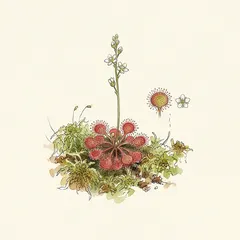
Drosera Rotundifolia
Hering - Οδηγώντα Συμπτώματα της Materia Medica μας · Constantine Hering · 32,103 χαρακτήρες
 Όλα τα βιβλία για Drosera Rotundifolia →
General EN
Round leaved Sundew. Droseracese.
Grows in mossy, turfy bogs in Europe, Northern Asia, and America.
The tincture is prepared from the active, fresli plant.
Used empirically by physicians in the sixteenth century (Dodoens), princi- pally outwardly against skin eruptions.
Introduced into our Materia Medica by Hahnemann, and proved by himself and others. See Allen s Encyclopedia, vol. 4, p. 170.
Became famous as a remedy in whooping cough at Hahnemann's own recom- mendation based on observations of Wislicenus, one of the proveis.
Clixical Authorities Laryngitis, Macfarlan, Kaue's Rec, 1870, p. 156; Hoarseness after catarrh, Hartmann, Eiick. Kl.
Eif., v. 1. 3, p. 167 ; Irritation in lar- ynx with cough, Baumann, Eaue's Path., p. 31"J; Cough, Pemeil., Eiick. Kl.
Erf., vol 3, p. 12; Spasmodic cough, Hannes, Allg. Houi. Ztg., vol. 106, p. 66;
Becker; Eiick. Kl. Erf., vol. 3, p. 12;
Jousset, B. J. H., vol. 26, p. 210; Catarrhal cough, Gross, Eiick.
Kl. Erf., vol. 3, p. 12; ir/ioopin^r cou^A, Hahnemann, Hrg., Hart- man, Lobeth, Schron, Eiick. Kl. Erf., voh 3, p. 12;
Neumann, Nenning, Miihlen- bein, Trinks, Schindler, Belhmann, Knorre, Eiick. Kl. Erf., vol. 3, p. 73; Engle- hardt, Becker, Eiick.
Kl. Erf., vol. 3, p. 74; Schindler, Tietze (6 cases), Neumann, Eiick. Kl.
Erf., vol. 3, p. 75; Groi^s, Bethmann, Eiick. Kl. Erf., vol. 3, p. 76;
Miiller, Eiick. Kl. Erf., vol. 5, p. 718; Cretin, Allg.
Horn. Ztg., vol. 106, p. 39; Skinner (2 cases), Allg. Horn.
Ztg., vol. 106, p. 53; Night cough, Hale, Horn. Clinics, vol. 1, p. 82; Cough during measles, Stapf, Tietze, Eiick.
Kl. Erf,, vol. 4, p. 95; Cough and hoarseness after measles, Stapf, Eiick. Kl.
Erf., vol. 3, p. 167; Cough of phthisical sub- jects, Lobeth, Hartmann, Eiick. Kl. Erf., vol. 3, p. 366;
Catarrhal affections of chest, Hrg., Eiick. Kl. Erf., vol. 3, p. 12; Catarrhal fever, Hartmann, Eiick.
Kl. Erf., vol. 3, p. 12; Intermittent fever, Knorre, Eiick. Kl.
Erf., vol 4, p. 917; Allen's Int. Fever, p. 98.
^ Mind. I 1 Mental restlessness; when reading cannot dwell long on one subject, must change to something else.
i 1 Depressed by persecutions of others on all sides, and also discouraged and solicitous about future.
I Anxiety: with flushes of heat; when alone, especially in evening, also when awaking at night; as if it would im- pel him to commit suicide by drowning.
Dread of ghosts and of being alone. •
■ Great mistrust.
Very irritable; a trifle will disturb; irascible, getting be- side one's self with anger.
Selfwilled; obstinate; insists upon carrying out his j^lans.
153 DROSERA ROTUNDIFOLIA.
^ Sensorium. I'Dulness and heaviness of head.
I Vertigo when walking in open air, tendency to fall to left. ^ Inner Head, l Lancinating pain in fore part of brain, < moving eyes, > from supporting head on hands.
■ Lancinating, tensive, frontal headache, < from stooping. I iPressive pain in forehead and zygoma, within outward. Boring pain in forehead.
Headache above orbit when stooping, disappearing on walking.
I I Pressing headache (temples), with stupefaction and nau- sea (morning); < when stooping and from heat; > from motion and in cold air.
Aching pain above r. temple.
Soreness in temples.
■ Drawing pain in 1. side of head. iPressive headache.
Brain painfully affected by stepping. ^ Outer Head. 'Smarting, burning pain in scalp.
I I Sore feeling in skin of r. temple.
I Itching, gnawing on fore part of scalp, > by rubbing.
I Corrosive itching on scalp. ■* Sight and Eyes. Frequent vanishing of sight, especially when reading, letters look pale and blurred ; photopho- bia; eyes dazzled by light or glare of fire; they are very dry; nose dry and stopped up, stitches in eyes.
I Like gauze before eyes; when reading letters run together, ^xlmblyopia.
Far-sighted ; weakness of eyes when looking carefully at small objects ; quivering before eyes ; dazzling ; < from light, daylight, candle-light.
I I Pupils first contracted, later dilated.
■ Protrusion of eyes.
■ Severe stitches, from within outward, in eyes. Eyelids livid.
^ Hearing and Ears, i Difficult hearing, with increased hum- ming before ears.
I Roaring, humming, and drumming in ears.
I Pain in right internal ear, as if pressed together.
I I Sticking pain and aching, especially when swallowing.
Otalgia, with sticking pain in inner ear.
I Stitches in ears. ^ Smell and Nose. Nose dry and stopped up.
Nosebleed, < morning or evening, and on stooping.
■ Bleeding from nose and mouth. ^Pertussis. Profuse iiuent coryza, particularly in morning.
I I Frequent sneezing, with or without fluent coryza ; < from sneezing. ^Tipper Face. 'Pale face, with sunken eyes; jDufi'ed and livid.
DROSERA ROTUNDIFOLIA. 154
Cheeks and eyes sunken.
I I Prickling, burning pain in skin of cheek below 1. eyelid.
I I Coldness of 1. half of face, with stinging pain and dry
heat on r. half of face. I Heat of face, with cold hands. I I Face-ache, aggravated by pressure and contact. I I Small pustules, here and there, on face, with fine
stitching sensation, < when touched. Cold sweat on forehead. ® Lower Face, i Stitching, tearing pain on 1. inferior maxilla,
as in periosteum. I 1 Burning in skin, at r. angle of mouth. I I Lower lip cracked in the middle. ■ Dryness of the lips and little sense of taste. I 1 Black pores on the chin. ^° Teeth and Gums. iCold sensation in the body of an in- cisor. iStitching toothache, mornings, after warm drink. ^^ Taste and Tongue. Taste: bitter, in throat, after eating;.
putrid; bread tastes bitter; food seems tasteless. I I Fine prickings on dorsum of tongue. IStitching, smarting pain in r. side and tip of tongue, iSmall, round, painless swelling in middle of tongue. 1 I Whitish ulcer on tip of tongue. ^^ Inner Mouth. ' l Smarting pain on inside of left cheek, like
from pepper. I Putrid, pus-like taste in mouth. ^Phthisis. I 1 Profuse discharge of watery saliva (water-brash). I Bloody saliva.
I I Hemorrhage from the mouth. ^^ Throat, i Difficulty of swallowing solid food; oesophagus as
if contracted, i I Ulceration of velum.
■ Sensation of dryness in fauces and throat with thirst.
I I Sensation in pharynx as if crumbs of bread had re-
mained behind.
■ Stinging in throat during deglutition.
I I Burning, rough sensation deep in throat, immediately after dinner.
I I Scraping in throat from eating salt food.
I I Hawking up of green or yellow mucus.
! Rough, scraping feeling of dryness deep in fauces and in region of soft palate, producing a short, hacking cough, accompanied by expectoration of yellow mucus, and hoarse voice, having a deep bass sound. ^Laryngeal phthisis.
Throat dark, coppery, red, dry, but not shining ;_ muscles of pharynx swollen, deglutition most painful; incessant, cough, sometimes ending in vomiting.
155 DROSERA ROTUNDIFOLIA.
^* Appetite, Thirst. Desires, Aversions. 1 1 Morning thirst.
■ Aversion to pork.
" Eating and Drinking, i ' Mouth in a bitter state when eat- ing. ^Pregnancy.
I Right after dinner, burning raw feeling.
I Cough, < after drinking; after tobacco smoke. ^Per- tussis. ^^ Hiccough, Belching, Nausea and Vomiting. 1 1 Frequent hiccough.
I I Eructations tasting bitter or sour; water-brash.
Nausea, with stupefying pressure in forehead.
I I Nausea after fatty food; < after midnight till morning.
Nausea and retching.
Vomiting: of blood, of bile, in morning ; of mucus, water,. or food when coughing; after drinking; especially at night or before dinner; first food then mucus, at the end of the attack (pertussis).
Vomiting of slimy matter.
Worse after vomiting. ^^ Scrobiculum and Stomach. Clawing sensation in pit of stomach.
■ Contractive tension at pit of stomach, as if everything
would be drawn inwards, especially during deep inhala- tion, and with cough. ^^ Hypochondria. Anxious feeling in the hypochondria.
■ Painful to touch, and when coughing.
I I Must support the hypochondria with the hands when coughing. ^Pertussis.
■ Constrictive pain in both hypochondria, impeding cough-
ing; unable to cough on account of pain, unless hand i& pressed upon pit of stomach. ^^ Abdomen. ■Painful constriction of epigastrium.
■ Dull stitch from r. to 1. across abdomen, almost taking
the breath, while walking. 1 I Stitches in r. side of abdomen while sitting. I I Stitch from left loin into penis.
■ Constriction in abdomen, with vomiting. ^Pertussis.
■ Bellyache after sour food.
^° Stool and Rectum. ■Outward pressing pain, independent of stool.
Frequent stool, with colic.
Stools: soft, fluid; loose; papescent; white, slimy and stinking, with watery, odorless urine.
Loose stool almost continually, but rather < after mid- night; bloody, mucous or offensive stools, followed by pains in abdomen and small of back.
Before and after stool : tensive pain in upper part of ab- domen while holding breath.
DROSERA ROTUNDIFOLIA. 156
After stool: iiiefFectual straining; constant inclination to stool; abdominal and dorsal pains. ^^ Urinary Organs. ' ' Frequent urging to urinate, with scanty discharge, frequently only by drops. I I Frequent, profuse urination. I I Urine dark and of strong smell. Urine watery, inodorous, with fetid mucous stool. ^^ Male Sexual Organs. Drawing stitches from 1. loin into penis. I Itching stitches in the glans penis. ^^ Female Sexual Organs. ■ Delay of the first menses.
Menses too late; too scanty; suppression of menses; blood dark.
■ Leucorrhoea, with labor-like pain.
^^ Voice and Larynx. Trachea and Bronchia, n Voice: hoarse, deep, requires exertion to speak; husky; hollow, toneless; cracked.
■ Catarrhal hoarseness, with or without coryza or cough;
is only able to sj^eak in a bass voice; hoarseness after measles. B Chronic persistent hoarseness resulting from repeated catarrhal attacks.
I Great hoarseness, with sjDasmodic cough, after measles.
I I Epiglottis in constant motion to and fro, constant en- deavor to cough ; larynx very dry ; patient involun- tarily supports thyroid cartilage on swallowing or coughing, and there appears to be a constant strain in box of larynx, with disposition to vomit. ^Laryngitis.
■ Constant tickling in larynx, causing cough and prevent-
ing sleep at night.
I iSensation like from a feather in larynx, exciting cough.
I I Crawling in larynx, which provokes hacking cough, with sensation as if a soft substance were in it, with fine stitches extending thence to r. side of pharynx.
■ Bruised feeling in larynx whilst inhaling. iConstriction of the larynx when talking.
I Mucus in the larynx, either hard or soft.
I Chest and throat symptoms worse from talking or singing.
■ Laryngeal phthisis, with hoarseness, rapid emaciation.
^° Respiration, i l Oppression, with every word he speaks the throat contracts ; not so when walking.
Respiration slow; predominant with moist sound.
Intolerable stitches when coughing and taking a deep in- spiration, in the upper part of the chest near the axilla, > by pressing on affected part with the hand, with purulent expectoration mixed with blood.
Whilst inhaling, felt severe aching pains in ana below both clavicles, over a small space in lungs; the infra-
157 DROSERA ROTUNDIFOLIA.
clavicular pain afterwards extended round to the scap- ulae ; also a bruised feeling of the larynx.
■Sensation as if something in chest prevented exhalation when talking or coughing.
I I Oppressive sensation in chest as if expiration were pre- vented by coughing or talking.
I I During an expiration in evening, when lying in bed, sudden contraction of abdomen occasioning a heaving as if he would vomit and bringing on cough.
I Difficult breathing, < after midnight.
■ Dyspnoea, especially on talking, with every word throat
becomes constricted; no dyspnoea while walking. ■Severe dyspnoea threatening suffocation; blueness of face and lips; cold sweat on forehead; vomiting of tough mucus. ^Whooping cough.
■ Oppression of chest as if from holding back the breath.
■ Attack of suffocation; cannot recover the breath; gasping.
■ Asthma, particularly when talking, with contraction of
throat at every word that is uttered. I I Bad, offensive-smelling breath when coughing. "" Cough. ■ 'Deep sounding, hoarse barking cough.
■ ■Rough, scraping, dry sensation deep in fauces and soft
palate, causing hacking cough, with yellow mucous ex- pectoration and hoarseness, speaks only with exertion, and in a deep bass voice; oppression of chest as if air was withheld on talking and coughing, so that breath could not be expired.
■ Whooping cough; attacks, every one to three hours, with
barking or dull-sounding coughs, choking breathing, caused by tickling or dryness in throat, or from a sen- sation of a soft feather in larynx; expectoration, only in morning, yellow and bitter; has to swallow the mucus.
■ Attacks of coughing preceded, fifteen or twenty minutes,
by rattling of mucus in bronchial tubes to which patient solely ascribes attack of coughing. ^Whooping cough.
■ ■Whooping cough, with feeling of constriction in chest
and hypochondria, so that ]3atient tries to support these parts with hands; < after midnight; perspires on waking from sleep.
■ Cough comes in fits, at long intervals; cough during in-
tervals is short, not exhausting, and he considers it trifling in comparison with the tormenting attacks ; the fits begin mildly, are short, but increase during course of disease, until cough becomes unceasing, the attacks occur in quick succession, and forces to sit up, always be- ginning with titillation and renewed inspiration, until finally vomiting of mucus (rarely of food) sets in, which fiiiishes the paroxysm; great exhaustion after the
DROSEPvA ROTUNDIFOLIA. 158
fit; frequently < at night on lying down. ^Whooping cough. ■Paroxysmal dry cough, exciting cause of which seems to be in abdomen with copious perspiration over whole body and culminating in an attack of severe nausea.
■ Spasmodic, nervous, and sympathetic cough.
■ Spasmodic cough of phthisical girls.
I I When coughing a feeling as if something kept the air in the chest, cannot cough right, cannot speak.
■Whooping cough, with hemorrhage from mouth and nose, anguish, blue face, wheezing breathing, suffocation.
During cough: face pale or bluish; eftbrts to vomit; vomit- ing of water, mucus and food; stitches in muscles of chest; bleeding from nose or mouth; has to support chest and hypochondria; hoarseness; offensive breath ; rising up in bed with fear and trembling.
■ Attacks characterized by certain typhoid conditions, with
severe spasmodic retraction of abdomen, followed by vomiting of food, mucus and water. ^Whooping cough.
I Cough which marks the sequelee of measles, especially
when it occurs in paroxysms, and is < in afternoon and evening; even when cough is attended by bloody and purulent expectoration.
■ I Very hoarse cough, < after midnight, during or after
measles.
II Spasmodic cough, attended by retching and vomiting.
■ Cough when singing, causing smarting in larynx.
■ Harassing, titillating cough in children, not at all during
day, but commences as soon as head touches pillow at night.
■ Cough, in evening, immediately after lying down.
■ The fever and cough, which is very hoarse, are worse after
twelve at night. ^Bronchitis infantum. •■Awakes at night about 2 o'clock, coughs for a short time
and then falls asleep again. ■Nocturnal cough of phthisical patients.
■ Severe cough of young phthisical subjects, with bloody
and purulent expectoration, 1 1 Cough sounds loose, nothing comes up. ^Catarrh.
■ Cough, with expectoration of bright red frothy or of black
clotted blood.
■ Bloody and purulent expectoration after measles. _
■ Very violent cough; spitting of blood and pus, with vio-
lent pains in chest. ^Phthisis.
■ Expectoration: yellow; bitter; offensive; bloody; pus-
like; salty; has to be swallowed. Cough aggravated: by warmth; drinking; tobacco smoke; laughing; singing; weeping; after lying down; after midnight or in the morning.
159 DROSERA ROTUNDIFOLIA.
^ Inner Chest and Lungs, i Constriction of chest and hypo- chondria. I Cough with sense of constriction in cliest, which seems to hold breath back and prevent coughing, with pain in ribs, so that he is compelled to support the parts with hands; vomiting of food, then of mucus and water.
I I Tightness of chest, especially when talking, or even
uttering a single word; > wdiile walking; the throat seems to contract.
I I Severe stitches in chest when sneezing or coughing, must press on chest with hands, for relief.
■ Violent oppressive stitching pain across chest, passing
off during motion.
■ Sensation of oppression in chest as if the air were retained
when coughing, and as if breath could not be expelled.
■ Burning sensation in centre of chest.
■ Bronchitis of old age, in connection with emphysema or
bronchiectasie; nocturnal paroxysms; < lying down; cough seems to come from abdomen, shaking all the muscles of chest and body, with much exhaustion after attack ; expectoration of yellow mucus or pus ; parox- ysms of cough from one to two hours apart.
■ Phthisis with severe pains in chest, purulent expectora-
tion and foul pus-like taste in mouth.
■ Tuberculosis.
^° Outer Chest. ■Stitches in muscles of chest, when breath- ing or coughing. I I Sternum painful when pressing on it, as from festering
under skin. I Black pores on chest and shoulder. ^^ Neck and Back. iNeck stiff and painful on motion. Nape of neck painful to touch.
■ Pain between scapulse drawing to small of back.
I I Stitching tearing from spine to anterior s23inous process of 1. ilium, when sitting.
■ Back pains as if bruised, in the morning. I I Itching stitch in coccyx when sitting.
^^ Upper Limbs, l l Quivering on r. shoulder when at rest. I I Nightly pains in humerus, going off by day during motion.
■ Coldness of the hands.
Deep ulcer on back of r. hand discharging bloody water. Red spots on back of hand and behind wrist.
■ Fingers spasmodically contracted, rigid in grasping.
^ Lower Limbs, ll Laming pain in r. hip-joint and tliigh, with pain in ankle, as if sprained; limp when walking. I I Violent stitch in os ischium on rising from a seat. ■Pressing pain in posterior muscles of thigh, < from
DROSERA ROTUNDIFOLIA. 160
pressure and stooping ; could not lie thereon at night, passes off after rising.
I I Occasional stitches in middle of 1. thigh anteriorly.
I I Fine cutting stitch in r. calf, coming on when sitting, passing off when walking.
I 1 Tearing pain in r. ankle, as if sprained, only when walking.
I I Stiffness of ankles.
I Feet feel chilly, covered with a cold sweat. ^^ Limbs in General, i l All the limbs feel lame and bruised as if beaten, and are outwardly painful. ^Catarrhal fever.
I I Gnawing and stitching pain in bones of limbs, especially severe at joints; severe stitches in joints; less painful during motion than during rest.
I I Painful stitching pressure in muscles of upper and lower limbs, in every position. ^ Rest. Position. Motion. During rest: Cjuivering in r. shoulder; stitches in joints < ; shivering; internal chill.
Lying: in bed, during expiration sudden contraction of abdomen; great exhaustion after fit of coughing; on side < pain in muscles of thigh; on back, snoring; forced to lie down from chilliness ; at night, brings on titillating cough in children ; cough in evening < ; pain in ulcers < when lying on sore side.
Rising from seat: violent stitching in os ischium.
Sitting : pain in side of abdomen ; cough forces him to sit up ; tearing from spine to anterior spinous process of 1. ilium ; itching stitch in coccyx ; fine cutting stitch in r. calf < ; pain in ulcers <.
Supporting: head on hands > pains in brain; hypochon- dria with hands Avhile coughing ; thyroid cartilage when swallowing.
Stooping: frontal headache < ; pain in temples < ; nose- bleed < ; pain in muscles of thigh <.
Stepping : affects brain painfully.
Walking: vertigo; tendency to fall; headache >; pain across abdomen; > oppression and contraction of throat dyspnoea > ; causes perspiration ; pain in ankle < > stitches in r. calf; pain in ankle only when walking pain in ulcers.
Singing: < throat and chest symptoms.
Cough: causes smarting in larynx.
Talking: constriction of larynx; < chest and throat symptoms; sensation as if something prevented exhala- tion ; oppressive sensation in chest ; dyspnoea ; constric- tion of throat ; asthma.
Motion : of eyes < pains in brain ; pain in temples > ; of epiglottis constantly to and fro ; > violent stitching
161 DROSERA ROTUNDIFOLIA,
pains across chest ; neck painful ; pain in humerus > ; stitches in joints > ; > shivering. ^ Nerves, l l Weakness of whole body with sunken eyes and cheeks.
■ Great exhaustion after coughing fits. ^Whooping cough. Torpidity; attacks, with numbness.
I I Epileptic attacks: with rigidity; with twitching of limbs;-, after attack, htemoptysis and sleep. ^^ Sleep. I Frequent yawning and stretching. Sleepiness immediately after sunset.
Frequent starting from sleep, at night, as from fright, yet when awake is not fearful.
■ Sleeplessness or frequent waking from sleep. Snoring when lying on back, asleep.
Dreams: vivid; partly pleasant, partly anxious; vexa- tious, over wrong doing of others ; of thirst and drink- ing, awakes, is thirsty and must drink.
On waking, great weariness.
^ I Perspires immediately on w^aking from sleep. ^Pertussis. ^ Time. Morning : headache in temples ; nosebleed < ; pro- fuse fluent coryza ; toothache ; thirst ; vomiting ; expec- toration; pain in back; pain in ulcers <.
2 A.M. : wakes coughing.
Forenoon: chill.
Afternoon : cough < ; towards evening warmth of upper portion of body.
Lasting till 3 P.M. : thirst after chilliness ; headache; heat of face.
By day: pain in humerus > ; chill.
Immediately after sunset : sleepiness.
Evening: anxiety; flushes of heat ; nosebleed <; during expiration sudden contraction of abdomen ; cough < ; thirst, headache and heat of face after chilliness >.
Night; anxiety; flushes of heat; vomiting after drinking; great exhaustion after fit of coughing; paroxysms of bronchitis; pain in humerus; frequent starting from sleep; in bed, chilliness; internal chill; heat; only at night, in children, harassing, titillating cough ; cough of phthisical patients ; warm sweat.
After midnight: nausea after fatty food; stools < ; diffi- cult breathing <; cough <; hoarse cough <; cold- ness of 1. side of face, r. half hot and dry; fever and cough < ; heat < ; warm sweat < ; cutting pains in ulcers <.
^^Temperature and Weather. Open air: vertigo when, walking. Warm drink : produces toothache. Warmth : < cough ; < pain in ulcers.
VOL. V — 11.
DROSERA ROTUNDIFOLIA. 162
On getting warm in bed : cough ; pain in long bones. Heat: pain in temples <.
Cold air: > pain in temples; >pain in ulcers. After undressing: itching.
Πυρετός
Ρίγος ή επεισόδια ανατρίχισης.
Ρίγος με παγωμένα κρύα χέρια, μπλε νύχια, κρύο, χλωμό πρόσωπο και κρύα άκρα· πρέπει να ξαπλώσει.
■ Ρίγος πριν το μεσημέρι.
I Νιώθει πάντα πολύ κρύο, δεν μπορεί να ζεσταθεί· νιώθει κρύο τη νύχτα στο κρεβάτι· τρέμουλο κατά την ανάπαυση, κανένα κατά την κίνηση.
■ Συχνά ανατριχιάσεις σε όλο το σώμα με κρύα χέρια και ζεστό πρόσωπο.
Δεν μπορεί να συγκρατήσει το τρέμουλο και την αίσθηση κρύου, αν και το σώμα είναι ζεστό στην αφή.
I Εσωτερικό ρίγος τη νύχτα, στο κρεβάτι και κατά την ανάπαυση.
■ Ρίγος κατά τη διάρκεια της ημέρας, ζέστη τη νύχτα.
I I Μονόπλευρο ρίγος ή ψύχος, κυρίως αριστερή πλευρά.
I Βήχας κοκίτης με ρίγη και διάθεση να λιποθυμά στο ρίγος.
I 1 Μετά το αίσθημα ψύχους, ελαφριά δίψα, βαρύτητα κεφαλιού, σφυγμός πόνου στον ινίο και ζέστη προσώπου, συνηθισμένη θερμοκρασία του υπόλοιπου σώματος, που διαρκεί έως τις 3 μ.μ.· νιώθει καλά το βράδυ.
Μετά τα μεσάνυχτα, ψύχος του αριστερού μισού προσώπου, με σουβλιές σε αυτό· το δεξί μισό ζεστό και ξηρό.
il I Πυρετικά ρίγη σε όλο το σώμα, με ζέστη προσώπου και παγωμένο κρύο των χεριών, χωρίς δίψα.
'I Θερμοκρασία του άνω μέρους του σώματος προς το βράδυ.
I Ζέστη και ερυθρότητα προσώπου.
■ Ζέστη σχεδόν αποκλειστικά στο πρόσωπο και το κεφάλι.
■ Επώδυνη βαρύτητα και αδυναμία σε όλα τα άκρα, συχνά ανατριχιάσεις σε όλο το σώμα, ψύχος των χεριών με ζέστη προσώπου. ^ Καταρροϊκός πυρετός. 1 Άφθονη έκκριση υδατώδους σάλιου κατά το πυρετικό στάδιο. Ζέστη, χωρίς δίψα.
■ Ζέστη, επιδείνωση μετά τα μεσάνυχτα.
■ Κρύος ιδρώτας στο μέτωπο, στα πόδια, στο πρόσωπο και στην κοιλιά.
■ Ζεστός ιδρώτας τη νύχτα, ιδίως μετά τα μεσάνυχτα και τις πρωινές ώρες, πιο άφθονος στο πρόσωπο και την κοιλιά.
■ Ιδρώτας σε όλο το σώμα, με βήχα που προκαλούσε βίαιους εμετικούς σπασμούς.
■ Σοβαρό ρίγος με κρύο πρόσωπο, παγωμένα χέρια και πόδια, και χολώδεις έμετους· η ζέστη συνοδεύεται από βίαιους πιεστικούς και σφυγμικούς πόνους στο κεφάλι και σπασμωδικό βήχα· η απυρεξία συνοδεύεται από γαστρικά συμπτώματα.
■ Ε间歇ικός πυρετός, με πονόλαιμο και ναυτία.
I I Παροξυσμός πριν τις 9 π.μ. κάθε πρωί. ^ Ε间歇ικός.
■ Πυρετοί που εμφανίζονται όταν ο κοκίτης είναι επιδημικός.
" Επεισόδια, περιοδικότητα. Δεκαπέντε ή είκοσι λεπτά πριν από τα επεισόδια βήχα, κροτάλισμα βλέννας στους βρόγχους.
163 DPvOSERA ROTUNDIFOLIA.
Συχνά: εξαφάνιση της όρασης· φτέρνισμα· λόξιγκας· κόπρανα με κολικούς· ώση για ούρηση· άφθονη ούρηση· μεγάλη εξάντληση, μετά το επεισόδιο βήχα, χασμουρημά· τέντωμα· εκκίνηση από τον ύπνο· ξύπνημα από τον ύπνο· ανατριχιάσεις σε όλο το σώμα· τρέμουλο σε όλο το σώμα.
Επεισόδια: εμέτων· βήχα σε μεγάλα διαστήματα· βήχα που εμφανίζονται σε γρήγορη διαδοχή· σοβαρής ναυτίας μετά τον βήχα· νωθρότητας με μούδιασμα· επιληπτικά.
Βράδυ μία έως τρεις ώρες: επεισόδια κοκίτου.
Παροξυσμοί: βήχα· νυχτερινής βρογχίτιδας. '" Τοποθεσία και κατεύθυνση. Αριστερά: τάση να πέφτει προς την πλευρά· πόνος στην πλευρά του κεφαλιού· πόνος στο δέρμα του μάγουλου κάτω από το βλέφαρο· ψύχος του μισού προσώπου· πόνος στην κάτω γνάθο· πόνος στο εσωτερικό του μάγουλου· πόνος από τη μέση έως το πέος· σχίσιμο από τη σπονδυλική στήλη έως την πρόσθια λαγόνια άκανθα· σουβλιές στο μέσο του μηρού· ρίγος κυρίως στην αριστερή πλευρά· πλευρά προσώπου κρύα.
Δεξιά: πόνος πάνω από τον κρόταφο· ευαισθησία του δέρματος του κροτάφου· πόνος στο εσωτερικό αυτί· πόνος και ζέστη στην πλευρά του προσώπου· κάψιμο στη γωνία του στόματος· πόνος στην πλευρά και την άκρη της γλώσσας· στην πλευρά της κοιλιάς· σουβλιές προς την πλευρά του φάρυγγα· τρεμούλιασμα στον ώμο· βαθύ έλκος στο ράχειο του χεριού· παραλύτικός πόνος στην άρθρωση του ισχίου και στον μηρό· κοφτή σουβλιά στη γάμπα· σχίζων πόνος στον αστράγαλο· πλευρά προσώπου ζεστή και ξηρή.
Από δεξιά προς αριστερά: σουβλιές διασχίζοντας την κοιλιά.
Από μέσα προς τα έξω: πόνος στο μέτωπο· σουβλιές στα μάτια.
Προς τα έξω: πόνος στο ορθό. '^ Αισθήσεις. Πόνος στο αυτί σαν να συμπιέζεται· οισοφάγος σαν συσταλμένος· στον φάρυγγα σαν να είχαν μείνει ψίχουλα ψωμιού· αίσθηση στο στομάχι σαν όλα να έλκονται προς τα μέσα· αίσθηση σαν από πούπουλο στον λαιμό· αίσθηση σαν μαλακή ουσία να βρίσκεται στον λάρυγγα· σαν κάτι στο στήθος να εμποδίζει την εκπνοή· πίεση στο στήθος σαν από συγκράτηση της αναπνοής· σαν κάτι να κρατούσε τον αέρα στο στήθος· τα άκρα νιώθουν μωλωπισμένα και επώδυνα, σαν από πολύ σκληρό κρεβάτι.
Πόνος: στο δεξί εσωτερικό αυτί· στον λαιμό κατά την κατάποση· στην κοιλιά· στη μέση της πλάτης· στις πλευρές· μεταξύ ωμοπλατών που έλκεται προς τη μέση της πλάτης· στον βραχίονα· στον αστράγαλο.
Σχίζων πόνος: στην αριστερή κάτω γνάθο· από τη σπονδυλική στήλη έως την πρόσθια λαγόνια άκανθα του αριστερού λαγού· στον δεξιό αστράγαλο.
Βίαιοι πόνοι: στο στήθος.
Διαπεραστικός πόνος: στο πρόσθιο μέρος του εγκεφάλου.
Κοφτή σουβλιά: στη δεξιά γάμπα.
.Stitches: στα μάτια· στα αυτιά· στη δεξιά πλευρά της κοιλιάς· από την αριστερή μέση προς το πέος· από τον λάρυγγα προς τον φάρυγγα· στο άνω μέρος του θώρακα· στους μύες του θώρακα· στο στήθος· στο μέσο του αριστερού μηρού· στις αρθρώσεις.
DROSERA ROTUNDIFOLIA. 164
Σουβλέζων πόνος: στην αριστερή κάτω γνάθο· στα δόντια· στη δεξιά πλευρά και την άκρη της γλώσσας· διασχίζοντας το στήθος· από τη σπονδυλική στήλη έως την πρόσθια λαγόνια άκανθα του αριστερού λαγού· στο ισχιακό οστό· στα οστά των άκρων· στις αρθρώσεις· στους μύες των άνω και κάτω άκρων.
Τσούξιμο: στη δεξιά πλευρά του προσώπου· στον λαιμό· στις αρθρώσεις· στα μακρά οστά· στο δέρμα.
Έλκων πόνος στην αριστερή πλευρά του κεφαλιού.
Στημένος πόνος: στο πρόσθιο μέρος του τριχωτού· στα οστά των άκρων· στις αρθρώσεις· στο δέρμα.
Συσταλτικός πόνος: και στις δύο υποχονδρίδες· του επιγαστρίου.
Γδάρσιμο: στο στομάχι (στο υποχόνδριο).
Πόνοι σαν ωδίνες τοκετού: στην κοιλιά.
Πιεστικός πόνος: στους κροτάφους· στο κεφάλι· στο ορθό· στους οπίσθιους μύες του μηρού.
Πιεστικός πόνος: στο μέτωπο.
Σουβλέζων πόνος: στο αυτί· στο πρόσωπο.
Σφυγμικός πόνος: στον ινίο.
Διατρητικός πόνος: στο μέτωπο.
Καυστικός πόνος: στο τριχωτό· στο δέρμα του μάγουλου.
Κεντριστικός πόνος: στο δέρμα του αριστερού μάγουλου· στο ράχειο της γλώσσας.
Έξαψη: στο τριχωτό· στην πλευρά και τη βάση της γλώσσας· στο εσωτερικό του μάγουλου.
Κνησμώδεις σουβλιές: στη βάλανο· στον κόκκυγα.
Θαμπή σουβλιά: διασχίζοντας την κοιλιά.
Αίσθηση μωλωπισμού: στον λάρυγγα· στη ράχη.
Αίσθηση διάστρεμμα: στον αστράγαλο.
Πόνος πόνου: πάνω από τον δεξιό κρόταφο· στο αυτί· στο πρόσωπο· στην κοιλιά· σε και κάτω από τις δύο κλείδες, που εκτείνεται προς τις ωμοπλάτες.
Ευαισθησία: στους κροτάφους· στο δέρμα του δεξιού κροτάφου.
Ξύσιμο: στον λαιμό· στην περιοχή του μαλακού ουρανίσκου.
Σουβλέζουσα αίσθηση: στα φλύκταινες του προσώπου.
Κάψιμο: στο δέρμα στη γωνία του στόματος· βαθιά στον λαιμό· στο κέντρο του θώρακα.
Παραλύτικός πόνος: στη δεξιά άρθρωση του ισχίου· στον μηρό.
Τεντωτικός πόνος: στο άνω μέρος της κοιλιάς.
Σύσπαση: της κοιλιάς· του επιγαστρίου.
Αδυναμία: σε όλα τα άκρα.
Βαρύτητα: του κεφαλιού· όλων των άκρων.^^
Θολότητα του κεφαλιού.
Τάση στο κεφάλι· στο στομάχι (στο υποχόνδριο).
Δυσκαμψία: του αυχένα· των αστραγάλων.
Πίεση: στον λαιμό· στο στήθος.
Σύσφιξη: στην κοιλιά· στον λάρυγγα· του λαιμού· στο στήθος· στις υποχονδρίδες.
Πίεση: στο μέτωπο· στους μύες των άνω και κάτω άκρων.
Ξηρή ζέστη: στη δεξιά πλευρά του προσώπου.
Βούισμα: στα αυτιά.
165 DROSERA ROTUNDIFOLIA.
Τύμπανο στα αυτιά.
Βουητό: στα αυτιά.
Τρεμούλιασμα: στον δεξιό ώμο.
Ξηρότητα: των χειλιών· στον φάρυγγα· στον λαιμό· του λάρυγγα.
Τραχύτητα: στον λαιμό· στην περιοχή του μαλακού ουρανίσκου.
Κνησμός: στο πρόσθιο μέρος του τριχωτού· στο δέρμα.
Σέρνεται αίσθηση: στον λάρυγγα.
Γαργαλητό: στον λάρυγγα.
Ψύχος: του αριστερού μισού προσώπου· των χεριών· του σώματος ενός κοπτήρα. ** Ιστοί. Δρα ισχυρά πάνω στο αναπνευστικό σύστημα, μέσω της επιρροής του στον πνευμονογαστρικό νεύρο, προκαλώντας σπασμωδικό ξηρό βήχα, που προσομοιάζει με αυτόν του κοκίτου.
Τα επεισόδια βήχα έχουν σπασμωδικό χαρακτήρα, εξαρτώμενα από ερεθισμό του πνευμονογαστρικού, και προσβάλλουν τους βρόγχους· κοκίτης, βρογχική καταρροή, βρογχίτιδα σε γηρατειά, εμφύσημα και βρογχιεκτασίες.
Αιμορραγίες, αίμα ανοιχτό κόκκινο.
Ταχύτατη εξάντληση (καταβολή), με οξεία φθίση του λάρυγγα.
Στημένοι, τσούζοντες πόνοι στις αρθρώσεις και στα μακρά οστά. *^ Αφή.
Παθητική κίνηση.
Κακώσεις.
Αφή: σουβλέζουσα αίσθηση στις φλύκταινες του προσώπου <· υποχονδρίδες επώδυνες· αυχένας επώδυνος.
Πίεση: πόνος προσώπου <· του χεριού στο στομάχι (στο υποχόνδριο) > πόνος κατά τον βήχα· > σουβλιές στο στήθος· στο στήθος κατά τον βήχα ή το φτέρνισμα > σουβλιές· πόνος στους μύες του μηρού <.
Τρίψιμο: κνησμός στο τριχωτό >· > πόνος στα έλκη. *® Δέρμα. I I Κεντρισμός, κάψιμο, τσούξιμο, κνησμός, στημένος πόνος στο δέρμα.
1 I Κνησμός > με ξύσιμο, τρίψιμο ή σκούπισμα με το χέρι.
I I Βίαιος κνησμός κατά το ξεντύσιμο· όταν ξύνεται, το δέρμα ξεφλουδίζει εύκολα.
■ Εξάνθημα, σαν ιλαρά.
1 I Εξάνθημα, με επώδυνη ευαισθησία ή τσούξιμο.
Μαύροι πόροι στο στήθος, στον ώμο και το πηγούνι.
■Αιμορραγικά, καυτά έλκη· κοφτοί πόνοι· πύον αιματηρό, λεπτό και υδατώδες, ιχώδες· < το πρωί και κατά το τελευταίο μέρος της νύχτας· επίσης όταν ξαπλώνει στην πάσχουσα πλευρά, όταν κάθεται, όταν ζεσταίνεται στο κρεβάτι· > από το κρύο, το τρίψιμο και κατά το περπάτημα· δεξιά πλευρά.
II Ιλαρά· πολύ βραχνός βήχας ακολουθεί ή συνοδεύει τη νόσο, < μετά τα μεσάνυχτα. ^^ Στάδια ζωής, ιδιοσυγκρασία. Αγόρι, ηλικίας 1, αφού είχε θεραπευτεί από δυσεντερική διάρροια με Chamom.· κοκίτης.
Κορίτσι, ηλικίας 1|, υποφέρει εδώ και μισό χρόνο από βήχα που έχει γίνει σταδιακά πιο σοβαρός.
DROSERA ROTUND.— DULCAMARA. 16&
Ευαίσθητο παιδί, ηλικίας 2· κοκίτης.
Αγόρι, get. 10· κορίτσι, ηλικίας 3· παιδί, ηλικίας 4· αγόρι, ηλικίας 3· αγόρι, ηλικίας 28 εβδομάδων· παιδί, ηλικίας 10 εβδομάδων· κοκίτης.
Φλεγματικό νωθρό κορίτσι, ηλικίας 14, αιμορραγικής διάθεσης· κοκίτης.
Φτωχή γυναίκα, ηλικίας 60, μετά από κρυολόγημα· βήχας. *^ Σχέσεις.
Αντίδοτο από: Camphor.
Συμβατά: Calc. ost., Fulsat., Veratr., Sulphur.
Συμπληρωματικά
Nux vom.
Σύγκριση
BellacL, Chelid., Cina, Corall. rub., Cuprum^.
Hyosc, Ipecac, Nux vom., Sambuc, σε σπασμωδικούς βήχες.