 Ομοιοπαθητική Βιβλιοθήκη
Silicea Terra
Silicea · Boericke - The Twelve Tissue Remedies of Schussler · William Boericke · 616,281 χαρακτήρες
 Όλα τα βιβλία για Silicea Terra →
Αντιδοτείται απόAngustura VeraAnthracinumArgentum NitricumCamphoraFluoricum AcidumHeparLachesis MutusLycopodium ClavatumMercurius CorrosivusPicric Acid
Όλα τα βιβλία για Silicea Terra →
Αντιδοτείται απόAngustura VeraAnthracinumArgentum NitricumCamphoraFluoricum AcidumHeparLachesis MutusLycopodium ClavatumMercurius CorrosivusPicric AcidGeneral EN
Synonyms. — Silica. Silicea Tera. Silex. Decarbonized white pebble. Acidium Silicicum. The proper name is Silicic Oxide.
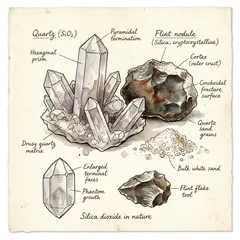
Common Names. — Pure Flint or Quartz. Silicious Earth>
Chemical Properties. — Formula, Si02. Prepared by fusing silica and carbonate of sodium ; dissolving residue filtered and precipitated by hydrochloric acid. It is a white powder, hav- ing neither taste nor smell.
Preparation. — Pure Silicea is triturated according to Class VII, American Homoeopathic Pharmacopoeia. Dr. P. Wilde uses preferably the silicate of soda known as " liquid glass," which is freely soluble in water. (See "Administration.")
Physiologico-chemical Data Although this inorganic salt is found very abundantly throughout the vegetable kingdom, especially in grasses, grain, palms, etc., it is found compara- tively little in the animal kingdom, notably so in the higher orders, the vertebrae. Traces of Silicea, however, are found in the ashes of blood, bile or urine, and larger quantities (7 per cent.) in the white of egg, and even more in the ashes of the epidermis, hair and nails. It is also found in the connec- tive tissue, and hence its action on the spinal cord, brain and nerves must be referred to the investing membrane, the con- nective tissue, of the nerve-fibres.
Disturbance of the func- tion of the Silicea molecules causes a turgescence of the cells of the connective tissues involved. This swelling may re- main stationary for a time, then disappear or occasion sup- puration.
General Action. — Silicea acts more upon the organic sub- stances of the body, involving prominently bones, joints, glands, skin and mucous surfaces, producing malnutrition
130 THE TWELVE TISSUE REMEDIES.
and corresponding to the scrofulous diathesis. Its action is deep and long-lasting. It is especially suited to imperfectly nourished constitutions, owing to deficient assimilation.
It is the remedy for ailments attended with pus-formation, and is closely related to all fistulous burrowings. Wherever pus is formed in an inflamed part of connective tissue or skin, Silicea may be used. Deeply-seated scrofulous cachexia and some forms of septic infections (vaccine) find in it a valuable general remedy. Like Calc. sulph., Silicea corresponds to the process of suppuration, with the following distinguishing fea- tures : Silicea ripens abscess, since it promotes suppuration.
Calc. sulph., by restraining: the suppurative process, heals sup- purating wounds. As long as infiltration, which can only dis- appear by suppuration, lasts, Silicea is the remedy, and should be continued until all the infiltrated parts have disappeared. If then the wound fails to heal, give Calc. stdph. Ailments affecting the periosteum.
Deep-seated suppurations, pus thick and yellow ; also in certain reflex affections connected with the nerves. After suppuration has ceased to be active, but the process lingers and the pus forms chronic depots, small or large, fistulous or otherwise ; also, where the general organism is both irritable and weak, and the nervous system is easily aroused to exhausting agitation (as Dunham says, it is contra- indicated by general nerve torpor), this is a specific remedy. In localized exhaustion, when the symptoms resemble paraly- sis— e. £-., rectal distention, dilated and irritable heart, great general debility, as after lying-in — it should always be thought of.
In general hypersesthesia and exaggerated reflexes.
Silicea has also the power to reabsorb a bloody or sero- albuminous exudate, existing within the tissues by means of the lymphatics. Here it often follows Calc. phos.
Silicea cures chronic gouty rheumatic affections by means of its stimulating effects of the involved connective tissue cells, compelling these to throw off the accumulated urates through the lymphatics.
Silicea can restore suppressed foot-sweats, and in this way be an indirect remedy for diseases resulting from suppression
SIUCEA. 131
of foot-sweat, for instance : Amblyopia, cataract, paralyses, etc. If the cells of any part of the connective tissue show a lack of Silicea molecules, they atrophy in consequence.
Guiding Symptoms and Characteristic Indications.
Mental Symptoms — Thought difficult, attention difficult to fix, can be aroused but tires easily, stronger mentally than physi- cally ; he has grit. Desponding, peevish, disgust of life. Oversensitive to noise, etc., and with anxiety. Great irrita- bility. A peculiar mental abstraction, marked by a propensity to toy by the hour with pins and needles. Brain-fag, school girls become confused during recitations because they cannot concentrate their thoughts ; want to think but are unable to do so.
Head and Scalp Vertigo, patient inclines to fall forward or to the left. Labyrinthine vertigo. Headaches with vertigo, with small nodules on scalp, from hunger, from abdominal ir- ritation, from overstudy, from nervous exhaustion.
Headache is throbbing, beating, pressing asunder and coldness of head, with constant need for wrapping it up. Headache from nape to vertex, more on right side, aggravated by noise, exertion, light, study, and relieved by warmth. Pressive headache from above downward, with intermittent itching of vulva. Cerebral apo- plexy, preceded by deep-seated stitches in the right parietal region and dull, heavy, crampy pain in arms.
Scalp very sen- sitive and sore ; itching. Painful pustules. Suppurating wounds. Sweat on head of children, like to keep the head wrapped up warm ; large, open fontanelles.
Offensive erup- tion on occiput. Hair falls out. Cephalaematoma. Nodules on scalp.
Eyes EN
A remedy of great importance in diseases of the lachrymal apparatus, especially the lachrymal sac.
Lachrymal fistula.
Styes.
Blepharitis.
Tarsal tumors.
Boils and cystic tumors around eyes and lids.
Pustular keratitis.
Ulcers of cornea, especially the small round variety with a tendency to perforate ; also the sloughing ulcer with sticking pains.
(Hepar.) Cataract.
Amblyopia after suppressed foot-sweat
132 THE TWELVE TISSUE REMEDIES.
or eruptions.
Affections appearing in the angles of the eye.
Corneal scars and opacities after small-pox.
Ciliary neuralgia, especially over right eye.
Pressure and soreness in the orbits.
Muscse volitantes.
Letters run together when reading or writing.
Caries of the orbit.
Ears EN
Sensitive to loud sound.
Roaring in ears.
Inflam- mation of middle ear, especially chronic suppuration.
Inflam- matory swelling of external meatus.
Dulness of hearing with swelling and catarrh of the Eustachian tubes and tympanic cavity.
Otitis suppurativa.
Otorrhcea curdy and ichorous, with caries of the mastoid cells.
Inflammation of ear after bathing.
Deafness, ears open at times with a loud report.
Nose EN
Tip of nose red.
Itching of nostrils.
Sneezing; coryza, nasal catarrh.
Ozsena, with fetid offensive discharge when the affection is seated in the submucous connective tis- sues or in the periosteum.
Chronic coryza with swelling of the mucous membrane, dryness, excoriation, with crusts and loss of smell.
Caries of the nasal bones from syphilis or scrof- ulosis.
Intolerable itching of the tip of the nose.
Inveterate ulceration producing acrid, corroding discharge.
Herpetic eruption around nostrils and lips.
Face EN
Faceache with small lumps or nodules on the face.
Induration of cellular tissue of the face following gumboil.
Sycosis menti, acne and lupus.
Skin of face cracks.
Caries and necrosis of the jaw.
Tumors on the lips.
Pale, earthy complexion.
Mouth EN
Suppuration of the salivary glands.
Mouth gan- grenous, with perforating ulcer of the palate.
Chronic phar- yngitis with constipation.
Ulceration of the corners of the mouth.
Tongue. — Induration of the tongue ; ulcer on the tongue ; sensation of a hair on tongue.
Teeth EN
Very violent toothache at night, when neither heat nor cold gives relief, and when caused by chilling of feet. Toothache when the pain is deep-seated in the periosteum, or fibrous membrane covers the root of the teeth and an abscess
SIUCEA. 133
forms (fistula dentalis). Difficult dentition ; gums sensitive and blistered ; gumboils.
Throat EN
Enlarged thyroid gland.
Tonsillitis when the suppurating gland will not heal.
Periodical quinsy.
Paraly- sis of the velum pendulum palati.
Gastric Symptoms
Child vomits as soon as it nurses.
In- tolerance of alcoholic stimulants.
Induration of the pylorus.
Chronic dyspepsia with acid eructations, with heartburn and chilliness ; vomiting in the A.
M.
Disgust for meat and for warm food.
Extreme hunger.
Abdomen and Stomach
Large abdomen in children.
En- larged inguinal glands.
Constipation associated with spinal affections, due to semi-paralysis of the rectum ; particularly if stools recede after having been partly expelled, due to irritable sphincter ani.
Hepatic abscess with induration.
Infantile diarrhoea, cadaverous-smelling, after vaccination, with much sour perspiration about head, with hard, hot, distended abdo- men.
Diarrhoea, cadaverous odor.
Shifting of flatulence.
Intensely painful hemorrhoids.
Worm colic.
Fissura ani and fistula in ano.
Urinary and Sexual Organs — Suppuration of kidneys, urine loaded with pus and mucus.
Red sandy deposit, uric acid.
Enuresis from worms or in chorea.
Chronic syphilis with suppurations and indurations.
Chronic gonorrhoea, with thick, fetid, purulent discharge.
Sexual erethism, with per- sistent sexual thoughts, often nocturnal emissions, also with paralytic disease.
Itching and much sweating about scrotum.
Prostatis.
Hydrocele.
Seminal emissions.
Menses are asso- ciated with icy coldness over whole body and constipation and fetid footsweat.
Menses early, but scanty ; rarely profuse.
Burning and itching of pudenda.
Nymphomania.
Deucorrhoea acrid, profuse, itching.
Menses during lactation.
Serous cysts of vagina.
Sterility.
Abscess of labia, with tendency to fistu- lous openings.
Metrorrhagia due to standing in cold water.
Pregnancy EN
Breasts very hard and painful, as if gathering. Inflammation of the breasts, mastitis, to control the forma- tion of the pus, and to absorb the remaining induration.
134 THE TWELVE TISSUE REMEDIES.
Scirrhus.
Nipples crack and ulcerate easily, fistulous ulcers of the mammae, hard lumps in the mammae threatening sup- puration.
Soreness and lameness of feet from instep to sole during pregnancy.
Respiratory Symptoms
Pneumonia, stage of suppuration.
Empyema.
Suppurative, rattling, loose, copious expectora- tion of thick, yellow-green pus, accompanied with hectic fever ; profuse night-sweats and great debility.
Chronic bronchitis and phthisis.
Cough of sickly children with night- sweats.
Hoarseness, irritative cough, with feeling of a hair on tongue, provoked by tickling in throat and suprasternal fossa, by cold drinks; worse at night when lying down.
Sputa abundant, thick, pus-like, with weakness and deep-seated pain in chest.
Phthisical abscess of lungs.
Cough and sore throat, with expectoration of little granules smelling bad.
Circulatory Organs
Palpitation after violent motion or when sitting quietly.
Chronic heart disease.
Back and Extremities
Soreness between shoulders.
Spinal curvature, rachitis, spinal irritation.
Coccyx hurts after rid- ing.
Carbuncles along the spine.
Spina bifida.
Psoas ab- scess.
Hip-joint disease, to prevent or control suppuration.
Suppurating wounds of the extremities discharging thick, yellow matter, and the suppuration is deep-seated.
Whitlow, felon, sensation in tips of fingers as if suppurating, assisting and controlling formation of pus and stimulating growth of new nails.
Pott's disease.
Proud flesh and caries ; old ulcers with burning and lancinating pains.
Chronic synovitis of the knee, with great swelling and anchylosis.
Caries of bone, with fistulous openings, discharging thin pus and bony frag- ments.
In-growing toe-nails.
Habitual fetid perspiration of the feet, smelling horribly, suppression causes other ailments.
Offensive sweat in the axillae.
Nails crippled and brittle, with white spots.
In-growing toe-nails.
Pains through foot from ankle to sole.
Weak ankles.
Feel insufferably tender.
Nervous affections following injuries to spine.
Tonic spasm of the hand when writing.
Arms and hands feel heavy and par-
SIUCEA. 135
alyzed.
Pain in shoulder and arm at night, relieved by warm wrappings.
Limbs and feet feel very tired and as if paralyzed.
Painful tonic spasm in the feet and toes during a long walk.
Dis- eases brought on by exposure of back to draught of air.
Nervous Symptoms
Epilepsy occurring at night, the aura begins in the solar plexus.
Pain in various parts of the body, as if ulcerating.
Irritability and sensitiveness of the spine, with numerous reflex pains.
Spasmodic closure of the sphinc- ters.
Hysteria and obstinate neuralgia.
Suffering parts feel cold, are sensitive to dampness.
Weakness with desire to lie down.
Trembling of limbs and paretic symptoms.
Tabes dorsalis.
Spasms from slight provocation.
Exhaustion with erethism.
Sleep EN
Sleeplessness from orgasm of blood.
Palpitation, rapid pulse, heat.
Talking in sleep.
Jerking of limbs dur- ing sleep.
Bad dreams.
Febrile Symptoms
Hectic fever during long suppurative processes.
Chilliness all day, on movement, want of animal heat.
Sensitive to cold air.
Heat in afternoon and all night with burning in feet.
Sweat at night, with loss of appetite and prostration.
Copious sweat about the head.
Offensive sweat of feet.
Skin EN
Skin very sensitive ; itching, burning, papules, nod- ules, ulcers, boils, carbuncles, felons and malignant pustules.
Chilblains.
Crusta lactea with an offensive oozing.
Eczema squamosum.
Acne.
Pustules are extremely painful.
Great tendency to boils in any part of the body.
Abscesses and carbuncles and subsequent indurations.
Ulcers, with proud flesh, putrid, acrid ichor, edges elevated and bluish, fistulous ulcers, and around nails.
Skin heals with difficulty and sup- purates eas'ly.
Scrofulous eruptions.
Rhagades.
Deep-seated, phlegmonous erysipelas.
Bursa.
Glandular swellings.
Var- iola, suppurative form.
Impure vaccination.
Lepra, espe- cially for the nasal ulceration, nodes and coppery spots.
Tissues EN
Fungi, easily bleeding abscess with fistulous open- ings, inflammatory swelling, ulceration and necrosis of bone.
Rachitis.
Cellular suppuration with slow course and subse-
136 THE TWELVE TISSUE REMEDIES.
quent induration.
Malignant and gangrenous inflammations.
Enlarged suppurating glands, especially cervical glands.
Neglected cases of injury if suppuration threatens.
Dis- charges and excretions offensive.
Dropsy.
Suppurations of the sebaceous glands, scrofulous diathesis.
Enchondroma.
Tumor albus.
Modalities EN
Symptoms are always worse at night and dur- ing full moon.
Amelioration by heat and warm room.
Head- ache relieved by wrapping the head up warm.
Abdominal pains, cough, rheumatic pains all relieved by warmth.
Worse in the open air ; worse from suppressed foot-sweat or chilling the feet or from cold.
Homoeopathic Data
This drug was proved by Hahnemann.
The first record of it appeared in the Chronic Diseases, vol. iii, in 1828.
Administration
Schiissler recommends the 6x and the i2x potencies, but in the homoeopathic school the most brilliant results have followed the use of the higher attenuations (see Clinical Cases, Part III).
Its external application is also recommended by Schiissler and others, in carbuncles, ulcers, ulceration of womb, abscess, ozsena as a spray, etc.
Massive and repeated doses are indicated in scrofulous, glandular swellings without suppurations.
But where there is actual suppuration, or even a tendency thereto, high potencies (30th) help in chronic cases, one dose daily, or even less often, in subacute cases, morning and evening — in acute cases from two to three hours.
An effective method of using Silicea locally is to make a strong decoction of hay.
This contains a large percentage of Silicea.
The silicate of soda should be given in free solution.
Percy Wilde, M.
D., who introduced this valuable preparation of Silicea, gives three to four drops three times daily, and each dose is given in one-third of a tumbler of water, or, better still, in milk.
The effect of the remedy must be watched, as it is apt to cause active changes in the tumor within forty-eight hours (see Tumors, Part III).
Relationship EN
In suppuration compare Calcarea sulph., the difference being that Silicea promotes suppuration and brings
SILICEA. 137
the process to maturity, whereas Calc. sulph. heals the process by checking it and promoting the healthy granulation. For results from impure vaccination we have, besides Silicea and Thuja, Kali mur., which, according to Schiissler, is the one remedy necessary. The Silicea headache is similar to Spigel., Paris, Picric acid, Coccul., Gelsem. and Sanguin. In fistula lachrymalis compare Natr. mur. and Petrol.
In whitlow and ingrowing toe-nail, when Silicea fails, Graphit. often succeeds. In caries and periostitis compare Asa/., Graphit., Conium, Platina mur. In tabes compare Alumina, RtUa. Silicea is a chronic Pulsat.; it corresponds to the chronic form of such diseases as Pulsat. cures when acute.
Pulsat. grows on sandy bottom, and probably contains Silicea as one of its constitu- ents. In bone diseases it resembles closely Mercur., but it should not be given after Mercur., as it may much complicate the case. (Gilchrist.)
In Moleschott's Kreislauf des Lebens, he says that the ashes of Eqtiiset. hyem. consist nearly wholly of Silicea. The cures of bladder troubles reported by Equiset. are probably due to the Silicea it contains. The mineral springs of Bareges, in the Pyrenees, contain an unusually large amount of Silicea in a soluble form, and this spa has been singled out by em- pirical experience as most valuable in the class of cases for which Silicea is homceopathically indicated. (Percy Wilde, M. D.)
In labyrinthine vertigo compare Natr. salicy. In ulceration around the nails, Psorinum is invaluable. Allied remedies : Fluoric acid, Picric acid, Hypericum, Ruta, Mercur., etc.
PART Til.
Therapeutical Application of the Twelve Tissue Remedies.
ABSCESS.
Ferrum phos. — This is the first remedy to be given in all cases of boils, carbuncles, felons, or any suppurative process, where there are present fever, heat, throbbing pain and con- gestion in the parts. If given early, this remedy will often abort suppuration.
Kali mur. — Is indicated in the second stage of boils, car- buncles, felons, abscess, etc., where there is swelling, but as yet no pus formation ; especially is it indicated in abscesses of the breast, with the above characteristics. It may be given in carbuncles, boils, and other suppurative processes to abort swelling before matter forms. It may also be used as a lotion, applied externally on lint.
Natrum sulph. — Fistulous abscesses of years' standing, dis- charging watery pus, surrounded by a broad bluish border. Burrowing abscesses. A single dose of the 3d trituration gives everything a favorable turn ; the abscesses collapse, the fistu- lous canals dry up. Paronychia, inflammation or suppuration around roots of nails.
Silicea. — When suppuration appears this remedy should be exhibited at once. It greatly assists the suppurative process, causing the tumor rapidly to ripen, and often to break spon- taneously. It is to follow Kali mur. in those cases where pus has commenced to form, as in mammary abscess, especially if Kali mtir. has failed to abort the suppuration. After the ab- scess breaks or is opened, this remedy should be continued as
ABSCESS. 139
long- as infiltration remains. Silicea is also useful in blind boils. In whitlow Silicea assists and controls the formation of pus and stimulates the growth of new nails. The use of Silicea in all cases of commencing whitlow cannot be overes- timated. A dose every two hours will usually cure the felon in twenty-four hours. (A. P. Davis, M. D.)
Calcarea sulph This remedy follows Silicea well in sup- purative processes, when, notwithstanding the absence of in- filtration, the suppuration continues, owing to the torpidity of the affected tissues. It is useful in boils, gathered breasts, whitlow or felon, when they are discharging. It will abort felons and furuncles in the i2x.
(W. E. Iy.) The presence of pus with a vent is an indication for its use. The distin- guishing features between this remedy and Silicea, in ab- scesses, are these : Silicea ripens abscesses, since it promotes suppuration ;
Calcarea sulph. heals suppurating wounds, since it restrains the suppurative process. It lacks the fetor of Silicea. This remedy is similar to Hepar sulph., but it acts more deeply and intensely. Painful abscess about anus.
A most useful remedy in gumboils.
Kali phos. — This remedy is indicated in abscesses, carbun- cles, felons and other suppurative processes when there are adynamic symptoms and the suppurative process becomes un- healthy. The pus is ichorous, bloody, offensive and dirty- looking. In mastitis when the pus is brownish, dirty and foul.
Calcarea fluor. — When the suppurative process affects the bone, or where there are hard, callous edges to the wound, then this remedy will be found effective. In felons a lotion on lint externally has been found to do good. "It is an in- valuable remedy in pelvic abscess proceeding from caries of some bone." (Southwick.) "In old cases of fistulous sin- uses of the mammae I have found this remedy especially valu- able." (J. W. Ward, M. D.)
CLINICAL CASES.
Patient had taken a slight cold which settled in the gums and the hard and soft palate, and a gumboil began to develop just back of the upper in-
140 THE TWELVE TISSUE REMEDIES.
cisors. Gave Ferritin phos. with some relief, but the boil seemed determined to suppurate. It continued to swell and grew very painful. After reading an article on Calc. sulph. wherein the writer stated, "for gumboils of the teeth it is the only remedy I ever use," I concluded to try it, and ac- cordingly took the 3X in five grain doses, three or four times a day for two days.
There was immediate improvement; pain grew less, and, under occa- sional doses of Calc. sulph. the boil absorbed and disappeared. (M. F. R. )
A lady, Mrs. B., suffering from swelling of the leg below the knee, had been attended some months by her doctor, who had poulticed it, and had opened it with a lancet; but there was no discharge. She was unable to walk. It was then painted with iodine without effect; then bandaged to reduce the excessively hard swelling, and cold water poured over it thrice a day.
Some parts were blue-looking on removing the bandage. It felt cold and very hard, and looked as if ready to burst; almost twice its usual size. Warm fomentations and Kali mur., taken internally and applied ex- ternally, cured the leg in three weeks. (From Schiissler. )
Lilly, aged 6, daughter of the above lady, had an ulcerated tooth with a well developed gumboil as an accessory. Gumboil would not go away, and wishing to see what the Tissue Salts would do for it I gave her a box con- taining about 125 tablets of Calc. sulph. 3X. They should have lasted her ten days or more, but they were sweet and, childlike, she could not resist, and so the box full was gone in three days. And so also was the gumboil and ulcerated tooth. (M. F. R. )
In August, 1877, a young man, who had suffered from sciatica some years ago, and had been in the habit of having subcutaneous injections of mor- phia, developed a boil on the seat. This discharged freely, and would not heal. When at last it seemed to be healed and was comparatively well, the patient took cold. Suppuration began again, and this time the discharge was excessive.
His mother became alarmed, as he was very weak and had no appetite. His sleep was disturbed, and he felt a constant thirst. I pre- scribed Silicea — a dose every morning on an empty stomach. After one week the mother was able to furnish the very favorable report: "The dis- charge of matter has been reduced so much that at one time it seemed gone altogether.
The great thirst has left him, and his appetite has returned; his sleep is sound, and the shivery, chilly feeling he had has completely gone." Silicea has here furnished a brilliant demonstration of its power over sup- puration, with its characteristic accompanying symptoms. ( Dr. Goullon, Jr. )
A dressmaker, in her busiest season, to her dismay, got a felon on the right thumb. Ferrum phos}'1 in water, every three hours, promptly re- lieved and she supposed cured it. She used it vigorously, and within three days it reappeared with greatly increased pain and hard swelling. Kali mur}'1 finished the cure at once, a single drop of pus appearing beneath the cuticle and escaped when snipped with the scissors. ( J. C. Morgan, M. D. )
An old gentleman came into my office with tenonitis of the second pha- langes. The whole hand was full of thick, yellow pus; had been sore for three months; sleep was a stranger to him; he had been poulticed, lanced and morphined, until the physicians (allopathic) had decided to remove the finger — in fact he came to town for that purpose. His physician being out
ADDISON'S DISEASE. 141
of the city he came into my office to have me look at it. I told him to let the finger remain on the hand; that although the flexors were all rotten — eaten off — and the periosteum inflamed, yet the finger could be cured. I injected Eucalyptus into the orifice, and it permeated the whole finger and up into the hand. After cleansing the sores I wrapped it up comfortably tight and put him on Silicea6, a dose every three hours; nothing else was given him; the Eucalyptus dressing was continued every day, and in four weeks the finger was restored to its natural size and shape; but the flexors being all destroyed he could not flex the fingers.
The Silicea, however, restored all the connective tissue-elements, and the man was well satisfied with the cure. (A. P. Davis, M.
D.)
Silicea has proved an excellent remedy. Within the last month I was able to cure a young lady, aet. 16; I did not see her myself. The mother came to me and told me her daughter had been suffering for the past few months from her right foot.
The medical men treating her declared that the foot must be amputated. It was fearfully swollen; the discharge of matter was excessive. Her leg was almost bent to a right angle at the knee- joint, and could absolutely not be stretched out. I advised her to give up all internal as well as external remedies, and prescribed Silicea, to be taken once daily.
Three months later the patient came herself, walking without any assistance. The foot was almost completely healed, with only a slight discharge of matter. Thus I succeeded in a case of discharge of matter from the ear, which had been treated for a long time ineffectually, and caused the patient severe pain day and night. This case was also cured with Silicea.
(From Schiissler. )
ADDISON'S DISEASE.
Natrum mur. — When nutrition is greatly impaired, tension and heat in the region of the kidneys ; earthy complexion, brown spots upon the back of the hands, excessive mental and physical prostration ; trembling of legs, dim vision, want of appetite, nausea, vomiting, loathing of meat, constipation. Aversion to motion and labor ; frequent yawning and stretch- ing ; cold extremities, depression of mind with irritability ; vertigo on rising or on trying to walk.
AMENORRHEA.
Suppression of the Menses.
Kali mur. — Sluggish liver ; white coated tongue, and gland- ular inactivity.
Kali phos. — Suppression of flow with depressed spirits, las- situde and debility, where chest difficulties appear as a result of suppression.
142 THE TWELVE TISSUE REMEDIES.
Kali sulph. — Scanty or suppressed menses, with weight and fulness in abdomen.
Natrum mur. — In young girls, when the menses do not appear, or when scanty and at long intervals.
Calcarea phos. — Amenorrhoea in anaemic patients.
CLINICAL C&SES.
i . Case of a young girl whose menses had not appeared for several months,, and who began to have chest difficulties as a consequence thereof. Kali phos.'M, dose night and morning. The menses soon reappeared, and in four weeks she had no more chest pains.
A Girl, Set EN
22, who always had scanty menses, which during the past year had completely ceased, and caused head and eye troubles, received, May 12, 18S7, Kali phos., six powders.
After using it six days the menses, reappeared with violent headache and lasted seven days, and her other troubles gradualh' disappeared.
(Monabsblatter. )
AFjEMIA.
Calcarea phos
This remedy acts by supplying new blood- cells.
Pains and cramps dependent on anaemic conditions.
Waxy appearance of the skin due to anaemia.
Chlorosis, complexion waxy, greenish-white, with constant headache and ringing in ears.
Schiissler gives this remedy alone for chlorosis.
" A fine constitutional remedy in old cases of cerebral anae- mia where nutrition is manifestly defective." (Arndt.)
" Pernicious anaemia, vertigo when getting up or on rising from sitting ; eyes misty ; epistaxis, point of the nose cold ; pale face, sallow, yellowish, earthy ; cold sweat on the face ; body cold ; foul taste and smell ; tongue white, furred at the root most in the morning ; nausea and vomiturition ; empty, sinking sensation at the epigastrium ; watery looseness of the bowels, with urging after stools day or night ; urine with floc- culent sediment ; menorrhagia, blood either bright-red or too dark, palpitation with anxiety, followed by trembling weak- ness, particularly of the calves, weariness and the greatest weakness." (Arndt.)
This remedy is also useful in leucaemia, or excess of white corpuscles in the blood after exhausting diseases.
ANAEMIA. 143
Ferrumphos
Follows Calcarea phos. as soon as improve- ment of the general health sets in.
There is a want of red blood in the system.
This remedy, by its power of attracting oxygen, colors the new blood-cells red and enriches them after they have been supplied by Calcarea phos.
Schiissler in a recent letter says : " Iron, which enters into the formation of young blood-cells, is never absent in the blood-serum of chloro- tics.
Therefore I have lately abandoned iron, which I recom- mended in the first editions of my Therapeutics for chlorosis and other ansemic conditions."
Kali mur. — This remedy may have to be given in anaemia, as a secondary remedy or intercurrent, if such symptoms as eczema or eruptions of the skin coexist.
Kali phos
Cerebral anaemia, anaemic conditions of the brain, causing undue nervousness.
Poverty of the blood from influences which continually depress the mind and nervous system.
This remedy also cures the leucaemia, which is in- duced by long-continued disorders.
" Spinal anaemia, from exhausting diseases, such as diphtheria, reflex paraplegia, with aching pains aggravated by rest, but' most manifest on beginning to move about." (Arndt.)
Natrum mur. — In anaemic conditions, where the blood is thin and watery ; in chlorotic conditions, with an almost habitual feeling of coldness in the back ; chlorosis in young girls, with dead, dirty skin, frequent palpitation, oppression and anxiety in the chest, morning cough, easily fatigued and prostrated, with the characteristic tongue, etc.; malarious ca- chexia, from ague and Quinine, sallow complexion or very pale, pressure and distension of the stomach, constipation with contraction of the anus, terrible sadness.
Natrum phos. — Spinal anaemia, paralytic weakness of the lower extremities, with general prostration, heaviness and sen- sation of fatigue, especially after a short walk or ascending steps ; legs give way, so as to be unable to progress farther.
Natrum sulph
Hydraemia, sycosis, hydrogenoid constitu- tion of the body, depending upon dampness of weather or dwelling in damp houses ; sycosis and hydraemia.
(I^ilienthal.)
144 THE TWELVE TISSUE REMEDIES.
Silicea
L,eucorrhcea instead of menses ; attacks of momen- tary blindness or obscuration of vision.
Anaemia in infants, thin, delicate and puny, with tendency to rickets.
CLINICAL CASES.
Dr.
S.
Powell Burdick furnished us with two cases of anaemia, both in young ladies, aet. 19 and 21.
Both presented the following characteristic symptoms: Pale, anaemic countenance, great exhaustion, depression of spirits, violent attacks of frontal headache extending to the occiput.
The youngest had suffered from this condition for six or seven years, and re- ceived treatment from several physicians, homoeopathic and allopathic, receiving from the latter large quantities of iron, without any benefit what- ever.
The eldest had also been anaemic for several years.
All their symp- toms were promptly relieved, the color returning even to rosy cheeks : the ears, which were formerly pale and almost translucent, became reddish and natural in color.
The remedies employed were first Calcarea phos.vl, for ten days or two weeks, followed by Ferrum phos.1'2, for two weeks, then return- ing to the Calcarea phos. again.
About six months sufficed to cure perma- nently in each case.
Young lady, aet. 17, became anaemic and chlorotic, after long continuance at school, becoming so debilitated that she could attend no longer, had no appetite, and desired only to lie about the house, having no ambition to go anywhere or do anything.
Her study made her head ache, and she had to give it up entirely; her menses were irregular, absent for months, then a flow varying in quantity.
I gave her Calcarea phos.6, as principal remedy, giving also, at times, Ferrum phos . as well.
After a few months she became well enough to resume her studies, and could walk anywhere she desired to go, and her color improved.
(C.
T.
M.)
NaTrum mur
W.
Rowley reports a case of anaemia due to the abuse of salt.
The patient was emaciated, with general pallor; weakness; sensibility exalted; the menstrual flow never properly established.
Bowels inclined to constipation.
Has been in the habit of using salt to excess.
In treating the case the use of salt was restricted, and one dose of Nat. mur. 200 given, which was followed by general improvement, the menstrual flow assuming its regular condition and strength, and general health being restored.
ANEURISM.
Calcarea fluor. — This disease at an early stage may be kept in check or reduced with the use of this, the chief remedy, in alternation with Ferrum phosn provided that the iodide of potash has not been taken.
Ferrum phos. — This remedy should be used early to estab- lish normal circulation and remove those complications due to excessive action of the heart ; can also be alternated with
ANGINA PECTORIS. 1 45
the preceding with good effect. In small aneurisms with a great deal of throbbing.
ANGINA PECTORIS.
Magnesia phos
This remedy may be given for the neu- ralgic spasms of this disease.
It should be given in hot water.
Neuralgic constrictive pains in chest.
It is also a remedy for " false " Angina.
Ferrum phos. — If accompanied by flushed face, burning or diffused heat, this remedy may be alternated with the pre- ceding.
Kali phos. — If the heart's action be weak or intermittent and if there be tendency to fainting this remedy should be used alternately with Magnesia phos.
APHONIA.
See also Hoarseness.
Ferrum phos. — Huskiness after singing or speaking in singers or public speakers, with soreness in the larynx.
ARTHRITIS.
Ferrum phos
At the commencement this remedy should be given in repeated doses when there are febrile symptoms present, and later on in the disease it may be given as an intercurrent.
The joints are painful on moving, motion sets up and increases the pain.
Tenalgia crepitans.
Kali mur
In acute arthritis, for the swelling or when the tongue is coated white.
It may be alternated with Ferrum phos.
Movement aggravates the pains.
It is useful espe- cially after Ferrum phos.
Tenalgia crepitans.
Natrum mur
Chronic arthritis, joints crack (if tongue and other symptoms correspond, acts probably by increasing the eliminations of the urate of sodium).
Synovitis, gout, sore hamstrings (verified).
Natrum phos
Acute gout (after Ferr. phos.).
Chronic gout, profuse, sour-smelling sweat.
Rheumatic arthritis, espe-
146 THE TWELVE TISSUE REMEDIES.
cially of finger joints.
Urine dark red.
Pains go suddenly to heart ; sore hamstrings.
Magnesia phos
Useful as an intercurrent remedy for the pains (violent).
The keynote is excruciating pains, spas- modic in character.
Kali sulph
In rheumatic arthritis where the pains shift from one joint to another, aggravated by heat.
Shifting and wandering rheumatic pains in the joints.
Fungoid arthritis.
Tumor albus, white swelling.
Silicea. — Suppuration of the joints.
Calcarea sulph. — Suppurative process in the joints.
Katrum sulph
In acute cases (attacks) of gout.
This remedy should be alternated with Ferrum phos.
In chronic gout it alone suffices.
Gout in the feet, acute and chronic.
Rheumatic arthritis, especially in joints of fingers, pains sud- denly go to heart, urine dark-red.
Calcarea phos
Rheumatic gout worse at night and in bad weather.
Hygroma patellae.
Hydrops genu.
Calcarea fluor. — Gouty enlargements of the finger-joints.
CLINICAL CASES.
Rheumatic pains in joints of the feet, aggravated by motions;
Bryon. and Kali iod. having failed, Ferrum phos., 10th dil., cured
Pop.
Zeitschrift, Berlin, 1886.
A shoemaker of Berlin was taken ill after catching cold.
There was fever with violent pain in the right shoulder.
The first visit I paid was on the third day after he had been taken ill; temperature high, pulse full and quick, thirst and loss of appetite.
The right shoulder was very red and sensitive to the touch.
He was not able to lie in his bed, as the pressure of the pillows was unbearable.
He was lying on the sofa, supported with cushions, so that the shoulder should be free from pressure.
I gave my patient Ferrum phos., as much as would cover a sixpenny piece.
This was dissolved in a large glassful of water, and a teaspoonful of the solution given every hour.
Improvement was felt even after a few hours.
During the night the patient was able to sleep, and on the following day the fever abated; in three days he was able to move the arm pretty freely.
In a few days longer he was entirely well.
(Sulzer
From Schiissler. )
ASTHMA.
Kali phos
Nervous asthma.
In large and oft-repeated doses is the chief remedy for the breathing and depressed con-
ASTHMA. 147
dition of the nervous system.
Hay asthma and hay fever.
Asthma from the least food.
Kali mur
With gastric derangements.
Tongue coated whitish or greenish, furred, and mucus white, and hard to cough up ; when this occurs with depression of breathing, alternate with Kali phos.
Cardiac asthma with sensation as if heart and lungs were constricted.
Natrum mur
Asthma with profuse frothy mucus.
In alternation with Kali phos.; ■ also when the tears stream down the face whenever he coughs.
Spasmodic jerking with each inspiration.
Calcarea phos
Bronchial asthma intercurrently, secretion clear and tough.
Child gets a suffocative attack on being lifted up from cradle.
Calcarea fluor
When specks or small lumps are brought up after much exertion.
In alternation with Kali phos.
These lumps being of yellowish mucus.
Oppressed respira- tion.
Epiglottis feels closed, or as if breathing through a thick substance.
Magnesia phos
In asthma where flatulence is trouble- some.
Spasmodic nervous asthma.
With paroxysmal dry tic tickling cough and difficulty in lying down.
Kali sulph
Asthma, bronchial, with yellow expectora- tion, worse in the warm season or in hot atmosphere.
Much rattling of mucus.
In asthma, when the patient's attacks come on after taking food, and his color becomes bad, or when there is rapid emaciation, or sunken eyes, Dr.
Rapp recommends the Kali preparations.
(Schiissler.)
Natrum phos. — Asthma with thick yellow expectoration.
Natrum sulph
Very important as a remedy for the sycotic taint, of which asthma is often a manifestation.
Attacks, especially in the morning about 4 or 5 o'clock, with cough and raising of glairy slime, expectoration greenish and copi- ous, and vomiting after eating ; always worse in damp, rainy weather, from living in basements or cellars.
Asthma from digestive disturbances.
L,oose evacuations on rising in morn- ing.
Asthma in children.
Asthmatic breathing in young
148 THE TWELVE TISSUE REMEDIES.
people from a general bronchial catarrh, always worse from every change to damp weather.
Silicea
Breathing so difficult that the eyes protrude from their sockets ; doors and windows must be opened, always during a thunderstorm.
As a constitutional remedy with Natrum sulph. for eradication of the disease.
Asthma on a cachectic base.
CLINICAL CASES.
A gentleman in whom attacks of asthma were frequent, lasting ten days, with much labored breathing, can hardly talk, thick yellow expectoration with much rattling on chest — Kali sulph. 3X relieved at once.
(M.
E.
Douglass, M.
D. )
Female, married, set. 36, asthma, attack violent, greenish, purulent ex- pectoration, a loose evacuation immediately on rising for past two days ;
Natrum sulph. 500 every two hours.
Was enabled to lie down that night, respiration and cough much improved and expectoration easier.
Next day practically well.
Female, married, aet. 42, subject to attacks for years; expectoration green- ish and remarkably copious;
Natrum sulph. every three hours.
Improve- ment began after a few doses, expectoration becoming paler and less abund- ant, has felt better since than for years, and one noteworthy fact is that the expectoration stopped in a few doses, whereas under remedies given in pre- vious attacks it had continued for weeks, thus indicating that the Natrum sulph. had gotten at the root of the evil.
(Wm.
J.
Guernsey, M.
D.)
Dr.
O.
H.
Hall, of Zumbrota, Minn., reports a remarkable case of asthma having passed ' ' through the hands of all the physicians of whom he had ever heard," cured by Kali phos. 2x.
Eighteen months had passed at time of writing without an attack
Minn.
Med.
Monthly, Nov., 1886.
Mr.
C. has for years had attacks of asthmatic breathing, so marked as to herald his approach at some distance, and coming on after any unusual exertion.
He is a tall, strong man, with no family history of lung trouble, albeit rather narrow-chested.
Examination of the lungs during a period of remission disclosed no lesion or abnormal sounds, except coarse rales along the larger bronchi.
In April, 1887, an especially severe attack, brought on by severe physical exertion, ' ' the worst spell " he has ever had, was promptly relieved by Natrum sulph.™, and occasional doses since have caused the attacks to disappear almost entirely for the first time in many summers.
(Wm.
E.
Leonard, M.
D. )
Mrs.
E. , a lad}' under my care the past year for chronic bronchitis and other troubles, was seized on July 9th with her third annual attack Of hay fever — rose cold, or hay asthma, as you please — having contracted the same in Florida.
She had formerly been entirely prostrated and forced to bed by these seizures, and dreads them much.
Her husband came to me in the evening, a few hours after the sneezing and harsh breathing began, and
ATROPHY. 149
begged of me to check it if possible.
I learned from him that she could not lie down; her breathing was aggravated upon the least motion and accom- panied by arching out between the scapulse.
No other point could be elicited that would lead to the more ordinary medicines; indeed, all these had been tried by other physicians in former attacks.
I had found Natrum mur. to relieve her troubles greatly, and so gave Natrum sulph.™0, with strong promise of relief.
Nor were we disappointed; she fell asleep in an hour or so after beginning her half-hour doses, and in a few days all signs of asthma were gone.
On July 18th no signs of asthmatic breathing could be heard over her lungs, whereas her former attacks had made her wholly miserable for weeks.
(Wm.
E.
Leonard, M.
D.)
ATROPHY.
Marasmus.
Calcarea phos
Scrofulous diseases of children affecting the bones (Calc. fluor.\ General debility from mal-assimilation of food ; delayed dentition.
Watery diarrhoea, with flatulence.
Abdomen flabby and shrunken.
Complexion sallow and child has an old and anxious look.
Kali phos
Wasting disease when putrid-smelling stools occur.
Atrophy of bones.
Natrum mur
Rapid emaciation of the throat and neck of children ; irritability ; the children are very slow to learn to talk.
Chilliness, earthy complexion and constipation.
Natrum phos
Marasmus of children who are bottle fed.
Abdomen swollen ; liver large.
Colic after eating.
Stools contain undigested food.
Natrum sulph. — Inherited sycotic constitution ; bloated ab* domen, with much rumbling of wind ; stools watery, yellow, gushing, worse on commencing to move in the morning.
Silicea
Body wasted while the head is exceedingly large.
Child perspires easily, is nervous and irritable ; face emaciated, decrepit looking.
Aversion to the mother's milk; vomited if taken.
Stools offensive and watery.
Great prostration upon any change of weather.
CLINICAL CASES.
" Calcarea phos. in non-assimilation of food."
Miss R., aged 5 years, has been very frail all her life, and does not appear to be long for this world.
She is very anaemic and has a dirty looking face.
Has always been fretful at times and very nervous.
Very sensitive and can-
150 THE TWELVE TISSUE REMEDIES.
not stand any punishment without being sick for a few days.
She has no hair and during early life could not hold up her head.
Her eyes are sensi- tive to light.
She complains of a bad taste in the mouth and I noticed re- tarded dentition and chronic enlargement of the tonsils.
She had pain in the stomach after eating, and the food seems to lie like a lump in it, and would not eat much because it always caused distress.
She had suffered much with costiveness.
Urine highly colored and frequent urging to urinate.
Had more or less pain in the limbs and felt restless and wanted to be moving all the time when she felt better.
She had a constant leucorrhea, which was very offen- sive.
She got tired and exhausted very easily and could not stand cold weather.
Her bones were very small and weak and could have been easily broken.
The child was ordered bathed on going to bed three times a week, and plenty of fresh air.
I considered her case nearly a complete picture of Calcarea phos.
I gave her two cones of the 3X tablets every two hours.
It is needless to say that she improved from the first dose almost.
Her general condition has remained permanently improved and it certainly is a great victory for the remedy.
(O.
A.
Palmer, M.
D. )
BACKACHE.
Silicea
Spasmodic drawing in back compelling to lie still.
Constant aching in centre of spine.
Ferrum phos
Pains in the back and loins and over kid- ney.
Rheumatic pains felt only on moving.
Kali mur. — Useful after Ferrum phos., if the latter fails to relieve.
Kali phos
Pains which are laming.
The parts affected feel powerless, gentle movement gradually lessening the pain and stiffness, yet too much exertion increasing the pain (such as walking too far).
This kind of pain is always worse after rising from a sitting posture and at the commencement of motion.
Calcarea phos
Pains with a feeling of numbness, cold- ness, or with a creeping sensation ; worse in the night and during rest.
Can also be given alternately with Ferrum phos.
After exhausting disease.
Backache in the lumbar region in the morning when awaking.
Kali sulph
Pains which are worse in warm rooms and in the evening, better in the open air (cool).
Shifting and changing about.
BITES OF INSECTS. 151
Magnesia phos. — Pains vivid, shooting, boring, intermit- tent, shifting and neuralgic ; relieved by warmth.
Calcarea fluor
Backache simulating spinal irritation.
Tired feeling and pains in the lower part of the back, with a sensation of fulness and burning pain, and confined bowels.
Lumbago aggravated on beginning to move, but improved after continuous motion.
Natrum mur
Pains in small of back relieved by lying on something hard, with characteristic tongue, bubbles of frothy saliva.
Pain after prolonged stooping, as if bruised.
Weak back, worse in the morning.
Spine very sensitive.
Neck stiff and emaciated.
Great weakness and weariness.
Natrum sulph
Pain in the back, as if ulcerating, all night ; can lie only on the right side.
Soreness up and down spine and neck.
Natrum phos. — Pains across loins on awaking in morning.
BITES OF INSECTS.
Natrum mur
Cures rapidly.
Moisten the painful spot and apply thereto Natrum mitr., 6th trituration, rubbing it in.
Pain ceases at once.
(Schiissler.)
BONES, DISEASES OF.
Calcarea phos
Useful to aid the process of repair in frac- tures.
When the bones are weak and soft, caused by soft sponginess, due to want of phosphate of lime molecules.
Rachitis, bowlegs in children.
Also, for ulceration of bone and wasting of skull-bones.
Fistulous ulcers on the ankles ; edges callous, ichor putrid.
Pains along sutures and sym- physes of bone.
Ferrum phos
In bone diseases, when the soft parts are red, hot and painful, inflamed.
Ostitis, periostitis.
Hip joint disease.
Kali mur. — Second stage of ostitis.
Kali phos. — Atrophy of bones with foul diarrhoea.
Silicea
Indication in nearly all diseases of bones.
Fistu-
152 THE TWELVE TISSUE REMEDIES.
lous openings, discharge offensive.
Parts around hard, swol- len, bluish-red ; fibrous parts of joints, especially of the knee, inflamed.
Ulceration of bone, periosteal ulceration.
All ex- cretions offensive, pus, stool, sweat, etc.
Hip joint disease.
Silicea is oftener indicated and has cured more cases of caries and necrosis than any other remedy.
It is a deeply penetrating remedy, and, while closely resembling Mercur. in its sphere of action, care must be taken not to administer it after Mercur., as it may much complicate the case.
It is more suitable for chronic cases, or after the first stage is past.
(Gilchrist.) No other drug so hastens the elimination of the dead bony particles to the largest piece of sequestrum so necessary to the cure of scrofulous diseases of the bones.
In many forms of caries, necrosis and in enchondroma of the bones, Grauvogl recommends, as a popular and very effective remedy, hay-baths.
Their efficacy depends on the presence of Silicea, which has been found as a chemical constituent in a state of solution in hay-baths — three drams of hay contain- ing about one-half grain of Silicea.
Hence the usefulness of this local measure in diseases of the bone is apparent.
Calcarea sulph
Ulceration of bone.
Craniotabes.
Calcarea fluor
Hard, rough, corrugated elevations on the surface of the bones.
Useful in cephal-haematoma (so-called blood-tumor), on the parietal bones of new born infants.
Bruises of bones.
Exostoses after injuries.
Diseases of bones ; caries leading to formation of pelvic abscesses.
Affections of the nasal bones, causing bad odor to disappear.
Nodes and hard bone swellings.
Caries in consequence of syphilis or abuse of mercury.
Spina ventosa, osteo-sarcoma.
Malnutri- tion of bones, especially the teeth.
Osseous growths, espe- cially in the carpal and tarsal articulations.
Suppuration of bones.
Magnesia phos. — Spina ventosa alternately with Calc. fluor.
Natrum sulph
Sycosis.
Pain in bones, cracking of joints, knees stiff.
BONES, DISEASES OF. 1 53
CLINICAL CASES.
Non-union of a Broken Radius and Udna
Mr.
D., aged 23 years, who was an anaemic and frail man, received the injury several months before I saw him, and when the splints were removed the soreness was gone, but no union of the bones.
The parts were cut down upon, the ends freshened, brought together and supported, and Calcarea phos. given three or four times daily, with a very fine result.
(O.
A.
Palmer, M.
D.)
Enchondroma Indicis
A maiden lady of 60 had a shiny swelling on her left index finger, which had been there for eighteen months.
The lump was hard and painful, and of about the size of a small split walnut, but rather natter.
Patient was very nervous and depressed.
Calcarea fluor. 3X, six grains four times a day.
After two weeks the cartilaginous nature had clearly left, and swelling became softer and smaller and disappeared entirely within three months.
No change was made in diet or place of abode.
( J.
C.
Burnett, M.
D. ) '
Injury to the tibia of some years' standing ; a painful growth appeared on the seat of the injury.
This was diagnosed as an osteo-sarcoma by a promi- nent surgeon, who advised an operation.
Calcarea fluor. relieved the pain and reduced the growth.
(L.
A.
Bell, M.
D., Hahnemannian Monthly, April, 1887.)
Dr.
Hansen, of Copenhagen, reports in the Allg.
Horn.
Zeit., 1886, p. 44, a case of caries of the tibia of three years' standing ; fistulous openings led down to the bone, through which splinters of dead bone were being dis- charged constantly, the secretion therefrom being thick and yellow, accom- panied by boring nightly pains.
Calcarea fluor. ,5 cured completely in five months.
Enchondroma cured by Siucea.
( From Grauvogl's Text-book. ) Boy, set. 14, metacarpal bones of ring and index and middle fingers and thumb of right hand were swollen to such a degree that oval, hard, knobby masses of uniform surface were formed; joints obliterated and immovable for the past six months.
These parts were, at various points, divested of their skin by ulcerated surfaces, under which the bones gave a rough sound to the probe, and places were found here and there which could easily be penetrated, and others again which offered resistance.
The boy had no appetite, and was kept at work by a potter, carrying clay.
Great pain in the suffering parts, drowsiness during the day, lassitude and depression.
According to the doctrines of surgery, there was no other help but disarticulation at the wrist, with a loss of the right hand, since only the little finger and its metacarpal bone seemed free from the disease.
Siliceas, five drops every two hours.
In eight days the superficial ulcers began to cicatrize and the tuberous formations had manifestly decreased in extent.
After fourteen days more the joints were already movable, though the mobility was very much re- stricted.
After another fortnight all the concomitant symptoms which had been present disappeared, appetite returned, boy was lively and of good cheer, and discharged cured.
A child, aet. 3, had disease of the bone of the forefinger of the left hand, midway between the knuckle and next joint. There was a slight whitish
154 THE TWELVE TISSUE REMEDIES.
discharge from a minute opening, and the flesh was much swollen and dis- colored at the place, causing the finger to present a very unpleasant appear- ance.
A physician had, after treating it unsuccessfull}', advised amputation of the finger, but the family, not desiring this result of the trouble, decided to try other remedies.
Gave her Silicea^, in solution, which produced im- provement at once, and in a few weeks cured the disease in the bone, and the finger resumed its natural appearance, except a slight scar.
( C.
T.
M. )
Dr.
C.
F.
Nichols reports a number of cases of osseous growths cured and benefited by Calcarea fluor?1 {Organon, 1880.)
Slow Union of Fracture
Man, aet. 60, had a fracture of the shaft of the femur.
It remained movable, in spite of great care, after two months.
Calcarea phos.6 was given, at first every night; later every second night.
At once the fracture grew firm and was soon well.
This is certainly better than instrumental interference.
Eighteen months later, the same femur sustained another fracture in its lower portion.
The drug was given in like manner as before, but from the beginning.
It was well in two months.
(J.
C.
Morgan, M.
D.)
In the case of a poor orphan girl, set. 14, Silicea saved her from having her foot amputated.
She had been under treatment a long time for bone disease.
Her medical man saw no alternative, as the evil only grew worse, but to make arrangements with the infirmary surgeon to have it taken off.
This was agreed on, six days before removing her.
Her friends were greatly distressed and applied for the new remedies.
Silicea, a. dose every hour, was steadily taken, and lotion on lint externally applied.
On the fifth day the ankle-bone and surrounding tissues presented such a healthy appearance that all cause for amputation was removed.
She continued the treatment for a short time longer, and her case was pronounced perfectly cured.
(M.
D. W., from Scbiissler.)
BRAIN.
See also Meningitis.
Ferrum phos. — First stages of all inflammatory troubles.
Kali phos
Softening of the brain, early state ; if with hydrocephalus, give also Calcarea phos.
Softening as a result of inflammation, insidious in its approach.
Concussion of brain.
Putrid stools.
Sleeplessness and stupor.
Magnesia phos
When convulsive symptoms are present.
Troubles of sight remaining after cerebral concussion.
Calcarea phos
Hydrocephalic conditions.
Chronic hydro- cephalus.
Fontanelles remain too long open.
Craniotabes.
Calcarea fluor. — Cephal-hsematoma.
Natrum sulph
After injuries to the head.
Mental troub- les following.
Intense pain in occipital region.
BRAIN-FAG. 1 55
CLINICAL CASES.
J.
C.
Morgan, in the Transactions Pennsylvania Homceopathic Medical Society, 1882, p. 172, reports some cases of brain troubles in children in which convulsive symptoms were prominent, benefited and cured by Mag- nesia phos.m. ,
The following is from an elderl}- gentleman, Mr.
J.
M., who had suffered from a prolonged attack of acute and subacute inflammation of the brain.
He recovered slowly, but symptoms of softening of the brain set in.
He was anxious to give the new remedies a trial.
His speech was affected; he seemed to lose momentary consciousness, could not hurry, though he saw himself in great danger of being run over, or stop walking when dangerously close to the quay, and could not be trusted out alone: " I think it is time I were again informing you that I still continue to improve; indeed, I have little to complain of except occasionally — only occasionally — a feeling of mental stupor, the best remedy for which I have found to be Kali phos. which you recommended to me." (M.
D.
W., from Schiissler. )
BRAIN-FAG.
Calcarea phos. — Nervous prostration, with depression of spirits ; profuse night-sweats ; pale, wan and emaciated coun- tenance ; loss of virile power ; habitual coldness and venous congestion of the extremities from debility, sleeplessness and loss of appetite ; numb sensations.
Silicea
Confusion, difficulty of fixing attention.
Yielding and anxious mood.
Reading and writing fatigue, cannot bear to think.
Sense of great debility, but patient can arouse him- self, has grit, but soon tires and is compelled to rest.
Brain- fag in school girls, become confused during recitations, be- cause they cannot concentrate their thoughts.
Want to think, but are unable to do so.
Kali phos
To restore lost nervous energy.
Covers the whole field of neurasthenia.
Natrum mur. — With sleeplessness, gloomy forebodings, ex- haustion after talking, embarrassment of the brain.
CLINICAL CASES.
In treating a number of cases of this trouble, the "Tissue Remedies" have been of the greatest service and the most rapid in their curative action.
Cases which have been treated with various other methods and then changed on to the Tissue Remedies soon show the marked change for the better and take on a more rapid improvement.
The great variety of causes and the
156 THE TWELVE TISSUE REMEDIES.
different styles and conditions in which you first find the patients precludes any set rule in treatment, but the prime and allimportant condition to estab- lish is proper nourishment to every part and tissue, and then to apply by the use of tissue remedies the most necessary demands.
In order to supply the proper nourishment it may be necessary for the patient to have change of surroundings, happy occupation, change of air, scenery and food and then to build up with the Tissue Remedies the tissues or forces that have been overtaxed, overworked or under nourished and more or less exhausted.
A regular method should be established — regular exercise, regular meals, reg- ular sleep and regular evacuations of the bowels and bladder.
These are important.
Usually Kali phos. is a good remedy to start with, it gets the mind in goo<l condition, and aided by Calc. phos., Ferrum phos or Natr. phos., dependent on condition, soon begins the improvement.
Then follow with the Calc. sulph as soon as the Phos. has built up the nerve cells, and the Sulph. is needed to finish up the work which may take from three months to two years or more, but can be done as positively with these reme- dies and the proper application of hygiene as it is possible to cure any dis- ease in the domain of curative measures.
(F.
D.
Bittinger, M.
D , Dayton, Ohio.)
The following two cases are taken from my note book at a dispensary:
January 23, 1893, Mrs. J , aged nineteen, twitching of eyelids, worse
at 5 p.
M. every day, after lamp is lighted Eyes water with the twitching.
Has dread of an accident until a shudder passes over the body; is then relieved of the nervousness.
Feels weak, is often dizzy.
In walking on the street steers for the gutter, either to right or left.
Despondent, had chorea when twelve years old, lasting two years.
At seventeen had sense of dread at intervals for some months.
Prescribed Kali phosphoricum 4x, one grain tablet, four times daily.
Jan. 30th mental state and dizziness improved.
Remedy repeated.
Did not return
June 4th I went to her home and she told me that the twitching, dread and difficulty in walking passed away during the second week of treatment and had not returned. She was also relieved of the dizziness but has some now, due, she thinks, to pregnancy.
March 30th, Jas. C , aged twelve, pain in right leg, right arm and
Back EN
Drops things, especially if startled.
Difficult speech, irritable, rest- less, constipated, sleep poor.
Been nervous since seven years of age, at which time he was kicked in the back.
After treatment for two years he was much better.
Salt water bath down spine had benefited him.
Last attack one month ago.
Kali phosphoricum 4x was prescribed, and he was kept on that remedy with continued improvement.
May 4th, reported better every way, except occasional inability to hold things in right hand; worse in the morning, gets better about noon.
May nth, holds things with less difficulty, can write with more ease, always at his best at noon.
June 8th, has none of the above symptoms; the spine was bathed with salt water at first, but that measure was discontinued over five weeks ago.
( T.
C.
Wiggins.)
BRAIN-FAG. 1 5 7
A Japanese laborer complained that he could not see after 4 p. m.
He could see large objects, as a tree or a man, but could not tell whether he was hoeing out sugar cane or weeds.
Learning that he did not notice such a condition on Sundays or holidays, I concluded that fatigue was the cause of his trouble, and put him on Kali phosphoricum 6x, with most gratifying im- provement in two or three days.
Soon he ceased to call.
( T.
C.
Wiggins. )
Mr. S , over sixty years of age, having been under heavy financial
strain for months, was suddenly s'ricken the afternoon of August 14, 1893.
He became unconscious in a store where he had gone for help.
I saw him the next day and he was evidently on the verge of prostration.
I advised him to give up business and go away for at least a month.
He could only leave the city for the rest of the week but that, with Kali phosphoricum 6x, helped him to go on with his business, till he could go away for a longer stay, which was some weeks later.
He said, " The medicine braced me up wonderfully."
The patient came to California with a modest fortune, which he has lost in unfortunate speculations — a common occurrence. Anxiety, business cares and overwork had been telling upon him for months. Finally, about three months ago, while on the local train going home, he suddenly experienced a peculiar cerebral sensation, and became unconscious, but in a few minutes recovered, and asked the conductor to assist him from the train when he arrived at the station, and had the presence of mind to remember a bundle which lay on the seat at his side, but was still dizzy and confused.
After arriving at home, he experienced a severe spasmodic pain in the cardiac region, which was accompanied by faintness, shortness of breath, and cold- ness of the extremities. This lasted several hours, and continued thereafter to return for two weeks or more, without improvement, sometimes several times a day, at irregular intervals. This finally was attended by more or less mental weakness at times; and, as his physician informed him that he was suffering from an organic affection of the brain, the result of apoplexy, he became very despondent.
After three or four weeks he improved somewhat, but, in performing some trivial manual labor about his home, he experienced a relapse ; and, as his physician insisted that his days were few, he concluded to try an eclectic physician, as he employed one in the East formerly as his family adviser.
When the patient came, in company with his wife, we found the case an unpromising one.
He was past sixty years of age, of careworn appearance, despondent, and presenting marked evidence of nervous exhaustion.
There was no paralysis, however, and no evidence of any loss of motor or sensory function, and upon making the effort we found he could call into use all his reasoning faculties.
He complained of sleepless nights from lancinating pains in the left chest and left side of the face.
The prescription was Kali phos. 3X, to restore lost nervous energy, and Magnesia phos. for the spasmodic pains.
Add five grains to a tumbler half full of water, each agent to be dissolved in a separate glass, and alternating give a teaspoonful every hour during the day, and until bedtime.
In about a week the patient returned for more medicine, and marked improvement was observable.
The careworn, despondent appearance of countenance had more of an expression of comfort and hope.
He said he was better; had felt
158 THE TWELVE TISSUE REMEDIES.
but one spasmodic attack since beginning the medicine, and could now go about and do light chores without becoming exhausted, and slept well all night.
In another week his wife reported him as well as ever
Editor California Medical Journal.
BRONCHITIS AND BRONCHIAL CATARRH.
Ferrum phos
Takes the place of Aeon, in the acute in- flammatory stage, or in chronic bronchitis when a fresh ag- gravation sets in.
It should be given in alternation with the remedy indicated by the expectoration.
Any inflammatory irritation of the bronchi, accompanied with dyspnoea, heat, or burning soreness.
Breathing short, oppressed and hurried.
Capillary bronchitis of young children.
Acute, short, spasmodic and very painful cough.
Kali mur. — In the second stage, when thick white phlegm forms, fibrinous in character.
Kali sulph
When the expectoration is distinctly yellow, watery and profuse, or where it is greenish, slimy and watery.
In the stage of resolution.
Natrum mur
Acute inflammation of the windpipe, with frothy and clear watery phlegm, loose and rattling, sometimes coughed up with difficulty.
Chronic bronchitis, bronchial catarrh, " winter cough," with any of the above symptoms.
Clear, watery, starch-like sputa.
Secretion causes soreness and excoriation.
Chronic forms, when sputum is transparent, viscid, weak voice, fluttering of heart.
Patient is worse near the seashore.
Calcarea phos. — In anaemic persons where expectoration is albuminous, like the white of an egg.
Calcarea sulph
Where expectoration is yellow, or yellow- ish green, or mixed with blood, stage of resolution.
Third stage of bronchitis.
Ordinary catarrhal colds and in cases similar to those benefited by Hepar sulph.
Natrum sulph
Where exudation causes soreness and chaf- ing.
Patient must hold his chest on coughing.
Asthmatic spells worse towards morning.
Worse in cold, damp, rainy weather.
Silicea. — Cough worse from cold and better from warm
BURNS. 159
drinks.
Pus-like expectoration, falls to bottom of vessel con- taining water and spreads out like sediment.
Bronchial affec- tions of rachitic children.
Laryngeal morning cough.
CLINICAL CASES.
Numerous cases of bronchitis, broncho-pneumonia and allied affections of the chest, especially in children, have been treated successfully with Ferritin phos., followed by or in alternation with Kali mur. Sometimes Bryon. has been found an excellent alternating remedy with Ferrum phos., no other treatment having been found necessary.
BURNS.
Kali mur
Burns of the first degree, also those of the second.
Blisters form, also scalds from boiling water.
Can be applied externally.
White or grayish exudation over wound.
Calcarea sulph. — Burns when suppurating.
Natrum phos. — Burns with suppuration ; also externally.
Natrum mur. — When blister has been formed.
CLINICAL CASES.
Dr.
J.
T.
Frawley, of Cleveland, O., uses Ferrum phos. 2x as a powder to dust over burns in which there is much heat and redness.
CATARRHAL TROUBLES.
Ferrum phos
First stage of cold in the head, with circu- latory disturbances, catarrhal fever, congestion of nasal mu- cous membranes.
Smarting in nasal passages, worse inspira- tion ; excellent for a predisposition to take cold, alternately with Calcarea phos.
" Ferrum phos. 3X in pharyngeal ca- tarrh, with characteristic white, frothy expectoration, has never disappointed me." (W.
R.
King.)
Kali mur
Catarrh when there is white phlegm, thick, not transparent.
Dry coryza.
Stuffy cold in the head, with a whitish-gray tongue.
Adherent crusts in the vault of the pharynx.
" I use it often with profit in the purulent stage of acute nasal catarrh.
Kali -mur. has proved to me the most satisfactory remedy in acute inflammations of the naso- pharynx in which there is a decided burning dryness.
The appearance is that of redness with marked thickening, almost
160 THE TWELVE TISSUE REMEDIES.
as though the mucous membrane were solidly infiltrated." (Ivins.) Hawking of mucus from posterior nares. Syphilitic ozaena.
Calcarea fluor
Catarrh with expectoration of yellowish, small lumps.
Dry coryza.
Stuffy cold in the head (alter- nately with Kali mur.), with ineffectual desire to sneeze.
Ozaena.
Osseous growths and diseases of nasal bones, with offensive odor of dead bone.
Natrum mur
Catarrhs and colds with watery, transparent, frothy discharges.
Chronic catarrhs of bloodless patients.
The mucus has sometimes a salty taste.
Cold causing vesic- ular eruptions with watery contents, which burst and leave thin crusts or scabs.
Coryza, "running cold," with watery, clear, frothy discharge, worse on going into the cold and on exertion.
Influenza.
Epistaxis from stooping and from coughing.
Posterior nares dry.
Loss of sense of smell.
Dr.
Geo.
Herring finds the i trit. almost infallible for stop- ping a cold commencing with sneezing.
Sneezing worse un- dressing at night and in morning.
Fever blisters.
Kali sulph
Yellow, slimy secretions, or expectorations of watery matter, are conditions calling for this remedy.
Patient feels generally worse in the evening or in a heated room.
Yellow or yellowish discharge from the nose.
Colds with dry skin when perspiration does not set in freely under use of Ferrum phos.
Calcarea phos
Chronic catarrhs and colds in adynamic persons (as an intercurrent remedy).
Colds in the head with an albuminous discharge from nose.
Sneezing and sore nos- trils.
Dr.
L.
A.
Bull says : "I frequently began the treatment of chronic catarrhal conditions of the air-passages with Cal- carea phos.
I find that it has quite a decided tonic action, and influences the conditions of the membranes for good.
In many places it quite takes the place of the Cinchona prepara- tions." Darge pedunculated nasal polypi.
Point of nose icy- cold.
Swollen, ulcerated nose in scrofulous children.
Calcarea sulph. — Cold in the head, with thick, yellow,
CATARRHAL TROUBLES. l6l
opaque, purulent secretions, frequently tinged with blood.
It clears up the condition of the mucous glands.
Nosebleed.
Natrum phos
As an intercurrent, when gastric symptoms appear, such as acid risings and yellow base of tongue.
Pick- ing at nose.
Naso-pharyngeal catarrh, with thick, yellow mucus, especially in the scrofulous oza^na.
Offensive odor before nose.
Natrum sulph
Nosebleed during menses.
Ozaena syphi- litica, worse every change from dry to wet weather.
Catarrhs of mucous membranes in general, characterized by a tendency to profuse secretion of greenish mucus.
This is the tissue remedy for la grippe, since the disease is caused by an excess of water in the cellular fluids.
Kali phos
Ozsena, foul, offensive discharge from nose, foul breath, and where secondary nervous troubles arise.
Epistaxis and predisposition to same.
Yellow crusts blown from nose.
Thick, yellow discharge ; sneezes from slightest exposure.
Thick mucus hawked from posterior nares.
Magnesia phos
Loss or perversion of sense of smell.
Al- ternate dry and loose coryza.
Gushing flow from nostrils.
Silicea
Ozaena, with offensive discharge from nose, when the affection is seated in the submucous connective tissue or periosteum.
(Syringe also with a solution of the same remedy.) Painful, chronic dryness of the nose, or inveterate ulceration, producing acrid, corroding discharge ; herpetic eruption around nostrils and lips.
Itching of tip of nose.
CLINICAL CASES.
Dr.
H.
Goullon {Pop.
Zeitschrift) praises Natrum phos. in chronic post- nasal catarrh, giving as indications the golden-yellow exudation and yellow tongue, etc., and relates a case cured by Natrum phos.b after Kali bich. had failed, as well as everything else, and the patient had become hypochon- driacal.
Case of thick, yellow, offensive ozsena, alternating with watery discharge; has been affected with it for eighteen months; has lost taste and smell; left nostril worse.
Catamenia occur every three weeks.
Takes cold very easily.
Stillborn child three years ago.
Gave three doses of Kali sulph.u in water, to be taken once a week.
In one month reported catarrh entirely well; has regained much of the lost senses of smell and taste.
( W.
P.
Wesselhceft, M.
D.)
II
1 62 THE TWELVE TISSUE REMEDIES.
Dr.
Breuer, of Munich, reports a case of suppressed foot-sweat, resulting in protracted bronchial catarrh; cured by Calcarea sulph. and Silicea
A.
H.
Z., 1883.
Case of gentleman, light-complexioned.
About once a week a thick, dark brown semi-fluid accumulation of pus formed in the left upper nostril; on being blown out it emitted a terrible stench.
About a month previous a piece of carious bone was taken from the antrum highmori, through an upper left alveolus, from which a tooth had been drawn four years previous.
The probe entered the antrum freely.
Calcarea, Silicea and several other remedies proved inefficacious.
Three weeks after having taken two doses of Kali sulph.6 in water, morning and evening, a tablespoonful for four days, nothing more remained of the discharge, and the alveolus closed so that no probe entered.
(W.
P.
Wesselhceft, M.
D )
NaTrum muriaTICUM
Dr.
Louis A.
Bull records a case of atrophic rhino- pharyngitis in which the skin was "colorless, dry, fishy in appearance and profusely dotted with comedones, large and small." He was reminded, he says, of Boussingault's experiments in withholding salt from animals, and opined that here was a case in which chloride of sodium was not properly assimilated.
He used it locally in ten grains to the ounce solution, and in- ernally in dynamized form, with most satisfactory results
Horn.
Recorder.
CHICKEN POX.
Ferrum phos. — This remedy alone, or alternately with the remedy indicated by the eruption, such as Kali mur., Calcarea sulph., Natrum sulph. or Silicea.
CHOLERA.
Ferrum phos
In the first stage, for the vascular disturb- ances, alternating with Kali phos.
Cholera infantum, dis- charges frequent, watery, even bloody ; child is greatly re- duced, falls into a stupor, red face, dilated pupils, rolling of head and soft, full-flowing pulse, cholera from checked per- spiration.
Kali phos
When the stools have the appearance of rice- water.
Collapse, livid, blue countenance and low pulse.
Kali sulph. — Cramps and other symptoms of cholera.
Magnesia phos
Choleraic cramps.
First stage.
Watery diarrhoea with vomiting and cramps in calves.
Natrum sulph. — Is, according to Schiissler, the remedy for cholera and cholerine.
Calcarea phos
Cholera infantum.
Green diarrhoea in
CHOREA. 163
scrofulous children, slimy, watery, undigested and offensive. Thin body, child looks like an old woman.
CLINICAL CASES.
Old man attacked with severe vomiting and diarrhoea, cramps in calves and rice-water discharges.
Kali phos. cured.
(Schussler. )
CHOREA.
Calcarea phos
In scrofulous children.
Chorea during puberty in either boys or girls.
Magnesia phos
This is the chief remedy.
Involuntary movements and contortions of the limbs, with mute, appealing looks for sympathy.
Follow or alternate with Calcarea phos.
Silicea. — When due to the presence of worms, spasms, sleep disturbed by frightful dreams, distorted eyes, pale face, canine hunger, irritation of nostrils, constipation, great thirst, cedema of face and extremities.
Natrum mur. — Suitable for chronic cases, after fright or suppression of eruptions on the face, paroxysms of jumping regardless of obstructions, twitchings on the right side, worse at full moon, especially in anaemic and chlorotic states, with thirst and fever.
Natrum phos
If due to worms, or if acid symptoms are present.
(See Silicea.}
CLINICAL CASES.
Case of chorea; face and upper part of body affected; lateral and down- ward jerking of the mouth, snapping of eyelids, sudden forward motion of head, and other irregular movements.
Better during sleep; aggravated at stool and by emotions, Ignat. failed.
Magnesia phos? for three months pro- duced gratifying results, but did not fully cure.
Acting on Dr.
Schiissler's advice, Calcarea phos . 6x was given alternately with the Magnesia phos., the former once daily, the latter twice.
In one month the child was cured.
(D.
B.
Whittier, M.
D.)
Choreic patient talking to herself constantly, or sitting still in moody silence, or carrying things from one place to another and then back again.
Magnesia phos. n cured.
(Dr.
Sager. )
H.
S., aet. 7.
Chorea for two years, caused by fright; pale, delicate, anaemic, drinks much water, feverish, white tongue, sore mouth.
Natrum mztr.200 cured permanently.
(C.
P.
Hart, M.
D.)
164 THE TWELVE TISSUE REMEDIES.
Chorea cured by Magnesia phos
By Dr.
John H.
Clarke
Gertrude
S , aet. 6, was admitted to the London Homoeopathic Hospital, on
March 30th, 1887.
She had suffered from well-marked chorea during the preceding eight months, and the usual remedies for such conditions had been administered to her as an out-patient during the previous two months, with but small success.
No definite cause was to be made out.
The child did not suffer from worms, and there was no history of a fright.
On admis- sion she twitched all over during her waking hours, but was quiet during sleep.
She walked fairly well and could feed herself, but her speech was exceedingly defective.
The heart's action was accelerated, but no abnor- mal sound was to be distinguished.
Subsequently, however, a soft, pre- systolic, blowing sound was at times audible, as if the muscular fibres of the heart participated in the general spasms.
The pupils were symmetri- cally dilated.
Magnesia phos. was prescribed — two grains of the sixth decimal trituration, three times daily.
The improvement which followed was slow, but abundantly manifest.
The general twitching became less; the articulation improved, the child took nourishment freely; slept well at night, and lost the scared expression so characteristic of the complaint.
By May 17th no vestige of the chorea remained.
On being directed to stand up, close the eyes, and hold the arms extended, she did so without difficulty.
Subjected to the difficult test of walking blindfolded, she came through triumphantly.
Lastly her powers of speech had so much improved that, whereas on her admission the meaning of her utterances was a matter of pure conjecture, by this date her remarks were quite intelligible.
Thus within seven weeks this obstinate case of a very troublesome disease yielded completely to Magnesia phos. — one of Schiissler's so-called "tissue reme- dies." No other medicine was given
Horn.
World, July, 1887.
COLIC.
Magnesia phos
Flatulent colic of children, with drawing up of legs.
Colic forcing the patient to bend double; eased by friction, warmth and belching of gas.
Colic in umbilical region.
Muscular contractions.
Remittent colic, crampy pain.
" Colic of newborn infants.
I use it in almost every case with absolute, invariable, prompt and complete success ; 30th potency." (J.
C.
Morgan, M.
D.) Colicky babies when they cry half the time ; no interference with nutrition.
Gall- stone colic.
Natrum phos. — Colic of children, with symptoms of acidity, such as green, sour-smelling stools, vomiting of curdled milk, etc.
Ferrum phos. — Colic at menstrual periods, with heat, flush- ing of the face and quickened pulse.
colic. 165
Natrum sulph
Flatulent colic starting in right groin.
Bilious colic, with bitter taste in the mouth and grayish or brownish-green coating at the root of the tongue.
In lead colic this remedy should be given frequently in the ix or 2x trituration.
Pain in abdomen and small of back as if bruised.
Much flatulence.
Incarceration of flatus.
Flatulent complaints after confinement, with constipation.
Kali sulph
Pains resembling colic.
Abdomen feels cold to touch ; sometimes caused by great heat, from excitement and sudden coldness ; shortly after, gas escaping smells like sulphur ; if Magnesia phos. fail.
Kali phos
Colic in hypogastrium, with ineffectual urging to stool ; better bending double.
Abdomen distended with gas.
Natrum mur. — "In cases of bilious colic presenting the belching of Carbo veg. and the pains of Diosc. and Coloc.
I have found Natrum mur. to do excellent service." (C.
E.
Fisher.)
CLINICAL CASES.
Woman, aet. 50, suffered for two years from gastralgia and enteralgia, attacks lasting several days; at each attack vomiting of a fluid as sour as vinegar.
Two allopaths had treated her in vain, diagnosing the affection as cancer of the stomach and wandering kidney.
My diagnosis was oversecre- tion of lactic acid.
Natrum phos.
Improvement set in in two days, and in a few weeks was entirely cured.
(Schiissler. )
Case of lady with bilious colic.
Was sent for in the night, and for par- ticular reasons did not go.
I, however, sent what I thought would relieve her.
Early in the morning her husband was again at my office, saying she was no better, but suffering terribly.
I gave him a different remedy, to be administered until I could get there.
About half past nine I arrived at the house, and found her still suffering excruciating pains.
Ascertaining she had vomited bile, and had a very bitter taste in her mouth all the time, I administered a powder of Natrum sulph. in a little water.
In about two minutes after taking it she said she was considerably relieved for the first time since eleven o'clock in the night.
In about five minutes she had a free movement from the bowels, and she continued to improve, and was up and about the next morning.
One of the hard-working clergy of the metropolis was for several years subject to very frequent and very severe attacks of colic, always running on to inflammatory character, violent vomiting, great tenderness of abdomen , restlessness, anxiety, misery. These attacks generally lasted from three
1 66 THE TWELVE TISSUE REMEDIES.
days to one week.
More than a year ago it was ascertained that the pain generally commenced i?i the right groin and thence spread over the whole abdomen.
Natrum sulph. was given, the attack yielded immediately, and though he has had several threatenings, he has had no colic since
Hering's
Materia Medica.
CONCUSSION OF THE BRAIN.
Kali phos. — Asthenic conditions, dilated pupils, depression of function of the brain-cells resulting from concussion.
Ferrum phos. — Febrile disturbances depending thereon.
Magnesia phos. — When optical illusions accompany.
Calcarea phos. — As an intercurrent sometimes, and with numb sensations.
Natrum sulph. — Chronic effects of falls and blows on head.
CONSTIPATION.
Note — No purging need be resorted to.
Constipation occurs frequently in consequence of some primary disturbance.
Ivook for the symptoms of this.
The proper remedy will make the bowels move.
(Schiissler.)
Kali mur
Constipation accompanied by a white-coated tongue, also when fat and pastry disagree.
Torpid liver, light-colored stools through want of bile from sluggish liver.
Kali phos
Stools dark brown, streaked with yellowish- green mucus.
Paretic condition of rectum and colon.
Natrum mur
Torn, bleeding, smarting feeling after stool.
Constipation with much intestinal weakness, and when aris- ing from want of moisture.
Dryness of the mucous linings of the bowels, with watery secretions in the other parts ; watery vomiting, watery eyes, excess of saliva in the mouth or on the tongue.
Drowsiness and waterbrash.
Stools are hard, dry and difficult to pass.
Accompanied by headache.
Hemor- rhoidal constipation.
Proctalgia.
Pain in abdominal rings.
" Constipation of fleshy people, especially those with weak hearts." (Frawley.)
Calcarea phos. — Costive, hard stool with blood, especially in old people, associated with mental depression, vertigo and headache.
CONSTIPATION. 167
Calcarea fluor. — Inability to expel the faeces.
Natrum phos
Obstinate constipation.
Habitual constipa- tion with occasional attacks of diarrhoea in young children.
This remedy is an admirable laxative when administered with the food of infants.
Dose, 5 to 10 grains three times daily for a six-months' old child.
Natrum sulph
Hard, knotty stools streaked with blood, preceded and accompanied by smarting at the anus ; difficult expulsion of soft stool ; emission of fetid flatus in large quan- tities.
(Strong.)
Ferrum phos
Constipation with heat in the lower bowel, caused by atony of muscular fibres of intestines.
" Ferrum phos. is indicated in obstinate constipation with prolapsus ani and piles, associated with anaemia ; face pale, readily flushing, cold hands and feet, palpitation, persistent chilliness, flatu- lence and fulness of epigastrium, with great aversion to meat diet." (Donaldson.)
Silicea
Rectum seems to have lost the power of expul- sion.
Faeces recede after having been partly expelled.
Sore- ness, stitches and shooting pain in anus.
Constipation asso- ciated with chronic scrofulous and suppurative diseases.
Con- stipation of poorly nourished children with pale, earthy face.
Copious perspiration around head, accompanying paralytic diseases.
CLINICAL CASES.
Mrs.
H., aet. 26, mother of three children; constipation since birth of last child, three months ago.
Cathartics had failed.
The stools were hard and dry, were partially expelled with much straining, and then receded into the rectum.
Silieea30 cured in four doses, taken night and morning.
(I.
P.
Johnson.)
Dr.
Gross, the pupil of Hahnemann, relates a very remarkable case of chronic constipation cured with Natrum mur.w The patient, a boy, set. 11, born of scrofulous parents, has an idiotic brother; patient himself mute and almost an idiot.
The poor creature suffered with constipation from birth.
Would go three to four weeks without stool.
After a course of Natrum mur.so the constipation was entirely cured.
(Full report of the case found in Strong's Constipation, p. 72.)
1 68 THE TWELVE TISSUE REMEDIES.
Cough EN
Ferrum phos
Acute, painful, short, tickling cough.
Short, sore, tickling cough from irritation of the windpipe.
Short, dry, spasmodic cough, with feeling of soreness in the lungs, no expectoration.
Cough hard and dry, with soreness from cold.
Cough, with rattling of mucus in chest, worse at night.
Kali mur
Loud, noisy stomach-cough, with grayish-white tongue.
Short, acute and spasmodic, like whooping-cough, requires this remedy.
Noisy cough with protruded appear- ance of the eyes and white or gray-coated tongue.
Croupy, hard cough.
Child grasps at throat during coughing spell.
Persistent, croupy-like hoarseness.
Cough with thick, milky- white, gluey albuminoid phlegm.
Cough in consumption with thick, milky-white expectoration, or white-coated tongue.
Kali phos
Cough from irritation in the trachea which feels sore.
Expectoration thick, yellow, salty, and fetid, chest sore.
Kali sulph
Cough with yellow expectoration or watery matter.
Worse in a heated room or in the evening.
Mucus slips back and is generally swallowed ; hard, hoarse cough like croup, weary feeling in the pharynx.
Magnesia phos
True spasmodic cough coming on in fits, paroxysms ; without expectoration, spasmodic cough at night, with difficulty upon lying down.
Whooping cough.
Patients refer the spasm to the pit of the throat.
The lungs are sore from the strain of coughing.
In dry cough in nervous chil- dren this remedy should always be thought of.
Calcarea fluor
Cough with expectoration of tiny, yellow, tough lumps of mucus.
Cough with tickling and irritation in the throat on lying down, from elongation of the uvula, or dropping at the back of the throat.
Calcarea phos
Cough with expectoration of albuminous matter, not watery.
In cough of consumptives as an inter- current remedy.
Suffocative cough in children, better lying down.
CROUP. 169
Calcarea sulph. — Cough with sanious, watery sputa.
Natrum mur
Cough with excess of watery secretions.
In consumption with watery sputa, tasting salty, winter cough.
Stitches in liver with cough.
Dry, short cough, day and night, from irritation in pit of stomach.
Natrum sulph
Cough with a sensation of all-goneness in the chest.
Muco-pus, thick, ropy and yellowish-green ex- pectoration ; must press upon chest to relieve soreness and weakness.
Silicea
Cough provoked by cold drinks.
Soreness and weak- ness of chest relieved by warm, moist air.
Laryngeal, morning cough with tough expectoration.
Dyspnoea on stooping or lying on back.
Expectoration of profuse, yellowish-green pus of greasy taste and offensive odor.
Suffocative night-cough.
(Lilienthal.)
CLINICAL CA.SES.
Dr.
J.
A.
Biegler reports in the Trans.
I.
H.
A. 1888, a case of subacute laryngitis cured by Kali phos.30.
The prescription was given " as a forlorn hope," because the case came late under treatment, with weakness, pale, bluish face, etc Speech slow, becoming inarticulate, creeping paralysis, and because Grauvogl says: "We know that the oxidation processes, the changes of gases in the respiration, and other chemical transformations in the blood, are brought about by the presence of Kali phos."
Dr.
F.
W.
Southworth reports two cases of spasmodic cough, promptly re- lieved by Magnes. phos. 4X and 6x respectively, the leading indications being its spasmodic character, worse on lying down and at night, and on breathing cold air; better on sitting up; tightness across the chest.
The second case had spurting of urine when coughing.
Dr.
Fisher was consulted by a lady {enciente) who was suffering from a cough which caused great inconvenience, as with every cough there was emission of urine.
Ferrum phos. cured her very speedily.
A short time ago the lady under similar circumstances was again troubled with a cough.
Ferrum phos. this time also cured her as speedily.
(From Schiissler. )
CROUP.
Kali mur
Is the principal remedy for the membranous exudation, alternating with Ferrum phos.
The chief remedy in false croup.
Ferrum phos. — This remedy should be alternated with Kali mur.; breathing short, oppressed and hurried.
170 THE TWELVE TISSUE REMEDIES.
Calcarea fluor
If Ferrum phos. and Kali mur. do not suffice.
The chief remedy in true croup.
Calcarea phos
Useful if the foregoing fail to act.
"Suffo- cative attacks on lifting up the child from the cradle.
After nursing, after crying, or being raised from the cradle, breath- ing ceases, the head turns backward, the face is blue, there is fighting with hands and feet; after the attack great laxation." (Bradford.)
Kali phos. — If treatment is delayed till the last stage, syn- cope ; for nervous prostration, pale, livid countenance ; in alternation with Kali mur.
Magnesia phos
Spasmodic closure of the windpipe.
Sud- den shrill voice ; suffocative cough.
Calcarea sulph
Useful after the exudation stage when, after the hard membrane has been softened, there exists a tough mucus in the throat causing much discomfort.
It will change the croupous to a catarrhal cough, and when given in season will sometimes prevent exudation.
CLINICAL CASES.
D.
R., a boy, aet. 7, who took spurious croup when there was a sharp, keen, northeast wind, having had a few years before a very severe attack of true croup; this past autumn had again an attack, with fever, and a loud, barking cough.
Aeon, and liver of sulphur, which have been recommended by so many authors against spurious croup, produced no change whatever, so that I prepared myself, in the case of this boy, for a continuance of the affection, as usual, for several days.
The nights especially were very rest- less, with much coughing, rough and hard, so that his relatives were very anxious.
There were dry heat and great oppression present.
I exchanged my Hepar sulph. for Kali mur., and gave every two hours a full dose.
After a few doses the cough became loose, lost completely the barking sound, and the whole of the following night my little patient slept quietly, so that on the following morning he awoke, able to get up, quite lively and well.
(Schiissler )
In croup, do not be afraid of high potencies; they often do much better than the low.
(E.
H.
H.)
DELIRIUM.
Ferrum phos
When there is present high fever.
Natrum mur
Delirium occurring at any time, with start-
DENTITION. 171
ing of the body, wandering delirium with muttering ; frothy tongue.
Delirium tremens.
Chief remedy; if it does no good give Kali phos.
Kali phos
Delirium tremens ; the horrors of drunkards, fear, sleeplessness, restlessness and suspiciousness, rambling talk, endeavors to grasp or avoid imaginary objects and images.
Give alternately with Natrum mur., as this remedy restores the normal consistency of the brain substance which is disturbed in this disease.
CLINICAL CASES.
I was consulted by the relatives of a man suffering from delirium tremens.
I ordered Natrum mur.
A complete cure followed speedily.
Natrum mur. is the principal remedy, as delirium tremens is caused by a disturbance of the balance of the molecules of the Natrum mur. and molecules of water in some portion of the brain.
(Schiissler. )
DENTITION.
Ferrum phos. — Teething troubles with feverishness, flushed face, sparkling eyes, dilated pupils, and extreme restlessness and irritability.
Magnesia phos
Convulsions in teething without fever, in alternation with Ferrum phos.
"In convulsive cases, where Bellad. seems indicated, but does no good, spasmodic colic, loose bowels, this is a magnificent remedy." (J.
C.
Morgan, M.
D.)
Calcarea phos
The chief remedy in teething disorders.
If they appear too late it should be given to hasten develop- ment.
It is the remedy for troublesome ailments during den- tition.
Especially useful in flabby, emaciated children with open posterior fontanelles.
Child does not learn to walk or forgets to walk and loses flesh.
Has a sputtering, pus-like diarrhoea and vomiting.
Natrum mur. — Where there is much dribbling or flow of saliva.
Silicea. — Especially suitable for children with large heads, open sutures, much sweat about head, large abdomen, fine skin, oversensitiveness, imperfectly nourished, due to mal- assimilation.
172 THE TWELVE TISSUE REMEDIES.
Calcarea fluor
This remedy also greatly facilitates denti- tion.
Vomiting during dentition.
Malnutrition of the bones, especially the teeth.
" Spasms, commencing by holding breath, incessant crying and momentary loss of consciousness." (Dr.
J.
W.
Ward.)
CLINICAL CASES.
Case of vomiting of food and drink during dentition, undigested diarrhoea, curdled milk, with green specks in it, much offensive flatus.
During sleep head wets pillow, head small.
Calcarea phos} cured.
(Raue, Record, 1873.)
Dentition
Child 18 months old; hot skin, cheeks highly flushed, spark- ling eyes, pupils dilated, and extreme restlessness and irritability.
Ferr. phos. 6x trit., in water every hour.
The first dose had a decided quieting effect, the child going to sleep shortly after taking it and the cheeks becom- ing much less flushed.
A few repetitions of the remedy entirely removed all the dental irritation.
(Wilde. )
I have had many cases of that troublesome affection with children that I have easily cured with Magnes. phos. and Calc. phos.
For the benefit of young practitioners, I will add that I generally prevent the recurrence of that trouble by treating the mother in the following manner: As soon as I see one of my regular patients having reached the fifth or sixth month of pregnancy, every morning and evening I order the pregnant woman to take a dose of Calc. phos. 3X trit.
The results that I have obtained are: first, to prevent the usual decay of the mother's teeth; and, second, to see her off- spring cutting teeth sooner and without any trouble.
(E.
A. de Cailhol, M.
D.)
DIABETES MELLITUS.
Natrum mur. — Polyuria ; unquenchable thirst ; emaciation, loss of sleep and appetite ; great debility and despondency.
Natrum sulph
This is the chief remedy.
Schiissler gives as a special reason for its use deficiency of the pancreatic secre- tion.
Kali mur
Excessive and sugary urine.
Great weakness and somnolence.
Kali phos. — The symptoms for which this remedy must be given intercurrently are nervous prostration, weakness, sleep- lessness and voracious hunger ; it establishes normal function of the medulla oblongata and pneumogastric nerve, which latter acts on the digestion or stomach and on the lungs.
Ferrum phos. — Diabetes, when there is a quickened pulse
DIABETES. 173
or when there exists pain, heat or congestion in any part of the system, as an intercurrent remedy.
Calcarea phos
Polyuria, with weakness, much thirst, dry mouth and tongue ; flabby, sunken abdomen ; craves bacon and salt.
Glycosuria when lungs are implicated.
Calcarea sulph. — Schussler says that this may possibly be a remedy useful for this disease ; also Kali sulph.
NOTE TO DIABETES.
A writer explains the biochemic treatment of diabetes as follows:
Lactic acid is composed of Carbonic acid and water, and must be split up on its way to the lungs.
This is done by the catalytic action of Sodium phosphate in the blood.
Any deficiency of Sodium phosphate will cause a disturbance in the water in the system by allowing an excess of Lactic acid to accumulate.
Nature in her effort to eliminate the water produces the symptoms called diabetes.
But while a lack of Sodium phosphate is the principal cause of diabetes, the chief remedy is Sodium phosphate; because it regulates the supply of water in the blood. Sodium phosphate also gives off oxygen, 90 necessary for the process of the decomposition of sugar, and thereby prevents its reaching the kidneys as sugar, and also thins to its normal consistency bile that has become inspissated from a lack of Sodium phosphate.
If a case of diabetes has advanced to any considerable degree, the kidneys will have become ihflamed by the Lactic acid and sugar that passes through them. This injury to the tissue of the kidney calls upon the red corpuscles of the blood for Lron phosphate, which will in most cases cause a deficiency in that inorganic salt. Nature, in her efforts to supply iron, will probably draw on the nerve fluid, Potassium phosphate will be too rapidly consumed, and the patient suffers from nervous prostration.
The treatment, therefore, for diabetes mellitus is : the Phosphates of sodium, Iron and Potassium, and the Sulphate of sodium.
For the great functional disturbance of nerve centers caused by the demand made on the blood for the Potassium phosphate, producing sleeplessness and voracious hunger, Potassium phosphate is 'the infallible remedy.
It establishes nor- mal functional action of the medulla oblongata and pneumogastric nerve, which latter acts on stomach and lungs.
P"or the great thirst, emaciation, and despondency, give Sodium chloride.
It equally distributes the water in the system and quickly restores the normal condition.
The phosphates may be combined where two or more are indicated, but the Sodium sulphite and Sodiutn chloride should be given in separate solu- tions. Where there is great emaciation or poor appetite Calcium phosphate should be given, a small dose after each meal.
In my opinion, diet cuts but little figure in the treatment of diabetes, ex- cept as to the amount of food taken.
The main object is have the food digest.
Diabetic patients should never overeat; better eat six times daily than overeat once.
174 THE TWELVE TISSUE REMEDIES.
Of course diet of fat meats or greasy food cannot be beneficial, for the very important fact that it overworks the liver, causes a deficiency and conse- quent thickening of bile and mucus, and sometimes a crystallization of cholesterin in the gall duct, which give rise to symptoms called hepatic colic, jaundice, or bilious headache.
CLINICAL CASES.
Dr.
E.
B.
Rankin reports a case of diabetes insipidus improving under Natrum phos. 6x, in thirst, appetite and general strength, also in quantity of urine.
However, no permanent result was obtained in this case
South- ern Journal of Homoeopathy, April, 1886.
Schiissler notices two cures of this disease, communicated to him from Scotland, and one in which an Italian doctor employed successfully Natrum sulph. in diabetes. The details are wanting.
I have had occasion to treat many cases of that affection that I consider of a nervous origin.
The treatment that has always succeeded with me has invariably been Natrum sulph. and Magnesia phos. 6x trit. ; the length of treatment has been from forty-eight hours to a week; one dose of each of these salts in alternation every hour.
(E.
A. de Cailhol, M.
D.)
Mrs.
M., aged 42, consulting me, declared that she passed nearly four gallons of urine in twenty-four hours; its specific gravity was 1.040.
I learned from her that the disease originated from a nervous shock (conjugal onanismus).
I cured that disease in three months with Natr. sulph., Natr. phos., Kali phos. and Magnes. phos., given according to the symptoms that I had to fight against.
Having seen her three years after, the cure was per- fect and no sign of relapse.
(E.
A. de Cailhol, M.
D.)
DIARRHOEA.
Ferrum phos
Diarrhoea from a relaxed state of the villi, or absorbents of the intestines not taking up the usual amount of moisture.
Stools of undigested food, brought on by a chill beginning with fever.
Prolapsus recti.
" Pain non-intermit- tent.
Diarrhoea copious, watery, sudden, painful, often ac- companied by vomiting." (Guilbert.) Diarrhoea in children, stools watery, mucous, green and frequent ; child rolls its head and groans ; face pinched, eyes half opened ; urine scanty, pulse and respiration quickened, starting in sleep.
Stools undigested ; the skin is hot and dry, and there is thirst.
Dentition.
Kali mur
Diarrhoea after fatty food, pastry, etc.
Evacu- ations light colored, pale yellow, ochre or clay-colored stools.
Diarrhoea in typhoid fever; stools like pale yellow ochre.
DIARRHCEA. 175
White or slimy stools, with the characteristic white coating of the tongue. Stools bloody or slimy.
Kali phos
Foul diarrhoea, often accompanied by other diseases, to heal the conditions causing putrid evacuations.
Diarrhoea of strong odor, occasioned by fright and other simi- lar causes.
Diarrhoea with depression and exhaustion of the nerves, with or without pain.
Evacuations like rice water.
Prolapsus recti.
Tympanites.
Stools putrid, like rice water, bloody, carrion-like odor.
Noisy, offensive flatus.
Profuse, painless and imperative stool while eating, followed by unsat- isfied urging.
Rectum burns and feels sore ; prolapsed.
Natrum mur
Diarrhoea with watery, slimy, frothy stools.
Transparent, glairy slime, excessive use of salt.
" Natrum mur. is chiefly used for chronic diarrhoea of children.
The emaciation of the neck, the greasy appearance of the face, and the peculiar desires and aversions furnish the leading indica- tions." (Bell &Daird.) Slimy coating of tongue with minute bubbles of saliva on tip.
Natrum phos
Itching, sore and raw anus.
Stools white or green from deficient bile.
Diarrhoea caused by excess of acidity ; stools sour smelling, green, with yellow, creamy coat- ing of tongue.
Vomiting of sour fluid, curdy masses.
Sum- mer diarrhoea connected with a lack of digestive power, in which the stools are either clay-colored or habitually greenish.
Also, where there is habitual constipation with occasional at- tacks of diarrhoea, in young children.
" Jelly-like masses of mucus, painful straining, coagulated casein, scanty and fre- quent." (Guilbert.) Diarrhoea from bad methods in feeding.
Natrum sulph
Diarrhoea ; stools watery, dark, bilious, or of green bile.
" This is one of the most frequently indicated remedies in cases of chronic diarrhoea, where the loose morn- ing stool is the leading symptom.
The flatulent symptoms are very characteristic, but not necessarily present.
Aggrava- tion in damp weather.
Green diarrhoea in scarlatina.
Wart- like eruptions on arms and between thighs.
Chronic heredi- tary looseness of bowels in old women." (Bell & Daird.)
176 THE TWELVE TISSUE REMEDIES.
Chronic diarrhoea coming on sometime after rising and moving about.
Kali sulph
Diarrhoea yellow, slimy or watery, purulent stools.
Yellow coating of tongue, especially at root.
Symp- toms of cholera, cramps, etc.
Black, thin, offensive stools.
Calcarea sulph
Diarrhoea purulent, mixed with blood, with clay-colored tongue.
In typhus ; from maple sugar and change of weather.
Calcarea phos
Diarrhoea in teething children, as an inter- current or alternate remedy.
Intercurrently in consumption of the bowels.
One of our most valuable remedies for the diarrhoea of scrofulous and rachitic children.
Green, slimy, undigested diarrhoea.
Stool is hot, watery, profuse, offensive, noisy and sputtering.
Magnesia phos
Stools watery, expelled with force, with griping pains in the bowels, flatulent colic relieved by draw- ing up the limbs, or hot applications.
Vomiting and cramp in calves of legs.
Pain at intervals.
Silicea. — Infantile diarrhoea, cadaverous-smelling, after vac- cination, with much sour perspiration on head, and hard, hot, distended abdomen.
CLINICAL CASES.
Chronic diarrhoea in old maid, set. 75, of years' standing, cured by Ferrum phos.
(W.
P.
W.)
Morning diarrhoea on rising; sudden urging, gushing, accompanied with flatulence.
The stool splatters all over the vessel.
Natrmn sulph. cm. cured.
(C.
Lippe.)
An old man was attacked by a severe vomiting and diarrhoea, accom- panied by exceedingly painful cramp in the calves.
Evacuations had the appearance of rice-water.
I undertook the treatment about six hours after the beginning of the attack, and one dose of Kali phos. effected a cure.
The speedy cure of this case of choleraic diarrhoea would justify the belief that Kali phos. is a specific against cholera.
(Schiissler.)
Dr.
Goullon relates a case of chronic diarrhoea of two years' standing.
Stools of mushy consistence, coated tongue, cured with Calcarea sulph
Allg.
Horn.
Zeit.
Among the first cases in which I tried these remedies was a negro child, about two months old.
The following are about the symptoms presented: Painful diarrhoea, constant rolling of the head, eyes turned up, tongue brownish-vellow, no desire to nurse for some time.
The mother said it had
DIPHTHERIA. 1 77
been sick for a week, and she had been giving it different things; but as it got worse, she called me.
I told her I was afraid there was little chance for its recovery, but I would do what I could for it.
Prescribed Magnesia phos. and Calcarea phos. in alternation, every fifteen minutes.
This was about nine or ten o'clock a. m.
I returned about three o'clock p. m., to see if it were still alive, and to my astonishment found it better.
It had ceased rolling its head, eyes were natural, had nursed once or twice, and was sleep- ing.
Ordered the medicine to be continued at longer intervals.
The next morning it was considerably better.
At this visit I found the tongue cov- ered with a thick white coating, and the mouth sore.
I now prescribed Kali mur., the remedy for this condition, in place of the Calcarea phos., to be alternated with the Magnesia phos. every hour.
The next day the tongue was clear, and after leaving a few more powders, to be continued for a day or two longer, the case was dismissed.
(E.
H.
H.)
Dr.
T.
F.
Allen cured a case of chronic diarrhoea in an old lady, with morning aggravation on beginning to move, with Nalrum sulph. -jx.
(N.
A.J.
H.)
DIPHTHERIA.
Ferrum phos. — At the commencement and for the fever.
Kali mur This is the sole remedy in most cases, in alter- nation with Ferrum phos., which latter will lessen the fever, and is always indicated at the commencement. Kali mur. stands in the same biological relation to the albuminoid sub- stances (z. <?., the fibrin) as does the phosphate of lime to the albumen.
When an intense irritation has attacked those cells which form the seat of the disease in diphtheria, or relatively the Kali mur. molecules which are contained in them, there arise a disturbance of the proper balance of the molecules of this salt and consequent loss of some molecules, perhaps only a small number. At the same time a portion of the albumi- noid substances (the organic basis of the cells) is set free and appears on the surface of the mucous membrane, where it is recognized as the diphtheritic exudation.
So long as the dis- turbance of the proper balance in the motion of Kali mur. molecules lasts, the exudation will derive supplies and con- tinue to go on. For the purpose of curing diphtheria by means of the biochemic method, new molecules of this salt must be applied to the respective tissues of which Kali mur. molecules have become inharmonious in their function, and for this reason the remedy must be given in molecular form. Dose,
178 THE TWELVE TISSUE REMEDIES.
10 to 15 grains of 3d or 6th trituration in a tumbler of water, a dose every two hours, or a powder the size of a pea, dry on the tongue.
Calcarea fluor. — When the affection has gone to the wind- pipe through mismanagement, give this remedy and Calcarea phos. alternately.
Calcarea phos
Diphtheritic exudation spreading to the trachea.
Such a complication is very rare when the Tissue Remedies are used exclusively.
A white speck or patch re- mains after the main exudation has come off.
Kali phos
In the well-marked, malignant, gangrenous condition, patient exhausted, prostrate.
Also for the after- effects of diphtheria, such as weakness of sight, nasal speech or paralysis in any part of the body, squinting, etc.
The putrid character is well marked, as seen by the putrid-smelling odor from mouth.
Natrum mur
Diphtheria, if the face be puffy and pale with heavy drowsiness ; watery stools, flow of saliva or vomiting of watery fluid.
Dryness of the tongue, stertorous breathing, etc.
The use of Natrum mur. must be discontinued with the dis- appearance of these symptoms.
Natrum phos. — Diphtheritic throat, falsely so called (not true), when the tonsils are covered with a yellow, creamy coating, and the back part of the roof of the mouth looks creamy-yellow ; the coating of the tongue is moist, creamy or gold colored.
Natrum sulph. — In diphtheria as an intercurrent remedy where there is vomiting of green matter or water, and the peculiar welling-up of mucus from the stomach.
Note
Under no circumstances should other remedies, such as lime water, carbolic acid, iced water, etc., be used along with these remedies, because they may interfere with the proper action of these salts.
(Schiissler.)
CLINICAL CASES.
Fully developed case of diphtheria with the characteristic glandular en- largement, tonsils, uvula and entire soft palate were covered with a thick, diphtheritic exudation. Deglutition was attended with great pain and ac-
DIPHTHERIA. 179
companied with the utmost effort, and there was exceeding prostration.
Kali mur.6 every two hours.
The following day there was a marked im- provement, and in four days every vestige of the throat trouble had disap- peared, and the child recovered rapidly under Calcarea phos.
(W.
M.
Pratt, M.
D., North American Journal of Homoeopathy, May, 1883.)
Last summer I had a case of diphtheria that was a little out of the usual order.
I saw the case on Saturday, July 21.
It looked like a simple ulcer- ated sore throat, and I prescribed Calc. sulp/i. and told the mother that if she was not better in the afternoon to let me know.
When I got home, about four o'clock, she and her father were at my office.
I found her quite feverish and her speech considerably muffled.
I examined her throat care- fully and found a distinct grayish patch on each tonsil.
I now prescribed Ferrum phos. and Kali mur. in alternation.
About nine o'clock I called and found that she was evidently not relieved in any way whatever.
She now complained of something continually coming into her throat.
I thought perhaps it was waterbrash and gave a few doses of Natrum phos., but to no effect.
Continued the first remedies through the night.
The next morning much worse.
The membrane had spread considerably and the tonsils were much enlarged.
The rising of mucus in the throat continued.
Saw her three times on Sunday.
Gave her lower potencies.
Left her at night on 3X.
Monday morning the mother met me with tears in her eyes and wanted to know if I had not better call another physician.
Found her very ill indeed.
It flashed upon me that the constant welling-up of mucus in the throat is a symptom of Natrum sulph.
I consequently gave it alone in the 200 (B & T. ) potency, and in a few hours there was a decided change for the better.
In a few days she was well.
(E.
H.
H.)
In fourteen cases of diphtheria the biochemic measures left nothing better to be desired, Kali mur. rapidly making a change, the whitish-gray exuda- tion being diminished, shrivelling and coming away with the gargle and mouth-wash made with Kali mur., also occasional doses of Ferrum phos.
The treatment worked splendidly.
In three cases the patients labored under prostration from the first, and Kali phos. had to be given intercurrently; in two cases Natrum mur. alternately with Kali mur., the chief remedy.
In the latter cases there existed considerable running of saliva, heavy drowsi- ness and watery stools.
No secondary affections resulted, such as frequently arise under ordinary treatment, as paralysis, defective vision, or neuralgia.
(M.
D.
W.)
Case from the practice of Schiissler: In a village a few miles from the town of Oldenberg, a child was taken ill with diphtheria, which at an early stage was complicated by an affection of the larynx.
The child was treated by the ordinary method and died.
Almost at the same time a child of an- other family in the village was attacked by diphtheria with the same com- plication.
The father of the latter child came to me.
I prescribed Kali mur. for the disease in the first instance, and Calcarea phos. for the affec- tion of the larynx, to be taken alternately.
I requested the father to inform me without fail of the result, which he promised to do.
Two days after I received a letter from him, in which he informed me that the child had completely recovered.
180 THE TWELVE TISSUE REMEDIES.
In diphtheria (maligna), -where every known remedy failed, Kali phos. and Kali mur. with, and sometimes without, Natrum mur. effected subsi- dence of malignity, and hastened the cure.
In paralysis after diphtheria, I know of no better remedy than Kali phos.
(Dr.
F. from Schiissler.)
The following cases are of interest, as showing the action of Ferrum phos. in diphtheria:
i.
Young lady with sore throat, tonsils swollen moderately and quite red, a little feverish.
Ferrum phos.30 every three hours for a day and a half, then paused, being better.
Became worse and sent for me.
Diphtheritic membrane covered the right tonsil.
Ferrum phos?0, as before.
The next day the membrane was nearly all gone, swelling and redness were better.
Continued prescription every four hours.
The following day only a slight vestige of the membrane remained.
Medicine given less often, and the next day was perfectly well.
Boy, Set EN
5, febrile state, glistening, flushed eyes, red cheeks, tonsils red and swollen, especially the right, on which was a tuftlike exudation about its centre and about one-quarter inch in diameter, hanging down, the upper attachment looking blackish next to the tonsils; fetid breath.
Fer- rum phos?0.
The next day the tonsil was clear, but a similar exudation ap- peared on the posterior wall of the pharynx; continued the same remedy every four hours; the following day he was well.
(J.
C.
Morgan, M.
D., Hahnemannian Monthly, vol. vii.)
DIZZINESS.
When it occurs in nervous subjects who, without having any active symptoms of dyspepsia, do not well assimilate the nutritive portion of the food.
Calcarea phos. ix, given after meals, will be found useful.
(C.
R.
Fleury.)
DROPSICAL AFFECTIONS.
Kali mur
Dropsy arising from heart, liver or kidney affec- tions, when the prominent characteristic symptoms of this remedy are present.
Dropsy from obstruction of bile ducts and enlargement of the liver.
There is generally a white- coated tongue.
Dropsy from weakness of the heart (in alter- nation with Kali pkos.).
Dropsy, with palpitation.
Dropsy in which the liquid drawn off is whitish, or white mucus is deposited in the urine.
Persistent white coating on the tongue.
Hydrocele.
Natrum sulph. — Simple dropsy invading the areolar tissues
DROPSICAL AFFECTIONS. l8l
of the body.
Preputial oedema or scrotal oedema.
Gjdema of internal as well as external parts.
Natrum mur
Dropsy and dropsical swellings of any of the subcutaneous areolar tissues of the body.
Anasarca.
Preputial or scrotal oedema.
Ferrum phos. — Dropsy from loss of blood or draining of the system, alternately with Calcarea phos.
Calcarea phos
Dropsy from non-assimilation.
Anaemia or loss of blood or vital fluids.
Hydrops genu.
Calcarea fluor
Dropsy caused by heart disease, dilata- tion of any of the cavities.
Hydrocele of long standing.
Kali sulph. — Post-scarlatinal dropsy.
CLINICAL CASES.
Scarlatinal dropsy in a child, set 4;
Digital., Apis, Arsen. and Apoc. failed.
Quantity of urine voided in twenty-four hours was very scanty, and during the past forty-eight hours had ceased entirely.
The patient was fear- fully anasarcous.
Reclining position was impossible.
Natrum mur.6 every two hours.
In twenty-four hours the child voided two quarts of urine and a speedy recovery followed.
(W.
M.
Pratt, M.
D. )
Dr. Goullon, Jr., who used Kali mur. with much success in a swelling of the feet and lower extremities, adds the following particular indications for its use: The remedy in question appears indicated in chronic persistent swelling of the feet and lower limbs, when the swelling is soft at first, after- wards becoming hard to the touch, without pain or redness. It is, however, itchy; and at one stage may be termed snowy-white and shining. Lastly, the swelling becomes less perceptible in the morning than in the evening, but may acquire such dimensions as to cause great tension, with a feeling as if it would burst.
A little girl, aet. 9, had recovered from diphtheria and scarlatina rather easily, and was allowed to be in the convalescent room.
Suddenly she began to swell without any apparent cause.
Her face became puffy; the feet also cedematous to above the ankle.
Urine scarcely decreased, contain- ing no albumen.
No pain over the kidneys on pressure.
Pulse somewhat feverish, but appetite, sleep and stools still natural.
I gave three different medicines — amongst these, Aconite — without success.
Dropsy (anasarca et ascites) was increasing rapidly; urine scanty; only very small quantities oc- casionally, being slightly turbid and containing much albumen.
Whether any epithelial sheathings were present was not ascertained.
Kidneys were now more sensitive to pressure.
Occasionally delirious.
Natrum mur. alone cured this case in about a fortnight.
(Dr.
Cohn, from Schiissler. )
1 82 THE TWELVE TISSUE REMEDIES.
DYSENTERY.
Kali mur
Intense pain in the abdomen, cutting as from knives, calls to stool every few minutes, with tenesmus, ex- torting cries, purging with slimy, sanious stools.
In most cases this remedy with Ferrum phos. cures.
Ferrum phos
If affection begins with violent fever, this, with the foregoing remedy, usually suffices for a cure.
If pain is dependent on inflammation making no intervals and increased by pressure.
Never useful if tenesmus is present.
Kali phos
When the stool consists of blood only, and the patient becomes delirious, abdomen swollen, or when stools have a putrid odor.
Putrid, very offensive stools, and great dryness of the tongue.
Prolapsus recti.
Tenesmus after stools.
Magnesia phos
Crampy pains eased by bending double, by warmth, friction or pressure.
Tenesmus and tormina, with constant desire to pass water and go to stool.
Pains in rectum with every stool as from a prolonged spasm of muscles.
Calcarea sulph. — Stools purulent, sanious (mixed with blood), especially in cases that persist after Kali mur.
Natrum sulph. — If bilious symptoms are present.
CLINICAL, CASES.
Dr.
E.
H.
Holbrook reports a case of dysentery which was greatly relieved by Calcarea sulph. cm.
Turning into a bilious diarrhoea, Natrum sulph. cured.
Lady complaining of extreme tenesmus and tormina, and constant desire to pass water and go to stool.
Every time this pain came on, must rise and bend forward, and the only relief obtained was from hot water.
Magnes. phos. 2c. every 15 minutes cured third dose.
(Dr.
Reed.)
In treating a case of dysentery lately I was at my wits' end to control the terrible pain in defecation.
Merc. cor. suited the case well, and the stools were growing less frequent, but the pain was increasing, being so severe as to cause fainting.
Something had to be done if I held my case.
The pain in the rectum and abdomen was very severe, more in rectum than abdomen.
The tenesmus was like a prolonged spasm of the muscles employed in defe- cation.
I exhibited " Schiissler's " Magnes. phos. in hot water.
A hypo- dermic of morphia could hardly have acted quicker.
The pain was almost entirely relieved by the first dose.
The whole condition changed for the better, and I discharged my case the next day.
In all my experience I
DYSMENORRHEA. 1 83
never had a more prompt or pleasing result.
Magnes. phos. is a grand antispasmodic, and fully as reliable as our more frequently used remedies.
I was led to think of it for my case of dysentery by a statemenl made to me by Dr.
E.
E.
Snyder, of Binghampton, N.
Y.
He gave it with equally as prompt results in spasmodic tenesmus vesicae occurring in a case of cystitis resulting from gonorrhoea.
It certainly did me great service.
(H.
K.
Leonard, M.
D. )
DYSMENORRHEA.
See also Menstruation, and Women, Diseases of
Calcarea phos
When during puberty the patient has not been careful, with consequent dysmenorrhoea.
Nympho- mania.
L,abor-like pains before and during catamenia, with violent backache, vertigo, sexual excitement and throbbing headache.
Ferrum phos
Pain at the monthly periods, with flushed face and quick pulse, with vomiting of undigested food, some- times acid taste.
To be taken also as a preventive before the periods if these symptoms are recurrent.
Excessive congestion at the monthly periods, blood bright-red, the vagina dry and sensitive.
Kali phos. — Great pain at the time of menses in pale, lach- rymose, irritable, sensitive females.
Magnesia phos
The chief remedy in ordinary cases of menstrual colic, painful menstruation or pain preceding the flow.
Warmth is soothing ; neuralgic, cramping pains, worse by motion.
Membranous dysmenorrhoea.
Natrum mur
Menses scanty and dark, preceded by frontal headaches ; often subject to fever-blisters on lips, and during summer to urticarious eruptions.
Sore burning in vagina and cutting-burning in the womb.
Great melancholy.
Also, too profuse and too early, with bursting headache, and fre- quent shivering.
Natrum sulph
With colic, menses acrid.
Pinching in abdomen, early in the morning.
Violent epistaxis.
Vulvitis.
Trembling or twitching of the hands and languor of feet.
Silicea
With great coldness.
Icy coldness of the whole body from the commencement of the flow.
Vagina sensitive.
1 84 THE TWELVE TISSUE REMEDIES.
CLINICAL CASES.
Miss N., aged 19, troubled with pains before and during the first day or so of the flow, which would confine her to bed.
Plethoric, robust and perfectly well in every other way.
Several ten grain powders of Ferrum phos. , to be given in hot water every half hour until the pain was relieved, which oc- curred after the third powder, and then to continue the powders in water every other night before retiring during the next interval with a hot saline sitz bath at least once a week at night.
The menses came all right and have been coming ever since with no return of pain and perfect regularity
F.
D.
Bittinger, M.
D., Dayton, O.
J.
T.
Kent reports a case of dysmenorrhcea of years' standing, cured by Calcarea phos. in two months
Homeopathic Physician, 1884.
Dr.
R.
D.
Belding [N.
Y.
St.
Trans.) reports a case of dysmenorrhcea, of years' standing, characterized by pain and soreness in left hypochondrium going through to right scapula, worse lying on left side, with headache and diarrhoea.
Patient feels best in cool, dry weather, every summer has urti- carious eruptions.
Dreams of robbers, has frequent cold sores on upper lip.
Natrum. mur.m cured.
Dr.
D.
B.
Whittier (in Hahnemannian Monthly, July, 1887) reports sev- eral cases of dysmenorrhcea cured with Kali phos. and Magnesia phos.
Dr.
A.
P.
Davis relates a case of dysmenorrhcea with severe pains in uterus, back and lower limbs; heat applied to abdomen did not relieve; a large dose of Magnes phos. 6x lessened the pain in one-half hour; another dose brought on a free flow.
The pain usually lasted several hours previous to flowing.
The remedy was given as a preventive during several subse- quent months with good effect, and the patient finally cured.
Dr.
Davis regards Magnes. phos. superior to Cimicifiiga in neuralgia of the uterus and in the relief of menstrual pains, and as very useful in uterine engorgement, and gives a case of menorrhagia cured with the 6x.
Kali phos. in Dysmenorrhcea
Dr.
D.
B.
Whittier reports the cure of a dysmenorrhcea of fifteen years' standing (in a highly neurotic and hysteri- cal woman) by a course of Kali phos. continuing over six months, after allo- pathic medicines, and apparently indicated homoeopathic medicines had failed.
Some of the symptoms were: the mammae were so painful that the touch of her clothing was unbearable.
The menstrual pains were cramp- like, with severe bearing down in the hypogastrium, and most severe after the flow commenced.
When the suffering was most intense a sharp, shoot- ing pain would extend from the hypogastrium to the epigastrium, followed by a sensation as if something were flowing up to the stomach, and imme- diately succeeded by a vomiting of bile or frothy, acid substances, sometimes streaked with blood.
The vomiting would relieve the painful distress of the stomach, when the uterine pains would be increased and sometimes con- tinue for twenty-four hours.
A headache, at first general, soon settled over the left eye.
When the headache was severe the pains elsewhere were less- ened, and vice versa.
The first menstrual period following the administra- tion of the Kali phos. was comparatively comfortable
Horn.
Journal of Obstetrics, November.
EAR, DISEASES OF. 1 85
Dysmenorrhcea that had lasted for some time in which at each menstrual period a membrane was discharged, varying in size from one to two inches long.
The pains came on after the flow began, in the abdomen low down, and were relieved by lying curled up in bed with a hot water bag on the ab- domen.
The pains would last for a day — dull, aching — and next day, or day after a membrane would be passed.
I gave her after one of her menstrual periods Magnes. phos. cm., one dose dry.
The next menstruation was easier somewhat, but not much.
Magnes. phos. in water for two days, night and morning, and the next menstrual period was painless, though she passed the membrane as before.
After that the menses were perfectly painless.
(Dr.
Campbell, in Proceedings of Hahnemannian Association, 1889.)
I had a patient with very severe shooting neuralgic pains during the men- strual period.
The pains were in the stomach and lasted the first day or two.
Commenced in the back and came directly around and centred in the pit of the stomach.
They were relieved by heat and pressure.
Magnes. phos. 10m., one dose, and she had no more pain.
(J.
T.
Kent, M.
D.)
A most instructive case of membranous dysmenorrhcea cured with Mag- nesia phos. 4x was recently reported in the ' ' Homoeopathic World. ' ' It was a case of several years' standing and the cure was complete.
EAR, DISEASES OF.
Ferrum phos
Inflammatory earache from cold, with burn- ing, throbbing pain.
Sensitive to noise.
Congestive stage of otitis.
Earache, with sharp, stitching pain.
Noises in the ears, arising through blood-pressure from relaxed conditions of the vessels not returning the blood properly.
Inflammatory conditions, radiating pains, sensitiveness, especially in affec- tions of the ear in anaemic subjects.
A clinical symptom is : " Noticeable pulsation in the ear ; every impulse of the heart is felt here, beating in the ear and head ; the pulse can be counted." (Houghton.) Chronic, non-suppurative catarrh of the middle ear, where the membrana tympani is thickened, and there is probably anchylosis of the small bones.
The following are also indications for its use : " 1.
A marked tendency for the inflammatory process to be diffused instead of circumscribed. 2.
Dark, beefy redness of the parts. 3.
A muco-purulent discharge and a tendency to hemorrhage. 4.
The complete establishment of the discharge is not followed by the relief of the pain. 5.
The paroxysmal character of the pain." (Wanstall, American Institute Transactions, 1886, p. 389.) Also, the absence of exudation, the radiating pains
1 86 THE TWELVE TISSUE REMEDIES.
and sensitiveness, and the general anaemic and debilitated condition of the patient.
Deafness from inflammatory action, or suppuration, when there are cutting pains, tension, throb- bing or heat, tinnitus aurium from excessive flow of blood to the part.
Inflammation of the drum, especially when the membrane is dry, and its vessels engorged.
Diffuse inflam- mation of the external auditory canal and acute affections of middle ear.
(H.
C.
F.) Catarrhal affections of Eustachian tubes.
" For earache after exposure to cold or wet I have no better remedy.
(R.
S.
Copeland.)
Kali mur
Earache, with white or gray-furred tongue and swelling of the glands, swelling of the throat.
Eustachian tubes swell, cracking noise in the ear when swallowing.
Deaf- ness from swelling of the Eustachian tubes.
It is also the principal remedy for deafness from swelling of the external ear.
Deafness with swelling of the glands or cracking noises on blowing the nose, tongue white.
Chronic dermatitis.
Moist exfoliation of the epithelial layer of the tympanum.
In ulcerations, where pus is whitish ; granular conditions of meatus and of membrana tympani ; excessive granulations.
" One of the most effective remedies we have ever used for chronic catarrhal inflammation of the middle ear, especially the form designated 'proliferous.' Stuffy sensation, subjective sounds, deafness, naso-pharyngeal obstruction, granular phar- yngitis, closed Eustachian tubes, retracted membrana tym- pani, etc., walls of external meatus atrophied.
Seems to affect more decidedly the right Eustachian tube.
In chronic suppuration it reduces proliferation, checks granulation and hastens repair." (H.
C.
Houghton.)
" Kali mur. is chiefly suited to the second or later stages of catarrhal states of the naso-pharynx and Eustachian tube which, by continuity of the mucous membrane, extend to the cavity of the middle ear itself. The condition of the pharynx, as seen by simple inspection, is that of a thickened mucous membrane, with inflammation present in subacute or chronic form and usually centering around the follicles, giving a coarsely granular appearance to the surface. It is not so
EAR, DISEASES OF. 187
much an intensely red membrane as one paler in appearance which indicates its use, as if the more active hypertrophic condition were passing over into a less active or passive atrophic state. The presence of small spots of whitish exu- dation would be a further indication for its selection, and also the condition of the tongue if coated white or gray. The accompanying nasal condition is characterized by swelling of the lining membrane, obstruction, and thick, yellow dis- charge, or later on by thick, whitish mucus. Its use is said to lessen susceptibility to these catarrhal states.
" This same condition extending up into the Eustachian tube gives rise to such thickening of the lining membrane that the tube, for a time, is partially and sometimes wholly occluded. The aural symptoms resulting from this condition of the tube are well understood, consisting of deafness of vary- ing degree, subjective noises in corresponding degree, and those sometimes startling and disagreeable snappings in the ear which arise from the sudden partial opening of the tube during deglutition, whereby the air is allowed to rush forcibly through the tube into the tympanic cavity, relieving thus the partial vacuum which always ensues when the tympanum becomes a closed cavity, and rarification of the contained air takes place. Of course, if specular examination be made at such times, more or less retraction of the tympanic membrane will be visible. In this condition of the tube the remedy applies less to those states which are recent and acute than to their later effects, or to the less active forms of inflammation from the outset, and its action is said to be greater upon the Eustachian tube of the right side than upon that of the left.
" In the tympanic cavity itself the process of slow prolifera- tion, with interstitial thickening and consequent slowly pro- gressing deafness, with or without subjective noises, and with- out pain, seems to constitute the indication for this remedy. It is also especially useful at the termination of more active and painful attacks, to clear up the remains of inflammation and prevent, as far as possible, its evil effect in inducing thickenings in the tympanic mucous membrane and perma-
1 88 THE TWELVE TISSUE REMEDIES.
nent changes in the delicate structures contained within the tympanic cavity. In suppurative disease of the ear this remedy is less frequently required than for the catarrhal pro- cess, but in cases where granulation is excessive it is some- times employed to check the exuberance of their growth and favor resolution, while its usefulness at the termination of suppurative attacks in the middle ear has been found very great in modifying those tendencies to adhesions which con- stitute one of their chief dangers.
" Finally, in the external ear the use of this remedy has been hitherto comparatively infrequent, its indications being chiefly a dry and scaly proliferation of the epidermis of the external meatus, with tendency to atrophy of the walls. A swollen condition of the glands about the ear, the angle of the jaw, and the neck would further indicate its selection.
" My own experience with Kali mur. has been largely con- fined to chronic catarrhal conditions of the middle ear, and after keeping a careful record of its action in nearly two hun- dred of these cases, in private practice, I am convinced that it is one of the most useful agents we possess in their treatment.
It will even aid us efficiently in holding in check many of those inveterate cases of years' standing which go persistently from bad to worse upon the slightest provocation, and which no man living can hope to cure.
Its most satisfactory results are obtained in those cases which may have been gradually progressing for months, or even for two or three years, but which have not yet given rise to those permanent tissue changes which are sure to follow in the later course of the disease." (Prof.
H.
P.
Bellows, M.
D.) Otitis externa, with thickening and narrowing of the meatus and thin, flaky dis- charge from ear.
'•'•Kali mur. favors the opening of the Eustachian tube.
After its use inflation becomes easy." (R.
S.
C.)
Natrum mur
Deafness from swelling of the tympanic cavity, with watery conditions.
Roaring in the ears, tongue covered with bubbles, saliva profuse, etc.
Catarrh of tym-
EAR, DISEASES OF. 1 89
panic cavity and Eustachian tube, purulent discharge from ears.
Itching and burning in the ear.
Stitches in the ear.
Kali phos
Dulness of hearing with noises in the head.
Deafness from want of nerve perception, noises in the head with weakness and confusion.
Itching in the auditory canal; hearing supersensitive, cannot bear any noise.
Weakness, general exhaustion of the nerves or nervous system.
" Ulcer- ation of the membrana tympani, suppuration of the middle ear, pus being watery, dirty, brownish and very fetid.
Ulcer- ation angry, bleeding easily, showing little tendency to gran- ulate or secrete laudable pus.
It is especially valuable in old people.
Atrophic conditions in old people, tissues dry up, become scaly, showing lack of vitality." (Houghton.) If the humming and buzzing in ears are not removed by Kali phos., though indicated, follow with Magnes. phos.
Calcarea sulph
Discharge of matter from the ear, some- times mixed with blood.
Deafness with middle ear suppura- tions, swelling of gland, etc.
Sensitive swellings behind ear, with tendency to suppuration.
Calcarea phos
Cold feeling of outer ears.
The bones around the ear ache and hurt.
Earache with rheumatic com- plaints, associated with swollen glands in scrofulous children.
Chronic otorrhoeas in children associated with painful denti- tion.
(H.
C.
F.)
Magnesia phos
Deafness or dulness of hearing from dis- eases of the auditory nerve-fibres.
It supplements Kali mur.
Proliferous disease of the middle ear.
(Dr.
Rounds.) Otalgia, purely nervous in character.
Kali sulph
Earache with secretion of thick, yellow, or greenish fluid after inflammation.
Sharp, cutting pain under the ears.
Stitches, tensive and piercing pain below the mas- toid process.
Discharge of watery matter or yellow pus.
Throat deafness with catarrh, causing swelling of Eustachian lining and middle ear, with yellow, watery discharge and yel- low coating on the tongue.
Deafness worse in a heated room.
Stinking otorrhoea.
Polypoid excrescence closes meatus.
190 THE TWELVE TISSUE REMEDIES.
In suppurative inflammation of the middle ear when the dis- charge is thick.
(H.
C.
F.)
Silicea
Dulness of hearing with swelling and catarrh of the Eustachian tubes and of the cavity of the tympanum.
External ear inflamed, swelling of the external meatus.
Mas- toid disease (see clinical case below).
Oversensitive to noise.
Foul otorrhoea.
Ears open at times with loud report.
Sup- purative otitis when discharge is thin, ichorous and offensive and attended with bone destruction.
Natrum phos
Ears sore, outer part covered with soft, thin> cream-like scabbing, deposit on tongue yellow.
One ear red, hot, frequently itchy, accompanied by gastric derangement and acidity.
Discharge of pus from ears.
Natrum sulph
Earache as if something were forcing its way out.
Worse in damp weather.
Ringing in ears as of bells.
Calcarea fluor
Mastoid disease when the periosteum is affected rather than the bone itself.
(Houghton.) Calcareous deposits on the tympani.
CLINICAL CASES.
Boy, with history of catarrhal disease of the ear of seven years' standingv suffers at times pain, and has often tinnitus; at present suffering with a sub- acute attack of catarrhal inflammation of middle ear with slight pain. Fer- rurn phos. relieved this; the next time he was seen there still remained closure of the Eustachian tube; the mucous membrane of the pharynx was pale. Kali mur. entirely removed this, and normal hearing returned.
A boy, set. 15, had an ear trouble of twelve years' standing, and suffered from suppuration of the middle ear, resulting from scarlet fever. At present both ears are inflamed; no pain, but has subjective noises, hearing greatly diminished, pus fills the meatus, Eustachian tube is dilatable, right mem- brana tympani is granular and left perforated, pharynx thick. Calcarea sulph. commenced at once and continued to improve; the granular appear- ance of the right membrana tympani disappeared, and the improvement was. phenomenal.
Chronic suppurative inflammation of the middle ear from scarlet fever, both ears suppurating, both canals filled with pus of a dark color and fetid in character.
Kali phos. entirely cured.
(Houghton, Clinical Otology.)
Prof.
Houghton, in his excellent treatise on Clinical Otology, presents, many remarkable cases illustrative of the action of these remedies.
The- above cases were selected as those in which no other remedies or means
EAR, DISEASES OF. 191
were employed.
Numerous cases of the beneficial action of Ferruni phos..
Kali mur. and Calcarea sulph. in aural practice can be found in this work.
Acute inflammation of the middle ear commenced by a full feeling in the ear and dull hearing.
Pain occurred on performing Valsalva's procedure.
This condition, which grew rapidly worse, continued for forty-eight hours, when the physician was called and found the following conditions: The pain was paroxysmal, there was a sensation of a plug in the ear, membrana tympani injected and bulged, but no evidence of exudation in the tympanic cavity.
Posterior wall of meatus auditorius bright red in color, ear very sensitive to manipulation.
Ferritin phos. 6x, every hour.
Improvement was immediate.
Remedy discontinued in forty-eight hours.
Mrs. , set. 45, February 16, 1887. About three years ago began to
be troubled with pain and noises in the left ear, aggravated greatly at the time of the menses, the pain severe and neuralgic in character, extending over the left side of the head.
The noises seem to get their character from some pronounced sound which is heard, and this persists sometimes for hours.
For the last six months there has been no further pain on left side, but deafness is constant.
The right side is now beginning to become deaf, but with no pain and no noises.
This has been going on upon the right side for several months.
General health excellent, with the exception of redness, fulness and desire to rub and pull the skin about the neck, for a few days after the menses, with marked swelling of the glands of the neck at the same time.
This has been noticed only during the time that the ears have been troublesome.
The fork is heard best on the left side by bone con- duction, and best on the right side by air conduction.
Meatus tympani dry and depressed.
Eustachian tube on the left almost occluded, on the right more free.
Frequent burning of the auricle on the left side.
Kali mur. 6x cured.
(H.
P.
Bellows, M.
D., in N.
E.
Med.
Gaz., November, 1889.)
A weak, cachectic woman suffered for three or four days from earache and pain in the right side of the head.
The ear has been discharging for three days, but no mitigation of the pain, which is very severe and radiating from the ear, membrana tympani beefy red, swollen and perforated, dis- charge profuse and muco-purulent, meatus red, swollen and inflamed.
Fer- runi phos. 2x in water, every hour.
In three days was better in everyway, discharge and pain less.
A week later all inflammatory symptoms had dis- appeared.
Dr.
Wanstall reports three other cases cured by the use of Ferruni phos. , from the 2x to the i2x trituration, with results the most gratifying, con- trolling the high fever, delirium and pain accompanying the acute middle ear inflammation
Transactions American Institute of Homoeopathy , 1886,
P- 398-
Case of a young girl, light complexion, scrofulous, with brown, offensive secretions from the right ear.
Polypoid growth or excrescence closes the meatus near the opening.
For eight weeks she had been entirely deaf in this ear, the deafness having gradually increased for four months.
Kali sulph}"1 given.
In two weeks the offensiveness had entirely disappeared.
On examination find polypus shrivelled to a small, hard, black mass.
The
192 THE TWELVE TISSUE REMEDIES.
hearing has entirely returned, with a slight, whizzing noise.
Every third day two doses were taken.
This case was entirely cured.
(W.
P.
Wessel- hceft, M.
D.
From Hg.)
Otitis Externa
Dr.
Stanley Wilde reports a case of otitis externa with subsequent otorrhcea and deafness, the latter resisting several reme- dies as Merc. sol. , Hydrastis and Sulphur.
The case presented a thickening and narrowing of the meatus, with a thin flaky discharge therefrom, watch hearing 4 in.
Kali mur. 3X stopped the discharge, and the hearing became normal.
Dr.
Wilde has used this remedy with good effect in Eustachian deafness in children from chronic enlargement of the tonsils
Horn.
Review.
Dr.
Goullon reports a case of an old gentleman who suffered greatly with a buzzing in ears, which was made much worse in the noisy street.
The patient had repeated attacks of inflammatory rheumatism, and the tinnitus was probably of rheumatic origin.
Mentally much depressed.
Difficult hearing.
After a few days' use of Kali phos.6 all symptoms, including the mental condition and difficult, hearing, permanently disappeared
Pop.
Horn.
Zeitung.
A gentleman wrote me the symptoms of otitis of a little child, aet. 4 months, who had a discharge from one ear of an ichorous, thin, offensive character, producing an eruption wherever the pus came in contact with the integument.
I at once sent Kali phos. 6x, ordering it given every six hours: In three months the running had all ceased, and the hearing was perfect.
I frequently use the Silicea in alternation with the Kali phos., when the connective tissue is involved.
(A.
P.
Davis, M.
D.)
Another case of "otitis catarrhalis internus " came into my office to see me, after spending over $600 with the "regulars." This case was the most remarkable that I ever witnessed or treated.
The man was a tall, slim, sanguine, nervous specimen of the genus homo, rude, illiterate, backwoods, gawky looking, seedy, cross between the ourang-outang, monkey, and Chinaman, but possessed of sensation, motion and reflection, proving to my mind that he was a man for "a' that" and "a' that." Well, I went through the examination sufficiently scrutinizingly to ascertain the exact pathological condition of. the trouble I had to meet.
There was an enor- mous protuberance involving the whole mastoid region, the skin red and glistening, soft, pappy, showing signs of an induration and broken-down connective tissue, and the whole mass filled with pus, and emitting an odor that was as sickening as carrion.
I at once plunged a knife into the mastoid process, out of which ran about a half pint of blood and pus.
After cleausing the tumor with Eucalyptus I bound up the wound, leaving in it a drainage-tube.
I treated the wound every day, putting him under the influence of Silicea, a dose every two hours.
Under the treatment I had the satisfaction of seeing him improve from day to day, and in four weeks the whole trouble ceased.
He had no relapse, but the cure advanced steadily until he was well.
This case was pronounced hopeless by several allopaths.
(A.
P.
Davis, M.
D.)
Wm.
McKee, set. 27, suffers from deafness, due to chronic non-suppurative catarrh of the middle ear.
While a lad, and on to manhood, went out a
EAR, DISEASES OF. 1 93
great deal at night to dances and parties, where he would dance and romp until in a great heat and profuse sweat, when he would go out of doors and remove his coat.
In this way he would contract a cold, and one cold after another, until he found himself a sufferer from chronic catarrh of the nose and throat, the discharge being continual and very annoying.
At this time (about six years ago) he noticed a noise commencing in his ears, and it gradually increased until he became aware of the fact that his hearing was damaged.
He then commenced treatment, and not getting immediate re- lief from his first doctor he changed, and soon changed again, in this way going to several doctors, a few of them old-school specialists, and then gave up discouraged, and let the disease run its course unhindered.
When he came to me (last March) he said he had been unable to hear anything but confused noises, even when the loudest tones were used to accost him, for five years.
He is of medium height, rather slender, with inclination to red hair; has blue eyes, a fair complexion, and has a slightly anaemic appear- ance.
He describes the noise in his ears as dull and rumbling, if he pays no particular heed to it; but if he concentrates his thoughts on it, he can imagine that it resembles almost any kind of a noise.
One thing I wish to mention which was quite prominent, and quickly disappeared under the remedy — viz., he would be awakened in the night by a loud bombing noise and afterward be unable to sleep ' ' for the racket in his ears. ' ' There were a number of nervous symptoms in the case that led me to show him to Dr.
Bartlett: I.
Slight melancholia, would go off alone and brood over his troubles for hours. 2.
He would stagger while he walked.
I found his tendopatella reflex much decreased and on standing with his eyes closed he would fall over in my arms, couldn't manage at best to take three steps forward with eyes closed without falling.
I have kept him pretty steadily on Ferrum p/ws., and the improvement is remarkable.
He can hear every word of the longest sentence by slightly raising the voice when accosting him at several feet away.
The noises are greatly lessened, he sleeps well, and the nervous symptoms are fast disappearing.
I have continually in- flated the middle ear by Politzer method, once a week.
(Dr.
F.
VV.
Mes- serve.)
Mastoid Periostitis — Siucea
Dr.
A.
T.
Sherman, of Minnesota, re- ports a case of a man who had suffered for six days with pain in mastoid region.
On examination found the membrana tympani highly injected, tuning-fork was heard indifferently on each side when pressed against pari- etal bones; hearing impaired on the affected side.
Temperature 100.
Very Weak, nervous; complete rmiscular paralysis of right side of face.
The con- dition of the sense of hearing precluded brain disease.
There was no diffi- culty in swallowing, or other evidence of paralysis of the muscles of the fauces, which placed the trouble beyond the origin of the petrosal nerve.
There was no disturbance of taste or of the salivary glands, which placed the trouble beyond the origin of the chorda tympani.
He diagnosed mas- toid periostitis with pressure on the seventh nerve immediately on its exit from the duct of Fallopius.
On protruding his tongue it was drawn some- what toward the affected side.
While contemplating incision, patient men- tioned that on the previous morning he had found relief and some sleep by
194 THE TWELVE TISSUE REMEDIES.
placing the head in a warm poultice of Indian meal.
Gave Silicea200, a dose every three hours.
In forty-eight hours all pain had ceased and temperature normal.
Relief from moist warmth was the guiding symptom to the remedy.
Meniere's Disease
Dr.
Fellows reports in the " Clinique " two cases of this disease greatly and speedily relieved by Silicea 3X and 6x, given several times daily.
Mrs. , aet. 34.
March 30, 1886.
For several years has been troubled
with deafness from time to time, upon the right side, accompanied by tin- nitus of ringing and pulsating character, and with occasional pain.
Mt. slightly depressed and thickened upon the right side.
Nose catarrhal in slight degree.
H.
D.
R. w. = 22" = 29" Cath2.
Calc. phos. 2x N.
M.
To spray the nostrils with weak, warm solution of common salt.
April 7.
H.
D.
R. w. = 21" = 31" Cath2.
Kali mur. 6x N. and M.
April 14.
H.
D.
R. w. = 22" = 52" Calhx.
Kali mur. 6x N. and M.
April 2i.
H.
D.
R. w. = 36" = 6ft.
Cath3.
Tinnitus has ceased.
Kali mur. 6x N.
April 27.
H.
D.
R. w. = 46" = 7 ft.
Cath3.
No further tinnitus.
Kali mur. 6x alt.
N.
It is now three years since this case was discharged, and at the expiration of two years I heard that there had been no recurrence of any trouble what- ever. As another year has passed without news from the patient, the im- provement doubtless remains permanent. It is needless to say that the spraying with salt solution in this case was not sufficiently potent to detract from the cure, while the catheter could have been but an aid only, especially when the permanence of the relief is considered.
In closing my remarks upon the use of Kali mur. in these aural diseases, I will simply state that my experience agrees with the observation of others that it follows particularly well after Ferrum phos. or Merc, dulcis, and is itself sometimes followed especially well by Calcarea sulph.
(H.
P.
Bellows, M.
D., in N.
E.
Med.
Gaz., Nov., 1889.)
Silicea in Suppurative Otitis
Dr.
Bellows records a case of distress- ing and frequently recurring frontal headache, which seemed traceable to chronic middle ear suppuration.
The tympanum was perforated.
Silicea 3 taken for some months dried up the discharge, healed the tympanum, and made the hearing normal, while the headaches soon disappeared
JV.
E.
Med.
Gazette, Feb., 1893.
ENURESIS.
See Urinary Disorders.
EPILEPSY.
Kali mur. — The specific or the chief remedy in this dis- ease, especially when it occurs with or after the suppression of eruptions.
EPILEPSY. 195
"Kali muriaticum is one of the tissue remedies too easily overlooked.
Its delicate affinity for the nerve centres makes it a slow acting remedy.
Inasmuch as the physician too frequently seeks palliation in epilepsy, it is not generally em- ployed long enough.
Without doubt it preserves the fibrin factor and prevents a tissue metamorphosis.
This, he be- lieves, should be the therapeutic aim in treating this disease.
It is simple enough to relieve a fit, for it is in itself self-limit- ing.
The real object is to overcome the morbid degeneration.
The protoplasmic fibres are surely strengthened by Kalimur., and such a condition tends to preserve the brain integrity.
When the brain-cells are properly nourished, they can with- stand the irritation of the sensory fibrillse which surround them.
This being done, we have made the first advance toward the removal of the cause of the disease.
While he does not make the claim of any specific, and while he admits the difficulty in curing this terrible disease, the writer's record book gives much substantiation of the above state- ment."— The Clinique, June 15, 1897.
Kali phos. — Epilepsy or epileptic fits with sunken counte- nance, coldness and palpitation after the fit.
Magnesia phos. — Epileptic fits, sometimes the result of vicious habits, which must be restrained.
Ferrum phos. — Epileptic fits with rush of blood to head.
Natrum phos. — Is frequently useful as an alternating remedy, and for intestinal irritation (worms, etc.).
Silicea
Nocturnal epilepsy, especially about the time of the new moon ; feeling of coldness before the attack, spasms spread from the solar plexus upward.
Exalted susceptibility to nervous stimuli, with exhausted condition of the nerves.
CLINICAL CASES.
Mrs. , widow, aet. 30, ever since death of husband, six years ago,
epileptic attacks at night while sleeping; groans, bites her tongue, bloody- foaming, bowels very constipated, no uterine trouble.
Silicea200 greatly lessened the frequency of the attacks.
(Hoyne.)
Kali Mur. in Epilepsy
Dr.
C.
C.
F.
Wachendorf reports the case of a man, set. 45 years, who had an eruption in September, 1888, which disap-
196 THE TWELVE TISSUE REMEDIES.
peared until August, 1889.
In November, 1889, the eruption was suppressed, and he began to have irregular attacks of "fainting fits." He would grow pale, a warm feeling following; then spasm, with pain in the cerebellum, and burning in the region of the stomach.
Attacks nearly always preceded by fright or fear.
Nux, Bufo and Arsenicum were each tried in turn, but failed.
Then Kali mur. 6x was prescribed on the indication, "Epilepsy from suppressed eruptions." After the sixth day he had no attack.
He still takes occasional doses of the medicine to keep up its action.
A lady, set. 32, married, one child 6 years old, has had spasms since the birth of the child, every few days, and very severe during the menses, twenty-four hours at a time, and from a few moments to an hour apart, these continuing three to six days, then every two to four days, in the in- terim of menses.
The woman was short build, heavy set, short neck, round full abdomen, red flushed face, sanguinobilious temperament and of rather mild disposition.
Headache all the time in temples and back of head, as well as constant heat on top of head; also severe pain in the lumbar region and across sacrum, numb feeling in lower limbs and cold, clammy perspira- tion over the whole body.
Physicians had pronounced her case " epilepsy," caused by uterine trouble.
Without regard to diagnosis, or former treat- ment by allopathic medication, I at once gave her Calcarea phos. and Kali phos., three doses each per day, and during menses Magnes. phos. every two hours during the first two days of the menses.
In two months from the first time I saw her, she was apparently well in every way, and became pregnant again, and by the use of the Calcarea phos. had no further trouble.
(A.
P.
Davis, M.
D.)
A boy of 13 had suffered since the age of 6 from trembling of the limbs, and was gradually passing into a state of epilepsy. He received, on the 8th of October, 1888, Kali chlor., six powders Since the 10th of December he has had no return of it. {Monatsbldtter. )
A girl, 23 years old, who had suffered since her seventeenth year from epilepsy, received, after having two violent attacks, on the nth of June, 1885, six powders of Kali phos30. On the nth of April, 1887, she wrote: " Since the 15th of June, 1885, 1 have not had an attack." {Monatsbldtter. )
ERYSIPELAS.
Ferrum phos. — Rose and erysipelatous inflammations of the skin, for the fever and pain and severe symptoms of inflamma- tion.
Kali mur
Vesicular erysipelas ; the chief remedy.
Ery- sipelas bullosum.
Kali sulph. — Blistering variety, to facilitate the falling off of scabs.
Katrum phos
Erysipelas ; smooth, red. shiny, tingling or painful swelling of the skin.
Infiltrated inflammation of the skin.
EXOPHTHALMIC GOITRE. 1 97
Natrum sulph
For the smooth form, red, shiny and coming in blotches, skin much swollen, with or without vom- iting of bile.
(Edematous puffy inflammation of the skin.
CLINICAL CASES.
Ferrum phosphoricum
A case is reported by an Indian native practi- tioner in the Homoeopathic World recently, which well displays the activity of this remedy.
The case was one apparently of phlegmonous ery- sipelas of the left thigh in a boy of 6.
It had been going on for some six weeks, and was little influenced by the Mercurius iodatus, Hepar sulphuris and Silicea at first prescribed.
Ferr. phos. 6x wrought an immediate change for the better, and effected a rapid cure.
Mrs.
Forbes, a widow, was lying very ill with erysipelas; high fever and quite prostrate.
The members of her family thought her dying, as she had become delirious.
Her head and face so swollen that her eyes were literally closed, suffering intense pain.
Natrum sulph. and Ferrum phos., alter- nately, a dose every hour and oftener, were given.
After the second dose of the former she ejected a great quantity of bile.
The severe symptoms sub- sided.
This was on Saturday night.
The medicine was continued, Ferrum phos. now only intercurrently, as the pulse had become less frequent.
To the astonishment of all her friends, on Wednesday morning she was so well that she went out to her work as usual.
Statistics show a death-rate of 2,000 per annum from this disease.
In a similar case of erysipelas in a lady, aet. 87, these two remedies and a few doses of Kali phos. cured her, when the usual treatment, painting with iodine, brandy, etc., had no effect in arresting the disease.
(M.
D.
W.
From Schiissler.)
EXOPHTHALMIC GOITRE.
Natrum mur. — Palpitation, heart's pulsations shake the body ; short-breathed on least exertion.
CLINICAL CASES.
In two cases, ladies with swelling on each side of the neck; voice changed, eccentric dilatation of the heart, with systolic bellows' sound.
Cured by Natrum mur.'li in a few months.
(Dr.
Hofrichter.)
EYE, DISEASES OF.
Ferrum phos
Inflammation of any part of the eyes with- out secretion of mucus or pus.
Pain in the eyeball, made worse by moving the eyes.
Burning sensation in the eyes.
They appear inflamed and red.
Retinitis.
Great redness
198 THE TWELVE TISSUE REMEDIES.
with severe pain, without mucus or matter.
" Conjunctiva congested, and. with a sensation as if grains of sand were under the eyelids, vision dim, letters blur while reading, even though the refraction be normal, or if any error exists and is corrected by lenses, or where there is an insufficiency of the internal recti muscles so far as can be determined.
Photo- phobia worse from artificial lights." (H.
F.
Ivins, M.
D.)
Dr.
Robert Cooper reports as having observed three times that a stye appeared on the lower lid of the right eye in patients who were taking this remedy for debility.
"Ferrum phos. is especially adapted to conjunctivitis with great relax- ation of that membrane, and surpasses Aconite in the majority of acute superficial inflammations of the eye.
In retinitis, with great engorgement of the retinal vessels.
It has been found of great service." (H.
C.
French, M.
D.)
Kali mur
Affections of the eye with discharge of white mucus or yellow-greenish matter (also Kali stclph.).
Feeling of sand in the eyes.
Yellow, purulent scabs on the lids, specks of matter.
Blisters on cornea.
Inflammation of the iris.
Superficial flat ulcer arising from a vesicle.
Retinitis.
Paren- chymatous keratitis.
Of great use even in the early stage.
" In diffuse interstitial keratitis in which the cornea is flecked over a large extent of its surface with light deposits, we have found it of great value.
Indeed, we believe it will prove to possess a specific influence over many of the pathological changes in that organ.
In chronic abscess of the cornea it has been found to do good." (H.
C.
French, M.
D.)
In the North American Journal of Homoeopathy, Sept., 1885, p. 14, Dr.
Geo.
S.
Norton writes of the use of this remedy in ulceration of the cornea.
He has found it useful in ulcers of a clearly asthenic type, inflammations of a low degree, tedious cases, redness of the conjunctiva is not excessive.
Photopho- bia, pain and lachrymation are very moderate or absent en- tirely.
Any part of the cornea may be the seat of the ulcer, but it is liable to begin at the periphery and spread to the centre.
The base of the ulcer is dirty-white or yellow, often vascular, and surrounding inflammation is very marked, dis-
EYE, DISEASES OF. 1 99
charge moderate and of white mucus ; sometimes there is purulent infiltration extending between the layers of the cor- nea (onyx) or into the anterior chamber (hypopyon), but even then it is asthenic.
Sometimes the disease appears more like an abscess, breaking down later into an ulcer.
The tongue will usually have a thin, white coating.
(See Clinical Cases.) Cataract after Calc. fiuor.
Dr.
Norton communicates to us the following : Kali mitr. is especially adapted to the non-vascu- lar variety of parenchymatous inflammation of the cornea {Aurum 7?iur., Cannabis and Merc, active and vascular va- riety); there may be some photophobia and lachrymation, but never excessive as under Calc. phos.
The pains are not dis- tinctive, but are always moderate.
Redness is present, but is never expressive, bright-red or fiery.
Trachoma.
Kali phos
Eyesight weak from an exhausted condition of the system, after diphtheria.
Sensation of sand or sticks in the eyes.
Soreness of eyeballs and edges of lids.
Burning in eyes as if full of smoke.
Byes twitch, become blurred, black spots before eyes.
Photophobia.
Excited, staring appearance of the eyes, a symptom of nervous disturbances during the course of a disease ; drooping of the eyelids, strabismus not spasmodic, squinting after diphtheria.
Muscular and accom- modative asthenopia and incoordination of the ocular muscles, especially from defective inervation.
(H.
C.
F.)
Kali sulph
Eyelids covered with yellow crusts, discharge from eyes yellow or greenish matter, yellow, purulent slime or yellow, watery secretions.
Cataract, dimness of crystalline lens {Natr. mur.).
Ophthalmia neonatorum, thin yellow or sanious discharge with closely adherent membrane on the palpebral conjunctiva.
It is useful where other remedies fail.
We have found Kali sulph. a valuable agent in abscess of the cornea, and superior to Kali mur. in cases of pus in the anterior chamber (hypopyon), two or three cases of which under this remedy (3X) alone have cleared up with gratifying promptness.
(H.
C.
French, M.
D.)
Magnesia phos. — Drooping of the eyelid, affections of the eyes with sensitiveness to light, or contracted pupils, vision
200 THE TWELVE TISSUE REMEDIES.
affected, sees sparks, colors before the eyes, twitching of eye- lids, spasmodic squinting, dulness of vision from weakness of optic nerve, strabismus.
Diplopia, supraorbital neuralgia, relieved by warmth.
Hyperaesthesia of the retina with flashes of light and black specks before eyes, with general nervous excitability.
(H.
C.
F.) Retinitis pigmentosa.
(R.
S.
C.) Ciliary neuralgia has been frequently cured with this remedy.
Natrum mur
Asthenopia, muscular; the most important remedy.
Blister on cornea, discharge of clear mucus from eyes or flow of tears with obstruction of tear-ducts, neuralgic pains periodically returning with flow of tears.
Eyes water, secretion causes scalding of skin or eruption of small vesicles ; granulated eyelids without secretion of tears.
Tarsi much thickened and red.
White spots on the cornea.
The eye may also be syringed with a solution of this remedy extern- ally, daily.
The molecules of the salt which remain on the spot cause by their hygroscopic nature a gradual moistening and absorption of the spot.
Ciliary neuralgia.
Incipient cataract.
Iritis.
Natr. mur. is most suitable where the humors of the eyeball are increased in quantity, thus causing internal pressure.
"Is of possible value in glaucoma." (R.
S.
C.)
Natrum phos
Discharge of golden-yellow, creamy matter.
Conjunctivitis with discharge of yellow, creamy matter.
Hy- popyon.
Lids glued together in the morning; note condi- tions of the tongue, palate, presence of acid risings, etc.
Burning lachrymation, eyes bloodshot.
Dim sight, as if a veil were before the eyes.
Scrofulous ophthalmia ; squinting caused by intestinal irritation, worms, etc.
Ophthalmia in newborn infants ; also externally as a wash.
" Ophthalmia, profuse, creamy, sticky secretion and dim vision, especially in old women; also when accompanied by diarrhoea." (Dufneld.) Sees sparks before eyes.
Boring pains in the eyes of rheu- matic origin.
Natrum sulph
Pain over eyes.
Granular conjunctivitis.
Photophobia in scrofulous ophthalmia.
" No remedy, Graph- ites possibly excepted, has such terrible sensitiveness to light
EYE, DISEASES OF. 201
in chronic ophthalmias." (H.
C.
Allen.) Yellowness of the conjunctivae.
Large, blister-like granulations with burning lachrymation, burning of edges of lids.
Hypopyon.
Silicea
Stye on the eyelids, also use as a lotion to remove and hasten the discharge painlessly.
If much inflammation, Fermm phos.
Deep-seated abscess of cornea.
Hypopyon.
Photophobia, sudden paroxysms of nyctalopia.
Amblyopia and cataract after checked foot-sweat.
Boils and cystic tumors around eyelids.
Opaque cornea.
Ciliary neuralgia over right eye.
Kernels and indurations of the lids.
Scrof- ulous ophthalmia.
Calcarea phos
Spasmodic affections of the eyelids, if Magnes. phos. fails.
Parenchymatous keratitis in scrofulous diathesis.
Useful in checking cataract.
Dry inflammation of the eyes during dentition.
Photophobia.
Corneal opacity.
No use where the palpebral conjunctiva is much involved.
Congenital amblyopia in children of a rachitic constitution and scrofulous diathesis, with general characteristics of the drug.
Useful in non-vascular form of diffuse keratitis with more marked photophobia than under Kali mur. and accom- panied by well-known scrofulous cachexia.
Cataract appear- ing with lupus, cancer or tuberculosis, gout, etc.
Calcarea sulph
Deep ulcers on cornea, ophthalmia, pus thick and yellow.
Inflammation of the eyes with discharge of thick, yellow matter.
Deep-seated abscess of the cornea {Silicea).
Hypopyon, to absorb the effusion of pus in the eye (after Silicea).
Retinitis.
Sensation of foreign body ; has to tie up, after injuries.
Pus in anterior chamber.
Phlyctenular keratitis and conjunctivitis, cervical glands enlarged.
In- flamed canthi.
" Has in my hands reduced purulent dis- charge in ophthalmia neonatorum." (H.
C.
F.)
Calcarea fluor
Flickering and sparks before the eyes, spots on the cornea, conjunctivitis, cataract.
Indurations in the lids.
Enlarged meibomian glands.
This remedy has been found of use in cases of partial blindness.
Dimness of vision from overstraining the eyes.
" I have prescribed Calcarea fluor. recently in my clinic in a
202 THE TWELVE TISSUE REMEDIES.
number of cases.
In one case of senile cataract where it was used there certainly was great improvement in sight." (R.
S.
Copeland, Prof.
Ophthalmology, University of Michigan).
CLINICAL CASES.
The following cases were furnished for this edition by Dr.
T.
M.
Stewart of Cincinnati:
i.
Weak child, 2 years of age, thin skull, fontanelles open, soft cataract of left eye.
Calcarea fluorica 6x; in three months' examination showed an- terior fontanelle closed, and child much improved in general health.
No change in cataract.
2.
The following troublesome symptoms not entirely relieved by wearing proper correcting glasses for compound hyperopic astigmatism were com- pletely cured: The glasses were prescribed in June and patient reported in November following.
Complained of some itching and burning, blurring of sight occasionally, floating specks before eyes, light aggravates all symp- toms.
Kali phos. 6x cured.
3.
Epiphora from refractive error not entirely relieved from wearing cor- rective glasses.
Calcarea fluor. 6x entirely relieved the following symp- toms: Itching of mucous surface of lids, eyes water and sensation of air blowing on eyes after use of glasses.
Parenchymatous keratitis, inflammation of right cornea extending over the whole of its surface, of three months' duration; patient could only count fingers; some pain, slight photophobia and redness, pupil dilates slowly under Atrop., but quickly contracts again.
Aurum mur., Cinnabar, with instillations of Atrop., did no good.
Kali mur. 6x cured.
Cases of chorio- retinitis cured by Kali mur
Allen & Norton, Ophthalmic Therapeutics, p. 106.
In the Homceopatische Monatsblatter for 1882, p. 95, is a report of thirteen cases of cataract cured — eleven with Calcarea fluor.
Improvement showed itself within eight days.
The other two cases required Kali mur. after Calcarea fluor.
The following cases from N.
A.
J.
H., September, 18S5, p. 15, reported by George S.
Norton, M.
D., show the beautiful action of Kali mur. in ulceration of the cornea:
Case of ulcer of the cornea large in size, steadily increasing in extent, vascular base, moderate redness, no pain, slight photophobia, profuse lach- rymation, nose sore, corners ulcerated.
Kali mur6.
Improvement set in at once, and ulcer commenced to heal; within five days the vascularity dis- appeared, and in ten days the eye was perfectly well.
Case of ulcer of the cornea with elevated edges and vascular base, result- ing from phlyctenular keratitis; in spite of all treatment it had steadily in- creased; cornea hazy around ulcer.
Kali mur6.
The ulcer began at once to heal, and in two weeks all inflammatory symptoms had disappeared.
Ulcer of the cornea from the same cause as the above, also a rapidly in- creasing purulent infiltration between the corneal layers. Photophobia well
EYE, DISEASES OF. 203
marked; moderate redness and no pain.
Several remedies were adminis- tered with no benefit.
Kali mur3. was prescribed, and a rapid cure fol- lowed.
Child with ulcer near centre of cornea, which was deep; infiltration con- siderable.
Pus in the anterior chamber; moderately red, no pain;
Atrop., instillation.
Hypopyon disappeared, and in twenty-four hours a rapid re- covery followed under Kali murz.
Mrs.
B.
L., from C , came to me on account of a swelling on right
eye which appeared suddenly.
A specialist had advised operation; the pal- pebral aperture, which was opened with difficulty, was filled with a yellow- ish-green, projecting mass.
The conjunctiva was infiltrated and sight was lost.
Kali sulp/16. removed the swelling and inflammatory symptoms com- pletely and permanently in one and one-half days.
(Quesse.)
Mrs.
M.
N., aged 46, was sent to me for treatment on May 9, 1892, by Dr.
Boericke, with keratitis, involving the lower nasal third of the left cornea.
The inflammation had existed since the previous Christmas, and had been subjected to rigorous allopathic treatment, with no improvement.
The entire bulbar and palpebral conjunctiva was intensely inflamed.
The cor- neal surface was vascular, with a decided ring of leucocytes round the border of the cornea, limited by the diseased area.
There was a dense, ir- regular white opacity, reaching down into the interstitial elements, occu- pying the center of the affected territory, and covering an area of about one-eighth of an inch square.
The clouded territory reached to the axis of vision.
She could with difficulty discern large objects on the temporal side, but had no central vision.
On May 9th she was put on Kali mur. 3X, every three hours.
There was a marked improvement during the first twenty- four hours, and an astringent which had been given for the conjunctivitis was reduced in power and frequency, and finally discontinued.
After the seventh day the Kali mur. was given in the 6:x, every four hours, and was so continued up to the day of discharge.
On the 23d vision was ■£$.
The larger part of the cloudy area had cleared up, and the leucoma had almost disappeared, and it is safe to predict a complete restoration of vision in a few weeks under Kali -mur.
(H.
C.
French.)
Child aet. 8, with opacity of both corneas, with fresh ulceration and some infiltration, no redness. The ulceration healed, and the infiltration speedily cleared up under Kali mur.6.
An ulcer at outer edge of cornea slightly excavated, with vessels running to it, improved under this remedy rapidly.
It may be that Kali mur. will be found useful in cases of clear ulceration and absence of infiltration. It is worth a trial.
A girl had, on the lower edge of the left cornea, a little blister, from which a bundle of small veins ran.
Feeling of sand in the eye.
Edges of eyelids are scabby.
Kali mur}'1, internally and externally, every six hours for three days, cured the cornea in ten days, and in three weeks the scurfi- ness of the eyelids, which she had had for two years, had nearly disap- peared.
(W.
P.
Wesselhceft, M.
D.
From Hg )
Dr.
Koch writes: An old woman came to me, set. 72.
She had worn a green shade over her eyes to my recollection, since my younger days,
204 THE TWELVE TISSUE REMEDIES.
when, as a student, I spent my holidays at Simbach with my grandparents.
This person complained of a constant burning sensation in her eyes, causing a continued flow of smarting tears.
This commenced at eight o'clock in the morning and lasted till sunset.
During the night it was better.
She had much thirst, but little appetite.
Externally the conjunctiva palpebra- rum was in a chronic state of inflammation.
On each side of the nose there were excoriation and eczema of the skin, caused by the flow of acrid tears.
The punctae lachrymosa were dilated ; but the tear-ducts were unobstructed.
I hesitated whether I should give Natrum mur. or Arsenic; but Dr.
Schiiss- ler's special mention of Natrum mur. in regard to these excessive lach- rymal secretions determined my choice, and I gave Natrum mur. in water, one teaspoonful three times a day.
In three weeks the symptoms all greatly subsided, and shortly after entirely disappeared.
(From Schiissler.)
I have hitherto only given Natrum phos. in scrofulous subjects, and only then when my old remedies, Calcarea card., etc., failed.
One case was par- ticularly striking on account of its being cured so rapidly.
In May last a little girl, aet. 8, was brought to me, who suffered from severe conjunctivitis, with great dread of light.
She had been treated for some time by an ordi- nary practitioner, but without effect.
I ascertained that her eye affection dated from the time she had had measles, some years previous.
Calcarea card. and other medicines proved ineffectual.
The enlargements of the glands of the neck, and the creamy secretion of the eyelids, led me to try Natrum phos., of which I administered a dose three times daily.
A week later on, and the child was brought to me, her eyes bright and perfectly cured.
(From Schiissler. )
Louis G , set. 19, came to my office, July 3d, 1886, by advice of his
physician, Dr.
Nichols, of Hoboken, N.
J.
The young man was of good physique and apparently perfectly healthy.
He stated that his right eye had been "bloodshot" for a week, and that the vision had been steadily failing for five days.
Examination of the eye showed moderate photopho- bia, lachrymation, conjunctival redness and ciliary injection.
The cornea was very hazy, appearing like ground glass throughout its whole extent, but was not vascular; the surface was clear.
The vision was reduced to counting fingers six inches from the eye.
The history of the case, though not clear, pointed toward a strumous rather than a syphilitic origin.
Atrop. was instilled, and Kali mur. was given internally.
Under this treatment alone he steadily and rapidly improved until he was discharged, August 19th, with vision \^.
On December 27th he was again seen, when the vision in the right eye was found to be perfect (■ff)*- But tne disease was making its appearance in the left eye, as evidenced by moderate inflammatory symp- toms, and cornea hazy at the outer edge.
L.
V. \§.
The same treatment was prescribed which had been so successfully employed before, but for two weeks the cornea gradually grew more opaque, the redness increased, the pain became more marked, as if there were something in the eye, the pho- tophobia and lachrymation became excessive, and the vision decreased to counting fingers at six inches.
Rhus tox. 6x was then alternated with Kali mur. 6x, when the sthenic type of the disease soon changed, and the inflammatory symptoms rapidly abated, after which, under Kali mur. alone,
EYE, DISEASES OF. 205
the improvement continued so long that in eight weeks his vision was |f, and later became perfect.
Dr.
Koch informed us that a farm servant came to him, and said he could not see.
Some time before this, a piece of wood had struck him in the eye.
He had been treated for it; had had purgatives, leeches and cold water ap- plications, and now his sight was quite gone.
The particulars of the case were these: The bulbus was infiltrated with vascular engorgement.
The conjunctiva was swollen, and the eyelid also in an irritated and inflamed condition.
The cornea was dim, with a smoky appearance of the anterior chamber [i. e., between the cornea and iris), and some matter could be seen floating quite distinctly.
I found no foreign body.
The subjective results were severe burning pain in the eye, as if from a foreign body, and a con- tinuous flow of tears.
The man had to keep his eye tied up.
His appetite was good, and pulse normal.
As to the therapeutic treatment, I had evi- dently to deal with two different affections — hypopyon (matter iu the eye), and conjunctivis.
First of all I gave Ferritin phos., a dose every two hours, and in a week the burning pain and watering of the eye were less.
One week after this the man complained that his sight had not improved.
Now I had the task of absorption of the matter before me, as well as the clearing of the cornea.
To meet the rirst condition I gave Hepar sulph., but after a fortnight I could recognize no special progress.
I felt rather in a fix with the case, as absorption would not take place.
Remembering an expression of Dr.
Quagleo, that he considered Schiissler's Calcarea sulph. a still more powerful medicine, I gave some Calcarea sulph. to be taken in water in three doses.
Scarcely a week after, the man came to me, greatly delighted, say- ing he could see gleams of light in the right eye.
Positively, I found the cornea less cloudy, and could observe that some of the matter had been ab- sorbed.
I now gave him only a dose night and morning.
In three weeks absorption was complete, and dimness of the cornea quite removed, and his sight restored.
Besides all this, all the inflammation of the conjunctiva was also cured.
(From Schiissler.)
A woman, aet. 56, from Simbach, who always wore blue spectacles, came to see me, as she had become blind in the right aye.
The cause and conse- quent suffering were as follows: Three years ago, one noon-day in the win- ter, she was walking from Arnstorf to Simbach.
The whole of the meadows were covered with snow, on which the sun was shining brightly, causing a strong refraction.
Suddenly she felt a severe pain in the right eye, and immediately discovered that she had lost the sight of it.
She took some snow and held it over her eye, which she thought did her some good.
On reaching home she sent for the doctor, who put a leech to the right temple and gave her a strong purgative.
She had to keep her bed for three weeks.
The pain subsided, but her sight did not return.
Some time after, she traveled all the way to Passau, to consult Dr.
E., the oculist.
He gave her a laxative and some ointment, to be rubbed all around the eye ( Ungl. hydrarg.).
As the ointment affected the gum and loosened the teeth, she stopped using it, her sight being no better.
Later on, when she heard that Prof.
Rothmund had operated on the pastor of Landau for cataract, she went to see him.
" If this medicine won't help you, you will remain blind
206 THE TWELVE TISSUE REMEDIES.
for life," were the Professor's words.
His prescription was Potassium iodide.
After having had the prescription made up three times, and using it steadily, she felt no improvement, and was quite inconsolable.
With her right eye she saw nothing; all seemed smoke and mist; and the other eye was becoming weaker and weaker from month to month.
External exam- ination showed the conjunctiva intact, as also the cornea, iris, etc.
All pointed to internal disease of the inner medium of the eye.
I could see but little of the retina, as there was a kind of mist over it, which seemed to spread from the vitreous humor over the background of the eye.
I in- troduced the rays of light in different directions, and by this means I was better able to obtain sight of the retina.
It appeared dim and misty, the veins were clearly seen, forming a dark network.
In some places there were indistinctly defined spots, some larger than others, appearing to me like the residue of extravasated blood.
The arteries were scarcely visible, and seemed to me pale and more contracted than in the normal condition.
The necessary therapeutic treatment clearly indicated to me was to produce abortion of the exuded substance, this being the cause of the dulness of sight.
According to Professor Rothmund's opinion, inflammation of the retina always arises in the connective tissue, and as this exuded substance appears of a coagulated nature, which no doubt is fibrinous, and, as is well known, can be hypertrophied, and is capable of fatty degeneration, I found that of the remedies I could think of the most suitable seemed to be Kali mur.
I now gave the woman eight powders, each containing two centi- grammes; the powder to be dissolved in half a wineglassful of water, a tablespoonful to be taken night and morning.
A fortnight after, the patient came back, saying, " I don't think I am any worse.
Please give me some more of those powders." She received a dozen, with the same directions.
One morning she called quite early, and told me in great glee that on rising that morning she could see the window-sash quite distinctly.
I tested her sight from different distances, and found that she had really improved.
"I can see pretty well through the mist," she said.
Kali mur. was continued in small doses, and in four months her sight was restored.
(Erom Schiissler. )
Girl, set. 16, recurring keratitis.
Left eye much inflamed, photophobia, slight haziness of the cornea, and traversed with red vessels; zonular red- ness.
Calcarea phos. 3X completely restored the patient.
I have never found it of any use where the palpebral conjunctiva was much engorged.
(R.
T.
Cooper. )
Bookkeeper, aet. 28.
Overstrained eyes.
" Feel like chilblains, " must wipe them often and pull at the lashes.
Is emmetropic, though can read No. 15 at fifteen feet with difficulty from blurring of the letters, not improved by glasses.
A candle held twelve inches seems double, and the left image is seen with the right eye, hence he has asthenopia from paresis of the in- ternal recti muscles.
Natrum mur.200 cured.
(T.
F.
Allen.)
The late Dr.
Kafka records a case of incessant lachrymation of the right eye, caused by exposure to a strong north wind, and dependent on hyper- aemic obstruction of the lachrymal passages.
Natrum mur.6 cured in four weeks, and was equally efficacious when, on later occasions, the trouble re- turned
Horn.
Recorder, Jan., '93.
FEVERS, SIMPLE. 207
FEVERS, SIMPLE.
See also Special Fevers.
Ferrum phos
Catarrhal fevers with quickened pulse.
Feverishness in all stages, all inflammatory fevers, rheumatic, etc., the chief remedy.
"The most beneficial results have been obtained from its use in the prevention of traumatic fever." Synochal fevers.
Chill every day at 1 p.
M.
Dry heat of palms, face, throat and chest.
Kali mur
With constipation and a thick white fur on the tongue.
Catarrhal fever, great chilliness, the least cold air chills him through, has to sit close to the fire to keep warm and still is chilly.
Better covered up in bed.
(Holbrook.)
Kali sulph
When the blood heat rises in the evening it assists in producing perspiration, and warm coverings should frequently be applied and this remedy given very frequently.
Also fevers from blood-poisoning.
Natrum mur. — Hay fever with watery discharge from the eyes and nose.
Kali phos
Nervous fevers, high temperature, quick and irregular pulse, nervous excitement or great weakness and de- pression.
In fevers of low type, dry mouth, sordes on the teeth and delirium, this remedy has produced the grandest results.
(Meadow.)
CLINICAL CASES.
M.
L., a gentleman, aet. 38, took a chill while in a state of perspiration.
He suffered in consequence from tearing pains in the limbs, noises in the ears, with dulness of hearing and frontal headache.
These pains were ac- companied by fever; and although he had night-sweats, they brought no relief.
The appetite was poor and the tongue covered with a white coating.
I gave a small quantity of Kali mur. in water every two hours.
A rapid general improvement set in, but pain and numbness in the feet were still present.
Also the habitual perspiration of the feet was still absent.
At this stage the patient received Silicea, two doses daily for a week.
Perspiration of feet was re-established, and on the reappearance of this the rest of the ailments left him, and health was quite restored.
(From Schiissler.)
Dr.
G.
H.
Martin reports a case of high fever (104°), general exhaustion, lameness in muscles, headache and diminished appetite, in which he pre-
208 THE TWELVE TISSUE REMEDIES.
scribed Ferrum phos. i2x, which did no good, the patient declaring the following day that his symptoms were worse. Ferrum phos. 6x, which was then prescribed, caused an immediate improvement.
FISTULA IK ANO.
Calcarea phos
Calcarea phos. ix and Silicea 3X, a dose three times a day, alternated every week, is the treatment rec- ommended by Dr.
C.
R.
Fleury.
Calcarea sulph
Painful abscesses about the anus in cases of fistula.
Puslike discharge from bowels.
GALL-STONES.
Calcarea phos
To prevent the re-formation of new stones.
Magnesia phos
Spasms from gall-stones.
GASTRIC DERANGEMENTS.
Compare Vomiting.
Ferrum phos
In the chilly stage of gastric fever.
Acute gastritis with much pain, swelling, tenderness at the pit of the stomach, especially if vomiting of food occurs.
Dyspepsia with flushed, hot face, epigastrium tender to touch.
Indi- gestion with beating or throbbing pain, heat, redness or flushing of the face, or vomiting of undigested food, the tongue being clean.
Indigestion from relaxed condition of the muscular walls of the stomach blood vessels, with burning tenderness, flushed face and pain after taking food.
Flatu- lence, belching with taste of food eaten.
Stomach-ache from cold in children, if pressure aggravates the pain.
Stomach- ache from chill with loose evacuations, caused by insufficient absorption of moisture, from a relaxed condition of the villi.
Loss of appetite, disgust for milk, after eating, nausea and vomiting of food ; the vomited matters are very sour ; can not take acids, herrings, meat or coffee and cakes.
Sometimes vomits mornings before breakfast ; headache, hammering in the forehead and temples so that she fears apoplexy.
Copious menstruation every week, with aching in the abdomen and
GASTRIC DERANGEMENTS. 200,
sacrum.
Sleep restless, awful dreams.
Does not feel rested in the morning.
Cannot bear tight clothing.
Thirst for cold water.
Desire for some stimulant, brandy, ale, etc.
Greasy eructations.
Kali mur
Gastric or bilious derangement, with gray, white-coated or mapped tongue.
Dyspepsia ; pain or heavy feeling in the right side under the shoulder, especially if fatty food disagrees or eyes look large and projecting.
Flatulence, with sluggishness of the liver and gray or white-coated tongue.
Gastritis, if caused by taking too hot drinks ; give this remedy at once.
Second stage of gastritis.
Indigestion with white tongue, caused by taking rich or fatty food.
Bitter taste.
Sick feeling after taking fat ; vomiting of opaque mucus.
Stomach-ache with constipation.
Kali phos
Excessive hungry feeling soon after taking food.
A nervous disturbance, depression or weakness ;
"gone feeling." Flatulence with distress about the heart or simply on left side of stomach, weary pain in left side, weakness of heart.
Gastritis if it comes too late under treatment, with asthenic conditions.
Indigestion with great nervous depres- sion.
Stomach-ache from fright or excitement.
Ulcer or cancer of the stomach.
Very thirsty ; empty gnawing sensa- tion in stomach relieved by eating.
Belching of gas tasting bitter and sour.
Constant pain at epigastrium in a small spot.
Kali sulph
Chronic catarrh of the stomach, where there is a yellow-coated tongue.
Indigestion with characteristic tongue.
Dyspepsia, with sensation of pressure as of a load and fulness at the pit of the stomach, with yellow-coated tongue.
Sen- sation of faintness at the pit of the stomach.
Indigestion with pain, water gathers in the mouth (after Natrum mtir. and Kali mur.), pain in the stomach just above the angle of the crest of the ilium in a line toward the umbilicus, deep within, beside the right hip.
Colicky pains in stomach when Magnesia phos. does not give relief.
Magnesia phos
Pains at the pit of the stomach, nipping, griping, with short belching of wind giving no relief, tongue clean.
Cramp in the stomach as if a band were tightly laced
2io THE TWELVE TISSUE REMEDIES.
or drawn around the body.
Flatulence with pain, belching gives no relief.
Indigestion with spasmodic, crampy pain, clean tongue.
Painful constriction of the muscles of the coat of the stomach, together with hot applications.
Convulsive hiccough.
Marked disposition to regurgitation immediately after eating.
" In gastralgia, magic in effect, often stopping a cramping condition of the stomach when all other remedies have failed.
Colic of horses." (Duffield.) Patient craves sugar.
Natrum mur
Indigestion with pain and water gathering in the mouth, with vomiting of clear, frothy water, or stringy saliva.
Stomach-ache with much saliva gathering in the mouth ; waterbrash, watery fluid coming up in throat, not acid, often accompanied with constipation.
Offensive breath.
Ravenous hunger.
Loss of desire for smoking.
Violent thirst.
Aversion to bread.
Sour taste.
Feeling of great weakness and sinking at the pit of the stomach.
Red spots on pit of the stomach.
Natrum phos
Acidity, sour risings, excess of lactic acid.
Loss of appetite, indigestion felt slightly.
On rising in the morning the tongue has a thin, moist coating, a creamy de- posit at the back, or as if raw or yellow sugar had been eaten.
Flatulence with sour risings.
Gastric derangements with symptoms of acidity.
Gastric ulceration, pain and indi- gestion, sour taste in the mouth.
Indigestion and severe pain after food, or coming on two hours after, with acid-sour risings.
Stomach-ache when worms are present, accompanied by acid risings.
Ulceration of the stomach, pain in one spot after food and sometimes sour risings, loss of appetite, face red and blotched, yet not feverish.
Heartburn and acidity, vomiting of dark fluid like coffee-grounds.
Waterbrash.
Gastric troubles after eating of fat food.
Natrum phos. causes the fat to become emulsified.
Natrum sulph
Biliousness, excess of bile, bitter taste in the mouth, vomiting of bitter fluid, greenish-brown or green- ish-gray tongue, or greenish diarrhoea, dark, bilious stools, headache, giddiness and lassitude.
Gastric derangements
GASTRIC DERANGEMENTS. 211
with bitter taste in the morning.
Sour eructations, heart- burn, copious formation of gas and aggravation from farina- ceous food.
Flatulence becomes incarcerated in sigmoid flex- ure and ascending colon, producing violent colic which is relieved by kneading and borborygmus, stitching pains in the liver.
(Laird, N.
A.
J.
H., Feb., 1888.) Cannot bear tight clothing around waist.
Calcarea phos
A course of this remedy is useful in gastric fever as an intercurrent.
Pain after eating even the smallest quantity of food.
Heartburn, soreness of stomach on pressure, great craving: for bacon, ham, salted and smoked meats.
Bitter taste in morning, with headache.
Dyspepsia, with pain in stomach, temporarily relieved by eating and raising wind.
" Almost an infallible remedy for excessive accumulation of gas in the stomach." (Foster.) Calc. pkos. ix, in water, given half an hour after food, is efficacious in non-assimila- tion of food.
Dyspepsia with much distress temporarily re- lieved by eating.
Calcarea fluor. — Vomiting of undigested food ; hiccough from hawking of mucus, weakening and recurring during the day.
Calcarea sulph
Desire for fruit, tea, claret and green sour vegetables.
Great thirst and appetite.
Nausea with vertigo.
While eating roof of mouth sore, burning in the stomach.
Silicea
Indurations of the pylorus.
Chronic dyspepsia, with acid eructations, with heartburn and chilliness.
Disgust for meat and warm food.
Extreme hunger.
Intolerance of alcoholic stimulants.
CLINICAL CASES.
Mrs.
B., aged 58, anaemic, and of nervous temperament has been suffer- ing for over ten years with severe attacks of neuralgia of the stomach.
The attacks would last from four to ten hours, and would consist of a series of paroxysms, each of which would last five or ten minutes, with a correspond- ing interval of rest between.
Her suffering was simply terrible. Up to the time I saw her nothing had been given her but palliative treatment, principally hypodermics of mor- phine.
When I saw her first she had been suffering for an hour. I at once gave
212 THE TWELVE TISSUE REMEDIES.
five grains of Mag. phos. 3x, in hot water, and repeated the dose ever}- fifteen minutes.
After the third dose the pain abated.
That attack was conquered.
I then prescribed the same remedy in ten-grain doses, after each meal, and after three mild attacks she has had no further trouble for over three years.
(B.
A.
Sonders, M.
D., Winterset, O. )
Sudden attacks of deathly sickness at the stomach, coming on at no par- ticular time, even in sleep, and lasting one-half or one hour, appetite poor.
Ferrum phos. cured, and appetite became ravenous.
(Raue, Rec.
Horn.
Lit., 1875.)
Kali Sulph. in Catarrh ok the Stomach
Mr.
M , aged 38
years, had been suffering with his stomach for several years.
He had a yellow coated tongue and much fulness and pressure at the pit of the stomach.
He could not remember when he did not have pain in the stomach more or less.
Hot drinks made him worse, and he never was thirsty.
His skin was generally dry and often hot and rough, and abdomen was cold to touch.
He had some bronchial irritation.
If he got chilled he would have colicky pains in his stomach which would extend into the bowels.
At times he would have bloating of the abdomen.
Kali sulph. 3X was given with some directions about his living, and in a few weeks he was well.
Not being used to this form of medicine he was gieatly sur- prised when he was relieved.
(O.
A.
Palmer, M.
D. )
An officer suffered for a long time from pains in the abdomen, together with pressure and fulness in the stomach and constipation.
The tongue was coated with a yellow slime.
He had been treated for three weeks by an allopath without any result whatever.
The bowels were so constipated that he could only have a passage by taking a strong purgative.
Kali sulph. 6x, three powders in water, dose every two hours.
The result was surprising.
The next morning the patient had a natural stool, and the abdominal dis- tress was nearly all gone.
In two weeks he was entirely cured, having taken only two powders
Pop.
Zeit., Dec, 1885.
A young man with chronic dyspepsia.
After trying several remedies with- out effect, I discovered in the mouth a thin, yellow, creamy coating on the soft palate.
This induced me to give the patient Natrum phos., which cured him in a short space of time.
(C.
Hg. )
The following is a resume" from a case in A.
H.
Z., '82, p. 51: Woman suffered for five years from dyspepsia.
After eating, nausea, vomiting of food; the vomit is so sour that it sets teeth on edge; cannot bear sour things.
Vomiting appears in the morning and after eating, accompanied by cepha- lalgia.
Hammering in the forehead and temples so violent that she fears apoplexy.
Menstruates every three weeks with profuse flow.
Troubled sleep, disturbed by anxious dreams.
Feels tired in the morning, and feels so tight in her clothes that she must loosen them.
Ferrum phos.6 three times a day, a dose before meals, cured the case.
" Many symptoms pointed to Natrum phos . , but the totality of the symptoms favored Ferrum phos.
Notes from letter to Schiissler by a doctor in Paderborn {A.
H.
Z., 1882, p. 102): I recently had a case exactly like the preceding, healed in ten days by Ferrum phos.10, after I had treated him five weeks in vain with Natrum phos.
GASTRIC DERANGEMENTS. 213
A young man complained of an unnatural appetite.
He had to eat almost every hour, feeling such an intense craving for food, yet he felt exhausted and languid.
There were no secondary symptoms present.
The tongue was clean, the urine was not increased, evacuations normal.
Kali phos. cured the patient in the course of two days.
(From Schiissler.)
Farmer B. consulted me for a singular affection.
All acid food caused an attack beginning with a strong chill, followed by fever and profuse weaken- ing sweats.
Natruni mur.s.
After fourteen days she informed me that the at- tacks had entirely ceased, and the partaking of acid foods did not cause him the least discomfort.
(Dr.
Ouesse. )
A landed proprietor, set. 44, wrote to me a few weeks ago: " The medicine I have taken very steadily, and for a long time attended strictly to my diet.
In spite of this, my trouble is no better;
I may almost say it has become worse.
The conditions were these: 1.
I feel almost constantly a taste as of bile. 2.
My tongue is covered with a curdy, bitter coating. 3.
During the day, especially after food, I suffer from eructations of gases, which have either a bitter taste or are tasteless. 4.
My complexion is rather yellow. 5.
The appetite very slight; no thirst.
My favorite beverage, beer, is distaste- ful to me. 6.
I incline to shiver, and am somewhat faint. 7.
My head is but little involved, but feel a constant pressure over one eye. 8.
Stools are normal, but scanty, on account of spare diet.
The whole condition discloses that I have bile in the stomach." Thus far the patient's own report.
To this I may add that the patient in question had already taken by my orders Nux vom. and Pulsat.
He had used the waters of Marienbad the previous summer on the recommendation of another medical man.
I sent him now Natrum sulph., with the request to take daily three doses of this powder.
The gentleman came six or seven days later to my consulting rooms to thank me for the valuable medicine.
" The powder," he said, " has really worked wonders.
All my ailments have disappeared as if by magic, and I feel at last perfectly well." (From Schiissler.)
Dr.
Mossa, Bamberg, reports: Toward the end of last year I received a let- ter with the following details, and asking me to forward some medicine: " My boy, a child, set. 7, hitherto healthy and strong, has been suffering from pains in the stomach for some weeks.
Latterly he has vomited all his food, sometimes immediately after taking it, and at other times not till during the night.
The child has now become very emaciated.
Last week he was frequently feverish.
This has, however, not returned since taking the medicine our doctor here has given him The boy complains of much exhaustion." To form a scientific diagnosis of the case on such informa- tion was clearly impossible.
But, as it was not convenient for me person- ally to examine the case, I had to do my best with the details furnished.
The nature of the abdominal pains pointed to swelling and enlargement of the organs of the viscera, liver, spleen, etc.; also the feverish attacks, prob- ably subdued by quinine, and the vomiting of food, all coincided with my surmises.
As to the selection of the medicine, I hesitated considerably, and then decided to give Ferritin phos., twelve powders, one night and morning.
The report some time after was very favorable.
The fever had not returned; the vomiting of food and pains in the stomach had quite ceased
214 THE TWELVE TISSUE REMEDIES.
soon after taking the medicine.
The little fellow was so much stronger that he attended scoohl again.
(From Schiissler. )
W.
Watson, set. 40.
Ulceration of stomach, vomited all his food, and lat- terly the egesta had the appearance of coffee-grounds.
He had suffered from vomiting and indigestion more or less for fourteen years, had seen many doctors, and taken much medicine without avail. .1 advised him to take Ferrum pkos.6 and Natrum pkos.6, in usual quantities, and a table- spoonful every two hours alternately for a fortnight.
On his second visit he was free from vomiting, had little pain, and felt greatly better.
He con- tinued another ten days with the same remedies, and returned quite well.
On making special inquiry if he had nothing troubling him, he said: "No, the only thing I sometimes trouble myself about, is thinking after taking any kind of food, whether it will trouble me, but it never dees." His cure has proved permanent, as it is now nearly two years since, and he is keep- ing well.
(M.
D.
W.
From Schiissler.)
Patient with troublesome burning in the stomach after eating and con- tinuing until next meal time; pain develops one or two hours after meals; tongue light-gray, no bad taste, no tenderness, bowels regular, stools nor- mal, no thirst, the burning was so troublesome as to keep him awake at night.
Natrum pkos. cured.
(Med.
Era.)
Child with indigestion after typhoid fever.
Everything soured on his stomach, breath sour, vomited curdled milk, and sour-smelling fluids, green stool alternating with constipation, was troubled with colic, white-coated tongue and white around mouth, fretful, cross and restless.
Natrum pkos. cured. {Med.
Era.)
An old man, some 60 years of age, came to see me; he had "dyspepsia," the doctors said.
Emaciated, pale, swarthy, no appetite, restless, bowels inactive, stools sometimes light-colored and at times costive, tongue thickly coated with a brownish-yellow tinge, bitter taste, conjunctiva bluish-white, skin wrinkled and bowels retracted and shrunken, shrivelled, and a pain in the stomach of a burning character after eating; and from the general char- acter of the case, assimilation was greatly at fault.
The man had been, and was at the time, taking Argentum in pill form, from a "regular," three doses a day, and had been for a year or more; all to no purpose ex- cept to hasten the emaciation.
After surveying the situation and taking all conditions, I at once put him on Natrum sulph. 6x, three doses a day before meals, and Kali p/ios. 6x, as a nerve remedy.
These two remedies perfectly cured the ' ' dyspepsia ' ' and all the other troubles, so that in about three weeks he was a well man, the Natrum sulph. correcting all the liver and stomach trouble and the Kali pkos. building up the nerve forces.
(A.
P.
Davis, M.
D. )
GLANDULAR AFFECTIONS.
Kali mur
This is the chief remedy in glandular swell- ings, infiltration of the follicular glands of the throat.
Glands of the neck are swollen (also apply externally).
Scrofulous
GLANDULAR AFFECTIONS. 21 5
enlargement of glands, enlarged abdominal glands sometimes with diarrhoea.
Natrum mur
Chronic inflammation of the salivary glands, with corresponding symptoms, excess of saliva, etc.
Chronic swelling of lymphatic glands.
Swelling of sebaceous glands.
Natrum sulph. — Sycotic glandular swellings.
Silicea. — In suppurating glands to shorten process, also for scrofula induration and swelling of glands, with or without inflammation.
Calcarea phos
Chronic enlargement of the glands, as an intercurrent.
Scrofulous enlargement of the cervical glands.
Bronchocele, goitre.
Incipient tabes mesenterica with fetid diarrhoea.
Calcarea sulph
Lymphatic glands discharging pus (com- pare abscess).
Ulceration of the glands.
Calcarea fluor
Glandular swellings, if very hard.
Stony hardness of the glands.
Chronic adenitis.
Indurations in capsular ligaments of joints.
Knots and kernels in the female breast.
Ganglium tendinosum.
Ferrum phos. — Acute stage of adenitis.
Natrum phos — Goitre. An important remedy in all gland- ular swellings.
CLINICAL CASES.
Natrum phos. 3X relieved pressure in thirteen cases of goitre by taking a dose three times a day; pressure was relieved in from three to five days.
In some instances a cure was effected.
It is well to continue the medicine from four to six weeks.
(J.
S.
Skeels, M.
D., Hahnemajinian Monthly, 1880.)
A swelling under the chin the size of a pigeon's egg was considerably reduced by Kali mur., but still there was induration (hardness) with an uneven surface.
Calcarea fluor., taken for a few days, caused it to dis- appear altogether.
Shortly after its disappearance the patient had slight conjunctivitis with swelling, which Kali mur. soon cured.
(Dr.
K.
From Schiissler.)
Grauvogl, iu his Text-book, page 360, gives a remarkable result from six weeks' use of Natrum sulph. in a case of chronic swelling of the cervical glands, so extensive as to practically obliterate the neck. All known treat- ment at the universities failed; but Natrum sulph. 3X, every two hours, pro- duced rapid improvement in the swelling and general health of the patient.
Calcarea Phosphorica in Adenoid Growths — Dr.
G.
H.
Martin re-
2l6 THE TWELVE TISSUE REMEDIES.
lated at the meeting of the California State Horn. Medical Society a case of a boy, 12 years of age, who had an adenoid growth which caused nasal catarrh and deafness of one ear to such a degree that he could not hear the watch when pressed close to the ear. " By the administration of Calcarea phosphorica," he said, " for four months, the patient can now hear the watch at six feet, and the catarrh has almost entirely disappeared." — Pacific Coast Jo urn. of Horn.
Calcarea Fluorata in Long-lasting and Indolent Glandular En- largements of the Cervical Lymphatics
Dr.
Sybel speaks very highly of the fluoride of lime in the treatment of indolent and long-lasting glandu- lar enlargements of the cervical lymphatics, and especially where the hard- ness of the gland is pronounced.
He thinks that similar results might be obtained in enlarged bronchial and mesenteric glands.
Success was obtained in a number of cases; the three following are pre- sented as typical examples of its action:
i. An unmarried woman, of twenty-five years, had had for many years a group of enlarged glands, which, situated under the right side of the lower jaw, decidedly disfigured her face. Beyond a small gland at the margin of the group, which showed a tendency to suppurate, the whole mass was hard, showed no inclination to inflame, and was not sensitive to pressure. The small and suppurating gland healed, with a discharge of a caseous mass, under Hepar sulph. and Silicea, yet the general enlargement remained un- altered.
Calcarea fluorica 5X was then given once a day. In three weeks the patient claimed a slight diminution, and as this gradually became more pronounced the reme ly was continued, so that in six to eight weeks the conglomerate mass resolved itself into isolated glands, which finally re- mained of the size of hazel nuts The patient thought all further treatment unnecessary, and immediately married. The time of treatment lasted from April 25th to the end of November — a relatively short time for such an in- veterate affection.
2. A robust young man of twenty years presented in the right submaxillary region, immediately under the jawbone, a conglomerate of several hard lymphatic glands, which, by their size, had a very deforming effect upon his entire face; one at the edge, of the size of a hazel nut, was apparently about to suppurate. The remainder were hard and painless; they had been noticed since childhood, though they had attained their present size only four or five years ago. Silica and Kali chloratum controlled the suppuration, and Cal- carea fluorata in alternation with the Chlorate of potash were continued, one of each powder daily.
The diminution in size of the glands was con- tinuously noticeable, and at the end of sixteen months they had wholly dis- appeared.
3.
An unmarried woman of fifty years had carried for years an indurated gland in the right submaxillary region of the size of a small hen's egg, but which was neither red nor painful.
She had tried all sorts of external remedies without success.
Calcarea fluorata 5x, one powder morning and evening, and later, only one a day, caused the enlargement to disappear in six weeks; a relatively short time for a glandular enlargement which had persisted for eight 3'ears.
GONORRHEA. 217
In a child of five years, who for the past two had had numerous and in- durated glandular enlargements in the submaxillar}' region, the same drug in the fifth decimal trituration dissipated them in a few weeks. — Berliner Zeitsch) ift.
GONORRH(EA.
Natrum phos. — This, according to Schiissler's last (25th) edition, is the principal remedy for gonorrhoea.
Ferrum phos
Inflammatory stage of gonorrhoea.
(N.
Avoid pressing along the urethra to bring out pus, as it is very injurious, and retards a cure.) Even walking, going up-stairs, etc., is a great impediment to the cure.
Kali mur
This is the chief remedy in gonorrhoea.
It is, in fact, a specific for cases in which swelling exists, whether from subcutaneous or interstitial exudation.
Gleet combined with eczema, latent or visible, or a disposition to glandular swellings.
Figwarts.
Kali phos
Gonorrhoea with discharge of blood.
Balanitis and balano-posthitis.
Silicea
Gonorrhoea cases of long standing, with thick, fetid pus.
Constant feeling of chilliness, even during exercise.
Balanitis.
The following from the pen of the late Dr.
T.
S.
Hoyne has a direct bearing on the subject and therefore we give it in full :
Silicea
This remedy is frequently condemned by homoe- opathic physicians, or at least is often adjudged of little value in the treatment of chronic affections.
I have jotted down a few cases which may prove of interest.
Mr.
A., a street-car driver about 48 years of age, with sandy hair and beard, and of rather slight build, came to me with gleet which had been constantly with him for a period of over ten years ; he had during this time tried all sorts of remedies with only temporary benefit.
Injections of various composi- tions had controlled it for a brief period, but the discharge in- variably reappeared after the stoppage of the injection or even during its continuance.
Dilatation of the urethra helped him only for a few days.
2i8 THE TWELVE TISSUE REMEDIES.
The usual routine of remedies, with slight benefit or ag- gravation as the case might be, was persisted in until the patient became discouraged and did nothing for two or three years.
I obtained the following symptoms at my first and only interview with him : There was a slight discharge of a thin watery character from the urethra every morning, also a slight discharge of prostatic fluid while straining at stool ; there was some itching and a few moist spots about the scrotum ; bowels constipated nearly all the time, the stool consisting of hard lumps evacuated only by great straining ; only at the rarest intervals did he have a loose stool ; some burning in the anus after stool. Whereas the patient had formerly been always in good spirits he was now inclined to be very irrita- ble from the slightest cause, and was frequently despondent. The sexual desire was very weak, and after coition he felt as if bruised. He said that he took cold easily, and was then liable to a nightly cough.
Upon the strength of these symptoms he received Sil. 200, and I never saw the patient again.
A number of months afterward another driver on the same car line called upon me for some of the medicine that cured Mr.
A.
Mr. B., a bright young clerk aged about 30, came to consult me about his gleet which was the result of a badly treated gonorrhoea. He had been through the regular course of treat- ment pursued by allopaths and some homceopathists. He told me that the gonorrhceal discharge had been suppressed sev- eral times by injections, the last time being followed by a right sharp attack of orchitis, which had laid him up for a number of days.
He then tried a homoeopathic physician who gave him a number of remedies without decided benefit, and then resorted to mild injections which were worse than useless for they converted the remnants of the gonorrhoea into a gleet, which had remained unaffected by all sorts of treat- ment.
I found that the discharge was thin and offensive, very slight in quantity. He had rather frequent emissions, the
GONORRHOEA. 2IO,
discharge sometimes being tinged with blood.
The urine was turbid and deposited a yellowish sand at times.
He could not hold his urine as long as formerly and had to rise once or twice at night to void it.
He also had a cold, offen- sive perspiration of the feet and usually a general perspiration of the whole body every morning.
He said that he felt tired all of the time and was disinclined to do any work that he could possibly avoid.
He was, like the former patient, very sensitive to the cold air and took cold easily ; his sleep was restless and filled with frightful dreams.
In the morning on rising he experienced a slight dizziness.
December 10, Sil. 200 was prescribed.
On the 17th he reported that the medicine made him worse at first, increasing the discharge and making him urinate oftener than before.
Sac. lac. was given for two weeks, but the symptoms remained the same day after day.
December 31, Sil. c. m. was given, which was also followed by a marked aggravation of all the symptoms. Sac. lac. was prescribed for three weeks, but there was no apparent change in his symptoms for the better.
January 25, I gave him Sil. 12, which aggravated the symptoms for a few days and then they gradually disap- peared. The patient has had no return of the trouble.
Kali sulph
Gonorrhoea with a slimy yellow or greenish discharge.
Gleet.
Old gonorrhoeas.
Natrum mur
Chronic gonorrhoea.
Transparent, watery discharge, slimy.
This remedy and Calcarea phos. should be given in alternation for gleet.
Gonorrhoea, with scalding, is a characteristic of this remedy ; in old gonorrhoea, with one last persistent drop.
Urethra painfully sore to pressure.
After injections of nitrate of silver.
Calcarea phos
Chronic gonorrhoea with anaemia.
Hydro- cele.
Calcarea sulph. — Gonorrhceal with sanious, purulent dis- charge.
Natrum sulph
Chronic gonorrhoea with yellowish, green- ish discharge, which keeps up, of thick consistency.
Very
220 THE TWELVE TISSUE REMEDIES.
little pain.
In gonorrhoea, use the third decimal every hour or two, four drops in a little water.
(Grauvogl.) Enlarged prostate.
Figwarts.
CLINICAL CASES.
In the Pop.
Zeit., Berlin.
Verein Horn.
Aerzte, April, ]886, Fen-um phos. if recommended in fresh cases of gonorrhoea followed by Kali mur. and Kali stilph.
A man, aet. 70, suffered for three years from discharge from the urethra; secretion small in quantity; clear mucus; on urinating, violent burning- sticking pains.
Kali sulpk., Kali mur. and Natrum mur. did no good.
Magnesia phos.6 cured the case in four weeks.
The character of the pains was the prominent indication.
(Schiissler, Allg.
Horn.
Zeit., 1875 )
Mr.
K., set. 32, had had gleet for five years; discharge of a thick, yellow consistency, with little or no pain.
Cured with two prescriptions of Natrum sulpk.
(J.
A.
Harrison, M.
D.)
HEMORRHAGE.
Ferrum phos
Bleeding from wounds externally and in- ternally, in conjunction with surgical aid.
Epistaxis of bright red blood, whether from injury or otherwise ; this generally suffices, especially in children.
Hemorrhage of bright red blood, rapidly coagulating.
Vomiting of bright red blood.
Tendency to nosebleed in rapidly growing children.
Kali mur
When the blood is dark, black, clotted or tough.
Vomiting of blood dark, clotted and viscid.
Nosebleed in the afternoon.
Calcarea sulph
Epistaxis.
Nasal secretions tinged with blood.
Kali phos
Epistaxis in weak, delicate constitutions from debility, weakness or old age, predisposition to bleeding of the gums, nose, etc.
L,oss of blood if dark, blackish, thin like coffee-grounds, not coagulating.
Blood putrid, causing symp- toms of decomposition.
Septic hemorrhage.
Natrum mur
Hemorrhage, blood pale, thin, red, watery, not coagulating.
Epistaxis on stooping, when coughing, with soreness of limbs.
Calcarea fluor. — Haemoptysis; bright red blood; short hacking cough from over-exertion.
HEMORRHAGE. 221
Natrum sulph. — " I have known this remedy in several cases to produce violent epistaxis when wrongly given.
In a recent case the 200 potency produced nosebleed, vomiting and purging after every dose taken." (E.
H.
H.)
CLINICAL CASES
About twelve years ago I began treating a girl, four years of age, for fre- quent epistaxis, later for hemorrhage of the tongue and gums, and alarming nosebleed which could only be controlled by plugging the posterior nares.
During the year I plugged the nose several times, applied styptics to mouth and tongue, gave as best I could the indicated remedies: Ham., Bell., Nit. acid, Ipecac, China, etc.
I classed her as a bleeder, and had the gravest ap- prehension for her when she should arrive at maturity and menstruation be established.
After treating her for about a year for frequent alarming hem- orrhages I gave her Ferr. phos. 3X trit., three grains three times a day, and continued its use quite regularly for six months.
No attacks occurred while taking the remedy.
She remained strong and well, maturing at 14 years of age with normal flow.
Had teeth extracted without hemorrhage, and when she left the city, one year ago, was in good health and menstruating norm- ally.
In December, '95, Mrs.
B ■, aged 65, applied for treatment, present- ing ecchymosed spots on legs and thighs, varicose condition of veins and cedema of feet and legs.
She received Ferr. phos. 3X, every three hours, and improvement was prompt, and at the end of two weeks recovery com- plete.
No return of trouble at present date.
Baby B , aged two years, returned after a five weeks' sojourn at the
seashore, where he was taken in a seemingly hopeless condition from maras- mus, and presented the following symptoms: Extreme emaciation and pros- tration, anaemic, sweating head, legs and feet swollen, ecchymosed spots on legs, effusion of blood about the gums, offensive and at times bloody diar- rhoea and cold extremities. The swelling of legs had the appearance of oedema, not pitting on pressure, however, and the slightest movement caused crying from pain. The epiphyses were not enlarged, and therefore I considered the swelling and pain to be caused by effusion of blood in the deeper tissues, constituting, to my mind, a cass of scurvy.
This child be- gan to improve immediately after taking Ferr. phos. 3X, and Sil. Occasion- ally orange juice and grape juice were added to his diet, and he made a steady and uninterrupted recovery.
Miss B •, a teacher in public school, summoned me hastily one day
last August.
I found her bleeding from the nose and uterus with purpuric spots on the thighs and legs.
The bleeding ceased after the third dose of Fe7'r. phos. 3X.
I learned that for some years she had had one attack yearly, and prevailed upon her to take one dose a day of the remedy, which she has done to the present time.
The purpura disappeared in about ten days and has not returned; she tells me her general health is better than it has been for many years.
I wait anxiously to see if the purpura comes next year.
No change was made in her diet.
(C.
E.
Gorham, M.
D., Albany.)
222 THE TWELVE TISSUE REMEDIES.
Hemoptysis which had continued in spite of remedies was arrested by Calc. ftuor.
(M.J.
Bleim. )
Dr.
E.
B.
Rankin, in the Southern Journal of Homoeopathy, reports a case of hemorrhage of the bowels, of dark, black blood, viscid and profuse, cured by Kali mur. 6x.
Lady, get. 72, large and corpulent, dark eyes and hair, subject to attacks of apoplectiform cerebral congestion, was found in apoplectic state, with cold extremities, clammy sweat on forehead and face; head hot and livid; unconscious low; stertorous breathing.
Ferrum phos.6, teaspoonful every half hour; consciousness returned in two hours.
Was up the next day.
The same remedy has been used in subsequent attacks with the same results.
Patient states that never before had she been relieved so soon and effectually.
(F.
A.
Rockwith, M.
D., American Journal Homoeopathic Materia Medica,
I875-)
Dwight H., set. 12, has been subject to nosebleed for past few years.
Dur- ing this time he became very anaemic.
Has taken different remedies from the family physician without permanently arresting the trouble.
I was called to see bim after a very severe attack, and found him much prostrated and blanched from loss of blood.
Gave him at once China off. ix, in water, for a few hours, till I could send him some powders of Ferrum phos.6, which he took in solution for some weeks, a few doses each day, with result of per- manently arresting the hemorrhage.
(C.
T.
M.)
HEMORRHOIDS.
Note. — In the treatment of hemorrhoids, attention must be paid to disturbances in the function of the liver, the diges- tive organs, etc., which are, as a rule, present and stand in close connection with the former ; otherwise a radical cure of hemorrhoids cannot be insured.
Ferrum phos
Inflamed piles, bleeding piles, blood bright red, fluid, but with a tendency to form a thick, soft mass.
Be- fore induration.
Kali mur. — Bleeding piles when the blood is dark and thick ; fibrinous, clotted.
Kali phos. — Hemorrhoids, sore, painful and itching.
Calcarea fluor
Internal or blind piles, frequently with pain in the back, generally far down in the sacrum.
Note ap- pearance of tongue, etc., which will indicate the alternating remedy.
Piles with pressure of blood to the head.
Internal blind piles with constipation, confined state of the bowels.
Bleeding piles, alternate with such remedies as are indicated
Headache EN
223
by the color of the blood, etc.
Tumors, relaxed elastic fibres.
Bleeding hemorrhoids, bright red blood following a short hacking or hemming cough from over-exertion.
Kali sulph. — Internal and external piles may require this remedy in alternation with Calcarea fiuor.; the chief remedy when the tongue has a yellow, slimy coating, or discharges or secretions of the characteristic type are present.
Calcarea phos
Chronic hemorrhoids in anaemic or weakly patients.
Intercurrently with Calcarea fittor.
Magnesia phos
Cutting, darting pains, very acute, often like lightning, so sharp and quick.
In external piles, also as a tepid lotion.
Natrum mur. — With smarting, beating and protrusion of the rectum, burning at anus, herpes about anus, stools hard, difficult and crumbling ; stitches in rectum and in urethra after micturition.
Silicea
Intensely painful hemorrhoids, protruded, become incarcerated and suppurate.
Much itching, and pain running into rectum and testicles.
Fistula in ano {Calcarea phos.).
CLINICAL CASE.
A young man of 28 had been troubled with hemorrhoids for some years.
Bleeding piles, accompanied by chronic constipation.
Much straining at stool, great pressure of blood to head and flushes of heat, tongue mapped or covered with grayish white coating.
Calc. fluor. 3X and Kali mur. 6x completely cured.
Headache EN
Ferrum phos
Headache from cold, sun-heat, a bruising, pressing or stitching pains, pains worse on stooping and moving.
Headache from gouty predisposition (alternately with Natrum sulph.).
Headache with vomiting of undi- gested food.
Congestive, with pressing pain, and sore to the touch.
Pressing a cold object against the spot seems to re- lieve the pain.
If furred tongue be present, this is an ad- ditional indication.
Headaches of children require this rem- edy.
Headache with a throbbing sensation ; worse right side.
Headache with red face and suffused redness of the eyes.
224 THE TWELVE TISSUE REMEDIES.
Blind sick headache, with vomiting of food as taken, undi- gested.
Dull right sided headache from vertex to right supra- orbital region.
Rush of blood to head.
Headaches made worse by shaking the head, stooping, and indeed every mo- tion of the body.
Congestive headaches especially when at the menstrual period.
Top of head sensitive to cold air, noise, jar, cannot bear to have hair touched.
Kali mur
Headache with vomiting, hawking up of milk-white mucus.
Sick headache with white-coated tongue, or vomiting of white phlegm, arising from sluggish liver, tongue furred, gray or white at base, want of appetite.
Kali phos
Headache, nervous, sensitive to noise, irrita- bility, confusion, relieved by gentle motion.
Headache of students and those worn out by fatigue, when no gastric symptoms are felt.
The tongue is sometimes found to be coated brownish-yellow like mustard, associated often with foul breath.
Pains and weight at the back of the head and across the eyes, better while eating, with feeling of weariness and exhaustion (after Ferrum phos.).
Nervous headache, with inability for thought, loss of strength, irritability, sleep- lessness, or despondency.
Headache with weariness, yawning and stretching, prostrate feeling, hysterical headaches.
Head- ache with a weary, empty feeling, " goneness " at the pit of the stomach ; also if the headache be the precursor of an at- tack connected with bilious vomiting.
Neuralgic headache, humming in the ears, feeling of inability to remain up, yet better under cheerful excitement.
Neuralgic headache with nervous symptoms, better during eating, depression.
Noises in head on falling asleep.
Menstrual headaches with hunger.
Severe pain in left mastoid ; worse by motion and in open air.
Kali sulph. — Headache which grows worse in a heated room and in the evening, and is better in cool, open air.
Magnesia phos
Excruciating headaches with tendency to spasmodic symptoms.
Neuralgic or rheumatic headaches, shooting or stinging pains, shifting pain, intermittent or paroxysmal in character.
Headaches from optical defects.
Nervous headaches with sparks before the eyes ; diplopia.
Headache EN
225
Headache worse in occiput, and constant while attending school and after mental labor.
Natrum mur
Dull, heavy headache, with profusion of tears and drowsiness, sleep not refreshing.
Headaches with constipation from torpor and dryness of a portion of the in- ternal mucous membrane, when the tongue is clean or cov- ered with clear, watery mucus, has frothy edges, much saliva.
Headache with vomiting of transparent phlegm or water, stringy mucus coughed up.
" Is applicable to cachectic per- sons and to those who have lost animal fluids.
It is adapted to chronic and to sick headache ; to headaches before, during and after the menses ; ' to cephalalgia of school girls who apply themselves too closely to their lessons ;' to headache commencing in the morning after walking, lasting till noon, or going off with the sun ; to catarrhal headache and to migraine." (King.) Hemicrania, loss of consciousness and twitching of limbs.
Natrum sulph
Sick-headache with bilious diarrhoea or vomiting of bile, bitter taste in the mouth.
Colicky pain, with giddiness, greenish-gray coated tongue.
The attacks occur during the menses, periodically, every spring, and are frequently sudden in their onsets.
The characteristics are : congestion of blood to head, with fulness ; heat in vertex, sensation of pressure in and through the head ; mind de- pressed and melancholy ; vertigo and dulness ; vomiting, aggravated by motion and reading, ameliorated by quiet.
Occipital headache^ Violent pains at base of brain, as if crushed in a vise or as if something were gnawing there.
Beating pain in both temples when walking.
Indescribable pain on top of head, as if it would split.
Pulsating headache.
Headache begins in the morning on waking, increases till noon and subsides about bed time.
Cannot tolerate noise.
Has to go to bed in a darkened room.
Nausea and vomiting.
Several cases of chronic headache with these symptoms are reported by Dr.
A.
M.
Duffield, of Huntsville, Ala., as having been cured by this remedy in the 200th potency.
Silicea. — Headaches with concurrent appearance of small
226 THE TWELVE TISSUE REMEDIES.
lumps or nodules, size of a pea, on the scalp.
Congestive, gastric, nervous and rheumatic headaches.
Headaches from excessive mental exertion, from overheating, from nervous exhaustion.
Scrofulous diathesis.
Rachitic, anaemic condi- tions, caries.
Nervous, irritable persons with dry skin, pro- fuse saliva, diarrhoea, night-sweats.
Weakly persons, fine skin, pale face, light complexions, lax muscles.
Persons who are oversensitive, imperfectly nourished, not from want of food but from imperfect assimilation. *
Natrum phos
Headache on the crown of the head on awaking in the morning ; creamy appearance of back part of the palate ; yellow moist tongue.
Headache, severe pain as if the skull were too full.
Frontal or occipital, with nausea or sour, slimy vomiting.
Very severe headache, with intense pressure and heat on top of head as if it would open (if Fer- rum phos. does not suffice).
Sickening headaches, ejection of sour froth.
Headache after taking wine or milk.
Calcarea phos
Headache with a cold feeling in the head, and the head feels cold to the touch (Ferrum phos.).
Pains worse with heat or cold.
Headaches of children and school- girls, who are nervous, restless, etc.
" Suitable for gastric and rheumatic headaches.
It is characterized by vertigo when walking or on motion.
Fulness and pressure on the head, worse from pressure of the hat.
Useful in peevish and fretful children, and in those whose fontanelles remain open too long.
Difficulty in performing mental operations.
Ill- humor and want of disposition to do anything.
Forgetful- ness ; dulness with every headache." (King.)
Calcarea sulph
Headache with vertigo and nausea, and feeling as if eyes were sunken.
Pain around whole head, worse forehead.
CLINICAL CASES.
Patient who, among other symptoms, had some visual disturbances, and when the headache was worse and vision most disturbed he had a sense of fear, especially at night, and an eruption about the ankles which began with itching.
I gave him Nat. phos. 6x and that was the end of his sufferings.
(Chas.
Mohr, M.
D.)
A very interesting case came under my treatment. A lady, fifty-five years
HEART, AFFECTIONS OF. 227
old, had such excruciating headache that she was partially insane; she claimed her brain was ruptured and running out of her eyes.
A yellow-gray curd was exuding from her eyes.
She had been suffering for some days.
I gave her Kali phos. 3X, which acted like a charm.
In two hours the dose was repeated, and the result was perfect relief.
Some four weeks later she had another attack, but not so bad.
I gave her Kali phos. 6x, and wishing to watch the case, I called in two hours.
She said: "That was not the same medicine you gave me before; the action is barely perceptible." I then gave 3X, and in two hours she was well.
Now, I have always been in favor of high potencies, but this experience seems to indicate that quantity comes in as a factor; if so, it should be noted that one dose of 3X is equal to one thousand of 6x.
(Selected.)
1.
Severe headache, general soreness of the vertex, soreness of scalp, cannot bear to have hair touched, great nervousness at night.
Ferrutnphos. 6x gave speedy relief.
2.
Frontal headache, relieved by nosebleed which followed.
Ferrum phos. 6x cured.
3.
Patient could not see; seemed as if blood rushed into the eyes.
Fer- rum phos. 6x cured.
4.
Dull pain on top of head during menses cured as by magic by a few doses of Ferrum phos.
(Raue, Rec.
Horn.
Lit., 1875.)
5.
Headache beginning every night at ten o'clock with chill or congestive symptoms.
Magnesia phos., iox dil., cured.
(Translated by S.
L.)
Case of young lady with excruciating nervous headache, with great sensi- tiveness to noise, during the second day of menstruation.
Kali phos P pro- duced, immediately after taking it, a great increase of the menstrual flow with sudden relief of the headache.
(W.
P.
Wesselhceft, M.
D.
From Hg.)
M.
K., aet. 16, has suffered for years from periodically returning head- aches.
The pain is concentrated in the right temple, and of a boring nature, as if a screw were being driven in— as the patient expresses herself.
Preced- ing this pain there are burning sensations at the pit of the stomach, bitter taste in the mouth and lassitude.
These symptoms are only felt at night, or in the morning.
When the attack comes on, the patient is quite unable to attend to any ordinary duties.
Generally vomiting of bile follows, and then improvement sets in.
Natrum sulph. daily, the size of a bean, dissolved in water, and taken repeatedly, cured the young lady entirely.
(From Sch ussier.)
Young lady, set. 16, suffered for years from periodical attacks of sick headache, characterized by boring pain in right temple, preceded by burn- ing in stomach, bitter taste, languor.
Pain comes on at night or in morn- ing, followed by vomiting of bile, with subsequent relief.
Natrum sulph.6, daily doses, cured permanently.
HEART, AFFECTIONS OF.
Ferrum phos
First stage of all inflammatory affections of the heart.
Endocarditis, carditis, pericarditis, dilatation of
228 THE TWELVE TISSUE REMEDIES.
heart or of blood vessels (in alternation with Calcarea fluor., the chief remedy). Palpitation of the heart.
Calcarea phos
Non-closure of foramen ovale.
Palpita- tion with anxiety, followed by trembling weakness.
Weak heart action.
Sharp pain around heart during inspiration.
Kali mur
For that condition of the blood that favors em- bolus, which acts as a plug.
In pericarditis as a second rem- edy and it may complete the cure.
Palpitation from excessive flow of blood to the heart in hypertrophic conditions.
Kali phos
Functional complaints of the heart, intermit- tent with palpitation after rheumatic fever with exhaustion.
Intermittent action of the heart with morbid nervous sensi- tiveness, effects of violent emotions, grief or care, weakness of the heart, palpitation from direct excitement, on ascending stairs, with shortness of breath.
Palpitation with nervous- ness, anxiety, melancholia, sleeplessness and restlessness.
Fainting from fright and fatigue, from weak action of the heart.
Palpitation from slightest mental emotion or walking up stairs.
Kali sulph
Pulse quick with slow, throbbing, boring pain over crest of ilium, disinclination to speak, pallid face.
Heart disease causing dropsy (also Kali mur.).
Palpitation from effects of heat.
Magnesia phos
Sudden palpitation, when a purely spas- modic affection.
Shooting, darting pains in region of heart.
Natrum mur
Palpitation with anaemic conditions, watery blood, dropsical swellings, etc.
Palpitation with anxiety, sadness, etc.
Rapid, intermittent pulse with morning head- ache.
Hydraemia and scurvy.
Fluttering motion of the heart, sense of constriction.
Calcarea fluor
Dilatation, enlargement of blood vessels ; chief remedy to restore contractility to the elastic fibres.
Dilatation of the heart with enlargement of the organ.
Weak action of heart.
HICCOUGH. 229
HICCOUGH.
Magnesia phos
Idiopathic or reflex after morphine and other remedies failed.
Hiccough very obstinate, causing long lasting soreness.
Natrum mur. — Hiccough after abuse and in consequence of quinine.
CLINICAL CASES.
Dr. Burnett, in his work on Natrum mur., relates a case of singultus of ten years' standing, brought about by abuse of quinine and renewed after every dose, cured permanently by Natrum mur.
Obstinate case of singultus in a patient suffering from typhoid fever, almost continued, so violent in character that the patient was sore for three days.
Other remedies were tried without effect; prescribed Magnesia phos.
The result was remarkable: within an hour the difficulty was modified, and the next day he was very much improved, and speedily yielded to the con- tinued use of the reme ly.
(John Fearn, M.
D., California Med.
Journal, August, 1S87.)
HIP DISEASE.
Calcarea phos. — In the third stage this remedy may stop the further destruction of bone and the suppuration and pro- mote new organization.
Calcarea sulph. — Discharge of pus, etc.
Cerrum phos. — Pain, throbbing, heat and inflammation of soft parts.
Kali mur. — Second stage, when swelling of abscess has commenced.
Natrum sulph. — Affections of the left hip joint in sycotic patients with hydrogenoid constitutions, worse from damp- ness.
Silicea
To prevent or control suppuration and heal the parts.
" In the third stage, to limit suppuration and the de- struction of bone, and to promote new organizations ; sting- ing, itching, burning pains in small spots, sore pain in the hip-joints, in scrofulous and rachitic children." (Arndt.)
Natrum phos. — Hip disease in scrofulous subjects.
230 THE TWELVE TISSUE REMEDIES.
HOARSENESS.
Ferrum phos
Painful hoarseness of singers or speakers from over-exertion of the voice, from draughts, colds and wet.
Hoarseness coming on in the evening.
Follow with
Kali mur
Hoarseness, loss of voice from cold.
In obsti- nate cases follow with Calcarea sulph.
Kali phos. — Hoarseness with exhausted feeling from over- exertion of the voice, and with nervous depression, or if rheu- matic affection.
Kali sulph. — Hoarseness from cold, also from over-exertion of vocal organs.
Silicea. — Hoarseness with irritating cough.
Calcarea sulph. — Obstinate hoarseness.
HYDROCELE.
Calcarea fluor. — Dropsy and induration of the testicles and scrotum.
Calcarea phos
Hydrocele as intercurrent.
Silicea
Both recent and chronic forms.
CLINICAL CASES.
Silicea®® cured two cases of hydrocele, one left-sided in a babe four days old, the other right-sided in a child, set. 4.
(Dr.
Guernsey.)
A man suffered from a herpetic eruption, for the cure of which Silicea was taken.
But at the same time a sarco-hydrocele of large dimensions, which he had carried about for years, was reduced to a minimum
American Journal Homoeopathic Materia Medica, vol. ii, p. 205.
HYDROCEPHALUS.
See also Meningitis.
Calcarea phos
This is the first remedy to be thought of in this disease.
Fontanelles, especially the posterior one, wide open.
Chronic hydrocephalus ; very large head.
Bones of skull thin and friable.
Screaming and grasping the head with the hands.
Head totters.
Eyeballs protruding.
Ears and nose cold.
HYSTERIA. 231
HYSTERIA.
Kali phos
Hysteria in females, nervous attacks from sud- den or intense emotions, or from smothering passion in the highly nervous and excitable ; also a feeling as of a ball ris- ing in the throat.
Hysterical fits of laughter and crying.
Hysterical yawning.
Hysterical spasms, with unconscious- ness and low muttering delirium.
Natrum mur
Delaying or decreasing menses.
Somnam- bulism.
Great sadness, fears, much mucus in urine.
All symptoms relieved as soon as she gets into a perspiration.
(Lilienthal.) Hysterical spasms and debility.
CLINICAL CASES.
Miss R., set. 16, menstruated once when thirteen years old, and not since.
Was a remarkably health}' and well-nourished girl, until three months be- fore she consulted me, when she began to decline.
She lost flesh, became pale, languid and weak, and suffered much with her stomach.
When I was called to see her she was not able to retain her food, and it would be vomited as soon as taken; complained of great pain in the stomach immediately after eating, even the lightest food; on several occasions the pain caused severe hysterical convulsions.
The tongue was but slightly coated white; bowels constipated; abdomen tympanitic and very sensitive to the slightest press- ure; no fever, but much thirst; water, like food, was ejected as soon as swallowed.
At first I thought that I had a case of nervous dyspepsia to deal with, but finally concluded I had a case of true hysteria, as she was so ex- tremely nervous and hyperaesthetic all over, and much given to tears when any one was around.
I also found that she had the convulsions whenever her plans were thwarted in any way, and upon my threatening to put her in cold water if she had another she stopped them.
Fermm phos.
I2x relieved the stomach trouble in one week, and Kali phos. i2x relieved all of the other symptoms in two weeks or more, and my patient was soon as strong and healthy as before her illness.
Menstruation returned two months after, and she has been all right since.
(Geo.
H.
Martin, M.
D., S.
F. )
Miss B., aet. 50, tall, slender and dark, had been suffering many years from an excessively nervous condition, and would become hysterical upon the slightest provocation.
She also suffered much from spasmodic reten- tion of urine, and often had to use the catheter.
One day she came to me, saying that the end of the catheter had been broken off while she was using it, and the end was still in the bladder.
I dilated the urethra with my fore- finger, and soon recovered it, the bladder at the time being well filled with urine.
She would not take an anaesthetic, although I advised it, as the pain was intense.
That evening, six hours after the removal of the catheter, she sent for me, saying that she was in great pain and very ill.
When I saw
232 THE TWELVE TISSUE REMEDIES.
her I found her very nervous, and suffering much from pain in the bladder and abdomen, with a great desire to urinate.
The abdomen was enormously distended and very sensitive.
There was no fever.
I gave Belladonna 3X and returned next morning.
Symptoms all worse, but still no fever.
At- tempted to drain urine, but could not introduce the soft rubber catheter, as the spasm of the urethra was so great.
Two hours later returned with silver catheter; introduced it, but only got a few drops of urine.
Thinking there might be some uterine trouble, I determined to examine and find out.
As she was so sensitive, I gave her a little Chloroform.
She had not taken but a few inhalations when the tympanitis disappeared.
I examined uterus and bladder, and found nothing abnormal, so concluded she was suffering from hysteria.
Gave Magnesia phos.
I2x, which very shortly relieved bladder symptoms, and Kali phos. i2x cured the case in about ten days.
She has had no more return of the trouble since, and the other symptoms of hysteria were also much modified.
(Geo.
H.
Martin, M.
D., S.
F. )
INFLAMMATIONS IN GENERAL.
Ferrum phos
In the hypersemic stage, indifferent as to the organ involved and regardless of cause.
Always before ex- udation has set in.
Kali mur. — In the second stage, recent cell-proliferation and opaque, white discharge.
Kali sulph. — Riper yellow, fatty, degenerated secretion.
Calcarea sulph. — In the third stage, that of resolution, with purulent, profuse secretion.
Silicea
Lower form, suits also the lower nerve-irritability.
(J.
C.
Morgan.)
INFLUENZA.
La Grippe.
Natrum sulph
This is the remedy for influenza.
Since the disease is caused by an excess of water in the cellular tissues.
In the sequelae of this disease brought on by treat- ment with other remedies Natrum sulph. is curative.
Numer- ous cases have been reported as cured with this remedy.
Kali phos
Nervous weakness and prostration following an attack of La Grippe.
Tired in the morning, twitching of various muscles and neuralgic pains.
Magnesia phos. — Neuralgias following La Grippe, spas- modic in character, periodical and relieved by warmth.
INTERMITTENT FEVER. 233
INTERMITTENT FEVER.
Natrum sulph
Intermittent fever in all its stages requires this remedy chiefly (3X trit.).
Hydrogenoid constitution, worse in damp weather.
Tertian form.
The applicability of Natrum sulph. is shown by the following physiologico-chemi- cal considerations.
In ague patients the quantity of water in the blood-corpuscles and in the blood serum is increased, and consequently the amount of oxygen taken up by the blood is diminished.
Natrum sulph. promotes the removal of excess of water from the organism.
When by its action the propor- tion of water in the corpuscles has been reduced to the normal condition, the corpuscles are again able to take up the full amount of oxygen and distribute it to the tissues.
As the tissues are in this way brought back from their pathological to their normal physiological condition, they are enabled to remove from the organism the cause of the ague — be it marsh-gas (miasma), or bacteria (fungi).
Dry mountain air, which is rich in oxygen, can cure ague spontaneously, be- cause the organism takes up a large amount of oxygen and disposes of much water by evaporation.
Ague patients must abstain from milk diet, buttermilk, eggs, fat and fish.
" In- termittent fever, bilious, bloody stools ; greenish or bronze colored coating on back of tongue, a very constant symptom ; conjunctiva yellow." (Duffield.)
Natrum phos. — Intermittent fever with vomiting of acid, sour masses.
Magnesia phos
Intermittent fever with cramps in the calves.
Chills run up and down the back at 7 p.
M., also severe chill at 9 A. m.
Great prostration.
Ague with violent cramps and blueness of extremities.
Kali mur
Intermittent fever when the fur at the back of the tongue is of a grayish-white or white appearance.
(In alternation with Natrum sulph.')
Kali phos
Intermittent fever with debilitating, profuse perspiration.
Quartan form.
Ferrum phos. — Intermittent fever with vomiting of food.
234 THE TWELVE TISSUE REMEDIES.
Calcarea phos. — Chronic intermittent fever of children, as
an intercurrent remedy.
Natrum mur
Chill about 10 or n o'clock a. m.
Great thirst throughout all stages.
Violent headache relieved by- perspiration.
Fever-blisters around lips.
If hydroa be pres- ent in first onset of the fever, even if not present later, after the abuse of quinine.
In nursing children, hydroa on the lips and later the ulcers which succeed them, with forenoon at- tacks, are guiding.
(H.
C.
Allen.) Masked intermittents appearing as neuralgia of head and face.
Kali sulph. — Intermittent fever with yellow, slimy coated tongue.
CLINICAL CASES.
Mr.
Iv., chills and fever for three months.
Had quinine and other reme- dies.
Paroxysms every other day at n a. m., with severe pain in limbs and small of back ; chill lasts nearly two hours, with no thirst during chill.
Fever all the afternoon, with bursting headache and intense thirst for large quantities of cold water.
Little or no perspiration, eats and sleeps well, and next day resumes his occupation.
Nalrum mur. 30 trit , every four hours, during theapyrexia.
Next chill light and no return.
(H.
C.
Allen.)
Dr.
Sherbino, of Dallas, Texas, reports two cases of ague cured with Magnesia phos. 13X.
The indications were: Before chill, pain in the neck, stiffness, pain down the spine; during chill, cramps in lower limbs, amel- iorated by some one taking hold of the foot or feet and drawing on them or extending them [which will relieve any cramp in extremities
Eds.]; thirst before and during chill, none during heat, or sweat relieves; cramps and vomiting at same time during chill.
(S J.
H.)
KIDNEY, AFFECTIONS OF.
Ferrum phos
In Bright's disease, when feverishness is present.
Inflammatory stage of nephritis; all inflammatory pain is relieved by this remedy.
" Urine has a profuse mu- cous sediment ; blood is red and charged with blood corpus- cles." (Arndt.)
Natrum mur
Tension and heat in renal region.
Brick- dust sediment ; haematuria.
Dr.
Menninger claims that this drug will produce a decrease in the amount of albumen, and an increase in the amount of urea, and a very marked increase in the quantity of chlorides eliminated.
In Bright's disease
LABOR, PREGNANCY, ETC. 235
he recommends it as an adjunct to all recognized modes of treatment.
Kali mur
Inflammatory diseases of the kidneys, for the swelling.
Croupous nephritis.
Cardiac asthma with sensa- tion as if the heart and lungs were constricted.
Nephritis parenchymatosa with much albumen in urine.
Dirty, yellow sediment.
Kali phos
For the great functional disturbance of nerve- centres, in alternation with Calcarea phos. for the albumen.
CEdema pulmonum, intermittent action of heart.
Calcarea phos
Albuminous urine calls for the use of this remedy in alternation with Kali phos.
Bright's disease.
Calcarea sulph. — Zwingenberg cured a case of nephritis scarlatinosa with this remedy.
Kali sulph. — Diseases of the kidneys after scarlet fever, albuminous urine.
Natrum phos. — Gravel in the kidneys.
Natrum sulph. — Aids in the throwing off of gravel by in- creasing the secretion of urine.
CLINICAL CASES.
I have had two cases of Bright's disease following scarlatina.
Tube casts were present.
Albumen, general anasarca.
Heart weakness.
Retinitis albuminurica.
There seemed to be extensive destruction of tissue, and as the cases also presented a profuse desquamation, I gave them Calcarea sulph. 6x, which speedily brought about a cure.
(C.
E.
Fisher, M.
D.)
G.
S., an old man of 77, consulted me for what he called a " laziness of his kidneys." Urine was, in fact, very scanty and loaded with albumen.
The case seemed, at first sight, to be a hopeless one; he was also forgetful and quite nervous.
I gave him Calcarea phos. 6xtr., a dose every two hours in alternation with Kali phos.
After six weeks' treatment, urine was nor- mal, his memory was somewhat restored, and since six months he has not complained.
As to diet, I only recommended to him to eat asparagus just as much as he could at his meals, and continue the use of the aforementioned medicines.
(E.
A. de Cailhol, M.
D.)
LABOR, PREGNANCY, ETC.
Ferrum phos. — " I am in the habit of giving this remedy after parturition with marked relief of after-pains, and pre- ventive of the fever of lactation." (W.
M.
Pratt, M.
D., North
236 THE TWELVE TISSUE REMEDIES.
American Journal Homoeopathy, May, 1883.) Mastitis, first stage.
Metritis, first stage.
Morning sickness, vomiting of undigested food.
Rigid os, with flushed face, restless, anxious and impatient.
Morning sickness with vomiting of food.
Kali phos
Feeble and ineffectual labor-pains, spurious labor-pains.
Tedious labor from constitutional weakness ; this remedy gives vigor and helps materially.
Labor-pains weak and irregular.
Rigid os, with thick, doughy lips, pa- tient restless, tearful and nervous.
" For three years I have employed Kali phos. * in doses the size of a bean, dry on the tongue, every ten or fifteen minutes, as a remedy to excite labor-pains.
It has never failed me, and I seldom have to give the third dose.
My practice is extensive ; have had over ninety cases in six years.
Magnesia phos., in spasmodic pains and eclampsia, has done well for me.
I give generally after the birth Ferrum phos., a dose daily, to avoid inflamma- tion." (Dr.
Rozas, Pop.
Zeit, April, 1887.) ' After pains usually the best remedy.
If given steadily several weeks before labor, confinement is less painful.
Kali mur
Chief remedy in puerperal fever.
Mastitis to control the swelling before matter has formed.
Vomiting of white phlegm.
Magnesia phos
Spasmodic labor pains with cramp in the legs, excessive expulsive efforts.
Puerperal convulsions.
Rigid os, thin lips.
Pains weak and short.
Calcarea phos
Burning pains, hardness and soreness in mammae, they feel enlarged.
Spoiled milk of mother, salty and bluish, child will not take it.
Decline after puerpera, or during pregnancy.
Prolapsus in debilitated persons.
Espe- cially suited to rheumatic patients.
Menstruation during lac- tation.
Soreness in sacro-iliac synchondroses.
Weariness in all limbs during pregnancy.
Calcarea sulph
Mastitis, when matter is discharging after prolonged nursing.
Silicea.
Calcarea fluor
After-pains if too weak, contractions fee- ble.
Hard knots in the breast.
Hemorrhages.
This remedy
IvEUCORRHCEA. 237
strengthens the elastic tissue of the gravid uterus, making parturition easy.
(S.
J.
Hogan, M.
D.)
Natrum mur. — Morning sickness, vomiting of frothy watery phlegm, milk watery and bluish.
Natrum phos
Morning sickness with vomiting of sour masses.
This remedy if given early in mastitis will prevent suppuration.
Natrum sulph. — Lessens the secretion of milk.
Silicea
Suppuration of mammae, chronic fistulous open- ings.
Hard lumps in breast.
Child refuses milk, or vomits as soon as taken.
Nipples crack and ulcerate.
CLINICAL CASES.
" The better acquainted I become with this system the more pleased I am with it.
In labor, when the pains are too weak and irregular, I have seen nothing act more promptly and effectually than Kali phos.
For spasmodic, crampy pains, Magnesia phos. is a gem.
After a delivery, I give Ferrum phos., where I used to give Aeon, and Act. rac., to be followed or accom- panied by whatever may be indicated.
I also use as a wash 3X to the vulva and abdomen, and for syringing the vagina morning and night.
The parts heal quickly under this treatment, and with the use of other remedies, as in- dicated, the patient makes a good recovery
Eelectic Medical Journal, E.
H.
Holbrook, M.
D.
A Portuguese house servant, mother of three healthy children, had not been well from the beginning of her fourth pregnancy.
About six weeks be- fore full time she was threatened with a miscarriage.
Had passed water and blood; the pains were severe and well directed; the oswas dilating and I felt so positive that labor was unavoidable that I advised her to keep about her duties, and gave her Kali phosphoricum 6x to help her along.
To my great surprise the pain ceased, and she went on to full time.
I then delivered her of a scrawny, undersized child which lived three days.
(T.
C.
Wiggins, M.
D.)
LEUCORRHCEA.
See also Women, Diseases of.
Kali mur. — Discharge of milky-white, non-irritating mucus, mild.
Kali phos. — L,eucorrhcea, scalding and acrid, yellowish, blistering, orange colored.
Kali sulph. — Leucorrhoea, discharge of yellow, greenish, slimy or watery secretions.
238 THE TWELVE TISSUE REMEDIES.
Natrum mur
Leucorrhcea, a watery, scalding, irritating discharge, smarting after or between the periods.
Greenish, after walking, in the morning, with headache, colic, itching of vulva, and bearing-down pressure.
After topical applica- tion of nitrate of silver.
Natrum phos. — Leucorrhcea, discharge creamy or honey- colored, or acid and watery, discharges from the uterus sour- smelling, acrid.
Natrum sulph. — Leucorrhcea, acrid, corrosive, inflames part.
Calcarea phos
Leucorrhcea, as a constitutional tonic and intercurrent with the chief remedy ; a discharge of albumin- ous mucus.
Leucorrhcea worse after menses, looks like white of egg, with feeling of weakness in sexual organs, worse after stool and urination.
Parts pulsate with voluptuous feelings.
Patient takes cold readily.
Silicea
Leucorrhcea instead of the menses, preceded by colicky pains, also during micturition and following obstinate constipation.
Deficiency of animal heat.
Especially for over-sensitive, weakly women, whose constitutions are imper- fectly nourished owing to deficient or imperfect assimilation.
CLINICAL CASES.
M.
M., a young lady, aet. 17. consulted me on account of an obstinate acrid leucorrhcea.
I tried the whole series of remedies indicated for such cases.
All were without effect, so that I could not but wonder at the patience and perseverance of the patient, whom I saw once a week.
In this case Schiissler again helped me out of the dilemma.
Kali mur. effected a quick and permanent cure.
(Dr.
S. from Schiissler.)
; LIVER, AFFECTIONS OF.
See also Gastric Derangements.
Ferrum phos. — Inflammatory stage of hepatitis.
Kali mur. — Jaundice, if the disease has been caused by a chill resulting in a catarrh of the duodenum ; white-coated tongue, stools light-colored, sluggish action of the liver, some- times pain in the right side, light-yellow color of the evacua-
MECHANICAL INJURIES. 239
tions denoting want of bile, accompanied by white or grayish- furred tongue and constipation.
Kali phos. — If nervous system be depressed.
Natrum phos. — In lowest potencies for sclerosis of the liver and the hepatic form of diabetes, especially when there is a succession of boils.
Natrum sulph
Irritable liver, bilious attack, too much bile, if after excessive study or mental work (also Kali phos.).
Bitter taste.
Vomiting of bitter matter or bile.
Jaundice arising from vexation, with bilious, green evacuations or greenish-brown coated tongue, or sallow skin ; yellow eye- balls.
Congestion of liver, with soreness and sharp, sticking pains.
Chief remedy.
Natrum mur
Jaundice with drowsiness and any of the symptoms present peculiar to this group of ailments.
Pain in region of liver.
Calcarea sulph. — Pain in region of liver, in right side of pelvis, followed by weakness, nausea and pain in stomach.
Kali sulph
Jaundice from gastric catarrh.
Purging.
Silicea
Abscess of liver.
Throbbing and ulcerative pain in hepatic region.
CLINICAL CASES.
Last summer my second daughter returned from a visit to New Jersey with an immense wart on her hand.
In a few days she was taken quite ill with fever, which I took to be of a bilious nature; gave Natrum siclph.
She be- came deeply jaundiced and grew worse while taking this remedy.
I then changed to Kali mur. and she began to improve immediately and was well in a few days.
After she had taken a few doses of the Kali mur. the jaun- dice began to abate and the wart fell off.
( E.
H.
H.)
MARASMUS. See Atrophy.
MECHANICAL INJURIES.
Ferrum phos
This is the first remedy in bruises and in fractures to meet the accompanying injuries to the soft parts.
The first remedy in cuts, falls or blows, fresh wounds and
240 THE TWELVE TISSUE REMEDIES.
sprains.
It prevents pain, congestion, swelling or feverish- ness.
Can also be used externally.
Strains of ligaments or tendons.
Tenalgia crepitans.
Dr.
Sara J.
Allen, of Charlotte, Mich., reports gratifying results in the use of Ferrum phos. 6x in injuries.
Prescribed according to the above indica- tions.
Kali mur
Swelling of contused parts, cuts with swelling, the second remedy in sprains, exuberant granulations, proud flesh.
" To remove the ecchymosis remaining after a bruise I have found Kali mur. incorporated with cocoa butter effica- cious." (E.
H.
H.)
Calcarea sulph. — Bruises, cuts, wounds, etc., when neg- lected and suppuration sets in, wound discharges pus.
Calcarea fluor. — Bruises of the bones, shins, etc.
Silicea
Neglected cases of injuries, festering and threaten- ing suppuration.
Wounds when discharging thick, yellow matter ; also deep-seated suppuration.
This should be given first, then Calcarea sulph.
Natrum sulph
Injuries to the skull and effects therefrom.
Mental troubles from a jar or knock on the head.
(Kent.)
CLINICAL CASES.
Young man hurled from a truck in the fire department.
He struck his head.
Following this for five or six months he had fits.
Was very irrita- ble, wanted to die.
His fits drove him to distraction.
Never knew when they were coming on.
They were epileptiform in character.
Had constant pain in the head; much photophobia.
Natrum sulph. was given, and the first dose cured him.
He has never had any pain about the head since, has had no more mental trouble and no more fits.
(Prof.
J.
T.
Kent, Medical Advance, Sept., 1886.)
In September, last autumn, I was in the Highlands.
The dairymaid of a farmer there spoke to me, saying she had hurt her thumb while sharpening a scythe.
The case proved to be this: The whole thumb of the left hand was swollen, and of a bluish-red color, and very painful when touched, much inflamed, and there was a small wound at the extensor side at the joint above the nail.
On pressure there was a whitish-yellow discharge, mixed with white shreds.
Both phalanges were easily displaced, and a peculiar noise was heard, which I had observed before in similar cases.
This fact made me decide on giving Calcarea fluor.
The medical man in the village, whom the farmer had consulted, said amputation was the only thing that could be done for the case.
She took Calcarea fluor.; and some time after,
MECHANICAL INJURIES. 241
the farmer had occasion to see me, when he informed me that the servant's thumb was quite well. | From Schiissler.)
Ferrum phos. ix Soreness axd Tenderness
If biochemistry had only developed this remedy it would have given mankind the greatest bless- ing in the Materia Medica.
I use it more than any other remedy and get good results.
I used it in a very satisfactory way in the following case :
Mrs.
D., aged 42, never had been a strong person, and wanted " tonics" all the time from her former physicians.
She took cold very easily and had much soreness in her throat and chest.
She had frequent headache, which was worse in the temples.
The pain in her head was generally throbbing and beating.
Head always sore to the touch.
She had more or less pain in her eyes, which were always worse on motion.
She said they were tender.
Her face was flushed and burning, and her tongue was clean and red.
She said she had dyspepsia for years, with a tenderness in her stomach and bowels.
Her sexual organs were tender and sore.
Her flesh was always sore and tender.
The soreness and tenderness of all the parts called my attention to the remedy.
I gave her instructions in a general way in regard to diet, baths and exercise, also full directions about the care of her bowels.
Ferrum phos. 3X, two tablets every two hours, were given, and her recovery was remarkable.
Within four months she had no soreness and tenderness, and could truthfully say she was enjoying better health than she ever expected to do.
I always think of this remedy in cases that have either tenderness, irrita- tion, congestion, fever or inflammation of any part or parts.
It can be relied upon in all injuries of the soft tissues, as I have proven to myself many times in my surgical work.
(O.
A.
Palmer, M.
D. )
"Silicea in Neglected Injury.
"—Mr.
G., aged 40 years, injured his limb below the knee about eighteen years ago, which caused the limb to be- come inflamed and suppurate in two or three places.
He carried the limb in this condition, being better and worse, until I saw him four months ago, when I commenced to treat him.
His symptoms were always worse at night, when he would have pain shooting up and down the leg, especially if the room would get cool.
Warm applications would relieve the pain.
The ulcers discharged free!}- thick yellow pus.
He had one or two fistu- lous abscesses of long standing that were surrounded by a dark bluish border.
His general health was very much impaired, and I found him very low just after he had had a severe chill of one hour.
He was badly afflicted with chronic dyspepsia and acid eructations, with an occasional attack of heart- burn and chilliness.
I soon found that Silicea was the only remedy that would govern the pain and give comfortable sleep at night, and also improve his general condition.
His improvement has been very satisfactory, and it is certainly a great victory for the remedy, as everything in the medicine line had been used without any material benefit.
(O.
A.
Palmer, M.
D.)
Miss J , aged 24, had injured her coccyx by falling astride a boulder
while walking in the bed of a dried-up stream. May 22, 1S93, she com- plained of much distress in the occiput and had severe pain in the spine if she became fatigued, which occurred after slight exertion about the house,
242 THE TWELVE TISSUE REMEDIES.
or after a short walk.
An hour of shopping would lay her aside for days.
Had to move her head forward, but if it were kept forward she had a sense of faintness.
She took nothing but Kali phosphoricum 6x till June 16th, when I gave her Pulsatilla, because her period was delayed.
This being un- usual, I looked to see if the remedy might be responsible, and found that it produced a "retention or delay of the monthly flow." I directed that Kali phosphoricum should be continued after the period was over, taking two doses daily instead of four as formerly.
There had been a steady and marked improvement during these three weeks.
She then went to Chicago and did as prolonged and faithful work at the fair as any of her party who were supposed to be well.
After this she was quiet in the country until October, and she returned in very good con- dition.
On resuming her old life the same symptoms returned after a time, and again she came under my care.
Kali phosphoricum always benefited her, but it was not until after galvanism had been applied directly to the seat of the injury, and she had had rest for another summer, that she found herself quite restored.
I do not cite this case to prove that Kali phosphoricum will make sound an injured coccyx; only to show its power to relieve many disturbing symp- toms arising from so profound a disturbance to the nervous system.
(T.
C.
Wiggins, M.
D.)
MEASLES.
Ferrum phos. — Measles in all stages, especially in the in- itiatory and prodromic, also for the symptoms of inflamma- tory affections of the chest, eyes or nose, or ears.
Kali mur
For the hoarse cough, for all the glandular swellings and the furred tongue, with white or gray deposit, it is the second remedy.
For the after-effects of measles.
Diarrhoea, whitish or light-colored, loose stools, white tongue.
Deafness from swelling in the throat, etc.
Kali sulph
Suppressed rash, rash suddenly recedes with harsh and dry skin.
This remedy will assist the returning of the rash.
Natrum mur. — Measles, if there be an excessive secretion of tears or of saliva, as an intercurrent remedy.
CLINICAL CASES.
Dr.
Kock, of Munich, reports: In thirty-five cases of measles which came under my treatment, coryza and bronchial catarrh were very slight in the premonitory stage.
Conjunctivitis and intolerance of light along with it were the more prominent symptoms.
Within a few days after, the rash ap- peared, lasting five or six days, and then disappeared.
But either during
MENINGITIS. 243
the blush of the rash or the fading of it, painful swelling of one or both glands below the ear set in.
The children again become feverish, and were crying and moaning both day and night.
The remedy which I now chose was Ferrum phos., and, according to the violence of the fever, I ordered a spoonful of the solution every hour or two.
I gave it at the premonitory stage, and when I saw that it proved very satisfactory, I looked for no other remedy.
For the glandular swelling, external redness and painfulness, I used the same medicine, and my cases ended very satisfactorily.
( From Schiissler. )
MENINGITIS.
Ferrum phos. — First stage of meningitis, high fever, quick pulse, delirium, etc.
Kali mur. — The second remedy, when effusion takes place.
Calcarea phos
The chief remedy in hydrocephalus, acute and chronic.
Hydrocephaloid conditions, open fontanelles, flat, depressed, etc.
Prevents hydrocephalus in families pre- disposed thereto.
Give a powder of the second trituration morning and evening.
When already developed, alternate with Argent, nit.6 (Grauvogl.)
Natrum sulph
Violent head-pains, especially at base of brain and back of neck.
Crushing pain, as if base of brain were crushed in a vise, or something gnawing there.
After injuries to the head.
CLINICAL CASES.
Mr.
D., from Er., suffered from meningitis, and a prognosis of the attend- ing allopath was designated as at least doubtful, and nothing was prescribed.
The case was especially severe, since in his family there was a history of hereditary brain disease, and his nearest male relatives had died of it.
At the time I was called the patient had been nearly two days in a frightful delirium, that had increased almost to madness.
Consciousness had disap- peared; temperature over 400.
I ordered Ferrum phos. and Kali phose.
After a week I found the patient free from fever, still somewhat weak, but subjectively fully recovered.
To hasten the convalescence I gave Calc. phos., and eight days later the patient was able to be out and at his calling- (Dr.
Quesse.)
MENTAL STATES.
Ferrum phos
Consequences of anger.
Indifference to ordinary matters, loss of courage and hope, trifles annoy.
Kali phos
Brain-fag from overwork, with loss of appetite,
244 THE TWELVE TISSUE REMEDIES.
stupor, depressed spirits, irritability, or great impotence, loss of memory or sleeplessness.
Crossness and irritability in chil- dren ; ill temper often arising from nervous disturbances.
Fear, fretfulness in children, crying and screaming.
Som- nambulism.
Very nervous, starts at the slightest sound, talks while asleep, wants to be carried while awake from room to room.
Wakes easily.
Rambling talk while awake.
De- spondency about business and pecuniary affairs.
Indisposi- tion to mix with people.
Low spirits, feeling of faintness.
Dread of noise.
Oversensitiveness to noise.
Dulness, want of energy, timidity.
Hallucinations, homesickness.
Morbid activity of memory, haunted by visions of the past and long- ing after them.
Hypochondriasis, melancholy, ill-humored from nervous exhaustion.
Mental illusions (an abnormal condition of the gray nervous matter), false impressions and fancies.
Lassitude, depressed state, want of energy.
Madness, loss of correct reasoning faculty requires this remedy.
Mania in its various stages and degrees.
Melancholy accompanying ex- hausting drains affecting the nerve-centres of the spinal cord.
Loss of memory.
Melancholia from overstrain of the mind.
Night terrors in children ; they awake screaming and in fright.
Restlessness and irritability.
Too keen sensitive- ness.
Sighing and depression, with inclination to look at the dark side of everything.
Sighing and moaning in sleep.
Shyness, excessive blushing from emotional sensitiveness, lack of controlling force over the nerves of the coats of the vessels.
Starts on being touched, or at sudden noises ; whin- ing disposition, makes " mountains out of mole-hills." After- effects of grief.
Natrum sulph
Suicidal tendency, must exercise great re- straint.
Mental troubles arising; from falls and injuries to head.
Music unbearable.
Makes him melancholic.
Magnesia phos
Illusions of senses.
Very forgetful.
Dul- ness and inability to think clearly.
Indisposed to any mental effort.
Natrum mur. — Great sadness, apprehension for the future, like to dwell on unpleasant occurrences, consolation only
MENTAL STATES. 245
makes matters worse.
Hypochondriasis, accompanied with dryness and irritable conditions of mucous membranes, and constipation with hard stool.
Sadness with palpitation, avoids company, being too easily vexed.
Natrum phos
Nervous, irritable, vexed at trifles.
Anxious and apprehensive.
Imagines that pieces of furniture are per- sons ; that he hears footsteps in the next room.
Silicea
Imagines he is in two places at the same time.
Monomania about pins.
L-onging for home and relatives, pensive, obstinate, irascible.
Prostration and nervous weak- ness, restlessness and heavy dreams accompany symptoms, which are also aggravated about the time of full moon, in change of weather and during a storm.
Calcarea fluor
Great depression, with groundless fear of financial ruin.
Indecision.
CLINICAL CASES.
Idiocy
In January, 1S91, a lady came to consult me about the mental condition of her youngest boy.
Her boy C.
S. was then 26 years old, 5 feet 8 inches tall and although pretty strong physically, appetite good, etc., he was a perfect idiot, unable to answer any questions except by yes or no, and even these answers were stupid.
His appearance and his manner of acting was that of a child only a few years old.
I remarked that all his teeth were decayed, and that one side of his head, the left, was a great deal smaller than the right.
He was very nervous in his demeanor, unable to remain quiet on the chair for five minutes, and when these spells of nervous- ness reached the paroxysm, he generally tore off all his clothing and flung it in every direction about the room, until he was completely naked.
How- ever, he seemed to have some fear or respect for his old mother, the only one, indeed, able to handle him He was not addicted to masturbation, but absolutely nothing seemed to interest him.
From time to time for several years, this boy had been treated by several physicians of the old school, but without any success.
This patient was the seventh child of the family ; all the others were healthy, as also were the father and mother.
I inquired if during the pregnancy of the mother with this child she had been subject to any accident or fright.
She answered no; on the contrary, she had always had a quiet and happy life.
I prescribed for this patient: Magnesia phos., Calcarea phos., both in the 3x tr., in 5-grain doses to be taken in alternation every hour during the day, the boy usually sleeping very quietly at night; I recommended that the patient be brought to me every week; of course, I did not promise a cure,
246 THE TWELVE TISSUE REMEDIES.
but warned the mother to be patient with the poor boj', for the treatment would be a long and tedious one.
After a month of the above treatment, the mother reported that the bad nervous spells of tearing the clothing were stopped; the boy was more quiet, following her all over the house, and seeming to take interest in her household work.
Two months after the beginning of the treatment, his intelligence seemed to develop in some respect; he helped the mother sweeping the rooms and washing the dishes without breaking them, getting interested in many different other things, particularly in looking at images or photos, and pointing correctly that such and such were pictures of his brothers and sisters, etc. After the fourth month of treatment, I advised the mother to let him go with his brothers, that were carpenters, and see whether he could make himself useful for them in their work. So he did; he com- menced by helping them in carrying boards and sometimes planing them when necessary; week after week he became more and more interested in their work.
Finally, after eight months' treatment, always under Magnesia phos. and Calcarea phos., he was able to do eight hours of common carpenter work for his brothers, and to make $2 a day, without experiencing any dislike, fatigue or laziness. He is still working steady, of course, like a man of poor intel- lect, but he is no more a burden as before to the great satisfaction of his poor old mother.
The improvement of that idiot has been permanent until now.
(Dr.
E.
A. de Cailhol, Los Angeles, Cal.)
Patient, ast. 89, suffering from deep hypochondriasis, melancholia, tedi- ousness of life, fear of death, mistrust, downhearted and morose. After the failure of the ordinary homoeopathic remedies, he was entirely restored by Kali phos.6.
Another case of religious melancholia, of three weeks' standing, in a woman, was entirely cured by Kali phos.6 in one week.
(Dr Arnberg, Allg.
Horn.
Zeit., i88t.) Detailed description below.
MissM., the daughter of the late Dr.
M., has been suffering since her eighteenth year from occasional attacks of aberration of the mind.
But as years passed on, these attacks of insanity became worse and more frequent, until it was deemed advisable by her brother to make arrangements with the doctor of the lunatic asylum in the district to have her removed there.
As a last recourse, a friend called to see if new remedies could be of any service in such a hopeless case Having assured him that Kali phos. would do her good, they gave it very steadily, four doses daily for weeks.
This was four years ago.
The result was most satisfactory.
After taking it she never had another attack, and is completely cured; able to superintend home duties, receive callers and make calls, which she had not been able to do for years, on account of feeling so nervous and shy during the inter- vals of the attacks.
Several cases of a similar nature have been treated with equal success— two of these puerperal mania.
(M.
D.
W.
From Schiissler. )
The following is a case of a lady, apt. 44: "I saw," writes Dr. A., of Arns-
MENSTRUATION. 247
berg, on the 7th of February, " a lady suffering from mental derangement.
Religious melancholy was at the root, although before this occurrence she had not inclined to religious excitement, She now declared she was lost forever — lamented, cried, wrung her hands and tore her clothes, or pieces of paper which were laid about to prevent her tearing her garments.
She did not know those around her, and was unable to sleep.
Her eyes had an unconscious stare, and frequently it required two persons to hold her down.
Only by holding her nose and by force, a little food or medicine could be put down her throat.
I prescribed Kali phos., as her condition, though one of excitement, was originally one of depression, to which Kali phos. is suited.
Dr.
Schiissler says in his book: "A functional disturbance of the molecules of this salt causes in the brain mental depression, show- ing itself in irritability, terror, weeping, nervousness, etc., as well as soft- ening of the brain." She took Kali phos. with excellent results.
A former experience gained by this remedy led me to select it.
" On that occasion it was in the case of an old man, aet. 80.
He suffered from mental derangement, which showed itself in the form of intense hy- pochrondriasis and melancholia.
He was tired of life, but had a fear of death.
For weeks he had been treated to no purpose with many remedies apparently called for, as Nux vom., Aurum, Brotnide of potassium in allo- pathic doses.
But he was rapidly cured by the continuous use of Kali phos.
Even after eight hours from the commencement of the treatment, a certain feeling of calmness was experienced, and that night he had a quiet sleep.
I had, therefore, no reason to regard the treatment I selected, as the improvement continued steadily, so that on the 25th of February I dis- continued my professional visits.
" I have seen my previous patient frequently, busily engaged in her home with her usual cheerfulness, and she speaks quite calmly of her past ill- ness ' ' ( From Schiissler. )
MENSTRUATION. See also Dysmenorrhcea, and Women, Diseases of.
Ferrum phos
Pain at the monthly periods with flushed face and quick pulse, with vomiting of undigested food, some- times acid taste, excessive congestion, blood bright-red.
This remedy must be taken as a preventive before the periods if these symptoms are recurrent.
Menses every three weeks with pressure in abdomen and small of the back and pain on top of head.
Bearing-down sensation and constant dull ovarian pains.
Kali mur. — The monthly periods are too late or suppressed,
248 THE TWELVE TISSUE REMEDIES.
checked, white tongue, etc.
Too early menses, excessive dis- charge, dark, clotted or tough, black like tar.
If periods last too long, too frequent.
Kali phos
Retention or delay of the monthly flow, with depression of spirits, lassitude and general nervous debility.
Menstrual colic or great pain at the times of the periods in pale, lachrymose, irritable, sensitive females, menses too late in some, too scanty in similar conditions, too profuse dis- charge, deep-red or blackish-red, thin and not coagulating, sometimes with strong odor.
Too late and too scanty, irreg- ular, and of offensive odor, with a feeling of weight and ful- ness in the abdomen, yellow-coated tongue.
Menses prema- ture and too profuse in nervous subjects.
Dull headache with menses, very tired and sleepy, backaches, intense sexual desire after menses.
Magnesia phos
The chief remedy in ordinary cases of menstrual colic.
Painful menstruation or pain preceding the flow, vaginismus.
External parts swollen.
Pains severe, in- termittent, worse on right side, relief from heat.
Menses too early, flow dark and fibrous, stringy.
Natrum mur
Thin discharge, watery or pale; thin, wa- ter}' blood.
" In young girls, if the menses do not appear, or when very scanty and at long intervals.
Pain in the stomach, nausea, vomiting of food, weakness and faint feeling, desire for sour things, aversion to meat, bread and cooked food.
Twelve to 30 are the most useful potencies." (Sulzer.) Very gloomy during menstruation, with headache every morning.
Menses too profuse and too early, with disturbed sleep, dreams of robbers, etc.
Headache and pain in small of back on rising, better by lying on something hard.
Calcarea phos
Menses too early in young girls, too late in adults.
Menstruation during lactation.
Insatiable sexual desire before, with great weakness and sinking sensation after menses; patient wants constantly to sit down, hates to get up and move about.
Rheumatic pains.
After disappointments, cold at every change of weather, with aching pains in the joints.
For flabby, shrunken, emaciated patients.
MENSTRUATION. 249
Natrum sulph
Menses acrid, corrosive, discharge makes thighs sore, preceded by violent, intermitting epistaxis, with colic, pinching in abdomen and burning of the palate, as if raw and sore.
Sexual organs inflamed, sore, swollen and cov- ered with vesicles.
Menses flow freely while walking.
Silicea
Menses smell strong, always icy cold during menses with constipation, stools partly recede.
Backache with paralytic sensations.
Protracted menses during lactation.
Menses early but scanty ; but rarely profuse.
Calcarea fluor. — Excessive with bearing-down pains, flood- ing.
Natrum phos. — Menses too early and pale, accompanied by an afternoon headache over eyes, with tendency to sigh, and pain in knees as if cords were shortened, also sore wrists, chilliness and restless sleep.
Kali sulph
Menses too late and too scanty, with a feel- ing of weight and fulness in the abdomen, and headache and yellow-coated tongue.
Metrorrhagia.
Calcarea sulph. — Menses too late, long-lasting, with head- ache, twitchings and great weakness.
CLINICAL CASES.
Metrorrhagia of six weeks' standing, in the case of a fat and robust woman of brown complexion.
This person, who was a washerwoman at Grenille, and whom I saw only three or four times at my office, attributed her sick- ness to her constantly standing in cold water.
Silicea arrested the hemor- rhage almost immediately, and effected such an improvement in one week that I scarcely knew her again the second week.
She did not take any other medicine.
(A.
Teste.)
Miss S., set. 22, brunette, short, plump, round body, large, active brain, intellectual, was since puberty troubled every month with dysmenorrhcea, beginning several hours previous, and during the first day of flow, with severe pains in the uterus, back and lower limbs, and these so severe that they seemed unbearable and hysteria seemed threatening.
In one of these attacks I was sent for.
Found the patient in bed; the feet had been bathed in hot water and hot cloths applied for hours to the lower abdomen; pains no better.
I immediately gave her a large dose of Magnes. phos. 6x.
In less than half an hour the pains lessened;
I repeated the dose; in a few moments the patient was easy, the flow began, and went on the usual time.
Next month I advised patient to begin the day before period and take three doses, and on the day period was to come on take a dose every two hours.
No pains this month.
This process was repeated the third month; no more
250 THE TWELVE TISSUE REMEDIES.
trouble; patient is now well, and no return of pain for over three years. {Med. Advance, Dec, 1S89.)
Dysmenorrhea
At each menstrual period a membrane, varying in size from one to two inches in length, was discharged.
Her symptoms were, after the flow began, severe, sharp, shooting pains low down in the abdo- men, > by lying curled up in bed with a hot water-bag on the abdomen.
When the severe pains were > a dull aching for a day or two followed, and the next or the following day a membrane passed.
With this exception was in very good health.
After one of her periods I gave her Magnesia phos. cm. in water, a dose night and morning, for two days.
The next menstrual period was nearly free from pain, and the succeeding ones were painless, but the usual membrane was passed.
Before this she had always stayed in bed without any relief.
Painless menstruation went on for six or eight months, when she got her feet wet just before her menses, and received Magnes. phos. cm.
It relieved her, and she has had no trouble since.
(S.
A.
Kim- ball.)
"Married lady, having one child, had every month menorrhagia; twice the flow was so excessive as to cause fears of death.
Upon examination found the uterus low down and swollen; the whole vagina filled with in- durated uterus; orifice of os tender, red, stretched open about half an inch; inside filled up; outside congested.
I began treatment with Magnes. phos. 6x, three to four doses a day.
No hemorrhage next month.
No pain, and in three months the organ was reduced to its normal size, and dismissed patient cured.
" {Med.
Advance, Dec, 1889.)
MORPHINE HABIT.
Natrum phos
M.
J.
L,uys reports the case of a physician who had been accustomed to take about seven grains of mor- phine daily.
Small doses of Natrum phosphoricum were given subcutaneously (with glycerin and water), and as they were gradually increased, the morphine was progressively dimin- ished.
In two months the morphine was discontinued en- tirely, and then the doses were progressively diminished, and finally stopped altogether in two weeks more.
There re- mained no desire for the morphine.
Kali phos
Young lady, aged 20, intelligent, handsome, moving in the upper circles of society, nevertheless a con- firmed morphine fiend.
Two general practitioners of promi- nence and a specialist had attempted to cure her but failed utterly, due, as I afterwards learned, to the extreme prostra- tion of the nervous system, amounting to almost total collapse.
I began the treatment with fear and trembling. I followed
MOUTH, DISEASES OF. 25 1
the mode adopted by our most noted and successful practi- tioners.
But my patient was, apparently, destined to die.
I had used one after another all the nerve tonics I could find in any school of medicine.
I was defeated and felt thoroughly discouraged.
On my way to the patient's home, after I had resolved to relinquish the treatment, I happened to think of Kali phos.
I returned to my office, got a supply of it, and started her taking a dose every fifteen minutes.
At the same time I stopped all other heart and nerve " tonics." The change was wonderful.
I could push the anti-morphine treatment and could sustain the nerve force.
The sharp, intense headache, sleeplessness, wild, staring eyes, brown, dry tongue, and that horrible sinking, " all gone " sensation rapidly yielded to the cell-salt, and she made a good recovery.
She is now, four years later, a remarkably vigorous, healthy and happy woman, without the least desire for the opiate, and has, as she ex- pressed it, "a perfect terror of morphine."
I ascribe all the credit of the cure to Kali phos.
(I used the 3X potency), for the other treatment could not have been completed had it not been for the cell-salt.
(B.
A.
Sonders, M.
D., Winterset, Ohio.)
MOUTH, DISEASES OF.
Ferrum phos
Gums sore, red, hot and inflamed.
Red- ness, dryness or heat of the mucous membrane of the mouth.
Kali mur
Aphthae, thrush, white ulcers in the mouths of little children or nursing mothers.
Canker, ulcers of the mouth.
Gumboil, soft swelling before matters form, excori- ation of the mouth.
Great fetor from the mouth.
The mouth is red and swollen, thick, watery secretions.
Gums puffed, white or yellow in color.
Gums bleed easily.
Mucous patches.
Syphilitic ulceration of gums.
True gangrene of the mouth.
Kali phos
Cancrum oris, with mortification of the cheek, with ashy-gray ulcers, fetid breath.
Stomatitis, gums bleed
252 THE TWELVE TISSUE REMEDIES.
easily when there exists a red line or seam on the edges ; water-canker, gangrenous canker.
Hydroa sore crusts and pimples on lips.
Gums spongy and receding.
Saliva pro- fuse, thick and salty.
Inflammation of the tongue when ex- cessive dryness occurs or exhaustion sets in.
Edges of tongue red and sore.
Natrum mur
Thrush with flow of saliva, salivation.
Blisters like pearls around mouth.
Lips swollen ; eruptions on chin.
Gumboil with throbbing and boring pains.
Kali sulph. — Dryness and desquamation of the lower lip, it peels off in flakes.
Calcarea phos
Gums painful and inflamed in teething children.
Pale appearance of the gums, sign of anaemia.
Upper lip swollen and painful.
Calcarea fluor
Gumboil, hard swellings on the jaws or gums.
Indurations.
Cold sores at corners of mouth.
Natrum phos
This remedy has few equals for ulceration of the buccal mucous membrane.
" Canker sores " of the lips and cheeks yield to this remedy in the 3X or 6x attenuation where Borax, Antim., Baptisia, Kali chlor., etc., have failed to cure. {S.
J. of H.)
Calcarea sulph
Inside of lips sore, raw sores on lips.
Gums bleed on brushing teeth.
CLINICAL CASES.
At a meeting of medical men at Schaffhausen, Professor Dr.
Rapp said: " In my opinion the greatest merits of Dr.
Schiissler's method lie in the introduction of Kali phos. and Magnes. phos.
In ordinary stomatitis, with swelling of the gums, deposit on the teeth and foul breath, Kali phos. has given very satisfactory proofs of its value."
MUCOUS MEMBRANES.
See also Catarrhal Affections.
The color and consistency of the secretion must decide the choice of the remedy. Secretion albuminous : Calc. phos.; causing soreness and chafing : Natrum mur., Natrum phos.; clear, transparent : Natrum mur.; fibrinous : Kali mur.,
MUMPS. 253
Magnes. phos.; golden-colored : Natrum phos.; greenish : Kali sulph.; offensive-smelling : Kali phos.; purulent : Calc. sulph., Silicea ; slimy: Kali sulph.; yellowish, lumpy : Calc. fluor.
MUMPS.
Ferrum phos
Initiatory stage with the febrile symptoms.
Kali mur
This remedy alone will cure, unless there is fever.
Natrum mur. — With much saliva or swelling of the testi- cles occurring as a metastasis with mumps.
CLINICAL CASES.
I have treated, during the past year, at least a dozen cases of mumps, and I have never had such satisfactory results with other remedies One case had violent fever, even to delirium, great deal of swelling, pain, etc.
The fever was entirely reduced within five or six hours, and the swelling and all the other symptoms were entirely relieved, within three or four days, by the alternate use of Ferrum. phos. and Kali mur.
Two cases in one family, with similar conditions, were in a like manner treated with the same re- sults.
(S.
Powell Burdick, M.
D.)
NEURALGIA.
Kali mur
Lancinating, nightly pains from small of back to feet, worse from warmth of bed.
Must rise and sit in chair for relief.
Ferrum phos
Congestive or inflammatory, from chill or cold, with pain as if a nail were being driven in.
Blinding pain, one-sided, in the head, temples, or over eye, or in the jaw-bone.
If this does not suffice, give Calcarea sulph., and note the tongue symptoms.
Neuralgia accompanied by flushed face, burning or diffused heat, feeling of weight and pressure.
Faceache with febrile symptoms.
Tic douloureux.
Neuralgia along inner orbit and nose.
Neuralgia of the mammary glands.
Kali phos. — Neuralgic pain in any organ, depression, fail- ing of strength, feeling of inability to rise, or to remain up, yet the pain is felt less when standing or walking about.
254 THH TWELVE TISSUE REMEDIES.
Neuralgia with ill humor, sensitiveness to light and noise, improved or not even felt during pleasant excitement.
This remedy is required to tone up the gray nervous substance.
Neuralgic pains in the nervous substance threatening paraly- sis, with a feeling of lameness or numbness.
Pains better with gentle motion, worse on rising ; pains felt most when quiet or alone.
Neuralgic pains and humming in the ears, failure of strength, paroxysms of neuralgic pains with subse- quent exhaustion.
Neuralgia of the sciatic nerve (see Sciatica).
Faceache.
Right-sided neuralgias relieved by cold applications.
Stitches from upper teeth to ear.
Magnesia phos
Intercostal neuralgia of a drawing, con- strictive kind.
Spasms from cold without fever.
Neuralgia in the head, pains darting and very intense.
Neuralgic pains in any part of the body, when the phenomena of sensation are too acute ; pain excruciating or spasmodic, pains in the ends of nerve-fibres.
Pains aggravated by mastication or any motion.
Pains coming on periodically, being very acute, darting, or shooting along the course of the nerves.
Neural- gia from exposure to a strong north wind.
Spasmodic pains and affections of almost any kind.
Neuralgia every night, well during the day.
Typical facial neuralgias.
A contra- indication for the use of the remedy is amelioration by cold.
Warm applications relieve, and especially dry warmth.
This remedy is right-sided.
Natrum mur
Neuralgic nerve-pains recurring at certain times, with flow of saliva or involuntary tears.
Darting, shoot- ing along the nerve-fibre with these accompaniments.
Orbi- tal neuralgia with lachrymation.
Irritation of the fifth pair of nerves, also the facial nerve.
Faceache with constipation, worse in the morning, from reading, writing and talking, in schoolgirls.
Natrum phos. — Facial neuralgia, shooting, stitching pains, soreness of right lower jaw.
Natrum sulph
Attacks of neuralgia from being in damp dwellings, cellars, etc.
Tongue thick, yellow, brown coated.
NEURALGIA. 255
Dr.
J.
T.
O'Connor, of New York, reports a cure with this remedy.
Calcarea phos
Neuralgic pains deep-seated in the bones.
Shocks like electric sparks.
Neuralgia commencing at night, recurring periodically.
Pains worse at night and in bad weather.
Tics.
Neuralgia ani, worse after stool, long-lasting.
Pains with sensation of crawling, coldness and numbness.
Calcarea sulph
This remedy occupies a ground between the very acute pains of Magnesia phos. and the paralyzing ones of Kali phos.
(more in aged persons, if there be a want of regenerative force for the nervous tissue).
Silicea
Pain mostly in teeth.
Lumbo-abdominal neural- gia.
Better from wrapping up warmly.
Obstinate neuralgia caused by dissipation, hard work and close confinement.
CLINICAL CASES. Neuralgia
Dr. Parenteau in the Societe Francaise d'Homoeopathie at the last meet- ing read a paper as follows:
In 1887, in discussing Ferrum phosphoricum in this society, Dr. Nimier as- sured us that this remedy finds an application in supra-orbital neuralgia of the right side with a morning aggravation.
At that time I had a young patient of 15 years, an anaemic girl with im- perfect menstruation, who, for three months caused me dispair of curing, owing to the tenacity of her affection, which resisted all remedies pre- scribed.
I therefore resolved to give her Ferrum phosphoricum in the 6x potency, and I had the surprise and satisfaction to note that scarcely two days after the administration of the first dose a certain amelioration was produced.
Naturally I continued the remedy, and at the end of eight days the amelior- ation was such that the patient thought herself cured.
However, I advised her to continue the treatment for a week longer and then report.
She did not come until two months afterward, but the cure was absolute and with- out relapses.
It is unnecessary to state that whenever I found a supra- orbital neuralgia of the right side, I hastened to give this remedy, but several experiments of this kind having been followed by absolute failure, I was about to believe that my first observation was a simple case of spontaneous cure, when re- cently I had successively two cases of cure which convinced me that the ex- planation given by Dr. Nimier was absolutely exact.
In the second case observed, it was not a young girl but a young woman of 27 years, modiste, and who for months had had attacks of right-sided
256 THE TWELVE TISSUE REMEDIES.
supra-orbital neuralgia with morning aggravations or coinciding with the menstrual periods which were very irregular and with uterine hemorrhages, etc.
After having vainly tried Nux vomica, then Chamomilla, Belladonna, Colocynth, Ignatia, etc., I tried Fer rum phosphor icum.
As in the first case three days had not passed before the patient returns greatly relieved. I continued the remedy in the 6x dilution for eight days, followed by the I2xand the i8x, and at the end of three weeks the cure was complete without relapse.
The third case was similar to the two others and I believe that I am able to complete the indications furnished by Dr. Nimier.
As he has said Ferrum phosphoricum is useful in supra-orbital neuralgias of the right side with morning aggravation, but it exerts its influence espe- cially on the female sex and notably in young persons. The patients suffer from irregularities in menstruation and often have special uterine troubles with tendency to hemorrhages. From this condition there almost always re- sults persistent cephalalgias and an anaemia, which may be more or less marked, according to the case.
The following from the pen of Dr.
C.
C.
Huff, of Huron, D.
T., from vol. i, of the Minn.
Medical Monthly, No. 9, illustrates the use of one of these remedies in neuralgia :
' ' Schiissler describes Magnesia phos. as the earthly constituent of muscles and nerves. Dalton says the salts of magnesium have been found to be in larger quantity than those of lime in the muscles. Grant this fact, then, and we have Magnesia phos. acting as a nerve remedy, and any disturbance of the system causing a molecular change in the nutritive elements of this salt would produce the characteristic pains of this remedy. They are de- scribed as being of a shooting character, like lightning, drawing and tearing, inclined to move from place to place ; they, moreover, assume a periodicity of recurrence, not, however, having any regard for regularity.
We likewise find these pains in headache, generally frontal, in faceache, neuralgia of the stomach and bowels, of the ovaries and often in the limbs. Stomach-pains frequently radiate from the umbilicus, and are relieved by pressure (re- sembling in this respect Coloc, Aloes, Caustic, Nux vom., Iris vers, and Sulphur) and warmth, especially dry heat, best applied by means of an in- verted hot plate, lined with flannel. In England the farmers use the remedy with prompt results for flatulent colic in horses.
The following is my experience with the remedy, and all my results have been from I2x trituration :
"Case 1.
Miss S., set. 24, dark complexion, nervous temperament, clerk.
She had been under treatment for facial neuralgia for two weeks previous, the principal remedy being morphia, without relief.
On being called to the case, I found the patient much prostrated, the right side of the face and supraorbital region somewhat swollen, pains very severe, of a crampy, shoot- ing, darting nature.
There was also much tenderness over the affected side.
The pains were of an intermittent character, and seemed to affect different parts of the head and face on different days.
Magnesia phos. cured this case in twelve hours.
NEURALGIA. 257
"Case 2.
MissB., aet. 22, dark complexion, nervous temperament, slight build, has neuralgia, from exposure to a strong north wind, and was under the so-called ' regular ' treatment for three days before I was called, and had taken massive doses of Bromide of potash and Chloral hydrate, with no relief.
I found her in bed, almost frantic with pain, flushed face, eyes in- jected, with a high degree of photophobia; pain was left-sided and involved the supramaxillary portion of the trigeminus.
In character the pain was lancinating, crampy, darting and shooting, frequently extorting cries.
Magnesia phos. was given and resulted in a speedy recovery.
" Case 3.
Miss S., aet. 20, brunette, tall and slender, nervo-bilious tem- perament, occupation topographer.
She was taken suddenly with acute pain in right side of the face, the pain involving the supra- and infraorbital region, paroxysmal, of a darting, tearing character.
Magnesia phos. cured promptly.
" The above cases have been taken from my note-book and are illustrative of the action of this remedy in neuralgia of the fifth nerve and its branches I have also cured one case of neuralgia of the stomach where the character- istic pains were present. I have relieved colic in young children with the same remedy when Chamom., Nux vom. and Coloc. had failed."
Case of prosopalgia of several weeks' standing, relieved by warm cotton and aggravated by cold.
Magnesia phos. i2x cured in three weeks
Allg.
Horn.
Zeit., vol. 88, p. 46.
Dr.
H.
C.
Allen reports a case of right facial neuralgia with sharp, quick, spasmodic, lightning-like pains, sensitive to touch, relieved by heat and pressure, accompanied by prostration and night-sweats, cured by Magnesia phos.200 after several other remedies had failed to give permanent relief.
Also, another case cured by the same remedy and potency where the pains were intermittent, darting, lightning-like, suddenly appearing and disap- pearing, relieved by heat and pressure; at the same time an annoying con- stipation disappeared.
Prompt curative action of Magnesia phos. by Dr.
Goullon: "On April 13th a patient wrote me that for nine days she had been in bed without medical help, suffering from a maddening pain.
Through catching cold she got a severe trouble in the ear and then a prosopalgia on the left side, affecting the lower maxillary bone, also the frontal, and involving the whole left side of the head, back to the nape of the neck.
She went to an apothecary for Bryon., but he advised Bellad., which didn't help.
Deep within the ear an abscess developed, which broke two days ago, discharg- ing pus and now water, which is quite irritating, for it has produced an eruption wherever it touched.
The ear still pains; the prosopalgia remains as before.
The pain is maddening, and there is high fever with sleepless- ness; she doesn't sleep at night and only one or two hours in the day.
She perspires freely, which is unusual with her.
Yesterday she had a severe pain in the right hip, resulting from a bath.
I was unable to see the patient, as she, at that time, lived at Leipsic, and yet she needed help at once.
What should I give her?
Silicea ?
The nightly aggravation would suit this remedy, but the abscess in the ear was gone, yet the facial pain remained.
Spigel.f There were indications for it, as I already knew she had a ten-
258 THE TWELVE TISSUE REMEDIES.
dency to heart trouble.
She had formerly had pains in the articulations of the hand, in the arm and side, most severe at the heart.
She described it as if the heart would be twisted out, with a throbbing as if something were un- wound.
Perhaps it was a rheumatism, located in the face, but even here Spigel. would be called for.
Then there is Arnica, which has lately been extolled as a specific.
Further, I had some reliance on Stannum, which had cured for me many neuralgias that even the great nerve remedy, Quinine, had left untouched.
The embarrass de richesse still increased.
Chamom. ought to be given for the unbearable pain.
Again there was Mercur. on account of the tendency to sweating, and Arsenic, on account of sleeplessness.
"Yet in preference to all these remedies I selected Schussler's Magnesia phos., moistened a powder of milk sugar with the 6th dilution and directed it to be dissolved in half a wine-glassful of water, a teaspoonful to be taken every three hours.
On April 17th, I had the satisfaction of reading the following lines: ' My hearty thanks for your kind and quick assistance.
I had immediate relief, and I am happy and thankful.
The horrible pain is gone from my face; the scalp is still sensitive, and one place which is cer- tainty connected with the ear still pains.
The ear itself pains somewhat and runs yet.' " — Pop.
Zeit. f.
Horn., XVII, 13 and 14.
Right facial neuralgia, jerking, cutting pain, teeth sensitive; worse after going to bed.
Merc, gave no relief.
Magnesia phos. in water gave prompt relief, and has acted equally well twice since.
This remedy given in another case of left-sided facial neuralgia did no good.
It produced, however, pro- fuse sweat, with dread of uncovering.
(W.
P.
Wesselhceft, M.
D.
From Hg.)
Chas.
M., set. 47, has for a week or two a severe tearing, gnawing pain in region of right scapula, extending into the right upper arm, and down the forearm into the thumb, with numbness, particularly of the thumb, but with- out loss of motion or use of arm.
The pain comes in paroxysms, and is only relieved by hard rubbing and pounding of the flesh, troublesome as well daytimes as nights.
Has taken several remedies, principally Rhus tox., and had electricity each day for a week or more, without benefit.
After taking Calcarea phos.6 for a few days, the pain and numbness were much relieved, and being continued, the trouble was cured in about three or four weeks.
Any return of it would be at once relieved by this remedy.
A similar case in a young lady, set. 20, was cured by the same remedy, though she had almost complete paralysis of the hand.
(C.
T.
M.)
Neuralgia.
Pain supra- and infraorbital, extending to all the front teeth of right side, intermittent, stabbing, nipping, lightning-like and extremely sensitive to touch, relieved by heat and pressure; coming and going suddenly and attended by prostration and night-sweats.
Magnesia phos.200 promptly gave relief
Med.
Advance, Dec, 1889.
A lady of healthy appearance suffered since several weeks with faceache, radiating over one-half of the face, lasting five or six hours.
Warm wadding relieves.
Worse when body gets cold.
Magnesia phos.12, every three hours, removed the pain in three days.
Lady, ast. 30, suffered since several weeks with pains in face and teeth,
NEURALGIA. 259
right side, changing locality.
Appears every two or three hours and rushes about like lightning.
Magnes. p/ios.u, a dose every three hours, relieved in two days.
Lady, aet. 42, with a hectic appearance, catamenia scantv, often omitting.
Since two years, boring over the right eye, after a few minutes spreading over the whole right side to the lower jaw, driving out of bed.
Stool torpid, little appetite.
Magnesia phos. overcame all complaints in four days.
This remedy regulated the catamenia and all subsequent attacks.
(A.
Plate, M.
D.)
Kali phos}- cured a case of neuralgia in the right side of the face, proceed- ing from hollow teeth, relieved by cold applications.
Magnesia phos. given at first did not relieve, probably because there was no relief from warmth.
Unlike Phosphor, or Kali, but similar to Pulsat.
( \Y.
P.
Wesselhceft, M.
D. )
Miss Margaret S. suffered from neuralgia, true nerve-fibre pain, darting through her head along the nerves.
She had suffered intermittent!}" for three days.
Two doses of Magnesia phos. cured her completely. 1 M.
D.
W.
From Schiissler. )
A severe case of neuralgia in the head.
The lady had come sixty miles to attend a musical entertainment, and was compelled to go to bed on account of the pain.
After suffering for sereral hours, I was called, and relieved her completely in an hour with Magnesia phos. 6x, a dose every ten minutes (E H.
H.)
Ada D., a healthy robust child, aet. 8.
Her only symptom was a severe pain at the lower part of the sacrum, coming on after stool and lasting the entire day, until she goes to bed, when it ceases.
The pain is so severe as to prevent her walking or even standing.
Calcarea phos. gave immediate relief.
(R.
T.
Cooper, M.
D.)
Magnesia phos. relieved a case of ciliary neuralgia involving the left eye extending downwards into neck, with lightning-like pains, relieved by press- ure and heat.
This case presented a symptom similar to Mezereum, namely, sensation as though a stream of cold air were blowing on the eye.
G.
P.
Hale, M.
D. )
Mr.
S., a small, undersized man, with dark complexion, dark hair, and very dark eyes; a hard worker, and not very well nourished.
Presented himself at the office, complaining of a very agonizing pain in his face, on the right side, seemingly involving the malar bone.
While waiting for me he had a severe paroxysm, and the suffering of the man was intense.
He described it as boring, like an auger, and after that came pains that he could not describe, except that they were like shocks.
Mag. phos., 30s, was given, and he went to work the next day and has not been troubled since.
Miss C. a tall, slender woman, inclined to angularity; brown hair, and somewhat sallow; unmarried, and about 35 years old.
She has a severe at- tack of neuralgia in the inferior maxillary of the right side, this being very common with her.
The face is swollen and very hard; sensitive to the touch, and very susceptible to the cold air.
The pain is sharp, darting, piercing, and changing from one part to another; can get some relief from hot. dry applications.
I gave her Mag. phos. , 30X, and called to see her
260 THE TWELVE TISSUE REMEDIES.
next day.
The pain was all gone, the swelling very much reduced, and a marked improvement was manifest.
The treatment was continued, and the external conditions were all removed She complained of a tooth that gave her some trouble, saying that it was very loose, and when she pressed down on it there was a throbbing sensation, with a sore feeling.
The pa- tient was given Silicea, cm., and this removed all the remaining trouble, and she has since remained free from all neuralgic attacks.
Mrs.
Mc, a slender, delicate-looking brunette; very dark hair; married; pregnant four months.
While suffering from an attack of influenza she had, as a complication, an attack of right-sided neuralgia, located over the eye, and involving the upper eyelid, which would twitch and quiver when the pain was severe; then lightning-like shocks from the supra-orbital region down into the upper lid were very frequent.
Mag. p/ios., 30X, relieved this case in a very short time.
(Chas.
C.
Huff, M.
D. )
Cases Illustrating the A.ction of Magnesia Phosphorica as an Anodyne in Neuralgias.
Case r (January 21, 1895)
Miss G., aged 48, keeps a boarding-house, has had much worry lately.
Been subject to attacks of neuralgic pains in spine, but had none for two years.
After a slight attack of influenza, se- vere pains developed in lumbar region, down right sciatic nerve, and up spine.
Tenderness on pressure, with a numb sensation in affected parts.
The pains shift their position, are better by rest, worse at night.
Sometimes they seize her in paroxysms, obliging her to call out.
Patient is much dis- tressed and in great anxiety about the pains; her pulse is weak and vitality depressed.
She was kept in bed for ten days, and treated with Rhus, Actcza racemosa, Bryonia, and Arsenicum, but without effect.
Then Magnesia phosphorica 3X trit. was given, gr. v., night and morning, and at any time if the pains were severe.
The pains at once abated, and patient observed that this powder had done her good, and that each dose relieved.
She was about again in a few days.
Case 2
Mrs.
X., aged 58, an apparently healthy, vigorous lady till two years ago, when she suffered whilst abroad from vague neuralgic pains about body, which gradually increased until when I saw her in June last they had become very severe, and had greatly reduced her strength.
They were much worse at night, affected various nerve tracts, chiefly below the waist.
They shifted about; there was tenderness over the affected parts, and finally she got no sleep at night, but walked about weeping and wringing her hands in despair.
There was numbness of the toes, and the condition suggested commencing deep-seated spinal mischief.
Arsenicum, Quinine, and Phos- phorus helped the general condition.
But nothing touched the pains until Magnesia phosphorica was given.
This gave her several good nights' rest, and continued for a time to lull the pains.
The patient has now left Bournemouth, and I hear is getting worse.
Magnesia phosphorica could not have been expected to cure such a condition, but its effect in temporarily relieving the pain and ensuring sleep was unmistakable, both to the patient and her friends.
CEDEMA OF THE EUNGS. 26 1
Case 3
Miss F., aged 36, a sufferer from chronic nephritis, which has much improved under treatment.
After some mental upset, severe left- sided facial neuralgia set in, radiating from an upper molar, which had given trouble before, from recurrent inflammation of the root.
The pain was better by warmth and pressure on the affected side, worse by talking.
Phosphorus at first removed the pain, but soon lost its effect.
Magnesia phosphorica was then given, which greatly relieved.
Although the pain recurred occasionally for some days, a few doses of this drug always re- moved it, and no other remedy was required.
Case 4
Mrs.
W., an old lady of 74, in reduced circumstances.
She has been under treatment for slight eczema with constipation and stomach pains.
These are better.
On September 10th, she complained of frantic neuralgia in upper jaw and face.
The pain ran down from infra-orbital foramen into upper malleolus, and along right molar bone.
It was worst at night, re- lieved by warmth, worse by least cold The pain was grasping and ticking; had lasted a week.
Magnesia phosphorica relieved almost at once, and no other remedy was required.
Case 5
Mrs.
B., aged 50.
Progressive optic neuritis, from which she is now quite blind.
She has been under treatment for two years, and for a time by various remedies the progress of the disease was arrested, and she could read large print until nine months ago.
Since then nothing has availed.
There has been frequent supra-orbital neuralgia of the right side.
The sight of the left eye had been lost before I saw her.
This neuralgia was benefited by Actcza racemosa, and when very severe by occasional antipyrin powders.
In September last the pain returned with great severity.
Magne- sia phosphorica 3X, 5 grains taken in hot water two or three times a day when the pain was worst, gave immediate relief.
A fortnight afterwards she reported the pains had quite left, and this powder had removed far more promptly than anything previously prescribed.
(EDEMA OF THE LUNGS.
Kali phos. — (Edema pulmonum, spasmodic cough, threat- ening suffocation, for dyspnoea and livid countenance. Acute oedema, frothy, serous masses brought up in excess.
Natrum mur. — (Edema. Excessive accumulation of wa- tery mucus in the lining of the lungs and bronchi, serous, frothy secretions.
ORCHITIS.
Ferrum phos
Orchitis after suppression of gonorrhoea.
Kali mur
Primary remedy if from suppressed gonorrhoea.
Calcarea phos
May be required later.
Calcarea fluor
Induration and hardening of testicles.
262 THE TWELVE TISSUE REMEDIES.
PARALYSIS.
Calcarea phos
Coldness, numbness, crawling and weak- ness in lower extremities.
Nervous prostration.
Bruised feel- ing in the back after exhausting diseases and from standing in wet.
Kali phos
Facial paralysis, loss of stimulating power over some muscles.
The mouth is distorted, being drawn over to the unparalyzed side.
Creeping paralysis in which the prog- ress of the disease is slow ; there is tendency to wasting, with loss of sense of touch, etc.
Locomotor paralysis, loss of motor or stimulating power.
Paralysis of the vocal cords, loss of voice through relaxed or paralyzed conditions of the laryngeal muscles.
Atrophic paralysis, in which the vital powers are reduced and stools have a putrid odor.
All va- rieties of paralysis require this, the chief remedy, such as par- tial, paraplegia, hemiplegia, facial or ptosis.
Paralysis that comes on suddenly.
Infantile paralysis.
Magnesia phos
Languid and exhausted, unable to sit up.
Complaints from standing in cold water ( Calcarea).
Paralysis agitans, involuntary shaking and trembling of the hands and limbs, or of the head, an affection of the muscles.
Muscular paralysis caused by a disturbed or diseased condition of the different nerve-fibres which convey the motor stimulus to the muscles.
Paralysis of white nerve-fibres.
Natrum phos
Weakness of lower limbs from the knees down.
Legs give under her when she walks.
(Farrington, Pennsylvania Homoeopathic Medical Society, 1875.)
Silicea
Paralysis from tabes dorsalis.
Trembling in limbs.
Debility.
Wandering pains.
Paralytic weakness of the joints.
Progressive sclerosis of the posterior column.
CLINICAL CASES
A. G had a love affair, and, in order to kill herself, took poison,
which left her with paralyzed hands and feet.
I gave her six powders of Calcarea phos., and four weeks later she wrote me that she could go around the room by taking hold of the furniture.
She received six more powders, which completed her recovery.
(Monatsblatter.)
PHTHISIS PULMONUM. 263
hah phos. with a few doses of Calcarea phos. as intercurrent, cured a case of facial paralysis from working in the water.
PHTHISIS PULMONUM.
Calcarea phos
Incipient phthisis in anaemic patients, pro- fuse sweat, especially about neck and head.
To lessen the emaciation, give also cream, koumiss, small doses of cod-liver oil and carbonaceous food.
Chronic coughs of consumptives.
Night-sweats of phthisis with cold extremities.
In diarrhoea and chronic forms with but little fever.
Hoarseness, involun- tary sighing, suffocative attacks.
Cough with soreness and dryness of throat, dull aching in chest.
Alternating or asso- ciated with anal fistulae.
Calcarea sulph
Sputa purulent ; sanious, mixed with blood.
In phthisical coughs with greenish yellow expectora- tion, rattling cough.
Kali phos. — Shortness of breath on the least motion, putrid sputa.
Kali mur. — Expectoration white and thick.
Natrum sulph
Hydrogenoid constitution.
Phthisis mu- cosa.
Cough with muco-purulent sputa.
Lower lobe of left lung affected.
All-gone feeling in chest.
Natrum mur
General malaise after the least exertion, sleepy by day, restless at night.
Spasmodic periodical cough with rattling in chest and expectoration of bloody sputa, worse in the evening after lying down, congestion to head with hec- tic flush, chronic coryza with total loss of taste and smell.
Patient always worse near the seashore.
Accumulation of transparent mucus in the larynx in the morning.
Empty swallowing causes cough.
Silicea
Profuse discharge of fetid pus — nightly paroxysms of cough with tickling in suprasternal fossa — tuberculous de- posits on skin, showing themselves as lumpy tumors.
Ema- ciation, profuse night-sweats.
Terribly offensive foot-sweat.
Great constipation ; the rectum lacks power to expel stools, and hence it recedes after partial evacuation.
Patient is al-
264 THE TWELVE TISSUE REMEDIES.
ways cold, especially feet.
Much, prostration and loose, rat- tling cough, with copious expectoration of thick, yellow- greenish pus.
This remedy embraces most of the symptoms that belong to the phthisical dyscrasia, consequently it is a remedy of value for the constitutional condition in congenital or hereditary cases.
Dr.
Holcombe has used the 6000th po- tency with wonderful curative power in the last stages of phthisis.
Ferrum phos
Breathing short, oppressed and hurried, ac- companied by heat and feverishness.
Hoarseness from over- straining the voice.
Cough worse in open air.
Haemoptysis profuse, bright-red, frothy ; epistaxis.
Phthisis fiorida.
" If patients take cold, become prostrated and have a blood- streaked expectoration, this remedy, even in the 300th po- tency, will quickly quiet the pulmonary congestion." (F.)
" Laryngeal phthisis, arytenoid cartilages pyriform, acute dry tickling cough from laryngeal and tracheal irritation, ac- companied by slight or even severe bronchial or laryngeal hemorrhages." (Ivins.)
CLINICAL, CASES
Mr. T., set. 30, of a sanguine, bilious temperament, rather dark complex- ion, five feet ten inches high, weight in health 166 lbs., family consumptive, two sisters and a brother having already died, leaving a brother still enjoy- ing tolerable health. Had several haemoptyses in the summer while in the hay field, and had constantly declined from that time. Saw him the April following; he having passed through the hands of several physicians, and at that time was so low that his physician said he could not live six weeks, and such was my opinion on seeing him.
There was a large cavity in the right lung at the second intercostal space at about three inches to the right of the sternum; there were heavy rales in the left bronchi, with decided indica- tions of breaking down of the parenchymatous structure, and cavernous lesions there, also the sputa was very heavy and largely purulent; there was the odor of the cadaver already present, musty and offensive enough from septicaemic influences; he had no appetite and sat up hardly longer than to have his bed made; skin had a cold, clammy feel, and he was drenched with night siueats.
Case was marked with absence of vital warmth; indeed, so forbidding was the case that I refused his brother when he asked me to visit him again in a week; he lived forty miles away. He was given a dose of Silicea200, every other night with Sac. lac, and ordered to report by mail in a week. He had been very much harassed with his night sweats and cough, which was worse from motion. The first mail brought me the intel-
PLEURISY. 265
ligence that the medicine acted like a charm and wanted more of the same kind;
I sent so that he got a dose of Silicea twice a week, and so treated him till June, when he paid me a visit.
Left lung appeared to be cleared up, night sweats no longer troubled him, appetite was good, he was steadily gain- ing in flesh and strength.
Nevertheless, in the right lung there yet remained traces of the vomica, which now was much smaller and secreting only a small amount of muco-purulent matter; he was furnished additional medicine and went home, and by the middle of July was on his mowing machine Patient was alive for four years after and enjoying fine health, and I do not know but he is to-day; no man could be more surprised than myself at these re- sults.
Were we all deceived ?
Three good physicians of the leading school of medicine agreed about the diagnosis, and I don't think there is left a pos- sible ground for doubt.
The case is exceptional, we agree; but is it not full of suggestions?
(G.
N.
B., in Brigham's Phthisis.)
The same excellent work, on page 193, contains the record of another case of phthisis, where Kali mur. was the remedy.
Case of a lady who had been bedridden for nine months.
Mrs.
McH. was given up by four doctors as beyond medical treatment.
The professor's diagnosis ran thus: Both lungs diseased, especially the right lung.
The heart is greatly dilated, especially the right cavity.
The lung disease pro- duced by neglected cold.
When her case was brought under treatment by biochemic measures, four years ago, she was also suffering from dropsy.
At the stage she came under the new treatment, it took sometimes an hour and more before she could find the right position to rest in.
She would often rather spend the night on the sofa than venture to go through the fatigue of going to bed.
Her cough and expectoration were very bad, breath extremely short and palpitation constant.
She did not know what it was to have a good night, and rarely slept.
By patiently adhering to Dr.
Schiiss- ler's remedies she had recovered greatly, her lungs are wonderfully healed up, and her dilatation of heart almost removed.
She now lives in com- paratively fair health, so that she was able to nurse her husband during a severe illness, where night watching was necessary.
To reassure all con- cerned, a diagnosis was made.
Dr H., a specialist, concurred in the state- ment that her right lung, of which a large portion is gone, is now fairly healed up, and dilatation of heart has almost entirely disappeared.
(From Schiissler. )
Dr.
Snader emphasizes the importance of Silicea in night sweats.
Of sixty-two cases treated, in forty-three the perspiration was stopped, and in thirteen it was lessened.
The potencies used were from the 3d to 30th, and Dr.
Snader thinks that the higher potencies, as a rule, act best.
PLEURISY.
Ferrum phos
For the fever, pain, stitch in the side, catch in the breath and short cough.
Breathing short, oppressed and hurried.
266 THE TWELVE TISSUE REMEDIES.
Kali mur
The second remedy, when there is plastic exu- dation.
It will complete the cure.
Natrum mur. — When serous exudation has taken place during and after its course.
Calcarea sulph. — Empyema, pus forming in the cavity of the pleurae or in the lungs.
CLINICAL CASES.
Boy, aet. 5, with right-sided pleuritic stitch, worse when coughing and on deep inspiration.
Rheumatic pains in right shoulder joint.
General heat of the body, very little thirst.
Bryon. did no good.
Ferrum phos?2, every two hours, relieved entirely on the second day.
I noticed an unnatural ex- citement about the child the day after having taken Ferr. phos.
He desired to get out of bed and wished to run around, but was too weak and fell over, very talkative and hilarious.
A similar excitement I noticed in a lad aet. 7, to whom I had given Kali mur. during a gastric fever with great benefit.
(W.
P.
Wesselhoeft, M.
D.
From Hg. )
Miss G.
R., set. 20.
Was called about midnight to see this young lady, who was said to be suffering from a pain in her side.
I found her to be suf- fering from the symptoms common to an acute attack of pleurisy, high fever and severe pain in the left side of the chest.
Gave her Bryon? in water.
Called next morning, found the fever somewhat less, but pain not relieved; continued the Bryon?.
Called at four p. m. ; about the same, pain still severe; gave Ferrum phos. iu solution; called at nine p. m. ; the fever had abated, and the pain was much less.
Called the next morning; no fever and pain nearly gone.
She continued to improve, and after a few days was up and about as usual.
(C.
T.
M.)
PNEUMONIA.
Ferrum phos
Inflammation of the lungs ; it is the first and chief remedy.
High fever, breathing short, oppressed and hurried.
It should be given in the first stage until free per- spiration is established and health is restored.
Pneumonia, congestive stage.
Expectoration is clear blood.
Secondary congestion following pneumonia.
The well lung suddenly becomes congested.
Crepitant rales.
Sputa rust-colored.
" This remedy and Veratrum viride give me better success in the treatment of pneumonia than any remedies I have ever tried." (G.
W.
Lawrence, M.
D.)
Kali mur. — Fibrinous exudation into the lung substance.
PNEUMONIA. 267
The tongue is generally white-coated. The mucus is white and viscid.
Natrum mur
Inflammation of the lungs, if there be much loose, rattling phlegm, clear, serous and frothy in character and coughed up with difficulty, worse in the morning.
Cough with beating headache, involuntary urination and lachryma- tion.
Kali sulph
Inflammation of the lungs with wheezing, if yellow, loose, rattling phlegm be coughed up, or watery mucus.
Rattling: cough, especially in children.
Suffocative feeling, desire for cool air.
Silicea
Chronic, neglected pneumonia, passing over into suppuration; dyspnoea when lying on back.
Deep-seated pain in lung.
Sputa profuse, greasy, fetid.
CLINICAL CASES.
Case of pneumonia of left upper lobe, with well-marked crepitation and profuse expectoration of frothy, pink mucus, yellow, watery diarrhoea, green vomiting.
Laches., Lycop. and Phosphor, did nothing.
Ferrum phos., every two hours, produced immediate improvement, although we considered her moribund (she had tuberculosis); the diarrhoea and vomiting were un- affected.
(W.
C.
Goodno, M.
D.
From Hg.)
Dr.
A.
L.
Fisher quickly relieved a child of lobular pneumonia, with high temperature, with Ferrum phos.
Kali sulph., given on account of thick, yellowish expectoration, speedily cured the case
Horn.
Journal 0/ Obstet- rics.
Archibald Herbert, suffering from chronic bronchitis, had an attack of pneumonia.
An iron moulder by trade, he was exposed to great heat; he had lain down on a form in a state of perspiration, took a severe chill, and inflammation in the right lung was the result.
His case was a bad one, complicated by bronchial affection, fever high, cough distressing, a pain deep-seated in the right side, expectoration tenacious, rusty-colored.
Fer- rum phos., in alternation with Kali mur., a dose every half hour, was taken for twenty-four hours, then every hour.
For his prostration and sleepless- ness a few doses of Kali phos. were taken now and then.
The improve- ment every way was very marked in two days.
As the color of the sputa changed to yellow, he took Kali sulph. instead of Kali mur.; and as this condition was remedied, Natrum mur. and Calcarea phos. completed the cure in a little more than ten days.
He returned to work, free from inflam- mation and bronchitis.
( From Schiissler. )
A case presented itself with the following conditions: Extensive extrava- sation, with solidification, great pain, hard and exhaustive cough, with characteristic expectoration, little or no sleep. After being treated for
268 THE TWELVE TISSUE REMEDIES.
about ten days with the ordinary remedies, Aeon., Bryon., Phosphor., etc., without improvement, and as the case was assuming graver proportions than I have had for years, I placed him upon Ferruni phos. and Kali mur. in alternation.
In twenty-four hours a marked and amazing improvement resulted, which continued to the termination of the disease with rapid con- valescence.
The case was a grave one, for the reason that he had been laid up three months with a fractured arm, and was in a very reduced condition when the pneumonia appeared.
(S.
Powell Burdick, M.
D.)
PUERPERAL FEVER.
Kali mur. — This remedy alone may suffice for this disease, or, in alternation with Fermm phos., for the exudation.
Kali phos
Puerperal mania or fever, when illusions, absurd notions, or violent madness set in.
Specific remedy.
Natrum mur. — A useful intercurrent remedy in puerperal convulsions.
Clinical EN
CASES.
Case of puerperal fever. Chill, followed by fever. Suppression of the lochia, milk and urine. Hilarious delirium, profuse critical diaphoresis without thirst or much coated tongue, bowels confined and extensive tym- panites over abdominal parietes.
Ferrum phos.6 hourly a dose. In ten hours all urasmiform symptoms had subsided; patient cheerful and com- fortable. Lochia and milk secretion returned, and urine had been voided freely. A good recovery followed.
(F. A. Rockwith, M. D., American Journal Homwopathic Materia Mediea, 1875.)
REYNAUD'S DISEASE.
Ferrum phos. — Dr. H. V. Halbert, of Chicago, relates a case in which, though, at first, amputation of the fingers and toes seemed inevitable, cure set in and progressed under the steady administration of Ferrum phos. 6x.
RHEUMATISM.
See also Arthritis.
Ferrum phos. — If this remedy be taken steadily from the onset, it is often the only one required in rheumatic fever. Acute articular rheumatism, which is very painful, is an in-
RHEUMATISM. 269
flammatory febrile disease in its first stage. Acute rheuma- tism when any movement sets up the pain or tends to increase it. Articular rheumatism, especially of the shoulder; pains extend to upper part of chest, attacks one joint after another. The first remedy in all acute rheumatic troubles, muscular, acute or subacute.
Worse on motion ; better by warmth. Soreness in every part of the body, especially the joints, worse on motion. Lumbago, stiff back, etc. Stiff neck from cold.
" Pains especially severe at night, preventing sleep. Marked stiffness on first moving after rest." (Arndt.) Aggravation by motion or idea of motion. Hands swollen and painful.
Kali mur Second stage of rheumatic fever, when exuda- tion takes place around the joints. This remedy removes swelling by restoring the non-functional cells of the excretory and absorbing structures to normal action. Rheumatic, gouty pains if movement makes them worse and if there be a white or gray-furred tongue.
Swelling of the parts. Pains which are only felt during motion or increased by it, if Ferrum phos. does not remove them altogether. Chronic rheumatism with swelling, or when all movements cause pain. Gray or white- coated tongue, or white discharges.
Kali phos. — Acute and chronic rheumatism with pains dis- appearing on moving about, severe in the morning after rest, and on first getting up from a sitting position. Very painful rheumatism, the parts feel stiff on first attempting to rise up ; improves slowly, but is increased by all exertion or fatigue. Stiffness, paralytic tendency. Laming pains, better on gentle exercise.
Natrum phos In a recent note to Dr. Goullon, Schiissler calls attention to Natrum phos. as a remedy for inflammatory rheumatism, having successfully used it in several cases with rapid curative results. While Fermm phos. corresponds to simple, uncomplicated cases, there can be no doubt Natrum phos. corresponds more nearly to such cases as are character- ized by yellow-coated tongue, acid symptoms, or where there is a scrofulous basis.
Rheumatic pains in the joints, with pro- fuse sour-smelling sweat. Acute gout, chronic gout, chronic
270 THE TWELVE TISSUE REMEDIES.
articular rheumatism. Natrum phos. acts upon the uric acid of the cells and renders it harmless. " Great stiffness and cracking of joints. Aggravated towards evening." (J. W. Ward, M. D.)
Kali sulph Rheumatic fever when the articular pains are shifting, wandering or flitting. Rheumatic headaches. Pains in the joints, chronic or acute, that change about.
Acute articular rheumatism of a shifting nature, settling in one part and then in another. Chronic rheumatism of the joints, pains worse in the evening and in warm air, better in cool air. Pains in the back, nape or limbs. " Kali sulph.
I have repeatedly tested in wandering rheumatism, and have had very favorable resiilts." (Dr. Schlegelman.) Rheumatic or neuralgic cases, patients complain of soreness from three A. M. until they get up.
Magnesia phos. — Acute rheumatism of the joints, for the violent pains, as an intercurrent remedy. Excruciating, spas- modic pains during rheumatic fever. " The pains are aggra- vated by the slightest touch and are improved by warmth and hard pressure." (Puhlmann.)
Natrum mur. — After the second remedy {Kali mur.\ if the symptoms correspond. Symptoms of tongue, etc. Chronic rheumatism of the joints ; joints crack.
Natrum sulph. — Rheumatic pains, pains and stiffness in nape and back, pain in joints, especially of toes and fingers and wrists, pain in hip joints aggravated when rising from a seat or moving in bed. (Perkins.)
Calcarea phos Rheumatism, which is worse at night, ag- gravated by heat or cold, worse in bad weather (also Ferrum phos), worse from change of weather. Rheumatism of the joints with cold or numb feeling, creeping feeling in parts affected. Sensation of ants crawling on the affected parts.
Numbness, lameness. Every cold brings on rheumatic pains in the joints. Pains in sutures. Stiffness of neck from exposure to dampness ; aching and soreness in limbs.
Pains in sacro- iliac synchondroses, worse with every change of weather.
RHEUMATISM.
CLINICAL CASES.
Mrs. R., aged 22 years, had suffered for years with debility and indiges- tion. She was very much subject to colds and rheumatic pains which wandered and shifted around over the body. She was generally worse in the evening, in a warm room, but better in the open cool air. She suffered much with neuralgia of the face, which was intermittent and shifting, but better in cool air.
Tongue generally coated a little yellow. She had had a great many skin boils which usually came after a rheumatic spell. Kali sulph. was so very satisfactory that she keeps it in the house all the time for use if any of the old symptoms return. (O. A. Palmer, M. D.)
Kali mur.— This is a great remedy, and all its indications should be mas- tered. The following case well illustrates its ability:
Mr. M., aged 78 years, had been sick for four or five years, and the most of his suffering was in his digestive organs. He had a poor appetite and a white coat on his tongue, most of the time. Eyes were large and protruding. Could not eat fatty or greasy food without increasing his trouble. He had flatulence and stomach-ache, with constipation and diarrhoea, alternating every three or four weeks.
He has suffered with chronic rheumatism for years, and many of his joints were more or less swollen, all the time, and worse when moved. He was badly troubled with indigestion, and vomited every few days, which gave him relief for awhile. In his prime he was a strong man, and now he is nothing but a grumbling wreck. After giving him general directions in regard to his foods, baths, etc., I gave him Kali mur. 3X, three tablets every two hours, which not only relieved his general catarrhal condition, but re- lieved him every way, so that within six weeks he could walk around and feel comfortable.
He gave me to understand that it was the first medicine that had done him any good. (O. A. Palmer, M.
D.)
Dr. Feichtman, of Also Lendra, in Hungary, reports fifteen cases of acute articular rheumatism quickly cured by Ferrum phos. — Allg. Horn. Zeit.
Dr. Schlegelman reports the following cases: L., of Regensburg, a strong, healthy man, aet. 26, had taken cold during a state of perspiration and con- tracted acute rheumatism of the joints (rheumatic fever). At first the right shoulder was attacked, the patient had violent pains and high fever. Bryon., which seemed decidedly indicated here, had no other effect except that the pain on the next morning had changed its seat, and had appeared in the left knee.
In this way he continued for several days, under the use of various medicines. Either the one or the other of several joints was affected. The most distressing pains continued day and night, and evidently the patient was greatly reduced. At last I decided to test Schiissler's medicine.
I gave Kali sulph. The result was very favorable. The wandering pains ceased changing their location, and the pain confined itself to the right shoulder again, but was far less violent than before. Under the continued use of this medicine, the fever and pains gradually disappeared.
Sleep and appetite returned, and no other joints were implicated. Eight days after giving the
272 THE TWELVE TISSUE REMEDIES.
first dose of Kali sulph. the patient was dismissed as convalescent. No relapse occurred. ( From Schiissler. )
Dr. Schlegelman writes, January, 1876: " I was attacked with rheumatism the latter part of November, traveling by rail, sitting close to the window of a draughty carriage. My whole right side was affected going, and, on returning, the pains were very severe; especially worse on every movement I made. Bryon. eased me temporarily.
I only reached home at midnight, and had a very bad night. Bryon. was of little use now. I applied the electric current next morning repeatedly, but it was of no avail. I then took a pinch of the Ferrum p/ios., and, as if by magic, the pains disap- peared and did not return." (From Schiissler.)
In the year 1875, Dr. Schlegelman reported from Regensburg: " D. A., aet. 20, a delicate lady, who suffered in her childhood a good deal from scrofula, was attacked last winter by a severe pain in the back, in conse- quence of catching cold. The third to the fifth ribs were very sensitive to pressure.
Violent trembling of the right foot, and at the same time of the right arm, set in the moment she attempted to move the arm or extend the hand, and thus made all work impossible. The patient was all the more depressed about this, as in her vocation she had a good deal of writing to do. I gave many remedies, Pidsat., Rhtis tox., Bellad., Nux vom., Platina, etc., all without effect. I sent the young lady into the country; her condition remained the same.
New remedies had no better results. At last I thought I had found her remedy in Zinc, met., as I had heard nothing from her for four weeks. How astonished I was to find my patient, whom I thought cured, entering my consulting room on the 30th of Sep- tember, trembling worse than ever. On my inquiry why she had not called sooner, she told me somewhat timidly she had gone to Mariabrunn to see a herbalist, and used the cure during the time.
The result, as I could plainly see, had not been successful. Consequently she placed herself under my treatment again. I told her I was willing to treat her, and opened Schiissler's Therapy. I chose Magnesia phos., and had no reason to regret my choice, for after the first few doses (three times a day, ten grains) a decided improvement was noticed, of which I heard on the nth of October, when I saw her again.
At this date not even a trace of the trembling could be observed. She had written repeatedly after this, and even then had ex- perienced no trembling whatever. The cure was complete, as up to date she had been doing all kinds of needlework and a great deal of writing, without any recurrence of the affection." (From Schiissler. )
Dr. Brisken was called to a case on the eighth day after seizure. All the joints were swollen, and the patient had not been able to stay in bed a single night. In the morning he received Kali mur. with such good results that during the next night he was able to stay in bed, and in twelve days was completely cured. (From Schiissler.)
A gentleman, aet. 70, had acute rheumatism in the shoulder and elbow- joints. He had been cupped, which made it worse. His joints were wrap- ped in waldwolle (turpentine wool), with no effect. He had not been in bed the last two nights, as on lying down the pains were worse. On the third day he came under Dr. Brisken 's treatment. After giving him Fer-
RHEUMATISM.
rum phos., the fever ceased in a few days, after which Kali mur. was given. In a short time complete recovery resulted. (From Schiissler. )
Dr. Brisken mentions three cases of rheumatic fever. One case was that of a bookbinder, middle-aged, whom Dr. Brisken had treated three years previously for this malady. On that occasion his recovery took from eight to ten weeks. The patient was again attacked in the joints of the hands and knees, when he received Ferrum phos. every hour; and as the fever had abated, Kali mur. was given the same way. On the fifth day he was able to return to his work. (From Schiissler. )
Edward B., set. 12, had been complaining a few days, when pains began in all the principal joints, but mostly in wrists and elbows, attended with redness and swelling, with some fever; there was most pain on moving, and he had to sit quiet to be in any comfort. Gave him Ferrum phos* dissolved in one glass and Kali mur* dissolved in another, to be taken alternately every two hours while fever lasted, then continue Kali mur. alone. These remedies soon relieved him, and he was out in a few days.
A second attack the next year was cured by the same remedies in a short time. (C. T. M.)
Robert D., set. 34. This patient lives on the bank of the lake and goes frequently into the water, and often gets wet while fishing and shooting. Has had pains about him for a year or two, at times. They are sometimes in one joint and then in another, seem to shift about, and are becoming very troublesome, hindering him from work, and he desires a remedy if possible.
I gave him Kali sulph.6, several powders, one to be dissolved in water, a dose four times each day. This remedy, after a few weeks, com- pletely cured his trouble, and he has not complained now since a year or more. (C. T.
M.)
May, 1879. J. D., a man aet. 69, had been complaining for several weeks of pains in the limbs, which settled in the right leg, from the hip down to the ankle, but were worse at the joints, being of a shifting nature — intermit- tent— sometimes shooting and darting like lightning, causing the patient to change his position frequently. Warmth gives him relief.
He is unable to leave his bed; is almost in despair, thinking he is dying. Magnes. phos., a dose every three hours. The improvement on taking this remedy was marked and rapid, but whenever he stopped with the medicine he felt worse again. By continuing steadily with Magnes. phos. a complete cure was effected. .
(From Schiissler.)
I was called to attend a girl, set. 12; she had had, some time ago, an attack of rheumatic fever. I found the little patient, who had been taken ill the previous day, in bed. The joints of both knees were swollen, some- what red, and very painful. The joints of the vertebrae at the nape of the neck were implicated, and every movement out of the constrained position of the neck and back was very painful.
Her friends expected that salicylic acid would be applied, which they had already seen used, but I gave Ferrum phos. and Kali mur. alternately every three hours. Next day, to the astonishment of the friends, the fever and pains were less, and knees were quite free from pain. Now I ordered Kali mtir. to be given alone for the swelling, and the next morning on my return I found all the symptoms worse. I repeated the Ferrum phos again, and there was a rapid improve-
274 THE TWELVE TISSUE REMEDIES.
ment. But in the same degree as the pains were leaving and the swelling decreasing, spasmodic pains in the abdomen set in. There was also an occasional vomiting of bilious matter. As soon as these latter symptoms came on, I ordered the little patient some Magnes. phos. dissolved in water, in frequent sips, which removed all these symptoms in twenty-four hours.
Ferrum phos. and Kali mur. were continued in less frequent doses. Six days after my first visit the patient was able to leave the bed, and was quite well. (Dr. Schlegel.)
July 29th, 1879. From the reports of a Medical Congress at Dortmund, by Dr. Stens, Jr. : "I should like to report on a case of rheumatism which was cured by Ferrum phos. in a very short time, after having tried several of the most reputed remedies which seemed indicated. A lady, aet. 42 (catamenia normal, though scanty), had been treated by me for the last few years.
She suffered from digestive derangement, and sometimes from vio- lent attacks of megrim. This lady awoke one morning with a violent pain in the right upper arm and region of right shoulder, being of a tearing nature. She had walked the previous evening through a damp meadow, getting her feet wet. The pains were worse if she moved her arm quickly, but easier on moving it very gently.
She was, therefore, keeping it con- stantly in motion. The parts affected were painful on being touched. Sev- eral nights perspiration had been excessive, and afterward made its appear- ance every morning between two and three o'clock, when the pains were always worse. The patient also complained of a pain in the right hand and powerlessness, which prevented her from lifting anything heavy.
She often felt rather exhausted, and had to lie down. I gave her no less than five remedies which seemed to suggest themselves, but without success. The lady's anaemic condition, and partly Dr. Schiissler's recommendation, made me think of iron.
I prescribed his own preparation of Ferrum phos., as much as would cover a sixpence, to be taken night and morning. The result was that, after taking the medicine for six days, the pains, with their accompanying symptoms, did not return, even though soon after this wet weather set in, when she had generally felt her pains to be much worse. (From Schiissler. )
Miss A. W., aet. io}£, was taken with a chill on January 1st, 1884. The next day I found her with very high fever, pulse 120; severe pains in back and limbs; nausea and vomiting; joints, small and large, greatly inflamed; hands, feet and limbs cedematous. Could not bear to be touched or moved.
Great sensitiveness in every part of the body and limbs. Pains became very much worse at night, increasing to such an extent that her screams could be heard by the neighbors on each side of the house. Constant cry for cold water; vomiting of food and drink almost as soon as swallowed. Tongue coated yellow, with horrible bitter metallic taste.
Great prostra- tion. Hereditary, gouty-rheumatic and dropsical diathesis. Has had for some time back a ravenous appetite, especially for sweet things, which was freely indulged. Treatment: After wasting much of the first week with various remedies with no improvement, I determined to adhere to the sys- tem of Schiissler.
For the fever, vomiting of food and drink, and the in- flammation, I gave Ferrum phos. 6x. Pains aggravated at night, Calcarea
RICKETS.
phos. 6x; for rheumatic gout, cedema, dropsy, yellow coated tongue with bitter taste, Natrum sulph. 3X, about ten grains in half a goblet of water, a teaspoonful every other hour in alternation with the first two, which were given dry and at the same time. From the commencement of this treat- ment, decided improvement began, and by the fourteenth day of her sick- ness she was able to sit up. Previous to her sickness she had become so stout that she could not stoop to button her shoes, and her cloak could scarcely be buttoned around her.
Indeed, it was so uncomfortable buttoned that she would go with it open almost all the time. After her recovery she was able to stoop, and her cloak could be lapped several inches E. H.
Hol- brook, M. D., in Eclectic Medical Journal.
Dr. Sulzer, of Berlin, reports a case of fever and violent pain in the right shoulder joint, high temperature, full and rapid pulse, thirst and loss of appetite. Shoulder red, swollen and sensitive to pressure. The pressure of the pillow was unbearable. Fer rum phos. 6x cured. — Allg. Horn. Zeit.
RICKETS.
Calcarea phos In delicate children, caused by soft spongi- ness of the bone, from want of phosphate of lime molecules. Skull soft and thin, with crackling noise when pressed upon, delayed closure of fontanelles, sallow, earthy complexion, face pimpled, retarded dentition, emaciation, lateral curvature, swollen condyles in both extremities, spina bifida, non-union of broken bones, systematic dyscrasias. Pott's disease, shrunken children, hard lumps on the cranium, diarrhoea dur- ing dentition with much flatus, cold tremors, child cannot hold head upright.
Its principal indications are the fonta- nelles which remain wide open, the diarrhoea and the emacia- tion of the child.
Kali phos. — Atrophy of the bones, with putrid-smelling discharges from the bowels. Indigestion with nervous de- pression.
Natrum mur. — Particularly useful when the thighs are notably emaciated and the disease is in its early stages, with slight pliability of the bones. (Gilchrist.)
Silicea. — Open fontanelles, head too large and rest of body emaciated, with pale face, abdomen swollen, hot; ankles weak, profuse head sweat and body dry, likes wrapping up
276 THE TWELVE TISSUE REMEDIES.
warmly, offensive diarrhoea, stools contain undigested food, with great exhaustion, but painless ; inflammation, swelling and suppuration of glands and bones, ulceration and necrosis, cellular inflammations, boils. Abscess, etc., with tardy re- covery and subsequent induration.
Natrum phos. — This remedy is highly recommended for poorly nourished children who are threatened with rachitis and continually pass clay-colored stools. Dose 10 grains, four times a day. Rachitis with excessive acidity.
CLINICAL CASES.
Dr. Kniippel, of Madgeburg, reports (Allg. Horn. Zeit., 1882, p. 4) cases in which children had formerly been born rachitic, but through the mater- nal ingestion of Calcarea phos} during last months of pregnancy all subse- quent children were born perfectly healthy.
Child, set. 2 years, with right thigh swollen to three times its natural size from hip-joint to knee, stony hard, having existed for six weeks; yielded promptly to Calc.Jluor. In this case even touching the limb was followed by the greatest distress, even prolonged crying. (J. W. Ward, M. D.)
SCARLATINA.
Ferrum phos. — Simple cases of scarlet fever. (In alterna- tion with Kali mttr.)
Kali mur. — Often suffices in mild cases with Ferrum phos. , brings rash out and prevents sequelae. Lymphatic enlarge- ments, etc.
Kali sulph. — Desquamation, skin peels off, it assists desqua- mation and formation of the new skin, also for the develop- ment of the rash. Discharges of foul, offensive, ichorous pus from ears, fetid discharges from all mucous surfaces.
Kali phos. — Post-scarlatinal dropsy.
Natrum mur. — Drowsiness, twitching and vomiting of wa- tery fluids.
Silicea. — Scrofulosis, glands swollen and threaten to sup- purate, boils, abscesses, subsequent induration of glands from tardy reconvalescence.
Natrum sulph. — Rash rough and pimply, rising of mucus in the throat.
SCIATICA.
CLINICAL CASES.
A. S., the child of a post official visiting here, was taken ill with an attack of very slight scarlatina. The rash had disappeared after scarcely twenty- four hours. The throat symptoms, at first threatening to be severe, disap- peared in three or four days.
On the seventh day almost complete retention of urine set in, as in twenty-four hours only a very small quantity was passed, although the child drank a good deal. The urine contained some albumen, the feet were swollen, the abdomen very much distended. As the child was all this time in high fever, and at night delirious, I advised the parents on my visit on the morning of the eighth day to consult a second physician. Dr.
Gerster, who was called in to consult with me, agreed completely with my diagnosis. When I told him that I had not had any results from any of the medicines, such as Bellad., Canthar. and Arsenic, we agreed to give Kali mur. , every two hours a small powder. In the evening the little one was already better. She had passed a tolerable quantity of urine free from albumin, the pulse steadier, the skin moist.
The following night the little girl slept quietly for several hours. In the morning almost free from fever, and could be considered convalescent. We continued the use of Kali mur., and a few days after she was able to return home perfectly well. (From Schiissler. )
Dr. Holbrook reports a case of scarlatina {Southern Journal of Homoeo- pathy*) treated with Kali mur.m alone, making a good recovery, and, given to the rest of the children in the home, prevented their having it, though with the sick one nearly constantly.
" A few days ago," writes the pastor in W , " two of my children had
the scarlatina, one of them being complicated with diphtheria. The allo- pathic physician pronounced the latter case hopeless. That which most frightened me was the complete insomnia day and night. The convulsions and typhoid symptoms did not yield to any remedy.
I employed several remedies without result. At last, in looking over Schiissler's work, I found that Natrum mur. was the remedy indicated. I at once made use of it, but with little confidence. However, the result was striking; after the first dose the child had a peaceful sleep, and slept quietly all night.
I continued the remedy, and my child, declared hopeless, was cured in a few days." (Jour. Pop. de Horn.)
Several cases of scarlatina this winter did not do well under the usual remedies but were speedily relieved and cured by Natrum stdph. The rash instead of being smooth was rough and pimply, and in some cases rising of mucus in the throat. (E. H. H.)
SCIATICA.
Kali phos. — Affection of the sciatic nerve which extends down the back of the thigh to the knee, dragging pain, torpor, stiffness, great restlessness and pain, nervous exhaustion, lack
278 THE TWELVE TISSUE REMEDIES.
of motor stimulus, moving gently for a time gives relief, neu- rasthenic type.
Natrum sulph. — Sciatica when symptoms of constitutional gout exist. Pain in hip joint, worse when rising from a seat or moving in bed.
Magnesia phos. — Sciatica with excruciating, spasmodic pains, relieved by heat.
Natrum mur. — Tensive pain in the right hip joint and knee, of a remittent character, painful contraction of hamstrings, limb emaciated and painful to touch, pains renewed or in- creased in a recumbent posture, even in daytime, more toward noon, relieved by heat. Chronic cases after quinine.
Silicea. — Sciatica, chronic cases. Pain worse on motion. Pain in hips. On walking calves feel too short.
Calcarea phos. — Crawling and tingling with the pain. At- tacks return in cold weather. Tearing, shooting in hip bone.
CLINICAL CASES.
Mr. B. has been suffering for seven months with sciatica in left leg; the pain was very severe and fast undermining his health; he had been treated by a very skillful physician all this time, and almost every known remedy was tried, until the physician himself gave up the case and said that he could do nothing more. I was called, found patient suffering with a dull, tensive pain, extending the whole length of the sciatic nerve of the left leg, worse on slightest motion; prepared a small powder of Kali phos. 6x, in half a glass of water, and gave a teaspoonful every ten minutes for an hour, when the pain was much better; patient then slept until morning.
Next night the pain returned; gave same remedy, but with no result. The next night gave Kali phos}'1, and very soon the pain was relieved; continued Kali phos?1 every two hours, a small powder dry for a week, and then four times a day for a month; once during that time he had a slight attack, which was soon stopped by putting one of the powders in a half glass of water, and giving a teaspoonful ever}' ten minutes for awhile. A year has passed and there has been no return of the trouble.
(G. H. Martin, M. D. )
A lady, who had to be brought home from campmeeting, I found suffering with an intense pain down the sciatic nerve. There were some fever and ex- treme soreness to the touch or movement. She would cry out with pain from the slightest movement. Tongue was coated greenish-yellow.
Gave Ferruin phos.'200 and Natrum sulph.20" in water alternately. The next day she could move without much pain, and was able to shift herself from one side of the bed to the other. The third day she was able to sit up, and was soon convalescent. (E.
H. H.)
SCROFULA AND TUBERCULOSIS. 279
Sciatica cured by Magnesia phos. A man who had been washing sheep had sciatica and could not lie down. All the sleep he got was in a chair, and hot applications to the right sciatic nerve alone relieved. Magnesia phos. 30X cured him without much trouble. (H. P. Holmes.)
SCROFULA AND TUBERCULOSIS.
[The following is taken from Schiissler's 24th Edition, pub- lished in 1897.]
Magnesia phosphorica and Natrum phosphoricum. — The
possibility of leucocytes undergoing cheesy metamorphosis is due to the fact that they contain albumen and fat. A con- glomeration or mass of leucocytes that has not yet undergone cheesy degeneration constitutes scrofula, while tuberculosis, is the state after such degeneration. Hence scrofula is the first tuberculosis the second. Much can be accomplished in almost any stage and in all scrofulous diseases by the use of the phos- phates, selected according to their characteristic indications.
In regard to tuberculosis, Magnesia phosphorica deserves special attention, and the latest experience endorses it as a remedy for lupus. As long as no cheesy degeneration is present Natrtim phos. is able to release the imprisoned leuco- cytes.
A mass of leucocytes undergoing cheesy degeneration fur- nishes a nutrient soil for bacilli, and hence must be cast off and eliminated as a foreign body by normal cell action. Every healthy cell possesses the property of recognizing and repel- ling inimical substances. Perfectly healthy cells are not found in the neighborhood of tubercles. Such must be formed through the action of the indicated phosphates, which bring about their new cell formation and also enter into their com- position.
Koch's Tuberculin cannot effect such results, since it is a substance foreign to the cells and hence is repelled.
The expulsion of a tubercle by means of the normal cell action is the expression of Nature's power of healing. The possibility of such a natural recovery can readily be conceived by any rational man.
2 So THE TWELVE TISSUE REMEDIES.
NOTE.
[In a former Edition, the 20th, we find the following, which we append as a note to Scrofula and Tuberculosis.]
Tuberculin , from which the tubercular lymph has lately been manufactured, will yet have to undergo many metamorphoses before it is discovered that they who use it, are on the wrong track. " Man dreht sich rechts, Man dreht sich links, Doch hangt der Zopf stets hinten."
There are still to be found, here and there, physicians, who, infatuated with the bacteriological fad, seek to cure by means of tuberculin diseased tuberculous conditions.
They point to their successes, but that these rest upon errors, even in the face of their numerous failures, they are unwilling to doubt.
It is not excluded from possibility that bacilli might be found in the sputum of any one suffering from a simple bronchial catarrh, but otherwise perfectly healthy, which had just been inhaled and retained in the thick secretion.
An enthusiastic follower of Koch affected with the bacillus mania will at once upon the discovery of the bacilli in the sputum conclude that tubercles are present in the lung tissue and, following this erroneous conclusion, will bring at once tuberculin to the field.
After the cure has been accomplished, which is to say, when the catarrh under favorable influence of external conditions has cured itself, the patient, believing himself to have been affected with tuberculosis, willingly pays the expenses of the hunt for the bacilli.
Bacilli which are found on healthy cells will be cast off and eliminated. Bacilli which, as above mentioned, meet on a catarrhal secretion in the air passages will be expectorated with the secretion. Bacilli meeting in a mass of leucocytes, which have undergone cheesy degeneration, adhere and thrive therein, because this mass, being inactive, cannot throw them off. It becomes their breeding place,* and the bacilli act as the cause of disease.
However, if this nutrient soil, in consequence of rational means, is cut off and eliminated then the bacilli will go the same path, or be left to the same fate as the cheese mites — when consumed.
If the bacilli did not require this mass of cheesy degenerated leucocytes for breeding ground, if they could breed in healthy places, then they would soon undermine the whole organism and tuberculosis, indeed, would not have time to become chronic and the patient would die before both lungs would have been undermined by the bacilli.
It is different with the germs which cause acute infectious diseases, measles, scarlatina, typhus, small-pox, etc. These germs cannot find a pathological ground whereupon to breed, and they are proportionately quickly cast off and eliminated hy healthy cell action.
*As no one can with certainty say whether such a pathological condition is present or not in his organism, it is wise to avoid conditions which may lead to such conditions.
SEPTICEMIA. 28l
A wise Daniel may yet prepare a remedy from measles or scarlet fever germs which will be just as worthless and perhaps as harmful as tuberculin, and the antihydrophobic virus of the French Pasteur, with which not only does he seek to cure hydrophobia, but even epilepsy.*
Tuberculin may, in some cases, effect favorable changes in certain affections of short or long duration, but no cure, and in many cases aggravations are produced, shortening the patient's life.
Recently in the Berlin Medical Society Dr. Henoch reported his experience in the children's ward of the " Charite " He first alluded to the incompe- tence of statistics and statistical tables, which prove nothing to the practical physician. Here the experience of individuals only can be decisive. Even also the term improvement signifies nothing, since the very meaning of "im- provement " is subjective and involuntary.
However, it is different with the marked aggravations as he observed them. The 22 sick children of his division which were treated with Koch's lymph with the utmost care and precaution, not a single case of even a doubtful improvement could be traced, but several cases, on the other hand, were made worse in consequence of new complications brought on by its use.
Improvements or apparent improvements can be easily explained. Tuber- culin can, like any other expectorant, produce an increase of expectoration, and perhaps a quantity of bacilli will be separated from their soil, and naturally a decrease of expectoration follows the so-called secondary action. If such secondary action lasts for some time then the general health of the patient will improve, and with good appetite and proper care he will gain in weight.
The joy caused by such a favorable turn will last until the secondary action is exhausted and new colonies of bacilli settle in the infected soil.
And this will soon occur, because the nutrient soil of the bacilli cannot be eradicated by tuberculin but still remains present.
The endeavor to eradicate the infected soil by means of tuberculin recalls a proverb of the Poet Haller, who says of mankind:
Unselig Mittelding von Engel und von Vieh,
Du prahlst mit der Vernunft, und du gebrauchst sie nie.
SEPTICEMIA. Kali phos. — Septic hemorrhages of putrid blood.
*Pasteur, who was a celebrated chemist, but no physician, was ignorant of pathology and therapeutics, and reminds one of the tailor of Louis XIV., who one day handed to that monarch a memorial on the condition of domestic economy and internal politics.
It is self evident that one must be well grounded in physiology, physiological and pathological chemistry, pathology and pathological anatomy in order to discover ra- tional methods of cure. Chemistry alone is not sufficient, it has other problems to solve.
282 THE TWELVE TISSUE REMEDIES.
SKIN, DISEASES OF.
Ferrum phos. — Inflammation of the skin when there exists either fever, heat, pain, throbbing or redness ; pimples, heat and congestion of the skin.
Kali mur. — Acne. Pimples on the face with thick white contents, caused by a disturbed action of the follicular glands.
Eczema. Crusta lactea, scurfy eruptions on the head and face of little children. Dandruff. This is the principal rem- edy in alternation with Ferrum phos., arising from vaccina- tion with impure lymph. Eczema resulting from deranged uterine functions, characteristic tongue, dry, flourlike scales on the skin. Albuminoid discharge from the skin with white tongue. Vesicular eczema, albuminoid secretions or contents.
Eruptions. Acne, pustules, pimples, etc., connected with stomach derangements, white tongue accompanied with de- ranged menstrual periods, sero-fibrinous secretions.
Erythema. After Ferrum phos. if swelling be present.
Herpes Zona. Shingles, vesicles encircling half of the body like a belt, white tongue.
IyUPUS.
WarTS. On the hands, also externally.
Sycosis. Primary remedy.
Bunions. Chilblains and lupus, principal remedy.
Kali phos. — Eczema. If nervous irritation and oversensi- tiveness accompany it. Greasy scabs with offensive smell ; secretions of the skin, irritating, causing soreness of tbe parts, itching, with a crawling sensation, gentle friction agreeable, excess causes sore, chafed skin, bloody, watery secretions, ex- cessive, offensive perspirations. Itching of scalp ; back of head sore as if hair was pulled. Carbuncles.
Chilblains. On toes, hands and ears, tingling and itching pain. Recent, not suppurating.
Malignant Pustule. Blisters and blebs all over the body, watery contents, skin withered and wrinkled.
SKIN, DISEASES OF. 283
Kali sulph. — Dryness of the skin from suppressed skin dis- eases. Dread of hot drinks.
Eczema. Discharge of yellow, effete matter, eczema sud- denly suppressed with other symptoms of this drug.
Eruptions. Suddenly receding through a chill or from other causes. Diseased condition of the nails, interrupted growth, skin scales freely on a sticky base. Sores on the skin, with yellow, watery secretion on limited portion, with peeling off of skin.
Psoriasis. Several cases of this affection are reported as having been cured with this remedy.
Dandruff. Yellowish or white scales on the scalp (also as a wash), falling off of hair, lower lip dry and scaly.
" The internal use of Kali sulph., a dose every four hours, has invariably cured every case of tinea capitis. I rely upon this remedy exclusively, using no wash or greasy ointments whatever." (A. P. Davis.) Effects of ivy poisoning. Burn- ing, itching papular eruptions. Nettlerash.
Magnesia phos. — Barber's itch ; herpetic eruption with white scales. Dandruff, pustules and pimples on scalp. Rash like insect bites, worse about knees, ankle and elbows.
Natrum mur. — Eruptions. With clear, watery contents, small vesicles or blisters with colorless, watery contents, form- ing into thin scabs or crusts which fall off and readily form again. Pustular eruptions on forehead. Skin of hands, espe- cially about nails, dry and cracked.
Eczema. White scales, eruptions with watery contents from eating too much salt.
Intertrigo. Soreness of the skin in children with watery symptoms, white scales on the scalp. Intertrigo between thighs and scrotum with acrid discharge and excoriation.
Pemphigus. Fluid from blisters and blebs like water.
Rupia. Blisters, not pustular eruptions.
Sycosis. If watery symptoms correspond.
Dandruff. White scales on the scalp.
Warts. In palms of hands.
Urticaria. About the joints especially.
284 THE TWELVE TISSUE REMEDIES.
Herpes Zoster. Second remedy, herpetic eruptions oc- curring through the course of any disease.
Effects of bites of insects (externally), warts in the palms of the hands. Urticaria and miliary eruptions.
Natrum phos. — Soreness, chafing of the skin in children. Swelling of the sebaceous glands ; eruptions from vaccination. Goitre.
Eczema. With symptoms of acidity, secretions creamy, honey-colored, golden-yellow scabs. Crusta lactea about ears of little children.
IvUPUS both internally and externally.
Erythema. Rose-rash (with Ferrum fikos.), sore patches on the skin, yellow, creamy discharge, hives, itching all over the body like insect bites.
Natrum sulph. — Chafing of the skin in children with bilious symptoms. Chilblains.
Eczema. Vesicles, eruptions containing yellowish, watery secretions. Yellow scales.
Pemphigus. Watery vesicles or blebs all over the body.
Wheals. Containing a yellow watery secretion. CEdema of the skin.
Warts. It abstracts water from the base of the warts and causes a shrinking of the same.
Silicea. — Itching exanthema, small pustules filled with lymph, dying quickly. Small wounds suppurate profusely. Phagedenic ulcers, carbuncles. Suppurative process in the skin. Acne, burns by day. Pemphigus, zona, rhagades, rose-colored blotches. Erysipelas with suppuration. Boils come in crops. Malignant pustules. Diseases of the finger nails, brittleness, etc.
Calcarea phos. — Chafed skin, excoriation, itching of the skin.
Eczema. Eruption of the skin, with yellow-white scabs and vesicles (albuminous, white of egg contents), anaemia, bloodlessness of the skin.
Freckles. Lessened by this remedy.
HERPES. Itchings acute or chronic, intercurrently.
SKIN, DISEASES OF. 285
IvUPUS. If partial manifestation of scrofulosis.
Prurigo. — Pruritus, troublesome itching of the skin, often in old people (4X tr.), alternately with Kali phos.
Acne. In young people during puberty.
Perspiration EN
Too frequent or excessive, especially if about the head, vesicular blisters with albuminous contents, tubercles on the skin.
Calcarea sulph
Scald-head of children, if there be purulent discharges or yellow purulent crusts, festers, etc.
Pimples, if matter forms on their heads, pustules, nodules, suppurating purulent scabs, suppuration of the skin, sores discharging pus or sanious matter.
Herpetic eruptions, all over itching of soles.
Chilblains. Discharging pus.
Calcarea fluor
Chaps, cracks of the skin, also use exter- nally with vaseline, fissures in the palms of the hands, fissures of the anus, horny skin, suppurations with callous, hard edges.
Carbuncles.
Eczema.
Due to venous hypersemia, worse in damp weather, better at night.
Squamous eczema with thicken- ing and cracking of the skin.
Eczema of anus consequent to hemorrhoids.
CLINICAL CASES.
Eczema in a child, on cheeks, chin and behind ears, skin swollen and in- flamed and underneath it indurations.
Pustules developed early, cured in one week by Kali mur. 6x, every four hours.
(D.
B.
Whittier, M.
D. )
Dr.
H.
Goullon reports in the Pop.
Zeit. fur Horn., April, 1885, a case of cycosis cured by Calcarea sulph.6; the case presented the yellow purulent conditions calling for this remedy.
Dr.
S. writes: Mrs.
S., set. 24, of Regensburg, who had been suffering for several years from lichen, had used various well-known medicines, which had done her no good.
I tried various remedies, and at last cured her.
A few months ago she came again, and the lichen was worse than ever.
My former remedy had no effect; and with several others, Arsen., etc., it was no better.
I gave her Calcarea sulph., night and morning, in quantities as large as a bean, and in a fortnight the cure was complete.
(From Schiissler. )
Case illustrative of the beneficial action of Calcarea sulph. in pemphigus foliaceus
Allg.
Horn.
Zeit., 1882, p. 42.
286 THE TWELVE TISSUE REMEDIES.
Julia C, set. 3, eruption all over the face and on the hands, which are kept covered to prevent scratching; has been afflicted eight months and been under the best allopathic treatment without benefit.
Gave her at first Kali mur.6, in solution.
This remedy was continued for some time, but without much benefit, if any.
Gave her then Calcarea phos.6, in solution.
This remedy produced a change for the better in a week, and it being con- tinued cured the case in two months.
The heat of the following summer seemed to produce a relapse, when the same remedy again cured it, and she remains well.
(C.
T.
M.)
Case of skin disease lasting for years, consisting of a recurring eruption of fine red pimples, and, when very severe, the pimples run together, the surface presenting a red swollen appearance, a strong alkaline fluid oozes out copiously; after this exudation the inflammation subsides, and the cuticle comes off in fine scales.
Eruption itches and stings intensely, and although formerly relieved by cold water the irritation has become relieved lately by heat.
He has also used Acetic acid, except on the face, which allayed the itching and redness.
He has taken in the last year Fowler's solution of Arsenic, but without relief.
The attacks are worse in the fall and spring, and the eruption is mostly on the face, arms and chest.
Consti- pation is present.
After using Kali sulph. a few days, commenced having boils and had a great many, after which the skin was better than it had been for years, bowels also better.
In another case, a great deal worse, having lasted twenty-five years, the scaly eruption, mostly on arms, relieved by hot water, entirely disappeared, but returned a year after, when the same remedy in repeated doses of the 30th, finally the 200th, brought relief.
(C.
Hg. )
Kali mur.12, given for gleet, the discharge having a milky appearance, produced no visible effects upon the flow, but increased very markedly the dandruff on the head, which fell in small white flakes over the coat-collar, accompanied by itching.
(W.
P.
Wesselhceft, M.
D.
From Hg. )
Lady, blonde, aat. 20, fair skin ordinarily.
Consulted the writer for ery- thema.
For two days cheeks were swollen, fiery-red, and burnt like fire, no itching, eruption or roughness.
One dose Ferrum pkos., M.
M.
(Swan).
In thirty minutes the burning fiery redness was gone, and there was no return, the cure being perfect.
(Boardman, London Homoeopathic Worlds 1883.)
Case which had suffered from effects of ivy poisoning (Rhus lox.) for eight months.
Was formerly treated by external remedies, but has repeat- edly broken out again with small, hard herpetic vesicles, forming into a thin scab, with itching and some moisture.
The eruption appears in the left axilla, about the neck and on the backs of both hands.
She has a sen- sation of faintness at stomach and befogged feeling in head, fearing to lose her reason.
Very vivid dreams.
Sulphur, Rhus and Sepia had no bene- ficial effect.
Two doses of Kali sulph}"1, taken in water morning and even- ing for four days, cured the case in four weeks.
(W.
P.
Wesselhoeft, M.
D.
From Hg. )
Case presenting the following symptoms: Bald spot as large as a silver dollar on left side of the head. Hair falls out easily when combing, all over
SLEEP, DISTURBANCE OF. 287
the head, also of beard.
Came on after gonorrhoea a year ago, and has probably taken much potash.
Lycop., Natrum mur., were of no avail dur- ing four or five months.
After taking Kali sulph}"1, every third day a powder for three weeks, the hair ceased falling, and the bald spot is covered with hair.
(W.
P.
Wesselhceft, M.
D.
From Hg.)
Th., set. 15, thick crop of papules on forehead, face and both hands, red looking, itclies and burns in daytime only.
The spots on forehead are much worse when he takes off his hat.
Not at all annoyed in the evening when warm, or at night.
The entire eruption vanished in less than a fortnight under Silicedm.
(R.
A.
Cooper.)
SLEEP, DISTURBANCES OF.
Magnesia phos
Sleeplessness after exhaustion or lack of brain nutrition.
(J.
C.
Morgan.) Insomnia from nervous- ness and emotions.
Ferrum phos
Insomnia from hyperaemic conditions.
A beautiful hypnotic, but those who usually sleep well are kept awake by it.
Restless at night, anxious dreams.
Drowsi- ness in the afternoon.
Kali mur
Startled at the least noise.
Somnolence, rest- less sleep.
Kali phos
Sleeplessness after worry, excitement, business troubles, and from nervous causes generally.
Sleepless from overexertion.
Often accompanied by irritability, great de- spondency and frequent urination.
The trite remedy restores normal stimulating power in the gray nervous matter, and consequent contraction of the arteries, which diminish the flow of blood to the brain, and natural healthful sleep results.
Sometimes a course of this remedy is needed.
Somnambulism of children requires a steady course of this remedy.
Yawn- ing, stretching and weariness.
Constant dreaming of fire, robbers, of falling, of ghosts, etc.
Night terrors of children, awaking from sound sleep, screaming with fright.
Lascivi- ous dreams.
Twitching of muscles on falling asleep.
Natrum phos. — Drowsy feeling, yet not sleepy.
Kali sulph. — Very vivid dreams.
Natrum mur
Excessive sleep traced to an excess of moist- ure in the brain substance.
Sleepiness, the natural amount
288 THE TWELVE TISSUE REMEDIES.
of sleep is unrefreshing.
Constant and excessive desire to sleep.
Drowsiness, saliva dribbles from the mouth.
Sleep- lessness with great nervous irritability, associated with cold- ness of legs.
Sleep restless and setting in late — frequent starting during sleep.
Natrum sulph
Drowsiness often the precursor of jaundice, when there exist a grayish or brownish-green coated tongue and other bilious symptoms.
Awakened by asthma.
Calcarea fluor. — Vivid dreams, not unpleasant, but with sense of impending danger, death, of new scenes, places, etc.
Calcarea phos. — Drowsiness in old people, with gloomy thoughts, hard to wake in morning, constant stretching and yawning, children cry out at night.
CLINICAL CASES.
Kali phos. in SLEEPLESSNESS
Mr.
S., aged 51 years, had been sick five weeks with what the doctors called typhoid fever.
He had been run- ning down for nearly two years.
He had lost nearly all of his strength and flesh and could not sleep, even though he had taken all of the old remedies When I was called he was badly alarmed and very nervous.
During his sickness he had had a great deal of headache and depression of spirits.
His tongue was coated a dark brown, and his breath was very offensive.
He complained of a" gone sensation " in his stomach.
The stools were putrid and foul, with considerable flatulence.
His fever did not run high, and varied about two degrees from morning to night.
I gave Kali phos. for the sleeplessness and nervousness, and Ferrum phos. for the fever.
The result was he slept well from the first and wanted to know what he took.
I experimented some by not giving it every day, and I found that he could not rest without it.
It proved to be the remedy for him.
(O.
A.
Palmer, M.
D.)
" Mrs.
C. says when she has a severe pain in back of neck and head, and so nervous she could not allow any one to talk to her, could not lie still or sleep, one powder of Kali phos. would relieve her in a few minutes, and she would sleep as if she had taken morphia, and would feel sleepy for the entire day and night following the dose." Dr.
J.
C.
Nothingham, who pre- scribed the Kali phos., believes the symptoms were due to sexual excesses
Medical Advance.
A gentleman, who has suffered from great sleeplessness, depression and occasional tendencies to suicidal mania, writes: I do not know how to thank you for the medicine you gave me; it has done me so much good.
I have taken the Kali phos. and occasional doses of Kali mur. very faithfully, and will continue to do so, as it keeps me right.
(From Schiissler. )
Mrs. W., aet. 60, much sleeplessness with great nervous irritability and
SMALLPOX. 28q
coldness of extremities for three months.
She cannot keep them warm in any manner, coldness is subjective, but not objective.
Natrum. mur. 6th trit. promptly cured the insomnia, "soothed her nerves," and cured the other symptoms.
(J.
C.
Burnett, M.
D.)
I have treated many cases of that affection with Magnes.phos. 3X tr. where I suspected the cause to be of a nervous origin.
Generally a good dose of that medicine in two or three tablespoonfuls of water, teaspoonful doses every four or five minutes, overcame the difficulty after half a dozen teaspoonfuls have been taken.
(E.
A. da Cailhol, M.
D. )
SMALLPOX.
Kali mur. — This is the principal remedy ; it controls the formation of pustules.
Ferrum phos. — If the fever be high, alternately with Kali mur.
Kali phos
Putrid conditions, heavy odor, exhaustion and stupor.
Adynamic symptoms indicating blood-decomposition.
Calcarea sulph. — Pustules discharging matter.
Natrum mur. — Salivary flow, confluence of pustules and drowsiness.
Kali sulph. — To promote the formation of healthy skin and the falling off of the crusts.
Natrum phos. — When the pustules become purulent.
SORE THROAT.
Ferrum phos
Throat dry, red, inflamed, with very much pain (very frequent doses), reduces congestion, heat, fever, pain and throbbing in ulcerated sore throat, sore and inflamed palate, acute stage of laryngitis.
Burning of the throat with pain.
Sore throats of singers and those who use the voice daily.
Tendency to evening hoarseness.
Kali mur
When swelling of the glands or tonsils sets in, give this and Ferrum phos. alternately.
Throat ulcerated with whitish or grayish patches or spots, and the character- istic white tongue.
Syphilitic sore throat ; pain on swallow- ing.
Hawks up offensive, cheesy small lumps.
Professor Wertheim, of Vienna, recommended this remedy as a wash *9
290 THE TWELVE TISSUE REMEDIES.
and gargle in sore mouths and throats.
Granular pharyngitis.
Adenoid elevations ; secretion of mucus which is white and tough ; also in posterior nares.
Patient hawks and snuffs to get it out.
In follicular pharyngitis, with tough, tenacious secretion and cough, temporarily relieved by removal, after great effort, of the clinging sputa.
We have found it more frequently usefiil than Kali bichromtcum.
(H.
C.
French,, M.
D.)
Kali phos
Gangrenous sore throat.
Throat very dry ; desire to swallow all the time.
Salty mucus raised from throat.
Natrum mur
Enlargement of the throat.
Goitre, if with watery secretions.
Inflammation of the mucous lining of the throat, transparent mucus covering the parts, relaxed uvula.
Chronic sore throat with feeling of plug or lump, and great dryness of throat.
Constrictions and stitches in the throat.
Follicular pharyngitis, especially in smokers after nitrate of silver treatment.
Natrum phos
Tonsils coated with a yellow creamy mucus, raw feeling, moist deposit on the tongue mornings, looking yellow.
Secretion as of a lump in the throat, worse swallowing liquid.
Calcarea phos. — Clergyman's sore throat, as intercurrent.
Calcarea sulph. — Suppurating sore throat (see Tonsillitis), ulcerated sore throat, yellow matter, last stage.
Magnesia phos. — In chronic pharyngitis with choking on attempting to eat fast.
Natrum sulph
Sore throat with feeling of lump on swal- lowing dry.
Ulcerated sore throat.
Diphtheria with vomit- ing and welling up of mucus from the stomach.
Palate burns during menses.
Calcarea fluor
Relaxed condition of the uvula, tickling in the larynx.
Exciting cough.
Hawking of mucus early in morning.
Burning in throat better by warmth.
CLINICAL CASES.
An actor, Mr. E., consulted me for a severe irritation in the throat that interfered much with speech, and on account of an exceedingly bad breath.
SPASMS, CONVULSIONS, ETC. 291
This was especially disturbing, as he was obliged to appear in a role, three days later, in which proximity with his fellow actors was necessary.
From an examination I concluded that it resulted from a deficiency of Kali phos., and so I ordered this remedy.
On the evening of the second day Mr.
E. in- formed me that he was fully recovered; of the foul breath there was not a trace to be perceived.
He also stated that he was able to notice an improve- ment even after the second dose.
(Dr.
Quesse. )
SPASMS, CONVULSIONS, ETC.
Ferrum phos. — Convulsions, with fever in teething chil- dren.
Kali phos
Fits from fright, with pallid or livid counte- nance.
Hysterical spasms with unconsciousness and low muttering delirium.
Magnesia phos
Cramps in any part of the body, legs, throat, larynx, etc.
Writer's cramp.
Muscular contraction, twitchings and spasms.
Convulsions with stiffness of the limbs or body, thumbs drawn in, fingers clenched, etc.
Over- stimulation of nerve fibres.
Convulsive twitchings of the corners of the mouth.
Spasm of the throat on attempting to swallow, spasmodic stammering.
Tonic spasms, violent con- tractions and rigidity of the muscles during longer or shorter intervals.
Tetanus, lockjaw (rub it into the gums).
Tetanic spasm, like Bellad., where the latter does no good.
(J.
C.
M.)
Calcarea phos
Convulsions from teething without fever, if Magnesia phos. fails.
Fits during development in child- hood, in youth or in old age, where the lime salts are at fault.
In ansemic, pale patients, in the strumous and scrofulous.
Cramps and convulsive movements of all kinds if Magnesia phos. fails.
CLINICAL CASES.
Spasms with contractions of the fingers, open eyes, during intervals has a spasmodic cough.
Magnesia phos., 9X, cured
Raue's Record Homoeo- pathic Literature .
A.
R.
V.
G., a young lady, aet. 18, had visited, along with her mother, in the past summer (1875), a hydropathic establishment.
Without being ill, she had used the baths, even during her catamenia.
Immediately after this she took violent spasms or cramps, which set in daily and continued after
292 THE TWELVE TISSUE REMEDIES.
having returned home.
A medical man was consulted, as the disease increased in spite of the different medicines she took.
A second doctor was consulted, who quite agreed in the diagnosis as well as the treatment adopted by his colleague.
Injections of morphium, very strong and repeated several times daily, were the main remedies applied; but the distressing ailment could not be removed; on the contrary, the cramps increased in violence and frequency.
The medical men in attendance finally declared that there was no chance of improvement until the patient would take some steel-baths in the spring.
The parents were afraid that their daughter would not live to see the spring, and if she did, that she would not be fit to be removed.
They, therefore, telegraphed requesting a visit from me.
On the 6th of September last I saw the patient for the first time.
I had known her formerly and was astonished to see, instead of the blooming healthy girl she had been, a pale, emaciated figure whom I should not have recognized.
During my presence she had an attack, her features were distorted, the eyes turned upward, froth came to the mouth, and then a fearful paroxysm of beating and striking with the hands and feet, such as I had never seen before.
This was only the commencement.
Suddenly the trunk of her body was contorted in an indescribable manner, the back of the head pressed deeply into the pillows, the feet forced against the foot of the bed, her chest and abdomen became arched like a bridge, drawn up almost half a yard.
In this unnatural posi- tion she was suspended several seconds.
Suddenly the whole body jerked upward with a bound, and the poor sufferer was tossed about for some seconds with her spine contracted.
During the whole attack, which lasted several minutes, she was quite unconscious; pinching and slapping had no effect, dashing cold water in the face or applying burnt feathers to the nostrils was ineffectual, the pupils were quite insensible to the light.
Ignat., which I ordered, had no effect;
Cupr. met. acted better, but only temporarily;
Be/lad., Ipecac and Pulsat, (the latter for suppressed cata- menia) were of no use.
The attacks did not increase, neither did they decrease in the least degree.
The morphium injections, too, were contin- ued at the desire of her friends.
When at my visit on the 4th of October, the spasms came on again with such violence that the bedstead gave way.
I consulted Schiissler's Therapy and ordered Magnes. phos.
After taking this remedy on the 10th of October, the catamenia appeared, but her condi- tion otherwise was in no way changed.
The spasms continued with the same violence.
Then, remembering Schiissler's injunction to use Calcarea phos. where Magnes. phos., though indicated by the symptoms, proves ineffectual, I gave here Calcarea phos., on the 16th of October, a full dose every two hours.
Immediately the spasms became less frequent.
On the sixth day there was an attack, weak and of short duration.
From this date she had peace till the 6th of November, the day of the return of the catamenia, which was preceded by short slight attack.
On the 14th of December I had a call from the young lady, looking well and blooming, who wished to consult me for a slight bronchial affection.
She told me she was entirely cured of her attacks, and at the beginning of December she had been quite regular, without experiencing any inconvenience.
(From Schussler. )
SPINS, DISEASES OF. 293
A very interesting case came under my treatment, which deserves the at- tention of the profession.
I was called to a lady advanced in years.
She had been suffering for nearly five weeks from fearful attacks of convulsive spasms.
During the last twenty-four hours she had thirty attacks.
The spasms darted through her body like an electric shock, so that she fell to the ground.
The attack lasted a few minutes, after which she felt well enough, but rather exhausted.
The sufferer did not venture to leave her bed now, afraid of being injured.
She had been treated by her first doctor with Flor. zinci., Fowler's solution, and friction, but without success.
When I saw the lady, I thought of trying Schussler's functional remedies.
Knowing that Magnes. phos., Kali phos. and Calcarea phos. are prescribed for allaying spasms, I chose the latter, Calcarea phos., under the circum- stances.
Next da}-, to the astonishment of those about her, I found the old lady walking about the room.
She met me with a smile, exclaiming, " Ah!
Doctor, my spasms are cured." And so it was.
She had not another attack.
(Dr.
Fechtmann.
From Schiissler. )
Dr.
F., of Als6, Hungary, reports: I was requested to go into the country to see a man who had b en suffering the last three days from spasmodic, convulsive sobbing.
He was lying in bed.
Subcutaneous injections of morphia, friction with chloroform and sinapisms (mustard poultices) were all of no use.
Although the sobbing was mitigated for two or three hours, it returned with more violence than ever.
I gave him a powder of Magnes. phos. in half a tumblerful of water.
After the second tablespoonful the sobbing ceased altogether, to the astonishment of all those present.
(From Schiissler. )
Frequent reports of writers' cramp cured with Magnesia phosphorica have been published since the former edition of this work was issued.
SPINE, DISEASES OF.
Kali mur. — Tabes dorsalis, wasting of the spinal cord.
Kali phos
Idiopathic softening of the spinal cord with molecular deadening of the nerve centres.
"Spinal anaemia from exhausting diseases, such as diphtheria, reflex paraplegia, with laming pains aggravated by rest, but most manifest on beginning to move about." (Arndt.)
Natrum phos
Spinal anaemia.
" Paralytic weakness of the lower extremities, with general prostration, heaviness and sensation of fatigue, especially after a short walk, or ascend- ing steps, legs give way, so as to be unable to progress farther." (Arndt.)
Calcarea phos
Spinal anaemia.
Spinal curvature, spinal weakness.
" Cramplike pain in the neck, pains and aches
294 THE TWELVE TISSUE REMEDIES.
between the scapulae, backache and pains in the lumbar region, curvature of spine in the lumbar region, abscess near the lumbar region, tabes mesenterica, rachitis, open fonta- nelles, flabby, emaciated, shrunken children, disposition to fur- uncles and ulcers, peevish and fretful children, worse from bodily exertion, worse in the open air." (Arndt.) Inflam- mation proceeding from disease of the bony structure of spine.
Calcarea fluor
Spina ventosa.
Spinal ansemia.
Silicea
When the bony structure of the spine is affected, myelitis, coccygodynia, spondylitis.
Posterior spinal sclerosis.
CLINICAL CASES.
Thos.
T.
McNish, M.
D., Allegheny, Pa. in American Homceopathist, October 15, '97.
Two years ago I was consulted by a farmer, sixty years old, spare, of nervous temperament, about a dyspepsia of three years' stand- ing.
It was an aggravated and aggravating case, but I am not going to de- tail it further than to say that I gave Sepia, 30th trituration, and this single remedy effected a perfect cure.
The patient then informed me he had another complaint of far older date, which he had not mentioned before because he believed it incurable, but the successful treatment of his dyspepsia gave him hope that the other disorder might be cured. The history of the case was briefly this: Nineteen years before, while digging a well, he strained his back; the effects, however, soon passed off and he believed himself well, when he was suddenly seized with what he called "a cramp" in the lower dorsal and upper lumbar region, which twisted him around until he " faced to the rear." The spasm, which was very painful, was repeated several times. After an interval of some weeks he had another attack, and from that time forward the}' increased in frequency until he had one or more daily. His general health did not seem to suffer.
He received treatment from many physicians (all of the old school) with very slight benefit, and at last placed himself in the hands of a specialist who gave him electrical massage once or twice a week. This was continued regularly for four years, during which time the attacks decreased in fre- quency (but not in intensity), so that they did not recur oftener than once a week, and occasionally the interval was two weeks. (I neglected to say, in the proper place, that the patient was always twisted toward the right side. There was very slight tenderness over the first lumbar vertebra.)
You will readily understand that I was not enamored of this case, and in- deed hesitated to undertake it, but the insistence of the patient decided me, and after two weeks' stud)' and reflection I prescribed Mag. p/ws., 6x tritura- tion, four doses daily. This was continued for one month.
The effect of the medicine was remarkable. From the time of taking the
SPINAL IRRITATION. 295
first dose the spasms ceased, and though more than eighteen months have since passed they have never returned.
SPINAL IRRITATION.
Natrum mur
Easily fatigued, weakness from slightest exertion, restlessness of limbs, pain in back and sensitiveness of spine.
Sleepless, restless and weak.
Headache on walk- ing.
Salty taste and repugnance to food.
Vision becomes dim after reading, at times only half of object visible.
Natricm mur., in its first effects, stimulates the nervous system, caus- ing muscular contractions very much like those induced by galvanism.
It also increases the red corpuscles, glandular secretions, digestion, etc.
It is from this stimulating action that salt is so effective when applied locally with friction to weak muscles, etc.
Later, however, Natrum mur. exhausts the nerves, diminishes glandular activity, and develops asthenia and anaemia with emaciation.
The skin is dry, barsh and sallow ; mucous membranes are dry, cracked and glazed, with smarting and rawness, or with scanty, corroding discharges.
Great complaints are made that the mouth is dry, when in reality the annoyance arises from the stickiness of the secretions ; they are not normally fluid.
Now, from this atonic effect of salt, we observe spinal neurasthenia.
The small of the back feels paralyzed, especially in the morn- ing, on arising.
Back feels as if broken.
Legs weak, trem- bling ; worse in the morning.
Feet heavy as lead.
With all this, it may readily occur that the bladder becomes weak ; troublesome dribbling of urine after a normal stool.
And we may admit this vesical symptom as a concomitant of spinal weakness, even though the prover had no such association, because such a combination is quite in keeping with the genius of the remedy.
We ma)' regard both spinal and cystic atony as a part of a general tendency in salt to produce ex. haustion, hence not a symptom of paralysis, but rather of neurasthenia.
Silicea
Spinal irritation alternating with offensive foot- sweat.
Spinal irritation of children depending on worms
296 THE TWELVE TISSUE REMEDIES.
{Natr. phos.), markedly aggravated at the time of the new moon.
Spinal irritation with stiffness of nape of the neck and headache.
Weak back and paralyzed feeling in lower extremities.
Burning in back, constant aching in centre of back.
Coccyx painful.
Patient is very sensitive to the least noise, has rough and yellow finger-nails, icy-cold feet even in bed.
Unhealthy skin, every little injury suppurates.
Feels better from warmth in general.
Kali phos. — Neurasthenia, especially from sexual excess,, characterized by severe spinal irritation.
Calcarea fluor
Backache simulating spinal irritation, with weak, dragging, down-bearing pain.
Bowels confined.
SPERMATORRHEA.
Natrum phos
Emissions every night, sexual desire almost gone.
Semen thin, watery, smells like stale urine.
In the provers it produced seminal emissions every night ; at first there seemed to be erethism with lascivious dreams, but later emissions took place, one or two in a night, without any sen- sation whatever.
These were followed by weakness of the back and trembling of the knees, which felt as if they would give way.
(Farrington.)
Kali phos
Nervousness growing out of excessive sexual excitement, whether indulged or suppressed.
Impotency and nocturnal or other discharges with these nervous indications.
(Nottingham.) Intense sexual desire.
Painful emissions at night.
Prostration and weak vision after coitus.
Natrum mur
Discharge of prostatic juice.
Pollutions, followed by chilliness, lassitude and increased sexual desire.
Impotence.
Silicea
Sexual erethism, with paralytic disease.
Persist- ent sexual thoughts ; often nocturnal emissions.
Calcarea fluor. — Constant dribbling of seminal and pros- tatic fluid, with dwindling of the testicles.
SPINAL MENINGITIS.
Natrum sulph
Violent pains in back of neck and head.
SUNSTROKE. 297
Drawing back of the neck and spasms of the back, together with mental irritability and delirium.
" In the spinal menin- gitis of to-day, if all the remedies in the Materia Medica were taken away from me and I were to have but one with which to treat that disease, I would take Natrum sulph., because it will modify the attack and save life in the majority of cases.
It cuts short the disease surprisingly when it is the truly in- dicated remedy.
The violent determination of blood to the head that we find in the disease, clinically, is readily relieved.'* (J.
T.
Kent.)
SUNSTROKE.
Natrum mur
The pathological conditions of this affec- tion arise from sudden abstraction of moisture in the tissues at the base of the brain ;
Natrum mur. is the chief remedy in these conditions.
Engorged venous sinuses with tendency to extravasation ; temporary cerebral congestion.
SYPHILIS.
Ferrum phos. — Bubo with heat, throbbing or tenderness.
Kali mur
Soft chancre, the principal remedy throughout (3X tr.) and also externally as a lotion ; chronic stage of syphi- lis.
In bubo for the soft swelling.
Mucous patches.
Syphi- litic ulceration of gums.
Kali phos. — Phagedenic chancre and bubo.
Kali sulph
Syphilis with the characteristic symptoms, evening aggravation, etc.
Chronic syphilis.
Natrum mur. — Chronic syphilis, serous exudations, etc.
Natrum sulph. — Condylomata of anus, syphilitic in origin, externally and internally.
Silicea
Chronic syphilis with suppurations or indurations.
Ulcerated cutaneous affections where mercury has been given to excess, nodes in tertiary syphilis ; caries and necrosis with discharge of offensive pus.
298 THE TWELVE TISSUE REMEDIES.
Calcarea sulph
In bubo to control suppuration (with Silicea).
Chronic suppurating stage of syphilis.
Calcarea fluor
Chancres hard and indurated.
CLINICAL CASES.
Chancroid ulcers surrounded by congested areola, grayish exudation cov- ering surface.
Deep excavations, wider at bottom, painful micturition.
Kali mur.6 every three hours.
Improvement soon set in, the pain on urin- ating disappeared, and the ulcers rapidly healed.
(F.
A.
Rockwith.)
TESTICLES, DISEASES OF.
Ferrum phos. — First stage of orchitis, inflammatory condi- tions, pain, etc.
Kali mur
Primary remedy if from suppressed gonorrhoea.
Hydrocele in little boys.
Calcarea phos. — Orchitis, hydrocele, sometimes after Na- trum mur.
Calcarea fluor
Dropsy of the testicles.
Indurations of same.
Natrum mur
CEdema of the scrotum and prepuce (also Natrum stdph.).
Spermatic cord and testicles painfully sore and painful.
Aching in testicles.
Violent itching on scrotum.
L-oss of hair from pubes.
TONGUE.
Calcarea sulph
Coating, yellow at base, clay-colored.
Flabby ; taste sour, soapy, acrid.
Inflammation of the tongue when suppurating.
Ferrum phos
Inflammation of the tongue with dark-red swelling.
Cancer.
Kali mur
For the swelling in glossitis.
Coating white, dry, grayish-white, slimy.
Kali phos
Inflammation of the tongue when excessive dryness occurs, or exhaustion.
Coating like stale, brownish, liquid mustard, excessively dry in the morning, as if it would cleave to the roof of the mouth.
Brown tongue.
Edges of
TONGUE. 299
tongue red and sore. Tongue excessively dry in the morn- ing.
Kali sulph
Coating yellow, slimy, sometimes with whitish edge.
Insipid, pappy taste.
Calcarea phos
Swollen, stiff, numb, white-furred, pim- ply.
Cancer.
Natrum mur
Coating slimy, clear and watery, especially when small bubbles of frothy saliva cover the sides and tips.
Ivoss of taste, mapped tongue.
Clean, moist tongue.
Tongue numb and stiff.
Children slow in learning to talk.
Sensation of a hair on tongue.
Dryness of tongue and mouth, more a sensation.
Natrum phos
Coating at the base moist, creamy or golden-yellow.
Blisters and sensation of hair on tip of tongue.
Cancer.
Natrum sulph
Coating dirty brownish-green or grayish- green.
Taste bitter and sour.
Slimy tongue, burning blis- ters on tip.
Red tongue.
Silicea
Induration of the tongue, hardening.
Inflamma- tion resulting in suppuration.
Calcarea fluor
Cracked appearance of the tongue, with or without pain.
Induration of the tongue, hardening after in- flammation.
Magnesia phos. — Yellow, shiny coating, especially with pain in bowels and pressure in stomach.
Note
The coating of the tongue does not always wholly influence the choice of a remedy in all affections of the tissues.
If any one, suffering from a chronic catarrh of the stomach, take also another (acute) disease, the coating of the tongue will not always have that peculiar appearance which will indicate the remedy suited to the acute disease.
If any disease, particularly of a chronic nature, shows itself without decisive symptoms, then the coating of the tongue will, in most cases, guide in the choice of an appropriate remedy.
(Schiissler.)
300 THE TWELVE TISSUE REMEDIES.
TONSILLITIS.
Ferrum phos
Tonsils red and inflamed, painful on swal- lowing.
This remedy at first alone.
Kali mur
The second remedy, as soon as there is any swelling of the throat.
Throat spotted white or gray.
Chronic or acute tonsillitis with much swelling.
Kali phos. — Tonsils large and sore, with white, solid de- posit on them, like diphtheritic membrane.
Natrum phos
Catarrh of the tonsils with a golden-yellow tinged exudation, from an acid condition of the stomach.
Chronic swelling of the tonsils.
Calcarea phos
Chronic swelling of the tonsils, causing pain on opening mouth, deafness and difficulty of swallowing; intercurrent.
Husky voice.
" In spongy hypertrophy of the tonsils in children, in the 2x trituration we have found a faithful and protracted use of the drug in many cases to pro- duce a marked diminution in the size of the tonsils." (H.
C.
French, M.
D.)
Calcarea sulph. — Tonsillitis, last stage, when matter dis- charges or abscess forms.
Natrum mur
Uvulitis ; here the mucous cells are the seat of the disease.
Hence not Kali mur., but Natrum mur., is the remedy.
Chronic enlargement of the tonsils has been cured by the remedy in the 30th potency.
Magnesia phos
Tonsillitis worse right side.
Throat very- red and puffy.
Patient is chilly and tired, head aches and is flushed.
CLINICAL, CASES.
I have used Natrum mur. repeatedly, and especially in obstinate cases of salivation, with excellent results.
One case in particular was cured with remarkable rapidity by this remedy.
A young lady, aet. 20, who suffered from severe inflammation of the tonsils, so that she could scarcely swallow milk or water, had received from me a preparation of mercury.
The inflam- mation of the tonsils was reduced very quickly, but another evil set in — namely, violent salivation.
The gums were loosened, bleeding easily and standing back from the teeth, and the teeth were slackened.
I thought of curing this affection also with Mercur.. with which I had often before sue-
TONSILLITIS. 301
ceeded in such cases, but by continuing this remedy the evil was only in- creased.
Now I ascertained from the patient that in the previous summer she had been ill at N., and the doctor had given her a good deal of calomel, which caused fearful and long-continued salivation.
She was afraid the evil would again become very tedious, as it had been so bad at N.
I now stopped the Mercury and ordered Natrum mur., a dose the size of a bean every two hours The success surpassed my most sanguine expectations.
In twenty- four hours the swelling of the glands had distinctly diminished, and in three days a complete cure was effected.
(From Schiissler. )
Enlarged tonsils with partial deafness, by R.
T.
Cooper, M.
D.
J.
D., set. 5, a thin, delicate-looking boy, very tall for his age, for two years suffered from partial deafness, which has much increased since he came to South- ampton, two months since.
His mother is frightened, fearing he is becom- ing incurably deaf.
At first he would, or rather could, not allow me, from the excessive pain it occasioned, to examine his throat (he was then suffer- ing from an exacerbation); but it was evident, from the external swelling and the history, where the true cause of the dysecoia lay.
The tale his mother tells is that he was vaccinated when three years old, that after much constitutional disturbance, eruption subsided, leaving the tonsils in their present swollen condition.
Symptoms are worse after coming in from open air and in damp weather.
Calcarea phos. had an immediate beneficial effect, so that in three days throat could be examined.
Both tonsils were swollen and red and formed an almost complete embankment between the mouth and throat.
In three weeks hearing was quite restored and swelling sub- sided
Monthly Homoeopathic Review, September, 1867.
Dr.
W. had a severe attack of tonsillitis, involving both tonsils, which were very much enlarged, causing difficult and painful deglutition.
Tem- perature, 102; pulse, 130; patient exceedingly nervous.
Gave Ferrum phos. 6x, and Kali phos. 6x, in alternation, every fifteen minutes.
Saw the patient in six hours and all symptoms were much worse, then gave Kali mur. 6x instead of Kali phos., continued Ferrum.
The next morning found that the patient had passed a hard night.
Then gave Ferrum phos. i2x and Kali mur.
I2X.
In six hours found the patient very much improved, less pain, less swelling, temperature 100, pulse 100; continued the remedies, and in two days the patient was out, and suppuration did not take place.
This was as truly a case of quinsy, which usually goes on to suppuration and runs a seven days' course, in spite of all we can do, as any case I ever saw.
The aggravation caused by the remedies given in the 6th potency and the im- provement which took place after their administration in the I2x were in- teresting facts.
The patient remarked that he could feel the effects of the last remedies all through the body, quieting and soothing the nervous irri- tability, immediately after every dose.
(G.
H.
Martin, M.
D. )
One evening a gentleman brought to my office his son, aged 8 or 10 years.
As he stood before me, I noticed that he labored terribly in breathing, and that his chest was bowed out like a chicken's.
I looked into his throat, and found both tonsils inflamed and so much enlarged that there was scarcely space enough between them to insert a slip of writing paper.
He was slightly feverish, and the tongue was coated white.
I prepared some powders
3<D2 THE TWELVE TISSUE REMEDIES.
of Kali mur.m (B. & T.) and ordered them to be given dry every half hour for three hours, and then every hour through the night.
The next morning, quite early, I called and to my astonishment found him sitting up in bed quite bright and breathing naturally.
His chest had assumed a more normal form, and the tonsils were considerably diminished in size.
The same remedy was continued through the next day, and the next morning the little fellow met me in the parlor, comparatively well.
(E.
H.
H. )
TOOTHACHE.
Ferrum phos
Toothache with hot cheek, inflamed gum, or root of tooth.
Worse with hot, better with cold liquids, gums sore, red and inflamed.
Great soreness of teeth, feel elongated.
Odontalgia.
Kali mur. — Toothache with swelling of the gums and cheeks, to carry off the exuding effete albuminoid substance.
Kali phos
Toothache of highly nervous delicate or pale, irritable, emotional persons.
Toothache with easily bleeding gums.
The gums have a bright red seam or line on them.
Teeth feel sore ; grinding of teeth ; severe pain in decayed or filled teeth.
Kali sulph. — Toothache aggravated in the warm room and in the evening, but is better in the cold open air.
Magnesia phos
Toothache if hot liquids ease the pain (if cold eases the pain, Ferrum phos.).
Neuralgic, rheumatic toothache, very intense and shooting, eased by heat.
Pains relieved by pressure, but increased by slight movement.
Toothache worse after going to bed and from cold washing and cold things generally ; in filled teeth.
Non-inflamma- tory toothache.
Natrum mur. — Toothache with involuntary flow of tears, or great flow of saliva.
Silicea
Toothache when very intense at night, when neither heat nor cold gives relief, and when caused by chilling of the feet.
Toothache when the pain is deep-seated in the periosteum or fibrous membrane covering the root of the tooth, and abscess forms.
Toothache caused by sudden chill to the feet when damp from perspiration.
Looseness of the teeth.
TUMORS. 303
Calcarea phos
Too rapid decay of the teeth, strumous conditions.
Teething ailments during pregnancy.
Teeth ache worse at night.
Calcarea fluor
Toothache if any food touches the tooth.
Toothache with looseness of the teeth ; enamel of the teeth rough and deficient, unnatural looseness of the teeth.
" Where the use of Calcarea fluor. has been continued for many weeks, I have observed bad effects on the teeth, suggest- ing its possible use in caries of the teeth, especially in chil- dren." (R.
S.
Copeland.)
CLINICAL CASES.
Three cases of odontalgia were relieved in a few hours by Ferr. phos. 6x.
The symptoms were: Elongation of tooth, great soreness of tooth to pres- sure, continued pain, could not sleep, no swelling of face or gums, not re- lieved by heat or cold
N.
A.
J., 1893, p. 54.
TUMORS.
Kali phos. — Cancer, pain, offensive discharge and discolora- tion.
Kali sulph
Epithelioma.
Cancer on the skin near a mu- cous lining, with discharge of thin, yellow, serous, purulent secretions.
It cured an epithelioma for Dr.
H.
S.
Phillips, of Toledo, Ohio, situated on the left side of the nose, a horny- like scab with a dark swollen inflamed areola.
It had lasted over six months.
Natrum mur. — Ranula.
Ferrum phos
An excellent alternate remedy for excessive pain in cancer.
Cancer of tongue has been benefited by it.
Nsevus.
Calcarea phos
Cancer in scrofulous constitutions.
House- maid's knee.
Acute or chronic cysts require this remedy.
Broncholcele, goitre, cysts.
Bursae.
Calcarea sulph
Serous swellings, cystic tumors.
Exces- sive granulations and suppurations.
Calcarea fluor
Blood-tumors on the heads of newborn in- fants.
Knots, kernels, hardened glands in the female breast.
304 THE TWELVE TISSUE REMEDIES.
Tumors of the eyelids.
Enlarged meibomian glands.
Swell- ing on the jawbone, which is hard.
Ganglion, round swelling of encysted tumors, such as are found on the back of the wrist from strain of the elastic fibres.
Hard swellings having their seat in the fasciae, capsular ligaments or on tendons.
Indur- ated lumps in csecal region.
Silicea
Enlarged glands.
Chronic enlargement of lym- phatic glands.
Swellings, lumps, tumors, etc., which are in- durated, but threaten to suppurate.
Scirrhous induration of upper lip and face.
Uterine cancer.
Icy coldness and fetid, brownish, purulent, ichorous leucorrhcea.
Natrum phos
Has proved of use in cancer of tongue.
Goitre when there is an acid condition producing it.
CLINICAL CASES.
Calcarea FLUORiCA
A maiden lady of 60 came to consult me on the 13th of October, 1883, telling me she had a shiny swelling on her left index finger which had been there for about 18 months.
The lump was hard and painful, and of about the size of a small split walnut, but rather flatter, patient ner- vous and depressed.
Improvement set in at once and in two and one-half months was entirely well.
(J.
Compton Burnett.)
Calcarea phosphorica
An infant, a fortnight old, was brought to me.
Immediately after birth a swelling was noticed on its head, which had con- tinued to grow larger.
It was situated on the left tuberosity of the parietal bone, was about 7 em. in diameter, and its height was about 3 em.
It felt doughy, not fluctuating.
Careful examination showed that the parietal bone was defective below it.
From this the tumor issued.
It was evidently a meningocele of moderate size.
Prognosis wyas doubtful.
There were no signs of pressure on the brain, and the child, with the exception of double inguinal hernia, was healthy.
I prescribed Calc. phos. 6th trit. three times a day.
After taking this medicine three days the tumor was evidently smaller and in 10 days it was quite gone.
The hole in the bone gradually filled up, and at the end of three and a half weeks was completely closed.
(Frohling, A. h.
Z., cxxxii. 65.)
Sanguineous cyst on the right side of the occipital bone, with open pos- terior fontanelle.
Calcarea phos. 2c. cured
Raue, Record Homoeopathic Literature, 1873.
Case of polypus of left nostril cured by Calcarea phos
Beebe, Trans.
American Institute, 1886.
Dr.
Orth relates: Elizabeth F., a widow, aet. 70, consulted me on April 5th, on account of an epithelioma seated on the right cheek, reaching from the lower eyelid to the nostril.
It was almost circular, and about the size of a florin.
The epithelioma had existed for some years, and was at the stage of forming an ulcer, with hard base, and callous edges.
I ordered
TUMORS. 305
Kali sulph., a powder every evening, and lint saturated with a lotion made of Kali sulph. for external application, to be changed frequently.
On May 6th I noticed that the ulcer had visibly diminished, and on May 23d the ulcer had cicatrized to the size of a six-penny piece.
A few days later the lady left to return home, and I regret I have not heard from her since.
(From Schiissler. )
Dr.
Spiethoff, of Lubeck, relates a prompt effect from Calcar . fluor .* and Silicea.
The patient was afflicted with a large sarcoma on the superior maxilla, giving the froglike appearance to the face.
For eight months, old-school physicians had tried to establish suppuration, but failed, except to produce several fistulous openings, discharging a fetid, almost clear fluid.
Without much hope of producing suppuration, Silicea6 was given.
No change occurred for two weeks, except the appearance of two protuber- ances in the median line of the tumor.
Calc. fluor.6 was now given, and the next day a profuse suppuration began, greatly ameliorating the case.
The prompt action of the remedies was very striking.
Dr.
C.
H.
Thompson, of Santa Rosa, furnishes us a case of neuralgic node in the mammary gland, resembling scirrhus, eutirely cured by Calcarea fluor.
William W., a factory worker, came to me on September the 4th.
He suffered from epithelioma, which was situated on the right side of the nose, almost immediately below the corner of the eye, and about the size of a two-shilling piece.
The eye itself seemed to be sympathetically affected, perhaps through the irritation of the discharge, which might have found its way into the eye from the edge of the eyelid, which, however, was not greatly destroyed.
Be that as it may, there were conjunctivitis palpe- brarum and bulbi, with dulness of the cornea.
The ulcer at the side of the nose had existed for four years.
At first there was a slightly red spot, which was a little raised and swollen.
Later on it became covered with a horny scab, which after a time fell off and left a little sore.
This spread slowly but steadily.
The patient had, during the whole time of its exist- ence, consulted a great number of doctors.
He had also been treated for two months by a specialist for the eye, after it had become implicated; but all without effect.
Kali sulph. was now given him, a dose night and morn- ing; and externally a lotion of Kali sulph. was used.
After only a few days the inflammation disappeared.
The ulcer began also to heal under the steady treatment.
By the 8th of October the sore had cicatrized so that only a speck was left, when the patient was able to resume work again on the 9th of October.
(From Schiissler. )
A hard swelling under the chin, about the size of a pigeon's egg, disap- peared completely in about four weeks under the use of Calcarea fluor.
Both old and new school medicines had failed to cure.
(Dr.
F.
From Schiissler. )
Dr.
Fuchs, of Regensburg, reports: In August, 1875, I cured a lady, aet. 40, who had suffered for a considerable time from an effusion in bursa of the knee-cap.
Twelve doses of Calcarea phos., two doses per diem, accord- ing to Dr.
Schiissler, removed this chronic condition of housemaid's knee.
(From Schiissler.)
306 the twelve tissue remedies.
Nasal Polypi
Mrs.
R. had nasal polypi in both nostrils, large, gray and bleeding easily.
Calcarea p/iosso, a powder every morning for a week.
The third week reported entirely free.
The larger ones came away entirely; the smaller ones were absorbed.
( J.
G.
Gilchrist. )
Multiple;
Cheloid, which appeared after the excision of a tumor, in the scar.
It was excised at St.
Bartholomew's Hospital, but rapidly returned and increased in size, till the patient, a girl, was put on Silicea3, night and morning.
The gradual disappearance of the growth under this treatment was one of the prettiest things I have ever seen in medicine
John H.
Clarke, in Homoeopathic World, August, 1885.
Strumous Dactylitis
At the London Homoeopathic Hospital, Gerard Smith exhibited a child, aged four years, who had injured his index finger two years previously.
This set up primarily periostitis and abscess, but with- out symptoms of necrosis, and on probing no sequestrum was found.
The swelling of the finger increased during six months until the bone was almost globular.
At the end of this period, under a prolonged course of Silicea, the bone became much smaller.
At the end of a second six months, an abscess again formed, was opened, and a probe passed into a soft mass.
The finger again greatly improved, and became smaller under a course of Hepar and Silicea.
Byres Moir and Epps had both frequently had similar cases of strumous dactylitis, in which complete recovery had taken place under Silicea, Calcarea and Calc.fluor.
"Calcarea fluorica in lumps and chronic hard swellings in the female breasts."
I know whereof I speak when I state that these swellings can be easily handled with this remedy.
Mrs.
C, age 52, came to me badly alarmed because a leading surgeon had said that she had a cancer of the breast, and must have it cut out immediately.
After a careful examination of the breast, and taking her history, I said to her, I believe I could remove the hard lump with medicine.
After a few moments thought she said, " Go to work on it." I made a 4 oz. solution of the remedy by putting 4 oz. of the 3X tablets into 4 oz. of soft water, and told her to keep the swelling wet most of the time with it, which she did.
Internally I gave her 3 cones of the 3X every three hours, and had her report in one week.
The one week's treatment had reduced the lump one-fourth, and she now fully believes that she is going to recover, which she did in six weeks' treatment.
Case 2
A lady friend of the above, 42 years of age, presented herself for treatment for a hard lump that had been growing in her right breast for three or four years.
It was painful, and she was unable to use her arm for any length of time without the whole organ becoming sensitive and painful so as to prevent her from sleeping.
She was a dyspeptic, and after correct- ing this trouble she received the same treatment as the above, and fully recovered in three months.
This remedy has never failed me in hard swelling of the jaw caused by toothache or injury, and for chaps and cracks of the lips.
I used it in one case of rapid decay of the teeth, where the enamel scaled off, and obtained very good results.
(O.
A.
Palmer, M.
D.)
TYPHOID FEVER. 307
TYPHOID FEVER.
Ferrum phos
Typhoid or gastric fever when commenc- ing ; initiatory stage for chilliness.
Typhoid, with extreme prostration ; frequent hemorrhage, indicating disorganization of the blood.
Kali mur. — Typhoid or gastric fevers, for gray or white- coated tongue and looseness of the bowels, with light-yellow, ochre-colored stools or flocculent evacuations, and for abdomi- nal tenderness and swelling.
Kali phos
Typhoid or malignant symptoms, when affect- ing the brain, causing stupor during the course of the disease, or with symptoms of putrid blood.
Debility, weak action of 'the heart, sleeplessness, offensive breath, putrid odor of stools, stupor.
Sordes on the teeth.
An excellent remedy in ex- treme vitiation of the blood, when the system seems full of typhoid poison and the disease is not located in any single organ.
Offensiveness of discharges is a very marked symp- tom for Kali phos.
Kali sulph. — Typhoid or gastric fever, with a rise of tem- perature at night and a fall in the morning.
Watrum mur. — Typhoid or malignant conditions during the course of any fever, such as twitchings with great drowsi- ness, watery vomiting, sopor, parched tongue, etc.
Calcarea phos. — After typhoid or gastric fevers as the dis- ease declines.
CLINICAL CASES.
Typhoid fever in young gentleman with a very active brain; a prominent symptom was that he became very hysterical, would cry like a child and sob whenever he became nervous.
Ignatia, Hyos., Stram. and Coffea, all failed to relieve.
Kali phos. cured this symptom, and he received no other remedy throughout the fever.
After the patient got up, the remedy seemed to act as a tonic.
(Monroe. )
The following from the pen of Dr.
A.
P.
Davis, of Dallas, Texas, appeared in the Southern Journal of Homoeopathy, and is of interest, since it illus- trates the value of these remedies in this disease:
"The most rational course to pursue is to supply deficiencies, and to assist nature remove excesses. There is depression, perceptible in all cases of typhoid fever; and as this depression is the result of molecular change, the
308 THE TWELVE TISSUE REMEDIES.
molecules of several elements must receive our special attention. Whether this molecular change can be brought about by the use of Baptis., Rhus tox., Bryon., Phos. ac, China, Cimicif., Ferrum phos., Natrum mur. or Natrum phos., or what not, is the question that demands special attention. Some have claimed success by the use of Baptis. tinct., others by Rhus tox., as their sheet anchor, giving incidental treatment as they thought symptoms called for, and some success has followed this method of procedure.
It is a conceded fact that the inflammation in the glands of Brunner and Peyer keep up the fever, and the reined}7 that cures these glands cuts short the disease, and the remedies that I have found to do this most certainly are Ferrum phos. and Kali mur., given in alternation every hour during fever, where there is a white or grayish coating on the tongue. The Ferrum is the best fever remedy, and the Kali mur. the best eliminator in such condi- tions. If the tongue should become brown, give Kali phos., and especially in those cases where the patient is delirious or nervous, and in the more malignant form of the disease.
If the tongne assumes a yellow, shiny coat- ing, then resort to Magnesia phos., and especially when there are pain in the bowels and a sensation of pressure in the stomach. If the tongue has a golden-yellow coating, creamy, moist, give Natrum phos. Should the tongue have a dirty brownish-green coating, give Natrum sulph. These remedies are especially indicated in this condition of the tongue.
Last of all, when the patient begins to convalesce, finish up the treatment with Cal- carea phos., as a connective tissue and blood-cell constituent is needed. In all cases where these tissue remedies have been used by me, they have proved abundantly sufficient, and will cure, if given as indicated. They supply the inorganic elements that are disturbed or lacking in all diseased states, and if a strict observance is had in their selection, the physician will certainly cure any diseases that can be cured at all.
I usually give them the 4x to 6x potency, and while many may consider me dogmatic in the use of these remedies, I can see no reason as yet to change off into the intricate mazes of supposed pathogenetic provings of polypharmacy. While I still use many polychrests, I lend a decided preference to the proper use of the Tissue Remedies where indicated."
Miss Nettie W., set. 23.
Was called in consultation, found the patient apparently in last stage of the disease, with the symptoms usual in such cases.
As other remedies had been tried and she seemed sinking, I advised Kali phos.6, in solution.
Under the use of this remedy she rallied, and it was continued some days, with the result that she ultimately recovered.
Another similar case was given the same remedy when others seemed of no avail, with the same good result of producing a change for the better within a few hours, followed by recovery.
(C.
T.
M.)
TYPHUS FEVER.
Ferrum phos. — The first stage in alternation with Kali phos.
Kali mur. — For constipation, stools light-colored.
TYPHLITIS. 309
Kali phos
Malignant fever, putrid fever, camp fever, ner- vous or brain fever, farm fever.
The chief remedy for brown tongne, petechiae, sleeplessness, abnormal brain function, stupor, delirium.
Natrum mur. — Typhus fever when the stupor and sleep- lessness are very great.
Natrum phos. — Golden-yellow coating of tongue ; creamy, moist.
TYPHLITIS.
Ferrum phos. — Fever, inflammation, high temperature and pulse, also for the pain.
Kali mur. — Swelling and exudation, hardness, etc.
Kali sulph
To aid the absorption of any secretions and to lessen tendency to inflammatory conditions in abdomen; colicky pains from the excessive secretions which are not carried off and keep filling up around the appendix.
(F.
D.
B.)
Silicea. — Formation of pus, abscess, etc.
Calcarea sulph
Relieves the pain in right side of pelvis, tends to counteract and cure the ulceration if any in the in- testines and prevents disintegration of those tissues, tones up the weakness, removes distention, etc.
(F.
D.
B.) Abscess, yellow, sanious matter.
Natrum sulph
Flatulent colic, beginning in the region of the right groin, a characteristic symptom.
Tenderness and distention with tendency to perforation.
Torpidity of bowels and general bilious conditions sometimes superinduce or pre- dispose to this trouble.
(F.
D.
Bittinger, M.
D.) " Dull pain in right ileo-caecal region.
Shifting flatus.
Tenderness to pressure and coated tongue." (J.
W.
Ward, M.
D.) Vomiting, which is persistent.
CLINICAL CASES
The following case, furnished by Dr.
I.
E.
Nicholson, of Oakland, Cali- fornia, is so beautifully illustrative of the action of these remedies in typh- litis, that it is reported in full as furnished by the Doctor:
"I was called on the morning of April 14th, 1887, to attend to Mr.
E.
K.,
310 THE TWELVE TISSUE REMEDIES.
a young man, set. 22, with hereditary tendency to phthisis pulmonalis, who resides in Connecticut, and was sojourning in our city for the benefit of his health, and found him suffering with agonizing pain in the right iliac region.
He had been attacked suddenly at 2 o'clock a. m. with this pain, and had vomited several times before I saw him.
Upon examination I found a tumor in the right iliac fossa, so tender to the touch that he could not bear even the weight of the bed clothing.
His bowels had moved twice within a few hours.
I learned that he had eaten of a mince pie at dinner the day before, and had passed a quantity of currant seeds in one of his movements.
There could be no doubt as to the diagnosis— typhlitis — and that a currant seed was the casus mali.
His temperature was 103 F., and pulse 120.
For sev- eral inches around the tumor the belly was as hard as a rock, showing a great amount of infiltration.
I at once gave him Ferrum phos. and Kali mur.
(6x trit. ) to be taken every half hour in alternation, day and night; poultices of flaxseed were kept constantly applied, as hot as could be borne, to alle- viate the pain.
At the end of thirty -six hours his temperature had fallen to 100 F., and pulse to 90.
This treatment was continued without intermis- sion, and the inflammatory symptom steadily improved and the size of the tumor gradually lessened.
At the end of a week the temperature and pulse became normal, the tumor had entirely disappeared, the belly was soft and a mere trace of the tenderness remained.
He took no other medicines.
The result in this case is, I think, phenomenal, since in this class of cases the prognosis is always unfavorable, and the credit of the case can be clearly given to the Iron and the Potash, the one removing the inflammation, the other causing the absorption of the infiltration, thus bringing about reso- lution and aborting perityphlitis and the consequent suppuration.
Dr.
Burdick, of Oakland, and Dr.
Brigham, of San Francisco, were both called in consultation, and both agreed with me as to the disease, and both ac- quiesced in the treatment.
We have no medicine which is the peer of Ferrum phos. as a fever remedy, whether idiopathic or symptomatic, and none better than Kali mur. to cause the absorption of infiltrations."
Calcarea fliwr. 3X rapidly absorbed an indurated and sensitive tumor, extending from the caecum to the lower border of the liver
ULCERS AND ULCERATIONS.
Ferrum phos
Ulcerations of glands, to relieve the throb- bing pain, soreness, redness, heat and congested condition.
Ulcers if there be fever, or heat, or redness and congestion.
Kali mur
Ulcers with fibrinous discharge.
Ulceration of the os and cervix uteri, with thick, white, mild secretions ; all ulcerations where there is swelling or a dirty-white tongue, or a mealy, flour-like scaly surface, or a fibrinous discharge; proud flesh, exuberant granulations.
Ulceration of cornea.
(See Bye, Diseases of.)
ULCERS AND ULCERATIONS. 311
Kali sulph. — Tuberculous ulcers, with a continuous oozing of yellowish pus and lymph, will often yield to this remedy.
Natrum phos
Ulceration of the stomach or bowels.
Syphilitic ulcers, yellow coating having appearance of half- dried cream.
Silicea
Ulcers of the lower limbs when deep-seated and the periosteum is affected.
Silicea has ulcers that are spongy, readily bleeding, with torpid, callous edges, fistulous ulcers, secreting a thin, fetid, ichorous, yellow fluid.
Sluggish ulcers, in hard-worked and ill-fed people.
Ulceration following abra- sion of the skin over the shin-bone.
Use also locally, or in- fusion of hay, which contains Silicea.
Suppurative processes, massive and repeated doses in scrofulous, glandular swellings with suppuration.
Calcarea phos. — Ulceration of bone substance, as an inter- current.
Calcarea sulph
Ulceration of the glands.
Ulcers open.
Purulent sores which may result from abrasions, pimples, wounds, burns, scalds or bruises.
Ulcers of the lower limbs, with a discharge of yellow, sanious matter.
Calcarea fluor
Ulcerations of bones.
Varicose ulcers.
CLINICAL CASES.
A girl came into my office, who had sores on both legs, running a thin, ichorous secretion, red, angry and painful, which had been bothering her for four years, breaking out, then scabbing over, partially healing, then taking on inflammation, so that sleep was disturbed; locomotion produced severe pains, in fact, the sores were seemingly very severe.
I at once gave her Silicea 6x and Calcarea phos. 6x, three doses each per day, bound up the limbs with flannel roller bandage, and in four weeks all the sores were healed up and the patient well, cheerful and happy.
(A.
P.
Davis, M.
D. )
A.
S., set. 16, for three years had indolent ulcers on lower half of left leg, which is red, very much swollen.
Three fistulous ulcers secreting a thick, yellow pus and which have thrown off many splinters of bone.
Pains prin- cipally at night.
Emaciation, poor appetite.
Frequent cough in morning, with thick, yellow expectoration, and considerable weakness in morning.
Lungs normal.
Calcarea fluor. 6x, morning and evening, for eight days, alternating with intervals of four days without medicine.
Cured in five months.
Externally only glycerine.
No enlargement of the limb was noticeable after six months.
(Dr.
Hansen, Allg.
Med.
Zeit.)
312 THE TWELVE TISSUE REMEDIES.
In treating a chronic syphilitic ulcer, I observed a yellow coating on the surface of the ulcer, which had the appearance of half-dried cream.
After Natrum phos. the coating disappeared within four days and the patient was otherwise much improved.
(C.
Hg. )
URINARY DISORDERS.
Ferrum phos
Incontinence of urine, if from weakness of the sphincter muscle.
Wetting of the bed, especially in chil- dren.
Enuresis nocturna, from weakness of the muscles, often seen in women, when every cough causes the urine to spurt.
Cystitis, first stage, with pain, heat or feverishness.
Suppres- sion of the urine with heat.
Excessive secretion of urine.
Polyuria simplex.
" Irresistible urging to urinate in the day- time, aggravated by standing and accompanied by pain along the urethra and neck of the bladder.
Retention of urine with fever in little children, as well as involuntary spurting of urine with every cough." (M.
Deschere, M.
D.) Some va- rieties of red wine will cure nocturnal enuresis in children, owing to the iron contained therein.
Dose night and morning.
Diurnal enuresis depending on irritation of neck of the blad- der and end of penis.
Kali mur
Cystitis, second stage, when swelling has set in (interstitial exudation), and discharge of thick, white mucus.
The principal remedy in chronic cystitis.
Urine dark-colored, deposit of iiric acid, where there exist torpor and inactivity of the liver.
Kali phos
Cystitis in asthenic conditions with prostration.
Frequent urination, or passing large quantities of water.
Fre- quent scalding ; nervous weakness.
Incontinence of urine from nervous debility, bleeding from the urethra.
Paralysis, affecting the sphincter muscle, causing inability to retain the urine.
Enuresis in older children.
Urine quite yellow.
Itching in urethra.
Cutting pain in bladder and urethra.
Magnesia phos
Constant urging to urinate whenever the person is standing or walking.
Spasmodic retention of the urine.
Gravel.
Pain after the use of the catheter, a sensa- tion as if the muscles did not contract.
Child passes large quantities of urine.
URINARY DISORDERS. 313
Natrum phos
Incontinence of urine in children with acidity.
Polyuria.
Urine dark-red, with arthritis.
Fre- quent micturition.
Diabetes.
Atony of the bladder.
Gravel.
Schiissler in his last edition claims that this is the chief remedy in catarrh of the bladder.
Natrum sulph
Sandy deposit or sediment in the urine, gravel, lithic deposits, brickdust-like coloring matter in the water, associated with gout.
Polyuria simplex, excessive secretion if diabetic.
Urine loaded with bile.
Wetting of the bed at night, or retention of urine.
Silicea
Urine loaded with pus and mucus.
Red sandy deposit of uric acid.
Enuresis from worms and in chorea.
Must get up at night to urinate.
Calcarea sulph
Inflammation of the bladder, in chronic stage, pus forming.
Red urine with hectic fever.
Nephritis scarlatinosa.
(S.
Lilienthal.)
Calcarea phos
Urine copious.
Enuresis, wetting the bed in young children and in old people, as an intercurrent after Natrutn sulph.
For gravel, calculous, phosphatic deposit.
To check the reformation of stone in the bladder, also butter- milk or koumiss as a dietary help.
Flocculent sediment in urine.
Natrum mur
Polyuria, with much emaciation ; hsema- turia after scurvy ; cutting pain after urinating.
Cystitis.
Involuntary urination when walking, coughing, etc.
Incon- tinence of urine.
Cutting in urethra after urinating.
Calcarea fluor
Copious urine with frequent urging.
Urine scanty and high colored, and emits a pungent odor.
CLINICAL CASES.
Dr.
S.
B.
Dickerman, of Abington, Mass., reports a case of enuresis cured with Ferritin phos. 200th.
The enuresis occurred in the daytime; he seldom wet the bed at night.
The guiding symptoms emphasize its use in diurnal enuresis.
Case of incontinence of urine due to loss of muscular power, cured by Ferrum phos.— Transactions American Institute, 1882, p. 181.
Dr.
Schiissler, in a private communication to Dr.
Zoeppritz, mentions the case of a lad to whom he had given, without effect, Ferrum phos. for enu- resis.
A pustular eruption near the corners of the mouth appeared, for
314 THE TWELVE TISSUE REMEDIES.
which he prescribed Natnim ntur., which cured both the eruption and the enuresis.
Dr Cornelius Oldenburg reports a case of spasmodic retention of the urine.
No urine was at first excreted; even the catheter failed to bring any away.
Magnesia phos. was given, which relieved somewhat; some urine was passed.
In five days, no permanent or decided results being obtained from this remedy, Schiissler's advice was followed, and accordingly Cal- carea phos. was given, which cured in one day.
Some two mouths later another attack came on, which was likewise immediately cured hy Calcarea phos., for on the following day the patient was well.
All.
Horn.
Zeit., 1885, p. 70.
Dr.
Criiwell reports on incontinence of urine: When I became acquainted with Dr.
Schiissler's preparations I was very anxious to test the effects of Kali phos., as Dr.
Schiissler recommends this against paralysis and paralytic conditions.
Whoever has been occupied with the study of psychology is naturally ready to suspect paralysis everywhere.
I acknowledge I may have given Kali phos. too frequently, as I was desirous to find out what it could do.
For various reasons it led me to give it for incontinency.
I gave it three or four times daily in a little water.
In five cases, two of which I treated without good results, Kali phos. brought about amazingly rapid im- provement.
With a young girl, aet. 7, I had until lately to repeat the rem- edy every time it was given up, as the incontinency always returned when it was discontinued.
The most successful case was that of an old gentle- man, aet. 60.
No doubt in this case there existed a sub-paralytic condition of the sphincter muscle.
Some months after treatment he called back to say that he was perfectly cured, but desired to have some of the powders, simply by way of precaution.
(From Schiissler.)
Lad. set. 10, after homoeopathic treatment had been unsuccessful, suffered with enuresis, urine pale, watery and very profuse.
Ferrum phos. 6x, a powder in hot water three times daily, cured.
(C.
W.
Hakes, M.
D.)
Incontinence of Urine
Lady, aet. 35, had had trouble for three years, and could assign no cause thereto; was able to retain the urine at night but not in daytime, when she passed large quantities of water involuntarily.
General health good.
Ferrum phos. 3X, four times a day.
A week later she reported that she could now retain the urine much better during the day.
The medicine was continued for three weeks longer, when she in- formed me that the power over the bladder was now complete, and that she was better than she had been for two years.
Nine months afterwards the patient came to me again with a return of the malady; and, although she was then enciente, Ferrum phos. again completely stopped the incontinence.
(Wilde.)
VACCINATION.
Should any bad results show themselves Kali mur. will give entire satisfaction. (Schiissler.) If necessary follow with Silicea.
VEINS, DISEASES OF. 315
VEINS, DISEASES OF.
Calcarea fluor
Varicose veins, varicose ulceration of the veins (as a lotion also).
Sharp piercing pains, patients can not be on their feet.
The chief remedy for varicose veins.
Dr.
Porter recommends this remedy in varicose veins about the vulva, and in distention of the ovarian and sub-ovarian plexus of veins.
Differentiating Silicea from Calcarea fluor., he finds that the latter medicine has a greater affinity for muscular tissue, and has relief from cold, while Silicea is worse from cold.
He quotes several symptoms from Farring- ton, indicating the fluoride of lime in affections of the lower tissues.
Little vesicles form around scars ; lacerations of the cervix, with a considerable amount of scar-tissue.
Ferrum phos
Varicocele with pain in testicles.
This is a powerful vein remedy, though its action on the arteries is its prime sphere.
It has cured a small aneurism and the great indication for it is throbbing.
Varicose veins in young per- sons.
CLINICAL CASES.
Young man, aet. 18, complained of daily pain in left testicle, incapacitat- ing hiin for work.
Examination showed a varicocele, well developed, prob- ably caused by constant heavy lifting.
After five weeks' use of Ferrum phos., daily one dose, cured.
(Dr.
Mayer, Stuttgart. )
A physician of Bogota, S.
A., relates a case of varicose ulcers of some standing, both on legs and arms.
Calc. fluor. 6x was given night and morn- ing.
Healed in fifteen days.
Vertigo EN
Ferrum phos. — Giddiness from rush of blood to the head, with flushing, throbbing or pressing pain.
Kali phos
Dizziness, swimming of the head, when from cerebral or nervous causes, and weakness, not gastric.
Vertigo from anaemia.
Vertigo, worse rising and looking up.
Kali sulph. — Vertigo, especially on looking up and rising.
Natrum sulph. — Giddiness, with bilious coating on the
316 THE TWELVE TISSUE REMEDIES.
tongue, or bitter taste in the mouth ; gastric derangement ; excess of bile. Vertigo with inclination to fall on the right side.
Natrum phos. — Giddiness with gastric derangements, acidity and want of appetite, gold-colored, creamy coating on the tongue.
Magnesia phos. — Vertigo from optical defects.
Clinical EN
CASES.
Dr. E. B. Rankiu, of Washington, D. C, reports in the Southern Journal of Homoeopathy, April, 1886, a case of vertigo of several weeks' standing, accompanied by vomiting of acid substances cured by Natrum phos. in one week.
I have made but little use, as yet, of Dr. Schiissler's Kali phos., but have, notwithstanding, effected a few very interesting cures.
A woman, set. 64, came under my treatment, who had been for many years treated without success. She had taken steel baths, a great many steel-pills and drops and quinine. She complained of a severe vertigo, felt mostly 011 rising from a sitting position, and on looking upward. She was constantly in dread of falling, and did not venture to leave her room.
I gave her all the usual remedies without any benefit. At last I gave her, in May, 1875, two doses daily of Dr. Schiissler's Kali phos. I had the pleasure of seeing a rapid and decided cure following this.
The patient can attend to her do- mestic duties; she can go out alone, even to distances, and is almost com- pletely cured of her painful sensation of giddiness. (From Schiissler. )
VOMITING.
Silicea. — Child vomits as soon as it nurses. Vomiting in morning with chilliness.
Ferrum phos. — Vomiting of blood, bright-red blood, with tendency to form a gelatinous mass. Vomiting of the food with sour fluids ; vomiting of food, the food returning undi- gested, sooner or later, after taking it.
Kali phos. — Nausea and vomiting of sour, bitter food and of blood.
Kali mur. — Vomiting of blood, dark, clotted, viscid. Vom- iting of thick, white phlegm.
Natrum mur. — Vomiting of acid, sour fluid, not food. Vomiting of curdled masses and acid fluids. Dark substance
VOMITING.
3*7
like coffee-grounds. Vomiting of watery, stringy, transparent mucus.
Natrum phos. — Vomiting of sour, fluid, curdy masses with yellow, creamy coating of tongue.
Natrum sulph. — Bilious vomiting, morning sickness and bitter taste in the mouth. Vomiting of greenish matter. Constant nausea.
Calcarea fluor. — Vomiting of undigested food, if Ferrum phos. does not suffice. Vomiting during dentition.
Calcarea phos. — Vomiting after cold water and ice-cream. Infants vomit often and easily and want to nurse all the time. Vomiting with teething troubles.
CLINICAL CASES.
W. J. Martin, M. D., in the Transactions Pcnna. Horn. Med. Society, 1886, reports a case of persistent vomiting, accompanied by pain in the abdomen, cured by Mag ties, phos.12 after the ordinary homoeopathic remedies had failed.
A young girl about 18 consulted me (so writes a student of medicine) for painless vomiting, which had existed for a long time, and occurred after almost every meal. The color of her face and the visible mucous membranes were pale. Menstruation was scanty and delayed. No other symptoms of importance; pregnancy was not present.
I ordered Ferrum phos. 6x. After a time I accidentally saw the patient again, and received the pleasing news that the vomiting had entirely disappeared from the commencement of the use of the remedy. {Monatsblaetter.)
1. F. R., fifty years old. Had suffered for eight months from weight in stomach about an hour after each meal, with nausea, sometimes vomiting and much accumulation of water in the mouth. Pulsatilla had been given with little or no result, also Natrum and Nux vomica. His condition be- came worse. Vomiting of food set in after each meal some three or four hours. Ferrum phos, third every hour. This relieved the condition at once.
2. H., eleven years old. Weakly and of slim build, suffered for a long time from vomiting of food, stitches in the side and palpitation of the heart. Closer examination showed his liver, heart and kidneys to be healthy. Ferrum phos. cured in four days.
3. L. S., twenty-four years. Medium height, pale, poorly-nourished as- pect, had for several weeks vomiting of food immediately after eating. Patient is weak and sleepy in day-time. Ferrum phos. in a few days mark- edly improved the condition; the vomiting disappeared and the other con- ditions were beneficially influenced.
4. E. E., forty-two years. Sickly build and delicate; four years ago had a gastritis and was cured by Homoeopathy. Since that time, however, has
318 THE TWELVE TISSUE REMEDIES.
had a weakness of the digestive organs which troubles him from time to time. Six weeks ago a marked aggravation set in. Feeling of fullness in the epigastrium, many eructations, vomiting, rush of blood to the head and cold feet. Examination showed the region of the stomach to be swollen and sensitive; liver, kidneys, heart, etc., healthy. Ferrum phos. 3x, every hour. In three days the patient was all right, vomiting had entirely ceased and the remaining symptoms had lessened markedly.
5. E. B., thirty-five years. Suffered for several weeks from stomach dis- order, with pressure, vomiting of food immediately after each meal; often redness of the face. Vomiting ceased after twelve hours' use of Ferrum phos., and never returned.
6. L. R., thirty years. Scrawny and anaemic; suffered from stomach dis- orders for years. These for the past eight weeks have been much worse. There is present vomiting of food and patient feels in consequence thereof weak and exhausted. On the twenty-sixth of October she received Ferrum phos. Four days later her condition was improved; vomiting occurred less often and the case progressed to complete recovery.
7. F. A. For fourteen days had suffered from vomiting of food after each meal. In twenty-four hours Ferrum phos. cured the vomiting, which did not return.
WRITER'S CRAMP.
Natrum phos. — While writing, hand trembles. Crampy pain. Rheumatic pain in joints of fingers. Aching in wrists. Kali mur. — Hands get stiff while writing. Magnesia phos. — Is often to be used with benefit. Calcarea phos. — Cramp-like pain in fingers and wrist.
WHOOPING COUGH.
Ferrum phos. — Whooping cough with vomiting of blood. Inflammatory catarrhal stage.
Kali mur. — If there be white-coated tongue and a thick white expectoration ; short, spasmodic cough.
Natrum mur. — When the mucus is frothy, clear and stringy.
Kali phos. — Whooping cough in very nervous, timid, sen- sitive children (intercurrent). Also when exhaustion sets in.
Kali sulph. — Whooping cough, decidedly yellow, slimy expectoration.
Magnesia phos. — Whooping cough, beginning as a com-
WHOOPING COUGH. 319
mon cold, convulsive fits of nervous cough, ending in a whoop. Give this remedy steadily.
Calcarea phos. — Whooping cough in weakly constitutions, or in teething children, and in obstinate cases with emacia- tion.
CLINICAL CASES.
My experience in the treatment of whooping-cough, while not extended, has been quite satisfactory to me especially since adopting the biochemic treatment of Schiissler. Under this treatment the cough may be modified, the paroxysms lessened in severity and frequency, and the duration of the disease very materially shortened.
The treatment is substantially as follows: In the earlier stages of the dis- ease Ferrum phos. is given for the febrile symptoms, alternated with Kali mnr. for the fibrinous expectoration. If the disease has reached that stage when the cough has become spasmodic in character, ending in the charac- teristic whoop of nervous origin, then Magnesia phos. is the remedy par excellence, and as this stage is usually reached before the doctor's services are sought this remedy will form the basis of treatment in nine-tenths of all cases. Indeed, a vial of this remedy with directions to give a quantity the size of a pea in hot water every four hours regularly, and repeated whenever a paroxysm of coughing comes on, quite frequently constitutes the whole treatment.
In severe cases other remedies are used according to indications, the char- acter of the expectoration guiding in the selection of the remedy. Calcarea phos. is often used in winding up the treatment as a general restorative, or when the lime salts seem to be deficient.
I usually use the 6x potency of these remedies, though sometimes a lower is demanded. I have never used the higher potencies.
The dose will be equal to that recommended above for Magnesia phos. Very often, indeed, generally, I add the required quantity to water in a tumbler, and give a teaspoonful of the solution at a dose. ( Dr. B. F. Beane, Eldorado, O.)
Dr. J. T. Frawley, of Cleveland, Ohio, reports a case of whooping cough, which had developed a high temperature and symptoms showing that pneu- monia was developing, cured with Kali inur. 3X in hot water, its action was prompt in allaying the acute symptoms.
Child, set. 18 months, in the last stage of whooping cough, with blistered lips and mouth; black, thin, offensive stools five times a day; hard and tympanitic abdomen; wasted to a shadow and given up to die by parents and physicians, got completely well from Kali sulph. (C. B. Knerr, M. D.)
Case in which Kali sulph. was given for whooping cough, which imme- diately improved. The second day after taking the medicine he complained of stiff neck. The head is inclined toward the left, and the left shoulder raised. Great pain on moving head from side to side, or backward, but can move it forward without pain. This continued seven days. (W. P. Wes- selhceft, M. D.)
320 THE TWELVE TISSUE REMEDIES.
Magnes. phos. for Whooping Cough In the spring of 1881, when there was an epidemic of whooping cough amongst the children here, a little child, set. 10 months, was given up by the family doctor. I heard this from the father of the child, who was in great grief. He mentioned that the spasms, which occurred about ten times in the course of the day, were so severe that the little face became quite livid, blue and swollen.
I at once gave Magnes. phos. One single powder moderated the spasms so forcibly that they returned only occasionally, and the attacks were quite mild. Five days later I gave some Kali phos., but without beneficial effect, then Cal- carea phos., and it had no good effect, as the paroxysms grew only worse for want of Magnes. phos. I ordered it to be taken again, and in a very short time the spasms and whoop were gone, and the child recovered rapidly.
(From the Rundschau.)
WOMEN, DISEASES OF.
See also Leucorrhcea, Dysmenorrhcea and Menstruation.
Ferrum phos. — Dysmenorrhcea. — Pain at the monthly periods, with flushed face and quick pulse, with vomiting of undigested food, sometimes acid taste.
Menstrual. — Excessive congestion, blood bright-red. This remedy must be taken as a preventive before the periods if these symptoms are recurrent. It prevents menorrhagia in those predisposed thereto.
Morning Sickness. — In pregnancy, with vomiting of food as taken, with or without acid taste, the food returns un- digested.
Metritis. — First stage to remove the fever, pain and con- gestion.
Vaginitis. — Inflammation of the vagina, vaginismus, pain in the vagina from coition. Excessive dryness and sensitive- ness, spasms of vagina.
Kali mur. — Menstruation. — The monthly periods are too late or suppressed, checked, white tongue, etc. Too early menses. Excessive discharge, dark, clotted or tough, black, like tar. If periods last too long, too frequent.
Morning Sickness. — In pregnancy, also vomiting of white phlegm.
UTERUS. — Ulceration of the os and cervix uteri, with the characteristic discharge of thick, white, mild secretions (glan-
WOMEN, DISEASES OF.
dular or follicular) from the mucous membrane (alkaline). Congestion of the uterus, chronic. Hypertrophy, second
stage.
LeucorrhcBA. — Discharge of milky-white mucus, non-irri- tating, mild. Puerperal fever, chief remedy.
Kali phos. — Amenorrhea. — Retention or delay of the monthly flow, with depression of spirits, lassitude and general nervous debility.^
LeucorrhcEA. — Scalding and acrid. Yellowish, blister- ing, orange colored.
Menstrual. — Menstrual colic or great pains at the times of the periods in pale, lachrymose, irritable, sensitive females. Menses too late in same, too scanty in similar conditions, too profuse discharge, deep-red or blackish-red, thin and not coagulating, sometimes with strong odor. Uterine hemor- rhage. Pain in left side and ovaries. Intense pain across sacrum.
Miscarriage. — Threatened in nervous subjects.
IvABOR. — Weak and deficient pains. Puerperal mania. Child-bed fever.
Kali sulph. — LeucorrhcEa. — Discharge of yellowish, greenish, slimy or watery secretions.
Menstruation. — Too late and too scanty, with a feeling of weight and fulness in the abdomen ; yellow-coated tongue.
Silicea. — Is especially adapted to weakly, oversensitive women, light complexion, lax muscles, scrofulous constitu- tion ; for nervous, irritable women with dry skin ; night-sweats for constitutions with imperfect assimilation.
Menses EN
Acrid, smell strong, excoriating, generally too profuse.
Leucorrhceal discharge instead of menses.
Icy cold- ness, especially of feet during menses.
Nausea during sexual intercourse.
Nymphomania.
Backache with a sense of pa- ralysis of the limbs.
Offensive foot-sweat.
All symptoms better from warmth.
DeucorrhcEA
Instead of menses.
Painful, smarting leu- corrhcea during micturition.
Profuse discharge of whitish water with itching of parts.
Constipation, stool slips back.
322 THE TWELVE TISSUE REMEDIES.
Labor, etc
Suppuration of mammae.
Chronic fistulous openings.
Hard lumps in breasts.
Child refuses milk or vomits as soon as taken.
Nipples crack and ulcerate.
Magnesia phos
Menstrual Colic
The chief remedy in ordinary cases.
Painful menstruation or pain preceding the flow.
Vaginismus.
Pains radiate from spine, relieved by warm clothing and pressure, aggravated by cold.
Membranous dysmenorrhoea.
It is a new development of the virtues of Magnes. phos. to find it capable, by its physiological action, of relaxing a contracted uterus. 1 5 grains in hot water pro- duced the effect in five minutes, enabling a retained placenta to be removed.
Natrum mur
Leucorrhcea
A watery, scalding, irri- tating discharge, smarting after or between the periods.
Slimy, corroding.
Menstruation
Thin discharge, watery, or pale, thin, watery blood.
Too profuse and too early, with splitting headache, great sadness, sweet risings.
After local use of nitrate of silver.
" In young girls, if the menses do not ap- pear, or when very scanty and at long intervals.
Pain in the stomach, nausea, vomiting of food, weakness and faint feeling, desire for sour things, aversion to meat, bread and cooked food.
Twelve to thirty are the most useful potencies." (Sulzer.) Pressing towards genitals in morning.
Morning Sickness. — Vomiting of watery, frothy phlegm.
Natrum phos
L,eucorrhce;a
Discharge creamy or honey-colored, or acrid and watery.
Discharge from the uterus sour-smelling, acid.
Morning Sickness. — With vomiting of sour masses, steril- ity with acid secretions.
Prolapsus Uteri. — With weak, sinking feeling worse after defecation.
Uterine Region. — Weakness and distress in.
Uterine Displacements. — WTith rheumatic pains.
Calcarea phos
IvEucorrhcEA
As a constitutional tonic and intercurrent with the chief remedy.
Discharge of albu- minous mucus.
" In cases where menstruation is too early,
WOMEN, DISEASES OF. 323
too long-lasting and profuse, often amounting to metrorrhagia, especially in slender and weakly women." (Mossa, Allg.
Horn.
Zeit, 1883.) Menses too early in young girls, too late in adults, especially rheumatic patients.
Throbbing in genitals with voluptuous feelings.
Dysmenorrhea
Daborlike pains before and during cata- menia.
Uterine spasms after stool or micturition.
Nympho- mania with heat and weight on vertex, worse before menses.
Menses too early, every two weeks, with voluptuous feelings.
Calcarea fluor
After-pains
If too weak, contractions feeble.
Miscarriage. — Flooding, to tone up the contractile power of the uterus.
Menorrhagia.
Menstruation. — Excessive, with bearing-down pains, and flooding.
Displacements
Displacement of the uterus, dragging down of the uterus, associated with great mental anxiety.
Prolapsus of the uterus.
Dragging pains in the region of the uterus and in the thighs.
Chronic interstitial metritis.
Calcarea sulph
Menses late, long-lasting with headache, twitchings and great weakness.
Pregnancy, vomiting with bitter taste.
Calcarea sulph. 6 is the best remedy for extra- vasation of pus within the pelvic tissues unconfined by any pyogenic membrane or when a pus-bag is formed by rupture of an abscess wall without pus finding an outlet into the pel- vic viscera.
Patient pale and weak.
(B.
F.
Betts, M.
D.)
Natrum sulph
Dysmenorrhcea with colic and chilliness, acrid menses, profuse with vesicular vulvitis.
Nosebleed be- fore menses.
CLINICAL cases.
Dr.
V.
W.
Connor, of Lansing, Mich., reports an interesting case of chronic pelvic cellulitis, where the patient had been bed-ridden for nine years, cured with Kali mur. 3X.
Improvement began at once and she gained 35 lbs.
E.
S.
Bailey, M.
D., reports a case of menorrhagia cured by Ferrum phos. 3x.
The case presented a history of profuse menstruation, the flow was de- pleting, no pain or local tenderness — in fact, no tangible symptoms, the
324 THE TWELVE TISSUE REMEDIES.
condition of anaemia representing the cause in this case. — Clinique, 1886,
P- 374-
Dysmenorrhcea, menses late and scanty: Kali sulph., every four hours, cured permanently and completely.
(W.
M.
Pratt, M.
D., North American Journal of Homoeopathy, 1883.)
Doctor Phil.
Porter reports a case of papillomatous erosion of the cervix with Calc. fluor. 6x, in which the local symptoms were accompanied by a dyscrasic condition, enlarged cervical glands, emaciation and weakness.
His prescription was based upon the constitutional changes, the local con- ditions (the fissured appearance of the cervix), and an abundant yellowish leucorrhcea
Hahnemannian Monthly.
Case of dysmenorrhcea with neuroses, presenting recurring neurotic out- bursts, painful and intense.
Intense suffering during menses, headache, etc., had had nearly every homoeopathic remedy, with no permanent relief.
Kaliphos. 6x cured.
(D.
B.
Whittier, M.
D., Trans.
Mass.
State Horn.
Med.
Society, 1886. )
A lady called to see me just after a severe hemorrhage from the womb — in fact, every time she menstruated she almost flooded to death.
Upon examination I found the uterus hard aud so large that it completely filled the vagina; this had doubtless been coming on for six years, since the birth of her child, as she complained of an increasing weight in that region all the time.
I at once began to give her Calcarea fluor., a dose every four hours.
This reduced the induration in four to six weeks to its natural size, and five years have passed and no return of the trouble.
(A.
P.
Davis, M.
D.)
Mrs.
W., two weeks pregnant, had been vomiting nearly everything that she had eaten for these two weeks.
Only food was vomited, and that soon after eating.
Gave Ferrum phos.
I2x four times a day, a small powder dry.
What I wish to say of this case is this: Mrs.
W. has had four children, and with every one had commenced vomiting almost at the moment of concep- tion, and would continue all through pregnancy.
The last four or five months of the time she would have to remain in bed, being so weak that she could not get about.
She commenced the same way this time, but after giving the Ferrum phos. a few days the vomiting was very much con- trolled, and in a month had ceased entirely, and she went to term in splendid condition.
While we cannot absolutely say that she would have been the same as at other times, yet it is natural to suppose that she would have.
(G.
H.
Martin, M.
D.)
Mrs.
E , set. 38, suffered for many years from chronic peritonitis and ovaritis.
She would have subacute attacks, which would last for several months, confining her to her bed or room; hardly would she be well of one attack before another would be induced by a cold or some slight over- exertion.
Was nervous and much depressed.
One evening was seized with very severe pain in the uterine and left ovarian regions, extending over the whole abdomen, which was very sensitive to the slightest touch.
Pulse, 120. temperature, 104.
Ferrum phos. i2x and Kali phos.
I2x were given in water every fifteen minutes, in alternation for two hours, when the pains were somewhat less.
The remedies were then given every hour for several
WORMS. 325
days, uutil all pain and sensitiveness had gone.
The patient was kept under treatment for two weeks longer, when she was obliged to go away.
She gradually grew stronger and better, and now two years have passed, and she has never had the slightest sign of the trouble, which she had had for so many years, and is well and strong.
(G.
H.
Martin, M.
D.)
Miss B., aet. 20, had been stiff ering for the past two years with severe ova- ralgia at the menstrual period.
She had been under the treatment of several physicians and the only relief that they were able to give her was by the use of Morphine, that being only temporary.
We called late one night to see her and found her suffering with severe pain in the left ovary, of a dull, dragging character, and but slightly intermittent.
Patient, hysterical and very excitable.
Gave her Kali phos. 6x, in water every ten minutes, for half an hour, when patient went to sleep, not awaking until morning, when she was free from pain.
Gave her Kali phos. 6x, night and morning, for a month; at the next menstrual period was again called and found her suffering much as before.
Gave Kali phos. i2x every ten minutes and after two doses was relieved.
Gave Kali phos. i2x, o)ice a day for a month, and now, after eighteen months, has had no more pain, and is feeling better in every way.
(G.
H.
Martin, M.
D.)
Lady about 40, anteflexion of uterus with very peculiar nervous condition.
Very solicitous about health, weak, exhausted with slight effort.
Irritable and easily displeased, which was unnatural to her.
Had suffered many an- noyances.
Hypersemia of the brain and hyperesthesia, which condition made her utterly miserable most of the time.
Kali phos. entirely cured.
(Sarah N.
Smith, New York.)
WORMS.
Ferrum phos
Intestinal worms, predisposition to passing undigested food.
Thread-worms.
Kali mur. — Small white thread-worms, causing itching at the anus ; white tongue, give Natrum phos. in alternation.
Calcarea fluor
Intestinal, long, round, or thread-worms with characteristic symptoms of acidity, or picking of the nose, occasional squinting.
Pain in the bowels, restless sleep.
Itching of the anus, especially at night in bed, face white about the mouth or nose.
Grinding of the teeth in children.
Pin-worms.
This remedy probably acts by destroying the ex- cess of lactic acid which seems to be necessary for the life of these worms.
CLINICAL CASES.
Natr. phos. a Worm Remedy
Dr.
Schiissler recommends this drug as efficient in verminous affections.
Dr.
A.
C.
Kimball, of Barteville Station,
326 THE TWELVE TISSUE REMEDIES.
Neb., reports a case in his practice with the following results: The patient, a boy aged five years, had spasms and had been treated b}' several physi- cians without benefit.
After using Natr. phos? for six weeks, three times a day, he passed four feet three inches of tapeworm, much to the astonish- ment of all interested.
This is the first recorded case of Natr. phos. pro- ducing such a result.
It is believed that the entire worm was passed, there being no evidence of any remaining.
Natr. phos. is especially efficient in cases of pinworms.
YELLOW FEVER.
Natrum sulph
If it assumes the form of a severe bilious remittent fever, and there is excess of bile.
Vomit greenish, yellow-brown or black.
Ferrum phos
For the fever in alternation with the pre- ceding.
At the beginning of the attack.
Kali phos
For collapse and depressed vital forces.
Also for deep green, bluish or black vomit and hemorrhages.
PART IV.
REPERTORY.
Mental States and Affections.
Aberrations, mental: Kali phos. After-effects of —
disappointment: Calc. phos.
grief: Calc. phos., Kali phos.
vexation: Calc. phos.
fright: Kali phos.
Amelioration after sleep: Ferr. phos.
Ambitionless: Natr. phos.
Angry, irritable: Natr. mur.
Anxiety: Calc. phos., Kali phos., Natr. phos.
Apprehensiveness: Natr. phos., Kali phos., Natr. mur.
Attention, difficult to fix: Silicea.
Blushing, from emotions: Kali phos.
Brain-fag, from overwork: Kali phos., Silicea, Natr. vucr.
Carries things from place to place: Magnes. phos.
Consolation, aggravated by: Natr. mur.
Crossness, in children: Kali phos.
Changeable mood: Calc. sulph., Kali phos.
Cretinism: Calc. phos.
Crying mood: Kali phos.
Dark forebodings: Kali phos.
Dejection of spirits: Natr. mur.
Delirium, in general: Ferr. phos., Kali phos., Natr. mur.
tremens: Ferr. phos., Kali phos., Natr. mur.
low muttering: Kali phos.
wandering: Natr. mur.
very talkative, being wide awake: Natr. mur., Ferr. phos. Depressed mood: Calc.fluor., Calc. sulph., Kali phos., Natr. mur.
328 THE TWELVE TISSUE REMEDIES.
Derangements, mental: Kali phos.
Despairs of getting well again: Natr. salpli.
Despondency about business: Kali phos.
Difficulty of thought: Silicea.
Disappointment, after: Calc. phos.
Disgust of life: Silicea.
Disheartened: Natr. sulph.
Disinclination to converse: Kali phos.
mix with people: Kali phos. Dread, nervous: Kali phos.
of noises: Kali phos., Silicea.
Dulness: Kali phos., Magyies phos , Natr. phos.
Effects of, disappointment: Calc. phos. fright: Kali phos. grief: Calc. phos. , Kali phos. vexation: Calc. phos.
Emotions, sudden hysteria from: Kali phos. blushing from: Kali phos.
Energy, wantot: Kali phos.
Excessive shyness: Kali phos.
Excitement, nervous: Kali phos.
False impressions: Kali phos., Natr. phos.
Fancies: Kali phos.
Fear of falling: Kali sulph.
Fearfulness: Kali phos.
Fears financial ruin: Calc. fluor.
Forgetfulness: Calc. phos , Magnes. phos.
Fretfulness: Calc. phos., Kali phos.
Fright, effects of: Kali phos.
Frolicsome: Natr. mur.
Gloomy moods: Kali phos., Natr. mur.
Grasping for imaginary objects: Kali phos.
Great impatience: Kali phos.
Grief, after effects of: Calc. phos., Kali phos.
Hallucinations: Kali phos., Natr. phos.
Haunted by visions of the past: Kali phos.
Hears footsteps on awaking at night: Natr. phos.
Homesickness: Kali phos.
Hopeless about the future: Natr. phos., Ferr. phos:
Hypochondriasis: Kali phos., Natr. mur.
REPERTORY. ,2Q
Hysteria, from sudden emotions;
Kaliphos.
Ill-humor in children: Calc. phos., Kaliphos.
Illusions, of senses: Kali phos. of sensation: Magnes. phos.
Imagines furniture to be persons: Natr. phos.
he must starve: Kali mur.
Imaginary objects, grasping at: Kaliphos.
Impaired memory: Calc. phos Impatience: Kali phos.
Inclination to dance and sing: Natr. mur.
Indifference to everything: Ferr. phos.
Indecision: Calc fluor., Kaliphos.
Insanity: Ferr. phos., Kaliphos., Silicea.
Irritability: Kaliphos..
Natr. sulph., Natr. phos., Silicea.
Lamenting: Magnes. phos.
Laughter: Kaliphos.
Longs for past visions: Kali phos.
Looks on dark side of everything: Kaliphos.
Loss of consciousness, sudden: Calc. sulph.
Loss of memory: Kali phos.
sudden: Calc. sulph. Mania: Ferr. phos., Kali phos.
puerperal: Kali phos Maniacal mood: Ferr. phos.
Melancholia: Kali phos., Natr. sulph.
Melancholic at puberty: Natr. mur.
Mental abstraction: Silicea.
derangements: Kali phos.
from injuries to head: Natr. sulph.
Memory, loss of: Kali phos., Calc. phos., Magnes. phos.
Mind, over-trained: Kaliphos., Silicea.
Mood, changeable: Calc. sulph.
crying: Kali phos.
depressed: Kali phos., Natr. mur.
gloomy: Kaliphos.
lamenting: Magnes. phos.
maniacal: Ferr. phos.
hypochondriacal: Kali phos., Natr. mur.
hysterical: Kali phos. Music aggravates: Natr. sulph.
330 THE TWELVE TISSUE REMEDIES.
Necessity for restraint: Natr. sulph.
Nervous dread: Kali phos.
Night terrors, in children: Kali phos.
Noise, oversensitiveness to: Kali phos., Silicea, Kali mur.
Objects, imaginary, grasping at: Kali phos.
Omits letters or words in writing: Kali phos.
Overwork, brain-fag from: Kali phos.
Past visions haunt: Kali phos.
Passionate outbursts: Natr. mur.
Peevishness in children: Calc. phos.
Playing with pins and needles: Silicea.
Rambling in talk: Kali phos., Natr. mur.
Sadness with beating of heart: Natr. mur.
Screaming: Kali phos.
Senses, illusions of: Kali phos., Magnes. phos.
Sensation, illusions of: Magnes. phos.
Sensitiveness: Kali phos., Silicea.
Shyness, excessive: Kali phos.
Sighing: Kali phos., Natr. mur.
Slow comprehension: Calc. phos.
Sobbing: Magnes. phos.
Somnambulism: Kali phos.
Sopor and stupor in acute diseases: Natr. mur.
Solitude, desires: Calc. phos.
Startings, nervous: Kali phos., Kali mur.
Stupid: Calc phos.
Stupor: Kali phos.
Sudden emotions, causing hysteria: Kali phos.
Suicidal tendency: Natr. sulph.
Suspiciousness: Kali phos.
Talks to herself constantly: Magnes. phos.
Talk, rambling in: Kali phos.
while asleep: Kali phos.
Talkative: Ferr. phos , Natr. mur.
Tendency to suicide: Natr. sulph.
Terrors at night in children: Kali phos.
Thought, difficulty of: Silicea.
Timidity: Kali phos.
Tired of life: Silicea.
Trifles seem like mountains: Ferr. phos.
vex : Natr. phos.
REPERTORY. 231
Uses wrong words in writing or speaking: Kali phos.
Vexation, effects of: Calc.phos., Kali phos.
Visions of past, haunt: Kali phos.
Want of energy: Kali phos.
Wants to be carried: Kali phos.
Weeping, disposition to: Natr. mur.
Whining: Kali phos.
Wildness: Natr. sulph.
Head, Sensorium and Scalp.
Anaemia, cerebral: Kali phos.
Bald spots: Kali sulph., Calc.phos.
Better under cheerful excitement: Kali phos.
Blood rushes to the head: Ferr. phos., Natr. sulph.
tumors on scalp: Calc. fluor. Brain, concussion of: Kali phos.
feels as if loose: Natr. sulph.
inflammation of, first stage: Ferr. phos.
softening of: Kali phos.
troubles of children: Magnes. phos.
violent pains at base of: Natr. sulph.
water in: Kali phos.
Brain-fag: Calc.phos., Kali phos., Natr. mur., Silicea.
Bruising pain in head: Ferr. phos.
Bruises of cranial bones: Calc. fluor.
Burning on top of head: Natr. sulph.
Cephalaetoma: Calc. fluor., Silicea.
Cerebral apoplexy: Silicea.
Cold feeling in the head: Calc.phos.
Concussion of the brain: Kali phos.
after effects of: Natr. sulph. Congestive headaches: Ferr. phos., Natr. sulph., Silicea, Natr.
mur.
Craniotabes: Calc. phos., Calc. sulph.
Crown of head aches: Natr. phos., Natr. sulph.
Crusts, yellow, on scalp: Calc. sulph.
Crusta lactea: Kali mur.
Dandruff: Kali sulph., Magnes. phos., Natr. mur., Kali mur.
Dull, right-sided headache: Ferr. phos.
Effects of falls or injuries to head: Natr. sitlph.
332 THE TWELVE TISSUE REMEDIES.
Eruption on scalp, itching: Natr. mur. on occiput, offensive: Silicea. on margin of hair at nape: Natr. mur.
Excrescences on scalp: Calc. fluor.
Excruciating pains in head: Magnes. phos.
Falls or injuries, effects of: Natr. sulph.
Falling out of hair: Kali sulph., Natr. mur., Silicea.
Fontanelles remain unclosed: Calc. phos., Silicea.
Fulness of head: Calc. phos.
Gnawing at base of brain: Natr. sulph.
Hair, falling out of: Kali sulph., Natr. mur., Silicea.
painful on combing it: Natr. sulph., Ferr. phos. Head, back of, sore: Kali phos. feels cold to touch: Calc. phos. fulness of: Calc. phos., Ferr. phos. large bones separated: Calc. phos. nods forward involuntarily: Natr. mur. pressure upon: Calc. phos. pressure and heat on vertex of: Natr. phos. sweats in children: Calc. phos., Silicea. Headache, accompanied by, appearance of lumps on scalp: Silicea. dizziness: Natr. sulph. after and before menses: Natr miir.
walking: Natr. mur. bilious diarrhoea: Natr. sulph. bitter taste in A. m. : Natr. sulph. bile, vomiting of: Natr. sulph. colicky pains: Natr. sulph. constipation: Natr. mur. cool feeling in head: Calc. phos., Silicea. despondency: Kali phos. drowsiness: Natr. mur. dulness: Calc. phos. empty feeling in stomach: Kali phos. excruciating pains: Magnes. phos. exhaustion : Kali phos. faintish nausea : Calc. fluor.
Flatulence EN
Calc. phos. forgetfulness: Calc. phos.
REPERTORY. ,,,
Headache, accompanied by fulness of head: Calc. phos. furred tongue: Ferr. phos. hawking up of white mucus: Kali mur.
watery mucus: Natr. mur. irritability: Kali phos. much saliva in mouth: Natr. mur. nausea: Calc. sulph., Natr. phos.
and chilliness: Magnes. phos. neuralgia: Kali phos., Magnes. phos. optical defects: Magnes. phos. profusion of tears: Natr. mur. pulsation on top of head: Natr. sulph. prostrate feeling: Kali phos. red eyes and face: Ferr. phos. sensitiveness to noise: Kali phos. shifting pains: Kali sulph., Magnes. phos. shooting pains: Magnes. phos. sleeplessness: Ferr. phos., Kali phos. soreness to touch : Ferr. phos. sparks before eyes: Magnes. phos. stinging pains: Magnes. phos. stretching: Kali phos.
tendency to spasmodic symptoms: Magnes. phos. throbbing sensation: Ferr. phos., Silicea.
Vertigo EN
Ferr. phos., Natr. sulph., Silicea. vomiting: Kali mur.
of bile: Natr. sulph. slimy: Natr. phos. sour matter: Natr. phos. transparent phlegm: Calc. phos., Natr. mur. undigested food: Ferr. phos. weariness: Kali phos. white mucus: Kali mur. yawning: Kali phos. after menses: Natr. mur. walking: Natr. mur. aggravated by change of weather: Calc. phos. /
cold: Calc. phos. exertion : Silicea . evening: Kali sulph.
334 THE TWELVE TISSUE REMEDIES.
Headache, aggravated by heat: Calc. phos.
light: Silicea.
mental exertion: Calc. phos., Magnes. phos., Silicea.
Motion EN
Natr. sulph., Ferr. phos.
moving head from side to side or backward: Kali sulph.
noise: Silicea.
pressure of hat: Calc. phos.
reading: Natrum sulph.
shaking head: Ferr. phos.
stooping: Ferr. phos.
warm room : Kali sulph . ameliorated by cheerful excitement: Kali phos.
cold: Ferr. phos.
cool open air: Kali sulph.
eating: Kali phos. ■
external warmth: Magnes. phos., Silicea.
gentle motion: Kali phos.
nosebleed: Ferr. phos.
quiet: Natr. sulph.
wrapping up head warmly: Silicea. as of nail driven in over eye: Ferr. phos. beginning in the evening: Kali sulph.
in morning: Natr. mur. before and after menses: Natr. mur. blind: Ferr. phos. catarrhal: Natr. mur. chronic: Calc. phos., Natr. mur., Silicea. cold aggravates: Calc. phos.
ameliorates: Ferr. phos. commencing in morning: Natr. mur., Natr sulph., Natr.
phos. congestive: Ferr. phos., Silicea. cool open air relieves: Kali sulph. dull: Natr. mur. dull heavy, in top of: Ferr. phos. during dentition: Calc. phos.
eating: Kali phos.
Menses EN
Natr. mur., Natr. sulph. evening, beginning in: Kali sulph. from abdominal irritation: Silicea.
REPERTORY. 335
Headache from above downward: Calc. phos.
cold: Ferr. phos.
gouty predisposition: Ferr. phos., Natr. sulph.
hunger: Silicea.
injuries to head: Natr. sulph.
loss of animal fluids: Calc. phos., Natr. mur.
mental exertion: Magnes. phos., Silicea.
nervous exertion: Silicea.
overheating : Silicea .
sun heat: Ferr. phos. frontal: Natr. phos.
gastric: Calc. phos., Natr. sulph., Silicea. gentle motion relieves: Kali phos. hammering: Natr. mur., Ferr. phos. heavy: Natr. mur. intermittent : Magnes. phos. lasting until noon: Natr. mur. menstrual, with hunger: Kali phos. migraine: Natr. mur., Silicea. nape and vertex: Silicea, Magnes. phos. nervous: Kali phos., Silicea., Magnes. phos. neuralgic: Kali phos., Magnes. phos. occipital: Kali phos., Magnes. phos., Natr. phos., Silicea,
Natr. sulph. extending to spine: Magnes. phos. of cachectic persons: Natr. mur., Silicea.
children: Calc. phos , Ferr. phos.
pale, sensitive persons: Kali phos.
scrofulous people: Silicea.
school-girls: Calc. phos., Natr. mur.
students: Kali phos., Magnes. phos. on crown of head: Magnes. phos., Natr. mur.
during profuse menses: Ferr. phos. on awaking in morning: Natr. phos. paroxsymal: Magnes. phos. quiet relieves: Natr. sulph.
rheumatic: Calc. phos., Kali sulph., Magnes. phos., Silicea. right-sided: Ferr. phos.
sick: Calc. phos., Ferr. phos., Kali mur., Natr. mur., Natr. phos., Natr. sulph., Calc. sulph., Kali phos.
336 THE TWELVE TISSUE REMEDIES.
Headache sudden in its onset: Natr. sulph.
vertex: Ferr.phos., Natr. sulph.
worse near sutures: Calc. phos. right side: Ferr. phos.
Heat in vertex: Natr. sulph., Natr. phos.
Hemicrania: Natr. mur.
Hydrocephalus: Calc. phos., Kali phos., Natr. mur.
Itching eruption on scalp: Natr. mur.
Lumps on scalp: Silicea.
Meningitis: Ferr. phos., Kali mur.
Menstrual headache with hunger: Kali phos.
Migraine: Natr. mur., Silicea.
Motion aggravates: Ferr. phos., Natr. sulph.
ameliorates: Kali phos.
Mouth full of saliva: Natr. mur.
Mucus, watery, coughed up: Natr. mur.
Nodules on head: Silicea.
Noise, sensitive to: Kali phos., Silicea, Kali mur.
Noises in head: Kali phos.
Nosebleed relieves headache: Ferr. phos.
Occipital headache: Natr. phos., Silicea, Kali phos., Natr. sulph. Open fontanelles: Calc. phos., Silicea.
across eyes: Kali phos. Pain, aggravated by heat: Calc. phos. cold: Calc. phos.
moving and stooping: Ferr. phos. pressure of hat: Calc. phos.
as if a nail were being driven in: Ferr. phos. skull were too full: Natr. phos.
around head, worse forehead: Calc. sulph.
beating and bruising: Ferr. phos.
occipital: Kali phos.
periodical: Natr. -mur.
pressing: Calc. phos., Ferr. phos. on top of head: Natr. phos.
shifting, shooting, stinging: Magnes. phos.
stitching: Ferr. phos.
Rush of blood to head: Ferr. phos.
Saliva profuse, with head symptoms: Natr. mur.
Scald-head of children, yellow secretion: Calc. sulph. , Kali sulph. , Kali mur.
REPERTORY. 0,7
Scalp, copious scaling of: Kali sulph.
dandruff: Magnes. phos., Natr. mur., Kali mur., Kali sulph.
eruptions on: Ferr. phos.
feels rough : Magnes. phos.
itching of: Calc. phos., Kali phos.
itching eruption on margin of hair: Natr. mur.
itching pustules on: Silicea.
moist eruptions on: Kali sulph.
nodules on: Silicea.
sensitive: Natr. sulph.
to cold and touch: Ferr. phos.
sore: Calc. phos.
stick}' eruptions on: Kali sulph.
suppurations of: Calc. sulph., Silicea.
tinea capitis: Kali sulph., Silicea.
ulcers of: Calc. phos.
with callous edges: Calc. fluor.
white scales on: Kali sulph., Natr. mur.
School-girls, cephalalgia of: Calc. phos., Natr. mur.
Scrofulous ulcers of scalp: Calc. phos.
Sensation as if head would open: Natr. mur.
of pressure in and through head: Natr. sulph.
throbbing: Ferr. phos.
Soreness of head to touch: Ferr. phos.
Spasmodic symptoms: Magnes. phos.
Stitching pains: Ferr. phos.
Students, headaches of: Kali phos.
Sun-heat, ill effects of: Ferr. phos.
Sunstroke: Natr. mur.
Suppurations of the scalp: Calc. phos., Silicea.
Sweat of head in children: Calc. phos., Silicea.
Tearing in bones of skull: Calc. phos.
Tendency to spasmodic symptoms: Magnes. phos.
Throbbing in the head: Ferr. phos.
Top of head sensitive to cold air: Ferr. phos.
Transparent phlegm, vomiting of: Natr. mur,, Ferr. phos.
Ulcers on scalp, scrofulous: Calc. phos.
with callous edges: Calc. fluor. Unrefreshing sleep with headache: Kali phos., Natr. mur.
Vertigo EN
Calc. phos., Ferr. phos., Kali phos., Natr. sulph., Silicea.
338 THE TWELVE TISSUE REMEDIES.
Vertigo from nervous exhaustion: Kali phos. anaemia: Kali phos. in old age : Calc. phos. labyrinthine: Silicea.
on motion and when walking: Calc. phos. looking up: Kali sulph., Kali phos. rising: Kali sulph., Kali phos. with deathly nausea: Calc. phos.
gastric derangements: Natr. phos. with rush of blood to head: Ferr. phos. tendency to fall to left side: Silicea.
Vomiting of bile: Natr. sulph. sour froth: Natr. phos. transparent slime: Natr. mur. undigested food: Ferr. phos.
Watery mucus coughed or vomited up: Natr. mur., Ferr. phos.
Weight at back of head: Kali phos.
Yellow crusts on scalp: Calc. sulph.
Eyes EN
Abscess of cornea: Calc. sulph., Silicea, Kali mur., Kali sulph.
Affections, spasmodic, of eyelids: Calc. phos., Mag?ies. phos.
After injuries to eye: Calc. sulph.
Agglutination of lids: Natr. phos., Silicea.
Amaurosis: Calc. phos.
Amblyopia after suppressed foot-sweat: Silicea.
diphtheria: Kali phos.
Anterior chamber, pus in: Calc. sulph., Kali mur. , Silicea.
Appearance, staring, excited: Kali phos.
Asthenopia, muscular: Natr. mur., Kali phos., Magnes. phos.
Black spots before eyes: Kali phos.
Blepharitis: Natr. mur., Silicea.
Blisters on cornea: Natr. mur.
Blister-like granulations: Natr. phos., Natr. sulph.
Bloodshot eyes: Natr. phos., Ferr. phos., Natr. mur.
Blurring of eyes: Kali phos., Calc. fluor.
Boils around lids: Silicea.
Burning of edges of eyelids: Natr. sulph.
sensation in eyes: Ferr. phos. Cannot use eyes by gaslight: Calc. phos.
REPERTORY. 2,2,9
Canthi inflamed: Calc. sulph.
Cataract: Calc. fluor., Calc. phos., Kali sulph., Kali mur.
after suppressed foot-sweat: Silicea.
smoky pus, in anterior chamber: Calc. sulph.
Chromatopsia: Magnes. phos.
Ciliary neuralgia: Natr. mur.
over right eye: Silicea.
Conjunctiva reddened or yellow: Natr. mur., Natr. sulph.
Conj unctivitis : Calc. fluor. , Ferr. phos. , Kali sulph. , Natr. mur. , Natr. phos.
chronic: Natr. sulph.
granular: Natr. phos.
discharge, white mucus: Natr. mur. greenish: Natr. sulph. yellow, creamy: Natr. phos.
phlyctenular: Calc. sulph. Contracted pupils: Magnes. phos.
Cornea, abscess of: Calc. sulph., Silicea, Kali sulph., Kali mur. first stage: Ferr. phos.
blisters on: Natr. mur., Kali mur.
opaque: Calc. phos., Silicea.
spots on : Calc. fluor. , Natr. sulph. white: Natr. mur.
ulcers, deep, on: Calc. sulph., Calc. phos.
scrofulous: Calc. phos , Natr. mur. superficial, flat: Kali mur.
smoky: Calc. sulph.
Crusts, yellow, on eyelids: Kali sulph.
Cystic tumors around lids: Silicea.
Dark spots before eyes: Magnes. phos., Kali mur.
Deep abscess of cornea: Calc. sulph., Silicea.
Dimness of crystalline lens: Kali sulph.
Dimsightedness: Natr. mur., Natr. phos., Magnes. phos.
Diphtheria, strabismus or squinting after: Kali phos.
Diplopia: Magnes. phos., Kali phos.
Discharge of thick, yellow matter: Calc. sulph.
clear mucus: Natr. mur.
white mucus: Kali mur.
green pus: Natr. sulph.
golden-yellow, creamy matter: Natr. phos.
340 THE TWELVE TISSUE REMEDIES.
Discharge of yellow, greenish matter: Kali sulph., Kali mur.
Diseases of lachrymal apparatus: Silicea.
Drooping of e3^elids: Magnes. phos., Kali phos.
Dull vision: Magnes. phos., Natr. phos.
Edges of eyelids burn: Natr. sulph.
Eruption of small vesicles about eyes: Natr. mur.
Excited, staring appearance of eyes: Kali phos.
Eyes, angles, affections: Silicea.
become blurred: Kali phos.
bloodshot: Natr. phos.
burning sensation in: Ferr. phos., Kali phos.
cannot use by gas light: Calc. phos.
feeling of sand in: Kali mur., Kali phos., Ferr. phos.
flickering before : Calc. Jluor.
gauze before: Natr. mur.
inflammation of, with acute pain: Ferr. phos. dry: Calc. phos.
discharge of thick, yellow mucus: Calc. sulph. without secretion : Ferr. phos.
staring appearance of: Kali phos.
pain over: Natr. phos., Natr. mur., Magnes. phos.
red: Ferr. phos.
sees colors before eyes: Magnes. phos. sparks: Calc. Jluor. , Magnes. phos.
sensation of foreign body in: Calc. sulph.
sensitive to light: Magnes. phos.
sparks before eyes: Calc. fluor. , Magnes. phos.
twitch: Kali phos.
Eyeball, pains in, aggravated by moving lids: Ferr. phos.
Eyeballs ache: Calc. jluor.
pain in, aggravated by motion: Ferr. phos.
soreness of: Kali phos. Eyelids, boils around: Silicea.
burn: Natr. mur., Kali phos.
cystic tumors around: Silicea, Ferr. phos.
drooping of: Kali phos., Magnes. phos.
edges of, burn: Natr. sulph.
glued together: Natr. phos., Silicea, Calc. phos., Kali phos., Natr. mur., Calc. fluor.
granular: Natr. mur.
REPERTORY. 34 1
Eyes, itching: Magnes. phos.
smarting of: Nair. mur.
sore: Kali phos.
spasmodic affections of: Calc. phos., Magnes. phos.
specks of matter on: Kali mur.
styes on: Silicea.
twitching of: Magnes. phos., Calc. sulph.
yellow crusts on: Kali sulph.
Flat ulcer on cornea: Kali mur.
Flickering before eyes: Calc.fluor.
Foreign body, sensation of: Calc. sulph.
Gauze before eyes: Natr. mur.
Glaucoma:' Natr. mur.
Gluing together of eyelids: Natr. mur., Silicea. Granular conjunctivis: Nair. phos., Natr. sulph.
eyelids: Natr. mur.
Granulations look like small blisters: Natr. phos., Natr. sulph.
Greenish discharge from eyes: Kali mur., Kali sulph.
Hemiopia: Calc. s?tlph.
Hypopyon: Calc. sulph., Kali mur..
Silicea, Kali sulph., Natr.
phos. Inflammation of canthi: Calc sulph.
Eyes EN
Calc. phos., Calc. sulph., Ferr. phos.
dry: Calc. phos.
discharge of yellow matter: Calc. sulph.
with acute pain : Ferr. phos.
without secretion : Ferr. phos.
Iritis: Kali mur., Natr. mur.
Keratitis, parenchymatous: Calc. phos., Kali mur.
pustular : Calc. sulph , Silicea . Lachrymation: Magnes. phos., Natr. mur., Natr. sulph.
acrid: Natr. mur.
burning: Natr. sulph., Natr. phos.
with eruption of small vesicles: Natr. mur.
with neuralgia: Natr. mur.
worse after nitrate of silver: Nair. mur. Lachrymal sac, diseases of: Silicea.
duct, stricture of: Natr. mur.
Lens, dimness of: Kali sulph.
Letters run together when reading: Natr. mur.
342 THE TWELVE TISSUE REMEDIES.
Lids. (See Eyelids.)
Light, sensitive to. (See Photophobia.)
Loss of perceptive power after exhaustion: Kali phos.
diphtheria: Kali phos.
Moving eyes aggravates pain: Ferr. phos.
Mucous discharges, white: Kalimur.
clear: Natr. mur Muscae volitantes: Silicea.
Muscular asthenopia: Nat. mur., Magnes. phos., Kali phos. Neuralgia, ciliary: Natr. mur.
over right eye: Silicea.
periodical: Natr. mur.
with lachrymation: Natr. mur.
relieved by warmth: Magnes. phos.
supraorbital : Magnes. phos. , Ferr. phos.
worse right side: Magnes. phos.
Nystagmus: Magnes. phos.
Obstruction of tear-duct: Natr. mur.
Onyx: Kali mur.
Opaque cornea: Calc. phos., Silicea. Ophthalmia, discharge creamy: Natr. phos. thick and yellow: Calc. sulph.
neonatorum : Kali sulph .
scrofulous: Natr. phos. Orbits, caries of: Silicea.
pressure and soreness in: Silicea. Pain, as of splinter: Calc. sulph.
in eyes: Ferr. phos.
in eyeball, aggravated by moving them: Ferr. phos.
neuralgic: Magnes. phos., Natr. mur.
Parenchymatous keratitis: Calc. phos., Kalimur.
Perceptive power lost: Kali phos.
Photophobia: Calc. sulph., Kalimur , Magnes. phos., Natr. mur.,
Natr. sulph. , Calc. phos.
Photopsia: Magnes. phos., Calc. fluor.
Ptosis: Kali phos., Magnes. phos.
Pupils contracted: Magnes. phos.
Purulent discharge from eyes: Calc. sulph., Kali sulph.
Pus in anterior chamber.
(See Hypopyon.) Pustular keratitis: Calc. sulph., Silicea.
REPERTORY. 343
Redness of eyes: Ferr. phos., ATair. mur.
Retinitis: Calc. sulph. t Ferr. phos., Kali mur.
Sand, sensation of, in eyes: Ferr. phos., Kali mur., Kali phos.
Scalding of parts about eye: Natr. mur.
Scrofulous ophthalmia: Natr. phos.
ulcers of cornea: Natr. mur. Sensation of foreign body in eye: Calc. sulph., Ferr. phos.
sticks in the eye: Kali phos.
Sensitiveness to light: Magnes. phos.
Sight, dim: Natr. phos.
weak: Kali phos. Soreness of eyeballs: Kali phos.
Spasmodic affections of eyelids: Calc. phos., Magnes. phos.
Sparks before eyes: Calc. fluor., Magnes. phos., Natr. phos.
Specks of matter on eyelids: Kali mur.
Spots on cornea: Calc. fluor.
white: Natr. mur.
dark : Magnes. phos.
Squinting, after diphtheria: Kali phos. spasmodic: Magnes. phos. from intestinal irritation: Natr. phos.
Staring, excited look: Kali phos.
Strabismus: Kali phos., Magnes. phos., Natr. phos.
Styes on eyelids: Silicea, Ferr. phos.
Superficial flat ulcers: Kali mur.
Supraorbital neuralgias: Magnes. phos., Natr. mur.
Tarsal tumors: Silicea.
Trachoma: Kali mur.
Twitching of eyelids: Magnes. phos., Calc. phos. Ulcers on cornea, deep: Calc. sulph.
scrofulous; Calc phos., Natr. mur.
superficial, flat: Kali mtir.
Vesicles, eruption of: Natr. mur.
Vision, affected, sees colors: Magnes. phos.
blurred: Calc. fluor.
sparks: Calc. fluor., Magnes. phos. dull: Magnes. phos., Natr. mur.
Warmth relieves neuralgias: Magnes. phos.
Weakness of sight: Kali phos.
"When reading, letters run together: Natr. mur.
344 THE TWELVE TISSUE REMEDIES.
White, mucous discharge from eyes: Kali mur. Yellow conjunctiva: Natr. sulph.
crusts on eyelids: Kali sulph.
discharge from eyes: Calc. sulph., Kali mur , Kali sulph. golden and creamy: Natr. phos.
Ears EN
Aching of bones around ear: Calc. phos.
Anaemic subjects, ear troubles in: Ferr. phos.
Anchylosis of small bones: Ferr. phos.
Atrophic ear troubles: Kali phos.
itching in: Kali phos.
Auditory canal, swollen: Silicea, Kali mur.
Blowing nose, cracking noises on: Kali mur.
Bones around ear ache: Calc. phos.
Burning of ears: Natr. phos., Natr. mur.
Buzzing in the ears: Kali phos., Magnes. phos.
Calcareous deposits on tympanic cavity: Calc.
Jlnor.
Catarrh of Eustachian tube: Kali sulph , Natr. mur., Kali mur.
tympanic cavity: Kali sulph., Natr. mur., Kali mur. Chronic catarrhal conditions of middle ear: Kali mur., Kali
sulph., Natr. mur Cold feeling of outer ears: Calc. phos.
Complaints, rheumatic, of ears: Calc. phos.
Confusion in ears: Kali phos.
Congestive stage of otitis: Ferr. phos.
Cracking noises when swallowing: Kali mur. chewing: Natr. mur.
blowing nose: Kali mur. Cutting pains in ear: Ferr. phos.
under ear: Kali sulph.
Damp weather aggravates earache: Natr. sulph.
Dark redness of internal parts: Ferr. phos.
Deafness, from inflammatory action: Ferr. phos.
nerve troubles: Magnes. phos.
swelling of Eustachian tubes: Kali mur., Kali sulph , Silicea. external ear: Kali 7nur. glands about ears: Kali mur. inner ear: Kali sulph.
Throat EN
Kali sulph.
REPERTORY. 345
Deafness from swelling of tympanic cavity: Natr. mur., Silicea.
suppuration: Calc. sulph., Ferr. phos., Silicea, Kali mur., Kali phos . Deafness, want of perception: Kali phos.
worse in a heated room: Kali sulph.
Deposit of calcareous matter on tympanum: Calc. fluor.
Diffused inflammation: Ferr. phos.
Discharges from ear, bright yellow: Kali phos.
dirty: Kali phos.
fetid: Kali phos. Discharges from ear, giving no relief to pain: Ferr. phos.
muco purulent: Ferr. phos.
offensive: Kali phos.
purulent: Calc. phos., Kali sulph., Natr. mur. mixed with blood: Calc. sulph., Kali phos.
thick, pus-like: Calc. sulph.
watery matter: Kali sulph. Dulness of hearing: Ferr. phos., Kali phos., Silicea.
from nerve troubles: Magnes. phos. Earache with burning pain: Ferr. phos.
discharge of yellowish matter: Kali sulph.
nervous conditions: Magnes. phos.
pulsations: Ferr. phos.
sensation of something forcing its way out: Natr. sulph.
sharp, stitching pain: Ferr. phos.
swelling of the glands: Kali mur., Calc. phos.
throbbing pain : Ferr. phos.
white tongue : Kali mur.
worse in damp weather: Natr. sulph. Ears, affections of, in anaemic people: Ferr. phos. scrofulous children : Calc. phos. rheumatic people: Calc. phos.
atrophic, troubles of : Kali phos.
burn: Natr. phos., Natr. mur.
buzzing in: Kali phos.
cold feeling of outer: Calc. phos.
covered with thin scabbing: Natr. phos.
cracking in: Kali mur.
excessive flow of blood to ear: Ferr. phos.
external, inflammation of: Silicea.
346 THE TWELVE TISSUE REMEDIES.
Ears dry and scaly epidermis: Kali ?)iur.
tendency to atrophy of walls: Kali mur. swelling of: Kali mur.
heat in: Ferr. phos.
humming in: Kali phos.
inflammation of, after bathing: Silicea.
itching of: Natr. phos. in: Natr. mur.
middle, suppuration of: Calc. sulph., Kali phos., Silicea.
noises in: Ferr. phos., Kali phos., Kali mur., Natr. mur.
one ear red, hot, itching: Natr. phos.
open with loud report: Silicea.
pimples around: Calc. sulph.
pulsation noticed in ear: Ferr. phos.
ringing in, as of bells: Natr. sulph.
roaring in: Natr. mur.
sharp, cutting pain under: Kali sulph.
snapping in : Kali mur.
sore external : Natr. phos.
stitches in: Natr. mur., Ferr. phos., Natr. sulph.
stuffy sensation in: Kali mur.
tension and throbbing in: Ferr. phos. Eustachian tubes, catarrh of: Natr. mur., Kali mur., Kali
sulph., Silicea.
closed : Kali mur.
swell and cause deafness: Kali mur., Kali sulph., Silicea. Excessive flow of blood to ear: Ferr. phos.
granulations within ear: Kali mur.
Excrescence, polypoid, closing ear: Kali sulph.
Exfoliation, moist, of tympanum: Kali mtir.
External meatus swollen: Silicea, Kali mur.
walls atrophied: Kali mur.
Fetid or foul discharges from ear: Kali phos.
Glands about ear swell: Kali mur.
Granular conditions of tympanum: Kali mur.
pharyngitis: Kali mur.
Granulations, excessive: Kali mur.
Hammering in the ears: Kali phos.
Heated room aggravates deafness: Kali sulph.
Hearing supersensitive: Kali phos.
REPERTORY. 347
Inflammation, diffused: Ferr. phos.
of external ear: Kali mur.. Silicea, Ferr. phos.
middle ear, proliferous: Kalimur.
with burning, throbbing pain: Ferr. phos.
Inflammatory earache from cold: Ferr. phos.
Itching of ears: Natr. phos., Natr. mur.
in auditory canal: Kali phos., Natr. mur.
Low forms of ulceration: Kali phos.
Mastoid process, caries of: Silicea.
diseases of: Silicea.
pains below: Kali sulph.
periosteum diseased : Calc. fluor.
swollen, sore: Ferr. phos. Meatus closed by polypoid excrescence: Kali sulph.
inner, granular conditions of : Kalimur. Membrana tympana, calcareous deposits on: Calc. fluor.
dark, beefy-red: Ferr. phos.
calcareous deposits on: Calc. fluor.
granular: Kalimur.
moist: Kali mur.
retracted: Kalimur.
thickened: Ferr. phos.
ulcerated: Kali phos.
inflammation, proliferous of : Kali mur., M agues phos. Middle ear, suppuration of: Calc. sulph., Kali phos., Silicea.
chronic catarrhal conditions: Kalimur.
Muco-purulent discharges: Ferr. phos.
Naso-pharyngeal obstructions: Kalimur.
Nervous otalgia: Magyies. phos.
Noise, oversensitive to: Silicea, Ferr. phos., Kali phos. Noises in ears: Ferr. phos., Kali mur., Kali phos.
on blowing nose: Kali mur.
on falling asleep: Kali phos.
on swallowing, cracking: Kalimur., Natr. mur.
Noticeable pulsation in the ears: Ferr. phos.
One ear red, hot and itching: Natr. phos.
On falling asleep, noises: Kali phos.
Otalgia, inflammatory: Ferr. phos.
nervous: Magnes. phos. Otitis, congestive, stage: Ferr. phos.
348 THE TWELVE TISSUE REMEDIES.
Otitis, suppurative: Calc. sulph., Kali phos., Silicea. Otorrhcea, foul, offensive: Kali sulph., Silicea, Kali pkos., Calc.
phos.
Outer ear covered with thin deposit: Natr. phos.
Oversensitive to noise: Silicea, Ferr. phos.] Kali phos.
Pain, burning: Ferr. phos.
cutting under ear: Kali sulph.
paroxysmal, radiating and sharp: Ferr. phos.
stitching: Ferr. phos. , Kali sulph.
tensive below mastoid process: Kali sulph.
throbbing: Ferr. phos.
Parts within ear dark-red : Ferr. phos.
Periosteal affections of mastoid process: Calc. fluor.
Pimples around ear: Calc. sulph.
Polypoid excrescence closing meatus: Kali sulph.
Proliferous inflammation of middle ear: Kali mur., Magnes.
phos.
Pulsations in ear can be counted: Ferr. phos.
Purulent discharge from ear: Natr. mur., Kali phos., Silicea, Calc. sulph.
offensive: Kali phos., Kali sulph., Silicea.
Radiating pains: Ferr. phos.
Retracted tympanum: Kali mur.
Rheumatic ear complaints: Calc. phos.
Ringing in ears as of bells: Natr. sulph.
Roaring in the ears: Natr. mur., Silicea.
Scrofulous children, ear complaints in: Calc. phos.
Sharp pains in ear: Ferr. phos., Magnes. phos.
under ear: Kali sulph.
Snapping in ear: Kali mur.
Soreness of ears: Natr. phos.
Stinking otorrhcea: Kali phos., Silicea, Kali sulph.
Stitching pains in ears: Ferr. phos., Natr. mur.
Stuffy sensation in ears: Kali mur.
Suppuration of middle ear: Calc. sulph., Kali phos., Silicea.
Swallowing, cracking noises on: Kali mur.
Swelling of Eustachian tubes: Kali mur., Silicea.
external ear: Kali mur. meatus: Silicea.
glands about ears: Kali mur.
REPERTORY. 249
Swelling of throat: Kalimur., Kali sulph.
tympanic cavity: Natr. mur., Silicea.
Tendency to hemorrhage: Ferr. phos.
Tension in ears: Ferr. phos.
Throbbing pain: Ferr. phos.
Throat swells: Kalimur., Kali sulph.
Tinnitis aurium: Ferr. phos., Kali phos., Kali mur., Natr.
sulph., Natr. mur. Tissues dry up: Kali phos.
become scaly: Kali sulph. , Kali mur. , Natr. mur. , Calc. phos.
Tympanic membrane, calcareous deposit on: Calc.fluor. granular: Kali mur. moist exfoliation of: Kali mur. retracted : Kali mur.
Tympanum, cavity of, catarrh: Natr. mur., Kali sulph., Kali
mur. swollen: Natr. mur., Silicea. ulcerated: Kalimur. Ulcerations, angry: Ferr. phos., Kali phos.
of low form: Kali phos. Ulcerations, membrana tympani: Kali phos. whitish discharge: Kali mur.
Nose EN
Acrid discharge from nose: Silicea.
Adherent crusts, in pharynx: Kali mur.
Albuminous discharge: Calc. phos.
Anaemic patients, colds in: Calc. phos.
Bones of nose, caries of: Silicea.
diseased: Calc.fluor.
Burning in nose: Natr. sulph..
Caries of nasal bones: Silicea.
Catarrhs: Ferr. phos., Kalimur.
chronic: Natr. mur., Silicea.
dry cold; Kali sulph.
naso-pharyngeal: Natr. phos.
oid nasal, with loss of smell: Natr. mur.
posterior nares: Natr. phos.
trickling sensation: Ferr. phos.
with general morning aggravation: Natr. mur.
350 THE TWELVE TISSUE REMEDIES.
Catarrhal fever: Ferr. phos.
Colds cause vesicular eruptions: Natr. mur.
in anaemic subjects: Calc. phos.
in the head: Calc. phos. , Calc. fluor. , Calc. sulph. , Ferr. phos. , Kali sulph., Natr. mur., Magnes. phos.
predisposition to: Ferr. phos., Calc. phos.
stuffy: Calc. fluor., Kali mur., Natr. sulph., Kali sulph.
Coldness of point of nose: Calc. phos.
Congested nasal mucous membrane: Ferr phos.
Coryza, chronic: Silicea.
clear watery: Natr. mur.
dry: Calc. fluor., Kali mur., Natr. mur.
alternating dry and loose: Magnes. phos., Natr. mur.
yellow, slimy: Kali sulph.
Coughing produces nosebleed: Natr. mur.
Crusts adhere to vault of pharynx: Kali mur.
in nose: Natr. mur., Silicea.
offensive, yellow: Kali phos. Discharges, acrid: Silicea.
albuminous: Calc. phos.
clear: Natr. mur.
corroding: Silicea.
fetid: Kali phos., Silicea.
greenish: Calc. fluor., Kali sulph.
gushing: Magnes. phos.
lumpy : Calc. fluor.
non-transparent, Kali mur.
offensive: Calc. fluor., Kali phos., Silicea.
one-sided: Calc. sulph.
opaque, white: Kali mur.
purulent: Calc. sulph., Silicea.
slimy: Kali sulph.
taste salty: Natr. mur.
thick: Calc. fluor., Calc. sulph., Kali mur., Kali sulph., Kali phos.
tinged with blood; Calc. sulph.
viscous: Kali sulph.
watery: Kali sulph., Natr. mur.
white: Kali mur.
yellow: Calc. fluor., Calc. sulph., Kali sulph., Natr. phos., Kali phos.
REPERTORY. 35 1
Dry coryza: Calc.fiuor., Kali mur., Natr. mur.
old catarrhs: Kali sulph. Dryness of mucous membrane: Natr. sulph., Silicea.
posterior nares: Natr. mur.
During menses, nosebleed: Natr. sulph.
Edges of nostril sore: Calc. sulph.
Epistaxis: Calc. sulph., Ferr. phos. , Kaliphos. , Kali sulph., Natr. phos., Natr. sulph., Natr. mur., Kali mur.
bright red blood: Ferr. phos.
during menses: Natr. sulph.
from coughing: Natr. mur.
from stooping: Natr. mur.
in children: Ferr. phos.
predisposition to: Kali phos. Eruptions, vesicular, with colds: Natr. mur.
herpetic, around nose: Silicea.
Excoriations in the nose: Silicea.
First stage of colds in the head: Ferr. phos.
Fetid discharge from nose: Kali phos., Silicea.
Greenish discharge: Calc.fiuor., Kali sulph.
Growths, osseous: Calc. fiuor.
Hawking of mucus from posterior nares: Kali phos.
Hay fever: Natr. mur.
Ineffectual desire to sneeze: Calc.fiuor.
Influenza: Natr. mur,, Natr. sulph.
Itching of tip of nose: Silicea, Natr. phos.
wings of nose: Natr. sulph.
Loss of sense of smell: Magnes. phos., Natr. mur., Silicea.
Mucous membrane congested: Ferr. phos.
dry: Silicea.
swollen: Silicea.
Mucus tastes salty: Natr. mur.
Nasal bones, affections of: Calc. fiuor.
caries of: Silicea.
catarrh, thick discharge: Calc.fiuor.
hawks up salty mucus: Natr. sulph.
polypi, large and pedunculated: Calc. phos. Nose, cold at point: Calc. phos.
crusts in: Natr. mur., Silicea.
dryness and burning in: Natr. sulph.
352 THE TWELVE TISSUE REMEDIES.
Nose, excoriations in: Silicea.
feels numb on one side: Natr. mur.
itches at point: Silicea, Natr. phos.
wings of: Natr. sulph.
obstructed: Kali sulph., Natr. sulph.
one side numb: Natr. mtir.
picking at: Natr. phos.
redness of, with pimples: Natr. mur.
stuffing up of: Calc. fluor., Kali mur., Natr. sulph., Kali sulph.
swollen and scabs and scurfs in: Natr. mur.
ulcerated in scrofulous people: Calc. phos. Nosebleed: Calc. sulph., Ferr. phos., Kali phos., Kali sulph., Natr. phos., Natr. sulph., Natr. mur., Kali mur., Calc. phos.
after blowing thick yellow crusts from nose: Kali phos.
afternoons: Kali mur.
bright-red blood : Ferr. phos.
during menses: Natr. sulph.
from coughing or stooping: Natr. mur.
in children: Ferr. phos.
predisposition to: Kali phos. Nostrils, itching of: Silicea.
soreness of: Calc. phos. , Calc. sulph .
Obstruction of nose: Kali sulph., Kali mur.
Odor, offensive, from nose: Calc. fluor., Kali phos., Natr. phos.
Osseous growths: Calc. fluor.
Ozaena: Calc. fluor., Calc. phos., Kali phos., Silicea, Kali sulph.
syphilitica: Natr. sulph.
Periosteum of nasal bones affected: Silicea.
Perverted sense of smell: Magnes. phos.
Pharynx, adherent crusts in: Kali mur.
Picking at nose: Natr. phos.
Pimples on nose: Natr. mur.
Point of nose cold: Calc. phos.
Polypi, large and pedunculated: Calc. phos.
Posterior nares dry: Natr. mur.
hawking of mucus from: Kali phos.
yellow discharge from: Kali sulph. Predisposition to catch cold: Ferr. phos.
REPERTORY. 353
Predisposition to nosebleed: Kali phos.
Pricking in nares: Natr. phos.
Redness of nose: Natr. mur.
at point: Silicea.
Running colds: Natr. mur.
Scabs in nose: Natr. mur., Kali phos.
Scrofulous children, nasal affections in: Calc. phos.
Scurf in nose: Natr. mur.
Smarting: Magnes. phos.
in right nasal passage: Ferr. phos. Smell lost or perverted: Kali sulph., Magnes. phos., Natr. mur.,
Silicea. Sneezing: Silicea, Ferr. phos., Calc. phos.
from slightest exposure: Kali phos.
ineffectual desire for: Calc.fiuor.
Stooping produces nosebleed: Natr. mur.
Stuffy colds: Calc.fiuor., Kali mur., Natr. sulph.
Swelling of mucous membrane: Silicea.
Swollen nose in scrofulous children: Calc. phos.
Syphilitic ozaena: Natr. sulph.
Tip of nose cold: Calc. phos.
red and itches: Silicea.
Ulcerated nose in scrofulous children: Calc. phos.
Ulceration of nose, inveterate: Silicea, Kali phos.
Vesicular eruption with colds: Natr. mur.
White around nose: Natr. phos.
Wings of nose itch: Natr. sulph.
Face EN
Acne: Calc. sulph., Kali mur., Silicea, Kali sulph.
After quinine, neuralgia: Natr. mur.
Aggravation of face symptoms at night: Calc. phos.
Anaemic face: Calc. phos.
Blotched face: Natr. phos.
Bluish face: Natr. phos.
Caries of lower jaw: Silicea.
Cheeks, swelling of: Calc. sulph., Kali mur.
hard swelling of : Calc.fiuor.
hot and sore: Ferr. phos. Chin, eruptions on: Natr. mur.
354 THE TWELVE TISSUE REMEDIES.
Chlorotic face: Calc. phos., Ferr. phos.
Cold sores on lips, small: Calc. fluor., Natr. mur.
Cold applications relieve: Ferr. phos.
Complexion. (See Face.)
Contortions from loss of power of facial muscles: Kali phos.
Countenance, hippocratic: Kali phos.
Cracking of skin of face: Silicea.
Cutting pains in face: Magnes. phos.
Dirty look to face: Calc. phos.
Earthy face: Calc. phos., Silicea, Ferr. phos.
Epithelioma: Kali sulph.
Eruptions, herpetic: Calc. sulph.
sycotic: Natr. mur., Silicea.
Eyes, sunken, hollow: Kali phos.
Face, anaemic: Calc. phos., Ferr. phos.
blotched and bluish: Natr. phos.
burning: Kali phos.
chlorotic: Calc. phos., Ferr. phos.
covered with vesicles: Natr. mur., Natr. sulph.
cracked: Silicea.
dirty-looking: Calc. phos.
earthy: Calc. phos., Natr. mur., Ferr. phos., Silicea.
features distorted: Kali sulph., Kali phos.
florid: Natr. phos., Ferr. phos.
flushed: Ferr. phos.
full of pimples: Calc. phos., Silicea, Natr. sulph., Kali phos. if matter forms: Calc. sulph.
greasy: Calc. phos., Natr. mur.
greenish -white: Calc. phos.
herpetic eruptions on: Calc. sulph.
itches: Natr. mur., Kali phos.
jaundiced: Natr. sulph.
leaden: Natr. mur.
livid: Kali phos.
pale: Kali phos., Silicea, Natr. sulph., Natr. mur., Natr. phos. , Calc. phos. , Kali sulph. , Ferr. phos.
pimples on: Kali phos.
prominent parts cold: Calc. phos.
pustules on: Calc. sulph., Kali phos. forehead: Natr. mur.
REPERTORY. , c c
Face, red: Natr. phos., Kali phos., Ferr. phos. red, with distorted features: Kali sulph. sallow: Kali phos., Natr. mur., Natr. sulph., Calc. phos.,
Ferr. phos. sickly and sunken : Kali phos. sweats while eating: Natr. mur., Kali phos.
cold : Calc. phos. swelling of: Kali mur. vesicles over: Natr. sulph. waxy : Calc. phos. white about nose: Natr. mur. yellowish: Calc. phos., Natr. sulph., Kali phos. Faceache, aggravated when body gets cold: Magnes. phos. on right side: Magnes. phos. after going to bed: Magnes. phos. in heated room: Kali sulph. in the evening: Kali sulph. on moving: Ferr. phos. ameliorated in cool open air: Kali sulph.
cold applications: Kali phos., Ferr. phos. by warmth: Magnes. phos., Silicea. from swelling: Kali mur. in superior maxillary bone: Calc. phos. right side of lower jaw: Natr. phos. neuralgic: Kali mur., Kali phos., Natr. phos. pain in zygoma: Natr. sulph. with constipation: Natr. mur. coldness of nape: Ferr. phos. great exhaustion: Kali phos. flushing: Ferr. phos. lumps or nodules on face: Silicea.
Falling out of whiskers: Natr. mur.
Forehead, pustular eruption on: Natr. mur.
Freckles: Calc. phos.
Greasy-looking face: Calc. phos.
Greenish- white face: Calc. phos.
Hard-swelling on the cheek: Calc.fiuor.
j awbone : Calc. fluor.
Heated room aggravates faceache: Kali sulph.
Herpetic eruptions on face: Calc. sulph., Natr. mm.
356 THE TWELVE TISSUE REMEDIES.
Hippocratic countenance: Kali phos.
Hot cheeks: Ferr. phos.
Induration of cellular tissues of face: Silicea.
Inflammatory neuralgia: Ferr. phos.
Itching of face: Natr. mur., Kali phos.
Jaundiced face: Natr. sulph.
Jawbone, caries of: Silicea.
hard swelling on : Calc. fluor.
necrosis of: Silicea.
Jerking pains in face: Magnes. phos.
Lachrymation with neuralgia: Natr. mur.
Leaden face: Natr. mur.
Lips, cold sores on: Calc. fluor., Natr. mur.
hydroa on: Kali phos., Natr. mur.
skin peeling off: Kali phos., Kali sulph.
lower, swollen: Kali sulph.
tumors on: Silicea.
white: Kali sulph.
upper, swollen and painful: Calc. phos. Livid face: Kali phos.
Loss of power of facial muscles: Kali phos.
Lumps or nodules on face: Silicea.
Lupus: Silicea, Calc. phos.
Necrosis of jawbone: Silicea.
Neuralgia, after quinine: Natr. mur.
(See also Faceache. ) Pain aggravated after going to bed: Magnes. phos.
cutting: Magnes. phos.
in cheeks: Kali mtir.
in superior maxillary bone: Calc. phos., Kali phos. I jerking: Magnes. phos.
like lightning: Magnes. phos.
pressing: Ferr. phos.
relieved by warmth: Magnes. phos. cold: Kali phos.
throbbing : Ferr. phos. Pale face: Kali phos., Kali sulph., Natr. phos., Silicea, Natr.
mur., Natr. sulph., Calc. phos. Pimples and pustules on face: Calc. phos., Calc. sulph., Kali mur. , Natr. sulph. , Natr. mur.
REPERTORY. ,ry
Prosopalgia: Magnes. phos., Natr. phos.
Rheumatism in face: Calc. phos.
Red face: Natr. phos., Ferr. phos., Kali phos.
Sallow face: Kali phos., Natr. mur., Natr. sulph., Calc. phos.
Sickly face: Kali phos., Calc. phos.
Skin of face cracks: Silicea. .
Sores, cold: Calc. fiuor., Natrum mur.
cheeks: Ferr. phos.
herpetic, hard, on lips: Calc.fluor.
Spasmodic neuralgia: Magnes. phos.
Sunken face: Kali phos.
Suppuration of cheek threatens: Calc. sulph.
Superior maxillary bone, pain in: Calc. phos.
Sweating while eating: Natr. mur., Kali phos.
Sweat, cold, on: Calc. phos.
Swelling of cheeks: Kali mur. hard: Calc. fiuor.
j awbone : Calc. fiuor.
parotid gland: Calc. phos.
submaxillary gland : Calc. phos.
upper lip: Calc. phos.
Sycosis: Natr. mur., Silicea.
Throbbing of face: Ferr. phos.
Tic douloureux: Ferr. phos.
Vesicles on face: Natrum mur., Natr. sulph.
Warmth relieves faceache: Magnes. phos.
Whiskers fall out: Natr. mur.
White about nose: Natr. phos.
Yellowish face: Calc. phos., Natr. sulph., Kali phos.
Mouth EN
Acid taste: Natr. phos , Natr. mur., Silicea. Aphthae: Kali mur.
caused by using borax: Natr. szilph.
with much salivation: Natr. mur.
Ashy-gray ulcers in mouth: Kali phos.
Bitter taste: Natr. sulph., Kali mur. .
Blisters, pearl-like, at corners: Natr. mur.
Breath, fetid: Kali phos., Natr. mur.
offensive: Kali phos., Natr. mur.
358 THE TWELVE TISSUE REMEDIES.
Burning cracks in lips: Natr. mur.
heat in: Kali sulph. Canker: Kaliphos., Kali mur., Natr. mur.
gangrenous: Kali phos., Silicea.
water: Kali phos.
Children, white ulcers in mouth of: Kali mur.
Coating, yellow and creamy, on roof: Natr. phos.
Cold sores at corners of mouth: Calc. fluor.
Corners of mouth, convulsive twitchings of: Magnes phos.
cold sores at : Calc. fluor.
cracked: Natr. mur.
humid sores at: Natr. mur.
ulcerated: Silicea.
Desquamation of lips: Kali sulph.
Disgusting taste: Calc. phos.
Drooling: Natr. mur.
Dryness of lips: Kali sulph.
Epithelioma: Kali sulph.
Excoriation of mouth: Kali mur.
Fetid breath: Kali phos.
Gangrenous canker: Kali phos., Silicea.
Glands, salivary, suppurate: Silicea.
Gum- boil: Calc. fluor., Silicea, Kah mur., Natr. mur.
Gums, bleed on brushing teeth: Calc. sulph.
blisters on: Natr. sulph.
hot and inflamed: Ferr. phos.
spongy and receding: Kali phos.
white: Kali sulph.
Hard swelling of jawbone: Calc. fluor.
Hot, inflamed gums: Ferr. phos.
Hydroa on lips: Kali phos.
Inflammation of glands, salivary: Natr. ?nur.
gums: Ferr. phos.
Insides of lips sore: Calc. sulph.
Jawbone, hard swelling on: Calc. fluor.
Lips, cracks in: Natr. mur.
painful and burning: Natr. mur.
sore inside of: Calc. sulph.
swollen: Natr. mur. Lockjaw: Magnes. phos.
REPERTORY. 359
Lower lip, desquamation of: Kali sulph.
dryness of: Kali sulph.
swollen: Kali sulph. Mouth, blisters around: Natr. mur.
canker of : Kali mur., Kali phos.
gangrenous: Kali phos., Silicea. water: Kali phos. cracked: Natr. mur.
corners of, twitch: Magnes. phos. ulcerated: Silicea. Mouth, full of slime: Natr. sulph.
heat in : Kali sulph .
pimples and sore crusts around: Kali phos.
rawness and redness of: Kali -mur.
roof of, sore to touch: Natr. sulph.
vesicular eruption around: Natr. sulph.
welling up of mucus in: Natr. sulph.
while eating: Calc. sulph.
white ulcers in: Kali mur.
yellow, creamy coating on roof: Natr. phos.
Mucous membrane, reddened: Ferr. phos., Kali mur.
Noma: Kali phos.
Nursing mothers, ulcers in mouth of: Kali mur.
Offensive breath: Natr. mur., Kali phos., Natr. phos.
Painful cracks in lips: Natr. mur.
Perforating ulcer of palate: Silicea.
Ranula : Natr. mur.
Rawness of mouth: Kali mur.
Redness of mucous membrane: Ferr. phos., Kali mur. Salivary glands, inflammation of: Natr. mur.
suppuration of: Silicea.
Salivation: Natr. mur., Kali phos.
Sores in commissures: Natr. mur.
Stomatitis : Kali phos.
Swelling, hard, on jawbone: Calc. fluor.
Thrush: Kali mur., Natr. mur.
Trismus : Magnes. phos.
Twitchings of corners: Magnes. phos.
Ulcers in mouth, ashy-gray: Kali phos.
in corners: Silicea.
360 THE TWELVE TISSUE REMEDIES.
Ulcers in mouth, perforating: Silicca.
white: Kali mur.
Uvula relaxed: Natr. mur.
Uvulitis : Natr. mur.
White ulcers in mouth: Kali mur.
Yellow, creamy coating of roof of mouth: Natr. phos.
Tongue and Taste.
Acid taste: Natr. phos.
Acrid taste: Calc. sulph.
Bitter taste: Natr. sulph., Kali mur.
in morning: Calc. phos.
Blisters on tip of tongue: Natr. phos., Natr. sulph., Natr. mur.
Brownish tongue: Kali phos., Natr. sulph.
Bright red, with rawness: Mag?ies. phos.
Clay-colored tongue: Calc. sulph.
Clean tongue: Ferr. phos., Magnes. phos., Natr. mur. Coating on tongue, brownish: Kali phos., Natr. sulph.
clay colored: Calc. sulph.
creamy: Natr. phos.
dirty: Natr. sulph., Kali phos., Kali sulph.
frothy: Natr. mur.
golden-yellow : Natr. phos.
grayish-green: Natr. sulph.
grayish: Kali mur.
green: Natr. sulph.
moist: Natr. mur., Natr. phos.
slimy: Kali sulph., Natr. mur., Natr. sulph..
Kali phos., Kali mur.
Coating on tongue, white-furred: Calc. phos., Kali mur. on edges: Kali sulph.
yellow: Kali sulph., Natr. phos. at base: Calc. sulph.
Coppery taste: Natr. phos.
Cracked tongue: Calc. fluor.
Creamy coating on tongue: Natr. phos.
Dark-red swelling of tongue: Ferr. phos.
Dirty tongue: Natr. sulph., Kali phos., Kali sulph Dry tongue: Kali mur., Kali phos., Natr. mur.
Edges covered with froth: Natr. mur.
REPERTORY. 361
Edges red and sore: Kali phos.
white: Kali sulph.
Flabby tongue: Calc. sulph.
Frothy saliva on tongue: Natr. mur.
Furred tongue: Ferr. phos.
Glossitis : Ferr. phos.
suppuration in: Calc. sulph. swelling in: Kali mur.
Golden-yellow coating on tongue: Natr. phos.
Grayish tongue: Kali mur., Natr. sulph.
Greenish tongue: Natr. sulph.
Hair, sensation of, on: Silicea, Natr. mur.
tip: Natr. phos.
Induration of tongue: Calc. fiuor. , Silicea.
Inflammation of tongue: Ferr. phos.
with dryness: Kali phos. Inflammation, suppuration: Calc. sulph.
swelling: Kali mur.
Insipid taste : Kali sulph.
Loss of taste : Aratr. mur.
Mapped tongue : Natr. mur., Kali mur.
Moist, creamy coating on tongue: Natr. phos.
Numb tongue: Calc. phos., Natr. mur.
Pappy taste : Calc. sulph.
Red tongue : Ferr. phos., Natr. sulph.
Saliva, bubbles of, on tongue: Natr. mur.
Sensation as if tongue would cleave to roof of mouth: Kali phos. of hair on: Silicea, Natr. mur. tip: Natr. phos.
Slimy coating on tongue: Natr. mur., Natr. sulph., Kali sulph.
Soapy taste : Calc sulph.
Sour taste : Calc. sulph.
Speech difficult : Natr. phos.
Stiff tongue : Calc. phos., Natr. mur.
Swelling, dark-red, of tongue: Ferr. phos.
Swollen tongue: Calc. phos., Kali mur.
Talk, slow in learning to: Natr. mur.
Taste, acid: Natr. phos. acrid: Calc. sulph. bitter: Natr. sulph., Kali mur.
362 THE TWELVE TISSUE REMEDIES.
Taste, bitter in the morning: Calc. fluor., Calc. phos.
coppery: Natr. phos.
disgusting: Calc. phos.
insipid: Calc. sulph., Kali sulph.
loss of : Natr. mur., Kali sulph.
pappy: Kali sulph.
soapy: Calc. sulph.
sour: Calc. sulph., Natr. mur. Tip of tongue, blisters on: Natr. phos., Natr. sulph.
sensation of hair on: Natr. phos., Silicea, Natr. mur.
vesicles on: Natr. mur. Tongue, brownish: Kali phos., Natr. sulph.
clay colored: Calc. sulph.
clean: Ferr. phos., Magnes. phos.
covered with saliva: Natr. mur.
cracked : Calc . fluor.
creamy coating on root: Natr. phos.
dark-red swelling of: Ferr. phos.
dirt}7: Natr. sulph.
dry: Kali mur., Kali phos., Natr. mur.
edges red and sore: Kali phos.
flabby: Ferr. phos.
furred: Ferr. phos., Natr. phos., Natr. sulph., Kali sulph. Kali mur., Calc. phos.
golden-yellow: Natr. phos.
greenish: Natr. sulph.
induration of: Calc. fluor., Silicea.
inflamed : Ferr. phos.
with dryness: Kali phos.
suppuration: Calc. sulph. swelling: Kali mur.
mapped: Natr. mur., Kali mur.
moist: Natr. phos.
numb: Calc. phos., Natr. mur.
pimples on : Calc. phos.
red: Ferr. phos., Magnes. phos., Natr. sulph.
saliva, covered with: Natr. mur.
scalded, as if: Magnes. phos.
sensation of hair on: Silicea, Natr. mur., Natr. phos.
slimy: Kali mur., Natr. mur., Natr. sulph., Kali phos.
REPERTORY. 363
Tongue, stiff: Calc. phos., Natr. mur.
swollen: Calc. phos., Kali mur.
ulcers on : Silicea .
vesicles on: Natr. mur.
white: Calc. phos. , Kali mur. , Kali sulph. on edges: Kali sulph.
yellow at base: Calc. sulph.
Ulcers on tongue: Silicea.
Vesicles on tip of tongue: Natr. mur.
White coating on: Calc. phos., Kali mur.
edges: Kali sulph. Yellow at base: Calc. sulph.
Teeth and Gums.
After warm food, toothache: Ferr. phos.
Articulation slow: Kali phos.
Bleeding of gums: Kali phos., Natr. mur.
Brown deposit on teeth: Kali phos.
Chattering of teeth, nervous: Kali phos.
Complaints during teething: Calc. phos.
Convulsions during teething: Fen. phos., Magnes. phos., Calc.
phos.
Cool open air relieves toothache: Kali sulph.
Cramps during teething: Magnes. phos.
Decay of teeth, pain in: Kali phos.
Dentition, complaints during: Calc. phos.
convulsions during: Magnes. phos.
cramps during: Mag?ies. phos.
difficult: Silicea.
delayed: Calc. phos.
with dribbling of saliva: Natr. mur.
Fever EN
Ferr. phos.
Dental fistulae: Silicea.
Drooling: Natr. mur.
Easily bleeding gums: Natr. mur., Kali phos. Enamel of teeth deficient: Calc.fluor.
rough : Calc. fluor.
Fistula dentalis: Silicea.
Grinding of teeth: Natr. phos., Kali phos.
Gums, bleed easily: Natr. mur., Kali phos., Calc. sulph.
364 THE TWELVE TISSUE REMEDIES.
Gums, blisters on: Natr. sulph.
burn: Natr. sulph.
inflamed : Calc. phos.
pale: Calc. phos., Kali sulph.
painful: Calc. phos., Kali sulph.
predisposition to bleed: Kali phos.
red seam on: Kali phos.
sensitive: Natr. mur., Silicea.
to touch, cold or water: Magnes. phos.
spongy, receding: Kali phos.
ulcerated: Natr. mur.
white: Kali sulph. Gum-boil before matter forms: Kali mur., Natr. mur.
with hard swelling: Calc. fluor.
suppuration: Calc. sulph., Silicea.
Inarticulate speech: Kali phos.
Inflamed gums: Calc. phos.
Looseness of teeth: Calc. fluor., Natr. mur., Silicea.
Malnutrition of teeth: Calc. fluor.
Nervous chattering of teeth: Kali phos.
Painful gums: Calc. phos.
Pale gums: Calc. phos.
Ranula: Natr. mur.
Red seam on gums: Kali phos.
Rheumatic toothache: Calc. sulph.
Salivation with toothache: Natr. mur.
Salivary glands, inflammation of: Natr. mur.
Sensitive gums: Natr. mur.
to pressure or touch: Ferr. phos.
Soreness of teeth: Kali phos.
Speech slow and inarticulate: Kali phos.
Smoking relieves toothache: Natr. sulph.
Teeth, ailments of, during pregnancy: Calc. phos.
decay rapidly : Calc. phos.
develop slowly: Calc phos.
feel sore: Kali phos., Ferr. phos.
grinding of, during sleep: Natr. phos., Kali phos.
loose: Calc. fluor., Natr., viur., Silicea.
malnutrition of: Calc. fluor.
nervous chattering of: Kali phos.
REPERTORY. ,g,-
Teeth, sensitive: Calc. sulph., Magnes. phos., Kali phos.
too long: Ferr. phos.
Teething.
(See Dentition.) Teething ailments during pregnancy: Calc. phos.
Tobacco-smoke relieves toothache: Natr. sulph.
Toothache, aggravated at night: Calc. phos., Silicea.
by cold things: Magnes. phos.
by food : Calc. fluor.
in the evening: Kali sulph.
in warmth: Kali sulph. after going to bed: Magnes. phos. alternates with frontal headache: Kali phos. ameliorated by cold : Ferr. phos.
water: Ferr. phos., Natr. sulph.
cool air: Kali sulph., Natr. sulph.
hot liquids: Magnes. phos.
tobacco-smoke: Natr. sulph. boring pain : Calc. phos. caused by chilling of feet: Silicea. changes place rapidly: Magnes. phos. congestive: Ferr. phos. , Magnes. phos. inflammatory: Ferr. phos., Magnes. phos. neuralgic: Magnes. phos. pains, boring: Calc. phos.
tingling: Calc. phos.
shift: Magnes. phos. rheumatic: Calc. sulph. salivation, with: Natr. mur. shooting: Magnes. phos. with dental fistula: Silicea.
easily bleeding gums: Kali phos.
involuntary flow of tears: Natr. mur.
looseness of teeth: Calc. fluor.
swollen cheek: Kali mur., Calc. sulph. hot cheek : Ferr. phos. Ulceration of gums : Natr. mur.
Throat EN
Abscess of tonsils: Calc. sulph., Silicea. pharynx: Ferr. phos.
366 THE TWELVE TISSUE REMEDIES.
Adherent crusts in pharynx: Kali mur.
Burning of throat: Ferr. phos., Calc. phos.
Choking sensation in throat: Magnes. phos.
Chronic sore throat: Natr. mur. dryness of throat: Natr. mur.
Clergyman's sore throat: Calc. phos.
Congestion of throat: Ferr. phos.
Constriction of throat, spasmodic: Magnes. phos.
Croup : Ferr. phos. , Kali rmir. , Calcflzior. , Calc. phos. , Kali phos.
Crusts in pharynx: Kali mur.
Deafness in tonsillitis: Calc. phos.
Deglutition painful: Ferr. phos., Calc. phos.
must swallow: Magnes. phos.
Desire to swallow, constant: Kali phos.
Diphtheria: after-effects of: Kali phos., Silicea. false: Natr. phos. first stage: Ferr. phos. of soft palate: Calc. sulph. principal remedy: Kali mur. when it goes to trachea: Calc.
Jluor., Calc. phos. with drowsiness: Natr. mur. with green vomiting: Natr. sulph. puffy, pale face: Natr. mur. watery stools: Natr. mur.
Dropping from posterior nares: Magnes. phos.
Dry throat: Ferr. phos., Natr. mur., Natr. sulph.
Enlargement of throat: Natr. mur.
Fauces inflamed: Ferr. phos. painful: Ferr. phos. red : Ferr. phos. swollen: Calc. sulph.
Feeling of lump in throat on swallowing: Natr. sulph., Natr.
phos. , Natr. mur.
Follicular pharyngitis : Kali mur. , Natr. mur.
Gangrenous sore throat : Kali phos.
Glands swollen: Ferr. phos., Natr. mur., Kali mur., Natr. phos., Kali sulph. external, painful: Calc. phos. submaxillary, swollen: Natr. mur. suppurate: Calc. sulph., Silicea.
REPERTORY. ■ 367
Glottis, spasms of: Magnes. phos.
Goitre: Calc. phos., Calc. fluor., Silicea, Natr. p/ws.
with watery secretions: Natr. mur.
Heat in throat: Ferr. phos.
Hawks up offensive, cheesy lumps: Kali mur.
salty mucus: Kali phos., Natr. sulph. Inflammation of fauces: Ferr. phos.
Throat EN
Ferr. phos., Natr. phos. tonsils: Ferr. phos. Laryngismus stridulus : Magnes. phos.
Lump, feeling of, when swallowing: Natr. sulph., Natr. phos.
Malignant conditions of throat: Kali phos.
Membranous exudation in throat: Kali mur.
Mucus, tough, in throat: Kali sulph.
Mumps, with hawking up of salty mucus: Natr. mur. salivation: Natr. mur. swelling of parotids: Kali mur.
On swallowing, feeling of lump: Natr. sulph.
liquids, constriction: Magnes. phos.
painful: Calc. phos., Ferr. phos., Kali mur. Painful deglutition: Calc. phos., Ferr. phos., Kali mur.
fauces: Ferr. phos.
Throat EN
Ferr. phos. Palate inflamed: Ferr. phos.
sensitive: Natr. sulph.
yellow coating on: Natr. phos. Paralysis, post-diphtheritic: Natr. mur.
of vocal cords: Kali phos.
velum pendulum palati: Silicea. chronic: Silicea.
Pharyngitis, follicular: Kali mur., Natr. mur.
Pharyngeal abscess: Ferr. phos.
Pharynx, adherent crusts in: Kali mur.
Posterior nares, dropping from: Natr. phos., Magnes. phos.
Quinsy, discharging pus: Calc. sulph.
periodical: Silicea.
Red fauces : Ferr. phos.
Relaxed sore throat: Calc. phos., Calc. fluor.
uvula: Natr. mtir.
causes cough: Calc. fluor.
368 THE TWELVE TISSUE REMEDIES.
Salty mucus raised from throat: Kali phos.
Sensation of choking: Magnes. phos.
Speech, nasal, slow: Kali phos.
Spasms of glottis: Magnes. phos.
Suffocative feeling in throat: Magnes. phos.
Swallow, constant desire to: Kali phos.
must: Magnes. phos.
Swollen glands: Ferr. phos., Calc. phos., Kali mur.
Syphilitic sore throat: Kali mur.
Throat, burning in: Ferr. phos.
congested: Ferr. phos.
constriction in: Magnes. phos., Natr. mur.
covered with transparent mucus: Natr. mur. tough mucus: Kali sulph.
dry: Ferr. phos., Natr. mur., Natr. sulph., Kali phos.
feeling of plug or lump in: Natr. mur., Natr. sulph., Natr.
phos. ball, hysterical, in: Kali phos.
gangrenous: Kali phos.
grayish patches in: Kali mur.
heat in: Ferr. phos.
inflamed: Ferr. phos., Natr. phos., Natr. sulph.
malignant conditions in: Kali phos.
pains: Calc. phos., Ferr. phos.
red : Ferr. phos.
relaxed : Calc. phos. , Calc. fluor.
sensation of lump in: Natr. phos.
sore and stiff: Magnes. phos.
sore, of singers: Calc. phos., Ferr. phos.
spasmodic constriction of: Magnes. phos.
stitches in: Natr. mur.
suppuration of : Calc. sulph., Silicea.
swollen: Kali mur.
throbbing in: Ferr. phos.
tickling in : Calc. fluor.
tough mucus in: Kali sulph.
ulcerated: Ferr. phos., Kali mur., Natr. sulph., Natr. mur. Thyroid gland enlarged: Silicea, Calc. phos., Calc. fluor., Natr.
mur. Tonsils enlarged: Calc. phos., Kali phos., Natr. mur.
REPERTORY. 369
Tonsils inflamed: Ferr. phos., Kali phos. periodically: Silicea. with deafness: Calc. phos. inflamed, with deafness, much swelling: Kali mur. pain on opening mouth: Calc. phos. suppuration: Calc. sulph , Silicea. sore: Kali phos. white deposit on: Kali phos. yellow coating on : Natr. phos.
Ulcerated throat: Ferr. phos., Kali mur.
Uvula elongated: Calc.fluor., Natr. mur. causes cough: Calc. fiuor. relaxed: Natr. mur., Calc. fluor.
Uvulitis: Natr. mur.
Voice, loss of: Kali phos.
sudden and shrill : Magnes. phos. Yellow coating on palate: Natr. phos.
mucus drops from posterior nares: Natr. phos.
Gastric Symptoms.
Acids, sensitive to: Magnes. phos. Acidity: Natr. phos.
After eating, regurgitation of food: Magnes. phos. Appetite, increased: Calc phos., Calc. sulph., Kali phos., Natr. mur., Silicea.
loss of: Ferr. phos., Kali mur., Natr. sulph., Natr. mur., Natr. phos. , Kali sulph. Aversion, to acids: Ferr. phos.
alcohol: Silicea.
bread: Natr. mur.
coffee: Ferr. phos., Magnes. phos.
herrings: Ferr. phos.
hot drinks: Kali sulph.
meat: Ferr . phos., Silicea.
milk: Ferr. phos.
warm food: Silicea.
Band around body, sensation of: Magnes. phos.
Biliousness: Natr. sulph.
with gray tongue: Kali mur.
370 THE TWELVE TISSUE REMEDIES.
Bilious colic: Natr. sulph.
Breath offensive: Kali phos., Natr. mur.
Burning heat in stomach: Kali sulph., Calc. sulph.
thirst: Kali sulph.
Cannot bear tight clothing: Ferr. phos., Natr. sulph.
Colicky pains: Kali sulph.
Deathly sickness at stomach: Ferr. phos.
Desires ale: Ferr. phos.
alcohol: Ferr. phos.
bacon: Calc. phos.
bitter things: Natr. mur.
claret: Calc. sulph.
fruit: Calc. sulph.
green and sour vegetables: Calc. sulph.
ham: Calc. phos.
indigestible things: Calc. phos.
salted food : Calc. phos. , Natr. mur.
smoked meats: Calc. sulph., Calc. phos.
stimulants: Ferr. phos.
sugar: Magnes. phos.
Dread of hot drinks: Kali sulph.
Dyspepsia, acid: Natr. phos., Silicea.
chronic: Silicea.
flatulent: Magnes. phos.
heartburn and chilliness: Silicea.
nervous: Kali phos.
pain after taking food: Ferr. phos., Natr. sulph.
spasmodic: Magnes. phos.
with flushed, hot face: Ferr. phos.
pressure as of a load in stomach: Kali sulph. white, grayish tongue: Kali mur. much flatulence: Calc. phos. pain and salivation: Natr. mur. waterbrash: Natr. mur. Empty, gone feeling in stomach: Natr. phos., Kali phos.
relieved by eating: Kali phos. Epigastrium tender to touch: Ferr. phos.
pain in, constant: Kali phos. after eating : Calc. phos. Eructations, bitter: Kali phos.
REPERTORY.
37*
Eructations, sour: Natr.phos., Natr. sulph., Silicea, Kaliphos.
burning, tasteless: Magnes. phos.
gaseous: Kali phos.
greasy: Ferr. phos.
Excessive hunger: Kali phos., Silicea, Calc. phos., Natr. mur.
Faintness at stomach: Kali sulph.
Fatty food causes indigestion: Kali mur.
Flatulence, brings back taste of food: Ferr. phos.
excessive accumulation of gas in stomach: Calc. phos.
with disturbance about heart: Kali phos
distension and constipation: Magnes. phos. pain, no relief from belching: Magnes. phos. sluggish liver: Kali mur., Natr. sulph. sour risings: Natr. phos., Natr. sulph., Calc. phos., Kali phos.
Fulness, sensation of: Kali sulph.
Gastritis: Ferr. phos., Kali mur.
chronic: Kali sulph.
from too hot drinks: Kali mur. Gastralgia relieved by warmth and bending double: Magnes.
phos. Gastric abrasions: Natr. phos.
Fever EN
Ferr. phos.
ulcerations;
Natr. phos., Kaliphos.
Gone sensation at pit of stomach: Kali phos., Natr. phos.
Hemorrhage from stomach: Kali mur., Ferr. phos.
Heartburn after eating: Natr. mur., Natr. sulph., Silicea,
Mag?ies. phos.
and flatulence: Calc. phos. Heat in stomach: Kali sulph.
Hiccough: Magnes. phos., Calc.fluor., Natr. mur.
Hunger, excessive: Kali phos., Silicea, Natr. mur.
Induration of pylorus: Silicea.
Indigestion.
(See Dyspepsia.) Infant vomits as soon as it nurses: Silicea.
wants to nurse all the time: Calc. phos.
Intolerance of stimulants: Silicea.
Jaundice after gastritis: Kali sulph.
from vexation: Natr. sulph.
with bitter taste and constipation: Kali mur.
372 THE TWELVE TISSUE REMEDIES.
Jaundice, with drowsiness: Natr. mur.
Longing for salty food: Natr. mur.
(See Desires. ) Loss of appetite: Ferr. phos., Kali mur., Natr. phos., Natr. mur., Kali phos., Natr. sulph.
desire for smoking: Natr. mur. Nausea: Kali sulph., Natr. phos., Natr. sulph.
and vomiting: Magnes. phos.
of sour food or blood: Kali phos.
after fat food: Kali mur.
with vertigo: Calc. sulph.
Non-assimilation of food: Calc. phos.
Pain in abdominal ring: Natr. mur.
right side under shoulder: Kali mur.
after taking food: Natr. phos., Calc. phos., Ferr. phos., Natr. sulph.
at epigastrium, constant: Kali phos.
Pressure in stomach: Magnes. phos.
Pylorus, induration of: Silicea.
Regurgitation of food after eating: Magnes. phos.
Stomach, beating in: Ferr. phos.
burning heat in: Kali sulph., Calc. sulph.
chronic catarrh of: Kali sulph.
colicky pains in: Kali'sulph., Magnes. sulph.
cramps in: Magnes. phos.
deep-seated pain in: Kali sulph.
distended: Natr. sulph.
empty feeling in: Natr. phos.
fulness and pressure in: Kali sulph.
gas in, excessive: Calc. phos.
gone feeling in: Kali sulph. , Natr. phos.
hemorrhage from: Kali mur.
heavy: Natr. sulph.
painful: Ferr. phos.
pit of, red spots on: Natr. mtir.
regurgitation of food from: Magnes. phos.
swollen: Ferr. phos.
tender: Ferr. phos.
ulceration of: Natr. phos.
weakness and sinking at: Natr. mur,
welling of mucus from: Natr. sulph.
REPERTORY. ,73
Stomach ache, aggravated by pressure: Ferr. phos. food: Calc. phos. due to worms: Natr.phos. from chill : Ferr. phos.
fright or excitement: Kali phos. relieved by eating: Kali phos. with constipation : Kali mur.
Flatulence EN
Magnes. phos., Natr. sulph pain and salivation: Natr. mur.
Thirst, burning: Kali sulph., Natr. mur., Calc sulph. during evening: Natr. sulph. for cold water: Ferr. phos., Kali phos.
Thirstlessness: Kali sulph.
Tight clothing about waist unbearable: Natr. sulph.
Ulceration of stomach: Natr. phos.
Vomiting, acid: Natr. mur. after cold water: Calc. phos.
icecream: Calc. phos. before breakfast: Ferr. phos., Silicea. bile: Natr. sulph. bitter food: Kali phos. bright-red blood: Ferr. phos. clotted blood : Kali mur. coffee-grounds: Natr. mur., Natr.phos. curdled masses: Natr. mur., Natr. phos. dark blood: Kali mur. greenish water: Natr. sulph., Kali phos. immediately after nursing: Silicea. infantile: Calc. phos. morning: Silicea.
sour: Ferr. phos., Natr. mur., Kali phos , Natr. sulph. stringy mucus: Natr. mur. thick, white phlegm: Kali mur. transparent mucus: Natr. mur.
undigested food: Ferr. phos., Calc. phos., Calc. fiuor. viscid blood: Kali mur. water, saltish, greenish: Natr. sulph. watery mucus: Natr. mur. Waterbrash: Natr.phos., Natr. mur., Kali phos.
374 THE TWELVE TISSUE REMEDIES.
Abdomen and Stool.
Abdomen feels cold to touch: Kali sulph.
flabby : Calc. phos.
large in children: Silicea.
pendulous: Calc. fluor.
swollen: Kali phos., Kali mur., Magnes. phos.
sunken: Calc. phos.
tender: Kali mur.
tense and tympanitic: Kali sulph. After stool, torn, bleeding and smarting feeling: Natr. mur.
vaccination, diarrhoea: Silicea, Kali mur. Anus, fissured: Silicea, Calc. phos., Natr. mur., Calc. fluor.
fistula in: Silicea, Calc. sulph., Calc. phos.
herpetic eruption around : Natr. mur.
itching at: Natr. phos., Calc. phos., Calc. fluor., Natr. sulph.
neuralgia of: Calc. phos.
painful abscesses about: Calc. sulph.
prolapsus of: Calc. sulph., Kali phos., Natr. mur. disposition to: Ferr. phos.
rawness of: Natr. phos.
soreness of: Natr. phos., Natr. mur.
wartlike eruptions on: Natr. sulph.
Belching gives no relief in colic: Magnes. phos.
Bowels, great torpor of: Natr. mur.
lining membrane of, protrudes: Kali phos.
looseness of, in old women: Natr. sulph.
pain in: Natr. phos.
sulphurous odor of gas from: Kali sulph.
Burning pain in rectum: Natr. mur.
Children draw up legs in colic: Magnes. phos.
large abdomen in: Silicea.
Cholera: Ferr. phos., Kali phos., Kali sulph.
Cholera infantum: Calc. phos., Ferr. phos.
Choleraic cramps: Magnes. phos.
Colic accompanied with belching: Magnes. phos.
ameliorated by rubbing and warmth: Magnes. phos. bending double: Kali phos.
at every attempt to eat: Calc. phos.
begins in right groin: Natr. sulph.
REPERTORY. ,7c
Colic, belching gives no relief in: Magnes. phos. crampy : Magnes. phos. flatulent: Natr. phos., Magnes. phos., Kali sulph., Natr.
sulph. forcing patient to bend double: Magnes. phos. from worms: Natr. phos., Silicea. in hypogastrium: Kali phos. lead: Natr. sulph.
of children: Calc. phos., Magnes. phos., Natr. phos. pains radiate from umbilicus: Magnes. phos. remittent: Magnes. phos. Congestion of liver: Natr. sulph.
Constipation, alternating with diarrhoea: Natr. mur., Natr.
phos. from want of moisture: Natr. mur. with spinal affections: Silicea. inactivity of bowels: Natr. mur. furred tongue: Kali mur. habitual: Kali sulph. hemorrhoidal: Natr. mur. inability to expel faeces: Calc.fluor. infantile: Magnes. phos. hard stool in old people: Calc. phos. heat in lower bowel : Ferr. phos. hectic fever: Calc. sulph. obstinate: Kali sulph., Natr. phos. producing fissures: Natr. mur. stools light-colored : Kali mur.
dark brown: Kali phos. with weakness of intestine: Natr. mur.
Cramps: Magnes. phos , Kali sulph.
Diarrhoea, after maple sugar: Calc. sulph.
fatty food : Kali mur.
wet weather: Natr. sulph., Calc. phos.
vaccination: Silicea, Kali mur. aggravated by fruit : Calc. phos. alternating with constipation: Natr. mur. bilious: Natr. sulph. caused by chill: Ferr. phos.
excessive acidity : Natr. phos.
37^ THE TWELVE TISSUE REMEDIES.
Diarrhoea caused by change of weather: Calc. sulph., Calc. phos. fright: Kali phos. relaxed intestinal villi: Ferr. phos. dark, bilious stools: Natr. sulph. excoriating: Natr. mtir. flatulent fetid: Calc. phos., Kali phos. frothy: Natr. mur. foul, putrid color: Kali phos., Silicea. green stools: Natr. phos., Calc. phos., Natr. sulph. infantile: Silicea, Calc. phos., Natr. phos. imperative, watery: Kali phos. involuntary: Natr. mzir. painless: Kali phos. purulent: Calc. sulph., Kali sulph. rice water: Kali phos slimy stools: Calc. phos., Kali mur., Natr. mur., Kali sulph.,
Calc. sulph. sour smelling: Natr. sulph. undigested: Ferr. phos., Calc. phos. watery: Natr. mur., Ferr. phos., Natr. sulph., Calc. sulph.,
Magnes. phos. , Kali sulph. , Calc. phos. , Kali phos. with cramps in calves: Magnes. phos. white stools: Natr. phos., Kali mur. with depression: Kali phos.
exhaustion: Kali phos., Calc. phos. jaundice: Natr. phos. yellow, slimy, watery, purulent: Kali sulph.
Duodenal catarrh: Kali mur.
Dysentery, febrile stage: Ferr. phos. stools purulent: Calc. sulph. pure blood: Kali phos. sanious: Calc. sulph. slimy: Kali mur. very painful: Magnes. phos. with purging: Kali mur.
spasmodic retention of urine: Magnes. phos. Enteralgia, relieved by bending double: Magnes. phos.
warmth: Magnes. phos. Enteric fever: Ferr. phos. , Kali mur., Calc. phos., Kali sulph., Kali phos.
REPERTORY. 377
Fissure in anus: Silicea, Calc. phos., Natr. mur., Cak. fluor Fistula in ano: Silicea, Calc. sulph., Calc. phos.
lack of pain in : Cak. phos.
Flatulence and colic;
Natr. phos., Natr. sulph., Magnes. phos.
abdomen swollen: Kali mur.
cutting pain in abdomen: Natr. sulph.
distress about heart: Kali phos.
fetid: Calc. phos.
incarcerated: Magnes. phos.
odor of sulphur: Kali sulph.
offensive, noisy: Kali phos., Calc. phos.
shifting of: Silicea.
Forcible expulsion of stool: Magnes. phos.
Gall-stones, to prevent reformation of: Calc. phos.
spasms from : Magnes. phos.
Glands, inguinal, enlarged: Silicea.
Heat in lower bowels: Natr. sulph.
Hemorrhoids, beating in: Natr. mur.
bleeding: Kali mur., Ferr. phos., Calc. fluor.
blind: Kali sulph., Calc. fluor.
chronic : Calc. phos.
cutting, like lightning in: Magnes. phos.
external: Kali sulph.
inflamed: Fe?y . phos.
intensely painful: Silicea, Kali phos.
internal: Kali sulph., Calc fluor.
itching: Kali phos.
oozing: Calc. phos.
smarting and stinging: Natr. mur.
stinging: Natr. mur.
Hereditary looseness in old women: Natr. sulph.
Hernia, abdominal: Calc. phos.
incarcerated and inflamed: Ferr. phos.
Herpes about anus: ATatr. mur.
Ineffectual urging to stool: Kali phos.
Intestinal ulcers: Calc. sulph.
Itching in anus aggravated at night: Natr. phos.
Jaundice after vexation: Natr. sulph.
caused by a chill: Kali mur. gastric catarrh: Kali sulph.
378 THE TWELVE TISSUE REMEDIES.
Jaundice caused by gastro-duodenal catarrh: Kali mur., Natr. mur.
with diarrhoea: Natr. phos. Large abdomen in children: Silicea.
abscess of: Silicea. Liver, complete torpidity of: Kali mur.
congestion of: Natr. sulph.
irritable: Natr. sulph.
region of, painful: Calc. sulph.
sclerosis of: Natr. phos.
sharp, stitching pains in: Natr. sulph.
sluggish action of: Kali mur.
soreness to touch of: Natr. sulph.
Marasmus in teething children: Calc. phos.
Mesenteric glands enlarged: Calc. phos.
Navel, empty feeling about: Calc. phos.
Neuralgia of the anus: Calc. phos.
Noisy offensive flatus: Kali phos., Calc. phos.
Pain around navel causes crying: Calc. phos., Magnes. phos.
abdominal ring: Natr. mur.
in lower part of sacrum: Calc. phos.
in liver and spleen: Natr. mur., Kali phos.
in the bowels: Natr phos., Magnes. phos.
through right groin: Natr. phos. Painful abscess about anus: Calc. sulph.
about region of liver: Calc. sulph Paretic condition of rectum: Kali phos Peritonitis: Ferr. phos., Kali mur., Kali sulph.
Perityphlitis: Kali mur., Ferr. phos.
Piles.
(See Hemorrhoids ) Proctalgia: Natr. mur.
Prolapsus ani: Calc. sulph., Kali phos., Natr. mur., Ferr phos.
disposition to: Ferr. phos.
Rawness of anus: Natr. phos.
Rectum, burns: Kali phos.
pain in, with every stool: Magnes. phos., Natr. mur.
prolapsus of: Calc. sulph., Kali phos., Natr. mur.
stitches in: Natr. mur.
Sacrum, pain in, after stool: Calc. phos.
Sinking in epigastrium and about navel: Calc. phos.
REPERTORY. 370
Splenic troubles;
Kali phos.
Spleen, pain in: Natr mur., Kali phos.
Stitches in rectum: Natr. mur.
Stools, bilious: Natr. sulph.
black: Kali sulph.
bloody: Kali mur., Calc. sulph., Kali phos., Ferr. phos.
cadaverous-smelling: Silicea.
clay-colored : Kali mur.
coagulated casein: Natr. phos.
copious: Ferr. phos., Calc. phos.
creamy: Natr. phos.
crumbling: Natr. mur.
dark: Natr. sulph., Kali phos.
difficult to expel: Natr. mur., Natr. sulph. (soft.) retain : Natr. phos.
dry: Natr. mur.
expelled with force: Magnes. phos.
flocculent: Kali mur.
fetid and foul: Kali phos.
frequent: Natr. phos.
frothy and glairy: Natr. mur.
green: Natr. phos., Natr. sulph., Calc. phos.
hard: Natr. mur., Natr. sidph., Calc. phos.
hot, sputtering: Calc. phos.
inability to expel: Calc. fluor.
involuntary: Natr. mur.
jelly-like masses: Natr. phos.
knotty: Natr. sulph.
light-colored: Kali mur.
loose, morning: Natr. mur , Natr. sulph.
noisy: Calc. phos.
offensive: Kali phos., Calc. phos., Silicea, Kali sulph.
painful: Ferr. phos.
pale-yellow: Kali mur.
profuse : Calc. phos.
purulent: Calc. sulph , Calc. phos.
putrid odor: Kali phos.
recede when partly expelled: Silicea.
rice-water: Kaliphos.
scanty : Natr. phos.
380 THE TWELVE TISSUE REMEDIES.
Stools slimy: Kali mur., Natr. mur., Kali sulph., Calc. sulph., Calc. phos.
sour-smelling: Natr. phos.
sputtering: Calc. phos.
streaked with blood: Natr. sulph., Calc. sulph.
sudden: Ferr. phos., Natr. phos.
undigested food: Ferr. phos., Calc. phos.
watery: Ferr. phos., Natr. mur., Natr. sulph., Calc. sulph., Magnes. phos., Kali sulph., Calc. phos.
white: Kali mur., Natr. mur., Natr. phos.
while eating: Kali phos.
yellow: Kali sulph. Straining at stool: Natr. phos.
Summer complaint in teething children: Calc. phos.
Tabes mesenterica: Calc. phos.
Tenesmus: Kali phos.
Torpidity, complete, of liver: Kali mur.
Tympanites: Kali sulph., Kali phos , Magnes. phos.
in bilious fever: Natr. sulph.
Typhlitis: Ferr. phos., Kali mur., Natr. sulph.
Typhus with constipation: Kali mur.
Undigested stools: Ferr. phos., Calc. phos.
Ulcers, intestinal: Calc. sulph.
■Waist, cannot bear tight clothing around: Na.tr. sulph.
Wart-like eruptions on anus: Natr. sulph.
Weakness in epigastrium: Kali phos.
Worms, intestinal: Natr. phos., Ferr. phos., Calc. phos.
long: Natr. phos.
thread: Natr. phos., Kali mur., Ferr. phos.
Urinary Symptoms.
Atony of bladder: Natr. phos.
Bladder, catarrh of: Natr. mur., Kali mur., Calc. sulph.
neck of, cutting pain in: Calc. phos., Kali phos., Ferr. phos.
stone in: Calc. phos.
spasm of: Magnes. phos.
Bleeding from urethra: Kali phos.
Bright's disease, for albumen: Calc. phos , Kali phos.
febrile disturbance: Ferr. phos.
REPERTORY. 381
Burning after urination: Natr. mur.
during urination: Natr. sulph.
Calculous phosphates in urine: Calc. phos.
Cutting after urination: Natr. mur.
pains in urethra and neck of bladder: Calc. phos. Cystitis, acute cases: Ferr. phos., Kali mur. chronic: Kali mur.
suppurating: Calc. sulph. with asthenic conditions: Kali sulph., Kali phos. Diabetes mellitus: Calc. phos., Ferr. phos., Kali mur., Natr.
phos., Natr. sulph., Kali phos. Enuresis, diurml: Ferr. phos.
in children: Silicea, Calc. phos.
old people: Calc. phos. nocturnal: Magnes. phos., Kali phos.
Frequent urging to urinate: Calc. phos. , Natr. phos., Ferr. phos., Natr. sulph. urination : Kali phos. , Natr. phos.
Gravel: Calc. phos., Natr. sulph., Magnes. phos., Silicea.
Hsematuria: Ferr. phos
from scurvy: Natr. mur. Incontinence of urine: Calc. phos.
from weakness of sphincter: Ferr. phos. nervous debility: Kali phos. paralysis of sphincter: Kali phos. in children with acidity: Natr. phos. while walking, coughing, etc.: Natr. mur., Ferr. phos. Increased urine: Calc. phos., Ferr. phos., Natr. mur., Natr.
sulph.
Intermittent flow: Natr. phos.
Irritation at neck of bladder: Ferr. phos.
Ischuria: Ferr. phos.
Kidneys, inflammation, effects of: Kali mur. pains in: Ferr. phos. suppuration of: Silicea.
Lithic deposits in urine: Natr. sulph.
Nephritis scarlatinosa: Calc. sulph., Kali sulph.
chronic: Natr. sulph.
Nocturnal enuresis: Magnes. phos., Kali phos.
Pains, cutting, in urethra: Calc. phos., Kali phos. neck of bladder: Calc. phos., Kali phos.
382 THE TWELVE TISSUE REMEDIES.
Paretic conditions: Kali phos.
Polyuria, simplex: Natr. mur., Ferr. phos., Natr. sulph., Natr. phos. , Calc. phos. , Magnes. phos.
with waterbrash: Natr. mitr.
Retention of urine: Magnes. phos.
Secretion of urine, excessive: Ferr. phos., Natr. sulph., Natr.
phos.
Spasmodic retention of urine: Magnes. phos., Natr. phos.
Stone in the bladder: Calc. phos.
Suppression of urine: Ferr. phos.
Urging to urinate, frequent: Ferr. phos., Natr. phos., Calc. phos.,
Natr. sulph. Urethra, bleeding from: Kali phos.
cutting pains in: Kali phos.
itching in: Kali phos. Urine, brickdust sediment: Natr. sulph., Silicea.
bloody: Natr. mur.
calculous phosphates in: Calc. phos.
copious: Calc. fiuor., Calc. phos., Natr. mur.
dark-colored: Kali mur., Natr. phos.
emits pungent odor: Calc. fluor.
flocculent sediment in: Calc. phos.
gravel in: Calc. phos., Magnes. phos., Natr. sulph., Silicea.
increased: Calc. phos., Natr. mur.
incontinence of: Natr. mur., Kali phos.
involuntary: Ferr. phos., Natr. mur.
loaded with bile: Natr. sulph. mucus and pus: Silicea.
lithic deposits in: Natr. sulph.
pus and mucus, with: Natr. sulph.
red with hectic: Calc. sulph.
sandy deposit in: Natr. sulph.
scanty : Calc. fluor.
secretion excessive: Ferr. phos., Natr. phos., Natr. sulph.
spasmodically retained: Magnes. phos.
spurts out with every cough : Ferr. phos. , Natr. mur.
uric acid, excess of : Kali mur., Silicea.
yellow like saffron: Kali phos.
yellowish green: Natr. sulph.
REPERTORY. 383
Urination, scalding on: Kali phos., Natr. sulph.
intermittent, needs straining: Natr. phos.
painful urging: Magnes phos. Vesical neuralgia: Magnes. phos.
Wetting of bed in children: Calc. phos. , Natr. phos. . Far. phos. ,
Magnes. phos.
Male Sexual Organs.
Balanitis: Kali sulph., Kali phos.
Bubo: Calc. sulph., Kalimur., Ferr. phos., Kali phos., Silicea. .
Caries, syphilitic: Silicea.
Chancre, hard: Calc.fluor. phagedenic: Kali phos. soft: Kalimur.
Chronic syphilis: Silicea, Natr. mur., Kalimur.
Coitus, prostration after: Kali phos.
Condylomata, syphilitic: Natr. sulph.
cutting in bladder and urethra: Kali phos., Natr. mur.
Desire, sexual, gone: Natr. phos.
Discharge of prostatic fluid: Natr. mur.
Drawing in testicles and spermatic cord: Natr. phos.
Emissions, nightly: Natr. phos., Kali phos., Silicea. with chilliness: Natr. mur. without dreams: Natr. phos.
Erections: Kali phos Epididymitis: Ferr. phos.
Erethism, sexual: Silicea, Natr. phos.
Genitals, itching of: Natr. sulph.
Gleet: Natr. mur., Kali sulph.
combines with eczema: Kali mur Gonorrhoea, after injections of nitrate of silver: Natr. mur.
chronic: Natr. mur., Natr. sulph., Kali phos., Calc. phos.,
Silicea. discharge bloody: Kali phos., Ferr. phos. greenish: Kali sulph., Natr. sulph. purulent and sanious: Calc. sulph. slimy: Kali sulph., Natr. mur. transparent: Natr. mur. yellow: Kali sulph. watery: Natr. mur.
384 THE TWELVE TISSUE REMEDIES.
Gonorrhoea, inflammatory stage: Ferr. phos.
interstitial exudation in: Kali mur.
scalding in: Natr. mur.
subcutaneous exudation: Kali mur.
suppressed: Natr. sulph.
swelling in: Kali mur.
with anaemia: Calc. phos.
itching: Calc. phos.
Hair, loss of, from pubes: Natr. mur.
Hydrocele: Silicea, Calc fluor., Calc. phos.
Induration of testicles: Calc. fluor.
Impotence: Kali phos., Natr. mur.
Itching of scrotum: Silicea, Calc. phos., Natr. phos., Natr. mur., Natr. sulph.
in urethra: Kali phos.
Loss of pubic hair;
Natr. mur.
Masturbation: Calc. phos.
Necrosis, syphilitic: Silicea.
Nodes in tertiary syphilis: Silicea.
CEdema, preputial: Natr. sulph.
scrotal: Natr. sulph., Natr. mur. Orchitis: Calc. phos., Ferr. phos.
from suppressed gonorrhoea: Kali mur., Kali sulph.
Persistent sexual thought: Silicea.
Phagedenic chancres: Kali phos.
Preputial oedema: Natr. sulph.
Prostate, abscess of: Calc. sulph.
enlarged: Natr. sulph.
inflammation, suppurative: Silicea.
Scrotal oedema: Natr. sulph., Natr mur., Calc. phos.
Scrotum, itching of: Silicea, Natr. phos., Calc. phos., Natr. mur.
sweating of: Silicea. Semen thin and watery: Natr. phos.
Seminal emissions without dreams: Natr. phos., Ferr. phos.,
Silicea.
with chilliness: Natr. mur. Sexual desire gone: Natr. phos., Kali phos.
increased : Kali phos . , Magnes. phos. , Natr. phos. , Natr. mur. Sexual erethism: Silicea, Calc. phos.
REPERTORY. 385
Spermatorrhoea: Calc. sulph., Natr. phos., Kali phos., Natr.
mur., Si I ice a.
Spermatic cord painful: Natr. mur.
Suppurating prostatitis: Silicea.
Sweat on scrotum: Silicea.
Sycosis: Natr. sulph.
Syphilis, chronic: Silicea, Kali mur., Calc. fluor.
evening aggravations in: Kali sulph.
nodes in tertiary : Silicea.
suppurating stage: Calc. sulph. Testicles, aching in: Natr. mur.
indurated: Calc. fluor.
swelling of: Calc. phos. , Natr. mur. Urethra sore to pressure: Natr. mur.
cutting in, after urinating: Natr. mur.
Varicocele, pain in testes: Ferr. phos.
Voluptuous feelings in genitals: Calc. phos.
"Weak vision after coitus: Kali phos.
Female Organs. Amenorrhcea: Kali rrncr., Kali phos., Kali sulph., Natr. mur.,
Calc. phos.
Backache with uterine pains: Calc. phos.
Bearing-down pains: Calc. fluor., Ferr. phos., Natr. mur.
Before menses, labor-like pains: Calc. phos.
nosebleed: Natr. sulph.
pain : Magnes. phos. , Ferr. phos.
sadness: Natr. mur.
Breast, hard knots in: Calc. fluor.
Burning in uterus: Natr. mur.
vagina after urinating: Natr. mur.
Chlorosis: Calc. phos., Ferr. phos., Natr. mur.
Chronic congestion of uterus: Kali mur., Calc. fluor.
Congestion, excessive, at periods: Ferr. phos.
Cutting in the uterus: Natr. mur.
Displacements of the uterus: Calc. fluor.
with rheumatic pains: Calc. phos.
Dragging in uterine region: Calc. fluor.
Dryness of the vagina: Natr. mur., Ferr. phos.
During menses, headache: Natr. mur., Kali phos.
labor-like pains: Calc. phos.
386 THE TWELVE TISSUE REMEDIES.
Dysmenorrhea: Calc. phos., Kali phos., Magnes. phos., Natr. mur. , Ferr. p/ios.
as a preventive: Ferr. phos.
membranous: Magnes. phos.
with vomiting of undigested food: Ferr. phos.
frequent urging to urinate: Ferr. phos. ' with icy coldness: Silicea. External parts tingle: Calc. phos.
swollen : Magnes. phos. Flooding: Calc.fluor.
Genitals inflamed and swollen: Natr. sulph.
Great dryness of vagina: Natr. mur., Ferr. phos.
Hardness of mammse: Calc. phos.
Hypertrophy of uterus: Kali mur.
Hysteria: Kali phos.
Icy coldness at commencement of flow: Silicea.
Itching of vulva: Natr. mur., Silicea.
Labia, abscess of: Silicea.
Leucorrhcea, acid: Natr. phos.
acrid: Silicea, Kali phos., Natr. sulph.
albuminous mucus: Calc. phos.
corroding: Natr. mur., Natr. sulph.
creamy: Natr. phos., Calc. phos.
greenish : Kali sulph .
honey-colored: Natr. phos.
irritating: Natr. mur.
itching: Silicea, Natr. mur.
like white of egg: Calc. phos.
mild and milky : Kali mur.
orange-colored : Kali phos.
profuse: Silicea.
scalding: Kali phos., Natr. mur.
slimy: Kali sulph.
smarting: Natr. mur.
sour-smelling: Natr. phos.
thick: Kali mur.
watery: Natr. mur., Natr. phos., Kali sulph.
white: Kali mur.
worse mornings: Calc. phos.
yellow: Kali sulph., Kali phos.
REPERTORY. -g7
Loss of hair from pubes: Natr. mur.
Mammae, hardness of: Calc.fluor., Calc.phos.
Masturbation in children: Calc. phos.
Menses, acrid: Natr. phos., Natr. sulph. after, headache: Natr. mur.
intense sexual desire: Kali phos. before, laborlike pains: Calc. phos. nosebleed: Natr. sulph.
pain: Magnes. phos., Ferr. phos., Kali mur. sadness: Natr. mur. black: Kali mur. blackish-red: Kali phos. bright red: Calc.phos., Ferr. phos. checked: Kali mur. chilliness with: Natr. sulph. clotted: Kali mur-. copious: Natr. mur. corrosive: Natr. sulph.
dark: Kali mur., Calc phos., Magnes. phos. deep red: Kali phos., Calc. sulph., Kali sulph. delayed, with headache: Natr. mur. during headache: Natr. mur. during bearing-down pains: Calc.fluor., Calc.phos.
colic: Magnes. phos. , Kali phos. , Natr. sulph. , Ferr. phos. lactation: Calc phos., Silicea. every two weeks: Calc. phos. three weeks: Ferr. phos. excessive: Kali mur. , Calc. fluor., Natr. sulph., Ferr. phos.,
Kali phos. fibrous: Magnes. phos. irregular: Kali phos. laborlike pains during: Calc. phos. last too long: Kali mur., Calc. sulph. not coagulated: Kali phos. offensive: Kali phos. pale: Natr. phos., Natr mur. preceded by sexual excitement: Calc. phos. premature: Kali phos., Calc. phos. retention of: Kali phos. stringy: Magnes. phos.
388 THE TWELVE TISSUE REMEDIES.
Menses, strong odor: Kali phos.
suppressed: Kali mur., Kali phos., Kali snip k., Natr. mur.,
Calc. phos. thin: Kali phos., Natr. mur.
too early: Kali mur., Natr. phos., Magnes. phos., Silicea, Calc. phos. frequent: Kali mur. late: Kali mur., Kali phos., Kali sulph., Calc. sidph.,
Calc. phos., Natr. mur. long-lasting: Kali mur., Calc. sulph. profuse: Kali phos. , Natr. sulph., Ferr. phos. , Natr. mur. ,
Calc. fiuor. , Kali mur. scanty: Kali phos , Kali sulph., Natr. mur., Silicea. tough discharge: Kali mur. watery: Natr. mur. • with coldness like ice: Silicea. congestion : Ferr. phos. colic: Magnes. phos., Natr. sulph. constipation: Silicea, Natr. sulph. fetid foot-sweat: Silicea. great weakness: Calc. sulph.
Headache EN
Kali sulph., Calc sulph , Kali phos. mental depression: Natr. mur. morning diarrhoea: Natr. sulph. ovarian pain: Ferr. phos. rheumatic pains: Calc. phos. terrible sadness: Natr. mur. shortening of knee-cords: Natr. phos. swelling of labia: Magnes. phos. excitement and sleeplessness: Natr. phos. twitchings: Calc. sulph., Natr. mur. weight of fullness in abdomen: Kali sulph.
Menstruation.
(See Menses.) Metrorrhagia: Silicea, Kali sulph.
Metritis: Ferr. phos., Kali mur.
Nausea during and after embrace: Silicea.
Nymphomania: Silicea, Calc.fluor., Calc. phos.
Ovarian neuralgia worse on right side: Magnes. phos.
Pain across sacrum, intense: Kali phos. dull and constant: Ferr. phos.
REPERTORY. 389
Pressing towards genitals in morning: Natr. mur. Prolapsus uteri: Calc.fluor., Calc. phos., Kaliphos.
relieved by sitting: Natr. mur.
with sinking feeling: Calc. phos., Natr. phos.
Pulsation of sexual parts: Calc. phos.
Sensation of a ball rising in throat: Kali phos.
Sensitive vagina: Silicea, Ferr. phos.
Serous cysts of vagina: Silicea.
Sterility: Silicea, Natr. phos.
Throbbing in genitals: Calc. phos.
Ulceration of os and cervix: Kali mur , Silicea.
Uterine displacements with rheumatic pain: Natr. phos., Calc.
phos.
Uterus, weakness and distress in: Natr. phos.
Vagina dry and hot: Ferr. phos.
burning and soreness in vagina after urinating: Natr. mur.
great dryness: Natr. mur.
inflammation of: Ferr . phos
sensitive: Silicea, Ferr. phos.
Vaginal pruritis in old women: Kaliphos.
Vaginal serous cysts: Silicea.
Vaginismus: Ferr. phos., Magnes. phos.
Voluptuous feelings: Calc. phos.
Vulva, itching of : Natr. mur., Silicea.
vesicular inflammation of: Natr. sulph. Weakness in uterine region: Calc. phos., Natr. phos.
Pregnancy and Labor.
After-pains: Kaliphos., Magnes. phos.
weak, due to feeble contractions: Calc.fluor., Ferr. phos.
Burning in mammae: Calc. phos.
Childbed fever: Kaliphos., Kali mur.
Convulsions, puerperal: Magnes. phos.
Cramps in the legs: Magnes. phos.
Decline after childbirth: Calc. phos.
prolonged nursing: Calc. phos
during pregnancy : Calc. phos.
Excessive expulsive efforts: Magnes. phos.
Feet, soreness and lameness of: Silicea.
Fever, puerperal: Kali mur., Kaliphos.
39° THE TWELVE TISSUE REMEDIES.
Knots, hard, in the breast: Calc. fluor.
Loss of hair during childbirth and lactation: Natr.. mur.
Mammae feel enlarged: Calc. phos.
fistulous ulcers in: Silicea.
hard lumps in : Calc. fluor. , Silicea.
Mania, puerperal: Kali phos.
Mastitis: Silicea, Calc. sulph., Kalitmur., Fcrr. phos. , Calc. fluor.
discharge of brown, offensive pus: Kali phos.
Miscarriage threatened: Kali phos., Magnes. phos.
Morning sickness, vomiting of food undigested: Ferr. phos.
frothy, watery phlegm: Natr. miir.
vomiting of sour masses: Nair. phos.
white phlegm: Kali mur.
Mother's milk salty and bluish: Calc. fluor., Calc. phos.
Nipples crack and ulcerate easily: Silicea.
Pain in feet during pregnancy: Silicea.
Pains, false, ineffectual and tedious: Kali phos.
feeble: Kali phos.
spasmodic: Magnes. phos.
Phlegmasia alba dolens: Natr. sulph.
Puerperal convulsions: Magnes. phos.
Fever EN
Kali mur., Ka li phos.
mania: Kali phos. Scirrhus of mammae: Silicea.
Threatened miscarriage: Kali phos., Magnes. phos.
Ulcers of mammae, fistulous: Silicea Vomiting with bitter taste: Natr. sulph.
Weariness in all limbs during pregnancy: Calc. phos.
Respiratory Organs.
Abscess of lungs: Silicea.
Asthma, awakes at night with. attack of: Natr. sulph. bronchial: Kali sulph., Kali mur. aggravated in warm season: Kali sulph. from the least food: Kali phos. Asthma, hay: Kali phos. humid: Natr. sulph. in children: Natr. sulph. nervous: Magnes. phos.
REPERTORY. 291
Asthma, when flatulence is troublesome: Magnes. phos. with gastric derangements: Kalimur., Natr. sulph. yellow, lumpy expectoration: Calc.fluor. hectic fever: Calc. sulph. spasmodic jerking: Natr. mur. profuse, watery mucus: Natr. mur. worse change to damp weather: Natr. sulph. Breathing hurried and oppressed: Ferr. phos., Calc.fluor.
short: Ferr. phos., Kali phos., Calc. phos., Kali sulph., Natr. mur.
Bronchitis: Ferr. phos., Calc. sulph., Kali mur., Natr. sulph. chronic: Natr. mur., Silicea. expectoration, yellow: Kali sulph.
Burning soreness in chest: Ferr. phos.
Catch in breath: Ferr. phos.
Catches cold easily: Ferr. phos., Natr. mur.
Chest, constriction of: Magnes. phos. contraction of: Calc. phos. pains aggravated by deep breathing: Natr. phos.
by pressure: Natr. phos. pains deep-seated: Silicea. across: Calc. sulph. darting: Magnes. phos., Natr. sulph. rattling of mucus in: Kali sulph., Natr. sulph., Natr. mur.,
Kali mur. soreness, ameliorated by pressure: Natr. sulph. sore to touch: Calc. phos., Kali phos. weakness in: Silicea.
Coldness of feet with chest troubles: Calc. phos.
Congestion of lungs: Ferr. phos.
Cough, acute: Kalimur., Ferr. phos. aggravated in evening: Kali sulph.
morning: Natr. sulph. better lying down: Calc. phos. barking: Kali mur. causes headache: Natr. mur. chronic, of consumptives: Calc. phos., Silicea. convulsive: Magnes. phos. croupy: Kali mur. dry: Ferr. phos., Magnes. phos., Natr. mur.
392 THE TWELVE TISSUE REMEDIES.
Cough from cold drinks: Silicea. loose rattling: Silicea. tickling behind sternum : Natr. mur. in larynx: Calc. fiuor. in trachea: Ferr. phos., Kali phos., Silicea suprasternal fossa: Silicea.
Throat EN
Calc. fluor. hacking: Calc. fluor. hard: Ferr. phos. , Kali sulph. harsh: Kali mur. hoarse: Kalisulph. irritating: Silicea.
loose rattling: Kali sulph., Silicea, Natr. mur. loud and noisy: Kali mur. nervous: Magnes.phos.
on lying down: Magnes. phos., Calc. fluor., Silicea. painful: Ferr. phos. paroxysmal: Magnes. phos. periodical: Natr. mur. short: Ferr. phos., Kali mur., Natr. mur. spasmodic: Magnes.phos., Kali mur., Kali phos., Natr. mur.,
Ferr. phos. suffocative in children, better lying down: Calc. phos. tickling: Ferr. phos., Magnes. phos., Calc. fluor. whooping: Ferr. phos., Magnes. phos., Kalisulph., Kali phos. with bursting headache: Natr. mur. night sweats: Silicea.
involuntary emission of urine: Ferr. phos., Natr. mur. sensation of goneness in chest: Natr. sulph. Croup: Ferr. phos., Kali mur., Calc. sulph., Calc. fluor., Calc.
phos., Natr. mur., Kali phos. Croupy hoarseness: Kali sulph.
Dyspnoea: Ferr. phos., Natr. mur., Kali sulph., Calc. phos., Kali phos. during damp weather: Natr. sulph.
Emaciation in phthisis: Calc. phos.
Empyema: Calc. sulph., Silicea.
Epiglottis feels closed: Calc.fltcor.
Expectoration absent: Ferr. phos., Magnes. phos. clear: Natr. mur.
REPERTORY. -,Q2
Expectoration copious: Silicea, Kali sulph.
coughed up with difficulty: Natr. mur., Calc. phos., Kali mur.
fetid: Kali phos.
frothy: Natr. mur., Kali phos.
granular: Silicea.
greenish: Natr. sulph., Kali sulph., Silicea.
loose: Natr. mur., Kali sulph., Silicea.
lumpy: Calc. fiuor.
milky: Kali mur.
mucous: Calc.fluor., Calc. phos.
offensive: Silicea.
profuse: Kali sulph., Silicea.
purulent: Natr. s?ilph., Calc. sulph., Silicea.
rattling: Natr. mur., Silicea.
ropy: Natr. sulph.
scanty, blood streaked: Ferr. phos.
salty: Kali phos.
sanious: Calc. sulph.
serous: Natr. mur., Kali phos.
slimy: Kali sulph.
sputum slips back: Kali sulph.
thick: Natr. sulph., Silicea, Kali mur., Kali phos.
viscid and whitish: Kali mur.
watery: Natr. mur., Kali sulph.
yellowish: Calc. fiuor., Kali sulph., Silicea, Calc. phos., Kali phos.
Fistula in ano, with chest troubles: Calc. phos., Silicea.
Frequent hawking: Calc. phos.
Glottis, spasm of: Calc. phos., Magnes. phos.
Haemoptysis after concussion or fall: Ferr. phos.
Hay fever: Kali phos., Natr. mur.
Hectic fever: Calc. sulph., Silicea, Calc. phos.
Heat in chest: Ferr. phos.
Hoarseness: Kali phos., Natr. mur., Calc. sulph., Silicea, Calc. fiuor., Natr. phos., Natr. sulph., Calc. phos.
from cold: Kali sulph., Kaliviur., Ferr. phos.
Holds chest while coughing: Natr. sulph.
Huskiness after singing or speaking: Ferr. phos.
Intercostal mUscles sore: Natr. phos.
394 THE TWELVE TISSUE REMEDIES.
Involuntary urination when coughing: Ferr. phos., Natr. mur.
Laryngitis: Ferr. phos., Kali mur., Natr. mur.
Larynx, irritated: Ferr.phos., Calc. fluor.
painful: Ferr. phos.
sore: Ferr. phos.
Lungs, congestion of: Ferr. phos.
Mucus slips back and is swallowed: Kali sulph.
Night-sweats profuse: Silicea, Calc. phos: CEdema of lungs: Natr. mur., Kali phos.
Oppression of breathing: Ferr. phos., Calc. fluor.
Pains in chest, across: Calc. sulph.
aggravated by breathing: Natr. phos.
pressure: Natr. phos.
leftside, piercing: Natr. sulph. Phthisis: Calc. sulph., Silicea, Ferr. phos. , Kali mur., Calc. phos., Natr. phos., Natr. sulph.
florida: Natr. phos., Ferr. phos.
Pleurisy: Ferr. phos., Natr. mur:, Kali tmir.
Pneumonia: Ferr. phos., Kali mur., Calc. sulph., Kali sulph.,
Silicea, Natr. mur.
Profuse night sweats: Calc. phos., Silicea.
Rattling of mucus in chest: Natr. sulph., Kali sulph., Kali mur.,
Ferr. phos. , Natr. mur. Shortness of breath: Ferr. phos., Kali phos., Natr. mu r., Kal
sulph. , Calc. phos.
on going up stairs: Kali phos.
Sighing, tendency to: Natr. phos., Calc. phos.
Soreness of chest, relieved by pressure: Natr. sulph.
to touch: Calc. phos.
intercostal muscles: Natr. phos.
Lungs EN
Ferr. phos.
Sore pain above sternum: Calc. phos.
Spasmodic closure of windpipe: A/agues, phos.
Spasm of glottis: Calc. phos.
Speaking is fatiguing: Kali sulph.
Stitches in sides: Ferr. phos.
Sudden, shrill voice: Magnes. phos.
Suffocative cough in children: Calc. phos.
feeling: Kali sulph. Sweat, night: Calc. phos., Silicea.
profuse about head and neck: Calc. phos., Magnes. phos.
REPERTORY. 295
Trachea, irritated and sore: Kaliphos.
Tracheitis: Ferr. phos.
Voice, loss of: Ferr. phos., Kalimur.
from paralysis of vocal cords: Kali phos. sudden, shrill: Magnes. phos.
"Weary feeling in pharynx: Kalisulph.
"Wheezing rales: Kali mur.
Whooping cough: Ferr. phos., Natr. mur., Magnes. phos., Kali si/lph., Calc. phos., Kali mur., Kali phos.
Circulatory Organs.
Action of heart intermittent: Kaliphos., Natr. mur.
Anaemic conditions with heart troubles: Kali phos.
Aneurism: Ferr. phos., Calc. fluor.
Angina pectoris: Magnes. phos., Ferr. phos.. Kali phos.
Arteritis: Ferr. phos.
Blood vessels, enlargement of: Calc. fluor.
Carditis: Ferr. phos.
Chronic heart disease: Silicea.
Circulation sluggish: Kali phos.
Dilatation of bloodvessels: Calc. fluor.
Heart EN
Ferr. phos. , Calc. fluor.
Dizziness from weak heart action: Kali phos.
Embolism: Kalimur.
Endocarditis: Ferr. phos.
Extremities numb: Natr. mur.
Faintness from fright or fatigue: Kali phos Hands cold: Natr. mur.
Heart, constriction about: Natr. mur.
dilatation of: Ferr. phos , Calc. fluor.
fluttering about: Natr. mur., Natr. phos
hypertrophy: Natr. mur.
pain at base: Natr. phos.
around, during inspiration: Calc. phos.
Intermittent action of heart: Kali phos., Natr. mur.
Lymphangitis: Ferr. phos.
Naevi: Ferr. phos., Calc. fluor.
Non-closure of foramen ovale: Calc. phos.
Pains at base of heart: Natr. phos.
around, during inspiration: Calc. phos.
396 THE TWELVE TISSUE REMEDIES.
Palpitation after rheumatic fever: Kali phos. violent motion: Silicea, Ferr. phos.
feels pulse in different parts of body: Natr. phos.
from excessive flow of blood: Kali mur.
mental emotion or going up stairs: Kali phos.
nervous and spasmodic: Magnes. phos.
with anxiety: Calc. phos., Natr mur.
sleeplessness: Kali phos.
Pericarditis: Ferr. phos., Kali mur., Calc. sulph.
Phlebitis: Ferr. phos.
Pulse felt all over body: Natr. mur., Natr. phos.
full, round, not rope-like: Ferr. phos.
intermittent: Natr. mur., Kali phos.
irregular: Kali phos.
quick: Kali sulph., Ferr. phos.
rapid: Natr. mur., Ferr. phos., Silicea.
scarcely perceptible: Kali sulph.
Telangiectases: Ferr. phos.
Trembling about heart: Natr. phos.
Tumors, vascular: Calc. fluor.
Varicose ulcerations: Calc. fluor.
veins: Ferr. phos., Calc, fluor. Vascular tumors: Calc. fluor.
Back and Extremities.
Aching of limbs: Calc. phos.
of shoulders: Calc. phos.
between scapulae: Kali phos.
Anaemia, spinal: Kali phos., Natr. phos.
Anchylosis of knee: Silicea.
Ankles feel as if dislocated: Calc. phos.
pain: Natr. mur., Silicea, Ferr. phos.
weak: Natr. phos., Natr. mur., Silicea. Arms feel heavy: Silicea
tired: Natr. phos. Arthritic rheumatism: Natr. phos.
swellings: Natr. mur. Back, acute boring pain in: Magnes. phos.
asleep: Calc. phos.
carbuncles on: Calc. sulph., Silicea.
cold: Natr. mur.
REPERTORY. 397
Back, crick in: Ferr. phos., Calc. sulph. darting in: Magnes. phos. neuralgic pains in: Kali sulph., Magnes. phos. pain in, low down: Calc. fluor. between scapulae: Calc. phos. relieved by motion : Kali phos. rheumatic pains: Kali sulph. soreness in: Nalr. sulph. spasms in: Nalr. sulph. weak feeling in: Natr. phos. Backache, aggravated in the evening: Kali sulph. in the lumbar region in the morning: Calc. phos.
warm room : Kali sulph . ameliorated by lying on something hard: Natr. mur.
in open air : Kali sulph . stimulating spinal irritation : Calc. fluor.
Blistering festers on fingers: Natr. mur.
Bowlegs in children: Calc. phos.
Bruised feeling all over: Kali phos.
pain in back: Natr. sulph. Bunions : Kali mur.
Burning of soles : Calc. sulph., Kali phos., Natrum mur.
Bursse : Calc. phos., Calc. fluor.
Buttock asleep: Calc. phos.
Calves, cramps in: Calc. phos., Magnes. phos.
weakness in: Natr. mur.
Carbuncles on the back: Calc. sulph., Silicea.
Caries of bones of extremities: Silicea.
Cervical glands enlarged: Kali mur.
indurated: Calc. fluor.
Chilblains: Kali mur., Kali phos.
Chronic swelling of legs: Kali mur.
Coldness in back and extremities: Natr. mur.
of limbs: Calc. phos.
Contraction of extensors: Natr. phos.
Coccyx hurts after riding: Silicea.
Coxalgia : Natr. mur.
Cracking of joints: Calc. fluor., Natr. mur., Natr. sulph. tendons: Kali mur., Ferr. phos.
398 THE TWELVE TISSUE REMEDIES.
Cramps in calves: Calc. phos., Magnes. phos.
hands while writing: Calc. phos., Natr. phos., Magnes. phos.
Extremities EN
Kali sulph.
Crawling and creeping in the limbs: Calc. phos.
Crick in the back: Ferr. phos., Calc. sulph.
Neck EN
Natr. phos.
Dragging down in back: Calc.fiuor.
Elbow-joint swollen: Calc. fiuor.
Emaciation of neck in children: Natr. mur., Calc. phos.
Epipheses swollen: Calc. phos.
Excruciating pains in joints: Magnes. phos.
Exostoses on fingers: Calc. fiuor.
Extensors, contraction of: Natr. phos.
Extremities numb: Natr. mur., Calc. phos., Kali phos.
Feet, burning of: Kali phos.
cold by day, warm at night: Natr. phos.
fall asleep: Natr. mur.
tender, tired: Silicea.
swell: Kali mur.
itching of soles of: Calc. sulph.
languor and cedema of: Natr. sulph.
tender: Magnes. phos.
tonic spasms of: Silicea.
Felon: Calc. sulph., Ferr. phos., Silicea, Natr. sulph.
Fetid perspiration of feet: Silicea.
Fidgety feeling in feet: Kali phos.
Finger-joints enlarged: Calc. fiuor.
inflamed: Natr. phos., Ferr. phos.
itching blisters on: Natr. mur.
stiff: Calc. sulph., Natr. sulph. Fistulous ulcers: Silicea.
about the feet: Calc. phos.
Fungoid inflammation of joints: Kali sulph.
Ganglion at back of wrist: Calc. fiuor.
Gait unsteady: Natr. phos.
Glands, cervical, enlarged: Kali mur., Natr. phos.
indurated: Calc.fiuor.
Goitre: Calc.fiuor., Natr. mur., Calc. phos., Natr. phos.
Gout, acute: Natr. sulph., Ferr. phos., Natr. phos.
chronic: Natr. sulph., Natr. phos.
REPERTORY. 390
Gout, enlargement of joints by: Calc. fluor.
pains in: Kali mur., Natr. mur., Calc. phos.
periodical attacks of: Natr. mur.
rheumatic, aggravated at night: Calc. phos. Hamstrings,. sore: Natr. phos.
painful contraction of: Natr. mur. Hands cold: Natr. mur.
fall asleep: Calc. phos.
feel heavy: Silicea.
get stiff while writing: Calc. phos., Kali mur , Natr. phos.
involuntary shaking of: Magnes. phos.
palms of, hot : Ferr. phos.
hard and sore: Natr. sulph.
skin of, dry and cracked: Natr. mur.
spasms of: Silicea.
swollen and painful: Ferr. phos.
tremble: Natr. sulph.
warts in palms of: Kali mur., Natr. mur., Natr. sulph.
Hangnails: Natr. mur.
Hips, pains in: Kali phos., Natr. mur.
left, stitches in: Natr. sulph. Hip-joint disease: Calc. sulph., Kali mur., Ferr. phos., Silicea,
Calc. phos.
Housemaid's knee: Calc. phos., Silicea.
Idiopathic softening of spinal cord: Kali phos.
Indurated cervical glands: Calc. fluor.
Inflammation of joints: Ferr. phos., Kali sulph., Magnes. phos.,
Natr. phos., Kali mur.
fungoid: Kali sulph.
knee-joint: Calc. fluor.
Ingrowing toe nails: Silicea, Kali mur.
Involuntary jerkings during sleep: Natr. mur.
shaking of hands: Magnes. phos. Itching of legs: Kali mur., Kali phos.
like insect bites: Natr. phos.
palms: Kali phos.
soles: Calc. sulph., Kali phos.
toes: Natr. sulph. Joints, chronic rheumatism of: Natr. mur , Calc. phos.
cracking in: Calc. fluor., Natr. mur., Natr. sulph.
400 THE TWELVE TISSUE REMEDIES.
Joints, fungoid inflammation of: Kali sulph.
gouty enlargements of: Calc. fluor.
sore pain in: Natr. phos.
swelling around: Kali mur. Knees, chronic synovitis of: Silicea.
herpes in bend of: Natr. mur.
inflamed: Calc. fluor.
pain : Natr. phos. , Ferr. phos. , Calc. phos.
weakness of: Natr. mur. Lameness, from cold: Ferr. phos.
paralytic and rheumatic: Kali phos.
Legs give way while walking: Natr. phos.
Limbs fall asleep: Natr. mur.
feel tired: Silicea.
itch: Kali mur.
jerking of: Natr. mur
neuralgic pains in: Magnes. phos., Kali sulph.
numbness and coldness of: Calc. phos.
trembling of: Calc. phos.
Locomotor ataxia: Natr. sulph., Silicea.
Lumbago from strains: Calc. fluor., Calc. phos., Ferr. phos.
Meningitis, spinal: Natr. sulph.
Motion aggravates pains: Kali mur., Ferr. phos.
ameliorates pain: Kali sulph., Kali phos.
Muscular weakness: Kali phos.
Nails, crippled and brittle: Silicea, Kali sulph.
pains at roots of: Calc. phos. Nape, drawing in: Natr. sulph.
pains in: Kali sulph., Magnes. phos. Neck, emaciated, in children: Calc. phos., Natr. mur.
stiff from cold: Ferr. phos., Calc. phos., Natr. phos.
Neuralgic pains in limbs: Kali sulph., Magnes. phos.
Numbness of limbs: Calc. phos., Kali phos.
(Edema of feet: Natr. mur., Natr. sulph.
Osseous tumors: Calc. fluor.
Oversensitiveness of spine: Natr. mur., Silicea. Pains in back or extremities, aching between scapulae: Calc. phos.
acute: Magnes. phos.
aggravated by exertion: Ferr. phos., Kali mur.
REPERTORY. 401
Pains in the back or extremities, acute, aggravated by fatigue: Kali phos.
Motion EN
Ferr. phos., Kali mur. warmth of bed: Kali mur. in the evening: Kali sulph.
warm weather: Kali sulph. when rising: Kali phos., Natr. mur. ameliorated by gentle motion: Kali phos.
in open air: Kali sulph. boring: Magnes. phos. darting: Magnes. phos. in shin-bones: Calc. phos. , Natr. phos. coccyx: Calc. phos., Calc. sulph. knees: Calc. phos., Natr. phos. sacro-iliac synchondroses: Calc. phos. roots of finger nails: Calc. phos. soles of feet: Kali phos., Natr. phos. wrist: Natr. phos. lightning-like: Kali mur., Magnes. phos. low down in back: Calc. fluor. neuralgic: Kali sulph., Magnes. phos. periodical: Kali sulph. rheumatic: Kali sulph.
shifting: Kali sulph., Magnes. phos., Calc. phos. shoulders: Silicea, Ferr. phos. spasmodic: Magnes. phos. suddenly go to heart: Natr. phos. through feet: Silicea.
Palms of hands hot: Ferr. phos. itch: Kali phos. raw and sore: Natr. sulph.
Paralytic lameness: Kali phos., Natr. phos.
tendency: Kali phos. Paralysis agitans: Magnes. phos.
Panaritium: Calc. sulph., Ferr. phos., Natr. sulph., Silicea.
Phalanges easily dislocated: Calc. fluor.
Pott's disease: Calc. phos.
Proud flesh: Kali mur., Silicea.
Psoas abscess: Silicea.
Rheumatic fever: Ferr. phos., Kali mur. gouty pains: Kali mur., Natr. phos.
4<32 " THE TWELVE TISSUE REMEDIES.
Rheumatic fever, lameness: Kali phos.
stiffness of neck: Calc. phos. Rheumatism, acute: Calc. phos., Calc. sulph., Ferr. phos., Kali phos. , Kali mur. aggravated by change of weather: Calc. phos. exertion: Kali phos. fatigue: Kali phos. heat or cold: Calc. phos.
Motion EN
Ferr. phos. night: Calc. phos. warmth of bed: Kali mur. in the morning: Kali phos. ameliorated \>y gentle motion: Kali phos.
warmth: Ferr. phos. articular: Ferr. phos., Kali mur., Calc. phos., Natr. phos. chronic: Calc. phos., Kali mur., Kali phos., Natr. mur., Natr. sulph., Natr. phos., Kali siclph., Silicea, Calc. sulph. felt during motion: Ferr. phos., Kali mur. flying about: Calc. phos. , Kali sulph. of joints, violent pains: Kali sulph., Magnes. phos., Calc.
phos., Natr. mur. muscular: Ferr. phos. subacute: Ferr. phos.
Sacro-iliac synchondroses, pains in: Calc. phos.
Sciatica: Kali phos., Magnes. phos., Natr. sulph., Calc. sulph.,
Natr. mur., Ferr. phos. Sensation of ants creeping over parts: Calc. phos.
insect bites: Natr. phos.
Shifting pains in back: Kali sulph., Magnes. phos.
Shooting through elbows: Calc. phos.
Slow in learning to walk: Calc. phos.
Soles burn: Calc. sulph., Natr. sulph., Kali phos. drawing in: Kali phos., Natr. phos. itch: Calc. sulph., Kali phos.
Soreness between shoulders: Silicea.
of thighs: Calc. phos. Spina bifida: Calc. phos., Ferr. phos., Calc. fluor., Silicea. ventosa: Calc. fluor.
REPERTORY. 403
Spinal anaemia: Kaliphos., Natr. phos., Natr. mur.
cord, softening of: Kali phos.
curvature: Calc, phos., Silicea.
irritation: Calc. phos., Silicea.
meningitis: Natr. sulph.
oversensitiveness: Natr. mur., Silicea.
Spine sensitive to touch: Magnes. phos., Natr. mur.
Stiffness of body: Kali phos., Natr. mur.
after rest: Kali phos.
after cold: Ferr. phos.
Stiff neck from cold: Ferr. phos., Calc. phos.
Strains of ligaments or tendons: Ferr. phos.
Stumbles easily: Kali phos.
Sweat of axillae or feet offensive: Silicea.
Swelling of legs, chronic: Kali mur.
Synovitis, chronic: Silicea, Calc. fluor., Calc. phos.
Tenalgia crepitans: Ferr. phos., Kali mur., Natr. phos., Calc.
fluor.
Thighs, inside of, draw: Natr. phos.
Tired feeling in back: Calc. fluor.
Toe-nails grow in: Silicea, Kali mur.
Toes, itching of: Natr. sulph.
Tonic spasms of hands, feet or toes: Silicea.
Ulcers of extremities : Kali mur.
indolent: Silicea, Calc. phos.
syphilitic: Calc. phos., Silicea.
Urticaria about joints: Natr. mur.
Warts in palms: Kali mur., Natr. sulph., Natr. mur. 'Weakness, general: Natr. mur., Natr. phos.
Weariness : Natr. mur.
Whitlow: Calc. sulph., Ferr. phos., Silicea, Natr. sulph.
Wounds suppurating: Calc. sulph., Silicea.
Wrists ache: Natr. phos., Ferr. phos., Calc. phos.
Nervous Symptoms.
Alcoholism : Magnes. phos.
Anaemia, spinal: Kali phos., Natr. mur., Natr. phos.
Atrophic paralysis: Kali phos.
Ball, sensation of, in throat: Kali phos.
Bladder, paralysis of: Kali phos.
404 THE TWELVE TISSUE REMEDIES.
Bodily pains felt too acutely: Kali phos. Chorea: Natr. mur., Magnes. phos., Kali sulph.
from worms: Silicea.
with retarded stools: Natr. sulph.
Clenched fingers or fists: Magnes. phos.
Congestive neuralgia : Ferr. phos.
Contortions of the limbs: Magnes. phos.
Convulsions during development: Calc. phos.
in teething children: Ferr. phos., Calc. phos.
with stiffness: Magnes. phos. Convulsive sobbing: Magnes. phos.
Cramps, writer's or violin player's: Magnes. phos., Calc. phos.
Crawling sensation, as of ants: Calc. phos.
Creeping paralysis: Kali phos.
Debility after acute diseases: Calc. phos.
hysterical: Natr. mur.
nervous: Kali phos.
Depression, nervous: Kali phos.
Easily fatigued: Kali phos., Natr. mur., Ferr. phos.
Epilepsy after suppressed eruptions: Kali mur., Calc. phos.
from fright: Kali phos.
from vicious habits: Magnes. phos.
occuring at night: Silicea.
with rush of blood to head: Ferr. phos. Exhaustion, nervous: Kali phos., Magnes. phos.
with colic: Natr. sulph. erethism: Silicea.
Facial paralysis : Kali phos.
Failure of strength: Kali phos.
Fears burglars: Kali phos.
Fidgety feeling: Kali phos.
Fingers clenched : Magnes. phos.
Gait unsteady, as if paralyzed: Natr. phos.
Globus hystericus : Kali phos.
Hands tremble when writing: Natr. sulph., Magnes. phos.
Hemiplegia: Kali sulph.
Hiccough: Natr. mur., Magnes. phos.
Hysteria from sudden emotions: Kali phos.
obstinate: Silicea.
with debility: Natr. mur.
REPERTORY. 405
Infantile paralysis : Kali phos.
Inflammatory neuralgia: Ferr. phos.
Involuntary movements : Magnes. phos.
Languor: Calc. sitlph., Magnes. phos., Calc. phos.
Lightning-like pains: Magnes. phos.
Lockjaw : Magnes. phos.
Loss of motor power: Kali phos.
sense of touch: Kali phos. Nervous exhaustion: Kali phos., Natr. phos.
from sexual excess: Kali phos.
Nervousness at night: Fe?'r. phos.
Neuralgia, congestive: Ferr. phos.
inflammatory: Ferr. phos.
intercostal : Magnes. phos.
like electrical shocks: Calc. phos. , Magnes. phos.
occurring at night : Calc. phos. , Magnes. phos.
obstinate: Silicea.
of anus: Calc. phos.
recurring: Natr. mur., Calc. phos. Neuralgia, shifting: Kali phos., Magnes. phos.
worse from change of water: Calc. phos.
Night terrors of children: Kali phos.
Paralysis agitans: Magnes. phos.
atrophic: Kali phos.
coming on suddenly: Kali phos.
creeping : Kali phos.
facial: Kali phos.
from tabes dorsalis: Silicea.
infantile: Kali phos.
locomotor: Kali phos.
of any part: Kali phos., Natr. mur. bladder: Kali phos.
rheumatic: Calc. phos., Ferr. phos., Kali phos. Restless, desire to move: Natr. sulph.
Sciatica: Kali phos., Magnes. phos., Ferr. phos., Natr. sulph. Sensation of ball in throat: Kali phos.
and creeping over parts: Calc. phos.
of numbness: Natr. mur.
of trembling: Kali phos. Sensitive to noise and light: Kali phos., Silicea.
cold air: Silicea.
406 THE TWELVE TISSUE REMEDIES.
Singultus: Natr. mur., Magnes. phos. Shootings along nerves: Natr. mur., Magnes. phos Spasms from slight provocation: Silicea.
of glottis: Calc. phos., Magnes. phos.
spread from solar plexus: Silicea.
tetanic: Magnes. phos., Calc. phos., Natr. -mur.
Spasmodic closure of sphincters: Silicea.
Spinal anaemia: Kali phos., Natr. mur., Natr. phos.
irritation: Kali phos., Natr. mur., Silicea.
Squinting from worms: Natr. phos.
Startled at least noise: Kali mur., Kali phos.
Stammering, spasmodic: Magnes. phos.
Stiffness: Kali phos., Magnes. phos.
Tabes dorsalis : Kali mur. , Silicea.
Teeth clenched : Magnes. phos.
Tetanic spasms: Magnes. phos.
Thumbs drawn in : Magnes. phos.
Tired feeling : Natr. sulph., Natr. phos , Magnes. phos., Kali
phos., Natr. mur.
Tic douloureux: Ferr. phos., Magnes. phos.
Trembling of the body: Natr. phos., Natr. sulph., Calc. phos.,
Kali phos.
Limbs EN
Calc. phos., Silicea. Twitchings : Calc. sulph., Magnes. phos., Natr. mur.
of hands during sleep: Natr. sulph., Magnes. phos. facial muscles from worms: Natr. phos. Weakness: Calc. sulph., Calc.jluor., Kali phos., Calc. phos.,
Ferr. phos. Weary feeling : Natr. sulph., Calc. phos. , Kali phos. , Natr. mur.,
Natr. phos., Calc. sulph., Ferr. phos. Writer's cramps : Magnes. phos., Calc. phos., Natr. phos.
Sleep and Dreams.
Awakes screaming: Kali phos.
Awakened by flatulent pains: Natr. sulph.
Children cry out during sleep: Calc. phos.
Constant stretching and yawning: Calc. phos., Kali phos.
Desire to sleep constant: Natr. mur. in morning : Kali phos.
REPERTORY. 407
Dreams, anxious: Natr. mur., Ferr. phos., Natr. sulph. heavy: Natr. sulph. lascivious: Kali phos. of convulsions from fright: Calc. sulph. falling: Kali phos. fire : Kali phos. ghosts: Kali phos. new scenes, places, etc. : Calc. fluor. robbers: Natr. mur., Kali phos. sexual : Natr. phos.
with sense of danger : Calc. fluor. , Magnes. phos. vivid: Kali sulph.
with sense of impending danger: Calc. fluor.
Drowsiness: Natr. sulph., Natr. phos., Magnes. phos. in the afternoon: Ferr. phos. old people: Calc. phos.
During sleep children cry out: Calc. phos.
jerking of limbs: Silicea, Magnes. phos.
Excessive sleep: Natr. mur.
Falls asleep while sitting: Natr. phos.
Feels tired in the morning: Natr. mur.
Hard to awaken in the morning: Calc. phos.
Insomnia : Natr. mur.
from exhaustion : Magnes. phos.
Jerking of limbs during sleep: Silicea, Natr. mur., Natr. sulph.
Restless sleep : Natr. phos., Ferr. phos., Natr. sulph., Kali phos.
Sleeplessness after worry: Kali phos. excitement: Kali phos. from business worry: Kali phos. from exhaustion : Magnes. phos. hyperaemia: Ferr. phos. itching: Natr. phos. orgasm of blood: Silicea. nervous irritation: Natr. mur.
Sleep, excessive: Natr. mur.
restless: Natr. phos., Kali mur., Natr. mur. unrefreshing: Natr. mur.
Sleepy during day, wakeful at night: Calc. sulph.
Somnambulism: Kali phos., Natr. mur.
Spasmodic yawning: Magnes. phos.
4-08 THE TWELVE TISSUE REMEDIES.
Startled at least noise: Kali mur.
Starting during sleep: Natr. mur., Natr. sulph.
Stretching: Kali phos., Calc. phos.
Tired in the morning on awaking: Natr. mur.
Twitching of muscles on falling asleep: Kali phos.
Unrefreshing sleep : Natr. mur.
Wakeful at night: Calc. sulph.
Yawning, hysterical: Kali phos.
spasmodic: Magnes. phos., Calc. phos.
Febrile Symptoms. Ague : Nat) . mur.
Bilious fever: Natr. phos., Magnes. phos., Natr. sulph.
Blisters, fever, on lips: Natr. mur.
Brain fever : Kali phos.
Camp fever : Kali phos.
Catarrhal fever: Ferr. phos., Kali mur.
Chilliness: Silicea, Calc. phos., Kali mur.
after dinner: at 7 p. m.: Magnes. phos. Chill from morning till noon: Natr. ?nur.
every day at if.
K,: Ferr. phos.
Chills run up and down the back: Magnes. phos.
Cold sweat : Kali sulph., Calc. phos.
Enteric fever : Kali sulph., Kali mur., Ferr. phos., Kali phos.,
Natr. mur. Feet icy cold : Natr. phos.
burn at night: Natr. phos., Silicea. Fever, bilious: Natr. sulph., Natr. phos., Magnes. phos.
brain: Kali phos.
camp: Kali phos.
catarrhal: Ferr. phos., Kali mur. Fever, enteric: Kali sulph., Kali mur., Ferr. phos., Kali phos., Natr. mur.
from blood-poisoning: Kali sulph.
gastric: Kali sulph., Kali mur., Ferr. phos., Kali phos.
hay: Natr. mur., Kali phos., Silicea.
hectic: Silicea, Calc. sulph.
inflammatory: Ferr. phos.
intermittent: Magnes. phos., Kali mtir., Natr. mur., Natr. phos., Ferr. phos., Kali phos., Natr. sulph., Calc. phos. , Kali sulph.
REPERTORY. 409
Fever, malignant and putrid: Kali p ho s.
nervous: Kali phos.
puerperal : Kali mur.
remittent: Natr. sulph.
rheumatic: Kali mur., Natr. mur., Ferr. phos.
scarlet: Kali sulph., Kali mur., Natr. mur., Ferr. phos., Kali phos.
typhoid: Kali sulph., Kali mur., Natr. mur., Ferr. phos., Kali phos.
yellow: Natr. sulph.
Intermittent fever.
(See above.)
after quinine: Natr. vtur.
chronic: Calc. phos.
with acid vomiting: Natr. phos. cramps: Magnes. phos. debilitating perspiration: Kali phos.
vomiting of food: Ferr. phos.
yellow slimy-coated tongue: Kali sulph. Night-sweats, profuse: Na.tr. mur., Calc. phos., Silicea, Natr.
sulph., Calc. sulph., Ferr. phos. Perspiration about head: Silicea.
cold: Kali sulph.
debilitating: Kali phos.
fetid: Kali phos.
profuse: Kali phos.
sour and acid: Natr. phos.
while eating: Kali phos.
Petechiae : Kali phos.
Rigors : Ferr. phos.
Scarlet fever: Kali sulph., Kali mur. , Ferr. phos., Natr. mur., Kali phos., Natr. sulph.
as preventive: Kali mur.
Sensitive to cold air: Silicea.
Sweat about head: Silicea, Calc. phos.
cold: Kali sulph., Natr. sulph., Ferr. phos.
debilitating: Kali phos.
fetid: Kali phos.
night, profuse at: Natr. mur., Calc. phos., Silicea, Calc. sulph .
profuse: Kali phos., Magnes. phos., Calc. phos.
4-IO THE TWELVE TISSUE REMEDIES.
Sweat sour and weakening: Natr. phos., Natr. mur.
while eating: Kali phos.
without thirst: Natr. sidph.
Temperature rises during evening: Kali sulph.
Typhus fever: Calc. sulph., Kali mur., Nat?', mur., Ferr. phos.,
Kali phos. Yellow fever: Natr. sulph., Ferr. phos., Kali phos.
Skin EN
Abscess : Kali mur. , Silicea, Calc. sulph. , Calc.fiuor. , Ferr. phos. , Kali phos.
fistulous: Silicea, Natr. sulph. Acne: Ferr. phos., Kali mur., Silicea.
rosacea : Calc. phos.
Alopecia areata : Kali phos.
Anaemic eruptions : Calc. phos.
Barber's itch: Magnes. phos.
Beard falls out : Natr. mur.
Blebs on skin: Natr. sulph., Kali phos., Natr. mur.
Blisters on skin: Kali phos., Natr. mur., Kali mur.
Boils : Magnes. phos., Calc. sulph., Silicea, Ferr. phos. , Kali mur.
tendency to: Silicea.
Bunions : Kali mur.
Burns : Kali mur., Calc. sulph.
Chafed skin: Calc. phos., Natr. sulph., Natr. phos., Kali sulph.
from rubbing: Kali phos., Natr. mur. Chaps: Calc.fiuor.
Chicken pox: Ferr. phos., Natr. sulph..
Kali mur., Silicea.
Chilblains: Kali phos., Kali mur., Calc. sulph., Silicea.
Chronic skin diseases : Natr. mur.
Coppery spots : Silicea.
Cracks on skin: Calc. jluor.
between toes: Natr. mur.
Crawling sensation on skin: Kali phos.
Crusta lactea: Natr. phos., Kali mur., Calc. sulph., Silicea.
Dandruff: Natr. mur., Kali sulph., Kali mur.
Desquamation, to promote: Kali sulph.
Eczema after vaccination: Kali mur.
behind ears: Natr. mur.
eyebrows: Natr. mur.
REPERTORY. 41 1
Eczema from eating too much salt: Natr. mur.
in the bends of joints: Natr. mur.
squamosum: Silicea.
suddenly suppressed: Kali sulph.
with fine scales: Natr. mur. oversensitive: Kaliphos. symptoms of acidity: Natr. phos. vesicles, whitish: Kali mur. yellow-greenish secretions: Kali sulph. water}' vesicles: Natr. sulph. white scabs: Calc. phos.
Epithelial cancers : Kali sulph.
Eruptions, anaemic and gouty: Calc. phos.
burning and itching: Kali sulph., Kali phos.
herpetic: Calc. sulph.
miliary: Natr. mur. Eruptions on flexor surfaces: Natr. mur.
scaly: Kali sulph.
scrofulous: Calc. phos., Silicea.
suddenly receding: Kali sulph.
with stomach and menstrual affections: Kali mur. Erysipelas, blistering: Kali sulph.
deep-seated : Silicea .
occasional : Calc. fluor.
phlegmonous: Silicea.
smooth, red, and shining: Natr. sulph., Ferr. phos.
vesicular: Kali mur.
Erythema: Natr. phos., Kali mur.
Excoriations : Calc. phos.
Excrescences, sycotic: Natr. sulph.
Exudations.
(See under Tissues.) Fissures of anus: Calc. fluor.
Skin EN
Calc. fluor., Silicea.
Felons: Calc. fluor., Ferr. phos., Natr. sulph., Silicea.
Freckles : Calc. phos.
Fungus haematodes : Natr. mur.
Hair falls out: Kali sulph., Natr. mur.
Hang-nails: Natr. mur.
Herpes, acute: Calc. phos., Natr. mur., Calc. sulph.
chronic: Calc. phos.
412 THE TWELVE TISSUE REMEDIES.
Herpes, circinatus: Natr. mur.
in bends of knee: Natr. mur.
in elbow: Natr. mur.
in palms: Kali sutph.
zoster: Natr. mur., Kali mur., Silicea.
Hives: Natr. phos., Natr. sulpli., Ferr. phos., Kali pfios.
Ingrowing toe-nails : Kali mur., Silicea.
Inflammation of skin: Ferr. phos.
Insect-bites : Natr. mur.
rash-like, about knees and ankles: Magnes. phos.
Intertrigo : Natr. mur., Kali sulph.
Irritating secretions : Kali phos.
Itching of skin: Calc. phos., Kali sulph., Kali phos., Silicea. soles: Calc sulph., Kali phos.
after violent exertion: Natr. mur.
all over body: Natr. phos., Magnes. phos.
hands and feet: Kali phos.
senile: Calc. phos.
with crawling: Kali phos.
while undressing: Natr. sulph. ,
violent: Natr. mur.
Ivy-poison : Kali sulph.
Jaundiced skin : Natr. sulph., Kali mur.
Lepra : Silicea.
Lupus : Calc. phos. , Kali mur.
Measles: Ferr. phos., Kali mur., Kali sulph., Silicea.
Miliary eruptions : Natr. mur.
Moist skin affections : Natr. sulph.
Nsevus : Ferr. phos.
crippled and brittle: Kali sulph., Silicea. Nails, diseased: Kali sulph., Silicea.
interrupted growth: Kali sulph.
Nettlerash : Kali sulph.
Nodes : Silicea.
(Edematous inflammations: Natr. sulph. Palms fissured: Calc. fluor.
raw and sore: Natr. sulph.
scaly tetter in: Kali sulph. Pemphigus : Natr. mur , Silicea, Natr. sulph.
malignus: Kali phos.
REPERTORY. 413
Pimples on skin: Ferr. phos., Kali mur., Calc. sulph., Natr.
sulph., Calc. phos.
Poison oak : Kali sulph.
Prurigo : Calc. phos.
Pruritis : Calc. phos.
vaginal: Calc. phos. Pustules : Calc. sulph., Silicea.
malignant: Kali phos., Silicea.
Rhagades : Calc.fluor., Silicea.
Rose-rash : Natr. phos.
Rubbing agreeable: Kali phos.
Rupia : Natr. mur.
Scarlet fever: Ferr. phos., Kali sulph., Kali mur., Natr. mur.,
Natr. sulph., Kali phos. Scrofulous eruptions: Calc. phos., Silicea.
ulcerations: Calc. phos.
Shingles : Natr. mur. , Kali mur.
Skin, blebs on: Natr. sulph., Kali phos., Natr. mur.
bleeds when scratched: Calc. sulph.
blisters on: Kali phos., Natr. mur.
burning: Silicea.
chafed: Calc. phos., Natr. phos., Natr. sulph., Kali sulph., Kali phos. , Natr. mur. , Kali mur.
chaps on: Calc.fluor.
cracks: Calc.fluor.
dirty: Natr. mur.
dry: Kali sulph., Calc. phos.
flaccid, torpid: Natr. mur.
golden-yellow scabs on: Natr. phos.
greasy: Natr. mur., Kali phos.
harsh: Kali sulph.
heals with difficulty: Silicea.
inflamed: Ferr. phos.
itches: Calc. phos., Natr. sulph., Kali phos., Silicea.
papules on: Silicea.
peels off: Kali sulph .
pimples on: Ferr. phos., Kali mur., Calc. sulph., Natr. sulph., Calc. phos.
scabs on: Calc. phos., Kali phos.
scales on: Natr. sulph., Natr. mur., Kali mur., Kali sulph.
414 THE TWELVE TISSUE REMEDIES.
Skin, sensitive: Silicea.
sore: Natr. mur.
tubercles on: Calc. phos.
vesicles on: Calc. phos., Natr. sulph.
watery vesicles: Natr. mur.
wheals: Natr. sulph., Natr. imir.
wrinkled: Kali phos., Calc. phos. Smallpox: Kali phos., Ferr. phos., Kali mur., Calc. sulph., Kali
sulph., Silicea.
Suppression of eruptions: Kali sulph.
Swelling of skin : Natr. sulph.
Sycosis: Natr. mur., Kali mur.
excrescences in: Natr. sulph.
Tinea capitis : Kali sulph.
Tingling of skin : Kali sulph.
Tubercles on skin: Calc. phos.
Ulcerations, fistulous: Calc. fiuor., Silicea.
indolent: Calc. fiuor.
inflamed: Ferr. phos.
proud flesh: Silicea, Kali mur.
purulent: Calc. sulph., Silicea.
scrofulous: Calc. phos.
Urticaria : Natr. mur., Natr. sulph., Natr. phos.
Vaginal pruritus : Calc. phos., Kali phos., Natr. sulph.
V^arts on palms: Natr. mur., Kali mur., Natr. sulph.
Watery secretions: Natr. sulph., Natr. mur.
Wheals : Natr. sulph., Natr. rmir.
White scabs: Calc. phos.
scales on scalp: Natr. mur., Kali mur.
vesicles: Calc. phos.
Whitlow : Calc. fiuor., Silicea, Natr. sulph., Natr. phos.
Wrinkled skin : Kali phos.
Yellow scabs: Calc. phos.
scales: Natr. sulph.
vesicles: Calc. phos., Natr. sulph.
Tissues EN
Abscess, about anus: Calc. sulph. inflammatory: Ferr. phos. of gums: Calc. fiuor., Silicea, Calc. sulph.
REPERTORY. 415
Abscess, pelvic: Calc. fluor.
swelling: Kali mur.
to shorten suppuration: Calc. sulph.
with fistulous openings: Silicea.
adynamic symptoms: Kali phos.
Addison's disease : Natr. mur.
Adynamic conditions: Natr. mur., Kali phos.
Anaemia: Calc . fluor ., Calc . phos., Ferr. phos., Natr. mitr., Kali phos. , Kali mur.
in infants: Silicea.
Anaemia, spinal: Natr. phos.
Anasarca : Natr. mur.
Atrophy: Calc. phos., Kali phos.
Basedow's disease : Natr. mur.
Blows, effects of : Kali mur., Ferr. phos.
Boils : Silicea, Calc. sulph., Kali mur., Ferr. phos.
tendency to: Silicea. Bone, bruises on: Calc. fluor.
brittle and thin: Calc. phos.
exostoses on: Calc. phos.
fractures of: Calc. phos., Ferr. phos.
inflammation of soft parts about: Ferr. phos.
necrosis of: Silicea.
osteophytes: Ferr. phos.
rough, uneven: Calc. fluor.
suppuration of: Calc. fluor., Calc. sulph., Silicea.
to favor deposit of lime in: Natr. phos., Calc. phos.'
ulceration of: Silicea, Calc. fluor. Breasts, knots in: Calc. fluor.
fistulous sinuses in: Gale, fluor.
tumors in: Calc. fluor.
Bronchocele : Calc. phos.
Bruises : Calc. sulph., Kali mur.
Burns : Calc. sulph. , Kali mur.
Bursae : Calc. phos. , Calc. fluor. , Silicea.
Cachexia, from ague plus Quinine: Natr. mur.
Cancer: Kali phos., Calc. phos., Kali sulph.
Carbuncles : Silicea, Calc. sulph., Kali mur., Ferr. phos., Kali
phos. Cellular suppuration: Silicea, Calc. sulph.
41 6 THE TWELVE TISSUE REMEDIES.
Chlorotic conditions: Natr. mur., Calc. phos.
Condyles swollen: Calc. phos.
Croupous exudations: Kali mur.
Cysts: Calc. phos., Calc. sulph.
Debility : Kali phos.
Diathesis, phosphatic: Calc. phos.
scrofulous: Silicea, Calc. phos.
Discharges.
(See Exudations.) Dropsy: Silicea, Natr. mur., Calc. phos.
from heart disease: Calc. fiuor., Kali mur. loss of blood: Ferr. phos., Calc. phos. obstruction of bile-ducts: Kali mur. Dropsy from weakness of heart: Kali mur.
simple: Natr. sulph.
Ecchymoses: Kali mur.
Elastic fibres relaxed: Calc. fluor.
Emaciation: Calc. phos., Kali phos.
while living well: Natr. mur.
Enchondroma : Silicea.
Encysted tumors: Calc. fluor.
Epistaxis in children: Ferr. phos.
Epithelioma: Kali sulph.
Exhaustion : Kali phos.
Exudations, albuminous: Calc. phos.
causing soreness, excoriating: Natr. phos. , Natr. mur.
creamy: Natr. phos.
fibrinous: Kali mur.
hardened : Calc. fiuor.
honey-colored: Natr. phos.
irritating: Kali phos.
lymph: Kali mur.
offensive: Silicea, Kali phos .
purulent: Kali sulph., Calc. sulph.
sanious: Calc. sulph.
serous: Kali sulph., Natr. mur., Calc. phos.
watery: Kali sulph., Natr. mur., Natr. sulph.
yellow: Natr. sulph., Natr. phos., Kali sulph. Felons: Calc. sulph., Ferr. phos., Silicea, Natr. sulph., Calc.
fiuor., Kali phos. Follicular infiltrations : Kali mur.
REPERTORY. 417
Fungi, easily bleeding: Silicea.
Ganglion: Calc. fluor., Calc. phos.
Gangrenous conditions: Kali phos.
Goitre : Calc. phos., Natr. mur., Calc. fluor., Natr. phos.
Gout: Natr. mur., Natr. phos., Natr. sulph.
Glands, hardened: Calc fluor.
inflamed: Ferr. phos.
scrofulous infiltration of: Kali -mur.
sebaceous, suppurate: Silicea.
stony hard: Calc. fluor.
suppurating: Calc. sulph., Silicea.
swelling of : Kali mur.. Natr. phos., Silicea.
ulceration of: Ferr. phos., Calc. sulph.
Granulations excessive: Calc. sulph.
Growths, osseous: Calc. fluor.
Hemorrhages black: Kali mur.
bright-red : Ferr. phos.
clotted : Kali mur. , Ferr. phos.
dark: Kali mur.
not coagulating: Kali phos.
septic and thin: Kali phos.
Hydrogenoid constitution: Natr. sulph.
Indurations : Calc. fluor.
Inflammations, first stage: Ferr. phos.
second stage: Kali mur.
gangrenous: Silicea.
malignant: Silicea.
sero-purulent exudations: Kali sulph.
stage of exudations: Kali mur. Injuries, mechanical: Ferr. phos.
neglected cases of: Calc. sulph.
Kernels and knots in breast: Calc. fluor.
Leucosycosis : Natr. phos.
Leucaemia: Natr. phos., Calc. phos., Natr. sulph., Kali phos.,
Ferr. phos.
Malignant pustules: Silicea, Kali phos.
Marasmus : Calc. phos. , Natr. phos.
Mortification : Kali phos.
Necrosis of bone: Silicea.
Nodes on shin: Calc. fluor.
418 THE TWELVE TISSUE REMEDIES.
Nutrition defective : Calc. phos.
CEdema : Natr. sulph.
Offensive discharges : Silicea, Kali phos.
Osseous growths: Calc. fliior.
Ostitis : Ferr. phos.
Pancreatic diseases : Calc. phos.
Phosphatic diathesis : Calc. phos.
Polypi : Calc. phos.
soft: Kali sulph.
Proud flesh : Kali mur., Silicea, Calc. sulph.
Putrid states : Kali phos.
Pyaemia: Natr. sulph.
Rachitis: Silicea, Calc. phos., Kali phos.
Ranula: Natr. mur.
Scalds: Calc. sulph., Kali mur.
Scrofulosis : Natr. phos., Silicea, Calc. phos.
Scurvy: Kali mur., Kali phos.
Secretions, albuminous: Calc. phos. fibrinous: Kali mur. greenish: Kali sulph. honey -colored: Natr. phos.
irritating: Kali phos., Natr. mur., Natr. sulph. offensive: Kali phos. purulent: Kali sulph., Calc. sulph. sanious: Calc. sulph. serous: Natr. mur. yellow: Kali sulph. watery: Natr. mur., Natr. sulph.
Serous swellings: Calc. sulph.
Spina bifida : Calc. phos., Calc. jluor.
Sprains : Ferr. phos.
Strumous conditions: Kali mur.
Suppurations, dirty, foul: Kali phos. of bone : Calc. fluor.
Glands EN
Silicea. in general: Calc. sulph., Silicea. with callous edges: Calc. fluor.
Sycosis: Natr. sulph.
Syphilis : Kali mur.
Tissues unhealthy: Calc. sulph.
REPERTORY. 419
Tumors, albus: Silicea, Calc. phos.
Blood EN
Calc. fluor.
encysted: Calc. fluor., Calc. sulph.
of breast: Calc. fluor. Ulceration, indolent: Calc. fluor.
fistulous: Silicea, Calc. fluor.
of bone: Silicea.
purulent : Silicea .
with proud flesh: Silicea, Calc. sulph., Kali mur.
Vaccination, bad effects of: Kali mur., Silicea.
Varices: Calc. fluor., Natr. mur.
Varicose veins in young persons: Ferr. phos.
Wasting diseases : Kali phos., Calc. phos.
Wounds suppurating : Calc. sulph.
Modalities EN
Aggravation, after rest: Kali phos.
washing and working in water: Calc. sulph., Natr. sulph. at night: Silicea.
by continued exercise: Kali phos. exertion: Kali phos.
Motion EN
Kali mur., Ferr. phos., Calc. phos. noise: Kali phos. rising from sitting: Kali phos. during full moon: Silicea.
thunderstorm: Natr. phos. from change of weather: Calc. phos.
cold: Silicea, Calc. phos., Magnes. phos.
air: Kali phos., Magnes. phos. chilling of feet: Silicea. eating fatty food: Kali mur. fish: Natr. sulph. fruit (diarrhcea): Calc. phos. rich food: Kali mur. salt plants: Natr. sulph. getting wet: Calc. phos. insect-bites: Natr. mur. lying on left side: Natr. sulph. nitrate of silver: Natr. mur. pastry: Kali mur.
420 THE' TWELVE TISSUE REMEDIES.
Aggravation from quinine: Natr. mur.
sea side: Natr. mur.
suppressed foot-sweat: Silicea.
touch: Magnes. phos.
water: Natr. sulph.
working and washing in water: Calc. sulph. , Natr. sulph. in afternoon (menses): Natr. phos.
cold weather: Natr. mur.
damp weather: Calc. fluor., Natr. sulph.
evening: Kali sulph., Natr. phos.
heated room: Kali sulph.
morning: Natr. mur.
open air: Silicea. of pains and itchings, 2 to 5 p. m.: Kali phos. on right side: Magnes. phos. periodical: Natr. mur. when alone: Kali sulph. , Kali phos. Amelioration, by bending double: Magnes. phos.
change of weather: Natr. sulph.
cold: Ferr. phos., Calc. fluor.
company: Kali phos.
eating : Kali phos.
by excitement: Kali phos.
fomentations: Calc. fluor.
friction: Magnes. phos
gentle motion: Kali phos.
heat: Silicea, Magnes. phos.
lying down : Calc. phos.
on something hard: Natr. mur.
moist warmth: Silicea.
pressure: Magnes. phos.
rubbing: Calc. fluor.
warmth: Silicea, Magnes. phos.
wrapping up head: Silicea. in cold open air: Kali sulph.
warm, dry weather: Natr. sulph.
warm room: Silicea.
INDEX.
Abscess, 138.
Addison's disease, I4r.
Albuminuria (kidney affections),
234-
Amenorrhcea (menstruation), 141.
Anaemia, 142.
Aneurism, 144.
Angina pectoris, 145.
Aphonia, 145.
Aphthae (mouth, diseases of), 251.
Appetite, loss of (gastric derange- ments), 208.
Apoplexy (hemorrhages), 220.
Arthritis, 145.
Asthma, 147.
Atrophy, 149.
Backache, 150.
Hites of insects, 151.
Bladder (urinary disorders), 312.
Bones, diseases of, 151.
Brain, 154.
Brain-fag, 155.
Bright's disease (kidney affections),
234.
Bronchitis, 158.
Bronchial patarrh, 158.
Burns, 159.
Calcarea fluorica, 35.
Calcarea phosphorica, 41.
Calcarea sulphurica, 51.
Cancer (tumors), 303.
Carbuncle (abscess), 138.
Catalysis, 31.
Catarrhal troubles, 159.
Cataract (eye, diseases of), 197.
Chicken pox, 162.
Chlorosis (anaemia), 142.
Cholera, 162.
Chorea, 163.
Clinical cases — ■ abscess, 139.
Clinical cases —
amenorrhcea, 142. anaemia, 144. arthritis, 146. asthma, 148. atrophy, 149. bones, diseases of, 153. brain, 154. brain-fag, 155. bronchitis, 159. burns, 159.
catarrhal troubles, 161. cholera. 163. chorea, 163. colic, 165. constipation, 167. cough, 169. croup, 170. delirium, 171. dentition, 172. diabetes, 174. diarrhoea, 176. diphtheria, 178. dropsical affections, 181. dysentery, 182. dysmenorrhea, 184. ear diseases, 190. epilepsy, 194. erysipelas, 197. exophthalmic goitre, 197. eye diseases, 202. fevers, simple, 207. gastric derangements, 211. glandular affections, 215. gonorrhoea, 220. headache, 226. hemorrhage, 221. hemorrhoids, 223. hiccough, 229. hydrocele, 230 hysteria, 231.
INDEX.
Clinical cases —
intermittent fever, 234.
kidneys, affections of, 235.
labor, 237.
leucorrhcea, 23S.
liver, 239.
measles, 242.
mechanical injuries, 240.
meningitis, 243.
menstruation, 249.
mental states, 245.
mouth diseases, 252.
mumps, 253.
neuralgia, 255.
paralysis, 262.
phthisis, 264.
pleurisy, 266.
pneumonia, 267.
puerperal fever, 268.
rheumatism, 271.
rickets, 276.
scarlatina, 277.
sciatica, 278.
skin, diseases of, 285.
sleep, disturbances of, 288.
sore throat, 290.
spasms, 291.
spine, diseases of, 294.
syphilis, 298.
tonsillitis, 300.
toothache, 302.
tumors, 304.
typhoid fever, 307.
typhlitis, 309.
ulcerations, 3 r r .
urinary disorders, 313.
veins, diseases of, 315.
vertigo, 316.
vomiting, 317.
whooping cough, 319.
women, diseases of, 323.
worms, 325. Colic, 164.
Concussion of brain, 166. Constipation, 166.
Constituents of human organism, 15.
Coryza (catarrhal troubles), 159.
Cough, 168.
Croup, 169.
Delirium, 170.
Dentition, 171.
Diabetes mellitus, 172.
note to, 173.
Diarrhoea, 174.
Diphtheria, 177.
Dizziness, 180.
Doses, 21.
Dropsical affections, 180.
Dysentery, 182.
Dysmenorrhea, 183.
Dyspepsia (gastric derangements),
20S.
Ear, diseases of, 185.
Eczema (skin, diseases of), 282.
Enchondroma (bones, diseases of),
i5T- Endocarditis (heart, diseases of),
227.
Enuresis (urinary disorders), 312.
Epistaxis (hemorrhages), 220.
Epilepsy, 194.
Erysipelas, 196.
Exophthalmic goitre, 197.
Eye, diseases of, 197.
Ferrum phosphoricum, 56.
Fevers, simple, 207.
Fistula in ano, 208.
Flatulence (gastric derangements),
208.
Formation of tissue-cells, 17.
Frequency of doses, 27.
Gall-stones, 208.
Gastric derangements, 208.
General theory, 14.
Glandular affections, 214.
Goitre, 214.
Gonorrhoea, 217.
Gout (arthritis), 145.
Headache, 223.
Health and disease, 19.
Heart, affections of, 227.
Hemorrhage, 220.
Hemorrhoids, 222.
Hepatitis (liver, diseases of), 238.
Hiccough, 229.
Hip disease, 229.
INDEX.
History of the tissue remedies, 13.
Hoarseness, 230.
Hydrocele, 230.
Hydrocephalus, 230.
Hysteria, 231.
Indigestion (gastric derangements),
208.
Inflammation in general, 159, 232.
Influenza (catarrhal troubles), 232.
Inorganic constituents of cells, 17.
Insomnia (sleep, disturbances of),
Intermittent fever, 232.
Jaundice (liver, diseases of), 238.
Kali muriaticum, 67.
Kali phosphoricum, 75.
Kali sulphuricum, 86.
Kidney affections, 234. ' Labor, pregnancy, etc., 235.
La grippe (catarrhal troubles), 159,
232.
Leucorrhcea, 237.
Liver, affections of, 238.
Lumbago (backache), 150.
Magnesia phosphorica, 92.
Magnesia phos., in neuralgia, 260.
Marasmus, 149.
Materia Medica, 35.
Measles, 242.
Mechanical injuries, 239.
Meningitis, 243.
Menstruation, 242.
Mental states, 243.
Metritis (women, diseases of), 235,
320. Miscarriage (women, diseases of),
235- Morning sickness (women, diseases
of), 235.
Morphine habit, 250.
Mouth (diseases of), 251.
Mucous membranes, 252.
Mumps, 253.
Natrum muriaticum, 99.
Natrum phosphoricum, 112.
Natrum sulphuricum, 120.
Nephralgia (kidneys, diseases of),
234-
Nephritis, (kidneys, diseases of), 234.
Neuralgia, 253.
Neurasthenia (see brain fag), 155.
Qjdema of lungs, 261.
Ophthalmia (eye, diseases of), 197.
Orchitis, 261.
Otalgia (ear, diseases of), 185.
Otitis (ear, diseases of), 185.
Ozaena (catarrhal troubles), 159.
Palpitation (heart, diseases of), 227.
Paralysis, 262.
Pharyngitis (sore throat), 289.
Phthisis pulmonum, 263.
Phytolacca analysis, 31.
Pleurisy, 264.
Pneumonia, 267.
Preface, 3.
first edition, 5.
second edition, 7.
third edition, 9.
Preparation and dose, 26.
Pregnancy, 235.
Prosopalgia (neuralgia), 253.
Pruritis (skin, diseases of), 282.
Puerperal fever, 268.
Relations of Biochemic and Homoeo- pathic treatment, 28.
Repertory, 327.
mental states and affections, 327.
head, sensorium, and scalp, 331.
eyes, 338.
ears, 344.
face, 353.
mouth, 357.
nose, 349.
tongue and taste, 360.
teeth and gums, 363.
throat, 365.
gastric, 369.
abdomen and stool, 374.
urinary symptoms, 380.
male sexual organs, 383.
female sexual organs, 385.
pregnancy and labor, 389.
respiratory organs, 390.
circulatory organs, 395.
back and extremities, 396.
nervous symptoms, 403.
INDEX.
Repertory —
sleep and dreams, 406.
febrile symptoms, 408.
skin, 410.
tissues, 414.
modalities, 419.
Retinitis (eye, diseases of), 197.
Reynaud's disease, 268.
Rheumatism, 268.
Rickets, 275.
Scarlatina, 276.
Scrofula and tuberculosis, 279.
Schiissler's own procedure, 26 Sciatica, 277.
Septicaemia, 281.
Silicea, 129.
Skin, diseases of, 282.
Sleep, disturbances of, 287.
Smallpox, 289.
Sore throat, 289.
Stomatitis (mouth, diseases of), 251.
Spasms, convulsions, etc., 291.
Spine, diseases of, 293.
Spinal irritation, 295.
Spinal meningitis, 296.
Spermatorrhoea, 296.
St.
Vitus' dance (chorea), 163.
Sunstroke, 297.
Syphilis, 298.
Table, remedies, 29, 31.
Table of contents, 11.
Teething (dentition), 171.
Testicles, diseases of, 299.
Therapeutical application, 13S.
Theory of Schiissler's method, 15.
Tinnitus aurium (ear, diseases of),
185.
Tissue-building, 16.
Tongue, 298.
Tonsillitis, 300.
Toothache, 302.
Tuberculosis, 279.
Tumors, 303.
Typhoid fever, 307.
Typhus fever, 308.
Typhlitis, 309.
Ulcers and ulcerations, 310.
Urinary disorders, 312.
Vaccination, 314.
Veins, diseases of, 315.
Vertigo, 315.
Vomiting, 316.
Warts (skin, diseases of), 282.
Writer's cramp, 318 Whitlow (abscess), 138.
Whooping cough, 318.
Women, diseases of, 320.
Worms, 325.
Yellow fever, 326.
m%
i*'£