 Ομοιοπαθητική Βιβλιοθήκη
Sulphur
Sulph · Farrington - A Clinical Materia Medica · Ernest Albert Farrington · 22,596 χαρακτήρες
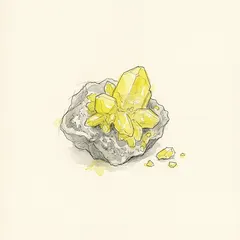 Όλα τα βιβλία για Sulphur →
Αντιδοτείται απόAconitum NapellusAloe SocotrinaArgentum NitricumArsenicum AlbumBelladonnaCalcarea CarbonicaCamphoraCausticumCedronChamomilla
Όλα τα βιβλία για Sulphur →
Αντιδοτείται απόAconitum NapellusAloe SocotrinaArgentum NitricumArsenicum AlbumBelladonnaCalcarea CarbonicaCamphoraCausticumCedronChamomillaGeneral EN
Rub.
Acet.
—
+
—
+
-f
+
—
—
—
+
_1_
+
—
+
+
—
—
—
+
+
+
+
+
+
—
—
—
—
+
—
+
—
—
—
+
—
+
+
—
+
—
+
+
—
+
+
—
—
4-
+
+
—
—
+
+
+
—
+
+
—
+
—
-r-
+
+
+
+
+
+
+
+
+
+
+
—
+
+
—
+
—
+
+
—
—
+
+
+
' —
—
Taking Mercurius vivus as a type of the whole, we find that it is in- dicated in persons who are of a scrofulous habit, whether of syphilitic constitution or not, in whom the glandular system is active. This glandular activity shows itself in two ways. In the first place, we may have a condition simulating plethora. In more advanced stages, we may find Mercurius indicated in enlarged glands with emaciation and deficiency of blood.
We find Mercurius indicated also in scrofu- lous children who have unusually large heads with open fontanelles, particularly anterior fontanelles. They are slow in learning to walk, the teeth form imperfectly or slowly, the limbs are apt to be cold and damp, and there is a damp, clammy feeling to the limbs. You may distinguish it from Calcarea, Silicea and Sulphur by these characteristics:
THE PREPARATIONS OF MERCURY. 59 1
the head is inclined to perspire in the Mercurius case, but the perspiration is offensive and oily. It is not as often indicated as Calcarea, Silicea or Sulphur, nor is it as certain or as permanent in its effects. But it may come in as a remedy to partially relieve, and it may be indicated as an intercurrent remed}^ in a course of treatment with Sulphur, when the latter remedy seems to fail. You will find the Mercurius patient illustrating plethora with anxiety and restless- ness, tossing about, moving from place to place.
It is one of the remedies useful for nostalgia or home-sickness. The patient becomes anxious and irritable. This anxiety seems as if it were in the blood, that is, it is always attended with ebullitions of blood. This dis- tinguishes it from other remedies.
The congestions of Mercurius indicate it after Belladonna. There are resemblances between the two remedies, which have been well con- firmed clinically. It often follows Belladonna in inflammations, even in inflammation of the meninges of the brain, when, as under Bella- domia, there are the same hasty speech and quick, nervous manner. The child talks so rapidly that one word runs into another.
You will find the face flushed very much as in Belladonna, but }7ou have, in ad- dition, to distinguish it from that remedy, glandular swellings, and tendency to sore mouth.
Mercurius is often indicated in catarrhal or gastric fevers when the face is puffed, when the throat is swollen, both internally and ex- ternally, from involvement of both glands and cellular tissue; when there are aching pains in the joints, which are made worse by the warmth of the bed, and are not relieved by sweat. In addition to this you almost always find that there is a tendency to catarrh of the bowels, characterized by slimy, bloody stool, accompanied by great tenesmus, this tenesmus not ceasing after stool. Here, too, you will find that Mercurius follows Belladonna well.
We find Mercurkis indicated in haemorrhages. It is often called for in nose-bleed or epistaxis, particularly when the blood coagulates and hangs from the nostrils like icicles. This is a useful hint. Suppose that nose-bleed appears in a scrofulous child or in a full-blooded patient, a boy at the age of fifteen or sixteen, when congestions are so frequently noticed.
You have given Belladonna, Hamamelis, and Erigeron, and have failed to check it. The blood is quite bright, and runs in streams. Medicines do not stop it. Then comes this Mer- curius condition.
You give that remedy and cure, not only that
592 A CLINICAL MATERIA MEDICA.
attack, but you prevent the return of others. The same indications apply to uterine haemorrhage or menorrhagia when the flow is pro- fuse, dark and clotted. Then, if the glandular swelling, sore mouth, and other symptoms are present, Mercurius is certain to be the remedy.
We find Mercurius indicated in pneumonia. Here it requires that the right lung be affected, and that there are also icteroid symptoms. The skin is yellow. There is sharp stitching pain through the lower portion of the right lung. There will be other pathognomonic symp- toms of pneumonia present, but these need not be specified sepa- rately.
We find it indicated in peritonitis, and here again it follows Bella- donna when suppuration has commenced and you have tympanitic ab- domen, evidence of effusion, which will be partly serous and partly purulent, sweat, rigors, etc. Here Mercurius prevents the further spread of the suppurative process.
Another condition in which we may use Mercurius is one of in- flammation which has gone on to suppuration, whether the disease be a boil, a tonsillitis, or any other form of inflammation. Mercurius belongs to an interesting little group of medicines which you will use very often; they are Belladonna, Hepar, Mercurius and Lachesis. To these we may also add Silicea and Sulphur. You should prefer Bella- donna in the beginning of inflammation as in tonsillitis.
The throat is bright red and swollen, and there is difficulty in swallowing fluids, and sharp pains through the tonsils.
You should change to Hepar when the sharp sticking pains and chills indicate the beginning of suppuration. It may prevent suppura- tion when given in the incipiency of that process.
Mercurius is suited to a still more advanced state when pus has formed and you wish it evacuated. Mercurius does not prevent the formation of pus, but rather favors it. If you give it too soon you will spoil the case. In felons, if it is given low, it will generally favor the rapid formation of pus.
When pus continues to discharge and the wound refuses to heal, Silicea follows Hepar. In some of these cases, the benefit under Silicea will cease. Then a dose or two of Sulphur will excite reaction and Silicea can effect a cure.
Lachesis is indicated when the pus degenerates and becomes of a dark, thin, offensive character, with the sensitiveness to touch of that drug.
THE PREPARATIONS OF MERCURY. 593
Mercurius vivus is indicated in ophthalmia, usually of scrofulous or syphilitic origin. The patient suffers from the glare and heat of the fire, consequently he avoids the fire and warm rooms. You sometimes find it indicated in blepharitis of men who work in and about fires, as foundrymen. The pains are usually worse at night.
The lids are thickened, especially at their tarsal edges, and the eyes discharge a thin acrid muco-pus, and you find little pimples scattered over the cheeks. Ulcers may form on the cornea. These ulcers are usually superficial, and have an opaque look as though pus were between the corneal layers. In syphilitic iritis Mercurius will be sometimes in- dicated when there is hypopyon.
Now let us distinguish between this and other preparations of Mercury.
The Biniodide of Mercury is indicated in inflammations of the eye. The symptoms are very similar to those of ' ' vivus, ' ' but there is more glandular swelling.
The Protoiodide is more frequently indicated in eye diseases than is the Biniodide. It is called for in corneal ulcers which look as if they had been chipped out with the finger nail. There is, usually, a thick yellow coating on the base of the tongue, the anterior portion being clean and red.
Mercurius d?ilcis, or calomel, is selected more by its general symp- toms, which are these: it suits in scrofulous children who are pale, and who have swelling of the cervical and other glands. The skin is rather flabby and ill nourished. The flabby bloatedness and pallor are the indications for calomel.
Next to this we have Bichloride of Mercury or Mercurius corrosivus. This is indicated in inflammatory symptoms of the most violent char- acter. There is no mercurial that produces such intense symptoms as does the Bichloride. It produces burning, agonizing pains, with most excessive photophobia and profuse excoriating lachrymation, making the cheeks sore, almost taking the skin off, so excoriating is it.
There are tearing pains in the bones around the eye. There is ulceration of the cornea, with tendency to perforation. In such cases you will, as a matter of course, have hypopyon. Mercurius corrosivus is almost a specific for syphilitic iritis.
If the symptoms of the case do not point to some other drug as the remedy, you should give it in this disease. If you choose to use atropia locally, do so in order to prevent the adhesions which will otherwise almost inevitably take place in these cases. You will also find Mercurius corrosivus indicated in retinitis albuminuria.
594 A CLINICAL MATERIA MKDICA.
Cinnabaris is next. As a remedy for quite a variety of inflamma- tions of the eye. I will only give you one symptom for it, and that is pain which shoots across the eye from canthus to canthus, or seems to go around the eye.
Next, the action of Mercury on the nose. We find Mercurius vivus indicated in catarrhs of the nose and throat, which are provoked by damp, chilly weather, and by the damp, cool evening air. The nose itches and burns and feels stuffed- up; with this there is thin coryza. The throat feels raw and sore.
There is aching in the various joints. These are the symptoms which will indicate Mercurius both as to the exciting cause and as to the symptoms present. You may have with these a hot feeling. The face flushes up and gets red, perspiration breaks out but it gives no relief.
There is another form of coryza in which you may give Mercurius, and that is when the cold is "ripe," and the discharge from the nose is yellowish-green, thick and muco- purulent.
Here it rivals Pulsatilla and Kali sulphuricum, both of which are useful for these thick, yellowish-green nasal discharges, when the patient is better in the open air and worse in the evening. Pulsatilla, independently of its other symptoms, is distinguished by the fact that the discharge is never irritating, but is perfectly bland. The discharge in Kali sulph. is more apt to be yellow.
You are also to distinguish Mercurius from Nux vomica, which is suited to coryza caused by exposure to dry cold, and when there are soreness, roughness and a harsh, scraped feeling in the throat. Mer- curius always has a smarting, raw or sore feeling.
Now, the throat symptoms of Mercurius vivus may lead you at times to think of it in diphtheria. Think of it as much as you choose, but think of it only to reject it. It is not indicated in diphtheria. I do nqt believe it indicated even in diphtheritis.
But there are other pre- parations of Mercury which may be used here. Both the Biniodide and the Protoiodide of Mercury are indicated in diphtheritic sore throat, or even in true diphtheria. The Biniodide is of use when the left tonsil is inflamed and there is a yellowish-gray membrane forming there. The glands of the neck are swollen.
There is also some involvement of the cellular tissue, around the throat. The patient may have an ac- cumulation of slimy or sticky mucus in the mouth and throat. The symptoms are worse from empty swallowing, so that the simple at- tempt to swallow saliva excites more pain than does the swallowing of food.
THE PREPARATIONS OF MERCURY. 595
The Protoiodide of Mercury is to be thought of more when the deposit forms on the right side of the throat, with swelling of the glands in the neck and with the accumulation of this tenacious mucus in the throat. Here there is almost always present that thick, 3'ellow, dirty coating on the base and posterior part of the tongue, the tip and sides being red. These two remedies are often indicated in diphtheritic sore throat.
Next you will notice the Cyanide of Meirury, which is a combina- tion of hydrocyanic acid and mercury. We have in this drug one of the very best remedies in diphtheria, especially when it is of a true adynamic or malignant type. By reason of the presence of theprussic acid you will find it indicated in cases in which the patient is very much prostrated from the beginning. The pulse is quick.
It may be as high as 130 or 140, and it has no volume to it at all. The mem- brane at first is white, covering the velum palati and tonsils. The glands soon begin to swell, however, and then the membrane becomes dark, threatening even to grow gangrenous. Weakness is extreme.
The breath is foetid. There is loss of appetite. The tongue is coated brown, or, in severe cases, even black. Nose-bleed sets in, and this you know is a dangerous symptom.
The remedy may also be used in diphtheria of the lar37nx. The expectoration is thick and ropy and there is harsh, barking, croupy cough, with dyspnoea. Here, the Cyanide of Mercury has saved life, but it will not always do so.
You will notice its resemblance to Kali bichromicum in diphtheritic croup. The fact lies in the larynx and in the thick, tough, tenacious expectoration. The distinction lies in this: the Cyanide of Mercury has great weakness. Now this weakness is not a simple prostration caused by the efforts of the child at breathing.
It is due to poisoning of the blood, which is represented by the blueness of the surface, cold- ness of the extremities, and quick, weak pulse. If you have not these, Kali bichromicum is to be preferred.
Cinnabaris is a remedy not often thought of in catarrhal troubles. It is indicated in nasal catarrh when there is great pressure at the root of the nose, a feeling as though something heavy was pressing on the nose, a heavy pair of spectacles for instance. We also frequently find throat symptoms with this form of catarrh. The throat is swollen and the tonsils are enlarged and redder than normal.
There is great dry- ness in the throat, and this is more annoying at night, waking the patient from sleep. Remember this sensation across the bridge of the
596 A CLINICAL MATERIA MKDICA.
nose and the character of the throat symptoms in connection with it. These symptoms may occur in the syphilitic, in the scrofulous, or in persons in whom there is tendency to catarrh. We have found Cinna- baris of use in the sore throat of scarlatina, which is often diphtheritic in its character, when there is quite an accumulation of stringy mucus in the posterior nares. That symptom being prominent, Cinnabaris will be the remedy for the emergency.
I have used Mercurius corrosivus successfully when the accumulation of mucus in the nose is quite thick; in fact, almost like glue. In some cases of syphilitic disease of the nose, you find Mercurius corrosivus in- dicated from the fact that the ulcers perforate the nasal septum, there are burning pains, and discharges are acrid, corroding the tissues over which they flow.
The throat symptoms of Mercurius corrosivus are very violent. I can conceive of cases where it would be required in diphtheria, though I have never given it in that disease. The uvula is swollen, elongated and very dark red. There is intense burning in the throat, just as in- tense in fact as that of Arsenicum album, Arse?iicum iodatum or Cap- sicum.
This burning pain is rendered intolerable by any external pressure. It is accompanied by violent constriction of the throat. Any attempt to swallow, be the matters swallowed solid or liquid, causes violent spasms of the throat, with the immediate ejection of the solid or liquid.
You here recognize a resemblance to Belladonna in the spasmodic character of the symptoms. Mercurius corrosivus is at once distin- guished from Belladon?ia by the inflammatory tendency of the symp- toms as indicated by these extreme burning pains. Thus it has the constrictive quality of the Belladonna plus the most intense, destruc- tive inflammation of the throat. You may further distinguish be- tween the two remedies by the pulse.
In Mercurius corrosivus the pulse is quick, weak, and irregular, and not full and strong as under Belladonna.
Next, a word or two about the Mercuries in their action on the genitals and the glands. The Mercuries have long been used in the treatment of syphilis. Mercurius solubilis or vivus is indicated in primary syphilis for the so-called soft chancre or chancroid. The ulceration is superficial rather than deep, and the base of the sore has a dirty, lardaceous appearance. Mercurius sol. has produced such an ulcer as this, and, therefore, it will cure it. The sore throat which
THE PREPARATIONS OF MERCURY. 597
often ushers in the syphilitic fever six or seven weeks after the appear- ance of the primary lesion, is also found under Mercurius solubilis.
The Iodides of Mercury are the preferable remedies for the Hunterian or hard chancre. That is a form of ulcer which the Protoiodide and Biniodide have both produced, therefore they will cure it. There is no necessity whatever for such external applications as caustics, for the proper internal remedy if it does not entirely prevent the onset of secondary symptoms will at least lessen their intensit}T.
Mercurius corrosivus is to be preferred to any of the drugs mentioned for syphilitic symptoms when the ulceration is very destructive. The ulcer is serpiginous; it has a ragged edge, eating out and destroying in a few days nearly half the penis.
Secondary syphilis may be treated with one or the other of these preparations, if the drug has not been abused in the primary stages. Mercurius solubilis very quickly helps the syphiloderms on the palms of the hands, which are red, itch slightly, and scale off.
There is another use of Mercurius which should be mentioned here: if a child continually pulls at the penis, it may be on account of irrita- tion. Mercurius is the remedy — or perhaps Cantharis.
Returning to Mercurius vivus, I want to say a few words concern- ing its use in diseases of the liver. The tongue is coated a dirt}7 yel- lowish-white and takes the imprint of the teeth. Scorbutic sym- ptoms are usually present. The gums ulcerate and become spongy.
There is a foetid or disagreeable odor from the mouth. The skin and conjunctiva have a well-marked jaundiced or icteroid hue. There is tendency to rush of blood to the head. The region of the liver is sore to the touch; the abdomen rather tympanitic and swollen, particularly across the epigastrium and in either hypochondrium.
The patient cannot lie on the right side. You will find the liver en- larged and often indurated. The stools are either clay colored, from absence of bile, or they are 3'ellowish-green, bilious, passed with a great deal of tenesmus and followed by a " never-get-done" feeling.
Mercury is indicated in dysentery, especially when it occurs in a season when warm days are followed by cold nights.
Nux vomica has many resemblances to Mercurius, but it differs in that the pains and tenesmus usually cease after stool; whereas, with Mercurius, the}7 continue after stool.
Aconite often precedes the exhibition of Mercury in the weather I have spoken of, hot days followed by cold nights. In the incipient
598 A CLINICAL MATERIA MEDICA.
stages, such troubles may be checked by Acoiiite. If Aconite fails, then Mercurius will be indicated. Often, after the tenesmus and blood have ceased, and the mucus still persists, Sulphur will be the remedy.
There is another remedy to be remembered in connection with Mer- cury in bilious troubles, and that is Leptandra. Both of them have these yellowish-green stools, or stools black like pitch, and horribly offensive stools. The distinction lies here: Leptandra has urging to stool, griping continuing after stool, but not the tenesmus. Lep- tandra frequently has dull, aching, burning pains in the posterior por- tion of the liver.
LECTURE LVIL
THE NOBLE METALS— AURUM.
In this group we have Aurum metallicum , Aurum muriaticum, Ar- gentum metallicum, Argentum nitricum, Platinum and Palladium . There are also two or three others of which we know but little.
Aurum and Argentum have many symptoms in common, and yet their distinctive characteristics are sufficient to enable you to separate them readily in practice. I will give you the general distinctions be- tween the two drugs before I consider them individually. Gold affects more the circulation of the blood. It also acts on the mind, producing emotional symptoms.
Now, by this I mean that if you find symptoms of the nervous system in Aurum, they will be followed by symptoms of the circulation as the primary or most important features of the case.
Argentum has more symptoms of the respiratory organs and intellect- ual part of the mind. With Aurum, we have tendency to hyperemia; in Argentum, more nervous phenomena; only, Aurzim seems to attack the bones. We find very few symptoms of Argentum indicating it in bone affections. The latter, however, causes an arthralgia or neuralgic pains in the joints.
It also attacks the cartilages of joints. For in- stance, you find Argentum metallicum useful in the arthralgic pains of women who suffer from prolapsus uteri. They can scarcely move their joints, and yet a most careful investigation shows no rheumatic inflammation.
Aurum suits in scrofula with redness of the face, thus keeping up the tendency to hyperemia or fulness of the bloodvessels. In these scrofulous cases, 3tou will find that the opacities and ulcers on the cor- nea are surrounded by well-filled bloodvessels; here, again typifying the hypersemic quality of the drug.
Argentum suits in chlorosis. It affects the oxidizing power of the blood; it shrivels the body. Thus Aurum affects the distribution of the blood, giving us fulness or hyperemia, whereas Argentum affects its quality, rendering it incapable of fully carrying oxygen. Hence, all parts of the body dwindle from malnutrition.
Silver, and especially its nitrate, coagulates albumen, and this is the
6oo
A CI,INICAE MATERIA MEDICA.
reason why the latter has been used locally for so many years as a caustic. When applied with moisture to animal tissues, it immediately coagulates the albuminous portions, and so tends to destroy whatever process is going on. Its action does not extend deeply, however, on account of the formation of this layer of coagulated albumen.
Argentum nitricum more than the mental itself, causes gastro-enteric inflammation, very much like Arsenic. In poisoning cases it also seems to affect the epithelial layers. For instance, when animals that have been fed on it for quite a while die, the epithelial layers in all parts of the body seem to be more or less destroyed. That is the rea- son why you find it of use in cancer and in haemorrhages, in both of which conditions the epithelial structures are diseased.