 Ομοιοπαθητική Βιβλιοθήκη
Aconitum Napellus
Hahnemann - Materia Medica Pura · Samuel Hahnemann · 56,868 χαρακτήρες
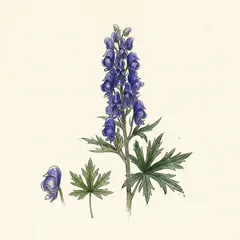 Όλα τα βιβλία για Aconitum Napellus →
Αντιδοτείται απόAcetanilidumAceticum AcidumActaea RacemosaAlcoholArnica MontanaBelladonnaBerberisBerberis VulgarisCaladium SeguinumCantharis Vesicatoria
Όλα τα βιβλία για Aconitum Napellus →
Αντιδοτείται απόAcetanilidumAceticum AcidumActaea RacemosaAlcoholArnica MontanaBelladonnaBerberisBerberis VulgarisCaladium SeguinumCantharis VesicatoriaGeneral EN
Monkshood. — The juice of the fresh plant, expressed on the first ap- pearance of flowering, and mixed with an equal quantity of alcohol.
Although the following symptoms do not by any means express all the medicinal power of this precious plant, they will, nevertheless, furnish the sagacious practitioner the means of judging how far it may be useful in certain states of disease, against which the vulgar practice has, up to the present time, employed, often in vain, and almost always with injurious con- sequences, its dangerous resources ; such as, copious emissions of blood, and others peculiar to what is called the antiphlogistic treatment.
I would speak of fevers, called purely inflammatory ; in which the smallest dose of Aconite, without recourse to any of the remedies acting in an antipathic manner, causes a prompt removal of the inflammatory action, and leaves no consecutive effects behind. In measles, in purpura miliaris, in inflamma- tory fevers with pleurisy, &c, the efficacy of this plant amounts almost to a miracle ; provided the patient observes a regimen somewhat cooling, and abstains from all other medicinal sub- stances, as well as vegetable acids, takes it alone and in the dose of the thousandth part of a drop of the thirtieth dilution. It seldom happens that a second dose appears necessary at the end of thirty-six or forty-eight hours. But to guard our con- scientious method from all possibility of influence from the pre- cepts of the common practice, which is but too prone to be governed bv names of diseases, often imaginary, it is necessary
2 ACONITUM NAPELLUS.
that the primary morbid affection, to which we would oppose Aconite, should exhibit, in the aggregate of its principal symp- toms, a striking analogy with those of the remedy. Then we obtain results truly surprising.
It is precisely in the cases in which the partisans of alloeo- pathy pride themselves most on their method ; it is in the violent acute inflammatory fevers, where they expect to save their patients alone by excessive and frequent bloodlettings, and thereby exceed so far the powers of homoeopathy, that they most grossly deceive themselves. Here, more than ever, in fact, homoeopathy exhibits her universal superiority ; for she has no necessity for shedding a drop of that precious fluid, of which allceopathy is so dangerously profuse, in order to triumph over those fatal fevers, and restore health, sometimes in as few hours as the ordinary practice requires months, completely to re-establish those whom their violent remedies have not, it is true, conducted to the tomb, but have left a prey to those chronic sufferings which are their natural consequence.
It is sometimes necessary, in these acute diseases, to have recourse to another homoeopathic remedy to cover the symp- toms which remain after aconite has acted twelve or sixteen hours, but it is rarely necessary to administer a fresh dose of the latter.
In giving Aconite with these precautions, in the affections of which 1 have just spoken, all danger will have passed at the end of four hours, and then the circulation returns from hour to hour to the calm and undisturbed balance which may habitually characterize it.
Although, from the short duration of its action, (which in so feeble a dose does not go beyond forty-eight hours,) Aconite may appear to be useful only in acute cases, still it is not a less indispensable remedy in the most obstinate chronic affections : in those in which the state of the body requires a diminution of what is called rigidity of fibre— a subject on which I cannot here enlarge. Its efficacy in similar cases will be seen in the account of symptoms excited by it in the healthy individual in part about to be described.
Aconite is equally the first and most powerful of the cura- tive means in croup, in several kinds of angina, as well as in the acute local inflammations of other parts of the body • especially when with thirst and a frequent pulse, we meet with great impatience, an agitation which nothing can calm, and a tossing from side to side in great agony.
It produces all the morbid states which are manifested in persons whose minds have been excited by fear, joined with
ACONITUM NAPELLUS. 3
indignation ; and it is also the surest means of curing them rapidly.
Every time that Aconite is chosen as a homoeopathic reme- dy, it is especially necessary to regard the moral symptoms, and be careful that they resemble those which belong to it.
Aconite is indispensable for females who suffer from fear or contrarieties during the catamenia ; for without this precious calmer, it happens indeed too often, that they suffer even a sud- den arrest from such moral shocks. In such cases it will be sufficient to direct a single inspiration, and for an instant, from a bottle containing a globule of the size of a mustard seed, which has been impregnated with the thirtieth dilution ; and this will preserve its virtue for some years without any loss, provided the bottle is always well closed.
The principal part of those symptoms which appear to be contradictory, and which will be noticed hereafter, are but alternate states, and Aconite may be salutary in the one as well as in the other, though principally so in those of a tonic character.
Vegetable acids and wine destroy the effects of Aconite, and so do other remedies, which correspond palliatively or homceo- pathically to the untoward symptoms which sometimes follow its use when too large a dose has been taken, or it has not been homaeopathically chosen.
According to Noack and Trinks, Aconite may be used in the following affections : Predominant action of the arterial system, with consequent retarded action of the venous system, characterized by inflammation Aconite is especially suitable to individuals of a plethoric habit, lively character, bilioso- nervous or sanguineous constitution, dark hair, bright com- plexion, and to old people Active congestions of 'blood to the brain, eyes, face, heart and lungs Virulent hemorrhages from various organs
Acute inflammations of external and internal organs, with lancinating pains and synochal fever Attacks of violent pains generally Various kinds of symp- toms consequent upon fright, anger and chagrin, indicating disturbances in the circulation of the blood and the functions of the liver Bilious affections, coloring of the skin as in jaundice
Burns, with synochal {ever Catarrhal affections during a cold, dry, northwest wind, or owing to a draft of air Great liability to catching cold Eruptions of rash followed by dropsy, with feverish symptoms; miliaria herpetica ; lichen simplex
Rubeola, measles with synochal fever, photophobia, catarrhal inflammation of the eyes, cold, frequent sneezing, catarrhal inflammation of the mucous mem-
4 ACONITUM NAPELLUS.
brane of the larynx and trachea, and symptoms of pneumo- nia Scarlatina laevigata and miliaris, with simple syno- chal fever Variola, varioloid, and varicella, with considerable synochal fever, especially during the eruptive stage Erysip- elas laeve and fugax, also bullosum
Nettle-rash Eczema mercuriale Crusta lactea? — Synocha exquisita : violent shaking fits of shorter or longer continuance, afterwards general, dry, burning heat, with a hard, full, rebounding, accelerated pulse, and great thirst, followed by a general and copious sweat Synochal fevers, with catarrhal, rheumatic, arthritic, erysipelatous conditions, also with a tendency to bilious nervousness
First stage of cerebral and abdominal typhus, with synochal symptoms Third stage of cholera, when the vascular system seems to be engaged in a state of violent, unequal, congestive reaction Pest, on the day of its appearance, with a violent, burning heat, somnolence, etc Acute rheumatism with synochal fever, stiffness of the whole body, swelling of the joints, and excessively violent pains, especially rheumatism of the joints
Acute arthritis, with synochal fever Neuralgia Convulsions of children, with violent congestion of blood to the head Hysteric convul- sions consequent upon fright
Chronic spasms, especially in young people who lead a sedentary life, particularly girls of a sanguine temperament Tetanus ? — Trismus ? — Catalepsy Nightmare in young people of a plethoric habit Fainting fits, with orgasm of the circulatory system, and considerable congestion of blood to the head
Coma somnolentum Somnambulism? — Dementia, with apprehensions of death and great anxiety Dread of ghosts Melancholia, especially moria, erotica and athymia melancholica
Congestion of blood to the head, especially when combined with vertigo, in children during the period of dentition ; in full-grown people it is a valuable preventive against apoplexia sanguinea Headache, consequent upon congestion of blood to the head, owing to catarrhal and nervous causes Megrims Encepha- litis, also when owing to a metastasis ; acute meningitis of children, first stage
Op hthalmice, of a catarrhal, rheumatic, arthritic, scrofulous, syphilitic nature, especially when che- mosis has set in ; inflammation of the eyes from bodies having penetrated into the eyes ; ophthalmia neonatorum Ble- pharophthalmitis gonorrhoea Otitis Bleeding at the nose, of a virulent kind, especially in children and in young people of the age of puberty, but also in declining years
Lancin- ating, drawing and tearing prosopalgia, with violent conges- tion of the blood to the head and face, and great anxiety.
ACONITUM NAPELLUS. 5
Toothache of sound and hollow teeth, drawing, throbbing, with a violent congestion of blood to head and face, great anxiety and nervous irritation Difficult dentition of children, with violent congestion of blood to the head, and consider- able feverish excitement Glossitis Slight catarrhal inflam- mation of the tonsils, soft palate, and pharynx, consequent upon a spring or autumn cold
Vomiting of pregnant or hys- teric females ; vomiting of lumbrici ; hmmatemesis Spasm of the stomach ; inflammation of the stomach ? — Inflamma- tion of the diaphragm Inflammation of the liver, with a lancinating, burning pain, particularly inflammation of the convex surface of the liver, with synochal fever Jaundice
Peritonitis, also puerperal peritonitis — Colic after a cold Enteritis, inflammation of the large and small intestines, with lancinating, cutting, burning and tearing pains, with ex- cessive sensitiveness of the body to the touch ; in this affection Aconite is often yet useful after vomiting of fascal matter, great anguish, and coldness of the inferior extremities have set in Psoitis Strangulated herniae
Nephritis Cystitis Suppu- ration of the bladder Melaena ? — Flowing hemorrhoids of a violent kind ; painful varices of the rectum
Oophoritis Uteritis, in young females of a plethoric habit Active metrorrhagice Too frequent, long, and copious menses, owing to plethora ; restoration of the menses in plethoric females, when they had been suppressedby fright, chagrin, or cold by the feet
Fluent and dry coryza with synochal fever Inflammation of the larynx and the mucous membrane of the trachea, with a sense of dryness and rawness, with roughness and hoarseness of the voice, tormenting dry cough, owing to tickling in the larynx, and accompanied by synochal fever Grippe : Coryza, violent, dry cough, owing to constant titilla- tion in the larynx and trachea, with lancinating, pressive pains in head and chest, pain in the epigastrium and hypo- chondres, as if they were bruised, a similar pain as from bruises, and a drawing pain in all the limbs, great physical depression and lassitude, synochal fever and copious sweats, which afford no relief
First stage of croup Whooping- cough in the first stage, with feverish sensations Asthma, owing to congestion of blood to the thoracic viscera ; asth- ma in chlorotic individuals or such as are affected with arae- norrhcea Asthma Millari? — Haemoptysis with considerable congestion of the blood to lungs and heart, sense as of a warm fluid rising in the chest, oppression and anguish at the chest, violent palpitation of the heart, vertigo, obscuration of sight, hard, full pulse, etc
Haemoptysis owing to tuberculous
6 ACONITUM NAPELLUS.
phthisis Pleuritis muscular is and serosa, first period, with violent stitches and synochal {ever.*—Pneumo?iia. Pleu- ropneumonia simplex and biliosa. first stage, with dull aching, great dyspnoea, unceasing short cough, with expec- torations of foamy blood and violent synochal fever ; also in the stage of splenetization Inflammation of the walls and coats of the vomica?, with lancinating pains and synochal fever
Pneumonia infantum, with a short, rattling breath, continual irritation, exciting cough, constant cries and great anxious uneasiness Affections of the chest during the cholera Pe- ricarditis, carditis, also when mercurial; endocarditis, with or without rheumatism of the joints Palpitation of the heart, with violent orgasm of the blood and great anguish
Invalu- able sedative in organic affections of the left heart, and of the large vessels, in angina pectoris, hypertrophy of the left heart, with either thickening or contraction of its walls, aneurisms of the aorta, etc Aconite and Digitalis are especially suitable for diseases of the left heart Paralysis ? — Rheumatic paralysis ? — Sciatica ? — Incipient coxalgia infantilis ? Analogous Re- medies : — 1.
Bell. Bry. Con. Dig.
Puis. Rhus. Sep. Spig.
Sulp. ac. 2. Arn. Ars. Cham.
Cic. Croc. Dulc. Merc.
Nux. v. Opium. Phosp. Ruta.
Sulp. Verat.— 3. Agar. Anac.
Ant. cr. Asa f. Asar. Cann.
Carb. an. Caust. Coff. Colch.
Dros. Helleb. Hep. Hyosc.
Ipec. Magn. mur. Nitr. ac. Plat.
Sab. Spong. Stram. Thuya.
Head EN
1.
Vertigo ; sense as of waving to and fro in the brain.
Vertigo, especially in stooping ; with staggering, especially to the right, (a. 36 h.) Vertigo ; all turning round, so as almost to prevent her getting into bed.
(a. 37 h.) Verti- go ; so giddy that the head dares not be moved ; feeling as if the eyes were closing. — 5.
Vertigo, like intoxication ; all goes round ; staggers when walking, almost to falling, with nausea ; there is no vertigo when sitting ; it is worst on rising from a seat and less when walking, (a. £ h.) Vertigo ; very much increas- ed by shaking the head, which causes the eyes to see black.
Vertigo and dizziness.
Vertigo ; vertiginous weight in the head, especially in the forehead, and in stooping forward ; with nausea and qualmishness in the scrobiculus cordis, (a. 2 h.)
Vertigo EN
10.
Vertigo, asthma and dry cough, with pain in the hips.
Vertiginous obscurity of vision without alteration of the pulse.
Vertigo and headache ; not affected by strong exercise, (a. i h.) Vertigo and headache, before and behind ; both worse in stooping, (a. 10 m.) His attention is often disturbed by a frequent arrest of thought, when reading or writing.
Occa- sional obliteration of thought ; in writing down the thought
ACONITUM NAPELLUS. 7
which he had conceived and had already half written down, he cannot reach the end without first recollecting himself. — 15.
His head feels as if a board were pressing against the fore- head, (a. f h.) His head feels in front as if it were nailed up, in the warm room.
Unsteadiness of ideas ; when trying to dwell upon one thought, a second one is immediately substi- tuted in the place of tlie former ; a third one takes the place of the second, and so on, until the mind becomes quite con- fused.
What has been just done, appears like a dream, and can scarcely be recollected.
Weakness of memory, (a. 5 and 9 h.) Quickness of memory.
Great weakness of the faculty of thought. — 20.
He can neither think nor reflect, knows nothing, and there is nothing of which he has the same idea as formerly ; he feels as if all these functions of the mind were performed in the region of the scrobiculus cordis ; at the end of two hours he experiences a vertigo twice, and the faculty of thought becomes again natural.
Sense of emptiness and mud- dled state of the head, early in the morning, as after intoxica- tion.
Obtusion of the head, as after intoxication, with pres- sure in the temples.
Stupefying headache as if the head were bruised, accompanied by a similar pain in all the limbs, (a. 14 h.) Sense of fulness and heaviness in the forehead, as if a weight were pressing out there, and as if the contents of the head would issue from the forehead, (a. | h.) — 25.
Stunning, drawing pressure in the left temple from without inwards.
Sense as of being pulled up by the hair.
Traction on one side of the head.
Aching in the temporal region, also by paroxysms in the occiput, finally obtusion of the head, characterized by a constrictive pain.
Constrictive pain in the forehead.— 30.
Ten- sion over the whole forehead.
In stooping the forehead seems full, as if the contents would burst forth, (a. 25 h.) Headache, as if the eyes must fall out.
(a. | h.) Headache, as if the brain were pressing out.
(a. •£■ h.) Headache, as if parts of the brain were raised up, which is increased by the smallest move- ment, even by drinking and speaking, (a. £ h.)— 35.
Speaking increases the headache.
Lancinating, beating headache, as from an internal abscess, sometimes preventing one from talk- ing.
Headache in the forehead when walking, sometimes with fine stitches, or beating, oppressive pains ; subsides when sitting.
Small pulsations in different parts of the head.
Headache ; throbbing on the left side of the forehead, with paroxysmal hard shocks on the right, (a. 3 h.)— 40.
Pain in the left side of the head, as if it were pressed together.
Headache, as if the skull were externally laced by a band and drawn tightly together. {Vanhelmont.) Very painful ache over the fore-
3 ACONITUM NAPELLUS.
Head EN
Outward pressing pain in the forehead.
Lacerating pain in the left temple. — 45.
Lancinating pains in the left temple in short paroxysms ; stitches fly through the tem- ples into the head.
Lancinating throbbing pains in the temples.
Jerking stitches in the head, especially in the forehead.
Lacer- ating pain in the left temple, with roaring tingling in the ears.
Sense of compression of the brain in the forehead. — 50.
Claw- ing tensive headache, directly behind the orbits. * Pinching and clawing in the forehead, which appears to be in the bones ; ^feeling as if she would lose her senses, (a. 12 to 24 h.) ** Clawing in the forehead above the root of the nose, as if she would lose her senses ; increased by exercise in the open air.
(a. 4 h.) Sense of crepitation in the temples, nose and fore- head, as is heard on moving tinsel to and fro. * Lancinating and somewhat pressive headache above the orbits, in a direc- tion of the superior maxilla, which excites vomiting ; or head- ache, such as arises from the use of emetics, (a. 2. h.) — 55.
Lan- cinating sick headache over the orbits, extending towards the superior maxilla.
Sense as , of something forcing its way out of the head, accompanied by a sense as of pulling ; the upper eyelids being raised at the same time.
(a. £ h.) Twitching lacerating pain in the occiput. * Short paroxysms of lancinating, drawing and tearing pain in the superior right side of the head.
Stitch in the occipital bone. — 60.
Prickling on the left side of the head, as from a brush.
Sense as if a ball were rising from the umbilical region, and spread a cool ** air in the vertex and occiput. * Burning headache, as if the brain were moved about by boiling water.
Heaviness of the head.
Pain in the occiput and neck. — 65.
Sensation as from the effects of a cold taken while in a profuse sweat, headache, buz- zing in the ears, coryza and colic, especially in the morning.
Very hot in the whole head towards evening, which then be- comes very painful, especially in front, continuing the whole evening, (a. 11 h.) (* Sweat on the forehead, Jahr.)
Face EN
(Bloating of the face and forehead.) Face bluish, lips black.
Distortion of the muscles of the face. — 70.
Sensa- tion as if the cheeks were much swelled.
Pain in the articu- lation of the jaw, behind the zygoma, when masticating.
While sweating a burning pain darted several times into the left ear and the upper maxillary bone.
The cheek upon which she is lying when in bed, perspires.
Prickling pain of the cheeks.
Eyes EN
Pupils much dilated.
Obscurity of vision.
Sev- eral attacks of blindness without the speech being checked.
Distortion of the eyes.
Distortion of the eyes and grinding of
ACONITUM NAPELLUS. 9
the teeth towards midnight. — 80.
On opening the eyes, pain in the interior of the eye, as if it would be pressed from the orbit ; this pain extends to the superciliary region and to the inner part of the brain, (a. 21 h.) * Dilatation of the pupils, imme- diately.
Avidity for light ; desire to look at bright light, (a. 3 h.) Black spots float before the eyes. — 85.
Cloudy before the eyes, sight impaired, with sense of vertigo.
Aversion to light.
(a. 6 to 12 h.) l Sharp-sighted.
Dryness of the superior eye- lids, which, in some degree, causes pressure in the eye.
(a. 5 h.) Weight in the eyelids ; on opening them they appear too heavy. — 90.
(Coldness of the eyes in the open air.) Very painful inflammation of the eyes (chemosis).
Sense as of the eyes being much swelled, (a. 5 h.) The eyes shut as with a jerk, as from an irresistible desire to sleep.
Eyes protruded from their orbits. — 95.
Pressure in the eyes, which is especially felt when looking down and turning them ; with heat in the eyes.
Pressure and burning in the left eye and above the brow. * Hard and red swelling of the right upper lid, with sense of tension, especially in the morning.
Inflammatory lachryma- tion of the eyes, which causes so much pain and fright as to make him desire death.
Ears EN
* Continual dull buzzing before the ears, follow- ed by syncope. — 100.
Pain in the zygoma, as from an internal ulcer.
Tingling in the ears.
(a. 10 minutes.) Sense as of something lying against the left ear.
Sense as of tickling in the right ear, as from the crawling of a small worm.
Tear- ing in the left ear. — 105.
Pain behind the left ear, as from pressure of the thumb.
Nose EN
Sense of stupefying compression at the root of the nose. Bleeding at the nose.
Jaws : Sweat on the upper lip under the nose.
Small pru- rient pimples on the upper lip, (a. 24 h.) — 110.
Lancinating jerks in the lower jaw.
Lancinating pain in several teeth, (a. 36 h.) Toothache in the left upper jaw.
Piercing pain in the jaws, as if they would fall off.
Mouth and tongue : Tingling and burning in the tongue and jaw bones: the teeth appear loose. — 115.
Biting sensation of the tongue, most towards the tip.
Penetrating sharp stitches in the end of the tongue.
Long continued burning in the tongue.
Momentary flying stitches in the tongue, with ptyalism.
Short paralysis of the tongue. — 120.
Sense of dryness and roughness on the middle of the tongue, without
1 Probably the alternate symptom of 81, so that both are primitive effects.
thirst, (a. 1 h.) Sense as of prickling at the root of the tongue, as if caused by pepper ; with flow of saliva.
Coolness and dry- ness of the mouth without thirst.
Sense of dryness, first on the lips, then in the mouth, with heat, which mounts from the chest to the head (without redness of the cheeks). 1
Throat EN
Dryness of the inner mouth, immediately.
Sense of dryness in the anterior part of the mouth.
Sense of excori- ation of the orifices of the Stenonian ducts, as if ulcerated.— 125.
Rawness in the throat, with difficulty in swallowing.
Traction from the side of the neck to behind the ear.
Lancinating choking on the left side of the throat, confined to a small spot, especially when swallowing or talking ; passes in a quarter of an hour to the right side, ceasing on the left, disappearing entirely after a quarter of an hour. — 130.
Prick- ling in the throat.
Acute stinging in the back of the throat, as from the smairprickly hairs of the sweet-briar seed.
(a. 1 h.) Burning and fine stinging pain in the back part of the throat.
Sense of constriction in the back part of the throat, as from as- tringents.
Gastric Symptoms.
( Taste and Appetite.) — 135.
Pep- perish taste in the mouth.
Bitter taste in the mouth, with want of appetite ; pain in the chest and under the short ribs.
Bitter taste.
Flat, fish-like taste, as from stagnant putrid water.
Taste of rotten eggs ; her mouth seems filled with air.
Sour taste, with loss of appetite. — 140.
Loss of taste ; what was sapid and agreeable appears to him insipid now.
Regurgitation of sweetish water, as in water-brash, with roaring in the ears.
Regurgitation of sweetish water with nausea.
Sense of raw- ness from the pit of the stomach to the throat, with nausea and qualmishness at the scrobiculus cordis, as if water would col- lect in the mouth.
Empty eructations. — 145.
Tendency to eructation ; but the eructations remain suppressed.
Hiccough.
Hiccough, in the morning.
Hiccough, in the morning, of long continuance.
(Hiccough after eating and drinking.) — 150.
Nausea, vomiting, thirst, general heat, and excessive sweat, with flow of urine.
Vomiting of lumbrici.
Vomiting of green bile.
(a. 1 h.) Vomiting of bloody slime, three or four days in succession.
Vomiting of blood.
Qualmishness and nausea at the pit of the stomach, increased by sitting, almost removed by walking, immediately.
Qualmishness and nau-
1 This want of redness occurred in a person who, in health, had very red cheeks ; the redness was, of course, homceopathically suppressed as Aconite most generally produces redness and heat of the cheeks.
sea.
(a. \ h.) Long continued qualmishness and loss of ap- petite.
Inclines to vomit when walking in the open air.
In- clination to vomit, first in the pit of the stomach, then under the sternum, lastly in the throat, without flow of saliva. — 155.
Sick feeling, as if something sweet or fat which is disgust- ing, had been eaten, (a. 1 h.) After vomiting bloody slime, profuse sweat.
Vomiting, with excessive thirst.
Vomiting, when artificially excited, is followed by an aggravation of the symptoms. — 160.
Vomiting, with anxiety.
Inclination to vomit, with profuse diarrhoea.
Desire for beer ; when taken, it op- presses her stomach.
(No desire for food.) Stomach.
Op- pressive pain in the scrobiculus cordis, which is changed to asthma, (a. 2-J- h.) — 165.
Oppression at the scrobiculus cor- dis, as from a stone lying there, which soon passes to the back, with a compressive cramp-like feeling, as from too heavy lift- ing ; feels stiff.
Oppression of the stomach. 1 Itching in the scrobiculus cordis when sitting, walking or standing.
Pain in the scrobiculus cordis, as if internally swelled, with loss of appetite and attacks of short breath.
Pain, with pressure, in the stomach, like a weight, (a. l£ h.) — 170.
Tension and pressure, with pain, as from fulness or a heavy weight, in the hypochondria, (a. 1£ h.) Sense of contraction at the stomach, as from astringents.
Sense of violent constriction in the hypo- chondria.
Aching in the stomach.
After repeated vomiting and many stools, he still complains of feeling as if a cold stone were in the stomach.
Abdomen EN
175.
Retraction of the navel, especially in the morning before breakfast.
Burningin the umbilical region.
Sense as of burning in the umbilical region, the surface of which it quickly pervades and then extends to the scrobiculus cordis, with anxious beating and lancinations in that part ; after some time she felt thrills of chilliness over the whole body, with disappear- ance of the sense of heat and of the painful sensation in the umbilical region, (a. 1£ h.) Pinching pain in the umbilical region.
Compression of the navel, followed directly by paroxys- mal pressure in the navel, like jerks. — 180.
Gripings and clutch- ings in the umbilical region.
Painless feeling on the left side above the navel, as if something cold, a cold finger for instance, were pressing out from within.
Pressure in the region of the liver ; this oppresses the breathing, and is immediately followed by (pinching ?) belly-ache in the region above the navel.
Jaun- dice.
Dragging colic, extending towards the navel from both
'Note: All of Rodder's symptoms are derived from applying the uice to a wound.
|2 ACONITUM NAPELLUS.
sides ; the colic is excited by bending the abdomen. — 185.
The epigastrium, below the ribs, exhibits a tense, painful swelling.
Swelled, distended abdomen, as from ascites.
Violent jerk- ings (thrusts) in the region of the liver, which intercept (arrest) breathing.
The stool occurs a few hours sooner than usual ; but it is hard, and obliges him to strain a good deal.
Rumbling and grunting in the abdomen, with feeling of rawness.
Rum- bling and grunting in the abdomen, the whole night. — 190.
Fer- menting sort of grunting in the abdomen.
He screams early in the morning, when in bed ; he knows not what to do with himself on account of an intolerable (cutting) colic ; he tosses about in his bed.
(a. 16 h.) Colic-like belly-ache, causing the parts to feel stretched and tense ; it seems to be caused by flatulence.
When laughing loudly, one feels a sharp stitch behind the ribs.
Dull stitches in the left side, when breathing, beneath the ribs.
Traction coming out at the left side of the hypogastrium, and extending towards the back ; when press- ing upon it, that side of the abdomen is painful. — 195.
Flatu- lent colic in the hypogastrium, as if one had taken a purga- tive which excites flatulence.
Very hot flatus, (a. 9 h.) Involuntary expulsion of thin faeces, taking place during what one supposed to be a mere emission of flatulence, (a. 4 h.)
Stool EN
Hard stool, accompanied by straining.
Diarrhoea. — 200.
Nausea with sweat, at times preceding, at times fol- lowing the diarrhoea. * Three to five soft small stools a day, accompanied by straining. * White stool. * White stool and red urine. * Watery diarrhoea. — 205.
The hypogastrium, when touched, feels painful and sensitive.
Weakness of the bowels, such as is generally consequent upon an abuse of purgatives.
Pain in the rectum, (a. 1 h.) Stitches and pressure in the anus.
Momentary paralytic condition of the lower rectum • involuntary stool. — 210.
Flowing haemorrhoids.
Diarrhoea, accompanied by copious emission of urine, and moderate sweat.
Urinary Organs EN
Pressure about the bladder, with reten- tion of urine.
Suppression of urine, with prickings in the region of the kidneys.
Copious flow of urine. — 215.
Copious flow of urine, accompanied by profuse sweat, and frequent, watery diarrhoea, with colic.
Copious flow of urine, and constant sweat.
Frequent, copious flow of urine.
Copious flow of urine, accompanied by distortion of the eyes, and spasmodic contraction of the feet.
When urinating, there is a slight sense as of swashing in the region of the bladder.— 220.
Painful and urgent desire to urinate ; she has to urinate frequently, because the bladder is rapidly filled with a quantity of limpid urine
ACONITUM NAPELLUS. 13
Urgent desire to urinate, on touching the abdomen.
Dysuria.
(a. 12 18 h.) Anxious and urgent desire to urinate, (a. 4h.) Urgent desire to urinate ; an unusually small quantity of urine was passed ; there was some difficulty in passing it, but no pain ; at the same time slight pinchings in the region of the navel (this symptom was produced by smelling of the tincture). — 225.
A quantity of urine is emitted, which, when left to stand, forms a coagulum of blood.
Momentary *paralysis of the neck of the bladder ; involuntary emission of urine.
Burning at the neck of the bladder, between the acts of urinating.
Pain of the bladder when walking, (a. 4 h.) Tenesmus of the neck of the bladder. — 230.
Emission of brown urine, accompanied by burning, afterwards forming a brick-colored sediment.
Pains in the loins, resembling labor-pains, when walking.
Genital organs : Itching of the prepuce ; going off' by rubbing, but soon returning, (a. 3 d.) Stitching and pinching pain in the glans during micturition.
Simple pain in the testicles, resembling the pain which remains after a contusion of those parts, (a. 2 h.) — 235.
Slight, not disagree- able tingling in the sexual organs.
He is attacked with fits of amorousness.
(Considerable increase of sexual desire, alternating with relaxation of the sexual organs.) Decrease of the sexual desire. * Metrorrhagia.
The menses which had ceased to flow the day before she took the drug, resumed their flow profusely, (a. -J- h.) — 240. * Profuse, tenacious, yellowish leucorrhoea.
Rage, at the time when th,e menses made their appearance.
Cold, catarrh : Attacks of anguish, with apprehension of suffocation.
Asthma.
Frequent violent sneezing, with pain in the abdomen. — 245.
One is prevented finishing sneezing by a pain in the region of the ribs of the left side.
Extreme sen- sitiveness of the olfactory nerves ; she is extremely affected by offensive odors.
Attacks of catarrh and coryza (between 8 and 12 o'clock).
Hoarseness, early in the morning, (a. 8 h.) Attack of coryza. — 250.
Chest EN
* Short and hacking cough, owing to a tickling in the larynx — immediately. * Short cough.
(Cough, with heat of the body.) Cough after drinking.
Severe cough excited by a little tobacco-smoke.
(This person was used to tobacco.) — 255.
He (being used to tobacco) cannot smoke, without constantly getting a short and hacking cough, and having a desire to throw up ; this is owing either to the epiglottis letting in smoke, or to the larynx having become too sensitive, (a. 6 h.) * Short and hacking cough, after midnight, every half hour, produced by a tickling in the larynx ; the
14 ACONITUM NAPELLUS.
more she tried to suppress that cough, the more frequently and violently did it occur. * Haemoptysis.
Dry cough. * Short breath, while asleep, after midnight. — 260.
Arrest of breathing through the nose, especially when asleep. * Stinking breath.
Noisy, loud breathing, the mouth being open.
Asthma, with violent, loud breathing.
Morbid condition (paroxysms of par- alysis?) of the epiglottis; aliments and drinks, when being swallowed, easily get info the larynx, threatening suffocation, and exciting cough ; he easily chokes himself when swallow- ing. — 265.
He easily chokes himself when swallowing saliva.
Oppressive anguish in the thoracic cavity, and oppression in the right side of the chest, afterwards in the whole chest.
Clawing compression of the chest, on the right side, by the side of the sternum ; a sort of asthma.
He feels as if his chest were contracted.
Compression of the chest in the region of the heart.
Anxiety which arrests breathing, accompanied by a warm sweat on the forehead. — 270.
Aching in the chest, abating a little by bending the upper part of the body back- wards, but returning as soon as he straightened himself again, (a. 12 h.) Contractive pain in the chest, as if the ribs were drawn to each other from both sides.
He felt a weight in the chest ; he feels as if the whole chest were being compressed from all sides. * Painful stitches in the right side of the chest, in the region of the last rib ; these stitches extend towards the small of the back.
(a. 10 h.) Stitches and aching on the right side of the* sternum. — 275.
Pinching and grinding pain in the right side of the chest, between the third and fourth ribs ; the pain cannot be relieved, and has to disappear of itself.
Oppressive, dull stitches in the left side of the chest near the axilla. * Stitches in the chest (when breathing). * During every inspiration, one experiences stitches coming from the lowest rib of the right side, and extending as far as the apex of the scapula, transversely through the middle of the chest, accompanied by a plaintive mood. * Stitches in the right side, with a plaintive, whining mood. — 280.
Single lan- cinations in the side, extending towards the back.
(a. 24 h.) Pain in the chest like a stitch, which arrests breathing.
Stitches in the side of the chest, accompanied by anxiety and peevish- ness ; afterwards throbbing in the side of the chest ; then oppressive headache.
Burning, finely pricking pain in the chest.
Sense as if the trachea under the sternum had become numb, and had gone to sleep, (a. 8 h.) — 285.
Pain as from a bruise, in the lowest rib, which is much increased by contact • the patient complaining a good deal at the time.
Pain as from a bruise, on the middle of the sternum (which may be
ACONITUM NAPELLUS. 15
increased by external contact).
Slow thrusts press out at the chest in the region of the heart.
Clawing pain in the chest.
Clawing ache in the chest, under the sternum.— 290.
Lancin- ating, boring, grinding pain in the left side of the chest, between the fourth and sixth ribs, lasting ten minutes.
Clawing ache in the side of the chest.
Tingling pain in the chest.
Crawling in the chest, as of beetles.
(Increase of milk in the mammae.)— 295.
Pain in the loins.
Back EN
Aching in the small of the back, on the left side.
Burning, corrosive pains near the vertebra, on the right side.
Violently lancinating, grinding pain on the left side, down along the whole of the spinal marrow, as far as the small of the back ; the pain became so vehement when inspiring, that his eyes began to run (for four hours).
Painful stiffness of the small of the back and the hip-joint ; the small of the back feels paralyzed, (a. 2 h.)— 300.
Pain as from a bruise in the articulation of the last lumbar vertebra and os sacrum ; the small of the back feels as if its power of support had been destroyed by blows.
Tensive ache in the lumbar verte- brae, or pain as from a bruise, accompanied by belly-ache, resembling flatulent colic.
Pain as from a bruise, extending from the small of the back, through the back, as far as the nape of the neck.
(a. 4 h.) Crawling pain in the dorsal spine, as of beetles. — 305.
Incisive pain, reaching, in a circle, from the dorsal spine as far as the abdomen, over the left hip.
Boring pain on the left side of the small of the back.
Grinding, boring pain, reaching from the left scapula towards the front of the chest, increased by inspiration, not increased by expira- tion, but in no way modified, lasting twelve minutes.
Neck EN
Pain in the nape of the neck, as if the flesh were loose, with a sensation as if the neck had no power of support, and as if the head would fall over on that account; stitches in the nape of the neck, when moving the head.
Rheumatic pain in the nape of the neck, which is felt only on moving the neck.
(between the 5 and 9 h.) — 310.
Fine stinging in the outer side of the neck.
Single stitches in the nape of the neck on both sides.
Aching in the left vertebra.
Aching in the neck, from without inwards, reaching towards the larynx ; the pressure is like one produced by pressing with the tip of the finger into the neck.
Pain in the left shoulder- joint. — 315.
A few shoot- ings in the left shoulder.
Superior Extremities : She feels a pain in the shoulder, as if it would fall off. Swelling in the muscles of the shoulder, which, when touched, feels violently painful, as if the parts were bruised, (a. 4 h.) Tearing pain, extending from the shoulder,
16 ACONITUM NAPELLUS.
down along the arm, as far as the wrist, and even through the ringers ; the pain comes on mostly when the parts are moved ; the hands become bine while the pain lasts, (a. 1, 14 h.) Pain as from contusion in the shoulder and hip-joint, after sleep, during exercise, or as if the couch had been too hard.— 320.
Single stitches in the middle of the right upper arm in front, unchanged when at rest, or during motion, or when pressing upon the parts.
Sudden drawing and lancinating pain in the posterior side of the right upper arm.
Trembling of the arms and hands (immediately).
Pain in the arm and fingers.
Stunning and paralysis of the left arm (and thigh), so that he was scarcely able to move his hand. — 325.
His arms feel as if they were bruised by blows, and they drop powerless.
Chilliness and insensibility of the arms.
Pain in the forearm as from a heavy blow.
Drawing lancinating pain in the bone of the forearm, the pain can be excited by motion.
Sense of heaviness in the arms, from the elbow down to the fingers ; she would like to let them fall ; when seizing some- thing, the fingers feel as if they would go to sleep. — 330.
Draw- ing pain in the elbow-joints.
Feeling of paralysis in the right fore-arm and hand (when writing) ; this went off by good exer- cise, but soon returned when writing and while at rest, but weaker.
Cramp-like pain in the whole of the left fore-arm, which could not be diminished in any way.
Drawing and tearing pain in the external side of the right fore-arm.
Undu- lating, tearing pain in the upper end of the left fore-arm. — 335.
Twitching, drawing pain at the lower end of the internal sur- face of the left fore-arm across the wrist, reaching towards the hollow of the hand.
Drawing paralytic pain in the right wrist-joint.
Contractive pain in the hollow of the left hand, so that he was scarcely able to stretch his fingers.
Tearing pain in the wrist.
One hand becomes as cold as ice, and insensible • it feels numb.
(a. 2, h.) — 340.
Cold sweat of the palms of the hands.
Cramp-like pain in the right hand.
Swelling of the hands, with frequent cough, the appetite being normal.
Trembling motion in the wrist, when moving the hand up and down.
Cramp-like pain Avith fine stitches in the right hand going off by moving the hand.
A few pulsating pricks in the hollow of the right hand, as with a pointed pin. — 345.
Cutting ache in the side of the right index, extending towards the middle finger, both during exercise and when at rest.
Painful drawing in the left thumb.
Twitching pains in the right thumb.
Upon bending the fingers as far backwards as the wrist-joint, she immediately experiences violent stitches in the elbow-joints, reaching as far as the wrist-joints, and extending
ACONITUM NAPELLUS. 17
along the external surface of the arm.
Paralytic pain in the thumbs. — 350.
Painful motion of the articulation of the right thumb, as from a sprain.
Tingling fain in the fingers.
Tingling in the fingers, even while writing.
Lower Extremities : Tensive pressure in the thighs, as from a tightly drawn bandage, with great lassitude when walking.
Drawing pain in the head of the left femur, when standing or sitting, still more when walking. — 355.
Fine prick- ings in the muscles of the thigh.
After sitting, an almost par- alytic weakness of the thighs and legs.
Weakness of the head of the femur, or inability to walk, on account of a nameless, intolerable pain, as if the head of the femur were contused, at times increasing, at times decreasing, and coming on after lying down, or sleeping, (a. 5 h.) Swaggering gait on account of weakness and pain in the head of the femur. — 360.
Stunning, like paralysis, in the left thigh (and arm).
Tearing pain, from below upwards, about the external malleolus of the left foot, (a. 14 h.) Want of firmness and stability in the knees ; the knees totter when standing or walking.
Want of firmness of the knees, especially one of them ; the knee bends when walk- ing, (immediately and after 1 h.) Weariness of the feet (imme- diately). — 365.
Pains in the articulations of the feet, accom- panied by despairing thoughts and meditations about death.
The lower parts of the legs and the feet feel numb, and as if they had gone to sleep.
Deep, slow stitch across the right knee.
Painful drawing in the foot, reaching from the knee as far as the heel and again upwards.
Twitching tearing on the internal side of the knees. — 370.
Paralytic drawing of the right leg and the tendo Achillis, reaching as far as the heel.
Cold- ness of the feet as far as the malleoli, with sweat of the toes and soles of the feet.
Sensation in the malleoli, as if they were constricted with a band.
Excessive pain about the malleolus, diminishing by pressure from without, (a. 7 h.) Coldness of the feet, especially of the toes.
General Symptoms : — 375.
Swelling of the part upon which the juice had been laid, and burning heat, 1 succeeded by exces- sive suppuration.
Sense as of burning and tingling gradually extends through the whole body, especially through arms and feet.
Fine prickings here and there over the body.
Sin- gle stitches here and there, long continued, mixed with a feel-
1 Note of the Editor. — The German text is "heiszer Brand," which may also mean "acute or inflammatory gangrene or mortification:" the idea of "burning heat" seemed to me to be more consistent with the general character of the symptom.
18 ACOMTUM NAPELLUS.
ing of soreness, at last changing completely to lancinations as in sore parts.
Tingling, itching, and peeling off of the skin, especially that of the suffering parts. — 380.
Spots on the hands, in the face, looking like flea-bites.
Reddish pimples filled with an acrid fluid.
Large, red itching pimples over the whole body.
The whole body is painful to the touch ; the child docs not suffer itself to be touched ; it moans.
Sensation as if she were just recovering from a heavy disease, and rose from a long sick-bed.
(a. 6, 12 h.) — 385.
Feeling of paralysis in the aims and feet, *and as if they had been bruised by blows, accom- panied by violent trembling of the whole body, especially the extremities ; this almost prevents him from walking ; exces- sively pale face, dilated pupils, fainting, * palpitation of the heart, cold sweat on the back, and pain in the temples as if the parts would burst asunder — soon afler. burning heat in the face with a feeling of tension and redness of the face, sleepiness (after dinner) (a. 46 h.) (reaction ?) The paralytic condition of the left side soon passed to the right, leaving the left.
The craziness having disappeared, there came on pain in the sto- mach, head, jaws, chest ; at times in one, at times in another joint.
Concussion of the extremities.
In the evening, sudden cries, grinding of teeth, hiccough for a long while, producing a stiff immobility like that of a statue (catalepsy). — 390.
Little by little, all the parts of the body become black, the whole body swells up, the eyes protrude, the tongue hangs out of the month.
All the joints are painful, (a. 7 h.) Great weakness of the joints, especially of the knee-joints and those of the feet, with twitchings of the tendons, so that he can scarcely walk.
Painfulness of the whole body, with increased weakness.
Weakness and want of firmness of the ligaments of all the joints, (a. 46 h.) — 395.
Painless cracking in all the joints, especially of the knees.
Weakness, Fainting Fits : Lassitude of the extremities, especially of the feet, with constant sleepiness and peevishness.
Early on waking up, his lassitude was so great that he would not leave his bed ; after a little while it disappeared.
He com- plains of weariness of the whole body ; great weakness and oppression about the heart, (a. 3 h.) 'Failing of strength.— 400.
Excessive failing of strength. 'Fainting fits.
Two or three pulsations, being quicker than the preceding, and followed by a fainting fit of the same duration.
Swoon.
The head
feels free in the open air, and all the symptoms abate. 405.
Exercise is repulsive to her, she prefers being seated.
Urgent desire to lie down.
She is obliged to lie down, (between 3 and 5 h.) Irresistible desire to lie down, (between 2 and 5 h.)
ACONITUM NAPELLUS. 19
Sleep EN
Sleepiness and indolence even while taking a Walk one feels excessively sleepy.— 410.
(Interrupted yawning; she cannot finish yawning.) One often yawns without being sleepy.
Yawning and stretching.
Sleepiness, sleep, (a. 2 h.) Great sleepiness in the afternoon ; the eyes close ; however, slight noise easily wakes him up, but he immediately falls asleep again. — 415.
Uncommon sleepiness after dinner.
Light sleep, (from 1 to 5 h.) *Sleeplessness, (in the 4 h.) Sleep full of dreams ; confused, vivid dreams.
He cannot lie on the right side, nor on his back ; while in bed, turning from one side to another gives him pain. — 420.
Early in the morn- ing, when asleep, he lies on his back, the left flat hand lying under the occiput.
He sleeps, when sitting, with his head bent over.
Slow breath, when sleeping.
(When sleeping, his inspira- tions are composed of two jerks each.) Long dreams with an- guish about the chest, which arrested his breathing and aroused him from sleep. — 425.
Dreams, in which he spoke much.
She has vexing dreams.
He starts as with fright, makes a great many motions, and talks while asleep.
She starts while asleep, and says that some one is touching her. — 430.
He raves while awake, jumps out of bed, and imagines he is driving a herd of sheep, (a. 14 h.) In the evening after lying down, and by day, while awake and sitting, he dreams and imagines he is far away from his residence.
Towards morning he has a vivid dream, which gives him light on a subject that was an inexplicable riddle to him while awake, (a. 20 h.) Half the night he dreams about one object, and even when awake, his mind continues to be bent exclusively upon that same ob- ject for several hours (like a monomania) ; this is very trouble- some and tormenting to him. * Anxious dreams at night, and waking up several times as from fright.— 435. * Uneasy night.
Slumber.
Easy sleep, four or five hours.
Fever EN
Desire for cold water.
Feverish, frequently inter- mittent pulse.
Sensation as if all the veins became cold. — 440.
Sensation as if the circulation were arrested in all the veins.
He lies still, but he is freezing and shivering, and wishes to be covered with many feather-beds.
Dizziness of the head, early on waking up.
Early on waking up, he feels as if he had a badly smelling breath. 'Shivering in the evening, when lying down. — 445.
Chills and trembling, and frequent yawnings, early after rising.
Anguish and chilliness, (a. 3 h.) Chilliness at the least motion, (a. 10 h.) Chilliness in the abdomen.
Con- tinual thrills along her arms and legs from below upwards ; also, in the face she has shiverings. — 450.
Thrills of shiver- ing pervade her from below upwards as high as the interior of
20 ACONITUM NAPELLUS.
the chest.
She feels chilly, and is shaken by the chill.
Cold thrills over back and arms.
Fit of fainting, with chilliness.
Thirst, coldness, chilliness and paleness of the tips of the fingers, afterwards in the fingers themselves ; then, sensation of a cramp in the soles of the feet and calves ; at last chilliness on the forehead, (a. \ h.)— 455.
Coldness over the whole body.
Chilliness of the whole body, with heat on the forehead, hot lobules of the ears, and internally dry heat.
Fever, coldness, with stiffness of the whole body, redness and heat of one cheek, and coldness and paleness of the other, with open, staring eyes, contracted pupils, which dilate only a little and slowly when in the dark.
Chilliness and coldness of the hands and feet to- wards evening ; this symptom is succeeded by inclination to vomit, felt in the middle of the sternum, and continuing even during the act of eating, the person having neither an appetite for, nor reluctance to food ; the inclination to vomit goes off after eating, but then comes on *the heat in the face, which is accompanied by sad, despairing thoughts.
Frequent attacks of extreme weakness and insensibility, of a quarter of an hour, every other hour ; he is unable to move either his hands or feet ; he cannot sit upright in his bed ; is unable to feel his former pain, to see, hear, or talk aloud ; the legs are extended at the same time, (after a few hours.) — 460.
Alternate fits.
(a. 3, 4, 6 h.) *Either redness of the cheeks, with childish mirth, or feeling of heat over the whole body, and headache when moving the eyes upwards or sideways ; or redness of the cheeks and heat of the head, with shiverings over the whole body, — and a correct taste in the mouth ; or *redness of the cheeks, shiverings accompanied by weeping and oppressive headache ; or redness of the cheeks, obstinacy, refrac- tory behaviour, burning in the umbilical region, and oppressive headache.
Excessive redness of the cheeks, with peevishness and a whining and plaintive mood.
(a. 3 h.) — 465.
Towards evening burning heat in the head and face, with redness of the cheeks, and headache pressing from within outward ; at the same time chills over the whole body, and thirst, (a. 14 h.) Towards evening, dry heat in the face, with anguish.
The front of the head is hot ; the forehead feeling hot, with chills over the rest of the body, coming on at the slightest motion.
Feeling of heat in the hands, then in the whole body, even in the chest, without any perceptible internal heat.
(a. 4 h.) He felt several thrills of heat over his back.
(Heat, the body being bared.) — 470. 'General heat with thirst.
Moderate thirst for beer during the heat.
(She drinks little during the heat and has nevertheless dry lips.) (She is incommoded by the cough
ACONITUM NAPELLUS. 21
during the heat.) *Great heat from,ten o'clock in the evening until after midnight, with short breath ; she felt a desire to cough, but was not able to satisfy it ; even speaking is difficult for her ; these symptoms are accompanied by extreme uneasi- ness and cries on account of pain in the hands, feet, the ab- domen, and small of the back ; she stamped with her feet, and would not suffer any one to touch her.) — 485.
Sweat with chills, (a. 3 h.) * Slight perspirativn over the whole body.
Sour-smelling sweat over the whole body.
Exhausting sweat.
Slight warmth with moderate sweat. — 480.
Copious flow of urine is simultaneous with copious sweat.
Diarrhoea and in- creased flow of urine, with copious sweat.
Great heat inter- nally, with thirst.
Perspiration and sweat over the whole body.
Sweat (towards noon). — 485.
Violent sweat without any physical exhaustion.
Though his language is bold and his eyes vivid, yet his forehead is covered with cold sweat, and the pulse can scarcely be felt. *Nightly, raging delirium ; he cannot be kept in his bed ; excessive sweat early in the morning.
Moral Symptoms : He does all sorts of things in too great a hurry, and runs about in the house. — 490.
Short frenzy.
Peevish, not disposed to do any thing, depressed in spirits, even during a walk.
Peevish, as if she had no more life in her.
(a. 2 h.) One becomes merry, and would like to sing and dance, (a. a h.) Merrier and better disposed than usual.
(The first' hours.) — 495.
Alternate attacks of opposite moral symp- toms.
At times he is in, at times out of his senses.
At times he doubts his recovering, at times he is full of hope.
After vomiting his hope is excited immediately.
Trembling and in- clination to palpitation of the heart. — 500.
Palpitation of the heart and anguish, with increased temperature of the body, especially of the face.
Palpitation of the heart, with great anguish; oppressed respiration and weariness in all the limbs; afterwards the head becomes affected ; she feels stupified, owing to flushes of heat.
Anguish and sulkiness, accompanied by fine stitches in the side of the chest : afterwards throbbing in the scrobiculus cordis, followed by oppressive headache. 'In- consolable anguish and piteous howling, with lamentations and reproaches, on account of untoward occurrences, which, how- ever, are often only trifling, (a. 58 h.) — 505.
Lamentations, accompanied by painful anguish, trembling and apprehension, despair, loud weeping, and bitter accusations and reproaches.
Fear lest he should stagger, or fall.
Dread of men.
(a. 3 h.) He is meditating and seems absorbed in profound revery.
A sort of anticipation, he says : My beloved — who was 44 miles off must have just now finished singing the difficult passage
22 AMBRA GRISEA, OR AMBROSIACA.
which I have just sang. ■ Chagrin, grief.— 510.
The least noise is intolerable to him.
(a. i h.) She finds music intolerable ; it gives her a disagreeable feeling in all her limbs ; she becomes quite melancholy, (a. 24 h.) "Extreme f rightfulness, (a. |h.) He takes every jest in bad part.
(a. 3 h.) He is ex- tremely inclined to feel vexed, (a. £ h.) — 515.
She becomes quarrelsome, (a. 6 h.) She makes reproaches, (a. 4 h.) Quarrelsomeness and childish mania alternate, every hour ; he tells childish tales, and is excessively merry.
Angriness.
Ob- stinacy. — 520.
Misanthropy.
Sedate, firm, although not bright mood (reaction and curative effect), (a. 8 h.) Vivid imagina- tion. *At times he appears to weep ; at times he warbles a song.
Crazy folly. — 525. 'Apprehension of approaching death.
Anguish of death, returning from time to time.
"Plaintive apprehension of approach big death.
Fear lest some misfor- tune should happen to him.