 Ομοιοπαθητική Βιβλιοθήκη
Belladonna
Hahnemann - Materia Medica Pura · Samuel Hahnemann · 141,356 χαρακτήρες
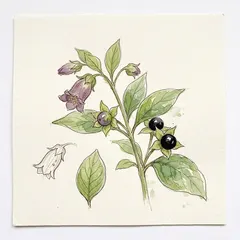 Όλα τα βιβλία για Belladonna →
Αντιδοτείται απόAceticum AcidumAconitum NapellusAngustura VeraAurum MetallicumBerberisCamphoraCitrus LimonumCoffea CrudaCoffea TostaColchicum Autumnale
Όλα τα βιβλία για Belladonna →
Αντιδοτείται απόAceticum AcidumAconitum NapellusAngustura VeraAurum MetallicumBerberisCamphoraCitrus LimonumCoffea CrudaCoffea TostaColchicum AutumnaleGeneral EN
when it is used in an improper manner, or exhibited in dispro- portionate doses. On the other hand, the most powerful and most energetic remedial agents become mild and eminently curative, even in highly susceptible systems, when they are exhibited in small doses, and in diseases to which those agents correspond in symptoms. Belladonna being a powerful agent, the greatest care should be taken to employ it with strict regard to its homoeopathic character. The common routinier, whose sole art consists in applying to a given case of disease, one of those prescriptions which he had learned by rote, is, of course, unaware of the paramount importance of selecting every remedy, especially remedies of great power, with the most careful regard for their adaptation to disease.
The experience which I have had occasion to gather at the bedside of the patients for the last eight or ten years, has in- duced me to use the decillionth degree of potency for homoeo- pathic treatment. The smallest portion of a drop 1 of that potency, is sufficient to exhibit that degree of curative action which the case requires.
To obtain the hundredth degree of potency, mix two drops of alcohol with equal parts of the juice of the plant — this method ought to be pursued with all other medicinal juices, — and then mix this with ninety-nine or one hundred drops of alcohol, by means of two strokes with the arm from above downwards ; by mixing, in the same way, one drop of this dilution with one hundred drops of alcohol, you obtain the ten thousandth degree of potency, and by mix- ing a drop of this last dilution with another one hundred drops of alcohol, you obtain the millionth degree. This process of spiritualization or dynamization, is continued through a series of thirty vials up to the thirtieth solution. This thirtieth degree should always be used for homoeopathic purposes.
If Belladonna be homceopathically indicated, one globule of the thirtieth dilution is sufficient to exhibit with great promptness the curative action of Belladonna, even in the most acute diseases. On the other hand, the action of one globule may, in chronic cases, continue for upwards of three weeks. 2
1 Note : I exhibit one globule of the size of a grain of flax-seed, three hundred of which weigh a grain. One drop being sufficient to moisten upwards of a thousand of such globules, one globule contains less than the one thousandth part of a drop of the decillionth solution.
2 Note: One globule of Belladonna, first exhibited every three or four days, and afterwards at longer intervals, is the surest prophylactic against hydrophobia.
BELLADONNA. 97
Almost all authors have recommended vinegar as an anti- dote against BallaJonna. This is a mere conjecture which one author has copied from the other. Abundant experience has taught me, on the contrary, that vinegar increases the pain produced by Belladonna. 1
Fits of paralysis and colic, produced by Belladonna, may be assuaged by Opium, although it acts only as a palliative. A small dose of Opium, probably, also relieves the somnolence consequent upon the use of Belladonna.
Stupor, insanity, and frenzy, produced by Belladonna, are homoeopathically relieved in the speediest and most certain manner by a few small doses of Hyosciamus. The intoxica- tion of Belladonna is relieved by wine ; myself, as well as Trajus and Moibanus, have witnessed this effect of wine.
A small dose of Belladonna having been administered non- homaeopathically, and being succeeded by a weeping mood, attended with chills and headache, these effects may be stayed by a similarly small dose of Pulsatilla.
Adequate help is the most necessary, when a large quan- tity of the berries of Belladonna has been swallowed. In this case, relief may be obtained by large portions of strong coffee, which restores the irritability of the muscular fibre, puts a stop to the tetanic convulsions — although acting as a mere palliative — -and secures the vomiting of the berries ; this may, moreover, be facilitated by tickling the pharynx with a long feather.
The erysipelatous swellings of Belladonna are speedily removed by small doses of Hepar sulphuris. Camphor, too, is a good antidote against some of the symptoms of Belladonna.
Belladonna may be used as a prophylactic against the genuine, erysipelatous, smooth and glossy scarlet fever, as described by Sydenham, Plencitz, and others. To this effect the smallest dose of Belladonna ought to be given every six or seven days. This great discovery of mine has been scorned and sneered at by a number of physicians, for at least nineteen years. They were ignorant of the character of this disease which is proper to childhood, and they were indiscreet enough to mistake for scarlet fever the purple-rash, which had migra- ted into Germany from Belgium, ever since the year 1801.
They falsely applied to this purple-rash the term "scarlet fever," and failed, of course, in trying to cure it by means of
Note : Stapf has also observed that applications of vinegar to the forehead increase the headache caused by Belladonna, so as to make it insupportable ; the applications had to be discontinued.
93 BELLADONNA.
the remedy which I had proposed.' I rejoice that, in subse- quent years, other physicians should have again observed the genuine scarlet fever, that they should have confirmed the prophylactic virtues of Belladonna against this disease, and should have done me justice, after the unjust derision which I had so long suffered.
Purple-rash (Roodvonk) being a disease different from scarlet fever, it requires to be treated in a different way. In purple-rash Belladonna can do no good, and patients who are treated with Belladonna in this disease, will generally have to die ; whereas all of them might have been saved by the alter- nate use of Aconite and the tincture of Coffea cruda, the for- mer being given against the heat, the increasing uneasiness, and the agonizing anguish ; the latter against the excessive pain and weeping mood.
Aconite and Coffea should be alter- nately given every twelve, sixteen, or twenty-four hours, in proportion as one or the other medicine is indicated! Of the Aconite I give a small portion of a drop of the decillionth solu- tion ; of the Coffea I exhibit the millionth degree of potency in the same form and quantity. Recently, both diseases, which are so different from each other, the Sydenhamian scarlet fever, and the purple-rash, seem to have become complicated in some epidemic diseases, so that one patient derives more benefit from Aconite, another from Belladonna.
NOACK AND TRINKS ON BELLADONNA.
Belladonna produces phenomena similar to those of Aco- nite, not directly, however, but by exciting the central points of the nervous system into a more expansive activity, which, by a process of reaction, prodves phenomena of inflamma- tion in the peripheral tissues. Belladonna is especially suit- able to plethoric, scrofulous, irritable individuals, persons that are disposed to affections of the head and brain, congestion, spasms, — in whom the nervous system is highly susceptible of impressions, and the circulatory system is easily excited ; to the sangume-choleric temperament, to the organism of the child and the female, and such constitutions as are anal- ogous to those organisms. Belladonna is therefore especially suitable for diseases of women and children, and all those dis- eases in ivhich the whole nervous system is in a state of
1 N ?J E : ? ee Thomassen a Thvessink, over de Roodvonk, 1816, ex- tracted irom Ins (reneeskundige Waarncmingen.
BELLADONNA. 99
erethism. What Aconite is to inflammatory fevers or the feverish reaction excited in the arterial system ; that, Bella- donna is to the inflammation itself, or the inflammatory action of the capillaries. If, after the inflammatory action shall have been subdued by Aconite, the other symptoms (the nervous stage of the inflammation) continue, and sensation and irrita- bility be alternately affected, Belladonna is then of great use, if otherwise indicated Phlegmonous and erysipelatous in- flammations ; the more delicate the inflamed organ or tissue, as an organ of sensation, the more suitable is Belladonna ; inflammations of the lymphatic vessels and glands (in alterna- tion with mercury.) Diseases of pregnant women, especially when combined with moral symptoms, toothache, gastralgia and colic.
Catarrhal affections. Affections consequent upon fear, fright, chagrin. Nervous affections. Spasms of every kind : spasmodic conditions in individuals of a mild tempera- ment, blue eyes, blond hair, delicate skin, plethoric constitution, and disposition to glandular swellings, or to phlegmonous or parenchymatous inflammations ; spasms consequent upon the abuse of Valeriana, Mercury, Chamomilla, and Opium ; con- vulsions of children, especially when consequent upon an effu- sion into the ventricles of the brain, and combined with irrita- tion of the vascular system ; eclampsia infantum ; eclamp- sia puerperarum ; spasmodic constrictions of ring-shaped mus- cles ; hysteric convulsions ; trismus, tetanus
Epilepsy (in alternation with Calcarea) ; epilepsy with frenzy, St. Titus's dance (in alternation with Stramonium or Calcarea) Cata- lepsy Ergotism
Tarantism Hydrophobia Plethora vera Congestions to the head, especially the eyes, the chest, the abdomen, uterus, and the hemorrhoidal vessels ; conges- tions to the head, with sopor and deliria in cholera morbus, when the diarrhoea has stopped.
(Also Aconite and Mercury may be used here.) Prodromi insultus apoplectici ; apo- plexia sanguinea Paralysis Icterus Cachexia consequent upon the abuse of Cinchona ; rheumatic and arthritic condi- tions, with inflammatory fever and swelling of the affected parts ; erratic rheumatic pains.
(Belladonna is said to be powerless against fixed pains.) — Obstruction and suppuration of the glands Scrophtdosis and rhachitis ; scrophulosis glandulosa, in the acute stage of inflammation of the glands ; scrophulosis mucosa and ossea, when the periosteum and the bones are inflamed ; atrophy of scrofulous children ; scrofu- lous ulcers Mercurial ulcers Scirrhus and carcinoma.
Measles, especially when combined with great intolerance of light, inflammatory action of the brain, diphteritis, or when
there is vomiting after suppression of the measles Miliaria alba et rubra ; miliaria herpetica ; dropsy, with fever conse- quent upon suppression of rash (in conjunction with Aconite) ; — pseudo-erysipelas, phlegmonous erysipelas with lustre and throbbing of the affected parts : erysipelas laeve, fvgax et bullosum ; erysipelas of the head with delirium ; erysipelas of the face, with considerable feverish irritation, and gastrico- bilious symptoms ; erysipelas neonatorum ; erysipelas in typhus ; erysipelatous inflammations of the skin consequent upon stings of insects
Impetigo erysipelatodes Scarla- tina laevigata et miliaris, especially with subsequent hydro- cephalus, or with swelling of the parotid glands ; or frightful- ness, convulsions and vomiting consequent upon suppression of the eruption of scarlatina Variola, especially when headache threatens and the fever of suppuration is violent ; varioloid, when the joints and the mucous membrane of the trachea are affected ; varicella, especially coniformis, or when a violent, general erythema sets in simultaneously
Metastases of acute exanthemata to the membranes of the brain Rubeola Pem- phigus Acne
Eczema mercuriale, with feverish, violent irritation ; porrigo laroalis, especially in children of a ple- thoric habit, with inflammation of the eyes and parotitis Panaritium Ailments of frozen limbs Malign carbuncle
Decubitus and gangrene Sleeplessness consequent upon an- guish and uneasiness, in plethoric habits, with congestions to the head or the thoracic viscera ; or consequent upon a morbid irri- tation of the brain and nervous system, in fever patients and persons who are fond of spirituous drinks, who suffer with weak- ness of the digestive organs, abdominal plethora, infarctus, worms, in hypochondriacs, hysteric individuals in general, in patients affected with spasms, scurvy, chlorosis ; sleeplessness as a symptom of internal inflammations, organic diseases of the chest and abdomen, or as a precursor of delirium, of local inflammations, or the evolution of a nervous, typhous state.
Lethargy, especially under the following conditions : When combined with redness of the face, turgescence of the veins of the neck, heat, accelerated pulse, or with injuries of the head inflammations of the brain, pleuropneumonia, in pulmonary patients (as a symptom of arachnitis lenta), at the beginning of diseases with fevers, especially nervous fevers, in puerperal fever, intermittent fevers, after partaking copiously of spirituous drinks, in scarlet fever, small-pox, especially before or after the eruption of small-pox in full-grown persons, after a speedy suppression of cutaneous eruptions or old ulcers, in attacks of the gout in old men, pregnant women, at the termination of
BELLADONNA. 101
hysteric paroxysms Fevers, where the symptoms indicate a more or less distinctly marked inflammatory action of the brain ; synochal fevers, with nervous, gastric, and rheumatic symptoms, or with a disposition to the putrid character ; febris rheumatica et catarrhalis ; nervous fevers, with fran- tic delirh. dry skin, great thirst, parched tongue, quick, hard pulse, and sleeplessness ; febris nervosa versatilis, when the symptoms indicate an approaching preponderance of the ner- vous stage, resisted as yet by the vascular system ; gastric ner- vous fevers ; typhus cerebraiis et abdominalis, with defi- ciency of sleep and simultaneous irritation of the nerves, or with burning heat.
Wolfsohn several times prevented the setting in of the typhoid symptoms in the precursory stage by means of Belladonna (also by Aconite, Nux vom. and Bryonia). Febris puerperalis, with predominant cerebral symptoms, mania, paraphrenitis, wild deliria, local inflammations of the perito- neum and the abdominal organs ; febris puerperalis, conse- quent upon mental emotions, or upon suppression of the lochia or the milk (previously Aconite being used) Febris lactea Intermittent fevers, being relapses consequent upon a violent suppression of the type by Cinchona (Arnica, etc., may also he used here)
Febres lentai Derangements of the mind; weak- ness of the memory ; hallucinations of the senses ; exaltations of the mind : ecstasis simplex, paranoa, maniaca, catholica ; paranoia simplex, paraphrosyne ; moria (especially maniaca, and morosis ecstatica), mania ecstatica, ecnoica, catholica, sal- tans, salax, puerperalis; depression of spirits; melancholia simplex, nostalgia; anoia simplex, melancholia, catholica; abu- lia ; mixed derangements of the soul : ecstasis melancholica ; melancholia moria, mania fur ens, melancholia mixta catho- lica, loathing of life ; paranoia anoa ; abulia, paranoia anoma- la maniaca
Vertigo, consequent upon an irritated, excited cerebral action, especially in the beginning of fevers, or when symptoms of exhaustion set in as precursors of an approaching nervous stage, or when there is feverish excitement consequent upon suppressed bleeding at the nose or upon an imprudent removal of a cutaneous eruption, in the beginning of the small- pox fever (indicating that a state of sopor will set in at the next attack of the fever), in hysteric persons (as precursor of the approaching paroxysm of megrim), in parturient women (as pre- cursor of eclampsia or apoplexy), in children and old people
Headache consequent upon too great a congestion of the blood to the head, especially when consequent upon catarrh ; headache with tottering of the head, or with trembling or quivering move- ments of the head (in alternation with Sulphur) ; convulsive tre-
102 BELLADONNA.
mor of the head ; megrim Violent neuralgia of the head (in conjunction with Hyosciamus and Ignatia) Cerebral irritation of women, owing to a nervous excitement of the sexual organs ; paraphrenitis metastatica Inflammation of the brain and of its membranes (after the fever shall have been sufficiently subdued by Aconite) ; threatening dropsy of the brain, hydro- cephalus acutus in the first stage ; meningitis ; arachnitis ; encephalitis vera, insolationis and potatorum (delirium tremens)
Spasm of the eyelids and the globe of the eye Inflammations of the eye, of a scrofulous, arthritic, catarrhal, rheumatic, and even traumatic nature ; scrofulous inflamma- tions of the eye, with violent photophobia, swelling of the eye- lids, and ulcers upon the cornea (the photophobia being re- moved, give Sulphur, or, if Belladonna and Sulphur should not prove curative, exhibit Calcarea c. or Ars., or Rhus), arthritic pains in the eye, remaining after Ihe eyeball had become de- stroyed in arthritic ophthalmias
Hemorrhage from the eye Slight obscuration of the cornea ; spots and ulcers of the cornea ; staphyloma (in conjunction with Causticum) Fungus medul- laris oculi ; contraction and distortion of the pupil Iritis
Retinitis Optical illusions and visions Scotopsia ; chroma- topsia, photopsia ; hemeralopia gravidarum ; paropsis inver- tens (seeing things upside down) ; strabismus ; dyplopia, poly- opia ; amblyopia amaurotica, even when resulting from too great an effort of the sight, and amaurosis Pain in the ear
Otitis interna and externa Hardness of hearing, even after a cold Phlegmonous inflammation of the nose Ozama
Bleeding at the nose, especially in childhood, or which returns habitually or by the slightest causes, in inflammatory diseases, especially when the bleeding takes place from the nostril of that side which is not inflamed ; fevers, where only a few drops of
blood flow out at the nose, in persons affected with jaundice.
Parotitis (in conjunction with Mercury) Prosopalgia ner- vosa (in conjunction with Sulphur and Phosphorus) Swelling and ulcers of the lips ; scirrhous induration of the lips. Dif- ficult dentition of children, with cerebral irritation and violent congestion of the blood ; toothache in women, especially preg- nant women ; inflammatory or congestive toothache
Stut- tering, especially in fevers Glossitis, also when produced by hydrargyrosis Ptyalism during dentition, or when accompa- nied by violent congestions to the head, headache, attacks of vertigo, being precursors of apoplexy, by chronic hydrocephalus (in young and old age), by eruptive fevers, intermittent fevers spasm of the stomach, an irritated state of the sexual organs,' by nervous affections, by quinsy, or in hysteric and hypochon-
BELLADONNA. 103
driac individuals, after abuse of mercury Stomacace gan- grenosa (in conjunction with Sulph., Ether, Silic. and Arsen.) Angina catarrhalis (giving first Aconite, afterwards Mer- cury) ; angina tonsillaris, uvularis et pharyngea, angina faucium phleg?nonodes, especially after a cold ; habitual quinsy —Dysphagia, especially nervous, with violent choking on making the least attempt at swallowing (in conjunction with galvanism), when accompanied by a marked feverish heat, after injuries of the head, in inflammations of the brain, spinal mar- row, fauces, oesophagus, the organs of the throat and chest
Singultus spasticus Anorexia, dyspepsia, and other gastric conditions ; acute gastric symptoms, accompanied by a good deal of sopor, and eyes half open, staring look, repeated vomit- ing of watery slime, hot head, dry skin, hard pulse, short, dif- ficult breathing, groaning, frequent startings and twitchings of the limbs Pyrosis potatorum Vomiting, especially when there are congestions to the head, inflammations of internal organs, indicating the reception into the system of contagious miasms ; also during and after acute exanthemata, after sup- pression of cutaneous eruptions, quickly cured old ulcers, sup- pressed perspiration, in arthritic metastases, in lying-in women, spasms, and intestinal hernia?
Hmmatemesis, especially when originating in menostasia (alternating Belladonna with Puis., Nux. v. and Ars.) Cardialgia, especially chronic, in chlorotic individuals, with induration of the liver, or in pregnant wo- men Acute and chronic gastritis Inflammation of the omentum
Peritonitis, especially puerperal (giving Aconite first, afterwards Nux vom.) Enteritis (giving Aconite first) Sub-inflammatory symptoms of chronic hepatitis ; acute hepa- titis Colica spasmodica, jlattdenta et calculosa
Inguinal hernial, especially after a cold ; purely nervous strictures, or especially such as are inflammatory, or sub-inflammatory ; also, when the purely spasmodic constriction begins to exhibit symptoms of inflammation Dysentery Diarrhoea, even with vomiting, consequent upon cold Hemorrhoidal consti- pation, with violent pains in the small of the back, and pres- sure towards the chest
Haemorrhoids Proctalgia Fis- sures of the rectum, with spasmodic closing of its orifice. (Hyosciamus may be exhibited here.) — Colica nephritica
Ne- phritis Inflammations of the urinary organs, particularly of the testicles and spermatic cords, especially when the inflam- mation is of an erysipelatous character — Enuresis, from paralysis of the bladder, spasm of the bladder, inflammatory irritation of the bladder Dysuria, especially when there are infarctus of the liver or spleen, haemorrhoidal complaints, vio-
lent colic, intestinal hernia^ inflammatory and spasmodic irri- tations of the urinary oigans. consequent upon carelessly managed rheumatisms and denoting the beginning of peiiodi- cal dropsies of the brain, in drunkards, pregnant women, inter- mittent fever patients, previous to the eruption of approaching scarlatina, in leucorrhoea Violent desire to urinate in fevers, with scanty emission of urine or none at all (denoting ap- proaching convulsions and deliria) Wetting the bed of chil- dren, during sleep, especially scrofulous children
Diabetes Metritis, metro-ovaritis and oophoritis simplex (previously Aconite) Intumescentia uteri benigna Prolapsus uteri
Scirrhus et carcinoma uteri Feverish hysterism consequent upon interruption of the catamenia Dysmenorrhoea Men- strual spasms shortly before the period, with drawing, labor- like pains from the small of the back as far as the thighs and calves, or extending towards the navel, and pressure to the genital organs
Too profuse menses, with drawing pains in the genital organs ; profuse metrorrhagia, with labor-like pains in the small of the back (in conjunction with Platina and Arnica) ; hemorrhage from the uterus, with considerable excite- ment of the vascular system, with discharge of bright- red blood, and cutting, squeezing pains in the abdomen Abortus, con- sequent upon violent congestion of blood to the uterus ; bad consequences of abortus Bad consequences of weaning ; mastodynia nervosa ; erysipelas of the mammce consequent upon weaning ; mastitis (in the beginning) .; galactirrhoea, milky nodosities ;
Scirrhus and carcinoma of the mamma Inflammation of the thyroid body Laryngismus stridulus Aphonia, especially after fright, after the sudden suppression of bleeding at the nose, during violent spasmodic fits, or when accompanying cerebral affections in fever patients, when there is violent headache, inflammation of the lungs, in small-pox patients, pregnant women, after parturition, or after violent pain; aphonia catarrhalis ; catarrhal inflammations of the air-passages
Grippe, especially when the patients become delirious as soon as they close their eyes, and the look is staring Bronchial affection in typhus fevers, especially in the last stages, the expectorated matter being glutinous, viscid, difficult to hawk up, intermixed with streaks of blood, and the gums begin bleeding Whooping-cough before and during the catarrhal stage Nervous and convulsive cough ; dry cough, with habitual congestions to the chest, and plethoric habit ; nightly attacks of dry cough, with a constant irritation and tickling in the larynx, fencing one constantly to cough, so that the patient cannot breathe and the face becomes blue-red.
BELLADONNA. 105
Rheumatism of the chest Asthma thymicum Asthma spasticum, hystericum, congesticum ; asthma Millari ; asth- matic complaints after smoking tobacco Haemoptysis, espe- cially when consequent upon a disturbance of the menstrual functions
Pleuritis Pneumonia, especially when nervous, or when occurring at the period of epidemic scarlatina ; the beginning of pneumonia is characterized by congestion of blood to the head, talking in sleep, considerable vascular erethism (in this affection Belladonna may be alternated with Aconite) ; in the stage of suppurative infiltration (here next to Belladonna may be used Merc. Tart. Stib.
Rhus, Hyosc. Ac. phos. or Lachesis) ; neglected pneumonia, with rattling in the bronchi, troublesome, puriform, copious expectoration and great weakness (here may also be given Ars. Phosp. Lycop.) ;
Bella- donna may also be exhibited in pneumonia;, the symptoms of which do not yield to Aconite or Bryonia (however, it ought then to be ranked after Phosphorus) Palpitation of the heart, with intermitting pulse Carditis? — Rheumatic stiffness of the neck Inflammations of the spinal marrow
Rheuma- tism of the back and the loins Psoitis Tschias Coxalgia ; spontaneous limping in the beginning
Phlegmasia alba do- lens Arthritic inflammatory swellings of the joints (in alter- nation with Hepar sulphuris, Merc. ; Belladonna, in this affec- tion, is probably inferior to Phosp. ac).
Analogous Remedies : 1. Aeon. Calc. Canth.
Caust. Cham. Chin. Cina.
Coff. Coloc. Con. Cupr.
Dig. Dulc. Hep. s. Hyosc.
Lach. Merc. Nitr. ac. Op.
Phosph. ac. Plumb. Puis. Rhus.
Seneg. Sep. Stram. Sulp.
Valer. — 2. Agar. Alum. Amnion.
Arn. Ars. Bar. Bov.
Bry. Caps. Clem. Ferr.
Grap. Hydro, ac. Lauroc. Lye.
M. arct. Mur. ac. Nicot. Nux. v.
Phosph. Plat. Rut. Sabin.
Sil. Stan. Zinc. — 3. Croc.
Ign. Ip. M. austr. Magn. mur.
Natr. mur. Petrol. Sabad. Samb.
Spong. Verat. Verbasc Belladonna is most suitable after Aeon.
Hep. s. Lach. Merc. Nitr. ac. etc.
Head EN
* Vertigo. Objects seem to him to be balancing to and fro. * His head turns ; vertigo attended with nausea, such as is consequent upon turning quickly round in a circle, or such as is experienced upon waking from the morning sleep, after a night spent in revelry. * Sense as of turning in the head ; a similar sense as of turning is experienced in the pit of the stomach ; after rising, this symptom becomes so excessive, while walking, that she was unable to distinguish any thing ; every thing vanished from before her sight. — 5.
Vertigo, as though every thing turned round in a circle (after the lapse of one hour). He walks round in a circle. Sense of dullness, and as of turning in the head ; she feels relieved in the open air;
|06 BELLADONNA.
the symptoms become aggravated in the room (after one quarter of an hour).
Fits of vertigo, both when at rest and in motion. * While sitting, sense as of reeling in the head, resembling vertigo. — 10.
Vertigo, and tremor of the hands ; the persons were unable to perform any kind of work with them. * When walking, he reeled, held on to the walls, com- plained of oppressive anguish and vertigo, and often spoke without sense, like an intoxicated person. * She rises from bed early, and totters to and fro as if she were intoxicated. * Stagger- ing, arising from giddiness.
Fits of vertigo attended with obtusion of the mind ; these symptoms last a few minutes (after twelve hours). — 15.
The whole day his senses are con- fused ; he knows not what he docs.
Obtusion of the mind.
Obnubilation of the head, with glandular swellings in the nape of the neck (after six hours).
Intoxication.
Sense of intoxi- cation immediately after dinner. — 20.
Intoxication after drink- ing ever so little beer.
Obnubilation of the head, and intoxica- tion, as from drinking wine, with a bloated, red countenance.
His whole head feels confused and dreary for a number of days.
Obnubilation, such as occurs in intoxication.
Obnubilation of the forepart of the head, as though a pressing fog were moving to and fro, especially below the frontal bone. — 25.
Obnubilation of the head, as from drinking much brandy, and smoking much tobacco.
Obnubilation and obtusion of the whole head, such as are experienced in a state of incipient intoxication. * Obtusion of the head, increasing during motion.
Reluctance to all sorts of mental labor.
Lassitude of both the mind and the body. — 30.
Mental weakness. * Obstupefaction.
Confu- sion of the mind.
Confusion of the mind ; he knows not whether he is dreaming or waking.
Confusion of the senses ; he feels sleepy and is nevertheless awake ; while in that state he imagines he dreams. — 35.
Illusion of the senses.
Her exalted but deluded fancy brings a quantity of beautiful images before her mind as by a charm.
He imagines he sees ghosts and various kinds of insects.
Her nose appears to her to be transparent. * He imagines he sees things which are not present. — 40.
It seems to her as if a spot upon the left side of the head were transparent and brown.
He imagines he is riding upon an ox. * He does not recognize his own relatives.
Absence of consciousness ; he was sitting as in a dream. * Loss of consciousness. — 45.
He often lay without his senses, without consciousness. * Loss of senses, and spasms in the arm at night. * Highest degree of stupor.
Loss of the senses. * Loss of sense, with convulsions of the extremities.— 50.
Complete loss of sense ; she is not conscious of herself. * Intellection
BELLADONNA. 107
has entirely disappeared. * Loss of intellection, for some weeks.
Insensibility.
Stupidity.— 55.
She has a headache, during which she loses her ideas ; she forgets that which she thought of a little while ago, and is not able to recollect it.
Absence of mind ; he easily does his business wrong, and forgets things which he bad just intended to do.
He had at times this, at times that idea ; he was not able to think of any thing regu- larly, and he immediately forgot things which he had thought of a moment ago, or about which he had just been reading.
Diminished memory.
Very feeble memory ; he forgets what he intended to do in the twinkling of an eye ; and cannot recollect anything
GO.
Return of the lost memory.
He remembers things which had taken place a long time ago.
He remembers things which look place three years ago.
Vivid memory (curative effect,) (after twenty-four hours).
Violent headache. — 65.
Headache, as if the brain were stunned.
His whole head feels heavy as from intoxication.
Sense of weight in the upper part of the forehead, which causes vertigo, and induces a sense of intoxication (after a fortnight).
His head feels heavy as if he were going to fall asleep ; he is not disposed to do any thing.
His head aches, but only above the eyes ; the headache is like a weight in the head, and is experienced early on waking up ; when touching the eye he feels a pain. — 70.
Sense of weight with violent pressure in the whole of the occiput (after two hours and a half). * Heaviness of the head as though it were about to fall down. * Early in the morning, headache, as if something were descending in the forehead from above the eyebrows, by which the opening of the eyes is prevented (after four hours).
Aching, with sense of weight from the, centre of the brain towards the temples, attended with decrease of hearing in both ears.
Aching in the right vertex ; after- wards this aching is alternately felt in the left and then again in the right vertex. — 75. * Headache, especially in the forehead (after two days).
Continuous dull headache in one of the sides of the head (after five and twenty-four hours).
Sense as of aching in the head, especially in the lower part of the forehead, close above the nose ; this aching becomes insufferable on setting the foot down for the purpose of standing or walking.
Headache above the orbits, as though the brain were pressed into a smaller space ; this pain obliges him to close his eyes.
Aching under the right frontal eminence, which soon extends over the whole forehead (after ten minutes). — 80.
Violent pressure under the right frontal eminence.
The aching below the right frontal eminence decreases at intervals, but then returns with increased violence.
Aching under the frontal
108 BELLADONNA.
eminences, early in the morning, shortly after having waked up, upon rising from bed. Violent aching in the left frontal eminence, pressing from within outwards. Violent aching in the left temple, pressing from without inwards ; by leaning this side of the head upon the hand, the aching is felt in the whole anterior half of the brain (after three quarters of an hour). — 85. Violent aching from within outwards in the whole left half of the brain, especially violent in the forehead (after two hours and a quarter).
Aching in the region of the right temple ; when leaning the head upon the hand, the pain increases as if the head would fly to pieces, and extends as far as the right frontal eminence (after eight hours). Erratic pressure in the head, and always extending over large sur- faces. * Aching in the forehead ; during motion it increased so much that it caused his eyes to close (the German text is, that it drew his eyelids together) ; the headache became milder when he was seated ; he was obliged to lie down ; then the headache disappeared ; upon rising, it re-appeared at once and lasted for two days ; neither eating nor drinking made it worse during that period ; as soon as he walks into the open air, the forehead feels pressed upon as though it should be crushed ; the pressure is as if it came from a heavy stone resting upon the forehead ; on the third day the head- ache disappeared entirely while he was sitting in his room.
Aching, deep in the brain, which is felt over the whole head, both when walking, and after having walked in the open air. — 90. Headache in the forehead pressing like a stone ; the pain is relieved by resting the head upon something, and bending it pver ; this pain is attended with a dilatation of the pupils, and a whining and peevish mood produced by trifling causes (after three hours). Tension and pressure in the right side of the forehead. Tension and pressure in the left vertex, and in the forehead (after twenty-four hours).
Headache, as though the head were made smaller from side to side, by both sides being screwed together. * Con- tinuous and forcible dilatation of the whole brain. — 95. Violent pressing in the whole head from within out- wards, as though it should be dashed to pieces (after three hours). * Headache close above the orbits, in the forehead, as though the brain were pressed out : the eyes remain forcibly closed on account of the pain, the pupils being contracted to the highest degree, and the voice being scarcely audible ; the person has to lie down (after 5 to 24 hours).
When stooping, the person feels a pain as though every thing would press out at the forehead. Sensation as if the brain were pressing
BELLADONNA. 109
towards the forehead ; upon bending the head backwards, this sensation passed off (after one hour and a quarter). When coughing, the sensation as if the head were being pressed asun- der from within, increases considerably (after 3 hours and a half). —100. In the open air, the sensation as if the head would burst became very violent ; he dares not cough, because he fears lest this should increase the pain. (a. 4 h.) Throbbing press- ing in the left side of the occiput, (a. 5 h.) An aching- in the forehead frequently obliges him to stand still when walking ; at every step the brain feels as if it ascended and descended in the forehead ; the pain decreased by strongly pressi?ig upon the parts, (a. 6 d.) Violent pulsations in the forehead, with pain as if the bone were being raised.
Pulsations in the head and in most parts of the body, when waking up. — 105. Violent throbbing in the brain from before backwards and towards both sides ; externally, this throbbing terminates in the shape of painful stitches. Aching, with a sense as of gnawing, on the right side, in the upper part of the head, descending as far as the ear ; this pain is occasioned by a tran- sitory gnawing pain in a hollow tooth, (a. 9 h.) Stitching ache in the temples, from within outwards, (a. £ h.) Cutting ache in the temples, from within outwards ; this pain becomes more and more violent, and spreads through the brain, where it is felt as a violent throbbing ; it continues in any position.
Aching, with a sense as of rending, in the head, especially in the frontal and temporal region ; the pain is wandering. — 110.
* Rending ache in the right temple and vertex ; the pain spreads in different directions. Rending ache in the head, erratic, (a. 5 h.) Drawing ache. * Traction in the head extending towards the forehead, as if the brain would dilate.
* Drawing pain extending from the temple across over the right orbit. — 115.
Traction downwards, in the temples and the right orbit.
Boring and throbbing in the right side of the head, a similar pain existing in the check ; the symptom increases at every motion.
Boring and aching in the head, in different pla- ces, by day ; this pain becomes stinging in the evening.
Boring pain in the right frontal eminence, early in the morning, shortly after waking up.
Continually drawing and distending head- ache, as if something were rocking in the head, imparting the sensation of jerks. — 120.
Jerking headache, which becomes extremely violent when walking or going up stairs fast, and which, whenever the foot is set down in walking, produces a sensation in the occiput, as if a load were darting down.
(a. 48 h.) The whole of the head is affected with a stitching ache, especially the forehead. * Dull stitches in the left temple from
within.
Slightly stitching ache in the whole forehead, (a. 1^ h.) * Sharp stitches through both frontal eminences from within outwards, (a. 2 h.) — 125.
Excessive headache ; dull stitches dart through the brain in all directions.
Violently stiching ache in the right temple, a quarter of an hour.
(a. 25 h.) A few dull stitches in the left side of the occiput.
Violent cutting in the right frontal eminence, more violent when stoop- ing, less when touching the parts, (a. 5 minutes.) * Stabbings, as with a double-edged knife, dart through the head, in the evening. — 130. * Stabbing, as with a knife, from one temple to the other.
A few lancinations traverse the occiput, immedi- ately behind the ear, as fast as lightning ; they almost made him scream, in the evening, (a.
G d.) * Stabbings, as with a double-edged knife, in the right side of the head ; afterwards they are felt in the forepart of the head, then in the veitex, and lastly in the occiput, so that she is pcevented lying on any side.
Three violent lancinations through the head, from the forehead to the occiput ; after these all previous headache dis- appears, (a. 3| h.) Lancinations, with rending in the head over the right orbit. — 135.
Cutting and tearing pain in the head, moving from one place to another.
Burning and tearing pain in the left frontal eminence, (a. 4 h.) Rending pain in the right side of the vertex ; it is more violent during motion.
Tearing in the forehead, externally.
Tearing in the forehead. — 140. * Tearing over the eyebrows.
Violent tearing head- ache in the forehead, (a. 8 h.) Headache on the top of the head, a kind of turning, at times also grinding, at times tear- ing ; the pain became much more violent by external pressure ; it seemed to her as if her skull were quite thin and could be pressed through.
Sense of cold in the brain, in the centre of the forehead. * Traction in the forehead. — 145.
Drawing pain in the frontal bone and in the nape of the neck, both when at rest and in motion.
Headache ; the sutures of the skull feel as if they were being torn asunder; feeling in the head as if a lever were being applied for the purpose of breaking it to pieces.
Sensation as of swashing in the brain.
When stooping, the blood rushes to the forehead. * When stooping, the blood rushes to the head ; the head feels heavy and giddy. — 150. * Congestion of blood to the head, without any internal heat ; when bending the head backwards, it seems to him as if the blood were rushing to the head. * Heat in the head (in front over the head), (a. -J- h.) Pain, externally, over the whole head, such as is felt in the integuments after violently pulling the hair.
Gnawing headache, externally, on the frontal eminen- ces.
Finely stinging burning on the left frontal eminence, (a.
BELLADONNA. Ill
-J- h.)— 155.
Cutting headache on the left side of the occipital protuberance.
Drawing pain, when at rest (after dinner), on the right side of the head, and at the same time, in the right arm.
Quickly passing cramp-like pain on the right side of the upper part of the head.
(a. 11 h.) Cramp-like pain at the root of the nose.
Violent cramp-like pain in the frontal eminence ; it extends across the zygoma down to the upper jaw. — 160.
Sen- sation, externally, of a contraction of the muscles of the fore- head and eyes.
Titillating itching of the forehead, (a. lh.) Painful boil on the temple.
Red, painless pimples appear on the temple, about the right corner of the mouth, and on the chin ; when scratched, a bloody water oozes out.
(a. 13 h.) Swelling of the head.— 165.
Considerable swelling of the head and redness over the whole body (in two boys).
Falling off of the hair, for an hour.
(a. 24 h.) The hair of the head, which was heretofore affected with an electric power, is so no longer, (a. 24 h.) The integuments of the head are so pain- ful, that even the pressure of the hair gives her pain.
Uneasy look.
F ACE : _ 170.
Distracted features. * Paleness of the face.
Paleness of the face with thirst.
Paleness of the face with an increased appetite.
Sudden paleness of the face, for some time.— 175. * An extreme paleness of the face is instantane- ously changed to redness of the face, with cold cheeks and hot forehead.
Feeling of heat in the face, without any external redness.
(a.8h.) Feeling of a burning heat in the whole face, without redness of the cheeks, and without any thirst, with a moderately warm body and cold feet.
(a. 4 h.) * Sensation of a tingling'heat in the face, behind the skin.
(a. i h.) Burning heat over the face, without any thirst, (a. 10 h.) —180. * Uncom- mon redness of the face. * Violent redness and heat in the face, without any sweat, (a. 2 1 or 30 h.) * Red, hot face, with icy-cold extremities. * Glowing redness of the face, with violent, inexpressible headache. * Heat and redness only about the head.— 185.
Sweat only in the face.
Congestion of blood to the head ; red cheeks. * Great heat and redness of the cheeks. * The face is very much swollen and hot. * Redness and heat in the whole face, as if he had drunk much wine.— 190.
Heat in the face the whole day, as if wine had caused the blood to rush to the head.
(a. 12 h.) * Dark-red face.
Thickening of the skin in the face, as if an eruption would break out. * Bluish-red face, with great heat of the body, in the evening. * Scarlet redness of the face and chest during sleep.— 195. * Scarlet redness of the skin of the body, especially the face, accompanied by great cere- bral action. * Scarlet-red spots in the face, with a strong pulse.
U2 BF.LLADONNA.
Sudden shivering, with great cloudiness of the head and face, red eyes, and swelling of the face, which is covered, especially on the forehead, with small, dark-red spots of various sizes.
Early, on waking up, a small blue-red spot on the left cheek, which increases gradually, until the blue-red swelling occupies the whole cheek, with burning and stitching in the part which is red, and boring and throbbing in the whole cheek ; the pain greatly increases by motion ; in a few days the other cheek swelled, and the swelling lasted eight days.
Red, swollen face. — 200.
Red and swollen face with staring eyes.
Swollen face.
The face was red and swollen, the rest of the body pale. * Swelling in the cheeks with a burning pain.
Hard, large swelling in the face near the nose and eye, with swelling of the parotid glands, which lasted five days. — 205.
Swelling of the left cheek near the nose and eye, which comes on in the afternoon, increases the day following, is then affected with heat, and lasts five days. * Swollen face.
Swelling of the face, and especially of the lips.
Eyes EN
Continual winking of the two eyelids.
Continual trembling and winking of the right upper eyelid ; it lasts the whole day, and finally becomes painful. — 210.
The eyes are wide open, owing to a greater retraction of the eyelids.
Throb- bing pain in the lower eyelid, towards the inner canthus ; the spot where the pain is, is swollen and inflamed, with a good deal of lachrymation, for half an hour.
(a. 32 h.) His eyes close and become watery.
Heaviness in the eyes, especially the upper eyelid.
After waking up in the morning, her eyes close again spontaneously ; she is not able to keep them open till she gets out of bed. — 215. * Itching stitches in the inner canthi, which only go off for a while by rubbing, (a. 1 h.) * The inner canthus of the left eye is very painful, even when slightly touched. * Smarting in both eyes. * Involuntary lachryma- tion. * Saltish water continually runs out of the eyes.— 220.
Lachrymation.
Dryness in the eyes, nose, mouth, oesophagus.
* Feeling of burning dryness in both eyes, alternately more violent in one or the other, (a. 7 h.) * Pain and burning in the eyes. * Increased heat and feeling of heat in the eyes. — 225. Feeling of heat in the eyes ; they felt as if they had been surrounded with a hot vapor. * Photophobia ; he avoids looking at the light. Burning of the eyes, accompanied by an intensely painful itching ; both symptoms disappeared upon the eyes being pressed upwards, (a. 28 h.) Injected condition of the white of the eye early in the morning, with aching.
* Inflammation of the eyes, turgescence of the veins of the cornea, with a titillating sensation. — 230. Inflammation of the
BELLADONNA. 113
eyes ; the conjunctiva is traversed with red veins, with a stinging pain ; the eyes run. * Stitches in the eyes, from without inwards.
Yellowness of the white of the eyes. * Early in the morning, the eyelids are completely agglutinated.
Swelling and suppurative inflammation of the left caruncula lachrymalis ; the pain being first burning, afterwards the parts ache for three days.
(a. 4 d.) — 235. 'General pressure in both eyes, as if hard well-water had got into the eyes.
When closing the eyes, she feels an aching deep in the eyeball.
A kind of pressure as from a fog, is felt in the right orbit ; it then is felt in the forehead, then again in the orbit. * Pressure in the eyes with lachrymation, especially early in the morning. * Ting- ling and aching of the eyes ; they felt as if they had been full of sand; she had to rub them.
(a. 1 h.) — 240. 'Pressure in the eyes, as if sand had got in.
(a. 2^- h.) Pressure in the eyes as of a grain of sand.
Pain in -the orbits ; the eyes sometimes feel as if they were being torn out ; sometimes — and this symptom is more lasting — as if they were being pressed into the head ; this pain is accompanied by another pressing from the forehead downwards upon the eyes.
Tearing in the eyes, which extends from the inner canthi.
Drawing pain under the left eye, upwards. — 245. * The pupils are contracted ; it is extremely difficult to dilate them.
The pupils are contracted the whole day ; they do not dilate till evening.
Contraction of the pupils, (a. 10 m.) Contraction of the pupils, (a. 1-^ h.) Contraction of the pupils, (a. 2\ h.) — 250.
The pupils com- menced to dilate in half an hour ; the dilatation increased little by little. * Dilatation of the pupils after 3-V h.
Dilatation of the pupils in the evening, even when the light is held quite near.
(a. 12 h.) * Dilatation of the pupils, (a. 14, 15 h.) The dilatation of the pupils continues to increase after the third day. — 255. 'Dilated, immovable pupils.
Extreme dilata- tion of the pupils.
A white little pustule in the left pupil, which is moreover extremely dilated.
Extreme dilatation of the pupils, owing to the application of a recent leaf of the plant to an ulcer below the eye. * The faculty of vision is at times entirely extinct, at times only diminished, the pupils being immovable and enormously dilated. — 26®.
Entire dila- tation of the pupil of the light eye, and blindness for three weeks, owing to the juice of the plant having got into the eye.
Obscuration of sight consequent upon a dilatation of the pupils.
* Obscuration of sigfet with great dilatation of the pupils.
* Blindness, the pupil of the light eye is extremely dilated and is incapable of contraction.
Great obscuration of vision. — 265. *The eyes see dim and black, (a.
If h.) 'Blindness.
,, 4 BELLADONNA.
* Amaurosis for three days, he cannot read any thing printed.
On waking up, he is blind.
The eyes are blinded and remain open.— 270. * Excessive weakness of sight.
Transitory blind- ness with headache. * Dimness of sight alternating with cramps of the hands and feet ; obnubilation of the head, and faintishness of the limbs.
Dimness of sight, dryness of the mouth, and pain in the belly.
Dullness of sight for three hours.— 275.
Dullness of sight with trembling of all the limbs.
Presbyopia, such as exists in old age.
He sees nothing dis- tinctly, except remote objects and parallel rays, for instance a star in the heavens ; owing to the juice of Belladonna having got into the eye.
Presbyopia as in old age ; he was only able to read large print.
Fog before the eyes ; blindness.— 280. 'Obscu- ration of sight, as if fog were before the eyes.
When reading, he distinguishes nothing except the white margin which sur- rounds letters ; these seem to have taken the shape of black rings.
Sensation as if he were not able to sec any thing ; he saw nevertheless when straining his eyes. * When reading, the letters look blurred, and appear blue and gold-colored.
* The eyes see a large ring around the light, of several colors, especially red ; the light sometimes appears to be mere rays, (a. 15 h.)— 285.
When laying her hand upon her swollen cheek, she sees flames before her eyes, and the air looks to her like fog.
She sees a white star at the ceiling of her room, of the size of a plate ; white silvery little clouds seem to pass by it from the left to the right ; this symptom is seen several times and in different places ; large bright sparks before the eyes.
He sees sparks before the eyes.
When moving the eyelids, he sees sparks, like electric sparks. — 290. * One sees things double. * He sees nothing near him, things at a dis- tance he sees double.
He sees things multiplied and dark. *He sees things wrong side up. * The eyes feel as if they protruded.— 295.
The eyes protrude with dilated pupils, (a. 6 h.) * Staring eyes.
Staring look.
The eyes are staring and sparkling.
Shining, glistening eyes.— 300. * Shining, glist- ening eyes, with entirely dilated pupils, (a. 20 h.) * The eyes are red, glistening, and turn in their sockets. * The eyeballs turn convulsively in a circle. * The eyes become distorted.
* Spasms of the eyes. — 305.
Eyes and hands are constantly in a sort of spasmodic motion.
Unsteadiness of the head and hands.
The eyes become distorted, with redness and swell- ing of the face.
Clawing pressure on th» left zygoma.
Tear- ing and drawing under the right zygoma, (a. i h.) — 310.
Pressure under the right zygoma.
Ears EN
When chewing, there are violent stitches in the
BELLADONNA. H5
articulation of the right jaw ; they extend as far as the ear, and continue even after the chewing, but then they have more the shape of twitchings.
Fine stitches in the fossa between the coronoid process and the condyle of the lower jaw.
(a. 1 h.)
* Stitches extending from the upper jaw into the internal ear.
* Stitches in the parotid \ gland — 315.
Violent stitch in the right parotid gland, extending as far as the external ear ; here it terminates in a sort of cramp, and then disappears, (a. 2 h.) The following day this symptom is felt again at the same hour.
Tearing pain on the posterior side of the cartilage of the left ear.
Pressure with tearing on the lower half of the cartilage of the right ear. * Tearing in the external right ear ; the tearing was felt from before backwards. * Tearing from above downwards in the external and internal ear. — 320.
Tearing pain in the external ear of the right side, and in the whole side of the face, from above downwards, (a. 24 h.) Stitches in the external meatus auditorius.
Pinching in the ears, first in the right, then in the left, immediately after hic- cough.
Disagreeable pressing in the meatus audilorius, as if one were boring into it with the finger.
Sensation in the ex- ternal meatus auditorius, as if some one were pressing upon it. — 325.
Disagreeable feeling in the right ear as if it were violently torn out of the head.
Pain in the ears and temples, which is alternately tearing from within outwards, and press- ing from without inwards ; this pain alternates with a similar pain in the orbits.
Painful straining in the left ear.
(a. 5 d.) Sharp thrusts, with clawing, in the internal ear, like a painful straining.
Boring pain, near the right ear. — 330.
Pressure and tearing behind the right ear.
(a. -J- h.) The muscles behind the left ear are painful, the pain extending as far as the neck ; the muscles feel as if violent pressure were made upon them, the frontal muscle feels the same.
A stitch darts from the ear as far as the chin.
(a. 1 h.) Sitches in the external ear, with hardness of hearing of that car. * Stitches in the internal ear, occurring during eructations tasting of the ingesta.
(a. 12 h.) — 335.
Drawing pain from the ears as far as the nape of the neck.
Violent pressure on the mastoid processes below the ears.
Cutting thrusts through the mastoid process from with- out inwards, (a. 12 h.) Puriform liquid coming out at the ears, for twenty days.
Increased sensitiveness of the meatus auditorius. — 340.
Din in the ears as of trumpets and cymbals, also like the whizzing of the wind, (immediately;) afterwards
* humming and murmuring, worst when sitting, relieved when standing or lying, still better when walking. * Roaring in the ears.
Roaring of the ears, vertigo and dull colic.
Wind
J] Q BELLADONNA.
rushes out at the ears.
Fluttering and a sort of bubbling noise in the forcpait of the ears. — 345.
Deafness as if a skin had been drawn over the eais.
"Hard healing.
Tsose : A couple of small red blotches near the root of the nose, painful only when touched, as fiom subcutaneous ulce- ration, (a. 16 d.) Pimples on the cheeks and nose, became quickly filled with pus. and covered with a crust.
Cold i.< se. — 350.
Smell before the nose, as cf rotten eggs, for a quarter of an hour.
(a. 4 h.) Aching in the nasal bones.
Pain as from bruises in the nose, above the wing, when touching the parts externally.
The sense of smell is too sensitive ; the smell of tobacco-smoke and soot is intolerable to him.
(a. 1 h.)
* Bleeding at the nose, immediately. — 355.
Bleeding at the nose, during the night.
Bleeding at the nose, early in the morning.
Painful drawing across the left half of the nose.
* Tingling in the tip of the nosp, going offby friction. * Fine stitches in the tip of the nose, the whole night, beginning in the evening. — 360. * Sudden redness of the tip of the nose, ■with a burning sensation. The left nostril is very painful, and becomes closed by ulceration early in the morning, (a. 6 weeks.) Fine stitches under the nose. (a. half an hour.) Vi- olent swelling of the upper lip ; it feels tense when opening the mouth. * Painful ulcerated condition of the nostiils on the side where they become united with the upper lip. — 365.
* Ulcerated state of the nostrils and the corners of the lij)s ; but they neither itch nor pain.
Jaws and Teeth : Drawing in the upper lip, with sub- sequent red swelling of the same.
Ulcer on the lip, which bursts open.
Painless pimple below the left wing of the nose, with a white tip.
Ulcerated corners of the mouth, near the commissure, with uncommonly tearing pains round about, even when left untouched or unmoved, (a. 5 h.) — 370.
Sore feeling in the corners of the mouth, as if they would become ulcerated, (a. 5, 6, 7, d.) Small pimples, one of them being on the upper lip near the right wing of the nose, covered with a scurf, another below the border of the lower lip, and a third on the inner skin of the lower lip, all of them smarting as if they had been touched by saltish w r ater.
Small, pale-red pimples near the corners of the mouth, without any sensation ; they soon pass off without suppurating.
Pimple on the upper lip, tingling when not touched ; contact excites a stinging itching in it.
Ulcer with a red edge, and corrosive itching in the cor- ners of the mouth.— 375.
The lower and external border of the lips is affected with a burning pain, and covered with small vesicles, (a. 24 h.) The lips, and especially the upper lip, be-
BELLADONNA. 1 17
come chapped in the middle, when sneezing or coughing.
A pimple on the border of the lip, at an equal distance from the centre and the corners ; the pimple changes to an ulcer covered with a crust, and is painful like an inflamed part.
Spasmodic movements of the lips.
The right corner of the mouth is drawn outwards. — 380.
Risus sardonius ; spasmodic distortion of the mouth.
Bloody foam at the mouth, (shortly before death.) Bloody foam at the mouth, vacillation of the head and gnashing of teeth from morning till noon.
Little pimples between the lip and the chin, filled with pus, affected with a burning and smarting pain, and especially painful at night, (a. 6 d.) — 385.
Pimple below the lip, externally and a little on one side, affected with a smarting and corrosive pain.
Pimple on one side of the chin, stinging and itching, but more sting- ing than itching ; this sensation goes off by scratching.
A number of small pimples on the chin.
A number of small pimples on the chin, resembling rash, and burning when touched, (a. 3 d.) Sharp stitches in the chin, (immediately.) — 390.
Prickling, spasmodic sensation in the chin. * Lock- jaw ; inability to open the jaws, on account of a painful stiff- ness of the muscles of mastication, (by day.) Lock-jaw.
She closed her teeth so firmly that they could not even be opened when using great force, accompanied by convulsions in all the limbs, and chilliness.
She closed her teeth so firmly that one had to break out a tooth, in order to pour some liquid down her throat. — 395.
Stitches and tension of the jaw, in the direction of the ear.
She feels as if her lower jaw were drawn in ; she experiences great pain when drawing it forwards, and excessive pain when biting.
Red tumor near the corner of, the lower jaw, hard, painless of itself ; when touching it, one experiences painful stitches in it.
Sharp stitches on the lower border of the right lower jaw.
Sense as of bubbling on the lower border of the lower jaw.
(a. half an h.)— 400.
(Darting drawing?) pain in the lower jaw (in the glands?) ; the pain darted through the jaw from with- out inwards, and went off speedily.
Swelling of the cervical glands, painful at night ; not painful during deglutition.
Stitches in one of the cervical glands.
Cramp-like, tensive sensation of the left cervical muscles, even in rest.
(a. a quarter of an hour.) The head is drawn backwards, burying of the head into the pillow. — 405.
Stiff neck, she is unable to lay her head on one side.
Stiff neck.
Drawing in the cervical muscles.
Drawing aching in the right cervical muscles.
Fine stitches in the pit of the throat.— 410.
Sense of pressure on the left side of the larynx, increased by external pressure, (a. half
118 BELLADONNA.
an h.) Perceptible throbbing of the carotids.
Aching of the nape of the neck, close to the occiput, not influenced by motion, (a. 3 h.) Violent, frequently recurring stitches in the nape of the neck, in the region of the second and third cervical verte- bra, when raising the head.
(a. three quarters of an h.) Vio- lent grinding of the teeth. — 415. * Grinding of the teeth with much foam at the mouth, smelling like rotten eggs.
Grind- ing of the teeth, and spasm of the right arm.
Grinding of the teeth with copious saliva running from the mouth. *Violently painful swelling of the right side of the gums, with fever and sensation of chilliness.
Vesicles on the gums below one of the fore-teeth, painful like bums. — 420.
Ulcerative pain of the gums when touched.
Heat in the gums ; itching and throb- bing in the gums.
Extremely troublesome itching of the gums, with pains in the throat.
The gums of a hollow tooth are bleeding, (a. 6 d.) The hollow teeth bleed when pulling at them with the tongue, without any pain. — 425.
Drawing in the anterior molar teeth of the right side of the upper jaw, re- maining unchanged in whatsoever condition the part be placed.
Tearing pain in the lower hollow tooth, and the sound molar tooth by the side of it ; the pain becomes excessive, when the tooth is in contact either with air or food.
(a. 4 d.) Toothache, rather drawing than lancinating.
Toothache, with drawing in the car. * He wakes up after midnight, with a violent tear- ing in the teeth. — 430.
Uniform, simple toothache, resembling a sore pain, brought on by the contact of the open air.
(a. a quarter of an h.) The toothache does not come on during the meal, but several minutes after the meal ; it increases and de- creases gradually ; does not come on after drinking.
Tooth- ache, in the evening after lying down, and when engaged in some kind of intellectual activity ; a still pain in the dental nerve, almost resembling a sore pain, or a continuous lan- cination in severe cases.
Toothache ; sharp drawing from the ear down into the hollow teeth of the upper jaw ; in the teeth the pain became horing, less when eating, increasing after the meal, never ceasing entirely by day, but worst at night, and hindering sleep ;
(after drinking coflee, the pain be- came jerking and boring.) Dull drawing in the upper and right row of teeth, the whole night ; the pain hindered sleep- the affected spot was somewhat swollen, (painfully bun ing ) and hot to the touch ; painful jerks were occasionally felt in the teeth. — 435.
Stinging pain in one of the upper, hollow molares, lasting the whole day ; from pain he sleeps only a little during the night ; afterwards the cheeks become swelled. * [Grinding (searching) toothache, (lasting only a short while.)]
BELLADONNA. 1 1 9
"The fore-teeth feel too long.
The teeth arc painful when biting, as if the roots were ulcerated, and would break off im- mediately.
Painful dartings or bubblings in the nerves of the roots of one or more teeth.
Mouth EN
440.
Sensation as if the mouth were more spa- cious, as if the tongue were lower than usual.
Sensation in the upper side of the tongue, as if it had gone to sleep, as if it were dead and furred, in the morning.
Sensation of coldness and dryness in the anterior half of the tongue. * The whole of the tongue is painful, especially to the touch. * Cracked tongue, white-coated, * with ptyalism.— 445.
Smarting pain in the middle of the white-coated tongue, as if there were a vesi- cle, (a. 3 d.) Feeling in the tip of the tongue, as if it had a vesicle upon it, painfully burning when touched, lasting two days. * The papilla; are bright-red, inflamed and considerably swollen, (a. 3 d.) * Tremor of the tongue.
Stuttering of the tongue. * Stammering weakness of the organ of speech, with unimpaired consciousness and dilatation of the pupils, (a. 2, 3, h.) He stammers like a man intoxicated.
Passing apho- nia. * Paralytic weakness of the organs of speech.
Speech- lessness ; he does not utter a sound.— 455.
Dumbness. 'Heavy speech, heavy breathing and great lassitude, consequent upon the oppressed condition of the chest.
He has great diffi- culty in talking ; his voice is sibilant.
Low speech, with headache, as if the brain were being pressed out, close over the orbits, in the forehead ; the pain hinders the opening the eyes, and obliges one to lie down, with great contraction of the pupils. * The tongue is covered with a quantity of yellowish- white, tough mucus.— 460.
Tenacious mucus in the mouth.
A long string of tenacious saliva hangs out at the mouth. * Profuse ptyalism.
Ptyalism. * Soreness of the inner side of the cheek : * the orifice of the salivary tube sfecls corroded.— 465.
He frequently throws up a tenacious mucus.
He has a quantity of mucus in the mouth, especially early in the morning after rising, somewhat of a putrid taste. * The saliva in his throat was thickened, tenacious, white and sticking to the tongue like glue ; this obliged her to moisten her mouth continually. * Sli- my mouth, with a sensation as if a bad smell came from his mouth, as is the case when the stomach is spoiled.
The mouth is full of mucus, early in the morning : he has to washjt from time to time ; the mucus passes off after a meal.— 470. *Slimy month, early in the morning when waking up, with head- ache, both symptoms lasting but a short while.
Early in the morning,' when waking up, he has a very bad smell from his mouth. * Great feeling of dryness in the mouth, with irri-
120 BELLADONNA.
table mood ; nevertheless both the mouth and tongue look moist.
Feeling of great dryness in the mouth - there was very- little tough mucus on the tongue, and the lips were hot and peeled off.
Tough mucus in the mouth with a feeling of dry- ness. — 475. * Dryness in the mouth.
Feeling of great dry- ness in a moist mouth, the mouth being viscid ; accompanied with a good deal of thirst.
Considerable dryness in the throat. * Dryness in the mouth with thirst. * Parched con- dition of the mouth, as if the skin had been destroyed by something acrid or corrosive.
Dryness in the mouth, which can scarcely be relieved.
Dryness in the throat. * Excessively- dry feeling in the mouth ; nevertheless the tongue was conti- nually moist.
Excessive dryness of the mouth, which con- stricted his throat.
Great dryness in the mouth constricted his throat and fauces ; there was no mucus ; moderate thirst ; he was able to swallow milk. — 485.
Dryness in the mouth, the fauces and nose.
He is unable to swallow from dryness in the mouth, the fauces and the nose.
Haemorrhage from the mouth.' * Haemorrhage from the moulh and nose.
Throat EN
Roughness (scraping) of the throat, when the throat is at rest. — 490.
Rawness and soreness of the palate, espe- cially painful when touching it with the tongue or when chew- ing, as if the parts were excoriated, lasting several days.
(a.
G d.) Pain in the throat.
Fine tearing in the inner surface of the angle of the left lower jaw, in the left tonsil and behind it, unalteied by contact, more violent during deglutition, (a. 2 d.) Dryness in the fauces and burning on the tongue. * Burning sensation in the fauces. * Violent burning in the throat, the mouth being naturally moist; the burning is not relieved by drinking, but by sugar, however for a few moments only.
Long-continued, burning pain in the fauces ; food and beverage cause a burning sensation in the mouth, like spirits of wine. 'Inflammation of the throat and fauces.
Continual desire to swallow ; he felt as though he would suffocate when not swal- lowing. *Sore throat ; stitches in the fauces, and pain as from an internal swelling ; they are felt only when swallowing and when turning the neck, or when touching its side, but neither when at rest, nor when talking. — 500.
Internal swelling of the throat.
Soreness of the throat when swallowing or spit-
1 Note: This hcemorrhage ended in death.
Even after death, blood flows from the nose, mouth and ears ol'those who have been poisoned by Belladonna ; th< j y assume a blackish violent tinge either only in the lace, or one side of the body, or over the whole body, or else they are covered with ijangrenous spots; the cuticle soon peels off, the abdomen becomes distended, and sometimes putrefaction sets in in twelve hours.
(Eb.
Gmelin and Faber.)
BELLADONNA. 121
ting.
Sensation as of a swelling, rather towards the left side.
Pain in the throat, and colic.
Soie throat, getting woise every hour ; heat, roughness, constriction, sore feeling.
Difficult and painful deglutition. — 505. 'Violent lancinating pain in the throat when swallowing or breathing. * Stitches in the left sid : of the thioat, being the same whether one swallows or no.
Inflammation of the tonsils ; they suppurate in four days ; during this period he was unable to swallow a single drop.
Troublesome swallowing. * Impeded deglutition. — 510.
Pain- less inability to swallow.
Impeded deglutition. * Consider- able constriction of the fauces. .Short-lasting, but frequently recurring contraction of the oesophagus, more dining than be- tween the acts of deglutition.
This symptom is always fol- lowed by a painful scraping in the region of the epiglottis, as if the parts were raw and sore.
Sore throat ; swallowing excites a scraping sensation in the epiglottis, or as if it had become sore by the rubbing. — 515.
Sore thioat ;
(contraction) narrowing of the fauces, which impedes deglutition, (a. 3 h.) * Painful contraction and narrowing of the fauces ; when preparing the parts for the act of deglutition, a tension and stretching is ex- perienced by them, although deglutition is not accomplished ; dining the act of deglutition itself the pain does not increase; the sensation as of the fauces being contracted is of itself a painful one.
(a. 60 h.) * When swallowing, one experiences a sensation in Ike throat as though the parts were too narrow, contracted, as if nothing would go down.
(a. 2 h.) They were unable to swallow solid loud.
He chews his food with- out being able to swallow it, because his throat felt as if it were contracted. — 520.
Dining her loss of consciousness she fre- quently thrusts her finger into her throat, stretches her gums and presses her throat with both hands.
He has the great- est trouble in swallowing water, and can only get down very little of it.
Aversion to every kind of liquid ; she demeans herself frightfully when seeing it.
Pouring drinks down her throat makes her mad.
Inability to swallow. — 525.
Paralytic weak- ness of the inner parts of the mouth.
Pressure in the throat with choking, rising from the abdomen, unaccompanied by either nausea or vomiting.
Appetite and Taste : *Loss of taste. * Insipid taste in the mouth.
Spoiled taste in the mouth.— 530. * Disgusting taste, the tongue being clean.
Spoiled taste of the saliva. •Putrid taste in the mouth, after having eaten something.
Putrid taste in the mouth, as of spoiled meat, two hou;s after eating, (a. 8 h.) * A putrid taste rises from the fauces, also while eating or drinking, although both food and drink have
122 BELLADONNA.
a -natural taste. — 535.
Flat sweetish taste in the month.
Vis- cid taste in the mouth.
Saltish, sourish taste in the mouth.
Salt taste of the food, as if every thing were too salt.
(a. 25 h.) In the beginning of the meal the aliments tasted naturally ; all of a sudden they cither tasted too salt, or were tasteless, or had a flat taste, with sensation in the pit of the neck as if she would throw her food up again. — 540.
Bread tastes and smells sour to him.
Bread tastes sour to her.
Bread tastes sour to him. * Aversion to milk, whereas she was very fond of it formerly ; now the smell of milk is disgusting and repulsive to her ; it has moreover a bitterish, sourish taste, which disap- pears when drinking a little more of the milk.
In the even- ing bread and butter taste very sour to him, at least the last mouthfuls ; this was generally followed by some heartburn, which continued two hours, (eight evenings in succession.) — 545.
(Bitter taste of the bread and apples, in the evening.) Coffee is offensive to her.
Aversion to camphor.
One feels an appetite, but has no desire for any one kind of food. * Aversion to food. — 550. * Total aversion to all sorts of nou- rishment and drinks, with frequent weak pulse. * Complete loss of appetite.
Want of appetite with headache.
Dimi- nished appetite ; meats especially are repulsive to him.
Re- pugnance to beer. — 555.
Repugnance to acid things. * Long- lasting aversion to food.
No appetite ; every thing was loath- some to him.
(He has a desire for this or the other thing ; but when eating it, he does not relish it.) He loses his appetite after smoking. —560.
Loss of appetite with a feeling of empti- ness and hunger ; when beginning to eat, he eats with his usual appetite.
Increased appetite, (curative effect.) Appetite for vegetable soup, and bread and butter, for nothing else.
Gastric Symptoms : A peculiar contractive sensation in the stomach after eating a little.
Cough and great thirst after a meal. — 565.
Feeling of intoxication immediately after a meal.
(a. 6 hours and a half) Violent pinching below the umbilicus after a meal, directly behind the abdominal integu- ments, (a. 2 h. and a half.) Internal heat after taking beer.
Absence of thirst. * Absence of thirst. — 570.
Desire for drinks, without caring about drinking ; he approached the cup to his lips and then set it down again immediately, (a. 8 h.) Aston- ishing thirst in the evening with watery taste ; nevertheless, every kind of beverage is disgusting to her. * Great thirst for co'.d drinks, without any heat.
(a. 7 h.) Violent thirst at din- ner, (ret rning for several days at the same hour.) Eructations tasting of. the ingesta. — 575.
Bitter eructations tasting of the ingesta. * Frequent eructations from the stomach.
Eructa-
BELLADONNA. 123
tions with want of appetite.
Eructations and vertigo. * Unsuc- cessful inclination to eructations. — 580.
Half suppressed incomplete eructations.
Putrid eructations.
Burning, sore eructations, and acrid sour humor rising into the mouth, with a kind of choking.
Heartburn (when smoking tobacco;) a scraping, burning, smarting sensation is for a long time felt about the lower border of the fauces, and mostly about the upper border of the larynx, (a. 2 h.) Accumulation of water in the mouth, in the evening, for half an hour. — 585. * Nausea and inclination to vomit in the throat (not in the pit of the stomach) with occasional bitter eructations, in the evening.
Qualmishness after breakfast. * Frequent attacks of nausea in the forenoon, (a. 72 h.) Inclination to vomit, when walking in the open air. * Nausea in the stomach. — 590.
Nausea with inclination to vomit, especially when he is about to eat some- thing.
Frequent nausea and retching.
Nausea, inclination to vomit, and such a vehement thirst, that they were obliged to drink an excessive quantity of water.
Vomiting, in the evening. * Vomiting, vertigo and flushes of heat. — 595.
Vom- iting and profuse sweat.
Excessive vomiting.
Vomiting of mucus, towards noon. * Vomiting of bile and mucus. * Vom- iting of indigested food which had been taken twelve hours previous. — 600.
Vomiting (a. 6 h.) immediately followed by sleep for a couple of hours.
Inclination to vomit ; unsuccessful retelling. * Retching and yawning until the face becomes blue, whilst he extends one of his hands above his head, and with the other strikes violently upon his abdomen.
Unsuccessful inclination to vomit.
He wakes three times about midnight; three times he feels as though he would vomit, being at the same time covered with sweat as from anguish ; but no vom- iting takes place. — 605. * Unsuccessful inclination to vomit ; empty retching.
He is unable to vomit ; the stomach is not susceptible of being irritated.
He does not even vomit after taking fourteen grains of tartar emetic ; he does not even feel nauseated.
Repeated attacks of violent hiccough.
Violent hiccough, which caused her to start up into the air ; this was succeeded by deafness lasting till the next attack.— 610. * Vio- lent hiccough about midnight.
An intermediate symptom, partly eructation, partly hiccough. * Eructation resembling hiccough : spasm composed of eructations and hiccough.
Nightly hiccough with violent sweat.
Convulsions of the head and limbs after hiccough, afterwards nausea and lassi- tude. — 615.
Hiccough with alternate convulsions of the right arm and left lower limb ; afterwards violent thirst with red- ness and heat of the head.
124 BELLADONNA.
Stomach EN
Painless throbbing and beating in the pit of the stomach. Violent pains in the region of the pit of the stomach.
* Hard pressure in the stomach, especially after a viral.
(a. 21 h.) Periodical pain in the pit of the stomach, with tremor, at night. — 620.
Pressure in the stomach after having eaten something.
Pressure in the pit of the stomach, partly- gnawing.
(Stitching ache in the left side below the jibs.) Fulness below the short ribs ; when stooping, the pit of the stomach feels full and the sight is obscured, (a. 4 d.) * Violent pressure in the stomach after a meal, and afterwards also a long while after, (a. 5 h.) — 025.
Painful pressure in the pit of the stomach, felt only when walking ; he has to walk slowly, (a. 48 h.) Air seemed to have gathered below the sternum; it passed off by producing a rumbling in the abdo- men, after which the nausea increased more and more.
Spasm of the stomach. * Spasm of the stomach, resembling a cramp.
Chronic spasm of the stomach ; it always occurred during a meal. — 630.
After eating a little food, he felt a peculiar con- tractive sensation in the stomach.
Inflation of the epigastrium after lying down in the evening, with tensive pain in the stomach.
Contractive pain in the pit of the stomach.
Burn- ing in the stomach.
Stitches in the pit of the stomach.
Excessive, lancinating and cutting pain in the pit of the sto- mach, which forces one to bend the body backwards, and to check the breathing.
Inflammation of the stomach.
Abdomen EN
Inflammation of the upper part of the duode- num. Burning in the abdomen. — 640. * Continual colic.
* Colic, constipation, enuresis with eructations and inclination to vomit.
Colic, a few stitches after taking milk.
Pain in the abdom?n, a few hours previous to going to bed.
Colic, spas- modic tension, from the chest till deep in the abdomen ; this tension is so violent that he is unable to "move his body in the least, (a. half an h.) — 645.
Colic and leucorihcea. * Pressure in the abdomen as from a stone, in the evening, with pains in the loins.
Colic, as if the abdomen were pressed upon by a hard load ; the pain is only felt when standing or walking; it passes off when sitting.
Pressure in the hypo- gastrium as if from a heavy load.
Sensation in the right abdominal ring, when bending over while sitting, as if a hard body were pressing out, without the spot being hard to the touch, (a. 6 d.) — 650.
Sensation in the right groin, when bend- ing over while sitting, as if a hard body were pressing out.
Sensation in the abdomen, directly below the umbilicus, as if the intestines pressed fiom within outwards, mostly when standing, (a. 6 d.) When pressing upon the scrobiculus cordis,
BELLADONNA. 125
one feels a pain in the side of the ahdomen, pressing from within outwards.
Inflation of the abdomen. 'Distended, but neither hard nor painful abdomen. — 055.
Distended, hard, abdomen. * Sensation as if the ardomen were distended, with constrictive colic below the umbilicus, coming on in jerks, and obliging one to bend double, (a. 4 h.) Distention of the abdo- men around the ribs.
Distention of the abdomen, accom- panied by rumbling or grunting in the intestines of the left side.
Aching of the abdomen, which is drawn in (when lying down.)— GOO. * Clawing, constrictive pain in the lowermost intestines, alternating with dull stitches or jerks in the direction of the perinoeum.
(a. 30 h.) * Constriction of the abdomen around the umbilicus, as if a ball or lump would form.
Directly after rising, in the morning, a violent tensive aching in the abdomen, especially in the pubic region ; sensation as if the hypogastrium (rarely the epigastrium) were spasmodically constricted, sometimes as if it were distended, (this, however, is not really the case ;) gradually increasing and decreasing pains, (a. 24 h.) Contraction of the abdomen in the umbilical region.
Griping and straining around the umbilicus, which obliged him to bend over. — 005. * Contractive pain in the abdomen ; she is obliged to bend double from pain. * Colic, as if a spot in the abdomen were seized with the nails, a griping, clutching, seizing as with talons.
Contractive strain- ing in the umbilical region, especially about noon and in the afternoon. * Violent contractive griping in the right side of the abdomen when walking, accompanied by sharp stitches dart- ing from that side through the right- side of the chest and the axilla.
Extremely painful contractive gripings in the umbil- ical region, coming from both sides and meeting in the umbil- icus. — 070. * Pinching colic ; he is obliged to sit with his body bent double, with unsuccessful inclination to diarrhoea and subsequent vomiting.
Pinching in the intestines.
Pinching in the side of the abdomen, the region of the liver; the pain was so great that he was unable to lisc from his seat.
Pinching, transversely across the epigastrium and downwards in the colon.
Violent pinching in the hypogastrium, which increases in violence by drawing the abdomen in, and bending the upper part of the body on the left side.
(a. h.) — 075.
Lancinations in the inguinal glands.
Fine stitches in the left groin.
Dull stitches in the right side of the abdomen, near the last ribs.
Violent lancinations between the right hip and the umbilicus, as if a dull knife were being thrust in.
(a. 12 h.) One single cutting lancination from the umbilical region round the left hip as far as the lumbar vertebrae, where it is most painful, (a. three
126 BELLADONNA.
quarters of an h.) — 680. Dull lancinations, as if with a knife, below the umbilicus on the left side. Stitching ache in the umbilical region, (a. 24 h.) Cutting ache early in the morn- ing, when in bech in tHe left side of the abdomen upon which he rests ; the pain disappears when turning to the other side, (a. 11 d.) Violent, incisive pressure in the hypogastrium, in alternate places, (a. 1 h.) Cutting in the whole lower part of the abdomen, most violent in the left side. — 685. * Itching stinging about the umbilicus, passing off by rubbing, (a. 1. h.) Heat with anxiety in the abdomen, chest and face, with obstruc- tion of the nose.
Heat from below upwards, a sweat as of anguish breaking out upon her ; afterwards nausea with horri- ble anguish, the nausea descending more and more in the abdomen. * Long lasting painfullness of the whole abdomen, as if it were all sore and raw. (a. 1 h.) Violent repeated rum- bling in the abdomen. — 690. Loud rumbling in the abdomen, with a sensation as if all the contents were engaged in a con- fused motion, (a. a quarter of an h.) Rumbling and pinching in the abdomen. Frequent emission of almost inodorous flatu- lence.
Frequent emission of inodorous flatulence.
Stool EN
Shuddering, during stool. — 695.
Shuddering, du- ring stool, in a child.
Desire for stool with sensation in the abdomen as if diarrhoea would come on, accompanied by heat in the abdomen, (a. 1 h.) * Papescent stool mixed with mucus.
Heat in the head alternating with diarrhoea.
Diar- rhoea, inclination to vomit and pressure in the stomach. — 700.
* Granular, yellow, somewhat slimy stool.
(Stool smells very sour.) Stool white as lime.
Green stool.
Green stool, with enuresis and sweat. — 705.
Several watery stools immediately after profuse sweat. * Soft, diarrhoeic stool in the beginning ; afterwards, frequent tenesmus, little or no stool being passed.
Unusually diminished stool ; only small evacuations taking place for several days.
Urgent desire for stool ; it is thinner than usual, but not diminished.
Frequent thin stools with tenesmus ; he had to go to stool every quarter of an hour.
(a. 48 h). — 710.
Frequent desire for stool. * Tenesmus ; diar- rhoeic stool is passed in small quantity, followed immediately by increased tenesmus, (a. 3 h.) Frequent desire for stool, without any evacuation taking place, or else little and bad stools being passed. * Tenesmus and colic.
Tenesmus, no stool. — 715.
Vomiting after tenesmus. * Tenesmus, constant pressing and bearing down in the direction of the anus and the genital organs, alternating with painful contraction of the anus.
(a. 12 h.) Pressure in the rectum, towards the orifice.
• Constipation. Constipation ; inflation of the abdomen and
BELLADONNA. 127
heat in the head. — 720.
He is unable to exercise any pressure during stool. * Contractive pain in the rectum, afterwards sore pain in the epigastrium, followed by quick discharge of slimy diarrhoea, lastly tenesmus.
Violent itching and con- strictive sensation of the anus.
Itching of the anus.
Violent, sudden, painful itching of the rectum and anus. — 725.
Itching of the outer side of the anus (when walking in the open air.) Pleasant itching of the anus.
Single, sudden lancinations in the rectum (during motion.) (a. 3 h.) Hsemorrhoidal flux for several days.
Involuntary discharge of faeces, paralysis of the sphincter ani. — 730. * Involuntary discharge of faeces.
Small, sudden, involuntary stools.
Urinary Organs EN
* Suppression of stool and urine for ten hours.
Suppression of stool and urine, accompanied by profuse sweat. * Troublesome micturition. — 735.
Suppression of urine. * Retention of urine, which comes off only drop by drop. * Frequent and urgent desire to urinate. * Frequent desire to urinate, the urine being passed in very small quantity, although of a natural color.
Frequent and urgent desire to urinate, the emission being scanty, (a. 1 h.) — 740. * Con- tinual desire to urinate. * Yellow, turbid urine.
Clear, lemon- colored urine. * Urine yellow as gold.
Light-yellow, clear urine, (a. 4 h.) — 745.
(Whitish urine.) Urine with white, thick sediment, (a. 12 h.) The urine becomes turbid, like yeast, with reddish sediment. * Frequent micturition.
Fre- quent and copious emission of urine. — 750. * Enuresis.
Fre- quent and copious emission of pale, thin, watery urine.
Emis- sion of a quantity of watery urine with sweat.
Emission of a large quantity of urine, with increased appetite and coldness of the skin to the touch.
Enuresis at night, with profuse sweat. — 755.
Enuresis with profuse night-sweats.
Enuresis, especially in the morning, thirst and obscuration of vision.
Enuresis with sweat, good appetite and diarrhoea.
Enuresis with profuse sweat.
Enuresis, diarrhoea and appetite. — 760.
Violent enuresis.
Enuresis with appearance of the menses.
Enuresis.
Enuresis, paralysis of the neck of the bladder.
He passed his urine, by day, while in a deep sleep.— 7G5. * Ina- bility to retain the urine.
Sensation of writhing and turning in the bladder as if there were a large worm in it, without any desire to urinate.
Dull pressure in the region of the bladder at night.
Smarting pain immediately after micturition, in the outer border of the prepuce.
Genital Organs : Itching titillation in the forepart of the glans, resembling a flea-bite.— 770. Repeated tearing in the left spermatic cord from below upwards, before falling asleep,
123 BELLADONNA.
in the evening when in bed.
The prepuce recedes behind the glans ; this causes a disagreeable sensation in the denuded glans.
(a. 4 h.) Lancination all along the urethra, (a. 3h.) Violent pressing towards the genital organs, as if all the contents of the abdomen would issue from than ; worse when sitting crooked or when walking, relieved when standing or sitting straight, (a. 10 h.) Dull stitches in the urethra be- tween the acts of micturition, behind the glans, especially dining motion. —775.
Drawing in the seminal cords during micturition.
Discharge of the prostatic juice from a relaxed penis.
Soft, painless tumor on the glans.
Sweat of the genital organs, at night.
Lancinations in the testicles which are drawn up.
(a. 12, 18, 30 h.)— 780.
Nightly emission of semen, the penis being relaxed.
Two emissions of semen in one night.
Violent lancinations in the pubic region at every step, apparently in the internal genital organs, (a. 10 h.) Nightly emission of semen, unaccompanied by lascivious dreams (the first night.) He remains indifferent, when think- ing of the difference of the two sexes ; he is unable to con- ceive any lewd or lascivious ideas ; the sexual instinct seems to be extinguished in his fancy. — 785.
Voluptuous images or tales excite neither his fancy nor his sexual organs ; they leave him indifferent, (a. 20 h.), The appearance of the menses is preceded by lassitude, colic, want of appetite and dimsighted- ness.
The menses are accompanied by sweat of the chest at night, by nightly yawning and thrills of chilliness over the back.
Anguish about the heart during the menses.
Great thirst during the menses. — 700.
Cramp-like tearing at times in alternate parts of the back, at times in the arms during the menses.
Appearance of the menses.
The menses appear four days too soon.
Increased menstrual flow.
Increased flow of the menses ; they delay until the 32d, 36th, and 48th day. — 795. * Pressing early in the morning, as if all the contents of the abdomen would issue from the genital organs, (with disten- tion of the abdomen ;) when the pressing was over, the abdo- men contracted, and a white mucus was discharged from the vagina. * Badly smelling hemorrhage from the uterus.
Leu- corrhoea and colic.
Cold, Catarrh : Frequent sneezing.
The nose is at times obstructed, at times it discharges water. — 800. * Catarrh, or cough with coryza.
Fluent coryza from one nostril only.
Coryza, with smell of herring-pickle in the nose, especially when blowing the nose. * Hoarseness. * Rough, hoarse voice. — 805. * Noise and raling in the bronchial tubes.
Every inspi- ration causes an irritation bringing on a dry cough, * Vio-
BELLADONNA. 129
lent cough about noon, several days in succession, with dis- charge of a large quantity of tenacious mucus. * Coughing lit, with subsequent heat. * Night-cough, frequently waking her from sleep ; when the cough is over, she immediately falls asleep again. — 810. Coughing fit, as from dust which had been inhaled ; the cough wakes one up at night, and is accom- panied with expectoration of mucus. * Violent, dry cough (in the forenoon,) as if a foreign body had got into the larynx ; with coryza. (a. 3 h.) * Itching titillation in the back part of the larynx, in the evening when in bed, causing an irresistible dry cough. One feels as if something were lodged in the pit of the stomach, which continually excites a cough.
Chest EN
* Sensation as of a dry catarrh having settled in the chest, which continually excites a dry cough. — 815. The upper part of the trachea is affected ; he coughs up a puru- lent substance resembling old catarrhal mucus, (early in the morning when in bed and after rising.) (a. 16 h.) A cough which begins at ten o'clock in the evening, and returns every quarter of an hour, or at shorter intervals, in paroxysms of three or four fits at a time. Cough with a bloody taste in the mouth. * Expectoration of bloody mucus, early in the morn- ing when coughing. * (Hollow and rough, scraping cough.) — 820.
Violent cough during sleep, with gnashing of teeth, (a. 10 h.) Cough with prickings in the side under the left ribs, (a. 6 h.) Violent aching in the nape of the neck, as though it would break ; during a fit of cough, (a. 3^ h.) * Dry, short and hacking c.ough : with a scraping sensation in the throat. * Oppression of pe chest. -825. * Difficult breathing. (When coughing, the child presses with great force, and is very much out of humor.) (The child becomes calm previous to every fit of cough, and cried directly before the cough commenced.) (The coughing fits terminated- with sneezing.) (The stomach urns when coughing, and he vomits even when fasting.) — 830. * Difficult respiration.
Violent, small, frequent, anxious inspirations, (a. 18 h.) Pressure in the prgecordial region ; this arrests the breathing and causes a feeling of anguish. * Pres- sure on the chest (which affected the heart.) Sensation as if the heart were oppressed ; she was not well able to breathe, accompanied by nausea which rises to the throat as if she would vomit ; the oppression of the heart and nausea alter- nate every seven minutes, (a. •}• h.) — 835. Short breathing brought on by drinking a cup of coffee (in the afternoon.) (a. 3 d.) Frequent oppression of the scrobiculus cordis during a walk ; a sort of spasmodic sensation which obliges him to take deeper inspirations, (a. 1 h.) Violent oppression across
10 •
130 BELLADONNA.
the chest, as if it were being compressed from both sides, (a. 5 h.) * Asthma.
Feeling of oppression in the chest, in the evening when in bed, which does not pass off by coughing on purpose; he had difficulty in taking an inspiration, as if he had been prevented from so doing by mucus in the trachea; accompanied by a burning in the chest, (a.
GO h.) — 840.
At times he breathed, at times he appeared to have breathed his last ; these fits occurred four times in (he space of a quarter of an hour.
Burning in the right half of the chest.
Heat sud- denly rises from the abdomen into the chest, and passes off very fast.
(a. ., h.) Stitches in the sternum when coughing or yawning. * Fine stitches under the clavicle from before backwards, during a walk.
(a. 4 d.) — 845. * Fine stitches in the left side of the chest extending from the sternum towards the axilla, more violent during motion ; uninfluenced by breathing.
Fine stitches in the chest.
Continuous stitch en- tering deep into the right side of the chest, uninfluenced by breathing, (a. 72 h.) Stitches in the side of the chest i nder the right arm ; they arrest the breathing towards evening.
Stitches in various places under the skin, in the right side of the chest, rather towards the outside. — 850.
Stitches in one of the mammas, (a. 3 h.) * Painful stitches in the left side of the chest, uninfluenced by breathing.
Quickly passing stitches under the two last ribs, as with a dull knife, by the side of the ensiform cartilage and above the false ribs.
(a. 8 minutes.) Pinching-stitching pain in the chest on both sides of the upper part of the sternum.
Incisive pressure on the right side of the chest, coming and going, uninfluenced by breathing, (a. -J- h.) — 855.
Continuous stitching pressure in the cartilage of the left ribs, increasing in violence during an expiration, and then almost passing into a burning sensation, (a. 3 h.) Sharp pressure in the region of the sixth rib from within outwards, (a. £ h.) Sharp ache in the sternum, immediately above the ensiform cartilage.
Aching below the right nipple.
Aching in the chest and between the shoulders. — 860. * Aching in the chest with short breathing, likewise between the shoulder when walking or sitting.
Clawing ache in both halves of the chest.
Beating pain between the sternum and the scro- biculus cordis.
Pressure in the right half of the chest, causing an anxious feeling.
Great uneasiness and beating in the chest. — 865. * (Palpitation of the heart, when at rest, as if the con- cussion extended to the neck, increasing during motion, with difficult and slow breathing.) A sort of palpitation of the heart when going up stairs, a kind of bubbling sensation.
Corro- sive pain below the cartilage of the last ribs.
(a. 2 h.) Pain-
BELLADONNA. 131
ful blisters on the sternum, containing water. Chest and thighs are covered with dark-red, very small spots of different sizes. — 870. * The breasts become filled with milk (in a female who is not pregnant.) the milk running out ; on the left mamma appeared small scattered pimples with a tingling and itching sensation, relieved by friction.
Back EN
The ischia feel sore ; she feels as if there were no flesh on them ; nevertheless she feels more comfortable when sitting on something hard, than on something soft.
Dull, (foggy) intensely painful drawing in the whole circumference of the pelvis ; this pain is also alternately felt in the os sacrum and the ossa pubis.
Spasmodic sensation in the left lumbar region.
Intense cramp-pain in the small of the back and the os coccygis ; he can only sit for a short while ; sitting makes him stiff and unable to rise again from pain ; he cannot even lie down well ; frequently wakes at night and has to turn to another side on account of the violence of the pain ; he is absolutely unable to lie upon the back ; he is relieved mostly by standing and walking about slowly ; however he cannot walk fast (for 8 days.) — 875.
When rising from his seat, he feels a pain in the region of the crest of the ilium as if a sharp body were protruding.
Rheumatic pain in the back.
Aching on the left side of the spinal column, under the false ribs.
Gnawing in the dorsal spine, and cough.
Lancinating and gnawing pain in the dorsal spine. — 880.
Lancinations from without inwards in the vertebrae, resembling stabs with a knife.
Pain, as from a sprain, in the right side of the back and the spinal column.
Cramp-like, oppressive sensation in the middle of the spinal column, becoming tensive when attempting to straighten the back.
(a. \ h.) The back, especially the scapulas, are covered with large, red pimples ; the whole skin looks red, and feels sore when touched ; in the tips of the pimples the prover experiences a fine stinging, (a. 10 d.) Pain in the head pass- ing into the scapula). — 885.
Boil upon the shoulder.
Aching under the left scapula, more towards the outer side.
Drawing pressure between the right scapula and the dorsal spine.
Pain between the scapulae, as if the parts had been strained by lift- ing.
Violent drawing between the scapulae along the spine, in the evening. — 890.
Cramp-pain, almost like pinching, between the right scapula and the dorsal spine.
(Titillating itching of the left scapula.) Itching stinging of the right scapula, indu- cing one to scratch the parts.
Stinging itching of the scapulae, going off by scratching.
Fine stitches about the right scap- ula. — 895.
Repeated stitches, as if caused by the electric fluid, from the left scapula to the right, (a. 1 h.) Stitching pres-
132 BELLADONNA.
sure on the top of the left shoulder, (a. 3 h.) * Painful stiff- ness between the scapula? and in the nape of the neck when turning the neck and head to and fro, early in the morning, (a. 16. h.)
Neck EN
Aching in the outer side of the neck, when bending
the head backwards or when touching the parts. * Glandular
swelling on the nape of the neck, with cloudiness of the head.
(a. 6 h.) — 900. Pimples appear on the arm and nape of the
;neck, become quickly filled with pus, and afterwards are covered
"with a crust. * Painful swelling of one of the left axillary
s glands, (a. 5. h.)
Superior Extremities : Swelling of the affected arm a nd foot.
Extension and stretching of the upper limbs. .Rheumatic pains of the arm with tingling, followed by convul- sions of the same arm. — 905.
The arm feels stunned and pain- fu I.
Swelling of the arm.
Feeling of great exhaustion in tho arms, more yet in the hands, as though she ought to let thorn hang down.
Weight in both arms.
Weight of the left ami. — 910.
Paralysis of the right arm.
Weight and paralytic condition of the upper limbs, more however of the left one. * Paralytic weakness in the right arm, afterwards also in the forearm, (a. 5 h.) * Paralytic pressure on the left upper arm with paralytic sensation, and locakness in the whole of the left arm. * Paralytic drawing pressure, with iveakness, in the right arm. * (a. 4 d.) — 915. * Paralytic tearing and pres- sure in the anterior surface of the left upper arm.
(a. 5 d.) Spa.sm of the right arm with gnashing oi teeth.
(Painful) twitchings in the arms, more in the right than in the left.
He raises the right arm above his head involuntarily, and without being aware of it.
Traction downwards, in the muscles of the right upper arm ; when the traction had reached the lower part of the upper arm, a few dartings occurred from the elbow to the axilla ; after which the symptom ceased for a while. — 920.
Convulsive concussion of the upper limbs, as if caused by an excessive shuddering.
Concussive spasms of the upper limbs.
Constant intorsion (twisting inwards) of the arms and hands.
He occasionally extends his arms and hands, as if he would catch something.
Yiolent lancinating pain resembling stabs with a dull knife, below the head of the humerus, from within outwards. — 925.
Stiffness in the right arm, upon which she had not lain ; she felt it at three o'clock in the morning, and was not able to bend the arm ; the arm felt as if it were shorter than the other, and was affected with a tearing pain.
Draw- ing pain in the inner side of the left upper arm.
Tearing pain in the humerus.
Pain, as from bruises, in the upper
BELLADONNA. 133
arms.
(a. 6 h.) Tearing pain in the humerus.— 930.
Creep- ing along the left arm, as when a fly walks over the skin ; it cannot be relieved by rubbing.
Pimple on the left arm below the elbow-joint, dark-red, without sensation or pus, sore to thr touch, (a. 9 d.) Pimple below the right elbow, painfully stinging when touched.
(When moving or touching the elbow, it pains as if it were burnt.) Rumbling in the bend of the left elbow, as if water or a heavy liquid were running through the veins. — 935.
Cutting pain in the interior of the left elbow-joint, when walking.
Sharp stitches in the outer side of the left elbow-joint, (a. 72 h.) Paralytic drawing pain in the elbow.
Paralytic drawing pain in the elbow, and the fingers of the left hand.
Fine stitches in the upper surface of the left forearm, (a. 24 h.) — 940.
Dull stitches in the middle of the interior of the forearm, which increase gradually, and finally become very violent.
Cutting tearing in the lower muscles of the right forearm, (when at rest.) (a. 5-£ h.) Cutting tearing in the lower muscles of the left forearm, (a. f h.) Paralytic tearing in the carpal bones.
Lancinating tearing in the meta- carpal bones of the left hand. — 945.
Tearing and pressure in the metacarpal bones, and the anterior joint of the left index- finger.
Copious, cold sweat of the hands.
The dorsa of both hands are covered with small red spots, disappearing again speedily. * Swelling of the hands.
Violent swelling of the hand. — 950.
Feeling of stiffness in the right hand and the fingers ; she was not able to bend them.
He is not able to turn the hand freely and easily about itself ; he can only turn it by starts, as if there were a deficiency of the synovial fluid in the carpus ; however this impeded motion is painless, (a. 4 h.) Painful drawing in the posterior joints of the left and middle finger of both hands, apparently in the periosteum thereof.
Paralytic drawing in the middle-joint of the right index-finger.
The anterior joint of the middle-finger feels stiff, and is painful when bending it, the pain being a simple pain, (sore ?) — 955.
Tearing cutting in the muscles of the little finger of the right hand.
Sharp stitches in the meta- carpal bone of the thumb.
The tips of the fingers of the left hand are painful as if they were jammed.
Chilliness of the body, with stitches in the tips of the fingers from within out- wards, especially when seizing something.
Pain in the tip of the middle-finger, as if some foreign body had become lodged in it and had produced ulceration ; the pain is greatest when touching the part. — 960.
Blister on the finger with painful in- flammation.
Pustule, breaking out close to the nail of the right index-finger, and emitting a quantity of humor.
He
134 BELLADONNA.
has no trouble in putting the ligaments of the fingers upon the stretch, and causing the joints to crack.
Inferior Extremities : Soreness on the inner side of the thigh. Pain of the thighs and legs as if they were bruised, and crumbling like decaying wood ; a finely stinging and gnawing pain in the direction of the long bones, accompanied by violent tearing in the joints ; the pain gradually rises from the tarsal joints to the hips, obliges one to move the feet and change their position constantly while sitting, and is relieved by walking, (a. 4 h.) — 965. Occasional lassitude of the feet, with a drawing pain in the same.
A sort of stretching ; he is obliged to extend the lower limbs, (a. 11 d.) * Heaviness of the thighs and legs when walking, accompanied by stiffness of the knee- joints, (a. 12 h.) Increased weight of the thighs and legs (and discharge of yellow mucus from the nose, with increase of thirst.) * Paralytic drawing in the right lower limb. — 970. Paralytic weakness of the feet (lower limbs) ; she had to lie down, the person suffering with nausea, tremor, anxiousness and vertigo. * Paralysis of the lower limbs.
Cramp-pain in the glutei muscles, accompanied with tension when bend- ing Ihe body forwards. Three or four violent stitches in the right hip, when at rest or in motion, (quickly passing.) Cold feeling in the right hip-joint, (a. 1 h.) — 975. Pain of the left hip with limping. When lying upon her right hip, she feels a pain in her left ; but when lying upon the hip, the pain sub- sides, (a. 8, 9, d.) Paralytic tension in the hip-joints when walking, as if they were sprained.
Cutting and darting tear- ing in the posterior muscles of the left thigh when sitting, (a. f h.) Cutting stitches in the external muscles of the right thigh, close above the knee, only when sitting, (a. 2-J-h.) — 980. Excessive weight and stitches in the thighs, when walking. Weight in the thighs, also when sitting. Drawing pain from within outwards, in a small spot of the internal side of the left thigh, (a. 1 h.) Hard pressure in the middle of the anterior surface of the right thigh.
Stitches in the centre of the thigh towards the posterior side, resembling stabs with a knife, (im- mediately after a meal.) — 985. A painful vacillating throb- bing in the upper and inner part of the left thigh, (a. 29 h.) Groaning and humming sensation over -the right knee when sitting, (a. 1 h.) Cramp-pain in the right knee, near the pa- tella, towards the outer side, when sitting. Violent pains in the knee. When moving the left lower limb, the tendon of the outer hamstring feels too short and too much contracted ; this symptom is alternately felt in the tendon of the inner ham- string, but more in the outer. — 990.
Clawing ache in the
BELLADONNA. 135
bend of the right knee.
Dull stitches in the bend of the left knee.
(a. | h.) Darting in the bend of the right knee.
(a. 4 h.) Tremor of the knees.
Disagreeable sensation in the joints of the lower limbs, especially the knee-joints, as if they would bend suddenly, especially when walking, and mostly when going down a height. — 995.
Darting in the bend of the knee as far as the muscles of the thigh.
Bubbling in the foot, as of drops of water, (a. 54 h.) Quick bubbling in the forepart of the left knee, when sitting, (immediately.) Prickings below the left patella, when sitting.
Pressive stitches in the right patella, (when sitting.) (a. 3^ h.) — 1000.
When treading upon the left foot, painful stitches dart up to the knee.
(a. 38 h.) Cut- ting drawing in a small spot of the feet, extending from below upwards, first through the legs and thighs, afterwards through the small of the back as far as the shoulders. * Paralytic las- situde in both legs.
Lassitude of the feet, when going up stairs, especially the calves.
Sensation in the legs, moving from below upwards, as of creeping, externally ; internally, as of innumerable stitches. — 1005.
Pain in the leg, as if it were jammed, with a dull tearing and confused commotion internally, especially in the right, relieved by letting the leg hang down, (a. 10 h.) Burning tearing along the leg through the inner side of the patella.
Tremulous weight of the legs.
Dull tear- ing in the legs.
Excessive pain of the legs, obliging one to extend them. — 1010.
Painful feeling of weight of the right leg when laying it across the left.
(a. 4 h.) Drawing weight in the legs.
Tearing pain in the tibia.
Sensation in the right leg as in persons who grow, a sensation of stiffness joined with heaviness.
Drawing and tearing pain in the right tibia with a sensation in it, as if it would be pressed asunder, (a. 4 h.) — 1015.
Sharp stitches in the left calf, rising from the lower part.
Cramp in the calf when bending the leg, in the evening when in bed, going off by extending the leg.
(a. 72 h.) Tearing and pressure in the middle of the inner side of the leg. uninfluenced either by motion or contact.
Pressure in the forepart of the left tibia, when standing.
Sweat of the feet without any warmth, when sitting. — 1020.
Corrosive itch- ing of the feet and dorsa of the feet.
Dull stitches in the dor- sum of the left foot when sitting ; external pressure does not alter them.
Tension in the right tarsal joint, when walking in the open air.
Pain as from a sprain in the tarsal bones, when walking or bending the foot inwards.
Tearing pain in the metatarsal bone of the big toe. — 1025.
Cramp in the sole of the foot, in the evening when in bed, when drawing the knees up.
Burning, and searching (grinding) sensation in the
136 BELLADONNA.
soles of the feet.
Violent itching of the feet.
Tingling in the feet from below upwards, (a. 20 h.) Swelling of the feet. — 1030.
Heat, especially in the feet.
Boring, grinding pain in the soles of the feet.
(a. several h.) Stinging pain in the soles of the feet.
(a. £ h.) Pain, as from a bruise, in the ball of the heel, when treading upon it.
A kind of painless drawing or creep- ing from the heel to the toes around the malleoli, (a. 30 h.) — 1035.
Boring or tearing stitches in the tendo achillis.
Tear- ing in the sole of the left foot, when walking, with occasional stitches, a quarter of an hour.
Tension in the sole of the right foot, in the region of the heel, changing to a tensive pressure ; when pressing upon the parts, this pain disappears for some time, (a \ h.)
General Symptoms : Very painful cramp in the left arm, and in the back, extending as far as the lower limbs, in the evening. In the evening she attempted to extend herself, but she was unable to do so from pain. — 1040. When the pain had reached the highest degree, it generally disappeared sud- denly, and was momentarily replaced by a pain in some other place. Painful sensitiveness of the skin to every contact. 'Creeping itching over the whole body, quickly passing from one spot to another. * Red scales in the lower part of the body, as far as the abdomen.
Blisters (which easily burst open) in the palm of the hand and in the tibia. — 1045. Sudden and unexpected lancination in the affected part, extending into the head ; when walking, at every second or third step, not when sitting. (The places which had been affected with the lancin- ating pain, are extremely painful when touched.) Boring pain in the glands. Gnawing pain in the affected part.
(a. 1 h.) The external application of Belladonna makes the part sensi- tive to the open air. — 1050. Cold, painful, long-lasting nodosi- ties and swellings, (appears to be a secondary effect.) Tearing itching in various places, especially after lying down, in the evening when in bed ; after rubbing the parts, nothing but an increased tearing pain remains. The ulcer is only painful at night, (from six o'clock in the evening until six in the morning,) burning, as if something would press out from the ulcer and the part were stiff and paralyzed, (a. 48 h.) (The ulcer is covered with a black crust looking like inspissated blood.) Nothing bnt bloody ichor oozes out from the ulcer. — 1055.
The ulcer becomes painful, almost burning, when touched, (a. 4 h.) Violent itching in the ulcer, (a. 1 h.) Cutting pain in the ulcer, when at rest, and tearing pain when moving the part. (a. 20 h.) Sore pain in the parts close around the ulcer, (a. 4 h.) (Sore- ness in the bends of the joints.)— 1060. * Sudden, excessive,
BELLADONNA. 137
cramp-pain in one side of the chest, in one side of the abdo- men, in a loin, or one elbow, especially when asleep, the prover being obliged to bend the affected part inwards and to flex it. (a. 8, 16, 30 h.) (Drawing pain in the feet extending up to the scapulae, and thence to the fingers, finally to the teeth, which become dull and vacillating from that pain.) (Drawing pain in all the limbs.) * Itching prickings, like flea-bites, in various parts of the skin, in the evening when in bed. * All the symptoms are worse in the afternoon at three or four o'clock, milder in the morning.
Spasms, Paralysis, Fits :— 1065. * Violent convulsive laughter. * Slight convulsive movements of the limbs. Convul- sive movement of the limbs. * Subsultus tendinum.* Twitchings of the limbs.— 1070. * The most violent spasms after a slight vexation ; they impelled him to run up the walls. * Spasms of the limbs with hiccough. Lassitude and anxiousness accom- pany the .spasms of the limbs. 'Convulsions.^ Convulsive, momentary extension of the limbs, when waking' from sleep. — 1075. * Repeated convulsions and horrible spasms, expecially of the flexor muscles. * Violent convulsions and loud delirium.
* Epileptic convulsions. Excessive spasms, resembling epilepsy.
* Convulsions, distortions of all the muscles.— 1080. Spasms of all the limbs. * In the intervals between the spasms, he utters the most violent cries, as if he were suffering great pains. * The head and the rest of the body are drawn backwards to the left side, so that he was unable to walk. Insensible raling, with convul- sions of the hands and feet. * Alternate strange contortions of the limbs and total immobility.— 1085. * Loss of sensation, stiff- ness of the lower limbs, extreme distention of all the blood-vessels in the skin, with extremely red, bloated countenance, full and quick pulse, and excessive sweat. * Frequent stiffness and immobility of the limbs ; for instance, he was not able to stir his left foot. * Stiffness of all the limbs, resembling a feeling of weariness.
Stiffness of the whole body. Spasmodic exten- sion of the limbs, with distortion of the eyes.— 1090. * Early in the morning the limbs feel weary and uneasy from pain ; she would like to alter the position of every limb constantly. * Restlessness of the head and hands. Restlessness of the body : he was obliged to move the whole body constantly tm and fro, especially the hands and feet ; he is unable to remain long in any one situation ; at times he is lying, or sitting, or standing, with constant restlessness in anyone position. 'Trembling, with convulsive concussions of the body.— 1095. * Tremor of all the limbs; inability to walk; distended veins of the whole body, and disagreeable sensation
138 BELLADONNA.
of irritation in the throat, for several days. * Tremor and las- situde of the limbs. * Lassitude of the limbs.
In the evening he feels so tired that he is scarcely able to walk, (a 50 h.) — 1100.
Laziness of all the limbs, and want of disposition to work. * Aversion to work, or motion, (a. 1, 5 h.) Heaviness of the hands and feet.
Weakness of the body.
Failing of strength. — 1105.
Great weakness.
Lassitude every day and drowsiness in the afternoon.
Failing of strength and shortness of breath, especially in the evening. * General weakness.
Weakness, unsteady gait, the knees feel as if they would break down ; he is unable to walk. — 1110. * Frequently recurring, short attacks of great weakness ; she feels as if she were drawn down by a weight, as if she would sink down. * Para- lytic weakness of all the muscles of the upper and lower limbs, (a. 6 d.) Paralytic weakness of all the muscles, especially of the feet. * Paralytic feeling, at times of one, at times of another part. * Paralysis of the right arm and right lower limb. — 1115.
The left side, especially the arm and lower limbs, are entirely paralyzed. * Fainting fits. * Apoplectic condition.
He was four days without tasting any nourishment, and lay motionless like a dead person.
Lethargic, apoplectic condition ; day and night he lay perfectly motionless ; when pinched he opened his eyes, without however uttering a sound.
Sleep EN
1120. * Sopor.
Deep slumber.
Deep sleep.
Deep sleep, lasting twenty-four hours.
Deep sopor, with sub- sultus tendinum ; pale, cold countenance, with cold hands, and hard, small, quick pulse. — 1125.
Stupefaction which obliges him to sleep, in the forenoon ; he slept quite soundly for one hour and a half ; after waking, he felt a keen appetite, a violently burning heat and dryness of the mouth, without any thirst; afterwards, when coughing, which was a short and hacking cough, his breath smelled like human excrements. * Uneasy sleep before midnight; the child tosses about, kicks with his feet, and utters querulous sounds while asleep.
He dreams directly after having fallen asleep.
Violent thirst after long sleep. * Sleep full of dreams ; she is engaged in conver- sation with a great many men ; wants to go away, but cannot get off. — 1130.
She dreams a good deal, but her dreams are ealm, and turn about domestic affairs.
Sound sleep, without many dreams, until morning, (a. 5 d.) Night-sleep, with dreams which he was unable to recollect ; he fell asleep at an earlier hour than usual, woke up sooner, and felt somewhat refreshed by the sleep ; this, however, only lasted a few hours, after which the usual heaviness and lazy feeling of the limbs again made their appearance.
He dreams about fires ;
BELLADONNA. 139
the dream wakes him.
(a. 54 h.) Frightful dreams, which one recollects very vividly. — 1135. * Sopor, in the night, anx- ious dreams about murderers and robbers ; at one time he heard himself crying aloud, without however being able to come to his senses.
In the evening, when falling asleep, *he frequently starts from his sleep ; the feet started upwards and the head forwards. * The sleep becomes intolerable from the excessive increase of the pains and frightful dreams.
He starts and wakes when on the point of falling asleep.
She wakes up in the night full of fright and fear ; she imagined something under her bed uttered a sound ; she felt a dry heat when waking up. — 1140.
She started violently as with fright during her otherwise calm sleep, she imagined she had a deep fall.
* He starts as with fright in his sleep, and wakes up. * Anguish prevents one from falling asleep. * Nightly sleeplessness owing to anguish, with a drawing pain in all the limbs.
Start- ing in a dream ; this wakes him up, his forehead and the scrobiculus cordis being covered with sweat. — 1145.
He is constantly roused from his sleep by frightful dreams and con- vulsions.
During his sopor he opens his eyes, casts wild looks around, and falls back again into his sopor, with raling breath- ing.
During the night he was tormented by dreams which fatigued the mind a good deal ; in the morning, when trying to get up, he feels quite exhausted.
"When about to fall asleep, he knew not whether he was dreaming or awake.
Vivid dreams, which he was unable to recollect. — 1150.
In the eve- ning, when lying in bed, he imagines he is floating along with his couch ; ten successive evenings, after lying down, he imagined he was floating along with his bed.
Early in the morning he is unable to rouse himself from his sleep ; when waking he is very much out of humor. * Singing and loud talking while asleep.
She sleeps a good deal ; when roused from her sleep by a cough, she falls asleep again immediately after the cough ceases ; nevertheless, she feels tired and giddy in the morning.
He frequently wakes up from his sleep ; finally he is unable to fall asleep again, or find any ease, although he may ever so much change his position. — 1155.
* Intermittent breathing at night, both when asleep and awake ; an inspiration and expiration last half as long as is the inter- val to the next inspiration ; the expirations are sudden expul- sions of air, and are louder than the inspirations ; the inspira- tions were a little longer than the expirations. (Suffocative snoring during the inspirations, when asleep.) Frequent waking up from sleep, at night, as if he had slept enough, (the first night.) Unsuccessful though eager attempts at sleep. He
is unable to sleep at night ; he is prevented from sleeping by his fancy, as though he had something necessary to attend to. — 1160.
Little sleep.
Sleeplessness for some nights. 'Con- tinual sleepiness with tendency to stretch one's limbs, in the evening from five to nine o'clock.
(Sleeplessness with dimi- nution of the pains, at night.) Sleeplessness. — 1165.
Continued cloudiness and drowsiness. * Drowsiness, (a. -£ h.) Drowsi- ness and yawning, at twilight ; in the morning one feels as though one had not slept enough. * Headache and great lassi- tude when waking from sleep.
In the morning, when waking up, headache over the eyes, a feeling of weight in the head ; when touching the eye then, it feels sore. — 1170. * Tired and giddy early in the morning.
Drowsiness, immediately after waking.
Slumber.
Slumber, with a small, weak, unequal pulse.
Drowsiness full of uneasiness. — 1175.
Violent drowsi- ness.
Frequent stretching of the limbs, and yawning in the afternoon, with lachrymation.
(a. 48 h.) Frequent yawning.
Yawning, like that of intoxicated persons.
Frequent yawn- ing, as if one had not slept enough, (a. 2-J- h.)
Fever EN
1180.
Feverish feelings.
Feverish feelings every other day.
Fever after every dose.
Evening-fever, * Violent thirst. — 1185. * Violent thirst after midnight and early in the morning.
Anxious thirst.
Very troublesome thirst. * Exces- sive thirst for cold water, (a. 4 h.) He is tormented by a burning thirst and by heat, and desires to drink from time to time ; but when offered a drink, he repels it. — 1190.
After the sweat, the thirst increases and the appetite decreases.
A good deal of thirst and dryness in the mouth at night.
Thirst, fre- quent micturition and obscuration of vision, especially in the morning.
Great thirst, early in the morning.
Great thirst, frequent micturition, copious sweat. — 1195.
She is deadly pale, cold as snow, and apparently lifeless. * Icy-cold hands, early in the morning, with obtusion of the head and whining mood.
Coldness of the whole body, with pale countenance.
Cold feet, with heat of the internal ear, in the evening.
Cold feet, with a bloated, red countenance, with congestion of blood to the head. — 1200.
Coldness over the whole body, especially the feet.
Cold hands and feet, with rather profuse and cold sweat of the feet.
(a. 10 h.) Coldness of the hands and feet.
An unusual feeling of coldness of the legs, greatest in the feet, (a. 5 h.) Chilliness. — 1205. * A violent thrill of chilliness in the back, pit of the stomach, or along both arms, and thence extending over the whole body.
(Chilliness after a meal.) She feels chilly while asleep, and feels the coldness while asleep ; is cold when waking. * Chilliness, especially on the
BELLADONNA. 141
arms, with goose-skin, when pulling off the clothes, accompa- nied by redness and heat of the ears and nose.
Chilliness and shuddering with goose-skin, even when near a warm stove, (a. 1 h.) — 1210.
Feverish chilliness, with painful fine stinging in the chest.
She feels a shuddering when coming in contact with a cold draft ; however she feels more comfortable in the open air. * Extreme sensibility to the cold air.
Frequent yawning, followed by thrills of chilliness over the skin, in the evening.
Shuddering, over the arms and abdomen, not the head.
(a. 2 h.) — 1215.
Slight shuddering after noon, with ob- scuration of vision.
Shuddering, over one arm.
Shuddering, over the abdomen.
Feverish shuddering and cold hands.
Fever, towards evening : * a convulsive shuddering lifts him up in his bed ; in two hours heat and general sweat come on, without thirst either during the shuddering or heat. — 1220.
Short, intermittent thrills of shuddering along the back, with- out any subsequent heat.
Small, slow pulse.
Fever : feverish chills early in the morning, followed by slight heat.
Fever : Thrills of slight chilliness over the whole body (a. 1 h.) ; four hours afterwards, feeling of heat, with heat, especially of the face. * Fever: feverish chilliness at night, shortly joined by heat of the body, frequent micturition and exhaustion of the limbs ; a similar attack occurred twice in the night fol- lowing, with vertigo and thirst. — 1225.
Fever : chilly shud- dering through the whole body, thrills of heat in the after- noon. * Fever : in the evening, when undressing herself, she felt some chilliness over the body, afterwards heat on the whole left side of the body.
(Fever : the chilliness was succeeded by a comfortable feeling for a couple of hours, afterwards sweat of the face, hands (?) and feet (?) only, previous to the heat ; no sleep during the heat ; almost no thirst during the chilliness, and none whatsoever during the sweat and heat ; a little head- ache only with the sweat in the face, but no headache either during chilly or hot stage.
Fever : putrid taste in the mouth, afterwards heat of the face and hands ; the pain increased after the heat had disappeared.) * Repeated attacks of fever during the day ; the shuddering chills are followed by general heat and sweat over the whole body, without any thirst either in the chilly or hot stage. — 1230.
Fever : external coldness with internal, burning heat.
Fever: * alternation of chilliness and heat.
Fever : * sudden alternation of chilliness and heat, with drowsiness by day, and no thirst in either stage, (a. 12 d.) * Several attacks of fever in one day, the heat succeeding the chilliness in a few minutes or half an hour, without any thirst either during the cold or hot stage, and generally with
142 BELLADONNA.
obtusion of the head. Fever : * chilliness, afterwards heat in the evening when in bed, the chilliness began at the os sacrum, ran along the back and down again along. the lower limbs. — 1235, Strong, quick pulse. Large, full, slow pulse. Very small, quick pulse.
Large, frequent pulse, increased by ten beats. Violent heat. — 1240. * Burning skin. * Great heat all over the body, with delirium. * Burning heat, either external or internal. * Internal burning. 'General dry heat of the extremities of the feet and hands, with absence of thirst and paleness of the face, for 12 hours. — 1245. Internal heat, In lin- ing in the region of the stomach. Internal heat ; she finds every thing she eats, so cold. * Acute fever, burning fever.
Burning fever, (a. 12 h). 'Burning heat of the body, with greatly distended veins of the skin, and rage. — 1250. * Great heat, distention of the external veins, and unquenchable thirst. Distention of the external veins. * Distention of the veins of the limbs ; the carotids throb so violently that the lower jaw, when standing a little off from the upper, strikes against it at every pulsation, and thus a slight chattering of the teeth is produced ; accompanied by warmth and a feeling of warmth over the whole body, but especially about the head. * Throb- bing of the arteries in the head and in all parts of the body, early in the morning, when waking up.
At night, especially towards morning, he feels too hot in his bed, nevertheless he dares not uncover himself; the uncovered parts are painful, as if they were frozen. — 1255. * Great heat of the body, more violent and frequent pulsations of the temporal arteries, with a dull feeling of the head, and subsequently profuse sweat.
* Every day, after dinner, great heat of the body, especially the head, so that the face becomes very red from time to time.
* Every day, towards noon, sudden heat, and redness of the countenance, and the whole body, with great obscuration of vision and great thirst, one hour. * Sensation of heat, with actual heat over the whole body, especially however in the
face, which was red and covered with sweat, with obtusion of the head.
(a. 4. h.) (Heat of the hands and feet, in the even- ing, but not of the arms or lower limbs.) — 1260.
Slight motion (walking) excites heat of the body. * Redness and heat of the face, with great thirst.
Inflammation of the surface of the whole body.
Redness of the whole body. * Redness of the whole body with a quick pulse. — 1265. * Heat of the whole body with violet redness of the whole skin. * Red swelling of the whole body. * The whole body is swollen, burning hot, and red.
General hot (inflammatory) and cold gangrene, (with rapid putrefaction of the body after death.;
Sudden phlogoses.
BELLADONNA. 143
— 1270. Quickly passing phlogoses and asthma. * Redness and swelling of the affected part. * Prickling and smarting sensation in the whole skin, especially of the soles of the feet. 'Tingling sensations. * Itching of the whole body, and erup- tion of red spots as from flea-bites, (a. 4 h.) — 1275. * Chest and abdomen are covered with small, red, somewhat elevated, painless spots, frequently disappearing and suddenly reappear- ing, with general redness of the skin. * Acute, erysipelatous fever, accompanied by inflamed tumors, which sometimes became gangrenous. * Inflamed red spots upon the skin, or scarlet-red (itching ?) spots over the body, of an irregular shape, (a. 16 h.)
* Blood -red spots on the whole body, especially in the face, on the neck and chest. * Cutaneous eruption, resembling measles. — 1280. * Dark-red, scarlet-colored spots on the whole body, with a small, quick pulse, asthma, violent cough, delirium, strei gthened memory, rubbing of the nose, and dilated pupils.
* Scarlet eruption, (the first days,) * Cutaneous eruption con- sisting of blisters, emitting a quantity of water, and obliging one to moan and to howl, owing to the intensity of the pain.
* Great heat, (immediately) followed by profuse sweat. * Heat of the body with sweat, (a. 2 h.) — 1285. * Sweat (in a few hours.) He sweats over the whole body when taking the least exercise, mostly in the face, down the nose.
He feels very hot, he sweats all over without any thirst.
He sweats profusely over the whole body, when walking in the open air, (in the wind,) and is attacked with colic, as though he had taken cold.
Night-sweat, which has a pungent smell.— 1^90.
Profuse night-sweats, which do not weaken him.
Night- sweat.
Sweat in the morning.
Profuse sweat.
Cold sweat on the forehead, (a. 1 h.) — 1295.
Violent sweat every night.
Night-sweat while asleep, after midnight.
Directly after mid- night he wakes up covered with sweat, (he was unable to fall asleep again ;) the sweat continues during the waking hours, (a. 54 h.) No sweat during the night-sleep, but some sweat during the siesta.
Sweat during the sleep. — 1300.
Sweat on the whole body during the sleep.
Sweat over the whole body, from four o'clock in the afternoon until midnight, afterwards sleep during the sweat.
Profuse sweat with enuresis.
Profuse, long continued sweat, leaving dark spots on the linen.
Sudden, general, and as suddenly disappearing sweat. — 1305.
Sweat as soon as he covers himself with his feather-bed, especially on the upper limbs.
Only those parts sweat which are covered with the feather-bed, in the evening.
At two or three o'clock in the morning, after waking up, sweat on the arms when cover- ing them ; the sweat subsides when uncovering the arms.
In-
144 BELLADONNA.
termittent sweat, early in the morning, beginning at the feet and rising to the face, which sweated especially ; immediately afterwards she felt cool again.
Dining the feverish heat, general sweat breaks out when covering the hands with the feather-bed; but general coolness sets in again when uncover- ing them. — 1310.
Tremor.
He starts easily, especially when some one comes to him.
Moral Symptoms : Great anxiousness by day ; she had no rest any where ; she felt as though she ought to escape.
* Great anguish about the heart. Anxious and fearful. — 1315.
* Anxiousness in the precordial region, (a. 3 h.) Anxiousness.
* Frequent moaning, especially early in the morning, without mentioning why, and from what pain.
Moaning at every expiration.
Moaning while asleep. — 1320.
Moaning. * Moan- ing, alternating with jumping and dancing.
He suddenly screams, while his hands and feet tremble.
A good k deal of anxiety, with sweat an hour afterwards.
Events which he had hitherto expected with a sort of pleasure, now give him a feeling of uneasiness; he imagined something frightful and horrible would take place. — 1325.
She complains about an in- tolerable anguish in the moments which are free from rage ; this makes her feel desirous of dying. 'Anguish about the heart, headache, redness of the face and bitterness of the mouth towards noon and evening.
Anxiousness and uneasiness.
* Uneasiness.
Great uneasiness ; she is unable to remain long at one place ; something drives her from place to place. — 1330.
Th| body moves continually from side to side.
Unceasing movement of the body, especially the arms ; the pulse remain- ing unchanged.
Violent agitation in the bed.
The speech was more incoherent, in the evening.
Delirium.
Constant delirium.
The delirium subsides after a meal.
She prepares for her departure home.
He talks deliriously as in a dream, and cries that he had to go home because every thing was on fire.
Talks about wolves ; full pulse. — 1340.
Delirious prattle about dogs that swarm about him.
He is beside himself; rages ; talks much about dogs ; and arm and face swell on.
At night he utters absurd things ; by day he is in his senses. * Nightly delirium, which subsides during the day.
At times he talks deliriously, at times rationally, ,aud complains about some- thing. — 1345.
Paroxysms of delirium. * He mutters as if asleep.
He says absurd things. 'Senseless prattle, (a. 6 h.) Senseless prattle in quick succession. — 1350.
He talks like a maniac, with staring, protruded eyes.
Talkative, lascivious.
Dumbness succeeding the talkativeness.
Merry craziness.
* Inactive, sitting behind the stove. *She tries to compose
BELLADONNA. 145
songs, and sings merry, but absurd and utterly senseless songs ; she also whistled occasionally, but would neither eat nor drink ; at the same time she heard nothing and saw nothing, with paleness of the countenance, and sweat upon the forehead. — 1355. * He sings and warbles an air.
Extremely merry mood ; he is disposed to sing and to whistle (in the evening), (a. 13 h.) Involuntary, almost loud laughter, without being in a laughing mood.
He smiles a long while to himself. * Fre- quent laughter. — 1360.
While laughing and singing, she con- stantly touches the things around her.
She breaks forth into a loud laughter, sings and feels the things which are near her.
Loud laughter. 'Immoderately loud laughter.
Wild and wantonly merry, disposed to quarrel without any cause, and to offend ; full of ardor and laughter. — 1365. * Extreme mirth after supper ; great exaltation of the vital powers for a quarter of an hour, followed by drowsiness.
Foolish manners : she feels those around her r at times she seats herself, at times she acts as if she were washing, or as if she counted money, or as if she were drinking. *At times he talks ridiculously like a crazy person, at times rationally, (a. 1, 16 h.) * He demeans himself like a fool and crazy person, (a. £, 6, 8 h.) He imitates the gesticulations of a juggler. — 1370.
Craziness.
Craziness ; they undress themselves, run through the streets in their shirts, gesticulate in a strange manner, dance, laugh aloud, and utter and demand foolish things.
When walking, he raises his feet very high, as if he had to step over things lying in his way, like an intoxicated person.
Violent shaking of the head.
Violent shaking of the head, foam at the mouth, and loss of consciousness. — 1375.
She raises her hands above her head and claps with them, with a short, violent, suffocative cough, at night.
He claps with his hands, his head totters from side to side, and tenacious mucus is hanging down from the lips.
Horrible contortions of the muscles of the face, she puts out her tongue to its full length, smacks with her tongue, and is tormented by retching, in pa- roxysms.
At times he grasps hurriedly at those who are near him, at times he recedes from them shyly. — 1380.
Irritated mood, she would like to weep at the slightest provocation.
When walking in the open air, she is attacked with anguish and a weeping mood ; she is weary of life and inclines to drown herself.
Weeping fearfulness.
(a. -J h, 2 and within 8 h.) Sad weeping, passing into an impatient and impetuous howling (with chilliness), (a. 1 h.) Violent weeping, moan- ing and howling without any cause, accompanied with fear- fulness, (a. 2 to 8, a. 8 to 12, seldom a. 12 to 20 h.)— 1385.
246 BELLADONNA.
* Weeping, and extreme ill humor when waking up from sleep.
Despondency, dejection.
He rises at night, and walks up and down in deep thought. * Want of disposition to attend to any thing whatever, indifference, deficient physical and men- tal activity.
Alternate weeping and ill humor for hours. — 1390. * Extreme indifference for hours ; one might attempt her life Avithout moving her. *Apathy, nothing could make an impression upon her ; in a few days she becomes very sensi- tive and out of humor ; nothing gives her any pleasure.
* Want of cheerfulness, out of humor, every thing is indiffer- ent to her. Headache, with pressure as from a stone, during which she moans and is put out of humor by trifles. * Not disposed to talk. — 1395. He desires solitude and rest; every noise and the visits of others are offensive to him. Out of humor, internally (a. 8 h) ; the two succeeding days he is in his ordinary mood, but Ihe next day his ill humor returns.
Extreme ill humor and seriousness. He was vexed with this or that thing. * Irritable mood, with great dryness in the mouth. — 1400. * Great irritability and sensibility of the senses ; taste, smell, tact, sight and hearing are more refined and keener than usual ; his feelings are more easily stirred up, and his thoughts fluent, (a. 3. h.) Out of humor, he was displeased with every thing, and was even dissatisfied with himself.
* She is very much irritated ; she gets easily vexed and then weeps. He becomes angry easily, even at trifles. Horrible words and curses, in detached syllables. — 1405. * Delirium, which is either continual or returns in paroxysms, first of a merry nature, and afterwards changing to rage. * Howling and screaming on account of trifles ; this is made worse by talking to him kindly, the pupils being easily dilated and con- tracted. * Violent quarrelsomeness, which cannot be appeased.
* Delirium, with wild manners.
Rage. — 1410.
Rage ; the boy did not know his parents. 1 He tosses about in his bed in a perfect rage.
(a. 10 h.) * He tears his shirts and clothes.
He strikes his face with his fists. * Frenzy, with attempts at violence. — 1415. *Rage, with gnashing of teeth and convul- sions. * Instead of eating that which he had called for, he bit the wooden spoon in two, gnawed at the dish, and grumbled, and barked like a dog. * Rage, the patient being sometimes very cunning, and alternately singing and screaming, or spit- ting and biting. * He acts foolishly, tears his clothes, pulls stones out of the ground and throws them at those who are around him.
(a. 2 h.) Rage ; he injures himself and others, and strikes around himself. — 1420. * He wants to bite those
1 From one single berry.
BISMUTH. 147
around him, at night.' Rage ; she pulls those around her by the hair. * Burning heat of the body, open, staring, immov- able eyes, with rage so that she has to be held constantly, lest one should be attacked by her ; when thus held and prevented from using her limbs, she constantly spit at those around her. Extreme ill humor after sleep ; he bites those around him.
* He bites every thing in his way. — 1425.
Inclination to bite those around him.
Inclination to tear every thing around him.
* He tears every thing around him, bites and spits.
In his rage he throws off the bed-cover. * He attempts to jump out of bed. — 1430.
Anxious and confused ; she apprehends death.
He apprehends death.
Shy diffidence. * Shy craziness j» he is afraid of an imaginary black dog, of the gallows, etc.
(more frequently in the first twelve hours than afterwards).
Crazi- ness ; he is fearful lest his living body should decay. — 1435.
* He tries to escape.
He escapes into the open field under some pretence or other. * She tries to throttle herself, and begs those around her to kill her ; she says the time had now come when she had to die. * She begs those around her to kill her.
He throws himself from a height.
Jumps into the water.