 Ομοιοπαθητική Βιβλιοθήκη
Bryonia Alba
Hahnemann - Materia Medica Pura · Samuel Hahnemann · 87,629 χαρακτήρες
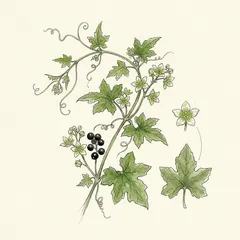 Όλα τα βιβλία για Bryonia Alba →
Αντιδοτείται απόAconitum NapellusActaea RacemosaAluminaAngustura VeraAntimonium TartaricumBelladonnaCamphoraChamomillaChelidonium MajusClematis Erecta
Όλα τα βιβλία για Bryonia Alba →
Αντιδοτείται απόAconitum NapellusActaea RacemosaAluminaAngustura VeraAntimonium TartaricumBelladonnaCamphoraChamomillaChelidonium MajusClematis ErectaGeneral EN
(Dig out the root of the plant previous to flowering, squeeze the juice from the recent root, and mix it with equal parts of alcohol.)
A large dose of this drug acts a couple of weeks.
Many of the effects of Bryonia are analogous to those of Rhus tox. Bryonia affects the mind differently from Rhus ; the fever of Bryonia is mostly composed of the cold stage, and its symptoms are chiefly excited or aggravated in motion, although the secondary effects of Bryonia of relieving symp- toms by motion, are not altogether rare.
It is for this reason that even in cases where Bryonia was indicated and had been exhibited in a proper dose, it does not always produce the desired effect in the first 24 hours ; the existing symptoms constituting the series of the secondary effects of Bryonia, a second dose had to be given (which, when given immediately after the first, neutralizes in part the effects
BRYONIA ALBA. 153
of the first dose of any remedy), which would bring the true primary action of Bryonia to bear upon the case before us as the truly homoeopathic and therefore curative principle. This peculiarity is witnessed in a few other drugs (see the preface to Ignatia), but rarely in Bryonia.
Rhus generally relieves the injurious effects of an injudi- ciously administered dose of Bryonia ; or else some otherremedy, which is homoeopathic to the untoward symptoms. Camphor, for instance, above all other drugs.
The curative powers of Bryonia are very comprehensive, as may be seen from the vast series of its symptoms. It will be found very useful in some fevers, and in some kinds of ab- dominal spasms of the other sex.
In violent, acute diseases, characterized by a high irrita- bility of the system, a pellet of the 30th potence will be found sufficient for the cure. In a very few cases a full drop of the 30th potence may be necessary, but never a drop of the tincture. I have learned this gradually by experience.
FROM NOACK AND TRINKS.
Bryonia is especially suitable to nervous, dry, thin and bilious individuals with a choleric temperament ; to people with brown complexion, brown or black hair, irritable charac- ter, and disposition to inflammation of the dermous tissues Diseases of women and children are especially influenced by Bryonia, inasmuch as it corresponds with quick irrita- bility, little energy, constancy of reaction, inclination to effu- sions and accumulations of lymph, nervous diseases, and likewise active congestions.
Bryonia excites both the peri- pheral nerves and capillary vessels, thus giving rise to symptoms intermediate between inflammation and nervous irritation Bryonia has striking relations with the secretory organs of the bile and the uterus, likewise with the serous membranes, and is especially suitable in hyperemia of the latter Bryonia is especially indicated in affections where resorption is necessary, in typhus infiltrations, serous effu- sions and sugg illations Bryonia is especially efficacious in affections, where the catarrhal, pituitous, and rheumatic cha- racter prevails, or where synochal symptoms pass into the nervous stage ; likewise in affections of a typhous character
Morbid conditions brought on by catching cold in dry cold weather and sharp wind ; bad consequences of chagrin, an- ger, excessive bodily exertions and a sedentary mode of life ;
154 BRYONIA ALBA.
conditions which are accompanied by ill-humor, and chills and coldness of the whole body are especially related to Bry- onia Bryonia ought particularly to be considered in dis- eases of a rheumatic-bilious and catarrhal nature Equally violent irritations of the nervous aud circulatory system are characteristic indications for the use of Bryonia. Acute and chronic inflammations of single organs
Arthritic affections, xuith inflammatory swelling of the affected parts and feverish feelings ; arthritis nodosa Dropsical condi- tions, especially anasarca and ascites, dropsy consequent upon scarlatina (alternating with Ars. and Helleb., or with Lycop. and Digit.) — Jaundice — Scrofulous affections Hysteric con- vulsions Tetanus hystericus
Paralytic conditions of the limbs Spontaneous luxations Indurations of the cellular tissues (afterwards Merc) Cutaneous affections : papulous : Lichen simplex, squamous : psoriasis : exanthematic : mor- billi, (especially when the catarrhal affection of the organs of the chest has become complicated, and has been increased to an inflammation of the chest,) secondary affections consequent upon measles, scarlatina miliaris, and morbid conditions consequent upon suppressed scarlatina, urticaria (especially that kind of urticaria which is influenced by a change in the weather,) purpura contagiosa et hemorrhagica, erythema intertrigo, erysipelas, especially erysipelatous inflammations of the joints ; pustulous : impetigo, porrigo, varioloid (especially in the pre- cursory eruptions of the small-pox and varicella, or when affections of the joints and violent pains in the small of the back are present) ; vesicular : herpes (palpebrarum), 'miliaria, especially in children, also recently born, and lying-in women ;
Bryonia corresponding specifically to acute rheumatism, is one of the best remedies against rheumatic miliaria ; tuberculous : furuncles Bedsore Swelling and induration of the glands; glandular ulcers Acute rheumatism (rheumatic pains in the temples, in the forehead, with a feeling of numb- ness in the occiput and wry-neck) ; rheumatic fever, Avith catarrhal and gastric complication, tearing pains in the whole body, concentrated with especial violence in both wrists, elbows, knees, and tarsal joints, swelling of certain parts in the joints, hot reddened skin, marked with red irradiations and increase of pain when touching the parts, or when trying to move the limbs ; fever, with violent headache, beating, in the forepart of the head and vertex, pressing out over the eyes, tearing pains extending along the back, and in the upper and lower limbs ; paroxysmal going to sleep and subsequent numbness and insen- sibility of the tips of the fingers and toes ; vomiting of a watery
BRYONIA ALBA. 155
and slimy, bitter liquid ; pains in the region of the liver and spleen ; uneasiness and heat, especially at night, with increase of the pains in the head and limbs by motion ; rheumatic and rheumatic-gastric fevers, with intense action of the circulatory system, accompanied with increased sensibility Intermit- tent fevers, with gastric symptoms ; rheumatic ailments, aggravated by motion, and accompanied with a tendency to constipation ; tertian intermittent, appearing in the morning, with vertigo ; pressure in and oppression of the head, after- wards shuddering with stretching and drawing of the limbs, increasing to shaking chills, accompanied with a good deal of thirst and loathing of food or drink ; heat, first alternating with chilliness, afterwards burning, with unquenchable thirst, and afterwards profuse sweat ; simultaneously with the fever appears a dry cough, exciting vomiting, and accompanied with stitches and tightness of the chest ; tertian intermittent, with anticipating type, characterized by vertigo, headache, stitches in the chest when breathing, moderate chilliness, and subse- quent great heat, delirium, unquenchable thirst, Math dry cough, and lastly sweat ; fever, consisting mostly of the cold stage ; intermittent fever, with stitches in the sides and abdo- men
Pituitous fevers after the cholera has been subdued Gastric, bilious, pituitous nervous fevers (Merc, being like- wise a good remedy in such affections) ; nervous fevers, with pleuritic stitches, nausea, and yellowish-coated tongue ; nervous fevers, in which the transition of the synochal into the nervous stage is not yet distinctly marked, especially versatile nervous fevers : febris nervosa versatilis, with morbidly excited sensibility and erethism, violent congestions to the head, dry, burning heat, dry lips, dry, coated tongue, pressure in the pit of the stomach and constipation ; febris nervosa versatilis. with continued delirium day and night, burning, dry heat of the whole body, dry, brown, parched tongue, and lips of the same appearance, great thirst, screaming, when some one touches the scrobiculus cordis, constipation, and pain during micturition ; febris nervosa versatilis, with headache, unsteady, wild looks, indistinct speech, violent delirium, desire to escape, sleeplessness, violent fever, quick, soft pulse, viscid, moist skin, tremor of the hands, and difficult deglutition
Abdominal typhus ; typhus bellicus (in alternation with Rhus) ; typhus, in the precursory stage (Aeon., Bell., Nux v., may likewise be used to break the disease at this stage) ; first stage of typhus, with swelling of the cheeks, sore throat, prickings in the throat and glandular swellings, or with spas- modic tension and pressure in the stomach, sometimes the pit
156 BRYONIA ALBA.
of the stomach being sensitive to the touch ; second stage of typhus (in alternation with Rhus, or Cocculus ; according to Cammerer, Bryonia is more suitable for the aphthse in the mouth occurring in the third stage of typhus, and being sensi- tive to pain ; whereas Belladonna is more adapted to the second stage) ; third stage of typhus, especially when there is an exhausted and depressed condition of the system (together with Rhus, Acidum phosp., and Puis.) ; state of convalescence, when the patient feels yet weak, out of bed (together with Valeriana)
Gastric-bilious fevers, with pain in the forehead, coaled tongue, bitter taste, nausea, with inclination to vomit, pressure in the stomach, and stool rather retarded ; febris gastrica saburralis, with prevailing chills Febris puerperalis, with a glowing red face, profuse sweat, short, frequent oppressed breathing, sad mood, dry, yellow-coated and parched looking tongue, sensitiveness of the tongue (every thing which is brought in contact with the tongue, smarting like salt), loss of appetite, loss of taste, continual lancinating pains in the region of the ovaries increased by pressure, distention of the abdomen, constipation, cessation of the lochias, continual violent heat through the whole body, with violent thirst for cold water, the heat being interrupted by slight chills causing paleness of the face ; sometimes violent, cutting pains in the thighs, aggravated by motion, and hard, frequent, small pulse
Milk fever ; spontaneous somnambulism Cephalalgia, brought on by affections of the mind or heart and by cold ; cephalagra and tearing of the head in females; megrim and hemicrania ; pain in the forepart of the head, extending through the forehead and the temple, oppressive, pressing from within outwards, as if the head would burst to pieces, with violent lancinations shooting through the parts ; conges- tion of blood to the head, aggravated by stooping, by moving the head, coughing or sneezing ; headache, continuing from morning till night, compressive and affecting the whole head, with faint, small glassy eyes ; pale countenance, sensitiveness to bright light and noise, ill and quarrelsome humor, palpitation of the heart and oppression of the chest in the afternoon, nausea, retching and inclination to vomit
Encephalitis, meningitis and arachnitis, especially in the second stage of the latter Cerebral affections consequent upon the cholera Ophthalmia, also ophthalmia neonatorum ; ophthalmia, consequent upon operations upon the eye, with violent pains and vomiting Otitis
Hard hearing Chronic obstruction of the nose Ozasna ; bleeding at the nose after a cold, with gastric symp- toms ; acute bleeding from the nose, even when consequent
BRYONIA ALBA. 157
upon menostasia Inflammatory prosopalgia Rheumatic pains in the cheeks Scrofulous swelling of the lips
Rheu- matic, inflammatory toothache, especially when the pain passes from one tooth into another, or even into the cheeks and head Stomacace Metaphlogosis of the cellular tissue of the neck Spasmodic hiccough
Diaphragmitis Gastric conditions ; chronic dyspepsia, even with vomiting ; water- brash ; vomiting of drunkards Constriction of the orifice of the stomach (?) — Chronic gastritis Chronic cardialgia ; vio- lent spasm of the stomach and heartburn ; spasm of the sto- mach brought on by an affection of the spleen
Splenitis Gastrodynia, enterodynia. with constipation (in alternation with Nux v.), especially in individuals whose digestive powers have been weakened by a sedentary mode of life, and by the use of spirituous liquors Hepatalgia and hepatitis, half-inflam- matory conditions of the liver Chronic affections of the ab- domen, owing to a disturbance of the peristaltic motion, chiefly brought on by a sedentary mode of life, and characterized by constipation, this being their most troublesome symptom (in alternation with Nux v. and Sulphur)
Colic, especially when of an inflammatory kind ; attacks of colic of pregnant and lying-in women; hysteric abdominal spasms Peritonitis musctdaris; peritonitis, with violent and considerable exuda- tion ; puerperal peritonitis (giving Aconite first) Dysentery Diarrhoea brought on by a cold ; diarrhoea, alternating with constipation
Obstinate constipation ; constipation of the re- cently born Asiatic cholera, when the liver appears to be the seat of the affection, (also Merc. Calc. China, Sulph.) or when there are congestions tc\ the head
Miserere ? — Spasmodic labor-pains Metrorrhagia (accompanied with burning at the stomach during motion, which becomes a paroxysm of anguish and chilliness! — Galactirrhea (next to Belladonna) Phlegmasia dolens ; mastitis (together with Mercury) ; mamma, as hard as stone in lying-in women icho do not nurse; painful, unequal knotty swelling of the mamma, owing to a morbid development of the same, or to a suppression of the secretion of milk in nursing women ; bad consequences from nursing, especially pains in the chest, stitches in the chest and pains in the back when weaning
Scrofulous catarrh Ca- tarrh of the air-passages brought on by a cold and in measles Inflammatory affections of the organs of respiration, espe- cially when characterized by painful stitches Acute and chronic bronchitis
Influenza with cough, the coughing fits causing a violent headache, and sometimes pains in the epi- gastrium, or where an inflammatory affection of the liver, dis-
j 58 BRYONIA ALBA.
tention and pain of the same to the touch, or when coughing or taking a deep inspiration, are characteristic symptoms, or lastly, when the cough is accompanied by retching or real vomiting (in this case Nux v. may be exhibited according to Gross) Chronic cough, excited by the least irritation of the lungs, talking, especially violent early in the morning and in the evening, with scanty expectoration, in individuals whose lungs have been weakened by former pneumoniae, and by fre- quent spitting of blood
Convulsive cough, with violent stitches in the chest during and between the attacks Periodi- cal spasmodic cough Neuralgia of the chest (afterwards Nux v.) Haemoptysis
Rheumatic inflammations of the chest ; pulmonitis and pleuritis (the synochal fever having first been subdued by Aconite), with nervous and gastric symptoms Muscular and serous pleuritis, especially the latter, in older people, the fever having first been subdued by Aconite, in hy- drothorax.
N. B. According to Wurm, Bryonia has hitherto been employed too often and too soon in pleuritis. (Compare Wurm's excellent treatise on pleuritis in Griesselictts Hygea, vol.
XII, p. 1.) — Rheumatic pleuritis, without any fever ; gas- tric pseudo-pleuritis Parenchymatous inflammations of the lungs, with typeremia of the lungs, especially such inflamma- tions as are characterized by prominent pleuritic symptoms, like- wise those which are concomitant morbid conditions of typhus abdominalis. Inflammations of the lungs, after the inflam- matory symptoms have been subdued by Aconite, and a dry, hot skin, with violent pleuritic stitches, tormenting cough with or without any blood-streaked expectoration remain.
Inflamma- tions of the lungs, with less commotion of the circulatory sys- tem, the fever being mixed with chills in the very beginning, and the heat in the head being rather intense, the membranes of the brain being sometimes affected, with consequent inclina- tion to sleep and delirium ; bloated countenance, dryness of the tongue, difficult speech, rather hard and full pulse, tolerably easy breathing, oppressed chest, with pains which are rather of a burning nature in older people, and are excited by cough rather than by breathing ; loose, mucous, blood-streaked, yel- low expectoration ; or when there are rheumatic affections of the extremities or gastric symptoms {pneumonia biliosa) ; pneumonia in typhus abdominalis, with red hepatization of one of the lobes of the lungs, and especially when the pleu- ritic symptoms are prominent.
Neglected, carelessly treated pneumonia, without any general reaction of the circulatory system. The previous exhibition of Aconite is the more in-
BRYONIA ALBA. 159
dispensable in proportion as a purely inflammatory synochal diathesis prevails in the system, with intense feverish heat, painful stitches, and blood-streaked expectoration. In pure in- flammations of the lungs, Bryonia is not alone sufficient ; in these affections, Aconite frequently precedes, and Bellad. and Merc, are used in alternation with Bryonia (in drunkards it is used alternately with Nux v., and when the inflammation has been brought on by some external cause, in alternation with Arnica and Rhus.) ;
Phosphorus, Tartarus emet., Sulphur, etc., have frequently to be exhibited after Bryonia. Wolfsohn re- marks, that Bellad. is very important, when the inflammatory symptoms do not yield to Aconite or Bryonia ; generally it may be said, that Phosphorus ranks before Belladonna Pulmonary phthisis, especially when accompanied by a slow inflammation of the pleura, or when complicated with hydrothorax Asth- matic conditions
Carditis (?) — Psoitis Lumbago rheuma- tica Ischias Spontaneous limping, in the beginning of it
Acute arthritis articularis, acute rheumatism of the joints, especially when accompanied with effusions of lymph into the articular capsules, and with or without simultaneous inflam- matory symptoms of the heart and pericardium Phlegmo- nous inflammations of the feet Pale, tight, hot swelling of the limbs. — (Edema of the feet, especially when coming on after scarlet or nervous fever Painful, inflamed corns.
Antidotes EN
Infusion of galls, Aeon.
Camph.
Cham.
Ign.
Nux v.
Rhus.
(Ruta ?) — After Bryonia are most suitable : Alum.
Bell.
Merc.
Phosp.
Rhus.
Sulph.
Head EN
Vertigo.
Vertigo, as if one were being turned about, or as if every thing turned around him when stand- ing. * Vertigo, when rising from the chair ; every thing turned around him ; the vertigo disappeared after some walking. * Vertigo the whole day, as if he were intoxicated, (a. 8 d.) — 5. * Vertigo, as if things turned round, when sitting straight in her bed ; she feels nauseated in the middle of the chest, as if a fainting fit would come on.
At eight o'clock in the evening, vertigo when standing, so violent that he stag- gered backwards and threatened to fall.
When attempting to walk, he staggered, as if he would fall on his back.
When walking, he staggers to both sides, as if he were not able to stand firmly, (a. 48 h.) After a walk she staggers to one side, when standing. — 10.
Early in the morning, when rising, he feels so giddy, as if the brain turned in a circle.
Giddiness the whole day, with weakness of the limbs.
Rather drowsy than giddy.
So weak in his mind, that his thoughts vanish, as is the case when one is about to faint ^at the same time his face
160 BRYONIA ALBA.
feels hot, most so when standing. He demands things which do not exist. — 15. He desires things to be given him imme- diately ; but when given, he does not care about them. Want of memory, inability to recollect things, (a. 4 h.) * His head felt heavy, like a hundred weight.
Great weight in the head, and pressure of the brain from behind forwards. Stupefaction of the head.— 20. Gloominess of the head until the moment one goes to bed. * In the morning the headache does not begin when waking up, but when opening and moving the eyes. * Early in the morning, when waking up, his head feels gloomy and aches, as if he had spent the whole night in revelry ; he does not want to leave his bed. (Pressure in the head when treading.) Gloomy compression in the head, in the forehead, above the eyes. — 25. * The blood rushed to the head, after which the head felt compressed from temple to temple. * Sen- sation as if the head were being compressed from ear to ear.
Headache ; a sort of compression with jerkings in the brain resembling pulsations. Compressive pain in the head, early in the morning, with heaviness, intermixed with stitches ; she was scarcely able to lift up her eyes from pain ; when stoop- ing, she was not able to raise herself again, (a. 60 h.) * Vio- lent headache, the head feeling very heavy, as if it would incline to all sides, with pressure in the brain from within out- wards, and great desire to lie down (immediately). — 30. * 4 Head. ache after a meal, and pressure in the forehead from within outwards during a walk.
Headache, as if the contents of the head would issue from the forehead.' * Headache, when stooping, as if all the contents of the head would issue from the forehead. 2 Giddiness and weight in the head, when stooping while sitting or reading, disappearing when raising the head. — 35. Headache only when stooping, a sort of pressing through the forehead from within outwards, especially when sitting. * Pain in both temples, pressing from within out- wards. * Headache, as if the skull were being pressed asun- der.
Early in the morning, when waking up and lying on the back in bed, headache in the occiput extending as far as the shoulders, resembling a weight which presses upon a sore spot. * Semi-lateral headache ; searching (grinding) pressure
1 Compare 248.
2 The sensation as of being pressed asunder is the .same as that of being compressed (24, 25, 26, 27, 28), both sensations being perceived by the brain which is enclosed in an unyielding skull; the sentient powers of the brain are then unable to determine whether the painfulness pro- ceeds from the brain being too much distended, or from the skull being too narrow. It comes from b^th these causes.
BRYONIA ALBA. J(J1
on a small spot of the right half of the brain, being in relation with a painful submaxillary gland, through a sort of search- ing (grinding) or tearing sensation along the bones of the upper and lower jaw.
(a. 30 h.) — 40.
Headache : early in the morn- ing, after rising, darting drawing extending to the malar and jaw-bones.
(Tearing across the forehead, followed by tearing in the cervical muscles, and afterwards tearing in the right arm.) * Lancination in the head through both temples, when walking in the open air. * Lancinations in the head, from the forehead to the occiput.
Turning sensation in the right side of the fore- head, and a lancination in the left. — 45.
Pain in the head, rather darting than throbbing, the face being hot.
Throbbing in the right side of the head, which may be felt externally with the hand.
Headache on the top of the head, early in the morn- ing when waking up, a kind of painful throbbing.
Pain in the forehead and the occiput, a kind of hollow beating, (a. 2 h.) Throbbing headache affecting the eyes so as to prevent her from seeing ; during motion the throbbings in the head are more rapid ; she thinks she hears them. — 50.
Chirping in the head, as of grasshoppers.
A sort of gurgling in both temples.
Pain in the temples as if some one pulled him by the hair in that part. * Burning spot of the size of a dollar, which does not ache when touched.
Smarting and gnawing on the top of the hairy scalp (at night.) — 55.
Greasy condition of the hair, early in the morning, the head being cool ; the hands become quite greasy when combing the hair.
(a. 10 h.) Violent itching of the top of the head when combing the hair.
(Painful throbbing in all the parts of the face, which was felt when touching the parts with the finger.) Tension of the occipito-frontalis mus- cle, when moving the eyes.
[* Dullness and vertigo of the head. * A kind of vertigo as if he were intoxicated, and as if the blood rushed violently to the head.
He feels intoxicated, he wants to lie down.
Vertigo early in the morning. — 5.
Vertigo, with a feeling of heaviness ; he feels as if every thing were turning in a circle. * Vertigo and fullness in the head.
He is scarcely able to turn his head, owing to a sensation of fullness in the head.
Dull movements in the vertex and the forehead, causing vertigo and stagnation of ideas.
Mental illusions : her own head seems to her larger than it is. — 10.
Stupid feeling in the head, with striking forget- fulness. * She was hardly aware of what she did (in the room,) worse when lying down, for twenty-four hours (imme- diately).
She knew not what she did, and dropped every thing (in the room).
Stupid feeling in the head, finds it diffi- cult to reflect. * Dreaiy and muddled state of the head.
(a. lh.)
162 BRYONIA ALBA.
— 15. * Excessive heaviness of the head, (frequently, and also a. 4d.) Dull pain in the occiput.
Dull pressure in the occi- put.
Throbbing pain in the forehead, he had to lie down.
* Searching [grinding) pressure in the anterior part of the brain with pressing towards the forehead, especially violent when stooping or walking fast ; walking fatigues him a good deal.
(a. 24 h.) — 26.
Such a violent aching in the fore- head that he is scarcely able to stoop. * Pressure from within outwards above the left orbit, in the brain, which ends in a pressure upon the eyeball from above downwards, (a. 3 d.) Semilateral headache, accompanied by a disagreeable pressure in the eye of that side (in the afternoon).
Tearing pain in the left side of the head.
(a. 24 h.) * Compressive pain in both sides of the head. — 25.
Single stitches in the forepart of the forehead, with gloominess of the head.
Itching prickings in the right half of the occipito-frontalis muscle.
Darting tearing from the right malar bone to the temple, externally, more violent when touched.
The head aches, especially when touched, mostly in the forepart, for twenty-four hours.
Soreness of one side of the occiput, when touching it. — 30.
Heat in the head and face, with redness of the latter. * Violent heat in the head and face.]
Face and Eyes : Tension of the skin of the face, when moving the facial muscles. — 60.
Red spots in the face and on the neck (for two days).
Dim-sightedness of the left eye, as if it were full of water.
Weakness of sight, early in the morning : when she attempted to read, all the letters looked blurred.
(Presbyopia.) She was not able to see things at a proximity.
(a. 24 h.) The lower eyelid is sometimes red and inflamed, the upper eyelid twitches. — 65.
Agglutination of the eyelids early in the morning, they are somewhat red and swollen, and ache as if they had been rubbed and heated.
Pressure in the eye, early in the morning, as when one presses upon the eye with the hands, or as when one is in a room full of smoke.
* Swelling and agglutination of the eyelids early in the morn- ing.
Swelling of the lower eyelid, with internal aching ; agglutination early in the morning. * Sensation as of sand being in the eyes, which forces one to rub the eyes. — 70. * Sensa- tion in the right eye, in the afternoon, as if a grain of sand were in it.
Sudden painful swelling of one eye, in the forenoon, without any redness ; pus comes out, and the conjunctiva is dark-red and swollen. * Lachrymation of the eyes in the open air.
Itching of the margin of the left upper eyelid, mingled with burning and tearing.
Itching, with occasional smarting of the outer canthus of the left eye, which cannot be relieved by
BRYONIA ALBA. 163
rubbing, (a. 6 h.)— 75. Lachrymation of the eyes and itching of the eyelids, as when a sore is healing ; he had to rub the part.
[* Flushes of heat over the face. * Paleness of the face for twenty-four hours. * Red, hot, soft bloatedness of the face. — 35. Swelling of the left side of the face, along the nose, with some pain in the swollen part (during diarrhoea.) * Consider- able swelling of the upper half of the face, especially below the eyes and above the root of the nose, with swelling of the eye- lids ; he was unable to open the left eye for four days. (a. 3 d.)
* Contractive pain in the right orbicularis palpebrarum.
Red- ness and swelling of the eyelids with pressure in the same, for three days.
(a. 3 d.) Pimple in the lower lid of the left eye, of the size of a pea, painful when pressing it, for sixteen days.
(a. 24 h.) — 40.
Soft tumor in the internal canthus of the left eye, a good deal of pus oozes out from time to time, for ten days.
(a. 6 d.) When waking in the morning, he is scarcely able to open his eyes, on account of the lids being agglutinated.
Pain as from a burn above the left eye and on the left side of the nose, somewhat diminished by pressing the parts with the lin- gers.
Pain as if the left eye were being burnt from within out- wards, (a. 24 h.) Pressure in the eyes, with a burning and itching sensation of the eyelids. — 45.
Pressure in the eyes, for sixteen days in succession.
Pressure in the right eyeball, rather from above downwards, (a. 3 d.) Pecking in the right eyeball. * Frequent lachrymation.
Small herpetic eruption on the right cheek, (a. 4 d.) — 50.
Swelling of the right cheek, close to the ear, with burning pain.
(a. 4 d.) Painful pressure below the right malar bone, going off by external pressure.
(a. 1 h.)]
Ears and Nose : Slight roaring in the forepart of the right ear. * Sensation as if the ears were stopped up, and as if no air could get in.
When returning home from a walk, he feels alternate stitches in both ears.
Bleeding from the ears. — 80.
Violent aching of the right concha.
(Ulcerated concha.) Fre- quent tingling and tickling of the septum of the nose, espe- cially when blowing the nose. * Swelling of the left side of the tip of the nose, with a darting pain and a sensation when touched, as if they would ulcerate.
Painfully smarting ulcer in the left nostril. — 85. * Bleeding from the nose, followed by ulcerated nostrils.
Bleeding from the nose.
(a. 48, 72 h.)
* Bleeding from the nose, lasting a quarter of an hour, early in the morning after rising.
Bleeding at the nose when asleep, early in the morning at 3 o'clock ; it wakes him.
(a. 4 d.) Bleeding at the nose, without having stooped previously.
[Pinching jnessure in the glenoid cavity of the right jaw, more violent during motion.
Ringing in front of the left ear, as with small bells, (a. 1 h.) Contractive pain in the meatus auditorius, going off after the wax had been removed with the finger, but returning nevertheless constantly, with hard hear- ing. — 55.
Sensation in the meatus auditorius externus, as if it were being pressed upon with the finger ; this sensation increases when stooping while reading.
Dull pain around the left ear.
Pain as of the interior of the left ear burning from within outwards, (a. 6 h.) Burning at the lobule of the ear.
Hard tumor behind the ear, frequently changing its size.
(a. 24 h.) — 60.
Tumor before the ear, bursting open after the lapse of 12 hours, a humor oozing out from it, and forming a yellow scurf.
Swollen nose, with bleeding lasting several days, (a. 5 d.) Bleeding from the nose, three days in succession.
(10, 11, 12 d.) Bleeding from the nose, several times a day, a fortnight.
Bleeding from the nose.
(a. 10, 16 d.) — 65.
Bleed- ing from the right nostril, (a. 9 d.) Daily, profuse bleeding from the nose.
(a. 14 d.)
Jaws and Teeth : — 90.
(A little pimple on the chin, with stinging pain when touched.) Painfully burning vesicle on the vermilion border of the lower lip.
Eruption under the left corner of the lips, smarting as if the parts had been excoriated.
Eruption on the lower lip, on the outside of the vermilion bor- der, itching and smarting as from salt.
Lancinating, intensely painful darting between the lower lip and the gums, as is expe- rienced in cancer of the lip (early in the morning when in bed). — 95.
Toothache ; darting and lancinations in the teeth in the direction of the ear, which obliged her to lie down. 1 Darting toothache, in the evening when in bed, at times in the upper, at times in the lower molar teeth (in the evening, when in bed) (for one hour) ; when the pain was in a tooth of the upper row, and the tooth was touched with the tip of the finger, the pain suddenly ceased, and affected the opposite tooth of the lower row.
(a. 5 d.) Darting toothache, while he smokes tobacco as usual, (a. 1 h.) All the teeth vacillate ; this is perceived when touching them or when pressing them against one another.
Pain of a molar tooth when chewing. — 100.
Tooth- ache, when taking something warm into the mouth.
When
1 There are several symptoms produced by Bryonia, which oblige one to lie down; compare 170, 312.423, (222,) or at least to sit, 181, and seve- ral which are increased by walking and standing, 184 ; the alternate effects of Bryonia, when the symptoms are relieved by motion and become aggravated by quickly sitting or lying down, are, on the contrary, much more frequent.
BRYONIA ALBA. 165
eating, one suffers with a tearing and lancinating toothache (the lancinations extending to the cervical muscles) aggravated by- warmth.
Pain as if the tooth were being screwed in and afterwards taken out of its socket (the pain is only momenta- rily diminished by cold water, but greatly relieved when walk- ing in the open air) ; accompanied by tearing in the cheeks and pinching in the ears, at night until six o'clock in the morning.
Toothache ; when opening the mouth, the air rushes in and causes a pain.
Toothache after midnight (at three o'clock) as when an exposed nerve becomes painful from the cold air rush- ing in ; the pain becomes insupportable from lying on the unaf- fected side, and does not pass off till one turns to the affected side. — 105.
When drinking something cold, a sore pain is felt in the tooth.
The gums are painful, as if they were sore and raw, the teeth being vacillating, which makes them painful.
Spongy gums.
Simple pain of one of the submaxillary glands, or as if it were pinched, (a 12 h.)
[Drawing, from below upwards, towards the ear, with pres- sure in the throat.
Pain of the back part of the throat, which is felt during motion.
Tensive stiffness of the left side of the neck. — 70.
Rheumatic stiffness in that region of the neck which is near the nape of the neck.
Tension of the nape of the neck, when moving the head.
Soreness, during motion of the left side of the nape of the neck and the neck, the muscles of the face and the muscles of deglutition ; the pain makes the turning of the head and mastication difficult and almost impos- sible, (a. 24 h.) Itching prickings of the neck, especially after having walked fast ; they induce him to scratch the parts ; after scratching they pass off.
(a. 24 h.) Fissure in the lower lip. — 75.
Burning in the lower lip.
Small, ulcerated blotches on the lower lip, painfully burning when touched.
A small elevation near the corner of the mouth and rather on the lower lip, severely bleeding from time to time, for six days.
Sensation, early in the morning, as if the molar teeth were too long ; they were so loose, that they might be bent to and fro with the fingers ; she was unable to use them for the purpose of chewing, and, if she did, they felt painful and as if they would fall out of their sockets, fifteen hours, (a. 48 h.) His teeth feel to him as if they were too long. — 80.
Drawing, sometimes darting toothache in the molares of the left upper jaw, only during and after a meal, the teeth feeling as if they were too long and vacillating to and fro.
(a. 6 h.) Drawing pain in the molares of the upper and lower jaw.
(a. 24 h.) Exces- sive toothache when at rest, and especially when in bed, abat- ing when chewing.
Sensation in the lower jaw, as if there
156 BRYONIA ALBA.
were a pimple on the bone, causing a tensive pain when touched or when turning the head. (a. 61 h.)]
Mouth And Throat EN
Painful stiffness of all the muscles of the neck when moving it, and roughness of the throat when swallowing. — 110.
Smarting, itching eruption around the neck, especially after sweating. * Stinging in the throat when touch- ing it from without, or when turning the head. * Stinging in the throat when swallowing.
Pressure in the fauces as if he had swallowed a hard body with sharp corners.
She is unable to swallow either solid or liquid food ; it chokes her. — 115.
(Sensation when swallowing, as if the throat were swollen internally or full of mucus, which one is unable to hawk up.) * Sore throat ; dryness and rawness of the throat during empty deglutition ; when drinking, this sensation passes off for a short while, but returns shortly ; the pain is worst in a warm room.
Dry feeling in the back part and upper part of the throat, (a. 48 h.) Dry feeling, not on the tongue, but in the upper part of the palate. * The mouth feels dry without his being thirsty. — 120.
Dry feeling on the inner side of the upper lip and cor- responding tooth.
A good deal of thirst by day, without any heat.
The saliva runs involuntarily out at the corners of the mouth. * Tongue coated white.
[Eruption of red rash on the neck. — 85.
Rough and scrap- ing sensation in the throat, (a. 5 h.) His throat feels swollen, and as if he had a violent cold which hinders speech.
Burn- ing, smarting blisters on the anterior edge of the tongue. * The mouth is so dry that the tongue sticks to the palate.
Dryness in the mouth without any thirst. — 90.
Early in the morning dry feeling in the mouth, (a. 48 h.) Violent thirst twenty-two days.
Thirst, especially early in the morning.
Violent thirst, day and night.
Great thirst after a meal, for 16 days. — 95.
A good deal of spitting.
Accumulation of a quantity of saliva in the mouth, which foams like soap.]
Taste and Appetite : * Insipid, flat taste in the mouth. — 125. * Sweetish, flat taste in the mouth. She does not taste the food ; her mouth is bitter between the meals. Every thing tastes bitter to him, he is unable to swallow any thing. * Bit- ter taste in the palate continuing after a meal. * Bad, bitter taste in the mouth, early in the morning. — 130. * Early in the morning she has a taste in the mouth as of decayed teeth or putrid meat. (a. 12 h.) Tolerably clean tongue ; with disgust- ing taste in the throat, as when persons smell badly from the mouth ; she has a taste in her mouth like the smell of spoiled meat ; she has not got this taste while eating. * Putrid smell from the mouth.
In the evening he has a taste in his throat as
BRYONIA ALBA. 167
from the smoke of rancid grease. * Loss of appetite without any bad taste, (a. 3 h.) — 135.
Canine hunger without any appetite.
Canine hunger until bed-time.
He is hungry, and eats, but without any appetite.
He has no appetite for milk ; but while taking" it, he gets an appetite for it, and likes it. * He desires many things, which he cannot eat. — 140.
Food smells well to her, but, when beginning to eat, the appetite is gone.
Appetite for wine.
Appetite for coffee.
[Insipid, disgusting taste in the mouth, (a. 5 d.) Sweetish, disgusting taste in the mouth.
Insipid, flat taste in the mouth ; his taste is almost gone. — 100.
Spoiled appetite.
Want of appetite (for ten days).
The stomach feels empty ; he is hungry without having any appetite.
Canine hunger early in the morning, without any appetite.
Hunger with loss of appetite. — 105.
Continued nausea, succeeded by canine hunger (in a few hours).
Canine hunger early in the morn- ing, with thirst and flushes of heat.
(a. 30, 72 h.) Violent hunger, for a fortnight.
Violent appetite for six days.
Vio- lent desire for coffee, (a. 5 h.)]
Gastric Symptoms: * Frequent risings of mere air.
Hic- cough succeeding the eructations, without having eaten any thing previously. — 145.
Hiccough succeeding the eructations, a quarter of an hour.
(a. 48 h.) Violent hiccough.
Frequent eructations after a meal, from morning till night. * Eructa- tions tasting of the ingesta.
No eructations after drinking, but after taking the least food ; however, only air rises, without any bad taste. — 150.
(Eructations, with rancid taste in the mouth, and mucus in the throat.) Stinging pain during every eructation.
(Burning, almost uninterrupted eructations, which make his mouth rough, and prevent him from tasting the nou- rishment he takes.) After a meal, an astringent, dry taste, this dryness remaining in the anterior part of the mouth, with- out any thirst ; the lips are dry and chapped.
Bitter taste in the mouth, in the evening after lying down. — 115.
Eructations after a meal, finally bitter eructations.
Bitter eructations after a meal.
Bitter risings from the oesophagus, without any eructations, with inclination to vomit.
Sourish eructa- tions, sourish water running from his mouth.
Inclination to vomit, early in the morning, after an anxious dream, without being able to vomit, accompanied by frequent, «mpty eructa- tions. — 160.
Nausea, in the evening before going to bed.
He wakes up after midnight with nausea ; he is obliged to vomit, he vomits food and bile.
Regurgitation of aliments ; she gulps them up. * Regurgitation of the ingesta, without any effort at vomiting.
Nausea and inclination to vomit, even
Igg BRYONIA ALBA.
after eating something which has tasted well to him. — 165.
She vomits solid food, but not the liquids.
Nausea for half an hour, every morning, two hours after rising, with accumula- tion of water in the mouth.
Nausea in the evening, followed by the discharge of a quantity of water from the mouth (water-brash). 1 Nausea, inclination to vomit, without having eaten any thing, (a. 1 h.) Nausea and inclination to vomit, early in the morning when waking up. — 170. * (Haematcmesis and lying down.) * Early in the morning at six o'clock, vomiting of a bitter, musty and putrid liquid, leaving a similar taste in the mouth.
Nauseous taste after drinking (in the afternoon).
Vomiting of mucus in the evening, (a. 5 h.) Gulping up of water and mucus, like water-brash (at six o'clock in the evening) ; these substances rose into the chest, with coldness over the whole body. — 175.
Painful sensation in the oesophagus, rather in the lower part, as if it were con- stricted.
Gulping up of mucus from the stomach, early in the morning.
(Cough, especially after a meal.) Headache, a quarter of an hour after every meal ; it passes off gradually, but comes on again after the next meal.
Bloatedness of the abdomen after every meal. — 180.
Cutting, as with knives, in the pit of the stomach, (a. 1 h.) Violent pressure in the pit when walking, immediately after supper ; lastly, pressure upon the bladder and the perinaeum, which becomes intolera- ble ; the pressure disappeared when sitting, (a. 12 h.) * Pres- sure in the stomach, immediately after having eaten some- thing, and even during the meal. * Pressure in the stomach after a meal ; there was a load in the stomach, as of a stone; this made him ill-humored.
Clawing and pressure in the abdomen, in the umbilical region, when standing or walking. — 185.
Contractive pain in the stomach, some hours after a meal.
Contractive pain in the stomach after a meal, followed by cutting in and above the pit of the stomach, eructations, flushes of heat, nausea and vomiting of the ingesta.
(a. 48 h.)
[ — 110.
Tenacious mucus in the fauces, which can be loosened and hawked up.
Frequent, sometimes sourish eruc- tations after a meal.
Nausea, continuing twenty-four hours, with discharge of a quantity of water from the mouth, (a. 5 m.) Nausea, especially when smoking (in a man accustomed to smoking).
Inclination to vomit (immediately). — 115.
Sev- eral attacks of vomiting of a bitter and yellow mucus.
Pres- sure in the stomach after a meal.]
[Stomach : Pressure in the stomach when walking. Pinch- ing in the pit of the stomach, (a. 12 h.) Sensation in the pit of
1 Comp. 252.
BRYONIA ALBA. 169
the stomach, as if it were swollen. — 120. Extremely disagreea- ble sensation under the pit of the stomach, as if it were swollen.]
Abdomen EN
* Hard swelling around the umbilicus, and under the hypochondria.
Sudden ascites ; he is unable to breathe, and has to sit down.
(a. 18 h.) Soreness in the folds of the abdominal integuments, in the groin. — 190.
Tensive pain in the region of the liver.
Burning pain in the abdomen, in the region of the liver, (a. 8 h.) Pain in the abdomen, as if one would vomit, (a. 5 d.) Pain in both sides of the abdomen, like pleuritic stitches.
Tearing and drawing in the abdomen, espe- cially during motion ; followed by stitches, especially during stool, and mostly in the evening. — 195.
Violent lancinations in the abdomen from below upwards as>far as the stomach (after drinking a cup of warm milk, in the afternoon) ; the pain forced him to bend double, and disappeared after stool.
Painful writhing (twisting) around the umbilicus, with stitches.
Pain in the abdomen, with anguish, which makes the breathing difficult; walking relieved the pain.
The emission of flatulence, at night, is preceded by loud grunting and howling.
Flatulent colic after supper, with pressure in the region of the ccecum. — 200.
Pain in the abdomen, as if he had been purged, or as if hcemorrhoids would make their appearance. * Spasmodic pains in the abdomen after dinner.
Grunting in the abdomen, with sensation as if diarrhoea would set in.
Horrible colic (in the forenoon), as if she would have an attack of dysentery, with- out any stool.
Pressure on the umbilicus, as from a button, when walking in the open air. — 205.
(Sensation deep in the abdomen, as of a lump lying there.)
[Heat in the abdomen (and the whole of the internal body).
Pressure and pinching in the abdomen.
Loud grunt- ing in the abdomen, a fortnight.
Loud rumbling in the abdo- men, especially in the evening when in bed, for eighteen days. — 125.
Colic, as if he would be attacked with diarrhoea, for an hour and a half.
(a. 5 min.)]
Stool EN
Colic and pinching in the abdomen, and the um- bilical region, as after a cold, for several days ; three days after the colic, a copious, thin evacuation.
Copious, fetid stool, preceded by cutting in the abdomen.
Bloated abdomen ; flatu- lence moves about in his abdomen, colic with continual consti- pations ; he feels as if something were lodged in his abdomen.
Colic during stool, as if the parts were constricted, or were being pinched together with the hand. — 210.
Motion on the bowels.
Two stools a day; in a few days, constipation.'
1 A more frequent, primary effect of Bryonia is retention of stool ; its alternate effects, looseness of the bowels, is rarer ; when the other symp-
170 BRYONIA ALBA.
Brown, frequent, thin stool in a baby.
Frequent evacuations.
(a. 48 h.) * The faeces are of a large size, and are therefore passed with difficulty. — 215.
Diarrhoea, (a. 3 d.) # Diarrhoea, with previous colic, (a. 44, 72 h.) Long-lasting burning at the rectum after hard stool.
Soft stool, with a burning sharp pain in the rectum.
Itching, blunt stitches in the rectum from below upwards, coming on with a jerking sensation. — 220.
(Diarrhoea at night.)
[Diarrhoea, (a. 28 h.) Diarrhoea, without any trouble, (a. 24, 30 h.) Diarrhoea, four days in succession, one attack every three hours ; it came so speedily that he was unable to retain it ; in the twelve succeeding days, the ordinary stool came off with the same unforeseen necessity.
Diarrhoea lasting two days ; it made her so weak that she was obliged to keep her bed.
(a. 3 d.) — 130.
Diarrhoea, greatest early in the morning.
Diarrhoea, especially at night ; with burning at the anus, at every evacuation, (a. 7 d.) Diarrhoea, smelling like rotten cheese.
Thin, bloody stool, (a. 24 h.) Hard stool, with pro- trusion of the rectum which soon re-entered of itself; followed by diarrhoea with fermentation in the abdomen. — 135.
Very hard stool.]
Urinary Organs EN
Pain in the abdomen, when emitting the urine.
Sensation, when urinating, as if the urinary pas- sage were too narrow.
He is obliged to rise several times for the purpose of urinating.
Violent desire to urinate, also at night.
Without the bladder being full, he feels such a violent desire to urinate, that he is scarcely able to retain the urine for one moment, (a. 12 h.) After the urine has been emitted, the neck of the bladder contracts ; nevertheless he feels as if some urine would yet be expelled.
He is unable to retain the urine long, when he feels a desire to emit it ; if he does not emit it immedi- ately, he feels as if it passed off spontaneously ;
(nevertheless, no urine can be discovered when looking.) During motion some drops of hot urine frequently escape from him without his being aware of it.
After urinating, there is a sensation in the bladder as if he had not emitted the whole of the urine ; some drops are involuntarily passed after the emission. — 230.
Urgent desire to urinate, and frequent emission of urine, when walking in the open air.
(a. 5 h.) Itching, burning and sting- ing pain in the anterior portion of the urethra, between the acts of micturition.
Burning in the urethra.
(Aching in the urethra.) Drawing and tearing in the anterior portion of the urethra, between the acts of micturition.)
toms correspond, Bryonia is therefore able to cure constipation, which few remedies, beside Nux v. and Opium can do.
BRYONIA ALBA. 171
[ * The urine is hot when being emitted. Burning and cut- ting previous to the appearance of the urine, (a. 3 d.)]
Genital Organs : A few stitches in the testicles (imme- diately), when sitting.
Stinging and burning itching of the margin of the prepuce. * The glans is covered with itching, red rash-granules.
Swelling of the left half of the labia majora, succeeded by a black, hard pustule of the size and shape of a pimple, without either pain or inflammation.
Bloated abdo- men ; there is a good deal of movement in it, and a good deal of pinching, as if the menses would make their appearance. — 240.
The menses appear in a few hours, sometimes eight days too soon. 1
[Increase of the menstrual flow.
The menses appear eight days before the time. — 140.
The menses appear a fortnight too soon.
The menses come three weeks too soon.]
Cold, Catarrh : Violent sneezing, early in the morning, (a. 18 h.) Violent sneezing and yawning early in the morn- ing, (a. 48 h.) Frequent sneezing, especially when moving the hand along the forehead. * Some hoarseness and an impure tone of voice, when walking in the open air. — 245. * A sort of hoarseness, accompanied by inclination to sweat.
* Violent coryza, without any cough, (a. 36 h.) Violent coryza, rather dry. (a. 48 h.) Violent coryza, with stinging headache, as if the contents of the head would issue from the forehead, espe- cially when stooping. 2 (a. 70 h.) Dry cough. — 250. * Dry cough, apparently coming out of the stomach, preceded by a creeping and tickling in the pit of the stomach. Cough, from a continued creeping in the throat, from below upwards ; one throws up mucus. Continued, dry cough, especially early in the morning, with discharge of water from the mouth, like water-brash. 3 Nausea excites his cough. * Vomiting of the ingesta during a cough. — 255. * Long-continued stitch, deep in the left hemisphere of the brain, when coughing. * Dry cough with retching : a few spasmodic, violent fits in the upper part of the trachea, which feels as if it were lined with a dry, hard mucus ; the cough is excited even by the smoke of tobacco.
* Violent cough, early in the morning when in bed, continuing a quarter of an hour, and occasioning the expectoration of a quantity of mucus. His chest is affected early in the morning ; his chest feels as if it were lined with mucus, which cannot be loosened easily. * Scraping and painful cough with retching,
'This is a primary effeet ; Bryonia may, therefore, frequently be employed with success against haemorrhage from the uterus. 2 Comp. 31, 32. ■ Comp. 167.
172 BRYONIA ALBA.
as if caused by roughness and dryness of the larynx. — 260.
Dry cough with retching, seated in the upper part of the tra- chea.
He coughs up coagulated pieces of blood, (a. 3 h.) He hawks up yellow mucus from the fauces. * Stitches in the throat when coughing. * Stitches in the region of the last rib when coughing. — 265.
Stitches in the sternum when coughing ; he is obliged to hold his chest with the hand ; the stitches are likewise felt when feeling the parts.' Two attacks of sneezing during the cough.
Retching during the cough, without nau- sea.
Soreness in the pit of the stomach when coughing.
The whole head is affected when coughing.
Pressure in the head, when coughing.
The coughing fit is immediately preceded by gasping for air, quick, spasmodic inspirations, as if the child could not draw full breath, and was not able to cough on that account ; a kind of suffocative fit, which is afterwards followed by cough, especially after midnight.
[ * Rough and hoarse voice, (a. 4 h.) Hoarseness, twenty-one days.
Fluent coryza, for eight days. — 145.
Violent fluent coryza, which obliged him to talk through the nose, constantly accompanied by chilliness, for eight days.
(a. 48 h.) Violent coryza, with pain in the forehead.
Retching ; it seems as if some kind of mucus were lodged in the trachea ; after some retching he experiences a sore and aching pain in that organ, which increases when talking or smoking tobacco.
When entering the warm room, coming from the cold air, a sensa- tion in the trachea as if it contained smoke ; this obliges him to cough ; he feels as if he could not breathe air enough.
(a. 2 h.) — 150.
Tenacious mucus in the trachea which becomes loose only after much coughing. * Cough with expectoration (immediately).
Cough with expectoration, in the forenoon, four days in succession, (a. 34 h.)]
Chest EN
Pressure in the pit of the stomach, which oppresses her chest. An excessive warmth in the region of the pit of the chest shortens her breath, with a kind of aching. Burning pain in the right half of the chest, (a. 8 h.) — 275. Impeded respiration. * The breathing is shorter, the expirations are more hurried. * Asthma, (a. 1 h.) * Attack of pleurisy and oppression of the chest for twelve hours. * Oppression of the chest : she felt a want of taking a deep inspiration (as if her chest were stopped up and she could not get breath) ; when attempting to take a deep inspiration, she felt a pain in the chest, as if something were expanded which would not admit of expansion. — 280.
Anxiousness, early in the morning, appa-
1 Comp. 333, 351, 401.
BRYONIA ALBA. 173
rently from the abdomen, as if he had been purged, and as if the breathing were too short. * Quick, anxious, almost impos- sible breathing, owing to stitches in the chest, first behind the scapulae, afterwards behind the muscles of the chest, impeding respiration, and obliging one to sit straight ; lastly, stitches in the vertex. Pressure over the whole chest, (a. 24 h.) Pres- sure in the upper part of the abdomen, as with the hands ; she imagines she is unable to walk in the open air, without feeling a pain in that part.
Aching in the middle of the sternum, also when breathing, the feet being icy cold. — 285. Pressure upon the chest, as if it were oppressed by mucus, with stitches in the sternum when taking an inspiration ; this pressure appeared to decrease by eating. Heaviness in the chest, and heaviness in the body, disappearing after a meal. * Stitches in the side in the region of the ribs, during an inspiration, coming on with a jerking sensation, and disappearing in the open air. * During an inspiration, stitch from the upper part of the chest, through the chest to the scapulae.
When taking an inspiration, the ribs, towards the back, are affected with a tensive pain, which is changed to a dull stitch when taking a still deeper inspiration, especially behind the scapulas, and especially when stooping. — 290. * At six o'clock in the evening, stitches in the chest, with oppression. Momentary stitch in the left clavicle, followed by a simple pain. When turning to the other side, in the bed, he felt a stitch in that side upon which he did not rest. Stitches and pulsative throbbings in the lower part of the right half of the chest.
Stitching pressing in the chest, from within outwards. — 295. At the least inspira- tion, a lancination, such as is felt in ulcers, in a small spot below the clavicle ; the duration of the lancination corresponds to that of the inspiration ; the small spot is painful like an ulcer, even when touching it, still more when raising the right arm, early in the morning, (a. 24 h.) Pain in the xiphoid car- tilage, in the evening ; when touched, it feels as if it were ec- chymosed. Pain over the whole chest, with oppression which passes off with the emission of flatulence, in the evening (nine o'clock).
Attack, as if the affection rose higher up, and deprived one of both breath and language. Compressive griping in the chest, near the sternum. — 300. Pain in the chest, close above the pit of the stomach, clawing, greatest when sitting on a chair, and stoop ing, and when lying on one side in the bed. (Stretch- ing, extending across the chest from the short ribs.) Tension in the chest, when walking.
Painful stiffness of the muscles on the right side of the nape of the neck towards the shoulder, when moving the head. Pain in the nape of the neck, at its
174 BRYONIA ALBA.
juncture with the occiput ; the pain is a painful weakness, as if the head were too weak.
[Palpitation of the heart, several days in succession, (a. 12 d.) * Heat in the chest. — 155. * Heat in the chest and face.
Sensation as if every thing were loose in the chest and fell down into the abdomen.
Clawing pressure behind the ster- num, most violent when taking an inspiration or expiration, (a. 5 d.) Considerable swelling of the external chest in front.
Single, soft stitches in an indurated nipple, similar to the sen- sation created by electric sparks ; after this, every trace of induration had disappeared, (a. 5 h.) — 160.
Pricking pain beloio the right nipple from, within outwards ; in the cavity of the chest, these prickings are only felt during an expira- tion.]
Back EN
Pain in the nape of the neck, as after a cold.
Pres- sure between both scapulas and on the opposite side of the chest, in front, when sitting ; the pressure went oft' by walking.
Spasmodic pain between the scapulae, almost resembling a shuddering.
Transversely contractive pain over the whole back, as if he were tied fast with ribbons, the pain being almost cramp-like (from four o'clock in the afternoon to eight o'clock in the evening), (a. 48 h.) Drawing, down along the back, when sitting, going off by motion. — 310.
Painfully stinging jerking on both sides of the spine, when sitting, especially early in the morning and evening.
Pain, as from bruises, in the small of the back, when sitting, worst when lying down, not much felt during motion.
He is unable to stoop on account of a pain in the back and the lumbar vertebrae ; it is a sort of tearing, and is felt more when standing than when sitting, but not when lying down.
[Stitches in the lumbar vertebrae.
Stitching pain in the small of the back and back, at night, for six hours, (a. 70 h.) Pains in the small of the back, making the walking very diffi- cult.
Burning in the back. — 165.
Burning below and between the scapulas.]
Superior Extremities : A few stitches in the hip, as with a knife.
Creeping, as of a mouse, from the pit of the axilla to the hip. — 315.
(Twitchings and jerkings in the del- toid muscle.) Sensation, as if a thread were being drawn through the humeri and radii down to the tips of the fingers.
Pressure on both humeri, which prevents him from falling asleep in the evening.
Nervous tearing from above downwards in the interior of the arms.
Sweat in the axilla. — 320.
Pain as from a sprain, in the region of the acromium process, when raising the arms.
(a. 3 h.) Swelling of the right humerus,
BRYONIA ALBA. 175
down to the elbow. (Violent stinging and tingling in the left arm.) Stinging in the region of the olecranon process of the ulna, with drawing in the tendons down to the hand ; when bending the elbow, the stinging becomes worse. (Tingling in the hand, as if it had gone to sleep.) Pain in the wrist-joint, as from contusion or a sprain, at every motion, (a. 24 h.) Fine stinging in the wrist-joint, when the hand gets warm and when one is at rest ; it does not go off by motion. Inflamma- tion of the dorsum of the hand, with a burning pain, about midnight.
Hot feeling in the palms of the hands and the fore-arms ; early in the morning she has to uncover them ; in a few hours they feel cold. The palm of the hand feels pithy and numb. 1 — 330. (The little fingers of both hands have gone to sleep, as far as the wrist.) Sense of paralysis in the fingers. (Pain in the ball of the thumb, resembling stitches and cramp.) Somewhat hot, pale swelling of the last joint of the little finger ; stitches in that joint when moving the finger and pressing upon it. 2 A pimple between the right thumb and index-finger, which, when touched, causes a stinging pain, or stitches such as are felt in a wound. — 335.
Pain in the root of the little finger, as if there were pus in it.
\Aching and pressure on the top of the right shoulder, increasing in violence when touching the parts ; dull stitches in that part, when taking a deep inspiration ; they extend from before backwards, as far as the shoulder-joint, (a. 10 h.) Dull stitch across the shoulder, in the direction of the arm.
A sort of stitches in the upper arm, especially when raising it.
Swelling of the right elbow-joint, with stitches. — 170. * Swelling of the elbow-joint, extending a little beyond the joint above and below, as far as the middle of the upper and lower arm, with swelling of the feet, for three hours.
Tearing pain in the inner surface of the fore-arm, from the elbow to the wrist-joint, (a. 5 d.) Red rash-like eruption on the upper surface of the fore-arms.
Stitching pains in the wrist- joints, with heaviness of the joints.
He is unable to grasp something firmly with his hands. — 175.
Trembling and dis- tended veins of the hands.
Jerking tearing in the joints of the metacarpal bones and the phalanges, or shortly after in the joints of the last phalanges.
Involuntary twitchings of the fingers of both hands, during motion.
Stinging pains in the fingers when writing.}
Inferior Extremities : Pain as from bruises in the small of the back and the thighs. Cramp-like pain in the
1 Comp. 377. J Comp. 295, 351, 402.
176 BRYONIA ALBA.
small of the back, when sitting or lying ; it comes and goes with a jerking sensation.
When lying on the small of the back it is painful, as if it were bruised.
Pain in the hip-joint, when lying down or sitting ; it comes and goes like jerks or pushes, and decreases when walking. — 340. * When stooping while standing, lancinating darting pain from the hip-joint to the face.
Pain in the trochanter, stitch in making a mis-step, which causes one to start ; throbbing in the trochanter when at rest ; the place feels very painful when touched. 1 Unsteadi- ness of the thighs and legs, and vacillation when going down stairs, (a. 20 h.) Drawing in the thighs as if the menses would make their appearance.
Early in the morning the thigh feels rigid, as if it were affected with cramp. — 345.
Stitch in the upper and anterior portion of the thigh.
Pain as from bruises in the middle of the thighs ; when sitting, he feels a beating in that spot as with a hammer.
Cramp in the knee and the sole of the foot, when sitting, and in the night, when lying down.
Pain when going down stairs, as if the patellae would break.
Faintishness.
Weakness of the feet, when going up stairs. — 350. * Tensive, painful stiffness of the knees.
Pustule below the knee, which feels sore only when touched, and then becomes stinging.
A tearing and burning in the right knee.
The patella) ache, as if they had been knocked loose.
An itching in the bend of the knee as when a sore is healing, that part being covered with sweat during the night. — 355.
Violent drawing pain in the leg, especially the calf, for one hour, with subsequent sweat, (a. 4 d.) Drawing pain in the tibiae.
(Eruption upon the legs, from which a humor oozes out.) * Tearing and darting pain in the upper half of the tibiae.
Twitchings in the leg at night ; a jerking by day, as if caused by an electric stroke. — 360. * Sudden swelling of the legs.
Cramp in the left calf early in the morning, (a. 12 h.) Cramp in the feet, in the dorsum of the foot and in the heel, in the night when lying in bed.
(a. 6 h.) Cramp in the calf (con- tractive tightness) at night, going off by motion. * Hot swell- ing of the foot.
(a. 8 h.) — 365.
Hot swelling of the bend of the foot, with a pain as from bruises when stretching the foot ; tensive sensation of the foot when treading ; when touching it, one experiences a pain from subcutaneous ulceration, or as if there were suppuration.
(White pustules on the foot ; they caused a pain like an ulcer, the foot became red, and he was unable to walk from pain.) The swelling of the foot is accom- panied by tearing in the tibiae, and heaviness in the arms. * In
1 Comp. 401, 402.
BRYONIA ALBA. 177
the evening the feet feel tense and swollen. * Tension in the tarsal joint, when moving it. — 370. * Tensive pain in the dor- sum of the foot, also when sitting.
For two nights in succes- sion, immediately after lying down, she felt a hacking pain in the heel, a sort of dull stitches in quick succession one after another, for a quarter of an hour.
Prickings in both heels, early in the morning when in bed ; they pass off again after rising.
Pain in the feet, as if one had made a mis-step.
Stitches in the soles of the feet. — 375.
Stitches in the hollow of the sole of the foot, when treading.
Stitches as with a knife, in the sole of the left foot.
Pain in the hollow of the soles of the feet, when tread- ing, as if they were pithy ;' accompanied by tension.
Sensation of heaviness, and numbness in the feet, as if they were swollen.
Stitches and pressure in the ball of the big toe, with pain as if it were frozen, — 380.
Aching of the corn which had been pain- less heretofore, the pain is greatest when standing upon the foot.
Corns are painful like a sore, even when merely touched by the cover of the bed.
Lancinating pain in the ball of the right toe, increasing when sitting, decreasing when walking.
Stitches in the balls of the toes of both feet, towards evening ; he had to pull off his shoes.
The corn, which had been pain- less heretofore, was affected with a burning and stinging pain, only when slightly touched ; the pain ceased immediately when the part was strongly pressed upon. — 385.
Pain in the ball of the left toe, as if it were bruised.
[Dull painful lancinatipns in the hips. — 180.
Itching of the hips and thighs, (a. 48 h.) Tearing pain in the right thigh, when moving about.
Great weakness of the thighs ; he is scarcely able to go up stairs ; the weakness is felt less when going down stairs.
The thighs vacillate, especially when go- ing up or down the stairs, (a. 2 d.) Great weakness of the thighs ; it may even be felt when sitting, (a. 8 h.) — 185. * Stitches in the knees when walking.
Fine, shooting stitches in the bends of the knees, only during motion.
Dry eruption near and in the bends of the knees, itching in the evening and looking red, and causing a smarting pain after being scratched.
Weak- ness, especially in the knee-joints.
Weakness, especially in the knee-joints, (immediately.) — 190.
The knees vacillate and bend when walking.
The legs feel so weak that they can scarcely support him, when beginning to walk, and also when standing.
Swelling of both legs.
(a. 40 h.) Pain, as from bruises, in the outer side of the left calf, when moving and turning the foot, also when feeling it ; numb feeling in that
1 Cornp. : 329.
178 BRYONIA ALBA.
same region, when at rest, for many days.
(a. 12 h.) Swell- ing, without any redness, of the lower half of the legs, except the feet, which are not swollen. — 195.
Lancinating tearing from the feet to the bends of the knees, less when at rest than during motion.
Pressure on the inner border of the left foot, (a. 1 h.) Tearing in the dorsum of the right foot, the first night.
Stitches in the feet.
Such violent stitches in the soles of both feet, that she was unable to tread upon the floor, with tension in the tarsal joints ; nor was she able to lie down 7 owing to the tension and stitches in those parts. — 200.
Single stitches in the toes.
General Symptoms : * Pain as from bruises of the upper and lower limbs, even when lying down, greater when sitting than when walking ; when lying down he had to change the position of his limbs constantly on account of this pain : but no matter what position he took, he always felt as though he would be more comfortable by changing it. * Every place of the body aches when touching it, as tbough it were bruised or as if there were subcutaneous ulceration, especially in the pit of the stomach, early in the morning. * All the limbs feel bruised and paralyzed in the evening, as if he had been lying on a hard couch, (a. 4 h.) * A painless drawing to and fro in the affected part. * Nervous, drawing ache in the peri- osteum of all the bones, as in the beginning of fever and ague, in the forenoon, (a. 24 h.) Pressing in the whole body, especially on the chest. * Violent drawing through all the limbs. * He cannot bear keeping the affected limb still ; he moves it to and fro.
Visible twitching in arms and feet, by day. — 395. * When the pain abates, the part trembles, and the countenance becomes cold. Stitches in the affected part, Prickings over the whole body. A slight emotion (laughter) excites a sudden stinging (itching) burning over the whole body, as if he had been whipped with nettles, or as if he had a nettle-rash, although nothing could be seen on the skin ; after- wards he felt this burning when merely thinking of it or when becoming heated.
Burning itching and continued stitches in different parts, in the evening after lying down, in bed. (a. 2 h.) -—400. Stitches in the joints, when moving or touching them. Stitches in the affected part, which made her start.
Stitches in the affected part when pressing upon it. (Painful throbbing in the arteries of the whole body.) (Itch-like eruption on the joints, on the inner side of the wrist-joint, in the bend of the elbow, and externally on the olecranon process of the ulna, also on the knee, externally, more than in the bend of the knee.)— 405. Eruption of rash on the arms, on the fore part of the
BRYONIA ALBA. 179
chest, and above the knees, becoming red in the evening, itching and burning previous to her going to bed, but when in bed and getting warm, rash and itching disappear.
Pimples make their appearance on the abdomen and hips, with a burning itching ; when scratching the parts they feel sore.
Eruption on the whole body, especially on the back, extending to the upper side of the neck, itching so violently that he would like to scratch the parts to pieces. ' In the evening, griping and itching about the legs, knees and thighs ; scratching brings on small, red, elevated pimples, causing a burning pain ; after the pimples had made their appearance, all the itching ceased.
Tearing itching just before falling asleep, during the day or in the eve- ning, in different places of the soft parts of the body ; or rather, searching, (grinding,) itching and burning stitches. — 410.
Titil- lation (by day) on the arms, hands and feet, with rash-like pimples.
Red, round spots, of the size of lentils, and larger ones on the arms, without sensation ; they do not disappear by pressing upon them.
Red, small spots on the skin of the arms and feet, painful as if they had been caused by nettles ; they disappear for moments'when pressing upon them.
A sore, painless place begins to burn violently.
Smarting pain in the ulcer. — 515.
The ichor from the ulcer tinges the linen black.
The ulcer feels cold, and becomes painful, as if it had come in contact with cold air.
Smarting pain in the region of the scurf (ulcer) early in the morning after rising ; the pain increases when he stands ; it abates when sitting, and disap- pears when taking moderate exercise.
Throbbing, somewhat of the nature of stitches in the region of the scurf (after dinner.)
[Pain all over the body, as if the flesh were loose, for six- teen days. * Yellowness of the skin of the whole body, also of the face.
(a. 12 d.) * Red, elevated, rash-like eruption over the whole body, both in the mother and her baby ; in the baby the eruption made its appearance at the end of two days, in the mother at the end of three.
Eruption on the abdomen and back as far as the nape of the neck, and on the fore-arms, smarting and burning before midnight and early in the morn- ing. — 205.
He would not go into the open air, although he was fond of it previous to taking the drug.
She felt an anxiety in the room, relieved in the open air.]
Fainting Fits, Weakness: She feels faint ; arms and feet ache ; after having worked a little, the arms feel faint as if they would drop ; when going up stairs, she can scarcely get along. — 420. When walking, especially when rising from a seat, and in the beginning of a walk, unsteadiness of all the
|30 BRYONIA ALBA.
parts of the body, as if all the muscles had lost their power ; she felt relieved when continuing to walk.
When walking in the .open air, she feels weakest.
He feels qualmish, when walking in the open air ; his lower limbs feel so faint and his head is so weak, that he imagined he would fall ; he pants, and a warmth is felt in the chest which rises to his head ; this symptom disappeared in the room, but appeared again in the open air.
When walking in the open air, she did not feel tired ; but when entering the room, she felt so tired that she was obliged either to sit or to lie down.
Her strength disap- peared on making the least effort. — 425.
Heaviness and weak- ness in all the limbs ; she is scarcely able to move her feet when walking, from mere heaviness.
The feet feel weary as if she had been running long.
His feet feel heavy as a hun- dred weight after rising from a seat. * Faintness.
He feels very faint when sitting, less so when walking.— 430.
He ima- gines he feels better when walking.
In the morning he finds it difficult to rise ; he would like to remain in the bed, although he does not feel tired.
When waking from sleep, he feels very faint.
Shortly after waking from the siesta, all the symptoms are more distinct and intense ; he is out of humor.
[ General depression of strength.
Weakness of the lower limbs, obliging him to sit down.
Faint, lazy, and drowsy.]
Sleep EN
435.
In one night he sleeps soundly until morning, and remains drowsy the whole day ; the next night, his sleep is uneasy, and the day after he remains wide awake the whole day.
When rising from bed, he feels fainting, with cold sweat and rumbling in the body.
Disposed to yawn, frequent yawn- ihg the whole day. * Great drowsiness by day, and great inclination to take a nap after dinner ; when waking from it, all her limbs had gone to sleep.
A good deal of drowsiness by day, when he is alone. — 440.
Her hands and feet toss about in the night, until one o'clock, as if she felt anxious ; she lies ap- parently without her senses, with cold sweat on her forehead and groans ; afterwards she felt faint.
He cannot lie in his bed in the morning ; every part of his body upon which he is resting, aches.
The blood is agitated at night ; he falls asleep late and does not sleep soundly.
She tosses about in her bed until one o'clock at night ; she is unable to fall asleep on ac- count of a feeling of heat and anxiety ; nevertheless she does not feel hot to the touch.
Sleeplessness on account of agita- tion of the blood and anguish (he had to rise from his bed ;) one idea crowded upon the other, without any heat, sweat, or thirst. — 445.
Immediately after lying down, in the evening when in bed, feeling of heat and external heat all over the
BRYONIA ALBA. 181
body, the whole night ; he turns from side to side, but he dares not uncover himself in the least, lest he should be attacked with a violent colic, pinching stitches, or stitching pinchings, as if caused by spasmodically pressing flatulence, accompanied by sleeplessness brought on by a multitude of ideas that crowd upon him ; this condition disappears in the morning, without his perceiving any flatulence. * Sleeplessness at night, owing to agitation of the blood ; he tosses about in his bed.
For sev- eral nights in succession he is unable to sleep, from heat ; the cover of the bed is too hot for him ; when uncovering himself, he feels too cool, but without any thirst and almost without sweat He was unable to fall asleep ; he was prevented by a warmth and agitation of the blood until midnight.
He is una- ble to fall asleep before two o'clock at night ; he has to turn to and fro in his bed like a child whose sleep has been disturbed ; he is yet very sleepy after waking. — 450.
She does not fall asleep till four o'clock in the morning, and then dreams about dead persons. * The child is unable to fall asleep in the eve- ning ; he leaves the bed again.
Sleeplessness before midnight.
He is unable to fall asleep before midnight, owing to frequent thrills of shuddering over one foot or arm ; afterwards a little sweat.
She wakes in the evening, when in bed, after a short sleep ; sensation in the pit of the stomach, as if the parts in that region were twisted around something ; she'has qualms of sickness, threatens to suffocate, she has to sit up. — 455.
Moan- ing when asleep, at three o'clock in the morning.
She starts in the evening, previous to falling asleep.
Starlings every eve- ning when falling asleep.
Startings while asleep, which wake him.
He starts up from an anxious dream, and howls. — 460.
When waking he cannot get rid of his dream ; he continues dreaming, even while awake.
She wakes every hour in the night, and recollects the dream she has had ; when falling asleep again, she has another dream, which is just as vivid, and which she recollects just as clearly when awake.
Restless at night ; anxious dreams at three o'clock ; she utters cries when asleep.
Anxious dreams.
He dreams, while awake, that some one wants to break the windows.— 465.
Dreams full of dis- pute and vexatious things.
Vivid dreams the whole night about attending to his business in a scrupulous and correct manner.
He dreams of his household affairs. * While dream- ing she rises from her bed, at night, and goes to the door, as if she would go out.
(While asleep he moves his mouth as if he were masticating.) — 470.
He is delirious when waked from his sleep.
Nightly delirium.
Delirium, at day-break, about busi- ness which he has to attend to ; the delirium abates when the
182 BRYONIA ALBA.
pain commences. At ten o'clock, before midnight, the body- being hot and covered with sweat (without any thirst,) he is tormented by a delirious fancy full of terrific images, such as : that soldiers are cutting him down ; that he was on the point of escaping from them ; (the delirium abated by uncovering him- self and getting cool). Towards evening, while asleep, she drew her mouth to and fro, opened her eyes, distorted them, and talked in delirium, as if she had been wide awake ; she spoke distinctly, but hastily, as if she imagined there were other people near her besides those present, cast open and free glances around ; spoke as with children who were not present, and wanted to go home. — 475.
One wakes early in the night. He only sleeps before midnight, not afterwards ; remains wide awake ; feels great weariness when lying down, which increases in the legs after rising, but afterwards passes off soon. Sleep does not refresh him ; he feels quite tired early in the morning when waking up ; the lassitude disappears when rising and dressing himself. She sleeps the whole day, with dry, great heat, without eating or drinking, with twitchings in the face ; she has six involuntary passages, the stools being brown and smelling badly.
[210.
Frequent yawning.
Constant yawning before dinner, with much thirst.
Stretching of the limbs (in the afternoon.) Drowsiness immediately after dinner.
Great drowsiness, also by day, for several days in succession. — 215. * Continual incli- nation to sleep, for three days.
So sleepy, that he would like to sleep the whole day, for thirteen days in succession.
Uneasy sleep with confused dreams ; he tosses from side to side.
Un- easy sleep, full of ideas.
Somnambulism. — 220.
Involuntary stools, at night, when asleep.]
Fever EN
Shuddering in the afternoon ; afterwards heat with chilliness, the chilliness being on the chest and arms, (arms and hands were, however, warmer than usual) ; heat in the head, with pulsative pains in the temples, increasing in the evening ; no thirst either during the shuddering, the heat, or the chilli- ness. — 480.
The inside of his head feels chilly and dreary after the siesta.
He is obliged to drink several times at night.
(a. 30 h.) Headache, early in the morning, when waking. * Chilliness when waking.
Hands and feet feel dead and numb at night, icy cold ; they cannot be got warm ; they go to sleep. — 485.
He feels a coldness in his whole right side. * Chilliness about the arms. * Chilliness all over, the whole of the first day.
Chilliness over the whole skin.
Chilliness towards eve- ning. — 490. * Chilliness in the bed, in the evening when lying down. * Chilliness in the evening, previous to going to bed.
BRYONIA ALBA. 183
A good deal of shuddering.
Chilliness in the open air, he dreads the air.
After returning from a walk in the open air, she is attacked with chilliness in the room ; she did not feel chilly in the open air. — 495.
Chilly feeling in the midst of a sudden, general heat.
(a. ■$■ h.) Heat in the external ear, in the evening ; afterwards shuddering and chills in the lower limbs, (a. 4 h.) Fever : lying down, chilliness, yawning, nau- sea ; afterwards sweat without any thirst, from ten o'clock in the evening until ten o'clock in the morning.
Fever : in the forenoon, heat (with thirst ;) in a few hours (in the afternoon) chilliness without any thirst, with redness of face and con- cealed headache. * She is attacked with a sudden, dry heat at every motion or noise. — 500.
Frequent attacks of heat of the lower limbs ; she felt as if she stepped into hot water.
Hot, red cheeks in the evening, and thrills of shuddering all over, with goose-skin and thirst.
Thirst (a. 1 h. ; followed by absence of all thirst, with cold hands and feet.
(a. 4 h.) Her throat be- comes slimy in the evening, and she feels thirsty.
Violent thirst. — 505.
Violent thirst, she is able and compelled to drink much at one time, and drinking does not incommode her.
Great thirst, early in the morning, when rising.
The thirst increases from drinking beer. * Internal heat with unquenchable thirst.
An excessive warmth in the pit of the stomach gives her a good deal of thirst (the dryness of the throat does not come from it.) — 510. * Heat without any thirst. * Heat about the body, without any thirst. * Several attacks of dry heat over and over, early in the morning. * Dry heat at night. * Early in the morning the inside of his head feels hot ; the front of his head feels warm. — 515. * Heat in the head in the forenoon ; feeling as if the contents of the head would issue from the forehead.
Heat in the face towards evening.
A red, round, hot spot on the cheek, on the zygoma.
Great internal warmth ; the blood in the veins is burning hot.
Red urine. — 520. *He sweats easily, when exerting himself a little, also at night.
When walking in the open air, he sweats all over his body.
Warm sweat in the palms of the hands.
Sweat towards morn- ing, especially on the feet. * Morning-sweat. — 525. * Some sweat towards morning, after waking.
Sour-swelling, profuse sweat during a sound night-sleep.
At three o'clock in the night he is attacked with thirst previous to sweat ; afterwards sweat of a sweetish-sour smell and four hours' duration, previ- ous to the termination of which he was attacked with an aching and drawing pain in the head, which left a dreary and mud- dled sensation in the head after rising.
He suddenly wakes at three o'clock in the night and perspires slightly ; this perspira-
134 IBRYONIA ALBA.
tion lasts until morning, during which the recumbent position is the most agreeable to him ; he sleeps but little ; the forepart of the mouth and the lips being dry, without any thirst, (a. 8 h.) Slight perspiration in the bed from evening till morning ; he sleeps only from twelve till three o'clock.
[Chilliness in the open air.
Violent shudderings and chilli- ness through the whole body, as in fever and ague, obliging her to lie down, with a stitching pain in the left side above the hip, as if an abscess would form in that part, without any thirst or subsequent heat.
(a. 23 h.) Violent thirst, he had to drink a good deal of cold liquid, with internal heat, without feeling hot to the touch on the outside.
Great thirst. — 225.
Thirst, without any external heat.
Feeling of heat in the face, with redness and thirst, (a. 3 h.) Flushes of heat.
Heat in the body (especially the abdomen.) Anxious sweat, hindering sleep. — 230.
He sweats when eating.
He sweats at the slight- est effort.
Violent sweat of the whole body, also of the head, when lying in bed.
Sweat, which, when being wiped off, felt like oil, day and night.
Violent, warm sweat over the whole body, even the hair was dripping with sweat. — 235.
Violent night-sweat from three o'clock in the morning, twenty nights in succession.]
Moral Symptoms : — 530. * Apprehensions, doubts, (a. 18 h.) Anxiety through the whole body, it impelled him to under- take something all the time ; he had no rest any where. * Irrita- ble mood, disposed to fright, fear, and liability to be put out of humor. Ill-humored, and inclined to be angry. * Wrathful, ill-humored, and disposed to weep. — 535. Ill-humored ; ima- gined she would not get through her work ; took hold of the wrong piece ; inclined to change pieces all the time ; afterwards a pressing ache in the forehead.
She inclines to undertake too much, and to work at too many things at the same time. (a. 20 h.) (Violent discouragement, not disposed to think, depression of the intellectual faculties.)
[* Delirious talk about business, for an hour.
(a. -£ h.) He attempted several times to escape from his bed.
Apprehensive state of mind ; he dreads the future. — 240. * Dejection ; five days after, cheerfulness.
Dejection of spirits.
A good deal of weeping, ibr a day and a half.
Discouraged, and disposed to quarrel.
Peevish ; every thing puts him out of humor.]
CAMPHOR. 185