 Ομοιοπαθητική Βιβλιοθήκη
Ignatia Amara
Hahnemann - Materia Medica Pura · Samuel Hahnemann · 77,839 χαρακτήρες
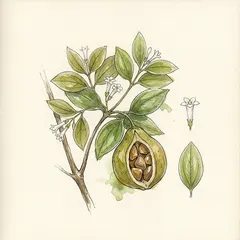 Όλα τα βιβλία για Ignatia Amara →
Αντιδοτείται απόAceticum AcidumActaea RacemosaAmbra GriseaAngustura VeraArnica MontanaCaladium SeguinumCamphoraChamomillaCoca Erythroxylon CocaCocculus Indicus
Όλα τα βιβλία για Ignatia Amara →
Αντιδοτείται απόAceticum AcidumActaea RacemosaAmbra GriseaAngustura VeraArnica MontanaCaladium SeguinumCamphoraChamomillaCoca Erythroxylon CocaCocculus IndicusGeneral EN
(When the mortar is kept in very hot water, and by this means re- mains moderately warm, this drug (as well as Nux Vomica) may be easily reduced to a fine powder, without its medicinal virtues being in the least injured.)
The characteristic properties of this drug will be found in- dicated in my remarks thereon.
Owing to the power it possesses of producing alternate ef- fects in quick succession, Ignatia is especially adapted to the
IGNATIA AMARA. 163
treatment of several acute diseases, as may be seen from the symptoms it produces. It may be considered a polychrest.
Generally its action lasts only a few days ; however, in certain constitutions and conditions it is incapable of bringing on evacuatory processes ; in such cases I have seen it act nine days. It is very seldom useful in the treatment of chronic af- fections, and can only be used in such cases as an intermediate remedy.
One of the characteristics of Ignatia, which very few other re- medies possess, is this, that it produces a double order of symp- toms antipathic one to the other. In giving Ignatia, that series of symptoms which is antipathic to the disease itself, may, from a cause unknown, be brought into action, and, although palliating the disease at first, may aggravate it afterwards ; in this case a second dose will effect the cure. The necessity of administering a second dose occurs very rarely ; the first dose generally does all the good required, provided the remedy was exactly homoeopathic to the symptoms.
In case it should have been administered in too large a dose and should have produced an excess of sensibility, susceptibility or hurriedness, etc., coffee is the antidote ; but in cases where it had been exhibited without being homoeopathic to the dis- ease, its effects may be antidoted by Pulsatilla, Chamomilla, and sometimes by Cocculus, Arnica, Camphora, or vinegar.
Although the effects of Ignatia are very similar to those of Nux V. (which similarity does indeed point to a botanic affinity of both plants), nevertheless those two drugs correspond to very different conditions, were it only for this reason, that the temperament of those patients for whom Ignatia is indicated, is very different from that of those who are more favorably acted upon by Nux v, Ignatia is not suitable for persons or diseases characterized by anger, vehemence, etc., but by sud- den alternations of cheerfulness and disposition to weep or by those other moral conditions which Ignatia realizes in the healthy body,.provided, of course, that the physical symptoms likewise correspond.
Ignatia, even a high potency thereof, is a chief remedy against the evil effects of chagrin in persons who are not in the habit of breaking out into vehemence or of seeking revenge, but who keep their chagrin concealed and dwell upon it in their recollections. Epileptic fits which only break out after chagrin or grief about a moral wrong (and never appear from any other cause), may be prevented by Ignatia, but it is very improbable whether epileptic fits of a different kind may be, or ever have been cured by that drug ; in those cases at least,
164 IGNATIA AMARA.
which are said to have been cured by Ignatia, it has always been given in combination with other drugs, or the cure had not been completed.
A first attack of epilepsy, brought on by some contrary event, and assuming a threatening aspect either on account of its duration or instantaneous return, may be, in most cases, permanently cured by one small dose of the tincture of Igna- tia (I know this from experience) ; but it is different as regards chronic epileptic fits; these can no more than other chronic diseases be permanently- relieved by Ignatia. The reason is, that the primary symptoms of Ignatia constitute a double series antipathic the one to the other, and being reproduced in the treatment of disease. If the first dose act by its series corresponding to the disease, a second dose cannot be adminis- tered without aggravating the disease, realizing in this manner all the injurious secondary effects of a palliative. Hence it is that Ignatia can only be used in sudden attacks and acute diseases.
Ignatia should be administered in the morning, except in cases of necessity ; if taken just before bed-time, it disturbed the night's rest. It is seldom necessary to give more than a drop of the ninth or twelfth potency at a dose.
FROM NOACK AND TRINKS ;
Ignatia may be given for excessive mobility of children ; spasms of children ; eclampsia of children from abuse of chamomile ; spasms of children in the period of dentition ; twitching of the corners of the mouth, spasmodic sudden movement of the muscles of the cheeks, forehead, eyelids and eyeballs (except when these are immovable and wide open), foam at the mouth, injuring the tongue by bithig it, trismus, jerking of the arms, less frequently of the feet, the attack (which comes on frequently) being followed by sweat and so- por, and sometimes delirium and involuntary emission of urine ; epileptic convulsions of children ; convulsions of chil- dren with foam at the mouth, in consequence of influenza. Hysterical spasms : contraction of the oesophagus, difficult deglutition with eructation like hiccough, constriction of the chest, spasms of the upper and lower limbs with but half con- sciousness and trembling of the head, aching, drawing pain in the forehead and occiput, with red countenance, lachrymation and diminished vision, deep sighing and sopor ; hysteric fits after previous anxiety and shrieking for help owing to suffoca- tive oppression of the chest, involuntary raising one's self into
n
ir
IGNATIA AMARA. 165
the air ; drawing the head backward between the shoulders, loss of consciousness, clenching of the right hand and striking the chest with great force ; afterwards stretching, and termina- tion of the fit in a deep sigh. Chronic spasms commencing and ending with yawning and stretching. Convulsions with vomiting, lasting from two to eight days. Consequences of fright and chagrin : trismus, convulsions, opisthotonus, epilep- sy.
Acute rheumatism, with vertigo and vibrations before the eyes, a sort of violent pressure in the forehead, with boring lancinations deep in the brain, eyes somewhat red and aching, agglutination of the lids, dryness of the nose, vio- lent pain as if sprained from the axilla to the fingers, complete paralysis of the arms, some thirst, want of appetite, quick, weak pulse, great heat especially of the head, heat and dry- ness of the body with some sweat on the forehead, rare, hard stool with tenesmus, nausea with restlessness and great an- guish and nightly sleeplessness owing to the pains ; chronic rheumatism, with violent bruised pain in the joint of the uppei arm when bending it backwards, violent stitching in that joint when turning the arm inwards and indescribable pain in the bones of the arm as if broken, relieved by resting upon the af- fected part.
Soreness of children from abuse of chamomile. Remittent fevers approximating to the intermittent type. In- termittent fevers : chills with thirst ; heat without thirst ; chilliness with or without external coldness (see BoBuninghau- sen's Essay on intermittent fevers by Dr. Hempel).
Intermit- tent fevers, first tertian then quartan. Relapse into a tertian fever from eating salad. Intermittent fevers, recurring every seven days. Consequences of deep rooted emotions, especially grief : Melancholy and fixed mania occasioned by fright, an- guish, grief, despairs of her salvation, imagines she has been faithless to her husband, weeping, amenorrhoea, tenseness of the abdomen, cold hands and feet, constipation, the paroxysms being preceded by spasms, and accompanied by redness of face, uneasiness, running with the head against the wall, etc.
(in conjunction with Sulphur, Rhus, Veratrum) Headache, as if a nail were pressed into the head ; hemicrania, clavus hystericus. Violent neuralgia of the head (next to Bell, and Hyosc). Painful pressure in the left side of the forehead, every morning until ten o'clock.
Simple but violent ophthalmia, being, according to some, scrofula mucosa, according to others a mere irritation. Photophobia, no inflammation being perceptible on the surface of the eye, but there being pressure in the eyeball and increased secretion of tears. Violent lancinating pains in the temples and eyes after operations on the eyes. Congestive
166 IGNATIA AMARA. .^^
toothache from grief or suppressed chagrin ; violent toothache of hysteric females, the tooth not being always hollow ; throb- bing toothache in persons who drink much coffee (also Nux, Aeon., Cham., Puis. ; coffee relieves throbbing toothache in those who are not used to coffee) ; toothache in persons who wake up with a headache as if the brain were crushed or dashed to pieces, and in whom this ache moves into a tooth after rising from bed, the teeth becoming painful as if loose and numb and not even bearing the contact of the tongue ; the pain begins towards the end of a meal, increases afterwards, and is especially characterized by a sudden pulling and digging-up in the cuspidati
Globus hystericus Sore throat ; malignant sore throat being a vicarious affection for scarlatina, the chil- dren complaining of a plug in the throat and bleeding at the nose : tonsillitis, little ulcers on the tonsils, red and inflamed cavity of the cheeks, stinging pain in the throat especially Avhen swallowing, the stitches extending into the ear, scurf and eruption on the lips, parotitis, the gland being affected with a stinging pain but painless when pressed upon, hard stool, urine like loam water, etc.
Nervous dyspepsia. Gastric symptoms, from chagrin. Chronic gastritis. Cardialgia with nervous headache.
Burning pain in the stomach, with a fine pain in the pit of the stomach, which is sensitive to pressure, with an empty and weak feeling in that part, etc. Painless diarrhoea, especially at night, accompanied with noisy flatulence, in children who incline to start. Prolapsus recti ; ulcerated hge- morrhoidal tumors. Periodical hajmaturia.
Uterine spasms, with cramp-pain in the groin, at times pressing from without inwards, at times from within outwards, arresting the breath- ing, with qualmishness in the pit of the stomach, the pain being relieved by pressure and the recumbent posture. Spasms during parturition (also Hyosc, Cham., Cic, Bell.). Prema- ture and profuse menstruation in a sensitive nursing female, preceded and accompanied by heaviriess and heat in the head^ violent aching pain in the forehead, sensitiveness of the eyes to the light, tingling in the ears, want of appetite, emptiness of the stomach, contractive pain in the abdomen, palpitation of the heart, faintness of the extremities ; metrorrhagia after the abuse of chamomile.
Coryza in nervous persons, with general hysteric irritability and dull pain in the forehead. Permanent boring pain in the loAver part of the sternum and sensation in that part as if a hard body had been swallowed, it is felt also at night and increased by eructation and sitting up. Nightly fits of anguish. Periodical spasmodic asthma.
IGNATIA AMARA. ^57
Head EN
Heat in the head.
Sensation of hollowness and emptiness in the head.
Weak fallacious memory, (before the 8 and 10 h.) A sort of vertigo ; a kind of balancing to and iro.— 5.
Heaviness of the head.
(a. 4, 6 h.) His head in- clines forward, (6, 7, 9, 13, are primary alternate effects of 10, 11, 12, of almost equal rank.) He lays his forehead upon the table.
Sensation as if the head were full of blood ; and the mterior of the nose is very sensitive to the air, as is the case when the nose is about to bleed.
Heaviness of the head, as if filled with too much blood as after stooping too long, a wide tearing pain in the occiput, diminishing when lying upon the back (see note to 458), increasing when sitting up, but being most relieved by stooping with the head very low while sitting. — 10.
Headache increased by stooping, (a. 1 h.) Headache coming on suddenly after stooping, but going off again after raising the head.
(a. 15 h.) Violent headache in the morn- ing, when waking and opening the eyes, going off by rising.
(a. 40 h.) Headache immediately after the siesta ; general pres- sure through the whole of the brain as if there were too much brain, or loo much blood in the head, increased by reading or writing, (a. 20 h.) Tearing headache in the forehead and behind the left ear, being made tolerable by lying updn the back, increasing by raising the head, with heat and redness of the cheeks and heat of the hands, (a, 5 h.) — 15.
Tearing headache after midnight, when lying iipon one side, going off by lying upon the back.
(s. note to 458.) Jerking pain in the head when ascending an elevation.
Jerking headache, in- creasing when opening the eyes.
(a. 1 h.) Aching in the forehead over the root of the nose, obliging him to incline the head ;* followed by inclination to vomit, (a. 5 h.) Cramp- like headache over the root of the nose, in the region of the inner canthus of the eye.
(a. 3 h.) — 20.* Aching and somewhat drawing pain above the right orbit, near the root of the nose, in- creased by stoopmg low.
(a. 10 h.) Headache^ as if something hard were being pressed on the surface of the brain, recurring in paroxyms.
(a. 6 h.) (Compare note to 191.
This kind of headache, and almost all the other kinds of headache pro-
* This sort of inclining, and that indicated in 9. are alternate effects of the inclining indicated in 10, 11, 20. This latter hurtful inclining ap- pears to deserve the greater consideration as a remedial quality of I^natia, and seems to be more frequent and stronger.
#
158 IGNATIA AMARA.
duced by Ignatia, are speedily and homoepathically removed by coffee.) Pressure in the temples, sometimes accompatiied by a deep sleep. Headache, as if the temples were being pressed out, (s. 23. 24. 25. The pain in the temples pressing from within outwards, and the pain as if the head would burst, are analogous to the bursting in the intestines, 189, to the sore throat, 101, and also to symptoms 110 and 191, inasmuch as the internal feeling as of being compressed and constricted, and the feeling as of being pressed asunder, may be easily confounded with one another.
At any rate the pressing asunder is an al- ternate effect of the constriction in hollow organs, 246, 247, 307, 235, 338, 339, 343.) When lying in bed on one or the other side in the morning, furious headache as if pressing through the temples, relieved by lying upon the back. (a. 48 h.) (s. note to 458.) Aching in one hemisphere of the brain, when walking in the open air, increased by talking and reflect- ing, (a. 2 h.) Talking aloud excites a headache as if the head would burst, going off entirely when reading to himself or writing, (a. 48 h.) The headache is increased by talking.
The headache is increased by reading and by listening to the speaker with intense attention, but not by merely reflecting in himself (a. 6 h.) Beating (jerking) headache. (This kind of headache is very often felt in one side of the occiput, a few hours after taking the medicine.) — 30. Beating in the head, over the right orbit. Headache at every pulsation.
Pain in the outer parts of the head ; the head is painful when feeling it. Pain in the outer parts of the head ; it extends from the temples to over the orbits ; when touching the parts they feel painful as if bruised. Headache as if bruised, (a. 8 h.) — 35. When waking in the morning, headache as if the brain were dashed to pieces ; when rising the pain goes off and is converted into a toothache, as if the nerve were crushed and dashed to atoms ; afterwards the pain passes into the small of the back in a similar form ; the headache is brought back again by reflecting.
(Falling off of the hair.) (a. 36 h.)
Eyes EN
In the evening the inner part of the upper eyelid is painful, as if it were too dry.
In the evening when reading, one of his eyes feels dim, as if containing a tear which he ought to wipe off; nevertheless there is no water in it.
Pain in the outer canthus, like soreness, when closing the eyelids. — 40.
In the morning the eyelids adhere to one another, by purulent mucus ; when opening them, the eyes are dazzled by the light.
Lancinations in the outer canthus ; agglutination of the eyes in the morning, and lachrymation in the afternoon.
Agglutina- tion of the eyelids in the morning ; pressure in the eye, as of a
v^.
IGNATIA AMARA. 169
grain of sand ; stinging in the eyes when opening the eyelids, (a 36 h.) Gnawing smarting in the borders of the eyeUds (in the morning when reading), (a. 18. h.) Smarting in the outer canthi.
(a. 24 h.)— 45.
Pimples around the sore eye.
(a. 2 h.) Itching in the inner eye.
(a. 2 h.) Itching of the eyeballs in the inner canthus.
(a. 4 h.) (Stitches in the right eye.) Cannot bear the glare of the light, (a. 8 h.) (Compare 40.)— 50.
Dim- sightedness of the right eye after the siesta, as if a gauze were spread over the eye.
(a. 6 h.) A circle of white, shining, flickering zigzags when looking out of the hne of vision ; the letters at which one looks, becoming invisible, and those which are close by, becoming so much more bright, (a. 16 h.) (52, 53, are two alternate effects which are very much like Herz's so called false vertigo.) White, zigzag-shaped vibrations out of the line of vision, shortly after dinner, (a. 30 h.) Contraction of the pupils.
(54 — 57, alternate effects ; the contraction seems to occur first, and deserves therefore the greater consideration.) — 55.
The pupils are more susceptible of dilatation than con- traction (afterwards).
The pupils are dilated, and are more susceptible of dilatation.
Face and Ears : Fine stitches in the cheeks.
(Feels a beating in the interior of the ear. — 60.
Tingling in the ears.
Pain in the interior of the ear.
Stitches in the interior of the ear.
(a. 3 h.) Itching in the meatus auditorius.
(a. 3 h.) Music excites a most pleasant sensation in the ear.
(a. 2 h.) (64, 65, alternate effects.)— 65.
Insensible to music, (a. 30 h.) Stinging in the lips, especially when moving them.
(a. i h.) Stitches in the lower lip, even when not moved, (a. 8 h.) Excessively intense, fine stitching in the lower lip, when touching a hair of the beard in that part, as if a splinter were being stuck in.
(a. 8 h.) (Compare 399.) Pain of the inner surface of the lower lip, as if sore and raw.
(a. 8, 10 h.) 70.
Ulceration of the inner surface of the lower lip (no pain).
Ulceration of a gland in the inner surface of the lower lip, with sore pain.
(a. 4 h.) The lips bleed and crack.
Ulce- ration of one of the corners of the lips.
(a. 2 h.) — 75.
Pimples close below the lower lip, painful only when touched, (a. 36 h.)
Jaws and Teeth : Pain of the inner side of the gums, asjf numb, or as if burnt.
(76, 77, 78, 79 appear to be second- ary effects.) In the morning the teeth are painful, as if loose.
One of the fore teeth is painful, as if numb and loose ; the pain increases at every contact with the tongue.
The teeth are loose and painful. — 80.
Seated sore pain in the anterior molares, especially when reading, (a. 3 h.) Pain of the molares, as if dashed to pieces and crushed, together with their nerves.
The toothache commences towards the end of a meal, and increases
ft
170 IGNATIA AMARA.
after the meal. Violent and sudden griping and digging-up pains in the cuspidati, in the evening, (a. ^ h.) Pain in the joint of the lower jaw, in the morning when lying down.
Mouth, Pharynx, and (Esophagus : The anterior half of the tongue feels numb when talking ; it feels burnt and sore when eating.
In the morning when waking, the tip of the tongue is extremely painful (smarting, tearing), as if sore or burnt.
Fine stinging in the very tip of the tongue, (a. 2 h.) When talking" or cheicing he easily bites one side of the tongue, (a. 5, 8, 20 h.) — 90.
Painful swelling of the orifice of the stenonian duct.
Sensation in the velum pendulum palati, as if sore (as from too frequent swallowing of the saliva).
(Compare 102, 104, 105.) Sensation as if the velum pendu- lum palati were swollen or covered with tenacious mucus, (a. 4 h.) — 95.
Stinging in the throat between the acts of degluti- tion ; sensation when swallowing as if one swallowed over a lump causing a cracking noise, (a. 3 h.) (Whether Ignatia produce a stinging during deglutition as an alternate elliect of 95, I know not ;
I have never seen it, and it must therefore be very rare and of very little practical utility.
For this reason I have never been able to cure sore throat with stinging during deglutition, even if all the other symptoms corresponded to Ignatia, whereas the cure always took place in a short space of time, and permanently, when the stinging occurred between the acts of deglutition.) Stinging during deglutition, deep in the pharynx, going off by continued swallowing, and returning when ceasing to swallow.
Stinging sore throat, except when swallowing. — 100.
Sensation as of a plug being in the throat, perceptible between the acts of deglutition.
Strangulating (contractive) sensation in the middle of the fauces (in the eve- ning), as if a large lump were lodged in the throat, which is more distinct between than during the acts of swallowing, (a. 4 h.) (See note to 23.) Sensation as of a lump being lodged in the throat, with sore pain when swallowing, (a. 16 h.)* Pres- sure in the throat.
Pain of the inner throat, as if sore and raw.
(a. 1^ h.) — 105.
Pain in the throat as if sore, only during deglutition.
Tearing pain in the region of the larynx, increas- ing when swallowing, taking an inspiration, or coughing, (a. 1^ h.) Creeping in the phai'ynx.
(a. 1, 2 h.) Stinging in one side of the throat, in the parotid gland, between the acts of de-
* Comp. 105.
The angina of Ignatia causes a swelling of the throat as if a lump were lodged in it ; this lump feels sore only during de- glutition.
Natural angina, which is to be cured by Ignatia, must be characterized by similar symptoms.
IGNATIA AMARA. 171
glutition.
(a. 20 h.) Pain in the throat when touching it, as if the glands were swollen.— 110.
Aching pain of the suhmaxillary glands.
Pain in the submaxillary gland as if pressed upon from without (when moving the neck and when holding it still.
See note to 23).
Pain in the submaxillary gland after walking in the open air.
Pain in the submaxillary gland when moving the neck.
(a. 18 h.) Aching pain, and afterwards drawing pain in the submaxillary glands, (a. 4 h.) — 115.
Drawing pain in the submaxillary glands; the pain moves into the jaw. whereupon the glands begin to swell, (a. 5 h.)
Taste and Appetite : Taste in the mouth, as of a spoiled stomach.
The mouth is always full of mucus.
Fetid mucus in the mouth when waking. — 120, After breakfast and dinner he has a watery, flat taste in the mouth, as if the stomach were spoiled.
Nourishment, especially beer, has a putrid taste.
Beer intoxicates one readily, (a. 3 h.) — 125.
The taste is at first bitter, and in ten hours sour, with sour eructations.
Sour taste of saliva {sour taste in the mouth).
(a. 1, 6 h.) Aversion to sour things (first hour).
Appetite for sour things, (a. 10 h.) (128, 131 are alternate eflects of 127, 130, 215.) Aversion to wine. — 130.
Aversion to fruit, it does not agree with one.
(a. 3 h.) Desire for fruit, and it agrees with one.
(a. 3, 10, 20 h.) Excessive aversion to smoking, (a. 6 h.) Tobacco tastes bitter, (a. 5 h.) Tobacco-smoke causes a smarting sensation in the tip of the tongue p.nd causes a dull pain in the cuspidati. — 135.
Aversion to smoking, although tobacco has no disagreeable taste, (a. 2, 5 h.) Aver- sion to tobacco, as if he had smoked enough.
Hiccough from sm,oking, in a -practised sm^oker.
Inclination to vomit, from smoking, in a practised smoker.
Complete want of appetite for tobacco, food, drink, with frequent conflux of saliva ; nevertheless those things are not repulsive to him, nor do they taste badly, (a. 8 h.) — 140.
When smoking in the afternocMi, he feels so satiated that he thinks he shall not be able to eat any supper.
Aversion to milk (which was his favorite bever- age) ; it is repulsive to him while drinking it, although it has a natural taste and does not cause nausea.
After having tasted a little milk (his favorite beverage) with great pleasure and having satisfied the immediate craving, the remainder of the milk suddenly becomes repulsive to him, although it has its natural taste and does not cause nausea.
Was unable to swallow the bread, as if it had been too dry. — 145.
Aversion to warm food, and meat; desires butter, cheese and bread, (a. 96 h.) Aversion to meat, and desire for some fruit, (a.24 h.) (Comp. 128, 131.) Want of appetite, (from 1 to 7 h.) Good
172 IGNATIA AMARA.
appetite ; relishes food and drink, (a. 4 h.) (Curative effect.) Great appetite. (This kind of canine hunger appears to bean alternate effect of 139, 141, 142, 143, 144, 147, but is more rare.) — 150. When eating, drinking or smoking, these things, as soon as the urgent desire for them has been satisfied, suddenly lose their relish, or even become disagreeable, and he is no longer able to partake of them, although he feels yet hungry.
Gastric Symptoms : Gulping up of a hitter fluid.
(Al- ternate effect of 154.) Regurgitation of the ingesta. [The following symptom which has not been noted in the text, is related to No. 152 : Long after-taste of the milk which had been drunk in the morning, (a, 21 h.) ] After eating some- thing at dinner, she feels as if the food remained lodged above the cardiac orifice of the stomach and could not get into that organ.
In the evening before going to sleep, and in the morn- ing, the food seems to reach up into the throat, (a. 2, 15 h.) — 155.
Waking at three o'clock in the night he feels hot all over, and he throws up his supper.
Empty, unsuccessful inclina- tion to vomit.
The inclination to vomit disappears after a meal.
(a. 2 h.) After breakfast a sort of anxiety arises from the abdomen, (a. 20 h.) At supper his feet felt chilly and his abdomen became distended (and he became quite hoarse). — 160.
Distention of the abdomen after a meal.
After a meal the abdomen becomes distended.
After a meal the abdomen becomes distended, the mouth dry and bitter, without thirst ; one of the cheeks is red (evening).
Anxiety and painful ful- ness in the abdomen after supper, (a. 36 h.) Scraping in the upper part of the region of the larynx, as if caused by heartburn (eve- ning), (a. 8 h.) Empty eructations, as if of mere air.
(a. 2 h.) — 165.
Eructations tasting of the ingesta (immediately).
Sour eruc- tations.
Musty, mouldy eructations (evening).
(Suppressed eructations, in the morning when in bed, causing a painful pressure in the region of the orifice of the stomach, and in the oesophagus up into the pharynx.) (a. 48 h.) Frequent spitting.
(Comp. 169, 170, 171 with 199, 247.)— 170.
The saliva flows from the mouth while one sleeps, (a. 1 h.) Spitting of foamy saliva the whole day.
Hiccough after eating or drinking.
(a. 3 and 8 h.) (172, 173 to compare with 137.) Hiccough m the evening after drinking, (a. 6 h.) Burning in the surface of the tongue (immediately).
Stomach EN
Cold stomach.
Burning in the stomach, (a. 1 h.) Sensation in the stomach as if one had been fasting long, as if the stomach were empty, with flat taste in the mouth and faintness in all the limbs.
(Alternate effect of 160, 161, 162.)
He has an appetite and relishes his food ; yet he has a qualm- ish taste in his mouth, as one sometimes has before breakfast ; there is a sensation as of fasting in the region of the stomach and the body feels weak.
Qualmishness of the stomach ; stomach and bowels feel as if hanging down relaxed, (a. 24 h.) — 180.
Peculiar feeling of weakness in the epigastrium and pit of the stomach, (a. 2 h.) (Comp. 222 and 485.
This feeling of weakness in the region of the scrobiculus cordis is a characteristic symptom of Ignatia.) Pressure in the pit of the stomach.
Fine stinging in the region of the stomach.
Abdomen EN
Painful pricking jerks in slow succession in the epigastrium and the pit of the stomach, (a. i h.) Severe, afterwards fine stinging in the pit of the stomach, (a. i h.) — 185. Pain in the pit of the stomach, which is felt only when touching it, as if the parts within were sore. Pain in the epigas- trium, as if strained. Pressure in both sides of the epigastrium or the hypochondria.
Sharp, pinching pressure in the pit of the stomach and the right hypochondrium. (a. f h.) Colicky pain in the epigastrium as if the intestines would burst, almost like pain in the stomach, extending as high up as the throat, in the morning when in bed, when lying on one side ; the pain goes off in the recumbent posture, (a. 40 h.) (Comp. 15, 24 and note to 458.) — 190. Cohc : contractive pain from both sides, close below the ribs. (a. | h.) Constrictive sensation in the hypochondria, as in constipation, with hemicrania as if a nail were pressed into the brain, in the morning, (a. 20 h.) (The ancients named this kind of headache clavus.
It is a pain characteristic of Ignatia : a pressure as of a sharp, pointed body, likewise indicated in Nos. 245, 335, 356 ; the " pressure as with a hard body," 21, 458, appears to belong under this class of symptoms.) Spasmodic flatulent colic in the epigas- trium, in the evening when going to sleep and in the morning when waking, (a. 8 h.) Colic : continual pain in the bowels as if bruised, in the morning when in bed. Sensation in the umbilical region as of something living existing there, (a. 8 h.) — 195.
Easy emission of flatulence, (a. ^ h.) (The con- trary is generally a secondary effect.) Nightly flatulent colic. Flatulent colic with stitches towards the chest. Flatulent colic in the hypogastrium, in the morning ; causing stitches in the direction of the chest and sides. (Comp. 219.) Flatulent colic above the umbilicus, alternating with frequent conflux of saliva in the mouth, (a. 1 h.) (Comp. 169, 170, 171, 247.)— 200.
Emission of a quantity of flatulence in the night, even while asleep, and formation of new flatulence, so that the whole abdomen seems to be filled with nothing but flatulence
174 IGNATIA AMARA.
Much trouble from flatulence, it presses upon the bladder, (a. 96 h.) Insufficient short fetid flatus, which have to be expelled partly by bearing down with the abdominal muscles, (a. 24 and 30 h.) Puffiness immediately after a meal.
(Alternate effect of 204.) Frequent emission of flatulence immediately after a meal.
(a. 26 h.) — 205.
Loud rumbling in the abdo- men after a meal.
Grunting in the abdomen, as when a man is hungry, (a. 1 h.) Rumbling in the bowels.
Throbbing in the abdomen.
Itching in the umbilicus, (a. 2^ h.) — 210.
Oppression and cutting in the abdomen.
Cutting colic imme- diately after a meal, resulting in flatulence, (a. 4 h.) Contin- uous pinching in a small place in the right abdomen, in the region of the coecum, especially when walking in the open air.
(a. 4 h.) Pinching puffiness in the whole of the abdomen shortly after a meal, only when standing and worse when walking, becoming intolerable by continued walking without the pinching appearing to be produced by flatulence ; when sitting still, the pain soon passes off", without emission of flatu- lence, (a. 4 h.) — 215.
Pinching with pressure in the abdomen after eating ever so little fruit, especially when standing or walking, going ofl" when sitting.
Pinching colic in all the bowels, even long before or after a meal, when walking in the open air.
Painful stinging below the umbilicus (from 1 to 2 hours).
Colic, first pinching, afterwards stitching , in one of the sides of the abdomen, (a. 2, 10 h.) Pinching colic in the umbilical region, the pain afterwards passing into the left side of the chest, composed of pinching and fine stinging. — 220.
Pinching in the abdomen, (a. 1 h.) Pinching colic in the open air, as if colic would come on.
Drawing and pinching in the abdomen, resulting in a pressing sensation in the rectum, with qualmishness and weakness in the pit of the stomach and paleness of countenance, (a. 48 h. two days previous to her menses.) (Comp. 180 and 485.) (Tearing pain in the abdo- men.) Stitching, jerking pain in the left groin, in the evening when lying in the bed. — 225.
Sensation in the left groin as if hernia would protrude.
Stool EN
Stool first hard, afterwards soft.
(Easy and suffi- cient stool is generally a primary eflect, taking place in i or 1 hour.) Involuntary escape of thin stool, together with flatu- lence, (a. 50 h.) Soft stool immediately after a meal.
Yellow white stools, (a. 3 h.) — 230.
Mucous stool.
Acrid stool.
Pro- lapsus recti when making a m,oderate effort at stool.
Fre- quent, almost unsuccessful desire for stool, with colic, tenesmus and tendency to protrusion of the rectum, (a. 48 h.) Violent desire in the evening, rather in the middle of the abdomen, but
there was no stool, merely a protrusion of the rectum. — 235. Stool of a very large size, whitish-yellow, and being expelled with difficulty. Unsuccessful desire for stool in the rectum, not in the anus. (a. 1^^ h.) Unsuccessful desire and pressing in the epigastrium, especially shortly after a meal.
Anxious de- sire for stool, with inactivity of the rectum ; the faeces could not be expelled without the rectum coming near being inverted or prolapsing. — 240. Violent desire for stool, especially in the epigastrium ; nevertheless unsuccessful, although soft stool : the desire continues a long while after the stool had been ex- pelled, (a. 20 h.) Unsuccessful desire for stool. After a sudden urgent desire, he has great trouble in expelling an insufficient quantity of tough, loam-colored and yet soft faeces, not without bearing down with the abdominal muscles, as if there were a deficiency of the peristaltic motion of the intestines, (a. 3 d.) Spasmodic tension in the rectum, the whole day.
Sharp, pain- ful pressure in the rectum after stool, as if from incarcerated flatulence, as will happen after a hurried evacuation ; a sort of proctalgia, (a. 2 h.) (Comp. note to 191.) — 245. In the evening when lying down, he was attacked with a sharp painful pres- sure in the rectum (proctalgia), without being relieved in any position ; the pain goes off of itself without emission of flatu- lence, (a. 36 h.) Painless contraction of the amis ; a sort of narrowing, lasting a few days.
(Comp. 246, 247 with note to 23.)"*' Contraction of the anus, recurring next day at the same hour, painful when walking, but more so when standing, pain- less when sitting, with conflux of an insipid saliva in the mouth, (a. 4, 12, 36 h.) (Comp. 169, 170, 171, 199.) Several attacks of cutting, rather high up in the rectum, (a. 20 h.) Long stitch extending from the amis into the rectum. — 250. Long stitches in the rectum. Violent itching in the rectum, in the evening when in bed.
Creeping in the rectum as of ascarides. Itching blotch at the anus, not painful during stool, but causing a pressure when sitting upon it. —255. Haemorrhoidal suffer- ings during soft stool, (a. 5 h.) Pain in the anus, shortly or immediately after soft stool, as if caused by blind haemorrhoids, or as if the j^arts were sore. Sore pain in the anus between stool, (a. 1 h.) Pain in the rectum as if caused by haemor- rhoids, constrictive and smarting as when one touches a wound.
(a. 3 h.) — 260. When exerting the mind in thinking, shortly after stool, he feels a pain as from blind haemorrhoids, a painful pressure and sore feeling, (a. 36 h.) Swelling of the margin of the anus all round, as if the veins were distended. Blind has- morrhoids with pain, both a pressure and soreness (at the anus, and in the rectum), greater when sitting or standing, less when
176 IGNATIA AMARA.
walking, but a walk in the open air brings the pain on fiercer than ever.
(Alternate effect of 247.) (The haemorrhage from the anus, with itching of theperinaeum and anus.) Ascarides creep out of the rectum, (a. 16 h.) — 265.
Itching of the anus.
Itching of the peringeum, especially when walking.
(Faintness after stool.)
Urinary Organs EN
Sharp pressure upon the bladder, as from incarcerated flatulence, especially when walking.
Pain- ful pressure, with a sensation as of scraping, in the region of the neck of the bladder, especially when walking and after a meal, between the acts of micturation, which is painless. — 270.
Frequent emission of watery urine, (a. 2, 6, 20 h.) Lemon- colored urine with white sediment, (a. 16 h.) Turbid urine.
Erection every time he goes to stool. — 275.
When expel- ling the faeces, a quantity of mucus (prostatic juice) came out of the urethra, (a. 5 d.) (Dark urine is emitted with a burning sensation.) Long stitches along the urethra when walking.
(Comp. 249, 250.) Stitch in the forepart of the urethra shortly after dinner, terminating in tearing.
Tearing pain, with a sen- sation as of scraping in the middle of the urethra, in the even- ing when sitting, (a 1 h.) — 280.
Scraping and scraping-tear- ing pain in the middle of the urethra (in the evening when lying in bed), (a. 5 h.) Itching in the forepart of the urethra, (a. 2 h.) Burning urine in the morning, (a. 12 h.)
Genital Organs : Furious, vehemently pulling, tearing pain with pressure in the root of the penis, coming on in suc- cessive paroxysms, especially when walking, going off when leaning with the small of the back against something while standing.
Burning itching in the region of the neck of the bladder, exciting the sexual instinct, accompanied with flatu- lent distention of the abdomen. — 285.
In the night after taking the drug, a copious emission in a young man who was almost never troubled with the like.
Itching in the parts around the sexual organs, and in the penis, in the evening after lying down, going off by scratching, (a. 3 h.) Smarting and burn- ing in the forepart of the urethra during micturition.
Smarting itching of the glans.
(a. 4 and 20 h.) Smarting-itching pain in the inner surface of the prepuce, (a. 12 h.) — 290.
Pain in the raphe of the prepuce as if excoriated, (a. 1 h.) Soreness and ulcerative pain with itching in the margin of the pre- puce, (a. 24 h.) (a. 3 and 27 h.) Cramp-pain in the glans.
Itching stinging of the scrotum, resembling innumerable flea- bites, especially when at rest.
Sweat of the scrotum. — 295.
Swelling of the scrotum in the evening, (a. 5 h.) Severe stran- gulating sensation in the testes, after lying down in the evening.
Pressure in the testes.
Lascivious, amorous fancies and sudden excitement of the sexual instinct, the genital organs being pow- erless, and the external body being disagreeably warm.
Irre- sistible desire for an embrace, the penis being relaxed, (a. 24 h.) —300.
Sexual desire with impotence, (a. 10, 20 h.) Sexual de- sire, the clitoris becoming very prominent, the rest of the puden- dum being weak and relaxed, and the body cool.
(a. 40 h).
Impotence in a male, with weak feeling in the hips.
Contrac- tion of the penis ; it becomes quite small (after urinating).
Retraction of the prepuce and denudation of the glans, as in impotence, (a. 24 h.)— 305.
Complete want of sexjial desire.
(This IS an alternate effect of the symptoms 298, 299, 300. 301 ;
I have seen it continue for a long time as a secondary effect; it was relieved by Cocculus.) Chronic leucorrhoea.
Violent crampy pressing in the region of the uterus, resembling labor- pains, followed by a purulent, corrosive leucorrhoBa.
(See note to 23,) The menses come off in lumps of coagulated blood.
The menses are scanty, but the blood is black and has a putrid odor. — 310.
The menses delay a few days.
(This appears to be a rare alternate effect, or perhaps a secondary effect.
In very many cases 1 have seen Iguatia bring on the menses be- fore the time.
Premature (and profuse) menses can there- fore be regulated by Ignatia, provided the other symptoms cor- respond.
CoRYZA, Larynx, Chest : Titillating itching in both nos- trils.
Ulcerative and sore feeling in the inner canthus of one or both nostrils, (a. 12 h.)— 315.
(Instantaneous bleeding at the nose.) Coryza, preceded by dropping of water from the nose.
(a. t h.) Obstruction of one nostril, as if a leaflet were stretched over the inner side of it ; not as in dry coryza.
Dry coryza.
The bronchi are lined with mucus. — 320.
Hollow, dry cough when waking in the morning.
Desire to cough, in the evening when lying down, while going to sleep, (a. 6 h.) Uninterrupted, not titillating desire for short and hacking cough in the larynx, not going off by coughing, disappearing more easily by suppressing the cough, (a. 5 h.) Short but frequently quite dry cough excited by a sensation as of small particles of a feather being lodged in the pit of the throat; this irritation in the throat does not go off by the cough, but recurs the more frequently the more one coughs, especially bad towards evening.
Sudden (not titillating) interruption of breathing in the upper part of the trachea over the pit, inducing an irresistible short, violent cough, in the evening, (a. 1 h.) — 325.
Constrictive sensation in the pit of the throat, exciting a cough like the vapor of sul- phur.
(See note to 23.) (Every j&t of cough darts into the
VOL. II. 13
178 IGNATIA AMARA.
penis, producing a painful sensation as if the blood were sud- denly rushing in.) Difficult expectoration. Yellow expecto- ration, smelling and tasting as in old catarrh, (a. 12 h.) Stitches in the region of the heart, when expiring air. (a. | h.) —330. Stitches in the left side.
(a. i h. and 3 h.) Frequent stitches in the side of the chest, in the region of the last rib, between the acts of inspiration, synchronous with the pulse. Single, long stitches in the right side of the chest, between the acts of inspiration; also in the region of the tibia, (a. 1 h.) Pressure in the left chest, and afterwards fine stinging in the right chest, (a. 1 h.) Pressure in the left, afterwards in the right chest, and lastly in the tarsal joint, (a. 1 h.) — 335. Pres- sure in the region of the middle of the sternum, as with a sharp body.
(a. 20 h.) (See note to 191.) Pressure in the middle of the sternum soon after dinner, (a. 24 h.) Oppression of the chest, with pressure in the pit of the stomach, increasing during an inspiration, and speedily resulting in stitches in the pit of the stomach, (a. 2 h.) Oppression of the chest and breathing, (a. 5 h.) (Comp. 338, 339, 343, with note to 23.) Oppression of the chest after midnight, as if the chest were too narrow, which impedes respiration, (a. 12 h.) — 340. When stooping, pain in front of the chest, on either side of the stern- um, as if the ribs were being pushed together and were knocked against one another, thereby causing pain (in the morning), (a. 15 h.) Tensive pain in the forepart of the chest, when straightening himself while sitting, (a. 16 h.) Tensive pain across the chest when standing straight, (a. 24 h.) Pressing and pushing in the chest, (a. 7 and 9 d.) Want of breath when walking ; when standing still during this time, he coughs. — 345.
(Was unable to breathe through the nose, when closing his mouth.) Weak in the whole body ; when walking, he feels as if his breath failed, he feels qualmish in the pit of the stom- ach, and afterwards coughs. Fulness in the chest. Inspira- tions are impeded as hy a load opjiressing the chest ; the ex- pirations are so much more easy. The inspirations are slow, the 'expirations quick, (a. 3 h.) (Alternate effect of 504.) — 350.
(Had frequently to take deep breath, and deep breathing diminished the pressure in the chest momentarily.) Slow in- spirations, which he is obliged to draw deep out of his abdomen. (a. 1 h.) Short inspirations alternate with longer, light ones with more violent, (a. 2h.) (Comp. 595.) Pain in the stern- um as if bruised, felt even when touching it. (a. 14 h.) Throb- bing in the right half of the chest, (a 1-J- h. — 355. Stitch in the nipple during a deep inspiration, accompanied with move- ment of flatulence in the abdomen, (a. 5 h.) Sharp, painful
IGNATIA AMARA. 179
pressure in the cervical vertebrae, in the morning when resting in the bed. (See note to 191.)
Neck and Back : Stitches in the nape of the neck.
Lancinating pain in the nape of the neck.
(a. 2^ h.) Tear- ing pain in the nape of the neck when moving the neck, as if the neck were strained, (a. 12 h.) — 360.
Stiffness of the nape of the neck.
Heat and burning in the nape of the neck, or on one side of the neck externally.
Stitching pain with pressure in the spine, when walking in the open air.
Simple pain in the scapula increased by moving the arm, and when the arm hangs down.
(a. 20 h.) (Some stitches in the apex of the scapula, in the morning.) — 3(35.
Beating in the small of the back (os sacrum), (a. 7 h.) (Tensive pain in the small of the back when standing erect.) (a. 25 h.) Stitches in the small of the back.
(a. 48 h.) Fain in the os sacrum, also when lying on the hack, in the morning when in bed.
(368 and 369 are an alternate effect of a symptom of Ignatia which went off by lying on the back ;
(sec nos. 9, 14, 24,458, 459.) Aching pain as if bruised in the small of the back, when lying on the back, in the morning when in bed.
Upper Extremities : Pain in the shoulder-joint when moving the arms, as if dislocated.
Pain as if bruised or as after a bodily exertion, in the upper arm-joint when bending the arm backwards.
Griping, vehemently pulling, fulling and partly drawing pain, when at rest (the pain becomes stinging during motion) (comp. 427).
Rheumatic pain in the upper arm- joints, or as if bruised, when walking in the open air.
(a. 10 h.) Pain in the upper arm joint as if dislocated, (a. 10 h.) — 375.
Twitching jerking in the deltoid muscle, (a. 24 h.) Simple pain in the biceps muscle when turning the arm in- wards, (a. 2 h.) Pain as if bruised in the muscles of the arm, both when the arm is hanging down or raised.
The arm of that side upon which he is resting goes to sleep, (a. 8 h.) When lying upon the right side, in the evening when in bed, the head of the humerus of the left side is painful as if bruised, and the pain goes off when lying upon the affected arm.
(a. 12 h.) — 380.
Intolerable (nameless) pain in the bones and joints of that arm upon which one does not rest, in the evening when in bed ; the pain only goes off when lying upon the affected arm.
(a. 12 h.) Intolerable (nameless) pain in the bones and joints of the arm upon which one rests, in the morning when in bed, not going off till one turns to the other unaffected side.
(a. 20 h.) [381, 382 (and probably also 378) are alternate effects of 379,380, and are both of them primary symptoms.
The difference of those opposite conditions
2 go IGNATIA AMARA.
appears to depend upon the time of day when either of them occurs.
Even the kind of pain appears to be different.
See also 458, 459.] Early in the morning, when in bed, the head of the humerus of that side upon which one rests feels painful as if bruised, the pain going off by turning to the opposite side or on the back.
(a. 24 h.) In the evening after lying down, sensation in one part of the muscles of the fore arm, as if a mouse were creeping under the skin.
(a. 36 h.) Drawing pain in the arms. — 385.
Pulsative drawing, extending from the upper arm to the wrist and fingers.
Cold air (a cold ?) causes a tearing in the right arm and in the right side of the head.
(a. 12 h.) Tearing pain in the styloid process of the ulna, in the morning after waking.
Tearing pain in the sty- loid process of the ulna and in the fingers.
Tearing pain in the wrist-joint as if sprained, in the morning when slumbering in the bed. — 390.
Rigidity in the right wrist and sensation as if it had gone to sleep.
Paralytic pain in the styloid process of the left ulna, as if the hand were sprained or dislocated.
A few stitches in the last joint of the thumb, (a. 10 h.) Itch- ing stitches in the joint of the thumb, obliging him to scratch.
Pain as if sprained in the posterior joint of the index-finger, during motion. — 395.
Warm sweat in the palm of the hand and fingers, (a. 16 h.) Frequent warm sweat of the hands, in the evening, (a. 8 h.) Transitory yellowness of the hands, as if from jaundice.
When touching a hair upon the hand, he feels a piercing, fine stitch, as if a splinter were lodged there (comp. 68). — 400.
Spasmodic moving to and fro of the index- linger, in the evening after lying down.
Stretching cramp of the middle-finger, when exerting the fingers (the cramp may be removed by soothing).
Lower Extremities : Stitches in the hip-joint, (a. 24 h.) From four until eight in the morning pricking pain in the hip- joint and knees when walking or moving the feet. (a. 8 h.) Almost paralytic immobility of the lower limbs, with single jerks in the same. — 405. In the morning when rising, stiffness of the knees and tarsal joints, thighs and small of the back, (a. 38 h.) Pains as if bruised in the posterior muscles of the thighs, when sitting, (a. 5 h.) Stiffness in the knee-joint after going up stairs, hindering motion.
Stiffness in the knees and loins, causing pain during motion. Stiffness in the feet, in the morning, (a. 24 and 96 h.)— 410. Boils on the inner surface of the thigh, (a. 12 h.) After eating, when sitting, the thigh and leg go to sleep, (a. 5 h.) Creeping in the feet (412, 413, and 414, and again 411, 415, and 416 form three different al- ternate effects.) Creeping, apparently in the bones of the feet,
IGNATIA AMARA. |81
not as if they had gone to sleep, (a. 10 h.) Stinging creeping in the feet (the skin of the calves), after midnight, which does not allow one to rest or remain in the bed. — 415.
The legs go to sleep to beyond the knees, in the evening when sitting.
The leg goes to sleep while sitting, during dinner, (a. 6 h.) Tension in the legs to beyond the knee, loith heaviness of the legs.
Contraction in the calves, when extending the leg, or when walking.
(A sort of cramp, or at least incipient cramp.) Cramp of the calf while walking, going off when standing and when at rest.
(a. 4 h.) (419 is an alternate effect of 420, 421, 422 ; both these symptoms being apparently of equal rank.) — 420.
Indications of cramp in the muscles of the foot and toes, when sitting.
Cramp in the calf when bending the leg.
Pithiness in the ball of the heel when walking, as if cold.
Contusive pain, as if he had leaped from a great height, in the ball of the heel, or rather in the periosteum of the os calcis.
(a. 3 h.) — 425.
Pain as of internal soreness when walk- ing, m the ball of the heel, or rather in the periosteum of the OS calcis.
(a. 4 h.) Aching pain in the tibia when walking.
(a. 2 h.) Undulating, as it were griping and fulling, tearing pain with pressure, in the anterior tibial muscles, especially during motion.
Pressure in the left tarsal joint (with an inter- nal tickling obliging him to agitate the foot for the purpose of being relieved).
Pain as if sprained (but not stitching) in the tarsal joint, in the morning when walking.
(Comp. 374.) — 430.
Tearing pain in the dorsum of the foot.
(a. 20 h.) Itching- jerking pain in the interior of the ball of the heel, especially in the morning when in bed.
Tearing-burning pain in the os calcis, in the morning when waking, (a. 8 h.) Burning itching pain in a spot on the dorsum of the foot, when at rest.
Burn- ing pain in the corn, when sitting. — 435.
The pressure of the shoes on the upper part of the toes causes an intense pain ; the corns cause a burning pain.
Itching burning (as of chil- blains) in the heel and in other parts of the foot.
(a. 8 h.) Burning-stinging, or burning-cutting pain in the side of the foot. 440.
Stitching pain below the malleolus, Avhen walk- ing.
Early in the morning he feels several stitches in the heel, (a. 20 h.) Weariness of the feet at twilight, as if he had walked too far, with quiet mood.
Was unable to move the feet along, as if he had gone too far.
Heaviness of the feet.
(Comp. 417.)— 445.
Heaviness of one foot.
Weakness of the feet.
Cracking in the knee.
(a. 2 h.) Coldness of the feet and leo-s extending to above the knees.
Chilliness around the knees which however do not feel cold to the hand.— 450.
Hot kjiees (with tickling itching of one of the knees), the nose he-
132 IGNATIA AMARA.
ing cold. (a. 3 h.) (Stiffness of the tarsal joints.) Painful sensitiveness of the soles when walking, (a. 4 h.) The feet are burning hot.
General Symptoms : Creeping through the whole body, apparently in the bones.^ — 455.
TiiigUiig in the limbs, as if they had gone to sleep.
(Several times after 4 h.) (Compare 411, 413, 416.) Weariness of the feet and arms.
Feeling of weakness and exhaustion in the arms and feet.
In several parts of the periosteum, in the middle of the long bones (not in the joints), a sudden pressure as of a hard body, painful as if the parts were bruised, in day-time, but especially in the evening when lying in the bed upon one or the other side, and going off when turning on the back.
(a. 20, 36 h.) (Compare 458 and 459 with 9, 14, 15, 24, where the pain does not go off till one turns on the back ; both these series of symptoms are alternate effects of 381, 382, and 379, 380.) Nightly pain as if bruised in one or the other side, upon which one rests, in the joints of the neck, back and shoulder, not going off till one turns on the back.
(a. 12 h.) — 460.
Pain as if sprained, or dislocated in the joints of the shoulder, femur, and knees.
(a. 8 h.) Continual stitching pain around the joints or a little above.
Deep-stitching, burning pain in different parts, without itching (for instance in the corner of the mouth, under the first joint of the thumb, etc.).
Stinging-burning pain, accompanied with itching, in the outer, elevated portion of the joints, (a. 1 h.) In the evening, when going to sleep, jerks through the whole body.
(a. 96 h.) (Compare 464, 466 with 513, 515.)— 465.
Jerking, and single startings of the limbs.) .
(a. 10, 12 h.) Single startings of the limbs when going to sleep, (a. 3 h.) Starlings and twitchings of single parts of muscles, in various parts of the body.
(a. 2 h.) Innumerable fine prickings resem- bling flea-bites, in various parts of the body (especially when in bed).
(Comp. 463 and its alternate symptom 462.) Itching in various parts of the body, after having become somewhat heated when walking in the open air. — 470.
Itching in vari- ous parts, in the evening after lying down, easily removed by scratching.
(A characteristic symptom of the itching of Ignatia is that it easily disappears by scratching.) Itch- ing in various parts of the body, below the shoulder, etc., at night, disappearing by scratching.
Itching of the wrist- joint, elbow-joint, and neck.
The skin and periosteum are painful, (a. 8 h.) Sensitiveness of the skin to a drafi of air ; feeling in the abdomen as if he would catch cold.
(a. 4 h.) — 475.
Simple violent pain in various parts of the body, in small places, for instance in the region of the ribs, etc. ; the
IGNATIA AMARA. 193
pain is only felt when touching the part.
The symptoms of Ignatia are increased by taking coffee or by smoking tobacco.
Burning in the ulcer.
The pains are renewed immediately after ditmer ; in the evening immediately after lying down, and in the morning immediately after waking.
Leaves a dis- position to swelhng of the cervical glands, toothache and loose- ness of the teeth, also to pressure at the stomach.
Weakness, Fits : — 480.
Great general lassitude from slight motion.
Averse to motion, dreads labor.
Exhaustion, relaxation of the body, in the evening.
Heaviness in the feet, when walking in the open air, accompanied with anxiety ; this went off in the room, and discouragement appeared in its stead.
Bending of the knees from weakness. — 485.
Faintness, as if arising from a weakness in the pit of the stomach ; he feels qualmish and has to lie down.
(Comp. 180, 222.) So tired that he does not care about dressing himself and going out ; he does not care to do any thing ; is lying down most of the time.
(a. 4 h.) Staggers when walking, inclines to fall, stumbles over the lenst thing in his way.
(Comp. 584.) Wea- riness as if his eyelids would close.
He feels very drowsy after receiving a sad news. — 490.
While reading and sitting in his chair, he goes to sleep, (a. 4 h.) Drowsiness ; when sit- ting it invites him to sleep ; but, when lying down, he falls into a half-waking slumber full of dreams, (a. -J- h.) Deep, unrefreshing sleep (when waking he feels as if he had not slept at all).
Deep sleep, (a. 3 h.) (492 and 493 aie alter- nate effects of 494, 495, 496.) Sleeplessness. — 495.
Sleepless- ness, is unable to fall asleep, and wakes in the night without any apparent cause, (a. 14 h.) Hl^ sleep is so light that he hears every thing while sleeping, for instance distant ringing of bells.
Flatulent colic, in the evening when in bed: a sort of pressure which is felt successively in one or the other part of the abdomen, renewed whenever he wakes in the night.
In the night, when in bed, he frequently changes his position, turns from one place to another.
Moaning talking when asleep ; he tosses from side to side.
(a. 2 and 5 h.) (Comp. 510.) — 500.
Stamps with his feet while asleep, (a. 4 h.) (Comp. 510.) Moves his mouth while asleep, as if he were eat- ino-.
(a. 3 h.) While asleep she moves the muscles of the mouth in every direction, the movements being almost convulsive, accompanied with jerking of the hands from without inwards, (a. 2 h.) Moaning and groaning while asleep, (a. 4 h.) Short inspirations and long expirations during sleep.
(504 is an alternate effect of 350, 351.)— 505.
During sleep the breathing assumes all sorts of forms, short, slow, violent, soft,
184 IGNATIA AMARA.
intermittent, snoring.
(Comp. 352.) In the evening he is pre- vented from going to sleep by a sort of orgasm of the blood.
Snoring inspirations during sleep.
Lies on his back during sleep, and rests with his flat hand under the occiput.
In the morning he lies on his back, and extends one arm above the head in such a manner that the flat hand gets under the occi- put or the nape of the neck.— 510.
Sudden starting during sleep, moaning, piteous expression of his countenance, stamp- ing and kicking with the feet, hands and face being pale and cold.
Dreams full of sadness ; wakes in tears.
During his sleep he talks in a weeping and moaning tone, snoring inspi- rations with widely opened mouth ; one or the other eye being somewhat open.
(a. 10 h.) Concussive startings when he is about to go to sleep, occasioned by monstrous fancies which fill his mind even after waking. [Comp. 513, 515 with 404, 466, (467).] In the evening, in the moment of waking, he feels a weight, a congestion, stagnation and orgasm of the blood through the whole body, with melancholy. — 515.
Concussive starting in the morning when waking from a sleep which was so light that she heard every stroke of the bell.
Dreams full of frightful things.
Wakes with a peevish look.
"Wakes with a friendly countenance, (a. 20 h.) Wakes in the morning with horrid dreams, (a 18 h.) — 520.
When waking she rises suddenly and says absurd things previous to becoming fully conscious of herself, (a. 4 h.) (She dreams she is standing, but not fast ; that on waking, she had examined her bed to see whether she was lying safely, and had bent entirely double in order to be sure not to fall ; at (he same time she was cover- ed with a little sweat all over.
Wakes from the siesta with horrid dreams, such as being near drowning, (a. 24 h.) Dreams in the night that he had fallen into the water and was crying.
Dreams, during the night, full of disappointments and foiled attempts. — 525.
Fixed idea in a dream : dreams the whole night of one and the sam,e object.
Dreams about the same thing, for several hours.
He dreams with reflection and thought, (a. 4 h.) Dreams before midnight while slumbering, with general heat without sweat.
General heat with anxiety during the night, with slight sweat around the nose, the great- est heat being felt on the hands and feet, which require to be covered all the time, with cold thighs, palpitation of the heart, short breathing and lascivious dreams ; these symptoms being felt most when lying on either side, less when lying on the back. — 530.
Nightly heat from two to five o'clock (being wide awake), over the whole body, especially on the hands and feet, without sweat or thirst, and without any feeling of dryness.
IGNATIA AMARA. 195
He sweats every morning after having fallen asleep again after previous waking ; on getting up he feels so weaiy and unre- freshed that he had rather lie down again.
Nightly dreams full of learned exertions and scientific labors.
Dreams towards morning, fatiguing the thinking powers, (a. 10 h.) Nightly fancies fatiguing the thinking powers.— 535.
In his dream he is all the time busy and thinking about the same object, during the whole night ; a fixed idea which does not leave him after waking.
Tonic spasm of all the limbs, like stiffness.
Excessively frequent yawning, (a. ^ h.) Violent yawning, even during a meal.
Frequent yawning after sleep. — 540.
Excessively wide yawning, in the morning (and most after the siesta), as if the lower jaw would become dislocated.
Exces- sive, convulsive yawning, causing the eyes to run, in the evening before going to sleep, and in the morning after rising, (a. 28, 38 h.) Frequent yawning interrupted by a sort of immo- bility and unyielding of the chest (between eight and ten o'clock).
Fever EN
Thirst in the afternoon, and evening.
Thirst du- ring the chilliness. — 545.
Dreads the open air.
(a. 6 h.) In the moderately cold, although not open, air he is attacked with excessive chilliness, and becomes cold over the whole body, with headache on one side.
(a. 4 h.) Coldness and chilliness ; the pupils are but little dilated.
Chilliness and coldness, espe- cially on the posterior parts of the body ; both chilliness and coldness can be immediately removed by the warmth of the room or stove, (a. 6 h.) (It is characteristic of the feverish coldness of Ignatia to disappear by external warmth.) Chilli- ness in the back and over the arms.
(a. \ h.) — 550.
Chills in the face and on the arms, with chattering of teeth and goose-skin.
Becomes chilly at sun-set.
Shuddering, with goose- skin over the thighs and fore-arms, afterwards also on the cheeks (immediately).
Chilliness, especially of the feet.
Con- stant shuddering between the paroxysms of fever. — 555.
Heat of the face, with cold feet and hands.
(555, 556, 557, 558 are alternate effects of the principal symptom, which is : heat of sin- gle parts, with coldness, chilliness or shuddering of other parts.
Chilliness over the upper arms with hot ears.
Heat of the hands, with shuddering over the body and an anxiety increasing unto tears.
Shaking shuddering with redness of the face in the evening.
(Chilliness and shaking shuddering after a meal ; anxiety, and sweat at night.) — 560.
Fever: chiUiness over the arms, especially the upper arms, afterwards heat and redness of the cheeks, and heat of the hands and feet, without thirst, while lying upon the back.
Fever in the afternoon ; shuddering, with colic ;
186 IGNATIA AMARA.
afterwards weakness and sleep, with burning heat of the body.
One ear and one cheek are red and burning.
Stid- den attacks of flushes of heat over the whole body.
Increase of the external warmth. — 565.
External heat and redness without internal heat.
(Note to 565, 566.
The heat caused by Ignatia is almost always external ; it is almost never ac- companied with thirst, not even when that heat occurs in the shape of a fever and ague.
For this reason only those forms of intermittent fever can be cured by Ignatia which are characterized by thirst during the cold, and absence of thirst during the hot stage.) Feeling of general heat, in the morn- ing when in bed, without thirst, he does not like to uncover himself Heat of the body, especially during sleep.
Heat with- out thirst through the whole body in the afternoon, with a feel- ing of dryness on the skin, but some sweat in the face.
(a. 8 h.) — 570.
Heat rises towards the head, without thirst.
Com- plains of external heat at two o'clock in the night, wants to be covered more lightly, (a. 15 h.) External wartnth is intolera- ble to him, followed by more hurried respiration.
Sensation as if sweat would break out (anxious feeling of flushes of heat), (a. 1^ h.) General sweat. — 575.
Trembling for several hours.
Palpitation of the heart.
Palpitation of the heart, du- ring deep meditation.
Palpitation of the heart, at dinner, (a. 48 h.) Palpitation of the heart after the siesta, (a. 5 h.) — 580.
In the morning, when in bed, he is attacked with heat and palpitation of the heart.
Moral Symptoms : Anguish as if he had committed an evil deed.
Anxiety of short duration, (a. -J- h.) Excessive anguish, hindering speech.
After a mental exertion, especially in the morning, his will becomes precipitate ; is unable to speak, write, or do any thing else as fast as he would like ; this induces an anxious demeanor, wrong talking, writing, and awkwardness of proceeding, requiring constant correction.
(a. 20 h.) (Comp. 487.) — 585.
Excessive and anxious de- sire to do now this, now that.
Dullness of sense, with incli- nation to be in a hurry ; when hurrying, his blood rushes to his face.
(a. 6 h.) He imagines he cannot get along, he is unable to walk.
She fears she will have an ulcer in the stom- ach.
Fearfulness, timidity, has lost all confidence in herself, gives up every thing. — 590.
When waking up after midnight, she is seized with a fear of thieves, (a. 10 h.) Great tenden- cy to start.
Dreads every trifle, especially objects which come near him.
(a. 1 h.) (592, 593 are alternate symptoms.) Bold- ness, (a. 3, 5 h.) Slight censure or contradiction irritates him even unto quarrelling, which makes him feel angry with
IGNATIA AMARA. 187
himself, (a. 36 h.)— 595.
The slightest contradiction irritates him.
The slightest contradiction causes him to blush.
Q,uick but transitory ill humor and anger.
Towards evening he be- comes dissatisfied, peevish, obstinate, nothing can be done to satisfy him.
(a. 8 h.) Is extremely peevish, censorious, and reproachful. — 600.
Inconstancy, impatience, irresoluteness, quarrel (returning every three or four hours).
A few hours after the angry mood had ceased, he began to jest and laugh, (a. 6 h.) Teazing, childish jest.
(a. 8 h.) Desires improper things, and cries aloud when they are refused. — 605.
She cries aloud when her requests are refused ever so kindly, or when people try to persuade her ever so kindly, or desire something differ- ent from what she desires herself, (a. 1 h.) She cries and howls and is beside herself on account of mere trifles, (a. 1 h.) Unreasonable complaints about too much noise, (a. 2 h.) In- tolerance of noise, the pupils dilating more easily, (a. 6 h.) Subdued, low voice, is unable to talk aloud. — 610.
Avoids talking ; taciturn, (from 1 to 4 h.) Seems to be slumbering ; it puts him out of humor to open his eyes for the purpose of seeing, or to open his mouth for the purpose of talking, with light, slow breathing.
Still, serious melancholy ; cannot be induced to be cheerful or talkative, every thing he eats tasting flat and watery, and his appetite being very slight, (a. 24 h.) Brooding to himself, full of internal chagrin, and his temper being soured, (a. i h.) Looks as if he were absorbed in deep thoughts, and stares, but is without any thoughts whatever, (a. 2 h.) (614 is an alternate effect of all the following symp- toms, occurring however much more rarely than they). — 615.
Fixed ideas, for example of music and melodies, in the evening before and after going to bed.
Fixed idea: he pursues it in his thoughts, or else expatiates upon it with great vehemence in conversation, (a. 2 h.) Imagines and broods over vexatious and oflfensive things against his will.
(a. i h.) Tender-heart- edness with very clear consciousness.
Fine-feeling sense delicate conscientiousness, (a. 20 h.)— 620.
Sad (towards evening).
OBSERVATIONS OF OTHERS.
Vertigo EN
Intoxication (from 4 grains).
A kind of intoxi- cation as of brandy, with burning in the eyes (immediately,) Furious headache ; continued digging-up sensation below the rif^ht frontal eminence and on the right side of the frontal bone. —5.
Deep stitches in the right temple, (a. f h.) Excessive pressure in both temples, especially the right. [Comp.
(6), (7)^
188 IGNATIA AMARA.
(8), (9), with 13, 18, 20, 21.] Deep aching pain under the right side of the frontal bone.
Stupefying intermittent pressure under the left frontal eminence.
Violent pressure under the left eyebrows. — 10.
Pain as if the occipital bone were being crushed.
Sensation in the outer canthus of the left eye, as if a par- ticle of dust had got into it, exercising an intermittent pres- sure upon the membranes.
(Comp. 42.) Pressure in both zygomata before going to sleep.
Stitching pressure on the zygoma, in front of the left ear.
Intermittent, paralytic pres- sure in the region of the articulation of the left upper jaw with the malar bone. — 15.
Pressure under the two rami of his lower jaw as if the flesh were being pushed downward under the jaw, both when at rest and in motion.
Sensation as if his lower jaw were involuntarily drawn upward, and the jaws closed ; this hinders talking for half an hour.
(a. ^ h.) Prick- ings in the fraenum linguae.
Violent stitches in the pit of the stomach.
Painful pressure on the left side of the umbilicus. — 20.
Sharp stitches on the left side and above the umbilicus.
Pressure in the abdomen, (a. f h.) Painful pressure in the left side of the abdomen.
Violent pressure in the left side of the abdomen.
Intermittent, deep, internal pressure over the left hip. — 25.
Stitching in the left side of the abdomen.
(Comp. 217.) Rumbling in the abdomen.
(Comp. 205, 206, 207.) Brings on the menses (from one scruple, see n. to 310).
Fluent coryza.
Painful pressure in the neck, close above the left shoulder.
(Comp. 356.)
Dull stitches on the left side not far from the spine, in the space between the true and false ribs.
(Comp. 362.) Deep tearing pain in the middle of the spine, a little towards the left side.
Painful drawing a little over the right elbow.
(a. 36 h.) (Comp. 384, 386.) Drawing in the right carpal bones.
(Comp. 387, 388.)
Deep, violent pressure in the middle of the surface of the left thigh. — 35.
Violent stitching in the internal side and be- low the left knee.
(Comp. 403.) He was unable to walk and had to sit down, because when walking his knees were in- voluntarily drawn up.
(a. i h.) Paralytic pain in the whole of the left leg, exciting by walking and continuing afterwards when sitting.
Painful drawing in the whole of the left leg, when in bed before going to sleep ; it abates occasionally, but soon returns with greater violence.
Intermittent stitching in the internal border of the foot.
(a. 5 h.) — 40.
Intermittent pressure above the outer malleolus of the right foot.
Violent drawing in the right foot.
IGNATIA AMARA. jgg
Trembling of the whole body.
(Comp. 575.) Trembling of the whole body for three hours, with itching, and frightful, convulsive jerkings, scarcely allowing him to stand upon his legs ; they were most violent in the jaws, distorting his mouth as for laughter (immediately).
Continual agitation of the body. — 45.
Convulsive motions.
Convulsions.
Insensibil- ity of the whole body.
Fainting fit.
The pressure which he feels in several of the outer and inner parts of the head, makes him peevish and ill-humored. — 50.
Anxiety.
(Comp. 610, 611, 612, 613, 614.) Walks about stupefied, or as if he were taken by surprise.
Copious sweat.
Cold sweats.
Violent anguish about the scrobiculus cordis, with vertigo, fainting fit and very cold sweats (from a whole bean).
END OF VOL. II.
m
LIST OF NAMES OF DISEASES.
A.
Page
. 6
4,31
. 76
Abdomen, induration in.
Acidity,
Affections, catarrhal, .
Affections, cerebral,
After-diseases of small-pox and
measles, .... 31 After-pains, vehement, . . 6 Air-passages, inflammation of, 6 Amblyopia, ... 95
Amenorrhoea, . . .31
Angina tonsillaris, . . 6
Aphtha;, . . . .138
Arthrophlogosis interna chro- nica, .... 32 Arthrocace, . . . .32 Arthritis, . . . 4, 31, 95 Asthma, after venesection, . 32 Asthma, periodical, spasmodic, 166 Atrophy, .... 31
B.
Back, pains in, Bladder, paralysis of. Bladder, spasm of, .
" paralysis of, Boils,
C.
Cardialgia, . Caries scrophulosa, Carbuncle, .
. 32 76, 138
. 149 . 149
. 147
Page
Catarrh, 32
Chest, spasms of, in hysteric
females, .... 96 Chest, spasm of, . . . 76 Chlorosis, .... 31 Colic, menstrual, . . 6, 95
Colic, 148
Colic, bilious, . . . .95 Colic, flatulent, spasmodic, . 95 Congestions, of liver and spleen, 31 Constipation, . . . 138 Conditions, gastric or bilious, 6 Convulsions, ... 75 Convulsions with vomiting, . 165 Convulsions from wounds, 95
Coryza, .... 166 Cough, .... 32,149" Cough, of various kinds, . 6
Cramps in calves, ... 7 Croup, chronic, . . . 122
D.
Dentition, difficult, . . 5
Diarrhoea, . . 6, 31, 149
Diarrhoea, bloody, . . 122
Diarrhoea, painless, . . 166
Diaphragmitis, . . . 146
Dropsy, general, . . . 137
Dropsy, .... 31
Dyspepsia, nervous, . . 166
Dysentery, .... 6
LIST OF NAMES OF DISEASES.
E.
Page
Eclampsia of children, from
abuse of chamomile, . .164 Epilepsy, .... 147 Erythema intertrigo, . . 4 Eruptions, pustulous, . . 76 Erysipelas, ... 4, 147 Eye, hemorrhage from, . 5
Eyes, lancinating pains in after operations, . . . .165
F.
Fainting fits, . . .31, 95 Fevers, inflammatory, . 5
Fevers, nervous, ... 5 Fevers, nervous, puerperal,
intermittent, . . . 147 Fevers, remittent, . . . 165 Fevers, lentescent, . . 138 Fevers, slow, . . . .31 Fevers, bilious, rheumatic, 31 Fevers, stupid, nervous, . 76
Fevers, gastric and bilious, 95 Fevers, intermittent, . 5, 31, 165 Fits, fainting, ... 4
Fright, consequences of, . 165
G-
Gastritis, chronic, . . 166 Gastro enteritis, . . .31 Gastralgia, .... 31
Gangrene, 31
Globus hystericus, . . 166 Glands, indurations of, . .31 Glands, swelling and indura- tion of, ... . 4 Gout, ..... 32 Grief, consequences of, . 165 Gutta rosacea, . . .76
H.
Haematuria, painful, Haemoptysis, .
Page
Hsemorrhoidal complaints, 31
Hsematemesis, . . . 148 Headache, hysteric, . . 95 Hernia, inguinal, . . 96 Hemicrania, clavus hystericus, 165 Hemorrhage of old people, . 31 Hemorrhage from the bladder, 31 Hemorrhage from weakness, 31 Headache, hysteric, nervous, 5 Herpes, .... 76 Hepatitis, .... 6 Hooping-cough, . . . 122 Hoarseness, . . . . 122 Hydruria, with nervous spasms, 96 Hydrophobia, . . . 147 Hydrothorax, dropsy of chest, 138 Hydrocephalus, . . . 138 Hydrargyrosis, . . .31 Hydrarthrus, ... 32 Hysteria, . . 4, 75, 95, 164
I.
Impetigo rodens, .
Immobility of upper arm.
Inflammations, asthenic, Ingesta, vomiting of, .
Insomnia, chronic, .
Ischias nervosa, .
Jaundice,
6,31
K.
Knee, swelling of.
Labor-pains, false, .
Leucorrhcea, Lichen agrius, Liver, induration of, .
Lochia, protracted, Lungs, suppuration of.
. 6 32, 96 . 75
. 31
LIST OF NAMES OF DISEASES.
M.
Melancholia,
95, 148
Menses, profuse, .
. 149
Menstruation, premature
and
profuse, .
. 166
Mentagra,
. 76
Menstruation, painful.
Metritis, ....
. 6
Metrorrhagia,
Metrorrhagia,
. 96
Metrorrhagia,
. 149
Miscarriage, threatening.
. 6
Morbus niger,
N.
Neck, swelling of, .
. 76
Neuralgia, intermittent,
Neuralgia of head,
. 165
Neuralgia, .
. 148
0.
Ophthalmia, catarrhal, .
. 5
Ophthalmia,
. 165
Otalgia, . . . .
5, 121
Palpitation of the heart, from
loss of blood.
. 32
Paralysis, .
Parotitis,
. 5
Peritonitis,
6, 148
Pharynx, spasms of, .
Phlegmasia alba dolens,
. 31
Photophobia,
. 165
Phthisis florida.
. 32
Phthisis, laryngeal, .
. 122
Phthisis,
. 122
Pleuritis,
. 32
Pleurisy, serous, .
. 138
Porrigo larvalis.
. 76
Pneumonia,
32, 149
Prosopalgia, . . . .31, 121 Prurigo formicans, . . 95 Psoas-rauscle, abscess of, .31
R.
Raphania, .... 147
Rash, 4
Recti, prolapsus, . . 166
Rheumatism, acute, . . 165 Rheumatism, articular, . 32 Rheumatism of the muscles of
back, 32
Rheumatism of loins and hips, 32 Rheumatism, articular, . 95 Rheumatism, .... 4
S.
Scarlatina, . . ^ . 147 Scarlatina miliaris, . . 4
Scrotum, oedema of, . . 138
Scurvy, 31
Sexual organs, weakness of, 31 Sight, sharp at a distance, 121 Sight, vanishing of, . . 121 Sleeplessness, . . .31
Sneezing, with flow of saliva, 113 Somnambulism, . . . 147 Soft parts, penetration of for- eign bodies into, . . 75 Somnolence, feverish, . . 5 Spots, brown, . . .147 Spasms, abdominal, . . 6 Spasms of pregnant females, 147 Sphincter ani, paralysis of, . 148 " hypertrophy, 149
Spasms, uterine, . . 166
Spasms during menstruation, 166 Stomach, pressure at, . . 95 Stomach, spasm of, . 6, 95, 121 Stomacace, . . . .31 Strophulus, . . . 75
Stuttering, . . . ,76
LIST OP NAMES OF DISEASES.
Strophulus,
St. Vitus' dance,
Tabes dorsalis, .
Teeth, grinding of, Testicles, swelling of, Throat, sore, .
Tinea capitis.
Tremor of limbs, .
Toothache, nervous, .
Toothache, stitching, boring.
Toothache, congestive, Toothache,
Toothache, rheumatic, Toothache, throbbing. Tumors, hemorrhoidal, ulcer- ated,
Page
Png«
Tongue, paralysis of.
. 147
Tympanitis,
Typhus abdominalis,
U.
. 148
Ulcers, scrofulous.
Urine, retention of, in typhus.
. 166
Uterus, putrefaction of.
V.
. 75
31,76
Variola,
, 113
Vertigo, ....
Vomiting, of bile or water, .
. 148
Vomiting, saburral,
W.
. 166
r-
Worm-fever,
Wry-neck,
I
^