 Ομοιοπαθητική Βιβλιοθήκη
Nux Vomica
Hahnemann - Materia Medica Pura · Samuel Hahnemann · 119,717 χαρακτήρες
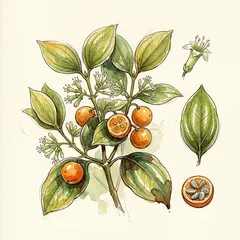 Όλα τα βιβλία για Nux Vomica →
Αντιδοτείται απόAceticum AcidumAconitum NapellusAlcoholAmbra GriseaAngustura VeraArsenicum AlbumBelladonnaBismuthumCalcarea CarbonicaCamphora
Όλα τα βιβλία για Nux Vomica →
Αντιδοτείται απόAceticum AcidumAconitum NapellusAlcoholAmbra GriseaAngustura VeraArsenicum AlbumBelladonnaBismuthumCalcarea CarbonicaCamphoraGeneral EN
Nux vomica is especially suitable to persons of a cautious, ardent, vehement temperament, or who have a malicious, angry disposition.
The unpleasant symptoms which remain after the cessa-
NUX vomica. 143
tion of premature or profuse menses, may be obviated by Nux vomica.
This medicine acts more mildly when taken a few hours before retiring than at other hours of the day ; necessity, of course, may require the exhibition of the drug at any other period. In sensitive persons especially, the exhibition of Nux in the morning excites unpleasant sensations, inasmuch as the most frequent and violent symptoms of Nux make their appearance in the morning.
Next to this the symptoms of Nux are most frequent short- ly or immediately after a meal, and when exerting the mind ; it is therefore necessary not to give it directly after a meal, or to exert the mind in any shape immediately after taking the medicine (nor ought this to be done after any other medicine) ; a few hours should always intervene between taking the medicine and the mental labor.
This drug cures likewise many chronic affections, occa- sioned by drinking too much wine or coffee, by a sedentary life, or by continued exertions of the mind ; it likewise cures several epidemic diseases and acute fevers, especially those where the heat appears before the chills, or where the heat and chills are mingled.
Several kinds of dangerous catarrhal affections are likewise cured by Nux.
Nux is most suitable when the patient is worse in the morning, when he wakes at three o'clock in the morning, re- mains awake for several hours on account of a number of ideas crowding irresistibly upon his mind, and falls asleep again towards morning, the sleep being disturbed by heavy dreams, from which he wakes more weary than he was the evening before ; or it is more suitable when persons are unable to keep themselves from sleeping in the evening several hours before bed-time.
This drug has alternate symptoms, both orders of symp- toms being primary symptoms.
Nux is antidoted by wine, brandy and camphor ; the head- ache and the want of appetite may be removed by coffee, the paralytic symptoms by Cocculus, the excessive sensitiveness and the asthma by Aconite, and the ill and vexed humor by Chamomile.
Physicians generally who are in the habit of imagining the power of drugs and their antidotes in the closet, have recom- mended vinegar and other vegetable acids as the best antidotes against Nux vomica and other violent vegetable substances. I know from experience, both in the treatment of men and ani- mals, that Nux is not properly antidoted by acids.
144 NUX VOMICA.
The following symptoms exhibit almost the complete range of the action of Nux upon the body, mind and temperament. My co-observers are Flaeming, Fr. Hahnemann, Wahle.
FROM NOACK AND TRINKS.
The provings which Hahnemann has instituted with this drug, show at the first glance its whole physiological action upon the various organs and systems of the animal economy, viz.: the brain, the organs of sense, the spinal nerves, the nerves of motion and sensation in both extremities, the nerves going to the genital organs, the pneumogastric nerve ; the cir- culatory system is also acted upon indirectly by Nux, its pri- mary action being upon the nerves which regulate the circula- tion of the blood.
In the second rank belong the phenomena which Nux is capable of realizing in the organs the functions of which are regulated by the splanchnic nerves, and in these nerves themselves, in the portal system, the liver, spleen, etc. The third order of symptoms embraces the action of Nux upon the mucous membranes of the respiratory organs, the intestinal canal, the uropcetic and genital organs of both sexes. It has but little influence on the lymphatic vessels, the glands, the skin, muscles, ligaments, periosteum, and the bones.
Nux has been successfully employed in the treatment of the follow- ing affections: Neuralgia. Excessive sensitiveness to the open air. Liability to catarrhal sufferings from the least draft of air, such as shiverings, chilliness, toothache, colic, etc. Rheumatic affections with and without fever ; tearing rheu- matic pains; drawing-tensive rheumatic pains, with weakness and much feeling in the affected parts with cramp-pains, jerk- ings of single muscles and limbs
Febrile rheumatic and catarrhal affections Rheumatic inflammation of the cellular tissue Paralytic pains. Muscular weakness, and difficulty of learning to walk, in children
Congestion of blood to head and chest Erethism of the whole cerebro-spinal and the ganglionic system Excessive sensitiveness of sight, hearing, smell, taste; all external impressions of any kind, even con- tact, causing an oppressive sensation, concussion of the whole nervous system, convulsions, etc Tremor artuum, also when caused by inhalations of mercury, lead, etc
Trembling of drunkards, opium-eaters. Spasmodic stiffness and inflexibility of the limbs St. Vitus' dance, more frequently in boys than
girls. Spasms and convulsions of single muscles, affecting
various limbs in succession, and depending upon an irritation of the spine. — Tonic spasms as of electric shocks, spasmodic
NUX VOMICA. 145
jerking and stretching of the whole body, opisthotonos, em- prosthotonos, pleurothotonos, occasioned by noise, contact, strong light, etc., the consciousness remaining undisturbed Tetanus, trismus Epilepsy, especially when occasioned by moral or gastric causes Precursory symptoms of sanguineous and nervous apoplexy
Paraplegia Paraplegia caused by apoplexy of the brain Softening of the spinal marrow (in conjunction with Agaricus). Paralysis of the limbs, caused by various affections of the spinal marrow
Paralysis with or without painfulness of the vertrebral column Paralysis from inhaling lead, mercury or arsenic Fainting fits occasioned by the least efforts, moral affections, pain, walking in the open air, at night, congestion of blood to the head and chest Great weakness and weariness in all the limbs
Catarrhal cough after measles Boils Pseudo-erysipelas Old ulcers, with a bright-red swelling around, which comes on when the parts become cold, with tearing pains in the ulcer
Chilblains with burning itching, bleeding rhagades and pale-red swelling Frozen limbs with a tolerably bright-red swelling Great sen- sitiveness of the corns Drowsiness in the daytime, especially in the morning and after dinner
Sleep before the regular hour Sleeplessness from excessive mental activity Sleep disturbed by palpitation of the heart, anxiety, frightful dreams Stupefying sleep toward morning, with anxious, frightful dreams, and a feeling of weakness when waking.
Remittent fever with gastric symptoms Intermittent fevers, the parox- ysm being characterized by vertigo, headache, pain in the stomach, both aching and spasmodic, nausea, bitter and sour eructations, vomiting, etc. ; or by chilliness, long-lasting cold- ness of the whole body, chattering of teeth, icy coldness of the hands and feet, blue nails, no thirst, tearing pains in the limbs and small of the back, these symptoms being succeeded by constant, general heat, aching in the sinciput, redness of the face, thirst, chilliness when uncovered, sweat ; the apyrexia being characterized by violent gastric symptoms, bitter and putrid taste, bitter vomiting, stitches in the region of the liver, painfulness in the pit of the stomach, contractive pain in the stomach, swelling of the spleen, constipation, emaciation weak- ness, anxiety, irritability
Quotidian, double-quotidian fever Tertian fever Quartan, double quartan. Intermittent fever with jaundice
Gastric and bilious fevers Febris nervosa versatilis Typhus abdominalis, second stage Sadness, an- guish, melancholy
Melancholy with derangement of the gastric organs, from over-exertion of the mind, or abuse of spirituous drinks Nervous hypochondria, or when origina
VOL. III. 11
146 NUX VOMICA.
ting in gastric disorder Delirium tremens Loss of con- sciousness, and stupefaction Vertigo with inclination to fall to the left side
Nervous vertigo, with or without obscuration of sight, humming in the ears, staggering Apoplexy with loss of consciousness, sopor, paralysis of the limbs, of the organs of deglutition, lower jaw and sphincters Headache, generally- most violent in the forenoon and after dinner Headache, in- creased by stormy weather, occasioned by excessive use of coffee, spirituous drinks, mental exertions, etc
Stupefying, congestion, catarrhal headache Headache from gastric causes Aching pain over the root of the nose, the eyebrows, extend- ing as far as the right temple, with paleness of face and cold sweat, every morning Hysteric headache
Hemicrania Clavus hystericus Congestion of blood to the face, with vio- lent pain in the forehead, vertigo, and fainting turns Catar- rhal, rheumatic, arthritic and scrofulous inflammation of the lids and eyeballs
Sugillations of the sclerotica Hemorrhage from the eye of a child Photophobia Presbyopia
Mouches volantes Weakness of sight.— •Amaurosis Otalgia Otitis
Noises in the ear Hardness of hearing from cold Exces- sive sensitiveness to smell, idiopathic and consensual Rheu- matic pain in the face
Prosopalgia, tearing, with nightly exacerbation Rheumatic paralysis and distortion of one-half of the face Paralysis of one-half of the muscles of the face, brought on by cold and apoplexy of the brain Pimples in the face, in plethoric individuals
Trismus Rheumatic, arthritic, purely nervous toothache Stitching, drawing, tearing, dart- ing digging-up pain in sound and hollow teeth. Drawing, tearing toothache, without swelling of the cheek, most violent in the night, increasing by cold or warm food, and cold air
Difficult dentition Fetid smell from the mouth, from de- ranged stomach Catarrhal angina Spasm of the fauces.
Spastic and paralytic dysphagia Sour, bitter, slimy and pu- trid taste Complete want of appetite, with coated tongue, and morbidly changed taste Gastric ailments of every kind : cramp of the stomach, heart-burn, eructations, sour, bitter and putrid water-brash, vomiting
Complaints from abuse of spir- its Hsematemesis. Morbus niger Dyspepsia
Cardialgia. Incipient scirrhus of the cardia and the pylorus, with disposi- tion to haemorrhoids, indolent stool Acute and chronic affec- tions of the liver Hepatelgia with constipation
Swelling and induration of the liver from abuse of Cinchona and Mer- cury Jaundice Colic from biliary calculi Colic of preg- nant females
Cutting colic from cold Enteralgia Entero- dynia Neuralgia coeliaca (in conjunction with Arsenic).—
NUX VOMICA. 147
Flatulent colic Hypochondriac and hysteric spasms of the abdomen Venous congestion of the abdomen. Umbilical hernia in children and females
Incarcerated hernia Incar- cerated femoral hernia Faeculent vomiting from mechanical closing of the intestinal canal Costiveness
Constipation from paralysis of the intestines, or from constriction of the rectum Thick and hard stool Dysenteric stool with tenes- mus Protalgia
Haemorrhoidal congestion Inflamed he- morrhoidal tumors Excessive haemorrhage ftom the rectum and anus after every stool Prolapsus of the rectum
Taenia Ascarides Lithiasis Pains in one or the other kidney, extending afterwards along the course of the ureter, ceasing with the entrance of a stone into the bladder, frequently ac- companied by spasmodic vomiting and retching, violent spas- modic pains in the abdomen, convulsions, and emission of urine, which comes out in drops at first, and is either bloody or has the appearance as if tinged with Sepia
Strangury. Ischury. Dysuria. Spasms of the bladder.
Haemorrhoids of the bladder. Haematuria Paralysis of the bladder Exu- resis nocturna of children
Haemorrhage from the urethra. Spasmodic contraction of the urethra Chronic gonorrhoea Spasmodic, strangulating pains in the spermatic cords, with swelling and hardness of the testicle which is drawn up.
Inflammatory swelling of the testicle Impotence Spasms in the uterus, contractive and griping, with discharge of coag- ulated blood Feeble and premature catamenia
Premature and profuse catamenia Menstrual colic Dysmenorrhea Apprehensive mood, with qualmishness in the pit of the stomach after the premature catamenia
Internal swelling of one side of the vagina Recent prolapsus uteriana vaginae Complaints during pregnancy : head and toothache Conges- tions to head and chest
Vomiting and abdominal spasms Vomiting of pregnant females Constipation Premature la- bor-pains
After-pains Violent after-pains with pressure upon the rectum Drawing pains in the nipples, with soreness of the same Convulsions, ophthalmia, umbilical hernia of new- born children
Inflammatory stage of coryza Dry coryza Excessive sensitiveness of the respiratory organs Catarrhal inflammation of the mucous membrane of the air-passages
First stage of catarrh of the larynx and trachea Catarrhal affections of persons who suffer with haemorrhoids, with violent titillation in the throat, and little or no secretion of mucus Constrictive spasm in the larynx Cough proceeding from roughness and titillation in the larynx, increased by motion, reading, reflection.
Titillating cough with distensive head-
148 Nux VOMICA.
ache, and bruised pain in the abdomen First stage of hooping cough Pneumonia Parapleuritis
Pricking pains in the left side of the chest Neuralgia of the chest Neurosis of the pneu- mo-gastric nerve Pleurodynia
Spasm in the chest Dysp- noea Asthma Suffocative fits after midnight
Asthma hu- midum nocturnum Spasm of the heart — Angina pectoris Myelitis, acute and chronic Spinal irritation, aching, tensive and burning pains, with painfulness of the vertebrae to the touch, paralytic sensation in the limbs, alternating with clonic spasms
Neuralgic affections of the spinal marrow and the sentient and motor nerves coming from the affected parts Spasms of the dorsal muscles after a cold Pain in the small of the back after catching cold by the feet Stitching and bruised pain in the small of the back
Periodical pain in the small of the back, extending up to the shoulder and down to the genital organs, increased by motion and accompanied with constipa- tion Rheumatic affections of the limbs Paralysis of the left arm Paresis of the hands, in drunkards
Ischias Ischias with nightly pains as if the limb were broken Lumbago. Spasms in the lower extremities, after a cold
Paralysis or paresis of the foot Pseudo-erysipelas of the knee and foot Cramp in the calf Cramp-like contraction of the soles and toes
Burning-stitching, intense pain, with swelling of the heel, increased by walking.
Large doses are antidoted by wine, coffee, camphor and opium.
Head EN
Stupefaction of the brain. Intoxication, (a. 2 h.)
Vertigo EN
Vacillating sensation in the brain. — 5.
Fits of Vertigo, sensation as if his brain turned in a circle, with momentartj loss of consciousness.
Vertigo, as if he would fall to one side.
(a. 68 h.) Vertigo with obscuration of sight.
Sensation of vertigo moving hither and thither in the brain, (a 6 h.) Vertigo, an hour and a half after dinner. ]0.
Ver- tigo after a meal when walking, abating while standing, (a. 1 h ) Vertigo while eating.
Vertigo with obscuration of sight while eating, somewhat as when one suddenly comes out of the cold and enters a warm room.
Strange dulness about the head ■ when moving it the blood presses toward it, the rest of the body feeling lazy.
Vertigo, when he eructates.— 15.
Vertigo as if he neither heard nor saw any thing, and as if he would fall ; it is felt while sneezing and coughing, or when rising again after stooping low.
Vertiginous wavering when
NUX VOMICA. 149
walking, as if one would fall to one side or backward.
When lying on the back, he is unable to raise his head, owing to vertigo and obscuration of sight, (a. 24 h.) Vertigo two evenings in succession after lying down, as if the bed turned round with her.
Vertigo with fainting (immediately).— 20.
Headache, as if the head felt empty.
Intoxication.
Cloudi- ness of the head, as from intoxication.
Intoxication rising to the head.
Dreary feeling in the head, as from nightly revelry. — 25.
Headache in the morning, as if one had not slept over night.
Gloominess of the head after dinner, returning in twenty-four hours, (a. 24, 72 h.) The forepart of the head feels obscured in the evening, while in the open air, as if he were going to lose his consciousness for a moment, (a. 24 h.) The posterior part of the head feels obscured.
Whizzing and whirling in the brain and ear. — 30.
Humming in the fore- head, afternoon and evening.
Stupid feeling in the head, in the open air and the light of the sun.
Stupefying headache early in the morning when in bed, upon waking, disappearing after rising, (a. 16 h.) Stupid feeling in the head when holding it erect ; when stooping with the head, he experiences a sensation in the forehead as if something heavy descended in it.
When stooping he experiences an excessive weight in the head.— 35.
Giddiness and heaviness in the head early in the morning, as from intoxication.
Heaviness in the head, early in the morning, (a. 4 d.) Headache when stoop- ing, as if something heavy were falling into the forehead.
Headache, like a sort of heaviness in the brain, early in the morning.
Headache after dinner, consisting in heaviness and pressure, especially when moving the eyes.
(a. 16 h.)— 40.
Aching pain in the head.
(a. 5 m.) When closing the eyelids, he feels a pain (aching?) in the middle of the brain, as is felt after vomiting.
Aching pain in the forehead, relieved by lay- ing the head upon the table, aggravated by the open air, accompanied with weariness of the feet when going up stairs, (a 3 h ) Aching pain in the forehead, as if he had not slept enough.
Aching pain over the left eye, with pain in the bones as if he had knocked them against something ; he was not able to open his eye.— 45.
Aching pain over the orbit of the right eye, early in the morning when in bed, while lying on the right side, and going off when turning to the opposite side or the back.
Aching pain in the occiput, m the morning immediately after leaving the bed.
He wakes early in the morning, and, while his eyes are yet closed, he feels a pain in the middle of the brain, (a. 12 h.) Drawing pain, deep in the head, in the region of the vertebra, with pressure irom
] 50 NUX VOMICA.
above downward.
Pain in the occiput, as if the brain were being pressed or pushed forward.— 50.
Tensive headache, at night.
Tensive headache in the forehead.
Clawing headache.
Headache when reflecting ever so little while lying down, as if the brain were being pressed asunder.
Headache, a pressing in the occiput from within outward, in both sides of the occiput, as if the skull were pressed asunder, with heat in the brain ; the pain is momentarily relieved by pressing the parts together with the hands, for twenty hours.
(a. 11 h.)— 55.
The headache wakes him in the night.
He has a pain in both temples from exerting his mind.
Aching and throbbing pain in the vertex, when exerting his attention.
Headache early in the morning when in bed, as if over the whole surface of the brain, as if the skull would burst, (a. 10 h.) Headache, the brain feeling oppressed and bruised. — 60.
Headache, early in the morning while in bed, as if his head had been struck with an axe, going off after rising.
Headache, as if the brain were cleft, (a. 8 h.) Headache, early in the morning while lying on the left side, she feels a pain in the right hemisphere of the brain as if torn ; the pain disappears when turning to the right, painful side.
(a. 52 h.) Tearing pain in the head, extending to the root of the nose and the upper jaw, aggravated by walking.
Tearing in the vertex, forehead, eyes, with qualmishness and nausea in the region of the chest and the organs of speech, (a. 2, 12 h.) — 65.
Drawing-tearing headache.
Tearing in the head along the ear from above downward, (a. 40 h.) Tearing head- ache after a meal, with a feeling of heat in the cheeks and a feeling of chilliness over the body, at least in the hands.
Drawing-tearing and burning pain in the head, early in the morning, (a. 60 h.) Burning in the brain behind the os frontis. — 70.
Drawing pains in the head.
(a. 6 h.) Draw- ing jjain in the temples, afterwards in the forehead, and lastly in the occiput.
Drawing pain in the right hemispher of the brain, near the ear, from below upwards, (a. 1 h.) Drawing in the back part of the head, as if she felt chilly in that part.
(a. 120 h.) Drawing movement here and there in the forehead, in the direction of the root of the nose. — 75.
Painless drawing here and there in the brain.
Groaning and shaking sensation in the brain, when walking and running.
Bubbling sensation in the head, with sense as of flagging as of sails, while walking.
Single jerks in the head.
(a. 8 d.) Drawing-jerking headache, early in the morning. — 80.
Single shocks in the head. [Headache early in the morning, a con- stant pecking (dull-stitching headache) worse when stooping,
NUX VOMICA. 151
when it feels as if part of the forehead would fall out.] Violent jerks or dull stitches in the left hemisphere of the brain, from the orbit to the parietal and occipital bones, shortly after a meal.
(a. 10 h.) Single violent stitches in the head, (a. 6 h.) Headache, commencing a few hours before dinner, increasing after dinner ; followed by violent stitches in the left temple, with nausea and sour vomiting ; these symptoms dis- appear in the evening after lying down. — 85.
Stitching and pressure over the eyelids.
Pain in one-half of the head, from time to time, as if a nail were gradually being driven into the parietal bone from the upper part of the head.
(a. 1 h.) Intolerable (digging-up) headache, commencing early in the morning when lying in the bed, and going off after rising.
(a. a few h.) Headache shortly before dinner.
Hemicrania in the afternoon (from 4 o'clock until night), accompanied with faintness and weariness. — 90.
Headache in the outer parts of the head, as if the hair of the occiput were painful.
One portion of the scalp feels bruised ; the hair covering that part stands on end, and is painful to the touch, (a. 8 h.) Draw- ing pain in the outer parts of the head.
The scalp on the top of the head feels bruised when touched.
The scalp feels painful, more so when touched.— 95.
Pain, in a rough wind, as if the scalp were sore ; nevertheless that portion of the scalp is not painful to the touch, (a. 6 h.) Red, painful pimples or blotches on the hairy scalp and in the face, the tips of which became filled with pus.
(Itching and gnawing in the hairy scalp and nape of the neck, as when an ulcer is healing, espe- cially in the forenoon.) Painful, small tumors on the forehead. — 100.
Creeping in the forehead and vertex.
Face EN
Itching and crawling in the face, as if fleas were walking over it, going off by scratching, but returning shortly.
Excessive formication in the face.
Sensation of tension in the face, around the mouth, eyes and nose, these places being evi- dently bloated.
Painless drawing in the face, when stooping. — 105.
Jerking in the right side of the face, as if one were pull- ing a thread, in the evening.
Jerking in the facial muscles, in the evening, after lying down.
Tingling in various parts of the cheeks, which are red and hot.
(a. 1—12 h.) Small pus- tules on the cheeks.
Wretched, pale, yellowish, clay-colored complexion ; the sclerotica has a natural appearance.— 110.
Red, swollen countenance.
Pain in the skin over the left eye, as if he had burnt himself.
Eyes EN
Pain of the right eyebrow when touching it.
Draw- ing, tearing pain in the eyelids.
Twitching of the eyelids.— 115.
Closing of the eyelids, as if the upper eyelid were too
152 NUX VOMICA.
heavy, accompanied with an effusion of tears.
Pressure on the upper eyelids, especially early in the morning.
Itching in the anterior part of the eyelids, (a. 1£ h.) Itching of the eye- lids in the evening, in the direction of the inner canthus.
(a. 12 h.) Burning, itching pain of the eyelid.— 120.
The margin of the eyelids is painful, as if it had been rubbed sore, especially when touched, and early in the morning.
The canthus are painful as if sore.
The inner canthus is painful as if made sore by friction, (a. 2 h.) Suppurating canthus : The outer canthus is agglutinated early in the morning.— 125.
A feeling of erosive dryness in the inner canthi, early in the morning when in bed.
Smarting in the inner canthi, as of acrid tears.
Smarting in the eyes, especially the outer canthus, as if oc- casioned by salt ; with lachrymation.
Dryness of the right eye.
(a. 1 h.) Burning in the eyes, without any inflammation. — 130.
Tingling burning in the eyes.
Bruised pain in the left eye, with purulent gum in the outer canthus.
(a. 5 d.) (Prickings in the eyes.) Itching of the eyeball, (a. 2 h.) Itch- ing of the eyes, relieved by friction. — 135.
The eyes are filled with tears, as in lippitudo, or dry coryza.
Painless sugillations in the sclerotica, (a. 14 h.) Painless redness in the left outer canthus, early in the morning.
Exsudation of blood from the eye.
Glistening, staring eyes. — 140.
Swelling of the eyes, the sclerotica being marked with red bands, and an aching tensive pain being experienced in the eye.
Ophthalmia.
Photophobia.
Intolerance of the light of day, early in the morning, with ob- scuration of sight.
Complete obscuration of sight, for a few hours, like amaurosis, (a. 24 h.) — 145.
Luminous vibrations out of the direction of the visual ray, especially on the left side, in the forenoon (Herz's false vertigo), (a. 24 h.) The objects appear brighter than usual.
Black and gray motes before the eyes, with stupefaction of the head.
Presbyopia.
Contraction of the pupils (the first hours). — 150.
Dilatation of the pupils with very slow breathing.
Ears EN
Stitching pressure, several times, in the region of the external orifice of the ear.
Itching in the inner ear, through the tube of Eustachius, obliging him to swallow frequently, and disturbing his night's rest.
Creeping titillation and itching in the inner ear.
Single sharp shocks in the inner ear, resem- bling otalgia, (a. 6 h.)— 155.
Stitches in the ear, early in the morning, when in bed, obliging one to exclaim, (a. 9 d.) Lan- cinations in the inner ear from without inward, towards even- ing, (a. 6 h.) Sharp shocks in the inner ear.
(a. 8 h.) Pain inlhe inner ear, partly shocks, partly clawing, a sort of otal- gia, (a. 12 h.) Tingling hissing in the ears.— 160.
Chirping
NUX VOMICA. 153
in the ear, at night, as of a cricket.
Ringing in the ears.
(a. 2, 4 h.) (Humming and buzzing in the ears, as of bees.) Roar- ing in the ears, early in the morning when rising, (a. 12 h.) Noise in the ears as of a fulling machine, at night. — 165.
Hol- low sensation in the ears, early in the morning, causing one's own words to resound in one's own ears, disappearing after dinner, (a. 5 d.) When chewing and compressing the jaws, he feels a stitching-drawing pain towards the inner ear, almost like cramp, (a. 4 h.)
External Mouth : Intolerable itching of the nose.
He drew his mouth to one side.
Lockjaw, with perfect conscious- ness.— 170.
Sensation in the muscles of mastication and jaws, as if lockjaw were coming on, or as if the jaws became closed, although their motion was quite easy.
Drawing pain in the muscles of mastication.
Ulcerated corners of the lips.
Pain- ful peeling off of the lips.
(a. 3 h.) Itching pimples over the margin of the upper lip.— 175.
Sore feeling on the inner surface of the lower lip.
Little ulcer on the inner surface of the lower lip, painful when touched.
An ulcer on the vermilion border of the lip, covered with scurf and affected with a burning pain.
Ulcerated scurfs on the margin of the lip, causing a stinging pain while forming.
Stitching in the upper and lower lip, early in the morning.— 180.
Rhagades in the middle of the lower lip.
(a. 12 h.) Miliary pimples around the lips, contain- ing pus.
One single hair of the beard over the lip is painful to the touch, as if a splinter were sticking in the flesh, (a. 5. h.) Jaws and Teeth : A blotch in the skin of the lower jaw which is painful only when touched.
Itching pimples on the chin the larger one being surrounded with a red areola— 185.
Herpetic eruption on the lower part of the chin.
Swelling of the gums.
Painful swelling of the gums, with painful pim- ples on the inner surface of the lip and on the tongue, as in mercurial ptyalism.
Swelling of the gums, with pain, with a throbbing sensation in the swelling, as if an ulcer were break- ing open.
Swelling of the gums to the size of a finger, with throbbing pain as in an abscess, hindering eating, for five days.
190.
Swelling of the gums with drawing pain.
Ulcer in the
region of the cuspidatus, with drawing and burning pain.
Swelling of the gums, with toothache, previous to dinner.
Swelling of the gums with toothache, commencing with pres- sure, (a. 1 h.) Toothache early in the morning, as if the gums were sore.— 195.
Continuous painful soreness in the teeth, ag- gravated by fatiguing the head, and by reflection.
Constant toothache, when walking in the open air, like a quiet feeling of soreness, especially when opening the mouth.
Darting pain in the teeth, as if caused by swelling of the gums.
Darting
154 NUX VOMICA.
pain in the teeth synchronous with the pulse, and accompanied with swelling of the gums. Darting pain in the teeth, with jerkings in the ear ; also twitching and screwing sensation in the ear, early in the morning, immediately on waking, and in the evening.— 200. Toothache after dinner : at first it is felt like a blow or stitch in the tooth ; this is followed by a hum- ming in the tooth, or a sort of painful roaring, extending as far as the eyes, and aggravated by walking in the open air, con- tinuing from time to time until deep in the night, when it abates by wrapping up the cheek very warm ; when returning again it commences with prickings.
Single dartings in the open air, ending with a stitch. Drawing toothache, accompanied with stitches in one row, especially when inspiring the open air with an open mouth, (a. -J- h.) Drawing toothache with stitches in an uncertain tooth. Drawing pain in a hollow tooth when rubbing the tongue against it. — 205. Pain in the hollow tooth, moving toward the head, when the air enters the hollow tooth.
Drawing pain, now in a lower, now in an upper molar tooth, followed by drawing in the remaining molar teeth in the direc- tion of the front teeth, especially immediately after dinner and supper ; red, hot spots appearing upon the cheeks and neck, and the mind being full of despair and disposed to indulge in reproaches. Drawing toothache occasioned by warm drinks and soups. Tearing toothache ; it attacks at first a hollow tooth, from which it extends now through the upper, now through the lower jaw, afterwards affecting the facial bones and next the head, occasioning a tearing pain in the temple of the affected side, returning in paroxysms, being appeased for some time by sleep, but brought on again by cold water, or by a few crumbs having got into the hollow tooth, (a. 2 h.)— 210.
Boring-gnawing toothache, neither aggravated nor diminished by contact or mastication, abating upon the inspiration of cold air. but increased by the warmth of the room. Digging-up toothache when exerting the head or when reflecting ; after- wards, towards evening, one of the submaxillary glands be- comes painful, (a. 9 h.) Stitching toothache, in several teeth of either jaw. Dull-stitching toothache in one of the upper in- cisores. Toothache, as if the tooth were dislocated, or had be- come loose by biting, and were vacillating, accompanied with single long stitches, which are only felt when inspiring the open air with the mouth wide open. — 215.
Vacillating tooth, with dull pain, increased by mastication, late in the evening and early in the morning before rising from the bed. (a. 12 h.) Vacillating teeth. Vacillation of a sound tooth, which is only painful when pushing it. Falling out of sound teeth which
NUX VOMICA. 155
had never been loose before.
Drawing-tearing pain in the jaws.— 220.
Drawing pain in the cervical muscles.
Internal Mouth : White tongue, (a. 20 h.) Difficult speech.
She is not able to talk aloud.
Dryness in the fore- part of the mouth, especially at the tip of the tongue. — 225.
Dryness in the mouth, without thirst, early in the morning, as when one takes spirits the evening previous.
Dryness in the mouth, after midnight, as if the tongue were adhering to the palate, without thirst, and nevertheless a quantity of mucus in the fauces, (a. 5 h.) Itching of the left side of the root of the tongue.
Painful pimples in the forepart of the palate, behind the upper incisores.
(a. 40 h.) Painful vesicles on the tongue, (a. 6 h.) — 230.
Pricking in the tip of the tongue after lying down, when on the point of falling asleep in the siesta, (a. 2 h.) Early in the morning the mouth and fauces are cov- ered with mucus, and the canthi are filled with yellow gum.
(a. 16 h.)
Pharynx and (Esophagus : Pain in the throat as if rough and sore, near the palate ; slimy raw and sore feeling, as if occasioned by an acrid substance in the mouth, gums, tongue, and palate.
Swelling of the velum pendulum palati, with aching pain, also between the acts of deglutition, and a smart- ing sensation behind the velum pendulum palati.
(a. 32 h.) — 235.
Swelling of the velum pendulum palati and the uvula, as if thickened by mucus, especially perceptible during degluti- tion, (a. 8 h.) Sore throat, as if caused by a swelling in the region of the palate, not perceptible while drinking.
Sore throat ; pressure in the throat, perceptible only when swallow- ing the saliva, not when swallowing the food.
Sore throat ; sensation of swelling in the pharynx, more during than be- tween the acts of deglutition.
Single stitches in one side of the throat, between the acts of deglutition, especially perceptible when stooping and going up stairs, (a 1, 24 h.) — 240.
Itching pricking in the fauces in the direction of the ears, during de- glutition, and when moving the jaws.
Pricking in the upper part of the throat in the afternoon, (a. 7 h.) Stitching in the uvula and the submaxillary glands during deglutition, with shuddering in the daytime, sweat in the night and headache.
Aching-stitching sore throat, as if a plug were lodged in the throat, more felt between than during the acts of deglutition.
Sore throat ; sore rawness in the fauces, felt only when in- spiring cold air and during deglutition.— 245.
Sore throat during deglutition, as if the throat were raw (without pricking).
Burning in the fauces, as if occasioned by heartburn.
Burning (boiling) sensation in the pharynx, to the top of the throat.
156 NUX VOMICA.
Burning in the throat at night ; she has to sit down ; when lying down she feels worse.
Burning in the oesophagus, up to the mouth. — 250.
Heartburn.
Scraping sensation in the throat, and in the region of the orifice of the larynx, as after rancid heart- burn, (a. 8 h.) Rancid heartburn as if one has eaten too much rancid grease.
(I 6 h.) Scraping-scratching sensation in the throat, as after an attack of heartburn.
Scraping and scratch- ing sensation in the throat, as if the skin had been eroded with a sharp instrument, not felt during deglutition. — 255.
Frequent accumulation of saliva in the mouth (the first twelve hours).
Copious water flows out of the mouth when stooping, without nausea.
Frequent discharge of watery saliva from the mouth, (water-brash).
The saliva flows out of the mouth during sleep.
(a20h.) Sanguinolent saliva. — 260.
Expectoral ion of black- ish, almost coagulated blood, at first at two o'clock in the morn- ing, afterwards at two o'clock in the afternoon, with a peculiar taste in the mouth and a smell of blood in the nose ; a little blood coming out of the nose, when blowing it.
Taste and Appetite : Sour taste in the mouth, and sour smell from the same.
Sour taste in the mouth, especially early in the morning.
Food and drink leave a sour taste in the mouth.— 265.
Sour taste in the mouth, immediately after eating, the food having a natural taste.
Bread tastes sour to her, no other kind of food does.
Sourish taste in the mouth after drinking milk.
Milk seems to sour upon his stomach.
(a. 15 h.) (Early in the morning he has a saltish taste.)— 270.
He hawks up a saltish mucus from the fauces.
Ugly taste in the mouth.
Disagreeable taste and smell in the mouth and nose, almost like sulphur.
(Disagreeably sweetish taste and smell.) Bad slimy taste in the mouth, partly as of herbs, partly metallic, early in the morning.— 275.
Disgusting, herb- like taste in the fauces, almost like the herb of carrots, (a. 1 h.) Beer tastes to her like herbs.
Taste in the mouth as if the stomach were spoiled.
In the morning the milk tastes as if spoiled.
He wakes in the morning with dry fauces, and expe- riences a very bad smell from the throat after rising.— 280.
After eructating, a bad vapor seems to come out of his mouth.
Putrid taste low down in the pharynx, when hawking up mucus, (a. 2 h.) Putrid taste in the mouth.
Putrid taste in the mouth early in the morning before breakfast, going off after breakfast.
Putrid taste in the mouth early in the morning, as if coming from hollow teeth.— 285.
Putrid or bitter taste in the mouth early in the morning, nevertheless food and drink have a good taste.
While expectorating he experiences a bit- ter taste low down in the pharynx.
Bitter taste in the mouth, not of the food.
Bitter taste while spitting.— 290.
Bread tastes
NUX VOMICA. 157
smoky to him.
Food has either little or no taste to him.
Milk at breakfast has no taste to her.
Meat has no taste to him.
Constant want of appetite.— 295.
Coffee has no taste to him.
(a. 3 h.) Diminished appetite.
Aversion to food (immediate- ly).
Acidulated (brown) bread is disagreeable to him.
Aver- sion to bread. — 300.
Aversion to rye bread ; it causes water to accumulate in his mouth.
He eats without an appetite.
Food and drink have a fetid smell.
Loss of appetite after half an hour's walking. — 305.
Aversion to the ordinary food and drink, and the usual tobacco and coffee.
Thirst in the after- noon and evening.
(Desire for milk.) He is thirsty, never- theless water and beer are disagreeable to him.
Smoking makes him feel nauseated, (a. 3, 8 h.)— 310.
Desire for to- bacco (in the first hours).
Great hunger, also early in the morning, (a. 15 h.) Hunger, nevertheless aversion to food.
Disagreeable sensation in the stomach and abdomen, as if they were empty, accompanied with hunger, an hour before dinner.
Periodical canine hunger in the afternoon, especially after drinking white beer ; after taking a little swallow of it, he be- comes hungry, and if he lets the hunger pass off without eat- ing, he feels as if he were replete with food.— 315.
He is hun- gry, but even if he eats ever so little, he feels at once full to the mouth, (a. 3 h.)
Gastric Symptoms : Sick feeling after a meal, and as it he had overloaded his stomach in spite of his sickness.
Pres- sure at the stomach after a meal, with return of the herb-like and metallic taste.
Dissatisfied and sad after a meal.
Hypo- chondriac after a meal ; the least cause affected him.— 320.
Chilliness and coldness after a meal.
Chilliness after dinner and supper.
A good deal of heat after dinner, especially in the face ; the heat seemed to arise from the abdomen ; the most sweat was on the whole of the back.
Heat and redness of the cheeks after a meal, with dullness of the head.
Heat on the cheeks, after a meal, accompanied with a more violent feeling of heat like burning in the interior of the cheeks, the pupils being very dilatable, with photophobia, and chilliness and goose-flesh on the arms.
(a. 3 h.)-325.
Great dryness in the back part of the fauces.
Heat in the head during dinner A sort of fainting during dinner, with nausea and flushes of heat; all this went off in the recumbent posture.
When eat- ing he has sweat on the forehead and the hairy scalp, (a. 2 h ) After dinner he felt suddenly qualmish ; afterwards he was attacked with vertigo and fainting turns ; lastly eructa- tions without taste or smell, (a. 13 d.)-330.
Eructations after a meal.
Frequent or painful eructations.
She frequently
158 NUX VOMICA.
feels as if she would eructate, but she is not able ; in this case she feels as if the sesophagus were contracted by a spasm.
After a meal a watery fluid is gulped up. — 335.
Bitter eruc- tations before breakfast.
Gulping up of a bitter and sour fluid (a. 6 h.), also at night, (a. 12 h.) Sour eructations reaching as far as the tongue (after a morning walk).
Three hours after a meal, he has eructations having a sour taste and smell, with yawning, (a. 8 h.) — 340.
Frequent hiccough, without any apparent cause.
Hiccough before dinner, (a. 24 h.) Thirst without the body being hot ; nevertheless the stomach is incommoded by the beverage, (a. 6 h.) Thirst; the drink has a good taste, but shortly after taking the drink, he is attacked with nausea and inclination to vomit in the eve- ning, (a. 12 h.) Nausea. — 345.
Nausea when she begins to eat.
Nausea an hour before dinner, (a. 16 h.) Nausea early in the morning.
Qualmish about the heart early in the morn- ing, with nausea and flow of saliva ; shuddering in the after- noon.
Nausea early in the morning, pervading different parts of the body as if every part were in a state of fermentation, (a. 12 h.) — 350.
Qualmish and anxious, nauseated and sick after a meal, as if one had taken a drastic ; the sensation arose from the pit of the stomach.
Aversion to what one had just been eating, after a meal, especially when remaining up.
Nausea after a meal.
(a. 40 h.) Nausea in the afternoon (at five o'clok).
(a. 20 h.) Neausea in the pit of the stomach in the afternoon, but not unto vomiting, (a. 3 d.) — 355.
Qualm- ishness after a meal as if one would vomit.
Palpitation of the heart, followed by inclination to vomit although the tongue is clean.
Inclination to vomit immediately after a meal.
Nausea after a meal and after drinking, the nausea is followed by drinking, and after drinking the abdomen becomes distend- ed as if it were swollen. — 360.
Sensation as if one would vomit when hawking up mucus, (a. 4 h.) Vomiting, (a. 1 h.) Violent vomiting. — 365.
Vomiting of some mucus in the forenoon, (a. 20 h.) Vomiting of sour-smelling and sour- tasting mucus towards evening, with headache, being a sort of tearing (?) around the lower portion of the skull, (a. 9 h.)
Stomach EN
Hsematemesis.
Vomiting or gulping up of blood from the stomach, (a. 1 h.) Aching spasmodic pain from the fauces down to the pit of the stomach, early in the morning.— 370.
Scraping sensation in the pit of the stomach.
Constant pressure in the region of the heart.
The region of the stomach is very sensitive to the pressure ; he could not let his hand remain upon the stomach, lest he should feel nauseated.
Sick feeling in the pit of the stomach, towards evening, as if
NUX VOMICA. 159
nauseated.
Constant pain in the stomach. — 375.
Violent pain in the stomach.
Pressure in the stomach as of a stone.
Pressure in the stomach after eating but little (early in the morning).
Aching pain in the region of the stomach, directly- after a meal, as if he had eaten too much.
(a. 5 h.) Pressure in the pit of the stomach and abdomen, with distention, after a meal. — 380.
Oppression in the pit of the stomach.
Drinking is immediately followed by a pressure in the pit of the stom- ach which causes asthma and is accompanied with distention of the abdomen, (a. 2 h.) Pressure, a few inches below the pit of the stomach, causing eructations.
Pressure below the pit of the stomach, especially after walking in the open air ; when sitting, it does not abate until a quarter of an hour has elapsed.
Chronic pain in the stomach and epigastric region. — 385.
Pressing in the epigastric region early in the morning, followed by cutting in the abdomen with continued nausea, (a. 24 h.) Pressure in the epigastrium as of a stone, increased by walking, diminished by sitting down.
(a. 14 h.) Tension in the stomach, and above.
Drawing-tensive pain in the ab- domen. — 390.
Tension across the stomach (epigastrium) in the afternoon (at three o'clock), followed by pain in the abdo- men, as if every part of it were raw and sore.
Spasms in the abdomen.
Pain in the abdomen, when walking, at every step, as if every part in it were sore.
Pain in the epigastrium, as if the clothes were too tight.
Contractive, clawing pain in the stomach.
Abdomen EN
395.
Clawing-aching pain in the side of the abdomen.
Clawing-aching pain in the abdomen, and fermenting borborygmi, followed by watery diarrhoea, early in the morn- ing, (a. 24 h.) Contractive pain in the hypochondria, (a. 6, 12 h.) Contractive pain in the abdomen.
Repletion in the abdomen after eating but little, and even when scarcely be- ginning. — 400.
Sensation of internal swelling in the side of the abdomen, below the short ribs.
Distention of the pit of the stomach, which is painful to the touch.
Sensation in the region of the stomach, as if something were turning about.
Gurgling in the side of the abdomen, with anxiety.
Beating in the region of the stomach. — 405.
Beating sensation in the region of the stomach, after supper, most perceptible when touching the part.
(a. 24 h.) Beating pain in and below the region of the liver, as if an ulcer were forming.
Jaundice, with aversion to food and short fainting fits; afterwards weak and sick feel- ing.
Fine-pricking pain in the region of the liver, (a. a few hours.) Thrill of chilliness across the region of the liver, a creeping sensation. — 410.
Spasmodic pain in the left side of
160 NUX VOMICA.
the abdomen, accompanied with qualmishness which is espe- cially felt in the pit of the stomach.
Griping and clutching, as with talons, in the epigastrium, going and coming.
Griping and digging-up in the abdomen.
Griping and pinching around the umbilicus, after eating something.
Fulling and kneading sensation in the umbilical region, or as if something which is moving down from the upper limbs were forming into a ball. — 415.
Cramp or griping in the stomach, towards morning, as if occasioned by a drastic, changing to a burning in the pit of the stomach.
Burning in the region of the orifice of the stomach.
Burning sensation in the pit of the stomach, coming from below.
A sort of cooling burning, as saltpetre excites upon the tongue, from the pit of the stomach to the pharynx, especially at night.
Burning pain in the pit of the stomach, and lower down, shortly after supper, with anxiety. — 420.
Sen- sation of an increase of temperature in the abdomen, early in the morning.
Sensation of warmth in the abdomen, which is not disagreeable, accompanied with a sensation as if something were rolling ofT.
Excitement (orgasm?) in the abdomen from below upward, without any heat being perceptible.
(Long stitch- es in the pit of the stomach, in the evening, and even for some time after lying down.) Pain in the pit of the stomach, as if bruised, shortly before dinner, and going off by eating. — 425.
Pain in the bowels, as if bruised, also in the loins, with a sort of nausea, early in the morning when in bed.
Tearing pain in the stomach.
Flatulent colic in the epigastrium, in the evening and after lying down.
(a. 5, 10, 13 h.) Ascension of flatulence in the abdomen, and incarceration of that flatulence under the short ribs.
(a. 20 h.) Pain in the abdomen as of incarceration of flatulence. — 430.
Pain as of incarcerated flatulence, deep in the hypogastrium, with pain in the small of the back early in the morning.
Flatulent colic after stool, as if the intestines were hard pressed by stones here and there, (a. 4 h.) Distention of the abdomen by flatu- lence with pressure.
Pressure in the abdomen as if distended, during an inspiration, when talking, and when touching it.
Flatulent distention of the abdomen after a meal.
(a. 12 h.)
435, Flatulent distention immediately after drinking.
All the nourishment he takes seems to become converted into flatulence, which ascends and causes anxiety.
Flatulent pressure in the various parts of the abdomen, with anxiety.
The flatulence seems to ascend into the chest, to oppress it, and to cause a stitching pressure in various parts of the chest (im- mediately).
Movement of flatulence in the abdomen early in the morning, (a. 18 h.) — 440.
Croaking in the abdomen as of
NTJX VOMICA. 161
toads.
Grunting and rumbling in the abdomen, early in the morning when in bed, accompanied with spasmodic and pinch- ing flatulent colic, heat in the palms of the hands and bottoms of the feet.
(a. 20 h.) Loud rumbling and grunting in the ab- domen early in the morning.
Grunting in the abdomen in the afternoon.
Loud rumbling in the abdomen, with sensation as if stool would come on ; at the same time she becomes faint, and has to lie down. — 445.
Sensation of weight in the abdo- men.
Sensation as if every thing in the abdomen were falling down ; this obliges him to walk slowly.
Sensation in the ab- domen when walking, as if the bowels were shaking.
Colic, with sensation of dryness on the lips, and heat in the face.
Painful prickings in the abdomen, (a. 4, 6 h.) — 450.
Stitch- ing in the left side of the abdomen, during a deep inspiration.
Stitches in the side of the abdomen, during motion.
Severe stitches in the umbilical region, (a. \ h.) Stitching in the right side of the abdomen, arresting the breathing, and abating by pressing the hand into the abdomen, in the forenoon.
A sort of flatulent colic, deep in the hypogastrium ; sharp pres- sure going and coming, as with a cutting or stitching instru- ment, upon the bladder, the neck of the bladder, the commence- ment of the urethra, the perinaeum, rectum, anus, as if cutting flatulence would press through all those parts ; the cutting be- comes intolerable when making the least step (he has to walk crooked on account of the pain) ; it passes off speedily when sitting or lying down. — 445.
Cutting colic with inclination to vomit.
Continued cutting colic in the abdomen ascending to- wards the epigastrium, where it becomes a griping pain.
Cut- ting colic in the hypogastrium, with inclination to vomit ; dis- agreeably sweetish taste in the mouth, weakness and great drowsiness in the morning, returning after the lapse of twenty- four hours, (a. £, 24 h.) Burning cutting, especially in the epigastrium, and more frequent during motion.
Colic, which is rather cutting than pinching, exciting nausea. — 460.
Colic, in the open air, as from a cold.
Colic, as if a diarrhoea oc- casioned by a cold would set in.
(a. 5 h.) Pinching in the abdomen, (a. 1 h.) Intolerable colic, (a. 1 h.) Pinching in the abdomen as from worms, after drinking coffee, going off by bending the trunk backwards, and coming on again by stoop- ing, (a. 1 h.) — 465.
Several turns of pinching drawing in the side of the hypogastrium, commencing at the abdominal ring, and moving upwards, (a. f h.) Pinching-tearing pain in the abdomen towards the chest, (a. 1 h.) Drawing colic, com- mencing in the left side and reaching across the umbilicus.
Drawing-tearing colic.
Drawing-tearing colic, commencing- vol. in. 12
in either side of the abdomen, and joining over the pubic bone. — 470.
Tearing colic, in the afternoon, (a. 1 h.) Pressing towards the genital organs in the abdomen.
Contraction in the abdomen and a pressing towards the genital organs, when walking in the open air.
Contractive cramp in the abdomen and the uterus, a sort of griping and a series of diggings-up in quick succession (with increased metrorrhagia, the blood com- ing out in coagulated lumps).
Sensation of weakness in the ab- dominal ring, as if hernia would come on.
(a. 20 h.) — 475.
Pain in the abdominal ring, early in the morning when in bed, as if a hernia became incarcerated.
Sensation and indications of inguinal hernia, (a. 5, 7, 8 h.) Aching pain in the region of the pubic bones.
Twitching s of the abdominal muscles under the skin.
Creeping sensation in the abdominal muscles ; the parts feel numb, pithy and swollen. — 480.
Pain as if bruised in the side of the abdomen and in the loins, when touching the parts.
The abdominal muscles feel bruised when moving or touching the parts.
The abdomen is painful when touched.
After a good walk a pain is felt at a small place in the abdo- men, when touching that place or when the clothes press against it j a fine pricking is likewise felt at that place.
Stool EN
DiarrhcEa, especially early in the morning and after dinner, dark-colored.
The stool is enveloped with white mucus.
Small, diarrhoeic stools in the morning, corroding the anus.
Fetid diarrhoea. — 490.
Discharges of thin, green mu- cus, (a. 24 h.) 1 Smarting and sore pain in the anus after stool, in the evening, (a. 10 h.) Burning-smarting pain in the region of the anus, a few hours after stool, as if a wound had been cut into, or as if caused by haemorrhoids.
Difficult stool, going off with burning.
Burning pain in the outer parts of the anus, immediately after stool, (a. 20 h.) — 495.
Colic, succeeded by discharge of dark-colored mucus, causing a smarting burning in the anal region, (a. 8 h.) Small, fre- quent stools.
Stool, the first portion being loose and thin, the latter hard.
(a. 20 h.) Involuntary discharge of liquid stool, with emission of flatulence, followed by the expulsion of hard stool.
Stools partly hard, partly loose, mingled with emission of flatulence, in the morning and after a meal (also after drink-
1 Note : Continued copious diarrhoeic stools — or diarrhoea properly so called — are no primary effect of Nux vomica, as far as I have been able to observe ; the diarrhoeic stools mentioned in these symptoms are either very small discharges of mucus with the stool and accompanied by pressing, or else, if the discharge was one of loose faeces, it was a curative effect of Nux produced in a patient affected with costiveness and constipation and ineffectual urging for stool.
ing).— 500.
Expulsion of hard, thick faeces, (a. 24 h.) Con- stipation.
Constipation, with congestion of blood to the head.
Constipation, as if the intestines were constricted and contract- ed.
Constipation, as if the intestines were inactive. — 505.
Anxious urging for stool, (a. 6 h.) Ineffectual desire for stool.
Frequent, ineffectual desire for stool, after a good evacuation.
Aching pain in the hypogastrium, especially towards the anus.' She has a desire for stool three or four times a day, with pinching ; frequently the desire is ineffectual, and if she passes any thing, it is loose.— 510.
At stool he feels as if something remained behind, and as if he could not expel a sufficient quantity of faeces, with a sensation as if the rectum, not the anus, were constricted.
Stool every day, but with a colicky feeling in the abdomen ; after stool she feels as if something had remained behind.
Pressing in the rectum before stool.
When going to stool, the pressing bears more upon the uterus than the rectum (as if she were in labor-pains).
Griping in the epigastrium, when she goes to stool. — 515.
Hard, dry stool ; a little while after stool, she experiences a pricking pain in the rectum, as if occasioned by haemorrhoids, (a. 14 h.) Haemorrhoids, (a. 6 h.) Pricking in the rectum during an evacuation.
Short indications for haemorrhoids, (a. 8 h.) Blood is discharged with the stool. — 520.
Whitishi stool mixed with tenacious mucus and streaks of blood, (a. 1,. 2 h.) Stool lined with blood and mixed with some mucus.
Discharge of clear blood with the stool, accompanying a sen- sation of contraction and narrowing of the rectum during stool, (a. 48 h.) Discharge of blood from the anus.
Lancinating and constrictive pain in the rectum and anus, as if occasioned by bad, blind haemorrhoids, after a meal and after mental labor, or after meditating, (a. 38 h.) — 525.
Burning and pricking at the rectum, with haemorrhoidal tumors at the anus, (a. 2 h.) Sharp painful pressure at the rectum after stool and after a meal, especially when performing a mental labor.
Sharp painful pressure before stool, early in the morning, (a. 16 h.) Pain in the rectum, as if costive, after supper, the pain being relieved from time to time by emission of flatulence, (a. 4 h.) Aching pain in the interior of the anus and rectum, in the evening, (a. 11 h.) — 530.
Violent, aching pain in the rectum, arresting the breathing, about midnight, (a. 16 h.) Painful contraction in the rectum and anus, early in the morn- ing after rising, (a. 10 h.) Contractive sensation in the rec- tum, sometimes resembling an urging for stool.
Contraction and narrowing of the rectum, hindering the expulsion of stooL Jerking in the anus, between stools. — 535.
Itching of the
164 NEX VOMICA.
anus, and hot stool.
Voluptuous, intolerable itching of thi rectum down to the anus.
(a. 3 h.) Creeping and titillation in the rectum and anus, as if caused by ascarides. — 540.
Dis- charge of ascarides from the rectum.
Itching of the margin of the anus, changing to a smarting and sore pain, as if caused by haemorrhoids, (a. ., h.) Itching of the anus, accompanied with sore pain, as in haemorrhoids, in the evening when walk- ing, (a. 30 h.) Itching of the perinaeum, after dinner, (a. 16 h.) Aching pain in the perinEeum, after dinner, (a. 2 h.)
Urinary Organs EN
(Stitching pain in the bladder, after dinner, between the acts of micturition, diminished by emission of flatulence.) (a. 80 h.) Urging desire to emit urine.
Pain- ful, ineffectual desire to urinate.
Painful emission of thick urine. — 550.
He emits more urine than corresponds to the quantity of drink taken. 1 Watery urine, (a. 3 In) Discharge of pale urine, followed by discharge of a thick, whitish, puru- lent matter, with violently burning pain.
(a. 16 h.) Painless discharge of tenacious mucus from the bladder, when urina- ting, (a. 9, 12 d.) Pain in the neck of the bladder, before mic- turition. — 555.
Pressing in the neck of the bladder after mictu- rition.
Burning and tearing pain in the neck of the bladder during micturition.
Burning in the urethra dining micturi- tion, (a. 10 h.) Burning pain in the anterior part of the ure- thra during micturition. — 560.
Itching in the urethra during micturition.
Aching pain in the orifice of the urethra, with shuddering, between the acts of micturition.
Contractive pain from before backward, in the anterior part of the urethra, be- tween the acts of micturition, early in the morning, and when reflecting.
Burning and pricking pain in the urethra, previous to micturition, after dinner.
Itching prick in the forepart of the urethra, from before backward. — 565.
Fine pricking or darting in the urethra, directly previous to micturition.
Pain of the orifice of the urethra, as if sore, before or after micturi- tion.
Genital Organs : Sore pain of the tip of the glans, after micturition.
Itching of the glans.
(a. 2 h.) Itching of the glans, early in the morning. — 570.
Smarting in the glans.
Smarting itching of the glans.
(a. 2 h.) Corrosive itching of the glans, evening and morning.
Burning itching of the pos- terior part of the glans.
(a. 6 h.) Increased secretion of mucus behind the corona glandis. — 575.
Retraction of the prepuce be- hind the glans.
(a, 4 h.) Smarting itching of the inner sur- . face of the prepuce, especially towards evening, (a.
H h.)
1 Copious emission of urine is a curative effect of Nux vomica.
NUX VOMICA. 165
Soreness of the margin of the prepuce, especially towards even- ing, (a. l£ h.) Soreness in the fold between the genital or- gans and the thigh.
(Glandular swellings in that fold.) — 580.
Gnawing-itching eruption on the pudendum.
Pricking pain, as with pincers, of the right side of the scrotum.
Itching of the scrotum, (a. 2 h.) Heat in the testicles, (a. 4 h.) Stitches in the testicles. — 585.
Constrictive pain in the testicles, (a. 2h.) Nightly emission with sexual dreams, (a. 48 h.) Nightly emissions followed by continuous coldness of the feet, not go- ing off by motion, (a. 6 h.) Nightly emission without erection ; afterwards relaxation of the lower limbs, (a. 36 h.) Continued erection. — 590.
Erection after the siesta.
Erection many mornings in succession.
Desire for an embrace ; during the embrace the penis becomes relaxed.
Amorous delight brought on by the least caress, (a. 5 h.) Sexual delight occasioned by the least caress or contact of a female, especially early in the morning when in bed.
(a. 8 h.)— 595.
Itching burning in the region of the neck of the bladder, early in the morning when in bed, inducing a desire for an embrace, (a. 19 h.) Burning in the pudendum, with violent desire for an embrace, (a. 15 h.) Involuntary irritation in the genital organs and desire for an emission, early in the morning after rising from the bed.
Dry heat of the whole body, directly after an embrace; the person cannot bear being covered, and has a dry mouth, without thirst, (a. 5 h.) Discharge of mucus from the urethra. — 600.
Discharge of fetid mucus from the genital organs.
Painless discharge of yellow mucus from the vagina.
Internal swell- ing of the vagina, resembling a prolapsus, with burning pain, making contact intolerable.
Pressing through the genital or- gans, early in the morning when in bed.
The menses appear three days before the time.
(a. 48 h.) — 605.
The menses occur three days too soon, with abdominal spasms, (a. 72 h.) The menses appear three days before the time, last less long, and are more scanty than usually.
The menses appear four days too soon.
(a. 3 h.) The menses appear four days too soon, and. arc less copious.
The menses which had ceased flowing ihe day previous, reappeared for a few hours, (a. 3 h.) — 610.
The menses reappeared in a fortnight.
The menses appear at full moon.
(a. 26 h.) The menses cease for six weeks, and reap- pear at full moon.
Nausea early in the morning, during the menses, with chilliness and fainting fits.- — 615.
Fainting fits after the appearance of the menses, early in the morning after rising, preceded by spasmodic movements in the abdomen and followed by faintness and chilliness when rising from bed.
(a. 10 d.) During the menses she becomes quite faint after every
166 NUX VOMICA.
Stool EN
Debility during the menses, in the afternoon, with head- ache, as if the eyes would come out of the head ; she was un- able to hold her head, felt chilly until she shook ; an hour af- ter she was attacked with an internal burning heat, with dry lips. Pain in the occiput at the time of the menses, as if an ulcer were in the brain, and as if there were subcutaneous ul- ceration ; when lying down she felt much more pain than when rising. Pain in the side of the abdomen during the menses, with pressure from within outward, (a. 10 h.) — H20.
Tearing in the left arm and right thigh during the menses, after the siesta. Creeping in the pharynx from below upward, during the menses, in the evening after lying down.
Coryza, Catarrh : The interior of the nares is sensitive to pain.
Pain of the borders of the nostrils, as if sore and ul- cerated, when moving the nose, especially in the evening.
Ulcerative pain of the anterior corners of the nostrils, and as if a wound were cut into.
(a. 1, 10 h.) — 625.
Increased smell.
(a. 132 h.) (Curative effect.) She imagines she smells rotten cheese all around.
He has a smell of sulphur in his nose.
In the evening he has the smell of a glimmering tallow-candle wick in his nose. /Sanguineous nasal mucus, (a. 1 h.) Con- tinued bleeding at the nose. — 630.
Discharge of coagulated blood from the nose, early in the morning.
Discharge of an acrid humor from the nose.
Discharge of nasal mucus, with- out coryza.
(The interior of the nose is dry, although he is able to breathe through it.) Copious discharge of mucus from one of the nostrils, which feels as if obstructed by a dry catarrh.
(a. 1 h.) — 635.
Copious discharge of mucus from both nostrils, although they feel as if obstructed by catarrh.
Fluent coryza in daytime, and dry coryza at night.
Dry coryza early in the morning, with excessive dryness of the mouth.
Fluent coryza early in the morning.
Heat in the head, as from catarrh, with redness of one cheek, and discharge of mucus from the nose, (a. 2, 3 h.) — 640.
Continued heat in the nose and frequent in- cipient symptoms of catarrh.
Real catarrh, with scraping in the throat, tingling and scraping in the nose, and sneezing, (a. 1 h.) Frequent sneezing.
Sneezing early in the morning when in bed, with sudden flow from the nose after rising.
Ca- tarrh early in the morning and after dinner. — 645.
Itclting of the obstructed nose, as in dry coryza.
Fetid breath through the nose.
Fetid vapor from the mouth, with vertigo, when stooping.
Fetid odor from the mouth, early in the morning after rising, without he himself perceiving it.
Fetid breath from the mouth, without he himself perceiving it, early in the morning, the tongue being clear and the taste good (in a few
NUX VOMICA. 167
hours). — 650. Fetid breath after dinner, (a. 36 h.) Sour- smelling breath.
Larynx and Trachea : Hawking of mucus from the larynx, without cough.
Catarrh with headache, heat in the face, chilliness and a good deal of mucus in the throat.
Dry, painful catarrh in the larynx in the evening before going to bed.
(a. 36 h.) — 655.
Catarrhal affection of the chest early in the morning ; he is unable to throw off mucus without pain, (a. 14 h.) Roughness of the throat occasioned by a catarrh.
Tightness of the chest ; he is unable to get anything loose by cough, (a. 16 h.) Dry, painful catarrh, early in the morning, with increased temperature of the hands and feet, requiring those parts to be covered, although they have to be uncovered again after the lapse of an hour, followed by a general exhala- tion (and disappearance of the catarrh), (a. 20 h.) Early in the morning the chest feels as if lined with fur ; the chest feels hoarse, and that part of the trachea where the mucus is de- tached feels sore ; relieved by rising, (a. 10 h.) — 660.
Early in the morning, when rising, he feels that tenacious mucus is lodged in the upper part of the trachea ; his chest feels tight.
Scraping sensation in the chest, inducing hawking.
Sensation as if the upper part of the larynx were oppressed and narrowed by mucus, which he has to hawk up by spontaneous coughing.
Mucus adheres to the upper part of the larynx, exciting cough.
Titillation in the region of the velum pendulum palati, exciting a dry cough, (a. 48 h.) — 665.
Roughness and scraping in the larynx, inducing cough.
Itching in the larynx, inducing cough.
Itching titillation in the larynx, in the middle of the sternum, inducing cough, (a. a h.)— 670.
Cough when moving the body.
(a. 48"h.) Tickling in the trachea, brought on by an expiration, and occasioning cough.
Cough coming on while reading and reflecting.
Cough returning every other day with violence.
Cough after a meal.— 675.
Dry cough from mid- night until daybreak.
Violent fits of dry cough in the evening after lying down, and early in the morning, (a. 12 h.) Violent cough early yi the morning before rising, with expectoration of coagulated blood and aching pain in the chest, (a. 18 h.) Cough in the night; his chest feels tight.— 680.
Cough until midnight ; after midnight she slept soundly.
Dry. fatiguing, continuous cough about midnight, in the recumbent posture, going off when turning to one side.
(a. 5 h.) Cough becoming foose in the open air (curative effect).
Cough and expectora- tion increase during a walk in the open air, followed by faint- ness. 685.
Cough with sweetish expectoration.
Acrid sen- sation in the throat, only while coughing, and causing a pain
168 NUX VOMICA.
in the pit of the stomach, (a. 2 h.) Sore stitching when coughing.
Cough, occasioning a headache as if the skull would burst.
Cough occasioning a pain, as if bruised in the epigastrium. — 690.
Cough, exciting heat.
(Cough occasion- ing a cracking in the ear.)
Chest EN
Oppression of breathing occasioned a hawking (short cough).
Shortness of breath; she is unable to inspire a sufficient quantity of air, even when lying down ; with quick pulse.
Asthmatic, constrictive sensation transversely through the chest, when walking or going tip stairs. — 695.
Tight- ness of the chest when going up stairs, as if his clothes were too tight ; disappearing after sitting down.
When the clothes press tightly against the parts below the ribs, he is unable to breathe when walking ; the breathing becomes freer when the clothes are somewhat loosened j but if he takes ofThis clothes entirely, the breathing becomes again oppressed.
The pressure of the clothes over the hips produces an oppressed feeling ; they al- ways feel too tight.
Asthma, morning and evening.
Oppres- sion of the chest. — 700.
Anxiety in the chest.
Oppression of the chest in the evening.
Asthma and anxiety increase gradually for some hours, the breathing becoming shorter and shorter, and sweat breaking out over the whole body occasion- ally.
Asthma at night upon waking from frightful dreams ; she is scarcely able to draw breath, accompanied with hum- ming in the ears, quick pulse and sweat.
Asthma, early in the morning when in bed, in the recumbent posture ; when turning to the right side the asthma disappears, and headache comes on. — 705.
A somewhat painful weariness in the chest; the chest does not feel painful when touched, and the weari- ness is relieved by bending the trunk backward, (a. 48 h.) Asthma after dinner ; he is obliged to make slow and deep in- spirations ; shortness of breath a few hours after (quick breath- ing), (a. 26, 30 h.) Dilatation of the pupils during slow breath- ing.
Clawing sensation in the chest at night when in bed ; it feels contracted.
Pain directly below the umbilicus, as if a stone were lying there ; this pain almost arrests his breathing, and makes it difficult, (a. 70, 90 h.) — 710.
Disagreeable feeling in the pit of the stomach, moving up to the larynx, producing a suffocative sensation and arresting the breathing.
The breathing is difficult and oppressed, as long as she remains up ; it becomes natural when lying in the bed.
Pain in the chest, in the open air, as if it were compressed by a burthen.
Pain- ful pressure across the chest, arresting the breathing.
Pain extending across the chest, with short breathing. — 715.
Ten- sion and pressure in the outer parts of the chest, as if oppressed
by a weight, and as if the side were paralyzed.
Pain, as if the sternum were oppressed.
Pain in the region of the sternum, as if the chest were too short only in the daytime and during an inspiration.
Aching (and cutting) pain in the chest, directly after a meal.
Aching pain in the left side of the chest, when sitting awhile, but going off immediately after an eructation. — 720.
Constrictive pain in the chest.
Asthmatic constriction across the chest when walking and going np stairs.
Pinch- ing-drawing pain, near the sternum, (a. \ h.) Drawing below the left chest with anxiety ; a sort of oppression in the region of the heart, making breathing difficult, (a. 3 h.) Drawing pain in the chest.— 725.
Drawing pain in the ribs.
Drawing and burning tearing in the left side of the chest, early in the morning, (a. 36 h.) Burning in the chest with anxiety, (a. 20 h.) He feels hot in the chest.
Sudden ascension of warmth in the chest, causing anxiety.— 730.
Heat in the chest rising into the mouth, and occasioning restlessness, anxiety and sleepless- ness, (a. 6 h.) AVarm tension in the chest.
Warmth in the chest, internally and externally, with fine stitches in the muscles of the chest, (a. 4 d.) Prickings in the sternum in the afternoon.
(Dartings in the chest.)— 735.
Stitches in the muscles of the chest, not excited by breathing, (a. 3 h.) A few violent stitches in the region of the heart, early in the morning, an hour after rising, (a. 7 d.) Painful shocks in the direction of the heart, synchronous with the pulse.
Beating in the chest. — 740.
Palpitation of the heart.
Palpitation of the heart, when lying down after dinner.
Orgasm of the blood, with palpitation of the heart early in the morning, (a. 20 h.) Fre- quent, small paroxysms of palpitation of the heart.
Early in the morning beating in the side of the chest, (a. 16, 80 h.) — 745.
Sensation in the chest, as if something would fall down, (a. 6 h. ) Stitching pain in the chest, becoming more violent during motion, in the middle of the chest.
Bruised pain from the sternum to the scapulae, only in daytime, with stitches and shortness of breathing, both when at rest and in motion.
The whole of the sternum feels bruised when touched.
Contusive and bruised pain in the side of the chest, below the shoulder : worse during motion and by contact than in rest. — 750.
Pain in the outer part of the chest, below the axilla, when touching the parts ; he dares not press the arm against the chest.
Sim- ple pain in the right nipple, when touching it.
Painful sensi- tiveness in the nipples, (a. 1 h.) Pain in both nipples, as when the milk becomes stagnant in the breasts after confinement.
Thrill of chilliness over the chest, with tensive pain. — 755.
Thrill of chilliness across the breasts, (a. \ h.) Itching sort of stinging below the nipple.
J 70 NUX VOMICA.
Back EN
(Chilliness in the afternoon, with violent stitching in the small of the back, afterwards extending into the sides, and oppressing the breathing.) When turning the upper part of the body to one side, he feels a long stitch in the small of the back, arresting the breathing.
Dull stitching, resembling a jerk, in the small of the back and the ossa ischii, preventing her from turning from side to side ; also when at rest she felt a dull pain in the small of the back ; she was unable to remain lying still ; the painful jerks neither permitted her to cough or to sneeze. — 760.
Nightly pain in the small of the back, hin- dering turning to the other side while in bed.
Beating pain in the small of the back, with eructations and chills, (a. 36 h.) Contractive pain in the small of the back, afterwards extend- ing into the side.
The sacral and lumbar regions feel tense, and are sore to the touch.
A draft of air occasions a pain in the small of the back, as if it would break ; she had to walk crooked. — 765.
Pain in the small of the back, only in the day time, as if bruised or too weak, as after confinement.
The small of the back feels bruised ; worse during motion than when at rest.
Contusive and bruised pain in the small of the back and knees, early in the morning when in bed, mixed with a drawing pain, and can neither be diminished nor increased by rest or motion.
Bruised pain in the small of the back, when stooping too low or bending backward considerably, but more when stooping, (a 4 h.) Bruised pain in the region of the pel- vis, when performing the least motion. — 770.
Tearing in the loins.
Drawing pain, commencing in the loins, and ascending the back, accompanied with a paralytic stiffness.
Aching [tain in the loins, extending towards the spinal marrow, directly after supper, exciting anxiety, (a. 1 h.) A somewhat aching pain from the loins to the spinal column (early in the morning), immediately after drinking ; afterwards the pressure is felt in the hypochondria, as if flatulence had become incarcerated in that region, (a. 36 h.) Palling and tearing in the lower part of the back, when walking or sitting, but not when lying down. — 775.
Pulling-tearing pain in the small of the back.
Drawing pain in the back.
Drawing in the back, commencing in the nape of the neck (when sitting), and at the same time a violent pain in the pit of the stomach, being a sort of sudden griping, and obliging her to sit crooked.
Drawing-tearing pain in the back.
(a. 1 h.) Burning-tearing pain in the back. — 780.
Contractive, or rather constrictive pain in the back.
Stiffness of the back (in a few hours).
Aching pain in the dorsal vertebrae, (a. 1 h.) Bruised pain in the back, increasing by contact or pressure, as if ecchymosed.
Bruised pain in the
NUX VOMICA. 171
dorsal and abdominal muscles, even when merely touching the parts, (a. 30 h.) — 785.
Pain in one of the scapulae, as if sprain- ed.
Painful feeling in the shoulder-blades, as if strained or sprained.
Stitching between the scapulae, during motion and inspiration.
Single stitches between the scapulae, first without any apparent cause, and afterwards increased by inspiration.
Continued burning-stinging pain between the scapulae. — 790.
Drawing and bruised pain between the scapulae, especially when stooping.
Constrictive pain between the scapulae.
Pain between the scapulae and in the nape of the neck, when moving the head.
(a. 1 h.) Pain in the region of the last cervical ver- tebras, as if the flesh had been severed from the bone by blows ; even the contact of the shirt was painful. — 795.
Cracking of the cervical vertebrae when moving the head.
(a. 3 h.) Pain in the articulations of the cervical vertebrae.
Drawing pain in the nape of the neck.
Drawing pain in the nape of the neck, and as if oppressed by a burthen, early in the morning.
Stiff- ness in the right side of the nape of the neck, as if his head had not rested well in the night. — 800.
Tearing pain in the nape of the neck in the evening in paroxysms, (a. 2 h.) Bruised pain in the nape of the neck, when moving the part, (stooping), or when touching it.
(a.
G h.) The left side of the cervical muscles is swollen, and is painful when moving the head, as if the tendons were too short.
Superior Extremities : Bruised pain in the shoulder- joint and scapula, when turning the head to the opposite side.
Pain as if bruised in the shoulder-joint, hindering the raising the arm. — 805.
Pain in the shoulder-joint, when lying on the right side, as if the ligaments were torn ; the pain disappears when turning to the painful side.
(a. 45 h.) Indescribable pain in the shoulder-joint of that side upon which he is lying, early in the morning, gradually disappearing after turning to the other side, and accompanied with general exhalation, (a. 10 h.) Paralytic pain in the shoulder-joint, and the whole arm felt tired and heavy, both when sitting and walking ; after moving it for awhile he is unable to hold the arm up.
Pain in the shoulder-joint, as if bruised or wearied by labor, when the arms hang down while walking in the open air.
(a. 4 d.) Drawing pain in the head of the humerus.— 810.
Rheumatic pain in the right shoulder and the deltoid muscle.
Sensation of warmth in the head of the humerus and arm here and there.
Burning painful spot of both deltoid muscles, which likewise feels hot to the touch.
Itching rash on the arms ; friction occa- sions a smarting pain.
Sensation as if the arm had gone to sleep, but without any prickling, followed by a contractive sen-
172 NUX VOMICA.
sation. — 815.
Pain in the arm, hindering motion, (a. 24 h.) Lazy feeling in the arms.
She feels weary in the morning, aftei having had a sound sleep; her arms and (lower limbs) ache as if she had slept upon a hard couch (after having sat still for half an hour, she feels strong again).
When stretching her arms, her fingers are seized with cramp and prickings.
Heavi- ness and weariness of the arms and feet, in the afternoon.— 820.
Sudden sensation of loss of strength in the arms (and lower limbs) early in the morning, (a. 12 h.) Drawing pain in the arm.
Drawing pain in the arm from below upwards, with paralytic stiffness.
The arms go to sleep at night, (a. 4 h.) Contractive aching pain in the elbow.— 825.
Boring pain in the elbow-joint, after midnight, when lying on the opposite side.
(a. 60 h.) Weariness of the forearms.
Paralytic aching pain in the middle of the right forearm, externally.
The muscles of the inner side of the left forearm are swollen, and are pain- ful as if burnt.
Herpes on the inner side of the right fore-arm, but without itching, continuing for a fortnight. — 830.
Draw- ing pain in the fore-arm with stitches in the fingers, (a. \ h.) Paralytic weakness of the fore-arms and hands, after the siesta, (a. 2 h.) Every morning, or every other morning after rising, the forearm goes to sleep as far as the hand, as if dead, with coldness, but without distention of the veins, (a. 4 d.) Pain. as if sprained in the right wrist-joint, when moving and exert- ing the hand.
Drawing pain in the hand, and afterwards in the elbow-joint, the drawing taking place from below upwards, (a. 3 h.) — 835.
Deadness of the hands, they go to sleep.
Drawing stitching in the outer knuckle of the right hand, in the evening, before going to bed.
Cramp-like contraction of the palm of the hand, which cannot be stretched without pain.
(a. 12 h.) Pain in the nape of the neck when walking in the open air, the pain afterwards moving into the wrist-joint, a sort of paralytic pain ; he had not strength enough to grasp firmly ; the pain went off in the evening when lying in the bed.
He had not strength enough in his hand to write. — 840.
His hands feel easily chilly, and have to be wrapt up.
Cold hands.
Heat in the hands early in the morning ; he tries to cover them because an intolerable pain is experienced in them when they become cool.
(a. 12, 64 h.) The hands are cool and damp, with coldness of the tip of the nose.
Cool sweat of the palms of the hands. — 845.
Profuse sweat of the palms of the hands when walking in the oyen air.
(The hands are fre- quently dark-red, with turgescent veins.) Pale swelling of the hands and fingers, (a. 20 h.) Burning of the dorsum of the hand. — 850.
Darting pain from before backward, in the direc-
lion of the bones of the thumb.
Burning in the ball of the thumb, during the siesta, (a. 1 h.) Hot swelling of the thumb, painful to the touch, and converted into an abscess in the re- gion of the joint.
When moving the thumb, it bends easily.
Drawing pain in the fingers up and down— S55.
Itching of the finger-joints.
In a mild season of the year, the fingers are red and swollen in various places, and affected with a burning itching, especially when entering a warm room or getting into the bed.
Pain of the finger-joints, as after violent labor, and as if the tendons were too short.
The fingers go to sleep during the night-sweat.
Spasmodic contraction of the fingers when yawning.— 860.
Cramp in the fingers after midnight, when in bed.
Lower Extremities : Pain in the right glutei muscles, as if the flesh had been severed from the bone by blows.
Gnaw- ing-itching pimples on the buttock.
Burning in the right hip- joint.
Stitching in the hip-joint, as if sprained. — 865.
Jerking in the hip-joint before dinner.
Frequent dartings from the feet to the hips, in the recumbent posture, early in the morning, going off when turning to the painless side.
(a. 5 h.) Weight in the right thigh, hindering the movement of the limb.
Jerk- ings in the muscles of the thigh.
Jerking sensation in the right side of the thigh, as if one were pulling at a string. — 870.
Frequent jerking and twitching in the flesh of the thigh.
Drawing pain from the abdomen through the thighs, (a. 4S h.) Sense as of drawing in the thighs, from above downwards.
Paralytic drawing in the muscles of the thigh and calf, painful when walking.
Drawing-tearing pain in the thigh, extending down to the knee, when tired. — 875.
Paralytic pain in the head of the femur, extending to below the knee, when walk- ing, (a. 2 h.) Painful tension in the thigh, as if too short.
Bruised pain in the posterior muscles of the thigh ; worst when rising from a seat.
Pain as after a great fatigue, in the flesh of the thigh ; also when touching the flesh a pain as if bruised is experienced.
Pain in the muscles as if bruised, in the mid- dle of the thigh, when walking, (a. 1 h.) — 880.
The muscles of the thigh and the knees are painful, as if bruised, more so during motion than in rest ; the pain is increased by touching the parts.
Boils on the thigh, causing a violent stinging pain, (a. 24 h.) Boils on the posterior surface of the thighs, (a. 12, 30 h.) Boil on the anterior surface of the thigh, (a. 6 h.) Burn- ing pricking from the small of the back through the thigh, when treading and walking. — 885.
Itching of the thighs, when walking.
Itching of the left thigh and foot, especially in the evening when entering the bed.
Burning-itching rash on both
174 NUX VOMICA.
thighs during the menses.
A gnawing-itching pain [in the outer parts of the thigh, and above the knee, in the evening after lying down, not going off by scratching.
Cold thighs at night ; they do not even get warm in bed. — 890.
Sweat of the thighs and calves after midnight.
Tearing and stitching p i in a little above and below the knee, in the evening, (a. 30 h.) Weakness in the right lower limb, when walking in the open air.
Vacillation and unsteadiness of the lower limbs, (a. 2 h.) The child frequently falls when walking. — 895.
She feels very tired in the morning, when rising after a sound sleep, her upper and lower limbs ache as if she had been lying on a hard couch, (her strength returns after half an hour's rest).
Heavi- ness and weariness of the lower limbs, in the afternoon, espe- cially when going up stairs.
The limbs are too weak to carry the body ; he has to lie down.
Sudden sensation of weakness in the upper and lower limbs, early in the morning, (a. 12 h.) Heaviness and weariness of the limbs, from daybreak ; they ache when walking. — 900.
The lower limbs feel so heavy that he is obliged to sit down.
The lower limbs go to sleep while taking dinner.
Vacillation and sudden bending of the knees. — 905.
Excessive weakness of the knees, occasionally.
Trembling of the knees and of one foot.
Trembling of the knee and of one foot, while the mind is agreeably but ardently employed, mostly in the evening, when standing.
Jerking in the bends of the knees after walking in the open air, when standing.
Sensation in the bends of the knees, as if they were too short, when rising from a seat. — 910.
Stiffness and ten- sion in the bend of the knee, especially after standing, (a. 2 h.) Tensive pain in either patella, as if fatigued from a walk, when going up stairs, worse in the morning.
Disagreeable sensation in the knee joint, when walking, as if the synovial fluid were wanting, and as if the joint would crack.
Pain in the knees, as if bruised, during rest and motion, only in the daytime.
Painful swellings above the knee. — 915.
Rash- shaped, burning-itching eruption on the knee.
Itching of the bends of the knees, early in the morning ; he was obliged to scratch.
A sort of small boil on the knee, making the whole limb stiff.
Spasmodic drawing in the legs.
The leg goes to sleep when sitting or standing ; a pricking is experienced in the leg, when touching it with the other. — 920.
Sensation in the leg as if gone to sleep, without the tingling, succeeded by a contractive sensation.
After sitting, the legs go to sleep when walking or standing, (a. 18 h.) Tearing pain in the left leg, extending down to the toes, in the afternoon, (a. 7 h.) Tearing pain in the ulcer upon the leg, when coming in contact with
the open air ; the pain disappears when the ulcer is shielded from the open air.
(a. 4, 20 h.) Inflammatory redness around the ulcer existing on the leg, when walking and when per- forming any other exercise.— 925.
Itching of the leg at some distance from the ulcer.
The calves and feet go to sleep early in the morning.
Pricking in the calf when the cold air blows upon it, as if the leg had been to sleep, (a. 2 h.) Pressure on the side of the calf.
Early in the morning when rising from the bed a pressure is felt in the outer side'of the calf, as if a cramp were coming on, for two mornings, (a. 7 d.)— 930.
Cramp-pain in the calves.
Cramp in the calf in the evening. when in bed, when stretching the leg.
(a 24 h.) Cramp in the calf early in the morning, when in bed, when bending the leg.
(a. 32 h.) Cramp in the calf after midnight, when in bed, when drawing the leg up and bending it.
(a. 4 h.) Ten- sive pain in the calves.— 935.
Creeping, in the calves, after walking in the open air.
Fixed, stinging and burning pain, at a small spot of the tibia, (a. \ h.) Creeping, beginning in the feet and extending upward.
Pain in the tarsal joints only when moving and walking, as if she had performed a fatiguing journey ; the tendons are painful, as if too short and rigid.
The tarsal joint is easily sprained and bends readily when walking, (a. 4 h.) — 940.
Pain in the tarsal-joint early in the morning, when walking, as if it had been sprained by making a wrong step ; he is not able to tread without suffering great pain, which is felt as high up as the leg.
(a. 16 h.) Tearing in the ankle (after the siesta), (a. 2 h.) Drawing and stitch- ing in the outer ankle of the right foot in the evening, before retiring.
Cramp-like contraction of the right foot.
The feet go to sleep. — 945.
Heat in the feet, early in the morning ; he covers them, on account of an intolerable pain being felt in them when they become cool.
(a. 12, 64 h.) Early in the morning, the foot which appertains to the leg affected with an ulcer, is swollen.
Swelling of the dorsa of the feet.
After hav- ing been seated in the daytime, and when rising, she is fre- quently affected with a cramp in the soles of the feet ; she is obliged to stretch the foot to find relief, or she runs about the room to get rid of the sensation ; at night she is attacked with painful cramp in the soles of the feet, which hinders sleep and comes on as soon as she draws up her feet and bends the legs.
Painful cramp-like contraction of the soles, when bending the legs ; the contraction disappears when stretching the legs. — 950.
Burning pain in the soles.
Tearing in the soles, when lying down after dinner, (preceded by a burning in the ball of the thumb), (a. 1 h.) Stitches in the bottom of the feet.
Sin-
176 NUX VOMICA.
gle stitches in the heel, (a 2 h.) Dull, numb pain (pithiness) in the heel, as after a high leap.— 955.
(Pain in the heel when treading, as if it had become sore by walking ; worst when stepping upon stone.) Pain, as if the shoe were too tight and pinched him, and as if the bottom of the foot were sore and weary from walking.
On the sides of the foot and the toes, and on top of the toes, he experiences a burning pain, and as if the shoe pinched him, in the evening, (a. 36 h.) The corns on the toes feel sore like boils, (a. 4, 16 h.) Violent pain in the chilblain, in the summer season, as is felt in the most violent cold, a sort of throbbing in the chilblain (immediately). — 960.
Pain in the region of the roots of the toes, when touching them, or knocking them against something, as if they were to come off by ulceration.
Itching burning of the toes, as if frozen, in a mild season, especially when he enters a warm room or gets into bed.
The big toes go to sleep (immediately).
Cramp- like pain in the right big toe (when at rest), going off soon. — 965.
Cramp-like contraction of the toes when yawning.
Cramp of the toes after midnight, when in bed.
General Symptoms: (In the evening the pains became intolerable.) (The skin of the whole body becomes sensitive, as if sore ; when touching any part of the skin it felt as if it had gone to sleep.) Wounds which had been cured feel painful again (immediately). — 970.
An itching burning is felt in the eruptions.
Itching eruptions.
(Smarting) itching in various parts, especially in the extremest parts of the body, the limbs and joints, in the evening after lying down.
(a. 4 h.) Burning itching over the whole body.
Burning itching all over the body, in the evening when in bed. — 975.
Burning itching of the upper arms, thighs, abdomen, and back, early in the morning when dress- ing, in the evening when undressing, even at night.
Burning stinging in various parts of the body.
Burning prickings here and there, terminating in burning.
Burning prickings in va- rious parts of the skin, resembling flea-bites, in the evening after lying down.
(a. 5* d.) Burning-itching pricking in va- rious parts of the body. — 980.
Single stitches in the affected part from time to time.
Single long stitches in various parts of the body, characterized by a sore pain.
Dartings in vari- ous parts, concussing the whole body ; they seem to dart through the whole body.
(a. 4 h.) Dartings in the limbs in the evening when in bed.
Weakness, Fits : Trembling, (a. 2 h.)— 985.
Trem- bling of the limbs and palpitation of the heart, (a. 1 h.) Tremu- lous sensation through the whole body, early in the morning.
Stiffness of the limbs, with starlings.
Tension and stiffness
NUX VOMICA. n7
in the limbs, (a. 8, 16 h.) Sliffness of almost every part of the body.— 990. Peculiar stiffness of all the limbs, especially of the knees, with tension. Frequently returning opisthotonos, for minutes. Spasmodic motions.
Convulsions. Tensive pain in all the limbs, early in the morning, with stoppage of the nose. (a. 10 h.)— 995. Diminished mobility of the joints.
Violent, contractive, painful sensation through the whole body. Painful, contractive sensation through the whole body, accom- panied with a weariness in the limbs, scarcely permitting him to drag them along. Sudden fit ; the body is spasmodically contracted on one side, the hands making unsuccessful efforts to keep the body erect ; this is followed by vomiting, and in- voluntary sudden expulsion of stool and urine, with full con- sciousness. Sensation in the muscles of the limbs, back, scapula, etc., as if something were moving to and fro in those parts; the pain is rather spasmodic than intense. — 1000.
Twitchings in the limbs under the skin. All the joints are more painful during motion than when lying still, after midnight, (a. 6 h.) All the joints feel bruised during motion, (a. 4 h.) All her limbs feel oppressed. Almost every part of the body feels numb and goes to sleep. — 1005. All the limbs feel bruised and beaten.
Early in the morning, while in bed, and the flatulence becoming incarcerated under the pubic bones, the joints and the middle of the long bones feel bruised ; these symptoms disappear after rising, (a. 20 h.) In the morning, the longer he remains in bed, the more his limbs feel bruised ; this goes off after rising, (a. 18 h.) Bruised pain early in the morning, in the joints of that side upon which he rests ; going off after turning to the other side, and gradually appearing in this side as she continues lying upon it; the pain disappears after rising, (a. 30 h.) Simple bruised pain, accompanied with a somewhat tearing sensation in all those joints upon which he does not rest, diminished only, and disappearing by turning to the affected side, after which the pain commences in the other sound side ; the pain makes a frequent shifting from side to side necessary. — 1010.
Fit, after midnight ; she feels a creeping in her hands and feet, heat in the face, and ascension of heat with pressure into the region of the heart ; after this the throat is seized, she feels a nausea and an anxiety in the throat; lastly, the head is affected with dullness, and she feels a ringing in the ears. Fit in the evening ; nausea and anxiety in the region of the heart ; he trembles and has to rest with his head upon the table, (a. 4 d.) Sudden parox- ysm shortly after dinner ; pale countenance ; nausea rising from the pit of the stomach ; anxiety all over, with trembling vol. in. 13
178 NUX VOMICA.
and tremulous sensation through the whole body, accompanied with increase of weakness obliging him to lie down.
(a. 8 d.) During a rapid walk in the open air her head became affected j she felt as if she lost her senses, had to stand still, the blood rushed to the head, the larynx became contracted ; scintilla- tions hovered before her eyes, she saw not where she was.
Early in the morning, in the open air, her eyes stared all of a sudden ; she was without consciousness and sensibility, as if in a swoon, but only momentarily. — 1015.
Great weakness af- ter walking in the open air, and sensation of stifTness in the left foot.
(a.
G h.) A morning walk in the open air causes an extreme weakness.
Sad and weary after a walk in the open air. — 1020.
Great exhaustion and laxness of all the limbs after a walk in the open air.
(a. 8 h.) Weariness when performing the least exercise.
Vacillating gait, with appre- hensions of falling.
Weakness and vacillation of the feet; he has to sit down. — 1025.
His limbs feel so weak that he is un- able to stand.
Weakness in all the limbs, especially after going up-stairs.
Sudden sinking of strength.
She grows thin.
Heaviness in the amis and legs, so that she is unable to lift them. — 1030.
Sensation of sudden, almost paralytic weak- ness in all the limbs, even when sitting, but most during mo- tion, (a. 1 h.) Qualmishness about the heart.
Swoon.
Fainting fits when sitting (at 8, 9 o'clock in the evening).
Great weakness, with loss of appetite, in the afternoon. — 1035.
Inclines to sit down.
(a. 6 h.) The pains abate by lying down.
He is not able to remain up.
Wants to lie down again after getting up, in the morning.
Sleep EN
Dislikes to get up, without knowing why.
Feels more weary in the morning after getting up than he did the evening previous.
He does not feel sleepy till after day-break.
Drowsiness, (a. 1 h.) Constant disposition to sleep and yawn in daytime. — 1045.
Excessive drowsiness in the day-time, as if the head felt stupefied.
Drowsiness when w r alking in the open air, followed by palpitation of the heart, and great anx- iety, with swelling of the veins of the hands, without any heat.
(a. 36 h.) Disposition to sleep, before dinner (about eleven o'clock).
Irresistible drowsiness after a meal, for several hours, (a. 5 h.) He dreams and talks aloud during the siesta. — 1050.
Falls asleep late in the evening, (a. 2 h.) He falls asleep late in the evening, sleep being hindered by a multitude of ideas interfering with one another.
Sleeplessness until mid- night, with a feeling of heat without thirst, (a. 12 h.) Great nightly restlessness, without pain.
(a. 12 h.) Uneasiness in the arms at night, they require to be alternately covered and
NUX VOMICA. Y19
uncovered.— 1055.
Uneasiness and anxiety in the evening, alter lying down, obliging him to draw his limbs up and to ex- tend them again, (a. 8 h.) Uneasiness in the lower limbs, be- ioie midnight, a pleasurable, almost voluptuous, but intolerable sensation m those limbs, hindering sleep, rousing him from sleep when on the point of falling into it, and obliging him to draw the limbs up and then to extend them again.
Very pleasant, irresistible, late morning slumber, (a. 20 h ) Diffi- culty of waking in the morning.
He only sleeps from eleven till one o'clock, after which he wakes, and has to rise at three o'clock.— 1060.
Great drowsiness, two hours before retiring ; he falls asleep as soon as he goes to bed, wakes a long time after midnight, and then sleeps until late in the morning, dream- ing of the things of yesterday, and disinclined to rise in the morning.
Starting when going to sleep.
Starting at night during sleep, and in the daytime when waking.
Violent start- ing when steeping ; he does not wake to full consciousness.
He wakes with a start by the least noise.— 1065.
Start and jerk- through the whole body, during the siesta, affecting him like an electric shock, as if he should fall down.
(During the even- ing-slumber he jumps out of the bed delirious.) Anxious deli- rious fancies, in the evening when in bed, as if some one would enter his bed, as if there were not room enough in his bed, as if his bed had been sold, etc.
He frequently wakes at night, and has great trouble in falling asleep again ; when he does fall asleep again, he has many vivid dreams.
Frightful vis- ions in a dream. — 1070.
Sad visions, at night, in a half-wak- ing state, for instance of the heads of deceased acquaintances without their bodies, etc.
She cannot sleep at night, and when she does go to sleep, she has fearful dreams which wake her ; she remains awake for hours, and after going to sleep again, she has again frightful dreams, and knows what she has been dreaming after waking.
Delirious, frightful visions at night.
Horrid dreams (of wild beasts).
Dreams about sick or muti- lated men. — 1075.
Wakes from horrid dreams, (a. 10 h ) Dreams about vermin.
He dreams that all his teeth are falling out.
He dreams that he is very much pressed to accomplish a certain business.
He has disagreeable dreams about things which had taken place or had been talked about the day pre- vious. — 1080.
Anxious, moaning babbling, early in the morn- ing during sleep ; succeeded by emission of flatulence, (a. 10 h.) Anxious dreams, and weeping during sleep.
Wakes up early in the night, with anxiety.
Early in the morning when waking he feels an anxiety like a sort of erethism in the blood, and discouragement ; both these symptoms disappearing after
180 NUX VOMICA.
rising.
Moaning during sleep. — 1085.
Uttering unintelligi- ble sounds during the sleep before midnight, sometimes in a peevish or plaintive toneof voice.
Dreams, accompanied with intense reflection, and in a state of half waking, (a. a few hours.) His sleep is restless and full of care.
He dreams of cruel mu- tilations and lacerations which leave him indifferent, (a. 6 h.) The night seems to him very long, he being in a sort of coma, and engaged in dreams full of excitement, and restless endeav- ors. — 1090.
When sleeping he generally lies on his back, one of his arms being laid under his head.
Sleeps on his back, both his arms being raised above his head; he talks while asleep, and wakes between two and three o'clock.
Sleeps on his back, his head being bent backward, the arms being raised above his head in such a manner as makes the nape of the neck rest upon the hands.
When sleeping he inclines to lie on his back, the head being very low.
(a. 36 h.) Snoring inspira- tions during sleep, before midnight, as if the posterior n ares or the velum pendulum palati were contracted and straitened. — 1095.
Loud blowing through the nose during sleep, before midnight.
Whizzing and whistling-breathing through the nose, when sleeping, (a. 4 h.) Early in the morning, when in the bed, he does not feel very well ; he fears to rise, as if lie had performed a fatiguing journey on foot ; this feeling goes off after rising.
Fever EN
Convulsive stretching.
A good deal of yawning and stretching in the afternoon. — 1100.
Frequent stretching, which makes her feel comfortable.
Early in the morning, ex- cessive stretching of the limbs, and yawning, cramp-pain in the limbs after the stretching, especially in the knees.
Stretch- ing, early in the morning when in bed, the arms being stretch- ed upward ; the stretching seems to originate in the abdomen.
Long paroxysm of incessant yawning, leaving great weakness. behind, (a. 1 h.) While yawning, early in the morning", the eyes are filled with water. — 1105.
Yawning, early in the morn- ing, immediately after rising from the bed.
(a. 16 h.) Headache early in the morning, immediately after yawning.
Yawning, causing a cough.
Diarrhoea, early in the morning, after ri- sing and drinking, followed by weakness, yawning, drowsi- ness, chilliness, dullness of head, after which he enjoys a re- freshing sleep, (a. 18 h.) The stretching and yawning are fol- lowed by spasmodic pains in the limbs, with chilliness and internal trembling. — 1110.
Shuddering while yofwning.
Sleep after the shuddering, then again shuddering, with coldness of the toes, (a. 16 h.) Chilliness of the back and over the arms, (not the hands,) in the evening after lying down.
(a. 3 h.) She
NUX VOMICA. jQ|
feels chilly in the evening when in bed, previous to falling asleep ; also when waking she feels as if she could not get warm in the bed ; she has no such feeling in the daytime.
Tossing about and coldness at night ; the coldness does not yield to the warmth of the bed.— 1115.
Violent chilliness in the bed, at night ; the sweat breaks out towards morning, pre- ceded by creeping in the skin.
Excessive chills, early in the morning when in bed, without any coldness being perceptible to the touch, for half an hour; followed by cramp-like con- traction of the toes and bottom of the feet.
Feeling of chilli- ness in the back and limbs, early in the morning, the skin be- ing painful as if frozen, and the limbs feeling somewhat as if gone to sleep, as they will do in cold weather.
Cold feet, early in the morning. — 1120.
Shuddering and horripilations, early in the morning.
Chilliness for several days in succession, early in the morning after rising.
In the afternoon, sudden coldness of the arms and hands, or the legs and feet, which remains in spite of exercise.
Shuddering and chilliness after drinking.
Chilliness in the back, and heaviness in the lower limbs, after a chagrin. — 1125.
Chilliness in conse- quence of the least motion, (a. 1 h.) Shuddering of the whole body, from the least motion, but none when lying still.
Shud- dering and chilliness for one hour (with pain in the back), when taking the least fresh air.
(a. 1 h.) When remaining in the open air ever so little, he catches cold and is attacked with toothache, which consists in fine, or fine and burning stitches.
He dreads the open air.
(a. i h.) — 1130.
When exposed to the least draft of air, he catches cold ;
(he experiences a disagreea- ble sensation in the skin, colic, etc.) (in a few hours.) Chilli- ness.
He cannot get warm.
Great coldness, which can nei- ther be removed by the warm stove nor by the warmth of the bed.
Coldness of the whole body, the skin being blue.
(a. 1 h.) — 1135.
The whole body feels cold, the hands being blue, without goose-skin.
The whole body feels chilly more and more.
Violent chilliness, with chattering of teeth.
Thrill of chilliness over the face.
Sensation of chilliness about the head, from time to time.— 1140.
Feeling of chilliness (cold ness) around the head and in the face.
Chilliness of the feet, as if cold water were poured over them, with trembling.
Great coldness, at least of the limbs, without thirst.
Chilli- ness without thirst.
Desire for beer, during the shuddering, / a< 2 h.) — 1145.
Desire for beer during the chilliness, (a. 24 h.) A sort of febrile paroxysm: shuddering and drawing in the limbs originating apparently in a pain in the small of the back,' and experienced during the siesta while lying on the
132 NUX vomica.
back and slumbering, without any subsequent heat or thirst.
Sort of ferile paroxysm.
Intolerable drawing pain in the upper and lower limbs, he does not know how .to find ease ; at two o'clock in the night, with thirst.
Febrile paroxysm, at three o'clock in the night; the chilliness is preceded by an in- tolerable drawing pain in the thighs and legs, obliging him to draw them up and to stretch them again alternately.
Al- though he experiences neither thirst nor heat, and is, <»n the contrary, frequently affected with a feeling of chilliness, yet the whole body is excessively hot to others, and the cheeks are red, except the hands, feet and hairy scalp ; these parts being cold. — 1150.
Afternoon or evening fever : the heat is followed by .chilliness and coldness.
External or internal heat, accom- panied with chilliness and great weakness, requiring one to lie down, or at least to put on warm clothes, especially in the af- ternoon.
Chilliness at six o'clock in the morning, occasionally mingled with general heat and drops of sweat on the forehead ; the chilliness returns in the evening.
In the evening the cheeks are red and the hands hot, with cold feet and recurring attacks of shuddering.
The face feels hot to him, with shud- dering of the rest of the body. — 1 155.
Heat of the face, with coldness of the lower limbs.
Small, intermitting pulse.
Col- lapsing pulse, consciousness remaining entire.
Coldness of the feet, followed by dry heat in the face.
Heat in the interior of the head, the outer parts feeling chilly. — 1160.
Hot cheeks, with internal chilliness.
Redness of the cheeks, with heat in the head and chilliness of the rest of the body.
(a. 6 h.) Red- ness of the face, in the evening, with shuddering and coldness of the limbs, and desire for beer.
Fever towards six o'clock in the evening ; chilliness mingled with paroxysms of heat, returning next day. — 1165.
At night, he feels chilly externally and hot internally, the mouth feeling dry, accompanied with aversion to drink.
Fever in the afternoon ; chilliness for four hours and coldness with blue nails; followed by general heat and burning in the hands, with desire for water, then for beer, without any subsequent sweat.
Chilliness in the evening be- fore lying down ; but when in bed, the head and face feel hot.
Chilliness and one hour's sleep, in the evening after lying down, followed by heat, accompanied with headache, hum- ming in the ears and nausea, (a. 12 h.) Trembling and chilli- ness in the evening after lying down, followed by slight heat in the face.
(a. 2 h.) — 1170.
Unusual warmth early in the morning, with desire for water, (a. 12 h.) Paroxysms of heat over the whole body, without redness of the cheeks, with drops of sweat on the forehead, and anxiety.
Febrile heat, more in-
NUX VOMICA. 183
ternally ; sensation as if smoke issued from her throat ; she drank a good deal.
Early in the morning, while yet in bed, he is attacked with an intolerable feeling of heat, either over the whole body, or especially in the cheeks, hands and feet, especially in the palms of the hands and bottom of the feet ; he is exceedingly eager in laying those parts on cool places, but cannot leave them there on account of the whole body feeling sick when those parts become cool, or on account of being attacked with momentary pinching or cutting in the ab- domen.
In the evening, after lying down, he feels a heat in the face, and the palms of the hands, and the feet are likewise hot. — 1175.
External heat with a red cheek, and sensation of anxious, intolerable internal heat (in spite of which he covers himself with great care) ; the mouth is filled with saliva ; nevertheless the lips are dry, and there is no thirst ; or rather he desires drink, but he declines drinking when the drink is offered ; he does not like it ; sleeplessness accompanies the heat ; he lays his arms under his head ; after the heat, he has a desire for beer.
At night he has heat without thirst, and al- most without sweat.
Anxiety at night ; while sleeping, he had cast the bed-cover off.
Violent thirst.
Dry heat about midnight, while in bed, without thirst. — 1180.
Heat with a full, frequent pulse, accompanied with a desire to go to bed, and with thirst.
Internal heat with a full pulse ; the heat in- creases from hour to hour, without any thirst ; afterwards sleeplessness, (a. 8, 16 h.) Early in the morning, while walk- ing in the open air, the face and the whole of the body feel hot.
(a. 48 h.) When walking, the flushes of heat are more frequent than at other times.— 1185.
Flushes of heat during motion.
Flushes of heat, and heat of the cheeks token 'per- forming the least motion or exertion.
The face feels hot to him, without any heat being perceptible to others.
Red cheeks early in the morning after waking.
Heat about the head, in the evening. — 1190.
Flushes of heat in the face, to- wards evening, (a. 48 h.) Heat in the face, early in the morn- ing after rising, with costiveness and shifting of flatulence in the abdomen, (a. 24 h.) Red, hot cheeks, without thirst.
Heat in the face in the evening, when in bed, and uneasy sleep be- fore midnight, (a. 8 d.) Sensation of burning, internal heat through the whole body.
(a. 6, 12 h.)— 1195.
Sweat for two days.
(a. 16 h.) (Sweat breaks out easily when lying in bed and walking fast.) Sweat when moving about in the room.
(Sweat in the room, going off in the open air.) (a. 72 h.) Vis- cid sweat on the forehead, when walking in the open air. — 1200.
Sweat on the affected side of the face, during an attack
184 NUX VOMICA.
of hemicrania.
Profuse sweat.
Fetid sweat the whole night.
Very fetid sweats.
Cold sweat. — 1205.
Cold sweat, during which all the symptoms abate.
Sweat on one side of the head, hairy scalp and face.
(a. 10 h.) Fetid sweat of one side.
Sweat of the upper parts of the body, early in the morning, both when awake, or asleep, followed by drawing pain in the left side.
(a. 16 h.) — 1210.
At three o'clock in the morning, he is attacked with sweat under the nose, on the forehead (on the hairy scalp), in the nape of the neck, on the neck, in the pit of the stomach and between the thighs, with a feeling of heat and anxiety, and dryness of the tip of the tongue, the ante- rior parts of the palate and the lips, without any desire for drink.
Sweat after midnight.
Sweat during sleep, from two o'clock in the morning ; when waking, which takes place from time to time, he is only covered with slight exhalation from the skin.
Morning-sweat.
Profuse, general sweat early in the morning (except the head and face), in the morning, after waking, (a. 3 d.)— 1215.
Slight, general sweat (except the face), at night and in the morning, having the smell of musty straw kept in a close room.
Night-sweat having a sour smell.
She sweats at five o'clock in the morning, after waking, for several mornings.
During the morning-sweat, all the parts upon which he lies are painful.
Inclination to vomit during the morning-sweat. — 1220.
Colic during the morning-sweat, when uncovering himself ever so little, as if occasioned by a cold.
Great heat and sweat under the bed-cover; he shud- ders when raising the cover ever so little.
Chilliness after the sweat, and then again sweat.
General sweat early in the morning when waking, with heat of the hands and of the in- terior of the face, without thirst.
Violent desire for small-beer after the morning sweat. — 1225.
Frequent attacks of sweat, followed by dry heat.
Copious sweat during and after great anxiety.
Anxiety causing sweat, at least on the forehead.
Internal heat, occasioned by anxiety, followed by sweat on the forehead, (a. a few hours.) Nausea and hurried .breathing after the anxiety ; the nausea excites dry cough, inclination to vomit and vomiting.
Moral Symptoms: — 1230.
Uneasiness, with great dilata- bility of the pupils, (a. 56 h.) Anxiety in the evening, after lying down, followed by sweat after midnight.
Anxiety ; he was unable to remain quiet any where.
Apprehension, op- pression, and as if intoxicated in the evening, when walking.
Anguish and solicitude, as if some important event were to be apprehended, early in the morning, when waking, and in the afternoon. — 1235.
Anxiety, as if he had committed an evil
NUX VOMICA JS5
deed.
Great anguish ; he has no rest, and prefers death to life.
Violent palpitation of the heart after midnight, wit extreme anguish, giving him a desire to kill himself, (a. 5 h.) She thinks her pain is intolerable, and prefers death to bearing it any longer.— 1240.
(Suicide ; she throws herself from a height.) Excessive anguish. — 1245- He apprehends death.
Silent grief.
Sadness.
(She is sad, but is unable to weep.) — 1250.
He is apprehensive, and inclines to start, the head feel- ing dizzy and intoxicated.
When beholding any disagreeable object, her lower limbs, and then her whole body become af- fected, and she almost loses consciousness.
She is unable to bear her pains without moaning and lamenting, reproaching and quarrelling.
Even the least ailments affect her beyond measure.
She is anxious, solicitous, and inconsolable, weeps, complains, reproaches, moans, her cheeks being very red and hot, without thirst. — 1255.
Anxious solicitude and irresolute- ness.
Anxiety, especially in the hours after midnight, origi- nating in a suspicious and apprehensive state of the mind.
She- moans piteously, without assigning any cause.
He weeps when people do not exactly do as he wishes.
She has a weeping and vexed mood. — 1260.
She weeps aloud and moans, (a. 3 h.) She cannot bear the least contradiction, or the calmest per- suasion to act differently ; this puts her out of humor com- pletely.
He is in a doubtful and vexed state of mind, takes every thing in bad part, and is apt to quarrel and scold, (a. 2, 3 h.) She is very much disposed to quarrel and to feel vexed.
Angry and vexed mood.
(a. 1 h.)— 1265. *S7ie is very much disposed to reproach others toith their faults.
He quarrels, reproaches, uses insulting language from jealousy, mixing it with impure expressions, sometimes he howls or weeps aloud.
Quarrelsomeness, even increasing unto violence.
He obsti- nately resists that which is desired by others, (a. 1 h.) He is hasty, looks at every body who asks him a question in an an- gry manner, without answering, as if he had to make an effort not to insult the questioner ; he is so irritated that it seems as if he would like to beat any one, who asks him a question, in the face. — 1270.
He is strongly affected by every impression made upon him.
He cannot bear strong odors and bright lights.
He cannot bear any noise or talk ; music or song af- fects him too much.
Too great tenderness of feeling ; music affects him unto tears.
Even the softest step and the least shaking of the floor are painful and intolerable to her. — 1275.
Hypochondriac mood after dinner, and still more after supper.
Hypochondriac sullenness.
Low-spirited and out of humor.
He knits his brow and crosses his arms.
Taciturn, as if every
186 OLEANDER.
thing were disagreeable to him. — 1280.
Taciturn, and slow train of ideas.
She wants to have rest.
He finds time very long (in the first hours).
No desire to do any kind of work.
She becomes weary as soon as she commences any kind of work. — 1285.
He dreads labor, but not exercise, (a. 2 h.) He is irreso- lute and fritters away his time.
She would like to accomplish a great deal, but she was afraid it would not succeed.
He ima- gines he does not succeed in any thing. — 1290.
He does not succeed in any thing, (a. 6 h.) He has no patience for work.
He is awkward ; he easily stumbles against something, or up- sets things, (a. 10 h.) He cannot prevail upon himself, he knows not why, to attend to his scientific labors.
He is not disposed to exert his mind ; the blood rises to his head, until evening. — 1905.
Dread of composing literary articles, in the morning.
Reading and committing to memory are not repul- sive to him.
(a. 16 h.) He finds it difficult to keep his ideas together.
He is incapable of thinking correctly.
He frequently makes mistakes in speaking.
Has great trouble in finding the words, and chooses expressions which are not suitable ; he makes mistakes in quoting weight and measure.
He easily makes mistakes in reading or writing ; he omits even whole syllables and words, (a. 6, 12 h.) Early in the morning, after rising, he is scarcely conscious of himself on account of a mul- titude of ideas crowding upon his mind.
(a. 10 h.) — 1300.
In- tense consciousness of one's individuality; fine, strong, correct feeling of right and wrong.