 Ομοιοπαθητική Βιβλιοθήκη
Pulsatilla Pratensis
Pulsatilla · Hahnemann - Materia Medica Pura · Samuel Hahnemann · 108,530 χαρακτήρες
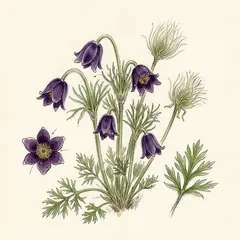 Όλα τα βιβλία για Pulsatilla Pratensis →
Αντιδοτείται απόAconitum NapellusActaea RacemosaAmbra GriseaAngustura VeraAnthracinumAntimonium TartaricumArgentum NitricumArum TriphyllumAsaf EtidaBelladonna
Όλα τα βιβλία για Pulsatilla Pratensis →
Αντιδοτείται απόAconitum NapellusActaea RacemosaAmbra GriseaAngustura VeraAnthracinumAntimonium TartaricumArgentum NitricumArum TriphyllumAsaf EtidaBelladonnaGeneral EN
(anemone pratensis.)
(Express the juice from the green, recent and whole plant, and mix it with equal parts of alcohol.)
This powerful plant produces a number of symptoms in the healthy human organism analogous to the diseases to
' From opium which was given for a sort of dysentery.
' From opium, administered for an excessive pain, which threaten- ed to bring on convulsions.
^ From a large dose of opium.
* This symptom was palliated by opium, which she had to take in doses increasing in size progressively.
which the human system is liable. It may be numbered among the polychrests.
It may be employed both in acute and chronic diseases, in- asmuch as its action lasts from ten to twelve days.
My remarks on the peculiarity of its symptoms will be found annexed to the respective symptoms.
The following symptoms have been obtained from mode- rately large doses, and may therefore be considered primary symptoms.
This medicine acts best when not only its physical symp- toms are homoeopathic to the disease, but when the action which Pulsatilla is capable of exercising upon the mind and temperament, is analogous to the patient's temperament, or the state of his mind.
The disposition which corresponds best to the nature of Pulsatilla, is a timid disposition, with disposition to weep, and to experience silent grief and chagrin, a mild and yielding dis- position, especially when the patient had been good-humored and bland in his good days, or disposed to levity and kindly- meant malice. Slow and phlegmatic temperaments correspond to Pulsatilla, but least of all men of quick decision and movements, although they may appear ever so good-natured.
Absence of thirst and occasional chilliness are additional indications.
In females it is especially suitable when the menses delay a few days ; also when the patient lies in his bed a long time in the evening before he drops to sleep ; and when the patient is worse in the evening. It is useful against the bad effects of eating pork.
Chamomilla antidotes the sleeplessness, debility and dimi- nution of sense produced by Pulsatilla ; Coffea the timid anx- iety. Ignatia and Nux are likewise antidotes. Coffea cruda is the best antidote to the fever, the weeping mood and the pains of Pulsatilla.
In robust chronic patients, it is seldom necessary to admin- ister a whole drop ; in acute maladies, and when the patients are very nervous and irritable, the smallest part of a drop of the sixteenth potency is sufficient.
Head EN
Vertigo. Vertigo as if intoxicated.^ Vertigo as if the blood were mounting to the head ; rapping sensation in
* Compare 2 and 4 with 87, 976.
PULSATILLA. 25
the head, with sensation of repeated and shorr, diggings-up.
Giddy wavering as if intoxicated, with internal heat in the head, and paleness of the face, which has a natural warmth, especially in the evening.— 5.
Fits of vertigo, intoxication, heat.
After a meal he feels as if intoxicated.
Vertigo, espe- cially when sitting.
Vertigo, early in the morning when rising ; he is obliged to lie down again.
Vertigo when walk- ing in the open air,' going off by silting down. — 10.
Turning sensation and stupid feeling in the head, only when sitting, and as if drowsy.
Vertigo ; he imagines he is not able to stand firmly (in the first hours).
Vertigo ; he imagines he is not able to lay hold of a thing (in the first hours).
Sort of vertigo, when turning the eyes upward, as if he should fall, or as if he were dancing. ^ Vertigo when stooping, as if he would fall, as if intoxicated ; afterwards disposition to vomit, (a. 6 h.) — 15.
Vertigo when stooping, scarcely permitting her to rise again.
When stooping his head felt heavy, as if he were unable to raise it again.
Vertigo when walking and stooping, as if the head were too heavy, with a somewhat turning sen- sation, which was likewise felt when lying down.
Sensation in the head, when stooping, as if he would fall forward.
When walking he staggers as if he were giddy, without how- ever being so, in the evening (after three days).^— 20.
Gloomy sensation in the head and vertigo, excited by motion.
Is una- ble to carry the head straight, is obliged to lie down, and is nevertheless unable to remain in the bed.* Headache when lying down for the siesta, which is felt in that side of the brain upon which one does not rest.
(a. 18 h.)^ Is unable to raise the head, or to carry it straight.
Heaviness of the head.^ — 25.
Heaviness in the head ; he is unable to bear the glare of a light.' The head feels gloomy, and the forehead feels as if beaten in two.
Headache as if the forehead and temples would burst, early in the morning when in bed.
Headache
' One of the alternate symptoms of Pulsatilla, occuring after its op- posite, and less frequently; in this case the symptoms are diminished in the open air, or disappear entirely, and reappear when sitting, or when in a state of rest, as is partially the case in 10.
^ Compare 56.
^ Compare 732.
* A sort of third-alternate symptom, a sort of mediate symptom be- tween those symptoms which appear in the sitting position, and those which appear during motion.
^ Compare 51.
« Compare 85, 649, 922.
^ Compare sensitiveness of the eyes to the light, with 86, 87, 88, 90 ; it is an alternate symptom of the obscuration of sight. See 80, 81.
26 PULSATILLA.
when moving the eyes, deep in the orbits, as if the forehead would fall out, and as if the fiontal bone were too thin, with a gloomy feeling in the head, in the evening, (a. 48 h.)^ — 30.
Hemicrania, as if the brain would burst, and as if the eyes would fall out of their sockets.
The head feels stupid, the eyes in the head ache.
The head feels stupid and heavy.
The head feels rather stupid^ and the head aches, as if the forehead felt bruised.
The head feels rather stupid, as if his memory were wanting, (a. 2 h.)— 35.
The head feels deso- late and hollow ; his head felt like a lantern.
The head felt dreary and painful, as if he had been intoxicated the day be- fore.^ Headache, as if he had been intoxicated and had sat up the night before, (a. 12 h.) The head feels gloomy ; he loses his ideas.
If he has seized an idea, he cannot turn his mind away from it. — 40.
Headache, making his head feel obscured, on entering a warm room.^ Creeping headache in the forehead, (a. 1 h.)^ Bubbling sensation in the head, at night; he heard pulsations in the head distinctly.
Head- ache, resembling pulsations in the brain, (a. 6 h.) Beating headache, about midnight. — 45.
Beating headache in the forehead, when stooping and when exerting the mind, disap- pearing when walking, in the evening.
Beating headache, diminished by external pressure, (a. } h.f Aching pain in the head when stooping-.
Aching pain in the whole forehead, only when walking.
Aching pain in the occiput ; with fre- quent heat and constant exhalation of the body. -50.
Tear- ing headache in the left side of the occiput, early in the morn- ing, (a. 60 h.) After lying down to sleep, he experiences a tearing headache in that side of the head upon which he does not rest.« Drawing headache in the occiput over the nape of the neck early in the morning, (a. 60 h.)^ Headache when waking, and a httle while after ; the brain feels oppressed and dull, or as if torn, as it does after taking brandy, (a. 6, 12 h.) Lachrymation of one eye, with drawing headache. — 55.
Pain on the hairy scalp when pushing the hair backwards, a kind of drawing pain.
Tensive and drawing headache in the forehead, over the orbits, increased by raising the eyes.*
' Compare 29, 30 with 185, 638, 710, 816. 2 Compare 847, 956. ^ Compare 509.
* Compare 85, 649.
^ This diminution of the pains on external pressure, takes place with other Pulsatilla-pains. See 761, 762. ® Compare 22. ^ Compare 54, 55.
* Compare 29!
PULSATILLA. 27
Headache : the brain feels tight, with a boring pain in the vertex.
Pinching headache over the eyes, which becomes worse when looking at a thing intently.
Boring headache from within outward, with dull stitches. — 60.
Single, sharp shocks or jerks in the right hemisphere of the brain, (a. 1 h.) Jerking tearing in both temples, as if they would be torn asun- der.
Headache : Stitches extending from the occiput through the ears.
Stitches in the occiput, worse when lying down, passing off when raising the head.
Stitches darting through the whole brain, after dinner, and continuing until bed-time, mingled with shuddering and fainting fits, (a, 16 h.)— 65.
Stitching in one side of the head.
Stitches in the temples, Stitches'through the forehead, from within, in the evening.
Cut- ting headache.
Headache in the evening, as if caused by dry coryza ; afterwards dry heat in the bed and excessive drowsi- ness, with delirious talking and almost waking dreams.' — 20.
Headache as if one had eaten too much, or as if one had spoiled one's stomach by overloading it with fat meat." Humming in the head.
Headache from time to time, as if a keenly pain- ful wind rushed through the brain, (a. 40 h.)^ Sensation in the brain, when walking, as of the snapping of an electric spark, synchronous with the pulse.
Eyes EN
Contraction of the pupils, followed by dilatation.
Puffiness of the eyes, and sensation in the eyes as if they squinted.
He sees objects double (after several hours).
Ob- scuration of sight, with inclination to Kvomit and paleness of sight.' Obscuiation of sight with vertigo, after rising from a chair and commencing to walk.
(a. 24 h.) — 80.
Obscuration of sight, as if a mist were before the eyes, when rising from a chair and commencing to walk.
(a. 24 h.) Obscuration of sight, early in the morning when rising from bed.
Short-last- ing obscuration of sight.
He sees better at a distance.^ Ob- scuration of sight recurring several days. — 85.
Vanishing of sight and hearing, with drawing headache and a sensation of heaviness and creeping in the brain ; this is followed by chilli- ness.® (Scintillations before the eyes.) She sees fiery circles before the eyes, which become more and more enlarged to- wards noon (ceasing towards evening).
He sees a star-shaped shine around the flame of a candle.
When shaking the head,
' Compare 907, 914, 989.
2 Compare 286—291.
3 Compare 132.
* Compare 78, 79, 80, 81, 82, 84, 85 with 977, (18.)
* Curative effect, after a large dose.
» Compare 640, also 24, 25, and 41, and lastly 52, 54.
28 PULSATILLA.
he experiences a sticking in the left eye, and a tear drops from it. — 90.
One or the other eye experiences sticking pains, almost without any inflammation of the white ; he cannot bear the sight of a candle-light and can open his eyelids only a little, (a. 8 h.) Headache which affected the right eye ; a pressure was experienced in that eye, and a tear came out of it.
The headache affected the eyes, they hurt him, in the evening.
An (inflamed) red spot in the white of the eye near the cornea, (a. 30 h.) The margin of the lower eyelid is inflamed and swollen ; in the morning a tear drops out of the eye. — 95.
A stye ou the eyelid, and inflammation of the sclerotica now in one, now in the other corner, with a drawing tensive pain in the corners when moving the facial muscles, and with ulceration of the nostrils.' Dryness of the eyelids.' (a. 12 h.) Dryness of the upper eyelids, especially when he is sleepy, (a. 1^ h.) Dryness of the right eye, and sensation as if the eye were ob- scured by a mucus adhering to it and which can be wiped off, in the evening, (a. 24 h.)^ Dryness of the eyes, and a sensa- tion in the eye, early in the morning, as if a foreign body were pressing in it (after many hours). — 100.
Achmg pain in the left eye.
Aching pain in the internal canthus.
Aching-burning pain in the eyes, especially morning and evening.
Aching pain in the eyes, as if they were hot.
Painful pressure in the eye, with a sensation as of rubbing, as of a little hair had got into the eye.-— 105.
Pressure in the eye, when reading, as if sand had got into the eye ; this pressure ceased when he ceased to read, and recommenced again when he recommenced his reading.
Itching in the inner canthi in the evening after sunset, (a. 28 h.) Itching in the inner canthus as if an ulcer were healing ; after rubbing the eye, he feels a fine stinging painful pressure in the eye.
Burning and itrJmig in the eyes, which obliges him to scratch and rub.
Itching stinging in the eyes, obliging him to scratch, (a. 24 h.)— 110.
Itching in the eyes.
Itching of the eyeball in the outer canthus, in the even- ing ; early in the morning the eyelids are agglutinated, (a. 8 h.) Agglutination of the inner canthus early in the morning.^ Agglutination of the eyelids in the morning.
Itching (gnaw, ing) and burning in the eyelids, in the evening.— 1 15.
Biting pain in the inner canthus as if it were sore.
(a. 8 h.) Lachry-
' Compare 157, 158, 520, 521.
2 Also in the morning after waking, and after the siesta, Pulsatilla occasions a dimsightedness as if something were hanging over the cor- nea which can be wiped away, but which does not disappear except of Itself ; this symptom is more marked on one than on the other eve
^ Compare 119 and 155. ^
mation in the open cold air.' Tiie eyes became dim in the open air, and they run.
The eyes become filled with water in the wind.
(a. 10 h.) Bleareyedness.— 120.
Twitching of the eyelids.
(Pimple on the head.) Biting, itching of the hairy scalp.'' (a. 9 h.) Small little tumors on the hairy scalp, paini'al like ulcers.
Face EN
Twitching in the muscles of the cheeks. — 125.
Shuddering on one side of the face.^ Pale face.
Tightness in the face and fingers {especially when taking hold of any thing), as if the parts would swell.
The skin of the lips and face is sensitive to the touch, as if sore.
Ears EN
Rush of blood to the organs of hearing, (a. 8 h.) — 130.
Murmuring in the ear synchronous with the pulse.* Frequent grumbling in the ear.
Noise in the ear as if caused by the wind or by the rushing of water, after four o'clock in the afternoon, (a. 10 h.) Tremulous sounding in the ears, as when one strikes against an iron bar.
(a. 3 h.) Ringing in the ears (from the 4th to the 8th hour). — 135.
Chirping in the ears as of crickets, early in the morning when in bed.
(a. 50 h.) Hard- ness of hearing as if the ears were stopped up.
(a. 3 h.)^ Hard- ness of hearing as if the ears were stopped up, with trembling and sweat on the back, returning every other hour.
(a. 3 h.) Itching deep in the ear.
(a. 24 h.) Itching in the right ear, afternoon and evening, (a. 30 h.) — 140.
Itching, pricking in the int.'rnal ear.
(a. 6 h.) Single, tearing jerks through the ears.
(a. 12 h.) Jerking in the ears.
Jerking in the external ear, afterwards heat of this ear.
Violent pain in the ear, as if something would press out. — 145.
Heat, redness and swelling of the outer ear.
(a. a few hours.) Heat and sweat of the exter- nal ear.
When blowing the nose the air rushes into the ear, occasioning a sensation in the ear as if it were distended by that air ; accompanied with stitches which dart towards the eye.
Pus flows from the left ear.
(a. 12 h.) A small painful gland becomes elevated between the antehelix and the articu- lation of the lower jaw. — 150.
A large, red blotch in the region of the zygoma.
A red, hard elevation on the right cheek in front of the ear, causing a burning and contractive pain.
(a. 5
' Compare 116, 117, 118. This watering of the eyes is an alternate symptom of 96 — 99.
* Compare 122, 123 with (15.)
^ The appearance of the symptoms on one side of the body only is peculiar to Pulsatilla.
Compare 822, 837, 972, 973, 976, 994, 995, 996.
Rhus tox., Belladonna, Cocculus, have somewhat of the same pecu- liarity.
* Compare 130, ]31, 132 with 71. 5 Compare 136, 137 with (28.)
30 PULSATILLA.
d.) Scurfy eruption on the antehelix with a burning smarting pain, emitting water, accompanied with a glandular swelhng lower down in the neck, painful to the touch.
Cracking in the ear when moving the head or the body.
(a. 4, 16 h.) Sticking pain in the parotid gland.
Nose EN
Abscess in the region of the root of the nose, near the cantlius of the eye, as if fistula lachrymalis would form.* (Pain in the root of the nose, when stooping, as if an ulcer would form.) Sensation in the left nostril, as if an ulcer would form.
(a. 8 h.) Ulceration of the external iving of the nose, emitting a watery humor, (a. 6 h.) Darting pain in the nose. — 160.
Smell in the nose, early in the morning, as of old coryza.*^ Il- lusion of smell ; he imagined he was smelling coffee and to- bacco ; even in the open air.
Bleeding from the 7iose.
Hce- 'morrhage from the nose tvith dry coryza. — 165.
Blows blood out of the nose early in the morning, (a. 48 h.)
External Mouth and Teeth : The epidermis peels off near the outer border of the lips, until the raw flesh becomes visible, (a. 10 h.) The epideimis of the lips becomes cracked, (a. 2 h.) Twitching in the lower lip, for two days. The low- er lip is swollen and cracks in the middle, with a tensive pain. — 170. Itching in the region of the skin, especially in the eve- ning. (Drawing tearing pains in the lower jaw.^) Contract- ive (astringent) pain in the jaws, as if occasioned by an acid, accompanied with shuddering and cold sweat in the face.
(Sticking beating toothache, at four or five o'clock in the after- noon, aggravated by cold water.) The toothache comes on again every time he eats. — 175. The toothache commenced at two o'clock in the night, and did not allow him to lay his head on a cold place of the bed : a sort of sticking -digging first in the teeth of the lower, then of the upper jaw, from one root into the other, coming on again at noon. Stinging toothache relieved by eating. Stinging gnawing toothache in the gums, especially towards evening, aggravated by the warmth of the bed, reliev- ed by exposing the tooth to the cold, open air, and removed by sleep in the evening, (a. 6 h.) Sticking pain in the posterior molar tooth, aggravated by opening the mouth, from two to six in the afternoon.
Toothache comes on as soon as he takes
' Compare 112, 115. ^ Compare (31) (74.)
^ The so-called tearing pains of Pulsatilla, are generally a short- lasting, drawing tension, which^ always terminates in a darting analo- gous to tearing, somewhat as if a nerve were put upon the stretch, and then let loose again suddenly, causing a painful jerk. Hence the terms "single, tearing jerks, 141;" " drawing-jerking, 180," etc. * See note to 187.
any thing warm in the mouth.— 180.
Drawing-jerking tooth- ache, aggravated by drinking any thing cold.
Jerking in the molares, with a slight swelling of the gums.
(Jerking tooth- ache, especially early in the morning, relieved by cold water, after having been warmed in the mouth, not increased by chewing, but excited by picking the teeth.) Jerking toothache, from six in the afternoon until eleven at night, preceded by heat in the head with thirst ; the toothache is followed by sweat, Tearing toothache.
>— 185.
Pain in the teeth, as if they were pushed forward. =* The tooth is painful when chewing or biting.^ The toothache increases in the wind.* The teeth vacillate early in the morning.
The gums are -painfid, as if they were sore. — 190.
The internal side of the gums is painful, as if corroded, (a. 8 h.) Sensation of swelling, on the posterior side of the gums, which, however, did not exist ; he experienced a burning sensation in that region whenever he inserted any thing warm or cold into his mouth.
Internal Mouth, Pharynx and (Esophagus : The tongue feels broader than usual.
The tongue is lined with a tenacious mucus as ivith a kind of fur?
White tongue, with bad taste in the mouth, early in the morning.^ — 195.
Painful vesicle on one side of the tip of the tongue, (a. 6 d.) Sensation in the middle of the tongue, as if it were burnt and insensible, even when the tongue is moist, in the night and early in the morning, (a. 6 h.)^ Sore throat : stitches in the back part of the throat, between the acts of deglutition ; none during deglu- tition.
Stinging sore throat.
Sore throat ; cutting pain in the throat, (a. 8 h.) — 200.
Sore throat : pain in the side of the palate, when touching it, or when talking, as if there were a painful pimple, with dilatation of the pupils, early in the morning.
Painless sensation, as if the epiglottis were covered with tena- cious mucus, or were swollen.
Sore throat : sensation, when swallowing, as if the back part of the throat were narrower than usual, or closed by swelling. — 205.
Sore throat : sensation as if the pharynx were swollen, now lower down, now higher up.
(a. 6 h.) Sore throat : pain when swallowing, as if the sub- maxillary glands were protruding into the throat, and as if the
1 Compare 17L ^^ Compare 638. ^ Alternate effect of 182.
* The increase, or the appearance of the symptoms, in the cool, open air, is a rarer alternate effect than the appearance of the symptoms in warmth, especially the warm air in the room, for instance 509.
s Compare 219.
6 Compare 217, 220, 221, 228—232.
7 Compare 218.
32 PULSATILLA.
protruding part were sore and raw.
(a. 8 h.) Sore throat : when swallowing the palate feels sore, as if raw.
The hack iiart of the throat is jiainfiil as if it were raw, accompanied with a drawing pain in the cervical muscles.
Sore throat : rawness and sore feeling in the throat, between the acts of deglutition, and as if the throat were too dry, early in the morning, (a. 2 h.)' — 210.
Sore throat: scraping and raw sensation in the throat, as after violent vomiting ; he does not feel any thing when swallowing ; early in the morning the throat was dry.
Scraping and dry sensation in the throat.
Raw, scraping sen- sation in the throat, with dryness in the mouth.
Sore throat : when swallowing he feels as if the throat were swollen, and as if the trachea were rough.
Dry throat, after midnight. — 215.
Dryness in the throat, early in the morning, (a. 6, 20 h.) In- tolerable feeling of dryness in the throat, extending as far as the tip of the tongue (without any dryness being visible), with thirst; he is, however, unable to drink much, on account of a desire to vomit, which is excited by the drink.
Early in the morning the mouth and throat feel dry, and are lined with an insipid flat-tasting mucus, with a fetid smell from the mouth, which he does not perceive himself (a. 12 h.) Dryness of the tongue early in the morning.
Early in the morning, when waking from sleep, his palate, lips and tongue feel dry, the dryness afterwards changing to a very tenacious mucus. '^
Taste and Appetite : Slimy taste in the mouth, and inclination to vomit, early in the morning.
(Slimy, saltish- bitter taste in the mouth, early in the morning, not without ap- petite.) The throat is lined with a tenacious mucus, early in the morning.^ The inner mouth is lined with a fetid mucus, early in the morning, when waking from sleep.
Fetid smell from the mouth early in the morning.^ — 225.
Putrid smell from the mouth, early in the morning.
Putrid smell from the mouth in the night.
Bad smell from the mouth in the evening, after lying down.
(a. 96 h.) Taste as of putrid herbs in the back part of the throat.
Taste as of putrid meat in the mouth, with inclination to vomit, (a. 2 h.) — 230.
Eructations after dinner, tasting of putrid meat ; this taste remains afterwards in the mouth, with inclination to vomit, (a. 14 h.)^ Taste as of putrid meat in the mouth, especially early in the morning, when hawking up.
Taste as of pus in the mouth, occasionally, espe- cially in the morning.
Nauseating taste in the month, as one experiences before breakfast when rising early, (a. 12 h.) Em-
' Alternate effect of 206, 207. = Compare 190. 3 Compare 193, 217. * Compare 217. ^ Compare 286, etc.
pyreumatic {pungent) taste in the mouth— 2"^^.
Earthy taste in the mouth, with inchnation to vomit (also after one hour).
Flat taste in the mouth, as if one had eaten earthy- things, (a. 10 h.) The saliva in the month constantly tastes sweetish.
Beer has a nauseating sweetish taste, (a. 2 h.) Bit- ter beer has a nauseating sweetish taste.— 2i0.
Nauseating taste from smoking tobacco.
The tobacco has no taste when smoking, but does not cause any loathing, towards evening, (a. 20, 50 h.) Bitter taste in the mouth, in the evening (at six o'clock).' Bitter taste in the mouth early in the morning (a. 24 h-)) gf>i"g off after a meal.
He has a constantly bitter, bilious taste in the mouth, especially after a meal— 245.
Rumbling and rnovements in the abdomen, accompanied with pinching pain in the abdomen ; this was followed by the ascension of hiimid qualms in the throat.
Bitter taste, with desire for lemon juice.
Every kind of nourishment tastes bitter to him : after- wards he feels chilly, and a cold sweat breaks out.
Bitter taste in the mouth, in the evening, after drinking beer.
(a. 8 h.) Aversion to milk, early in the morning, althongh it tasted well to him. — 250.
Milk has no taste in the morning.
The food she takes has an excessive salt taste to her (except brown bread) ; several hours after eating, a scraping, salt taste contin- ues to ascend in her throat, (a 4, 28 h.) Bitter taste in the mouth after taking coffee.
Wine has a bitter taste, (a. 8 h.) Aversion to butter ; it has a bitter taste to him.^ — 255.
Bread and meat have a bitter taste.
Brown bread tastes bitter, not the other food.
Bread has a bitter taste while chewing it ; the bit- ter taste disappears as soon as the bread is swallowed.
Bitter taste in the mouth, a quarter of an hour after eating, the appe- tite being good. — 260.
The taste in the mouth is somewhat bitter, especially early in the morning, and some time after a meal ; the food, however, had a good taste.
Bitter taste after vomiting.^ Gulping up of a bitter fluid.
Bitter eructations at night.
Bdions eructations in the evening, (a. 2 h.) — 265.
Beer has a bitter taste in the morning; it leaves a sour taste afterwards, (a. 12 h.)' Bread has a sourish taste ; she finds it
' Rarely (and at most only in the evening and morning) does Pul- satilla occasion a continuously bitter taste in the mouth; the bitter taste which Pulsatilla occasions most frequently, is either occasioned while drinking, or while eating and chewing, especially brown bread, or it makes its appearance after the beverage or food has been swallowed ; this kind of bitter taste is an alternate symptom.
2 Compare 254, 256, 271, with (4L)
^ Compare 316.
* The bitter and sour eructations are alternate symptoms, although both of them are primary effects.
VOL.
IV. 4
34 PULSATILLA.
too dry.
Sourish taste in the month after a meal.
(a. 3 h.) Gulping np of a sour fluid, after drinking coffee.
Sour eructa- tions early in the morning. — 270.
Loss of appetite, the taste being otherwise pure and natural.
Aversion to meat and stale bread.
Diminished taftte of every kind of food, (a, 4, 8, 16 h.) Meat has no taste.
Fresh meat has a putrid taste. — 275.
He has some appetite, but bread, butter, and beer, have little or no taste (stewed prunes are the only things which have a good taste to him), (a. 12 h.) (He does not care about any warm food.
He only cares about butter, bread, and fruit.) Want of appetite, on account of the food being tasteless, and the stomach being replete.
Absence of thirst.
Increased appetite in the evening, (a. 5 h.)
Gastric Symptoms : — 280.
While taking her dinner she is oppressed by sleep, and she is obliged to sleep.
Early in the morning when rising, a sort of gnawing sensation in the stom- ach as one experiences after having sulfered hunger, going off after eating, (a. 12 h.) Gnawing sensation in the stomach, like canine hunger, (a. 8 h.) Canine hunger (immediately, but passing off soon).
Desires food, but does not know which ; does not relish any thing of what he eats.' — 2S5.
Is hungry, but has no desire for any particular kind of food.
Sensation as if the stomach were spoiled.' Symptoms of deranged stom- ach.
Tension in the feet from having eaten a little too much at breakfast, (a. 48 h.) Frequent eructations tasting of the ingesta.^ — 290.
After eating cake he has eructations tasting like old rancid tallow.
Sensation in the stomach as if one had eaten too much ; the food rises back again into the stomach, as if vomiting would set in.
Imperfect eructations.
Eructations tasting of the ingesta, after eating, followed by inclination to vomit, (a. 4 h.) Nausea with inclination to vomit, ascending into the mouth. — 295.
Nausea with inclination to vomit rising into the throat.
Nausea with inclination to vomit, early in the morning, with accumulation of mucus in the mouth, which is soon succeeded by sour taste in the mouth, (a. 13 h.) Sensa- tion in the pharynx as if a worm were creeping up.
Nausea and qualmishness early in the morning after eating milk.
Nausea with inclination to vomit, which ascends in oesophagus and pharynx with a very disagreeable sensation. — 300.
Bread and meat occasion an inchnation to vomit.
Intolerable nausea with inclination to vomit, without any vomiting, (a. 1 h.) In-
' Compare (42.) 2 Compare 70, 229, 230, 231.
^ Eructations tasting and smelling of the ingesta [see also (44)], are a much more frequent alternate symptom than mere risings of air.
clinatioti to vomit with chilliness.
Nausea with indination to vomit, only in the throat, but not when swallowing.
Nau- sea with inclination to vomit, when on the point of taking food. —305.
She feels nauseated while eating, occasioning an aver- sion to food.
Smoking tobacco causes an inclination to vomit in persons who are used to tobacco.
Aversion to smoking as if one had smoked enough, (a. 5 h.) Excessive aversion to smoking.
Nausea with inclination to vomit when slumbering or sleeping, although he has an appetite even for brown bread, (a. 20 h.)' — 310.
Nausea as if brought on by heat of the body.
Nau- sea and loathing as if one had taken oil.
Nausea towards evening, after a walk in the open air, with salt or sour vomhing.
(a. 36 h.) Sensation of nausea and inclination to vomit in the epigastric region, especially after a meal.
(a. 1 h.) Incli- nation to vomit, with grunting and rumbling in the epigas- tric region. — 315.
Vomiting of the food which had been taken a long time ago.
Vomiting of food in the evening ; afterwards bitter taste in the mouth and dullnses of teeth.
Nightly vomit- ing, with stitching-drawing pains in the back in the direction of the scapulae.^ (Vomiting of a small quantity of food before midnight, almost without any nausea.) Short vomiting of bile, — 320.
Burning in the oesophagus after vomiting.
Loss of appetite after vomiting.^ Gulping up of a watery fluid (with- out nausea or vomiting) which she has to spit up.
(a. 3 h.) Immediately before this she experienced a sensation in the pit of the stomach as if something had been torn loose ; a pressure is experienced in the same region during the eructation.
Ptyalism.
Ptyalism for twenty-four hours, with inclination to vomit. — 325.
Frequent discharge of watery saliva from the mouth.
< Flow of watery saliva, like waterbrash.
Jerks from the stomach towards the throat, and tensive pain in the throat, with anxiety and a feeling of internal heat, disappearing after a meal.
(a. 6 h.) Hiccough when smoking.
(Hiccough, in the night while sleeping). — 330.
Inclination to hiccough after drinking.
Ach- ing-drawing pain in the pit of the stomach, early in the morning, passing into the side of the chest as a sticking pain, and lastly into the back as a tearing, (a. 24 h.) Tension in the region and pit of the stomach as high as the breasts.
Pul- sation in the pit of the stomach.^ Beating in the stomach, which is felt when laying the hand upon that organ.
' Compare 512.
* Compare 309, 508. — Similar irritations in the night are 408. 415 and other nightly symptoms 545, 546, 547, 563, 610, 673, 687, 702, (46.)
^ Alternate symptom of 309.
* 325, 326, and 322, are analogous symptoms. Comp. 508. » Comp. 43—46, 842.
36 PULSATILLA.
Stomach EN
335.
Pain in the pit of the stomach during an inspiration.
Aching, afterwards darting pain in the pit of the stomach.
Violent pressure in the pit of the stomach, early in the morning, mingled with inclination to vomit.
Aching- clawing or strangulating pain in the pit of the stomach, arrest- ing the breathing, in the afternoon.
Attacks of contractive or choking pain in the oesophagus, as if one had swallowed a large piece of fresh bread, (a. 10 h.) — 340.
Disagreeable feeling of oppressive tension in the abdomen, as if the abdomen were full, hard, as if neither stool nor flatulence would pass ; the stool, however, being passed slowly without being hard, and the flatu- lence coming off with difliculty and in short flatus.
Darting and pricking in the infra-costal region, as if there were an ulcer extending to the small of the back.
Contractive and clawing sensation in the epigastric and the hypochondriac region, as if the flatulence became incarcerated in that region (especially after a meal) ; the sensation afterwards passes into the chest and arrests the breathing, (a. 16 h.) Drawing-tensive pain in the hypochondria.
Tension in the region of the stomach, in the forenoon, going off by motion, (a. 26 h.) — 345.
Stitches in the pit of the stomach' when missing a step on the uneven pavement, etc.
Feeling of anxiety in the region of the stomach.
Pain in the stomach an hour after eating.
Sensa- tion of weight in the stomach as if a stone were lying there, early in the morning when waking.*^ Pressure in the stomach and flatulent colic, immediately after supper^ followed by nau- sea and inclination to vomit, (a. 24 h.)
Abdomen EN
350.
Pinching-sticking pains in the epigas- tric region, with flatulent colic, in the morning, (a. 24 h.) Pinching pains in the epigastrium.
Colic, only Avhen walking.
Dull pain and feeling of a tensive distention in the epigastrium, when sitting.
Sensation in the abdominal integuments as if swollen, with a tensive pain, without emitting any flatulence. — 355.
Hard distention of the abdomen, with a painful sen- sation of rigidity in the abdomen, and sensation as if the abdomen would burst (accompanied with swelling of the dorsa of the feet).
Flatulent colic early in the morning as soon as he wakes ; grunting and painful shifting of flatulence in the epigastric region.
Continuous, dull stitch in the side of the abdomen, as if occasioned by an incarcerated flatus.
Flatu- lent colic directly after supper ; painful rumbling of flatu- lence^ especially in the epigastric region, (a. 4, 24, 48 h.)
' Comp. 350, 65L 2 Comp. 336, 337. 2 Compare 349, 368,
PULSATILLA. 37
Cutting colic over the umbilicus, as if colic would come on. — 360.
Hard circular prominence around the umbilicus, painful when walking, (a. 24 h.) Titillating itching in and above the umbilicus, painful after scratching.
Colicky shifting of flatu- lence in the abdomen, in the evening after lying down.
Shift- ing of flatulence from one part of the intestines to the other, with loud rumbling, and with a more or less pinching sensation, especially in the evening when in bed.
Rumbling in the abdo- men, as of flatulence. — 365.
Loud rumbling in the abdomen, with frequent purging, and griping and pinching in the abdo- men.
Repletion after a meal, and colic with rumbling from time to time.
Sensation in the abdomen, after supper, as if it were full of flatulence, (a. 2 h.) Sensation in the abdomen as if it were empty (riddled). — 370.
Sensation as if fasting, and pinching and shifting of flatulence in the abdomen as if fer- mentation were going on.
Colic after drinking, (a, 3 h.) Colic after drinking, in the evening, (a. 6 h.) Bloatedness after every kind of food.
Cutting colic as if occasioned by flatulence, before supper, (a. 36 h.)' — 375.
Cutting colic in daytime, and especially in the evening, every other day.
(a. 4, 5, 6 d.) Colic, cutting deep in the abdomen, relieved by stooping forward, causing a sensation as if he would vomit, towards five o'clock in the afternoon, three days in succession at the same hour ; going off" at nine o'clock in the evening while lying in the bed bent double ; he fell asleep, (a. 24 h.) Cutting in the abdomen after having taken some exercise.
The wind is passed with cutting colic, in the morning, (a. 8 hours, and a. 20.) Fetid flatulence after a meal. — 380.
Colic in the hypogastrium which is more pinching than cutting, accompanied with loose siool.
Pinching colic, uniformly aflfecting the whole abdomen, (a. i h.) Griping colic deep in the hypogastrium, on the left side ; she had to tie her abdomen up.'^ (Pmching colic early in the morning, amid chilliness and heat.) Pinching colic (a. 4 h.), and severe stitches darting from the abdomen into the penis ; frequent and thin stool, with violent desire for beer. — 385.
Colic as if diarrhoea would set in ; however nothing is passed except a good natural evacuation, (a. 48, 72 h.) Achhig, pressing pain in the abdomen, (a. 1, 42 h.)^ Colic in the night : pressure in the abdomen here and there after midnight, as if flatulence had been incarcerated, with a feeling of heat over the whole body, without any thirst ; the emission of flatu- lence afforded no relief.
Colic after stool.
Drawing in the back during stool ; between the stools the drawing was scarcely
' 374—378 to compare with 359, 417, 648, and partly with 649.
2 Compare 365. (47.)
3 Compare 337, 338, 348.
38 PULSATILLA.
ever experienced.— 390.
Colicky pain in the abdomen after stool, as if occasioned by flatulence, (a. 5 h.) Pressure in the rectum after stool.
Pain in the abdominal walls as if bruised when gaping, (a. 2 h.) Chilliness in the abdomen (extending as far as the lower part of the back).
Pain in the abdominal muscles when sitting and coughing, (a. 3 d.) — 395.
Painful sensitiveness of the abdomen, when touching it (after several h.).
Painful sensitiveness of the abdominal walls after a loose stool, accompanied with violent thirst ; the abdomen could not be touched without siitfering pain.
Stool EN
Obstinate constipation.
Daily stool, but hard (with pain in the haemorrhoidal tumors).
Painful evacuation with painful pressing and pain in the back.' — 400.
Difficult stool early in the morning, and again two loose stools in the day.
Frequent desire for stool, with livid complexion and faint feel- ing.
Frequent urging for stool as if diarrhoea would set in occasionally.
No tenesmus either in the rectum or anus, but a constant desire in the more remote intestines, without any stool being passed.
Frequent loose stool mixed with mucus (also after 2 h.). — 405.
Frequent passages of mere mucus (also after 48 h.), every evaluation being preceded by colic.
Evacuations consisting of nothing hut loose mucus mixed with blood, (a. 12 h.) Discharges of faeces mixed with blood, early in the morning, (a. 72 h.) Diarrhoea, once or twice in the night, green as bile ; every discharge being preceded by rumbling, (a. 4 d.)^ Passes green mucus, (a. 2 d.) — 410.
Diarrhoea, first green, then slimy.
Slight chilliness after stool, especially in the lower part of the back (and a pressure in the pit of the stomach).
White stool (for four days, after three days, also after 8, 24 hours).
Stool like hacked eggs, preceded and succeeded by cuttiiig, especially in the morning. — 414.
Watery diarrhoea in the night.
(The faeces are thin and as if pressed flat.) Diarrhoea with cutting in the abdomen.^ Loose, acrid stool in the morning.^ Acrid stools. — 429.
Blind haemorrhoids with itching in the evening, (a. 10 h.) Blind haemorrhoids with itching of the anus.
(Flowing haemorrhoids) discharge of blood from the anus.^ (a. 8 d.) Continuous, dull stitch in the rectum, as if occasioned by an incarcerated flatulence, (a. 1 h.)
* This and the six following symptoms (compare 504), are the most usual and principal kinds of evacuation occasioned by Pulsatilla.
^ Compare 415. These kinds of nightly diarrhoea are characteristic of Pulsatilla, and there is scarcely a drug which occasions them as often. ^ Compare 359.
* Compare 451.
^ Secondary effect. Compare (56,) (57.) (58.)
PULSATILLA. 39
Haemorrhoidal tumors with single itching stitches in the anus. — 425.
Burning in the rectum during stool.
Blind haemorrhoids until nine o'clock in the evening, with sore pain in the anus, both in rest and motion, increased somewhat during motion, (a. 24 h.) Sore pain in the anus, immediately after an evacua- tion, (a. 4, 5 d.) Blind haemorrhoids with sore pain.
(a. 1 h.) Smarting in the anus and the haemorrhoidal tumors, (a. 3 h.) — 430.
Painful, protruding blind haemorrhoids.
(Tearing with pressure, when standing, extending as far as the anus.) Blind haemorrhoidal tumors preceded by pain in the small of the back, early in the morning.
Soreness and excoriating pain in the fold between the buttocks, externally, (a. 1 h.)
Urinary Organs EN
Pain in the vesical region when touch- ing it.— 435.
Constrictive pain in the abdomen extending as far as the bladder, with pressure as of a stone.
Frequent de- sire to urinate.
Enuresis nocturna.
Involuntary micturition ; the urine comes off involuntarily irJien sitting and ivalking.
Continuous, dull stitch in the neck of the bladder, as if occa- sioned by incarcerated flatulence, (a. 1 h.) — 440.
Sharp (almost cutting) pressure on the neck of the bladder when walking in the open air, as if caused by flatulence, but without any desire to urinate.
Continual pressvu'e in the region of the bladder, without any desire to urinate, in the evening and night.
Pressure upon the bladder as if occasioned by flatulence, to- wards morning.
Tenesmus of the bladder.
Frequent, almost ineffectual urging for micturition, with cutting pain during micturition (cutting water). — 445.
Pressing, before micturition.
Pressing upon the bladder.
Pressure upon the bladder only when lying upon the back ; this obliges him to pass mine.
Copious micturition.' Passes some urine involuntarily when coughing, or when emitting flatulence, (a. 48 h.) — 450.
Color- less urine, (a 1| h.) Passes acrid mucus from the rectum while emitting a watery urine, and accompanied with a feeling of weakness in the loins.'^ The urine is red from time to time.
Brown-red urine.
Dark-red- urine without sediment. — 455.
Brown urine.
Urine with a ring of violet-coloied mucus on top, and a sandy sediment.
(Jelly-like sediment.) Urine with violet-red sediment.
Urine with red sediment. — 460.
Urine witli brick-colored sediment.
Severe stitches darting from the abdomen into the penis.
Burning in the anterior part of the urethra after emitting brown urine.
Burning in the region of
' Secondary or curative effect, succeeding a tenesmus of the bladder, 436, 443, 444, 445, 446. The symptoms 437, 438, seem to be primary alternate symptoms of the above mentioned tenesmus.
2 Compare 418.
40 PULSATILLA.
the neck of the bladder in the evening, before retiring, as if he would urinate.
Burning in the orifice of the urethra, during and after micturition, the urine depositing a brick-dust sedi- ment.— 465.
Contraction of the urethra, the stream becoming very thin.
(a. 1 h.) Drawing pain in the urethra between the acts of micturition.
Creeping pain with pressure in the orifice of the urethra, after micturition.
Pressure and creeping in the glans after micturition.
Genital Organs : — (Swelling of an inguinal gland con- sequent to the disappearance of a venereal chancre.) — 470.
Stinging itching in the prepuce when sitting and lying down, but not when walking (in the evening).
Stinging-itching sen- sation under the prepuce, (a. ^ h.) Itching-smarting pain in the outer and inner prepuce, (a. 6 h.) Biting-itching un- der the prepuce near the glans.
(Fine stinging near the geni- tal organs.) — 475.
Itching of the scrotum, early in the morn- ing, in and out of bed.
Swelling of the right side of the scrotiUTi.
Swelling of the scrotum, (a. 48 h.) The scrotum hangs down very low.
(a. 1 h.)— 480.
Tearing pain in the testes, (a. 24.) The right testicle is drawn up and swollen, the spermatic cord is swollen, with tensive pain, whilst the left testicle is hanging down low.
(a. 1^ h.) Drawing and drawing-tensive pains from the abdomen through the sper- matic cord into the testicles, which hang down low.
(a. 6 h.) Long-lastiyig erection in the morning after waking, not without sexual desire, (a. 6 h.) In the morning after wak- ing, the sexual desire is excited, (a. 24 h.) — 485.
Emission in the night.
Two emissions in one night, without dreams, and next day an intolerable heaviness and laziness in the limbs, (a. 12 h.)' Itching irritation in the region of the vesi- culae seminales, early in the morning in bed, exciting a desire for an emission, almost without erection, and without any amorous thoughts, (a. 12, 36 h.) Erections day and night.
(Frequent erections, with discharge of the prostatic juice.) (a. 36 h.)'^ — 490.
Discharge from the urethra of the color and con- sistence of semen, with burning pain, especially immediately after micturition.^ Discharge from the urethra, with drops of blood, (a. 4 h.) Cutting pain in the os tincae.
(a. 6 h.) Dra wing-pressing pain towards the uterus, with inclination to vomit every morning.
Drawing-tensive pain in the abdomen, resembling labor-pains, (a. 4, 5 h.)— 495.
Contractive pains on the left side of the uterus, resembling labor-pains, obliging
' Alternate symptom of 915. ^ Compare (68.) 3 Compare 462 (65.)
PULSATILLA. 41
her to bend forward.
LeiicorrhcEa with burning pain.^ Acrid, thin lencorrhoBa.
Milky, painless leucorrhoea.
Milky leucorrhcEa, with swelling of the pudendum. — 500.
Painless leucorrhoBa, slimy, thick, of a milky color, especially percep- tible when lying down.
Painless, cream-like leucorrhcea.
The menses are preceded by chilliness, stretching and yawn- ing.
Sensation of heaviness in the abdomen, as of a stone, when the menses are about to appear, (a. 1 h.) Pain in the abdomen and small of the back, during the menses, as if a stone were pressing down, the lower limbs being disposed to go to sleep when sitting down, with an empty, unsuccessful urg- ing for stool. ^ — 505.
(Spasmodic and almost burning pains in the abdomen, during the menses.) The menstrual blood is thick and black, and appears only a few times in the day,^ (The menses only flow in the daytime, when she is walking; in the night they do not flow at all, or but little.) During the menses she had an attack of sickness in the night ; water came from the stomach, like waterbrash.'' Obscuration of sight during the menses ; she feels worse when entering the warm room.* — 510.
The menses delay, with coldness of the body, chilliness and trembling of the feet.^ Suppression of the menses.^ Suppression of the menses with nausea and inclina- tion to vomit without any vomiting, with good appetite.* Car- dialgia during the menses.
Pain in the side for a few days during the menses.' — 515.
Stitches in the chest during the menses, when taking an inspiration.
Stitch in the side previ- ous to and during the menses, the stitch being excited by mov- ing the arm, by taking an inspiration and by loud talking ; the arm feels paralyzed while the stitch is felt.
The menses ap- pear too early by seven days.'" Appearance of the menses which had been delayed, (a. 1^ h.)
Cold and Coryza : — Dry coryza. — 520. Obstruction of the nose, ulcerated nostrils.'^ Dry coryza, with ulcerated nos-
* 496, 497 are alternate effects of 500 and 501. 2 Compare 399.
^ The difficult, retarded, or even suppressed flow of the menses seems to be the primary effect of Pulsatilla ; the too early appearance of the menses seems to be a rare alternate effect (517).
^ Compare 309, 317, 318, and 322, 325, 326.
* Compare 40.
6 Compare 747, 851, 852.
'' In several females advanced in age, especially in those whose menses usually made their appearance at the time of the full moon.
* Compare 309.
' Disappearing upon the breaking out of sweat. '" See note to 506. " Compare 95.
42 PULSATILLA.
trils.' Green, fetid discharge from the nose.
Obstruction of the nose as in catarrh, in the evening when retiring; in the morning a thick, yellow, opaque mucus is blown out of the nose, as in old coryza.
Continual tickling in the nose. — 525.
Sneezing, (a. 4, 12 h.) Sneezing in the evening when asleep.
Sneezing early in the morning when in bed.
Coryza for two hours in succession (immediately and after two hours).
Coryza with loss of smell and taste.
Larynx and Trachea: — 530.
Scraping sensation in the region of the epiglottis, as is generally the case in hoarseness, (a. 1 h.) Early in the morning after rising, his chest is af- fected with cough and expectoration, (a. 24 h.) Hoarseness, without being able to speak a loud word.
Cough (after four hours).
Scraping and dryness in the throat, causing two or three turns of cough. — 535.
Cough is excited by a scraping sensation in the chest (trachea).
The cough is excited by a feeling of dryness in the trachea.
Tickling in the trachea, ex- tending from the pit of the stomach to the epiglottis, exciting cough.
When the child coughs, it seems to shake all over.
Sen- sation, when coughing, as if the stomach turned inside out, and as if he should vomit; the cough makes tears come out of his eyes. — 540.
Coughs immediately after having taken a mouth- ful of food.
(Cough excited by a contractive sensation in the larynx, especially after eating, with vomiting and bleeding at the nose.) Sensation in the throat, while coughing, as if it were irritated by the vapor of sulphur.
Tickling in the re- gion of the thyroid cartilage, occasioning a short cough.
An inspiration occasions a desire to cough, (a. 2 h.) — 545.
Night-cough hindering sleep and causing exhaustion.
Night- cough occasioning dryness of the throat.
Dry night-cough, going off when siiti?ig up in the bed, returning when lying down again, (a. 8, 32 h.)*^ Continuous cough in the evening after lying down.
Cough, with pain in the chest. — 550.
The child vomits after coughing.
Violent cough, with difficult ex- pectoration of a small quantity of tenacious mucus.
Hard cough toward evening.
Hcemoptysis.
Cough with expecto- ration of black lumps of coagulated blood, until evening, (a. 1 h.) — 555.
Dry cough for half a day, followed by a continuous secretion of mucus in the anterior portion of the trachea for several days, which can be thrown off by voluntary cough.
Cough with expectoration, (a. 2 h.) Cough with expectora- tion of yellow mucus.
(The expectoration during the morning- cough has a disgusting salt taste.) Cough with a bitter ex-
1 Compare (29.) ^ Compare 574.
PULSATILLA. 43
pectoration.
The mucus which is thrown off in coughing has a biting-pungent taste, almost Hke the taste of tobacco-juice in a pipe (after some hours).
Night-cough occasioning stitches in the side.
Pain in the side while coughing and when rising. — 565.
Painful weariness in the region of the short ribs, on both sides, occasioned by slight cough, such as generally sets in after a long fit of concussive cough, (a. 30 h.) Dry cough with difficult expectoration (after several hours).' Stitches in the shoulder from coughing.
While coughing he had a few darts into the lower right arm.
Stitches in the back while coughing.
Chest EN
570.
His chest is affected and feels sore.^ Shortness of breath immediately after a meal, for a few hours.
(a. 72 h.) Want of breatli when the air is drawn in through the nose, but not when drawn in through the mouth, (a. i h.) (Asthma when smoking his usual tobacco.) Asthma and verti- go accompanied by weakness in the head, when lying in the recumbent posture ; all this disappears when sitting up.^ — 575.
Sensation in the trachea as if it were pressed in from without and constricted, so that he was deprived of air a whole minute, in the evening when standing, without any cough.
Asthma in the evening, followed by slumber, after which he
' 566, 551, 552. These and the preceding symptoms of dry cough are alternate symptoms of those with expectoration (556-562) ; how- ever the latter seem to have the precedence, so that diseases to which Pul- satilla is homoeopathic, are more easily cured when accompanied with much expectoration, than when accompanied with dry cou^h. In 555, the alternate symptom with much expectoration, came after the dry cough, which occurs but rarely.
^ Compare 531.
In the catarrhal condition which is expressed in this symptom in a popular manner, the internal tracheal glands seem to be swollen and inflamed, and unable to secrete the necessary quan- tity of mucus.
Hence the feeling of dryness, roughness, painfulness, and the deceptive sensation as if an excessively tenacious mucus ob- structed the trachea, and would not come off.
3 Compare 547. The symptoms which Pulsat. excites in the recum- bent posture, when sitting, when rising from a seat, when standing or walking, form as many primary alternate symptoms of different value. The symptoms excited in the recumbent posture, are generally calmed by sitting up, the reverse occurs seldom ; the symptoms excited in the sitting posture, are frequently relieved or removed by motion, the re- verse occurring but seldom. The act of rising causes so many more and so much more vehement symptoms the longer one had been seated ; the symptoms which are felt after sitting down, are likewise so much more vehement the longer and more violent had been the previous ex- ercise.
Those alternate effects which occur most frequently and which are most characteristic, have likewise the greatest curative etfecte, when homoeopathic to the disease.
44 PULSATILLA.
wakes with a suffocative fit, short cough or vomiturition, a headache in the forehead with tearing through the eyes, creeping on the tongue, cold feet, cold sweat in the face, and a good deal of rising from the stomach.
Asthmatic sensation in the lower part of the chest, as if it were too full and too high, in the morning.' Spasmodic sensation through the chest.
Continual spasmodic tightness under the chest. — 580.
When lying on the left side she complains of anxiety, and quick palpitation of the heart, and want of breath.
Spasmodically contractive sensation on the right side of the chest, with erethism of the blood and internal warmth, (a. 26 h.) Jerking sensation in the muscles of the chest, especially early in the morning after waking.
Spasmodic pain across the chest.
Painful stiffness of the muscles of the chest early in the morning after rising, when taking a deep inspiration and when moving the chest, (a. 12 h.) — 585.
Cramp-pain first in the right, afterwards in the left side, lastly in the chest.
Drawing-tensive pain in one or the other side of the chest, increased when taking an inspi- ration.
Stitching in the middle of the pectoral muscle when raising the arm, towards evening and during the whole night until early in the morning, (a, 4 h.) Slicking pain in the chest when moving the body.
Sticking in the side, only when lying down.^ — 590.
Dull stitches in the region of the heart, and continual pressure, with anxiety, impeding respira- tion, relieved by walking.
Stinging pain in the left side after lying down, in the evening, (a. f h.) Tearing and some- what sticking pain in the side of the chest.-'' (a. 1 h.) (The ribs ache when grasping them.) Compressive cutting, almost like stitching, in the region of one of the lower left ribs, when lying on the right side, going off when stretching one's self, or when lying on the painful side. — 595.
Cutting pain in the chest here and there, (a. 6 h.) Anxious feeling in the chest, the pulse being quicker, (a. 1 h.) Impeded respiration in the morning, owing to anxiety in the chest.
Congestion of the blood to the chest and heart, at night, with anxious dreams, for instance about being immured, and starting with an anx- ious cry.
Pain in the middle of the chest, the sternum, as of an internal ulcer, with headache in the forehead, before mid- night, (a. 4 h.)^ — 600.
A small painful spot in the region of
' Compare 338. 342.
2 Compare 331, 574.
^ Compare note to 171.
* Pains here and there as of an internal ulcer, are especially pecu- liar to Puis.
Compare 123, 157, 619, 620, 690, 700, 703. 761 ; also sore pain which is felt when seizing a part.
Compare 128, 653.
PULSATILLA. 45
the sternum as if the expired air were striking against it.
Drawing-tensive pain in the sternum.
(Pressing and gnawing in the region of the sternum, extending as far as the region of the stomach.) Corrosive itching in the upper part of the ster- num, not going off by scratching, in the evening, (a. 36 h.)' SwclUng of the breasts, with tensive pain, as if puffed up with milk, while nursing. — 605.
Itching of the right nipple, not going off by scratching, (a. 24 h.)
Neck and Back : — Cracking in the scapulae, when mak- ing the least motion, early in the morning, (a. 64 h.) Claw- ing pain in the right scapula, when sitting.
Sticking pain be- tween the scapulae during motion, arresting the breathing.'^ Sticking pain between the scapulae, even when in rest.^ — 610.
Stitches in the scapulae, at night.
Pain belnw the scapulae, as if too heavy.
Drawing-stinging pains in the nape of the neck, between the scapulas and in the back.'* Pimples extending from the scapulae to the middle of the back ; itching continually, especially in the evening when undressing.
Slickiiig pain in the nape of the neck. — 615.
Drawing-tensive pain in the nape of the neck.
Rheumatic pain in the nape of the neck, with weariness of the feet.
(a. 84 h.) Sort of rheumatism in the nape of the neck in the afternoon ; he had great difficulty in moving about.
Pain in the nape of the neck as if the neck had been twisted over night.
Swelling in the nape of the neck, extending as far as the carotids, and painful only when touched ; but the pain is then very intense, as if there were ulcer- ation.— 620.
Swelling on the right side of the neck, with sensation, when moving or touching the neck, as if the parts were torn or tense,^ or as if there were an internal ulcer ; this pain is not felt when swallowing, (a. 4 h.) Itching-pimple on the side of the neck, the itching cannot be relieved by scratching, (a. 21 h.) Painless cracking in the first cervical vertebra, when moving the head.
(a. 1 h.) Biting-itching on the side of the neck, after shaving, not going off by scratching, or rubbing, but becoming painful, (a. 5 h.)^ Itching of the neck and cheeks in the daytime ; scratching occasions pim- ples.— 625.
Pimples on the neck below the chin, which are painful to the touch.
Pain of the cervical glands.
Boring
» Compare 603, 605 with 621, 623.
^ It is peculiar to Pulsatilla to cause asthma by exciting the parts not belonging to the respiratory apparatus.
3 Alternate symptom of the one preceding. * Compare 317.
5 Compare 327, 615.
6 Compare 603, 605, 621.
46 PULSATILLA.
pain in the submaxillary glands, even when the parts are not moved, (a. 4 h.) Drawing-tensive pain in the submaxillary glands.' The back is painful, and stiff as a board. Pain be- tween the shoulders as if one had been stooping a long while and then rises again ; going off by walking. Tearing pain in the back.^ Sticking pain in the back and across the chest. Stinging pain in the back.
(a. 2 h.) Painful pressure in the back from below upward. — 635. Itching in the back and over the loins. Aching pain in the fourth vertebra, especially after walking.^ Aching pain in the small of the back (sacrum), as if weary, in the evening. Painful pressure in the small of the back from within outward, in the evening.'* Stiffness and pain in the small of the back when lying down, as if there were subcutaneous ulceration, or as if the parts were held by a tight band which refuses to yield. — 640.
Pain in the small of the back when raising the upper part of the body and bending it backward, going off by stooping forward, (a. 12 h.) Pain in the small of the back resembling labor pain, as if a band were drawn through the small of the back, drawing the parts to- gether ; this arrests her breathing, especially early in the morning. Pain in the small of the back as if dislocated, dur- ing motion. Pain in the small of the back when stooping for- ward, going off when raising the trunk and bending back- ward, (a. 24 h.) Pain as if bruised in the small of the back and knees, when lying still in the bed, going off when rising and walking about. — 645.
Pain in the small of the back after sitting ; he is scarcely able to rise or stoop. Pain in the small of the back as if having stooped too long ; the pain is mostly felt when standing or sitting, relieved by bending the body backward and by walking ; accompanied with weariness in the feet which obliges one to sit down.^ Sticking pain in the small of the back and the abdomen, with cutting pains in the abdomen which arrest the breathing. Sticking in the small of the back; afterwards the pain extends into the abdomen where it becomes cutting and sticking, and arrests the breath- ing ; followed by a creeping,^ heaviness and a drawing sensa- tion in the head, accompanied with vanishing of sight and hearing ; afterwards chilliness, as if he had cold water poured
' Compare 327, 615, 620.
2 Compare 630-633 with 317, 331.
3 See note to 574.
* Compare 29, 30, 185, 710.
* This symptom, and 639, 643 are similar, and alternate symptoms of 640, 645, the former seeming to be the principal.
« Compare 24, 25, 41, 52, 54, 85.
over him. — 650.
Drawing-tensive pain in the loins.* Draw- ing pain from the loins to the pit of the stomach, where the pain becomes sticking during an inspiration.
Sticking in the loins when stooping forward, early in the morning when in bed.
(a. 10 h.) Excoriating pain in the lumbar region and the wrist, as if the parts were sore on the outside.
Upper Limbs : Pain in the shoulder, when attempting to raise the arm. — 655.
(Some stitches in the axilla when sitting.) Continuous tearing pain in the shoulder-joint, obliging one to bend the arm ; it comes on in the morning when waking, and either disappears of itself after half an hour, or disappears when resting upon the painful arm." Sticking rheumatic pain, in the shoulder-joint in the morning, when moving the arm, or when bending the head to one side.
(a. 18 h.) Sticking pain in the shoulder-joint, when moving the arm fast.
A few stitch- es in the deltoid muscle of the right upper arm.
(a. 1 h.) — 660.
Darting pain in the shoulder-joint, (a. 4 h.) Bubbling sensa- tion in the shoulder-joint.
A bubbling, a sort of tremulous sensation on the top of the right shoulder in the afternoon, (a. 3 d.) Sensation of excessive weight in the shoulder-joint, and as if paralyzed when one attempts to raise the arm.
Pain in the shoulder-joint, resembling a clawing and heaviness, (a. 60 h.) — 665.
Pain as if sprained in the shoulder-joint, when bend- ing the arm backward.
Drawing pains, coming on in short- lasting, recurring paroxysms, extending from the shoulder to the wrist-joint.
Burning through the arm in the night, begin- ning in the shoulder.
Burning pain in the arm, in the evening, with a feeling of dryness in the fingers, (a. 4.8 h.)^ Sensation of numbness in, and heaviness of the arm when raising it, when holding any thing with it, or doing any kind of work. — 670.
The upper arm feels painful to the touch.
The arm is painful when in rest, as if the humerus were beaten in two in the middle ; this pain extends into t e thumb, and makes it useless.
Tearing in the muscles of the upper arm, immedi- ately.
Drawing pain in the arm, even in rest, the whole night, from the shoulder to the fingers ; these became insensible, without however becoming cold or pale.
(When holding any thing in the hand, the arm feels as if it went to sleep.) — 675.
' A sort of artificial ischias.
2 See note to 171 and to 816, 817.
3 The symptoms of Puis, alternate in respect to the time of day when they appear and disappear.
They principally appear in the eve- ning, and next to that period, in the hours after midnight.
(See note to 317, relative to the nightly symptoms.) Very few symptoms appear in the afternoon, still less in the morning, etc.
48 PULSATILLA.
Pain, as if bruised in the elbow-joint, when moving the aitn, the pupils being dilated, early in the morning, (a. 8 h.) Pain of the elbow-joint when stretching the arm.
Pain of the elbow- joint, when moving it.
(a. 18 h.) Corrosive itching of the tip of the elbow-joint, like itching and rubbing with wool.
(a. 2h.) Small, not inflamed, tumors, above the elbow-joint, under the skin, painful when touching them
G80.
Heaviness of the arms, with tearing pain in the elbow-joint, when attempting to bend it, only in daytime.
Tensive pain of the teyidons of the elbow-joint lolien moving the arm.
Drawing-tearing pain in the bones of the lower arm, in repeated paroxysms, both in day- time and in the evening.' The veins of the lower arm arc dis- tended.*^ Sensation of coldness in the arms, as if they would go to sleep, (a. 72 h.) — 685.
Jerking-tearing pain in the arms, (a. 3 h.)^ Darting sensation in the forearm, in the direction of the wrist-joint, especially early in the morning after waking.
Tearing-drawing pain in the arm, especially in the fingers at night.
Drawing-tensive pain in the interior of the arm, extend- ing as far as the wrist.
Itching in the lower arm, especially in the dorsum of the hand, and between the fingers, obliging one to scratch, but without occasioning the formation of pim- ples.— 690.
Rigidity in the right wrist-joint, even when not moving the hand.
Painful stiffness in the wrist-joint, when moving it, and as if the hand were sprained or strained.
Sweaty hands, early in the morning after rising.
Pain, as if sprained or strained in the carpal bones, afterwards in the arm, in the evening, more perceptible during motion than in rest.
(a. 4 d.) Drawing pain in the thumb, with a sensation of stiffness during motion. — 695.
Pain in the second joint of the thumb, when moving it, as if sprained or strained.
Stiffness in the second joint of the thumb or knee, as if these joints were dis- located, and as if they would crack, (a. 2 h.) Tension in the posterior joints of the fingers, early in the morning.
Tearing pain in the extensor tendons of the fingers, (a. 10 h.)^ Pimples between the fingers containing water, with a fine stinging pain as if a splinter had been stuck in, when feeling them or when moving the fingers, (a, 4. d.)— 700.
Pain of the index-finger on the side of the nail, as if a panaritium would form.
The fingers go to sleep early in the morning, (a. 36 h.) The fin- gers go to sleep in the night, (a. 30 h.)
' Compare note to 171. 2 See note to 973 and (87.)
^ Symptoms 685 to 688 are to be understood in the manner which has been explained in the note to 171.
^ To be understood as explained in note to 171.
Lower Limbs : Simple pain in the glutei muscles, as if bruised, or as if there weie subcutaneous ulceration, after sitting. Pain in the hip-joint, when bending the back, at noon. — 705. Pressure in the left hip, and at the same time in the head, in the forenoon, going otf during motion, (a. 26 h.) Pain in the hip-joint, as if dislocated, (a. 3 d.) Visible, painless twitching of a few fasciculi of muscles of the thigh, in the evening, when in bed. Jerking, almost sore pain, from the hip joint down to the knee, early in the morning, when lying in the bed, disap- pearing when walking.
Stitching in the anterior side of the left thigh, down to the knee, and extending from the right calf to the heel; not during motion. — 710. Violent pain in the muscles of the thigh and upper arm, as if they should be burst open from within, (a. 2 h.) Drawing pain, at night, in the mus- cles of the thigh, obliging him to move them ; he catmot find any ease in any position ; feels sleepless, tosses about in his bed to and fro, even after the pain has disappeared, and cold- ness all over.
Sudden, transitory paralytic weakness in the thigh, when walking.' [Pain in the right thigh, resembling stiffness ; when grasping it (or when touching it) The part aches, a sort of pricking being felt in it.]' Drawing and tension in the thighs and legs, in the evening. — 715. Pain in the thighs, as if bruised, not in the flesh, but in the bones; also when pressing upon the part, the pain feels as if in the bones; she was unable to bend the knees or to kneel down ; sensation as if the bones would break.
Bruised pain in the muscles and bones of the thighs, (a. 18 h.) (Tension about the thighs, when walking and stooping.) Paralytic pain in the knees and heel, as after a long journey, at the commencement of a walk, after having been silting on a chair. (Painful stiffness in the right knee, when walking, when stretching the limb.)— 720. Excessive weariness of the legs, with trembling of the knees.^ Tearing pains in the knees, like jerks, (a. 3ih.) Tearing pain, extend- ing from the knee lo the hip, only when sitting, not when walk- ing.
Tearing and drawing pain in the knee. Tension in the bend of the knee (immediately). — 725. Tearing pain in the knee with swelling. (Pimples in the bend of the knee.) Pain- less swelling of the knee.
(Coldness in the knee at night, when covered with the bed-cover.) A small place on one side of the knee is painful as if bruised. — 730. (At night she was unable to move the affected thigh and leg ; she had to let them
' Or rather when commencing to walk after having been seated a long while. See note to 574, compare with 718, 747. ^ Compare 699. 8 Compare 747, 748.
VOL. IV. 5
50 PULSATILLA.
lie as they did, on account of a bruised pain wliich she felt in the knee and below it ; there was no pain to the touch.) Crack- ing in the knees.
Unsteadiness and weakness of the knees ; when walking his knees give way suddenly.
The legs go to sleep when rising from a seat.' Paralytic pain of the legs when rising from a seat, going off when continuing to walk. — 735.
Pain as if bruised in the outer region of (he tibia.
Simple pain of the legs.
Pain in the leg when letting it hang down.
Draw- ing pain in the leg, in the evening.
In the night he is obliged to bend his left lower limb, and to leave it so, otherwise it does not feel easy. — 740.
Acute drawing in the legs as far as the knees, in the evening, with more chilliness than in daytime, without any subsequent heat.- Drawing pain in the legs from the feet to the knees, as after a long journey on foot; the pain abates in the morning, and finally disappears entirely.
Sensa- tion in the feet, as if he had performed a long journey on foot.
Sensation of coldness in the leg, although it feels naturally warm.
Heaviness and drawing pain in the feet, less in the arms. — 745.
Heaviness of the legs, especially in the forenoon.
Heaviness of the legs in daytime.
Towards evening the feet are insensible, but weary; they trembled when walking, (a. 48 h.) Trembling in the lower limbs, early in the morning.^ Tremulous sensation in the legs and knees, in the evening, after lying down.
(a. 3 d.) — 750.
Weariness of the feet.
(a. 50 h.) Weariness of the knees (not of the feet), when rising from a seat.
Weak feet, so that he is scarcely able to stand.
Buzzing and moaning sensation in the feet, when standing, disappearing when walking.
(Bleeding of the varices of the leg.) — 755.
The tibia is painful when touched.
Pain as if bruised in the outer region of the tibia, especially when moving the foot upward.
Pain on the tibia, as when beating it with a stick, from afternoon till evening.
Pimples on the leg, from which a watery fluid oozes out; they are affected with a burning pain.
Drawing on the iimer side of the calves when sitting down, after a long walk, (a. 36 h.) — 760.
Visible twiiching in one part of the right calf, early in the morning, when in bed, not without some disagree- able sensation.
The flesh on the legs is painful as if there were subcutaneous ulceration, especially in the evening, after lying down ; this pain is relieved by compressing the parts with the hands, (a. 3 d.) Pain in the bones of the leg, as when pres-
' Compare 504.
^ Most of the pains of Pulsatilla are accompanied with chills or at least chilliness. Compare 765, 921. '
3 Compare 748, 749, with 720, 807, 808, 845, 851 852 < Compare 732.
sure is made upon an ulcerated spot, after having walked for some time, especially in the afternoon, relieved by pressing upon the part, or by sitting down, but especially by the night's rest.
Drawing-tensive pain in the calves.
Tensive pain of the calves. — 765.
Cramp of the leg, in the evening, after lying down, with chilliness, (a. ^ h.)^ When walking, he feels a pain in the calves like cramp.
When walking, he feels a sudden pain in the tarsal joint as if sprained.
Tearing in the tarsal joint when moving the foot, early in the morning, with dilata- tion of the pupils.*^ Tearing pains in the region of the malleo- lus internus, aggravated by walking, (a. 4 h.) — 770.
Tearing pain across the dorsum of the foot, extending as far as the heel, morning and evening.
Swelling of the dorsum of the foot.
(Swellit)g of the dorsum of the foot, with painful rigidity.) Swelling of the feet above the malleoli, not below.
Evening swelling of one foot. — 775.
Swelling of the foot.
Hot feet.
Hot swelling of the feet, extending as far as the calves.
Constant burning and heat of the foot when in rest, increased by walk- ing.
Red, hot swelling of the feet, with a tensive, burning pain, increasing to a stitching pain when standing. — 780.
Red, hot swelling of the feet, with itching creeping, as if frozen.^ Pro- fuse sweat of the feet every morning in bed (secondary effect? after healing a swelling of the foot).
Excessive sensitiveness and tingling in the foot, when first setting the foot upon the floor in the morning, as if too full of blood.
Tinglina^-stinging pain in the bottom of the feet when standing, as if pithy, or as if gone to sleep.
Numb pain in the ball of the big toe. — 785.
Numb pain in the bottom of the feet and the ball of the big toe,* as after a high leap, and as if pithy, immediately upon tread- ing, after having been seated a long while ; this pain gradually disappears by walking, (a. 1 h.) The bottom of the feet is painful, as if bruised.
Tearing pain in the bottom of the feet, above the knee, and in the back.^ Tearing pain in the bottom of the feet and above the knee.
Single stitches in the bottom of the feet and the tip of the toes, when at rest. — 790.
When treading the soles feel ecchymosed, or as if ulcerated.
Burning pain in the soles.
Pain in the hollow of the foot when tread- ing, as if something had grown out, or as if there were an in- ternal ulcer, with stitches, extending thence into the calves.
' See note to 740.
2 768,769, 770. See note to 171.
3 Compare 803.
* Pain of the periosteum upon external pressure, accompanied with painlessness of the skin and muscles, s 787, 788. See note to 171.
52 PULSATILLA.
Boring pain in the heel, towards evening, (a. 58 h.) Early iu the morning, when in bed, he experiences a stinging in the heel, which passes off after rising — 795. Burning-pricking pain in the ball of the heel,' whh itching, as in fiozen limbs, (a. 4 h.) Boring-sticking pain in the heel. (a. 3 h.) Cutting pain in the heel, in the evening, after having become warm in the bed. Somewhat red and elevated spot on the dorsum of the foot, painful to the touch, causing a prickling or somewhat slicking pain, as if an ulcer would form at that place.*^ Tearing jerks or shocks {ictus in Latin) in the big toe.
(a. 8 h.)— 800. Prick- ing in the toes, especially the big toe. (a. 1 h.) Pain of the toes, as if the shoe had pinched him. Pain in the big toe, which increases in the evening, and disappears as soon as he lies down to sleep, (a. 30 h.) Itching tingling in the toes, as in frozen limbs, in the evening.^ In the evening, after haying become warm in his bed, he experiences in the ball of the little •and second toe a burning-pricking pain, accompanied with itching, gradually becoming excessive, as in frozen limbs, (a. 3 h.) — 805.
Before midnight he experiences a painful, intolera- ble itching, and itching stinging of the feet and toes, which feel as if inflamed ; this itching seems to go through the whole body, and is especially felt close to the root of the nails ; it is an itch- ing resembling that of frozen toes, but leaves no painful pithi- ness when walking, as is the case when the feet are really frozen. (Cold hands and feet when sitting.)
General Symptoms: Tremor in the left arm and left foot, with tearing pain.
(a. 1 h.)^ Trembling in all the limbs, with tearing pain.
(a. 3 h.) In the evening, when in bed, he experienced an undefinable sensation in the feet which seemed to come from the head. — 810.
The forearms, hands and legs go to sleep when lying still, with tingling ; this becomes less when moving them.
(a. 2 h.) The limbs upon which one had been lying when asleep, have gone to sleep when waking, with tingling.
The symptoms are less in the open air.
(a. f h.)^ He has a desire for fresh air, and yet colic and inclination to vomit augment in the open air.
(a. 10 h.) Dreads the open air.
(a. 6 to 8 h.) — 815.
After his walk after dinner he felt so exhausted that he could not help sleeping ; the more he endea- vored to resist sleep the more drowsy he felt.
In the morning
' The pricking pains of Puis, are generally burning-pricking. ^ To be understood as in note to 599. ^ Compare 780.
^ Comp. 807, 808 with 747, and note to 171.
5 812, 813. 814. Three alternate .symptoms of Pulsatilla, the first of which is the principal, that is. the most frequent and strongest.
PULSATILLA. 53
and in the night he is most comfortable in the recumbent pos- ture and with his feet drawn up ; on the contrary, when lying on one or the other side he feels several spasmodic symptoms ; for instance, haimorrhoidal pain in the anus, headache as if the skull would fly to pieces, pains in the joints, asthma, anxie- ty, (a. 38 h.)' The pains diminish and disappear in the re- cumbent posture ; but they increase or break ont again when lying on the side, either right or left. (a. 24 h.) Drawing- tearing pain now in one, now in the other limb, with chilliness and coldness.'^ Drawing-tearing pains here and there in the whole body, in short-lasting paroxysms returning at short intervals.— -820.
Drawing-stinging pain in the limbs, especially in the joints, which are painful as if bruised when touching them. Jerking-drawing pain in the muscles, as if pulled at by a cord, not in the joint.^ Jerking pain in the left side. (a. 4 h.) Biting itching of the skin here and there. Itching of the dor- sum of the foot and between the breasts, early in the morning when in bed. — 825.
Itching-stinging sensation in the skin, resembling flea-bites. (Burning itching over the whole body, before midnight, when getting warm in the bed, becoming more violent by scratching ; this prevents his night-sleep ; not much in daytime, and only after having become heated by a walk, or when rubbing the skin ; no eruption is visible.) Boils here and there. (Red, hot spots on the body, increasing in height until they become blotches as if occasioned by nettles, of a corrosive-itching pain.) The ulcer inclines to bleed. — 830.
Severely sticking-biting pain in the ulcer, with itching all around. Burning biting in the region of the scurf (belonging to the ulcer), early in the morning when in bed (accompanied with a dry cough), (a. 20 h.) Burning as of hot coal, early in the morning, on the side of and directly over the ulcer of the foot, for two minutes. Tickling itching below the ulcer of the foot. Excessive itching around the ulcer as if it would heal. — 835.
Stitches are experienced in the ulcer which concuss the whole body, whilst the parts around the ulcer are merely aflfected with stinging pains which afterwards change to a burning. Stitclies in the recent wounds, in the evening. In the ulcer of one foot stitches are experienced shooting from below upwards ; in the ulcer of the other foot he feels a burn-
' 816, 817.
This is the most ordinary condition.
But it sometimes alternates with another state, where the pain which had come on in the recumbent posture disappears by either lying on the affected part (see 656), or on tlie side generally ; see 447.
2 818, 819 are to be understood as in note to 171.
3 Comp. 171.
54 PULSATILLA.
ing.
(a. 24 li.) A biting is experienced in the ulcer of the foot shortly before bandaging it, morning and evening.
The red- ness around the ulcer becomes hard and shining. — 840.
The old burn (which is healed at present) is painful to the touch.
Increase of pain in the ulcer, when one is just on the point of eating.
Troublesome beating of the arteries through the whole body; it is especially felt when touching them.' Drawing pains in the limbs and the whole of the body, with anxious trembling.
Tremulous anxiety, increasing when sitting or lying down, diminishing during motion. — 845.
Sensation of tremu- lous anxiety in the limbs.
Excessively disagreeable sensation in the whole body, driving him to despair, depriving him of resl and sleep.
Sensation in the body as if he had been up late in the night, with a feeling in his head as if he had been drunk the day previous, (a. 1"^ h.) Early in the morning, when in bed, his limbs, especially the joints, are affected with a simple pain, obliging him to stretch the limbs, with heat of the body, without thirst, (a. 12, 30 h.) While sitting, in day- time, he inclines greatly to stretch his feet.
(a. 24 h.) — 850.
Uncomfortable feeling early in the morning after rising, going off during motion, (a. 22 h.) Tremor of the hands and feet during motion, (a. 28 h.)'^ Tremulous weakness.
Weakness and relaxation of the limbs, without feeling weary, early in the morning after rising, (a. 24 h.) Weariness of the legs, not when walking, but only while rising from a seat. — 855.
Feel- ing of immobility and stiffness in the body.
Heaviness of the whole body.
(a. 8 h.)^ He feels lazy, and wants to sit and lie down constantly.
His limbs feel bruised.
The limbs feel weary and lame. — 860.
Excessive weariness from a short walk, for many days.^ The whole body feels debilitated ; he has to lie down.
(a. 3 h.) Painful sensation of paralysis in the region of the ligaments.^ The longer he lies in his bed in the morning the weaker he grows, and the longer he wants to lie in his bed, or the more desirous he becomes of sleeping a little longer.
Sleep EN
He lies on his back while sleeping, the hands laid on his abdomen crosswise, the feet being drawn up.* — 865.
' Comp. 43, 44. 45. 46, 333.
■^ Comp. 851, 852 wiih 720, 747, 748, 749, 807, 808, 845, 999.
^ The weariness and weakness excited by Puis, in the body are generally felt as a heaviness.
* Comp. 814.
^ This symptom is likewise and principally felt in the evening about dark, accompanied with a painful sensation in the joints as is felt at the commencement of a fever and ague paroxysm, with chilliness.
« Comp. 716.
PULSATILLA. 55
Snoring inspirations when taking an evening nap in the sitting posture.
He sleeps on his back with his arms stretched over his head.
Constant sleepiness, full of dreams.
He feels over- whelmed with sleep in the evening without being weary, (a. 4 d.) He feels so debilitated that he is unable to walk a few minutes ; after such a short walk he is obliged to sleep for hours, and so on during the day. — 870.
He feels sleepy at an unusual hour, either late in the morning or early in the even- ing.
Irresistible sleepiness in the afternoon.
(Drowsiness while eating his dinner.) Unusually long sleep with his eye- lids closed ; at the commencement the sleep is a mere slumber full of fancies and dreams.
Slumber full of dreams about in- coherent objects ; the dreamer thinking at the same time of names which are not the true names of those objects, but which are mistaken for such ; hence the incoherent, loud talking in the sleep. — 875.
Light sleep ; afterwards he feels as if he had not slept at all.
Stupefied, stupid, restless sleep ; he tosses about.
He turns to aiid fro in his sleep.
Nightly, restless sleep ; he feels so hot that he is obliged to throw off the bed- cover, the palms of the hands being warm, but without sweat.
The first three nights he was only able to sleep in the sitting posture, or with his head bent sideways or forward ; he did not fall asleep before midnight. — 880.
Is unable to fall asleep in the evening, on account of feeling hot and anxious, (a. 4 h.) Wakes from feeling too hot.
Sleeplessness, as if the blood were too much agitated.
Anxiety at night, as if too hot.
Feeling of heat in the night without thirst, (a. 36 h.) — 885.
He easily wakes before midnight.
He falls asleep late in the evening, and afterwards wakes very early without being able to fall asleep again.
After lying down, in the evening, he sleeps for an hour and a half without any dreams ; but after this he wakes and remains awake until morning, and has to turn from side to side all the time.
Wakes frequently at night, and remains awake, whereas he feels sleepy in the daytime.
She frequently wakes before midnight and dreams a good deal, sleeping quickly only from two o'clock in the morning ; next morning she feels so weary the whole forenoon that she would have liked to sleep half the day. — 890.
Sleeplessness ; he wakes every three hours.
Sleeplessness with a crowd of ideas on his mind.
Before midnight his sleep is prevented by a fixed idea ; for instance, by thinking constantly of a melody, his memory and imagination being immoderately active on account of the will-faculty being overpowered by his drowsi- ness.
In the evening, after going to bed, he is attacked with anguish, accompanied with an excessive multitude of ideas
56 PULSATILLA.
and a rush of blood to the head, obhging him to lea\'e tlie bed.
(a. 5 h.) Vivid dreams and fancies after midnight, whicli ex- ert his reflective facuUy all the time until he wakes, the ob- ject of his thoughts being almost always the same.
(a. 48 h.) — 895.
Vivid dreams abont things which had been discussed or which had taken place the day previous.
She sat np in her slumber, stared at every body, and exclaimed : Drive that man away.
Frightful dreams; he has to rise in his bed.
(a. 5 h.) He wakes frequently fiom a frightful dream ; for instance, as if he were falling.
Dreams about murder. — 900.
Frightful dreams; he starts in his sleep.
He starts in affright while sleeping.
Dreams full of fright and disgust.
While slumber- ing he starts and experiences a jerk in his arm. — 905.
When waking the sound of the words seems to him too strong, it reverberates in his ears like a roar.
(a. 2 h.) He wakes at night as if frightened and stupefied ; he knoxvs not where he is, and he is not fully conscious of himself, (a. 5, 12 h.) Confused dreams in the night.
He dieams about disputes.
(a.24h.) He exclaims and starts in his sleep, being frightened about a black dog, a cat ; he wants to have the bees chased away, and so forth. — 910.
Anguish when waking in the night, as if he had committed a crime.
He has intimidating dreams ; for instance, as if he should be beaten or meet with an accident; he sighs and cries aloud in his sleep ; on waking, the dream was yet so vivid that he liad to take deep breath, with a sigh.
He talks in his sleep (also after 40 h.).
After midnight he talks in a state of half waking about imaginary things which he pretends had been hovering before his eyes.
Slight, general sweat after midnight, while in a state of stupefying slumber, accompanied with vivid dreams,' — 915.
Lascivious dreams evening and moining, almost without any sexual excitement, (a. 8 h.) While sleeping, the child drew the mouth to and fro, opened the eyes, distoited them, and then closed them again, accompanied with twitching of the fingers.
Jerking of one or the other limb, when on the point of going to sleep.
Jerking of single limbs or of the whole body when sleeping.
Spasmodic shaking and jerking of the head and the whole body when on the point of falling asleep (in the siesta), twice in succession, (a. 36 h.)
Fever EN
Yawning.
Chilliness accompanying the eve- ning-pains.'^ Chilliness of the body in the afternoon, followed by heaviness and heat in the head.
Shuddering.
Repeated shuddering. — 925.
Shuddering, as if sweat would break out.
Chilliness, and a chilly feeling internally; constant sensation as
' Compare 989. 2 Compare 740, 765.
PULSATILLA. 57
if one should freeze, even in the warm room, morning and eve- ning.
Cold hands and feet ; they felt dead.
Chilliness early in the morning when rising.
In the afternoon the upper part of the body felt warm, the lower part of the body felt chilly inter- nally, without any coldness being perceptible to the hand. — 930.
Chilliness in the evening all over ; he felt cold without shud- dering.
Chilliness towards evening, only of the thighs, which felt cold to the hand, whereas legs and feet remained warm.
Chilliness the whole evening before going to bed, even while walking.
Chilliness towards evening, without any cause.
Chilliness in the evening, without goose-flesh. — 935.
Shud- dering over the back, the whole day, without any thirst.
Shuddering in the back, extending as far as the hypochondria, and mostly on the anterior parts of the arms and thighs, with coldness of the limbs and a sensation as if they would go to sleep, at fonr o'clock in the afternoon, (a. 10 h.) Creeping shuddering over the arms, with heat of the cheeks and a feel- ing as if the air in the room were too hot.
Q,uickly-passing chilliness after dinner, (a. 6 h.) Chilliness after dinner, in the epigastric region, and over the upper arms.
(a. 5 h.) — 940.
Chilliness in the evening after lying down ; a short attack of heat after lying down.
Feeling of chilliness witlitremhUng, returning' in a few minutes^ followed by little heat, xvithout sweat.
Chilliness in the room in the evening.
Chilliness in the warm room toward evening, or sensation as if he were cold, mingled with a feeling of heat.
Chilliness the whole day, and three flnshes of heat in the face.— 945.
Chilliness, with occasional flushes of warmth (a. ^ h.) ; afterwards in- creased warmth in the face and the rest of the body.' Chilli- ness without thirst ; thirst during the hot stage.
Desire for water during the heat.
Desire for water in the evening.
Thirst for beer; nevertheless it has a disagreeable taste, (a.
XO h.) — 950.
Violent thirst after the disappearance of the heat, especially for beer, with white tongue.
Thirst, especially in the morning, and for beer (a. a few hours).
Desire for spir- ituous drinks.
He wants something strong and stimulating.
In the evening, after lying down in his bed, he is attacked
' The Pulsat. fever and ague is generally characterized by the thirst occurring only during the hot stage, rarely after the hot stage, or before the chilly stage.
There is no thirst when there is merely a feeling of heat without any heat being perceptible to the hand.
An alternate symptom of ihis mere feeling of heat is a feeling of heat mingled with a feeling of cold.
There are a few more alternate symptoms belonging to this" latter symptom; but they are rare, and therefore little available in practice.
58 PULSATILLA.
with heat immediately, without any thirst or sweat ; the sweat broke out between two and five o'clock in the morning, accom- panied with thirst, and increasing after every drink lie took.— 955. He was attacked with chilliness in the evening; this was followed for a few hours with heat which was rather ex- ternal than internal, with weariness and debility ; in the night the heat was only felt internally, and became entirely dry until five o'clock in the morning, without any sweat ; this was fol- lowed by a dreary feeling in the head, and in a few hours by a bloody expectoration from the chest, which became leather-colored afterwards.
Fever : repeated shuddering in the afternoon ; in the evening a general, burning heat set in, with a violent thirst ; starting in affright, which prevented sleep ; pains resembling severe, maddening labor-pains, with painfnlness of the whole body which made her unable to turn in her bed, and watery diarrhoea. He feels hot, and nevertheless wants to be covered ; he licks his lips, but does not drink ; he moans and groans. Fev^er: great chilliness and external coldness in the evening, without shuddering or thirst; in the morning he has a feeling of heat as if sweat would break out (which does not break out however), without thirst and without any exter- nal heat, but with hot hands, and unwillingness to be uncov- ered, (a. 26 h.)^ Fever : violent chilliness, followed by a mixed sensation of internal heat and shuddering ; afterwards a general, burning, heat with very quick pulse and hurried breathing, as if suffering mortal anguish. — 960.
Fever : shak- ing and chilliness, followed by general heat and sweat, with drawing-jerking pains in the bones of the extremities. Fever: chilliness, with hot ears and hands, every afternoon at one o'clock. Fever : thirst at two o'clock in the afternoon ; at four, chilliness without thirst, with coldness of the face and hands, with anxiety and oppression of the chest; after this belies down and feels a drawing-pain in the back extending up to the occiput, and thence to the temples and vertex ; after the lapse of three hours his body feels hot without thirst ; the skin is burning, with large drops of sweat in the face, sleepiness without any real sleep and great restlessness ; next morning the whole body was covered with sweat, (a. 70 h.) Internal heat with moderate thirst in the afternoon.
Heat in the night, and chilliness (shuddering) when turning in the bed. — 965. Burning on the chest and between the scapulas, at six o'clock in the afternoon, accompanied with chilliness of the thighs and legs, without thirst. Heat, followed by shuddering? First
^ Compare the alternate symptom (104.)
PULSATILLA. 59
heat, afterwards violent chilliness.
Dry heat of the whole body, in the night and early in the morning.
(Thirst about midnight, without feeling any more than ordinary warmth.) — 970.
Dry heat of the body, in the evening, with distended veins and burning hands, that desire cool places.
One hand feels hot, the other cold.
On one side of the body the hand and foot are cold and red, on the other they are hot, in the evening and night. ^ Hands and feet are hot.
(a. 4 h.) Sudden heat and redness of the cheeks, with warm sweat on the forehead, especially in the evening ; the heat in the face is accompanied and succeeded by shuddering in the back and over the arms, without goose-flesh, and by a boring headache, from within outward, with dull stitches ; mingled with paroxysms of anguish. — 975.
Redness of the right cheek, with violent burning in the cheek, especially when in the open air; accompanied with heat of the right hand, shudder- ing of the whole body, cloudiness of the head resembling in- toxication, and ill humor, with inclination to take every thing m bad part.
(a. f h.) Sudden heat with a good deal of sweat in the face, trembling of the limbs and obscuration of sight, as if one would faint.2 Flushes of heat.
(a. 12 h.) Heat of the whole face in the evening.
Sudden redness of the face, with shuddering of the feet and anxious trembling. — 980.
Heat in the afternoon, for one hour, in the whole body.
Heat of the whole body except the hands, which are rather cool, with ach- ing-pain over the orbits and an anxious moaning.
Anxious heat over the whole body, the hands however being more burning than the rest of the body, with tearing pain in the occiput.
Sensation as if a very hot air blew upon him, which gives him headache.^ He cannot hear any external warmth ; his veins are distended.— 985.
Heat, early in the morning, when in bed. with sensation as if sweat had broken out.
Disposhion to sweat in the daytime, (a. 14, 30 h.) Disposi- tion to sweat early in the morning.
Sweat, the whole night, accompanied with stupefied shimber full of talK, and with de- sire for beer.< Sweat during the morning-sleep, going off after waking.— 990.
Slight, general sweat.
(Cramp (?) in the
' This redness, even of the cold parts [comp. 1005 and (86) ], shows that Puis, has the power to cause distention and swelling of the veins even when there is no heat ; in some instances which are not mentioned here. Puis, has even produced varices ; comp. 420, 421, 424, 426, 683 and 985.
2 Compare 78-82, 84, 85.
3 Compare 984 with 997, 1000, 1001, (105.) * Compare 69, 907, 914.
60 PULSATILLA.
hands and muscles of the arm during his night-sweat.) Co- pious morning-sweat, (a. 48 h.) Sweat on the right side of the face.
Sweat only on the right side of the body. — 995.
Sweat only on the left side of the body.
(a. 40 h.) Anxiety, as if he were in a hot air.' Anxious heat as -if hot water were poured over him, with cold forehead.
Trembling of the whole body, with cold sweat, (a. 3 h.) Palpitation of the heart and great anguish, obliging him, to cast off his clothes. — 1000.
She feels too hot with her clothes on, and too chilly with her clothes off.
(a. 2 h.)^ Palpitation of the heart, without an- guish, lasting whole minutes.
Palpitation of the heart after dinner, (a. 5 h.) Palpitation of the heart from talking.
Anxiety in the afternoon, with trembling of the hands, which are marked with red spots, but not hot.
Moral Symptoms : The child moans and groans when it wants to be carried or to have an evacuation.
Towards eve- ning he began to tremble ; he was assailed with a fear of ghosts, for four evenings in succession ; in the daytime he was like- wise attacked with anguish, trembling, and a feeling of a flush of heat over the whole body, although hands and face were pale and cold.
Morning-dream with anxiety; after waking the anguish continued, accompanied with apprehensions and discouragement, on account of an unfounded but disheartening vision of the fancy (the same which he saw in his dream), (a. 6 h.) Anxiety ; he has no rest (for one hour).
Anguish ; thinks he will be ruined, (a. 1 h.) — 1010.
Anguish in the region of the heart, even unto a desire for suicide, with a sensation in the pit of the stomach as if he would vomit.
Anxiety, as if he would have an apoplectic fit, in the evening after lying down, with chilliness, noise in the ears like music, with jerk- ings in the fingers of the right hand.
(a. ^ h.) Tremulous an- guish, as if death were near.
(a. 1 h.) Solicitude about his health.
He is full of care about his domestic affairs, early in the morning. — 1015.
He is unable to think of his affairs, with- out feeling some grief, early in the morning, (a. 8 h.) Uneasi- ness of mind, as if one did not do one's duty.
(a. 18 h.) Ex- cessive irresoluteness.
He flees from work, is irresolute, beside himself, with panting breathing.
He wants to do this or that kind of work, and when he is offered it to do he refuses, (a. 10 h.)^ — 1020.
The child wants now this, now that, even when good-humored.
Is envious, greedy, would like to have every
' Compare (105.) ^ Compare (106.) 3 Compare 1020, 1021. with 284, 285.
PULSATILLA. 61
thinj^ to liimself.
Aversion to labor, ill-humor, (a. 1 h.) Peev- ishness, which increases to tears wiien he is interrupted in his business (in the afternoon), (a. 36 h.) Sullen mood (after seve- ral hours), — 1025.
Cries a good deal, and feels greatly dissatis- fied, early in the morning after waking.
Ill-humor and mal- content the whole day, without any cause, (a. 24 h.) An un- pleasant news makes him sad and desponding, (a. 20 h.) Gloomy, ill-humored, chilly.
Finds fault with every thing that people say.
(a. i h.) — 1030.
Ht/pochondriac peevish?iess ; finds fault with every thing that is said.
The child makes its limbs stiff from ill-humor.
Excessively peevish in the eve- ning, toward sunset ; he does not like to answer any questions.
He is disgusted with every thing.' — 1035.
Her head feels so still, and the world around her seems to her so empty, that she imagines she is alone in the world ; she did not wish to speak to any body ; as if every body were a stranger to her.
The things around him are not indifferent to him, but he does not wish to heed them.
(a. 1 h.) His head is full of ideas, but they change.
Hurriedness.
Want of attention, is precipitate in his actions, does something different from what he intended, (a. 2 h.)— 1040.
Has great trouble in finding the proper expressions wliile talking.
He omits single letters when writing.
Intel- lectual labor fatigues him most.
In the evening he is more disposed to employ his mind than at other times of the day.^ After a walk through the room he is out of humor and has no appetite, (a. 48 h.) — 1045.
Does not take any pleasure in any thing, but on the other hand is not displeased with any thing.
Exceedingly whimsical, and put out with every thing, even with himself.
OBSERVATIONS OF OTHERS.
Head EN
Violent vertigo, as if intoxicated ; vertigo as one feels after turning for a long while in a circle, acconjpanied with nausea.
Vertigo (immediately), still worse the next day.
Reel- ing sensation, as if he would fall to one side. — 5.
Reeling, as if he had taken brandy.
Stitching headache.
Sticking and tearing in the head, especially in the temples.
Constrictive headache in the temples.
Whizzing in the head, with roaring in the ears, which is still more violent than the whizzing ; in the evening he had to lie down before his usual time. — 10.
Tensive headache over the whole brain.
Aching pain in the forehead above the orbits, affecting the head.
Dull headache,
' 1035, 1037, 1046, are alternate symptoms. * Curative eflfect.
62 PULSATILLA.
especially in the forehead, (a. i h.) The headache, which discontinues and recommences again at an indefinite period, is especially violent in the open air.
Beating headache in the occiput, the beating takes place at regular intervals. — 15.
Large pustule on the hairy scalp, in the region of the occiput, with fine tearing pains.
Eyes and Face: Dimsighted, as if his eyes were covered with a mist.
Objects appear very pale.
Obscuration of sight.' Dilatation of the pupils.— 20.
Pain in the eye, as if it were scraped with a knife.
Excessively tearing, boring, cutting pains in the eye.
Swelling and redness of the eyelids.
Blear- eyedness.
The face feels warm both to himself and others. — 25.
Sweat of the face and of the hairy scalp.
Ears and Nose : Fine ringing in the right ear, afterwards in the left, with a pleasant titillating sensation in the region of the tympanum.
Whizzing in the ears (a. 7, 8 h.), lasting two days, and terminating in a sudden concussion, which went from the head across the chest, like an electric shock, with a sensation before the eyes as when a soap-bubble is ^bursting.
Sensation in the ear as if it were obstructed, and a whizzing in the ear resembling a strong, distant noise, (a. 12 h.) Purulent discharge from the right nostril.*^ — 30.
Feeling of pressure in the root of the nose.
Fetid smell before the nose, as of old coryza.
Teeth and Mouth: Beating in the gums synchronous with the pulse ; more violent near the warm stove.
The saliva flows together in the mouth as when one drinks vinegar.
Pty- ahsm. — 35.
Troublesome deglutition, as if the muscles of the pharynx were paralyzed.
Tearing sensation below the larynx, a sort of ripping up.
Tearing in the upper surface of the tongue, followed by heat in the same.
Taste and Gastric Symptoms : Bitter and bilious taste in the mouth after eating or smoking.
Bitter taste in the mouth early in the morning before breakfast, remaining while he smokes his pipe. — 40.
Bitter taste also of the food.
Aver- sion to bread and butter.
Appetite, but he caimot say what he would like to eat.
Loud eructations.
Continued eructations after a meal, tasting of the ingesta. — 45.
Disposition to vomit.
Violent vomiting of a green, slimy- watery substance, having a sour smeU, and burning in the oesophagus and pharynx like fire, after supper and after having gone to bed ; this vomiting occurred three evenings in succession.
Stomach And Abdomen EN
Griping pain in the pit of the
^ From the vapor. * Compare 522.
PULSATILLA. 53
stomach, when waking or sleeping.
Tearing pain in the ab- domen.— 50.
Sticking pains in the abdomen.
Rumbling and grunting in the abdomen.
Stool EN
Diarrhoea which does not weaken.
Diarrhoea without colic.
Slimy diarrhoea five mornings in succession, after rising. — 55.
Involuntary diarrhoea, during sleep, five nights in succession ; also in the daytime he has three or four diarrhocic stools, (a. 40 h.) Profuse bleeding from the anus.
(a. 7 d.) Profuse bleeding from the anus during stool.
Hse- morrhoidal flux for three days.
Several small blotches in the loins of the size of peas, containing pus and affected with a burning-pricking pain.
Urinary and Genital Organs: He passes six ounces of blood through the urethra without any pain.
Increased secretion of urine.
Enuresis.
Almost constant flow of urine.
Tenesmus of the bladder. — 65.
Troublesome burning of the urine.
Pain in the urethra after urinating, as if the finger-nail were being pressed hard into the urethra.
Constrictive pain behind the glans.
Agreeable tickling of the glans, followed by discharge of a colorless mucus looking like prostatic juice.
Dis- charge of a fetid fluid from the urethra (gonorrhoea?). — 70.
Nocturnal emissions.
Licreased, profuse menses.
Burning- pricking pain in the vagina and in the labia.
Catarrh and Chest : Tickling in the nose as of fine snuff", causing a sneezing.
Fetid mucus in the nose, as of old coryza. — 75.
Oppression of the chest, with cough without expectoration.
One spasmodic inspiration and expiration, passing over into a short-lasting suffocative sensation, as if one lost the breath and had to die.
Constriction across the chest.
(Asthma.)' (Ulcerated, corroded lungs, hectic fever, expectora- tion of blood and pus.)''
Back and Extremities: Beating-tickling sensation in the back.
Sticking pain in the upper arm.
Stitches in the arm, here and there.
Nightly itching in the arm.
Vesicles on the arm, which afterwards become filled with pus and then scale off. — 85.
Suddenly passing burning pains from the toes to the groin.
Stitches in the tibia from below upward, with burning pains in the outer parts and an erysipelatous redness.^ The swelling of the foot and the varices increase.
Violent
' From the Pulsatilla silvestris, which is related to the anemone pratensis.
** From a syrup made of the purple-colored flowers used by a female in the case of her husband and two children for fever, cough, roughness of the throat, acute catarrh, and for pleurisy.
3 From 5^jf-o grain of the juice in a female of 58 years.
64 RHEUM.
Sticking pains in the tarsal joint, in the evening, (a. 1 0 h.) The foot felt so lame that she had to drag it. — 90. Burning pain in the dorsum of the foot.
General Symptoms, Sleep and Fever : Great heavi- ness and great chilliness of the arms and legs.
IncHnation to stretch one's self He was unable to fall asleep in the evening.
Sleeplessness with excessive restlessness. — 95.
He was unable to sleep before two o'clock in the morning.
Restless sleep, with tossing about in the bed, as if too warm.
Intolerable dry heat in the night, in bed.
Intolerable itching, in the evening in bed. — 100.
She frequently jumped out of her bed, because she felt more comfortable out of the bed.
Coldness, paleness and sweat of the whole body, for two hours, (a. 2 h.) Chilli- ness, as when one enters the cold air coming out of a warm room.
Shuddering, almost without chilliness, the hair stand- ing on end, with anguish and oppression.' Slight chills in the afternoon
J 05.
Feeling of warmth, as in a room which is too hot.
(a. 3 h.) Her clothes felt too tight; she felt disposed to take them ofi".
Violent heat all over, in the evening, with disposition to be covered, and a violent desire for beer.
Chilli- ness, fillowed by heat of the head and the hands, which was perceptible both to himself and others, with a slow, full pulse, (a. 12 h.) Redness and burning heat in the face (immediately), followed by paleness of the face. — 110.
Slight mori.ing-sweat.
Profuse, fetid night-sweat.
Night-sweat, a fortnight in suc- cession.
Moral Symptoms: The symptoms appear with particular violence every other evening.
Peevish, weeping mood, out of humor. — 115.
He is very still.
He feels gloomy and melan- choly, (a. 4 h.) Extremely out of humor and desponding.