 Ομοιοπαθητική Βιβλιοθήκη
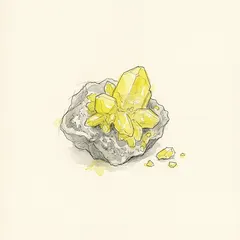
Sulphur
Hempel - Materia Medica and Therapeutics · Charles Julius Hempel · 70,745 χαρακτήρες
 Όλα τα βιβλία για Sulphur →
Αντιδοτείται απόAconitum NapellusAloe SocotrinaArgentum NitricumArsenicum AlbumBelladonnaCalcarea CarbonicaCamphoraCausticumCedronChamomilla
Όλα τα βιβλία για Sulphur →
Αντιδοτείται απόAconitum NapellusAloe SocotrinaArgentum NitricumArsenicum AlbumBelladonnaCalcarea CarbonicaCamphoraCausticumCedronChamomillaGeneral EN
Sulphur is a natural product, and is found, in various forms, in nearly all countries, either pure or in combination with metals, or in mineral waters. It is also a constituent of the blossoms and seeds of certain plants, and of albumen, urine, hair, etc.
Impure sulphur is not used for medicinal purposes. Sulphur sublimatum (flowers of sulphur) is an officinal preparation. It is obtained by sublimation, and then usually contains an admixture of sulphuric acid, which is removed by frequent washing in warm water. It may also contain arsenic, which can be detected by the bright yellow color of the substance and by the garlic odor of arsenic which is emitted if the powder is heated. The sublimed sulphur
832 SULPHUR.
occurs as a light-yellow, crystalline powder, insoluble in water, but soluble in alkaline solutions, chloroform, alcohol, etc.
We make a tincture of sulphur by adding one hundred drops of alcohol to five grains of pure flowers of sulphur. Triturations are to be preferred.
Sulphur is mentioned by some of the ancient writers, as Homer and Moses ; it is presumed to have been used by ancient people as a purifier of foul air and as a prophylactic measure in seasons of epidemics. Even at this date sulphur is a favorite domestic remedy and is made to answer similar purposes.
Sulphur affects nearly all the organs of the body ; its action upon the skin and upon the respiratory mucous membrane is worthy of especial notice ; it produces also very marked effects upon the digest- ive, urinary and sexual organs, and upon the venous circulation.
Exhaustive provings have been made and published by Hahne- mann, Hartlaub and Trinks and by the society of homoeopathic physicians of Vienna.
CEPHALIC GEOUP.
Among the head symptoms obtained by pro vers, we distinguish the following: Drawing-burning pain at the top of the head. Dull aching pain in the whole of the right half of the brain, with dim- ness of vision, weakness of the eyes, innumerable, confused, dark spots floating before the eyes ; this was followed by giddiness and confusion of the whole head. Frontal headache, alternating with pain in the joints; the pain may be a dull drawing pain. Dull headache, deep in the left orbit, sometimes increasing to a drawing throbbing.
Aching pain in the left side of the forehead, with slight vertigo. Headache, with burning and redness of the eyes; or burning-aching pain in the occiput, also with aching pain over the whole head. Sudden vertigo. Confusion of the head, with invol- untary discharge from the bowels, followed by perspiration all over, especially on the forehead which relieved the confusion.
Bush of blood to the head, with roaring in the ears, burning and creeping in the face. Violent rush of blood to the head, beating of all the arteries in the head, confusion in the head, roaring in the ears. Heat and confusion in the head, with noise like the boiling of water, rushing out of both ears. In
CHRONIC HEADACHES, where the particular paroxysms are constituted as I have described them; or in chronic- nervous de- rangements (hysteria) where these violent rushes of blood and
SULPHUR. 833
attacks of vertigo occur paroxysm ally, in consequence of peculiar exciting causes, sulphur will prove a great remedy.
A young man, who had scrofulous sores on the leg before he had the headache, has suffered for thirteen years with the following symptoms : Pulsating, tearing pain in the occipital region of the head, extending forward, with nausea, vomiting and pressure in the eyes. The attacks are preceded by flatulence. The headache gradu- ally disappears after two or three days, are followed by heat and blisters in the mouth and later by sore throat. The attacks come on every three or four weeks.
Bella- donna, mercury, nux vomica and pulsatilla were given in vain. After a few doses of sulphur there appeared itching of the leg and perspiration of the feet with lessen- ing of the headache and after continuing the use of sulphur for several months he was wholly cured. (Bernstein in the Allg. Horn.
Zeitg., x., 136.)
Captain R. has suffered with headaches, which appeared after the suppression of itch. Symptoms: Violent, pulsating headache, especially after eating warm food, in the warm room and in the heat of the sun. Agitation with faintness, relieved by dashes of cold water. At times itching of the anus, constipation, flatulence.
He received, at first, sulphur and nux in alternation ; then sulphur alone, one dose every five days. This was followed by increased itching and stitching at the anus, finally itching of the lower extremities and a perfect cure. {Ibid in Allg. Horn. Zeitg., x., p. 138.)
CHRONIC VERTIGO.— We may also recommend sulphur for chronic vertigo ; rush of Mood, and for affections of the head which have resulted from the retrocession of a rash or eruption, trembling of the head, and even
HYDROCEPHALUS, chronic and congenital, frequently depend- ing upon a scrofulous taint as the determining cause.
Sulphur is quite an important remedy in inflammatory diseases of the brain and of its covering membranes. This is especially the case when there has been retrocession or suppression of an eruption behind the ears. Important symptoms are : The child throws the head back, as if it were too feeble to hold up its weight ; perspira- tion about the head of the odor of musk ; sour smell from the mouth.
A child, two and a half years old, was taken sick. Symptoms : The head is so heavy that it falls to one side, following the law of gravitation ; if the head is lifted up, nausea, choking, vomiting of food or of mucus sets in; the child sleeps mostly, but starts occasionally from sleep, as if frightened ; alternating pallor and redness of the cheek, or pallor of one cheek with redness of the other. Coldness of the extremities ; heat and perspiration of the head; thirst; pulse 100.
Prescribed aconite30, ten doses at intervals of two hours ; then belladonna30, for eight hours, without any result. Then sulphur1500, every twelve hours. After taking four doses the child was cured, with the exception of weakness. (Weber in Archiv., xvi., 2, 3.)
Three cases of inflammation of the brain in a boy of three and two girls of five years, presented the following special symptoms: Can have the head only in a cer- tain position, thrown far back, otherwise there is hard crying and vomiting. Falling asleep, while talking in a delirium; sudden waking with a violent start; profound sleep, which cannot be interrupted from calling out loud ; penetrating sour odor from the mouth. Aconite and belladonna accomplished nothing ; early improvement set in after a few doses of sulphur1500. (Weber in Archiv., xvi., 2, 5 to 10.)
NERVOUS GROUP.
Sulphur causes drawing and tearing pains, which may be felt in
VOL. II. — 52
834 suLrciuR.
various parts of the body, especially in the fingers, long bones, back, muscles of the neck ; these pains may come on suddenly ; they may be followed by creeping or lancing pains in the same parts. Kespect- ing these drawiug pains, Dr. Hausmann, the prover, who was more especially annoyed by this symptom, remarks : " Even after all the other symptoms had disappeared, this one would frequently announce its presence. I am inclined to attach a great value to it, and I recommend it particularly to the attention of my colleagues.
It had this peculiarity that it generally commenced at the dorsal side of the limbs in the neighborhood of the joints, penetrated deeply, but without penetrating through to the palmar aspect." Boring pain in the ankle-joints. Crampy and contractive pains in the lumbar and sacral vertebrae, and in the joints where they alternate with crampy pains in the muscles, especially during motion.
Feeling of painful pressure or aching, accompanied with a sensa- tion of tension. This pain has been experienced in the small of the back and pelvic region, as if the bones of the pelvis would be pressed asunder ; or in the muscles causing a sensation as if the muscles were too short ; or in the small of the back and hip, followed by a sharp cutting pain through the right knee, and afterward through the elbow-joint, from the bend of the joint to the apex. The char- acter of these pains most pointedly indicates engorgement of the venous capillaries, such as may occur in rheumatic conditions of these parts.
A feeling of heaviness in the bones of the arms and legs, or a feeling of weight and burning in the feet is another symptom point- ing to a rheumatic or arthritic condition of the parts.
Sulphur causes flying pains and sensitiveness and soreness in the wrist and finger-joints such as may be experienced in chronic rheumatism.
These pains have been experienced in the abdominal muscles, the hip-joints and down the thigh, and may be regarded as rheumatic or neuralgic pains. These pains were obtained by means of globules moistened with the tincture of sulphur.
This group of symptoms teaches us that sulphur may be utilized in the treatment of rheumatic diseases in scrofulous persons, and also in inflammations of bone tissue, often followed by disorganization. Among the latter we may make particular mention of ?norbics cox- arius, hip disease.
The symptom, "numbness and warmth in the knee," obtained by
sulphur. 835
a prover, shows that in nervous inflammatory affections of the knee- joint (neurosis of the knee-joint) sulphur may be of great 7ise.
Fr., twenty-one years old, nurses a child, had bloody dysentery six weeks ago, then ophthalmia; she now complains of stabbing pains in the right knee and from there into the toes; after midnight the pain increases in violence and becomes so severe, that there is spasmodic movement. For a few days there has been more of a burning than stabbing in the knee. The knee and the parts above are much swollen. The inner surface of the knee is very sensitive to touch and to slight pres- sure; the patient complains of constant, violent shaking, without subsequent heat.
Stools hard. Although nursing a child, she menstruated slightly several weeks ago. Prescribed sulphur2, one-fourth grain. After two days the pain had nearly left her ; the chills came on less frequently, there was less swelling and she was discharged cured in a week.
(Tietze in Archiv., xviii., I, 83.)
Sensation as if cold air were blowing over the thighs, or a sensa- tion of coldness in the upper arms. This depression of the vital temperature may be accompanied by, or give rise to, a feeling of paralysis in the affected extremity ; hence we find among the prov- ings the symptom, "paralytic feeling in the upper arms." This sensation is likewise strikingly announced by another prover in these words : "Drawing in the right forearm, near the elbow, like a current of air or a breath passing over the part, and causing a feeling of paral- ysis." Sulphur may, nevertheless, prove inadequate to a cure. In
PAEALYTIC CONDITIONS, where the sensation of a normal temperature of the part is disturbed either by a sensation as if the part were colder than usual, as if a current of cold air were passing over the part, or by a feeling of burning heat, accompanied by a sense of heaviness in the part, sulphur may do good service.
Kn., three and a half years old, well-developed, had scarlet fever in spring and measles in the fall, both running a natural course. After six weeks vesicular, itch- like eruption appeared, which was eventually suppressed by bathing in lye. Four- teen days later: Pain in the back, trembling of the feet; generally bad appearance. Leeches, strychnine, the external application of tartar emetic etc., did no good.
On April 23, 1838, the following symptoms were present: The feet are completely paralyzed ; loss of voluntary motion and sensation, with atrophy of the parts ; rare and involuntary evacuations from the bowels; unconscious urination, occasionally followed by painful retention, continuing twenty-four hours; the urine is red ; heat and turgescence of the skin. The patient seems drawn together, i. e., the neck seems to have disappeared and the head looks as if pressed directly upon the shoulder; the countenance is bluish-red, the chest compressed, flat and projecting forward ; the tenth, eleventh, and twelfth vertebrce are displaced outward, so that the spinous processes protrude about half an inch ; they are also sensitive to pressure.
The pain started here. The dislocation of these vertebrae gives the whole spinal column the appearance as if it were curved. Rattling respiration, with violent, suffo- cating cough and great dyspnoea as in hydrothorax ; the beat of the heart can be heard over an abnormally large space; dislocation of the heart to the right. Fre- quent, rapid pulse.
Exacerbations of the fever at night ; great thirst ; moderate appetite. The case was cured by the tincture of sulphur. (Koch in Hygea, xii., 42.)
GOUT. — Among the provings of sulphur, many symptoms point to the great use of this agent in arthritic affections of the feet, whether the common gout or arthritic rheumatism. These paip*
836 SULPHUK.
are : pains as if sprained ; boring pains ; tensive pains in the joints and muscles.
The action of sulphur upon the nervous tissue and the venous capillary system of the back, is characterized by several marked symptoms. One prover experienced "long, pulsative and undulating stitches below the left scapulae." Another has this symptom : "Burning feeling over the whole back, especially between the scapulae, changing to a sore pain after scratching, with perceptible throbbing of the arteries beneath the skin." This symptom may point to what Schoenlein terms
HYSTERIA SPINALIS ; the burning sensation sometimes is felt like a hot flash over the back, down the spinal column.
The use of sulphur in hysteria or nervous irritation, is likewise indicated by this symptom : " Icy-cold feet, with burning of the face and hands."
A chronic disposition to cramp in the calves, and to numbness of the legs from the least pressure as if they would go to sleep, like- wise yield to sulphur among other medicines. Nervous complaints- arising from repelled itch, such as : neuralgia, trembling, paralytic weakness, rigidity of joints, and other ailments. Another interest- ing class of pains are the shooting pains which should invariably be treated with sulphur.
EPILEPSY demands the exhibition of sulphur, if the disease is evidently based upon a scrofulous taint, inherited or acquired. A prickling along the spine (Tietzer) or a feeling as if mice were run- ning up and down the back, are valuable indications.
M., thirty-six years old, small, of light complexion, pale countenance, looking feeble, he has always been well. Had the itch suppressed six years ago. Two years ago, he was suddenly taken with epilepsy, returning once or twice each week. During the last six months his intellect has suffered greatly, and he has fallen into an idiotic state, hearing only when he is spoken to very loudly ; he answers in a confused, unintelligible, drawling way.
Symptoms : The attack is preceded by a few moments' time only, by twitching and jerking in the little finger of the right hand, or in the head, or in the facial muscles of either side ; the hands are then closed with the thumbs turned inward, the body is drawn backward, the arms and legs move in terrible convulsions, the face becomes purple, the blood-shot eyes stare from their sockets, bloody saliva runs from the half-opened mouth, respiration is hurried and rattling; the convulsions usually last several minutes, when the patient falls into a sopor with loud snoring, from which he finally awakes utterly exhausted and sore, but without the least consciousness of what has just happened.
Prescribed, on March 1st, three drops of sulphur2, every four days. March 15th Had one paroxysm on March 2d, not since then; otherwise he is worse; he is almost dumb; the least effort to speak brings on spasms of the facial muscles. Prescribed sulphur.
March 28th He calls alone ; remarkable change in his exterior; his countenance is ful|er, slightly flushed; the usually dull, timid eye is open and bright; he talks connected- ly, saying that he has had no attack; he feels as if he were newly born, especially for a few days past, since he has experienced itching and a rash on several places.
SULPHUR. 837
Prescribed sulphur, once a week. Desquamation; he feels well; unusual vigor. He had no attack for three months past. (Villers in Vierteljahrs Schrift, ii., 421.)
ORBITAL GROUP.
Sulphur affects the eyes in a very marked manner. Among the recorded provings we distinguish the following symptoms : Quiver- ing and luminous appearances before the right eye. Lightning- flashes before the eyes at night. Dimness of the cornea.
Dimness of vision, diplopia. Dull aching and feeling of weight in both eye- balls, with loss of vision as if a thick veil were before the eyes. Kedness and inflammation of the canthi, with slight adhesions and exudations ; this irritation is accompanied by some irritation of the Schneiderian membrane. Itching, burning and redness of the edges of the lids.
Fine burning, like sparks, on the skin of the right upper lid. Painful dryness of the eyes, or dry feeling under the lids. Shooting pain through the pupil.
CATARRHAL CONJUNCTIVITIS.— These symptoms have led to the use of sulphur in common catarrhal conjunctivitis, especially where the palpebral portion of the conjunctiva is involved. In
ARTHRITIC AND SCROFULOUS OPHTHALMIA, with hypertrophy of the lining membrane of the lids; in
CHRONIC SORE EYES, with inflammation and swelling of the lids, itching and smarting, dryness of the eyes or exudation of a purulent gum from the canthi ; in
AMAUROTIC CONDITIONS with aching pain and dryness of the eyeballs, dimness of vision, as if objects were seen through dust, and more particularly if the amaurotic weakness resulted from' repelled itch : sulphur will be found a valuable remedy. In
CHRONIC DISORGANIZATIONS of the cornea, leucoma, phlyctenas, and so forth, in consequence of previous scrofulous inflammation, sulphur may be of great use to us; even in
CATARACT from repelled itch sulphur is said to have effected a cure.
The following cases will serve as illustrations of the various types of ophthalmia, which may demand the exhibition-of sulphur:
A child, a year and a half old, has had an inflamed left eye for a week. Symp- toms : The sclerotic of the left eye is strongly inflamed ; that of the right somewhat so ; the eyelids are greatly swollen and can hardly be opened. Photophobia ; lachry- mation : agglutination of the lids. With these symptoms, general fever, frequent change of color of the face, grinding of the teeth during sleep, constipation.
After receiving one dose of aconite24, the child took two and one-half grains of sulphur. The child was cured within nine days. (Tietze, Archiv., xix., 3, 162.)
A woman, sixty-eight years old, had had both eyes successfully operated upon for
838 SULPHUR.
cataract. Six months later there was found an accumulation of pus in the anterior chamber of the right eye. Symptoms : Inflammation of the sclerotic and conjunc- riva; smoky appearance of the cornea, but the pupil and the iris could still be recog- nized. There was no ulceration of the cornea, but a streak of yellow pus, in the form of a crescent, could be seen at the bottom of the anterior chamber.
CEdema of both eyelids with inflammation at the edge. Lachrymation ; heat in the eye ; sensation as if the eyeball were swollen. Stabbing, burning pains, worse at night. The patient took eighty drops of spirits of sulphur in water from August 23d to Sep- tember 3d.
The inflammation and swelling of the lids disappeared entirely, that of the cornea lessened greatly and the pus was partially absorbed. A severe cold brought on an increase of inflammation with visible increase in the formation of pus in the anterior chamber. Sulphur3, one grain three times a day, cured her perma- mently. (Knorre in Allg.
IIo?n. Zeitg., xix., 70.)
A man in the prime of life has suffered for some time with paroxysmal inflamma- tion of the eyes. Symptoms : The whole left eye seems to be enlarged and its covering membranes seem swollen ; the cornea looks cloudy, as if covered with fine dust and harbors a pus-secreting ulcer; the sclerotica is blood-red from congested vessels; photophobia; severe, pressing pain in the entire circumference of the orbit, so severe during motion and in the sunlight, even with closed eyes, as to drive the patient almost wild.
At these times, the pain goes all through the head, robbing him of rest and reason. One grain of sulphur2 cured the trouble, even the ulcer healed in a few days. (Gross in Archiv., ii., 2, 100.)
A woman of thirty-four years of age, who had quickly suppressed the itch several years ago, has suffered for three months with a violent rheumatic inflammation of the left eye. Symptoms: Sclerotica pale-red ; conjunctiva palpebrarum et bulbi much injected; the cornea looks cloudy, as if covered with dust, here and there white, flat,, depressed points in the middle of the clouded cornea ; the blue iris of the sick eye has a bad color ; pupil smoky, somewhat out of shape ; vision in the diseased eye nearly lost; she can hardly distinguish colors; no pain; no photophobia; general health good.
Prescribed sulphur6, six doses ; one drop every second day. After five days the inflammation had greatly improved, vision was much better. Six more doses were given and still later three doses of sulphur30, one dose every eight days. She has full use of the eye ; the cornea is clear, the iris finely colored and the pupil perfectly natural.
(Heichelhein in Hygea, 199.)
A woman, thirty-eight years old, had a swelling at the inner canthus of the right eye, which discharged pus and, later, a watery fluid. With this slight inflammation of the eyelids, lachrymation. The inner canthus showed a wound of the size of a pea, discharging pus and tears. Pressure upon the lachrymal sac caused a similar discharge from its orifice. Dryness of the right nostril. The continued use of sul- phur resulted in a perfect cure. (B. in Allg. Horn. Zeitg., xxxvii., 249.)
A woman of thirty who drove away the itch three years ago has : Redness and moderate swelling of the tarsi of both lids ; increased action of the Meibomian glands ; sensation of burning in the lids, as if they were full of sand ; cannot work or read at night ; this is difficult even during the day ; cannot exert the eyes ; the pains are more severe at night, better in the open air, when the eyes discharge more freely than in the room. The stools are hard ; scanty menstruation every six weeks, three doses of sulphur cured her. (Griesselich in Hygea, iii., 13.)
AURICULAR GROUP.
Sulphur causes a roaring in the ears. It has caused a deafness in the left ear, together with an aching pain in the left eye. "We likewise notice : " Sweating and frequent itching in the left meatus "; boring pains in the external meatus.
OTALGIA. — These few symptoms point to the use of sulphur in otalgia of a boring character, especially in scrofulous subjects ; and likewise to
SULPHUR. 839
OTORRHCEA, the discharge being confined to a simple oozing of dampness, with itching, from the external meatus.
DEAFNESS, with roaring in the ears, itching and dampness of the ear, may be favorably treated with sulphur, especially if a chronic eruption which would have required sulphur has been repelled or retroceded spontaneously.
NASAL GROUP.
Sulphur affects the external nose in an unusual manner. It causes : An inflamed spot on the nose. Thickening and swelling of the nasal bones. Aching pains in the nasal bones.
Tickling in the right nostril, followed by discharge of thick blood. Painful inflammation of the right wing of the nose, and of the septum, going off in bran-like scales. Shining, red swelling of the tip of the nose ; the left nostril feels thick, hard, painful to the touch, forming a hardened, transparent, bright-yellow mass. Sensation as if he smelled the perfume of a flower, though there was not any.
Sensation as if he were smelling soap-suds.
These symptoms show that sulphur may prove of great value in scrofulous swelling and inflammation of the nose, septum and carti- lages, and likewise in illusions of smell of the character indicated by the proviugs ; they may occur in hysteria.
FACIAL GROUP.
Upon the face sulphur has acted in a marked manner. We dis- tinguish the following symptoms : Raw pain in the left commissure of the mouth. Sensation as if the upper lip were swollen. Burn- ing on the right cheek as from drops of hot fluid.
Roughness on both cheeks, with heat and burning in the cheeks, as from exposure to cold, followed by bran-like desquamation. A group of small painless vesicles close together, near the right commissure of the mouth, bursting and ulcerating; they have a lardaceous appearance. Itching of the left eye and cheek. Tension of the skin of the face, as if it were swelling.
A crack in the upper lip, which is very pain- ful. Whitish aphthae on the inside of the lips, and, in one instance, a warty excrescence.
CHRONIC INFLAMMATION.— These symptoms very clearly teach us that sulphur may prove useful in the treatment of several annoying affections of the face, particularly chronic inflammation or inflammatory irritation of the skin ; the skin feels rough, itches and burns a good deal, looks red and inflamed.
840 SULPHUR.
SCROFULOUS SWELLING and inflammation of the lips, with rbagades in the lips, bleeding and aphthous ulceration of the lips.
SORENESS OF THE CORNERS OF THE MOUTH, to which children and full-grown persons of a scrofulous habit are sometimes subject.
DENTAL GROUP.
Sulphur has caused : Digging pains in sound teeth ; also drawing pains in the upper teeth, with a feeling of swelling and ulceration in the left gums. Hence we may derive curative effects from sul- phur in toothache characterized by similar pains.
CHTLO-POIETIC GROUP.
The effects of sulphur in the chylo-poietic range are varied and exceedingly interesting. It alters the taste, causing a sour taste in the mouth, also a bitter and insipid taste, with white coating on the tongue; and finally a clammy taste, with yellow coating on the tongue.
Sulphur also causes heartburn, flow of water in the mouth and various abnormal sensations in the stomach, which make it a most valuable agent in chronic derangements of this organ. It causes a feeling of weight at the stomach, with fluid stools ; a twisting and turning sensation in the region of the stomach, accompanied with vertigo ; weariness after eating.
CHRONIC DYSPEPSIA.— These few symptoms indicate sul- phur as a useful agent in chronic dyspepsia, when the food sits heavily upon the stomach, and the patient experiences a tendency to diarrhoeic stool after a meal. The appetite need not be much impaired, although the taste in the mouth is altered, generally sour or insipid, clammy; the tongue has a whitish or yellowish coating upon it, and the mouth may feel dry.
CARDIALGIA. — Other symptoms point to the use of sulphur in cardialgia; especially the following: Pressure in the umbilical region, followed by pressure in the left hypochondrium, soft, quick pulse, 160, and palpitation of the heart. Constrictive pain in the pit of the stomach and feeling of sickness, pressing in the left hypochondrium, accompanied by a chilly feeling from the lumbar vertebrae to the abdomen and the extremities. Alternate constrictive burning pain in the stomach ; as this pain went off, the abdominal parieties became sensitive, pulse quick, hard and full. -
A sensitive girl of eighteen, who had formerly a scrofulous eruption, had ophthal-
SULPHUR. 841
mia a year ago and repeated swelling of the nose. For a week she had two or three attacks per day and of late more frequent paroxysms of gnawing, pressing pain in the stomach and, when walking, a stitch running into the stomach. The epigastric re- gion is sensitive to pressure. The attacks come on after eating, are accompanied with heat and palpitation of the heart, better when quiet.
Hiccough, waterbrash, coated tongue, bloating of the abdomen, swelling of the submaxillary glands. Thick- ening and hardening of the skin under the nail of the second toe of the right foot. Four doses of sulphur1'2, one dose given every second day, cured the patient. ( Hau- stein in Allg.
Horn. Zeitg., xliv., 364.)
A woman, at the change of life, has suffered for a year from violent gaslralgia, which appeared in the evening and at midnight of each day. The pains were shift- ing, tearing, stitching, running into the chest and back. Relief usually followed vomiting of a thin, sour fluid ; her appetite was fair, but her stomach could not bear the majority of food. Her bowels moved every six to eight days.
Sulphur3, nux, ipecacuanha, belladonna, pulsatilla gave only passing relief. One dose of sulphur30 stopped the vomiting at once and after a short aggravation of symptoms produced a perfect cure. (A. R. in Allg.
Horn. Zeitg., 53, 189.)
CHRONIC CONSTIPATION.— As a regulator of the action of the bowels, sulphur is one of our most efficient agents. Small doses of sulphur bind the bowels and make the feces hard, and their expulsion difficult. Hence in chronic constipation sulphur is an •important remedy. The stools look hard, dark and dry, and are expelled with great straining, even to such an extent that blood is discharged. If the individual is afflicted with haemorrhoids, sulphur proves especially useful.
A woman, twenty-four years old, went through her first confinement some five weeks ago. She has suffered from constipation since her marriage. Her bowels moved four days before her delivery ; she had no further evacuation until two weeks after the birth of her child ; from that time her bowels move,d every five days. Since her confinement she had pains in the rima pudenda, which were getting worse, especially at stool, so she is obliged to remain in bed a whole day after an evacua- tion.
There was a rupture of the perineum, which has nearly cicatrized. General health good. Sulphur'2, two doses each day. After four days, less painful stool ; complete cure a few days later.
(Kaesemann in Horn. Viertelj. Schrift, vi., 81.)
Large doses of sulphur cause liquid stools, characterized by a variety of symptoms, such as : Soft stools, with itching of the peri- neum. Diarrhoeic stools, with burning and tenesmus. Stools con- sisting of fecal matter and mucus. Discharge of fetid liquid stools, accompanied with fetid flatulence.
Stools attended with cutting pains in the rectum. Rumbling in the bowels, followed by copious papescent, yellowish-green, fetid stools. Stools attended with an inclination to vomit. Loose fetid stool, followed by straining, ulcer- ative pain in the anus when touching it, and sensation as if more diarrhoea would come.
These effects of sulphur distinctly indicate the different forms of diarrhoea where this remarkable agent will manifest its therapeutic powers. It is more particularly in the fetid, watery diarrhoea of scrofulous children, or diarrhoea as if the bowels were too weak to
843 SULPHUR.
retain their contents, or even in involuntary diarrhoea of scrofulous, lively, nervous children, that sulphur will prove useful. In
CHRONIC DIARRHOEA, or dysenteric diarrhoea with much straining, discharge of mucus and fecal matter, sulphur will prove useful. In
DIAERHCEA, or alternate diarrhoea and constipation, depending upon enlargement of the mesenteric ganglia, we shall often find sulphur indicated.
A girl, two years old, had formerly tinea capitis ; she lives on potato ; has had diarrhoea for nine months. Symptoms : The stools are watery, greenish, look like chopped eggs, are painless, of a penetratingly foul odor; hiccough, followed by vomiting; the lower abdomen is abnormally large and hard, with constant audible rumbling from flatulency ; there is little sleep day or night ; she wants to drink con- stantly. She is a mere skeleton. Prescribed belladonna, arsenic, pulsatilla, china without relief.
After sulphur24, the diarrhoea grew better within a few days ; and health returned within five weeks. (Bethmann in Annalen, ii., 283 )
The following symptoms have also been recorded by pro vers: Burning at the anus, accompanied with tenesmus. Burniug at the anus, accompanied with burning at the orifice of the urethra. Cut- ting pain darting up the rectum, immediately before an evacuation from the bowels. Sensitiveness of the anus, with stitches darting through the anus, accompanied with chilly feelings in the legs.
Itching, soreness and discharge of acrid fluid from the anus. Bear- ing-down sensation and feeling of fulness in the rectum. Soreness of the raphe of the perineum.
These symptoms are interesting in two respects ; they may con- stitute elements of a more general group of derangements of the intestinal canal, in diarrhoea, constipation, piles, worm -diseases ; or they may exist as independent, separate affections in scrofulous children, or even full-grown persons, when soreness, excoriations, itching and exudations of the anus and rectum are not unfrequent.
HAEMORRHOIDS. — These affections are frequently present in hgemorrhoids, for which sulphur has always been regarded as one of the chief remedial agents.
It is the natural tendency of sulphur to cause venous engorge- ments, and it cannot appear strange that it should cause engorge- ments of the hemorrhoidal vessels. The provers of sulphur have shown that this agent causes in healthy persons bleeding from the anus; this may indicate the use of sulphur in chronic haemor- rhage from the bowels. Sulphur has caused : Involuntary discharge of clots of blood from the anus ; haemorrhoidal tumors with hard stool, and tenesmus.
SULPHUR. 843
Sulphur likewise affects the small of the hack as we know it to be frequently affected in haemorrhoids. It causes : A violent bear- ing-down pain in the small of the back in the direction of the anus j it also causes a painful rigidity in the small of the back and a pain as if the parts had been bruised. We therefore use sulphur with great effect in
PILES, or haemorrhoids, either blind or fluid, when the discharges consist of dark venous blood, and are characterized by such pains and complications as we have described.
A man, thirty years old, of strong constitution, has suffered from hemorrhoids for a long time. Symptoms : For some days the tumor has been so large and painful that he cannot rise ; bowels constipated, with constant pressure in the rectum ; there is often a discharge of mucus ; bloody stool. Painful stitches from the anus to the small of the back. The painful tension in the anus and back prevents him from standing or walking.
No appetite ; no sleep during the night. For a long time he has had a severe haemorrhage from the anus and an enlargement of the tumor once in four or eight weeks. One half grain of sulphur2 removed the symptoms in a short time. (Tietze, Archiv., xviii., I, 75.)
Sulphur causes shooting pains through the liver. This symptom shows that sulphur is not without some influence upon this gland, and that it may therefore prove of use in chronic
LIVER COMPLAINT, where these shooting pains constitute- characteristic indications. In such cases the general condition of the chylo-poietic system is always to be considered.
A man of forty years, emaciated, sallow, had the itch six years ago and suppressed it ; he has suffered for three months with hardening of the liver and has been treated with calomel. Symptoms : Enlargement in the epigastric and hepatic region, with a hard, fibrous " feel," very painful upon the slightest touch, continual hiccough, loss of appetite, constipation, small pulse, hectic fever at night, cough with mucous expectoration ; urine depositing a pink sediment ; sleeplessness ; great exhaustion.
Prescribed sulphur30, one dose every three days. * * Cured after long-continued use of the remedy. (Strecker in Allg. Horn. Zeitg., vi., 68.)
URINARY GROUP.
The primary effect of large doses of sulphur upon the urinary organs is to induce a more copious and more frequent desire to urinate. The increased secretion of urine may be accompanied by a variety of ailments or pains which indicate sulphur as a valuable agent in several morbid conditions of the urinary apparatus.
Among the effects of sulphur upon the urinary organs we dis- tinguish the following :
ENURESIS NOCTURNA. — Involuntary discharge of urine, a symptom which seems to indicate sulphur in enuresis nocturna, especially in the case of children who are troubled with worms.
Other symptoms are: Frequent urination with warmth in the
844 SULPHUR.
urethra. Urging to urinate, with catting paiu. over the symphisis puhis, as in stranguary. Weight and fulness in the hypogastrium, as if pressure were made upon the bladder. Frequent urging to urinate, with a feeling of obstruction in the region of the sphincters, although the pressure upon the bladder is very great.
Weak and slow stream of urine. Fine stitches in the region of the neck of the bladder, also passing through the anus. Itching at the orifice of the urethra. Intolerable burning in the urethra.
Darting through the urethra at night, during urination, attended with a chill. Dis- charge of mucus from the urethra ; and, lastly, cloudy urine having a penetrating odor.
These symptoms establish the homoeopathicity of sulphur to the following affections of the urinary apparatus :
DYSUKIA, with difficulty of passing the urine, frequent and painful urging, also designated as irritable bladder, sometimes char- acterized by a spasmodic retention of urine and constant and painful urging.
PARALYTIC WEAKNESS OF THE BLADDER, as indi- cated by the slow and thin stream. Old people may be affected in this manner.
CHRONIC GONORRHOEA, with shooting and burning pains in the urethra, tickling at the orifice, discharge of mucus. These symptoms may also represent a common catarrh of the bladder, or chronic cystitis, consequent upon acute inflammation, or developing itself spontaneously as a result of the scrofulous diathesis.
A man, sixty years old, in excellent general health, has been troubled with fre- quent desire to urinate and a deposit of mucus in the urine. Symptoms : Desire to urinate every hour, voiding only a few drops at a time, with severe cutting pains in the bladder and with burning in the urethra. The urine is discharged slowly, drop by drop. The pains continue for some time after urinating, until the desire comes again.
The urine looks brownish, mixed with mucus ; upon standing, a slimy sedi- ment is deposited, without, however, clearing the urine. Twenty to thirty ounces of urine voided during the night ; one-third formed a sediment which adhered to the bottom of the vessel upon its being emptied, could be stretched and fell off the chip, used for that purpose. No stricture. Daily loss of strength and of weight.
Can- nabis, cantharides, mercurius, stannum, lycopodium, petroleum did no good. Pre- scribed spirit of sulphur, one drop each morning and evening. The constant desire to urinate and the pain disappeared in twenty-four hours ; three days after com- mencing the medicine he had but two evacuations and after a few weeks there was only the slightest trace of mucus in the vessel, without any pain. (Schrcen in Hygea, ix., 499.)
SEXUAL GROUP.
The action of sulphur upon the male sexual organs is character- ized by several interesting symptoms, such as : Itching and burning, with desquamation of the penis and prepuce ; fetid smegma between
SULPHUR. 845
the prepuce and glans ; itching of the scrotum and thighs, with sweating of the parts; suppurating ulcers upon the glans and prepuce; swelling of the testicles, with dampness of the scrotum.
These symptoms occur principally among individuals whose con- stitution is taiuted with a scrofulous diathesis ; among rickety children, or perhaps amoug persons in whom the vital fluids have been deteriorated by exposure, bad food, want of cleanliness, insuf- ficient ventilation.
IMPOTENCE.— The provers of sulphur uniformly testify to the weakening action of large doses of sulphur upon the sexual instinct and power, in weakness of the sexual organs, or even in impotence, as a symptom of constitutional cachexia, in scrofulous individuals who have been addicted to abuse, sulphur may be one of the means which may restore the lost power.
GLEET. — Attomyr first called the attention of the profession to the usefulness of sulphur in this disease. It is eminently adapted to patients of fair complexion, with sandy hair, who are troubled with haemorrhoids, sore eyes, tenesmus of the bladder, or incon- tinence of urine.
CHANCRE Rummel gives the following indications : Chancres which at first seem primary, and are covered within a few days with a scab, which looks like the scab of an itch vesicle. The scab be- comes thicker and thicker from absorption of the secretion and does not drop off until the sore under it has healed. Great itching of the sore.
It appears on the outer skin of the penis, or on the outer margin of the prepuce, which is swollen, excoriated, smarts during urination and hinders during walking. The linen is apt to adhere to the sore. It seems a complication of syphilis and psora.
PROFUSE MENSTRUATION — Sulphur causes, and therefore tends to regulate^ profuse menstruation with discharge of black, clotted, sticky blood, and bearing-down pain in the sexual organs. The excessive discharge of blood may also be accompanied with flashes of heat and a sense of fulness in the hypogastrium.
AMENORRHCEA. — Small doses of sulphur exhibit a tendency to interfere with the regular menstrual secretion, causing ameiiorrhoea especially among women afflicted with anasmia ; and chlorotic persons who are liable to leucorrhoeal discharges attended with furious itch- in f of the parts. The suppression may be accompanied with cere- bral congestions, aching pains iu the head, flashes of heat and redness in the face, dizziness, buzzing in the ears.
8-iU SULPHUR.
LEUCORRHGGA. — Sulphur causes leucorrhceal discharges, and has been found useful in slimy, yellowish, corrosive leucorrhoea, which it either arrests entirely or changes to a simple discharge of mucus.
MISCARRIAGE. — The tendency inherent in sulphur of causing venous engorgements of the uterus, renders it valuable as a means of correcting a constitutional tendency to miscarriage, especially in scrofulous individuals in whom a general disposition to venous con- gestions is manifest. It has also been employed for the purpose of curing
PROLAPSUS OF THE WOMB, in cases where the general con- stitutional condition of the patient suggests the propriety of resort- ing to this agent. If these weaknesses depend upon the scrofulous element, sulphur may excite a curative reaction. Among these weaknesses we may mention a tendency to
SORE BREASTS and to suppuration and ulceration of the breasts in confinement. Even among the male provers sulphur has caused soreness and inflammation of the nipples. We would therefore commend sulphur to your attention in cases of sore breasts and sore nipples, more particularly if other symptoms afford unmistakable evidence regarding the existence of an actively-developed scrofulous dyscrasia.
CATARRHAL GROUP.
Sulphur affects the lining membrane of the respiratory organs in various ways, causing symptoms of irritation which may enable us to use this agent in various chronic catarrhal affections. The most marked among these symptoms are the following: Catarrh, with confusion of the head, loss of appetite, weariness and feeling of prostration in the limbs. Severe pain in the nose, with discharge of an acrid fluid from the right nostril. Dryness of the nose.
Sneezing with discharge of fluid mucus from the left nostril. Cold in the head, with sneezing and drowsiness. In one of the provers the Schneiderian membrane was affected as follows : Discharge of an acrid fluid from the nose, after which the membrane became dry and stiff as parchment ; next, a tough mucus was discharged, and lastly the dryness recurred again.
CHRONIC CATARRH.— These few symptoms point to sulphur as a useful remedy in chronic catarrh of the head and nose, or like- wise a disposition to chronic catarrh, with acute paroxysms from the least exposure to a change of weather, dampness, etc. There is a
sulphur. 847
great deal of sneezing, discharge of acrid water or mucus from ono or both nostrils ; soreness of the nose, tight feeling about the head, sore and weeping eyes.
INFLUENZA These catarrhal symptoms of the head and nose may be associated with other symptoms, constituting a group which resembles very closely an attack of influenza, especially when this affection prevails as an epidemic disease. Among the provings we find this record : Chilliness over the back and limbs. Chilly feel- ings followed by heat, in the forenoon and afternoon.
Chilliness not removable by the heat of the stove, with blue nails, paleness of the face, dizziness, heaviness of the head, sensation in the bones of the upper arms as if they would break. Chill with blue nails and goose flesh, along the arms and down the back, also on the abdo- men, accompanied by pains as if the bones would break. Scraping sensation in the throat, with hoarseness, cough and expectoration of little lumps of a bluish mucus. Roughness in the throat, and shoot- ing pains on swallowing, Hoarseness, with tightness of the chest and inclination to vomit.
Hoarseness, with sensation as if mucus were sticking in the glottis. Dryness and feeling of warmth in the throat. Tickling in the larynx and bronchial tubes. Severe cough, with expectoration of white mucus.
Cough, with raw feeling in the trachea, expectoration of thick phlegm. Cough, with sore pain in the chest. Paroxysms of dry cough, with shooting pain in the left chest.
CHRONIC COUGH.— These various kinds of cough may be present in epidemic influenza, or they may exist as independent forms of bronchial irritation. We may therefore use sulphur in chronic cough, coming on in paroxysms, at night or in the daytime, with expectoration of thick phlegm, or purulent mucus ; the parox- vsms may be ushered in by titillation in the larynx. This sort of cough may have a catarrhal origin, or it may come on after measles.
APHONIA. — Sulphur has also caused hoarseness and loss of voice ; hence it acts curatively in some cases of aphonia, depending upon catarrhal trouble of the larynx.
THORACIC GROUP.
Sulphur causes : Oppression and auxiety in the chest. Dull pressing pain in the left side of the chest. Raging pain in the middle of the sternum. Aching, sore spots in the chest ; the pain is increased by inspiration. Dull stitches in the lower part of the chest, right side. Weight and pressure in the chest, increasing
848 SULPHUR.
from day to day, and finally terminating in shooting pains when bending forward or taking a long breath. Fulness in the chest, with tickling in the throat, sweetish taste in the mouth, spitting up of a watery, slimy flnid, mixed with bright-red blood. Burning sensation in the chest.
SCROFULOUS CONSUMPTION. — Sulphur is an important remedy in scrofulous consumption, or phthisis pulmonalis, even in the advanced stages of this disease, with copious purulent expectora- tion, cavernous disorganizations, colliquative diarrhoea and night sweats. Dr. Clotar Mueller regards the following symptoms as char- acteristic of sulphur in this disease: "Dryness and burning in the throat, the expired air feels glowing hot ; dry food remains sticking in the throat and has to be coughed up again ; loss ,of voice ; ex- hausting cough, especially at night, generally dry, it is only after long and violent coughing that quantities of pus are raised ; occa- sional rattling in the windpipe and chest; frequent stoppage of breath, especially after a short nap, from which the patient is roused by a feeling of suffocation ; copious sweat, even during sleep ; rash over the whole skin, feeling of heat ; small hurried pulse ; occasional and violent rushing of the blood to the head, with throbbing of the arteries, palpitation of the heart; at such times the face, which is generally pale, becomes flushed and looks mottled."
PNEUMONIA. — Sulphur is a valuable remedy in pneumonia, acute and chronic. Kafka claims for sulphur a special effect upon the bronchi and upon the pleura. The remedy is of particular value when the disease depends upon inherited or acquired tuberculosis, is tedious in its progress, and is characterized by scanty expectora- tion of pus, with pain in the chest and nightly exacerbations of the symptoms.
Sulphur affects the left lung in preference to the right ; there is present much dyspnoea, with a sensation of constriction ; the cough is short and dry, with a crackling sound in the chest.
M., aged thirty-five; pretty strong; when a child, he was vaccinated and had a rash develop after it. On September 27th, he was suddenly taken with a violent chill and stitches in the right chest. Was under allceopathic treatment until Novem- ber 1st. I saw him on November 2d.
Symptoms : Pulsating, occipital headache when lying down ; feeling of heaviness and stupid ache in the entire head when sit- ting up. Flushed countenance, covered with perspiration. Loss of appetite, violent thirst; light, slimy coating of the moist, trembling tongue. Short, quick breathing; uneven movement of the thorax, the left thorax moving with more freedom than the right ; constriction of the chest when lying on the back.
Stitching pain in the right chest, increased by deep inspiration and frequent, dry cough. The patient usually lies on the back, with his shoulders raised; lying on the left side is* difficult ; it is impossible to rest on the right side because of the increase of the difficulty in breath-
SULPHUE. 849
ing and of the stitching pains. Percussion yields a feeble sound on the right side of the chest, between the fourth and sixth rib. Auscultation reveals in the same region a fine, cracking noise, not at each inspiration, but clearest and always present during a deep inspiration. Moderate bronchial respiration.
The vesicular murmur of the left lung is abnormally strong, although percussion reveals nothing. Softness of the abdomen. Sore, painful spot a little above the umbilicus and to the right, tender to touch. Has had violent diarrhoea for the last three days, the stool containing parti- cles of undigested food.
I am told that the discharges were at first very green and exceedingly offensive. Urine dark-red without sediment. Dryness and heat of the body, with exception of the face. Pulse quick, hard, regular.
The nights are sleep- less. Great exhaustion. Prescribed sulphur3, two drops in water, a spoonful every hour. On the 3d there was less thirst and fever, clearly audible cracking noise with every inspiration, otherwise no change.
On the 4th, breathing was easier, can rest on the left side ; symptoms from percussion the same. No cracking noise, light bronchial respiration and increased vesicular murmur on the left side still exist. The movements of the thorax are more uniform. The hot skin is becoming somewhat moist; urine dark, with whitish sediment.
There is no change in the frequency of the pulse, which is moderately full, flexible. Sulphur repeated. On the 5th, the countenance looks bright, respiration slightly hurried, stitching in the side with deep inspiration, percussion reveals no difference in the two sides of the chest; the vesicu- lar murmur is normal. Pustular eruption on the chest.
On the 7th : respiration is normal. (Holeczek in Hygea, xv., 191.)
Sulphur acts also upon the heart and aorta. It causes palpitation of the heart, and the following rather remarkable symptom : In- creased pulsation of the aorta, from the heart to the clavicle, with a purring noise ; when lying on the back, the pulsations are felt in the abdominal aorta.
PALPITATION OF THE HEART.— This symptom may indi- cate sulphur in abnormal irritability of the heart, palpitation, hys- teria, and even in
ANEURISM or incipient aneurism of the aorta, as a symptom of scrofnlosis.
We hardly need advert again to the fact that sulphur is pre-emi- nently indicated if these affections of the thoracic organs can be traced to suppression of scabies or haemorrhoids.
EXANTHEMATOUS GEOUP.
Sulphur has caused a group of skin symptoms which is almost boundless. From them we select the following : Skin of the hands hard, and dry; cracking of the skin of the hands; eruption, with burning itching. Painful eruption about the chin. Intolerable itch- ing over the whole body ; this was followed, in a day or two, by the appearance of reddish blotches over the trunk and extremities.
Thick, red chilblains on the fingers, which itch very much when warm. Formation of an erythematous patch, the size of the palm, on the outside of the leg, which itches constantly, especially at night, in bed, compelling him to scratch, but afterward is very sore. Liver spots on the back and chest, with itch, in the evening. Nettle-rash
VOL. II. — 53.
850 SULPLLUB.
with fever. Violent biting rash on the face, arms and lower extremities. A scaly eruption, which had been driven away by external applications, reappeared, with violent burning itching after scratching. Itching hives over the whole body, hands and feet.
Eed and painful pimples on the forehead and cheeks. Ked (itching) pimples, with at times burning after scratching, on the nose, upper lip, chin and forearm. Hard, red, painful pimples near the angle of the lower jaw, lasting several days. Itching pimples on all parts of the body.
Tetter on the nape of the neck. Small vesicles on the lip which soon dry up, others making their appearance. Itch- ing on the elbows and wrists, and especially on the hands, particu- larly in the evening ; here and there, small vesicles full of yellow water arise. Itching in the bend of the right elbow, making him scratch ; the scratched places exude moisture.
Pimples and vesicles which burst and let out acrid, yellowish fluid. Itching, vesicular eruption on the back of the hands and soles of the feet ; subse- quently, the skin all peeled from the parts invaded. Itching in the fingers; slight redness of the fingers, which disappeared on pressure, but returned immediately when that was removed. Painless, white vesicles.
Small, itching vesicle, increasing in size, itches when touched ; it is of the size of a pin's head, is filled with a clear fluid and has exactly the appearance of a fully developed itch-vesicle. Eash over the whole right leg, preceded by fever; the leg was swollen, hot, bright red, painful, with large and small blisters in several places, containing yellowish serum, as after the use of cantharides. After the blisters had burst, some places became -covered with thin, yellow- ish scabs, others became superficial ulcers, which lasted a long time without much pain, and gradually healed long after the inflamma- tion had disappeared.
Eruption like that after vaccination. Pus- tules on various parts of the body, with much itching. A small cut or slight injury becomes sore ; at first smarting, then burning, fol- lowed by inflammation, with throbbing pain. Every night, when he got warm in bed, there occurred a very disagreeable itching, on the whole surface of the skin, from the hips to the toes.
This itching was particularly bad in the hollow of the knees, and could only be removed by strong rubbing, which caused a very disagreeable feel- ing. On the parts so rubbed, there occurred small pimples, which discharged a fluid from their points, whereupon the itching ceased, but returned the following night. During the day, there was no trace of the pimples, but only the small scars on the parts that had
SULPHUR. 851
been scratched. Eruption of furnnculous pimples, with a red areola and very itching sensation, especially on the face. Ulcer about the nail, twice in succession. The skin is very painful after robbing, as if denuded and sore.
Burning in the skin of the whole body. Biting as from fleas, after lying down. Formication over the skin of the whole body. Stitch-like prickling in the skin of the whole body, in the evening, after getting warm in bed.
The itching- spots bleed and bite after scratching. Most violent itching over the whole body, especially on the arms and legs; after she had scratched until obliged to stop, on account of weariness and painful- ness of the fingers, she was obliged to use a hard brush. In the evening, violent itching and smarting all over the body, particularly on and between the fingers ; parts of the body, not sensitive, itched when she touched them ; she feels as if she were alive beneath the skin; there was a feeling as if vermin were running about.
Itching and provoking scratching on the scrotum and thighs, and sweat on those parts. Itching in the axillae and hollows of the knees. Itch- ing is increased by scratching, which is followed by burning, but nothing is to be seen on the skin. All these symptoms are aggra- vated at night, in bed.
The above formidable array of symptoms, which is but a meagre selection from the record of the drug, foreshadows the great useful- ness of sulphur in all affections of the skin, and in diseases which are accompanied by an exauthem. Among the multitude of skin diseases which demand the exhibition of sulphur, we mention the following :
SCABIES OR ITCH.—
In a family of seven persons, every member of the family became infected with this sort of itch through a servant girl. The toe-joints were swollen and ulcerated; the finder-joints likewise, and the wrists, forearms and elbow-joints looked fiery red, were hard and swollen, itched and burned furiously, and seemed dotted with an innumerable multitude of fine vesicles. The patients were radically cured with sul- phur-water, obtained by shaking a pint of water three times a day with half an ounce of the flowers of sulphur. A tablespoonful of this water, properly sweetened, was given three times a day, taking care to allow the sulphur to settle before a dose of water was administered.
HERPES. — Herpes humidus over the whole face ; herpes squa- mosus on the forehead ; dry herpes over the whole body ; herpes crustaceus, with thick, yellow, greenish crusts ; herpes furfuraceus ; herpes phagedenicus, with emaciation and evening-fever; herpes phlyctsenoides, clusters of small vesicles filled with a serous fluid, upon an inflamed base, increasing to the size of a dollar, forming irregular, circumscribed spots, separated from each other by sound
852 sulphur.
skill ; they appear principally on the extremities, itch and burn, and either discharge a fluid, or else become covered with thin, white scales.
TINEA CAPITIS — We also prescribe sulphur in tinea capitis, scald-head, both humid and dry, but more particularly the dry form. Professor Zlatarovich, while proving sulphur in massive doses of one hundred grains of the crude substance, was freed for a long time from the scaly scald-head with which he was afflicted.
CRTTSTA SERPIGINOSA, which is regarded by many patholo- gists as a form of the itch-disease. The eruption first shows itself behind the ear, consisting of groups of small vesicles filled with a limpid fluid, itching a great deal and forming thin, dark brown crusts. This eruption might possibly be confounded with crusta lactea; nevertheless, the characteristic differences are well marked. In crusta lactea, for instance, the forehead and cheeks are first invaded, in crusta serpiginosa, the ear ; in crusta lactea, the eruption consists of large, purulent sores which do not itch, whereas, in crusta serpiginosa, the itching is a characteristic symptom, especially at night ; crustea lactea forms thick, yellowish-white crusts which gradually fall off without any treatment, whereas, crusta serpiginosa never gets well without treatment, on the contrary, keeps spreading, gradually invading the face, eyes, neck, chest, and giving rise to dangerous ophthalmic diseases.
PSORIASIS DISCOLOR, a diseace of the epidermis which peels, off in the form of yellowish scales. This most annoying affection likewise disappeared while the sulphur was being proved in massive- doses. /
Sulphur has been advantageously employed in scrofulous indu- rations of the submaxillary glands, and in chronic erysipelatous inflammation of the skin on the arms, legs, and in the face, char- acterized by burning, itching and desquamation of the epidermis. In acne rosacea sulphur may be useful; likewise in mentagra or the barber's itch. Hepatic or liver-spots may frequently be favor- ably acted upon by sulphur.
CHLOASMA—
Miss H., blonde, very fair complexion, twenty-three years old. Seven years since, she noticed a deep yellow spot of the size of a silver dollar on the left breast. It has increased in size until now, May 20, 1869. It now covers her person from the hips to the neck, so much, that she is obliged to wear dresses very high to cover it.
She fears that it will extend to her face. Her general health is good. I could elicit no characteristic symptom of any remedy, save inordinate hunger from 10 to II A. M.
Prescribed three powders of sulphur200. After two weeks, on June 3d, no improve-
SULPHUE. 853
ment. Prescribed three powders, each containing one drop of sulphur tincture. June 17th, it has nearly all disappeared. July 12th, no trace of the chloasms left. (Dr. A. P. McComber in Am. your. Horn. Mat. Med., vol. iii., p. 20.)
PANARITIUM. — Sulphur has caused, and will frequently cure,
panaritium. Wolf recommends it after apis.
A girl, fiteen years old, has had panaritium, for fifteen weeks. Symptoms: The «nd of the left index finger became inflamed, and pus formed below the nail, which came off after much suffering. A new nail grew, which was yellow, thick and crip- pled ; and there was pus under this nail also, which discharged partially and imper- fectly through a small opening at the side of the nail. The whole end of the finger was yellowish-white, shining and puffed up, and stabbing, stitching pains penetrated it.
Touching the nail caused violent pain in the finger. The entire hand is some- what lamed. Prescribed (on December 24th) half a grain of sulphur1. Immediate improvement set in and she was fully cured by the middle of January, when a new nail took the place of the old.
(Hartlaub in the Annalen d. Horn. Klinik, vol. ii.,
LEPROSY has been treated with sulphur with a fair degree of success. It is, however, of service only in the early stages of this terrible disease.
INTERTRIGO INFANTUM— Sulphur should not be forgotten in the soreness of children, or intertrigo infantum, especially in inveterate cases, if a scrofulous diathesis is evident.
SCIRRHUS. — Sulphur has developed tubercles of a scirrhous hardness, in the lower lip and tongue ; hence it is eminently proper to prescribe it in scirrhus of the lower lip and tongue.
ULCERS In the treatment of scrofulous ulcers and varicose
ulcers sulphur manifests fine curative powers. It acts upon the veins, embarrassing or clogging the venous circulation. Hence in the treatment of
VARICOSE VEINS sulphur plays no unimportant part; it
exercises healing powers by removing the torpor of the vessels and
restoring the irritability of the capillary tissue.
A boy of eleven years had scarlet fever. The disease left him with an inflamma- tion of the parotid gland, which broke, forming an open abscess a little below and behind the right ear. The abscess had been open for several weeks. The opening was oblong and of the circumference of an hen's egg ; the edges were purple, not sensitive, the bottom of the abscess was covered with a pale-red, spongy, smooth and glistening fungus growth.
There was also copious secretion of thick, yellow pus, stiffness of the neck, violent itching around the * abscess. After repeated doses of sulphur the proud-flesh disappeared and the abscess healed soon. (Knorre in Allg. Horn.
Zeitg., vi., 20.)
Mrs. — , thirty-two years old, poor when a girl, had varicose veins on the legs, which broke repeatedly. Several pregnancies had increased the trouble. She has now, and has had for fourteen weeks, a varicose ulcer, which has been treated, un- successfully, with applications of cold water. Symptoms : Two ulcers, each about two inches long, on the ankles of the legs.
The ulcers are two or three lines deep, secrete much thin, sanious pus ; the bottom looks dirty ; varicose veins on each leg with much tearing pain in the limbs during the night. Sulphur100 eased the pain and gave some rest ; prickling in the tissue below the ulcer, which discharged and bled freely. During the last few days, cough and pain in the sides. On November nth
854 SULPHUR.
she received sulphur200, one dose every five days. Great improvement, the ulcers are filling up with healthy granulation ; increase of pain in the adjoining tissues, especial- ly in the veins. Complete cure at the end of the month. (Rummel in Allg. Horn. Zeitg., xxxiv., 179.)
EXOSTOSIS AND CARIES. — Sulphur acts curatively when the bony structure is invaded by the scrofulous element. We may use it in exostosis and caries of the bone. Also in
RHACHITIS, when the disease is an expression of scrofulosis.
SWELLING OF THE KNEE-JOINT has been successfully treated by sulphur. The swelling is usually pale, not painful, un- less pressure is used; it is circumscribed, elastic and doughy to the feel.
A hearty man, forty years of age, has had for several days a swelling on and above the patella which feels doughy and is sore to touch ; the swelling is well defined and of the size of an hen's egg ; the skin is hot and red, from an irritating plaster. Can- not straighten the leg because of the severity of the pain. Prescribed spir. sulphuris8, three drops each morning and night; the same remedy externally on linen. Within three days most of the pain had left and the swelling is getting less ; in six days he is out of bed, but cannot walk well; the enlargement is lessened by one half, not so- doughy.
At work in a week later. (Ohlhaut in flygea, xviii., 1.)
A woman, forty-one years old, of phlegmatic temperament, blonde. Symptoms : For the last three years she has had every summer a rash on the hands and on the arms up to the shoulders with violent itching. There is burning after scratching. The heat of the bed aggravates it.
There is often shivering without cause. She does not know that she has ever had the itch. For a week she has had a swelling of the entire right knee. It is white as the rest of the body ; there is no increase of heat ; not sensitive to touch, and feels soft and elastic around the patella, as if the joint contained a fluid.
Otherwise the woman is well. Prescribed one-half grain of sulphur3 on July 16th. On the 20th the swelling of the knee was increased ; there is a burning pain during rest. Prescribed one-half grain of sulphur*.
On August 8th the swelling and pain were less. On August 13th the knee was much improved, the eruption was coming off. On August 20th she was permanently cured. (Tietze in Archiv., xviii., I, 85.)
SCARLATINA. — The marked action of sulphur upon the skin
leads to its use in the treatment of the exanthemata, scarlatina.
Sulphur is of service in scarlet fever when the eruption is intensely
red and is all over the patient ; great dryness in the throat, which
belladonna does not relieve ; tenesmus of the bladder and rectum ;
sopor, following the first vomiting ; sudden starting from a profound
sleep; slight spasmodic movements.
A boy, two and a half years old, had scarlet fever ; prescribed belladonna. Sopor developed on the second day ; prescribed opium. On the third day, convulsions ; the exanthem looks dark purple; skin cold. Prescribed veratrum.
Getting still worse, the child was given arsenicum, carbo vegetabilis. No improvement. Symp- toms: Pulse almost imperceptible, rattling in the throat; slight convulsive twitch- ings were the only signs of life in the child. Prescribed sulphur30.
In the morning the rattling in the throat had disappeared, breathing was easier, freer; the pulse was distinct; in the evening the body was warmer, the exanthem lost its bluish color, pulse came up to 135, the patient makes single motions. On the fifth day the skin was warm, red, the expression of collapse had disappeared, the pulse was fuller, 106; sleep more quiet, no trace of spasm ; he opened his eyes in the afternoon and made a good recovery. (Lorbacher in Vierleljarh. Schrift, iii., 315.)
SULPHUB. 855
MORBILLI. — Suitable in patients of scrofulous habit, where the eruption comes out tardily or where chronic coughs, discharges from the ear, deafness, etc., appear as sequelae.
In a child, a year and a half old, the rash disappeared on the fourth day ; the fol- lowing symptoms developed : There is a hard swelling in the muscles of the left side, which is painful to touch, vomiting of liquids; mucous diarrhoea; the patient has had a pure white rash over his body ever since his birth ; this rash had disap- peared during his attack of measles. He received sulphur30 and made an early recovery. (Weber in Archiv., xvi., 2, 121.)
VARIOLA with a tendency to metastasis to the brain, during the suppurative stage of the disease.
FEVER GROUP.
HECTIC FEVER We have already pointed out the value of
sulphur in influenza. In hectic fever, with sour or fetid night sweats, or profuse sweating of the legs only, and consequent ex- haustion, this agent may prove an excellent palliative.
INTERMITTENT FEVER demands the exhibition of sulphur when the fever is brought on by suppression of an eruption ; the chilli appears in the evening and is not very violent ; it is followed by fever with palpitation of the heart and great thirst, the latter frequently occurring before the chill.
H. took cold and had each evening a paroxysm as follows: He became tired very early, but could not get to sleep after retiring. Slight chilliness, especially about the knees, when undressing and in bed, relieved by heavy covering. He wakens about midnight, throws himself restlessly and experiences a heat, which does not last over fifteen minutes. When the heat is over, the patient goes to sleep and wakens at three o'clock with profuse perspiration of sour smell.
The lips are dry but there is no thirst during either stage. Appetite is good, and a feeling of exhaus- tion is the only symptom experienced during the apyrexia. Sulphur30 was taken after every attack; cured within four days. (Neumann in Prakt.
Beitraege, iv., 88.)