 Ομοιοπαθητική Βιβλιοθήκη
Chamomilla
Hering - Οδηγώντα Συμπτώματα της Materia Medica μας · Constantine Hering · 79,464 χαρακτήρες
 Όλα τα βιβλία για Chamomilla →
Αντιδοτείται απόAconitum NapellusAllium CepaAluminaAngustura VeraBelladonnaBorax VenetaCalcarea CarbonicaCamphoraChelidonium MajusCinchona Boliviana
Όλα τα βιβλία για Chamomilla →
Αντιδοτείται απόAconitum NapellusAllium CepaAluminaAngustura VeraBelladonnaBorax VenetaCalcarea CarbonicaCamphoraChelidonium MajusCinchona BolivianaGeneral EN
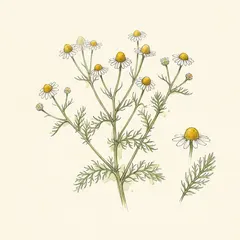
Matricaria Chamomilla. Compositoe,
Tincture prepared from the fresh plant when in flower; the flowers con- tain active principles which combine the properties of bitters and etheral oils. The plant is a native of Europe, but is occasionally cultivated in our gardens; the leaves and flowers are small, thus diS"ering from the Anthemis nobilis or Roman chamomile ; it must not be confounded with the An- themis cotula or wild chamomile, growing abundantly by the wayside and in waste places in this country. A decoction of the plant in the shape of tea is much used, and abused, as a domestic medicine, particularly in Ger- many.
Hahnemann classed Chamomilla with the polychrests. Two hun- dred and seventy-two symptoms observed by himself, and three by other authors, were published in his Fragmenta, and in Vol. Ill of his Materia Medica Para, second edition, these had increased to four hundred and sixty- one, besides containing thirty additional symptoms observed by Stapf. For later provings of the drug, see Allen's Encyclopedia, Vol.
III. Clinical observations are found scattered through our entire literature, there proba- bly not being a physician in our ranks who has not tested the virtue of Chamomilla in either high or low preparations. Among the contributors to Chamomilla, we refer to :
Hofi"man, H. H., Post Partum Hemorrhage, Trans. Horn. Soc. of Pa., 2, p. 433;
Van Cutsem, Mental Symptoms the result of Poisoning, Rev. Horn., p. 100, Eaue's Record, 1875, marked t; Norton, Geo. J., Pustular Ophthal- mia, Trans.
N. Y. S., 1874, 1, p. 419 ; Gross, W., Eclampia, Archives, p. 104, and Intermittent, Archives, 3, p. 52;
Schubert, Ad., Archives, 1, 3, p. 158 ; Rummel, Fr., Intermittent, Archives 8, 1, p. 34; Kaemerer, etc., see A. H.
Z , 83, p. 149 ; accidental proving from drinking Chamomile tea, reported by J. C. Burnett, Horn. Review, 21, p. 408, marked, tox.
^ Mind. I Child lies senseless, completely without consciousness; frequent changes in face, distortion of eyes, contraction of facial muscles, rattling in chest, with much cough; it yawns and stretches very much. Insensibility.
■ Absence of mind.
I When writing or speaking, he omits whole words.
■ Dullness.
I I A joyless dullness of senses, with sleepiness, without, how-
ever, being able to sleep.
I I Dullness of senses, diminished power of comprehension.
I I Confusion of head, with transient painful pressure on eyes, in afternoon.
voii. III. — 30.
CHAMOMILLA. 466
Imbecility.
B Imagines he hears voices of absent persons, at night, cannot compose himself to sleep.
Ecstacies and delirium.
Delirium with hallucinations; t.
Delirium with fearful cries; t.
Tries to get away from her friends if they seek to comfort her.
B B Child cries; quiet only when carried.
Her cries can be heard through the whole neighborhood; t.
B Utters sudden, startling and piercing cries on waking out of sleep, vows there is some dreadful beast under his bed or in the room and will not be appeased until the gas is lit and the room searched; a boy, aet. 4. ^Nightmare.
BB Piteous moaning of child because he cannot have what he wants.
B Moaning on account of a very trifling offence, which had happened a long time ago.
BB Whining restlessness; the child wants this and that, which, when offered, is refused or pushed away.
B Involuntary moaning, with heat of face.
BHe tosses about the bed, with febrile heat and redness of cheeks, and talks confusedly, with open eyes.
B Tosses anxiously about the bed at night, full of fancies.
Scratches at the walls with her hands; t.
B Child becomes stiff and bends itself backwards, kicks with its feet when carried, screams immoderately, and throws every- thing off.
BB Averse to talking, short and snappish.
B Disinclined to talk, is angry if anyone speaks to her.
B Introversion, she cannot be induced to say a word.
BB Cannot endure being spoken to, or interrupted while speak- ing, especially after rising from sleep.
B B Child does not wish to be touched.
B B Patient can't bear anyone near him, and answers snappishly.
Cannot bear music.
Sadness.
Melancholia, with constant moaning and muttering to herself, walks all the time with downcast eyes.
Hopelessness.
BVery anxious; everything she undertakes is very unsatis- factory; she is irresolute, with flushes of heat in face, and cool sweat in palms.
B Attacks of anxiety.
BFuII of anxiety, with great uneasiness.
Great anxiety; feels excited in all the senses; t.
B Anxiety, with ineffectual urging to urinate, without much urine in bladder.
B Thoughts of dying.
467 CHAMOMILLA.
Indifference.
1 1 Peevish disposition, nothing pleases.
1 1 Peevish about everything, with dyspnoea.
I Quarrelsome.
I I Peevishness; she seeks a cause for being peevish at every- thing; can't return a civil ansvi^er.
■ Fretful, and easily irritated.
I Fretful, out of humor and obstinate, even to quarrelling, on
appearance of menses. I Morose fretfulness; everything that another does is wrong;
no one does anything to please him.
I He frets internally about every trifle.
I I Very irritable and fretful; child must be carried.
■ Very irritable; moaning and groaning. 1 1 Irritable, impatient mood.
■ Great impatience, everything seems to go too slowly.
■ She is sleepless and cross.
■ Ill-humored and irritable, the whole day.
■ She is always out of humor, particular-ly at her menstrual
periods, when she is headstrong even unto quarrelling. Not applicable to persons patient under influence of pain.
■ The pains are very distressing, she feels that she can hardly
bear them ; she wishes to get away from herself. ^Labor.
■ In all her sufferings there is a vein of ill-humor; she can
hardly speak pleasantly ; feels like scolding about every- thing ; she often gives vent to her ill-humor in spite of all restraint.
■ She becomes almost furious about the pain; she cannot bear
her clothes to touch the part affected.
■ ■Easily chagrined or excited to anger. Insulting, cross and uncivil in temper.
Great tendency to quarrel, to speak in an obstreperous manner.
■ Obstinacy. Mistrust.
■ ■The child can only be quieted by carrying it on the arm.
■ Great restlessness and anxiety.
■ Restless and impatient, with fever.
Bi Excessive uneasiness, anxiety, agonizing tossing about, with tearing pains in abdomen.
■ Great restlessness and inward chilliness.
■ SOversensitiveness to pain, which seems unbearable and
drives to despair.
■ All bad effects following anger. ^Convulsions. ^Ghill.
^Fever. ^Bilious complaints.
■ Jerking and twitching in its sleep, or the nurse may have had
a fit of anger which causes the convulsions in the child.
■ Bad effects of having feelings wounded.
CHAMOMILLA. 468
^ Sensorium. I Dullness of senses, with sleepiness, yet cannot
Ύπνος
S Ίλιγγος: με εξαφάνιση των σκέψεων· μετά το φαγητό· μετά από
κατανάλωση καφέ· ασταθές βάδισμα, το πρωί κατά το σηκώσιμο από το κρεβάτι·
με λιποθυμία· με θόλωση της όρασης, όταν κάθεται όρθιος στο
κρεβάτι· στο κρεβάτι, με ναυτία· όταν σκύβει· κατά το σηκώσιμο μετά από
κάθισμα· ενώ κάθεται όρθιος· όταν μιλά. ^ Εσωτερικό του κεφαλιού. I Βαριότητα, θαμπότητα, πίεση, σύσφιξη ή
κάψιμο στο μέτωπο.
■ Σχιστική κεφαλαλγία στο μέτωπο, με αίσθημα σαν ένα σβώλος
να πέφτει προς τα εμπρός, ενώ κάθεται, ή όταν αναποδογυρίζει στο κρεβάτι.
■ Υποτροπιάζουσα, παροξυσμική, σχιστική κεφαλαλγία στο μέτωπο. iΣχιστική-διαπεραστική κεφαλαλγία στο μέτωπο, που εκτείνεται στο
Θώρακας
I. Σπασμωδική κεφαλαλγία στο μέτωπο, ιδίως μετά το φαγητό. iΠιεστικός πόνος στους δύο κροτάφους, σαν από ισχυρή πίεση με
τους αντίχειρες, πριν από μεσημέρι.
■ Πίεση, που εκτείνεται από την κορυφή του κεφαλιού στο μέτωπο και τους κροτάφους·
<< όταν το σκέφτεται, από απότομο σκύψιμο, ή από
πνευματική κόπωση.
■ Πιεστική κεφαλαλγία σαν από πέτρα στο μέτωπο, ζεστό κεφάλι,
< τα βράδια.
■ Κεφαλαλγία, ιδίως στους κροτάφους· μια πίεση σαν από σταθερή
πίεση με τα δάχτυλα.
■ Σχιστικός πόνος στους κροτάφους.
■ Σχιστικός και τσουξιστικός πόνος στην αριστερή πλευρά, ιδίως στον κρόταφο,
και μέσα και γύρω από το μάτι.
■ Σουβλιές στους κροτάφους.
■ Σχιστική κεφαλαλγία, με βαριότητα του κεφαλιού, <; γύρω στο μεσημέρι,
μετά από εκνευρισμό, ή από σφάλμα στη δίαιτα.
■ Βίαιοι τσουξιστικοί πόνοι στην αριστερή πλευρά του κεφαλιού, από τον ινίο έως το άνω
γνάθο, μετά από εκνευρισμό.
■ Πίεση που αυξάνει και ελαττώνεται, ιδίως στο δεξί μισό του
μετώπου και στον δεξιό κρόταφο, όπου επίσης αισθάνεται πολύ συχνές
θαμπές σουβλιές, που μερικές φορές εκτείνονται στον ινίο σαν ηλεκτρικές
σπίθες.
■ Πιεστική και σκαφτική κεφαλαλγία, ιδίως στο μέτωπο και τους
κροτάφους.
■ Σχιστική και διαπεραστική, που εκτείνεται προς τα έξω στους κροτάφους.
■ Περιπλανώμενοι πόνοι στους κροτάφους, με συχνή υποτροπή, και πάντα
■< στην αρχή.
■ Πίεση και πιεστικότητα από την κορυφή του κεφαλιού που εκτείνεται πάνω από το μέτωπο
και τους κροτάφους, •< μόλις στρέφεται η προσοχή σε αυτό, και
από απότομο σκύψιμο, ή από πνευματική κόπωση, όπως όταν αναλογίζεται
ή ακόμη και όταν διαβάζει.
■ ■Σφυγμική κεφαλαλγία.
■ Σουβλιές μέσα από το κεφάλι, από τον σκληρό ουρανίσκο έως την κορυφή.
469 CHAMOMILLA.
I Κεφαλαλγία σαν σουβλιές βελόνας, σαν τα μάτια να επρόκειτο να βγουν από το
Κεφάλι
Παροδικές κρίσεις παλμικής δόνησης στο μισό του εγκεφάλου. Μονόπλευρη ελκτική κεφαλαλγία.
Αίσθημα συμπίεσης του εγκεφάλου, ή σαν από στένωση των
μηνίγγων.
Βαριά κεφαλή : με αμβλύτητα ; με πόνο στους κροτάφους ; ιδίως
στην ινιακή χώρα κατά το πρωινό ξύπνημα ; με ελκτική κίνηση
του κεφαλιού εμπρός ; με μωλωπισμένη αίσθηση.
Σύγχυση κεφαλιού : με απροθυμία για πνευματική εργασία ; με
τάση να λοξοκλίνει προς τα πίσω ; με σουβλιές και τρυπητό πόνο,
ιδίως στον δεξιό κρόταφο, το πρωί ; με πίεση σε παροξυσμούς,
κατά το απόγευμα, ιδίως κατά το ξύπνημα.
Συμφόρηση στο κεφάλι : μετά από θυμό ; με πίεση κατακλίσεως ;
στην κορυφή ; με θερμότητα στο πρόσωπο και πίεση στον
θώρακα ; με σουβλιές στο κεφάλι και το θώρακα.
Πόνος στο κεφάλι, σαν να πρόκειται να σπάσει, κατά το ξύπνημα από τον ύπνο.
Έντονη κεφαλαλγία στην κορυφή του κεφαλιού, σαν από πίεση
από μέσα, και αίσθημα σαν η κορυφή του κεφαλιού να είχε
εκτοξευθεί· αριστ.
Αίσθημα πληρότητας και θερμότητας στο κεφάλι.
Κεφαλαλγία : αισθάνεται ακόμη και κατά τον ύπνο ; το πρωί στο κρεβάτι ; με
ίλιγγο ; μετά το φαγητό ; τη νύχτα.
Ημικρανία.
* Εξωτερικό κεφάλι. Πρήξιμο των κροτάφων, με ευαισθησία στην αφή.
Ρευματικός πόνος στο κεφάλι. ^Δυσεντερία.
Τάση λοξοκλίνεως του κεφαλιού προς τα πίσω.
Κινεί το κεφάλι της εμπρός και πίσω.
Θερμός ιδρώτας στο κεφάλι, που βρέχει τα μαλλιά.
Θερμός, κολλώδης ιδρώτας που καλύπτει το μέτωπο και τριχωτό.
Αίσθημα σαν τα μαλλιά να σηκώνονταν όρθια, με ρίγος. ^Γαστρικός-χολικός
πυρετός. ® Όραση και Μάτια.
Βλέμματα ατενή.
Αποστροφή στο φως.
Έντονη φοβία προς το φως, το ελάχιστο φως ανυπόφορο. ^Οφθαλμία
σκοφουλώδης.
Τρεμούλιασμα μπροστά στα μάτια : δεν μπορούσε να δει πού βρισκόταν ;
κατακλίσεως. Μάτια θολά και αδύναμα, το πρωί ; στο φως του κεριού έμοιαζε
σαν ακτίνες φωτός να περνούσαν από τα μάτια στη φλόγα. Θόλωση της όρασης πλάγια, όταν σταθεροποιεί το βλέμμα σε
λευκό αντικείμενο. Αμβλυωπία : με ίλιγγο, όταν ανακάθεται στο κρεβάτι ; με
φρίκη.
Μεγάλο κάψιμο και θερμότητα στα μάτια.
Έντονες σουβλιές στα μάτια.
Αίσθημα σαν τον οφθαλμικό βολβό να έλκεται σφιχτά προς τα πίσω.
Φλεγμονή των ματιών, βλέφαρα κολλημένα το πρωί ; έκκριση
αίματος από τα μάτια CHAMOMILLA. 470
· φλεγμονή από έκθεση σε
κρύα, υγρή ατμόσφαιρα, ή από κάθε ψυχρή αλλαγή του
καιρού. Μάτια πρησμένα το πρωί ; κολλημένα με πυώδη βλέννα.
Κιτρινωπή επιπεφυκίδα.
Επιπεφυκίτιδα, σε βρέφη.
Φλύκταινες στον κερατοειδή, με σημαντική αγγείωση, αφθονία
δακρύρροιας, όχι μεγάλη φοβία προς το φως, το παιδί διψασμένο και
γκρινιάρικο. ^Οδοντοφυΐα.
Πυώδης κερατίτιδα, με σημαντική φοβία προς το φως, υγρό
εξάνθημα στο πρόσωπο και το κεφάλι, το παιδί πολύ
ευέξαπτο.
Μεγάλη ξηρότητα των χειλών των βλεφάρων, ή άφθονη βλεννώδης έκκριση.
Άφθονη καυστική έκκριση από τα μάτια και τη μύτη. ^Οφθαλμία
σκοφουλώδης.
Σπασμωδική σύγκλειση ή μεγάλη βαρύτητα των βλεφάρων.
Πιεστικός πόνος κάτω από το άνω βλέφαρο, κατά την κίνηση των ματιών και την ταραχή
Head EN
Lids agglutinated after sleep.
Great dryness in Meibomean glands on margin of lids. Great swelling and bluish redness of eyelids, first 1. then r.
so that child cannot open them. On pressing lids apart, conjunctiva appears swollen and
dark red. Inner surface of lids, as well as ball of eye, covered with much,
partly yellow purulent mucus, partly with bloody fluid. Least pressure causes pure blood and large quantity of muco-
pus to issue from between lids. At canthi and along border of lids dried muco-pus.
■ Swelling and bluish redness of skin, with running of pure
blood from eye.
■ Soreness of canthi.
■ Corners of eyes are filled with purulent matter, in morning.
■ Stitches in orbital region.
8 1 Violent pressure in orbital region; sensation in eyeball, as if it were tightly compressed from all sides, with momentary obstruction of vision.
■ Byes protrude and rotate constantly in their orbits. ^Tetanic
convulsions after measles.
■ Ophthalmia neonatorum ; diarrhoeic stools, chafing of genitals,
flabbiness of muscles, rash, restless sleep ; child wants to be carried.
■ Catarrhal and scrofulous ophthalmia in cross, peevish children
during dentition. Arthritic ophthalmia, first stage. ^ Hearing and Ears. ■ Great sensitiveness to noise, especially to music. ^Otalgia.
■ Illusions of hearing, at night, as though voices of absent per-
sons were heard.
471 CHAMOMILLA.
1 1 Roaring in ears, as from rushing water.
I Ringing in ears. ^Post partum hemorrhage. She cannot endure music.
Sensation as if ears were stopped.
Sensation as if hot water were running out of r. ear.
Dull pressure as from a blow in inner ear, on stooping.
Sharp stitches in r. meatus.
I I Single large stitches in ear, especially when stooping, with ill-humor and peevishness about trifles.
Stitches extending into inner ear from lower jaw.
I Frequent stitches and sudden, transient spasmodic sensation in front of r. ear, in region of tragus ; this sensation some- times extended into auditory canal.
I Stitches in ear, especially when stooping.
I Occasional tearing in 1. ear. ^Hemicrania.
I I Pressing earache in spells, with tearing pain, extorting cries.
■ Otalgia: with hot perspiring forehead; lancinations or tensive
drawing pains extending to lobes of ears.
iMoist ear-wax, or scarcity of ear-wax, resulting in dryness.
I Acute inflammation of middle ear, when patient is prostrated by and intolerant of shooting, drawing pains; auricle usu- ally hot and red ; meatus red, but not swollen ; membrana tympani not much congested.
■ Right ear red and painful. ^Intermittent fever. Dull stitches in r. mastoid process.
i I Particularly sensitive to open air about ears.
■ Swelling of parotid gland.
^ Smell and Nose. ■Extremely sensitive to all odors.
■ Nosebleed, relieving confusion of head.
■ Bleeding, coagulated or dark blood. ^Epistaxis.
■ Irritation to sneeze, with crawling, dry heat and stopped up
sensation in nose ; feeling as if coryza would appear ; also with pressure in forehead.
■ Coryza: fluent, watery; viscid; acrid; with loss of smell ;
with dry hacking cough.
■ Catarrh, with dry, fatiguing cough, painful bruised feeling in
umbilical region, painfully sensitive to touch, and < at night. ^Dentition.
■ Stoppage of nose.
Dryness and sensation of fullness and heaviness in nose, fol- lowed by nosebleed.
■ Catarrhs, with ulcerated nostrils and chapped lips, one cheek
pale, the other red, with chills and thirst.
■ Crawling in nose until eye waters.
^ Upper Face. ■Convulsive movements and twitching of facial muscles and lips.
■ Neuralgia of face, pain causes hot sweat about head and ex-
CHAMOMILLA. 472
torts screams; stinging pain extending to upper jaw, from occiput, 1. side.
■ Burning in face.
I Hot face, with redness of cheeks.
I I Redness of one cheek, returning in paroxysms, without shiv- ering or internal heat. 6'Hemicrania.
I Forehead hot, but moist. ^Otalgia.
■ Wrinkled forehead.
I I Red face, or redness and heat of one (1.) cheek, the other being pale.
■ Face pale, sunken, distorted by pain.
■ Yellow or bloated face.
■ ■One cheek red and hot, the other pale and cold.
■ Heat of face, while rest of body is cool. Pale face, with small rapid pulse ; t.
■ Paleness of face, with cold cheeks.
■ ■ Face sweats after eating or drinking. Puffiness of face and cheeks.
1 Fiery red rash on face. ^Ophthalmia scrofulosa.
■ Facial erysipelas after toothache. Skin of forehead wrinkled above nose.
Swelling, hardness and blueness of one cheek. ^Neuralgia.
■ One-sided swelling of cheek, generally the left.
■ Erysipelas, starting on 1. cheek, near nose, gradually spread-
ing over face and head.
■ Stitches in joint of r. jaw, extending into upper back teeth,
severe but transient. Exanthema on face. * Lower Face, ' Child draws mouth back and forth, or from side to side. ^Teething. ^Convulsions.
■ Single stitches in jaw, extending into inner ear.
■ Lips crack and peel ; rhagades in middle of lower lip.
At night, lips become dry and stick together, without thirst.
■ Swelling of submaxillary glands. ^'Toothache. ^Facial ery-
sipelas.
Sensation of heaviness in lower jaw.
Pain on opening jaws, as if masseter muscles were painfully
cramped, which pain also extended into teeth. Feeling of weakness in muscles of mastication, with inclination
to hold mouth open, and increased saliva. ^^ Teeth and Gums, ■ Toothache is so violent, she tosses about,
moans constantly and complains of digging, gnawing pain in
hollow teeth;
< at night, preventing sleep ;
< from coifee.
■ Violent toothache in an apparently sound tooth ; single stitches
through 1. upper jaw, with itching and crawling sensation in teeth. ^Amenorrhoea.
■ Toothache: stitching; digging; gnawing; from suppressed
perspiration; from taking cold; during or after eating; ■■if
473 < CHAMOMILLA.
anything warm is taken into mouth, especially after coffee, ■< by talking; in open air; in room ; getting warm in bed; during menstruation and pregnancy ; most 1. side and lower teeth ; worse at night ; affecting principally women and children ; after abuse of mercury.
■ Drawing toothache (without being able to locate it in any
tooth) ; it disappears during eating, but especially rages at night, therewith teeth feel too long.
■ Drawing pain in teeth after eating and drinking.
I A slight burrowing and sensation of heaviness in alveoli of some of back teeth; "this sensation seems intolerable, and makes him very peevish." •
■ Sensation of fullness and heaviness in alveoli of first and
second back teeth of both sides of upper jaw, with a slight burrowing and boring in their roots, with a sensation as if alveoli were distended and formed a hard, tense swelling.
■ Throbbing toothache, insupportable at night, ■< by warmth
of bed, patient turns about and keeps moaning. Grumbling-drawing toothache in jaw.
■ Violent toothache in 1. upper jaw, always after eating warm
food.
Toothache recurring in intermittent attacks, with swelling of cheeks and accumulation of saliva ; pains shoot back and forth, even extend to eye and ear;
< by drinking cold water.
■ ■Toothache recommences when entering the warm room, or
drinking anything warm.
■ One-sided toothache and tearing in head and jaw.
■ Toothache as from taking cold, if one exposes oneself to cold
air when sweating.
■ Toothache from draught of air, extending towards ear.
^Otalgia.
■ Toothache in attacks with ptyalism.
■ Paroxysms of violent pain from root of upper eye-tooth to
cheek, nose and temple.
■ Grrumbling and crawling in teeth of upper jaw.
■ Periodical violent toothache in molar, 1. lower jaw; tooth
is hollow; pain is drawing and jerking; <^ before mid- night, > after eating.
■ Rheumatic toothache: particularly one-sided, -< at night;
pains unendurable, red cheek, cannot designate which tooth is affected ; jerking, tearing pain often extending into ear ; often ■< after eating and drinking, often > by dipping finger into cold water and applying it to affected part ; very much <C. from drinking cold drinks ; warmth of bed un- bearable.
■ Teeth sensitive to touch, especially some hollow back teeth.
■ ■ Teeth feel too long.
CHAMOMILLA. 474
Looseness of teeth.
Teeth covered with mucus.
B iGums red and tender. ^Dentition.
I Burning in swollen gums.
■ Sensation as if gum were swelling about some of back teeth.
I Tearing toothache which extends to ear, with swelling of cheek and periosteal swelling.
B Painful swelling of 1. cheek, caused by a carious, badly plug- ged tooth ; pain lancinating, •< at night.
IB Teething children: with watery, greenish and also chopped diarrhoea, smelling like rotten eggs : jerking of limbs or starting ; convulsion! ; child bends double and draws legs upon abdomen ; moaning ; want to be carried ; dry cough ; restless at night; want to drink; quick rattling breathing.
" Taste and Tongue.
B Taste: slimy, bitter; sour; like rancid fat ; putrid ; offensive at night.
Bread tastes sour.
BB Bitter taste in mouth, in morning.
B Burning on tongue.
B Tongue red in middle, white at sides. ^Tertian intermittent.
I Tongue: coated, white; yellowish; or white at sides, red in middle ; red, cracked ; dry.
Severe biting on back of tongue and on roof of palate.
Tongue dry, with thirst for water, loss of appetite, flushes of heat, sweat of face and palpitation, followed by unnatural hunger.
B Tongue coated white, with islands on it ; t.
I I Blisters on and beneath tongue, with stinging pain.
Convulsive movements of tongue. ^^ Inner Mouth. B a Heat in mouth, pharynx and oesophagus to stdmach.
B Dryness of mouth, in morning, followed by distension of ab- domen and imperfect evacuation.
B Extreme dryness in mouth, with lameness of limbs.
BB Collection of saliva, of metallic, sweetish taste.
Offensive taste in mouth, at night.
What he hawks up has an ofi'ensive taste.
Sourish odor from mouth.
IBFetid smell from mouth. 13 Throat, BPain in 1. side of fauces while swallowing ; velum was somewhat reddened, and external pressure just under angle of jaw caused pain in fauces.
Spasmodic drawing pain in palate, extending into fauces.
Pain in back part of throat, < by moving throat and swal- lowing.
BB Spasmodic constriction of pharynx.
Stitches in throat, near ear.
Throbbing in back part of throat.
475 CHAMOMILLA.
Stitching-burning pains in throat.
I Inflammation of throat, with sensation as though something
■was sticking in it, which ought to be removed by hawking ; heat in pharynx and thirst ; dark redness of affected parts.
■ Catarrhal inflammation of throat, of tonsils or pharynx, with
acute stinging-burning pain in larynx ; usually roughness of voice, some dyspnoea, tickling irritation to cough.
I I Sore throat, with swelling of parotid or submaxillary glands, or tonsils.
iDifficult swallowing of solid food, and when lying down.
Sore throat from suppression of cutaneous action.
" Appetite, Thirst.
Desires, Aversions.
Unnatural hunger, in evening.
1 1 Want of appetite.
When food is set before him, it makes him shudder, it is so re- pugnant.
1 1 Great thirst for cold water and desire for acid drinks.
Thirst, with febrile heat and redness of cheeks.
Unquenchable thirst, with dryness of tongue.
■ Increased thirst, with evening fever and painful diarrhoea.
1 1 Likes to hold cold water to mouth a long titoe, when drinking.
^Dentition. Desire for : acids ; sour-crout.
■ Aversion to: beer; coffee and warm drinks ; to broth.
^' Eating and Drinking. Fullness while eating, with nausea after eating.
■ ■After eating and drinkinof, heat and sweat of face.
■ After eating : vertigo; abdomen puffed up.
■ ■Thirsty and hot with the pains.
■ In morning, after drinking cofi"ee, heat all over and sweat,
with vomiting of bitter mucus, followed by bitter taste in mouth, weakness in head, and nausea. After drinking coffee : vertigo.
■ Cutting pain and debility after drinking.
^® Hiccough, Belching, Nausea and Vomiting. ■Hiccough.
■ Eructations: sour; constant, empty ; ■■aggravate the pain. •
■ Eructations of gas, smelling of bad eggs. I I Eructations and passage of flatus.
The existing pain is increased by eructations. Disgust, qualmishness, >■ by eating.
■ Nausea: with vertigo while lying in bed ; and inclination to
vomit ; and bitter vomiting ; after drinking coffee ; after breakfast ; with collection of saliva in mouth ; as if she would faint.
■ Nausea after morning coffee, with attacks of suffocation. •
■ Inclination to vomit: with diarrhoea and fever during night;
as if one would faint.
■ I Fruitless efforts to vomit.
CHAMOMILLA. 476
iVomituritio, with slight stinging pains in region of liver, after vexation.
B Vomiting: of bile ; of food; of what has been drunk ; slimy matter ; sour. .^^ Scrobiculum and Stomach. I Severe painful pressure in epi- gastrium makes her toss about in despair. ^Intermittens tertiana.
iPressive pain in stomach and beneath short ribs, which im- pedes breathing, especially after drinking coffee.
■ Epigastrium painfully bloated, in morning, with sensation as
if contents were passing into chest ; belching of wind is painful.
■ Pressing and cutting in epigastrium, with anxiety.
■ Burning or stinging pain in pit of stomach.
BB Pressure in stomach, as from a stone pressing down.
■ Pressure in stomach after eating a little.
■ Burning across stomach into each hypochondrium.
■ Gastralgia: in highly irritable persons, or following vexation;
pressure as from stone in scrobiculum and under short ribs, 1. side, and short breathing, anxiety, fear, restlessness, toss- ing about, sometimes throbbing headache on vertex, driving patient out of bed ; ■< after a meal or at night.
■ E Constrictive gastralgia in coffee-drinkers. Gastralgia relieved by drinking coiTee.
^^Hypochondria. ■ Stitching pains in hypochondria.
■ Stitches in region of liver, with vomiturition and frequent
chilliness, after vexation. ^Hemicrania.
Pressure in hypochondria and in stomach after eating.
Continual tensive pain in hypochondriac region, with tension
around brain.
■ Fullness and distension in hypochondria.
Incarceration of flatulence in hypochondria.
Diaphragmitis.
■ Hepatitis after vexation or taking cold, with gastric troubles
and icteroid symptoms.
" Abdomen.
Pressive colic about navel.
■ Griping-tearing colic in region of navel and lower dovm on
both sides, with pain in small of back, as if it were broken. Pain in belly from side to side, just above navel, correspond- ing to transverse colon, from r. to left ; t.
■ Umbilical region sensitive.
■ Colicky cutting pains in abdomen, with hard chill; the pain
seems insufferable, she wants to jump out of bed.
■ Colic, rather cutting than sticking, with accumulation of • saliva in mouth.
Constant tearing colic in side of abdomen, as if parts were rolled up in a ball.
■ Tearing pain in abdomen.
477 CHAMOMILLA.
I Constricting pain in abdomen andback; she kicks, grates her
teeth, and screams.
I I Colic returns from time to time, flatulence accumulates in hypochondria, and stitches shoot through chest.
Grurgling in side extending into abdomen.
■ Abdominal cramps, particularly flatulent colic; flatus collects
in various places and strives to force a passage; distension of
hypochondria and epigastrium; patient sufi"ers from anxiety,
restlessness and clammy perspiration. • Sensation as if bowels were drawn up in a ball, and abdomen
were empty. 1 1 Wind colic, abdomen distended like a drum, wind passes in
small quantities without relief; > by applying warm cloths. iWind colic, with tympanitis and vomiturition.
■ Wind colic, wdth sensation as if a hernia would appear.
■ Hysteric colic.
1 Abdominal pain, with frequent emission of pale, colorless
urine in large quantities.
I Colic while urinating.
I Colic at sunrise.
I Colic, with violent pain in 1. hip, when lying on r. side.
■ Abdomen is distended, but soft; when pressed, patient com-
plains of increased oppression of chest and anxiety.
■ Distension of abdomen after a meal or in morning.
■ ■Abdomen tympanitic and sensitive to touch. (^Agalactia.
^Peritonitis.
■ Abdomen sensitive to touch, particularly in inguinal region. Sensation as if whole abdomen were hollow, with constant
motion in intestines.
Compressive pain in abdomen.
Pain in abdomen , as when constipation causes a delayed
passage.
Bruised pain in muscles of lower abdomen.
Pain in abdomen prevents urination.
■ Dragging toward abdominal rings, as if parts were too weak
and hernia would appear. Feeling of griping and coldness and chilliness in inside of ab- domen, passing downward into legs, as far as knees ; t.
■ Peritonitis.
^^ Stool and Rectum. Flatus: sour smelling; stinking; putrid. Stools: green, slimy, mucous; mixed green and white, mucous; chopped, white and yellow, mucous ; green or yellowish ; watery, frequent, preceded by cutting constricting bellyache, < in epigastric region ; mucous, with colic and vomituritio ; bilious, with burning in anus ; painful, thin, green, consist- ing of feces and mucus; ■■green, watery, corroding, Avith colic, thirst, bitter taste and bitter eructations; like chopped or stirred eggs, smelling sour; ■■hot, smelling like rotten
CHAMOMILLA. 478
eggs; changeable; containing undigested food ; mucous and bloody.
■ Violent bilious diarrhoea, with intense colic and burning in
anus, after vexation. In diarrhoea, especially of watery, mucous character, stools
preceded by violent cutting pain below umbilicus ; >> after
Κόπρανα
I Διάρροια, με βίαιο κολικό, που αναγκάζει να ουρλιάζει. I Καθημερινά τέσσερα ή πέντε αιματηρά, βλεννώδη κόπρανα, προηγείται κοιλιακός πόνος και τενεσμός· παιδί ενός έτους.
■ Πολλές βλεννώδεις κενώσεις, με κολικό και εμετική παρόρμηση. ^Κατασταλμένα ιλαρά από κρυολόγημα.
■ Νυχτερινή διάρροια, με κολικό, ώστε να αναγκάζεται να διπλώνει στα δύο.
■ Διάρροια μετά από κρυολόγημα ή θυμό· πολύ επώδυνες κοπτικές συσπάσεις από τον δεξιό ώμο προς το κεφάλι, με δίψα και αδυναμία.
■ Υδαρής διάρροια· έξι έως οκτώ κενώσεις ημερησίως, προηγείται κοπτικός, σφιγκτικός κοιλιακός πόνος, < στην επιγαστρική περιοχή.
■ Βλεννώδης διάρροια. ^Ερυθρασία (σcarlet rash).
■ Ανώδυνη, πράσινη, υδαρής διάρροια, μείγμα κοπράνων και βλέννας.
■ Διάρροια, πράσινη και υδαρής, και βλεννώδης, ή σαν ψιλοκομμένα αυγά και σπανάκι.
■ Πράσινο, δύσοσμο κόπρανο, υδαρή έκκριση.
■ Κενώσεις στην αρχή πρασινωπές, αργότερα σαν ρυζόνερο. ^Διάρροια.
■ Κιτρινοκαφέ κόπρανο, όξινο, δύσοσμο· δαγκώνει τα πάντα, παίζει με τη γλώσσα και τα ούλα· όξινος έμετος· αϋπνία. ^Οδοντοφυΐα.
■ Λευκή, βλεννώδης διάρροια, με κολικό.
Κόπρανα στην αρχή λευκά, έπειτα σαν πηλός· t. .
Μεγάλη αναποτελεσματική επιθυμία για κένωση· t.
Διαρροϊκά συμπτώματα επιδεινωμένα: κατά την οδοντοφυΐα· μετά από κρυολόγημα· μετά από θυμό ή θλίψη· τη νύχτα· μετά από καπνό· στην λοχεία· από καθοδική κίνηση· μετά από καταστολή της εφίδρωσης.
■ Τορπιδό κόπρανο.
■ Δυσκοιλιότητα· κενώσεις κίτρινες και στερεές, θρυμματίζονται από υπερβολική ξηρότητα. ^Οδοντοφυΐα.
■ B Δυσκοιλιότητα από αδράνεια του πρωκτού. Σουβλιές στον πρωκτό μετά από κάθε κένωση.
■ Αιμορροΐδες: τυφλές· επώδυνες, αιμορραγούσες, καυσασμένες, φλεγμονώδεις. Σουβλιές στο ορθό μετά από κένωση.
■ Ερεθισμός του πρωκτού, ιδίως μετά από κένωση.
■ Κνησμός και πόνος στον πρωκτό.
1 8 Ελκωτικές ραγάδες στον πρωκτό.
■ Ερεθισμός γύρω από τον πρωκτό.
^^ Ουροποιητικά όργανα. ■Έλξη προς τους ουρητήρες σαν ωδίνες τοκετού, με πολύ συχνή παρόρμηση για ούρηση.
479 CHAMOMILLA.
I Σουβλιές στον τράχηλο της ουροδόχου κύστης όταν δεν ουρεί.
■ Καύση στον τράχηλο της ουροδόχου κύστης κατά την ούρηση.
I Αναποτελεσματική παρόρμηση, με αγωνία· αίσθημα καυστικού ή καυσαλγικού πόνου στην ουρήθρα, κατά την ούρηση.
■ Επιθυμία για συχνή ούρηση, τα ούρα άφθονα και ωχρά.
^Νευρικές διαταραχές.
Δαγκητικός πόνος στην ουρήθρα κατά την ούρηση.
Η ούρηση αποτρέπεται λόγω πόνου στην κοιλιά.
Η δύναμη της κύστης εξασθενεί, τα ούρα εκρέουν με αδύναμο ρεύμα.
Ακούσια έκκριση ούρων, που καίνε.
■ Ακούσια ούρηση τη νύχτα.
■ Ούρα: καυτά· κίτρινα, με νιφάδες ίζημα· ολιγαuria· θολά, πηλοειδή λίγο μετά την έκκριση· θολά, πήζουν όταν στέκονται, ίζημα κίτρινο· άφθονα και ανοιχτόχρωμα· κόκκινα σαν αίμα. ^^Ανδρικά γεννητικά όργανα. ■Βίαιες στύσεις και διεγερμένη σεξουαλική επιθυμία· επίσης νυχτερινές εκσπερμάσεις. Κνησμός, τσούξιμο στο χείλος της πόσθης.
■ Διόγκωση της πόσθης και ερεθισμός του χείλους. ^Σύκωση. ^* Γυναικεία γεννητικά όργανα. Σύμφυση στη μήτρα.
■ Ελκτικός σπασμός στη μήτρα, επώδυνη στην αφή· αισθάνεται σαν να μην μπορεί με τίποτα να ανεχθεί την ελάχιστη επαφή. ^Εγκλήση της μήτρας.
■ Έμμηνος ρύση: πολύ νωρίς· πολύ άφθονη· το αίμα δύσοσμο· το αίμα πηκτωμένο, σκούρο.
Κατασταλμένη έμμηνος ρύση.
Καταστολή της εμμήνου ρύσης, με διόγκωση του επιγαστρίου, και πόνο σαν η καρδιά να πιέζεται προς τα κάτω, με φουσκωμένη κοιλιά, ωδίνες τοκετού και ανασάρκα.
■ Υπερβολική εμμηνορραγία, αίμα σκούρο, σχεδόν μαύρο, πηκτωμένο, με πόνο που διαπερνά από την πλάτη προς τα εμπρός, κρίσεις λιποθυμίας, ψυχρότητα των άκρων, πολλή δίψα.
■ Άφθονη έκκριση πηκτωμένου αίματος, με έντονες ωδίνες τοκετού στη μήτρα· σπαστικοί πόνοι στα πόδια.
■ Κοπτικός κολικός και έλξη στους μηρούς πριν την έμμηνο ρύση.
■ Ωδίνες τοκετού πριν ή κατά την έμμηνο ρύση.
■ Κατά την έμμηνο ρύση: φουσκωμένα στήθη, επώδυνες θηλές, διάρροια με κολικό, λιποθυμία, βραχύς ξηρός βήχας, ωδίνες τοκετού.
■ Έκκριση αίματος πριν από την κανονική περίοδο.
■ Ροή αίματος μεταξύ των εμμήνων ρύσεων. Μητρορραγία, ακόμη και σε ηλικιωμένες γυναίκες.
■ Μητρορραγία σκούρου, πηκτωμένου αίματος, ρέει περισσότερο σε παροξυσμούς· πολλή δίψα· ψυχρότητα των άκρων.
■ Μητρορραγία, με έκκριση δύσοσμου αίματος σε σβώλους.
■ Πίεση προς τα γεννητικά όργανα· έκκριση μεγάλων ποσοτήτων άχρωμων ούρων.
■ Έλξη από τη μέση προς τα εμπρός, σφιξίματα και τσούξιμο στη μήτρα, ακολουθείται από έκκριση μεγάλων θρόμβων αίματος.
CHAMOMILLA. 480
II Εμμηνορρυσικός κολικός, μετά από θυμό.
1 1 Μεμβρανώδης δυσμηνόρροια.
I Καυστική, δαγκητική, υδαρής έκκριση από τον κόλπο, ιδίως μετά το γεύμα.
I B Κίτρινη, ερεθιστική λευκόρροια. iΚαυστική καύση στον κόλπο, σαν να είναι εκδομένο. ^* Εγκυμοσύνη.
Τοκετός.
Γαλουχία, i Οδονταλγία κατά την εγκυμοσύνη, οι πόνοι την οδηγούν σε παραφροσύνη.
Αιματηρή έκκριση με ωδίνες τοκετού κατά την εγκυμοσύνη.
■ Απειλούμενη αποβολή, με έκκριση σκούρου αίματος· συχνή ούρηση, ούρα άφθονα και ωχρά· μεγάλη ανησυχία και αγωνία· ευερεθιστότητα· βαρύτητα όλης της κοιλιάς· συχνό χασμουρητό, ρίγη και φρικιάσματα.
I Μητρική αιμορραγία μετά από αποβολή, σε κρίσεις· συσπαστικοί, προς τα έξω πιεστικοί πόνοι στην κοιλιά που ξεκινούν από την πλάτη· < όταν κείτεται ανάσκελα· βουητά στα αυτιά· μετωπική κεφαλαλγία.
II Οι ωδίνες του τοκετού πιέζουν προς τα πάνω· είναι ζεστή και διψασμένη, γκρινιάζουσα και με τάση να μαλώσει.
B Ωδίνες τοκετού σπασμωδείς και βασανιστικές· σπαστικοί πόνοι κατά μήκος των ποδιών· είναι υπερβολικά ευαίσθητη στον πόνο, θέλει να ξεφύγει από τον εαυτό της· είναι ευερέθιστη και απότομη, επιθυμεί φρέσκο αέρα· λέει ότι πρέπει και θα σηκωθεί.
■ Σπασμωδικές βασανιστικές ωδίνες τοκετού κατά την εγκυμοσύνη, εμποδίζουν τον ύπνο· ευερεθιστότητα. I Βίαιες ωδίνες τοκετού και σπασμός στις φλέβες των ποδιών, με έκκριση σκούρου, πηκτωμένου αίματος.
I Ωδίνες τοκετού, με περισσότερο ή λιγότερο σκούρο αίμα και συχνή ούρηση, τα ούρα άφθονα και ωχρά.
I I Σύσπαση σε κλεψύδρα· ευερέθιστη· διψασμένη· επιθυμία για φρέσκο αέρα· ανήσυχη.
I i Ακαμψία του τραχήλου της μήτρας· μόλις αντέχει τους πόνους.
I I Επιλόχειες ωδίνες πολύ οξείες και βασανιστικές.
■ Συνεχείς βίαιες επιλόχειες ωδίνες τη δεύτερη ημέρα μετά τον τοκετό του τέταρτου παιδιού· γίνονται ανυπόφορες όταν το παιδί θηλάζει, ώστε να ουρλιάζει.
■ Επιλόχειες ωδίνες που διαρκούν υπερβολικά.
■ Μετατοκετική αιμορραγία: η μήτρα έξω από την κοιλιά ψηλαφίζεται συσπασμένη σε μικρούς κόμβους ή σβώλους περίπου στο μέγεθος καρυδιού· ερυθρότητα του ενός μάγουλου, ωχρότητα του άλλου.
■ Γαλακτικός πυρετός, μετά από θυμό.
■ Μητρίτιδα, μετά από βίαιο θυμό, ιδίως μετά τον τοκετό, και τα λόχια γενικά αυξημένα.
■ Λοχιακός πυρετός, με μεγάλη ανησυχία, διέγερση, επώδυνα στήθη, απουσία γάλακτος· βλεννώδης, πρασινωπή, υδαρής, γαλακτώδης διάρροια, άφθονα λόχια, με ωδίνες τοκετού που διαπερνούν από την πλάτη προς τα εμπρός.
■ ■Λοχιακές σπασμοί, μετά από θυμό· ή έχει ένα κόκκινο μάγουλο, το άλλο ωχρό.
481 CHAMOMILLA.
Εξάνθημα λεχωίδων και θηλαζόντων βρεφών, από θερμότητα ή σφάλματα στη διατροφή, με υδαρή, πρασινωπή, σαν ψιλοκομμένο αυγό διάρροια, που διαβρώνει τον πρωκτό.
■ Λόχια υπερβολικά άφθονα και αιματηρά.
■ Καταστολή των λοχίων, ακολουθείται από ευερεθιστότητα, διάρροια, κολικό και οδονταλγία. I Σκούρα λοχιακή έκκριση.
■ Υπερβολική εφίδρωση μετά τον τοκετό.
■ Το γάλα τρέχει στις θηλάζουσες γυναίκες.
■ Το γάλα τυρογενές, ή ανακατεμένο με αίμα ή πύον.
■ Καταστολή του γάλακτος από κρίση θυμού.
■ Δυσφορία μετά το θηλασμό.
■ ■Μαστοί σκληροί και ευαίσθητοι στην αφή, με ελκτικούς πόνους· είναι γκρινιάζουσα, αϋπνισμένη και νευρική.
■ Εγκλήση στους μαστικούς αδένες, πολύ ευαίσθητη στην αφή· ελκτικοί διαρρητικοί πόνοι. ^Σκίρρος.
■ Τα στήθη πολύ ευαίσθητα, οι θηλές φλεγμονώδεις και πρησμένες.
■ Ερυσίπελας των στηθών, οι θηλές υπερβολικά ερεθισμένες.
■ Βρέφη: ουρλιάζουν μέρα και νύχτα, συχνά χωρίς αιτία· αρχόμενο υδροκέφαλο· φράξιμο της μύτης, ή υδαρή υγρασία που τρέχει από τη μύτη· φλεγμονή των εντέρων, όταν τα κόπρανα είναι λεπτά, υδαρή, συνοδεύονται από πολλό πόνο, < τη νύχτα· ο λίγος νυχτερινός ύπνος διαταράσσεται από συχνό αναπήδημα· αρχόμενη μαρασμό, συχνά διαρροϊκά κόπρανα, περιστασιακά διόγκωση αδένων, κοιλιά τεταμένη και σκληρή· κήλη· ουρλιάζουν με κολικό· συχνά διαρροϊκά κόπρανα που διαβρώνουν τον πρωκτό· ουρλιάζουν με μεγάλη ανησυχία, αναποδογυρίζουν, κολικός, σύσπαση των ποδιών προς τα πάνω· ενοχλητικός ξηρός βήχας· πνευμονία· καταρροϊκός ερεθισμός, χαλαρός βήχας, συριγμένη αναπνοή· καρδιακή αγωνία· εγκλήση των μαστικών αδένων, ευαίσθητη στην αφή· ερυσιπελατώδης φλεγμονή και διόγκωση των στηθών· σπασμωδικές μυϊκές συσπάσεις των άκρων, όταν αποκοιμούνται· αρχόμενοι σπασμοί· επιληπτικές κρίσεις· πυρετική κατάσταση με ερεθισμένα νεύρα, αγωνία και ανησυχία, εύκολα εκπλήσσεται· εκδορές και ερεθισμοί· εξάνθημα.
■ ■ Τα παιδιά έχουν σπασμούς λόγω θηλασμού γάλακτος αλλοιωμένου από κρίση θυμού.
" Φωνή και Λάρυγγας. Τραχεία και Βρόγχια. ■Καύση στο
Λάρυγγας
■ ■Αίσθημα τραχύτητας και ξύσματος στον λάρυγγα.
■ Αίσθημα τραχύτητας στο άνω τμήμα των αεροφόρων οδών.
■ Αίσθημα ελαφριάς πίεσης στις αεροφόρους οδούς, με κάποιο ερεθισμό για βήχα.
■ ■Γαργάλημα στο βάθος του λαιμού που προκαλεί ξηρό, ξυστό βήχα. Βραχνή φωνή.
■ Καταρροϊκή βραχνότητα, με ξηρότητα των βλεφάρων, αίσθημα καύσου ή
σουβλιές στον λάρυγγα, επώμενη πληγή σε ένα σημείο, που ανακουφίζεται μόνο από παρατεταμένο βήχα και την έκβαση λίγου φλέγματος.
ΤΟΜ. III. — 31.
CHAMOMILLA. 482
I Βραχνότητα, λόγω ιξώδους βλέννας στον λάρυγγα, η οποία μπορεί να αποβληθεί μόνο με έντονο καθάρισμα του λαιμού.
■ Βραχνότητα, με βίαιο επίμονο βήχα, υψηλό βαθμό θερμότητας κάθε βράδυ, με νευρικότητα κατά την αφύπνιση· και το παιδί αγανακτεί και γκρινιάζει, ζητά το ένα πράγμα και μετά το άλλο.
I Βραχνότητα μετά από κρυολόγημα.
I Φλεγμονή του λαιμού, με μαχαιρωτό, ελκωτικό πόνο στην επιγλωττίδα, που προκαλεί βήχα και δυσκολεύει την κατάποση.
■ Σφύριγμα, συριγμός και ρόγχος στην τραχεία, κατά την αναπνοή.
■ Αίσθημα κορδονιού γύρω από την τραχεία, με συνεχή επιθυμία για
Βήχας
■ Κρούπ παιδιών· σπασμός θώρακος, με ασφυκτικές κρίσεις
μετά από θυμό· το παιδί θέλει να το κρατούν στην αγκαλιά.
■ Νευρικό βρογχικό άσθμα.
^® Αναπνοή. Αγχώδης αναπνοή.
■ Δύσπνοια, αίσθηση στένωσης στο επιστέρνο βόθρο, με συνεχή ερεθισμό για βήχα.
■ Δύσπνοια, σαν από ασφυκτική καταρροή (ο λάρυγγας αισθάνεται στενός) στην περιοχή του βόθρου του λαιμού, συνεχής ερεθισμός για βήχα.
Ασφυκτική δύσπνοια, με αίσθηση στραγγαλισμού από σχοινί γύρω από την τραχεία· συνεχής επιθυμία για βήχα.
■ ■ Ασφυκτικές κρίσεις από αντίκρουση της εξανθήματος της ιλαράς, από κρυολόγημα. Ασφυκτικές κρίσεις.
Ταχεία, βαθιά αναπνοή, με μεγάνη ανατάραξη του θώρακος. Σύντομη, λαχανιασμένη αναπνοή.
■ Σύντομη αναπνοή, με συριγμό. Σύντομη, κροταλιστική αναπνοή.
Τραβάει σύντομες, βαθιές ανάσες, με μεγάρη ανύψωση του θώρακος.
■ Αναπνοή με συριγμό, με βήχα.
■ Αναπνοή με συριγμό, αργή εισπνοή και ταχεία εκπνοή.
■ Αναπνοή με όξινη οσμή ή δυσώδης.
■ Δυνατή, με συριγμό, αναστενακτική ή άνιση αναπνοή.
Ροχαλητές εισπνοές κατά τον ύπνο, οι οποίες είναι συντομότερες από τις εκπνοές, με ανοιχτό στόμα και ζεστό, κολλώδες ιδρώτα στο μέτωπο.
■ Άσθμα μετά από κρίση θυμού.
■ Ασθματική κρίση, φαινομενικά προκαλούμενη από συσσώρευση αερίων, > από κάμψη του κεφαλιού προς τα πίσω, σε κρύο αέρα και από πόσιμο κρύο νερό· ■< σε ξηρό καιρό και από θερμά φαγητά.
■ Άσθμα από ατμούς sulphur, μετά από Pulsat.
^^ Βήχας. Το παιδί θυμώνει και μετά βήχει.
■ Βήχας και βραχνάδα με βλεννώδη συριγμό στην τραχεία, ιδίως κατά τον χειμώνα.
■ Συνεχής ερεθισμός για βήχα, κάτω από το άνω τμήμα του στέρνου.
483 CHAMOMILLA
I Συνεχής επιθυμία για βήχα, με αίσθηση σχοινιού γύρω από την τραχεία.
I Βήχας που προκαλείται από ερεθισμό χαμηλά στις αεροφόρους οδούς, κατά τη νύχτα.
I Βήχας από γαργάλισμα στον θώρακα.
I Παροξυσμοί βήχα γύρω στα μεσάνυχτα, με τους οποίους κάτι φαίνεται να ανεβαίνει στον λαιμό, σαν να πρόκειται να ασφυξήσει.
I Βήχας ιδίως τη νύχτα, με σκληρό, βλεννώδη πτύελο, πικρής και σάπιου γεύσης.
I Ξηρός βήχας ■< τη νύχτα και κατά τον ύπνο.
Βήχας με πτύελα κατά τη διάρκεια της ημέρας, χωρίς πτύελα τη νύχτα.
I Ξηρός βήχας από κρυολόγημα.
I Τραχύς, ξυστικός βήχας παιδιών τον χειμώνα, με γαργάλισμα στο επιστέρνο βόθρο, •< τη νύχτα.
I Ξηρός βήχας, που συνεχίζεται κατά τον ύπνο.
■ Ξηρός και λαβωμένος βήχας· το παιδί είναι πολύ γκρινιάρικο.
I I Ξυστικός, ξηρός βήχας, που προκαλείται από γαργάλισμα στον βόθρο του λαιμού, < τη νύχτα, ακόμη και στον ύπνο, ιδίως σε παιδιά μετά από κρυολόγημα τον χειμώνα.
■ Τραχύς, ξηρός βήχας. ^Συνέπεια ιλαράς.
I Βήχας, με εξάψεις θερμότητας στο πρόσωπο, ταυτόχρονα ρίγη στα άκρα και στην πλάτη.
I Ο βήχας απειλεί να σπάσει τον θώρακα. iΡευματισμός.
I Βελτίωση του βήχα, όταν ζεσταίνεται στο κρεβάτι.
■ Πτύελα αιματηρά, σκοτεινά και πηκτωμένα. Βήχας, με συριγμό στον θώρακα.
Πτύελα: καυστικά, αίμα πηκτωμένο· σκοτεινά· βλεννώδη· ιξώδη· υδαρή. Γεύση πτυέλων: πικρή, σάπια ή όξινη.
■ Καταρροϊκό στάδιο του κοκίτη, με συνεχή, ερεθιστικό, ξηρό βήχα. ^^ Εσωτερικός θώρακας και πνεύμονες. ■ Καυστικός πόνος κάτω από το στέρνο και από κάτω από το στέρνο μέχρι το στόμα. Καύσος στον θώρακα, με θαμπότητα στο κεφάλι, σαν να μην ήξερε πού βρίσκεται, με άγχος.
■ Στένωση στο άνω τμήμα του θώρακος, που πονάει κατά τον βήχα. Τεταμένος πόνος διαγώνια στον θώρακα, κατά την αναπνοή.
■ Αιφνίδιες σουβλιές και καρφώματα διαμέσου του θώρακος, που αποσπούν κραυγές· δύσπνοια που αφαιρεί τη φωνή και απειλεί ασφυξία. ^Ρευματισμός. I I Μεμονωμένες έντονες σουβλιές στον θώρακα κατά διαστήματα.
■ Σουβλιές στον θώρακα από την κοιλιά μετά από κάθε αναπήδηση, όπως από τρόμο, όταν ξυπνά ή κοιμάται.
■ Θώρακας επώδυνος, όταν βήχει.
■ Σουβλιές στα πλάγια του θώρακος.
■ Σουβλιές που καρφώνονται από την κοιλιά στο μέσο του θώρακος, σαν από
Μετεωρισμός
CHAMOMILLA. 484
Σουβλιές στο πλάι του θώρακα κάτω από τα πλευρά και τις ωμοπλάτες, κατά την αναπνοή.
I Πόνος στον θώρακα με κάθε βαθιά ανάσα. ^Ρευματισμός.
Ο θώρακας είναι εσωτερικά ευαίσθητος σαν μωλωπισμένος.
(Πίεση στον θώρακα σαν από μετεωρισμό που έχει συσσωρευτεί στο άνω μέρος της κοιλιάς.
I Βαριά αίσθηση στον θώρακα.
Πιεστικός πόνος κάτω από το στέρνο, που εμποδίζει την αναπνοή. Πόνος έλξης, ή αίσθηση σαν το δεξί πλάι του θώρακα να έλκεται επανειλημμένα προς τα μέσα, i Πίεση στον θώρακα, βραχιά, βογκηχτή αναπνοή, με πόνο στον θώρακα, ενίοτε σουβλιές, με τη λήψη βαθιάς ανάσας.
■ Κροτάλισμα βλέννας στον θώρακα.
^^ Καρδιά, Σφυγμός και Κυκλοφορία. i Παλλιερισμοί και λιποθυμική αίσθηση.
I Ανησυχία γύρω από την καρδιά, λιποθυμεί συχνά· μυοσπασμοί των άκρων· πίεση στον θώρακα. ^Σοκ από τραυματισμό.
I Πόνος στην καρδιά, σαν κάτι να τη βαραίνει. ^Καρδιαλγία.
I Ένα είδος λιποθυμικής αίσθησης· αισθάνεται άρρωστος και ναυτιωμένος γύρω από την καρδιά, τα πόδια ξαφνικά παραλύουν, με βαρύτητα όλων των άκρων, σαν να ήταν εξαντλημένα.
■ Διαπεραστικές σουβλιές στην προκαρδιακή περιοχή, από εκεί προς διάφορα μέρη του σώματος.
I I Ταχείες σουβλιές γύρω από την καρδιά, με την κίνηση, που παρεμβαίνουν στην αναπνοή.
I Σφυγμός μικρός, αλλά τεντωμένος και επιταχυνμένος. 6'Νευραλγία.
Σφυγμός συχνά πολύ άνισος, και για ένα διάστημα αδύνατος.
I Σφυγμός πρώτα πλήρης, ύστερα πάλι αδύνατος και συσπασμένος.
I Σφυγμός μικρός και άνισος.
Σφυγμός μικρός και ταχύς· t. ^^ Εξωτερικός θώρακας. Πόνος διάσπασης στην περιοχή της κλείδας και του λαιμού.
I Ολόκληρος ο θώρακας αισθάνεται σαν χτυπημένος. ^Ρευματισμός.
Σκληρός όγκος κάτω από τη θηλή, επώδυνος στην αφή, με πόνο έλξης-διάσπασης.
Σκυρρώδης σκληρότητα των μαστικών αδένων.
^^ Αυχένας και Πλάτη. Τεντωμένη ακαμψία των τραχηλικών μυών.
Οι αδένες διογκωμένοι και συχνά πολύ ευαίσθητοι· επώδυνοι, όταν γυρίζει ο αυχένας.
Πόνος έλξης στις ωμοπλάτες.
■ Πόνος έλξης ή τσιμπήματος ή διάσπασης στην πλάτη.
■ Μεγάλος πόνος στην πλάτη, ενίοτε εκτεινόμενος μέσα από την κοιλιά προς τα εμπρός, και στα γεννητικά όργανα. ^Απειλούμενη αποβολή.
■ Μωλωπισμένη αίσθηση στους μύες των οσφύος και της πλάτης.
■ Το ιείο οστό αισθάνεται μωλωπισμένο. Συσπαστική αίσθηση στη σπονδυλική στήλη.
■ Πόνος στο ιείο οστό, ιδίως τη νύχτα.
Πληρότητα, άγχος και πόνος διάσπασης στην πλάτη, μετά το φαγητό· ύστερα εκτείνεται στην κοιλιά.
■ Πόνος στην πλάτη, < όταν σκύβει και περπατά, και από τον καφέ.
485 CHAMOMILLA.
Ανυπόφορος πόνος στους οσφύες και την ισχιομηριαία άρθρωση τη νύχτα, αν κείτεται στο αντίθετο πλάι.
Σκληρός πόνος στους οσφύες, μετά από κάθισμα.
iΠόνος στην πλάτη. ^Τριταίος πυρετός. ^^ Άνω άκρα. Αδιάλειπτη λεπτή ευαίσθητη πίεση στους αρθρικούς συνδέσμους και το περιόστεο του βραχίονα από τον ώμο έως τα δάχτυλα, μια έλξη διάσπασης, < μετά τα μεσάνυχτα, όταν κείτεται ανάσκελα, > όταν κείτεται πάνω στο επώδυνο χέρι.
Σπασμωδικές σουβλιές σαν ηλεκτρικοί σπινθήρες στον αριστερό ώμο, εκτεινόμενες στους τραχηλικούς μύες.
Σουβλιές που διαπερνούν το δεξί χέρι έως τον ώμο.
I Πόνος στα χέρια, δεν ανέχεται την ελάχιστη κίνηση.
Πόνος διάσπασης στους μύες των χεριών, ιδίως στους καμπτήρες του αντιβραχίου, το πρωί αμέσως μετά το ξύπνημα, << στον δροσερό βραδινό αέρα.
I Ακαμψία του χεριού, σαν να μουδιάζει, όταν πιάνει κάτι με το χέρι.
Έλξη διάσπασης στα οστά του βραχίονα, εκτεινόμενη στα δάχτυλα, σαν το χέρι να ήταν μουδιασμένο.
Μυρμηγκητικό μουδιασμένη αίσθηση στο δεξί χέρι, που τον ξυπνά από τον ύπνο τη νύχτα.
I I Τα χέρια μουδιάζουν αμέσως, αν αρπάξει κάτι σταθερά· αναγκάζεται να τα αφήσει να πέσουν κάτω.
Παραλυτική πιεστική αίσθηση κατά μήκος των νεύρων του χεριού, εκτεινόμενη στις άκρες των δαχτύλων.
Πόνος έλξης και παραλυτικός στους αγκώνες και τα χέρια.
Πόνος έλξης στο εσωτερικό μέρος του βραχίονα, από τον αγκώνα έως τις άκρες των δαχτύλων, αργά το βράδυ.
Πόνοι στους αγκώνες σαν μετά από μεταφορά βαριού φορτίου με λυγισμένα χέρια, επιδεινωμένοι με την έκταση των χεριών, χειρότερα στη δεξιά πλευρά.
Πόνος έλξης και σουβλιές στον καρπό.
Το αριστερό χέρι μουδιασμένο χωρίς να έχει κοιμηθεί πάνω σε αυτό.
I Σπασμοί των χεριών, με σφίξιμο των αντίχειρων.
■ Σπασμωδικοί μυοσπασμοί των δαχτύλων.
Έντονες σουβλιές στα χέρια κατά μήκος των οστών, ιδίως στα αντιβράχια και στα μετακάρπια οστά.
Σουβλιές στα χέρια και στις αρθρώσεις των δαχτύλων.
Καυσικός πόνος στο χέρι, το απόγευμα.
iΤα δάχτυλα ψυχραίνονται και τείνουν να μουδιάσουν, ενώ κάθεται.
Τα δάχτυλα μουδιάζουν, το πρωί.
I Ψυχρά χέρια, με κρύα εφίδρωση στις παλάμες. ^Ρευματισμός.
Πόνος στον αντίχειρα και το δείκτη, σαν από θλάση ή διάστρεμμα, ή από υπερβολική καταπόνηση, ή σαν να ήταν σπασμένος· τον ένιωθε όταν τον κινούσε.
I Οι αρθρώσεις των δαχτύλων κόκκινες και διογκωμένες.
^^ Κάτω άκρα. Πόνος στην ισχιομηριαία άρθρωση, σαν από διάστρεμμα, στο περπάτημα, μετά από κάθισμα, το βράδυ.
CHAMOMILLA. 486
Ένα είδος άγριας επιλόχειας ωδίνης, εκτεινόμενης από το ιερό οστό στον μηρό, ένας έλκων παραλυτικός πόνος.
■ Βίαιοι πόνοι έλξης-διάσπασης από το αριστερό ισχίο έως το αστράγαλο και το πέλμα, με σπασμωδική τάση των μυών. ^'Ισχιαλγία. Σουβλιές στους γλουτούς και τους μηρούς.
Πόνος στην οπίσθια επιφάνεια του δεξιού μηρού όταν περπατά. Μωλωπισμένος πόνος στους μηρούς.
■ Πόνοι διάσπασης κατά μήκος των ποδιών.
I I Βραχείες κρίσεις εξάντλησης, ιδίως των κάτω άκρων.
Ανέκφραστος πόνος στον μηρό όταν σηκώνεται μετά από κάθισμα, και όταν κείτεται με τεντωμένο τον μηρό.
Παραλυτική ακαμψία με κόπωση του μηρού, σαν μώλωπας.
Σουβλιές στους μηρούς.
Μωλωπισμένος πόνος στους μηρούς.
■ Βαρύτητα και αδυναμία στα πόδια. ^Μεταλοιχιαία αιμορραγία.
■ Ανησυχία των ποδιών και των πελμάτων, τη νύχτα.
Αναγκαζόταν να τεντώνει τα πόδια κατά διαστήματα για να ξεκουραστεί.
■ Τρέμουλο της κνήμης, όταν αποκοιμιέται. Πόνος διάσπασης στον μηρό και την κνήμη.
■ Σουβλιές που πηδούν από μέρος σε μέρος, ιδίως στα γόνατα και τους αστραγάλους, εξαφανιζόμενες με την κίνηση. Τάση στα γόνατα.
■ Κρότος στο γόνατο κατά την κίνηση.
Αναγκαζόταν να ανασύρει τα πόδια της λόγω πόνου στις γάμπες και τα γόνατα, όταν τα τεντώνει μουδιάζουν.
Πόνος έλξης, εκτεινόμενος από το γόνατο μέσα από την κνήμη, αργά το βράδυ.
Πόνος έλξης-διάσπασης, εκτεινόμενος από το γόνατο στον αστράγαλο.
■ Βίαιη έλξη των γονάτων προς τον θώρακα μόλις αποκοιμιέται, ονειρεύεται ότι πέφτει στα βάθη. Σουβλιές κάτω από την κεφαλή της περόνης.
■ Σπασμός στα πόδια και τις γάμπες.
■ Μυρμήγκιασμα και βαρύτητα στις γάμπες. Αίσθηση στα πόδια σαν να θα μουδιάσουν.
■ Ερυθρότητα και οίδημα γύρω από τους αστραγάλους. ^Ρευματισμός. Συσπαστική αίσθηση στους αστραγάλους.
Πόνος διάσπασης στα πόδια, δεν επιτρέπει να καλυφθούν στο κρεβάτι.
■ Πόνος διάσπασης στα πόδια μετά από σοβαρό ρίγος· πρέπει να ξαπλώσει και να παραμείνει ήσυχος, πόνος στον αστράγαλο, ■< από κάθε κίνηση.
Τα πόδια φαίνονται παραλυμένα, και με μυελό πέλματος όταν πατάει πάνω τους, ■< τη νύχτα.
Κνησμώδης πόνος εσωτερικά στο πλάι της φτέρνας.
Φαίνεται σαν τα δάχτυλα των ποδιών να λυγίζουν προς τα πάνω και να μουδιάζουν, ενώ κάθεται, ιδίως ο μεγάλος δάχτυλος.
Σπασμωδική σύσπαση των δαχτύλων των ποδιών, με πόνο διάσπασης στα άκρα.
■ Πόνος διάσπασης στα πόδια μετά από σοβαρό ρίγος· πρέπει να ξαπλώσει
487 CHAMOMILLA.
και να παραμείνει ήσυχη, κάθε κίνηση φέρνει πόνο στην άρθρωση του ποδιού.
Τα πόδια αισθάνονται παραλυμένα, με λιποθυμική αίσθηση.
Βλ. 29, Τάση στα πόδια και πάνω στις γάμπες. 1 1 Καύση στις πατούσες, τη νύχτα· βγάζει τα πόδια από το κρεβάτι.
I Αίσθηση μουδιασμού στα δάχτυλα των ποδιών. ^* Άκρα γενικά.
I Πόνος στο περιόστεο, με παραλυτική αδυναμία.
■ Πόνοι έλξης και διάσπασης στα άκρα, •< τη νύχτα.
I Πόνος διάσπασης (νευραλγικός) σε όλα τα άκρα· μόνο >> με συνεχή αναποδογύρισμα στο κρεβάτι.
I Πόνος σε όλα τα άκρα, με αδυναμία.
I Πόνος στα άκρα, με αδυναμία, αργό, συρόμενο βήμα.
Έλξεις-διάσπασης στα μακρά οστά των άκρων, ή στους τένοντες.
I Νυχτερινός χωλός πόνος διάσπασης στα άκρα, με αίσθηση μουδιασμού.
I Τα άκρα αισθάνονται βαριά. ^Απειλούμενη αποβολή.
I Ακαμψία στα άκρα.
■ Σπασμωδικοί μυοσπασμοί στα άκρα. ^Απειλούμενη αποβολή.
Σπασμωδικές, μεμονωμένες μυοσπασμωδικές κινήσεις των άκρων, όταν αποκοιμιέται.
Τα χέρια και τα πόδια σκληραίνουν εύκολα στο κρύο, σαν να θα παγώσουν.
I Οι αρθρώσεις ευαίσθητες, σαν μωλωπισμένες και εξαντλημένες· καμία δύναμη στα χέρια και τα πόδια. Πόνοι σε όλες τις αρθρώσεις με την κίνηση, σαν να ήταν δύσκαμπτες και να θα σπάσουν.
■ Κρότος στις αρθρώσεις, ιδίως των κάτω άκρων, με πόνους εκεί, σαν μωλωπισμένοι.
II Βίαιοι ρευματικοί πόνοι τον διώχνουν από το κρεβάτι τη νύχτα και τον αναγκάζουν να περπατά.
^^ Ανάπαυση, Θέση.
Κίνηση.
Τάση για κατάκλιση.
Κατάκλιση: τρεμούλιασμα μπροστά στα μάτια· δύσκολη κατάποση· στο κρεβάτι, ναυτία με ίλιγγο· ανάσκελα, πιεστικός πόνος στην κοιλιά, προερχόμενος από την πλάτη· πίεση στους αρθρικούς συνδέσμους· ανέκφραστος πόνος στους μηρούς, όταν είναι τεντωμένοι· πρέπει να ξαπλώσει, πόνος διάσπασης στα πόδια· < νευραλγικός πόνος· αϋπνία.
Κάθεται στο αντίθετο πλάι: πόνος στους οσφύες και την ισχιομηριαία άρθρωση.
Κάθισμα: όρθιος στο κρεβάτι, ίλιγγος· πόνος διάσπασης στο κεφάλι· στο κρεβάτι, θολή όραση· τα δάχτυλα ψυχραίνονται· τα δάχτυλα των ποδιών λυγίζουν προς τα πάνω· υπνηλία· προκαλεί σκληρό πόνο στους οσφύες.
Καθίζεται δύσκαμπτα σε καρέκλα, σαν άγαλμα, και φαίνεται να μην προσέχει τίποτα.
Σηκώνεται: από το κρεβάτι, ίλιγγος· μετά από κάθισμα, ίλιγγος· μετά από κάθισμα, πόνος στον μηρό· επιδεινώνει τα έλκη.
Σκύβει: πίεση από την κορυφή του κεφαλιού προς το μέτωπο· θαμπή πίεση σαν από χτύπημα στο εσωτερικό αυτί· σουβλιές στο αυτί· πόνος στην πλάτη.
Ρίχνει το κεφάλι προς τα πίσω, ασθματική κρίση.
CHAMOMILLA. 488
Κουνά το κεφάλι, πιεστικός πόνος κάτω από το άνω βλέφαρο.
Γυρίζει: στο κρεβάτι, πόνος διάσπασης στο κεφάλι· ο αυχένας επώδυνος.
Αρπάζει με το χέρι: ακαμψία του χεριού· τα χέρια μουδιάζουν.
Τέντωμα: όταν κείτεται, προκαλεί πόνο στον μηρό· αναγκάζεται να τεντώνει τα πόδια για να ξεκουραστεί· αίσθηση μουδιασμού στις γάμπες και τα γόνατα.
Το παιδί τεντώνεται.
Αναποδογύρισμα στο κρεβάτι, < πόνος σε όλα τα άκρα.
Αναποδογυρίζεται στο κρεβάτι σαν απελπισμένος· κολικός.
Πρέπει και θέλει να σηκωθεί.
Περπάτημα: πόνος στην πλάτη· > ρευματικοί πόνοι. 1 1 Το παιδί ανακουφίζεται όταν το κρατούν αγκαλιά.
Κίνηση: των ματιών, πιεστικός πόνος κάτω από το άνω βλέφαρο· του κεφαλιού εμπρός και πίσω, πόνοι στον λαιμό. Κίνηση: ελάχιστη, πόνος στα χέρια· σουβλιές στα άκρα, που πηδούν από μέρος σε μέρος· κρότος του γόνατος· πόνος διάσπασης στα πόδια· πόνος σε όλες τις αρθρώσεις· επιδεινώνει τα έλκη· ταχεία, σουβλιές γύρω
Heart EN
^^ Nerves. I Excessive impressionability and irritability of nervous
system. I lOversensitiveness after abuse of coffee or opium.
I Irritability, especially following anger, progressing even to
most violent spasms of chest and throat.
■ Intense restlessness, and spasmodic twitching of limbs.
^Threatened miscarriage.
I I Child suddenly stiffens body and bends backwards, kicks when carried, screams immoderately and throws everything off. ^Dentition.
Tremulous starting up ; twitches of limbs and eyelids. Single twitches of limbs and of head during morning nap.
■ Convulsions of children: child becomes stiff, rolls its eyes,
distorts face, twitches, throws its limbs about, clenches thumbs, bends body backwards or sideways, has rattling breathing, with foam at mouth; moves legs up and down alternately, grasps and reaches with hands, mouth drawn from side to side, eyes staring, or eyes and face distorted ; stupor. ^Dentition.
■ Convulsive condition of little children, with distended ab-
domen, greenish, whitish, chopped, frequent stools; vomit- ing of sour smelling fluid.
■ Tetanic convulsions following measles.
■ Twitching in eyelids, eyeballs, lips and facial muscles.
■ Pain in limbs, with weakness, and slow, dragging gait.
■ General prostration, faintness.
■ Great prostrating debility as soon as pain begins. ^Neu-
ralgia.
■ Lassitude in morning on awaking. Syncope, particularly hysterical.
489 CHAMOMILLA.
Sensation of numbness.
■ Neuralgia : patient wild and unruly, wants relief at once ;
heat with anxiety and restlessness ; hot sweat, particularly on face and scalp ;
<< at night, while lying down ; must get up and rush about ; affects principally 1. side. ^^ Sleep.
She complains of sleepiness on account of bruised feel- ing in limbs, with inclination to weep and ill-humor.
■ Frequent yawning. ^Threatened miscarriage.
■ Yawning and stretching.
■ Sleepiness, with dullness of senses.
■ Sleep, with half-open eyes.
■ Snoring breathing when asleep.
■ ■Sleepy, but cannot sleep.
■ Drowsiness, with short breathing, groaning, starts.
■ If he sits down during day he wishes to sleep, but if he lies
down he is unable to sleep, and remains awake.
■ Could not sleep till 2 a.m., partly from painful weakness in
limbs, partly from sensation of heat and restlessness, which makes him toss about in bed.
■ ■Sleepless and restless at night.
■ Nightly sleeplessness from anxiety and visions.
■ Restless sleep, with weeping, howling, groaning and tossing
about.
■ Sleeplessness, with fever and dyspnoea.
■ Starting and jerking while asleep.
■ Scarcely sleeps, and on falling asleep is tormented by vivid,
fanciful, anxious and frightening dreams. Horrid nightmare ; child awakes three or four times nightly with fearful fright, uttering sudden startling and piercing cries, and vows there is some dreadful beast under the bed or in his room ; nervous, peevish, and fretful.
■ During sleep : moaning ; weeping and wailing ; snoring in-
spirations with open mouth; starting up, crying out, tossing about and talking ; headache and other pain is felt ; hot, sticky sweat on forehead ; twitching of muscles.
■ Coma vigil, or rather an inability to open eyes ; slumbering
without sleep, quick expiration, and tearing headache in fore- head, with nausea. Lies with knees apart while sleeping.
■ Aggravation of complaints on falling asleep and awaking. Dreams : anxious ; she sees horrible apparitions and starts ;
about fatal accidents. ^^ Time.
At night : sensation of violent heat, with burning, un- quenchable thirst, dry tongue, stupefaction.
Night : headache after eating ; illusions of hearing ; umbilical region sensitive to touch ; toothache <C ', toothache before midnight ; rheumatic toothache ; painful swelling of cheek ; children want to be carried; taste slimy, bitter, sour, rancid,
CHAMOMILLA. 490
putrid, offensive ; inclination to vomit ; gastralgia < ; diar- rhoea; involuntary urination; inflammation of intestines ■< ; cough without expectoration ; pain in small of back ; unen- durable pain in loins ; legs restless ; feet seem paralyzed ; burning in soles ; drawing-tearing pains in limbs ; violent rheumatic pains drive him out of bed ; neuralgia ■< ; sleep- less ; rheumatism ; burning-smarting or darting-lacerating pains in ulcer ; itching of rash.
Midnight : paroxysms of coughing.
After midnight : pain in arm.
2 A.M. : could not sleep.
Morning: vertigo, on rising; sticking and boring in r. temple; headache ; eyes dim and weak ; inflammation of eyes ; eyes swollen ; corners of eyes filled with purulent matter ; bitter taste ; after drinking coffee, heat, sweat, vomiting ; epigas- trium painfully bloated; colic at sunrise; heaviness; fingers "go to sleep; " single twitches in limbs.
Early in morning in bed : eyes half open and directed down- wards, somewhat enlarged pupils, sopor.
9 to 12 A.M. : general heat, then violent sweat.
Forenoon : pressive pain in both temples.
Noon : <i tearing headache.
Afternoon : pressure in head ; burning pain in hand ; fever
paroxysms. Evening : pressive headache ; burning cheeks ; flying shivers ;
unnatural hunger ; hoarseness, with violent cough ; drawing
pain in inner portion of arms ; pain in hip-joint ; drawing
pain in knee ; fever.
Day : cough with expectoration.
Day and night : screaming. ^^ Temperature and Weather, Warm things taken into mouth:
<^ toothache.
Warm room : toothache commences in.
Getting warm in bed : << toothache ;
> cough.
Heat of bed : ■< ulcers.
1 0 Pains are aggravated by heat.
Warm clothes: > abdominal colic.
Cold : > ulcers.
Cold water : << toothache ; rheumatic toothache.
Draft of air : toothache.
Open air: desire for; ulcers aggravated.
1 1 Oversensitive to open air, aversion to wind, particularly sen- sitive about ears.
Cold air: very sensitive to ; chilly.
Cold change of weather : ■< inflammation of eyes.
Sensitiveness to moist air.
Damp cold weather : << inflammation of eyes.
I Great dread of wind.
491 CHAMOMILLA.
Windy weather : << ulcers.
Dry weather : asthmatic attacks. *" Fever.
I Chilliness and coldness in general ; internal coldness ;
one-sided chill with or without thirst. 1 1 Chill and coldness of whole body, with burning heat of face
and hot breath. I Cold limbs, with burning heat of face, burning heat in eyes,
and burning hot breath.
I Coldness efface, hands and feet.
I Chill of posterior, with heat of anterior part of body, or vice
versa.
Immediately after uncovering violent chill.
I Chill, with trembling of body, nausea and bitter vomiting.
I Chill and shivering, generally of single parts only, with heat
of others. I Chill, followed by heat, with biting, sour smelling sweat.
■ Chilliness and sensitiveness to cold air ; she has to keep well
covered at night.
■ Shivering when uncovering and from cold air.
■ Slight shiverings, alternating with heat, creep over back and
Abdomen EN
,
■ Shivering on posterior portion of body, of arms, of thighs, and
of back, which returns in paroxysms, without external cold- ness, but rather with internal and external heat, especially of forehead and face.
■ Shivering from draught.
■ Constant alternation of heat and coldness of various parts;
at one time hands were cold, at another warm ; at one time lower leg, at another thigh was cold, at another warm ; at one time forehead was cold and cheeks hot, etc.
■ Alternation of cold and heat in different parts of body, especi-
ally face.
■ ■Heat and shivering intermingled, mostly with one red and
one pale cheek.
■ Febrile excitement and oversensitiveness to twitchings and
spasms.
■ Internal heat, with shivering.
■ Heat, with anxiety and sweat on face and scalp.
■ Burning heat in lightly covered parts, though when not cov-
ered almost cold.
■ Burning in cheeks, with Hying shiverings, in evening.
■ Heat creeping over head and face continued a long time.
■ Heat and sweat of face, after eatin^ and drinkinor. Biting heat.
■ ■Long lasting heat, with violent thirst and frequent startings
in sleep.
■ Heat, flushed face, great thirst, headache, colic, abdomen sen-
sitive to touch and tympanitic; milk disappeared.
CHAMOMILLA. 492
I Fever, with redness of one cheek and paleness of other. General heat 9 to 12 a.m., then violent sweat.
■ Evening fever, with diarrhoea.
I I Great heat and sleeplessness at night.
I Child is very feverish and cross. ^Dentition. IB Hot and thirsty with the pains.
I I Profuse sweat of covered parts.
I Hot sweat, from pain. ^Neuralgia.
I I Sweat during sleep, most on head, usually sour smelling. Sweat, with smarting sensation in skin.
■ Profuse night-sweat, with sleeplessness.
■ Relief of pain after sweat, not during.
■ Revulsion of, and therefrom entire want of sweat.
■ SujBTering on account of checked perspiration, or on account of
a fit of anger.
■ Cold perspiration.
■ While sweating, severe itching of sweating parts.
■ Paroxysm in afternoon, usually anticipating two hours.
■ Intermittent fever, not produced by swamp miasm, but in
Spring in nervous persons, and where large cities extend.
■ Intermittent fever, chill accompanied by external and inter-
nal heat.
■ Instead of usual fever paroxysm, violent biliary colic, with
vomiting and diarrhoea, in consequence of vexation.
■ Gastric or bilious fever: particularly after violent outbreak of
anger; hot face; unquenchable thirst ; bilious taste ; vomit- uritio ; anxiety ; restlessness, etc.
■ Worm fever, with spasms.
■ Gastro-rheumatic fever after taking cold, followed by gastric
complaints, vomituritio, bitter taste, etc., or first gastric, then rheumatic troubles, such as tearing pain in limbs, colic, chilliness, heat, sour sweat, restlessness and sleeplessness at night.
■ Puerperal fever, with great restlessness and irritability ; lack
of milk in breasts. Prodroma of pituitary fever.
■ Nervous fever.
Typhoid fever, in consequence of anger, care, grief, and taking cold ; spasmodic symptoms, diarrhoeic stools, with fermenta- tion in abdomen ; attacks of fainting, twitching, sleepless- ness, with fear, vivid fancies ; body cold and face burn- ing hot. ^^ Attacks, Periodicity. ■ 'Pains recur in evening and are worse before midnight.
Paroxysms : redness of one cheek ; of toothache, with ptyalism ; of pain in head ; of neuralgia ; of fever, which usually anti- cipates two hours.
Intermittent attacks of toothache.
493 ' CHAMOMILLA.
From time to time colic from flatulence.
Winter : rough, scraping cough. ^^ Locality and Direction. Left : side of head, tearing and stinging pain ; great swelling and bluish redness of eyelids; occasional tearing in ear ; neuralgia in face ; cheek red and hot ; cheek swollen ; erysipelas in cheek ; violent stitches in upper jaw ; toothache in lower jaw ; violent toothache in upper jaw; periodical toothache in lower jaw; painful swell- ing in cheek ; pain and swelling in fauces ; gastralgia ; pain in hip ; arm went to sleep ; ischium, violent drawing -tear- ing pains; scalp and face, neuralgia.
Right: side of head, pressure increasing and decreasing; great swelling and bluish redness of eyelids ; ear, as if hot water were running over it ; ear, frequent stitches ; ear, red and painful; stitches in jaw-joint; pain in elbow ; cutting jerks in shoulder; when lying on side, pain in 1. hip; temple, sticking, boring ; side of chest, drawing sensation.
Right to left: pain in abdomen.
One-sided chill.
Side to side: child draws mouth from.
Back to front : pain in female sexual organs.
Backwards : inclined to bend head backwards ; moves head backwards and forwards; and forwards, child draws mouth; labor-pains press. *^ Sensations. < lOversensitiveness of senses, especially if produced by coffee or narcotics.
As if a lump were falling forward in head ; as from firm press- ure with fingers on forehead; as if eyes would fall out of head ; as if head would burst ; as if top of head were blown off; as if hair stood on end; as if eyeball were drawn tightly backward ; as if orbital region were tightly com- pressed from all sides ; as if ears were stopped ; as if hot water were running over r. ear ; dull pressure as from a blow in inner ear, on stooping ; as if gums were swollen about lower back teeth ; as though something was sticking in throat; as if contents of stomach were passing into chest; as if small of back were broken ; as it" abdomen were rolled up in a ball ; as if a hernia would appear ; as if heart would be pressed down ; as of a cord around trachea ; as if she would suffocate ; as from flatulence, oppression of chest ; as if limbs were torn out; thorax, as if beaten; as if arms were numb ; as if thumb were broken ; as if sprained on walking, limbs ; as if legs would "go to sleep ;" as if bruised and tired out, joints.
Lancinations : in ears; in teeth, at night; in ulcers.
Cutting : pain and debility after drinking ; in epigastrium ; pains in abdomen ; pain below umbilicus ; jerks from r. shoulder toward heart ; colic before menses.
CHAMOMILLA. 494
Shooting : in middle ear ; in precordial region.
Stitches: in temples; extending to occiput like electric sparks; from palate to vertex ; in head and chest ; in eyes ; in r. meatus, on stooping ; in r. mastoid process ; in r. joint of jaw, extending into ear ; through 1. upper jaw ; in throat, near ear ; in hypochondria ; in region of liver ; shoot through chest ; and darts, through chest from abdomen ; in sides of chest ; in precordial region ; in arms along bones ; in wrist; in hands and finger-joints; in thighs; jumping about, from knees to ankles.
Stinging : pain in temple ; in face ; pain beneath tongue ; burning pains in larynx ; pain in region of liver ; pain in pit of stomach ; in margin of prepuce ; in larynx; in skin.
Sticking : tearing headache ; pain in rectum after stool ; pain in neck of bladder.
Tearing : headache ; pains in temples ; in 1. ear ; in head and jaws ; toothache ; colic in abdomen ; in uterus ; pains in veins of legs ; pain in region of clavicle ; beneath nipple ; in back after eating ; in muscles of arms from shoulder to fingers ; from 1. ischium to os calcis ; down legs ; pain in. upper and lower legs ; pain in feet.
1 1 Paralytic sensations are always accompanied by drawing or tearing pain, and drawing or tearing pains rarely occur with- out paralytic or numb sensation in the part.
Jerking : headache in forehead ; toothache ; of long bones of limbs.
Boring : in roots of teeth.
Burrowing : headache in forehead and temples ; in head ; in alveoli of lower back teeth.
Pinching : in uterus.
Digging: teeth and gums.
Gnawing : hollow teeth.
Grumbling : toothache.
Griping : tearing colic in region of navel ; inside of abdomen ; in uterus.
Dragging : towards abdominal rings.
Drawing: headache; in ears; toothache; in uterus; in thighs; from small of back ; pain in r. side of chest ; pain beneath nipple ; pain in scapulae ; from shoulder to fingers ; in el- bows and hands; in wrists; violent, from 1. ischium to os calcis ; pains through lower legs and ankles.
Biting : on back of tongue ; in urethra ; in eruption on nape of neck.
Smarting: in vagina; in skin.
Burning: in forehead; in eyes ; in face; in swollen gums ; on tongue ; stitching pain in throat ; in stomach ; in anus ; in neck of bladder ; in urethra ; in vagina ; in larynx ; pain
495 CHAMOMILLA.
under sternum ; in chest ; in palms of hand ; soles ; face ; heat in lightly covered parts; in skin.
Aching : in all limbs.
Scraping : in larynx.
Rawness : in larynx.
Pressive pain : in both temples ; beneath upper eyelid ; in stomach ; beneath sacrum.
Pressing : headache ; from vertex over forehead ; earache ; in epigastrium ; towards genitals.
Pressure ; inner head ; extending from vertex to forehead ; from vertex over forehead, when lying down ; in head from within out ; in orbital region ; in forehead ; in epigastrium, severe ; in stomach, after eating a little ; as from a stone, in scrobiculum ; in hypochondria ; on air-passage ; in articular ligaments of arms.
Soreness : in rectum, after stool ; in larynx ; chest, internally.
Bruised : sensation in head ; feeling in umbilical region ; pain in muscles of lower abdomen ; sensation in muscles ; pain in thighs ; feeling in limbs ; in skin.
Rheumatic : pain in head ; toothache ; pains in limbs drive him out of bed.
Sprained: pain in thumb and index-finger; in hip-joint.
Ulcerative : pain at epiglottis.
Indescribable: pain in thigh.
Pain : in temples ; in teeth, shoots back and forth in parox- ysms; in belly from side to side; in abdomen, prevents urina- tion; labor-like, in uterus; in chest, with every deep breath; in heart ; in ^mall of back ; unendurable, in loins ; in arms ; in thumb ; in hip-joint ; in calves ; in periosteum of limbs.
Throbbing : headache ; in one half of brain ; toothache ; in back part of throat.
Heaviness : inner head ; in whole abdomen ; in chest ; as if heart were weighed down ; of limbs ; of eyelids ; in nose ; in lower jaw ; in alveoli of some of back teeth ; of legs ; of calves.
Stopped up feeling : nose.
Fullness : in head ; in nose ; and distension in hypochondria ; after eating ; in alveoli of first and second back teeth ; of both sides of upper jaw.
Empty : abdomen.
Hollow : as if whole abdomen were.
Uneasiness : about heart.
Too long : teeth feel.
Distended : alveoli.
Tensive : drawing in ears ; pain in hypochondria ; around brain ; stiffness in cervical muscles ; knees ; feet and calves.
Constriction : in forehead ; of meninges ; of pharynx ; pain in
CHAMOMILLA. 496
abdomen and back; at supra-sternal fossa; in upper part of
chest ; in ankles. Constricting : bellyache.
Contracting : outward pains in abdomen ; sensation in spine.
Compressed sensation : of brain ; pain in abdomen.
Cramped feeling : jaw ; legs and calves.
Spasmodic sensation : in front of r. ear.
Weariness : of thigh.
Weakness : muscles of mastication ; of limbs.
Numbness : of fingers ; in toes ; all over.
Pithy : soles feel.
Paralyzed feeling : along nerves of arm to tips of fingers ; in
feet ; painful, from sacrum into thigh ; of stiffness in thigh ;
pain in elbows and hands; feet; weakness of limbs.
Crawling: in nose ; 1. upper jaw; in bones of arms ; in calves.
Tickling: in pit of throat ; in chest.
Itching: 1. upper jaw; pain in anus; in margin of prepuce;
toes; of sweating parts ; of rash; of skin.
Coldness : inside of abdomen.
Chilliness : inside of abdomen.
Shuddering: through skin.
Heat : in face ; in head ; in eyes ; in auricle ; in nose ; 1.
cheek ; of face ; in mouth ; in pharynx ; and restlessness ;
forehead and face ; and coldness of various parts at one ' time ; different parts of body ; and shivering ; and anxiety;
creeping over head and face ; with pain.
Dryness: of mouth. ^* Tissues.
Acts more on sensory than on motory sphere.
Inflammation resulting from a fit of passion.
Excessive sensibility and irritability of fibre.
Spasmodic trembling, associated with symptoms of nervous irri- tability.
■ Muscular or articular rheumatism, with great nervous exci-
tability.
Neuralgia in paroxysms of most violent character.
I Rheumatism ; drawing, tearing pains, accompanied by sensa- tion of lameness or numbness ; pain more in tendons, liga- ments and bones (not in muscles), without swelling of parts ; pains < at night ; they do not change location.
■ Phlegmasia alba dolens. Ebullitions and hemorrhages.
■ Incipient gout; gouty ophthalmia.
Inflammation, swelling, induration, and atrophy of glands.
Indurations in mammary gland.
Serous non-suppurative inflammations, or suppuration of cel- lular tissue, or pus scanty, thin and corroding.
Female genitals : leucorrhoea ; menstrual troubles ; dysmenor- rhoea; menorrhagia, etc.
497 CHAMOMILLA.
Increases the secretions of the respiratory mucous membrane.
Bilious vomiting ; subacute hepatitis ; mucous diarrhoea.
E-heumatism, in ligaments and periosteum.
Fever arising from physical irritation, such as dentition, or in- digestible foreign bodies in intestines ; nervous system highly excited, yet sensorium not much perverted.
All catarrhal affections, with or without fever, especially after taking cold, occurring most frequently in children and women of nervous excitable temperament.
■ Catarrhal aifections of eyes, ears, gastro- intestinal, urino-
genital and respiratory mucous membranes.
Intestinal catarrh, with affections of liver and bladder.
1 1 Digestive canal: increased and altered secretions, accumula- tion of flatus during the period of dentition.
I iLooseness of bowels, with colic, following anger, or in children. On the skin it produces miliary eruption, isolated papules and
pustules, and an unhealthy disposition, so that wounds do
not readily heal, but become very painful. ^* Touch.
Passive Motion.
Injuries.
Painful to touch :
outer head ; umbilical region ; abdomen sensitive ; teeth ;
uterus ; mammae ; hard node beneath nipple ; ulcers.
Sensitive to touch : skin.
Pressure : causes pure blood to issue from eyelids ; on angle of
jaw causes pain in fauces ; on chest, oppression.
Covering : <; pain in feet.
Injuries: readily suppurate.
Shock of injury: unstrung by pain;
<C from talk or touch ;
groaning ; pain burning and as if torn ; pale, cold, moist
skin, or general perspiration ; forehead and limbs cold ;
> from hot applications.
I I Children obtain relief by being carried. *® Skin. Yellow skin.
1 1 Skin moist and burning hot.
Stinging pain leaving soreness after scratching.
Burning in skin.
Smarting in skin.
Skin creepy and sensitive to touch.
Bruising pain and smarting in skin.
■ Dryness of skin.
Itching of skin.
Shuddering felt all over skin.
I Skin unhealthy, every injury suppurates.
■ Exanthema difficult of healing. * Miliary exanthema.
Miliary eruption on the cheeks.
■ Red rash on cheeks and forehead. Erysipelas in the face.
■ Erysipelas, accompanying toothache.
CHAMOMILLA. 498
Hives in peevish, fretful children.
An eruption, only slightly elevated, on nape of neck, which causes a biting sensation, compelling her to scratch.
Small red blotches on skin, which are covered with nettle-like rash.
Rash of infants and lying-in women. Small red spots on skin covered with pimples.
Red rash, consisting of thick pimples, which are crowded into a red spot in skin, on lumbar vertebrae and on side of ab- domen ; they itch especially at night, with some biting, shuddering is felt all about the spot from time to time.
■ Repercussion of measles after taking cold, nothing but bluish
spots visible, with watery evacuations, nausea and colic.
I Skin inclined to inflammation.
Oversensitiveness of skin, in children.
■ Excoriation of children and infants between thighs.
■ Burning and smarting or darting lacerating pain in ulcer, at
night, with crawling and painful oversensitiveness to touch and air, particularly to wind.
Redness and swelling of ulcers.
Lancinating and darting in ulcers.
"Proud flesh" in sensitive ulcers, with inflamed edges.
Ulcers are aggravated : at night ; in open air ; during men- struation ; from motion of aff"ected part ; by wet poultices ; by pressure on side of limb opposite to ulcer ; on rising from seat or bed ; from drinking cofl"ee ; from heat of bed, and in windy weather.
Ulcers are improved by cold.
Pustulous pimples on face. ■■ I Itching pimples covered with scurfs, and ulcerating around ulcer.
■ Severe itching of sweating parts. Rhagades of skin.
■ Skin yellow, jaundiced.
Sequelae of scarlatina.
Chilblains. •
■ Pimples appear with itching around an ulcer, which is covered
with a crust and suppurates, margin around base of ulcer very red.
■ Inflammatory swelling of glands.
Skin symptoms are aggravated: in evening and night; when the child is kept too warm ; after taking cold ; after scarlet
* fever; during menstrual flow; during pregnancy; during perspiration, and after suppressed perspiration. *• Stages of Life, Constitution.
■ ■Light or brown hair, nervous, excitable temperament.
■ ■Children, new-born and during period of dentition.
499 CHAMOMILLA.
■ Diseases of children, especially such as affect abdominal organs or are dependent on them.
1 1 Adults; even aged persons with arthritic or rheumatic dia- thesis.
A child, set. 6 weeks. ^Ophthalmia.
A male infant, of eight weeks, constipated since birth. ^Den- tition.
A child, set. 9 months. ^Eclampsia.
A child, a year old. ^Diarrhoea.
A boy, set. 1 year. ^Dysentery.
A boy, set. 4, light complexioned, blue eyed, sandy haired. ^Nightmare of two years duration.
A girl, set. 5. ^Otalgia.
A boy, set. 13. ^Measles.
A small, robust girl, set. 17, has not menstruated. ^Toothache.
A young servant girl, suffering since four weeks. ^Intermittens tertiana.
A servant girl, after vexation. ^Bilious vomiting, diarrhoea and colic.
A girl, S3t. 20, robust build, short in stature, quiet even tem- perament. ^Rheumatism.
A woman, set. 25. ^Tetanic convulsions after measles.
A woman, set. 25, delicate constitution, has been nursing three months. /^Agalactia.
A woman, iet. 26. ^Threatened abortion.
A woman, set. 26, robust build, in third pregnancy. ^Threat- ened miscarriage.
A woman, set. 28, sensitive disposition. ^Diarrhoea, with colic.
A woman, set. 30, of vigorous constitution. ^Toothache.
A widow, set. 30. ^Dysmenorrhoea.
A woman, set. 34, after vexation. ^Hemicrania.
A woman, set. 34. ^Post partum hemorrhage.
A robust woman, set. 34. ^111 effects of anger.
A high-tempered, thin, young woman. ^Bilious fever.
A woman, set. 40, exhausted suffering look. ^Neuralgic tooth- ache.
A man, set. 40, robust and well nourishe'd. ^Sciatica.
A woman, set. 50, diarrhoea after taking cold. ^Gastric de- rangement.
A man, set. nearly 60, addicted to the use of opium. ^Mus- cular twitching.
A man suffering from painful swelling of left cheek caused by a carious and badly plugged tooth.
A farmer, after intermittent fever, vexation. ^Bilious colic.
A woman, set. 83. ^Diarrhoea.
CHAMOMILLA. 500
^^ Relations. Antidoted by: \ Aeon., Alum., Borax, Camphor., tCoccuL, \ Ooffea, Coloc, Conium, \Ignat., \Nux vom., llPulsat.
It antidotes : Ooffea, Opium.
(As long ago as 1830, I gave CJiamom. in cases spoiled by the use of Opium, or Morphia, at least as an intercurrent before giving other remedies, and mostly with brilliant results.
It corresponds to the second- ary symptoms of Opium, not at all to the primary, and acts better in the lower dilutions.
C.
Hg.)
Compatible : Merc. sol. and Sulphur in diarrhoea ; Pulsat.
Συμπληρωματικά
Bellad. σε παθήσεις παιδιών. (Chamom. δρα περισσότερο στα νεύρα της κοιλιάς, η Bellad. περισσότερο στα κρανιακά νεύρα.)
Σύγκριση
Acon., Alum., Arn., Arsen., Bellad., Borax, Bryon., Calc., Coff.
(οδοντοφυΐα), Caustic., China, Coccul., Coloc.
(υπερευαισθησία στον πόνο), Coloc, Conium (ίλιγγος στο κρεβάτι), Cypripedium (αϋπνία), Hepar, Hyosc, Ignat.
(νευρικότητα, υπερευαισθησία κ.λπ.), Lycop., Magn. carb., Mercur.
(διάρροια, διογκωμένη παρωτίδα), Nux vom.
(ξινή μυρωδιά στην αναπνοή, σφιχτική γαστραλγία σε καφεπότες), Pulsat.
(γαστρικά και εντερικά συμπτώματα, ιδιοσυγκρασία και διάθεση), Rheum, Silica (θηλάζοντα βρέφη), Sulphur (κάψιμο στα πέλματα τη νύχτα στο κρεβάτι, διάρροια).