 Ομοιοπαθητική Βιβλιοθήκη
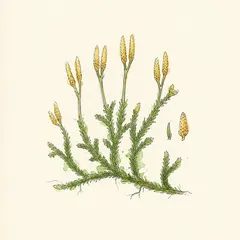
Lycopodium Clavatum
Tyler - Ομοιοπαθητικές Εικόνες Φαρμάκων · Margaret Lucy Tyler · 33,649 χαρακτήρες
 Όλα τα βιβλία για Lycopodium Clavatum →
Αντιδοτείται απόAconitum NapellusActaea RacemosaAllium SativumArgentum NitricumCamphoraCausticumChamomillaChlorumCinchona OfficinalisCoffea Cruda
Όλα τα βιβλία για Lycopodium Clavatum →
Αντιδοτείται απόAconitum NapellusActaea RacemosaAllium SativumArgentum NitricumCamphoraCausticumChamomillaChlorumCinchona OfficinalisCoffea CrudaΓενικά
(Λυκοπόδιο)
Ένα από τα πολύτιμα δώρα του Χάενεμαν, και ένα που εκθέτει και δικαιώνει τις διδασκαλίες του σχετικά με τη δυναμοποίηση.
Για το Lycopodium γράφει: «Α αυτή η σκόνη που μοιάζει με σκόνη, κιτρινωπή, λεία στην αφή, προέρχεται από τα στάχυα ενός βρύου, του Lycopodium clavatum, που φύεται στα δάση της Ρωσίας και της Φινλανδίας» [και στη χώρα μας. — Εκδ.]. «Στο τέλος του καλοκαιριού, τα στάχυα αποξηραίνονται και κατόπιν χτυπιούνται.
«Όταν ριχτεί σε φλόγα, αναφλέγεται, και έχει χρησιμοποιηθεί για την κάλυψη σφαιριδίων που κολλούν εύκολα μεταξύ τους, και για την προστασία πληγών στις πτυχές από την τριβή που προκαλεί το περπάτημα και άλλες κινήσεις. Επιπλέει στα υγρά χωρίς να διαλύεται, δεν έχει ούτε γεύση ούτε οσμή, και στην φυσική της ακατέργαστη κατάσταση δεν έχει σχεδόν καμία επίδραση στην υγεία του ανθρώπου. . .
«Αυτό το φάρμακο διαθέτει θαυμαστές φαρμακευτικές ιδιότητες, οι οποίες μπορούν να αποκαλυφθούν μόνο με τριβή και διέγερση.
«Μέτρια δόση δρα από σαράντα έως πενήντα ημέρες. Μπορεί να επαναληφθεί μετά από ενδιάμεση χρήση άλλου αντιψωρικού, αλλά μια δεύτερη δόση δρα λιγότερο ευνοϊκά από την πρώτη.
«Δρα με ιδιαίτερο όφελος, όταν ομοιοπαθητικά ενδείκνυται, αφού περάσει η δράση του Calc..
Ο Kent λέει: «Αν και κατατάσσεται στα αδρανή υλικά, και θεωρούνταν χρήσιμο μόνο για το τύλιγμα των αλλοπαθητικών σφαιριδίων, ο Χάενεμαν το έφερε σε χρήση και ανέπτυξε τη δύναμή του με αραίωση. Είναι ένα μνημείο στον Χάενεμαν. Εισέρχεται βαθιά στη ζωή. . . . Δεν υπάρχει τίποτα στον άνθρωπο που το Lycopodium να μην το ξεσηκώνει σε ταραχή . . .
Αυτή η «αβρέχτητη σκόνη» — αδρανής, αλλά που λάμπει λαμπρά «όταν ριχτεί σε φλόγα» — έχει χρησιμοποιηθεί επίσης στην κατασκευή πυροτεχνημάτων. Όταν οι σπόροι συνθλίβονται, απελευθερώνεται μια λιπαρή ουσία· και χρειάζονται δύο ολόκληρες ώρες τριβής με γάλα γαϊδούρας (μας λένε) για την αρχική της παρασκευή ως φαρμάκου ταυτόχρονα ισχυρού και μοναδικού στις ευεργετικές του ιδιότητες. Για αρχή, ας αναπαραγάγουμε, λίγο-πολύ, μία από εκείνες τις παλιές μικρές Εικόνες Φαρμάκων, που συμπυκνώνουν στις ελάχιστες διαστάσεις όσα γνωρίζουμε και βρίσκουμε απολύτως απαραίτητα για τη χρήση ενός φαρμάκου . . .
Το LYC. είναι ένα από τα φάρμακα που χρησιμοποιούμε πιο συνεχώς. Δεν πάντα σε κοιτάζει κατάματα ο ασθενής καθώς μπαίνει· αλλά λίγες ερωτήσεις θα σας βάλουν γενικά κατευθείαν στα ίχνη.
Ρωτήστε νωρίς για την ώρα της ημέρας. Αυτός ο ασθενής λέει: «χειρότερα το απόγευμα, ή χειρότερα στις 4 μ.μ., ή χειρότερα από 4 έως 8 μ.μ.», και εσείς κοιτάτε να δείτε αν συμμορφώνεται με τον τύπο του Lyc., και εξετάζετε περαιτέρω.
Ο Kent λέει: «Ο καημένος ο μικρός Paul Dombey χρειαζόταν μια δόση Lyc., αλλά ο Dombey δεν το ήξερε, και έχασε τον γιο του.»
Στο Lyc. ο νους είναι καλύτερα ανεπτυγμένος από το σώμα. Ο Lyc. τείνει να φαίνεται ασθενικός και ρυτιδωμένος — ξεραμένος, ιδίως στο άνω μέρος του σώματος. Το μέτωπο μπορεί να είναι συνοφρυωμένο ή ρυτιδωμένο, και αν είναι μετά από νωρίς μεσημεριανό γεύμα, τα μάγουλα ή η μύτη τείνουν να κοκκινίζουν, προς μεγάλη ενόχληση του ασθενούς.
Η προσμονή είναι ένα πολύ χρήσιμο μικρό ρουμπρίκι. Όλοι ξέρουν ότι το Gels. και το Arg. nit. το έχουν. Αλλά και το Lyc. το έχει· και τα Ars. και Med.· και (αν και λιγότεροι το γνωρίζουν αυτό) το Carbo veg., το Phos. a., το Pb., το Sil. και το Thuja. Αυτά τα τελευταία πρέπει να αναζητηθούν σε άλλα μέρη του ρεπερτορίου. Καλό είναι να προστεθούν στο ρουμπρίκι.
Πριν από χρόνια ένας από τους πολύ καλούς συνταγογράφους μας με έκανε να καταλάβω μια πτυχή της νοητικής κατάστασης του Lyc.. Εξήγησε τους τρόμους της προσμονής όπως επηρεάζουν τον Lyc.. Ο Lyc. πρέπει να συναντήσει τους μετόχους ή τους ψηφοφόρους του με μια σημαντική ομιλία, και ξέρει ότι θα μπερδευτεί, και θα διστάζει, και θα ξεχνά τα σημεία του — είναι κυριευμένος από την ιδέα ότι θα τα κάνει θάλασσα. Η τρομερή στιγμή φτάνει: σηκώνεται στα πόδια του, ζεσταίνεται στο έργο του, πλέει σε μια ευτυχισμένη αυτολησμονιά, για να καθίσει με την αίσθηση ότι έκανε την ομιλία της ζωής του.
Ήταν όλο χαρά και ευφράδεια· όχι μόνο θυμήθηκε όλα τα σημεία του, αλλά έφτιαξε καινούργια καθώς προχωρούσε. Αλλά — θα έχει τον ίδιο τρόμο την επόμενη φορά, αν δεν πάρει το ερέθισμά του, επειδή είναι Lycopodium.
Ή πάλι, ο Lyc. θέλει να είναι μόνος — με κάποιον στο διπλανό δωμάτιο, επειδή — φοβάται να μείνει μόνος! Η επιθυμία του για μοναξιά είναι με πλάγια γράμματα· ο φόβος του, όταν είναι μόνος, είναι με έντονη γραφή. Τα φάρμακα που έχουν αυτές τις αντίθετες καταστάσεις με μεγάλη γραφή είναι τα πιο ενδιαφέροντα. (Το Lach. έχει πολυλογία στον υψηλότερο βαθμό, ταχεία ομιλία και πολυλογία· και, επίσης στον υψηλότερο βαθμό, αργή ομιλία! Αυτό δεν γίνεται πάντα αντιληπτό.)
Ο Lyc. έχει άφθονους φόβους — φόβο της μοναξιάς, του πλήθους, του σκότους, του θανάτου, των φαντασμάτων, των ανθρώπων.
Ο Lyc. έχει όλες τις ΔΥΣΠΕΨΙΕΣ που μπορείτε να φανταστείτε. Ανταγωνίζεται το Carbo veg. και την China για τη διάκριση του πιο αεριοφόρου φαρμάκου. Ο Lyc. θα έρθει και θα σας πει ότι επί μέρες ολόκληρες είναι φουσκωμένη σαν τύμπανο, και πρέπει να λύνει τα ρούχα της.
Μετά το φαγητό είναι φουσκωμένη και τεταμένη, σχεδόν έως σπάσιμο, και δεν ανέχεται την πίεση και τη σύσφιξη των ρούχων της. Ή, νιώθει λιμοκτονώντας, και μετά από δύο-τρεις μπουκιές είναι φουσκωμένη και γεμάτη, και δεν μπορεί να φάει άλλο. Ή, μπορεί να νιώθει απολύτως γεμάτη, αλλά πεινασμένη. Γιατί το Lyc. έχει με έντονη γραφή την εύκολη κορεσμό, και επίσης το αντίθετο με έντονη γραφή, «πεινάει πριν από τα κόπρανα» ή «πεινάει πριν από τα κόπρανα με γεμάτο και τεταμένο στομάχι».
Οι ΕΠΙΘΥΜΙΕΣ για ΦΑΓΗΤΑ του Lyc. είναι για γλυκά — για ζεστά ροφήματα. Ο Lyc. αγαπά, αλλά αρρωσταίνει από στρείδια: Μισεί τον καφέ και το κρέας.
Όλοι γνωρίζουμε την ΠΛΕΥΡΗ ΕΝΤΟΠΙΣΗ ΣΤΑ ΔΕΞΙΑ του Lyc., και την κατεύθυνση των συμπτωμάτων, από δεξιά προς αριστερά, ή από πάνω προς τα κάτω.
Τα ΟΥΡΙΚΑ συμπτώματα είναι σημαντικά. Κόκκινη άμμος στα καθαρά ούρα· ούρα καυστικά που εκδορούν . . . έτσι μπορείτε να αναγνωρίσετε ένα μωρό Lyc. από την κόκκινη άμμο στην πάνα, ή από το εξάνθημα όπου τα ούρα έχουν φλεγμονάνει το δέρμα· και μπορείτε να γιατρέψετε τη νεφρίτιδα και τον ύδρωπά του — όπως έχει δει κανείς.
Ο Lyc. είναι ένας ΔΙΑΝΟΟΥΜΕΝΟΣ, όπως είπαμε, με δυσπιστία στον εαυτό του. Και ο Lyc. έχει πνευματικά βάσανα και αποτυχίες και σύγχυση όταν αρρωσταίνει. Απώλεια μνήμης. Λέει λάθος λέξεις και συλλαβές.
Κάνει λάθη στο γράψιμο — γράφει λάθος ορθογραφία — παραλείπει λέξεις ή γράμματα. Μπορεί να συνειδητοποιήσει ότι το «Z» είναι το τελευταίο γράμμα του αλφαβήτου, και να μην μπορεί να πει το όνομά του. Μέχρι τέτοιο σημείο μπορεί να φτάσει αυτό, ώστε να μην μπορεί να διαβάσει — να μπορεί να γράψει ό,τι θέλει, αλλά να μην μπορεί να διαβάσει ό,τι έχει γράψει.
Οι γιατροί μας αφηγούνται μεγάλες θεραπείες με το Lyc. σε λογοτεχνικά πρόσωπα που δεν μπορούσαν, μετά από μια προσβολή γρίπης, να ξαναρχίσουν την εργασία τους. Οι πνευματικές συνέπειες της γρίπης συχνά απαιτούν Lyc., ενώ οι νευρωτικές (έως σχεδόν παραφροσύνη) χρειάζονται Scutellaria, και εκείνες με μακράχρονη αδυναμία και ρίγος βρίσκουν τη γρήγορη βοήθειά τους στο China..
Δεν υπάρχει νόσος, οξεία ή χρόνια, όπου το Lyc. να μην μπορεί να είναι το φάρμακο — σε έναν ασθενή Lycopodium! Οδονταλγία περίπου στις 4 μ.μ. (το έχει δει κανείς). Εξανθήματα που ξυπνούν φρικτά στις 4 μ.μ.
(και αυτό). Επίμονες πνευμονίες, όπου η θερμοκρασία ανεβαίνει στις 4 μ.μ. και πέφτει μετά τις 8 μ.μ. Διφθερίτιδα όπου η μεμβράνη αρχίζει από τη δεξιά πλευρά και περνά στα αριστερά, το στόμα και η γλώσσα να μην ζητούν με αγωνία το Merc.. Ή, ρινοφαρυγγικές διφθερίτιδες που κατεβαίνουν.
Ο Lyc. έχει επίσης τη παράλυση μετά από diph. (το συνηθισμένο μεγάλο φάρμακό της είναι το Gels.) όπου το φαγητό και το ποτό αναβλύζουν από τη μύτη. Νεφρικά προβλήματα, όπως είπαμε, όπου τα ούρα φλεγμονάνουν και κοκκινίζουν το δέρμα όπου το αγγίζουν.
Δύο χρήσιμα μικρά ρουμπρίκια μπορεί να σας οδηγήσουν στο Lye. Δεξί πόδι κρύο, αριστερό φυσιολογικό. Καυστικός πόνος σαν αναμμένα κάρβουνα ανάμεσα στις ωμοπλάτες. (Το Phos. το έχει αυτό, και πολύ λίγα άλλα φάρμακα.)
Αυτά τα μικρά ρουμπρίκια είναι συχνά πολύ χρήσιμα, έστω μόνο για να παγιώσουν τη διάγνωση του φαρμάκου.
Αν πάρετε < το απόγευμα < 4 μ.μ. < 4-8 μ.μ., επιθυμεί ζεστά ροφήματα, λαχταρά γλυκά, οξύτητα και αέρια, φούσκωμα με τα ουρικά του προβλήματα, δεν θα κάνετε μεγάλο λάθος αν γράψετε βιαστικά LYCOPODIUM.
Συμπτώματα με Έντονη Γραφή
(Allen, Hering, με μερικά πλάγια γράμματα του Χάενεμαν)
ΨΥΧΙΣΜΟΣ. Τρόμος των ανθρώπων· της μοναξιάς· ευερέθιστος και μελαγχολικός.
Κλαίει όλη μέρα, δεν μπορεί να ηρεμήσει.
Επιδείνωση 4 έως 8 μ.μ. Ευαίσθητος: κλαίει ακόμα και όταν τον ευχαριστούν.
Κόρος της ζωής, ιδίως τα πρωινά στο κρεβάτι.
Ερωτική διάθεση και ερωτομανία.
Ευαίσθητος, ευερέθιστος: γκρινιάρης και εκνευρισμένος στο ξύπνημα.
Εύκολα εξεγείρεται σε θυμό· δεν ανέχεται την αντίθεση, και αμέσως χάνει τον έλεγχο του εαυτού της.
Κακώσεις από τρόμο, θυμό, ταπείνωση ή εκνευρισμό, με συγκρατημένη δυσαρέσκεια.
Υπερβολικά ευαίσθητος στον πόνο.
Η ασθενής είναι εκτός εαυτού. (Cham.)
Λέει λάθος λέξεις και συλλαβές.
Διαλέγει λάθος λέξεις.
Μπερδεύεται για καθημερινά πράγματα.
Μεγάλη ανησυχία στο βάθος του στομαχιού. (Kali c.)
Head EN
Vertigo in the morning when and after rising from bed, so that he reels back and forth.
Throbbing in brain on leaning head back during the day.
Throbbing headache after every paroxysm of coughing.
With the cough, shattering in temples and in chest.
Pain in temples as if screwed together, worse during menses.
Rush of blood to head on waking.
Excessive falling of hair : hair becomes grey too soon.
EYES , distressing pain, as if dry, with nightly agglutination.
Styes on lids, more towards inner canthi.
Ulceration and redness of eyelids.
Evening light blinds him very much : cannot see anything on the table.
Roaring, humming, rushing, etc., in EARS .
Loss of hearing in connection with otorrhoea.
Eczema of ears, with thick crusts and fissures.
Violent catarrh, with swelling of NOSE .
Stopped catarrh, so that he cannot get breath at night.
Complete stoppage of nose : child's breath stopped during sleep,
frequently for fifteen seconds, even while the mouth is open.
Fan-like motion of the ala , nasi.
FACE yellowish grey.
Spasmodic twitching of facial muscles.
TEETH painful when chewing and when touched.
Numerous blisters on the tongue.
Ulcers on and under tongue.
Feeling as if a ball rose, from below, up into the THROAT .
Throat feels too tight on swallowing : nothing goes down : food and drink regurgitate through the nose. (Gels., Diph.)
Excessive appetite, followed by distension of abdomen.
Hunger remains immediately after eating, though the STOMACH and abdomen are full and tense.
She cannot eat at all : is constantly satiated and without appetite : whatever she eats goes against her, even to vomiting.
Sudden satiety and great thirst.
Immediately after a meal, is full, bloated, distended.
Loss of appetite at first mouthful : weight in stomach after eating.
A sour eructation, the taste does not remain in mouth; but acid gnaws in the stomach.
Incomplete burning eructations, which only rise to the pharynx, where they cause burning, for several hours.
Epigastrium extremely sensitive to touch and tight clothing.
Digestion seems to proceed very slowly.
Discomfort in the stomach after eating a little.
Cramp in the stomach which is much distended.
Pressure in stomach, as if she had eaten too much.
Pressure in stomach, as if over-distended, in the evening, after eating a little.
Pressure, heaviness in stomach, after eating a little in the afternoon.
Pair in epigastrium caused by coughing.
She dares not eat to satiety, because if she does, she has an unpleasant, distressed feeling in HEPATIC REGION .
Pressive pain, hepatic region, on breathing.
Sore pressive pain as from a blow in right hypochondriac region, aggravated by touch.
Liver is painful to touch.
Pain in left hypochondriac region, afternoon.
Violent gall-stone colic.
Ascites from liver affections, after abuse of alcohol.
Something heavy felt lying in left ABDOMEN , not affecting the breathing, but constantly felt while walking, sitting and lying.
Distension of the abdomen from gases.
Relieved by emission of flatus.
Grunting and gurgling in abdomen.
Whole abdomen distended by flatulence after a stool.
Much flatus accumulates here and there in abdomen, in hypochondria, even in the back in region of ribs and chest, causing tension and bubbling, always relieved by empty eructations.
Immediately after eating the abdomen is constantly full, distended and tense.
Tension with incarceration of flatus.
Sensation of something moving up and down in stomach and bowels.
(Comp.
Crocus, Thuja, Sanicula.)
Hernia right side.
ANUS painfully closed.
The rectum so frequently contracted that it protrudes during a hard stool.
Hoemorrhoids painful to touch.
Great tendency to excoriations about anus : bleed easily.
Itching and moist, tender eruption.
First part of stool lumpy, the second soft.
Aching in KIDNEY before and after urination.
Some red sediment in urine.
Red, or reddish yellow sand in urine.
Turbid, milky urine, with offensive purulent sediment.
Disposition to calculi.
Renal colic, particularly right ureter to bladder.
Urging to urinate : must wait long before it will pass, or inability with constant bearing down : supports abdomen with hands.
Night COUGH affecting stomach and diaphragm, mostly before sunset.
Cough overpowering, evening before going to sleep, as if larynx tickled with a feather, with scanty expectoration.
Tickling cough as from sulphur fumes in larynx.
Difficult breathing, as if he had inhaled sulphur fumes.
Grey, salt-tasting expectoration.
Dyspnaea : during sleep ; from every exertion.
CHEST feels oppressed and raw internally.
Stitches left chest, and during inspiration.
Hering gives " Hydropericardium"' (Ars.)
BACK , burning as from glowing coals between the scapulae ( PHOS., KALI BICH., etc.).
Severe backache, better by passing urine.
One foot hot, the other cold.
Desire to go into the open air. (Puls., etc.)
Her symptoms are aggravated at 4 p.m. : at 8 p.m. she feels better, but weak.
Headache, cough, fever, chill, EVERYTHING WORSE 4-8 P.M.
Nervous excitement prostration of mind and body. Nervous debility.
Hungry WHEN WAKING at night.
On waking, cross, kicks, scolds : or wakes terrified : unrefreshed.
Many years ago, one was asked to go to the " other end of nowhere " to prescribe for a small boy — very small, yet already a great cricketer at five years old. The trouble was recent tormenting " frequency."
One stood and watched him playing cricket on the sands with the other little boys, and every few minutes he had to rush away for relief.
All this was very puzzling to his parents.
A few Lycopodium symptoms emerged, with this one, also new to him — that he " woke up ugly " as the Americans express it, " crying and cross ".
Lyc. quickly cured ; and, incidentally, hammered home a point which we will pass on . . .
Lyc. is, in almost everything, worse in the evening and better in the morning, except, as one discovered over this case, that it is (mentally) " ugly on waking ".
It is puzzle-cases that bite into the memory, and their triumphs that teach one to know drugs.
Hughes quotes Dr.
David Wilson in regard to the fan-like movement of the alae nasi noted in the pathogenesis of Lyc.
" When this symptom is clearly marked, no matter through what organ or tissue the symptoms of any attack of illness. may manifest themselves in children or young people, I venture to submit that the whole group of the phenomena in such attacks will be found under Lycopodium."
Dr. David Wilson was a great prescriber and, note ! he does not say "when the alae nasi work, give Lyc.," but " I submit that the whole group of the phenomena in such attacks will be found under Lycopodium."
It is in respiratory affections that this symptom is generally seen. This is the classical picture of a Lycopodium pneumonia, for instance.
Frowning forehead.
Working of the alae nasi.
Temperature rises each day at 4 p.m. till 8 p.m., and then declines. In a pneumonia that tends to hang fire, this last symptom puts one straight on to Lyc. which finishes the case..
Kent speaks of its use " in the advanced stage of pneumonia, in the period of hepatization, with the wrinkled face and brow, the flapping wings of the nose and the scanty expectoration. The right lung is most affected, or is affected first in double pneumonia "
In a Lyc. diphtheria, as said, the trouble begins on the right side, and may spread to the left : we have seen such a case : but with none of the foulness of mouth and tongue that cries aloud for one of the Mercuries.
Lycopodium is one of the great polycrests — the Drugs of Many Uses. But the above black letter symptoms, the " caused and many times cured symptoms ", which are classical in our school, bring out its important points of attack for evil and for good.
The drug, as said, suits intellectuals ;
(rather skinny and old-looking intellectuals) ; with more mental than bodily vigour.
Hence it proves subversive, and especially curative of mentality ; affecting MEMORY , and restoring those who, after sickness or strain, are afflicted with confusion and mental tiredness and incompetence.
Again, its subversive effects and therefore its curative powers come strongly into play in the digestive and urinary regions.
One remembers one " new " patient in particular who for days had been almost bursting with flatulence and distension, and had had to loosen all - her clothing ; and how quickly Lyc. put her right.
Nash says, " Lycopodium with Sulphur 'and Calcarea form the leading trio of Hahnemann's anti-psoric remedies.
They all act very deeply.
Lycopodium acts favourably in all ages, but particularly upon old people and children . . . on persons of keen intellect but feeble muscular development : lean people. . . .
The Lycopodium subject is sallow, sunken, with premature lines in the face ; looks older. than he is.
Children are weak, with well-developed heads, but puny, sickly bodies. . . .
This is one of the trio of flatulent remedies, Carbo veg. and China being the other two . . . remember, while China bloats the whole abdomen, Carbo veg. prefers the upper, and Lycopodium the lower parts. . . .. Guernsey points out here, " China has fullness after a full, normal meal ; Lyc. after eating a little." " Constipation predominates ; and like Nux there may be frequent and ineffectual desire for stool, but while that of Nux is caused by irregular peristaltic action, that of Lyc. seems to be caused by a spasmodic contraction of the anus, which prevents the stool and causes great pain. . . . Lyc. has often saved neglected, mal-treated or imperfectly cured cases of pneumonia from running into consumption. . . ." We have given its characteristic indications elsewhere : — the frowning forehead, the flapping alae nasi, the 4-8 p.m. aggravation of fever, etc.
Lyc. is down as a chilly remedy : yet it is one of the few remedies that appears in the Repertory in the rubric, Better when cold. (IOD., PULS., with Lach., Nat. mur., Sulph. and a few others.) But Lyc. is generally better from warm or hot things, drinks, etc., and even better warm in bed.
A few additional points from KENT , who reiterates, stresses and amplifies " Lycopodium emaciates above, while the extremities are fairly well-nourished. . . .
The Lyc. patient cannot eat oysters.
It does not seem to matter what is the matter with him, if he eats oysters he gets sick . . . headache, pain in the ovary, cough — after eating oysters.
Oysters seem a poison to Lyc., just as onions are a poison to the Thuja patient.
The Oxalic acid patient cannot eat strawberries.
If you are ever caught in a place where you have a patient get sick after eating strawberries, tomatoes or oysters, and you have no homoeopathic remedies at hand, it is a good thing to remember that a piece of cheese will digest strawberries, or tomatoes, or oysters, in a few minutes."
" The eruptions of Lyc. and sometimes the ulcers and abscesses of Lyc. are better from something cool.
The soothing thing to Lyc. is something cooling, while the soothing thing to Ars. is heat. . . .
The old ladies of the house will want to do something, and put warm clothes or warm water on the suffering part, but these will make the Lyc. patient worse."
" Lyc. is tired. A tired mind, a chronic fatigue, forgetfulness, aversion to undertaking anything new, to appearing in any new role ; aversion to his own work.
" Taciturnity : desires to be alone.
If there were two adjacent rooms in the house, the Lyc. patient would go into one and stay there, though very glad to have someone in the other.
That is the state of the Lyc. mind. . . .
" Lyc. often breaks down and weeps when meeting a friend.
An unusual sadness with weeping comes over this patient on receiving a gift.
At the slightest joy, Lyc. Weeps even cries when thanked . .
" Left foot cold, the other warm ' . . red sand in urine red pepper deposit
In regard to throats and diphtheria, and the " right to left " of Lyc. and the " left to right " of Lach. Kent points out that " Lach. is better from cold, and has spasms of the throat from attempting to drink warm drinks, while Lyc. is better from warm drinks, though sometimes better from cold drinks." It is important to know this, or one is apt to discard Lyc., when otherwise indicated.
To become a rapid and at all correct prescriber — for the bulk of the patients that crowd in to a hospital out-patient clinic, or for panel work, there are some dozen remedies that one needs to make friends with, so as to be able to recognize them after a minimum of glances and questionings.
Such are SEPIA, SULPHUR, LYCOPODIUM, CALCAREA, SILICA, NATRUM MUR., ARSENICUM, BRYONIA — Hahnemann's anti-psorics all ! — and for acute work, ACONITE, BELLADONNA, again BRYONIA, RHUS, GELSEMIUM, BAPTISIA , and a few other indispensables.
These are all remedies of distinct personality, and should not be confused — when once their inwardness is grasped. It is to make these remedies easily recognizable that in our little drug pictures we reiterate, and try to produce a snapshot of one or another, with its various uses. Such an assortment of drugs at one's fingertips should make homoeopathic prescribing, in a large proportion of the common complaints, comparatively easy and sure.
Lycopodium In Aneurism
Dr. Hughes (Pharmacodynamics) mentions a " curious point " in regard to Lycopodium.
He says :
Lycopodium has occasionally been suggested for aneurism, but I had thought little of it, though in a case treated by Dr. Madden and myself what seemed to be an aortic aneurism ceased to be discoverable while we were giving the medicine for the general health.
But I have since seen most striking results from it in an unmistakable carotid aneurism in an old lady, for whose dyspeptic symptoms the remedy had often proved serviceable.
The shooting pains which accompanied the swelling disappeared in the first three days of taking the Lycopodium ; and in a fortnight the enlargement of the artery was reduced to one-half, at which point it has since continued stationary, giving her no pain, or inconvenience."
Magnesia phosphorica
Mag. phos. is probably the most important and precious of the remedies derived from the bio-chemical studies of Dr.
Schuessler .
It is one of his twelve " Tissue Remedies ".
It has been " fed in " in low potencies and frequent doses : but we can attest, from long and frequent experience, that it works magnificently in the high and highest potencies in very infrequent dosage : i.e. only repeated if, and when, the same symptoms recur, after perhaps months, to demand a repetition of the same remedy. But this, of course, only when it has been prescribed on similarity of caused and cured symptoms.
Mag. phos. is one of the greatest, if not the greatest, of the remedies of dysmenorrhoea : but only of dysmenorrhoea of its own kind : viz. where the pains double the victim up ; are relieved by heat, hot drinks, hot applications ; and aggravated by cold. In this relief from doubling up and from warmth, it is very like Colocynth, another great remedy for such forms of dysmenorrhoea ; but Mag. phos. has a greater idiosyncrasy in regard to heat and cold ; and the mentalities of the two are not alike ; the pains of Coloc. being so often due to vexation.
Anger and annoyance, with Coloc., may produce pain in any part of the body — even in the spine.
But it is no wonder that symptoms in Mag. phos. and Coloc. should present many points of resemblance, since Coloc., which belongs to the vegetable kingdom, contains 3 per cent. of Mag. phos.
" Among the " (other) " plants containing Mag. phos. are Lobelia, Symphytum and Viburnum, which explains the presence of similar symptoms.
It is very interesting to trace, in vegetable remedies, the different elements or salts that occur in them, and which explain some of the symptoms they have in common.
It makes them easier to remember.
In " THE TWELVE TISSUE REMEDIES OF SCHUESSLER (Drs.
Boericke and Dewey ) we are told that Dr.
Schuessler recommended the 6x trituration, and said that it acted best when given in hot water. . . .
" But in view of the really surprising and apparently wholly trustworthy results obtained by the provers with the high and highest potencies, we would recommend these, should the lower fail." [We may add that our own results have been obtained, always, so far as we can remember, from single doses of the CM potency.]
One never-forgotten case, because of the unpleasant — even alarming reaction, was that of a child in the out-patient department many years ago, who got a dose of Mag. phos.
CM., for chorea.
She was speedily brought back with an extension of the trouble, apparently, into the laryngeal region, i.e. with rather alarming respiratory spasms.
She was promptly admitted ; got no other medicine ; and was well in a few days.
The drug, prescribed in a lower potency, would probably not have evoked such an alarming aggravation — or proving : but the result was not too bad. One does not often completely cure a chorea within a fortnight ; which, so far as one remembers, was the case here.
Among the cases that assail one's memory in regard to Mag. phos. is that of a " very ill " baby, which was admitted to Hospital for diarrhoea with colicky pains causing it to draw up its legs. Coloc. was given, and the diarrhoea was relieved ; but the pains persisted, and the fear was that the baby would die. But it was noticed that a warm hand on the abdomen evidently comforted the babe : and Mag. phos., thereupon, did the rest.
But one's chief use for Mag. phos. has been in the treatment of dysmenorrhoea. Single doses of the CM., given just any time the patient happened to come up, not necessarily during the painful period, have cured for us quite a number of cases, the indications being dysmenorrhoea, with violent abdominal pain, doubling the patient up, and only relieved by heat.
BLACK LETTER SYMPTOMS
Neuralgia or rheumatic headache : better from external applications of warmth : very excruciating.
Tendency to spasmodic symptoms.
Shooting, stinging, shifting, intermittent or spasmodic pains : sparks before eyes.
More in young and strong persons.
After mental labour.
Neuralgic pain, especially behind right ear : worse by going into cold air, and washing face and neck in cold water.
Otalgia, purely nervous.
Toothache, better by heat and hot liquids.
Severe pain in decayed or filled teeth : swelling of tongue.
Complaints of teething children.
Spasms during dentition, no fever.
Spasms or cramp in stomach, nipping, griping, pinching, with short belching of wind, giving no relief.
Spasms or cramp in stomach, with clean tongue : as if a band was tightly laced or drawn round body.
Enteralgia.
Flatulent colic forcing patient to bend double : )Coloc.) better from rubbing, warmth, pressure.
Accompanied by belching of gas, which gives no relief.
Bloated, full sensation in abdomen ; must loosen clothes )Lyc.) and walk about.
Flatulent colic of children and the new born, with drawing up of legs : remittent colic ; crampy pain with acidity.
Radiating pain in abdomen.
Meteorism in cows )Colch.).
Nocturnal enuresis from nervous irritation.
Menstrual colic.
Membranous dysmenorrhoea.
Ovarian neuralgia, pain shooting and darting like lightning : worse on right side.
Spasmodic, nervous asthma.
Chorea.
Neuralgia at intervals, relieved by warmth.
Languid ; tired exhausted.
Chilliness : chills run up and down the back )Gels.) with shivering.
Dread of uncovering )Nux).
Worse : right side ; from cold ; from touch : relieved by warmth ; by bending double.
Mag. phos. has been found useful in nystagmus : strabismus ; spasmodic squinting ; ptosis ; in spasmodic stammering : spasmodic constriction of throat with sensation of choking. In hiccough, day and night, with retching.
In vesical neuralgia after catheterization ; sensation as if muscles did not contract.
In laryngismus stridulus. In spasmodic coughs, and whooping cough.
In angina pectoris. In intercostal neuralgia, constrictive kind.
In shaking of hands and limbs ; sciatica ; cramps in calves ; even for violent pains in acute rheumatism of joints.
All sorts of spasms with contractions of fingers and staring eyes. In convulsions, with stiffness of limbs, thumbs drawn in, and fingers clenched (Cup.).
Cramps of piano or violin players : writer's cramp.
In chorea . . and when the muscular fibres of heart seemed to participate in the general spasm.
In epilepsy.
In palsy : paralysis agitans.
Violent pains ; maddening pains ; excruciating pains ; terrible pains ; great pain with retching.
Pains : sharp ; shooting ; lightning-like ; cutting ; stinging ; cramping ; boring ; griping ; drawing : — constricting : — pricking.
Said to be " a nutrition and functional remedy for nerve tissues."
NASH says, " Now we some to the prince of the Magnesias. It is comparatively new and has never been accorded a place in our Materia Medica according to its importance and merits.
" It takes first rank among our very best neuralgia or pain remedies : none has a greater variety of pains : " (he details them).
" CRAMPING---this last in my opinion is most characteristic, and oftenest found in stomach, abdomen and pelvis.
In dysmenorrhoea of the neuralgic variety, with the characteristic crampy pains, I have found no remedy equal to it." (N.B.
Nash gives it in high potency : 55M made on his own potentizer.)
" Alongside the cramping, is its characteristic modality — relief from hot applications." Here, Nash makes a very important comparison — with Arsenicum. He says, " No remedy has this " (relief from hot applications) " more prominently than Arsenicum alb. But you will notice that among all the various pains we have mentioned as belonging to Magnesia phos. the one conspicuous for its absence is the one most characteristic of Arsenicum, viz. — burning pains.
I watched this difference," he says, " and found that if burning pains were relieved by heat, Arsenicum was almost sure to relieve, while those pains not burning but also relieved by heat were cured by Magnesia phos. I think that this will be found a valuable diagnostic between the two remedies."
He says, " During painful menstruation Magnesia phos. is quicker in its action than Pulsatilla, Caulophylum, Cimicifuga, or any other remedy that I know." He thinks Cimicifuga covers the rheumatic cases better, Mag. phos. those of a purely neuralgic character. " I have no faith in the Schuesslerian theory. Similia similibus curentur has stood the test with other remedies and will with the so-called tissue remedies, regardless of theories."
Now we will, at risk of some repetition, appeal for hints to the perspicacity and clarity of Kent ; condensing :
Best known for its spasmodic conditions and neuralgias.
A pain localizes itself in a nerve and stays there, and becomes worse and worse, sometimes coming in paroxysms, but becoming so violent that the patient becomes frantic. The pains are always ameliorated by heat and pressure . . . pains are brought on when he becomes cold, or in a cold place. . .
Pains are felt everywhere . . stomach, bowels, with the same modalities . . even pains in spinal cord, ameliorated by heat.
Cramps — from prolonged exertion — writers, and players on piano and harp : they suddenly break down with stiffness and cramp after several hours' labour every day for years.
The labourer's, the carpenter's hand, cramp . . . this is a strong feature of the remedy, in all sorts of over-exertion.
Screams with the violent cramps in : dysentery and cholera morbus. . .
" It was Schuessler's main remedy for chorea, but we can only use it by its proving.
He prescribed it in all nervous conditions, but its proving justifies its use in neuralgia ameliorated by heat and pressure."
Cramps and twitchings.
A tearing pain, as if the nerve were inflamed and put on a stretch.
Shaking, as in paralysis agitans.
Better from heat and pressure, and worse from cold, cold bathing, cold winds, cold weather, lack of clothing.
Pains all over ; but more likely pain located in one part.
" Mental symptoms not brought out. Used clinically when diarrheas have ceased suddenly and brain troubles have come on.
Congestion of brain : but this is entirely clinical."
Headaches, with red face and throbbing, like Bell., but relieved by tight bandaging and a warm room.
Spasms about the eyes : jerkings : squint.
Neuralgias of face, violent supra and infra orbital neuralgias ; especially of right side ; better heat and pressure ; worse from cold.
Pains in stomach with clean tongue.
Colic ameliorated by doubling up, like Coloc., and by heat. "
The colic is not so markedly relieved by heat in Coloc., but is relieved by pressure."
Distension of abdomen with much pain.
Radiating.
Compelled to walk and groan.
Meteorism.
It is said to cure cows of this condition.
Colchicum will cure cows when they are distended
with gas after being turned into clover patches." . .
Nerve pains, then, with spasm, cramp, and colic, suggest Mag. phos. But one seems to notice that ` it is not indicated where there is fever : — except in some fevers where there is cramp.
The great sphere of the drug is to torture, and to soothe, nerve tissue.