 Homeopathy Library
Calcarea Carbonica
Calcarea · Tyler - Homoeopathic Drug Pictures · Margaret Lucy Tyler · 24,201 chars
 All books on Calcarea Carbonica →
Antidoted byActaea RacemosaAntimonium ChloridumArgentum NitricumBismuthumBryonia AlbaCamphoraCinchona BolivianaCinchona OfficinalisGraphitesHepar
All books on Calcarea Carbonica →
Antidoted byActaea RacemosaAntimonium ChloridumArgentum NitricumBismuthumBryonia AlbaCamphoraCinchona BolivianaCinchona OfficinalisGraphitesHeparGeneral
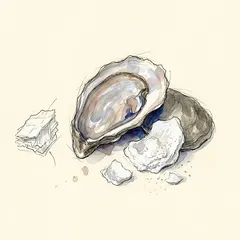
This remedy, impure calcium carbonate, is a trituration of the middle layer of the oyster shell. It was proved by Hahnemann ; and Clarke calls it " one of the greatest monuments of Hahnemann's genius. . . . His method of preparing insoluble substances " (by trituration) " brought to light, in this instance, a whole world of therapeutic power formerly unknown."
Some remedies are difficult to spot : the difficulty is to miss Calcarea, when typical.
Calcarea has at least five definite pictures in the provings ; they are distinct, yet they merge into one another.
There is the teething picture.
The picture of rickets.
The picture of anaemia.
The picture of tuberculosis.
The picture of mental deficiency, and decay.
In Calc. the child is father to the man — or woman. If you know the Calcarea child, you realize Calc. later on in life.
First, then, the teething picture : the fat, flabby baby, with fair hair, a big head (often sour-smelling), that perspires furiously at night in sleep, and wets the pillow far and wide. Dentition is delayed. The teeth that should begin to appear, don't The gums are swollen, throbbing, sore. You are told that " her milk disagrees " : she vomits, sour water, sour curds ; sour water runs from the mouth.
Calc. is very sour ; the stools smell sour — sour and pungent — excoriate. (In Lyc. it is the urine that burns and excoriates : in Calc., Sulph. and others, the stool.)
In Calc. the stool (in diarrhoea or in constipation) may be white like chalk. Bracelets of fat begin to surround the wrists and ankles, the rickety rosary may be felt. Fontanelles are slow to close — teeth to erupt--bones are slow to bear weight, of poor quality — bend.
Cough : a" teething cough ". (One used to give something for the bronchitis and with it Calc. to help the teeth through, till one found that Calc. covered both — in a Calc., child.)
All this merges into the rickety child. The Calcarea child of the Provings and the Materia Medica, is the typical rickety child.
The fat, fair, pallid child is brought in, and dumped down onto a chair, and sits there. No wriggling down to wander about, and touch everything in the room. She sits there, lethargic and dull. Perhaps plays with her fingers and picks them.
With the chalky complexion, goes —
Fatness without fitness.
Sweating without heat.
Bones without strength.
Tissues of plus quantity and minus quality.
Mere flabby bulk, with weakness and weariness.
The Calc. head, when you inquire, still sweats exceedingly. Sweats when cold. Sweats in a cold room. Sweats at night and soaks the pillow. (It is Calc. and Sil. that soak the pillow at night and during sleep ; but their pictures are so different.)
In Calc. everything is slow, and late, and heavy, and weak.
You will be told about the night-terrors ; how the child starts out of sleep screaming with terror ; knows no one ; can hardly be pacified. Is trembling with fear. " Calc. children have dreadful times in their dreams," Kent says. And Calc. has a wonderful record for curing night terrors.
Calc. desires eggs ; eats lime, slate pencils, earth (Alum.), chalk, clay, raw potatoes, sweets, ice cream, etc.
And later on, hates coffee, meat, milk (or likes milk which disagrees) ; hates tobacco.
Stomach swollen " like an inverted saucer ".
A third picture — further on in life — " the leucophlegmatic patient ", as she has been called, — fat, fair, flabby. She comes in huffily, and presents you with a foggy hand, that makes you shiver and look round for soap and water — so boneless it is, so moist and cold. You can spot Calc. by that hand.
She will give the symptoms of her ANEMIA : her weariness, her weakness, her palpitation. Her breathlessness on going up the slightest ascent. Her sensation of chest too full of blood ; head too full of blood.
Her chilliness. Her tendency to sweat, especially about head and feet. How she sweats when cold ; in a cold room ; in sleep. How her coldness comes in patches, even spots — cold head, cold feet, cold abdomen, cold thigh, cold scalp ; icy cold.
(Sulph. has heat in patches : Calc. has cold in patches, and, Kent says, sweat in patches.)
Here you see a great fat woman, without strength, breath, energy, firmness, colour, health. Such weakness ! such weariness ! such breathlessness ! such palpitation !
She will tell you that her menses are too early, too profuse, too long-lasting : are apt to recur with any exertion or excitement.
And then her cramps ! She cannot get into a cold bed without cramp. She stretches out her leg in bed and gets cramp : calves, fingers, and toes all indulge in painful cramps (Cuprum).
And she is so easily sprained. Has pain in the small of the back as if sprained ; is unable to lift anything heavy ; and sweat breaks out suddenly ; in the morning ; at odd times.
And she has a curious feeling as if tight-laced about the waist. Has rushes of blood to head. Vertigo on turning head.
I once saw Calcarea clear up a very bad case of pernicious anemia for several years. I had tried things on various indications, then gave Calc. because her chalky face looked like it. She lived far away and gave up treatment at last, and relapsed and died. But she bloomed and got strong meanwhile.
Then the T.B. type. All foreshadowed in the provings. They tell of submaxillary glands as big as hens' eggs (Dros.). Of hard swellings in submaxillary glands. Ulcers, with indurations about them.
Night sweats.
Abdomen very much distended ; hard, swollen glands in both groins.
But all in a " Ca/c. patient, whether adult or child "
Kent describes it thus : " Children with cold feet, emaciated extremities, enlarged abdomen, stomach distended like an inverted saucer, bloated abdomen. Cold, and sensitive to cold. Pale skin. Pale, waxy face."
Then, the chest is so sore--so sensitive to touch and inspiration. So tight. So full up with blood.
And the cough — the tickling cough, with sweetish expectoration and spitting of blood. Yes : the provings suggest rickets, anaemia, tuberculosis.
Then the Calcarea mental picture.
So frightened — so afraid !
The terrors at night ; after sleep ; on waking from sleep Fear ; fear ; fear.
Fear that something is going to happen to herself, or to someone else.
Fear that she will lose her reason, and that people will notice.
Fear that people will notice her confusion of mind. Fearfulness, with restlessness and vague fear. Fear of Death.
Can't help it ! She sits — sits and fidgets with small things —
bends pins by the hour.
Broods over little things that have no importance.
Dread and aversion to labour.
Fear of consumption.
Peevish ; fretful ; obstinate.
Thoughts vanish. Brain feels paralysed — can't think or remember ; with confusion.
Dread of disease and suffering. Despairs of her life and
reason.
Calc. epilepsy has for aura the " mouse sensation " Sensation of a mouse running up arm or leg. (Bell. has this also, and Sil.)
NASH says, " If Calcarea has one symptom that not only leads all the rest, but also all other remedies, it is found in the PROFUSE SWEATS ON THE HEAD OF LARGE-HEADED, OPEN FONTANELLES CHILDREN.
The sweat is so profuse that during sleep it rolls down the head and face, wetting the pillow far around. Many a little child has been saved from dying of hydrocephalus, dentition, rachitis, marasmus, eclampsia, cholera infantum, etc., where this sweating symptom was the guiding symptom to the use of Calcarea.
He also draws attention to malnutrition as one of the disorders calling for Calcarea. He quotes from Hering's Guiding Symptoms :
" Tardy development of the bony tissues with lymphatic enlargements."
'Curvature of the bones, especially spine and long bones."
" Extremities deformed, crooked."
" Softening of the bones : fontanelles remain open too long, and skull very large."
And he adds, these symptoms " show the lack of, or imperfect nutrition of bones.
They are nourished irregularly, or unevenly.
One part of a bone, the vertebra for instance, is nourished, while the other is starved. While all this irregular bone development is going on the soft parts are suffering from over-nutrition. This we have recorded in the pathogenesis, tendency to obesity, especially in children and young people."
By the way — Calc. is the chronic of Belladonna : i.e. when Bell. has again and again helped the acute condition, Calc. will be curative, and so, prevent its recurrence.
Now we will conclude with some points from KENT :
" Calcarea sweats in spots. . . . When Calcarea' s feet become cold, they sweat,* . . .
* Cold sweat, feet and legs, sensation of damp stockings, Sepia also. — ED.
" Children going through difficult dentition have dreadful times in their dreams : screech out in the night, 'and the pillow is wet all round the head. . . .
" Calcarea produces that kind of anaemia known as chlorosis. It produces a most pernicious anaemia. . . .
" Sensitiveness to cold and weakness run through the remedy . . . fat, flabby, very anaemic subjects. Calc. is a very tired patient . . .
" They go into a state of enlarged glands, emaciation of neck and limbs, while abdominal fat and glands increase. Calc. has both fat flabby and pale patients, and it has emaciated states too. . . .
"Calcarea children long for eggs : and are better for eating eggs.
" They have sour, pungent stools with undigested milk.
" Tickling cough.*
" Relaxation of tissues everywhere — muscles — veins--especially of lower limbs and anus, i e. hemorrhoids or varicose veins
of legs. . . .
" Calcarea grows and cures polypi — in the Calcarea patient. And Calcarea babies are almost always more or less wormy.
" Indurations in ulcers — base of ulcers — round about ulcers, i.e. its wonderful use in palliating and restraining malignant ulcers, as these have always an indurated base. Old cancerous ulcers are greatly restricted in growth : patient improved : very much more endurance, and the ulcers will take on healing. In cancerous affections that would kill in sixteen months, the patient will live five years with Calc. — if Calc. is indicated."
Kent says that infants fed with lime water in the milk soon become lime subjects : unable to take lime from their natural food, they grow fat and flabby. But the natural lime cases are born so, with inability to absorb lime from their natural food, and they grow fat and flabby, and produce deficient bone : deficient teeth, or no teeth. He says, " What a foolish notion to feed that infant lime, because he cannot digest lime. . . . Now it is astonishing that one single dose of the potency will make that infant commence to digest its food, and appropriate therefrom all the lime it needs for its bones and elsewhere.
All at once the teeth begin to grow, the bones begin to grow, the little fellow s legs get stiff enough for him to walk and they will hold him up.
[Here one recalls an old, fat woman, typically Calcarea, as described. She had a tickling cough at night for years, which disturbed her neighbours, and got her people up to get her hot water to drink. A dose of Calcarea, high, stopped the cough for a whole year.]
" It is a peculiar feature of Calcarea, that the more marked the congestion of internal parts, the colder the surface becomes. With chest troubles, and stomach troubles, and bowel troubles, the feet and hands become like ice, and covered with sweat ; and he lies in bed sometimes with a fever in the rest of the body, and the scalp covered with cold sweat. That is strange. You cannot account for that by any process of reasoning in pathology, and when a thing is so strange that it cannot be accounted for, it becomes very valuable as descriptive of the remedy, and is one that cannot be left out when prescribing for a patient."
HAHNEMANN first proved Calc. acet. His proving of Calc. carb. appears in Vol. II of his Chronic Diseases. He says : " Take a clean oyster shell, somewhat thick ; of the soft snow-white calcarean substance which is found between the internal and external hard shell, take one grain, which is then to be triturated and dynamized in the usual manner."
He says, inter alia, " Calcarea generally is indispensable and curative when the catamenia appear a few days before the period, especially when the flow is considerable. But if the catamenia appear at the regular period or a little later, Calcarea is almost never useful, even if the catamenia should be rather profuse."
In affections of persons advanced in age, Calcarea, even after other intermediate remedies, can scarcely be repeated with advantage ; a dose which is given after another without any previous intermediate remedy, is almost always prejudicial ; in cases of children, however, several doses may be given in succession, provided the remedy continues to be indicated : the younger the children the more frequently may the remedy be repeated."
BLACK LETTER SYMPTOMS
Thinking is difficult.
Visions of faces and persons, when eyes are closed.
Fears that she will lose her reason, or that people will observe her confusion of mind.
Anxiety, shuddering and dread as soon as evening comes on, with fear of death.
Great anxiety, restlessness and palpitation.
Despairing, hopeless of ever getting well, with fear of death ; tormenting all around, day and night.
Children self-willed, inclined to grow fat.
After exerting mind ; hyperemia of head ; chorea ; trembling spells.
Excitement brings on dysmenorrhoea ; least excitement enaangers return of catamenia, or causes.
Vertigo ; when climbing into high places ; on going upstairs, or up a hill ; on suddenly raising or turning head, even when at rest ; on walking in open air, as if he would tumble, especially on suddenly turning HEAD ; with stupefaction and a sensation of falling (neurosis cordis) with inclination to fall backward or sideways ; with headache ; nausea and vomiting, incarcerated flatulence ; accompanied by nausea and a feeling as though one would fall unconscious ; with unsteadiness in thighs when walking rapidly ; in Addison's disease ; during intervals of epileptic spasms.
Stupefying pressive pain in forehead, with confusion of senses and dullness of whole head, while reading ; he was obliged to stop and did not know where he was.
Tearing headache above eyes down to nose, with nausea.
Headache begins in occiput and spreads to top of head, so severe that she thinks head will burst, and that she will go crazy.
Concussive, stitching, pulsating pains in head, as if it would split, with cough.
Internal and external sensation of coldness of various parts of head,, as if a piece of ice was lying against it, with pale puffed face.
Congestion to head ; with heat and stupefying headache ; with red puffed face ; with toothache ; during night ; < in morning when awakening, and from spirituous drinks.
Chronic hydrocephalus.
Burning in vertex ; also after grief.
Internal and external sensation of coldness of one (r.) side of head, as if a piece of ice was lying there : < weather changing ; in early morning ; from motion in open air ; < on lying down.
Sweating of head very profuse, rolling down face in large, beadlike drops ; the pillow is wet for some distance around child's head.
Tinea.
Chalk-like stools.
Nocturnal sweats of head.
Head too large, fontanelles not closing.
Rachitis.
Open fontanelles, with large head and with sweating of same ; Children leuco-phlegmatic, very fat and of leaden weight ; abdomen hard and distended, with sour-smelling diarrhoea.
Scratches head impatiently on getting awake or when disturbed in sleep.
Tinea favosa ; thick scabs covered with thick pus.
Crusta serpiginosa ; herpes circinatus.
Great photophobia ; < in evening ; agglutination of lids in morning.
Cataract.
Horrid visions when EYES are closed.
Dilated pupils ; often indicated after Sulphur.
Fungus hematodes with opacity of cornea.
Dimness of cornea ; opacity ; macula.
Pustules an cornea, much lachrymation and excessive photophobia ; < by gaslight, or in morning, and in changes of weather.
Ophthalmia ; from taking cold ; entrance of foreign body ; in the newborn ; scrofulous ; arthritic.
Inflammation and swelling of outer and inner EAR.
Otorrhoea muco-purulent, affecting principally right ear ; enlarged glands.
Ulceration, then granulation, then polypus ; great stench.
Nasal polypi, with loss of smell.
Swelling of NOSE and upper lip, in children.
Face looks old and wrinkled.
Face puffed up, in children.
Lips chapped and cracked ; corners of mouth ulcerated.
Chewing motion of jaws during sleep.
Painful swelling of submaxillary GLANDS.
Hard, painful swelling of submaxillary glands ; painful tension when chewing ; sticking pain when touched.
TEETH cannot endure air or any coldness.
Difficult dentition.
With Rachitis.
Eclampsia.
Cholera infantum.
Hydrocephalus.
Crusta lactea.
Infantile catarrh.
Laryngo-tracheitis.
Bronchitis.
Bronchial catarrh.
Marasmus.
Urticaria.
Chorea.
TONGUE dry, does not like to talk. (Compare Phos. ac. and Bellad.)
Sore THROAT. marked ; cellular tissue around cervical glands swollen ; nose sore ; obstructed.
Ravenous hunger, with weak STOMACH.
Appetite poor, with an aversion to meat and a craving for boiled eggs.
Complete loss of appetite.
Longing for boiled eggs.
Aversion to meat.
Sour vomiting, especially during dentition.
Vomiting and diarrhea of teething children.
Pit of stomach swollen like a saucer turned bottom up ; painful to pressure.
Bloating in region of stomach, compelling him to undo his clothing.
Tight clothes about hypochondria are unbearable.
Pains more on left side, especially under left hypochondrium ; tearing stitching pains in left chest to hypochondrium.
Flatulency with gurgling in right side of ABDOMEN.
Abdomen much distended ; hard.
Mesenteric glands hard and swollen in children ; abdomen feels as if filled with stones or ovoid bodies.
Mesenteric atrophy.
Emaciated everywhere, except abdomen.
Soreness of navel ; a moist excrescence like proud flesh from navel of infants. (Kali carb., Nat. mur.)
Diarrhoea of sour smell.
Watery stools.
Tapeworm and ascarides with stool.
Tapeworm ; after Graph.
Polypi and varices of BLADDER.
Increases SEXUAL desire and provokes emissions, but unusual weakness follows indulgence and ejaculation is tardy.
Impotence.
Consequences of onanism or of too frequent coitus ; pressing pain in head and back ; lassitude and weakness in lower limbs ; knees seem to give way ; sweats easily, debility ; hands tremble.
Frequent nocturnal involuntary emissions.
Itching and burning of genitals of both sexes.
Menses will not appear ; in plethora.
Menses ; too early ; last too long ; too profuse.
The least excitement brings on a return of profuse catamenia.
Metrorrhagia.
LEUCORRHOEA ; like milk, with itching and burning.
Before or after menses ; during micturition ; profuse at times ; in fits
and starts ; worse after exercise ; with great debility ; with stinging in os and aching in vagina ; with burning in cervical canal ; with accumulation of mucus between labia and thighs ; with chlorosis ; in scrofulous women.
Leucorrhoea with pruritus ; white, milky, but not thick ; heat of parts.
Leucorrhoea thick, yellow ; < by day, when urinating.
Frequent leucorrhea between menses, which are too early and profuse.
Vaginal polypi and fistula.
Clumsy, awkward, easily falls ; tired from short walk, from a general feeling of lameness in pelvis.
Cramp in toes, or soles of feet, during pregnancy.
False labour pains, running upward.
Secretion of MILK too abundant ; galactorrhoea.
Excessive lactation ; also hectic and sweat ; debility as a consequence.
Breasts distended, milk scanty ; she is cold ; feels cold air very readily ; there is a want of vitality to secrete milk.
Deficient milk ; mamma not swollen.
Breasts hard, but not red.
Milk disagrees with infant.
Crusts on head in nursing children.
Inflammation of eyes with newborn children.
Difficult teething of children.
Painless hoarseness ; could scarcely speak ; < in morning.
HOARSE, hardly audible voice.
Loud breathing through nose.
Shortness of breath after walking and on going up slightest ascent.
Mucus rattles in CHEST on expiration ; < when lying and in evening.
Night cough.
Cough ; < in morning on rising and in early evening.
Acts upon upper and middle portion of right lung.
Sore pains in chest, as if beaten ; < during inspiration.
Tuberculous consumption.
Chest painfully sensitive to touch, and on inspiration.
Cervical glands swollen.
GLANDS of neck swollen, with eruption on head.
Easily overstrains himself from lifting, from which NECK becomes stiff and rigid, with headache.
Pressure between and under shoulder blades.
Weakness and trembling in legs, especially above and below knees.
Swelling of knees.
Cold, damp feet.
Sensation in feet and legs as if she had on cold damp stockings.
Child is very BACKWARD in learning to walk, or children seem to forget how to walk.
EPILEPSY ; before the attack sense of something running in arms, or from pit of stomach down through abdomen into feet ; sudden attacks of vertigo ; loss of consciousness without convulsions ; pharyngeal spasms, followed by desire to swallow.
Causes : vexation, fright ; onanism ; protracted, intermittent ; suppression of chronic eruption.
Worse at night, during solstice and full moon, with hallooing and shouting.
Great weakness.
Easy relapses, one does not continue to convalesce.
Great loss of power on walking, especially in limbs, with exhausting sweat.
She was unable to go upstairs, and became very much exhausted from it.
The same disagreeable idea always rouses the sick as often as they fall into a light slumber.
When closing eyes, horrid visions.
Child chews and swallows in SLEEP.
Hectic FEVER ; with alternate chills and heat ; frequent attacks of flushes of heat, with anguish and palpitation of heart, or constant shuddering in evening, with red cheeks ; skin dry, withered ; sweats easily ; great debility ; after prolonged or profuse lactation, loss of fluids, tuberculosis, etc.
Partial sweats ; nape of neck chest ; hands.
Intermittent fever after abuse of quinine ; chronic forms with scrofula ; chill commences in stomach, agonizing weight, increasing with chill and disappearing with it ; with people who work much in cold water ; cachectic constitutions ; suppressed eruptions : desire for eggs.
Typhoid fever, during aggravation which precedes rash (14th day), palpitation, tremulous pulse, anxiety, red face, delirium, jerks ; short, hacking cough ; excessive diarrhoea.
Morning sweat.
Cold feet at night in bed.
Aversion to open air ; the least cold goes right through.
Worse during full moon.
Chlorosis.
Varicose veins ; burning in veins.
Inflammation, painful swelling and induration of glands.
Cystic swellings.
Tardy development of BONY TISSUES, with lymphatic enlargements.
Softening of bones ; fontanelles remaining open too long, and skull very large ; swelling of joints.
Curvature of bones, especially of spine and long bones. Extremities deformed, crooked. (Rachitis.)
Hip disease ; second stage ; scratches head on awakening ; craves boiled eggs ; swollen glands ; diarrhea, etc.
MUSCLES soft and flabby.
Nutrition impaired, with tendency to glandular engorgements.
CHAPS, or rhagades, especially in those who work in water.
Eczema, thin, moist scabs upon head, with swollen cervical glands ; eczema behind ears. (Graph.)
Diseases of children, especially during DENTITION. Leuco-phlegmatic temperament in childhood.
Constitution. CHILDREN ; self-willed ; fair, plump ; FAT, flabby, with red face, sweat easily, and readily take cold ; large head and abdomens, open fontanelles and sutures, and crooked legs.
The young who grow too fat and heavy.
During dentition.
Eclampsia.
Nervous, hemorrhoidal, plethoric and lymphatic constitutions ; disposed to grow fat.
Leuco-phlegmatic ; light complexion, blue eyes, blonde hair, fair skin.
Compatible : before Lyc., Nux, Phos., Plat., Sil. ; after Cham., Nit. ac., Nux, Puls., Sulph. (especially if pupils dilate).
Incompatible : before Nit. ac. and Sulph., according to Hahnemann.