 Homeopathy Library
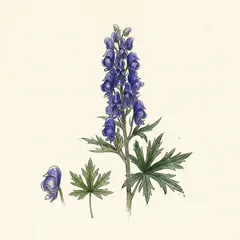
Aconitum Napellus
Hering - Guiding Symptoms of our Materia Medica · Constantine Hering · 78,917 chars
 All books on Aconitum Napellus →
Antidoted byAcetanilidumAceticum AcidumActaea RacemosaAlcoholArnica MontanaBelladonnaBerberisBerberis VulgarisCaladium SeguinumCantharis Vesicatoria
All books on Aconitum Napellus →
Antidoted byAcetanilidumAceticum AcidumActaea RacemosaAlcoholArnica MontanaBelladonnaBerberisBerberis VulgarisCaladium SeguinumCantharis VesicatoriaGeneral
Monkshood. Ranunculacece.
Abundant in the mountain forests of France, Switzerland and Germany. Also cultivated in gardens.
The root is stronger than the herb, and the seed most uniform in strength. The symptoms of the herb, root and seed have not been sepa- ated, not even those of somewhat different species.
^ Mind. Now perfectly conscious, now raving.
Clairvoyance ; conscious that his beloved, miles away, was
singing a certain piece. I Dullness and confusion of mind. ^
Unconscious, as if dying ; speechless. 6 Apoplexy. Unsensible, stupid; also during the convulsions.
17 ACONITUM NAPELLUS.
Stupid, eyes closed, facial muscles twitch, mouth compressed,
no power of speech. Memory lively, or weakness of memory. What has just been
done seems like a remote dream. Cannot remember dates. Ideas haunt him, he cannot get rid of them. Cannot finish a half written idea without great effort. Attention distracted while reading, thought seems to cease. Cannot reflect, ideas seem to come from the stomach ; after
two attacks of vertigo, thought is again normal. Excited, or sits buried in thought. Rapid change of thought ; great exertion is required to fix
the train of thought. On attempting to think of one thing, another intrudes itself;
this is soon surplanted by another and so on. Diminished intellectual power, cannot perform even light
mental work. Lively imagination.
Ecstacy ; inclined to be gay, to dance and sing. Delirium, crying out, staring look. 6 Inflammation of the
brain. Delirium, with convulsive motions. 6 Myelitis. Delirium, with great heat, dilated pupils or convulsions ; talk
is childish, nonsensical.
I Delirium, with talk about death. ^ In childbed.
II Delirium, especially at night, raves, springs out of bed; in the morning, excessive sweat.
I I Pains are so intolerable, they drive him crazy; he becomes very restless.
Desire to be alone ; I I shuns people.
■ Disposition to weep; I cried violently, with facial jactitation. Loquacity ; speech hurried.
■ Alternate laughter and crying; I at one time gay, at another
gloomy. 1 1 Moaning, anxious lamentations; reproaches from trifling causes.
I Screams aloud at the slightest touch, screams with the pains ;
cannot bear the light ; will not be touched or uncovered ; buzzing in the ears.
■ Impatience, throws himself about, constantly changes position.
I I Restlessness, agony, internal anxiety; does everything in great haste ; must move about or change position often.
I Cannot continue long at one thing.
I I Dislikes to talk ; I I answers laconically yes or no.
I I Music is unbearable, it makes her quite sad.
I Sadness with solicitude; concerned about the future; about her recovery or fears loss of reason.
■ Extreme timidity, especially after a fright; is afraid in the
dark.
ACONITUM NAPELLUS. 18
! Fears to go out wliere there is any excitement or many people; thinks she is jostling against every one she meets ; counte- nance expressive of timidity ; constant dread lest she stagger and fall. 6 During pregnancy.
Fear of ghosts.
)|@^Fear of death. d During pregnancy or confinement. 6 Prolapsus uteri. ' I Fear of death, with great loquacity or great anxiety in the region of the heart.
Thrice he became blind and affirmed that death was at hand.
■ Predicts the day of death; bids her friends good-bye. ^In
childbed.
I Inconsolable anxiety, piteous wailing; peevish and impatient. Anxiety only transiently relieved by drinking cold water. Anxiety followed by total apathy.
I I Has no affection for anybody. ^During pregnancy. Morose, misanthropic, peevish ; malicious mood.
I Children get angry and have spells of rage.
I Vexed at trifles ; takes every joke in bad part. Quarrelsome, with constantly varying delirium ; chatters like
a child, is gay.
■ Obstinate, tosses about impatiently.
Sinks into lethargy, but rarely sleeps ; complains of crawls.
I I Ailments from fright: I afraid in the dark (see above); I vertigo; Bfaintness; trembling; I I cardiac weakness; Ithreatened miscarriage; limpending cessation of the menstrual flow; 1 1 burning in the stomach. B Remote ef- fects of fright : especially jaundice.
Ailments from vexation, with fear or vehemence: IB conges- tion; palpitation; fever; B anxiety, beside himself; B threat- ened miscarriage ; B apoplectic congestion.
fi Anxiety, with cold sweat. ^Prolapsus uteri. ' Sensorium. Confusion, as after drunkenness, with pressure in the temples ; also early in the morning on awaking.
Head feels dull, stupefied. 6 Coryza. 6 Fevers.
Dull, stupid ; pressure outwards, worse sitting up ; with anx- iety and fear of death, d Sun-stroke.
I I Apoplexy or Bapoplectic congestions.
Vertigo
BBfrom congestion, as in the sun;
Bon stooping;
B staggers to the right;
Bas if drunk, with nausea, worse on rising from a seat, less while walking, none while sitting;
— Band blackness before the eyes when shaking the head ;
— Bwith nosebleed.
B B On rising from a recumbent posture, the red face becomes deathly pale, or he becomes dizzy and falls over, he fears to rise again ; often accompanied by nausea, vanishing of sight or unconsciousness.
I Vertigo after fright, anxious, as if dying ; must lie down.
19 ACONITUM NAPELLUS.
1 Vertigo, headache, nausea, gagging, coldness and diarrhoea. d Cholera.
■ Vertigo from sudden suppression of the catamenia, by cold. Turns suddenly red and falls unconscious. 6 Teething child.
■ Vertigo from a fall or concussion ; face pale or red, but no
stupor. Fullness of the head, with erratic pains in the right supraorbital,
temporal or frontal regions. Suddenly faints while standing to urinate ; all the blood seemed
to rush to the head ; he fell unconscious. Alternate stupefaction and restlessness, with mild delirium
twitchings, starts as in a fright, pulse frequent. ^ Brain
Fever
■ Stupor, with cold feet.
^ Inner Head. Constant burning in the forehead. 0 Jaundice.
■ ■Burning headache, as if the brain was agitated by boiling
water. Headache, as if a hot iron was bound around the head.
■ ■Fullness and heavy feeling, as if everything would push out
of the forehead.
■ Squeezing in the forehead above the root of the nose, feels as
if she would lose her reason ; worse walking in the open air. Furious headache, vision obscured, pain mostly pressing 'and contracting in the upper part of the forehead ; face swollen, pale ; light or noise aggravate ; lying quietly in a dark room relieves.
■ Pressing shooting pain in forehead, d Coryza.
Violent headache limited to a small spot over the left supra- orbital ridge.
■ Pulsation in the left side of the forehead along with attacks,
as from severe blows in the right side of the forehead. Headache in the vertex, as if compressed uniformly by a pitch cap ; ceases when walking in the open air.
■ ■Sun-stroke ; especially from sleeping in the sun's rays.
■ Headache, as if the brain was moved or raised; worse dur-
ing motion, drinking, talking or sunlight.
■ Congestive headaches, d Menorrhagia.
■ ■Congestion, anxiety; face hot and red, or pale; carotids
pulsate strongly; pulse full, strong, or small and quick;
worse toward evening, d Apoplexy.
Headache, with increased secretion of urine.
On going into a warm room, forehead feels as if compressed.
Throbbing in the temples, d Rheumatic ophthalmia.
Pressure in the forehead, temples and top of the head.
■ Headache and roaring in the ears. 0 Coryza.
Pressive, stupefying headache. ^Childbed fever.
See 23.
Headache and sleeplessness. 6 Childbed fever.
■ ■Congestion to the head, d Heart disease.
ACONITUM NAPELLUS. 20
I Head hot, throbbing carotids, limbs cold ; left side lame ; star- ing, burning pain in the brain, d Apoplexy.
■ Inflammation of the brain in children.
I Congestion to the head, d Cystitis.
* Outer Head. ' ' Head excessively hot. Head drawn backwards.
I I Bends the head far back. 6 Croup. Sensation in the vertex as if pulled by the hair.
Sensation of crackling, as from bending tinsel, in temples, fore- head and nose ; worse toward evening, from motion, better from sitting.
Formication of the scalp, relieved by heat.
Constantly tosses the head about, d Croup.
I Sensation as if the hair stood on end.
Vertex feels hot to the touch; hair bristles up.
If he raises his head, he vomits phlegm or what he drank. d Inflammation of the brain.
Constantly puts the hand to the head. ^Meningitis.
Better lying with the head high.
Stitches under the scalp.
Sweat on the head ; better out of doors.
I Cold sweat on the forehead. ^ Sight and Eyes. Disturbed by flickering ; fears he may touch others passing by.
Vision of sparks, with burning and twitching in the eyes.
I I Vision as if through a veil ; diSicult to distinguish faces ; with anxiety and vertigo.
I Total blindness after catching cold. Optical illusions in dark colors, or black.
I I Sensitive to light, especially of the sun; light dazzles the eyes.
■ Desire for light ; photomania.
I Eyes excessively hot and dry; conjunctiva of lids very red,
constant winking and closing of the lids, could hardly force them open ; temporary relief from cold water ; asthenopia from straining the eyes. Staring. 6 Apoplexy. 6 Asthma.
I I Eyes glaring. ^ Pleuritis and pneumonia. Eyes contorted. 6 Tetanus.
I Pupils contracted, then dilated.
I I Eyeball feels enlarged, as if coming out of the socket. Sclerotica yellow. 6 Enteritis.
1 1 Eyes blood-shot.
Sticking pains in the right eyeball.
Rough feeling, as from sand in the left inner canthus.
1 1 Inflammatory conditions, resulting from the irritant action of foreign bodies, as chips of steel, or stone, or coal, in the cornea, which produce dry rubbing of the lid over the ball,
21 ACONITUM NAPELLUS.
with injected vessels; also irritation caused by ingrowing lashes.
Min true sclerotitis, acute stage, with contracted pupils, stick- ing or tearing pains, photophobia, a blue circle around the cornea and violent aching in the balls.
1 1 Eyes red, inflamed, vessels deep red ; burning, pressive shoot- ing pains, especially on moving the balls ; no discharge ; conjunctivitis from exposure to cold, dry winds.
1 1 Catarrhal inflammation, first stage prior to exudation ; che- mosis of conjunctiva, with pains so terrible that one wishes to die.
I Ophthalmia neonatorum ; in the beginning.
I Acute aggravations of granulated lids and pannus of the cor-
nea, with excessive hypergemia, heat and dryness, especially if induced by overheating from violent exercise, I lor by ex- posure to dry, cold air.
I I In the earlier stages of violent acute inflammations of the deep structures of the ball, when it becomes sensitive to touch and feels as if it were protruding ; rarely after exuda- tion.
Itching, smarting, burning in the eyes, worse in the evening.
■ Sticking and tearing pains around the eyes; worse at night. Violent pain over the right eye.
Stitches in the upper orbital region, from pressure and toward evening.
1 Upper half of the eyeball sore when moved; feels as if it would be forced out of the orbit (relieved on stooping).
Eyes water, more evening and night ; tarsi sore, red and in- flamed.
I Profuse lachrymation with intense pain; tears flow, with a
slight local inflammation or without. Copious tears and red conjunctiva, d Coryza. 6 Cough.
I I Lids feel dry, burn and are sensitive to the air.
Pressure in the upper lids as if the whole ball was pushed into the orbit, causing a bruised pain in the eye.
I Lids hard, swollen, red, with a tense feeling; worse mornings. ® Hearing and Ears. Il Averse to noises, they startle him; they are intolerable.
I iMusic goes through every limb ; makes her sad.
I Roaring in the ears; humming; I I ringing.
Left ear deaf, with buzzing in the whole head, d Apoplexy.
Tearing (left ear). I Pains in the right ear.
■ Stinging in the ear ; meatus red and narrowed; ■■external
ear hot and red, and ■noise intolerable. ^ Smell and Nose. ■■Sense of smell very acute, especially for unpleasant odors.
■ Distressing cramp or pressure at the root of the nose.
ACONITUM NAPELLUS. 22
1 1 Nosebleed; blood bright red. ^Plethora. ^ Fever. ^En- docarditis. 6 Measles.
Nosebleeding and headache. 6 Menorrhagia.
Frequent sneezing.
Nose dry, stopped up, cannot breathe through the nose.
llCoryza dry, with headache, roaring in the ears, fever, thirst, sleeplessness ; 1 1 Icoryza caused by cold, dry winds.
I Checked coryza, with headache ; better in the open air, worse from talking.
I Fluent coryza, frequent sneezing; dropping of a clear, hot water ; fluent mornings.
Inner nose red, swollen, interfering with breathing, d Coryza. ^ Face. !
I Anxious expression ;
Ifrightened.
I Face pale, with restlessness and expression of anxiety.
iFace burning, Ifieryred; 1 1 bloated, unequally red; feels as if it was growing larger.
Red cheeks with fear of death, d In pregnancy.
I One cheek red the other pale.
Between attacks, face pale; now and then flying heat. 6 Croup.
iFace and whole body pale. ^Measles.
I Red and pale alternately.
I Face livid; lips blackish.
I Face dark red. ^Apoplexy.
I Face dark red, lips blue, d Croup.
I Rush of blood to the face. ^ Fever.
Convulsive twitching of the facial muscles.
llNeuralgia of the trigeminus, left side; face red and hot; restlessness, anguish ; rolling about, screaming.
IB Rheumatism in face and teeth.
■ Sweat on the cheek on which he lies.
Sensation as if the muscles were firmly but not spasmodically contracted ; numbness, heavy feeling of the whole face.
■ Creeping, tingling, crawling.
9 Lower Part of Face.
Lips blue. iLips dry, black, peeling ofi".
Complaints on the upper lip.
Burning and numbness of lips and mouth ; heat and tingling. Lips swollen, inflamed.
Burning of lips and tongue, as after eating pepper or smoking.
Swelling of the lower jaw, with aching in the face.
Stitching thrusts in the lower jaw.
Mouth drawn to one side (right), d Convulsions.
Lips on the left side motionless, during breathing. ^Apo- plexy.
■ Trismus.
■ Constantly moving the lower jaw, as in chewing. ^Menin-
gitis. ^^ Teeth and Gums. Cold feeling in the incisors.
23 ACONITUM NAPELLUS.
■ Grinding the teeth.
I Teeth sensitive to the air. Toothache even in sound teeth.
I I Toothache, with throbbing in one side of the face, intense redness of one cheek, congestion to the head, restlessness ; most left-sided, or going from right to left.
Caused by II dry, cold winds;
Staking cold in a raw air;
I during pregnancy. 1 1 Especially in young, plethoric, sedentary persons.
Teeth feel as if they would fall out.
After getting wet, tearing, beating pain in a carious molar, in- creasing after going to bed.
"Taste, Speech, Tongue.
Taste: H bitter; _n everything tastes bitter except water ; — slimy, d Jaundice. — foul ; — fishy ; — flat, nauseous, compels hawking of tough mu- cus, which he swallows.
I Mouth as if filled with air, tasting of rotten eggs.
Things which formerly tasted strong, now have no taste.
Worse from talking ; stinging, choking, in the throat. 0 Head- ache. 6 Checked coryza.
■ Trembling and temporary stammering. Speech imperfect, lisping, d Apoplexy.
■ I Tongue feels swollen, burning, prickling and tingling.
6 Glossitis. I I Tongue numb ; also mouth and lips.
■ Sensation of dryness and numbness in the middle of the
tongue, without thirst.
■ Sensation of dryness and rawness in the middle of the tongue. Burning on the tip of the tongue and lips.
■ Burning vesicles on the tongue. Sensation of cold air passing over the tongue.
■ ■Tongue coated white or ■■thick yellow-white. ^Bilious
Fever
Tongue dry, furred white. ^Fevers.
Tongue red, with great thirst. 6 Liver complaint.
I Tongue dry, red on the sides, centre thinly coated white. 6 Peritonitis.
■ Tongue red and dry. 6 Cystitis.
■ ■Chronic affections of the tongue. '2 Inner Mouth. ■■Mouth dry.
Burning, biting in the mouth.
Saliva frothy, ■copious, streaked red, with sweet taste in the
Mouth
Accumulation of water in the mouth. 6 Seat worms.
Orifices of the salivary ducts sore, as if corroded.
Yellowish-white thick fur in the mouth. 6 Jaundice. ^^ Palate and Throat.
Dry feeling in the palate and posterior nares.
ACONITUM NAPELLUS. 24
1 1 Redness of the uvula and soft palate.
Uvula swollen and elongated.
I Uvula feels as if elongated and coming in contact -witli the
tongue. 6 Cough. I Feeling of dryness and as if something had stuck in the
Throat
B I Acute inflammation of the throat (palate, tonsils and fauces)
with high fever, dark redness of the parts, burning and
stinging in the fauces. Burning sensation in the back of the throat, causing him to
hawk.
I Severe sticking pains in the posterior fauces.
I Burning and numbness in the throat ; throat almost insensible.
I I Pricking, burning in the throat and along the eustachian
tube, compelling swallowing. I Roof of the mouth and fauces dotted with eruption. 6 Scar- latina.
■ Burning sensation in the pharynx.
Constriction of the throat, causing hawking and spitting even
to an irritation to vomit.
Swallowing: 1 1 stinging choking in the throat.
When swallowing food, it feels as if it had lodged in the cardiac
region, d Stricture of the oesophagus.
■ Swallowing much impeded. 6 Tonsillitis. I Muscles extremely sore in swallowing.
Almost entire inability to swallow. 6 Hoarseness. Urging to swallow.
■ Burning from the mouth along the oesophagus to the stomach.
■ Tingling in the oesophagus.
^^ Appetite, Thirst and Desires. ' Lively sensation of hunger, which is renewed even after eating.
■ Excessive hunger and thirst, but eats slowly.
■ llThirst burning, unquenchable. ^During all stages of
Fever
6 Local inflammations. Excessive thirst, yet can retain nothing. 6 Cholera.
■ No appetite; lloathing of food, qualmishness. Desires: Iwine; brandy; ■■beer; bitter drinks.
^^ Eating and Drinking. Worse before breakfast.
After eating : distressed feeling ; vomits food, d Liver com- plaint. — bitter vomit; ■violent pain in the stomach, with warmth and tenderness; — ! I hiccough; — nausea (after meat broths).
Momentary relief from cold water, d Anxiety.
Generally worse after drinking.
■ ■ Gastric catarrh from chilling the stomach with ice water,
especially when overheated. I I Drinking ice water excites the cough ; but generally better from cold drink, especiallly the anxiety.
25 ACONITUM NAPELLUS.
I Worse from smoking. ^Palpitation of heart.
B I Wine generally relieves; but sometimes brings on conges- tions, haemoptysis or palpitation, and augments the rheu- matic pains.
^^ Hiccough, Nausea and Vomiting. iPainful hiccough.
Hiccough and belching.
Better from eructations. ^Tension in the stomach.
Nausea in oesophagus or stomach, rarely in the throat.
Violent but ineffectual urging to vomit. 6 Gastric catarrh.
Gagging, retching, gasping for breath, d After scarlatina.
iVomiting of lumbrici ; lof bile; of green masses, with diar- rhoea of the same appearance; lof mucus; lof blood, lof bloody mucus ; lof what has been drunk, followed by thirst.
I Vomiting bile. ^Incarcerated hernia with inflammation.
I IVomiting with anxiety, heat, thirst, profuse sweat and in- creased micturition.
Vomiting of bile, with bitter taste and dark, turbid urine.
Green vomit, like verdigris, d Meningitis.
Vomiting, meteorism and inability to make water. d Peri- tonitis.
On sitting up, vomits clear water, d After a fall on the head.
IVomiting and purging of a green water. 6 Cholera.
Vomits sour phlegm, d Cholera sporadica.
After repeated vomiting and stools, still complained of a feel- ing as if a cold stone lay in the stomach. " Scrobiculum and Stomach, i Region of the pit of the stom- ach is sore to touch and meteoristic. d Jaundice.
I Burning from stomach up through the oesophagus to mouth.
I I Sudden excruciating pain, with gagging, retching, vomiting of blood, gasping ; cold sweat on forehead ; congestion of mucous lining of stomach, d Scarlatina ; stage of desquama- tion.
iWhen breathing, the pit of the stomach is drawn back to the spine, d Croup.
Palpitation in pit of stomach, with peevish anxiety.
■ Pressure in stomach and pit of stomach, as from a weight or hard stone.
I Stitch-like, burning, pressing pain in pit of stomach, with fear of death, d Gastritis from chilling the stomach.
Warmth in the stomach.
Pressive, tensive pain, as from fullness or an oppressive weight in stomach and hypochondria. '^ Hypochondria. Anxious feeling in the prsecordia.
Liver somewhat sensitive to deep pressure.
I Burning, stinging, hepatic pains.
I Hot, tense swelling under the right short rib?.
I Pressure and constriction in the hepatic region, with obstruc- tion of breathing.
ACONITUM NAPELLUS. 26
1 1 Acute hepatitis, with violent fever.
Pain on pressure over the left lobe of the liver.
■ Tension and heaviness in the hypochondria.
Agony, has to sit straight up, can hardly breathe, pulse thread- like, vomituritio, sweats with anxiety ; abdonaen swollen, particularly under the short ribs. 6 After scarlet fever.
I Stitches in the region of the liver taking the breath. Severe and constant pain in epigastrium, pressing outwards.
d Jaundice.
II Stitches and heat in the diaphragm,
8 Pain going to the umbilicus, or changing from stomach to liver, d Jaundice.
1 1 Jaundice during pregnancy, 1 liver even atrophied; iSin newborn children; lafter fright; llfrom a cold, with ca- tarrh of the small intestines.
■ Splenitis, with inflammatory fever.
^^ Abdomen and Loins. ' l Colic forces him double, yet relieved in no position. 6 Inflammatory, after a cold.
■ Colic involving the bladder, contraction of the hypogastrium
in the region of the bladder ; constant ineffectual urging to urinate. Cuttings in the intestines, extending through the chest to the right shoulder, almost making him cry out, during stool.
■ Burning in the umbilical region.
■ Umbilical region hard, swollen. 6 Seat worms.
■ SMeteorism, vomiting, inability to urinate. ^Peritonitis.
■ ■Abdomen burning hot, tense, tympanitic, sensitive to the
least touch, cutting pains, fever, anguish. 6 Peritonitis.
■ Abdomen puff"ed and hard.
■ A feeling of weight, as if a heavy load were resting on the
abdomen and bearing one down. Paralyzed, inactive feeling in the intestines, worse about the transverse colon.
■ Hernia, recent and small, also incarcerated with bilious vom-
iting and cold sweat ; burning as from coals of fire.
■ Sensitiveness of the lower abdomen to touch. I I Pain in the loins, as if bruised.
^° Stools and Rectum. ■Watery diarrhoea. Frequent small stools.
■ ■Like chopped spinach. ^Summer complaint.
■ ■ Bilious diarrhoea of infants, with colic, which no position re-
lieves.
■ ■Diarrhoea from getting wet; slimy, bloody stools, violent
pains in the bowels ; tenesmus, also between discharges.
■ Scanty, loose, frequent, with tenesmus; small, brown, pain-
ful ; at last bloody, d Dysentery. Pure blood passes without fgeces. d Dysentery.
27 ACONITUM NAPELLUS.
II Urging; slimy stools; intolerable nightly tingling, itching
at the anus. 6 Seat worms. 1 1 Dysentery or inflammatory diarrhoea during hot days and
cold nights. I Cutting, griping, followed by frequent urging to stool, after
anger or fright.
Hemorrhage from the bowels bright red, in streams.
I Alternate slimy stools and constipation. ^Icterus.
I 1 Constipation ; clay-colored stools.
Stool and urine suppressed, d Myelitis.
I Stool white, with dark red urine.
I Stool white, with saff"ron colored urine. ^Jaundice.
Stools black, with dry skin and fever ; despondency, anxiety,
etc.
Cholera, congestive stage ; stage of reaction.
Involuntary stools, passing when flatus passes.
B Bleeding piles ; stinging and pressure in the anus, burning
and heat in the piles.
Sensation as of a warm fluid escaping from the anus.
"^ Urinary Organs, i Stinging and pressing pains in the region
of the kidneys, d Nephritis.
Kidneys act but slightly ; urine contained albumen and frag- ments of casts (poisoning).
I Renal region sensitive, with shooting pains. ^Nephritis.
I Violent burning in the bladder. 6 Cystitis.
I I Inflammation of the bladder; constant urging, water passes in drops, with burning, admixed with blood ; tension, heat and tenderness over the pubes.
Burning in the neck of the bladder when not urinating. Tenesmus of the neck of the bladder. 1 1 Painful anxious urging to urinate.
I Children reach with their hands to the genitals and cry out. d Cystitis.
■ Burning in the urethra when urinating.
I Must rise each night between 12 and 3 a.m. to urinate. 6 In
Pregnancy
iDysuria during pregnancy.
I I Urine scanty, red and hot. 6 Rheumatism, d Peritonitis.
1 1 Urine hot, dark colored;
I red, with white feces;
I red and
clear.
Urine dark broAvn, frothy or yellow. 6 Jaundice.
Urine turbid, d Enteritis.
Urine yellow-red and no sediment, d Peritonitis.
Ischuria, d Cholera.
Involuntary urination. 6 Apoplexy.
■ Enuresis, with thirst. I I Diuresis, with headache and pro-
fuse sweat.
ACONITUM NAPELLUS. 28
1 1 Retention or suppression of urine, with pressure in the bladder or stitches in the region of the kidneys.
1 1 Retention from cold, especially in children, with much cry- ing and restlessness.
iHsematuria, with hemorrhoids of anus or bladder; burning distress in the urethra.
During urination : faint feeling; — splashing sensation in the region of the bladder ; — pinching about the navel ; — pain in the glans penis. ^' Male Sexual Organs. ' l Increased sexual desire ; lascivious dreams ; fits of lasciviousness.
Sexual desire lessened, parts relaxed ; tingling.
Emissions even after coitus.
■ Testicles feel swollen and hard, as if surcharged with semen.
■ Bruised pain in the testicles.
I iViolent orchitis.
Slight drawing pain in the right testicle, and slight uneasiness in the right renal region.
Scrotum drawn up.
Skin of left side of scrotum studded with minute vesicles, pour- ing out a humid discharge.
Several painful, fugitive stitches in the glans, as though the poles of a galvanic battery had been applied to the part ; the pains came on most unexpectedly.
I I Gonorrhoea, first stage.
^^ Female Sexual Organs. I Stitching pains, more to the right of the fundus uteri; 1 1 sharp, shooting pains, abdomen ex- ceedingly sensitive. llOvaritis from suddenly checked menstrual flow.
■ Prolapsus uteri, occurring suddenly, with inflammation, bitter
vomit, cold sweat, or dry, hot skin ; with or without hemor- rhage.
1 1 Labor-like pressing in the womb ; has to bend double, but relieved in no position. 6 Dysmenorrhoea.
II Uterine hemorrhage, active, much excitability, giddy, cannot sit up, fear of death.
1 1 After a fright with vexation ; particularly during catamenia, to prevent suppression.
I Menses too 1 ite, diminished and protracted ; plethoric females, who lead a sedentary life.
I Menses profuse in plethoric women.
I Menses suppressed by getting the feet wet, or by a cold bath. BAmenorrhoea during puberty; nosebleed, palpitation; con- gestions.
I I Restores the menses of plethoric women, after their suppres- sion from any cause.
■ Inflammation of genitals. ^Prolapsus uteri. 1 1 Vagina dry, hot, sensitive.
29 ACONITUM NAPELLUS.
I I Leucorrhoea copious, tenacious, yellow. 2* Pregnancy and Parturition.
During pregnancy : l restless- ness, llfear of death, predicts time of death. ^Jaundice.
Blood-spitting, Disturbed between twelve and three o'clock at night, compelled to get up to urinate ; has no affection for anybody.
■ Impending abortion from fright, with vexation; circulation
excited, rapid breathing. I Pains of labor distressing; vagina hot, dry, tender and un- dilatable.
■ Violent labor-pains, following in rapid succession, particu-
larly with a large child (head seems immovable), contrac- tions insufficient, pains overwhelming ; shrieking ; red, sweating face ; thirsty. I Head and hands glowing, pulse hard, skin scarcely moist and increased action of the heart, d Dui'ing labor.
I I Pains violent and rapid, yet ineffectual from defective posi-
tion of the child.
■ Puerperal convulsions, cerebral congestion, hot, dry skin,
thirst, restlessness, and fear of death.
I I After tedious and difficult parturition. After-pains too painful, too long-lasting.
Milk-fever with delirium ; niammse hot, hard, tense, with
scanty milk.
Lochia offensive, bloody, slimy, d Childbed fever.
Return of the lochial discharge, when women commence going
about after confinement.
I Childbed fever after suppression of lochia; mammae lax, no
milk ; dry, hot skin ; hard, frequent pulse, or tensive, con- tracted ; fearful, wild, staring, glittering eyes ; dry tongue, great thirst ; inflated abdomen, sensitive to the slightest touch.
Newborn children: lasphyxia, apoplectic symptoms, hot, pur- plish, breathless, pulseless ; licterus; lophthalmia; retained urine ; vomit blood, with bloody stools. ^^ Voice, Larynx and Trachea.
Voice tremulous ; croaking.
■ Hoarseness and rattling. 6 Coryza. Hoarseness, with pain when talking.
Painful hoarseness, d Measles. Hoarseness after speaking or
singing.
Voice crowing, croupy.
Voice husky, can scarcely speak, points to the larynx, wants
to cough, but cannot, d Croup.
I I Larynx sensitive to touch and to the inspired air, as if de- nuded.
1 1 Laryngitis, with inflammatory fever; also with suffocative
spasms (spasms of glottis). I I Laryngeal complaints after straining the voice.
ACONITUM NAPELLUS. 30
Dryness in the windpipe causing a frequent little cough.
9 1 1 Croup : awaking in first sleep ; child in agony, impatient, tosses about ; dry, short cough, but not much wheezing nor sawing breathing ; cough and loud breathing during expira- tion ; every expiration ending with a hoarse, hacking cough ; 1 1 after exposure to dry, cold winds.
Burning low down in the larynx, d Peritonitis. -® Respiration. Breath cold, d Cholera.
lllBreath hot. ^ Croup. ^Blood-spitting.
Breath fetid.
Breathing: Ishort in sleep, after 12 p.m. ; — lllabored, anx- ious or quick, and superficial; — Ideep, slow, sighing; — ■ difficult, must breathe deeply; — slow, rattling. ^Apo- plexy. — whistling. 6 Croup in old age. — short when raising one's self.
1 1 Asthma from active hypersemia of the lungs and brain ; face red, eyes staring; afier emotions. I Can talk but little at a time.
1 1 Asthma after suppression of an acute rash ; feeling of a band around the chest ; muscles of the chest are rigid ; occasion- ally vomiting ; urine scanty, dark. After the paroxysm, the sputa are yellow or blood-streaked.
IB Agony, sits up straight, can hardly breathe; pulse like a thread, vomituritio ; sweat, with anxiety ; swelling under the short ribs, d After scarlatina.
1 1 Oppression of the chest when moving fast or ascending. d Heart disease.
■ Inhalation difficult and noisy. /? Tracheitis.
■ Worse during inspiration; better during expiration.
■ ■ Constant short, dry cough, with feeling of suffocation, which
increases with every inspiration.
■ Difficult breathing. ^Endocarditis. Breathes only with the diaphragm, d Pneumonia.
■ Cannot breathe freely from a sensation as if the lungs would
not expand ; frequently takes deep breaths. ^^ Cough. B B Clear ringing or whistling cough, caused by burn- ing, pricking in the larynx or trachea.
■ Cough short, dry, forcible, excited by scratching in the throat. Short cough after 12 p.m., from tickling in the larynx ; the
more he attempts to repress it, the more severe it becomes.
■ ■Cough hoarse, dry, loud; Bspasmodic, rough, croaking, with
danger of suffocation ; B dry, hard, ringing. d Infantile
bronchitis. BDry cough, with shooting in the chest; with raw pain in the
chest ; caused by change of temperature.
Wants to cough but cannot, d Croup.
I Cough hollow, hoarse, choking, causing blueness of face.
31 ACONITUM NAPELLUS.
Violent hollow cough at night ; shorter and more panting dur- ing the day. d Laryngitis.
■ Dry, barking cough. ^Measles.
I Dry, whistling cough; beginning of pertussis; feverish, anx- ious, restless.
Hjemoptysis : blood comes up with an easy hawking, hemming or slight cough ; expression of anxiety ; great fear of death ; palpitation, quick pulse ; stitches in the chest.
Hgemoptysis : caused by mental excitement ; exposure to dry, cold air ; after taking wine.
Sputa: !i absent; or, Bthin, gelatinous, more mornings and during the day ;
I I scanty, falls in round lumps, dark cherry- red. ^Pneumonia.
I B Bloody or blood-streaked ;
BSbright red blood.
B Expectoration brownish-red, rust-colored; cough frequent, with severe pains from the shock through the chest.
BB Cough awakens him from sleep, is dry, croupy, suifocating ; great anxiety.
Cough better lying on the back ; worse on the side ; cough, with nervous excitability.
Worse: B after eating or drinking; — 'lying, must sit up from a constrictive feeling and suffocation. 6 Tracheitis. — until 3 A.M. ; — evening, night, more after 12 p.m. ; — I from tobacco smoke; — B during sleep; — Bfrom vexa- tion, especially fright; — when overheated; — B I Bfrom dry, cold winds, or currents of air ; — from walking in the open air ; — when assuming an upright position ; — from deep inspiration ; — from speaking. ^^ Inner Chest and Lungs, b Tightness of the chest.
B Oppression of the chest, feeling of great weight, must breathe deeply, with anxiety.
B Pressure, weight and burning under the sternum.
BPain in the middle of the chest drawing toward the back, worse with every motion of the body. 0 Q^^sophagitis.
B Stitches in the right side of the chest, but only when lying on that side, d Endocarditis.
B I B Stitches: when breathing; with the cough; — Bfrom the lowest rib, right side, through the lung to the apex of the scapula, at every inspiration ; ■ — Bin the left chest ; — Blast rib, right side, through to the back ; — transient, now here, now there; — B worse bending sideways; — — Bbetween the scapulae, on deep breathing ; — Band burn- ing, shooting in the chest.
B B Cannot lie on the right side, but only on the back, d Pleu- risy.
B Lancinating through the chest, with dry heat, diflScult breath- ing, often violent chill.
ACONITUM NAPELLUS. 32
1 1 1 Synochal fever, hot sweat, oppression ; children have rat- tlino; in the chest; sensation of fullness in the chest: must lie on the back. 6 Pneumonia, first stage.
I I Cough after drinking, sputum thin, frothy, blood-streaked ; burning, shooting in the chest ; dullness on percussion. 6 Pneumonia, second stage.
I Heat in the lungs.
Rush of blood to the lungs, d Childbed fever. ^^ Heart, Pulse and Circulation. Palpitation, anxiety, rest- lessness ; worse lying ; face pale, anxious, d Blood-spit- ting.
llHypersemia of the lungs, violent palpitation of the heart; face red ; spitting of blood.
Palpitation, with a feeling as if boiling water was poured into the chest.
■ Oppression about the heart, burning flushes along the back.
I I I Anxiety about the prsecordia, heart beats quicker and stronger ; fear of death. 6 During pregnancy.
Anxiety, difficulty of breathing, flying heat in face, sensation of something rushing into the head.
I I Feeling of fullness; pulse hard, strong, contracted; stitches at the heart ; lies on the back, with raised shoulders ; con- striction of the chest. 6 Pericarditis.
IB Uncomplicated cardiac hypertrophy ; especially with numb- ness in the left arm and tingling in the fingers.
1 1 Great agitation of the heart, anxiety. ^ Acute muscular rheumatism.
Heart beats quickly, pulse slow, apparently intermitting with attacks of powerlessness.
Heart's action feeble, quick, incomplete ; pulse small and weak ; cardiac weakness.
■ Intense pains in all directions, especially down the left arm,
with numbness and tingling ; anxiety, fear of death, cold- ness, cold sweat ; feeble pulse. 6 Angina pectoris.
I I Fainting, with tingling. ^Hypertrophy.
I 1 Pulse quicker than the beat of the heart ; I I during three
beats the apex strikes only once.
I I I Pulse strong, full, hard, d In fever and inflammations.
I I Full, strong, hard pulse, with heat and thirst. 6 Meningitis infantum.
iPulse: small, intermitting, irregular. ^Asthma. lAccelerated, with heat of the skin. 0 Jaundice.
I Contracted, full, power- ful, over 100 per minute ;
IfuU, powerful, intermitting every 6 beats with cardiac heaviness;
I slow, intermittent;
I slow, feeble, weak and small ;
Hike a thread, with anxiety ;
B quick, hard and small. ^Peritonitis.
Carotids beat violently. 0 Apoplexy.
Veins of the throat expanded. 6 Inflammation of the lungs.
33 ACONITUM NAPELLUS.
^^ Outer Chest.
Muscles rigid. /?
Asthma. ^* Neck and Back.
Neck sore and painful ; glands swollen. d Scarlet fever.
Drawing in the muscles of the throat and neck.
Weariness in the neck on motion as if involving single mus- cles, especially evenings and nights.
1 1 Tearing in nape of neck.
iPainful stiff neck, worse moving the neck ; pains down the neck to the right shoulder.
Bruised pain between the shoulders.
Drawing, tearing pain in the scapulse.
Stiffness of the back.
Burning, shooting in the spine.
■ Cutting pains extending in a circle from spine to abdomen ; a I crawling in the spine, as from beetles; formication ; high fever.
I After an injury or suddenly checked sweat, d Spinal menin- gitis.
Pain in small of back, especially at last lumbar vertebra, as if beaten.
I iNumbness of the small of the back, extending into the
lower limbs. 6 Spinal meningitis.
Spasms from inflammatory affections of the spine.
Slightest touch of the spine excites spasms.
Pain, as if bruised, in the last lumbar vertebra at its junction with the sacrum.
Tensive, pressive pain in the lumbar and sacral regions, no- ticed on stepping. '^ Upper Limbs. Tearing pain in the shoulder-joint.
I I Formication in arms, hands and fingers.
1 1 Arms hang powerless, as if paralyzed by blows. (9 Menin- gitis.
I INumbness of the left arm ; can scarcely move the hand; tingling of the fingers, d Heart disease.
■ Shooting pains, tearing, erratic; in arms, forearms, wrists
and finger-joints.
Shooting in wrist-joint, as if from needles.
Automatic motion of the left hand ; he strikes his face,
0 Measles. Drawing and tearing pains in wrists and fingers.
■ Trembling of the hands.
■ Paralysis of the wrists. Palms of hands quite insensible.
■ Creeping pain in fingers.
■ ■Creeping in the fingers, also while writing.
■ Hands icy cold; cold, sweaty palms. Fingernails blue.
■ ■Hot palms.
ACONITUM NAPELLUS. 34
I I Red pimples on the back of the hands ; stinging-itching. ^^ Lower Limbs. iHip and hip-joint (left) swollen, hot and ex- ceedingly painful to touch ; feverish, thirsty, anxious. d Acute articular rheumatism.
I I Drawing tearing, in left hip-joint on moving.
Sensation as if drops of cold water trickled down the front of the thighs.
I I Thighs when walking feel as if tightly bandaged.
Drawing pain, especially in joints of limbs.
Drawing in tendinous expansions of the lower limbs.
Lower limbs sore. 6 Peritonitis.
■ Shooting, tearing pains in legs, knees, ankles, toes, etc.
I Limbs feel tired during repose.
I I Legs almost powerless ; after sitting, numbness. ^Spinal meningitis.
■ Numbness in the gouty limb.
See 34.
Trembling of limbs.
■ Unsteadiness of the knees ; they bend while standing or
walking.
■ Knees swollen ; painful, throbbing, cutting, stinging pains ;
cannot sleep, had to sit up. 6 Acute rheumatism.
■ Knife-like pains in the knee-joint.
■ Legs stiff when moved, after taking cold. Coldness of knee, alternating with flying shooting.
■ Cramps in the calves, also in the feet.
■ Legs and feet feel numb ; ■ ■tingling, commencing in the feet
and spreading upwards. I I Ankles feel as if tied with a ligature.
■ Hot pricking in the toes ; they " go to sleep " while walking.
■ Coldness of the feet and ankles; I I soles and toes cold and
sweaty. ^* Limbs in GeneraL Drawing, tearing pains in the limbs.
Transient pains, like bone pains, in the long bones of the limbs and in the metacarpal bones.
■ Rheumatic inflammation of the joints, worse evening and
night ; intense, bright red, shining swelling of the parts ; sensitive to the least contact, with high fever. Crawling in upper and lower limbs.
■ Trembling and tingling in the limbs, accompanied by shoot-
ing pains.
■ Convulsive trembling of the limbs.
■ Convulsive contraction of the limbs.
Slight starting of the limbs, alternating with trembling.
d Meningitis. Limbs feel weak, heavy and painful, d Coryza.
■ Lameness and numb feeling in the affected parts ; pain intol-
erable, d Rheumatism.
35 ACONITUM NAPELLUS.
I Numbness, icj coldness and insensibility of hands and feet,
d Meningitis. Bruised, heavy feeling.
■ Coldness of the extremities. Hot hands and cold feet,
■ Twitching of fingers and toes.
^' Rest.
Position.
Motion.
Rest : generally better, but during night, in bed, pains intolerable ; limbs feel tired ; rigors worse.
Lying : headache better ; palpitation worse ; shudders ; fever unbearable.
Lying on back : cough better ; stitches in chest better. 6 Pericarditis.
Lying with head high : headache relieved.
Lying on right side : stitches in chest.
Lying on side : cough worse ; cheek lain on sweats.
Must lie down : with vertigo.
Cannot sit up. d Uterine hemorrhage.
Sitting : vertigo better ; crackling in forehead better.
Sitting up : pressure in sensorium worse ; cough worse.
Must sit up : in difficult breathing ; with painful knees.
Rising from a seat : vertigo ; red face becomes pale. See 2.
After sitting : legs numb.
Rising : shortness of breath ; fainting.
Springs out of bed : in delirium at night.
Changes position constantly : when impatient ; during anxi- ety ; at night.
Standing: faints while urinating; causes great weakness. See 36.
Stooping : vertigo increased ; sensation as if eyeballs were forced out relieved.
Bent backwards : head in croup ; body in spasms. See 36.
Bending sideways : causes stitches in chest.
Must bend double. 6 Colic, d Dysmenorrhoea.
Shaking head: vertigo; blackness before the eyes.
Raising head : vomits.
Walking : vertigo ; squeezing in forehead worse ; vertex head- ache better ; cough worse ; thighs feel as if bandaged ; un- steady knees; toes "go to sleep."
Stepping : tensive, pressive pain in back.
Must walk or move about : at night from restlessness and fever.
Motion : sensation as if brain moved worse ; causes crackling in temples, forehead and nose ; pain in chest worse ; in- creases weariness in neck ; stiff neck worse ; produces drawing, tearing in left hip; legs stiff; chill; improves rigors.
Violent exercise : produces overheating and conjunctivitis.
ACONITUM NAPELLUS. 36
2^ Nerves, l Restless, though motion increases the pain. ^Pleu- risy. iNervous excitability, d Prolapsus uteri. Fearful and uncertain in his actions.
llExcessive restlessness and tossing about for several hours.
Trembling and tendency to palpitation.
Jerks of the left leg or arm, grinding the teeth ; comatose ;
restless, moaning, d Measles. 1 1 Convulsions of teething children ; heat, startings, twitches
of single muscles; 1 1 child gnaws its fists, frets, cries;
costive or dark watery stools. Spasms of the eyes; clenched jaws; the body. becomes rigid
and bends backwards ; the limbs are distorted with spasms. iLoud lamentations; body rigid and bent backwards; fists
clenched across the throat ; gnashing of the teeth ; eyes
drawn up spasmodically under the lids.
Towards noon convulsions of the whole body. 6 Myelitis.
Whole body feels as heavy as lead ; swollen in size and stature,
except head and neck. I Great muscular weakness, weariness, prostration, almost total
inability to stand. Progressive failure of strength. iFeeling very drowsy, languid and unable to rise from the
couch ; obliged to discontinue all work ; the system feels
prostrated with sense of inward fever. llNumbness, tingling; left side. ^Paralysis of the limbs.
Sudden falling down senseless, d Apoplexy.
Collapse ; cholera.
I iFaintness on attempting to sit up.
Formication, now in one, now in another part. ^^ Sleep.
Sleepiness ; spasmodic yawning.
On going to sleep: Hfever becomes intolerable; Ijerks ;
I restless tossing.
I I Somnolency, eyes closed ; in a little child. Senseless, snoring, d Apoplexy.
Sleeping light, imagines in the morning he has not slept at
all, yet not weak.
During sleep: I delirium ;
I starts ;
Iprofuse sweat;
Ihot,
restless and talking ; I slow breathing.
I I Restless nights ; must walk or move about ; — land alternately cold and hot, partial sweat.
■ Excessive wakefulness.
Nervous sleeplessness.
1 1 Sleeplessness after midnight with anxiety, restlessness, con- tinual tossing about ; eyes closed.
BB Sleeplessness caused by fear, fright, or anxiety, with fear of the future, d Consumption of lungs.
■Vivid dreams of the day's occurrences.
37 ACONITUM NAPELLUS.
lAt night anxious dreams, and several times waking with a start.
I Long dreams with anxiety in the chest, taking away the breath and causing him to awaken.
■ Anxious heavy dreams with oppression of chest.
Awakened: Iby asthma;
Iby nightmare;
Iwith starts;
Iby cough.
Worse after sleep. ^ Time. Night : delirium ; sticking, tearing around eyes worse ; lachrymation ; violent hollow cough ; weariness of neck ; rheumatic pains in joints worse ; sleepless ; dreaming ; shuddering ; alternate heat and chill ; pains intolerable.
Midnight : burning in throat, causing hawking.
After midnight : short breath during sleep ; short cough ; sweat.
Midnight to 3 a.m.: must rise to urinate.
Until 3 A.M.: cough worse.
Morning : excessive sweat ; anxious lamentations ; confused as if drunken ; swollen eyelids worse ; coryza fluent ; thin, gelatinous sputum ; thinks he has not slept.
Toward noon : convulsions.
Day : short cough and panting ; thin gelatinous sputum.
Toward evening: fever unbearable.
Evening : congestive headache worse ; crackling in temples, forehead and nose ; itching, burning, smarting in eye ; stitches in eye worse ; lachrymation ; cough worse ; weari- ness of neck ; rheumatic pains in joints worse ; sudden chill. ^^ Temperature and "Weather. Heat of sun : headache aggra- vated.
Rays of sun : produces erythema.
Heat : relieves formication of scalp.
Warm room : forehead feels compressed ; chill worse.
Overheating : causes eye troubles ; cough results.
In bed : fever unbearable.
When covered: sweats.
Uncovering : will not be uncovered. See 1.
Open air : headache in forehead worse ; vertex headache bet- ter ; sweat on head better ; eyelids sensitive ; headache from checked coryza better ; teeth sensitive ; cough worse.
Cold dry winds : produce conjunctivitis, coryza, toothache, croup; aggravate cough ; cause articular rheumatism.
Raw air : produces toothache.
Cold water: relieves conjunctivitis.
Cold bathing : suppresses menses.
Getting wet : causes tearing and beating in carious molar ; sup- presses menses. *^ Fever. Sensation of coldness in the blood-vessels.
ACONITUM NAPELLUS. 38
Chill: lanxious;
Ion slightest movement; being uncovered or touched ;
I I ascends from the feet to the chest ; with formication between the shoulders and down the back ; fin- ger-tips cold, nails blue, worse in a warm room.
I Shuddering on lying down at night.
Rigor commencing in the limbs and going over the whole body, with gooseflesh ; worse in rest ; disappearing on mo- tion.
I Skin cool, dry or cold and viscous ; or cold to the touch, but patient feels as if burning, d Cholera.
Whole body stiff and cold. 6 Myelitis.
Rigors and vomiting, d Puerperal convulsions.
■ Frequent shudders.
Inflammation of the lungs.
Cold crawls over the back, with hot skin. 6 Catarrh.
I Sudden chill in the evening, followed by heat.
I I After a violent chill, dry heat with difficult breathing and lancinating pain through the chest.
■ With the chill, internal heat, anxiety, red cheeks ; body
chilly, hot forehead and ears, internal heat. I Chill at the beginning violent, more in the evening after ly- ing down, often with one hot cheek and contracted pupils.
■ Alternate heat and chill all night ; restless, wants to uncover,
yet chilly therefrom. I Face hot, hands and feet cold; face flushes, with cold hands and feet, mostly evenings.
I Skin hot and dry, with anxious tossing about. ^Meningitis
infantum. iHeat and dry skin. 6 Prolapsus uteri.
I I Heat with thirst, hard, full and frequent pulse, anxious impatience, inappeasible, beside himself, tossing about with agony.
1 1 Heat, with agonized tossing about.
IB Pry, burning heat, generally extending from the head and face, with much thirst for cold drinks.
1 1 Heat, with inclination to uncover; I fever unbearable to- wards evening and after getting into bed.
I Heat, with chilliness at the same time.
I Red cheeks, with obstinacy, complaining mood ; burning in the region of the navel and pressive headache.
I Thirst for beer during the heat; llburning thirst during the
heat.
I I Inflammatory fevers and inflammations, with much heat, dry burning skin, violent thirst, red face, or alternate red and pale face ; nervous excitability, groaning and agonized tossing about ; shortness of breath, and congestion to the head, d Synochal fever.
Profuse sweat, with copious flow of urine and diarrhoea. 1 1 Free sweat.
39 ACONITUM NAPELLUS.
I Profuse sweat during sleep, even in consumptives; sweat after 12 p.m.
I Long continued, general sweat, of a somewhat sour odor.
I The affected parts and covered parts sweat; likes to be un- covered.
I Worse while sweating; better afterwards.
I Profuse sweat relieves the rheumatic pains.
I I Bad effects of suppressed sweat: catarrhs; fever; local in- flammations, etc.
I Cold sweat. *^ Attacks. Attacks of pain, with redness of the face and thirst.
Suddenly : turns red and falls unconscious ; faints while stand- ing to urinate.
Alternately : heat and chill. *^ Locality and Direction. Right : erratic pains in head ; pains like severe blows in forehead ; sticking in eyeballs ; pains over eye ; ear painful ; mouth drawn to right side ; tense swelling under short ribs ; drawing in testicle and un- easiness in renal region ; stitching pains in fundus uteri ; stitches in chest ; pains in neck and shoulder.
Left : pain in small spot over supra-orbital ridge ; pulsations in forehead ; side lame ; as if sand in inner canthus ; deaf- ness, with buzzing in head ; tearing in ear ; neuralgia of trigeminus ; lips motionless during breathing ; toothache ; lobe of liver painful ; side of scrotum studded with vesicles ; stitches in chest ; numbness of arm ; tingling in fingers ; hip swollen ; jerking of arm or leg ; side lame.
Within outwards : pressure in head ; fullness in forehead ; eyeballs feel as if protruding ; pressing in the epigastrium.
Out inwards : pressure in upper eyelids.
Below upwards : cutting in intestines ; numbness and tingling in lower extremities ; chill.
Left to right : paralysis (poisoning).
Right to left : toothache.
Front to back : pain in chest.
Towards right side : staggers to right in vertigo. *' Sensations. 1 1 iPains intolerable; more so at night.
1 1 Stitches here and there ; erratic.
I Stinging-burning, as if in the skin.
llTearing, cutting, wandering pains. ^Rheumatism, etc.
I I Neuralgia with congestions, from dry cold air or checked sweat.
I iNumbness, tingling, formication.
Trembling, like a boiling and seething, as if the parts were
going to sleep ; or as if becoming drunk ; always with an
unpleasant sensation of coldness.
I As if bruised or beaten in different parts.
Burning in internal parts.
ACONITUM NAPELLUS. 40
Sensation of swelling of many parts, generally with shudder- ing, cold or rigor. ■** Tissues. 1 1 Has but little effect on disorganized blood-globules, hence seldom useful in true typhoid states.
lActs more on the arterial system.
1 1 Plethora; active capillary congestions (from overactive serous membranes).
I I I Local congestions and inflammations.
I I Neuritis, with tingling.'
I I Complaints in the joints: shooting, cramp, cracking, loss of power ; drawing in joints and aponeuroses.
I I I Articular rheumatism, much fever, restlessness and anxiety ; swellings are red and hot or pale ; shifting from one point to another. Especially if caused by suddenly checked sweat or by dry cold air or winds.
1 1 Acute catarrhs, with the usual Aconite fever.
Skin and muscles rigid.
I Muscular rheumatism with high fever.
I Glands painful, hot, swollen.
^^ Touch.
Injuries.
Touch : pains worse ; eyeballs sensitive ; soreness in pit of stomach worse ; pains of peritonitis worse ; lower abdomen sensitive ; larynx sensitive ; excites spasms ; hip painful; rheumatic swelling of joints sensitive; chilly.
Pressure : stitches in supra-orbital region worse ; liver sensi- tive.
Scratching : no effect on itching.
Fall : vertigo.
Contusion : vertigo.
Foreign bodies : irritation of eyes.
Wounds after surgical operations are painfully sensitive ; fever.
I I Shock from injury ; surgical operations. ^^ Skin. 8 Skin dry ; absence of sweat.
iTino-lino; over the whole surface.
H Red, shining, hot swellings ; violent pains.
I Fine prickings, as from needles, here and there.
I I Spots like flea-bites ; itching unchanged by scratching.
I Erythema from the sun's rays ; papular erythema. ■ Erysipelas, smooth skin ; violent fever.
B I Yellow skin. ^Jaundice. ^ During pregnancy. Red rash all over, except on the abdomen, d Childbed fever, second week.
I I Measles: Dry, barking cough; painful hoarseness; eyes red ; cannot bear light ; tongue red ; jerks of left leg or arm, or grinding of teeth ; restless moaning and lamenting ; ly- ing in a comatose state ; pains in the joints ; free sweat.
Bin red miliary fever: increasing restlessness, agonizing anxi- ety and heat of body. BRash of children.
41 ACONITUM NAPELLUS.
B I Seldom in scarlatina, except as specified below or during desquamation.
i I Scarlet rash, with high fever.
B Scarlet fever, with dry skin and very great restlessness and distress ; must frequently sit erect in bed in consequence of dyspnoea.
Skin cold and dry ; cold, clammy.
Single long dartings, here and there, mixed with a raw sensa- tion, ending with pain as of a wound. *'' Stages of Life.
Constitution.
B B Children's diseases ; with high fever.
B Especially persons with tonicity (rigidity) of fibre.
BOld age; sleeplessness.
B Contra-indicated in fevers which bring out eruptions or are otherwise salutary, unless there is agonizing tossing with dry skin.
BDark hair and eyes. BBPersons leading a sedentary life; plethora, etc.
B Tendency to apoplectic congestion; plethora. *^ Relationship. Antidotes to Aeon.: Acet. ac.^ Paris, Vin.
Is antidote to iBellad., iChamom., iCoffea, iNux vom., Petrol., Sepia, I Sulphur, B Veratr., and secondary symp- toms of MorpJdne. After Aeon, follow well: lArnic, HBellad., in gastric states ; after pulmonary febrile afiections : Ipee., Bryon., Hepar, Pulsat., i Sepia and B I Sulphur ; in colic : I I Arseti.; in cough : I Bryon., Spongia ; in croup : Spongia or Hepar ; in strangury of children : Pulsat.; in dysentery: llMereur. Aeon, may often be indicated after lArnie.^ ii Coffea, ii Sul- phur and B Veratr.
B B Complementary to Coffea, in fever, sleeplessness, intoler- ance of pain ; to Arnie. in bruises ; to Sulphur high in all cases. Ailments from: Act. rae., iChamom., iCoffea, iNux vom., Petrol., Sepia, I Sulphur.
IB Abuse of Aeon, calls for Sulphur.
ACTEA RACEMOSA. 42
ACTEA RACEMOSA.*
Actea raeemosa, Linnee.
Black Coliosh.
Ranunculacece.
Grows in woodlands from Canada to Florida.
Famous as a popular medicine, particularly for snake-bites.
Has received so many improper names that the oldest one is preferred.
Proved in 1853 by H.
M.
Paine, in 1858 by Ch.
H.
Burr, in 1859 by Hill and Douglas, in 1871 by Bacmeister, and used like a polychrest by most practitioners.
^ Mind. I Sensation as if a heavy black cloud had settled all over her, and enveloped her head, so that all was darkness and confusion, while, at the same time, it weighed like lead on her head.
Forgetful.
Unable to find the right word in speaking.
Mind dull and heavy.
1 1 Thinks she is going crazy.
I Often started by the illusion of a mouse running from under her chair.
I Imagines strange objects about the bed, as rats, sheep, etc.
d Delirium tremens.
Delirium with great headache, d Puerperal fever.
Delirium with nausea, retching, dilated pupils. iFear of death; fears those in the house will kill him; saw
wires encaging him ; visions of rats and of strange objects.
d Delirium tremens.
I I Mania following disappearance of neuralgia. 13 Puerperal mania.
Desire for solitude, or to wander from place to place. Answers questions hurriedly and evasively.
* The observation that a drug may produce different symptoms on the different sexes, is of the utmost importance for the scientific development of our Materia Medica.
Professors Hill and Douglas state in their valuable report of provings with Actea raeemosa, in the New York Quarterly, Vol. VII., 1859, p. 450 : " It produced nausea, vomiting, and much gastric irritation in the six women, while in forty men it was hardly noticed as affecting the stomach in the least. Being an important remedy in morning sickness of the preg- nant, we may conclude that all the gastric symptoms observed by female provers depended on the uterus.
It has also been observed that Cuprum acts more on the female and Ferrum on the male organs.
43 ACTEA RACEMOSA.
Declares she has been poisoned.
1 1 Incessant talking, changing from one subject to another. 6 Delirium tremens.
I Frequent sighs and ejaculations. 6 Mental disorder.
Would not answer ; at other times very loquacious.
llFeels grieved and troubled, with sighing; Inext day a feel- ing of tremulous joy, with mirthfulness, playfulness and clear intellect.
a Miserable dejected feeling.
I Mental depression, with suicidal mood; also after checked neuralgia.
I Weeping mood; dejected; anxious.
I Great melancholy with sleeplessness.
lApprehensiveness and sleeplessness. ^Pregnancy.
I Fears she will become crazy, with headache on vertex.
I I Fear of death.
Ilndiiference, taciturn, takes no interest in household matters. d Mental disorder.
■ Irritable ; the least thing that goes wrong makes her angry. Nervous and irritable.
I She was suspicious of everything, would not take medicine if
she knew it. d Mental disorder. I I Restless and impatient, can read only a few minutes, must
get up and walk about, yet soon tires.
Headache when reading or writing.
Cannot even write a
letter.
■ Headache of students.
Mental emotions cause: lamennorhoea; I suppression of the
lochia.
I Mind disturbed by disappointed love, business failures, etc.
I Feels faint at the epigastrium when meeting a friend.
I After fright : threatened abortion. ^ Sensorium.
Constant dull feeling in the vertex.
■ Dullness and heaviness in head; like after " a spree." Dizzy on rising in the morning, with pain over the eyes ; faint-
ness, nausea, and occasional vomiting. 6 In mental diseases. Vertigo, head feels too large and heavy , when stooping, head
swims.
Vertigo, dizziness with impaired vision.
I Fainting fits generally with some uterine affection.
■ Sensation as if a heavy black cloud had settled all over her
and enveloped her head, so that all was darkness and confu- sion, d Mental disorder. ^ Inner Head. Dullness in the head as after " a spree."
I Rush of blood to the head, brain feels too large for the cra- nium ; after suppressed uterine discharges or suddenly ceas- ing neuralgic pains. Waving sensation in the brain.
ACTEA RACEMOSA. 44
An opening and shutting sensation when moving head and
Eyes
Dull frontal headache relieved by pressure.
I Great pain in head and eyeballs, increased by the slightest
movement of head or eyeballs, d Meningitis. Sensation as if temples were compressed.
■ Headache down to the nose.
■ Headache every day at the same hour.
I I Severe pains in right side of head, back of the orbit, d After- pains.
I Aching and shooting pains in vertex, occiput, left temple, eye
and ear ; worse lying down ; hysterical crying.
I I Brain as if too large ; pressing from within outward.
■ Head feels as if pounded, full ; as if too large, d Intermittent. I Top of head feels as if it would fly oflF, worse going up stairs ;
declares she will go crazy.
■ Intense pain as if a ball had been driven from neck to vertex,
worse at every throb of the heart.
■ Aching pain in the head, particularly at the occiput, only in-
doors ; worse in the afternoon and still more in the evening, disappearing entirely at 9 p.m. after a walk in the open air.
■ Great pain in head, back and limbs.
■ Pain over and in the eyes, extending along the back to occiput. I ■Excruciating pain in forehead, eyeballs and temples, with
cold forehead on waking, 2 a.m. Dull boring in forehead over left brow, 10 a.m.
■ Pain in forehead, temple and vertex, with fullness, throbbing
and heat.
■ Dull pain in occiput, with shooting down back of neck.
■ Headache better in open air.
^ Outer Head. Sensation as if the vertex opened and let in cold air. d Climaxis.
^ Sight and Eyes. ■Peculiar wild look out of the eyes. 6 De- lirium tremens. Eyes expressionless, d Chorea.
■ Dark spots before the eyes.
Pupils dilated, d Delirium.
Aching and heaviness of the eyes.
Eyeballs painful, with lachrymation.
Sensation of enlargement of the eyeballs ; they feel as if they
would be pressed out of the head. Ulcerated cornea, I with sharp pains through the eye into the
Head
■ Eyes congested during the headache.
■ Pain in the centre of the eyeballs, and also a sensation as if
pain was situated between eyeball and orbital plate of the parietal bone ; more severe in the morning, worse on going up stairs.
45 ACTEA RACEMOSA.
iPain over the eyes extending to occiput.
I Ciliary neuralgia ; aching pains in eyeballs or in the temples extending to the eyes, so severe, especially at night, it seemed as if the patient would go crazy.
Ciliary neuralgia ; sharp, shooting pains from occiput through to eyes, or darting from the eyes to the top of the head, with redness of the eyes and photophobia ; worse on the right side, afternoon and night ; better on lying down.
■ Blisters on the eyelids.
■ Severe pains darting into left eye ; feels as if needles were run
into the eyeball through the cornea ; worse on closing the eyes ; sleepy, but cannot sleep on this account, d Neuralgia. ^ Hearing and Ears.
Sensitive to least noise, with spasmodic labor-pains.
Singing in the left, later in both ears.
Buzzing in ears, d Puerperal fever.
Sweat behind the ears. ^ Nose.
Pain in the head followed by coryza and sore throat.
Coryza : dry in the evening, white mucus during the day ; sneezing ; aching pains in the head and eyes, sensitive to cold air; every inhalation seems to bring the cold air in contact with the brain.
Greenish, slightly bloody coryza. * Face.
Face bluish. 6 Puerperal fever.
■ Wild, fearful expression. ^ Delirium tremens.
Face : pale ; eyes large and sunken, surrounded by dark rings.
■ Forehead feels cold; deadly pale.
■ Neuralgia affecting the malar bone, pain goes off at night, re-
appears the next day.
Frequent flushes of heat, wants to be in the open air.
Suddenly very faint, face became ashy white, weakness so great that she believed she was dying. 6 Puerperal fever. ^ Lower Part of Face.
Lips dry.
Lower lip cracked, as if bitten.
Jaw sunken. 6 Typhus. ^^ Teeth.
Toothache in neuralgic and rheumatic patients.
Thick mucus on the teeth. ^1 Taste, Speech, Tongue.
Taste : disagreeable ; coppery.
Cannot speak a syllable, though she makes the effort.
Talking provokes cough.
Tongue: clean but pointed and trembling ; — Bswollen. /?
Ce- rebral diseases. ^^ Inner Mouth.
Breath offensive.
Mouth and tongue feel warm and dry.
Spitting of thick, sticky saliva. ^3 Palate and Throat.
Dry spot in the throat, causing cough ; dryness of the pharynx, with constant desire to swallow; fullness in the pharynx ; uvula and palate swollen ; neck stiff.
ACTEA RACEMOSA. 46
Hawks up a viscid, coppery tasting mucus.
Thick mucus lodges in the throat.
Inilamed throat, pains awaking him at night. ^* Appetite, Thirst.
No thirst, slight feeling of hunger in the stomach ; rumbling in abdomen.
Appetite variable.
No appetite for dinner, wants to drink cold water ; little at a
time suffices.
Great thirst, d Puerperal fever. '^ Eating and Drinking.
After breakfast : headache better ; pain in the left temple.
Faint before breakfast, overfilled after.
After dinner : pain through chest. '^ Nausea and Vomiting.
I Eructations, with nausea, vomiting and headache, more in women.
Nausea with pain in the region of the kidneys.
Vomiting of a green substance; groans, raves; presses both
hands to her head for relief. llNausea, retching, dilated pupils, tremor of limbs. ^De- lirium tremens. ^^ Scrobiculum and Stomach.
Acute, darting pains in the stomach.
I Sinking or goneness in the epigastrium, nausea, internal
tremor ; women.
Faint sinking feeling at the epigastrium with palpitation of the heart. ^^ Abdomen.
I Periodical colicky pains, better bending double and after stool.
Flatulence, causing a sensation of fullness.
Severe pains in bowels, small of back and down the limbs.
Excruciating pains in bowels, much rumbling and wind.
IB Sharp pain across the hypogastrium. ^ In uterine affec- tions.
H Abdominal muscles sore. ^" Stools.
I Frequent, thin, dark, offensive stools. d Spotted fever.
Morning diarrhoea, of children.
Pains go from limbs to bowels, producing diarrhoea and partial
retention of urine.
I Alternate diarrhoea and constipation. -^ Urinary Organs.
Pressing in the region of the kidneys and small of back.
I Irritable bladder.
Urine : profuse, pale, watery ; bloody, frequent ; scanty, feels
hot.
I Increased flow of urine makes her feel weak.
Sp. gr. 1.005, then 1.019, 1.020; deposit of uric acid. ^^ Male Sexual Organs.
Pain and tenderness in the testicles.
47 ACTEA RACEMOSA.
Pain and retraction in the right cord. ^^ Female Sexual Organs.
Spasms of the broad ligaments.
Ovarian pains shoot up to the side.
■ Severe pain in lower part of abdomen, worse from motion.
I Uterine neuralgia.
I I Pains in the uterine region dart from side to side.
Dull dragging in the uterine region, with frontal headache. I Bearing down as if something was passing out; better lying down.
■ Bearing down in uterine region and small of back ; limbs feel
heavy, torpid. Great tenderness on pressure over the uterine region.
■ Menses: profuse, early; dark, coagulated blood; I scanty,
slightly coagulated ; sharp pains across abdomen, has to double up ; labor-like pains ; debility between periods ; scanty flow between menses.
Menses suppressed : Iby emotions ;
I from cold; from fever.
■ ■ Menses irregular, delayed or suppressed ; with chorea, hyste-
ria, or mental disease. During the menses: llhysterical or epileptic spasms; ilin- crease of mental symptoms ; ■" shivers."
■ Severe bearing down pains.
■ Rheumatic dysmenorrhoea.
■ Leucorrhoea, with sensation of weight in the uterus.
■ Exhausting menstruation ; with a young girl who was unable
to open her eyelids. 2* Pregnancy and Parturition. ■■Given during the last
month, it shortens labor. Complaints in pregnancy: ■■nausea: ■ false labor-like pains ;
■ sharp pains across the abdomen;
Isleeplessness.
Threatened miscarriage, third month ; nervous, anxious.
■ Labor-pains severe, tedious or spasmodic, with fainting fits or
cramps.
Labor-pains too strong, spasmodic ; feels worse from the least _ noise.
Labor -pains ceased for thirty-six hours.
■ Cardiac neuralgia in parturition.
■ Convulsions in labor from nervous excitement.
■ ■" Shivers," first stage of labor.
■ After-pains, worse in the groins ; oversensitiveness ; nausea
and vomiting.
■ Lochia suppressed, by cold or emotions.
Lochia watery, mixed with small clots.
Lochia suddenly ceased. 6 Puerperal fever.
■ ■Infra-mammary pains, worse left side.
■ Burning in the mammae.
■ In labor rigidity of os uteri (should be taken some weeks be-
fore parturition.)
ACTEA RACEMOSA. 48
Puerperal fever.
I Puerperal mania : does not know what is the matter with her head, it feels so strange, talks incoherently, screams, clutches her breast as though in pain, tries to injure herself. ^^ Larnyx, Bronchia.
Hoarseness, roughness and scraping, worse in the evening ; very sensitive to cold air.
I Tickling in throat, with violent cough. ^® Respir?ltion.
Frequent sighing, respiration quickened on waking.
Difficult breathing after slight exertion, with general feeling of illness.
" Cough.
Dry spot in the throat causes cough.
BlNight cough, dry, constant, short. ^Incipient tuberculosis.
I Cough at every attempt to speak.
Expectoration of a viscid, stringy mucus. ^^ Inner Chest and Lungs.
I Severe pain in the left chest, be- low fifth or sixth rib.
Pain in right side of chest, must lie quietly on back and press
with the hand ; breath short ; slight cough. Congestion to the chest from exposure to cold air, with dry
cough, night-sweats and diarrhoea. Pain through the left lung and heaviness over the heart.
■ Tuberculosis not hereditary, but from exposure. I Sharp pains from side to side.
Acute pain from apex to base of right lung, worse from every inspiration. ^^ Heart, Pulse and Circulation. Palpitation from the least motion.
■ Pains from the region of the heart, all over the chest and
down the left arm ; palpitation ; unconsciousness ; cerebral congestion ; dyspnoea ; face livid ; cold sweat on the hands ; numbness of the body ; the left arm numb and as if bound to the side. 6 Angina pectoris.
■ Heart's action ceases suddenly; impending suffocation. Pulse weak, ■irregular, eighty per minute; feeble in the morn- ing, with trembling and weakness.
■ Quick full pulse. ^ Delirium tremens.
Sensation as if a heavy black cloud had settled all over her, and weighed like lead upon her heart, d Mental disorder.
^^ Outer Chest. ■ Pains about the right chest, worse from motion, extorting cries. 6 Pleurodynia.
^^ Neck and Back. ■ ■Head and neck retracted. 6 Spotted fever.
■ ■Rheumatic pains in the muscles of the neck and back ; feel-
ing of stiffness and contraction. Cramp in the muscles of the neck on moving the head.
■ Stiff neck from cold air, pain from moving even the hands.
■ Sensitiveness of the spine, especially in the cervical and upper
dorsal regions ; soreness of all the muscles, d Spotted fever.
49 ACTEA RACEMOSA.
Rheumatism of the dorsal muscles.
■ Severe pain in the back, down the thighs and through the
hips, with heavy pressing down. I Violent aching in small of back. ^Uterine affections.
■ Weight and pain in the lumbar and sacral regions, sometimes
extending all around the body.
Weak trembling pain in the small of the back.
Pulsating pains in the lumbar region.
Dull, heavy aching in the small of the back, relieved by rest,
increased by motion. ^^ Upper Limbs. Severe pains down the arms, with numbness as
if a nerve had been compressed. Excruciating pains in the arms, worse as evening approaches.
d Rheumatism.
Pains in the muscles, worse from motion.
Left arm feels as if bound to the side. 6 Chorea.
■ Constant irregular motions of 1. arm; is useless. ^Chorea.
■ Cold sweat on the hands.
Trembling of the fingers, especially when writing. ^^ Lower Limbs. Aching in the sacrum, lumbar region, and down the left leg. d Sciatica.
Severe pain in the ileo-sacral symphysis and down the leg.
Pressure around the hips, with pain in the sacrum. ^! Threat- ened miscarriage.
Fearful pains through the lower limbs, like growing pains.
■ Rheumatic pains in the joints, with heat and swelling.
6 Pleurodynia. Towards evening soreness, aching and stiffness in the region of the tendo Achilles ; worse walking.
■ Dull aching-burning pain in the second joint of the right
great toe, extending up the limb. ^* Limbs, in General. ■ Aching in the limbs.
■ ■Excessive muscular soreness.
■ Rheumatism affecting the bellies of the muscles; cramping,
stitching pains.
Uneasy feeling in limbs, causing restlessness.
Torpidity of limbs, with uterine affections.
Joints feel stiff in the morning, as if he had worked hard the day before. ^^ Rest.
Position.
Motion.
Rest : improves aching in back.
Wants to lie down and close the eyes.
Lying down : shooting and aching in head worse ; ciliary neu- ralgia better; uterine troubles better; jerking commences.
Must lie (quietly on the back : in chest pains.
Rising from bed : dizzy.
Stooping : head swims.
Bending double : colic relieved ; menstrual troubles amelio- rated.
ACTEA RACEMOSA. 50
Must change position : to quiet jerking, in bed.
Walking : aggravates soreness, aching and stiffness of tendo Achilles.
After walking in open air : headache relieved.
Can scarcely walk : from trembling of legs.
Must walk about : when restless and impatient.
Desire to move about : when restless.
Exertion : sighing, difficult respiration.
Motion : increases pain in head and eyeballs ; causes palpita- tion ; increases pain in right side of chest ; aggravates dull aching in back.
Going up stairs : aggravates feeling as if top of head would fly off; pain in eyes worse.
Moving the head : causes opening and shutting sensation of head ; produces cramps in muscles of neck.
Moving eyes : causes opening and shutting sensation of head.
Moving the eyelids : aggravates pain through left eye.
Moving the hands : increases the pains of stiff neck.
When writing : fingers tremble.
Clutches at breast : in puerperal mania. 36 Jferves. l Nervous shuddering through the upper and back part of the body.
■ Twitching of fingers and toes.
I Trembling of the legs, scarcely able to walk.
Great debility between the menses.
Irregular motion of the limbs, worse left; legs unsteady.
6 Chorea.
I Alternate tonic and clonic spasms. 6 Spotted fever.
I Epilepsy, periodical convulsions, with uterine diseases.
■ Hysteric spasms.
■ Restless forenoon; desire to move about, not knowing where
to go or what to do.
■ Nervous uneasiness during the afternoon, so uneasy can
scarcely fix his attention on any subject.
■ Paralytic affections.
Limbs cold, twitching, subsultus. d Puerperal fever. ^^ Sleep. ■ Comatose state.
Sleeplessness: with excited brain. ■ ^ After nursing the sick.
6 During pregnancy, d Delirium tremens. I I Cannot sleep, because she feels numb all over. 6 After an
abortion. Sleepy but cannot sleep because of pain through left eye on
closing lid. Awakens 11 p.m. as in a fright.
■ Unpleasant dreams of being in trouble or in a sad plight.
■ After going to bed jerking commences on the side on which
he is lying, must change position. ^^ Time. Night : ciliary neuralgia worse ; facial neuralgia better ;
51 ACTEA RACEMOSA.
sore throat aAvakens ; cough constant ; sweats ; fever with clammy sweat.
Morning : dizzy ; pains in eyeballs worse ; diarrhoea in teeth- ing children ; pulse feeble ; joints feel stiif.
2 A.M. : violent headache.
Forenoon : restless.
10 A.M. : dull boring in forehead, chilliness, heat, languor.
11 A.M. to noon: chilliness.
Day : mucous discharge in coryza ; facial neuralgia worse.
Afternoon : headache ; ciliary neuralgia ; uneasy, nervous. 5 P.M. : chill, heat and sweat.
Towards evening : pains in arms worse ; pain in region of tendo
Achilles worse.
Evening : headache ; coryza dry ; hoarseness worse. 9 P.M. : headache disappears after a walk in open air. 11 P.M. : awakes as if frightened. ^^ Temperature and Weather.
Cold air : seems to penetrate
the system : aching pains in head and eyes sensitive to it ;
larynx sensitive to it ; from exposure congestion to the
chest ; causes stiff neck ; when suffering with flushes of heat
wants to be in cold air.
Open air : relieves headache.
In-doors : headache, mostly occipital. ^^ Fever.
Chilliness down the back, from 11 to 12 m., with pain
under left scapula.
Chilly before and during discharge, d Dysmenorrhoea.
Chilliness, then heat; languid, stretches her limbs, 10 A.M.
Feet and hands cold, then hot.
Chill, then heat, then sweat, alternating with dryness of skin,
5 P.M. Chills, cold tremors from the back ; hot flushes, then slight
sweat on the abdomen.
Night-sweats, diarrhoea. 6 Tuberculosis of the lungs.
Sweat smells offensive.
Skin cold and moist, d Delirium tremens.
Fever during the night with clammy sweat, pulse 150 and
small, with great prostration. ^Puerperal fever. ■*^ Attacks.
Periodical attacks of colic.
Pains come on suddenly.
Headache at intervals.
Headache every day at same hour.
Tendency to abort at third month. *^ Locality and Direction.
Right : pains in head and back of
orbit; ciliary neuralgia; pain in spermatic cord; pain in
chest ; aching in great toe. Left: dull boring over brow, aching and shooting in temple,
eye and ear; pain in temple; infra-mammary pains; pain
in chest ; arm numb and seems bound to the side ; irregular
ACTEA RACEMOSA. 52
motions of arm ; aching down the leg ; pain under scapula,
with chill.
Side to side : darting pains in uterine region ; pains in chest.
Behind forwards, diagonally : shooting pains through the head.
Below upwards : shooting pains through the head, ovarian
pains ; aching and burning beginning in right toe. Above downwards : shooting from occiput along neck ; sharp
pains in lung; pain from heart ; pain in arms ; chilliness in
the back.
Within outward : pressure of brain ; pressure of eyeballs.
Without inward: sharp pains with keratitis. *^ Sensations.
Like electric shocks here and there.
1 1 Sharp, lancinating pains in various parts, associated with
ovarian or uterine irritation. Whole body, especially the arms, feels numb.
■ General bruised feeling as if sore. Pricking all over.
^* Tissues. lllAifects the nerves, especially muscular nerves. 6 Myalgia. I Serous membranes.
I Chorea from rheumatic irritation.
*' Touch.
Passive Motion.
I Surface sensitive.
Pressure : relieves dull frontal headache ; desires it during
vomiting ; aggravates tenderness over uterine region.
Must press with the hand ; during pain in right side of the chest. ^^ Skin.
Eruption of white pustules over the face and neck ; some- times large, red, papular.
Pricklino;, itchincr, heat of the whole surface. *'' stages of Life, Constitution.
Climacteric years.
■ Nervousness from anxiety or overexertion.
I I Rheumatic persons. Children, teething; diarrhoea.
*^ Relationship. Side relations, Act. spic, and other Ranun- culaceoe.
I Aeon, relieves the sleeplessness.
Act. spic, Bryon., and Puhat., similar in rheumatism. Baptis. relieved headache and nausea.
I I Oauloph. similar in uterine and rheumatic affections.
Compare
Pulsat., Sepia, Nat. mur., Lit tig., and Ignat.
63 ACTEA SPICATA.