 Homeopathy Library
Arnica Montana
Hering - Guiding Symptoms of our Materia Medica · Constantine Hering · 58,230 chars
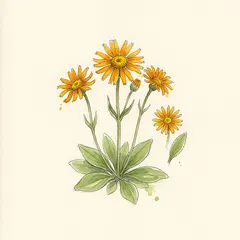 All books on Arnica Montana →
Antidoted byAceticum AcidumAconitum NapellusAllium CepaAmbra GriseaAmmonium CarbonicumArsenicum AlbumAsarumCamphoraChininum SulfuricumCinchona Officinalis
All books on Arnica Montana →
Antidoted byAceticum AcidumAconitum NapellusAllium CepaAmbra GriseaAmmonium CarbonicumArsenicum AlbumAsarumCamphoraChininum SulfuricumCinchona OfficinalisGeneral
soft in the vertex, with drawing in the vertex and occiput,
and tearing towards the temples. Heaviness in middle of brain. Pressure and confusion of the head. Feels like a heavy weight in head.
■ Feeling of weight in the head and on making any exertion,
sensation as if a liquid was fluctuating in the brain, on the
day following an attack, d Chronic cephalalgia. I Feeling at upper part of head as though the brain was sore
and tender. lOversensitiveness of the whole brain, or in diflFerent parts of it.
d Megrim.
■ Burning in the brain, with natural heat of the body, night
and morning ; worse from motion, better at rest.
Congestive and gastric headaches.
Bad effects from falls or blows on the head.
llMechanical injuries; especially with stupor from concus- sion ; fractures of the skull, or even compression (apply ex- ternally warm cloths saturated with dilute tincture from the root ; give also internally).
■ Headache > from motion on the pillow. ^Pneumonia.
■ Early in the morning he durst not set about reading, nor
working on first getting out of bed without incurring an attack, d Megrim.
Headache : violent on waking ; in the morning, stupifying ; from 3 to 8 p.m., pressive ; on walking in open air, press- ing ; with cough, stitch in forehead ; on moving head, stitches in head ; on rising or sitting up in bed ; on reading or re- flecting, pressure in forehead ; on stooping ; on walking, pressure in forehead ; on walking up stairs, pressing in fore- head.
Headache with vertigo.
■ Pain as if a knife were drawn through the head transversely
from the left side ; this is immediately followed by internal coldness of the head, which causes the hair to stand on end.
■ Brain affected, d Diarrhoea and dysentery.
Violent headache on waking in the morning, which reached such a point at 8 A.M. that while walking in open air he fell from dizziness ; disappeared at 10 a.m.
■ ■Meningitis after mechanical or traumatic injuries, such as
concussions, bruises, falling, concussion of brain, etc., when suspecting exudation of blood, fibrine or pus. In such cases we find great sopor and partial paralysis of the tongue, the oculomotors, the iris or the limbs.
■ ■Meningitis after lesion or concussion, provided there is no
complete want of reaction.
■ Meningitis granulosa with the characteristic inclination to
vomit.
ARNICA MONTANA. 6
I Serous or bloody exudation. ^Meningitis infantum.
I Apoplexy, loss of consciousness, with involuntary evacuations
from bowels and bladder, paralysis (left sided) ; pulse full,
strong ; stertor ; sighing, muttering. llApoplexia sanguinea. I No headache. ^ Apoplexia sanguinea. * Outer Head. ■ iHead feels too large.
SCold sensation in a small spot on the forehead as if some one
touched him with a cold thumb. Unbearable feeling as from ice on top of head ; after breakfast.
■ Burning or hot spots on top of head, d Prolapsus ani.
I Head hot, rest of body cool. ^Iritis. ^ Prolapsus uteri.
Pain in occiput as if hair was pulled out or as from severe elec- tric shocks.
I A pressure in the forehead as if these parts were crushed by a violent concussion ; this feeling extends over the face into both cheek-bones.
I Better by lying low with the head. 6 Iritis.
I Boring head deep in pillows. 6 Meningitis infantum.
I I Pressive headache over the eyes extending toward the tem- ples, with sensation as if integuments of forehead were spas- modically contracted.
■ Carries the head forward or to the right. ^ After injury to
left eye.
Recurring boils on scalp. '^ Sight and Eyes. B Photophobia. ^Apoplexy.
I Early in the morning fullness of head, soon followed by flick- ering before the eyes, which was increased by reading or writing. ^Headache occurring once or twice a week for twelve years.
Diplopia after injuring the eye.
If she attempts to read the eyes pain and the print seems to dance in a fog and vanish, so she must rub the eyes.
Muscse volitantes.
■ Cork from a bottle struck right eye seventeen days before,
eye swollen for four days ; sees through a mist, pupil moder- ately dilated and immovable without a trace of exudation.
■ All turns black before the eyes. ^Meningitis infantum. Loss of sight after a violent blow.
• Darkness before the eye and loss of vision with the headache. 6 Prolapsus ani.
■ Feeling of great weight and heaviness in the eyes, with in-
tense headache. Pressive pinching pain in the inner half of the right eyeball,
gradually ceasing on motion in the open air. I I Drawing pain in r. eye. I I Stitches in the eyes. ■ Shooting tearing pains in both eyes and surrounding parts;
< in bed and by warmth, d Ophthalmia. I 1 Burning in the eyes. I Insufficiency of the superior oblique muscle of the left eye.
■ Traumatic muscular paralysis in a robust man twenty-five
years old.
■ Double vision and vertigo on looking downward, carries his
head somewhat forward and turned to the right, d Trau- matic muscular paralysis.
■ All high objects appear to lean forward and about to fall
upon him. d Traumatic muscular paralysis. Pupils first contracted, twenty-four hours later dilated.
■ Contraction of pupils with cloudiness of head.
■ Dilated pupils, with sensitiveness to light.
I I Right eye projects from head and looks larger than the left. Eyes protrude, staring, denoting anguish. I I Eyes sunken.
■ Eyes dull, expression stupid. ^Typhus.
■ Congestion to eyes; balls blood-shot.
■ Eyes very red. ^Pneumonia.
■ Eyeball resembled a piece of raw flesh.
■ Conjunctiva much reddened; photophobia. ^Rheumatic
Fever
■ ■Inflammation of eyes, with suggillations after mechanical
injuries.
■ Subconjunctival ecchymosis, resulting from whooping-cough
or from injuries.
Rheumatic iritis, marked by much lachrymation, photophobia and redness, with shooting and tearing pains in and around the eye ;
< at night and by warmth.
■ ■Retinal hemorrhage; expedites absorption of clots. I I Amblyopia after a blow on the head.
■ Relaxed condition of blood-vessels and too fluid condition of
blood predisposing to hemorrhages. 6 Whooping-cough.
■ Traumatic ulceration, with much hemorrhage into the anterior
chamber.
■ Lachrymation, shooting and tearing pains in both eyes and in
the surrounding parts ; < in bed and by warmth.
■ Considerable lachrymation. d Ophthalmia. I I Sharp fine stitches in the inner canthi.
I I Itching in the canthi.
■ Severe ciliary neuralgia; head hot, body cool. ^Iritis.
I Sensation of oppression and drooping in eyelids as if they
could not be raised. Difficult and painful motion of eyelids, they are swollen, and
balls feel as if excoriated ; eyes and lids red ; < closing,
>> opening the eyes.
ARNICA MONTANA. 8
I (Edema of dry, hot, inflamed lids, with much subconjunctival
suggillation. 6 Iritis. Margin of upper lids painful when lids are moved, as if they
were dry and slightly sore. llA variety of eye troubles resulting from blows and various
injuries ; sometimes applied locally (tincture diluted with
water) and sometimes given internally.
■ Bruised iris after cataract operations.
■ Traumatic mydriasis.
Traumatic ulceration, with much hemorrhage into the anterior
chamber.
I Dull pain over eyes even when not using them. ^Asthenopia.
I I On the left orbital ridge very painful, intermitting dull
pressure. I I Cramp-like pressive pricking under the left eye on the nasal
bone, extending over the eyeball. ® Hearing and Ears. Great sensitiveness to loud sounds, with
pain in ears. I Noises in the ear caused by rush of blood to the head ; with
great sensitiveness to sound.
■ Buzzing and humming before the ears with difficult hearing.
6 Meningitis infantum ; sequel. llHard hearing from concussions.
■ Deafness after typhus.
Rushing in ears with deafness of r., and stitches through 1. ear. Pain internally in cartilage of 1. ear, as if the parts had been bruised or contused.
■ Bruised pain in ears, stitches in and behind ears; ears very
dry. Feeling of heat externally in left ear and cheek.
■ Suppurating otitis with stupor.
■ After suppuration of internal ears, d Typhus. Discharge of blood from the ear.
■ Swelling of parotid gland. ^Measles. ^ Smell and Nose. ■ Swelling of the nose.
■ Sneezes twenty or thirty times with a violent slinging motion
of the head, until sinking on the bed exhausted ; hardly hav- ing recovered his breath another attack follows. I I Nose pains from above down as after a violent fall on it.
■ ■Epistaxis.
■ ■Nosebleed: preceded by tingling; ■copious after every
exertion; ■■from mechanical causes; ■after washing the face; ■■whooping-cough; ■■typhus; ■blowing nose.
■ Ulcerated nostrils.
Nose cold but internally hot ; or with dry heat of the face.
■ End of nose cold. ^Pneumonia. Pain in glabella, over the root of nose. ■Discharge of several drops of thin blood from nose on first blowing it in morning.
■ Frequent blowing of nose viith. traces of blood.
^ Face. ■Right cheek hanging, mouth drawn to the left side. d Apoplexy.
■ When breathing, cheek blown up, expanded. ^Apoplexy. Countenance much sunken.
■ Face rather pale and a sense of chilliness rather than of heat.
d Chronic headache.
■ Pale, sunken ; sallow. 6 Cholera infantum.
■ Complexion earthy, looks unhealthy. /? Diarrhoea.
Dry heat in face toward evening, extending as far as behind ears, without any thirst, nose being quite cold.
■ Redness and burning in one cheek, otherwise cool or at any
rate not hot.
■ Face deep red, almost as red as mahogany, d Typhus.
■ Face hot and red, with cold legs. 6 Meningitis infantum.
■ Face and forehead hot. 6 Apoplexy.
■ The puffed cheeks are highly reddened. ^Apoplexy. ^ Swollen cheeks, with throbbing and stinging pain.
Red swelling of right cheek, with throbbing and pinching pain ; swollen lips and great heat in the head, with cold body. ^ Lower Part of Face. Lips burn ; are swollen and cracked.
■ Lower lip trembles, d Typhus.
Bruised pain in (right) articulation of jaw, from motion, early
in morning. Lower jaw hanging.
I I Burning heat in lips with moderate warmth of the body.
Pimples on upper lip.
Chapped lips.
Swollen lips with heat in head. ^o Teeth and Gums. ■ ■Toothache after operation, plugging, etc. Excruciating pains, cutting, tearing in all teeth of right upper
jaw, radiating to ear ; worse from external warmth or from
inhaling fresh air. Tooth feels as if forced out of its socket ; throbbing toothache.
■ Gums sore, swollen. ^Teething children.
■ Beating and tingling in the gums, d Toothache. Toothache as if the teeth had been bitten out, sprained, were
wabbling, throbbing ; the teeth feel as if they were pressed out by the blood rushing toward them ; they are then more painful when touched.
Toothache and swelling of the gums on the left upper jaw.
" Taste, Speech, Tongue.
Taste : putrid ; of rotten eggs ; bitter.
■ Dry tongue and disinclination to talk. ^Typhus.
■ Dry almost black tongue. ^Typhus.
■ Tongue coated yellow with bitter taste.
■ In morning taste of rotten eggs. '
ARNICA MONTANA. 10
Biting sensation on the tongue, with soreness, burning, and
stinging in the back part of the throat. Violent burning from the fauces through the oesophagus to the
Stomach
I Tongue: coated white; 8 dry, with a brown streak down the
middle, d Typhus.
Tongue dry or yellow-coated. 6 Dyspepsia.
B Tongue coated white, with a good appetite and good taste. ^^ Inner Mouth.
Il Putrid smell from mouth. ^Typhus, i I Saliva diminished.
■ Spits sometimes a little blood. ^Typhus. I Mouth dry, with much thirst.
I I Burning scraping in mouth and oesophagus ; increased saliva. ^^ Palate and Throat. Stinging in back of throat between acts
of deglutition. I Chronic pains in fauces and larynx, worse for a long time
after an animated talk.
Burning in the throat when swallowing.
Pain in fauces as if something hard or rough were lodged
there ; afternoon, lying down. I I Scraping burning from throat to stomach, which became a
troublesome pressure in stomach.
Swallowing almost always improves.
I I Swallowing is prevented by a sort of nausea as if the food
would not go down.
^* Appetite, Thirst, Desires, Aversions, i Appetite disturbed,
eating increases the pain, d Chronic attacks of headache.
■ Appetite lessened. ^Diarrhoea. ^Myalgia.
Loss of appetite and sourness of stomach of brandy drinkers, and creates a disgust for brandy.
■ Total want of appetite for ten days, loathing the very sight of
food.
Aversion : to meat ; broth ; milk ; smoking tobacco ; brandy.
I I Thirst for cold water, without fever.
See 40.
Thirst without any external heat, the pupils being little capable
of dilatation.
■ Constant desire for drinks, but knows not for what, as all
drinks are offensive, d Diarrhoea. Longing for vinegar or sour things ; for alcoholic drinks. ^^ Eating and Drinking. ■After eating, distress in epigastrium.
■ Vomiting of food, obstinate constipation and restless, sleepless
nights, d Concussion.
During dinner, one cheek hot.
After eating : feels worse ; distress in epigastrium (after a blow) ; repletion, and colic-like pressure in several places in abdomen and sides ; fullness in pit of stomach ; pressure on a little spot ; migraine ; toothache ; indolent feeling in legs.
-^l ARNICA MONTANA.
After too copious a meal vertigo with nausea, obscuration of
sight.
After drinking: chill increased;
I vomits; drinks much, and
then vomits. '' Nausea and Vomiting, i Hiccough, d Meningitis.
1 1 Eructations: frequent; empty; bitter.
I Putrid eructations ^ Uterine prolapsus. ^Diarrhoea.
Eructations like rotten eggs in the morning.
I Belches after coughing.
Extreme nausea.
I Nausea in epigastrium, d Uterine prolapsus.
1 I Nausea, burning scratching in the throat ; general relaxation during forenoon.
■ Empty retching, ineffectual efforts to vomit.
Retching at night ; vomiting however does not come on ; in the pit of the stomach there is a weight as of a lump.
Vomits : the least food taken ; bitter, yellow bile ; coagulated blood. - 1 1 Vomiting of dark red coagula, mouth bitter ; general sore- ness, d After injuries. . ^^ Scrobiculum and Stomacll. ■ Stomach distended with wind ; pressure on prsecordia, oppression of chest.
Pain in stomach as if its coats were spasmodically drawn to- gether ; > by eating. i • ■ i. ^
Spasmodic contraction of stomach causes a general pam.
Out mostly in posterior wall, with a sensation as if wall of sto- mach would be forcibly pressed toward spine, and as if spine would be made painful from that place downward.
Pinching and pressure in stomach, extended through bowels as a constriction, with much movement.
■ Pinching, spasmodic griping in stomach. Heaviness and pressure in the stomach.
■ Pressive cutting pains in epigastrium, with nausea and retch-
ing, d After blows on stomach. Soreness in stomach with putrid eructations, like rotten eggs.
■ Feeling of repletion in stomach with loathing. ^Angina
pectoris.
Sensation of hunger in the stomach.
I I Aching or burning distress in pit of stomach, epigastrium
distended ; feels worse from pressure ; ■ Ifoul belching. I I Easy and rapid transfer of cerebral irritation to the stomach,
ending in nausea, retching and vomiting. 6 Megrim. 1 I Much mucus in throat and stomach.
■ ■Dyspepsia. ^ Prolapsus ani.
1^ Hypochondria. Severe pressure at epigastrium.
Pressive cutting pains in epigastrium, with nausea and retching.
■ Sensible to pressure in region of liver. 6 Stupor.^
■ Stitches in region of liver ; painful when turning in bed.
ARNICA MONTANA. 12
Pressure: in region of liver; like a stone, both during inspira- tion and expiration ; felt lying on the left side.
Pressing in region of left ribs below the heart, daj and night.
I Pain and fullness in right hypochondrium from a blow.
I Stitches in splenic region, with soreness on pressure. d Splenitis, in intermittent fevers.
I I Stitches under false ribs, left side, interrupting breathing when standing. ^^ Abdomen, Sharp thrusts through abdomen from one side to the other.
Pain around navel when moving.
I Dull, heavy pain in left hypogastrium, followed in a few hours by a copious discharge, d Dysentery.
■ Seized in the middle of the night with violent cutting and
burning pains in hypogastrium, mostly left ; pains intermit- ting, ceasing after 15 to 20 minutes, d Dysentery.
Colic resembling dysentery, a kind of grinding deep in the hypogastrium, within the hips on both sides, accompanied by nausea and slumber.
Intermittent tearing in left half of pubic eminence.
Colic with strangury.
Swashing in abdomen as of water.
I I Pains in abdomen and headache, d Angina pectoris.
Right side of abdomen hard, swollen, with pain as if cutting into a wound when touched.
lAbdomen bloated, d Diarrhoea.
I Hard swelling of right side of abdomen, with severe pain when touched ; > by escape of flatus.
■ Tympanitic distension of abdomen, frequent urging to stool. ^° Rectum and Stool. ' ' Constricting cramps in rectum while
standing. I I Painful pressure in rectum.
■ Ineffectual urging to stool.
■ Frequent urging to stool, with severe pressure at the anus.
d Dysentery.
■ Tenesmus with severe pains. ^Dysentery.
■ Inclination to evacuate bowels recurring every four or five
hours, the tenesmus being severe during stool, d Dysentery. Sensation of rumbling in the rectum for three days, not attended by the usual stools.
■ lOifensive flatus ; smelling like rotten eggs.
■ Frequent small stools. ^Dysentery.
Frequent stool ; after every stool is obliged to lie down.
Nightly diarrhoea, with pressive colic, as if from flatulence.
Diarrhoeic stool with some cutting in intestines.
Frequent small stools consisting only of mucus.
Diarrhoeic stools yellowish or sometimes bloody.
■ Diarrhoea, stools resembling brown yeast.
-^3 ARNICA MONTANA.
I 1 Painless stools of undigested food.
■ Involuntary discharge of feces during stupor, f/ iyphus. 6 Meningitis infantum (in later stages).
I I Stool involuntary during sleep (also urine). ^Fevers. ^Apoplexy, etc. ,i i v
Stools : of undigested food ; bloody ; purulent ; bloody, slimy mucous, with urging and violent bellyache ; dark, bloody mucous, with sore, bruised feeling in abdomen ; brown, fer- mented (like yeast); averse to food; fetid breath; very offensive, papescent, at times involuntary ; involuntary dur- ing sleep ; frequent, small, mucous ; fluid, foamy, terribly offensive, acrid. . v n
Tenesmus followed by a copious thin or pap-like sourish-smell- ing stool, giving great relief. _
I I Urging to stool every half hour, nothing but slime being
iFrequent, fluid, frothy, acrid, very fetid stools, with much flatulence ; girl, set. 2i.
■ Scanty, slimy, dark colored, bloody stools. ^Dysentery.
I Dark, bloody mucous stools, with sore, bruised feeling m abdomen. ^Dysentery.
■ Excessive pain and discharges of pure blood and mucus.
6 Dysentery.
■ Copious discharges of dark, venous blood, amounting in quan-
tity at a time to about a quart, came on at intervals of about four hours, greatly relieving pain in abdomen for an hour or two. ^Dysentery.
■ ■ Dysentery with ischuria, or tenesmus of neck of bladder with
fruitless urging.
■ ■Most marked indication is the long intervals between the
stools, namely from four to six. hours. 6 Dysentery.
■ Stool tardy. ^Apoplexy.
■ Obstinate constipation after a blow on epigastrium.
■ Constipation.
(9 Pneumonia. ^Paralysis.
Before stool : abdomen distended.
During stool: rumbling and pressure in abdomen; ■ urging,
tenesmus, passing only slime and mucus.
With slimy stools : bruised pain in the back.
After stool : 1 1 must lie down.
■ Pain in the anus as if it were bruised, d Dysentery.
■ Pressive pains in anus and rectum, mostly in anus. dDjs-
enterv. , , ,
■ After "suffering much from hemorrhoids a very troublesome
and painful prolapsus of anus lasting four months.
■ After walking five or ten minutes the prolapsus protrudes and
hinders him from going any further, forces him to return home without delay.
ARNICA MONTANA. 14
I During the headaches the rectum does not fall down and vice versa, d Prolapsus ani.
I A man after suifering from hemorrhoids in a weakened and re- laxed state. 6 Prolapsus ani, ^^ Urinary Organs. I Chill followed by nephritic pains, nausea and vomiting, without relief; the vomiting produces excru- ciating pain in epigastrium, extending to right hypochon- drium and down to the groin, d Nephritis.
I Piercing pains as from knives plunged into the kidneys;
chilly, inclined to vomit.
■ Agonizing pains in back and hips as from passing calculi.
d Renal colic.
■ Traumatic inflammation of the bladder.
IlBladder affections after mechanical injuries.
Bladder feels overfilled, ineffectual urging.
Tenesmus of bladder ; urine drops involuntary.
IB Tenesmus from spasms of neck of bladder.
Infants scream from pain in bladder.
I I Constant urging while urine passes involuntary in drops. 1 1 Frequent attempts to urinate.
I II Has to wait a long time for urine to pass. 1 1 Retention of urine from exertion. 1 1 Ischuria with dysentery. Spasmodic ischuria with hot hoofs, excrement in small balls
(horses). 1 1 Involuntary urination at night during sleep. ^Apoplexy.
d Typhus, etc.
I Involuntary urination when running.
I I Involuntary urination at night with a red sediment. 6 Par- ralysis.
Increases the watery constituents of the urine.
Frequent pale urine.
I Extensive diuresis. ^Meningitis.
I Urine in small quantity, staining napkin yellow-brown." d Cholera infantum.
I Urine of a very dark brown color.
I I Urine brown with lateritious sediment.
I Brown clear urine which immediately becomes whitish and
turbid.
I Urine dark brown, scanty; brick-dust sediment.
I Urine red. ^ Liver complaint.
I Brick-dust sediment in urine. ^Prolapsus uteri.
I Scanty red urine very offensive.
Urine scanty, infrequent ; sometimes frequent urging.
I Urine difficult, scanty, dark, with thick brown sediment.
d Nephritis. I Bloody urine. llHsematuria from mechanical causes.
-^^ ARNICA MONTANA.
1 1 Urine thick, with much pus and some blood-globules, but no tubes. ^Nephritis.
1 1 Urine very acid, with increase of specific gravity.
Before urination : agonizing pains in back and hips ; pressure in bladder. .
During urination: burning pain along perineum and dis- charge of pus from urethra. 6 After a fall on perineum.
At the'end of urination : cutting in orifice of urethra.
After urination : stitches.
" Male Sexual Organs.
Violent sexual desire, continued erec- tions (weak old man).
Violent continued erections often waking.
Feeling of weakness, relaxed testicles, as after an emission ; early in bed.
Emission of semen (day or night) during an affectionate caress.
Testes indurated, swollen and tender.
Spermatic cords painfully swollen, stitches in abdomen.
I Hydrocele caused by a bruise.
llPenis and testicles swollen purple-red; after injuries. Erysipelas of scrotum extending to the anus.
I I Phymosis from friction ; parts bruised and much swollen.
" Female Sexual Organs. ■ Pains like from spraining in ovarian region (groin) obliging her to walk bent, d Ovarian diseases.
■ Metrorrhagia after coition. ^Prolapsus uteri.
I Bruised sore feeling remains after a hurt in abdomen, cannot
walk erect. 6 Prolapsus uteri. _
I I Prolapsus uteri caused by a concussion leaving a sore, bruised feeling in uterine region, which prevents her from walking erect.
1 Ulcers of uterus with a tendency to bleed. Menses generally too soon ; nausea in epigastrium.
■ Menses too frequent and profuse, d Prolapsus uteri.
■ Bloody discharge between the menstrual periods. ^Prolap-
sus uteri.
■ Blood bright red with mixed clots. 6 Prolapsus uteri.
■ Uterine hemorrhage.
Labia painfully swollen. .
24 Pregnancy. iPain between crest of r. ilium and sacrum during pregnancy.
■ It feels as if the foetus were lying crosswise.
■ ■Threatened abortion from falls, shocks, etc.; nervous, ex-
cited ; feels bruised. Labor-pains: violent, yet they do but little good; weak, or
ceasing, wants to change position often ; feels bruised. ■Metrorrhagia after coition, d During pregnancy.
■ Constant dribbling of urine after labor.
■ ■ Soreness of parts after labor ; prevents hemorrhage.
ARNICA MONTANA. 16
I Hemorrhages bright red or mixed with clots ; head hot, body
cool.
I After-pains violent; return while suckling.
Ruptured perineum (applied externally).
Prophylactic against pyaemia in childbed fever.
I Swelling of mammae from contusions.
Mastitis from bruises ; erysipelatous inflammation.
■ After an abscess in l;i mamma, the r. became hard and tender,
the 1. being opened instead of cured by inward medicine; the r. became swollen and red, pitted on pressure, the horrible cut with the knife brought no matter ; three days later the lancet was plunged in again, pus and blood came, but not freely ; toward night breast got painful, middle of night tre- mendously swollen. Finally the cut closed, but left an angry bright redness of surrounding skin, which changed to a malignant purple hue, the woman became greatly exhausted and shivered. Arnica lotion relieved at once, and very soon there followed a healthy discharge from the abscess.
I I Sore nipples.
■ Child is breathless, bruised ; or the mother has had a long,
painful labor. 6 Asphyxia neonatorum. Nipples of child swollen and tender, Ohamom. ; after pinching
by nurses, Arnica. *® Larynx to Bronchia. ■ Voice deep ; or low, muttering.
Hoarseness from overusing the voice ; also early in morning. Raw, scraped sensation along trachea and bronchi.
■ Tickling sensation in trachea.
When lying down, crackling sensation in trachea ; evening.
■ Hoarseness of preachers and military officers, from long
preaching and commanding, also of conductors from calling out the railway stations. 1 In throat, sound of a subdued whistle.
■ Cough is difficult, most in lying position, d Apoplexia. *® Respiration. ■Breath fetid, short, panting.
Worse on inspiration ; better expiration. See 28.
■ Inspiration quick, expiration slow.
■ Quick inspirations and expirations.
I I Short, panting breathing. ^Angina pectoris. Oppression of chest, with anguish and heat in head.
■ Anxiousness and dyspnoea; when getting awake. Dyspnoea, head hot, face red, body cool.
■ Dyspnoea from a blow on the epigastrium.
Asthma, with inclination to move about; sleepless, before mid- night; looks as if dying.
■ ■Asthma from fatty degeneration of heart.
Suffocative oppression of chest.
Children when angry lose their breath.
2^ Cough. Dry, short, hacking cough.
17 ARNICA MONTANA.
I Cough produced by itching irritation in upper part of larynx,
during siesta. I Constant insupportable tickling in larynx and trachea, causing
cough day and night, d Pneumonia. Tickling in lower part of trachea, and dry, hacking cough,
most at night. Dry cough, with tickling in the chest.
■ Constant dry cough, which shakes the whole frame.
■ Child weak, fretful, has a frequent short cough, d Diarrhoea. Cough after screaming or crying.
I Cough excited by cries in children when accompanied by
anger and tossing about. After gaping he coughs.
■ Cough after measles. Cough at night during sleep.
■ Paroxysms of cough at night during sleep, not awaking.
d Heart disease.
■ ■Hooping cough: ■ ■ child cries before the paroxysm as though
in fear of the soreness it will cause ; cough causes blood-shot eyes, nosebleed ; expectoration of foaming blood, or clots of blood.
■ Sputa loosened with difficulty.
■ Spitting of frothy phlegm with water, d Pneumonia.
■ Expectoration: offensive, green, purulent, blood-streaked;
■ when loosened must be swallowed; day and evening scanty, difficult expectoration of transparent, glairy slime, mixed with black dots, or bloody, d Bronchitis.
■ Sputa mixed with blood.
■ Severe haemoptysis in a phthisical patient; blood darkish,
semi-fluid, and expelled after a hacking cough.
■ ■Hemorrhage after mechanical injuries; slight spitting of
black, thick, viscid blood, or bright red, frothy blood, mixed with mucus and coagula.
■ ■Haemoptysis.
During cough: scratching in throat, tickling in trachea; ■ raw- ness, stitches in chest; ■ asthma; catching of breath; con- gestions and heat; bruised feeling in ribs; ■vomiting;
■ pressure and stinging in head; prickling on the head. Cough, with stitching in the sides of the chest.
Cough producing a feeling in the ribs as if all of them were bruised. 2^ Inner Chest and Lungs.
Great tightness of chest, with diffi- cult breathing.
Pressive pain in (right) chest, at a small spot, not increased by motion, touch or inspiration.
■ Oppression of chest, with anguish. ^Angina pectoris.
I Sensation of an oppressive weight at upper part of chest, with a feeling of constriction in throat.
VOL. II. — 2.
ARNICA MONTANA. 18
I Pains in right side of chest, dependent on over-exertion of
right arm. d Myalgia. I Aching pains in chest.
I Dull aching pain in 1. chest. ^Pneumonia. Chest sore when coughing, sputa blood streaked ; cannot raise
the loosened mucus.
■ Burning or rawness in the chest.
His chest feels affected, raw ; his sputa are sometimes tinged with blood, especially when walking.
I Stitches in chest (left), worse from a dry cough; < from
motion ;
> from external pressure. • Violent stitches in middle of left chest.
B Stitches in 1. chest near sternum, during a deep inhalation.
6 Angina pectoris.
■ Stitching pain in one side of chest, with a short cough, which
creates the pain. IB Pleurisy after mechanical injuries; must continually change position, bed feels so hard.
I I Pneumothorax from external injuries.
I Pneumonia after whooping cough, especially where there is
much soreness on coughing. I Chest sore when coughing, sputa blood streaked ; cannot raise
the loosened mucus, d Pneumonia, d Pertussis. fiAll the joints of the bones and cartilages of the chest feel
painful, as if they were sprained, bruised; during motion and
breathing.
^^ Heart, Pulse and Circulation. sPain from liver up through
left chest and down left arm ; veins on hand swollen, purplish ; sudden pain, as if heart were squeezed, or, as if it got a shock, d Angina pectoris.
■ Region of base of heart feels as if bruised. 11" Strain of the heart," from violent running.
■ Irritable cardiac action. ^Myalgia.
■ ■Fatty degeneration of heart. i Great cardiac distress.
■ Stitches in cardiac region.
■ Painful pricking in the region of the heart.
■ Stitches in heart from left to right, with fainting fits.
6 Angina pectoris.
Heavy breathing ; stitches, burning ; palpitation.
Congestion to the head and chest, with sensation of heat in
these parts, and coldness of the rest of the body.
■ Palpitation after almost any exertion; goes off by rest.
■ Beating of heart, more like a quivering, d Angina pectoris.
■ Motion of heart first very rapid, then suddenly slow. ^Angina
pectoris.
■ Pulse not full or rapid, temperature not increased. 6 Chronic
attacks of headache.
19 ARNICA MONTANA.
■ Pulse 72, less frequent and weaker than usual. ^Apoplexy.
■ Full, hard slow pulse, d Typhus.
Pulse : accelerated, full hard ; sometimes quicker than beat of
heart; intermittent, feeble, hurried, irregular; fluttering. 1 1 Pulse, in rest, below 60, after moving, above 120. d Nephritis. When the pulse grows slow, it is weak.
■ Very low, weak, rapid pulse, d Typhus.
I Faintness, feeble, hurried variable pulse and irregular rythm of heart, horror of instant death, d With the cardiac dis- tress in the night. ^*' Outer Chest. ■ ■ Articulations and cartilaginous connections of chest feel as if beaten, when moving, breathing, or coughing.
I Violent stitches in middle of left chest.
I Pain through thorax, stitches with cough, which increased the pain.
I I Pressive pain in right chest, at a small spot which remains unaltered either by motion, contact, or breathing.
Pains in intercostal muscles.
I Pains in left side of chest, at insertion of greater and lesser pectorals ; had to lift heavy weights with the left hand. d Myalgia.
■ Severe pain in left side of chest and abdomen ; pain was not
only along the insertion of the pectorals, especially their lower portion, but also along the digitations of the external oblique abdominis and serratus magnus, from working in a constrained position.
Red sweat on the chest. ^^ Neck and Back. Weakness of cervical muscles ; they do not support the head steadily.
I Violent spinal pain, as from sudden rising after long stooping.
Her head feels so heavy, and is so movable from weak, cervi- cal muscles, that it inclines easily to all sides.
■ Great sensibility of cervical vertebrae to pressure, d Conges-
tive chills.
Great soreness of the back.
I I Fullness and pressure in lumbar region.
I Sensation of a great weight across the lower part of loins, and
feeling of being drawn in, as if a cord was tightly drawn
across.
Tingling in the back.
Spine pains, as if not capable of carrying the body.
■ Pain in region of lumbar vertebrae. ^Nephritis.
Small of back pains ; stitches when coughing, breathing deeply,
or walking.
I I Right scapula and small of the back painful, as if beaten.
A peculiar painful sensation extending down back, as comes
sometimes from continued stooping in hard work, in rising
from bed in morning.
ARNICA MONTANA. 20
Pressive pain between scapulae, which seemed to extend from
posterior wall of stomach. Pain in right scapula toward the back, as after a violent blow
or fall.
The small of the back is painful, as if it had been beaten.
Bruised feeling in whole body, especially in region of dorsal
and cervical vertebrae, and great weakness of muscles of
neck, pain as of a bruise, and compression of chest. ^^ Upper Limbs. I l Violent twitching pain from shoulder-joint to
middle finger.
Anterior surface of arms feels bruised.
I Arms feel weary, as if bruised by blows ; he was unable to
bend his fingers inward. I Cannot lift right arm. ^Apoplexy.
■ Sensation as if joints of arms and wrists were sprained. iPains in arms and hands, as if knocked against something
hard. Forearm and hand much swollen and red, surface covered with
vesicles. I I Slight cracking and sensation of dislocation in right wrist
when moving the hand.
Left wrist powerless ; feels as if he could not use the arm.
Tearing, twitching, drawing pain during rest on ulnar side of
dorsum of right hand.
I I Sharp drawing in outer half of back of right hand.
I I Veins of hand distended, with full, strong pulse.
See 29.
Erysipelatous inflammation, left hand dark blue, and covered
with large and small vesicles, which gave skin the appear- ance of a rhinoceros hide. Drawing in right thumb.
Acute bruised pain in the balls of the thumbs.
I I Cramps in fingers of left hand, d Angina pectoris. lEnds of fingers cold. ^Pneumonia.
Violent twitching pain, extending to the middle finger.
Pressive pain in the joints of the right ring and little fingers.
Tearing in tips of the left ring and little finger.
Drawing pain in skin of dorsum of 1. little finger.
Itching pimple between thumb and index finger ; when touched,
a fine stinging pain, as if a splinter were in it. ^^ Lower Limbs. Abscess of psoas muscle.
■ Drawing pressive pains in left hip-joint, thigh being extended,
when sitting.
I Hips pain as if sprained.
I Boring, tearing pains shifting from right hip-joint to various parts ; worse at night, cannot find an easy position ; bear- able during day, and during motion, d After a sprain.
■ Formication ; lame feeling; must often change position, bed
21 ARNICA MONTANA.
or chair seems so hard, d After exertion, long marches, etc.
d Sciatica.
Pain in thighs when walking, as from a blow, or contusion.
Thighs livid, with blue yellow marks, as if black and blue.
I Blue spots appeared on the thighs, which felt as if bruised
when touched ; these spots were more numerous after
mental emotion or exertion.
■ Carbuncle on the thigh.
Large open inflamed carbuncle, red ; on inner side of 1. thigh.
I I Knee-joints suddenly bend when standing, feet numb,
insensible. Prick in the knee when touched.
■ Complains of a feeling as if the knee were dislocated, and of
a paralytic weakness of the whole limb. ^ After an injury.
I I Hygroma patellae. White swelling of knee.
Intense burning at a small spot on outside of left tibia.
I Pain in calf of r. leg, as from a blow, with lassitude of legs.
I The right lower limb cannot be used as usual. ^Apoplexy.
Tingling in the legs.
■ Arthritic pains in foot, worse toward evening; fears passers
by may strike it; big' toe-joint red, feels sprained.
■ Arthritic pain in foot, with a little fever toward evening.
Tearing pain in r. external malleolus, and on dorsum of foot.
Drawing in outer half of back of left foot.
Want of power in ankles and feeling of a heavy weight in each
instep.
Tarsal-joint pains as if sprained.
Violent burning in feet.
■ Feet feel tired or inflamed after a walk.
■ Hot erysipelatous inflammation and painfulness of foot.
■ ■A splinter ran deep into the sole months ago, producing a
great deal of proud flesh, came out after inner and outer use.
When walking, on raising 1. foot, and bending 1. ankle, crawl- ling in outer half of 1. sole, as if the nerve were pulled.
Tearing in left little toe.
■ Corns (pare them and apply externally).
■ Young lady subject to headache and neuralgia; when head-
ache got better, the same pain would come on in some small spot on lower extremities. ^^ Limbs in General. Heaviness in the limbs.
■ ■Paralytic pain in all joints during motion, as if bruised.
■ Limbs as if bruised at rest or in motion; painful concussion
from jolting of carriage or stepping firmly.
■ Soreness in limbs. ^Meningitis.
■ Limbs ache as if beaten. ^ Intermittents.
■ Tearing, with soreness, numbness, swelling, or tingling.
^® Motion.
Rest.
Position.
Motion : dizziness and sick sto-
ARNICA MONTANA. 22
mach < ; aching and pains in forehead < ; burning in brain ■< ; pains in chest <C ; pulse 120 ; paralytic pains in all joints < ; bruised feeling of limbs; chills <.
I In walking, feeble, as if suddenly blighted with old age.
Walking : in open air relieves pinching in right eyeball ; pres- sure in forehead ; when running, urine involuntary ; small of back pains ; thighs pain as from a blow ; crawling outer half left sole ; vertigo ; prolapsus ani ; cannot think after walk in open air.
Walks bent: prolapsus uteri.
Running : involuntary urination.
Rising : dizziness and sick stomach ■<.
Sitting : pain in left hip-joint.
■ Undisturbed horizontal posture alleviated some, and a few
hours of sleep made it to disappear, d Chronic attacks of headache.
Ascending : pressive pain in forehead.
Standing : cramps in rectum.
Must lie down : after stools ; from weakness.
Lying : dizziness and sick stomach > ; on left side, pain in re- gion of liver ; stinging in skin ; feels hot, etc. ; must lie stretched out on back; must lie down after stool ; pain in fauces as from something rough ; relieves vertigo ; must lie stretched out on back, megrim ; with head low, iritis is better.
Better when lying on the side or on the back.
At rest : burning in brain > ; pain in eyes < ; pulse 60 ; limbs feel bruised.
Turning in bed : liver painful.
IB Complaints from exertion: hoarse, overusing the voice; pal- pitation; formication, lame; paralysis; bruised feeling; sci- atica ; weary, faint ; retained urine ; nose bleed.
■ Every exertion : walking, stooping, talking, increases the pain
to an almost insufferable extent, d Chronic attacks of head- ache. Inclination for motion : asthma, etc., boring pains, better.
■ Better with the head low or in a horizontal position; worse
rising from a seat or assuming an erect position. Complaints when overhurried : urine involuntary when run- ning, etc. 36 JJerveg, Twitching of the muscles.
■ ■Head feels hot to him, body feels chilly and cold, between
frequent attacks of violent convulsions. ^ After Aeon.
■ Tired feeling, as after hard work or as if beaten, d Intermit-
tent. General weakness.
■ Great weakness. ^Apoplexy.
23 ARNICA MONTANA.
■ Great weakness followed by fearful exhaustion and shivering,
after the repeated useless lancing of abscesses of mammae. I Weary, bruised, sore, great weakness, must lie down, yet bed feels too hard.
■ Weakness, weariness, sensation as of being bruised; these
symptoms oblige him to lie down. iMuch reduced by the long continuance of intermittent.
General relaxation during the forenoon, Avith nausea.
General fatigue, lassitude and sleepiness.
I Went to bed languid and exhausted.
Lassitude and sluggishness of the whole body ; scarcely able to
stand.
I Loss of strength and of all sense of health.
Great sinking of strength.
■ Great prostration. /? Typhus.
■ ■General sinking of strength; he can scarcely move a limb.
d Typhus.
■ Paralysis depending on extravasation of blood in the brain. Paralysis : generally painful ; left-sided (after apoplexy) ; par- tial, from concussion of the spine or brain.
^^ Sleep. ' I Frequent yawning in evening, without sleepiness.
■ [Sleepiness ; too sleepy early in the evening.
■ Languor, drowsiness, d Cholera infantum.
■ Drowsy state. ^Meningitis infantum.
■ ■While answering, falls into a deep sleep before finishing.
d Typhus.
■ Somnolence.
Is often kept awake until 2 to 3 a.m. from heat, restlessness and constant desire to change position ; or from prickling stinging biting, now here now there on the body.
Sleep restless, frequently waked by dreams.
■ Restless sleep, t' Apoplexy.
■ Sleep at night restless and interrupted, d Diarrhoea. Unrefreshing sleep, loud blowing breathing.
Lies preferably with head low or horizontally.
■ Sleepless all night, has to lay the limb now here now there,
but no relief. 6 Caries.
■ Passes many nights sleepless. ^Prolapsus ani.
■ Cannot fall asleep, and while lying awake fantastical visions. During sleep ■loud talking, whimpering, loud blowing in and
expirations ; feces and urine pass involuntarily ; head jerked backwards.
■ Loud crying out in sleep, d Meningitis infantum. Involuntary expulsion of faeces while asleep.
I Sleep was much disturbed.
On falling asleep : starts as in fright ; is aroused by heat.
■ Frequent starting in sleep, d Meningitis infantum.
ARNICA MONTANA. 24
■ Falling asleep, lying on one side, he has pleasant dreams, but
awakes with a violent pain in the shoulder-joint and arms ; hands fall asleep.
■ Falling asleep while lying on back ; awful dreams of robbers
and murderers, and of being buried alive, suffocation, etc. I Dreams: vivid; frightful, of graves, black dogs, struck by
lightning, etc ; unrefreshing, anxious, with talking, d Typhus. iMany vivid dreams. ^Meningitis infantum. 1 I Dreams repeat ; had the very same often before. 1 Awoke six or seven times, each time from dreaming that he
was dying, his bed surrounded by friends, to take their last
leave. iWhen getting awake, they stare and look about anxiously,
with small pupils, d Meningitis infantum.
I On waking in the morning, paralyzed on r. side.
I Worse after along sleep, or on awaking.
lEarly after getting up, he dare not at once read or work men- tally, without getting a spell, d Megrim. 38 Time. Night : retching ; urine, stool involuntary ; coughs in
sleep ; boring, tearing, right hip-joint. Night : violent, cutting pains in hypogastrium ; involuntary
urination ; cough with heart disease. 12 P.M. : sweat, with headache.
Early morning : fullness in head.
See 5.
Great thirst ; dry
heat.
Morning: nose bleeds on blowing; taste of rotten eggs.
Forenoon: I I nausea; chilly.
Noon : one cheek warm during dinner.
Afternoon: pain in fauces as of something hard, rough.
Day and evening : expectoration scanty.
Towards evening : headache •< ; arthritic pains <C.
Evening: dry heat of face; crackling in trachea; sleepy too
early.
Evening until midnight : cough.
Night and morning : burning in brain.
Day and night : cough. ^' Temperature and Weather.
Inclination for open air ; better
m open air. I Sudden cooling after overheating, followed by a consumptive
Cough
Wants his cold feet covered.
■ Worse in damp, cold weather. ^Paralysis.
■ Temperature changeable, one time cold, and another warm.
d Diarrhoea. I All the while a longing to be in the free open country air.
■ All summer and autumn. ^Dysentery.
■Washing the whole body with cold water is the only thing that gives relief for the time, d Prolapsus ani.
25 ARNICA MONTANA.
Chilly when uncovering.
Fever, si Frequent violent attacks of chills. ^Nephritis.
B Chilly morning or forenoon; before chill, yawning, thirst for
large quantities of water ; drawing in periosteum.
Chill most in evening, with much thirst already before the chill.
Chill after every sleep.
Chill felt worse in pit of stomach.
Chill one-sided ; chill on side lain on.
During chill, thirst, head and face hot.
■ Violent chill, lasting six hours, succeeded by fever for eight
hours, both returning every day towards evening. 0 Dysen- tery, a Shivering over whole body and head, at same time heat in head and redness and heat in face, accompanied by a cool- ness of the hands and a feeling as of the hips, back and anterior surface of arms being bruised.
■ Chilly internally, with external heat.
1 1 Chilly, with heat and redness of one cheek.
1 1 Head feels hot to him, body chilly and cold; > between
frequent attacks of convulsions.
I Upper part of body warm, lower part cold. 6 Paralysis.
BHead and breast warm, abdomen and limbs cold. 6 Cholera
infantum.
Heat of upper part of body, coldness of lower.
I Head alone, or face alone hot, body cold.
I Great internal heat; hands and feet being cold.
I Dry, general heat after waking; early morning, violent
thirst ; uncovering makes him chilly ; chilly even when
moving in bed.
I Dry heat over the whole body after waking early in morning.
I Heat, with indifference, stupor, drinks less. ^Typhus. - B Flushes of heat, with thirst. ^Typhus.
Continuous heat, with such weakness that when attempting to
sit up he faints.
Sweat : sour or offensive ; sometimes cold, i Offensive odor of the moist skin ; breath putrid. 6 Typhus.
Worse when sweating ; sweat partial on front of body ; aver- sion to uncover. 1 General sweat about midnight, followed by faintness. d With
Headache
BThe exhalations smell sour; nightly sour sweat. BAll three stages, rigor, heat and sweat well marked, i Thirst great before and during the chill, less during the heat
and with the sweat almost gone. ^Intermittent after
quinine.
BB Malaria intermittens.
B During apyrexia in intermittent fever, headache, yellow face,
bitter taste, aversion to meat.
ARNICA MONTANA. 26
BB Traumatic fevers.
B Hectic fever, emaciation. 6 After a blow on stomach.
B Typhus or dysentery with little pain in abdomen.
BB Typhoid conditions.
BB Putrid fevers. *^ Attacks. Worse during the increase of the moon.
B Periodical attacks of megrim.
B Spasms of cough.
BBHeat in oft repeated short attacks.
Periodically repeated rheumatic pleurisy. ^^ Locality and Direction. ' ' Unilateral commencement of pains, d Megrim.
Right : pressure in half of head, especially over brow ; head- ache; carries head to r. after, injury to left eye; drawing pain in eye ; eye projects from head ; pressive pain inner half r. eyeball ; rushing in ears, deaf in r. ; cheek red, swollen ; jaw pains ; cutting in teeth right upper jaw ; pain and fullness in hypochondrium ; r. side of abdomen hard, swollen ; pains in side of chest from excessive use of right arm ; scapula painful ; sharp drawing back of hand ; wrist as if dislocated ; pressive pain joints of ring and little fingers ; pains shift from hip ; calf pains as from a blow ; malleolus pains.
Left: pain in head; stitches in frontal eminence; pain as if knife were drawn through head transversely ; pricking under eye ; stitches in ear ; cartilage as if bruised ; ear and cheek hot ; pressure in liver, lying on left side ; j)ress- ure ribs below heart ; stitches under ribs ; dull heavy pain in hypogastrium ; pain from liver to left chest and down left arm ; aching in side of chest ; stitches middle 1. chest ; 1. scapula to middle finger ; pain in abdomen ; drawing pressive pain in hip-joint ; hand dark blue ; wrist powerless ; paralysis ; cramps in fingers ; drawing in skin of little finger ; hip ; tibia burns ; foot ; little toe ; crawling in sole ; epigastrium to r. hypochondrium.
Left to right : abscess of mammae ; stitches in cardiac region ; pain as if a knife were drawn through the head.
Within outward : pressive headache. " Sensations. Peculiar sensation as if : the brain were rolled up in a lump ; head were being distended, or it feels too large ; an extravasation of blood had taken place, in forehead; integuments of forehead were spasmodically contracted ; as from a nail thrust into the temple ; a knife was drawn through head transversely from 1. side ; forehead and cheek- bones were crushed ; hair was pulled out, in occiput ; teeth were forced or pressed out; coats of stomach were spas- modically drawn together ; squeezed together, cardiac pain ;
27 ARNICA MONTANA.
a cord was tightly drawn across lower part of loins ; foetus
were lying crosswise. Stitches : rapid, in 1. frontal eminence ; in forehead ; in eyes ;
in inner canthi ; through 1. ear ; in region of liver ; in
splenic region ; through abdomen ; in urethra; in abdomen;
in chest ; in cardiac region ; in small of back. Cutting : in teeth ; in epigastrium ; in hypegastrium ; like
knives through kidneys ; in orifice of urethra.
Shooting : in and around eyes.
Sticking pain : in temples and forehead.
Stinging : in throat.
Pricking : and tearing in forehead ; in knee. Darting : in forehead.
Splinter pain : in pimple between thumb and index finger. Tearing : towards temples ; in and around eyes ; in teeth ; in
1. half of pubic eminence ; in r. hand ; in r. hip-joint ; in
r. foot ; in 1. little toe ; in finger tips ; in limbs. Drawing : in vertex and occiput ; in r. eye ; in r. hand ; in 1.
hip-joint; in 1. foot; in r. thumb; on back of 1. little finger.
Biting sensation : on tongue.
Burning : in brain ; in eyes ; in cheek ; in lips ; in throat ;
from fauces to stomach; in stomach; in hypogastrium ;
along perineum; in chest; in cardiac region; on outside of
1. tibia; in feet.
Scraping burning : in mouth and oesophagus.
Raw scraped sensation : in trachea and bronchi.
Soreness : in upper part of head and brain ; in back part of
throat ; in stomach ; of chest ; of back ; in limbs. Aching : in forehead ; through temples to 0'3ciput ; in stomach ;
of chest. Pressure : in r. half of head over brow ; in forehead ; in
eyeball ; in stomach ; on prsecordia ; at epigastrium ; in
anus and rectum ; in bladder ; in r. chest, at a small spot ;
in lumbar region ; between scapulae ; in 1. hip-joint ; in
finger joints.
Pressing shooting in temples.
Pinching : in eyeball ; in stomach.
Grinding : deep in hypogastrium.
Boring : from r. hip-joint to various parts.
Sprained sensation in teeth ; in groin ; in joints of bones and
cartilages of chest ; in joints of arms ; in hips ; in big toe ;
in tarsal joints.
Sensation of dislocation ; in r. wrist ; in knee.
Bruised feeling : in and behind ears ; in nose ; in articulation
of r. jaw ; in abdomen ; in anus ; in joints of chest ; base
of heart ; in r. scapula and small of back ; in whole back ;
in thighs, in arms ; in balls of thumbs ; in lower limbs.
ARNICA MONTANA. 28
Twitching pain : from shoulder-joint to middle finger ; in dorsum of r. hand ; in middle finger.
Cramp-like, pressive pricking in 1. eye and nasal bone.
Dull pain : in forehead ; back and limbs ; over eyes ; in 1. hypogastrium.
Undefined pain : over root of nose ; around navel ; in abdo- men ; between crest of r. ileum and sacrum ; in r, side of chest; intercostal muscles; in lumbar vertebrae in calf of r. leg. _
Throbbing : stinging or pinching in swollen cheek ; toothache.
Fluctuating sensation in brain ; in abdomen.
Constriction in throat ; constricting cramps in rectum.
Electric shocks in occiput.
Heaviness : of the head ; in middle of brain ; in eyes ; like a weight at upper chest ; in insteps ; in limbs.
Heat : in forehead ; of head ; in 1. ear and cheek.
Coldness : in forehead ; in head, after knife-like pain ; as if - touched with a cold thumb on forehead ; like ice on top of head ; of nose.
Crawling, as if nerve were pulled, in sole of 1. foot.
Tingling : in nose ; in gums ; in back ; in lower limbs.
Tickling in trachea.
Itching in canthi ; all over. ^* Tissues. 1 1 Concussions and contusions.
I Bleeding of internal and external parts.
I Venous enlargements, varicose tumors on the lower limbs. d Dysentery.
BB Burrowing pus, not painful.
BB Prevents suppuration.
Prevents formation of pus by withdrawing water from the serum ; the watery contents of urine increase without in- creased drinking. Grauvogl.
Exudations in brain and spine.
Dropsy of internal parts.
B BHyperinosis is rather a contra-indication for Arnie.
Muscles rigid.
BBSepticsemia ; tendency to typhoid forms.
BB Myalgia; particularly after overexertion.
I IJactication of tendons.
Painful sensitiveness of all the joints and of the skin, on mak- ing the slightest motion.
BB Gout and rheumatism.
B Bones (periosteum) ache. ^Intermittent.
B Paralysis of sphincters. ^Typhus.
B B Inflammation of skin and cellular tissue ; tender on pressure.
BEmaciation. ^ Hectic fever. ^ Subacute pneumonia. ^^ Touch.
Passive Motion.
Injuries, b Better from gentle pressure, d Iritis.
29 ARNICA MONTANA.
Painfulness of the limbs to touch.
llEverythin'g on which he lies seems too hard.
< Bed-sores; especially sacral region and hips. /? Typhus.
I Worse after riding; sick stomach from car or carriage riding.
After over-lifting, attacks of violent sneezing. See 7.
i I Sprains, with much swelling, bluish redness, intense soreness.
I Ixlfter bruises with blunt instruments, d Iritis.
II Concussions ; falls; mechanical injuries. 1 1 Contusions without laceration. Friction : phymosis.
listings of bees or wasps; splinters.
1 1 Compound fractures, and their profuse suppuration.
Pressure : aching in epigastrium <; ; liver sensitive ; spleen sore ; stitches in chest >.
llMechanical injuries: concussion of brain while there are unconsciousness, pallor, or drowsiness; weak, intermitting pulse ; cold surface, and other indications of depressed vitality from shock ; threatened abortion ; ovarian troubles ; orchitis ; mastitis, etc., etc. ^® Skin. Intense pricking or itching on the entire body.
I Skin hot and dry. ^Pneumonia,
■ Hot, red, oedematous skin. Petechige, ecchymoses.
I Hot, hard, shining swelling, from insect sting.
I Red spots first on limbs, then upon the trunk.
I Bed-sores; especially sacral region and hips.
I Erythema nodosum.
I Phlegmonous erysipelas.
■ Erysipelatous inflammation, left hand dark blue.
Eruption like pin-heads, with redness of the skin.
Irritable and slightly vesicular eruption.
Numerous small semi-transparent vesicles with red bases, on some parts confluent, great and excessive irritation from itching. The course of the eruption was : first heat and great itching of the skin, then redness, then vesicles, increas- ing in size, with intolerable itching ; slight desquamation, followed with some redness of skin ; where irritation had been worst the skin remained for some time hard, leathery.
I I Many small boils painful, one after another; extremely sore. I Carbuncle.
I Varicose ulcers: torpid; dirty, bluish bottom; no pus, but watery, fetid secretion, half transparent crusts, like thick glue, fetid ; painful ulcers. *^ Stages of Life, Constitution. Dark hair, rigid muscle.
Hydrogenoid constitution of Grauvogl.
I I Light complexion, sandy hair, sanguine, d Whooping-cough.
I Nervous, cannot stand pain, d Prolapsus uteri.
ARNICA MONTANA. 30
■ Especially suitable to those who remain long impressed by
even slight mechanical injuries.
■ Nervous women, sanguine plethoric persons, with red face.
d Prolapsus uteri.
■ In cases of sanguine plethoric people with lively expression,
very red face, disposed to cerebral congestion. 6 Prolapsus uteri.
Full-blooded, strong, old people.
Strong man, much dosed with quinia.
A lymphatic man leading a sedentary life, made a kind of opo- deldoc of arnica and soon got many and alarming symptoms, lasting fully a month.
Girl, set. 2|-, cured by the tincture, of diarrhoea of several weeks standing.
Man, set. 25, bilious temperament.
A woman, set. 35, nervous temperament, dysentery.
Man, set. 57, short, thick, apoplectic habit, dark red face, ac- customed to spirituous drinks, d Paralysis of r. side.
A robust man, set. 50, inflammation of eye after a cold.
Man, set. 67, acute stitches in ears followed by stupor, after an unusully cold bath. ** Relationship. Antidotes to massive doses : Camp]io7\ Ipec.
■ After Cinclion. low, given for the chills. ^Nephritis.
Antidotes to potencies: Aeon., Arsen., Oinchon., Ignat , Ipec.
Arnie. antidotes: Amm. carh,, Cinclion., Oicut., Ferrum,
Ignat., Ipec, Seneg. It follows well after: II Aeon., Ipec, Veratr. ; after Apis, in
hydrocephalus. After it follow well : Aeon., Arsen., Bryan., Ipec, Rhus tox.,
Sulph. ac
■ Headache is most quickly and certainly removed by a cup of
coffee, d Prolapsus ani. Arnic is indicated in ailments from spirituous liquors or from
charcoal vapors. Arsen. aided Arnic in dysentery with varicose veins.
■ ■Complementary to Aeon.
Alternated successfully in cases where the change of symptoms
indicate it, with Aeon, and Rhus tox.
Injurious after the bite of a dog or any rabid or angry animal.
Wine increases the unpleasant effects of Arnic Hyper, is preferable in spinal concussions.
Cognates: Aeon.;
Amm. carh.;
Oroton (swashing in abdo- men) ;
Arsen. ;
Baptis. ;
Bellad. ;
Bryon. ;
Ohamom. ;
China;
Fuphras.
(injuries to eye);
Oalend. ;
Feirum. ;
Hepar. ;
Hyper. ;
Ramam. ;
Ipec. ;
Mercur. ;
Pulsat. ;
Ran. seel, (pains in intercostal muscles) ;
Rhus tox. ;
Ruta ;
iStaphis. ; iSilic ;
Symphyt. ;
Sulphur (traumatic pleurisy) ;
Sulph. ac. ; Veratr.
31 ARSENICUM.