 Homeopathy Library
Cina Maritima
Cina · Hering - Guiding Symptoms of our Materia Medica · Constantine Hering · 30,974 chars
 All books on Cina Maritima →
Antidoted byBryonia AlbaCamphoraCapsicum AnnuumCinchona OfficinalisHyoscyamus NigerIpecacuanhaPiper NigrumSantoninum
All books on Cina Maritima →
Antidoted byBryonia AlbaCamphoraCapsicum AnnuumCinchona OfficinalisHyoscyamus NigerIpecacuanhaPiper NigrumSantoninumGeneral
Wormseed. • Com2:>osit8e.
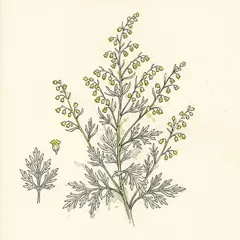
It is known that the drug brought to market under the name " wormseed " does not consist of seed, but of the undeveloped flowers mixed with the scales of the calyx and pedicles of different species of the genus Artemesia.
Semen Cina Levanticse, consisting of small ovate-oblong, green-yellow flower heads, have a peculiar, nauseous aromatic odor which is somewhat like camphor, and a rough, loathsome bitterish taste. — A. H. Pharmacopceia.
Levant wormseed contains volatile oil, resinous matter and a crystalline principle, Santonin, or santonic acid.
Cina, belonging to the family of Artemesias, was known to and used by the Greeks and Romans. Semen Cina came later under the name Semen Alexandri- num, and the Crusaders brought the Semen Sanctum from the Levant, from Syria and Palestine.
Proved by Hahnemann, Gross, Langhammer, Eiickert, Stapf, etc.
CiiiNiCAii Athorities Headache in temple, E. W. Berridge, H.
M., 1874, p. 159; Weakness of sight, the result of onanism, H. Z., v. 4, p. 37; Strabismus, Hirschel, Riick.
Kl. Erf., v. 5, p. 140; Epistazis, Ileichelheim, Eiick. Kl.
Erf., v. 1, p. 411; Helminthiasis, F. B. Smith, Am.
Ob , 1871, p. 293; Bayes, H. W., v. 12, p. 538 ; Mossa, H.
M., v. 13, p. 189 ; Caspari, Bethmann and Maly, Mon. Horn. Eev., V. 15, p. 16 ;
Kretschen, Riick. Kl. Erf, v. 1, p. 803 ; Diarrhcea with bronchial catarrh, Mossa, H.
M., v. 13, p 189; Diarrhoea with bronchial catarrh and helminthiasis, Huber, Riick. Kl. Erf, v. 5, p. 411 ;
Amenorrhoea, Aegidi, Allg. Hom. Ztg., v. 60, p. 69 ; Aphonia, J.
Kafka, Allg. Hom. Ztg., v. 88, p. 202 ; Bronchitis in children, M.
S. Bing, N. E. M.
G., 1869, v. 4; Bronchitis; Remittent fever; Cough, M.
Des- chere, N. A. J. H., v. 8, p. 115;
Croup, M. S. Briery, N. E.
M. G., v. 4, p. 451 ; Periodical cough, Diez, Eiick. Kl.
Erf, v. 3, p. 11 ; Spasmodic cough, E. M. Hale, A.
J. H M. M., 1868, v. 1 ; Whooping cough, Gn., A.
H. Z., v. 79, 32 ; Riick. Kl.
Erf. (four cases), besides an epidemic, see v. 3, p. 69; Neidhard, B. J.
H., v. 12, p. 438 ; M. S. Briery, N.
E. M. G., v 4, p. 450 ; Contraction of leg, O.
W. Louns- bury, Med. Adv., v. 2, p. 227 ; Shuddering after wine, Bcenninghausen, A.
J. H. M. M., V. 4, p. 130;
Paraplegia, O. W. Lounsbury, Med, Adv., v. 2, p 227; Threat- ened convulsions in scarlatina, J.
E. Winans, M. I., v. 5, p. 78 ; Chorea, Mossa, H.
M., V. 13, p 189; Convdsions, toxicological effect, Noak, Hygea, v. 16, p. 81 ; Clonic spasms with helminthiasis, Maly, Riick. Kl.
Erf, v. 4, p. 504 ; Drowsiness in a child, J. C. Morgan, A. .1.
H. M. M., v. 4, p. 22 ; Intermittent fever, T.
D. Stowe, H. M., V. 7, p. 162; Le Roy Fisher, N.
A. J. H., v. 25, p. 173; Scarlatina, J.
E. Winans, Med. Inv., v. 5 (new sen), p. 78.
^ Mind. iLoss of consciousness and frothing from mouth.
I Hallucinations of sight, smell and taste.
I I Children wake up in evening or before midnight with fear or fright, jump up, see sights, scream, tremble and talk about it with much anxiety.
143 CINA.
I Delirium and crying out.
I Child is whining and complaining; very restless even
during sleep ; it will not lie awake five minutes without crying; it must be rocked, carried, or dandled upon the knee constantly, day and night; does not want to be touched; cannot bear you to come near it; desires many things which it refuses when offered; is not pleased or satisfied with anything; uneasy and distressed all the time ; throws away everything given it, and cries about nothing; often sullen and unwilling to play during the day.
I I Pitiful weeping when awake. ^Hydrocephaloid.
I Child cries piteously if one takes hold of it, or carries it. I Great earnestness and sensitiveness; he is offended at the slightest joke.
■ Fretting excites the cough.
■ Usually good natured child was cross, fretful, irritable
and dissatisfied with everything, and passed urine in- voluntarily, with prostration. ^After remittent fever.
■ Child, though weak, was cross and obstinate, and cried
when his will was not carried out. ^Bronchitis.
■ ■ Child exceedingly cross, cries and strikes at all around
him. ^ Inner Head. ■Weak, hollow, empty feeling in head, with inclination to vomit.
■ Stupefying headache, especially in forehead, then also in
occiput; when walking in open air. I A slow stitch, extending from upper orbital margin deep
into brain. Swashing sensation in forehead when shaking head.
■ Drawing pain in r. temple in a vertical direction, on
coughing feels as if it would burst.
■ Drawing from 1. frontal eminence to root of nose, causing
confusion of head.
■ Intermitting pressure, as from a heavy weight, as if brain
pressed down on middle of vertex ; pressure increases and renews the pain.
■ Dull headache, with sensitiveness of eyes in morning. Stupefying headache brought on by eating or mental
labor.
■ Headache, before and after epileptic attacks and after
attacks of intermittent fever. Headache : with pain in chest and back ; caused by fixing eyes steadily upon some object, as when sewing; < from pressure; alternating with pain in abdomen; > by stooping.
■ Heat mostly in head during fever, with yellow color of
face and blue rings around eyes.
CINA. 144
iHydrocephaloid and inflammation of brain. * Outer Head. iHead falls to side and is jerked backwards, with twitches in limbs and cold perspiration on face.
■ Child leans its head sideways, all the time. IHydro-
cephaloid. ■Turning head from one side to other. IHydrocephaloid.
■ Head very hot; could not bear to have it touched.
^Scarlatina. •
■ Dislikes having head combed or brushed, from sensitive-
ness of scalp. ^Scarlatina. Better by shaking head. ^ Sight and Eyes, l Chronic weakness of sight, with aching in eyes and photophobia. ^Result of onanism.
■ Pains renewed by looking steadily at an object, as in
sewing. ^Amenorrhoea. When looking at a thing steadily, reading, he sees it as
through a gauze, which is relieved by wiping eyes. Pressure in eyes as if sand had got in, especially when
reading.
■ Can see more clearly for awhile after rubbing eyes.
■ On rising from bed, black before eyes, with dizziness in
head and faintness, totters to and fro ; > on lying down.
■ i Optical illusions in bright colors ; blue, violet, yellow or
green. Aversion to light. Pain in eyes when using them at night by candle light.
■ Pupils dilated. Itching of inner canthus.
From 9 a.m. to 1 p.m., daily, soreness over and in 1. eye, in 1. side of nose, forehead and temples to occiput.
■ Pulsation of superciliary muscles; a kind of convulsion. Drooping and heaviness of lids.
■ ■ Looks sickly about eyes, with paleness of face. Eyes staring. ^Chorea.
Eyeballs convulsively turned upward, showing only the whites, or fixed and staring, with dilated pupils.
Spots on cornea.
■Strabismus, dependent upon helminthiasis; child has a pale, sickly look, blue rings around eyes, pains about umbilicus, frequent urination, boring of nose, etc. ^ Hearing and Ears. ■Boring in ears. ^Scarlatina.
■Dull stitches below mastoid process; when pressed upon it feels as after a bruise or blow.
■ Cramp-like jerking in external ear, like earache.
'' Smell and Nose. ■Violent sneezing: with stitches in tem- ples; with whooping cough; < when sneezing. Bleeding from nose and mouth, with burning in nose. ■Bleeding of nose, blood dark; itching, causing rubbing and boring; pain in forehead.
145 , CINA.
■Stoppage of nose, in evening.
Running coryza with violent sneezing, makes child cry.
Fluent coryza at noon; slimy discharge from nose.
1 1 Itching of nose ; child frequently bores into nose until blood comes.
1 1 Child picks its nose very much, is very restless, cries and is very unamiable.
iChild rubs nose on pillow, on shoulders of nurse, or with hands. 6'Hydrocephaloid. * Upper Face. Face: pale, with sickly look about eyes; pale and cold ; red ; one cheek red the other pale.
I Pale, earthy, yellowish face. ^Chorea.
■Bloated, pale face, with blueness around mouth. ^Inter- mittent fever.
Pale, cold face, with cold perspiration.
■ Pale streak down centre of face. ^Scarlatina.
■ Dark rings around eyes.
■ Pain, as if both malar bones were pressed together with
pincers; < from external pressure. ■Heat mainly in face. ^'Intermittent.
■ ■Burning heat over whole face, with redness of cheeks
and thirst for cold drinks.
■ ■Rising heat and glowing redness of cheeks, without
thirst, after sleep. ^ Lower Face. ■ ■White and bluish appearance about mouth.
■ Frothing from mouth, with loss of consciousness.
^*' Teeth and Gums. ■■Grinding of teeth and tumbling and tossing during sleep. Sensitiveness of teeth to cold air and cold water; feel sore. During dentition spasmodic cough. ^^ Taste and Tongue. Bitter taste before chill, bread tastes bitter. Tongue brownish-yellow, whitish; always clean. Cylindrical contraction of tongue, which is spasmodically forced through lips. ^^ Inner Mouth. ■ Much frothy saliva, with rattling phlegm on chest.
■ Breath foul. ^Intermittent. Bleeding from mouth and nose.
Sensation of dryness and roughness of mouth, especially of palate. ^^ Throat. ■ Frequent motion, as though swallowing something.
■ Inability to swallow, especially fluids.
■ Audible gurgling noise along oesophagus. ^Aphonia. Is worse when swallowing, particularly drink.
■ Choreic movements extend to tongue, oesophagus and
larynx, causing a clucking noise from throat to stomach,
VOL. IV. — 10.
CmA. , 146
similar to that caused by water when poured from a bottle. /* Appetite, Thirst. Desires, Aversions, i Little appetite. ^Bronchitis.
■ Unnatural hunger. ^Paraplegia.
1 1 Great hunger soon after a meal, with feeling of empti- ness.
I Thirst. ^Bronchitis. ^Intermittent.
I Desire for bread.
H Desires many and different things.
Child refuses to take mother's milk. ^^ Eating and Drinking, i Shudders on drinking wine, as if it were vinegar or the strongest whisky.
Is worse from drinking quickly.
After eating or drinking, vomiting or diarrhoea. ^^ Hiccough, Belching, Nausea and Vomiting. ■ Frequent hiccough, also during sleep. ^Hydrocephaloid.
Inclination to vomit, with a weak, hollow, empty feeling in head.
1 Nausea and vomiting. ^Intermittent.
■ Vomiting: of mucus; and diarrhoea after drinking; of
lumbrici and ascarides; of food and mucus; during fever, with clean tongue ; of food and bile ; violent. ■Vomiting during chill. ^Intermittent.
■ Vomiting precedes fever and heat, which is followed by
a deep sleep. ^Amenorrhoea. ^^ Scrobiculum and Stomach. ■Pain in pericardial region, oppressi] ig breathing. Digging up pain in epigastrium, with a feeling of crawl- ing of numberless worms. ■Audible gurgling from throat into stomach when drink- ing.
■ Constant pressure in stomach at night, causing restless-
ness.
■ ■ Gnawing sensation in stomach, as from hunger.
■ Pain or uneasiness below sternum, sometimes extending
to navel ; < on rising in morning ; > after a meal.
■ Gastric disorders, with helminthiasis.
^^ Abdomen. ■ Constant uneasiness below sternum, sometimes extending to navel; < on rising in morning; > from eating; patient has grown thin and weak. ^Tapeworm.
■ Pinching, cramp-like pressure, transversely across epigas-
tric region, after a meal.
■ Cutting and pinching pain in abdomen from worms.
■ Boring pain above navel, passes off when pressing thereon.
■ Painful twisting about navel, pain also on pressing upon
navel. Pressing outward in belly.
147 CINA.
■ Unpleasant sensation of warmth in abdomen.
I Belly hard and distended; painful on pressure. ^Hel- minthiasis. I Bloated abdomen, especially in children.
■ Feeling of emptiness in abdomen.
I Child discharges worms ; picks nose or anus ; has a hack-
ing cough; continually making attempts at deglutition, as if to swallow something; is very hard to please.
■ Pain in bowels, flashes of heat, constant motion of super-
ficial cutaneous surface, restless sleep, moaning and starting.
I I Sufferings caused by worms.
^ Rectum and Stool, i Watery diarrhoea.
■ Involuntary diarrhoeic white stools. ^Intermittent.
■ Diarrhoea after drinking.
Stools: watery; white; white mucous, like little pieces of popped corn; reddish mucous; greenish slimy; bloody; involuntary ; frequent.
■ Discharges lumbrici and ascarides.
■ Diarrhoea with discharge of round worms.
■ Constipation. ^Bronchitis. ■Stool rather hard and black.
■ Itching at anus.
^^ Urinary Organs. ■ Enuresis. ^Scarlatina.
■ Frequent urging, with passage of much urine, all day.
■ Involuntary emission of urine at night, with worm symp-
toms and ravenous appetite.
■ Passes urine involuntarily; is irritable and prostrated.
^After intermittent fever. ■Urine copious and involuntary. ^Bronchitis. Urine white and turbid, or white and jelly like.
■ Urine turbid, becomes semi-solid on standing. ^Inter-
mittent fever.
■ Urine clear, or turns milky on standing. (^Chorea.
^^ Male Sexual Organs. iBad effects from onanism. ^Weak- ness of sight. ^Chorea. ^ Female Sexual Organs. ■Menses too early and profuse.
■ Hemorrhage from uterus, particularly before the age of
menstruation. ^ Parturition. Lactation. ■ Labor-like pains in abdomen, frequently recurring, as if menses would appear.
■ Child refuses breast.
^' Voice and Larynx. Trachea and Bronchia. ■Attempt- ing to talk causes a peculiar, hoarse, soundless cough, with pain in larynx. 6/ Aphonia from exposure. Hoarseness with much mucus in larynx and trachea. ■Paralysis of vocal cords from catching cold, with twitch- ing of r. hand, and pectoralis major, constriction of r.
CINA. 148
side of thorax and difficulty of breathing at every fit of coughing, followed by gurgling in oesophagus.
■ Great bronchial irritation of children, mucous rales in
bronchi, moaning at night, frequent rubbing of nose.
Titillation low down in trachea, inducing cough.
• Bronchitis: short, rapid respiration, rattling and cough- ing, very cross, obstinate and crying ; restless sleep, con- stantly broken by cough ; thirst, poor appetite ; urine co- pious and involuntary; pulse 120 to 140; spasmodic twitchings with threatening collapse; pupils dilated; gnashing of teeth ; deathly paleness.
■Bronchial catarrh, with diarrhoea and helminthiasis. ^ Respiration. Very short breath, as if he had much mucus in chest, without being obliged to cough.
■ ■Very short breath, at times with interruptions. Difficult, loud respiration.
■Respiration accelerated, short and rattling, when cough- ing at short intervals could not raise mucus, and was nearly suffocated in consequence. ^Bronchitis.
Short moaning respiration with open mouth.
■Respiration wheezing and panting.
While inspiring, a loud whistling whoop in trachea, not audible on expiration.
■ Inhalation broken into two. ^Hydrocephalus.
■ Oppression of chest, as from a cramp-like, contracted sen-
sation in chest; sternum seems to lie too close and breathing becomes oppressed.
■ Suffocative attacks.
^ Cough. ■Fretting excites cough.
■Paroxysm of violent cough from time to time.
■ Spasmodic, dry cough, returning periodically each Spring
and Fall. ■Violent, periodically recurring paroxysms of whooping cough, excited by sensation of a feather or down in throat, or by adherent mucus in larynx ; in morning without expectoration, in evening with difficult expec- toration of white, occasionally blood-streaked mucus, which is tasteless; < in morning and in evening; > during night; < by drinking, walking in open air, pressing on larynx, lying on r. side, in cold air, and when awaking from sleep.
■ Dry, spasmodic cough, with rigidity of body and uncon-
sciousness. ^Whooping cough. ^/Helminthiasis.
■ Dry cough, with sneezing, want of appetite and sleepless-
ness.
■ ■Gagging cough in morning, after rising; irritation
thereto (as from dust) is renewed by inspiration after a long interval.
149 • CINA.
I Hoarse gagging cough, consisting of a few shocks, which is renewed only after long intervals, in evening.
■Hacking cough, followed immediately by an effort to swallow something.
I Short hacking cough at night.
■ Rattling cough in spells. ^Hydrocephaloid. I I Cough < in evening. ^Hydrocephaloid.
I Dry cough and sneezing; baby would not nurse and
cried when not coughing, with inappetency, sleepless- ness and pains in throat.
I I Before coughing child raises herself suddenly, looks wildly about, the whole body becomes stiff, she loses consciousness, just as if she would have an epileptic spasm, then follows the cough.
1 After coughing, the child cries au! au! a noise like a gurgling going down is heard ; she is anxious, catches her breath, and becomes very pale in face ; paroxysms lasting two minutes.
■ Paroxysms of spasmodic cough at night, ending in spasms
throwing the body of the child backward so suddenly as to force the child off the nurse's lap ; ravenous appe- tite; hard, distended abdomen; picks nose; stools of mucus and undigested food.
When coughing peculiar twitching of r. hand.
Expectoration: whitish, slimy, rarely somewhat bloody, almost tasteless, detached with difficulty.
I In morning, after rising, mucus hangs in larynx; he is frequently obliged to hawk it up, after which it soon collects again. ^ Inner Chest and Lungs, i Stitches in 1. side.
I Burning stitches and soreness in chest.
Chest as if pressed together from both sides.
I Chest seemed to be full of mucus, with coarse rales; threatened collapse. ^Bronchitis. ^^ Heart, Pulse and Circulation. Anguish about heart as though he had committed some evil deed, when work- ing in open air.
Trembling beating of heart.
I Pulse small, but hard and accelerated.
I Pulse 136, intermitting every seventeenth beat. ^Scar- latina. ^ Outer Chest. Two dull piercing stitches in quick succes- sion near sternum, beneath clavicle, during a deep in- spiration ; painful on pressure.
I Right side of chest constricted, with difficult breathing. ^Aphonia. ^^ Neck and Back, l Drawing-tearing pain along whole spine.
■ Tearing, jerking pains in middle of spine.
CINA. • 150
■Fatigued pain in loins, as if he had stood a long time.
■ Bruised pain in small of back, not < by motion. Lancinating in upper part of spinal column towards r.
scapula. ^^ Upper Limbs, l Cramp-like, drawing pains in arms and hands. I I Boring, pinching pains in 1. upper arm, > by motion. ■Sprained feeling in wrist-joint. I I Single, small, jerking stitches, now in r., again in 1. hand.
■ Spasmodic contraction of hand.
Peculiar twitching of r. hand when coughing.
■ Weakness of hand; he can hold nothing with it. ■Twitching of fingers.
^ Lower Limbs. ■Paralytic pain in 1. thigh, near knee.
■ Left leg semiflexed, both upon itself and upon abdomen. ■Rigidity of lower limbs; spasmodic stretching and twitch- ing of feet.
■Sudden loss of use of lower limbs, with unnatural hunger. ^ Limbs in GeneraL ■ "Twitching of limbs.
■ Jerking and distortion of limbs.
■ Pain in limbs. ^Intermittent. ■Coldness of hands and feet with thirst.
^ Rest. Position. Motion. Lying on belly during sleep.
On lying on r. side: cough <.
On lying down : dizziness and faintness.
On rising: dizziness and faintness; pain or uneasiness be- low sternum, sometimes extending to navel.
On stooping: pain in abdomen >.
Continually rolling over and about. ^'^ Nerves. ■ Child is very weak, pale and sick; constant rest- lessness; children constantly turn and twist at night, call for water, and are ravenous for food.
■ Child tosses about uneasily, even while awake, Oversensitiveness of whole body to touch.
■ Trembling of body, with shivering sensation, while
yawning.
■ Twitching, jerking and distortion of limbs.
■ Spasmodic twitchings, with threatened collapse. ^Bron-
chitis. The child gets perfectly rigid in every coughing spell.
■ General rigor of whole body, and loss of consciousness.
^Whooping cough.
■ Spasms of children, with throwing arms from side to side.
■ Convulsive attacks at night.
■ ■Convulsions of extensor muscles; child becomes sud-
denly stiff; there is a clucking noise, as though water were poured out of a bottle, from throat down to abdo- men.
151 CINA.
1 1 Worm spasms, the child stiffens out straight.
Epileptic attacks, especially at night.
I Epileptiform convulsions, with consciousness.
■Eclampsia, especially at night, with or without conscious- ness; lying on back; violent screams and violent jerks of hands and feet.
Chorea; the distortions often commence with a shriek, ex- tend to tongue, oesophagus and larynx, continue even through night; from intestinal irritation.
■ Chorea complicated with worms.
I I Paraplegia with unnatural hunger. ^^ Sleep. I Spasmodic yawning; pains renewed by yawning which cannot be suppressed. ^Amenorrhoea. ■Sleeps erect with head leaned backward or to r. side.
■ Child hangs its head to one side, is drowsy.
■ Sudden distressing cries in sleep. ^Hydrocephaloid.
■ Grinding of teeth during sleep.
■ Tossing about during sleep, with lamentations and cries
about colic. ^Hydrocephaloid. I I Restless sleep broken by cough. ^Bronchitis.
■ Lying on belly. ^Intermittent.
■Awakes from sleep trembling and frightened, with
screams, and will not be pacified. ^Intermittent. ■Wakes in morning, restless and lamenting, in a start.
■ Cannot sleep; when falling asleep, starts, screams, turns
over, kicks off bedclothes. ^Hydrocephaloid. I 1 Child never sleeps long at a time. ^Intermittent. ^Atrophy.
■ Sleeplessness, with restlessness, crying and lamentations. During sleep hiccough.
■ Child will not sleep unless rocked, or kept in constant
Motion
Heat < after sleep. ^ Time. In morning: sensitiveness of eyes; dull headache; pain in sternum < ; paroxysms of whooping cough, without expectoration; paroxysms of whooping cough ■< ; after rising, gagging cough, mucus in larynx, wakes restless and lamenting, in a start.
From 9 a.m. to 1 p.m.: soreness in eyes, nose, forehead, temples and occiput.
At noon : fluent coryza ; chorea while at dinner.
During day: child is unwilling to play, sullen.
In evening: child awakes frightened; stoppage of nose; paroxysm of whooping cough with difficult expectora- tion; paroxysm of whooping cough < ; hoarse, gagging cough ; cough < ; chill with great paleness of face ; chorea.
At night: pain in eyes; constant pressure in stomach;
CINA. 152
involuntary emissions of urine, with worm symptoms and ravenous appetite ; moaning ; whooping cough > ; hacking cough ; spasmodic cough ; children constantly turn and twist, call for water, and are ravenous for food ; convulsive attacks; eclampsia; restlessness; chorea; ag- gravation of symptoms.
Before midnight: child wakes up frightened. ^^ Temperature and Weather. Open air : cough and expec- toration < ; anguish about heart when working in.
Cold air : teeth sensitive to ; cough < by.
Cold water : teeth sensitive to. ^ Fever, l Before chill, hunger, vomiting of food, pain in limbs. ^'Intermittent.
I Chill, with shivering and shaking, even near a warm stove.
I Chill ascends from upper part of body to head, or from back upward.
Chill without thirst.
I Chill not relieved by external warmth, mostly in evening and with great paleness of face.
I Chill in evening and fever all night (nursing children).
I I Chill, with thirst, face pale and cold; hands warm; nausea, or vomiting of bile or ingesta. ^Intermittent.
I Chill lasted an hour, then heat, with headache. ^Inter- mittent.
I Chill followed by convulsions and high fever ; heat mostly in face and head; pain in stomach and abdomen; pupils enlarged; rubbing of nose; restlessness, with grinding of teeth; sudden starts; abdomen bloated. ^Helmin- thiasis.
■ Shivering creeping over trunk, so that he trembles even by a warm stove.
I Chill in P.M., not > by heat; heat is mainly in face; vomiting during chill; child pale and puny; abdomen bloated; breath foul; an occasional thin, whitish diar- rhoea ; rubbing of face, ears, nose, and perineum ; wet- ting bed ; starting in sleep ; lying on belly ; restless at night, continually rolling over and about; throws away everything given it and cries about nothing.
I Febrile shivering over whole body, with hot cheeks, with-
out thirst.
I I Rising heat and glowing redness of cheeks, without thirst, after sleep.
I Fever, : vomiting of food, followed by chill all over, and then heat with great thirst; violent with vomiting and diarrhoea; daily at same hour; chill, followed by heat without thirst.
After remittent fever excessive prostration with irritability and involuntary urination.
153 CINA.
I After fever, hunger. ^Intermittent.
I Daily fever at same hour, with very short breath.
■Burning heat over whole face, with redness of cheeks and thirst for cold drinks. *^ Attacks, Periodicity. Lasting two minutes : . spasms in throat after coughing.
For an hour : chill.
All day : frequent urging, with passage of much urine.
All night: fever.
Through the night: chorea.
Each Spring and Fall : spasmodic dry cough.
Periodical : paroxysms of whooping cough ; daily fever.
Alternating: headache, with pain in abdomen.
Intermitting: pressure in head. ^^ Locality and Direction. Right : drawing pain in temple ; twitching of hand and pectoralis major; constriction of side of thorax ; twitching of hand when coughing; con- striction of chest; lancinating towards scapula; small, jerking stitches in hand; twitching of hand when coughing.
Left: drawing in frontal eminence to root of nose; sore- ness over and in eye; in side of nose and forehead; stitches in side; pinching in upper arm; small, jerking stitches in hand ; paralytic pain in thigh near knee ; leg semiflexed both upon itself and upon abdomen.
Backward: jerking of head; spasms throw body of child suddenly backward. *^ Sensations. As if brain pressed down on middle of vertex ; as if he saw objects through gauze; as if both malar bones were pressed together with pincers; as if sternum was lying too close and oppressed breathing; as of feather or down in throat; as if chest was pressed to- gether from both sides; as if chest was full of mucus.
Dull twinges sometimes like a pinching, at others like a pressure, or a blow, or jerk, or again like an itching, at various places, but especially at the posterior portion of the crest of the ilium, on the hip ; the places are painful on pressure, as if sore or bruised.
Lancinating: in upper part of spinal column, towards r. scapula.
Tearing : along whole spine ; in middle of spine.
Stitches: from upper orbital margin deep into brain; below mastoid process ; in temples ; in 1. side ; in chest ; dull, piercing near sternum beneath clavicle; now in r., again in 1. hand ; here and there in body.
Cutting: in abdomen.
Digging up pain in epigastrium.
Boring : in ears ; above navel ; in 1. upper arm.
CINA. 154
Gnawing: in stomach as from hunger.
Pinching: transversely across epigastric region; in abdo- men; in 1. upper arm.
Burning : in nose ; in chest ; over whole face.
Bursting: in r. temple on coughing.
Jerking : in external ear ; in middle of spine.
Twisting: about navel.
Drawing : in r. temple ; along whole spine ; in arms and hands.
Constriction : r. side of chest.
Contraction: in chest.
Labor-like pains in abdomen.
Cramp-like pains in arms and hands.
Cramp-like pressure: in abdomen; in chest.
Pressure: in head as from a heavy weight; in eyes as from sand; in stomach; transversely across ej)igastric region ; in belly outward.
Oppression : of chest.
Anguish : about heart.
Pulsation : of superciliary muscles.
Swashing: in forehead, when shaking head.
Aching: in eyes.
Bruised pain : in small of back.
Sprained feeling in wrist-joint.
Soreness: over and in 1. eye; in 1. side of nose, forearm and temples to occiput; in chest; of body when touched, or when moving.
Pain: in chest and back; in abdomen; in eyes; about umbilicus; in forehead; in pericardial region; below sternum, sometimes extending to navel; in bowels; in larynx; in throat; in limbs; in stomach and abdomen.
Shivering sensation : while yawning ; over trunk.
Creeping over trunk.
Crawling as of numberless worms in epigastrium.
Itching : in inner canthus ; of nose ; at anus.
Titillation : low down in trachea.
Uneasiness: below sternum, sometimes extending to navel.
Heaviness: of lids.
Fatigued pain : in loins as if he had stood a long time.
Confusion of head.
Stupefying pain: in forehead; in occiput; when walking in open air; after eating; after mental labor.
Weak feeling: in head.
Empty feeling : in head ; after a meal ; in abdomen.
Hollow feeling: in head.
Roughness : of mouth ; of palate.
Dryness: of mouth; of palate.
Warmth: in abdomen.
155 CINA.,
^ Tissues. Cachexia of helminthiasis.
Great emaciation from impaired nutrition.
Intestinal irritation affecting brain and other organs.
The voluntary muscular system is affected, paralytic sen- sations and partial temporary paralysis occur in extremi- ties, complicated with convulsive muscular contraction, the co-ordinating power in abeyance. ^Chorea.
Abnormal sensitiveness of individual nervous filaments.
Hypersesthesia of laryngeal mucous membrane.
Reflex spasms in dominion of nervus vagus. ^ Touch.
Passive Motion.
Pressure : aggravates headache ; mastoid process feels as after a bruise or blow after; pain in malar bones < ; boring pain in navel < ; causes pain in navel ; belly painful to ; on larynx < cough ; sternum near clavicle painful on; upon previously affected parts reproduces paroxysms of chorea ; suffering renewed or aggravated by.
■ Child wants to be carried. ^Hydrocephaloid.
Touch: child cannot bear least; cannot bear to have head touched; oversensitiveness of whole body; paroxysms of chorea reproduced by.
On taking hold of child : it cries piteously.
Child dislikes having head combed or brushed.
Can see better after rubbing eyes.
On wiping eyes, sensation as if looking through a gauze >.
Child must be rocked, carried, or dandled on knee con- stantly, day and night; will not sleep unless rocked or kept in constant motion.
When carried : child cries piteously.
■ Desire to remain perfectly still and in the dark. ^Inter-
mittent. ^'^ Skin. ■ Itching lessened or unchanged by scratching.
■ Furuncles or red pimples.
■ Ulcers with scanty discharge. ■Rubbing of face, ears, nose and perineum.
Minor skin affections of infants and scrofulous children. ^^ Relations. Antidotedby: Camphor., Capsic, Cinchon., Pip.
nigr.
It antidotes ailments from Capsic, Cinchon., Mercur.
Compatible : after Droser. in pertussis ; after Ant. tart, in
bronchitis. Cina cured aphonia from exposure when Aeon., Carb. veg.,
Phosphor, and Spongia had failed.
Compare
Ant. crud. and Ant. tart, (irritability of children ;
will not be touched or looked at without crying) ;
Cuprum (gurgling along oesophagus when swallowing
fluids) ; Digit, (white stools) ; the action of Santonine
on the eyes is comparable with that of Atropia and
Digit.
CINCHONA BOLIVIANA. 156