 Homeopathy Library
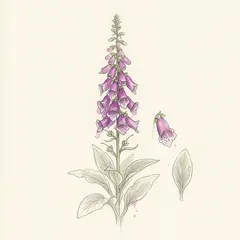
Digitalis Purpurea
Hering - Guiding Symptoms of our Materia Medica · Constantine Hering · 58,131 chars
 All books on Digitalis Purpurea →
Antidoted byApis MellificaCalcarea CarbonicaCamphoraChloralum HydratumCinchona OfficinalisEtherumMyrica CeriferaNitricum AcidumNux VomicaOpium
All books on Digitalis Purpurea →
Antidoted byApis MellificaCalcarea CarbonicaCamphoraChloralum HydratumCinchona OfficinalisEtherumMyrica CeriferaNitricum AcidumNux VomicaOpiumGeneral
Foxglove. Scrophulariacese.
Digitalis is cultivated in gardens, and is found wild throughout Europe, where it prefers siliceous soil, generally avoiding limestone districts. This fact was mentioned by Wm. Lewis, as early as 1768, in his Materia Medica, where he remarks: "It is observable of this plant that it grows only on gravelly soils; rarely or never on those where there are strata of calcareous earths or stones underneath."
This drug was extensively proved by Hahnemann and his provers (See Chro- nische Krankheiten, v. 3), as well as by later provers. Toxicological reports and effects on the sick are numerous, but, as usual in our arrangement, symptoms veriiied by cures are given the preference.
The symptoms of Digitaline and Digitoxinum, active principles of Digitalis, are so similar, that a separate classification is not attempted; of the latter we have a fragmentary proving by Kopfe, see Allen's Encyclopedia, v. 4, p. 121, and the former was proved by Baehr (see Baehr's llonograph), whose symptoms are in- cluded, with others from general experiment and poisonings, in Allen's arrange- ment. Encyclopedia, v. 4, p. 75
The tincture is prepared from the fresh leaves of the uncultivated jjlant.
Clinical Authorities Delirium tremens, Kurtz, Eiick. Kl. Erf, v. 5, p. 63; 66 cases reported cured, B.
J. H., v. 2, p. 139; Crashing sensation in head, Dudgeon, Eaue's Eec, 1870, p. 97; Cerebrospinal meningitis, Adams, Eaue's Eec, 1870, p. 96;
Hydrocephalus acutus, Battmann, Eiick. Kl. Erf., v. 5, p. 42; Gastric disturbances, Schmid, B.
J. H., v. 5, p. 267; Gage, Organon, v. 1, p. 324; Ascites, Wolf, Eiick.
Kl. Erf, v. 4, p. 344 ; Strangulated hernia, 3 cases, Frank, Allg. Horn.
Ztg., V. 16, p. 353; Diarrhoea, Eockwith, Hom. Clin., v. 4, p. 65, also Eaue's Eec, 1872, p. 138; Pollutions, 6 cases, Polle, Hom.
Clin., v. 3, p. 36; Results of frequent pollutions, 2 cases (Digitaline), Biihr, Eiick. Kl. Erf, v. 5, p. 531;
Spermatorrhoea and results of Onanism, Biihr, Eiick. Kl. Erf, v. o, p. 531 ; Hydrocele, Trinks, Alt- miiller, Cretin, B.
J. H, v. 14, p. 170; Preston, Med. Inv., v. 6, p. 33;
Emansio mensium, Bicking, Eiick. Kl. Erf, v. 2, p. 230; Metrorrhagia (Digitaline), Biihr, Euck.
Kl. Erf, v. 5, p. 624; Asthma, Biihr, Eiick. Kl.
Erf, v. 5, p. 798; Whoop- ing cough, Deventer, Aegidi, Eiick. Kl. Erf, v. 5, p. 717;
Heart symptoms. Hale, Am. Hom. Obs., v. 7, p. 531 ;
Angina pectoris, Ball, N. A. J. H., v. 5, p. 373 ;
Bahr, Eiick. Kl. Erf, v. 5, p. 852; Pericarditis, Biihr, Eiick.
Kl. Erf., v. 5, p. 853; Palpita- tion of heart, Nankivell, Analytical Therap., v. 1, p. 216; 2 cases, Biihr, Eiick. Kl.
Erf, V. 5, p. 854 ; Endocarditis, Bilh r, Eiick. Kl. Erf, v. 5, p. 853 ;
Functional disorders of the heart, with palpitation, 2 cases, Black, B. J. H., v. 4, p. 277 ; Hypertrophy of heart,
XoTE.— " Digitalis is not, at least in our day, and in this country, a polychrest ; not a remedy applicable every day and in a majority of cases ; but it is an indis- pensable remedy in very serious cases, in which all the polychrests we have would leave us in the lurch." C. Hering.
101 DIGITALIS PURPUREA.
Teller, Eiick. Kl. Erf., v. 2, p. 855 ; Affection of tricuspid valves, with oedema, Schron, Eiick.
Kl. Erf., v. 3, p. 444 ; Heart disease and congestion of blood to lung, Sterling, B. J.
H., V. 22, p. 316 ; Fatty degeneration of heart, 2 cases, Bonninger, Riick. Kl. Erf., v. 5, p. 856 ;
Cardiac dropsy, Chalmers, Eaue's Eec., 1870, p. 1 97 ; Cyanosis, Scliiiler, B. J. H., V. 4, p. 277 ;
Morbus cceruli, Scliiiler, Riick. Kl. Erf., v. 3, p. 444 ; Intermittent fever, Kreussler, Allg.
Horn. Ztg., v. 9, p. 187 ; Post-scarlatinal dropsy, Berridge, Organon, V. 1, p. 438; Lobethal, Euck.
Kl. Erf., v. 4, p. 49; Newton, Eaue's Eec, 1871, p. 208; Trinks, Eiick.
Kl. Erf., v. 4, p. 344; Icterus in elderly children during cholera epidemic of 1831, Knorre, Allg. Horn.
Ztg., v. 5, p. 161 ; Icterus, Lobetlial, Eiick. Kl. Erf., V. 1, p. 694;
Jaundice and cramps during cholera epidemic, Knorre, Eiick. Kl. Erf., V. 1, p. 694.
^ Mind. B Weakness of memory.
I Thinking difficult, forgets everything immediately. iDulness of head like from inebriation, with increased mental activity.
■ Delirium tremens; in cases which come on slowly with
gradually increasing pain in pit of stomach, continuous nausea, thirst, palpitation of heart, headache, vertigo, and paleness of face.
■Paroxysmal mania with rage, attended by high degree of delirium, indigestion and melancholy, followed by headache.
\ Epileptic mania ; given at beginning of excitation, fre- quently cuts short attack.
Lascivious fancies day and night.
■ Wants to be alone; indisposed to speak; inclination to
lassitude.
■ Tearfulness, low spirits.
■ Profound melancholy, < by music, with frequent sigh-
ing and weeping, which bring relief; gloomy, morose, ill-humor, great fear of future; insane obstinacy and disobedience, with desire to escape.
■ Melancholic, despondent, and constantly tortured by
fear of death or loss of reason. ^Tertian intermittent.
■ Desponding and irresolute.
■ ■ Great anxiet}^, like from troubled conscience. Gloomy, peevish, and distrustful.
^Sensorium. iSopor; unconsciousness; pupils dilated, in- sensible to light; blindness; one-half of face convulsed; pulse very slow, often hard, with a corresponding power- ful stroke of heart, sometimes intermittent and small; breathing heavy, slow and deep; sleep with frequent startings, and dreams of falling; general convulsions.
■ ■Fainting, with slow, irregular pulse; cold sweat; death-
like appearance of countenance. I I General weakness, with fainting fits.
■ Weak action of heart, so that it is unable to stimulate
DIGITALIS PURPUREA. 102
sufficiently the brain, which feels fatigued and weak; severe vertigo.
■ Vertigo, with anxious sensation as though faintness
would occur while standing or leaning against a chair. I Vertigo: on rising from sitting, and noticeable weakness of limbs when walking or riding; with trembling;, with very slow pulse.
■ Constant dizziness of head and ringing in ears. ^Angina.
■ Confusion of head.
Dulness of head, with limited power of thinking.
■ Every night on going to sleep he is suddenly awakened
with a start by a loud metallic crash in head; occurs several times before he can fall into quiet sleep. ^ Inner Head. ■ Throbbing headache in forehead, or at bot- tom of orbits.
■Pressure: in forehead when exerting mind; in parox- ysms, at times in temples, at times in whole head.
Stitches: in forehead, extending into nose, especially after drinking something cold ; in temples (evening and night).
■ Head heavy, confused, as if full.
■ Headache, pressure and weight, as if caused by conges-
tion of blood to head. Headache like waves beating from side, < by lying down,,
blood rushes in, bubbles and swashes, but is not hot. Drawing in sides of head which makes one feel giddy. Brain feels loose. Sensation as if something fell forward in head, when
stooping. ■Sudden cracking noise in head during mid-day nap,
with frightened starting up.
■ Wakened from sleep in fright by a crash in head as if
brain were made of fine glass, and shattered at a blow.
■ Report in head, like the firing of a pistol. Sensation of itching in head (inside, one-sided). Violent, lancinating headache, especially in occiput and
vertex.
■ Sudden and sharp crying with clutching of hair or
nurse's face, squinting of eyes and desire to get head back as far as possible; can take no nourishment with- out vomiting; frequent distressing and exceedingly offensive stool ; abdomen flat and shaped like a boat; extremities cold, and if not constantly wrapped up, cold- ness extends to trunk. ^Cerebro-spinal meningitis. 'Face pale; eyes sunken, dim; pupils very much dilated; vision entirely gone; lids closed, at rare intervals half- opened; hearing impaired; lachrymation and discharge of thick mucus from 1. eye; sudden sharp cries with much tossing about, < at night; skin hot and dry; in-
103 DIGITALIS PURPUREA.
voluntary urination; entire absence of stool; pulse quick, jerking, intermittent; tongue brown, dry towards base; lips and teeth covered with brown sordes. ^Hy- drocephalus acutus.
Sensation as if waves of water were beating on skull ; < while standing, talking, shaking head, and bending head backward; > when lying down or bending head forward.
I Hydrocephalus with scanty urine; head falls back from weak neck; squints; pulls hair; slow, weak pulse; cold surface and cold sweat; bores head into pillow; peculiar sharp cry; vomits easily, especially on taking anything into stomach.
Apoplexia nervosa, or serosa; apoplexy oftener than par- alysis. * Outer Head. iHead constantl}' falls backward while sitting or walking, as if anterior cervical muscles were par- alyzed and powerless. ^Hydrocephalus. ^ Sight and Eyes. Dimsightedness.
Painless obscuration of lens; cataract.
Amaurotic blindness for three days.
■ Objects appear paler and have a greenish look; green,
red, or yellow; hemiopia, as if upper part of field of vision were covered by a dark cloud, evenings while walking. In morning on waking all objects appear to him covered with snow; faces appear deadly pale; a sort of twink- ling light composed of red, green and yellow.
■ Optical illusions in bright or prismatic colors; sees hairs before his eyes, or dark bodies, like flies.
Both eyes incline to turn to left, when turning them to right they feel jDainful, and he sees all things double or threefold.
■ Diplopia.
■ Pupils dilated and insensible.
■ Pupils not very active; generally contracted.
I I Detachment of retina; wavering, everything appears
green or yellow. ■Superficial inflammation of eye and its appendages;
blepharoadenitis.
■ Catarrhal inflammation of eye after disappearance of
coryza; conjunctiva red, lids swollen, great photopho- bia, constant lachrymation, < in light, or cold air, copious secretion of purulent mucus accumulating in canthi during night, burning in eyes, feeling of sand in them and stitches darting through, with stoppage and dryness of nose. ■Meibomian glands inflamed.
DIGITALIS PURPUREA. 104
Lachrymation < in a room; eyes are dim, hot, con- gested, with pressive pain; mucus in canthi.
I Lid margins slightly swollen and pale red; inside of lids yellowish-red; burning of lid margin; photophobia; lachrymation and mucous discharge.
iBlueness of eyelids.
I Yellowish redness of conjunctiva palpebrarum.
• Agglutination of lids in morning.
B Chronic inflammation of conjunctiva.
Worse when looking into distance.
Burning pain in r. eyebrow. ^ Hearing and Ears, i Noise before ears like boiling water.
BHissing before ears, with hardness of hearing.
BSuddden crashing noise in head, on falling asleep, awaking with a frightened start.
I I Single stitches behind ears.
I I Painful swelling of parotid gland and behind ear. '^ Smell and Nose. BSmell of food excites violent nausea, with clean tongue, thirst for water, without any fever.
Pain above root of nose.
Coryza: with hoarseness; dry oftener than fluent.
B Nosebleed. ^ Upper Face. B Expression of face remarkably sickly.
BB Face pale; of death-like appearance; bluish-red.
BPale face; bluish hue under pale skin; blue lips and eyelids.
BCold blue skin. ^Gastritis.
B Bloating and paleness of face.
B Yellow color of face and conjunctiva.
I 1 Convulsions on left side of face.
I I Black pores in skin, suppurate and ulcerate. ^ Lower Face. BLips dry, parched. ^^ Teeth and Gums, i l Horrid toothache in a hollow tooth,
lasting three days. ^^ Taste and Tongue. Taste: flat, slimy; sweetish, with con- stant ptyalism ; bread tastes bitter.
B Bitter taste. ^Icterus.
B Clean tongue with nausea from smelling food.
B Tongue covered with white slime; nausea, even after vomiting. ^Icterus.
I I Tongue coated white.
BBlueness of tongue; swelling; ulcer. ^^ Inner Mouth. Mouth and throat sore; scraped feeling.
BProfuse flow of frothy saliva; nocturnal flow of saliva.
Violent fetid ptyalism; ptyalism during nervous fever.
B Fetid or sweetish ptyalism with soreness of mouth, gums and tongue; aphthae; stomatitis. *^ Throat. Choking when he tries to swallow, spasm of glot- tis, diarrhoea and thirst.
105 DIGITALIS PURPUREA.
Stinging in throat between acts of swallowing. " Appetite, Thirst. Desires, Aversions. 1 1 Loss of ap- petite.
I I No appetite, tongue clean, stomach empty
llThirst; continuous, with dry lips.
Desire for sour drinks and bitter food; for beer. '^^ Eating and Drinking. Better on an empty stomach ; < after breakfast.
Worse: after meals; from cold diet; after drinking; from spirituous liquors. ^^ Hiccough, Belching, Nausea and Vomiting. 1 1 Nausea : deathly, as if she would die ; continuous, and not > by vomiting; with anguish and great despondency'.
I Smell of food excites violent nausea and gagging, with clean tongue, thirst for water, and absence of fever.
I Nausea, disposition to vomit, with frequent empty retch- ing. ^Icterus.
I Nausea early on rising; bitter taste in mouth; thirst; slimy vomiting; diarrhoeic stool, and great debility.
I Persistent nausea even after vomiting.
I I Vomiting: in morning; of food; of bile; of mucus.
Nausea and vomiting of food as soon as he eats.
Nausea; convulsive efforts to vomit.
If she expectorates, she has to vomit what she has eaten.
Gulping of an acrid or tasteless fluid.
Appetite for food, but as .soon as he eats he commences to spit it U|) by mouthfuls, "sourer than any vinegar;" after stomach was emptied, terrible pain and uneasi- ness for one or two hours; bowels not costive; slow pulse.
A^omiting sometimes accompanied by external heat, min- gled with chills, and followed by j^erspiration with chilliness. ^^ Scrobiculum and Stomach, b Sense of extreme anxiety, referred to epigastrium.
■ Extreme sensitiveness in epigastric region, producing frequent deep sighs.
llFaintness or sinking at stomach, as if he would die, with deathly nausea and vomiting.
BSoreness and bloatedness of pit of stomach
I I Stitches in pit of stomach, extending to sides and back.
I Burning in stomach, extending up oesophagus.
I I Pains in stomach.
I Want of appetite; discomfort after eating even a small quantity of light food; distension and tenderness of region of stomach; gradual decline of strength and natural heat of body; restless, unrefreshing sleep; men- tal depression; intense jaundice; disgust for food, fre-
DIGITALIS PURPUREA 106
quent nausea, retching and even vomiting of small quantities of tasteless watery fluid ; bowels confined ; urine scanty and dark; great prostration of strength and coldness of body; melancholy, disposed to cry.
■ Gastric catarrh, with sensation of extreme lassitude.
■ Dyspepsia, with slow pulse, or quick, trembling and
weak pulse. Weakness (sinking) at stomach, feels as if dying. ^^ Hypochondria, i Tenderness and pressure in prsecordium
and region of liver. ^Icterus. 1 1 Soreness and hardness in region of liver. B Sensitiveness to pressure in region of liver.
■ Enlarged liver from organic heart disease. ^^ Abdomen. ■ ■ Fulness of abdomen.
■ Distension of abdomen. ^Ascites. ^Icterus.
■ Cutting and contractive pain in abdomen. Colic, with nausea and vomiting.
■ Dropsy, with dull percussion as high as third intercostal
space, commenced in feet. I Incarcerated hernia; caused a relaxation of abdominal ring. ^^ Stool and Rectum. ■Constipation; stools gray, clay-like.
■ Frequent, distressing and exceedingly offensive stools;
bowels perfectly flat and shaped like a boat. ^Cerebro- spinal meningitis.
■ Frequent desire to evacuate bowels, accompanying urg-
ing to urinate; very small, soft stools, without relief.
■ Every other day at same hour, early in morning, cold-
ness, slight chills, followed instantly by exhaustive, watery, grayish-colored stools, changing towards brown and curdled, resembling coffee settlings; no synchronism between radial artery and heart, or between the larger arteries themselves; pulse slow and intermitting; cold, profuse, thin perspiration all over body; chest and bowel symptoms seem to alternate, cough of one fit of sickness followed by diarrhoea in next, and vice versa. ^Dropsy.
■ Violent diarrhoea of watery, ash-gray stools, with cutting
and tearing pains, and sensation of sinking in stomach as if one would die. Diarrhoea accompanied by violent beating of heart, not rapid, but too violent.
■ Diarrhoea: watery; consisting of feces and mucus. Stools: ash-colorecl, or very light; delayed, chalky ; very
light, almost white; yellowish-white fecal; involuntary.
■ AVhite evacuations, with bilious vomiting, jaundice and
sinking in stomach.
■ Stool in evening, passing great quantities of thread worms.
107 DIGITALIS PURPUREA.
Before stool: cutting or tearing colic; chilliness; fainting;:
vomiting. During stool: cutting pain in abdomen. After stool: renewed desire; urging in rectum ; faintness. ^^ Urinary Organs. iNephritis after desquamation, with
anasarca and oedema of lungs. ^Scarlatina. iThrobbing pain in region of neck of bladder, during
straining efforts to pass water.
■ Pressure on bladder, wdth sensation as if it were too full,
continuing after micturition. Contractive pain in bladder during micturition; urine
more easily retained in recumbent posture. I Micturition difficult, as though there were almost no
urine in bladder, and yet, great urging to urinate; after
micturition, pressure in bladder and burning in urethra.
for half an hour. Inflammation of bladder (neck of bladder).
■ Fruitless effort to urinate.
■ Constant urging to urinate, with scanty discharge.
■ Difficult micturition, as if urethra w^ere constricted.
■ Feeling of fulness, continuing after urination.
■ Increased desire to urinate after a few drops have passed,,
causing patient to walk about in distress, although motion increases desire; frequent desire to defecate at same time; very small soft stools passed without relief.
■ Constant urging to urinate at night.
■ Profuse and frequent emission of clear pale urine. ■After profuse discharge of urine there follows retention
with nausea, vomiting and diarrhoea. Alternation of diminished secretion of urine, with copious secretion of watery urine; enuresis, vomiting and diar- rhoea.
■ Urine: thick, turbid, yellowish-browm, blackish, acrid.
■ Brick-dust sediment in urine.
■ Continual desire to urinate; each time only a few drops
are emitted ; urine dark brown, hot and burning. I I Dribbling discharge of urine. ^Enlarged prostate. Heavy specific gravity of urine.
■ ■Dropsy with suppression of urine.
■ Ursemic poisoning with drow^siness, insensibility and
frightful convulsions. ^Contracted kidney.
■ Bright's disease; general nervous prostration; effusions
from weakness of vessels, and diminished force of circu- lation; jaundice and easy vomiting; slow and inter- mittent pulse. ^^ Male Sexual Organs. ■ Amorous desires without ability to perform coitus.
■ Great irritability and weakness of genitals; after an.
DIGITALIS PURPUREA. 108
emission a sensation in urethra as if something were running out of it; frequent palpitation and trembling of limbs ; in conversation with strangers he commences to stammer and becomes embarrassed. ^Prostatic troubles.
■ Great irritability of genital organs; frequent, debilitating
pollutions; muscular power diminished; memory im- paired; appetite lost; constipation; palpitation of heart; even delirium and convulsions; oppressed respiration; restless sleep; pain in prsecordial region; flushes of heat; w^eak pulse.
■ Spermatorrhoea; irritation of sexual organs, with painful
erections, night and day; pollutions always accom- panied by lewd dreams and subsequent pains in penis; violent beating of heart at least movement; despondency and fear of future.
■ Senile hypertrophy of j^rostate; cardiac symptoms
marked.
■ ■Nightly emissions, with great weakness of genitals.
■ Excessive pollutions in consequence of onanism; pollu-
tions at night, three or four times every week; prostra- tion and ill-humor on following day; patient wasted.
■ After coitus, nightly pollutions for 8-12 nights.
■ From excessive indulgence in coitus and life of debauch-
ery, great debility, impaired digestion, foul taste in mouth; complete loss of appetite; palpitation of heart, transient flushes of heat, fainting, ringing and roaring in ears, dyspnoea at night, severe pain in prsecordial region with febrile disturbance; pollutions day and night.
■ In consequence of onanism, pain in chest, palj)itation of
heart, headache, disinclination to work, impairment of memory, weakness of legs. ■Several pollutions during night; great prostration of strength; appetite completely lost; pain in back; sleep disturbed by nightmare. ^Spermatorrhoea.
■ ■ Gonorrhoea.
■ Balanitis, f)hymosis, with great burning on urinating;
dropsy of prepuce.
■ Dropsical swelling of genitals.
Contusive pain in right testicle; testicles swollen. I I Hydrocele; the scrotum looks like a bladder filled with water.
■ Hydrocele; 1. side most affected; jjulse very slow. ^"Female Sexual Organs. ■ Lascivious state of fancy day
and niglit; remarkably slow pulse; stools of a very light color. ^yNymphomania.
■ Dropsy of uterus; heart sympathizes very much; pulse
accelerated or intermittent; light-colored stools.
109 DIGITALIS PURPUREA.
I Menorrhagia.
I Labor-like pains in abdomen and back, before menses. Catamenia scanty and too late.
I I Suppressed menses with cough and vicarious menstrua- tion from lungs.
■ For several years menses irregular, being half normal
then again very profuse, persisting sometimes for weeks as a hemorrhage; anorexia, bad taste in mouth, ex- treme thirst, debility, emaciation ; face wax}'-, pale, yel- lowish and expressive of greatest anxiety and suffering; respiration quick, oppressed, voice scarcely audible, speech very fatiguing; pulse very quick and scarcely perceptible; greatest lassitude; constant icy coldness despite warm coverings and high temperature of room; urine diminished; stools watery, diarrhoeic; severe in- definable pains through whole body; constant restless- ness; fear of death; oedema, marked ascites, enormous swelling of labia so that bladder can scarcely be evac- uated; strong pulsations of jugular veins, loud venous murmurs, marked organic changes present in heart. iFace dark red, merging into a bluish color; veins about eyes, ears, lips and tongue distended; hands blue and swollen as if frozen; warmth of skin diminished, chilli- ness; pulse small, feeble, 60-70; a cut or wound is fol- lowed by an extremely sluggish escape of dark, thick blood; head heavy, dull, confused, with frequent throb- bing, pressing pain in forehead, which can only be > by lying quietly on back; dry, tickling cough in chest; spasmodic constriction in chest with dyspnoea, slow and labored breathing, constant yawning ancl violent pulsa- tions of heart, particularly at night, when the great anxiety and fear of suffocation drive her out of bed; appetite diminished; nausea, occasionally vomiting in morning; pressing cramps and sensation as of a weight attached to stomach; stools irregular, sometimes hard, at other times diarrhoeic; frequent urging to urinate; profuse, acrid leucorrhoea; no menstrual molimina; tearing in limbs; great weakness; paralytic sensation in thighs; feet and ankles swollen. ^Emansio men- sium. I Leucorrhoea. '^ Voice and Larynx. Trachea and Bronchia, i Hoarse- ness early in morning.
■ Frequent painless hoarseness. Hurried, abrupt speech.
Voice hoarse or screeching, rarely failing.
■ Choking when trying to swallow (spasm of glottis).
^^ Respiration. 1 1 Respiration irregular, and performed by frequent deep sighs.
DIGITALIS PURPUREA. 110
I Constant desire to take a very deep breath, but on at- tempting to do so, it seemed as though chest could be only half-filled, or as though some impediment existed deep in chest; dry cough on deep inspiration.
■ Respiration difficult, slow and deep.
iResjDiration slow, asthmatic; paroxysm early in morning,
especially in cold weather. I I Opjpressed breathing when walking and in a recumbent
Position
■ Distressing dyspnoea.
■ Respiratory murmur feeble,
■ When she goes to sleep the breath fades away and seems
to be gone, then she wakes up with a gasp to catch it; legs oedomatous, especially the left. J Fear of suffocation at night with desire for open air.
■ Between 10 and 12 a.m., and 4 and 6 p.m., sudden op-
pression of respiration and sensation as if walls of chest were being constricted; great anxiety and restlessness; no heat; at times when paroxysm is at its height, sensa- tion as if sternum were torn to pieces; quiet horizontal position finally brings relief. ^Asthma.
■ Could only breathe in gasjDs, each one seeming as though
it would be the last; must sit up. ^Dropsy.
■ Asthma, with much rattling mucus in lungs.
■ Painful asthma, worse when walking.
■ Asthma, particularly if dependent upon heart disease.
■ Inflammation of serous membranes, especially pleurisy,
resulting in anaemia; vomiturition or vomiting; op- pression in centre of chest; difficult breathing; pulse in beginning suppressed, quick; nails blue; face pinched and cold; in spite of anaemia patient cannot bear a high temperature, even during reaction; pre- fers to sit rather than lie down. ^Diaphragmitis. "" Cough, ■Hollow, deep, spasmodic cough, excited by rough- ness and scratching in roof of mouth and in trachea ; morning without, evening with scanty, yellow, jelly- like mucus, expectorated with difficulty.
■ Cough < about midnight and toward morning; from
getting heated; from eating; from drinking cold fluids; talking or walking in open air. Expectoration like boiled starch; great prostration after cough.
■ Cough caused by talking, walking, drinking anything
cold, bending the body forward, or after eating.
■ Cough, with profuse loose purulent sputa.
During cough: contracting pain in chest; asthma; tensive pressure in arm and shoulder; vomiting; heat; per- spiration.
Ill DIGITALIS PURPUREA.
I Expectoration of sweetish taste; sometimes with a little dark blood.
iTenacious mucus in throat, detached by coughing.
■ Peculiar cough and strangulation, which seemed almost to choke her; paroxysm lasted an hour or more, and resulted in expectoration of a liver-colored mass of sputa ; attacks repeat themselves frequently, and usually come before catamenia, with pains in chest, difficulty of using arms, pain in hepatic region and through back, extending to knees; pain in scapular region and r. hand, with paralytic sensations; cough at night, choking and spasmodic, compelling her to jump out of bed, with at- tacks of choking, and a valvular constriction in throat before discharging sputa; expectoration of a solid, bloody mass of mucus, which, when discharged, affords immediate relief; occasionally leucorrhoea before cata- menia, also nasal hemorrhage; changes of weather bring on attack, followed by expectoration of tough, ropy mucus at night; cough at times like whooping cough; sore throat and soreness of oesophagus; great difficulty in detaching mucus; oftentimes presenting a rusty, black and clot-like appearance. ^Vicarious men- struation.
I Whooping cough with persistent fever, which causes pa- tient to be in a state of constant nervous excitement, skin being hot and dry ; expectoration bloody ; scraping sensation extending to larynx, and feeling of constric- tion in chest and throat. ^^ Inner Chest and Lungs. Trembling in chest.
iGreat weakness in chest, can't bear to talk.
■ Heaviness and dyspnoea in chest.
B Suffocative painful constriction of chest, as if internal parts were grown together.
Sensation of soreness in chest.
iHsemoptysis: before menstruation with pain in chest, back and thighs; from obstruction of pulmonary circu- lation in consequence of heart disease and tuberculosis; engorged veins about head, pale, livid complexion, coldness of skin with cold sweats, irregular pulse and palpitation of heart.
■ ■Passive congestion of lungs, depending on a weakened,
dilated heart.
■ Peculiar, seemingly rheumatic pains and catarrhal affec-
tions of lungs, with serous exudation.
■ Sudden severe attack of asthma during night; patient
propped up in bed, afraid to move or speak; severe pain across front of chest; frequent retching, at times so severe as, with the painfully laborious breathing, to
DIGITALIS PURPUREA. 112
threaten almost instant death ; pulse almost impercep- tible; cardiac action so tumultuous as to render it diffi- cult to distinguish between first and second sounds; both sounds sharper than natural; no cardiac mur- murs; face bedewed with cold sweat; feet and legs cold; comparative dulness over lower half of r. side of lung; bronchial breathing in upper half of lung; respiratory sounds in lower half heard only on attempting to take a deep inspiration; extensive congestion present, and clearly traceable to impeded circulation; cough with haemoptysis; all food refused or rejected ; urine scanty, not albuminous; legs oedematous; ascites.
■Chronic catarrhs in tubercular patients, in phthisical sub- jects, and particularly in phthisis florida; shortness of breath, anxiety and oppression of chest, with pressing pains in chest; cannot sit in a stooping posture; dry cough, or scanty expectoration containing small par- ticles of hard, yellow phlegm; also bloody expectora- tion with stitching pains in chest; abnormalities in heart's action; > in open air.
■Senile pneumonia; broncho-pneumonia, with paralysis of pneumogastric; moist rales all over chest, yet cough dry, fatiguing, and unsatisfactory; small thready pulse; sometimes purple expectoration; surface (especially face and extremities) blue and cold ; intense weakness and prostration; lungs feel constricted and tied up in bundles.
■ Emphysema, in complication with heart disease, feels
> w^hile lying j)erfectly quiet in horizontal position; paroxysms early in morning, especially in cold w^eather; < when walking.
■ Pleuritis, serous form; especially in a rheumatic case,
accompanied by Bright's disease from hypersemia of kidneys. iHydrothorax. ^^ Heart, Pulse and Circulation, i Dull uneasiness in various parts of region of heart, with sensation of weakness in forearm.
■ Abnormal action of heart; a sense of oppression, with
tendency to fainting; feeble or spasmodic pulse, with anguish; oppression of chest; pain extending to head and 1. arm.
■ Constant pain or anguish in region of heart, with more
or less palpitation, at times pain and palpitation greatly aggravated, < from exercise of body and mental emo- tion; but at times sufferings were greatly < without any apparent cause, while sitting perfectly at rest; paroxysms accompanied by sinking sensation, face pur-
113 DIGITALIS PURPUREA.
pie; syncope, believes she is dying; constant dizziness of head and ringing in ears; sharp pain in 1. shoulder and 1. arm, tingling in arm and fingers; creeping all over skin; sometimes paroxysms come on at night, when it seems as if she were suffocating, wakes up in. great anguish; terrifying dreams.
■ Pressing constrictive heartbeats, with anxiety and spas-
modic pain in sternum and between ribs.
■ Strong pulsations of heart, with an indistinct and muffled
sound of heart; hurried respiration. ^Rheumatism.
Metallic sounding heart-beat.
Violent, audible palpitation of heart, with anxiety and contractive pains under sternum.
1 1 Violent but not very rapid beating of heart.
I Rapid, bounding, intermittent beating of heart; vertigo when walking or rising; pulse 90, intermittent; sleep- lessness, and feeling of great anxiety at night.
llSuddenly violent beating ofheart, with disturbed rhythm; a feeling of impending death, with terror and anxiety, slightest motion increases anxiety and palpitation.
■ Palpitation of heart, with great depression of mind and
constant fear of losing her reason; anxious, self-re- proachful; attacks short and not very severe, but anxiety.
■ Palpitation of heart originating in grief; pain in 1. chest
and arm; enlargement of heart.
■ Increased activity ofheart, with slow pulse.
■ Heart-beats strong from twelve to twenty times, and
then very weak for four or five times.
■ ■Sudden sensation as though heart stood still, with great
anxiety, and necessity for holding breath.
■ Three or four rapid small beats followed by several slow,
strong and full beats.
■ Fluttering at heart after sudden and energetic motions,
especially of arms in an upward direction, or lying on 1. side.
■ ■Heart has lost its force; its beats are more frequent and
intermittent, sometimes irregular.
■ Beating of heart smaller and less energetic, or scarcely
perceptible.
■ Breathlessness with cough; heart's action irregular and
weak, no cardiac murmurs or other signs of structural change.
■The least muscular exertion renders the heart's action labored and intermittent.
The heart is so weakened that fatal syncope has been pro- duced by patient changing his position, or being raised, to an upright posture.
VOL. V. — 8.
DIGITALIS PURPUREA. 114
1 1 Enfeebled heart without valvular complications.
I Muscular angina, with flabby dilatation of heart.
■ Drawing tearing pains in 1. side of chest and 1. border of . sternum, extending to nape of neck and shoulder; great
anxiety and fear of death ; slow pulse. ^Angina. iSudden attack of angina pectoris brought on by careless, quick movements, particularly of arms in an upward direction, or traceable to no particular cause; inexpress- ible anxiety, with fainting; for a moment heart seem.15^ to stand still, and then several rapid and violent pulsa- tions occur, with sensation as if heart had torn itself loose and were swaying to and fro by a thin thread; these sensations are repeated at irregular intervals, and attack finally ends in prostration which almost amounts to unconsciousness; no organic lesion.
■ Heart's action more vigorous than pulse; deathly anguish
felt in pit of stomach; vertigo and fainting; pulse feeble, irregular, slow. ^Angina jiectoris.
J Frequent attacks of unconsciousness; pulse full, strong, but beating only 28 to the minute; no apoplectic symp- toms present. ^Hypertrophy of heart.
Dilatation of ventricle due to valvular lesions, with palpitation.
■ ■Cardiac dropsy and great anasarca; extremities cold and
blue; sinking feeling at heart. .■Great difficulty in breathing, at times approaching orthopnoea, with short, dry, tickling cough; frequent fainting fits; great anasarca, legs, penis and scrotum particularly swollen; feet cold and dark; legs and thighs pit deeply on pressure; tongue white and moist; urine scanty; pulse cannot be felt; heart's action very weak and irregular, the usual sounds inaudible; dis- tressing sinking feeling in cardiac region; face pale and .anxious; lips livid; can scarcely speak; no appetite; great thirst; respiratory sounds feeble. ^Cardiac dropsy.
II Rheumatic endocarditis, rhythm of heart irregular, symptoms of hydrothorax present, urine deposits a brick- dust sediment.
■ Rushing, blowing regurgitant murmurs synchronous with
impulse beat of heart; every four weeks after menstrua- tion oedematous swelling of face and lower extremities, with almost complete apnoea, least motion threatening suffocation and causing face to become blue and yellow; great anxiety and suffering; urine scanty, dark and turbid; pulse weak, intermittent and very quick, so that it cannot be counted; compelled to lie with head high; can scarcely speak; sleeplessness; stools infre- quent; on percussion, area of heart dulness increased; pulsation almost inaudible.
115 DIGITALIS PURPUREA.
iRheumatism of heart with irregular pulse.
I Pneumonia senilis, heart's action failing; passive hyper-
Eemia of brain, passive congestions of lungs, depending
upon a weakened, dilated heart.
I I Pulse at first slow, afterwards quicker and proportion-
ately weaker.
I I Thready, slow and intermittent pulse. 1 1 Pulse very slow and weak.
1 1 Irregular, small pulse.
Pulse very slow, often hard, with a correspondent powerful stroke of heart, sometimes intermittent and small; re- spiration heavy, slow and deep; sleeps with frequent startings and dreams of falling.
While moving about, pulse is accelerated, and soon sinks down again to its accustomed slowness when at rest.
I I Slightest motion immediately makes pulse more rapid; on rising from reclining into sitting posture, pulse be- came in a moment jerky and very much smaller and weaker.
I No synchronism between radial artery and heart, nor synchronous pulsation between larger arteries (crural, carotid and radial) themselves; pulse low and inter- mitting. ^Diarrhoea.
Ebullition in chest and audible palpitation.
■ Venous, passive congestion, with pale or livid color of
face; coldness of skin; swelling and painfulness of feet; all in consequence of cardiac anomalies.
■ Cyanosis from non-closure of foramen ovale; > symptoms.
■ Child can hardly be turned or its position changed with-
out causing fainting, or nearly so, and almost always causing vomiting; eyelids, lips, tongue and nails be- come very blue ; pulse unequal, or very slow. ^Cyanosis.
■ Distended veins on eyes, ears, lips and tongue; dark red,
bluish color of face; irregular action of heart; at puberty. ^^ Outer Chest. Dull, clawing stitches along lower border of
ribs, below r. axilla. ^^ Neck and Back.
Tearing sharp stitches, aching and cut- ting pains in nape of neck.
Drawing Avith pressure in nape of neck.
Stiffness in nape and side of neck.
Lacerating, and sharp stitches in small of back. ^^ Upper Limbs, l Sharp pain in 1. shoulder and arm, tin- gling in arm and fingers. ^Angina pectoris.
■ ■Heaviness or paralytic weakness of 1. arm.
■ Swelling of r. hand and fingers, with scanty high-colored
Urine
^Post-scarlatinal dropsy.
■ ■The fingers "go to sleep" frequently and easily. ^^ Lower Limbs. Pain in hip-joint.
116 DIGITALIS PURPUREA.
I Paralytic feeling in limbs. Weakness and lassitude of lower extremities. ' I Staggering.
• Lassitude in legs and knees.
Tightness in bends of knees ; swelling of knee, with sting- ing pain. a Infiltration of lower extremities.
I Swelling and painfulness of feet.
Swelling of feet during day, diminished at night. ^* Limbs in GeneraL iPains in chest; difficulty of using arms; pain in hepatic region, and through back, and extending to knees; pain in scapular region and r. hand, with paralytic sensations. ^Vicarious menstruation.
Neuralgic pains after scarlet fever.
Prickling pain in muscles of upper and lower extremities.
I I Coldness of limbs.
Elastic swelling of legs, and then of hands and arms.
Coldness of hands and feet. ^ Rest.
Position.
Motion.
Sitting: head constantly falls backward ; dyspnoea > ; pain in region of heart and palpitation at times greatly <.
Lying: headache <; sensation as if waves of water were beating on skull > ; urine more easily retained ; asth- matic attacks > ; palpitation < .
Lying on back: pains in forehead only >; prefers to lie on back with head low, or is compelled to lie with head high.
Recumbent posture : oppressed breathing; emphysema >.
Standing: vertigo, with anxious sensation; sensation as if waves of water were beating on skull <.
Leaning: vertigo, with anxious sensation.
Change of position: fatal syncope.
Motion: violent beating of heart; palpitation and anxiety <; fluttering of heart after sudden and energetic; suf- focation threatened; pulse accelerated ; cyanosis < ; mo- tion brings on angina pectoris.
Stooping: as if something fell forward in head; cannot sit.
Bending head forward: sensation as if waves of water were beating on skull >.
Bending head back: sensation as if waves of water were beating on skull <.
Shaking head : sensation as if waves of water were beat- ing on skull <.
Bending body forward : causes cough.
On rising from sitting: vertigo and weakness of limbs.
On rising from reclining posture: pulse becomes jerky, smaller and weaker.
Walking: vertigo; head constantly falls backward; as if
117 DIGITALIS PURPUREA.
upper part of field of vision were covered by a dark cloud in evening; desire to urinate and defecate com- pels walking; desire to urinate and defecate <; op- pressed breathing; painful asthma <; cough <; em- physematous attacks <.
Exercise: pain in region of heart and palpitation <.
Moving arms in upward direction: fluttering of heart; angina pectoris brought on by.
Riding: vertigo. ^^ Nerves. ■ Restlessness and great nervous weakness.
I Lassitude, mental and bodily. Faintness and debility, with perspiration.
Attacks of great debility, especially after breakfast and dinner.
I I Faintness ; exhaustion ; extreme prostration.
I I Convulsions, with retraction of head, syncope, and col- lapse of vital powers. ^Spotted fever.
Epilepsy caused by onanism.
Shock: very slow pulse; faintness and weakness with sweat; bluish paleness; inactivity of pupil ; opticalillu- sions.
I I Syncope.
^ Sleep. I Lethargy, great sleepiness.
Feeling of great emptiness of stomach, frequently previous
to falling asleep. Uneasy sleep at night, on account of constant desire to urinate; nervous persons.
■ Frequent waking at night in fright, by dreams of falling
from a height or into water.
I I Frequent startled awaking, at night.
■ Frequent awaking, as from anxiety, and as if it were
time to rise.
■ Sleep uneasy and unrefreshing.
■ Prefers to lie on back with head low.
^ Time. Morning: on waking, all objects appear as if covered with snow, faces appear pale; twinkling light before eyes; agglutination of hds; nausea on rising; vomiting; diarrhoea; hoarseness early; asthmatic paroxysm early; dry cough; paroxysms in emphysema early.
During day: swelling of feet.
Mid-day: sudden cracking noise in head during nap.
Between 10 and 12 a.m., and 4 and 6 p.m.: asthma.
Evening: stitches in temples; as if upper part of field of vision were covered by a dark cloud; stool and pass- age of worms; cough with expectoration.
At night: suddenly awakened by crash in head; stitches in temples; symptoms in hydrocephalus acutus <;_ ac- cumulation of purulent mucus in eye; flow of saliva;
DIGITALIS PURPUREA. llg
constant urging to urinate; pollutions; dyspnoea; j^awn- ing, and violent pulsations of heart < ; anxiety and fear of suffocation drive her out of bed ; expectoration of tough, ropy mucus; sudden asthmatic attack; attacks- of palpitation and pain about heart; sleeplessness and feeling of great anxiety; uneasy sleep; frequent awak- ing in fright, dreams of falling; frequent startled awak- ing; cold sweat.
Towards midnight: cough <. ^^ Temperature and Weather. Getting heated: cough <.
In room: lachrymation <.
Open air: fear of suffocation with desire for; cough <C walking in; symptoms of catarrh >,
Cold : great sensitiveness to.
Cold food : < after.
Cold drinks: stitches in forehead extending into nose < after ; cough < ;
Cold air: lachrymation <.
Cold weather: asthmatic paroxj^sms <; paroxysms in emphysema <.
Changes of weather: cough brought on by. ^^ Fever, l Chilliness and shivering over whole back.
Chill commencing in fingers, palms of hands and soles of feet, spreading thence over whole body.
Coldness first of hands and arms.
1 1 Cold extremities.
■ Excessive coldness of hands and feet, with cold sweat, llnternal coldness of whole body.
1 1 Great coldness of skin.
I Chill early in morning and lasting until 10 o'clock, fol- lowed by heat and offensive smelling sweat towards- noon; complete loss of appetite, with disgust for food, foul eructations, bitter taste, yellow coated tongue and difficult stool; sleep restless and unrefreshing; pulse weak and slow; face yellow; lips and eyelids bluish. ^Tertian intermittent.
■ Great sensitiveness to cold.
■ ■Chill more internal, with warmth of face, beginning
with cold extremities, then spreading over body.
■ Internal chill, with external heat.
■ Chill, with heat and redness of face.
■ Shivering alternating with heat. ^Icterus.
■ One hand hot, the other cold.
■ Heat of body, with cold sweat of face.
■ Sudden flushes of heat, followed by great debility. Heat without thirst.
General violent heat, with swollen veins and rapid pulse. Heat, with profuse sweat at same time.
119 DIGITALIS PURPUREA.
■ Sweat immediately after chill, no heat intervening.
I Covered with copious perspiration, without relief of heart symptoms.
iSweat at night, generally cold and somewhat clammy.
Cold sweat on body, warm sweat on palms of hands.
Sweat: on upper part of body; on face.
Typhus, with bad smell from nose and hardness of hearing. ^^ Attacks, Periodicity. Paroxysmal : mania with rage ; pressure in temples and in head ; thirst.
Transient: flushes of heat.
For half an hour: pressure in bladder and burning in urethra after micturition.
For an hour : paroxysm of cough.
For one or two hours: terrible pain and uneasiness in stomach after vomiting.
Constant: fears of death or loss of reason; dizziness of head and ringing in ears; falling backward of head; lachrymation; nausea; urging to urinate; icy coldness; restlessness; yawning and violent pulsations of heart; desire to take deep breath; nervous excitement; pain or anguish in region of heart; fear of losing reason; hacking cough with dyspnoea.
Day and night: lascivious fancies; painful erections; pollutions.
For three days: amaurotic blindness; toothache.
For eight to twelve nights : after coitus, pollutions.
Sudden: awakening at night by crash in head; cracking noise in head during mid-day nap; sharp crying, and clutching of hair or face of nurse, with squinting and retraction of head; asthmatic attacks; violent beating of heart; sensation as though heart stood still; attack of angina pectoris; flushes of heat.
Gradual: increasing pain in pit of stomach; decline of strength and heat of body.
Every night: awakened by crash in head; emissions.
Every other day: at same hour in morning, diarrhoea.
Tertian: intermittent.
Three or four times a week: pollutions.
Every four weeks: after menstruation, oedematous swell- ing of face and lower extremities.
For several years: monorrhagia.
Chronic: inflammation of conjunctiva; catarrhs in tubercu- lar patients. *" Locality and Direction. Right: painful feeling on turn- ing eyes tor.; burning in eyebrow; contusive pain in testicle; pain in scapular region and hand; dulness over lower half of lung; stitches along lower border of ribs below axilla; swelling of hands and fingers.
DIGITALIS PURPUREA. 120
Left: lachrymation and discharge of mucus from eye; both eyes inclined to turn to 1. ; convulsions on side of face; testicle most affected with hydrocele; leg espe- cially affected with oedema; oppression of chest extend- ing to arm; sharp pain in shoulder and arm, tingling in arm and fingers; pain in chest and arm; palpitation < lying on side ; drawing, tearing in side of chest and border of sternum, extending to nape of neck and shoulder; sharp pain in shoulder and arm; tingling in arm and fingers; heaviness or paralytic weakness of arm.
One-half: of face convulsed.
One-sided: itching in head. ^Sensations. As if faintness would occur; as if head was full ; as if waves were beatiiig from side to side in head ; as if blood bubbled and swashed in head ; as if brain was loose; as if something fell forward in head on stooping ; as if brain were made of fine glass and shat- tered at a blow ; as if waves of water were beating on skull; as if sand were in eyes; as if bladder were too full; as if urethra were constricted; as if something were running out of urethra; as of a weight attached to stomach; as if chest could only be half filled on breath- ing, or as though some impediment existed deep in chest; as if walls of chest were being constricted; as if sternum were torn to pieces; as if each breath would be the last; as if internal parts were grown together; as if lungs were constricted and tied up in bundles; as though heart stood still; as if heart had torn itself loose and were swaying to and fro by a thin thread ; as if stomach would sink into abdomen.
Pain: above root of nose; terrible, after vomiting; in stomach; in prsecordial region; in penis; in chest; in back; severe, indefinable, through whole body; in hepatic region and through back, extending to knees; in scapular region and r. hand; across front of chest; in region of heart; spasmodic, in sternum and between ribs; in 1. chest and arm; sharp, in 1. shoulder and arm; in hip-joint; in hepatic region and through back, extending to knees; in scapular region and r. hand.
AngLiish: in region of heart.
Cutting: in abdomen; with diarrhoea; colic before stool ; in abdomen during stool; in nape of neck.
Tearing: with diarrhoea; colic before stool; in limbs; in 1. side of chest and border of sternum, extending to nape of neck and shoulder.
Lacerating: in small of back.
Piercing pain: in joints.
121 DIGITALIS PURPUREA.
Lancinating: headache in occiput and vertex.
Stitches: in forehead, extending into nose; in temples; darting through eyes; behind ears; in pit of stomach, extending to sides and back; in chest; dull, clawing, along lower border of ribs, below r. axilla; tearing, sharp, in nape of neck; sharp, in small of back.
Stinging: in throat.
Drawing: in sides of head; in 1. side of chest and border of sternum, extending to nape of neck and shoulder; in nape of neck.
Gnawing: in external j^arts.
Constriction: in chest and throat; suffocative, painful, of chest.
Pressing constrictive heart-beats.
Pressing cramps : in stomach.
Contracting pain : in chest.
Contractive pain: in abdomen, in bladder; under sternum.
Labor-like pains: in abdomen; back.
J^^euralgic pains: after scarlet fever.
Horrid pain: in hollow tooth.
Throbbing: in forehead, or at bottom of orbits; in region of neck of bladder; in every part of body when touched.
Crashing: in head.
Contusive pain: in r. testicle.
Prickling: in muscles of upper and lower extremities.
Burning, prickling: in skin.
Burning: in eyes; of margin of lid; in r. ej^ebrow; in stomach; in urethra; on urinating.
Pressive pain: in eyes.
Pressing pain : in chest.
Tensive pressure: in arm and shoulder.
Pressure: in forehead; in temples; in head; in prsecor- dium and region of liver; on bladder; in nape of neck.
Soreness: of mouth and throat; gums and tongue; of pit of stomach; in region of liver; of oesophagus ; inchest.
Rheumatic pains: in chest.
Aching : in nape of neck.
Creeping: all over skin.
Roughness : in roof of mouth and trachea.
Scraped feeling: in mouth and throat.
Scraping sensation: extending to larynx.
Scratching: in roof of mouth and trachea.
Oppression: in centre of chest; about heart; of chest, ex- tending to head and 1. arm.
Weight : in head.
Heaviness: of head; inchest
Uneasiness: in stomach after vomiting.
Dull uneasiness : in various parts of region of heart.
DIGITALIS PURPUREA. 122
Confusion : of head.
Anxiety : in epigastrium.
Sinking sensation : at stomach, as if he would die ; with palpitation and pain about heart; at heart.
Emptiness: in stomach before falling asleep.
Weakness : in forearm.
Lassitude : in lower extremities ; in legs and knees.
Discomfort : after eating little.
Dulness : of head.
Paralytic sensation : in thighs ; in scapular region and r. hand ; in limbs.
Itching : in head ; of skin ; corrosive, darting, in skin ; gnawing, in skin.
Titillation : in affected parts.
" Tissues.
Discharged blood coagulates slowly or not at all.
Skin and muscles lax.
Strengthens and regulates action of heart, when it has lost its energy and becomes irregular.
i It is a cardiac tonic and useful in delirium tremens, from aneemia of brain, or from weakened action of heart; in hysterical fainting from same causes; in shock, with collapse.
It is not a diuretic per se, but by increased activity of 1. ventricle it produces increased fluxion to kidneys and thus diuresis.
Acts profoundly upon muscular substance of heart and arteries through pneumogastric and vasomotor nerves, producing debility of these tissues even to paralysis, causing a depression of circulation, and an intermission of beats of pulse; it also secondarily produces func- tional derangements of brain, kidneys and digestive apparatus; chief characteristic is its extremely slow, intermittent pulse.
i Valvular defects, where, in stage of compensatory dis- turbance, radial arteries show an abnormally low ten- sion; but it must only be given till the tension is in- creased; normal diuresis then sets in, and dropsy with its concomitants are removed.
■ Distended veins on eyes, ears, lips and tongue.
llBlueness of skin, especially of eyelids, lips, tongue and nails; cyanosis.
With drunkards congestion of blood to head and heart.
Has a specific venous relation to kidneys, and may act as a palliative in morbus Brightii.
I Lrine frequent, scanty and black-colored ; lower eyelids puffed, abdomen distended and legs oedematous; pulse 120, and small; tongue dirty white; constant hacking^ cough with dyspnoea; oedema pulmonum. ^Scarlatinal dropsy.
123 DIGITALIS PURPUREA.
All kinds of dropsies, with difficult micturition, pale face,^ intermitting pulse, doughy swelling, which easily yields to pressure of finger; cyanotic symptoms, with fainting^ when there are organic affections of heart.
Dropsy of internal and external parts.
Flabby, oedematous swelling all over.
Piercing pains in joints.
Scrofulous glandular enlargements.
Gouty nodosities. *^ Touch.
Passive Motion.
Injuries.
Touch : skin pain- ful to; throbbing in body on.
Pressure: region of liver sensitive to; legs and thighs pit.
On being raised to upright posture : fatal syncope.
Riding: vertigo.
After cut or wound: sluggish escape of dark, thick blood. ^ Skin. iSurface, especially of extremities, cold; slow pulse,
■ General paleness of skin.
■ Yellowness of body, particularly of conjunctivae.
I I Stools almost white; scanty brown urine, frequent and
empty retching; much debility. ^Jaundice.
I I Cyanosis.
Elastic white swelling of whole body.
I Itching of skin.
Corrosive itching darting; gnawing itching increasing to intolerable burning pricking, alternately increasing and decreasing; skin painful to touch; titillation in affected parts.
E Creeping all over skin. ^Angina pectoris.
Black pores in skin ; sebaceous follicles ulcerate.
Pimples on back ; rash on hands; desquamation. ^'^ Stages of Life. Constitution, i During climacteric period,, sudden flushes of heat, followed by great debility, irreg- ular pulse; weak action of the heart; least motion, brings on palpitation.
Nervous lymphatic constitutions.
Children with very white complexion, light hair and more or less tendency to scrofula; post-scarlatinal dropsy.
Girl, £et. IJ years, scrofulous; post-scarlatinal dropsy.
Girl, set. 3, well nourished and healthy, after suffering for 8 days from general malaise; acute hydrocephalus.
Man, set. 18; frequent nocturnal pollutions.
Young lady, set. 19, strong, well built; emansio mensium.
Man, set. 20, results of excessive coitus and debauchery.
Man, set. 20, sculptor, small in stature but strong, other- wise well; asthma.
Mrs.
R.
R., set. 26, blonde, good phj^sique, pulmonary ten- dencies hereditary; vicarious menstruation.
DIGITALIS PURPUREA. 124
Mrs. B., young married lady, subject to frequent attacks of palpitation of heart, was exposed to wet and cold, was taken with acute pain in hip-joint, which lasted about twelve hours, and then, as she expressed herself, " went to her head," and for following 6 or 8 weeks was afflicted with angina pectoris.
Josepha N., a3t. 30; gastric disturbance.
Woman, a^t. 30, lymphatic temperament; intermittent.
Woman, set. 41, married twice within 5 years, one child by first marriage, second childless, has hypertrophy of heart and dilatation of r. ventricle, with mitral and tri- cuspid insufficiency; metrorrhagia.
Woman, set. 48, unmarried, gouty diathesis, had two at- tacks of gout, in consequence of which abnormalities in tricuspid areas developed.
Woman, set. 50, unmarried, sentimental and very excit- able, rheumatic tendency; palpitation of heart.
Man, set. 60; hypertrophy of heart.
John F. C, set. 65, enfeebled from frequent illness; diar- rhoea.
J. T., set. 65, of intemperate habits, has been confined to house for 3 months, and subjected to much allopathic treatment; cardiac dropsy.
Woman, set. 66; cyanosis of one month's standing.
Woman, set. 66, ill 6 weeks; morbus coeruleus.
Sarah H., set 66 ; palpitation of heart originating in grief.
Mrs.
F., set. 69; heart disease, with extensive congestion to lung. ^Relations.
Antidoted by: Sweet milk with Foenum grse- cum; vegetable acids, vinegar, infusion of galls, ether.
Camphor., Serpentaria.
Keep the patient recumbent and give alcohol.
Tannin has been recommended, in order to precipitate Digitalin in the stomach.
Effects of small doses may be removed by Nax vom., Opium.
It antidotes: Wine; Myrica cerifcra (the jaundice caused thereby).
Compatible: Bellad., Bryan., Chamom., Cinchon., Lycop., Nux vom., Opium, Phosphor., Pidsat., Sepia, Sulphur, Veratr.
Incompatible;
Cinchon.
(increases the anxiety), Spir. nitr. dulc.
Compare
Alkaloids which have similar action, such as Oleandrin, Scilliain, Adonidin, Neriin, Convalamarin, Antiarin, Ilelleborein.
Aeon, (anxiety, pulse);
Ant. tart, (deathly nausea);
Apocynum (cardiac dropsy) ;
Arsen.
(anxiety, weakness);
Bellad.
(throbbing headache, dilated pupils);
Bryon.
(stomach, thirst);
Camphor, (coldness);
Cinchon.
(anxiety, respiration);
Conium (heart inter- mittent and frequent);
Fermm (bladder); /va^mia (heart.
125 DIGITALIS PURR— DIOSCOREA VILL.
rheumatism);
Laches, (sleep);
Lobelia, Lycop.
(feeble heart);
Natr. mur.
(frequent and intermittent heart);
Nux vom. {antidotal) ;
Phosphor, (genitals);
Pulsat. {sad- ness and depression);
Spigel.
(heart);
Sulphur {YQTtigo, eyes);
Ta6ac.
(deathly nausea) ;
Fera^n (weakness, cold- ness).