 Homeopathy Library
Gelsemium Sempervirens
Gelsemium · Hering - Guiding Symptoms of our Materia Medica · Constantine Hering · 95,441 chars
 All books on Gelsemium Sempervirens →
Antidoted byActaea RacemosaAtropinumCinchona OfficinalisCoca Erythroxylon CocaCoffea CrudaDigitalis PurpureaMagnesia PhosphoricaMagnesium PhosphoricumNitro Muriatic AcidNux Moschata
All books on Gelsemium Sempervirens →
Antidoted byActaea RacemosaAtropinumCinchona OfficinalisCoca Erythroxylon CocaCoffea CrudaDigitalis PurpureaMagnesia PhosphoricaMagnesium PhosphoricumNitro Muriatic AcidNux MoschataGeneral
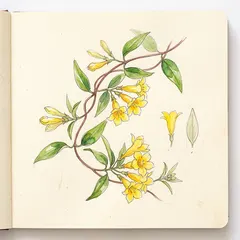
Yellow Jasmine. Loganiacese.
A climbing plant native to the Southern States ; flowers in early Spring. Tincture prepared from the root.
Introduced by John H. Henry, in 1852, proved by Douglas, Payne, Bering, Kemper, Morgan, Hare and others. See Allen's Encyclopsedia, vol. 4, p. 385.
Clinical Authorities Acute mania, Hart, Eaue's Eec, 1874, p. 60 ; *S/eep- lessness in delirium tremens, Blakely, Kaue's Eec, 1873, p. 54; Frigid from thunder storm, Lippe, Anaiyt. Therap., vol. 1, p. 302;
Apprehension and distress from thunder storm, Morgan, Anaiyt. Therap., vol. 1, p. 76; Effects of grief (2 cases), Morgan, Hom. Clin., vol. 4, p. 98 ;
Hysteria from grief, Blakely, Eaue's Eec, 1873, p. 203; Vertigo, Small, Eaue's Eec, 1872, p. 56 ; (2 cases), Lee, Hom. Obs., vol. 2, p. 136;
Brain affection, Norton, Eaue's Eec, 1874, p. 63; Meningitis, Morgan, Times Eetros., 1876, p. 11; Headache, Lilienthal, Eaue's Eec, 1870, p. 289; Mad- den, Hughes' Phar., p. 374;
Swan, Eaue's Eec, 1873, p. 23 ; Wallace, Eaue's Eec, 1872, p. 213; Neuralgic headache, Miller, Eaue's Eec, 1873, p. 198; Smith, King's Headaches, p. 109 ;
Obscure vision, Lewis, Organon, vol. 3, p. 101 ; Serous choroid- itis, Norton, Oph. Therap., p. 86 ; Iriclo-choroiditis (2 cases), see Norton's Opth.
Therap., p. 86 ; Detachment of retina, Boynton, see Norton's Opth. Therap., p. 88 ; Ptosis, Gallinger, Eaue's Eec, 1870, p. 100;
Infra-orbital neihralgia, Cushing, Eaue's Eec, 1874, p. 260; Deafness and loss of speech, Hawke, Eaue's Eec, 1870, p. 119; Prosopalgia, Hendricks, Allg. Hom.
Ztg., vol. 103, p. 175; Tie douloureux, Von Tagen, Hom. Clin., vol. 1, pp. 103, 105, 182 ; Pimples on face, Triplett, Organon, vol. 3, p. 377;
Affection of throat (2 cases), Bullard, B. J. H., vol. 33, p. 566; Throat affection with deafness, Allen, Hom.
Eev., vol. 5, p. 392 ; Influenza, Payne, Eiiue's Eec, 1870, p. 181 ; Teething, Morgan, Eaue's Eec, 1874, p. 104; Chronic diarrha;a, Hale, Eaue's Eec, 1874, p. 188;
Dysentery, Younghusband, Hom. Obs., vol. 4, p. 444; Gonorrhoea, Anderson, Eaue's Eec, 1871, p. 139; Turrell, Med.
Inv., vol. 8, p. 59; Spermatorrhoea, Carr, Hom. Times, 1875, p. 19; Nichols, Eaue's Eec. 1872, p. 168;
Eogers, Hom. Obs., vol. 6, p. 142; After menorrhagia,^^\uney, Horn. Obs, vol. 3, p. 60;
Dysmenorrhea, Dyce Brown, Allg. Hom. Ztg., vol. 105, p. 128, Ri- gidity of OS uteri (4 cases), Page, Eaue's Eec, 1870, p. 264; Uterine pains, Guernsey, Allg.
Hom. Ztg., vol. 102, p. 23; Threatened abortion, Gilbert, Organon, vol. 3, p. 247; Dystocia, Strong, Eaue's Eec, 1875, p. 186;
Puerperal convulsions, Ostrow, Eaue's Eec, 1875, p. 192; Woodbury, Eaue's Eec, 1872, p. 192; Albuminuria of pregnancy, Farrington, Eaue's Eec, 1874, p. 216; Nervous aphonia with deafness, Hawkes, Hom.
Obs., vol. 6, p. 315 ; Cough, Merrell, Hom. Obs , vol. 3, p. 217 ; Con- gestive pneumonia, Small, Eaue's Eec, 1874, p. 148 ;
Spinal congestion, Hughes, see Phar., p. 374 ; Affection of arm and fingers, due to excessive piano-playing, Price, Times Eetros., 1877, p. 25; Sciatica, Huber, Allg. Hom.
Ztg., vol. 103, p. 186; Ischias, Huber, Allg. Hom. Ztg., vol. 103, p. 186;
Rheumatism, of extremities, Macfarlan, MSS. ; Fever, Bullard, B. .T. H., vol. 31, p. 566; Spinney, Hom.
GELSEMIUM. ' 366
Obs., vol. 3, p. 60; Febrile disturbances, Hall, Eaue's Eec, 1870, p. 313; Wells, Horn. Eev., vol. 4, p. 85;
Febrile attacks (6 cases), Douglass, B. J. H., vol. 18, p. 287 ; Miliary fever, Whiteside, Horn.
Obs., vol. 8, p. 557 ; Ague, Eldridge, Horn. Obs., vol. 4, p. 437 ; Eaue's Path., p. 955 ;
Intermittent fever, Williams, Polhemus, see Allen's Int. Fev., p. 135; Price, Times Eetros., 1877, p. 25; Eoth, Eaue's Eec, 1875, p. 269 ;
Remittent fever of childhood, Hughes, see Phar., p. 375 ; Infan- tile remittent fever, Merrell, Hom. Obs., vol. 3, p. 217; Low fevers.
Small, Eaue's Eec, 1872, p. 248; Typhoid, Blakely, Eaue's Eec, 1873, p. 216; Morgan, Eaue's Path., p. 988; Kash, Eaue's Eec, 1871, p. 198 ;
Yellow fever, Angell, Eaue's Path., p. 968 ; Night-sweats, Hale, Anderson, Hom. Obs., vol. 7, p. 535 ; Hale, Eaue's Eec, 1871, p. 102 ;
Effects of drink. Spinney, Am. Hom. Obs., vol. 3, p. 60 ;
Effects of heat, iilientbal, Eaue's Eec, 1873, p. 54 ; Itching of skin, Triplett, Organon, vol. 3, p. 377.
'^ Mind. Cataleptic immobility, with dilated pupils, closed eyes, but conscious. iStupid, comatose condition attending typhoid fever. iTorpor, sleepiness, and dread of movement. I Stupor, cannot open the eyes. ■Unconsciousness.
■ After losing son, inclined to brood over her loss; at times
becomes unconscious, or, rather, "rapt;" in imagination thinks herself at the grave ; smothered pressure on chest after the spell.
■iDulness of all the mental faculties.
iDulness of mind, > after profuse emission of watery urine.
Uncapacity to think or fix the attention.
'I Unconnected ideas, cannot follow any idea for any length of time; if he attempts to think consecutively, he is at- tacked by a painful, vacant feeling of the mind. ^Yel- low fever.
■ Delirium in sleep, half waking, with incoherent talk. I I Sensation of intoxication with diarrhoea.
■ Confusion; wdien attempting to move, the muscles refuse
to obey the will ; head giddy.
■ Paroxysms of frenzy; eyes red, protruding and ghastly,
hair dishevelled and wild demeanor; talking and sing- ing alternately; hands, feet and head alternately hot and cold; tongue much coated; constipation; appetite capricious. ^Acute mania after melancholia. ■■Loquacity; brilliant eyes ; shooting through temples and nasal sinuses; fever.
■ Starts up screaming.
■ ■Desires to be let alone; irritable, sensitive.
'■ ■ Desires to be quiet, does not wish to speak, nor have any one near her for company, even if the person be silent.
ii Depression of spirits; anxiety following a somewhat ■cheerful, careless mood.
S67 GELSEMIUM.
I Great depression of spirits in onanists, with confusion of
mind and excessive languor.
■ Melancholy and desponding mood.
■ Solicitude about the present and the future.
I I Fear of death ; has no courage.
■ Anxiety; incoherency of thought, aversion to study. I 1 Great irritability, does not wish to be spoken to.
I I Nervous, irritable, easily angered.
■ Mental exertions cause a sense of helplessness from brain-
weakness; inability to attend to anything requiring thought.
■ ■Great lack of courage.
■ ■Every exciting news causes diarrhoea; bad effects from
fright and fear.
■ Bad effects from suddenly hearing bad news; from
fright; diarrhoea, abortion, etc.
■ ■Nervous dread of appearing in public; singers and
speakers.
■ ■Complaints: from exciting or bad news; sudden emo-
tions; the anticipation of any unusual ordeal; general depression from heat of sun or summer.
■ Effects of grief; cannot cry; < when thinking of his
symptoms, also when spoken to of his loss; > from di- verting talk; oppression and palpitation of heart; feels a sense of peril; face flushed; sleeplessness; subdued manner; sensation of soreness about heart. ^ Sensorium. Head feels light and large, with vertigo.
■ Lightness of head: with vertigo; with dimness of vision;
< by sudden movement of head and walking. Heaviness of head, with dulness of mind, dimness of sight and vertigo; swimming sensation in head, vertigo on rapid movement.
■ Heaviness of head, > after profuse emission of watery
Urine
Fulness in head, with heat in face and chilliness,
■ ■Dizziness of head and blurring of vision, gradually in-
creasing, all objects appear very indistinct.
■ ■Vertigo, confusion of head, spreading from occiput over
whole head; pupils dilated, dim sight; general depres- sion from heat of sun or summer.
■ ■Vertigo, dim vision, fever; seems as if intoxicated when
trying to move; < from smoking.
■ ■Giddy, with loss of sight, chilliness, accelerated pulse;
dulness of sight, double sight.
■ ■When attempting to move, the muscles refuse to obey
the will; giddy, confused, lack of muscular co-ordination.
■ ■Child dizzy, when carried seizes hold of nurse, fearing
that it will fall.
GELSEMIUM. 368
I Patient appears intoxicated.
■ Staggering as if intoxicated when trying to move.
I iSensation of falling, in children; child starts and grasps
nurse or crib, and screams out from fear of falling. I Serious attacks of vertigo, with dimness of vision and
fever, appears like one intoxicated. ^ Inner Head.
Pain most frequently in forehead and temples.
I I Pain in head, over eyes and across forehead.
I Severe pain in forehead and vertex, dim sight, roaring in
ears ; head feels enlarged ; wild feeling ; alternating
with uterine pains.
■ Severe and continued pain, day and night, accompanied
by dizziness when stooping, and a sensation as if he would fall headlong; tongue coated; appetite poor; pain < in frontal region, but at times extended over entire head. iHypersemia of brain ; dull feeling in forehead and vertex, and a fulness in region of medulla before spasms.
■ Fulness in head, heat of face, chilliness; pulsation of car-
otids; thick speech; brain feels as if bruised; eyeballs feel sore when moving them ; double vision.
I ■Heaviness of head: slightly > by shaking head; > after profuse micturition.
iSick headache, principally in r. temple, beginning in morning and increasing during day ;
< from motion and light;
> after lying down, and > by sleep or vomiting.
■ Tightness of brain.
■ Pain as from a tape around head.
■ Band-like pain surrounds head, with shooting pain in
each jaw.
■ Sensation of weight and pressure in head.
i I Pain in head constant, dull, stupefying and pressive.
■ Cramp-like pains of drawing or tearing character, < by
study or exertion, following fever and ague.
■ ■Sensitive, bruised sensation of brain.
I I Excruciating headache, accompanied by slight nausea ; pain slightly > by shaking head.
■ In morning on rising, dull pain in head and a slight ten-
dency to throbbing in r. side of head.
Blind headache, shooting pain into ears when swallowing, cannot sit or lie, must stand or walk.
■Headache coming on suddenly, with dimness of sight or double vision; with vertigo, great heaviness of head, it feels too big, and often too light, semi-stupor, bright red face; dull, heavy expression of countenance; full pulse, general malaise.
■ Nervous headache, from emotional excitement.
■ Hemicrania with dim sight or double vision, or preceded
by great sensibility to noise.
369 GELSEMIUM.
I Excruciating pains in head preceding or following inter- mittent fever.
■ Headache especially of a remittent or intermittent
character. I Headache all over head, extending into bones of face;, head feels very sore, as from a bruise ; sharp neuralgic pains running around edges of the teeth ; shooting pains extending into ears when swallowing; roof of mouth feels terribly, as if swollen and as if cavity were closing up, but upon examination, it did not appear swollen or even inflamed ; constant burning, stinging sensation in mouth ; burning and stinging pains occurring suddenly in various parts of body, as if a bee had stung her; uri- nation frequent and scanty, with scalding; burning- pains in urethra while passing urine, and temporary prostration after it ; cannot sit or lie, has to stand or walk.
■ Constant, gradually increasing headache for three or four
months ; dull, heavy pain, extending to nape of neck, frequent throbbing in temples, and vertigo on rapid movement. ■Nervous headache, pain begins in cervical portion of spinal column, and from thence extends over whole head.
■ Dull aching in occipital region, occasionally extending
into OS frontis.
■ Dull pain in back part of head after breakfast, < when
moving and stooping.
■ Headache, principally in occiput, > by reclining head
and shoulders on a high pillow. ■Settled, dull, heavy headache, mainly in occiput, mastoid or upper cervical region, extending to shoulders ; > when sitting by reclining head high on a pillow.
■ Patient finds himself getting blind before headache; they
faint away in consequence of their suffering, or have to lie down and be quiet all day; swimming-tearing sensa- tion as in sea-sickness ; headache principall}' in occiput; > reclining head and shoulders on a high pillow; stag- gering, as if drunken, when trying to move; double vision; squinting; great heaviness of head; > by pro- fuse micturition or shaking head; severe pain in fore- head and vertex; dim sight; roaring in ears; head feels enlarged; wild feeling, alternating with uterine pains; sensation as if brain were bruised; passive venous con- gestion.
■ Terrible neuralgia, commencing in upper portion of spinal
cord, proceeding thence gradually through upper por- tion of cerebrum, and terminating in a bursting pain in forehead and eyeballs, < about 10 a.m. ; < lying down,
VOL. V. — 24.
GELSEMIUM. 370
with nausea, vomiting, cold sweat on forehead, and cold feet; vertigo and obscuration of sight on stooping; sen- sation of a band drawn tightly around head above ears, and soreness in scal]3 and brain; vertebra prominens and cervical vertebrte sensitive to pressure; lameness and stiffness of neck; on waking at night retraction of head backward, > bending head forward; frequent urging to urinate, with partial loss of power in sphincter vesicse; heat in palms of hands and itching all over body, preventing sleep; after scratching, a raw sore, sur- rounded by blisters. ^Neuralgic headache after cerebro- spinal meningitis.
■ ■Neuralgic headache beginning in upper cervical spine;
vertebra prominens sensitive; pains extend over head, causing a bursting pain in forehead and eyeballs; < at 10 A.M., when lying; with nausea, vomit, cold sweat, cold feet.
■ Neuralgic headache with cramp-like drawing, tearing
pains in upper cervical and occipital region, extending upward and forward; or in forehead, over one or both eyes; < by exertion or study.
.■With headache, giddiness, faintness, pain in neck, pulsa- iion of carotid arteries, pain in limbs, great drowsiness, 'sneezing, double vision, loss of sight.
Pain < by anything around head.
Headache > when sitting and reclining head and shoul- ders on a high pillow.
Smoking tobacco aggravates headache.
iSymptoms of depression from heat, with vertigo, dilatation -of pupils, dimness of sight, dull, confused headache, spreading from occiput over whole head ; no thirst ; no appetite ; feels completely played out.
iStupor attending the fevers of children.
■ Intense congestion of brain in children during dentition. Active congestion of brain, when occurring during fevers,
from unusual exertion, or from exposure to sun. Meningitis, especially in children. ■Threatened or actual apoplexy, with stupor, coma and
nearly general paralysis (rarely useful in hemipleiga or
paraplegia); headache, with nausea, lightness of brain;
giddiness; tendency to stagger, with imperfect vision;
vertigo with falling ; intense passive congestion to head
with nervous exhaustion. ■Dull burning pain in occiput, coming in forenoon, feeble
gait, twitching of single muscles, starting in sleep ;
double vision followed by burning pain in occiput, <
by anything light around head ; > j^ressure on vertex ;
^Brain affection.
S71 GELSEMIUM.
llrritation of mucous surfaces; lower jaw wagging side- ways, has no control over it ; jerking of whole 1. side on falling asleep Indisposition to squint; sudden shrill cries on awakening'; frantic spells from pain ; fear of falling; pulsating fontanelle; red or sometimes sickly face. t/Meningitis.
iCerebro-spinal meningitis, stage of congestion; severe chill, dilated pupils; congestion of spine and brain.
■ Meningitis cerebro-spinalis, at very onset of disease,
severe chill followed by congestion of brain and spinal cord, livid cheeks, dilated' pupils, little or no thirst; loss of strength and great exhaustion, staggering gait, dulness of speech, icy-coldness of hands and feet, pulse very weak or hardly perceptible ; laborious and weak respiration, nausea, vomiting ; e3^elids close involunta- rily in spite of all he can do; itching of head, face and neck; sweating relieves; mental faculties retain their activity though power over muscles is impaired, cannot direct movements of limbs with precision ; coma.
iChild wants to be let alone, wants to lie still; head hot, hands and feet cool ; face red ; eyes dull ; tongue coated yellowish-white; no thirst; breath hot, sometimes offen- sive; sleepy and drowsy, sometimes comatose; during sleep, convulsive motions; creeps and flushes run up back; more or less moisture of skin, especially on palms of hands and in axilla3 ; pulse depressed at first, later frequent and soft; during summer or warm weather w^itli southerly or southeasterly winds. ^Meningitis. * Outer Head. Sensation of contraction of skin in middle of forehead.
Itching on head (face, neck, shoulders), preventing sleep.
MSensation of a band around head above ears; scalp sore.
I Dull dragging pain in occiput, mastoid and upper cervi- cal regions, extending to shoulders; > quietly resting head on a high pillow, with eyes half closed ; eyes heavy, sleepy, red.
• Pressure on vertex so great as to extend into shoulders; head feels very heavy.
1 I Cramp-like drawing and tearing, < from study and ex- ertion; after fever and ague.
I Cannot hold head erect. ■^ Sight and Eyes. ' l Aversion to light, particularly to candle- light.
I Sees double, when inclining head towards shoulder, or looking sideways.
I Double vision controllable by strength of will.
I I Paralysis of oculo-motor and abducens. ^Diplopia.
■ Diplopia with spasm of various muscles throughout body,
without thirst.
GELSEMIUM. ^ 372
■ Diplopia and dim vision during pregnancy.
I Swimming black specks before eyes, vision dim, can neither read nor write, words run together, cannot rec- ognize one across room, with heat in eyes extending to forehead.
I As if a snake w^ere before vision, with pain over eyes.
■ Blindness with dilated pupils. I Photophobia.
I Black and bright specks before eyes. ^After ague. llThirstfor light.
■ Sense of sight tardy in following movements of objects.
■ Disturbance of power of accommodation.
■ Confused vision, eyes look heavy.
■Misty or glimmering appearance before eyes.
■ ■Smoky appearance before eyes, with pain above them.
■ ■Dimness of sight and vertigo.
■ Distant objects seem indistinct, riding or walking.
■ ■Amaurosis from masturbation; mind and body pros-
trated.
■ Pupils dilated, iris sluggish, vision nearly lost ; palate
slightly paralyzed ancl uvula deviated to left. ^Amau- rosis after an attack of putrid sore throat.
■ Amaurosis of congestive origin ; after apoplexy ; caused
by quinine.
■ Confusion of sight; blindness.
■ Blindness : with violent dizziness; with ptosis; with ver-
tigo and dilated pupils.
■ Cloud over outer half of field of vision of 1. eye, due to
sub-retinal effusion.
■ Increased tension, balls sore.
Glaucoma from increased secretion rather than from ob- structed secretion. Hazy vitreous, very fine.
■ Serous choroiditis; iritic complications; vision varies
from day to day or from hour to hour ; sometimes fever, with thirstlessness.
■ Serous choroiditis with dull pain in or about eye ex-
tending to back of head, > by hot application, but not by cold; impairment of vision gradually developed and not characterized by sudden changes, either for > or or <; heaviness of lids; inability to accommodate eye quickly for varying distances; asthenopic symptoms not marked, but great irritability of eye, resulting from want of tone or energy of muscular structures, constitut- ing a passive rather than an active asthenopia ; general feeling of depression and lassitude, not > by food or stimulants.
■ Inflammatory affections of retina and choroid.
373 GELSEMIUM.
Retinitis albuminurica, sudden dimness of vision during pregnancy, < after delivery ; no pain, only an itching of eyes ; white patches and extravasations of blood in retina ; outer part of optic nerve whiter than usual.
iRetino-choroiditis, in which there seemed to be a bluish snake before vision.
I Vitreous so hazy fundus cannot be seen; vision nearly lost; eyes red and irritable; pupils slightly dilated; constant sore, aching pain in eyes and around, with sharp sticking pain on moving eyes; finally small trans- parent points; elevations of epithelium appeared on r. cornea, looking like swollen ends of nerve filaments; they were excessively sensitive to touch or movement of lids. ^Serous choroiditis.
■ Disseminate choroiditis and retino-choroiditis, with no
outside symptom.
■ Choroidal and venous congestions, either with or with-
out serous eff'usion ; amaurotic symptoms, with dilata- tion of pupils, disturbed accommodation, pain in eyes, ' with or without lachrymation.
■ Detachment of retina dependent upon an injury, with
difiiise haziness of vitreous and serous inflammation of choroid and retina.
■ Right vision y^o with difficulty; left vision, counted
fingers at 20 feet; serous inflammation of iris and choroid, deposits on membrane of Descemet, aqueous and vitreous hazy in both eyes, 1. pupil dilated and sluggish; sensation of pressure over both eyes and head- ache in temples.
■ Detachment of retina from myopia; severe attacks of
neuralgia.
I I Serous iritis; serous choroiditis; dull pain to back of head ;
> from hot applications.
■ Astigmatism.
■ Pupils dilated.
■ Deposits on lower posterior portion of 1. cornea, pupil
dilated, vitreous hazy with floating opacities, moderate ciliary injection; no pain; vision.
■ Heat in eyes and forehead.
■ Bruised pain above and behind eyes.
■Soreness as from a foreign body, with photophobia and
lachrymation. I Aggravation of eye symptoms from the use of wine.
■ Heaviness of eyes, as after night- watching. Soreness of eyeballs; drawing over eyes.
■ Dull, full feeling with aching in whole of orbits.
■ Eyes feel bruised.
■ Pain in both eyes, < 1., with dimness of sight.
GELSEMIUM. 374
■ Constant inclination to squint.
■Asthenopia, with insufficiency of external rectus; edges of lids red, as if from crying, with hypermetropia ; photophobia from sun or gas-light.
■ Asthenopia dependent upon weakness of external recti
muscles.
■ ■Paresis or paralysis of any of ocular muscles; also-
paralysis following diphtheria, and when associated with paralysis of muscles of throat.
■ Eyeballs oscillate laterally when using them.
■ Fulness and congestion of lids.
■ ■Drooping of eyelids; ptosis.
■ Eyelids heavy ; eyes close when looking steadily.
■ ■ Great heaviness of lids ; difficulty of opening or keeping
them open.
■ Ptosis due to congestion of brain coming on after an
attack of ophthalmia. Eyes red and watery ; lachrymation.
■ Inflammation with great flow of tears at intervals.
■ Blepharitis and conjunctival hyperemia due to refractive-
errors.
■ Eyes feel sore in evening, sensitive to light, with lachry-
mation ; lids feel full and congested.
■ Yellow color of eyes.
■ Orbital neuralgia, periodic, every day at same hour. Rarely found of benefit in superficial aft'ections of eye^
but especially adapted to diseases of fundus and paraly- sis of nerves. ^ Hearing and Ears. Great sensitiveness to all sounds.
■ Rushing and roaring in ears.
■ Sudden, temporary loss of hearing.
■ Neuralgia; nearly deaf; spasms of throat, sometimes ex-
tending to upper part of chest; loss of consciousness; < towards night. ^Deafness with loss of speech pro- duced by massive doses of Quinine.
■ Catarrhal deafness, with pain from throat into middle ear- Digging in r. ear; also stitclies.
■ Neuralgic otalgia, especially when periodical.
■ Earache from cold.
■ Catarrhal inflammation, at beginning; cold in head and
closure of Eustachian tube; tense, dull, bound, giddy sensation in head, with chilliness; stupor, drowsiness. ^Otitis media.
■ Pains ascending from back to occiput, affect the ears. Stitches behind ear.
Left ear seems to matter which it never did before. ^ Smell and Nose. ■ Violent morning paroxysms of sneezing; tingling in nose.
375 GELSEMIUM.
I Fulness at root of nose; pains extending to neck and
clavicles. I Watery, excoriating discharge; a feeling from throat up
into 1. nostril, like a stream of scalding water; r, nostril
stopped up ; nasal voice. I Hay fever, with morning sneezing.
■ Acute coryza, with dull headache and fever.
iCoryza in changeable w^eather, with inflammation of upper part of throat and shooting pain into ear when swallowing, also hard hearing.
B Summer colds with violent sneezing in morning; edges of nostrils red and sore; pharyngeal inflammation with pain on swallowing, shooting up into ear; deafness; hands and feet cold in p.m.; then drowsy; fever until morning; disposition to catch cold, with every change in weather.
■ Tingling in nose; bloody, mucous discharge.
■ Coryza in spring and summer weather.
■ Edges of nostrils red, sore.
■ Epistaxis with suppressed menses.
^ Upper Face. ■Expression heavy, dull, drowsy.
■ Face flushed and hot to touch.
■ Heavy besotted appearance of face.
■ Heat of face with fulness in head and cold feet.
■ Crimson flush of whole face in all positions.
■ Face dark red, mahogany color.
■ Erythema of face and neck.
■ Paleface; sickly look; paleness and nausea.
■ Face yellow; jaundiced.
Sensation as though skin on middle of forehead and about face, was contracted.
■ Muscles of face, especially around mouth, seem contracted,
making speech difficult.
■ Orbital neuralgia in distinct paroxysms, with contrac-
tions and twitchings of muscles on affected side.
■ Facial neuralgia in nervous women; jaws affected spas-
modically.
I I Congestive facial neuralgia ; grumbling or shooting pains;
< on pressure; especially if malarial.
■ Neuralgic affections of fifth pair, particularly when pain
is traceable along one of its three divisions at a time.
■ Pain in r. temple gradually growing more severe and
extending into ear, and spreading from thence to eye and side of head; these parts affected alternately, finally pain settles in r. wing of nose where the paroxysms be- come extremely severe. ^Prosopalgia.
■ Sudden darting, acute pains, traceable from region of ear
and side of head to supra-orbital region, and again to
GELSEMIUM. 376
infra-orbital region, still at other times to chin and front of lower jaw; pain flying from one branch of fifth pair to another, without any regular order as to succession, pain however being more or less constantly present and starting from region of temi:)le or ear. ^Facial neuralgia.
I Sharp shooting pains through face, eyes and head, which feel like rheumatic pains ; face congested and of a dark or dusky hue ; headache commences in neck quite sud- denly, spreads from thence over head, or vice versa; dimness of vision; heaviness of head; vertigo; stupor; dull expression of countenance; powerlessness of muscles.
I Severe pain increasing for past two years, in region of infra-orbital nerve; < from motion, as eating, laughing or crjdng.
iSore, acute, red ])imples on face.
Papular eruption on face. ^ Lower Face. iLips dry; coated with dark mucus.
I Muscles of face seem to be contracted, especially around mouth, making it difficult to speak.
■ Shooting pains in jaws.
I i Lower jaw wagging sideways, has no control over it. I Sensation of stiffness in muscles of jaws.
■ Stiffness of jaws; difficulty of opening mouth; trismus.
^^ Teeth and Gums. ■ Toothache from a cold, or purely neu- ralgic; pains from teeth to temple.
■ Toothache with general nervous excitement or weak and
trembling condition ; pains come in paroxysms, are de- cidedly neuralgic, and dart through jaws and face; con- gestion of head and face.
I Tic douleureux after exposure on a cold damp day; seat of irritation located at root of 1. canine tooth of upper jaw; gum, upper lip and infra-orbital region swollen and very sensitive to touch; tooth exquisitely tender and loose in its socket; constant pain, at times shooting and darting and then changing to a grumbling tooth- ache.
1 Dentition; child frantic, awakens with fierce and sudden screams; face deep red; fontanelle pulsates too strongly; pain about ear.
Gums swollen and tender.
■ Child frantic at times, especially when gums areexamined.
" Taste and Tongue.
Taste: foul, putrid, with blood-colored
saliva; seldom bitter; clammy and feverish during the sweat.
■ ■Numbness of tongue.
■ Can hardly put tongue out, it trembles so; red, raw, pain-
ful, inflamed in middle.
■ ■Tongue felt very thick; could hardly speak.
377 GELSEMIUM.
Irritation or paralysis of tongue or glottis.
iTongue and glottis partially paralyzed; speech thick, as if drunk, from congestion of base of brain,
I Tongue : yellowish-white, breath fetid; coated thick, brown; nearly clean; margin red, centre white. ^^ Inner Mouth. Dryness of mouth and throat, with dispo- sition to swallow frequently.
I Dryness of mouth ; thickly coated tongue.
I I Sticky feverish feeling in mouth.
I Saliva colored yellow as from blood.
■ Partial paralysis of glottis and tongue.
■ Irritation and soreness of fauces.
I Sore mouth, coincident with febrile and catarrhal states, intermittent or remittent type.
■ Tonsils much sw^ollen, high fever, intense heat of skin,
photophobia, pain shooting in r. ear, thirst, partial deli- rium.
■ Tonsils swollen and very red ; crimson flush of face ; cold
hands and feet; great nervous excitement. ^Scarlatina.
■ Tonsillitis, from acute catarrh.
■ Aphthous looking spot on r. tonsil, and another on
pharynx; no swelling; throat sore; deglutition j)ainful ; vomiting. ^Miliary fever. "'^Throat. ■Fauces dry, burning, irritated, sore.
■ Inability to swallow or speak. ^Paralysis.
■ Tried to swallow but could not.
I I Warm or spirituous fluids can partially be swallowed ; cold drinks come up immediatel3^ ^Stenosis oesophagi.
■ Paralytic dysphagia.
■ Spasmodic affections of throat.
■ Swallowing causes shooting in ear.
■ Dryness and burning in throat.
I 'Dry roughness in throat when coughing. I I Dryness of throat with hoarseness.
■ Sensation of heat and constriction in throat.
■ Throat- feels filled up; tonsils inflamed, swollen, fre-
quently, or at beginning, in right.
■ Throat red, raw, tonsils swollen ; tongue white or yellow-
ish-wdiite ; tickling, tearing cough preventing sleep. ■Soreness of throat felt at upper part of 1. tonsil, extend- ing thence across soft palate, along 1. nostril, attended by a sensation at every inspiration as if a stream of scalding water rushed along nasal passage of that side, the other nostril at same time being stopped up ; con- tinuous accumulation of irritating mucus about throat, with hard, painful cough ; shooting pain in ear, when swallowing; hard hearing; thirstlessness with the fever; < at night. ^Influenza.
GELSEMIUM. 378
I Inflammation of upper part of throat and shooting pain into ear when swallowing; hardness of hearing. ^Coryza, after changeable weather.
I Chilly creepings up spine; sore throat, headache, fever, intense thirst, earache ; tonsils much swollen and cov- ered with diphtheritic patches ; nausea, extreme ner- vousness, partial delirium.
■ Tonsillitis and inflammation of throat, palate and uvula.
■ Catarrhal inflammation of pharynx and tonsils. IlLocal tingling of i^arts during fever; incipient paralysis
or anassthesia; defective or impaired vision; objects appear a long way off, are seen double or inverted. ^Diphtheria.
■ Painful sensation of a lump in oesophagus that cannot be
swallowed in hysterical women.
■ Painful sensation of something having lodged in oeso-
phagus.
■ Spasmodic sensations and cramp-like feeling in gullet.
■ CEsophagitis (catarrhal).
■ Burning in (]eso]3hagus extending to stomach.
■ Inflammation and irritation of throat from acid secretion
of stomach. ^* Appetite, Thirst.
Desires, Aversions.
"Great hunger; eructation ; nausea.
■ Increased appetite, or easily satisfied with small quan-
tities of food.
■ Increased appetite from active hypergemia of mucous
lining of stomach.
■ Little appetite and thirst, but can take food or drink.
■ Want of appetite and weakness of stomach, or paralytic
state of masticating organs.
■ Thirst, but does not drink much; it hurts to swallow.
/^Prodromal stage of intermittent fever. I I Thirst during perspiration.
■ Little or no thirst.
■ Thirstlessness, with sticky sweat, especially about genitals. ^^ Eating and Drinking. iWine aggravates, especially head-
ache and eye symptoms.
Thirst absent or slight.
Worse from smoking tobacco, ^^ Hiccough, Belching, Nausea and Vomiting. ■Sour eructations.
Nausea, giddiness, headache.
■ Nausea, vomiting, cold sweat on forehead and cold feet.
(!^Neuralgic headache.
■ Slow, intermittent pulse, slightly furred tongue, wild, pro-
truding eye, dilated pupil; had been drinking hard for tw^o or three weeks; stomach rejects everything, even water; sleepless, feels as if he would become delirious..
879 ■ GELSEMIUM.
^^ Scrobiculum and Stomach, i Sensation of a heavy load, with weiglit, tension and dull pain ; empty, faint sensa- tion in epigastrium ; a false hunger, a kind of gnawing; nervous exhaustion, as found in persons of dissolute habits. ■Rumbling and dull pain in epigastrium, > by passage of flatus.
■ Great sensation of weakness, emptiness of stomach, as if
it were quite gone.
■ Feeling of emptiness and weakness in stomach and
bowels.
■ Sensation of weight in stomach, with dull pain.
■ Oppression and fulness in stomach, < from pressure of
clothing. Distension, with pain and nausea.
■ Flatulence of stomach, swelling, eructation and dull pain,
probably caused by want of elasticity in muscular fibres of this organ.
■ Cramp in stomach, > riding and sitting erect. I I Burning in stomach, extending to mouth.
■ Congestion of stomach, with hypersemia of its mucous
lining.
■ Gastralgia, cardialgia, cramps in stomach and other
cramp-like conditions of this organ. ^® Hypochondria, i Passive congestion of liver, with vertigo, dim sight and fulness of head. Deficient secretion of bile.
■ Passive congestion of liver, bilious diarrhoea and relaxed
gall ducts. Jaundice, with prostration ; clay-colored stools. ^^ Abdomen. • Rumbling and roaring in abdomen, with dis- charge of wind up and down.
■ Sudden spasmodic pain in upper part of abdomen, leav-
ing a sensation of contraction causing him to cry out.
■ Gnawing pain in transverse colon.
■ Periodical colic, with yellow diarrhoea in evening.
■ Griping in lower abdomen, > by copious bilious stools.
■ Spasmodic and flatulent colic.
■ Wandering, pinching wind colic, > when sitting erect;
< beginning to move, > during continual motion. I I Tenderness in right iliac region during typhus.
■ Neuralgia of intestines periodic, malarial; sharp, lan-
cinating pains, with great excitement and restlessness, cold hands and feet, rapid pulse, and tendency to gene- ral cramps. Intestinal obstructions.
■ Acute enteritis (catarrhal) during damp weather, warm
or cold.
OELSEMIUM. 380
I Sensation of soreness of abdominal walls.
I In strangulated hernia, at the very first; applied inter- nally and externally. ^ Stool and Rectum. ■ Disposition to go to stool whenever anything startles her.
I iDiarrhoea, or threatening of same, after excitement, espe- cially after fright.
iDiarrhcea: in nervous persons, subject to nervous chills; after sudden emotions, as grief, fright, bad news, the an- ticipation of any unusual ordeal; of soldiers before a battle; during dentition; with intermittent fever.
iSudden depressing emotions cause yellow fecal stools with colic and flatus.
Before stool: colic; passage of flatus.
Frequent discharge of flatus.
Loose, papescent stool.
Bowels loose, with great difficulty in discharging anything, as if sphincter resisted passage by contraction.
iStools: yellow fecal; bilious; cream-colored; clay-colored; color of green tea; involuntary.
IDiarrhoea, bilious, fermented, with much wind and great nervous weakness, more than the evacuations could cause.
iChronic diarrhoea, with watery, thin, dark brown, or dark green stools; little or no pain; brought on or made < by any exciting news, emotion, or mental irritation; chilli- ness in back, every day during diarrhoea, but not at any fixed hour; became much tired by a short walk; sank into a chair and appeared quite unconscious for about two minutes, during which time her eyes were closed, her arms when lifted dropped down heavily ; she did not hear when spoken to or see when her eyelids were opened; when conscious, said that she could not open eyelids; very nervous and prostrated.
Catarrhal diarrhoea, with spasmodic colic and tenesmus.
Acute catarrhal enteritis, mucous diarrhoea, mucous dys- entery; discharges almost involuntary; intense spas- modic colic and tenesmus.
■ Dysentery (epidemic), malarial or catarrhal.
I Slow stool, leaving a sensation of more remaining to be passed, and of abdominal repletion.
I Constipation, when the motion is retained in consequence of want of tone in muscles of bowels.
• Acts specifically on nerves and muscles of rectum.
Difficult passage of stool, as though sphincter ani were spasmodically closed.
i Paralysis of sphincter ani, with involuntary diarrhoea, the result of nervous excitement.
381 GELSEMIUM.
■ Paralysis of sphincter ani, with disposition to prolapsus. ^' Urinary Organs, i Spasmodic affection of ureters from pas- sage of calculi.
I Spasm of bladder, with alternate dysuria and enuresis. iSpasm of bladder; in women, often combined with uter- ine spasm ; in men, with colic. Tenesmus of bladder.
■ Paralytic conditions of sphincter muscles of bladder:
following diphtheria; in old people. lAcute catarrhal conditions of bladder and uterus.
■ Detrusor and sphincter muscles paralyzed.
I Bladder distended up to navel; constant dribbling of urine, but not a drop flows on making the greatest effort; no pain, not even on pressure. ^Paral3^sis of bladder.
■ Frequent urging, with scanty emission and tenesmus of
bladder.
I Dysuria, with frequent urging, scanty urine and vesical tenesmus; spasmodic retention of urine.
I Alternate dysuria and enuresis; spasm of bladder.
■Sensation as if something remained behind when urinat- ing; the stream stops and commences again.
■ Involuntary micturition from excitement.
■ Constant involuntary discharge of urine every fifteen
minutes.
■ Enuresis, from paralysis of sphincter, in nervous children
at night.
■ ■Frequent emission of copious, clear, limpid urine, re-
lieving dulness and heaviness of head.
Urine much increased in c[uantity.
Albuminuria.
Painful redness of urethra. - ^^ Male Sexual Organs. ■Involuntary emissions of semen
without an erection.
■ Seminal emissions from excessive irritation of organs of
generation, either from emotional or local congestive causes, with a condition similar to satyriasis. ■Seminal weakness from irritability of seminal vesicles.
■ Spermatorrhoea from relaxation and debility.
■ Sexual organs irritable, weak; involuntary emissions
without erections; spermatorrhoea; emissions of semen during stool.
■ Flaccidity and coldness of genitals, with great languor
and depression of spirits; nocturnal emissions, with sexual dreams, followed next day by great languor and irritability, with pain in base of brain.
■ Excitable sexual desire; depression of spirits; heavy
dragging gait; pale face, sunken eyes. ^Spermatorrhoea. ■Sexual power completely exhausted, so that most power-
GELSEMIUM. 382
ful stimuli fail to cause an erection ; after marriage, slightest caress produced an emission; face pale and emaciated, dark circles around eyes ; mind weak, memory defective, haunted by thoughts of suicide ; emission while straining at stool ; penis flaccid ; both testicles had become small. ^Spermatorrhoea due to onanism. nBlue rings around eyes ; discharge of liquor seminis with micturition; during coition too early discharge of semen.
■ Gonorrhoea, in acute stage; great pain, inflammation,
fever and scanty discharge.
■ Gonorrhoea; last part of incubation, and first part of
inflammatory stage, when discharge is rather moderate; little pain but much heat, and urine is voided in suffi- cient quantities, rather frequent, with smarting at meatus.
■ Whitish discharge; severe erections; burning when
urinating; rheumatism; orchitis. ^Gonorrhoea.
■ Suppressed gonorrhoea, with fever, rheumatism, orchitis.
■ Painful redness at urethra. ^Secondary gonorrhoea. ■Spasmodic stricture of urethra.
■ Genitals cold, relaxed; dragging pains in testicles.
■ Testicles very much relaxed, bag continually sweating.
■ Profuse warm sweat on scrotum.
^^^ Female Sexual Organs. ■Ovarian irritation with char- acteristic headache.
■ Uterus, as if squeezed by a hand; anteflexion.
■ Sensation of heaviness in uterine region, with increase
of white leucorrhoeal discharge; nervous, excitable, hysterical females, given to masturbation, with great depression of spirits and excessive languor; feeling of fulness in hypogastrium, and aching across sacrum.
■ Congestion of uterus; pains spasmodic; neuralgic pains
with cramps in uterus and legs; cramps in uterine ligaments.
■ Uterine j^ains shoot up back and compel her to sit up.
^Labor. ^Dysmenorrhoea. ^Hemorrhage during meno- pause.
■ ■Severe, sharp labor-like pains in uterine region, extend-
ing to back and hips.
■ Languid aching in back and limbs day before appear-
ance of menses.
■ Loss of voice during menses.
■ Amenia.
■JDysmenorrhoea: vertigo; sick headache; faintness at stomach, vomiting; congestion to head; deep red face; bearing down in abdomen; spasmodic neuralgic pains ; -cramps in uterus and legs ; general hysterical condition.
J83 GELSEMIUM.
I Menses suppressed, with congestion to head ; sharp dart- ing, twitching pains in face and head ; convulsions every evening.
I I Menorrhagia, ahuost continuous flow, without any pain.
■After menorrhagia, low, quick, intermittent pulse, cold extremities, extreme restlessness, tossing of hands ; in- tolerable nausea, vomits everything taken into stomach.
I I Vaginismus of purely nervous character with uterine irritation.
I White leucorrhoea with fulness in uterine region, in nervous, excitable, hysterical females, old maids and students.
■ Leucorrhoea white, with aching across lower part of back;
heavy fulness in uterine region ; amenorrhoea.
■ Leucorrhoea in gushes, day and night; constipation. ^Pregnancy.
Parturition.
Lactation. ■During pregnancy:
dimness of sight; double vision, headache, drowsiness, vertigo, pulsating carotids, small, slow pulse; cannot walk, for muscles will not obey the will ; cramps in abdomen and legs ; convulsions, with complete uncon- sciousness.
■ ■Threatened abortion from sudden depressing emotions.
■ Severe vomiting; pain in uterus; severe pain across small
of back, and a burning pain up the spine to head, which ached ; confused feeling in head affecting mental opera- tions. ^Threatened abortion from fright.
■ False pains before parturition.
■ Severe pains in abdomen, which run directly upward, or
backward and upward; feeling as if muscular power was weakened, which arises from a weakness of will power. ^False labor pains. i ■ False labor pain, so severe as to interrupt true pains which seem utterly inefficient ; sometimes cramping pain in various parts of abdomen ; os rounded and hard, and feels as if it would not dilate.
■ Cutting pains in abdomen from before backward and
upward, rendering labor pain useless; these come on with every pain, are very distressing, and may be felt throughout body.
■ ■Nervous chills, "chatters," in first stage of labor.
■ Pains in uterus going through to back and then up back.
■ With every pain child seems to ascend instead of de-
scend.
■ Pains leave uterus and fly all over body.
■ Sensation like a wave, from uterus to throat, ending with
a choking feeling; this seems to impede labor ; impend- ing spasms.
■ ■Hysterical women, with rigid unyielding os during
labor, attended with much nervous excitement.
GELSEMIUM. 384
I Atony of uterus, loss of contractility ; passive hemorrhage.
■ Labor pains gone, os widely dilated, complete atony;
face flushed ; patient drowsy, dull. I Insufficient labor pains from uterine inertia.
■ Everything seems relaxed ; neck of uterus flabby, os open^
no pains, bag of waters bulging, patient grows more and more drowsy, speech thicker, convulsions seem threat- ening.
■ Albumen in urine during pregnancy; at beginning of
labor patient sank into a semi-stupid state, out of which she could be aroused by shaking, but would soon relapse; if an answer could be forced from her, it was spoken with a thick tongue like one intoxicated ; no labor pains, but OS dilated and membranes protruding; face pinkish as if uniformly flushed ; pulse slow, full.
■ Albuminuria; thirstless; erratic pains.
■ Threatened convulsions during confinement; pulse large
and soft; face puffed and expression heavy.
■ Convulsions (apoplectic form) during labor.
■ A convulsion every fifteen minutes, lasting from one to
ten minutes ; during intervals rational, knew every one but her child ; did not know she had been confined, and when questioned, insisted angrily to the contrary ; would have every one in the house with her ; rather disposed to expose herself; very anxious to know what was the matter with her; burning heat in head with flushed face ; palms of hands very hot, bathing them in cold water somewhat modified a convulsion; would cry if not talked to constantly ; could not endure gas- light. ^Puerperal convulsions.
■ Afterjmins; cramps in uterus, commencing in front and
extending upward and backward.
■ Afterpains too severe and lasting too long; sensitive
women, who cannot compose themselves to sleep; sleep with half-waking and murmuring. ^^ Voice and Larynx. Trachea and Bronchia. ■Hoarse in paroxysms, with dry, rough throat; rawness of chest, catarrh.
■ Voice weak, thick.
■ Nervous aphonia, with dryness and burning in throat,
restless sleep and twitching of muscles.
■ Aphonia from catarrhal paralysis.
■ Paralytic aphonia during menstruation; voice returning
when catamenia stops.
■ Paralysis of the glottis.
I I Spasm of glottis, evening, threatening suffocation. ■Laryngismus stridulus, Miller's asthma, or spasm of glot- tis, in children.
385 GELSEMIUM.
I I Burning in larynx, descending into trachea.
I I Roughness of throat, raw, as if ulcerated. ^Laryngitis..
I I Acute catarrhal bronchitis. 1 1 Hawking bloody water.
^^ Respiration. ■ Sudden sensation of suffocation, as in hyste- ria; respiration almost imperceptible; sighing respiration.
I Sudden and severe attacks of dyspnoea, with crowing noise, profuse perspiration and darkly flushed face.
■Spasmodic asthma; asthma Millari.
I Slow breathing and slow pulse; heavy, labored breathing;; congestion to chest.
I Long crowing inspiration, sudden and forcible expiration;^
spasm of glottis.
I I Breathing frequent.
^^ Cough. Excessive excitability of respiratory centre, with small secretion of mucus and violent, frequent cough.
I Convulsive, spasmodic cough, especially in hysterical women; irritative cough without expectoration.
■Severe cough, with much pain in chest in places; tender- ness of epigastrium with vomiting, in paroxysms.
I Cough from tickling or roughness of fauces; hoarse; raw- ness and soreness of chest; coryza; bronchial catarrh.
I I Burning in larynx and chest when coughing.
Coughs a good deal during the night.
iCroupy cough; measles.
I i Spasmodic croup.
■ Catarrhal affections growing out of relaxed and debilitated
condition of system on return of warm weather at close of Winter; Spring fever; hoarseness, with dryness of throat; burning in larynx, descending into trachea; cough from tickling and dryness of fauces; sensation of soreness in chest when coughing.
■ Catarrhal affections, especially if motor disturbances
occur, such as spasm of larynx, pharynx and glottis, or so-called spasmodic asthma. ^® Inner Chest and Lungs.
Paroxysmal pain in upper part of r. lung, when taking a long breath.
Stitches in lungs from above downward.
■ Stitches in chest in region of heart.
■ Constrictive pain around lower part of chest.
■ Soreness in chest when coughing.
I 1 Dry cough with soreness of chest and fluent coryza. I I Lleaviness in middle of chest (afternoon).
■ Severe chill, with great weariness and prostration, pains
in back, head and limbs; extreme oppression of chest.
■ Extreme and alarming difficulty of breathing, with dis-
tressing sense of fulness and oppression of chest, great chilliness; extremities cold; pulse slow, sluggish, labor-
VOL. V. — 25.
GELSEMIUM. 386
ing; extreme restlessness from threatened suffocation; continual demand for fresh air; respiratory murmurs feeble and obscure.
■ Paralysis or debility of lungs of nervous origin.
■ Affections of lungs and pleura marked by erethism or
vascular irritation, or when congestion is to be feared, or is already present. ■Spasmodic affections of lungs and diaphragm, such as convulsive hiccough, certain forms of asthma, sj^asms of passages, convulsive cough.
■ First stage of pneumonia.
■ Congestive pneumonia, with suffering under scapulae, both
sides; caused by checked sweat ; short paroxysms of pain superior part of r. lung, on taking a deep breath; jralse slow, full. ^^ Heart, Pulse and Circulation. Stitching sensation in re- gion of heart. <
I I Pain in heart when rising from a seat.
i Oppression and palpitation of heart, < when thinking of it, or when spoken to of his loss; sensation of soreness about heart. ^Effects of grief
a Excessive action of heart from plethora, congestion, neu- ralgic or rheumatic irritation, or hysterical palpitation.
[■Irregular beating of heart; palpitation.
.1 I Cardiac neurosis, with deficient power and action; hys- terical palpitation in plethoric women.
1 Action of heart and arteries much dej^ressed, with cold hands and feet; chills with pain in head.
■ ■Heart's action slow and feeble; beats cannot be felt.
lA peculiar action of heart, as though it attempted its beat which it failed fully to accomplish, the pulse intermit- ting each time ; < lying, especially on 1. side.
■ ■Fears that unless constantly on move, her heart will
cease beating, with fear of death. ■Nervous chill, yet skin is warm; wants to be held that she may not shake so. ^Heart disease.
■ After a violent fit of anger and a quick run, the beating
of the heart omits every tenth beat; with the intermis- sion he feels faint, sinks backwards, feels as if he would die, without fear.
■ Full, round, soft, flowing pulse, with slight fever.
■ ■Pulse frequent, soft, weak, almost impercejDtible; slow
and full.
■ Pulse quick, soft, irregular. ^Intermittent fever. Pulse irregular, intermitting, yet full.
Fluttering pulse; pulse full, 120; pulse slow and full, or slow and soft.
■ Marked decrease in frequency of pulse.
-387 GELSEMIUM.
Sensation as though blood had ceased to circulate.
■ Heart's action: feeble, slow; dej^ressed ; hands and feet
cold. ^^ Outer Chest. ■ Periodical pains in pectoral muscles. ^' Neck and Back. 1 1 Pains in neck like those of cerebro-spi-
nal congestion.
■ Lameness and stiffness of neck; on waking at night re-
traction of head backward, > bending head forward.
^Neuralgic headache.
B Contractive sensation in r. side of nape.
I Pains in neck, myalgic, mostly in upper part of sterno-
cleido muscles, back of parotid glands. llPain in neck and under 1. shoulder-blade. I The muscles of the neck feel bruised. 1 Vertebra prominens and cervical vertebrae sensitive to
pressure. ^Neuralgic headache.
I Dull, aching pain in back, extending up to occiput.
I Pains from spine to head and shoulders.
I Chills run up back from sacrum to base of occiput.
■ Creeps and chills running up back.
■ Feeling of lightness in body from spinal exhaustion, in
onanists and hysterical subjects.
■ Congestion of spinal cord and cerebellum; prostration,
languor; muscles feel bruised and will not obey the will. ■Spinal congestion; with incipient aphasia.
■ Paralytic condition of lumbar and sacral muscles.
■ ■Dull aching in lumbar and sacral region; cannot walk,
muscles will not obey. ■Sharp cutting pains from back down to hips.
■ Severe pain in hip, < at rest and when beginning to
walk ; burning pain during forepart of night, preventing sleep. ^Ischias. I I Pain in back and loins and lower part of thigh ; in eve- ning, when entering warm room ; thirst.
■ Paraplegia.
■ Locomotor ataxia.
■ Early stage of myelitis of anterior horns; spinal weakness
from exhaustion ; confusion of head, spreading from occiput to forehead; dim sight; expression of face heavy, dull, drowsy; paresis of tongue and glottis; in- continence of urine; muscles feel bruised and will not obey the will; loss of voluntary motion. "^^ Upper Limbs, i l Pain in shoulders during night.
■ Deep-seated muscular pains in both arms.
■ Arms weak, numb.
■ Arms become powerless; loss of voluntary motion.
■ Tired sensation in arms when playing piano, steadily in-
creasing; vague pains from tips of fingers to scapulae.
GELSEMIUM. 388
I I Severe aching pain in 1. elbow.
I I Pain as if sprained in r. wrist and elbow. . iColdness of wrists and hands.
I I Trembling of hands when lifting them up.
I I Hot, dr}^ hands, especially the palms. ^ Lower Limbs. 1 1 Fatigue of lower limbs, after slight exer- cise.
■ Difficulty of walking or inability to stand, due to inability
to control muscular movements.
■ Heaviness, weight; loss of voluntary motion, muscles not
obeying will ; calves feel bruised ; pain at night.
■ Unsteady gait; staggers as if drunk, on attempting to
walk.
■ Obstinate sciatica ; pains < at rest and particularly when
beginning to walk ; burning pains, < at night, compel- ling her to lie awake; pain in sole of foot when walking.
■ Deep-seated muscular pains in legs, > by motion.
■ Shooting pains in paroxysms.
■ Paroxysmal pain in lower extremities.
■ Drawing, contracting, crampy pains in legs, from thighs
into toes; < on motion or walking.
■ Coldness of extremities, especially of feet, as if in cold
water, with anguish and pain in legs. I I Violent lancinating pain in thigh.
■ She was so sore on her thighs, touch felt like aboil;
pains were all > when in a sweat.
I I Rheumatic pains during night in knees.
I I Feeling when walking, as in a partial luxation of patella.
Sudden dislocation or slipping of patella (during breakfast).
I I Excessive drawing and contractive pains in gastrocne- mius muscle of 1. leg.
■ The calves of the legs feel bruised, and pain at night. Rheumatic pain in r. knee and 1. side of neck.
Pains in 1. foot and ankle ; spasmodic contraction of toes.
■ Cold feet.
^ Limbs in General. ■ Trembling in all the limbs.
■ Control of limbs gradually lost, could not direct their
movements with precision.
■ Great soreness of thighs, < 1., sore as a boil to touch;
pains > while sweating; almost total paralysis, < 1. side; head drawn to 1. side; can move thigh but slightl}^; cannot raise hands to head.
■ Neuralgic and rheumatic pains in extremities.
■ Neuralgic pains in limbs. ^Sequel to scarlatina.
■ Deep-seated, dull aching in limbs and joints generally,
induced by cold, and attended by loss of motion. Deep-seated, aching pains in bones and joints of extremities.
■ Numbness, feeling as if limbs were going to sleep, m ner-
vous, hysterical subjects.
389 GELSEMIUM.
iLimbs cold, with oppressed breathing; cold hands and feet. ^ Rest.
Position.
Motion.
At rest: pain in hip <.
Wants to lie still and rest; wants to keep quiet.
Lying down : sick headache > ; neuralgia < ; bursting pain in eyeballs < ; pulse intermitting.
Cannot lie or sit, must stand or walk.
Sitting: > dull heavy pain in back part of head; cramp in stomach > ; pinching wind colic >.
Compelled to sit down by pains up back.
Wants to be held that he may not shake so much.
Reclining head on high pillow : < headache.
Bending head forward: > retraction of head backward.
Stooping: headache and dizziness; dull pain in back part of head < : obscuration of sight.
Motion : sick headache < ; dull pain in back part of head <; of eyelids < elevation of epithelium on cornea; pain in region of infra-orbital nerve < ; colic > from continued motion ; fears heart will stop beating unless constantly in motion ; slight exercise, fatigue of lower limbs; muscular pains >; drawing crampy pains in legs <; loss of motion with deep-seated pains in limbs and joints; of arms and legs makes them tremble.
Dread of movement.
Slight exertion : causes sweat.
When attempting to move: muscles refuse to obey will; seems as if intoxicated ; eyeballs feel sore ; colic < ; to walk, staggers as if drunk.
Sudden movement of head: lightness of head <; vertigo.
Can move thigh but slightly.
• Rising from a seat: pain in heart.
Shaking head: > heaviness of head.
Cannot open eyes: cannot raise hand to head.
Lifting arms: trembling of hands.
Playing piano: tired sensation in arms.
Walking: distant objects seem indistinct; causes complete exhaustion; impossible, for muscles will not obey will; pain in hip <; difficult; pain in sole of foot; crampy, drawing pain in legs < ; feeling as in a partial luxation of patella. ^^ Nerves. Hypersesthesia.
i Excessive irritability of mind and body ; vascular excite- ment.
■ Nervous excitement of hysterical patients.
■ Nervous chills in very sensitive subjects.
■ Nervous chill, yet skin is warm ; wants to be held that she
may not shake so.
■ Great distress and apprehensive feeling at approach of
GELSEMIUM. 390
thunder-storm, after having seen a house struck by lightning in a previous storm. iPam from occiput through to forehead, as if a knife were thrust through; pain across root of nose; pain in eyes as if they were jumping out of head; pain through chest below heart, from 1. side to r. : complete blindness. ^Hysteria, from grief.
■ Hysterical women, with spasms; feeling as of a lump in
throat which cannot be swallowed; general numbness of extremities.
Hysteria, with spasms, palpitation of heart, great nervous excitability, a copious flow of nervous urine.
I A nervous yoi^ng lady, uneasy before a thunder-storm,, set up a terrific scream after a heavy thunder-bolt, and continued it without cessation in spite of all efforts to quiet her.
■Hysterical convulsions, with spasms of glottis ; hysterical epilepsy; excessive irritability of mind and body, with. vascular excitement; semi-stupor, with languor and prostration ; nervous headache, commencing in neck and spreading over whole head; migraine; dysmenor- rhoea of a neuralgic or spasmodic character.
■ Hysterical epilepsy, after suppressed menses, lasting an
hour or two; so severe was the spasm of glottis that as- phyxia seemed inevitable.
■ Hysterical condition in plethoric subjects. ■Sudden hysterical spasms.
■ Spasmodic croup; laryngismus stridulus.
■ Jactitation of muscles.
■ Convulsions from reflex irritation; spasms of one leg.
■ To prevent convulsions, before development of eruptive-
disorders.
■ Puerperal spasms, preceded by great lassitude, dull feel-
ing in forehead and vertex, fulness in region of medulla; head feels "big;" heavy, with half stupid look; fac& deep red; speech thick ; pulse slow, full; from protracted labor; rigid os uteri; albuminuria.
■ Epilepsy of ten years' standing, preceded by dull feeling
in head and vertex, and some pain and fulness in region of medulla oblongata. Epileptiform convulsions after suppressed menses, with severe spasm of glottis.
■ Tetanic spasms; jaws locked. Hydrophobia.
■Acute, sudden, darting pains, evidently along single nerve branches, in almost any part of body or limbs,, sometimes so sudden and acute as to cause starting.
Neuralgia; shooting, tearing along tracks of nerves, espe- cially if < by changes in weather.
391 GELSEMIUM.
■ Neuralgia; absence of organic lesion, with indistinct or
double periodicity.
■ Listless and languid.
■ Great lassitude; general fatigue.
I I Feeling of relaxation of whole body, especially of hands and feet, with indisposition to move.
■ Becomes easily tired and exhausted; especially lower
Limbs
■ Curious sensation of falling. ^Ague.
■ ■Weakness and trembling through whole system.
I 1 Great weakness, with paleness of face, nausea, and trem- bling of lower extremities.
■ Tremulousness with profuse urination.
■ Intense prostration of whole muscular system.
■ Great feebleness; complete loss of muscular power.
■ ■Complete relaxation and prostration of whole muscular
system, with entire motor paralysis.
■ Insulatio ; feels " played out;" hot, damp, stifling weather. I I Coup de soleil.
■ Overpowering fear, with fatigue; tendency to diarrhoea;
exhaustion, drowsiness; anxious, unconscious muttering; pale and languid face; aching in back and limbs; fear of injury. ^Traumatic shock. Numbness and coldness.
■ Paralysis of motion; muscles will not obey will; feel
bruised; tingling, pricking, crawling. Muscles lose power to contract at will of patient, without loss of sensation or slightest change in temperature.
■ Periodic aphonia; loss of voice only during menses. ■Suddenly an inability to raise eyelid which increased un- til eye was completely closed.
■ Numbness and coldness of r. hand, r. side of face, and r.
half of tongue; speech thick as if drunk.
■ In a case of long-standing diarrhoea, child fell down with-
out power to raise her arms or legs, mind, however, re- mained bright and clear.
■ Infantile paralysis, complete relaxation of whole muscu-
lar system, with enteric motor paralysis; giddiness and faintness, with pain in neck; great drowsiness; loss of sight; muscles weak and will not obey the will, feel bruised; tingling, pricking, crawling; limbs cold; loco- motor ataxia; paraplegia, unsteady gait; trembling of hands when lifting them up; mental exertions cause a sense of helplessness from brain weakness; no loss of sensation.
■ Paralytic symptoms throughout entire muscular system.
■ Paralytic symptoms in throat, in limbs; spasms from re-
flex irritation ; cataleptic immobility, with dilated pupils, closed eyes, but consciousness.
GELSEMIUM. 392
I Coma and apoplexy, subarachnoid, arising from passive congestion with nervous exhaustion, ^^ Sleep, s Yawning, chilly.
Languor and drowsiness when trying to study.
■ Peculiar stupor or sleepiness in students, or persons of
sedentary life, especially in hot weather.
■ Disposition to sleep, a sort of stupor. Drowsiness and long, sound sleep.
Unusually sound morning sleep, with difficult, weary waking.
■ Drowsy; dim sight; a kind of drunken stupor.
■ Stupor in beginning of fevers; especially with children,
■ Cannot get to sleep on going to bed at night, on account
of thinking, which she cannot control.
■ Sleeplessness from nervous irritation.
■ Sleeplessness; a wide awake feeling.
■ Wakeful or lies in a half awake state ; incoherent talk.
■ Languid, drowsy, but cannot compose mind for sleej). ■Sleeplessness during dentition.
■ Sleeplessness in delirium tremens.
■Sleepless from violent itching of face, head and shoulders; also from exhaustion.
■ Very restless during night, especially towards morning;
unpleasant dreams after midnight.
I 1 Jerking of whole 1. side on falling asleep; sudden shrill cries on awaking. ^Meningitis.
Night terrors, on account of his nose being stopjDed up and dry.
Delirium in sleep, half waking, with incoherent talk; de- lirium as soon as he falls asleep.
Awakens from sleep with headache or colic. ^ Time. Morning: sick headache; dull pain in head; sneez- ing; fever until morning; unusually sound morning sleep; decline of heat without perspiration; decline of fever; crimson flush of whole face; chill.
10 a.m: < bursting pain in forehead and eyeballs; fever without chill.
Forenoon: dull burning pain in occiput.
Day: sick headache; leucorrhoea in gushes.
Afternoon: hands and feet cold; heaviness in middle of chest.
Evening: eyes feel sore; spasm of glottis; pain in back, loins and lower part of thigh ; crimson flush of whole face.
Night: on waking, retraction of head backwards; neural- gia; fever; sore throat <; enuresis; leucorrhoea in gushes; cough; burning pain in hip; pain in shoulders; pain in limbs; rheumatic j^ain in knees; calves pain;
393 GELSEMIUM.
cannot sleep on going to bed; very restless; terrors;
heat long lasting; sweats; marked exacerbation of fever.
After midnight: unpleasant dreams. ^^ Temperature and Weather, i Heat of sun or summer : gen- eral depression ; insulatio; stupor; sleepiness.
Hot application: > dull pain back of head.
Must be covered in all stages of paroxysm.
Cannot move away from fire without chilliness.
Complaints from sudden change from hot or dry to damp
air.
Warm or spirituous fluids can partially be swallowed.
Continual demand for fresh air.
Changeable weather : coryza.
Atmospheric changes cause bilious remittent fevers. Damp weather: acute enteritis ; insulatio. ^ Cold open air: relieves.
Cold damp day: tic douleureux.
Cold damp atmosphere: causes catarrhal fevers.
Cold water: on hands modified a convulsion; feet feel as
if in cold water. Cold drinks: come up immediately. *° Fever. iChilHness, languid aching in back and limbs;
sense of fatigue, desire to avoid all muscular exertion;
every day, 4 to 5 p.m iSudden mental emotions hasten onset of chill.
■ Chilliness, especially along spine.
I Chills begin in hands; chills running up back; hands and feet cold, as if they were in cold water ; hot head and face.
■Shaking begins in hands, \vith thirst, headache, vertigo; pains in back, limbs, knee, with cramps. ^Intermit- tent fever.
iChill ascending from feet; chill and chilliness, especially along spine; running up back from loins to nape of neck, and following each other in rapid wave-like suc- cessions from sacrum to occiput.
■ Transient chilliness, with profuse urination.
■ Chill preceded by incontinence of urine. ^Intermittent.
■ Nervous chills, in which, with shivering and chattering
of teeth, there is no sensation of chilliness.
■ Nervous chill, skin warm; wants to-be held that he may
not shake so much. Chill: mostly during morning; every day at same hour; with or without thirst; with weak pulse.
■ Chill every day, 4 or 5 p.m.; slight with "goose-flesh;"
lasts three-quarters of an hour; wuth thirst.
I I Limbs cold, with oppressed breathing.
Coldness so severe as to be painful.
GELSEMIUM. 894
After chill: sleepy; flying heat and pricking in skin, rap- idly followed by j)rofuse perspiration ; heat, principally of head and face.
I Heat, with some thirst, begins in head; headache, ver- tigo; heat and chill together, shivers up back; red cheeks, hot face. ^Intermittent fever.
I I Warmth over whole body, as if sweat would break out,, then chilly down back.
I Slight fever, with full, round, soft, flowing pulse.
General heat, mostly about head and face.
I Heat: with nervous restlessness; with languor or drow-
siness.
I I Fever without thirst; wants to lie still and rest; tonsils inflamed, r. side.
■ Flushed, crimson face during fever. 1 1 Heat, with intense burning.
I Fever, with shooting, pressive pains through temples, and nasal sinuses, with brilliancy of eyes and loquacity.
iHeat in face; sleepy, stupid, besotted; with half- waking, muttering delirium; tired, wants to lie still, or great nervous restlessness; sensation of falling in children; child starts and grasps attendant or crib, and screams- out from fear of falling.
iFever heat, with drowsiness; sleep, with half-waking and murmuring frequently; little thirst; feels very languid, and wants to be still; chill beginning in hands and feet; throat feels thickened, filled up and sore; tonsils^ slightly swelled; throat somewhat red.
■ With the heat, semi-stupor; cannot open eyes or think
correctly ; vertigo ; staggers as if intoxicated ; sensitive to light or noise. Long-lasting heat, far into night; pain in one leg; jerking, of limbs.
■ Heat in palms of hands. ^Neuralgic headache. Fever without chill at 10 a.m.
■ Slight occasional moisture; sweat coming gradually and
moderately, always relieving the pains. Thirst during sweat, clammy, feverish taste.
■ Perspiration, sometimes profuse and lasting from a few
hours to twenty-four, with languor and prostration.
■ Sweat most profuse on genitals.
I I Thir.stlessness, with sticky sweat, especially about geni- tals.
■ Sweats freely from slight exertion.
■ Night-sweats, especially those of phthisis.
■ Intermittents, in which nervous symptoms predominate;
severe chill and fever, but not much sweat; paroxysms, occur daily, with great restlessness.
395 GELSEMIUM..
I Intermittent or remittent fevers contracted at summer watering places and "wintered over," making their ap- pearance in early Spring.
I Fevers characterized by severe chill, little shaking, fol- lowed by fever.
I Intermittent fever with sick stomach and vomiting dur- ing paroxysm; thirst during sweat; sleeping through- out heat; muttering on half waking up; wants to_ be held so that he will not shake so much; heavy eyelids; great prostration; drowsy, stupid condition, with little thirst.
I Cold, chilly, congestive stage with depressed pulse, dull headache', etc.; the reactive stage with hot, dry skin, flushed face, acute pain of head and quickened pulse,, followed by sweats; headache mostly in temples.
I Heat long, severe, may last till nearly time for next chill; the sweating short, most marked; much debility during apyrexia; attacks had been suppressed by quinine, but always reappeared, preceded by enuresis.
Ilntermittent fever (tertian type) ;' fever lasts five hours, very hot, with delirium, jerking of limbs, violent headache; aching in one leg.
Ilntermittent fever (tertian type); pain in head and pain over body wdien he has no chill ; tongue not much coated.
Ilntermittent, where there is want of distinctness in its. several stages, and the whole presenting an adynamic condition of the system.
I Fever coming on every evening after supper, which grad- ually increased and went off before morning, the patient continuing asleep.
Regular periodic fever, without chill.
Type: quotidian; tertian; same hour of day with every paroxysm; periodicity well marked; fevers of regular- type, but characterized by disorders of innervation.
Time: afternoon and evening paroxysm 2, 4, 5 and 9 p.m. ; fever without chill at 10 a.m.
I She must be covered in all stages of paroxysm. ^Inter- mittent fever.
I As soon as reaction takes place after chill, pulse rises as much above normal as it was depressed below it.
Ilntermittent of children; burning fever and restlessness, no thirst, no fear of falling, great regularity of paroxysm.
iConvulsions in children with ague;
"dumb ague," from abuse of quinine;
" masked ague," choreaic or neuralgic manifestations being present.
Ilntermittent fever; malarial, generally quotidian.
iSuppressed intermittents, with general prostration, ach- ing and soreness in body; "dumb ague."
GELSEMIUM. 396
Simple, uncomplicated cases of intermittent fever.
B Post-typhoid intermittents.
lApyrexia often wanting or very short; great prostration of whole muscular system during apyrexia.
Heat and perspiration are so extended that many fevers are more remitting than intermitting.
When the remittent takes on the intermittent type, or vice versa.
Irritative, remittent and intermittent fevers in very nerv- ous, sensitive people and children, with excessive ere- thism and no gastric, hepatic, or visceral complications.
■ Infantile remittents, due to irritation of teething, intesti-
nal troubles, worms, or malarial influences. I Bilious remittent fevers, caused by atmospheric changes in Spring, or due to miasmatic influences in Autumn; intense frontal or occipital headache, puffed face, slimy, bitter taste in mouth; tongue white or yellow; breath foul.
■ Marked exacerbation of fever towards night, and decline
of heat without perspiration towards morning ; heavi- ness of head, with vertigo and blindness; loss of appe- tite, with bitter taste; large, deeply bilious stools, asthma and stupor.
■ Simple fever, without functional disturbance.
■ Irritable, sensitive children, sometimes wakeful; nervous,
even threatened with convulsions, or drowsy; e3''elids heavy; want to remain perfectly quiet; chills up and down back; followed by fever, with increased drowsi- ness; pulse full, soft; sweat moderate, with relief.
■ When fever develops under circumstances which favor a
paresis of motor nerves of both voluntary and involun- tary muscles; it corresponds to that stage in which the blood-vessels are dilated and full, but lack the firmness and resistance of a fully developed sthenic inflamma- tion; such a fever is accompanied by languor, muscular weakness, desire for absolute rest and drowsiness.
■ Nausea and disgust; confusion of head with dull pain;
drowsiness; indisposition and almost inability to exert mind or body; sense of debility; pains in region of kidneys, as if produced by pressure of a blunt instru- ment as large as end of thumb ; dull, heavy, pressing pains in bones of upper and lower limbs, becoming cramp-like in muscles; pains < in shin-bones; malaise.
■ For a week, languor, loss of appetite, confusion of head,
etc.; finally confused headache; pains in back and limbs; no appetite; bad taste in mouth; nausea; thick dirty-white coat on tongue; languid, listless, prostrated; pulse quick; skin hot and dry.
397 GELSEMIUM.
■Violent pains in limbs, back and head ; wants to be quiet and let alone ; does not want to talk or have persons about her in the room. ^Febrile conditions.
llNervous chills, with shivering and chattering of teeth,, depending upon some irritation of nerves of motion, in very sensitive subjects; from fear or fright; they often attend relaxation of os uteri in labor, or occur after labor has just been completed.
■ Fevers of children during dentition.
■Low fevers when pulse is slow, and by lifting or turning
patient it becomes accelerated. Ilncipient typhoid, with severe pains in head, back and
limbs; extreme lassitude; fever; chilliness; thick, brown
coated tongue.
■ First stage of typhoid, when patient seems to have "taken
cold;" sudden onset; non-complication by drugs; pa- tient of an afternoon gets "very tired," with languid aching in back, extending down limbs; wants to rest, even to sleep; hands and feet become cold; general chilliness, then hot fever, with crimson flush of whole face; occasional moisture here or there; sleeps fre- quently half waking and talking incoherently; morning decline of fever; throat feels sore and filled up; tongue clean or yellow; head feels "big as a bushel;" tremu- lous; vertigo; blind spells; epistaxis; iliac tenderness.
iPulse full, weak, vacillating, about 100; tougue red and dry; hands and tongue tremulous; when a little drowsy, mind wanders and he reaches after imaginary objects; lips dry and parched, teeth covered with sordes.
I Typhoid fever; nervous symptoms predominate; patient drowsy and stupid, with great debility; legs and arms tremble when moving, with some chilliness.
■Typhoid fever in a child, nervous movements, every night, like spasms; oscillation of eyeballs.
■ Dull, heavy headache; drowsy and stupid; he is so weak
that he can hardly control his movements; feeling of great prostration; tongue slightly coated, can hardly put it out, it trembles so; mouth sticky, no thirst, no appetite; skin hot and dry; pulse 120 and full; eyes look dull, eyelids drooping; hands tremble violently when trying to lift or move them; legs also tremble very much when trying to walk. /^Typhoid.
■ Great prostration of all vital forces, with strange sensa-
tion in head and continued jactitation of muscles. ^Ty- phoid. ■Unconnected ideas, cannot follow up any idea; painful vacant feeling in mind on attempting to think; giddi- ness with loss of sight; indistinctness of vision, or double-
GELSEMIUM. 398
vision; fulness of head, with heat in face, and cold feet; pain in back of neck ; heavy, dull expression of coun- tenance and yellow face, or nausea and paleness; sticky feeling in mouth ; fetid breath ; tongue whitish or yel- low; dryness and burning in throat; sour eructations; pulse frequent, full, but soft; as soon as he goes to sleep, is oblivious. ^Yellow fever.
■iCerebro-spinal fevers, especially if caused by malaria, with stupor and tendency to convulsions; intense passive congestion; wild, incoherent delirium; sweating re- lieves; trembling, weak limbs; bruised pain in muscles.
'iCerebro-spinal meningitis, ushered in by a severe chill, accompanied by evident congestion of spine and brain.
I In forming and inflammatory stage of measles, with
chilliness, watery discharge from nose, etc. ■lEruptive fevers: especially children, tendency to con- vulsions at time of eruption ; intense fever, heat, ere- thism, but less restlessness than Aeon.; less violence and suddenness of aggravation than Bellad.; languid; as- thenic fever; stupor.
I Catarrhal fevers, from influence of cold, damp atmosphere, or sudden change from hot and dry to damp air.
I Chilliness up back, cannot move away from fire without chilliness; head hot before fever sets in; torpid, heavy condition during fever; head feels heavy and big, face scarlet, eyes suffused, nose runs a watery mucus, but little sore throat, pulse large, full and quick, but not very hard, febrile motions remittent; < about same hour every day. ^Influenza.
iHeat with languor and drowsiness; aching in back and limbs; little thirst; sleep interrupted by half- waking and muttering; evening or early morning crimson flush of whole face, sometimes preceded by cold hands and feet; distant objects look confused, as if outlines were shaded with some colors ; eyes heavy looking, suffused, sometimes oscillating; wants to keep very still; pulse full, frequent, not tense. ^Inflammatory fever.
■ Rheumatic fever, especially in muscular rheumatism.
I Irritative fevers due to some local irritation, such as ulceration, suppuration, abscess, presence of a foreign body, etc.
I Hectic fever, even when shaking chills, followed by great heat, and drenching sweats occur. *^ Attacks, Periodicity. Fevers remit or intermit.
Periodical attacks; every day at same hour.
Sudden: loss of hearing.
Eapid wave-like succession: chills follow each other.
Every fifteen minutes: constant involuntary discharge of urine; convulsions.
S99 -'GELSEMIUM.
Lasting an hour or so : hysterical epilepsy. From hour to hour: vision varies.
From a few hours to twenty-four: profuse perspiration.
Five hours: fever lasts.
Three-quarters of an hour : chill lasts.
Every afternoon from 4 to 5: chilliness.
Every day at same hour: orbital neuralgia; chilliness in back during diarrhoea; chill; chills and fever, and rest- lessness; chilliness <.
From day to day : vision varies. 2, 4, 5, 9 P.M.: paroxysm.
Evening: periodical colic with diarrhcea; convulsions;
after supper, fever.
Every night: nervous movements like spasms.
Regular periodic fever without chill.
For a week : languor, loss of appetite.
Return of complaints when the year comes round.
Three or four months constantly increasing headache.
Ten years' standing: epilepsy. ^Locality and Direction.
Right: temple, sick headache; throbbing in side of head; elevations of epithelium ap- peared on cornea ; digging in ear ; nostril stopped up ; pain in temple; pain in wing of nose; shooting pain into ear; aphthous lookingspot on tonsil; tonsil swollen and inflamed; pain in upper part of lung; side of nape contractive feeling; sprained pain in wrist and elbow; rheumatic pain in knee; numbness and coldness of hand, face and half of tongue; tonsil inflamed.
Left: jerking of side; uvula deviating to left; cloud over outer half of fluid of vision of eye; pupil dilated; de- posits on lower posterior portion of cornea; pain in eye; feeling up into nostril as of a stream of scalding water; pain at root of canine tooth, upper jaw; tonsil sore; soreness extends to nostril; tenderness in iliac region; lying on side pulse intermits; pain under shoulder- blade; severe pain in, elbow; drawing pain in gastroc- nemius muscle of leg ; rheumatic pain in side of neck ; pain in foot, in ankle; thigh sore as a boil; side of head drawn to side; jerking of whole side on falling asleep.
From 1. to r.: pain through chest. below heart.
From above downward: stitches in lung.
Pains in abdomen: run upward or backward and upward. ^Sensations.
Rheumatic pains (wandering) in bones and joints.
Bruised sensation all over body, as if from severe bodily
exertion.
Local tingling of parts during fever.
As if intoxicated ; head as if enlarged ; as if he would fall
GELSEMIUM. 400
headlong; brain as if bruised; pain as from a tape around head; roof of mouth feels as if swollen; as if a bee had stung her ; as if skin was contracted in middle of forehead; as if a snake were before vision; from throat up into 1. nostril like stream of scalding water; as if a lump were in oesophagus; as if something had lodged in oesophagus; feels as if he would become delirious; sensation of a heavy load in stomach; as if stomach W'ere quite gone; as if sphincter resisted passage by con- traction; as if something remained behind when urin- ating; uterus as if squeezed by a hand; as if muscular power weakened ; like a wave from uterus to throat, end- ing with a choking feeling; throat as if ulcerated; feels as if he would die; os feels as if it would not dilate; as though blood had ceased to circulate; as if sprained in r. wrist and elbow; as if feet were in cold water; when walking as in a partial luxation of patella; as if limbs were going to sleep; as if a knife were thrust through
• from occiput to forehead; as if eyes were jumping out of head ; as of a lump in throat which cannot be swallowed ; head feels big as a bushel; distant objects feel as if out- lines were shaded by colors; pain in kidney as if pro- duced by pressure of a blunt instrument as large as the end of a thumb.
Pain: in forehead; in temples; in head; over eyes; across forehead; in base of brain ; in uterus; in bones of face; begins in cervical portion of spinal column, extends over whole body; in neck; in back of neck; in limbs; in eyes ; from throat to middle ear ; from back to ear ; from nose to neck and clavicles ; in r. temple then to ears, eye and side of head, then to nose; in teeth, about ear, in tongue ; in urethra ; uterus into back ; leave uterus and fly all over body; in chest; in heart; in neck; in upper part of sterno-cleido muscles; under 1. shoulder-blade; from spine to head and shoulders; in back and loins and lower part of thigh; in shoul- ders; in muscles of arms; in legs; in 1. foot and ankle; across root of nose; through chest below heart; over body; in region of kidneys; in shin-bones.
Anguish of legs.
Violent pains in limbs, back and head.
Acute pains: flying from one part of head and face to another; in almost any part of body; in head.
Excruciating pain : in head.
Sharp pains: in uterine region ; from back down to hips.
Severe pain : in forehead ; in vertex ; in region of infra- orbital nerve; in uterine region; across small of back ; in abdomen ; in hip ; in 1. elbow ; in limbs ; in head ; in back.
401 . GELSEMIUM.
Tearing sensation : in head ; in upper cervical region ; in occipital region ; cough ; along tracks of nerves.
Sudden spasmodic pain : in upper part of abdomen ; colic ; in uterus.
Lancinating pain : in abdomen ; in thigh.
Darting pains : flying from one part of head and face to another ; in tooth ; in almost any part of body.
Cutting pain : in abdomen ; from back down to hips.
Stitches : in ear ; behind ear ; in lungs ; in chest ; in region of heart.
Stitching pains: on moving eyes.
Stinging : in mouth ; in various parts of body.
Shooting : through temples ; through nasal sinuses ; in each jaw ; into ears ; in face ; in tooth ; along track of nerves.
Stitching sensation : in region of heart.
Pricking: in skin.
Prickling : in muscles.
Burning : in mouth ; in urethra ; in occiput ; in oesopha- gus; in stomach; when urinating; up the spine in back ; in head ; in throat ; in larynx ; in trachea ; in chest; in hip.
Smarting : at meatus.
Digging: in r. ear.
Gnawing pain : in transverse colon.
Bursting pain: in forehead and eyeballs.
Cramp-like pain: in gullet; in legs; in thighs; in toes; in muscles.
Cramps: in stomach ; in uterus; in legs; in abdomen.
Constrictive pain : around lower part of chest.
Contractive pains : in legs ; in gastrocnemius muscle of 1. leg.
Contraction : of abdomen ; in r. side of neck.
Labor-like pains : in uterine region.
Griping: in lower abdomen.
Rumbling pain: in epigastrium ; in abdomen.
Grumbling pain: in face; in tooth.
Pinching colic.
Band-like pain : around head.
Bearing down : in abdomen.
Dragging pain : in occiput ; mastoid and upper cervical regions ; in testicles.
Drawing pain : in upper cervical region ; in occipital region; over eyes; in legs; thighs; toes.
Deep-seated, dull, aching pains in bones and points of ex- tremities.
Aching : in occipital region ; in os frontis ; in eyes ; in or- bits ; across sacrum ; in back ; in limbs ; in lumbar and sacral region ; in 1. elbow ; in body.
VOL. V. — 26.
GELSEMIUM. 402
Languid aching: in back; in limbs.
Soreness : of heart ; of eyeballs ; of head ; in scalp ; in brain ; of eyes ; of edges of nostrils ; of throat ; of ab- dominal walls ; of chest ; of thighs ; in body.
Bruised pain : above and behind eyes ; in muscles of neck; in calves ; in muscles.
Pressing pain : in bones of upper and lower limbs.
Pressive pains : through temples and nasal sinuses.
Pressure: of chest; in head; on vertex ; over both eyes.
Throbbing: in r. side of head.
Sudden pains : in almost any part of body.
Paroxysmal pain in upper part of r. lung.
Twitching pains: in face and head.
Neuralgic pains: around edges of teeth ; in upper portion of spinal cord; upper portion of cerebrum; in forehead; in eyeballs; in face; in teeth; in intestines; in uterus; in limbs.
Kheumatic pains: 1. side of neck; in knees; in limbs.
Suffering: under scapulse.
.Dull pain: in head; in back part of head; in occiput, mastoid or upper cervical region extending to shoulders; in or about the eye; feeling in orbits; in stomach.
"Vague pains from tips of fingers to scapulae.
IFalse pains before parturition.
Rawness : of chest.
Roughness : of throat.
Sticky feeling in mouth.
Periodical pains: in pectoral muscles.
Stiffness: in muscles of jaws; of neck.
■Stiffness: of neck.
Tightness: of brain.
Tension: in stomach.
Pressure: on chest.
Excitability: of respiratory centre.
Irritability: of eye; of throat; of organs of generation; of seminal vesicles; ovarian; of mind and body.
Sensitiveness: to sounds.
Tenderness in r. iliac region; of epigastrium.
Strange sensation : in head ; falling sensation.
Lightness : of head ; in body.
Vacant feeling : in mind.
Empty sensation : at epigastrium ; of bowels.
Big feeling of head.
Distension: of stomach; of bladder.
Swimming sensation : in head.
Depression : from heat of sun.
Faintness : at epigastrium ; of body.
Elaccidity : of genitals.
403 GELSEMIUM.
Relaxation: of whole body; hands and feet. Weakness: of stomach; of bowels; of spine; of arms; of whole system; of brain. ^^Sense of fatigue, ^^rired sensation: in arms.
Confusion : of head ; blind headache.
Weight: in head; in stomach.
Heaviness: of head; of eyelids; of eyes; in uterine region;
in middle of chest.
Oppression: of heart; of chest.
Dulness: of all mental faculties; of sight; in forehead; in
vertex.
Wandering colic.
Fulness: in head; in region of medulla; of lids; at root of
nose; in hypogastrium ; in uterine region; of chest.
Congestion: to chest; of stomach; of spinal cord; of cere- bellum.
Roaring: in ears; in abdomen.
Rushing: in ears. 'Suffocation : sensation of.
Palpitation: of heart.
Twitching: of single muscles.
Jerking: of whole 1. side; of limbs.
Trembling: of hands; in all the limbs; of whole body. 'Spasms: of bladder; of glottis; of one leg.
Paralytic condition: of lumbar and sacral muscles.
Lameness: of neck.
Crawling: in muscles.
Numbness: of tongue; of limbs; of extremities.
Tingling: in nose; of throat; in muscles.
Tickling: cough; of fauces.
Itching: all over body; of head; of face; of neck; of eyes;
of shoulders. Heat: in face; in palms of hands; in eyes; in forehead;
of skin; in head. Coldness: of genitals; of wrists and hands; of r. hand; r.
side of face; r. half of tongue.
Dryness: of mouth; of throat.
"** Tissues.
Active or passive congestion of brain, spinal cord, lungs, liver and other organs.
Paralysis, general and special, of voluntary and involun- tary nerves.
Acts principally upon motor side of spinal cord, upon
brain and the mucous membranes. Affects principally the nerves of motion ; causes muscular
prostration through the nerves. Partial paralysis of all involuntary muscles. -Myalgia from over-exertion ; lameness and stiffness.
GELSEMIUM. 404
Pains in back, shoulders, neck and occiput, preceding or following attacks of ague; also when these or similar pains are of a neuralgic nature, arising from some form of spinal irritation, or come on as the result of a cold, having something of a rheumatic character.
Congestions, arterial or venous, with sluggish circulation.
Hemorrhages, blood in drops, crimson.
SepticEemia; during the drowsiness fever and great pros- tration.
I In scarlet fever it determines the eruption to the surface, controls the pulse, calms the nervous erethism, and les- sens the cerebral congestion.
At first arrests secretion of glands and afterwards in- creases it.
Catarrh of eyes, nose, mouth, particularly in flabby, lax- fibred persons, or from conditions of atmosphere favor- ing relaxation of body.
Colds in Spring; soreness over body, great tiredness, as if he could not move; spasmodic sneezing, <■ in morning; thin, excoriating discharge; nose red, inflamed; mucous membrane dark ; co-existing neuralgia.
I Catarrh of mucous membranes; w^atery mucous, never purulent discharges.
■ Suppressed or undeveloped catarrh.
^ Touch.
Passive Motion.
Injuries.
Touch : elevations on epithelium appeared on touch ; r. cornea, gum, upper lip and infra-orbital region very sensitive ; great sore- ness of thigh.
Pressure : vertebrae sensitive ; on head < pain ; on vertex > burning pain in occiput ; facial neuralgia < ; op- pression of stomach < from pressure of clothing ; causes no flow of urine ; vertebra prominens and cervical ver- tebrse sensitive.
Lifting or turning patient accelerates pulse.
Riding: distant objects seem indistinct; cramp in stomach >. ^ Skin. I Erythema of face and neck.
■ Itching all over body, preventing sleep; after scratching,
a raw sore, surrounded by blisters. ^Neuralgic head- ache. I I Itching on head, face, neck and shoulders.
■ Itching of skin, without eruption, < at night and from
warmth.
■ Skin hot, dry; gastric and nervous fevers. Pimples on forehead and neck.
Vesico-pustules not itching ; pimples like small cutaneous indurations.
■ Papulous eruption like measles, especially on face.
405 GELSEMIUM.
I Measles: catarrhal symptoms predominant; watery, exco- riating discharge; spasmodic sneezing; dry, teasing cough; fever with drowsiness, dulness; clinging to crib.
■ Erysipelas, not vesicular or phlegmonous, but a milder
variety, with erythema or papular eruption.
■ Measles, with torpor, sleepiness and dread of movement.
■ Rubeola; it seems to prevent chronic catarrhal affections
and bronchitis.
■ After Aeon.; great deal of coryza; drowsy with fever heat,
no thirst; when the eruption turns livid, with cerebral symptoms. t/Measles.
■ In retrocedent measles, with livid spots; dulness of brain
or abdominal or thoracic congestion; fever heat, with drowsiness.
■ Scarlet fever, with stupor and flushed red face.
■ Asthenic forms of scarlet fever; intense fever, with nerv-
ous erethism during prodromal stage, followed by pro- found prostration of muscular power; cerebral intoxica- tion ; pulse frequent, soft, weak, sometimes filiform ; im- paired vision; heat, with languor and drowsiness; crim- son flush of face in all positions ; heavy-looking, suffused eyes; throat feels as if swelled or filled up, is diffusely red; tonsils red and slightly swelled; delirious mutter- ings when asleep or half awake; spasms and paralysis; when eruption recedes, viscera are threatened. ^^ Stages of Life, Constitution. ■■ Adapted to children; young people; women of a nervous, hysterical tempera- ment; irritable, sensitive, excitable; people; onanists, both sexes.
Girl, set. 3, "has always had ague," many times suppressed by quinine, only to re-appear; intermittent fever.
Girl, set. 12; sciatica.
Miss, set. 16; acute mania.
Girl, set. 16; affection of throat.
Mrs. ; rigid os uteri.
Girl, set. 18, after exposure; miliar}^ fever.
Boy, set. 19; fever.
Miss , set. 19, had two years ago severe attack of con- gestive intermittent fever, quotidian type; facial neu- ralgia.
Lady, set 19, red hair; quotidian intermittent every after- noon at 1 o'clock.
Man, set. 21; chest affection.
Man, set. 21; nervous headache.
Man, set. 21, sanguine temperament, ailing for some weeks; febrile disturbance.
Girl, set. 21, thin and spare, dark eyes, black hair, bilious temperament; intermittent fever.
GELSEMIUM. 40&
Man, set. 22; irido-choroiditis.
Man, £et. 22, bilious temperament; spermatorrhoea.
Man, £et. 24, lymphatic temperament, subject to epistaxis; gonorrhoea.
Piano teacher, observed for two years tired sensation in. arms when playing.
Man, bilious temperament; febrile attack.
Man, nervous-bilious temperament; fever.
Woman, £et. 30, spare, of dark complexion, in third month,, after fright; threatened abortion.
Miss S., set. 30, was afflicted with neuralgia, for which massive doses of quinine and morphia were given;, aphonia and deafness.
Man, set. 30; febrile attack.
Miss B., set. 30; chronic diarrhoea.
Woman, set. 32, seamstress; irido-choroiditis.
Mrs. , set. 35; brain affection.
Primipara, set. 35; rigidity of os uteri.
Mrs. H., set. 36; menorrhagia.
Woman, set. 40 dystocia.
Woman, set. 45; after exposure on a cold, damp day; tic- douloureux.
Mrs. R., set. 46, subject to Cjuinsy; affection of throat.
Mrs. E., set. 50, after losing son; bad effects of grief
Man, set. 52, light hair, blue e3^es, had cerebro-spinal men- ingitis; neuralgic headache.
Mrs. T., set. 56, dark complexion, bilious temperament; serous choroiditis.
Man, set. 69; typhoid._
Mrs.
M., set. 74; febrile disturbance. ^^ Relations.
Antidoted by: Atrop., Cinchon., Coffea, Digit, Nux mosch., salt, stimulants, galvanism.
In cases of poisoning, resort to artificial respiration, and faradism of muscles of respiration.
It antagonizes : Atrop. and Opium.
Compatible: Baptis. in typhoid fever; Ipecac, in dumb ague.
Compare
Bellad. in labor;
Cauloph. and Caustic, in com- plaints of women;
Coccul. and Conium in paralysis;
Ferr. phosph. in fever ;
Quillaia in catarrhs ;
Oleuvi an. and Veratr. in headaches.
407 GLONOINUM.