 Homeopathy Library
Sulphur
Farrington - A Clinical Materia Medica · Ernest Albert Farrington · 6,469 chars
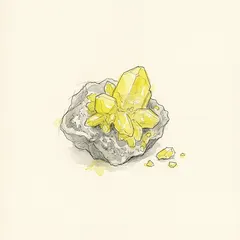 All books on Sulphur →
Antidoted byAconitum NapellusAloe SocotrinaArgentum NitricumArsenicum AlbumBelladonnaCalcarea CarbonicaCamphoraCausticumCedronChamomilla
All books on Sulphur →
Antidoted byAconitum NapellusAloe SocotrinaArgentum NitricumArsenicum AlbumBelladonnaCalcarea CarbonicaCamphoraCausticumCedronChamomillaGeneral
V
Calc. ostr.
V
Argentum nitricum, Arseni- cum, Veratr. alb.
Colocynth, Puumbum, Cho- los terrapinse.
Stramonium, Belladonna, Hyos.
r
Sugar. Albumen.
i. Blood.—
a. Chlorosis.
b. Fever.
c. Heart.
Nerves
a. Spasms.
b. Cramps.
c. Neuralgia.
d. Lack of reaction.
e. Paralysis.
Collapse
Cuprum metaixicum and Cuprum aceticum are used interchange- ably by many physicians as having the same symptomatology.
The original idea of those who proposed the substitution of the latter for the former was based on the supposition that the acetate of copper is soluble, while the metallic copper is not.
This applies, of course, to the crude drug, but not to the potentized preparations.
Copper has for its complement Calcarea ostrearum.
It is antidoted by sugar and albumen.
Hepar, as a general astidote to the metals, comes into play as a dynamic antidote, as do also Belladonna and Stramonium.
Copper possesses considerable interest as a prophylactic in disease.
Workers in copper seldom contract Asiatic cholera.
Here it resembles Sulphur.
Unlike Sulphur, however, it is a remedy for the symptoms of cholera.
It is indicated for the following symptoms: intense coldness of the surface of the body, blueness of the skin, cramps of the muscles, the muscles of the calves and thighs are drawn up into knots.
There is considerable distress, referred by the patient to the epigastrium, and this is associated with most intense dyspnoea.
So intense is the dyspnoea that the patient cannot bear his handkerchief approached to his face; it takes away his breath.
Now, this picture
CUPRUM. 629
of Cuprum seems to place it between Camphor and Argentum ?iitricum.
Camphor has symptoms of collapse, like Cuprum; and Argentum nitri- cum has terrible distress in the epigastrium with dyspnoea.
It differs from Camphor \n this: Camphor lacks the prominence of the cramps which are ever present in the collapse of Cuprum.
There is another condition in which Cuprum may be used, and that is in the uraemia or ursemic convulsions following cholera. The char- acter of these convulsions will appear in a few minutes when I speak of the nervous symptoms of the remedy.
We find Ctiprum indicated in chlorosis, after the abuse of iron. The symptoms are worse in hot weather.
We also find it indicated in fever with marked tendency to frequent relapses; hence, in a sort of relapsing fever. It is not the specific re- lapsing fever, but rather a fever in which the relapses are the result of defective reaction.
Cuprum, when taken in large doses, produces an inflammatory colic, presenting a combination of neurotic with inflammatory symptoms; these are gastro-enteric.
We find the abdomen as hard as a stone; the bowels are, at first, obstinately constipated, the constipation being suc- ceeded at times by bloody, greenish, watery stools.
The vomiting is terrific and is spasmodic in its character.
It seems to be relieved by a drink of cold water.
Hence it is very different from Arsenicum, Veratrum and other remedies.
Now, what takes place in this group of symptoms ?
In the first place, Cuprum not only acts on the bowels, inflaming them, but it acts upon the nerves, causing constriction of fibre, particularly of the involuntary muscular fibres, as in the blood- vessels, and with this we have direct irritation producing inflammation.
Now, to clearly understand the character of Cuprum, you must re- member the other side to this picture.
This condition is soon followed by collapse with great prostration, from which it is exceedingly difficult for the patient to rally.
Thus, we have as a remote symptom of Cuprum, and one, too, which has been greatly neglected, lack of reaction.
We have seen that- quite a number of remedies are useful in this condi- tion.
We all know that Sulphur may often be used; we have learned under what circumstances Carbo veg. is called for; that Laurocerasus , Valerian and Ambra grisea are suited in some nervous temperaments;
Capsicum in flabby, lazy individuals of lax fibre, and Psori?ium in well- marked psoric cases.
But here we have, when Cuprum is the remedy, a tendency of all the symptoms to relapse.
Especially is it an indication
630 A CUNICAL MATERIA MEDICA.
when this lack of reaction occurs in persons who are thoroughly 11 run down " by overtaxing both body and mind. I know of a case in which Cuprum prevented paralysis of both legs, and this was the indication; deciding its choice was the fact that the disease was caused by overtaxing of both brain and body.
So, too, in pneumonia, we may have to use Cuprum to bring about reaction before the appropriate remedy will cure.
It is indicated by sudden suffocative attacks, with coldness of the surface of the body, with great prostration and dyspnoea disproportionate to the amount of solidification.
The body is covered with a cold viscid sweat.
The main action of Cuprum and that which will call for its most frequent use in practice, is on the nervous system.
We find it indi- cated, for instance, in spasms with affections of the brain, as in menin- gitis.
No remedy in the materia medica excels it, and very few equal it, in this direction.
We find it indicated when there has been an eruption suppressed, whether that be scarlatina, measles or erysipelas.
The symptoms which call for it are these: delirium of a violent char- acter very much like that of Belladonna; the patient bites the offered tumbler, loquacious delirium on awaking from sleep, or on becoming conscious he appears frightened.
Here it is the exact counterpart of Stramonium.
But it is a far deeper-acting remedy than Stramonium.
The convulsions usually start from the brain with blueness of the face and lips, the eyeballs are rotated and there are frothing at the mouth and violent convulsive symptoms, especially of the flexor muscles.
The convulsion is followed by deep sleep. .
Now this spasm, especially if epileptic, may be ushered in by a violent shriek or cry.
There is grinding of the teeth.
Cuprum is not very frequently indicated in neuralgia, but it may sometimes be used in sudden attacks of neuralgia with active conges- tion affecting the nervous supply of the involuntary muscles.
Cuprum arse?iicosum I have used in the third potency, on the recom- mendation of Dr.
J.
H.
Marsden, for neuralgia of the abdominal viscera.
I have prescribed it in cases in which no other remedy seemed to be indicated, and I believe with excellent success.
ZINCUM.
63L
ZlNCUM.