 Homeopathy Library
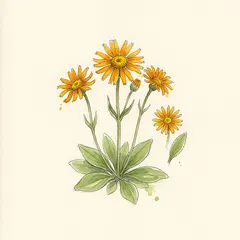
Arnica Montana
Hahnemann - Materia Medica Pura · Samuel Hahnemann · 88,003 chars
 All books on Arnica Montana →
Antidoted byAceticum AcidumAconitum NapellusAllium CepaAmbra GriseaAmmonium CarbonicumArsenicum AlbumAsarumCamphoraChininum SulfuricumCinchona Officinalis
All books on Arnica Montana →
Antidoted byAceticum AcidumAconitum NapellusAllium CepaAmbra GriseaAmmonium CarbonicumArsenicum AlbumAsarumCamphoraChininum SulfuricumCinchona OfficinalisGeneral
The root of this plant which is fond of mountain-plains covered with trees of ordinary foliage, when exposed to the air loses very soon a considerable portion of its smell and its medicinal virtues ; these, however, it loses most by boiling. The recently prepared powder, having been dried in vessels that had been heated in warm water may be kept for several years in well-corked bottles, without losing almost any of its power.
The theories J definitions, distinctions, and sophistic specu- lations of the old school have not been able, in the centuries of the past, to discover the specific curative power of this plant, or to perceive its remedial influence against the pernicious consequences which often attend falls, contusions, blows, thrusts, straining, twisting or tearing the solid parts of our organism. 1 The common man had to discover the virtues of this drug ; after having used an innumerable quantity of other substances, he, at last, discovered in this remedy a protective agent against the consequences of falls, etc., and, therefore, called it " Fallkraut," (plant against falls.) Two hundred years ago, a physician (Fehr,) communicated this discovery of domestic practice to the profession, (who then named this herb Panacea lapsorum.)
1 Note : Even in the most dangerous wounds by balls or blunt instru- ments, Arnica is very efficacious ; it is also eminently useful against the pain attending the pulling out of teeth, or other surgical operations, in which sensitive parts had been violently strained — such operations as re- ductions of joints, fractures, etc.
6 2 ARNICA MONTANA.
All the symptoms attending violent contusions and tearing of the fibre, are analogically produced by Arnica, in healthy organisms, as the following series of symptoms shows.
& In great contusions the cure may be promoted by giving a small dose of Arnica internally, if necessary, every three days, and then mixing half a pound of water with an equal quan- tity of brandy or wine, and dropping into this liquid five or ten drops of the one hundreth potence of the solution of Arnica, imparting to the whole mixture about ten good shakes.
Arnica may be advantageously employed against many forms of disease ; it is a polychrest. Its effect does not last beyond six days ; but, nevertheless, I have found it to be an indispensable intermediate remedy in the most inveterate chronic diseases.
It ought never to be used in purely inflammatory, acute diseases, characterized by external general heat ; nor ought it to be used in diarrhoea. In those affections Arnica will always prove hurtful ; the reason of this may be found in the follow- ing series of symptoms.
It will be found extremely useful in some kinds of spurious pleurisy.
If this remedy be indicated, its thirtieth potency acts more speedily and safely than any other below it. To prepare the thirtieth potence you may either take two drops of the extract of the recent plant, (using the whole of it, when it approaches the period of flowering,) or, if the recent plant cannot be had, you may take ten grains of the finely powdered root, extract- ing its medicinal virtues by means of one thousand drops of alcohol within the space of a week, shaking the whole once a day ; of this extract you then take one drop, dynamizing it up to the decillionth degree, according to the well known rule. Two or three globules moistened with a dilution of this degree, are sufficient at a dose.
Camphor is an antidote ; wine increases the effects of Arnica.
This drug has been tried by myself and Drs. Franz, Gross, Hahnemann, Hornburg, Kummer, Langhammer, Wislicenus.
Noack and Trinks offer the following remarks on Arnica. Arnica is suitable when the nervous system, the animal as well as the vegetative, is in a state of torpidity. It is suit- able for those stages of inflammation where the vital powers begin to become extinct, where torpid fever or neurophlogosis sets in ; under these circumstances it is the contrary of Aconite, which corresponds to the purely inflammatory, especially the synochal character. Arnica is especially
ARNICA MONTANA. 63
useful in the so-called status gastricus nervosus putridus : it appears to be suitable to the nervous venous constitutions, to plethoric young people, with a red face, or to persons of a lymphatic temperament, to exhausted individuals that have been weakened by disease, with a pale-yellow, livid face. As a remedy against the effects of blows, contusions, etc. Arnica rivals Rhus Toxic, Conium, Acidum sulph. Symphytum officinale, Calendula officinalis, Ruta, Ledum and Ferrum muriat.
Rhus, however, corresponds more to the consequen- ces attending an extension of membranous tissues, especially the ligaments of the joints ; Conium is more suitable for contusions which produce a condensation of the cellular tissue and induration of glandular structures, accompanied by a sensation of numbness. Symphytum answers more the pressure and contusion of bones ; Calendula is suitable for supinations, bloody and serous infiltrations of the cellular tissue in open wounds and ulcers ;
Ruta we know to be a specific in cases of mechanical injury of the tarsal and car- pal joint, and in rheumatic paralysis of these parts; Ferrum, muriaticum is especially useful in a similar affection of the shoulder-joint, and Ledum, when the hip-joint is the seat of those symptoms Concussions of the brain and the spinal marrow Soporous, apoplectic and paralytic fits, convul- sions and tremor of the limbs, when consequent upon concus- sions and contusions
Traumatic convulsions Epilepsy, after mechanical injuries Tetanus Trismus
Precursory symptoms of apoplexy, even the apoplexia nervosa, sanguinea, serosa, when fully developed Atonic hemorrhages Nerv- ous, gastric and putrid fevers. Status nervosus stupidus, fever accompanied by violent pleuritic stitches at every inspi- ration, small, quick, slipping pulse, tongue exhibiting brown streaks in the middle, great thirst, trembling of the lower lip, gathering of flocks in the air, involuntary stool, etc
Intermit- tent fevers, especially after the type had been suppressed by Quinine Puerperal fevers, especially with a gastrico-bilious character Milk-fever Wound-fever
Rheumatism and gout, especially podagra, with inflammatory erysipelatous swelling of the affected parts Frozen limbs Consequences of fright Bad effects from the abuse of Cinchona
Poi- soning by lead Atrophy of children (?) Measles with danger- ous swelling of the parotid glands Excoriations Furuncles
Ulcers with putrid character Decubitus Stings of insects Melancholia consequent upon injury of the head, fright, onanism, suppression of the usual evacuations and obsti- nate constipation
Frenzy of parturient women, accompanied
64 ARNICA MONTANA.
by nymphomania Different kinds of cerebral affections, especially of children ; hydrocephalus acutus, when the secretions proceed from the membranes of the brain, especially after scarlatina miliaris Encephalomalacia (?) Vertigo with constipation Pain as from bruises in the head and body, remaining after the influenza
Traumatic inflammation of the eyes, both recent and more advanced when exsudations had set in Cicatrices of the cornea ; incipient amaurosis, espe- cially when consequent upon external injuries of the eyes and the brain Bleeding at the nose, especially when pro- duced by a fall or a contusion Swelling of one cheek
Hemorrhages from the mouth. Toothache, with swelling of the cheeks.' — Oesophagitis Hacmatemesis Consequences of blows upon the pit of the stomach : continued pressing and cutting pains in the pit of the stomach and the epigastri- um ; constant nausea ; frequent empty retching, especially at night ; vomiting, even when eating ever so little ; slow fever ; great emaciation ; sad, peevish mood and despondency
Gas- tric and bilious conditions Cardialgia consequent upon chronic gastritis or loss of humors Splenetic stitches Serous and mucous enteritis ; proctitis ; dysentery, espe- cially with a typhoid character, when characterized by copious, and frequently involuntary, decomposed stools, mixed with black blood, and having a cadaverous smell, slight tenesmus, meteorism, little pain in the abdomen, dry tongue, teeth covered with mucus, pale, disfigured countenance, accelerated, weak, small pulse, viscous, cold sweat and ecchymosis upon the skin
Paralytic diarrhoea Lienteria (?) — Retention of urine, with a feeling of fullness of the bladder, and inability to emit
the urine ; ischuria haemorrhoidalis ; ischuria traumatica.
Hematuria consequent upon external injuries. — Inflammatory swelling of the testes. — Hcematocele consequent upon external injuries. — Inflammation of the genital organs after a difficult labor. — After-pains in a long, difficult, artificial delivery, when
occasioned by the fetus pressing mechanically upon the parts.
According to several observers, Arnica is not of much use against after-pains ; according to Gross and Lobethal, Secale and Pulsatilla ought to be used ; Griesselich says that Arnica has helped in some cases. According to Emmerich, Arnica is useful against the after-pains of parturient women and those frequently-occurring tearing and paralytic pains which com- mence in the small of the back and the groin, and extend down along the internal side of the thigh as far as the toe • these pains are accompanied by nervous uneasiness in the extremi- ties ; the patient knows not how to rest them ; there is often a
ARNICA MONTANA. 65
feeling as if the flesh were being severed from the bone ; some- times one, sometimes both extremities are affected ; the pains come on three days after the delivery Metrorrhagia and pro- fuse menstruation Deficiency of milk attending the loss of humors, diarrhoea, voluptuous excitement Bloody milk in women affected with scurvy
Erysipelatous inflammation of the breast, and soreness of the nipples of nursing women Whooping-cough, third stage Influenza Hsemoptoe, con- sequent upon external injuries ; in nursing women, in plethoric persons, or when caused by a cold or exertion ; in young people with tubercles in the lungs, with a consumptive habit, or when pulmonary consumption has already set in, in which case slight efforts of the body or arms, in stooping or lifting, violently grasping or holding, etc., excite the cough
Spurious pleu- ritis Pleurodynia Pleuritis, produced by mechanical causes, with plastic or serous effusion Hydrothorax
Pneu- monia, produced by mechanical causes ; nervous inflamma- tions of the lungs, when the bloody expectoration is unmixed Voluntary limping, in the incipient stage Phlegmasia alba dolens Arthromeningitis traumatica, rheumatica
Pain in the toes after cutting a corn.
Analogous Remedies : Amm. Ars. Cann. Caps. Chin. Ipec. Merc. Phosp. Puis. Rhus. Sabin. Samb. Seneg. Stap. Verat. — 2. Aeon. Bell. Bry. Calc. Cham. Cic. Cin. Con. Coloc Cycl. Euphr. Ferr. Hep. s. Hyosc. Ign. Natr. Natr. mur. Nux. v. Op. Rut. Sec. Sulp. ac. Zinc. — 3. Lach. Nitr. Nitr. ac.
Head
Sudden vertigo, at dinner, as if he would fall for- ward.
Vertigo when walking. * Vertigo in the forehead, espe- cially when walking ; every thing turns with her, and threat- ens to fall over with her.
Vertigo ; it is almost imperceptible when sitting and bending the head over ; but when righting or moving the head, she feels as if every thing turned with her. — 5.
Vertigo.
Obtusion of the head.
Obtusion of the head, vertigo and anguish are aggravated by artificial vomiting.
Stupefying headache, early in the morning.
Heaviness in the forehead, (a 1. h.) He is sitting absorbed in a revery, although he thinks, properly speaking, of nothing.
Want of memory ; he forgets the word which he is about speaking.
Absence of mind ; he cannot direct his thoughts long to one object.
Con- traction of the pupils, with obnubilation of the head, and ob- tusion of one half of the skull.
Gloominess in the head, with- out any particular headache, (a. 2 h.)— 15.
He is easily ab- sorbed by reveries, while awake.
Internal heat, especially in the head, with heaviness of the head, without any thirst.
Burn- ing in the head, accompanied by a dull continued pain, as if the
head were being distended from within outwards. "Burning in the brain, the remainder of the body being cool, or at least not hot. * Heat in the head ; the remainder of the body being cool, or at least not hot.— 20. Headache. * Headache in the temples, (a. £ h.) Headache, which is also followed by a throbbing headache in the temples. Aching in the forehead. * Aching in the forehead, which increases near the warm stove, as if the brain were rolled up in a lump. — 25.
Headache as if the head were being distended from within outwards ; the pain seems to emanate from something soft in the vertex, with trac- tion in the occiput, and tearing towards the temples. Headache over the eyes extending towards the temples, with a sensation as if the integuments of the forehead were spasmodically contracted, (a. 1 h.) First, achingin the forehead, afterwards stitching and shooting pain in the forehead ; accompanied by- chilliness, (a. 8 h.) Aching in the forehead, especially when walking, or ascending the stairs, reflecting or reading.
Pres- sure in the right half of the frontal bone ; afterwards sneez- ing ; the pressure then moved into the left, afterwards into the righi ear. (a 2 d.) — 30. Aching, with traction, in the left half of the skull, beginning at the ear and coming out at the top of the head. (a. 3 h.) Stupefying, dull, continued pain in the fore- head, more externally, (a. 5-J- h.) Headache, externally, on the top of the head.
Sneezing twice in succession ; this is followed by a pain in the left side of the forehead, as after a violent knock against something. * Violent stitches in the forepart of the head, when coughing, (a. 7 h.)— 35. Violent stitches in the head, when coughing, (a. 10 h.) Headache ; stitches extending upwards ; they come on again when cough- ing or moving the head, and can only be assuaged by resting the head upon the painful side. Pricking pain in the forehead, which becomes worse by lifting up the eyes, with heat in the face and thirst. * Stitches in the forehead.
Jerking stitches in the forehead. — 40. Jerking stitches in the left temple. Headache as if a nail had been thrust into the temple, accom- panied by general sweat, about midnight ; this is followed by faintishness. (a. some h.) Headache in the left temple, return- ing from time to time, pricking and tearing, (a. 4 h.) Stitches in the temporal region, following each other in quick succession, extending towards the forehead, (a. 4 h.) Rapid stitches in the left frontal eminence, accompanied by the sen- sation as if an extravasation of blood had taken place in the forehead — 45.
Stitching pain in the forehead. Dull stitches in the temples, (a. 1. h.) Jerking, lancinating headache, when stooping, as if every thing would issue from the fore-
ARNICA MONTANA. 67
head ; accompanied by nausea, qualmishness. * Headache in the shape of twitching tearings, increased by stooping and coughing. * Twitching headache in the forepart of the head, (a. 1 h.)— 50.
Tearing in the left temple ; when walking in the open air, the headache, distending the head from with- in outwards, returns, (a. 10. h.) Repeated tearings in the left temple.
Great internal and external heat of the head.
Tran- sitory burning on the top of the head and neck, externally.
Tingling in the forehead. — 55.
Tingling over the orbits.
(Headache, which is tolerable only when lying, but intolerable when raising one's self and sitting in the bed.
Tingling on the top of the head, externally.
Feeling of cold at a small place on the forehead, as if some one touched him with a cold thumb.
Pain as if a knife were drawn through the head, transversely from the left side, towards the opposite side ; this is immediately followed by internal coldness of the head, which caused the hair to stand on end. — 60.
Pain in the occiput, at some places, as if the hair were pulled out, or resembling severe electric shocks.
Stinging itching of the hairy scalp, which cannot be relieved by scratching.
The integuments of the head as far as he eyebrows, are firmly attached to the skull, and are almost immovable, (a. 1-J- h.) Pimples on the side of the forehead ; they are partly filled with pus.
(a. 3 d.)
Eyes
The countenance is fallen in a good deal. — 65.
Dry heat in the face, towards evening, extending as far as behind the ears, without any thirst, the nose being quite cold.
(a. 24 h.) Cramp-like tearing of the left eyebrow.
Contraction of the pupils, (a. 2 h.) Staring eyes, denoting anguish.
The margin of the upper eyelids, along its line of contact with the eyeball, internally, is painful when the lids are moved, as if they were too dry and a little sore. — 70.
"Contraction of the pupils, with ob- nubilation of the head.
Sharp, fine stitches in the internal can- thus.
He felt well during the siesta, as long as the eyes were closed ; opening them was attended with qualmishness of the stomach.
Dilatation of the pupils, (a. 26 h.) Stitches in the eyes. — 75.
Itching of the canthi.
(a. 27 h.) Burning iri the eyes.
Burning in the eyes, without any dryness.
Occasional flow of tears, which burn like fire. * Slight protrusion of the right eye ; it looks more elevated and larger than the left. — 80.
Drawing pain in the right eyeball, (a. 2 h.) * Painful, dull, intermittent pressure on the margin of the left orbit.
Spasmo- dic pressive twitchings under the left eye, on the nasal bone ; they extend even over the ball of the eye.
Ears, Pace and Nose : Pain, internally, in the cartilage of the left ear, as if the parts had been bruised or contused.
gg ARNICA MONTANA.
Intermittent pressure in both ears, in the region of the tympa- num, (a. 10 h.) — 85.
Dull stitches through the internal ear.
(a. 1 h.) Stitch darting through the right ear, then through the left, lastly through the eyes, with a feeling in the eyes as if they were turned upwards by force.
Heat and burning in the lobule.
Feeling as of one ear being hot, which, however, is not the case, (a. 1 h.) Dull, long stitches behind the ear. — 90.
First, stitches, afterwards a tearing pain in the ear.
(a. 1 h.) Pressure in the ear.
Sensibly diminished hearing, (a. 30 h.) The hearing is much more acute, (a. 10 h.) Humming of the ears. — 95.
Tingling in the left ear.
(a. 3 h.
Humming in the ears.
(a. 7 h.) Feeling of heat externally, of the left ear and in the cheek.
Erup- tion on the cheeks, like small-pox ; most of it occurs under the eyes.
Twitching throbbings in the left cheek, (a. -J- h.) — 100.
Throbbing and pinching in the swollen cheek, as if two hammers beat against each other, crushing the flesh.
Pain as from bruises, in the articulation "of the right jaw, when moving the jaw to and fro, early in the morning, (a. 20 h.) Redness and burning in one cheek, the body being cool, or, at any rate, not hot.
Red swelling of one cheek, with throbbing and pinch- ing pain, swollen lip and great heat in the head, with a cold body ; the feet felt sometimes hot.
Thrills of heat over the head, with sweat gathering in the face. — 105.
Thrills of heat in the face, in the evening, (a. 36 h.) * Hot, red, shining, stiff swelling of the left cheek.
When yawning, cramp-like pain in the cheek, (a. 1 h.) Tingling over the left cheek, like a shivering without coldness, extending as far as the side of the occiput, (a. 6 h.) Cramp-like pain at the root of the nose, (a. 2 h.) — 110.
The nose fains him from above downwards, as if he had had a violent fall upon it.
Lancinating pain in the nose. * Swelling of the nose.
Sense as if the nostrils were ulcerated ; the nose is sore within.
Pimples in the nose and under the nose, which are filled with pus at the tips, with a biting pain. — 115.
Feeling of heat in the nose ; however, it is cold to the touch. * Frequent bleeding at the nose.
Dull pres- sure on the nasal bone, with stupefaction.
Feeling as if an insect were crawling near the nose ; this cannot be removed by rubbing.
Itching tingling on the side of the nose, going off by rubbing, (a. 1 h.)
Jaws : — 120.
Itching of the upper lip ; when rubbing it, it burns.
The external margin around the lips, especially the upper lip, becomes chapped, as by cold.
(a. 8^ h.) Pim- ples on both sides of the upper lip.
(a. 2 d.) " Pimple in the groove of the upper lip, in the middle, with redness all around, and a tensive pain.
Parched lips. — 125.
Chapped
ARNICA MONTANA. 69
lips.
Ulcerated corners of the mouth, with a burning pain, especially when moving those parts.
Tingling in the lips as if they had gone to sleep, (a. 2$ h.) Burning heat in both lips, with moderate warmth of" the body.
Swollen lips. — 130.
Violent trembling of the lower lip.
Incipient paralysis of the lower jaw.
Swelling of the submaxillary glands.
Aching and twitchings (intermitting tearings) in the muscles covering the ramus of the lower jaw.
Swelling of the submaxillary glands ; they are especially painful when he raises or turns his head, (a. 4 d.) — 135.
Prominent swelling of the cervical glands ; they are exceedingly painful, especially when moving the neck or speaking.
Rough traction in the muscles of the left side of the neck, with a feeling as from bruises.
Tearing in the neck.
Pressure in the muscles of the neck, as if the cravat were tied too fast.
Her head feels so heavy that she lets it con- stantly hang on one side. — 140.
The head feels heavy, and is so movable on account of a weakness of the muscles of the neck, that it easily inclines to all sides, (a. 4 h.) Pain in the teeth, as if the roots of the teeth were being scraped with a knife.
Tingling in the gums, as if they had gone to sleep.
Teeth covered with mucus, (a. 1 h.) Vacillation and elonga- tion of the teeth, without any pain. — 145. * (Toothache as if the teeth had been bit out, sprained, were vacillating ; it is throbbing ; the teeth feel as if they were pressed out by the blood rushing towards them ; they are, then, more painful when touched.) Pressure on the inferior and internal gums, as of a leaden bullet.
Tearing toothache of the left molar teeth, upper row, during dinner ; the pain goes off after dinner.
During mastication, the gums pain as if from subcutaneous ulceration, especially the place under the tongue.
Mouth
Dryness in the mouth without any thirst. — 150.
Dryness in the mouth, with great thirst. * Tongue coated white, with a good appetite and good taste, (a. 2 d.) Dryness in the mouth early in the morning, without any thirst, the taste in the mouth being putrid, (a. 14 h.) Sensation of dryness on the tip of the tongue, in the palate, on the lips, with shivering over the arms and thighs, (a. 2 h.) Biting' sensation on the tongue.
(a. 4h.) — 155.
Sensation as of the tongue being sore.
(a. 4 h.) Feeling in the palate as of something astringent having touched the parts, (a. 5 h.) Aching of the velum pendulum palati.
Burning in the back part of the throat, with a feeling of internal heat, or rather that sort of anguish which originates in heat, (without any heat being perceptible externally.) Stinging in the back part of the throat, between the acts of swallowing. — 160.
Pain in the fauces as if something hard or rough (ex. a crust of
70 ARNICA MONTANA.
bread) were lodged in it, in the afternoon when lying down ; the pain passess off when rising, (a. 6 h.) Noise during deglu- tition. Deglutition is prevented by a sort of nausea, as if the food would not go down.
Gastric Symptoms : Bitter taste in the mouth early- after waking up. * Putrid, slimy taste in the mouth. — 165.
(Every thing which he takes, tastes sour.) (Repugnance to milk.) His (usual) tobacco is repugnant to him. * Repug- nance to meat and broth.
Desire for vinegar. — 170.
Want of appetite in the evening.
Want of appetite, the tongue being coated white and yellow.
Difficult deglutition.
Taste of rot- ten eggs in the mouth, between the meals.
Phlegm in the . throat ; it tastes bitter when hawking it up.
(a. 12 h.) — 175. * Bitter taste in the mouth.
Sputa mixed with blood, (a. 2 d.) A kind of suppressed, imperfect hiccough after dinner. * Empty eructations.
(a.J-h.) Inclination to eructations. — 180. 'During the eructations a bitter phlegm is gulped up. * Empty eructa- tions. * Early in the morning, eructations, tasting of rotten eggs.
Gulping up of saltish water. — 185.
Nausea and dispo- sition to vomit early in the morning.
Heart-burn.
She wants to drink constantly, but she knows not what, because every thing is offensive to her.
Half-suppressed eructations.
Enor- mous appetite in the evening ; after the meal, one is immedi- ately affected with a feeling of repletion, and a colic-like pres- sure in several places of the abdomen, especially the sides. — 190.
(At noon, during dinner, one cheek is affected with a per- ceptible degree of warmth.) After supper she weeps, is peev- ish, listens to nobody, and does not wish to be told any thing.
Complete want of appetite with nausea. * Nausea.
Qualmish- ness of the stomach, with empty eructations. — 195.
Nausea without vomiting, or without any stool.
He feels a vertigo and nausea when reading too long. * Inclination to vomit.
Retching, unto vomiting.
Vomiting. * Vomiting of coagulated blood.
Empty retching, (a. \ h.) * Retching at night ; vom- iting, however, does not come on ; in the pit of her stomach, there is a weight as of a lump.
Violent pressure on the ster- num, over the pit.
Violent jerks under the stomach. — 205.
Sense as of digging in the pit ; as if something were being rolled up there like a ball of thread.
After a meal, fulness in the pit of the stomach, and painful pressure at a little spot deep in the hypogastrium, immediately behind the ossa pubis (in the bladder ?) ; it is most felt when standing, and constantly ex- cites micturition, (a. 4 h.)
Stomach
Feeling of repletion of the stomach, accom- panied by loathing. Pressure in the pit of the stomach
ARNICA MONTANA. 71
as of a hand ; this pressure gradually ascended up to the neck ; she then felt nauseated, and the water collected in her mouth ; this went off after lying down ; then there was only a pressure in the abdomen, (a. 1 h.) * Pinching, spas- modic griping in the stomach. — 210.
(Biting pain in the stom- ach) (immediately.) Flatus accompanied by pressure at the stomach.
Pain in the region of the heart, as if the heart were squeezed together, or as if it got a violent shock.
Oppression of the heart.
Pressure as if a stone were lying in the stomach ( im- mediately.) — 215.
Grunting in the stomach with colic.
Aching, transversely across over the pit of the stomach, with dyspnoea.
Abdomen
Spasm in the hypochondriac region.
Pressure below the last ribs.
Sense as of digging in the pit of the stom- ach, (a. -J h.) One feels as something were being rolled up there, as a ball of thread, (a. 24 h.) — 220.
Pinching in the stomach.
Pressure shooting upwards in the region of the spleen, resem- bling a continued stitch, when walking, (a. 6 h.) Stitches under the false ribs of the left side, intercepting the breath, when standing.
Clawing throbbing on the left side, between the pit of the stomach and the umbilicus.
Cutting over the umbilicus, especially when breathing deeply and at every step, but neither immediately before nor after stool. — 225.
Cutting in the abdomen as after a cold.
Colic resembling dysentery ; a kind of grinding deep in the hypogastrium, within the hips, on both sides, accompanied by nausea and slumber.
(Between 2 and 5. h.) * Tension and inflation of the abdomen, especially the lower part, a couple of hours after a moderate supper, accompanied by a dull, general pressure in those parts, especially in the side of the abdomen, without any flatus being distinctly felt.
This symptom continues during the night, with heat of the limbs and dreams, which fatigue the mind ; he wakes up every hour ; the inodorous flatus which he emits, affords him no relief.
Tense distention of the right side of the abdomen, when at rest ; the part is painful as from an internal wound ; when coughing, blowing the nose, or set- ting down the foot, it feels painful as if it had been shaken, torn or cut to pieces ; it is even painful when merely touched externally, and feels as if one cut into a wound ; the pain is re- lieved by the emission of flatulence, and rages every day from morning until two o'clock in the afternoon.
Pain in the region of the liver, which presses like a stone both during expiration and inspiration ; the pain was felt when he lay on his left side. — 230.
Although she had eaten a good deal, she nevertheless felt hungry, as if she had not eaten any thing — but she felt as if she had drunk a good deal ; sense as of swashing in the body.
Tearing in the abdomen over the navel.
Yiolenl cutting in the
72 ARNICA MONTANA.
left side of the abdomen, which darted upwards like a stitch as far as the vertex, so that he jumped up as if touched by an electric spark, (a. 24 h.) Pinching over the umbilicus.
Vio- lent jerk below the stomach. — 235.
Pain in the right side of the abdomen, as from a sudden contusion, when walking, (a. 26 h.) Clawing throbbing on the left side, between the pit of the stomach and the umbilicus.
Sharp stitches in both loins, (a. 3 h.) Pain in the loins, cutting from without inwards, es- pecially when stooping, (a. 60 h.) Dull stitches in the right side, below the ribs. — 240.
Sharp thrusts through the abdo- men from one side to the opposite, (a. 3 h.) Aching pain in the region of the liver, (a. 2 d.) Burning stinging pains in the epigastric region.
Retraction of the umbilicus.
Fine tearings in the abdominal muscles, (a. 1 h.) — 245.
Fine stitch in the abdominal muscles, which leaves an itching behind ; it passes off by scratching, (a. 3 h.) Colic ; an hour after.wards tenes- mus ; at last an evacuation of fgeces composed of small lumps, mixed with flatulence.
Flatus, rumbling in the abdomen.
Colic, apparently from incarcerated flatus.
Colicky pains, owing to flatulence. — 250.
Grunting, rumbling in the ab- domen, flatulence.
Fermenting flatus in the abdomen.
Loud grunting in the abdomen, as from emptiness, (a. 10 h.) Grunting and fermenting flatus, below the umbilical region, (a. 1£ h.)
Stool
Tenesmus, with emission of flatulence ; previ- ously grunting in the intestines, (a. 1 h.) — 255.
Flatus smell- ing like rotten eggs.
(a. 3 h.) Tenesmus ; this is followed by a copious, thin or pap-like, sourish-smelling stool, giving great relief, (every day four to five times.) Tenesmus.
Tenesmus every half hour ; but nothing except slime was passed.
Hard, difficult stool, with pressure in the abdomen, (a. 36 h.)~ 260.
Pap-like diarrhoea, with distention of the abdomen previous to stool. * Pap-like, brown stool, with grumbling in the abdomen, as if diarrhoea came on.
(a. 1| h.) Aching in the rectum, (a.
6 h.) Frequent, small stools, consisting only of slime, (a. 6,
7 h.) — 265.
Frequent stool ; after every stool he is obliged to lie down. * White diarrhoea-like stool* (Diarrhoea resem- bling brown yeast.) * Constipation.
Nightly diarrhoea with straining colic, as if from flatulence. — 270. * Involuntary stool at night, when asleep. * Undigested stools, although not liquid.
Straining in the rectum.
Tenesmus of the rectum.
Straining and pressing in the rectum when standing, (a. 7 h.) — 275.
Blind haemorrhoids.
Note: Diarrhoea, with copious expulsion of fseces, appears to be in the administration of Arnica, a reaction of the organism.
ARNICA MONTANA. 73
Urinary Organs
More frequent desire to urinate than usu- al.
Frequent desire to urinate, with copious emission oi urine, (a.lh.) Watery urine.
Retention of urine, with tenesmus ot the bladder.
Tenesmus of the neck of the bladder. * Tenesmus ot the bladder, the urine dropping out involuntarily, (a. 1 h.) One has to stand a good while before some urine is emitted.
Desire to urinate, accompanied by a somewhat biting burning, increas- ed after micturition.
Cutting pain in the orifice of the urethra, at the termination of micturition.— 285.
Stitches in the urethra.
Stitches in the urethra after micturition, (a.lh.) Frequent emis- sion of a watery urine, (a. 12 h.) Emission of a quantity ot urine ; he is able, especially at night, to retain it a long time.
(a. 30 h ) Brown, clear urine, which immediately becomes whitish and turbid, (a. 48 h.) * Brown urine with brick-red sediment.
A small quantity of red urine.
Frequent emission of white watery urine, the quantity of which is smaller than the liquid which he had drunk; the last drops of the urine do not come out easily.
(The first 4 h.) Early in the morning he emits a quantity of urine, which, however, flows slowly as if the urethra were constricted, (a. 24 h.) He emits dark-red urine, the quantity of which is larger than the liquid he had drunk — 395 Frequent desire to urinate, with emission of a smaller quantity of yellow-red urine, (a. 46 h.) Itching in the anterior part of the urethra, in the region of the glans, when he is not
urinating. , . ,
Genital Organs : Itching, or itching stitches in the glans.
Fine stitch through the glans.
Itching red spot upon the glans. —300 Itching pimple on the prepuce.
Single stitches in the scrotum (Painless tubercle on the scrotum.) Violent, contin- ued erections after waking up, without any desire for an em- brace or without any amorous thoughts, (a. 12 h).
Violent sexual desire, and continued erections (in a weak old man.)— 305 Several pollutions in one night, with voluptuous dreams.
Effusion of semen (by day) during an affectionate caress Early in bed, feeling of weakness with relaxed testicles, as it he had had an effusion of semen the night before, while asleep, which, however, was not the case.
Symptoms as it the menses would make their appearance.
A girl of twenty years, who had not had her courses for one year, but was otherwise healthy, had an attack of nausea in the pit of the stomach, immediately after taking the medicine ; this was followed by a lump of blood passing through the vagina.
Cold Coryza :— 310.
Sneezing, violent coryza.
Coryza, in the evening, when going to bed ; catarrh on the chest, on waking up.
Hoarseness, early in the morning.
(Sense as ot
74 ARNICA MONTANA.
crackling in the trachea, when walking, and, in the eve- ning, when lying down.)— 315.
Fetid breath from the mouth.
(Constant burning about the borders of the nostrils, with de- sire to sneeze.) Sneezing, (a. 2£ h.) Freqent sneezing, (a. 48 h.) Vapor, as of rotten substances, coming out of the mouth during an expiration, for two days— 320.
During an eructation he felt as if his breath caused an agreeable cooling in the trachea, as if the walls of the trachea were too thin.
Feeling of internal coldness in the chest.
Dry, short, and hacking cough, as from a titillation in the trachea, every morning after rising.
Entirely dry cough produced by a titillation in the lowest part of the trachea, (a. 4. h.) (Cough with expectoration, which appears to come out of the posterior nares.)— 325. * Cough produced by titillation in the upper part of the larynx, during the siesta, (a. 4 h.) Cough at night, during sleep.
Even yawning excites cough.
Cough is excited by cries, in children, when accompa- nied by indignation and tossing about, (between the seventh and eighth hour.) * Cough, in children, produced by weeping and lamenting.— 330.
Pain in the chest, as if it were raw, with roughness of the throat during cough. * Hcemoptoe.
Cough exciting vomiting.
Cough producing a feeling in the ribs as if all of them were bruised.
Cough with stitches in the side of the chest, (a. 10 h.)— 335.
Bloody expectoration from the chest.
Chest
* Short, panting breath.
Dyspnoea, quick expirations, and inspirations.
Anguish and pains in the chest. * Oppres- sion at the chest, with anguish, pains in the abdomen, and headache.— 340. * Excessive difficulty of breathing.
Frequent and slow deep breathing, with pressure below the chest.
Aching in the lower extremity of the sternum, which is espe- cially felt during a deep inspiration, (a. 12 h.) Dull pressure over the pit of the stomach, in the lower part of the sternum Stitching achingly in the chest.— 345.
Cutting aching, with pressing through both sides of the thoracic cavity, increased by inspiration, (a. 1 h.) * Dull stitches entering the thoracic cavity through the sternum, (a. 2 h.) Pain in the left side of the chest, like pricks of pins.
(a. 29 h.) Prickings in the sides of the chest.
(Quick, difficult inspirations, slow ex- pirations.)— 350. * Stitching pain in one of the two sides of the chest, accompanied by a short cough, which increases the pain and by continued asthma. * Stitches and prickings below the last rib.
Pain, like prickings, in the right side of the chest Violent stitches in the middle of the left breast. * Dull stitches in the right side, near the ribs.— 355. * Stitches in the left breast, during a deep inspiration, near the sternum.
Stitches
ARNICA MONTANA. 75
in both sides, under the ribs, as from flatulence, (a. 1 h.) Aching and stitches in front, in the sternum, especially when walking.
His chest feels affected, raw ; his sputa is sometimes tinged with blood, especially when walking, (a. 36 h.) * All the joints of the bones and cartilages of the chest feel painful as if they were bruised, during motion and breathing. — 360.
Stitches in the heart from the left side to the right.
Oppres- sion at the heart.
The beating of the heart is more like quiv- ering.
Pain in the region of the heart, as if it were squeezed together, or as if it got a shock, (a. 36 h.) The motion of the heart is first very rapid, therl suddenly slow. — 365.
Pain as from a sprain in the joints of the chest and back.
(Drawing pain in the chest, accompanied by anguish.) Anguish trans- versely across the chest, with inclination to vomit, (a. 2 h.) Early when waking up, a load of blood appears to have ac- cumulated in the chest ; after a little exercise, he feels better.
In the middle of the left breast, a painless feeling of constriction, which aggravates breathing, accompanied by a pain in the pit of the stomach, which arrests breathing. — 370.
(Feeling of tension across the chest as far as the neck ; this tension is les- sened by lying on the back, increased by walking, and becoming painful when standing.) (a. 2 h.) Aching in the right breast, at a small place ; the pain remains unaltered either by motion, or contact, or breathing.
Red sweat on the chest.
Stinging itching in the sides of the chest and in the back, which cannot be removed by scratching, (after some minutes.) Tingling itching in the left side of the chest, (a. 1 h.)
Back
375.
Pain in the os sacrum, as after a violent thrust or fall.
The small of the back is painful as if it had been beaten off.
Pain in the small of the back as if something had been torn inside.
Pain in the small of the back ; he felt stitches in that part, when coughing, breathing deeply, or walking.
Arthritic pain in the back and limbs. — 380.
Pain as from bruises in the back.
Burning pain in the back, when walking out into the open air.
Sensation in the back, almost under the shoulders, as if something like a lump were lodged there, which causes dull stitches during motion, not when at rest.
Stitch, at every inspiration, in the right side of the back, extending from the last ribs, as high up as the axilla, (a. 48 h.) Sensation as if the spinal marrow were being poured into its ca- nal with a syringe, with a feeling of concussion. — 385.
Tingling in the vertebral column.
Tingling in the dorsal spine, afterwards in the false ribs as far the stomach.
Painful pressure in the middle of the dorsal spine, (when sitting.) The dorsal spine is
76 ARNICA MONTANA.
painful, as if it were not able to carry the body.
Aching between the scapulae, (a. 2 d.)— 390.
Cutting thrusts between the scapulas, extending into the thoracic cavity, when walking (a. 6 h.) Pricking itching on the scapula, (a. 2 h.) Pain of the right scapula, towards the back, as after a violent shock or fall.
When bending the head over, he feels a pressure and tension in the lowest cervical vertebra.
Cramp-like pain in the cervical vertebras, accompanied by dull stitches from with- out inwards, (a. 2 h.) — 395.
Cramp-like tensive pain in the mus- cles of the neck, when sneezing or yawning.
Pimple on the side of the neck, which when touched is affected with a sting- ing pain.
(a. 48 h.) '
Superior Extremities : Drawing and aching in the left shoulder, when standing straight.
Broad sharp stitches below the axilla, from without inwards Sense of excoriation be- low the shoulder. — 400.
The arms feel weary, fcs if he had been bruised by blows, so that he was unable to bend his fingers inwards.
Pain as from bruises on the anterior surface of the arms.
Drawing, cramp-like pain in the long bones of the fingers and the fore-arm ; it extends behind from below upwards.
Tingling in the arms.
Painful con- cussion or shock in the arm, almost as from an elec- tric machine. — 405.
Painful stitches, like shocks, in the upper part of the upper arm.
Twitches in the left upper arm, as if a nerve were put upon the stretch.
Twitchings in the muscles of the upper arm, (immediately.) Dull stitches in the middle of the upper arm, which cause him to start.
Intermittent, painfully pressive tearing, extending from the lower part of the left upper arm as far as the elbow, apparently in the bone. — 410.
Tingling in the fore-arms.
When bending the arm, the flexor muscles of the fore-arm became stiff; extending these muscles again is painful to him.
(a. 2 h.) Sharp, broad stitches below the elbow-joints, (a. 2 h.) Slow, dull stitches in the left fore-arm, with acute pains, as if the arm were broken, (early when in bed.) Tear- ing pain in the arms and hands. — 415.
Burning stitches in the fore-arm.
Pain as from a sprain in the wrist-joint.
Pain as from a sprain in the left wrist-joint, (a. 2 d.) Sharp stitches in the wrist-joint, increased by motion, (a. 2 h.) Pain as from a sprain in the wrist, (chest, back, hips.) — 420.
Tearing pain in the left wrist-joint, especially when writing ; the pain is felt in the dorsum of the hand ; it decreases when letting the hands
'Note: This kind of pimple, surrounded with an inflamed red border, is extremely similar to a boil.
Boils are, therefore, cured by Arnica'.
Homoeopathically, Arnica may be used as a preventive against boils in persons who are subject to them.
I know this from experience.
ARNICA MONTANA. 77
hang down.
Lancinating tearing in the wrists, especially in the left.
(a. 3 h.) Tingling and crawling in the hands.
Dis- tended veins of the hands, with a full, strong pulse.
Weakness of the hands, especially when seizing something, (a. 2 h.) — 425.
Aching of the dorsum of the hand.
Cramp in the fingers of the left hand.
Pain in the balls of both thumbs, as if they had been knocked against something hard.
Fine pricking itching of the posterior joints of the fingers ; it goes off by scratching, (a. 36 h.) Itching pimple between the thumb and the index finger ; when touched it becomes affected with a fine stinging pain, as if a splinter were lodged in it.
(a. 40 h.) 430.
Stitches in both middle fingers, (and in the knee.) Lanci- nating, twitching pain in the finger.
Fine stitches in the anterior joint of the middle finger, (a. \ h.) Itching stitches in the tip of the middle finger, (a. 2 h.) Sharp stitches in the bend of the mid- dle joint of the index finger, (a. 2 h.)
Inferior Extremities: — 435.
Trembling in the lower ex- tremities.
Tearing pain in the lower extremities.
(Abscess of the psoas muscle.) Single thrusts in the hips.
Pain as from a sprain in the hips, (back, chest, wrists.) — 440.
Tearing pain in the lower extremities.
At night, the lower extremities are painful, when laid across one another.
Drawing pressive pain in the left hip-joint, the thigh being extended, when sitting, (a. 5 h.) Pain in the thigh, when rising and stepping upon the foot.
Sense as of twitching in the muscles of the thigh. — 445.
Continual pinching on the outer side of the thighs, (a. £ h.) Pain in the thighs, when walking, as from a blow or contusion.
Drawing, cramp-like pressure in the muscles of the left thigh, when sit- ting, (a. 48 h.) Pinching twitchings in the upper portion of the left thigh, near the scrotum.
Stitches in the knee, (and in both middle-fingers.) — 450.
Fine stitches in the thigh over the knee.
(a. f h.) Itching stitches on the inner side of the thigh over the knee ; they become more violent by rubbing, (a. 2 h.) Finely stinging itching of the inner side of the thigh, like soreness, diminished by contact.
The knee-joints have no firmness, they vacillate when standing, (a. 3 h.) The knees suddenly bend, when standing, (a. 1 h.) — 455.
Sometimes sudden absence of power in the knees ; they bend, whilst the feet are numb and insensible.
(Cramp-like pain in the knee and leg.) Arthritic pain in the foot, with a little fever towards evening.
Standing becomes painful.
Pain in the right knee when ascending the stairs, as if one had knocked it against something, (a. 3 h.) — 460.
Prick in the knee, when touched.
(a. 1 h.) Tearing aching below the left knee.
Pain as after a violent blow over the calf of the right leg, accompanied by
lassitude of the legs.
Twitching, lancinating pain in the tibia, extending from below upwards, (a.
G h.) (Aching in the paralyzed foot.)— 465.
Feeling as of tingling and creeping in the feet.
Sudden swelling of the (sick) foot.
Inexpressible pain in the (sick) foot, as from internal uneasiness, and as if it were lying too hard ; this uneasiness obliges one to move the part hither and thither, in the evening, (a. 8 h.) Tearing pain, like boring and digging, (this is the literal German, the corresponding expression in English is " grinding pain,") from above downwards in th^ left calf; the pain then extends into the thigh, thence crossing behind the os coccygis, and finally terminating at the right iliac bone.
(a. 6 h.) Tension in the gastrocnemii muscles from below upwards, accompanied by traction when standing, (a. 7 h.) — 470.
Aching in the tibia, as after knocking it against something, only when walking, (a. 30 h.) Sense as of gurgling in the lower part of the tibia, from below upwards, when at rest.
(a. ■*■ h.) Pain in the tarsal joint, undulating, tearing, (almost dull stitching.) Pain as from a sprain in the tarsal joint.
Tearing in the malleoli. — 475.
Tearing in the heel.
Stitches in the foot extending through the big toe.
Stitches in the right foot, over the heel, in the tendo Achillis, only when extending the tarsal joint, but not when walking, (a. 2 h.) Stitches in the soles of the feet, in one and the same spot when walking, as if there were a corn.
(a. 36 h.) Tingling prickings in the soles of the feet, at one and the same place. — 480.
Violent burning in the feet.
Tingling in the feet.
Cramp in the toes of the left foot.
(a. 36 h.) Dull throbbing pain in one of the toes.
Dull trembling pain in one of the toes. — 485.
Violent stitches in the toes, when walk- ing.
Lancinating, tearing pain in the tip of the big toe ; it comes on gradually, and is felt when lying down for the purpose of taking the siesta.
Arthritic, dull pain towards evening, as from a sprain, in the joint of the big toe, accom- panied by some redness.
Single, severe stitches in the big toe.
(a. 1 h.) Dull, long stitch in the right big toe. — 490.
Single shocks in the big toe.
Sweat of the soles of the feet and toes.
Painful cramp in the muscles of the soles of the feet.
Lancin- ating tearing of the lower surface of the big toe, especially when setting down the foot.
(a. 4 h.) Sense as of tingling in hands and feet, and lancinating pains in divers joints.
General Symptoms : — 495.
Deeply penetrating, dull stitch- es in the limbs, here and there. *Sense as of pricking in the skin.
Stitching pains. *Fine prickings in almost every part of the body, especially the nose, eyebrows, eyelids, even hands and fingers.
Burning pain at times in this, at times in another part of the skin.
ARNICA MONTANA. 79
500.
Sense of cold, at times in one, at times in another place of the skin of the body.
(Stinging, burning and itching pain in the skin, here and there, which is felt when lying down for the pur- pose of taking the siesta ; it goes off of itself and by scratching.) Burning and cutting pains here and there.
Jerks and shocks in the body, as by the electric fluid.
Itching rash, produced by moistening the skin with the tincture. — 505.
Sudden twitches of single muscles, almost in every part of the body, especially in the limbs ; those twitches produce a commotion either in single parts of the body, or in the whole body.
The pains increase by talking, blowing, moving, and even by every sound. * From time to time, sense as of tearing in almost every part of the body, especially, however, in the lower and upper extremities ; in the lower extremities they are mostly felt when sitting ; the pain for the most part appears to rise from below upwards.
Twitching pain in the affected part.
(a. 2 h.) T witchings in all the limbs, especially in the feet and shoulders, with heat of the feet. — 510.
Every thing on his body feels as if it were tied too fast.
Uneasiness in the whole body, without any mental anguish ; a kind of excessive mobility, which finally becomes a kind of trembling of the whole body.
The parts of the side on which he is resting, have gone to sleep.
Painful sensitiveness of all the joints and of the skin, on making the slightest motion, (a. 4 h.) * Painful and excessive sensi- tiveness of the whole body. — 515. * Heaviness in all the limbs ; paralytic pain in all the joints, during motion, as if the joints were bruised, (a. 8 h.) Painful concussion in all the limbs ; it is felt when the carriage in which one is riding shakes, or when one treads too fir'mly upon the foot in walk- ing.
Disagreeable sense as of tingling, or dull pain in a contused part. * Rending pain in the limbs.
Excessively violent pain which caused many to scratch the wall or the floor with their nails, like madmen ; the pains do not continue more than an hour, (immediately after taking the medicine.) — 520. * Tre- mor of the limbs.
Paki in all the limbs as if they had been bruised, both when at rest and in motion, (a. 10 h.) Faintish- ness in the feet and arms, when walking in the open air.
(a. 2£h.) Weakness and Sleep : Faintishness, weariness, sen- sation as of being bruised; these symptoms oblige him to lie down. * Tremulous uneasiness and faintishness. — 525.
He feels faint when walking ; he recovers himself when standing.
The feet felt tired after having taken a walk in the open air ; the knees bent ; as soon as the feet felt weary, she became sleepy immediately, fell asleep and dreamed imme- diately.
When walking in the open air, he feels as if the
30 ARNICA MONTANA.
whole right side, especially the shoulder, were too heavy and paralyzed ; he does not feel this in the least when in the room, (a. 8 h.) Heaviness in all the limbs as after great fatigue.
When walking in the open air, sensation of heaviness and pressure in the muscles which cover the articulations of the upper and lower extremities, (a. 8 h.) — 530.
Excessive heavi- ness of the limbs.
Heaviness of the limbs.
Relaxation in the limbs, as if they had been strained too much.
Lassitude and laziness of the whole body ; the legs are scarcely able to stand. — 535.
General sinking of strength ; he can scarcely move a limb.
Sleep
Yawning, (after £ h.) A violent shivering thrills through him when walking.
Yawning and stretching, accom- panied by dilatation of the pupils, without any sleepiness, (a. 1 h.) Frequent yawning. — 540.
Frequent yawning, in the evening, without any sleepiness.
Sleepiness, (a. k h.) In the evening, one feels sleepy too soon.
He becomes very sleepy after having walked long in the open air ; he is not disposed, then, either to speak or to think, although he was very cheer- ful previously.
A good deal of sleep. — 545.
Sleep full of dreams.
His sleep is full of dreams and does not refresh him ; he feels as if he had not slept at all.
Anxious, heavy dreams the whole night ; they depress his strength a good deal.
Fear- ful dreams of large black dogs and cats, immediately after falling asleep in the evening, He has terrible dreams, screams loud while asleep ; this wakes him up. — 550.
Starting up while asleep.
Starting and jerking backwards of the head, while asleep.
Lamenting when asleep, (a. 2 h.) Loud, unin- telligible talking when asleep, without being accompanied by dreams which one can recollect.
When asleep, the expirations and inspirations produce a kind of audible blowing through the nose.
(a. 24 h.) — 555. * Involuntary expulsion effaces while asleep.
She dreams the whole night, that she is overwhelmed with reproaches ; on waking up she was scarcely able to real- ize that all this had been a mere dream.
When half asleep he dreams for several hours ; the dreamer shows much irreso- lution.
In the evening she sleeps a couple of hours ; after- wards she remains wide awake until 5 o'clock in the morning ; then she falls into a sound sleep until 9 o'clock in the forenoon.
Sleeplessness and wakefulness until 2 or 3 o'clock after mid- night ; this is accompanied by a stinging and biting itching, of an erratic character. — 560.
Sleepiness during the day.
(a. 2h.) He becomes sleepy too early, in the evening.
Somnolence.
Sudden startings as with fright, when falling asleep.
Anxious dreams about visions which had been seen in previous dreams.
ARNICA MONTANA. 81
— 565.
The visions which had been seen in the dreams of the previous night return.
Vivid dreams, the first part of which was agreeable, the latter part causing anxiety.
Vivid dreams which cannot be recollected.
Dreams about fright- ful objects, of the lightning having struck, graves, etc.
He dreamed of men being flayed ; this appeared frightful to him. — 570.
Vivid dreams towards morning ; while dreaming he talks loud and is waked by it.
(6th day.) Frequent waking up, with effusions of semen (second, night).
While falling asleep, at night, he is roused from sleep by a peculiar sensation of heat in the head ; this is followed by anguish when awake ; — he dreads similar attacks, and is afraid that he may have an apoplectic fit.
(a. 10 h.) In the morning she feels chilly when in bed ; the chilliness begins before she rises and continues the whole forenoon.
He cannot fall asleep in the evening ; but he sleeps so much longer early in the morning. — 575.
Sleepless- ness with anguish, as if owing to heat, until 2 or 3 o'clock in the morning.
Early, when in bed, he has a feeling of cold in the right side upon which he was lying, (a. ■} h.)
Fever
Thrill of heatover the face and sensation of an agree- able warmth of the body.
(a.
> h.) Great internal heat, hands and feet being cold, accompanied by chills over the whole body.
Dry heat in the bed, with violent thirst ; heat becomes intolerable to him ; he tries to uncover himself ; but he feels chilly upon un- covering himself, or even when making the slightest motion in bed. — 580.
When lying for some time without stirring, he feels hot, especially about the head ; he is obliged to shift its po- sition constantly.
When waking up from sleep, by day or at night, he feels an internal, continued chilliness, without, how- ever, any shivering.
A violent shivering through him when gaping.
Dry heat over the whole body, after waking up, early in the morning.
Occasional thrills of heat in the back, occa- sioning a jerk whenever they occur. — 585.
Several transitory sweats over the whole body, at night, accompanied by anguish.
Nightly, sour sweat.
The exhalations smell sour.
Nightly thirst, (a. 48 h.) Desire for water. — 490.
Thirst without any external heat, the pupils being little capable of dilata- tion, (a. 1 h.) He desires open air.
Feeling of cold all over the body, although he is naturally warm.
(a. 1 h.) Chilli- ness in the back and the anterior part of the thighs, early in the morning.
Chilliness mostly in the evening. — 595.
Fever early in the morning ; first, chilliness, afterwards, attack of heat.
Extremely disagreeable painfulness of the periosteum of all the bones, resembling almost a traction in all the limbs, such as occurs in an attack of fever and ague.
Shivering over
the whole body and the head, at the same time, heat in the head and redness and heat in the face, accompanied by cool- ness of the hands and a feeling as of the hips, the back and the anterior surface of the arms being bruised.
A good deal of thirst and drinking during the yawning stage previous to fever ; —afterwards thirst, but little drinking during the hot stage.
Shaking chills without any thirst. — 600.
Short repeated attacks of anguish with flying heat over the whole body.
External and internal chilliness an hour after the headache, and constant anguish.
Orgasm of the blood in the evening, accompanied by dizziness of the head ; he feels pulsations in the whole body ;
(he coughs for hours until he vomits : this wakes him at night.) Heat of the whole body.
Sweat.— 605.
Slight sweat when waking from sleep.
Frequent sweats.
Attacks of anguish.
Violent attacks of anguish.
Anxiety about the present and the future, (third day.) — 610.
Irritable, sensitive mood.
Unexpected trifles cause him to start, (a.
H h.) De- pression of spirits and absence of mind.
(a. 3^- h.) After walking in the open air, he is ill-disposed to think or to talk, notwithstanding he was very cheerful before, (a. 9 h.) Sul- len mood, as after a quarrel. — 615.
Bright, talkative, (this was a curative reaction in a person of an opposite mood.) Calm, bright mood.
(Curative reaction.) Hypochondriac anxiety.
Hypochondriac peevishness ; he is not disposed to do any thing cheerfully.
Uncommonly peevish ; every thing is disagree- able to her. — 620.
Uneasiness of body and mind (without there being any anxiety) ; one feels as if one were prevented from doing something which is extremely necessary, accompanied by a total want of disposition for any kind of work.
He loathes every sort of work.
Indifference to every thing.
Ex- cessive inclination to perform many and long literary labors, without possessing the strength which is required to terminate them without injuring one's health.
Excessive sensitiveness of the mind ; extreme disposition to agreeable as well as disa- greeable emotions without weakness or excessive sensitiveness of the body.
(On one occasion this excessive sensitiveness of the mind was observed before that of the body ;
I have also seen these two kinds of sensitiveness occurring in alternation or simultaneously. — 625.
Excessive irritation of the temper ; she easily laughed when there was no occasion for it ; when something disagreeable was told her, she got angry and broke forth in loud howling.
She is extremely morose and irritable ; she does not speak a word.
Moroseness ; one first desires all sorts of things, and, afterwards, repels them.
She is extremely peevish ; all her former cheerfulness and amiable manners
ASARUM EUROPjETJM. 83
have gone.
(a. 1 h.) Absence of mind ; his thoughts imper- ceptibly wander from their object, and dwell upon images and fanciful visions. — 639.
He is contradictory; nothing can be done to suit him.
(a. 3, 12 h.
Quarrelsomeness and peevish- ness.
Peevishness ; he would like to quarrel with every body.
Obstinate and headstrong resistance to other people's opinions, (a. 4. h.) Sullen insolence and imperiousness.
(a. some h.) — 635.
Frightfulness.
Weeping.
Apprehension of future evils.
Hopelessness.
Arsenic. — {See Chronic Diseases
Vol.
IV.)
ASARUM EUROPiEUM.
(The tincture may be extracted from the dry root by means of alcohol, or else by mixing the juice of the plant with alcohol.)
Even in cases where the ordinary physicians have at- tempted to investigate the medicinal virtues of plants, they have proceeded with great carelessness, as may be seen from the labors of Coste and Willem-et, who, in their prize essay, Essar sur gulques plantes indigenes (Nancy, 1778), pretend to furnish a complete list of the medicinal properties of Asarum Europseum. All they discovered of the virtues of the root of this plant, amounts to the simple fact of its producing vomiting when taken in twenty-eight or forty grain doses ; of the re- markable symptoms which may be found indicated below, they did not see any.
But what kind of vomiting, and with what particular symptoms accompanied ? This is not mentioned. They relate, that they had given forty-eight grains to a car- rier, causing violent colic, vomiting and diarrhoea, which had to be appeased by an irljection of milk. And because vomit- ing was brought on, is this a reason, as they suppose, why this root should act similarly to Ipecacuanha 1 Does the whole of its remedial character consist in merely bringing on vomiting ?
How carelessly must those gentlemen have proceeded in inves- tigating the medicinal properties of Asarum, if vomiting is the only symptom they have been able to obtain from it !
Asarum no more than Ipecacuanha (which, beside vomiting, produces a number of symptoms in the animal economy), can be used as a mere emetic. For many other substances, when taken in excess, produce vomiting, or in other words, are
84 ASARUM EUROPIUM.
violently expelled again by nature, such as Arsenic, the sulphate of Zinc, the acetate of Copper, Veratrum album, etc.
Do these substances, all of which excite vomiting when taken in excess, only exist for the purpose of being used as emetics ?
"What a short-sighted and superficial notion this would be !
I raise this complaint not only against Coste and Willemet, -but against all our so-called observers, who are in fact no observers at all.
Mutato nomine de te fabula narratur.
All they pretend to have seen of the effects of medicinal substances, are evacuations by the skin, bladder, rectum, etc. ; they derive their crude notions of the remedial virtues of a drug from their equally crude conceptions of the nature of disease, which they consider something material, to be swept out of trie system by material agents.
By comparing the superficial relation which Coste and Willemet have given us of their experiment upon the carrier — which they do not seem to consider any thing inasmuch as the man remained alive — with my own series of symptoms, we shall feel inclined to admit that a dose of Asarum which is given in a sufficient quantity to produce vomiting — this favorite re- source of the saburral philosophers — may expose human life to the most imminent danger, and may even destroy it, as has indeed been seen by Wedel. What an excellent, highly com- mendable means of removing (imaginary) impurities from the stomach, with no other inconvenience to the patient except the peril of losing his life ! Far be it from us to treat our suffer- ing fellow-men with so much barbarity.
The kind Preserver of life has created Asarum for a much more beneficent end. To cure a vomiting, which is accompa- nied by symptoms similar to those of Asarum, this is the first noble use which we ought to make of that root, precisely the contrary of the murderous vomitings, to excite which it has been used heretofore.
The homoeopathic physician who does exactly the contrary of what allceopathic physicians do, kiows how to employ such powerful gifts of God, as medicinal substances are, for the be- nefit of his sick brethren ; he never abuses them for the pur- pose of subverting the human organism^ even animals should be spared the cruelties which pass current under the elegant name of horse-cures.
God has designed that we should conquer even the most violent diseases by means of small doses of drugs, which act homceopathically to the case. He did not create an abundance of drugs, that we might have the means of prescribing them in large doses, and inflicting injuries upon mankind, as alloeopa-
ASARUM EUROPIUM. 85
thic physicians do.
If these substances had been created in abundance, it is because they are destined for far different pur- poses, which we are not yet acquainted with.
Nature never creates a thing for one object only ; every natural substance exists for a variety of uses.
When their uses are medicinal, this is no reason why we should abuse them.
Arsenic, for in- stance, must have other uses than to be employed merely as a drug ; the Erzgebirge in Saxony furnishes several hundred weight of Arsenic, of which only a small portion can be pro- perly used for medicinal purposes.
According to Coste and Willamet, vinegar is an antidote of Asarum. Camphor appears to mitigate the injurious effects of too large doses, or of its otherwise injudicious use.
A small portion .of a drop of the quintillionth attenuation appears to be the most proper dose for homoeopathic treat- ment.
From Noack and Trinks : Asarum is especially suitable to chilly individuals [and to literary men), also in cases of great irritability of the nervous system, and after operations upon the eye, when the patient suffers with darting pains (and lienteria ?) — Helminthiasis, especially when ascarides are present
Intermittent fever, accompanied with partial chilli- ness, and partial heat of single parts, with external heat and internal chilliness, or with alternate heat and chills
Megrim
Periodical headache
Ophthalmia
Amblyopia
Amau- rosis
Otitis
Hjfcxl-hearing
Gastric and bilious conditions
Excessive vomiting
Colic and vomiting
Lienteria (?)
Hahnemann has observed the following symptoms of this drug.
Stool whitish-gray and ash-colored, covered with blood- streaked mucus.
(Drawing in the urethra.) (Violent sneezing.) Short breath, (at night.) — 5.
(Angry and vehement previous to the cough.) A quantity of mucus is hawked up and coughed up.
(Sibilant, wheezing breathing in the beginning of the cough.) Drawing in the fingers, in the evening when lying in bed.
Drawing in the knee. — 10.
Drawing in the tendonsof the bends of the knees, in the evening when lying in the bed.
(Gurgling, bubbling in the bend of the knee.) Drawing in the toes, in the evening when lying in bed.
(Uneasy sleep every other night ; he is unable to fall asleep.) Orgasm of the circu- latory system, in the evening when in bed, which prevented him from falling asleep, for two hours. — 15.
Sweat, in the evening when in bed, immediately after lying down.
Melan- choly ill humor.
36 ASARUM EUROPIUM.
OBSERVATIONS OF OTHERS.
Head
Vertigo as from being slightly intoxicated, when rising from one's seat and walking about, (in ten minutes.) He does not perceive the objects which surround him. Condition of the mind as if one were just falling asleep ; gradual vanishing of ideas. His thoughts are so overstrained that they vanish from his perception. — 5. He feels quite stupid in his head, and is not disposed to do any thing.
Inability to do any kind of work whatsoever ; he does every thing in an awkward manner ; his mental faculties fail him, (previous to every vomiting, after the vomiting he feels somewhat relieved ;) in general, his mental faculties are deficient during the whole time of proving. Sensation of vertigo as though he stood upon unsafe ground, (in the evening, a. 4 d.) Obtusion, sort of stupid condition of the whole head, with tension in the region of the ears. Early in the morning, when rising, dizziness and drowsiness of the head, with headache in the left forehead, (a. 22 h.) — 10.
When he attempts to perform some intellectual labor, to reflect for instance, then his thoughts immediately vanish, and he has to cease thinking. As often as he attempts to reflect, the pains in the head, and the nausea with inclina- tion to vomit, increase perceptibly ; he has to abandon his ideas, which cannot be of much use to him, since he is quite stupid. Aching pain in the forehead, coi^eying a dreary feeling to the mind, as if one had been waked from sleep too early. Dull headache, (a. -J- h.) Headache, and obtuse feeling in the left temple, afterwards in the region below the parietal bones, and lastly the occiput. — 15.
Obtusion of the head, less preceptible when walking than when sitting ; with pres- sure in the eyes as with a dull point from within outwards, especially below the right eyelid, (a. j- h.) Painful tightness and obtuse condition of the head. Weight and obtusion of the head, with pressure on the sagittal suture, as if he were intox- icated, (a. 3 h.) Weight of the head, as if some vacillating body were in it, which presses in the direction the head is turned, forwards or backwards, etc.
Pressure in the brain, mostly forwards, (a. ^ h.)— 20. Pressure in the left side of the occiput, which moves to the side of the head. (a. 3 minutes.) Pressure in both sides of the head from within outwards. Intense compressive headache in the left temple and behind the ears, more violent when walking or shaking the head, less so when sitting, (a. 12 h.) Pressure over ihe greater portion of the brain from without inwards, (a. 2 f h.) Pressure in the brain at one
ASARUM EUROPIUM. 87
place of the forepart of the head from above downwards, as if by a stone, (afh.) — 25.
Violent pressure in the forehead, pressing downwards upon the eyes, which then begin to run.
(a. 2 | h.) Pressure in alternate places of the brain, mingled with various sensations.
Sensation of a more or less violent pressure in the forehead, from above downwards.
Aching in the temples, especially the left.
Sharp aching above the root of the nose. — 30.
Tearing ache in the left temple.
Violent, drawing pressure in the brain below the forehead, (increased when retching.) Drawing headache, as if it would extend into the temples, (at noon ;) the pain seems to decrease in the open air, and when lying down.
(Stupefying) drawing in alternate places of the brain, in the ear and nape of the neck.
Tearing headache in the forehead, for some seconds, after stooping and raising the head again. — 35.
Tearing, pulsative pain in the forehead.
Throbbing pain in the forehead, early in the morning, when rising, (a. 24 h.) Stooping excites a throbbing pain in the forehead.
He feels the pulsations of the arteries in the occiput, afterwards in the whole of his body.
Tension of the whole scalp, which makes the hair feel painful. — 40.
Itching below the left temple, commencing with fine stinging.
Cold feeling at a small place of the left side of the head, a couple of inches above the ear.
Eyes
Tingling behind the upper lid, especially of the left eye.
Slight swelling of the upper left eyelid ; reading fatigues the eye.
Twitching of the lower right eyelid. — 45.
Sensation of twitching in the left upper eyelid from within outwards, in pa- roxysms ; it occurs only when holding the eyelid still ; as soon as he raises the lid, for the purpose of looking at something, the twitching disappears, (a. 9 h.) Cold feeling in the external can- thus of the right eye, as if caused by a cold breath.
When using the eyes in reading, each experiences a sensation as of being pressed asunder.
Pressure in the left eye.
Tearing pain in the interior of the left eye, coming and going like the pulse, (a. 1 £ h. — 50.
Feeling of dryness and a drawing in the eyes. * Dry burning in the eyelids and the inner canthi, especially in the left eye.
Painful feeling of dryness in the interior of the left eye.
Warm feeling and slight pressure in the eyes ; they have lost a good deal of their lustre, and look fainter.
Obscuration of vision, (a. -J- h.)
Ears
55.
The whole of the external right ear is hot to the touch ; this symptom frequently returns during the whole period of proving.
Warm feeling in the region of the orifice of the external meatus auditorius of the right side, with sensation as if a thin pellicle were stretched across it.
(a. £ h.) Dull
gg ASARUM EUR0P7EUM.
roaring in the left car, resembling the distant roaring of the wind ; shrill singing (tingling) in the right ear. Straining sensation in both the external and internal ear. Pressure behind and below the left ear. — 60. When bending the head towards the left side, he feels a pain as if a bundle of muscular fibres had been displaced in consequence of some violent exer- tion ; the pain extends over the left temple and behind the ear towards the left shoulder, increasing and decreasing syn- chronously with the pulse.
Continued pain owing to pressive tension in the region of the orifice of the meatus audit orius. Sensation in the left ear both on the outer and inner side, as if the cartilages of the ear approached towards each other. Diminished hearing of the left ear, as if it were closed with the hand ; one feels as if the walls of the meatus were nearer one another, or as if the ears were stopped up with cotton. He imagines a pellicle is stretched across the right meatus audito- rius, (immediately.) — 65.
Sensation as of the outer meatus auditorius being narrower than usual. Both of his ears feel stopped up in front. He hears worse with the right than with the left ear. (a. 1 h.) He imagines a pellicle is stretched across the orifice of the meatus auditorius. with a sensation as if it were being compressed, (a -J- h.) Sensation as if a pellicle were stretched across the orifice of the right meatus auditorius externus, tensive pressure in the same, uninterruptedly for seven days ; more violent during cold weather. — 70.
The sensation of tension and pressure on the right meatus auditorius almost always remains the same, and afterwards extends to the left lower jaw, accompanied, when violent, with an increased secretion of saliva from the right salivary glands, the saliva imparting a cold feeling, (a. £ h.)
Face
Burning, stinging pain of the left cheek.
Warm feeling in the left cheek, (a. 4 h.) Warm feeling in the cheeks.
(a. 10 h.) When washing the face with cold water, the vertigo, headache, burning in the upper part of the tongue and in the mouth, contraction of the left cervical muscles, and the faint- ness in the knees disappeared, but all those symptoms returned when wiping the parts with a towel. — 75.
Fine stinging of the right cheek.
Contractive pain of the left cheek, accompanied by soft pushes as with a pointed instrument, and drawing pains in the third molar tooth.
Nose
Discharge of bloody mucus from the nose. ' Mouth and Teeth : Dryness of the inner side of the lower lip. Cold feeling in the upper and anterior teeth, as if
1 When blown into the noee.
ASARUM EUROPIUM. 89
touched by a cool breath. — 80.
Sensation in the left row of teeth, as if they were hollow.
Cutting cramp-pain in the articulation of the lower jaw.
Accumulation of a quantity of cool saliva in the mouth.
Frequent contractive sensation in the interior of the mouth, producing an accumulation of watery saliva.
The saliva in the mouth appears to be quite tenacious, (a. 24 h.) — 85.
The saliva in the mouth was burning hot when discharging it.
(a. £ h.) Tongue coated white, (a. 26 h.) Smarting sensation on the tongue and the gums.
Burning sensation transversely across the middle of the tongue, after- wards burning and dryness in the whole mouth, (a. 20 min- utes.) Mucus in the mouth, with a sweetish and insipid taste.
Taste and Appetite : Taste in the mouth as if the stomach had been spoiled.
Smoking tobacco gives him no pleasure.
When smoking, tobacco tastes bitter.
Bread tastes bitter.
Bread, when eaten without butter, tastes bitter, (in the evening.)
Throat
95.
Dryness of the throat, with stinging.
Raw throat.
Tough mucus in the throat, which he is unable to hawk up, for eight days.
Difficult deglutition as if the cervi- cal glands were swollen.
Gastric Symptoms : Hiccough, (a. 1-^h.)— 100.
Hunger early in the morning.
Frequent eructations.
Frequent, empty eructations.
Rising as of air from the stomach when walking in the open air ; after issuing from the mouth he had to yawn several times, after which he was troubled for a whole hour by eructations and abundant emission of flatulence.
Imperfect eructations reaching only the upper part of the chest. — 105.
Nausea, inducing shaking.
Nausea, (one hour.) General uneasy feeling and nausea.
Nausea and loathing, with shud- dering, (immediately.) Continued nausea and inclination to vomit, in the fauces. — 110.
Nausea and inclination to vomit, with pressure in the forehead, and a quantity of water accumu- lating in the mouth.
Empty retching, water collecting in his mouth, (a. ■*■, 1 -J h.) The retching increases in violence, in proportion as it becomes more frequent; the eyes become tilled with water.
During the retching, all the symptoms increase, the stupid feeling in the head decreases.
Vomiting, (one hour after the first attack of retching) with great exertions of the stomach, in five or six paroxysms, every paroxysm being accompanied with a sensation as if the head, in the region of the ears, would burst ; only a small quantity of greenish, sourish juice is thrown up from the stomach, (a. 1 £ h.) — 115.
Vomit- ing, with great anguish.
Vomiting, diarrhoea, death.
Vomit- ing, with great exertions and violent pressure on the stomach ;
90 ASARUM EUROPIUM.
the effort at vomiting takes away his breath, and almost suffocates him ; nevertheless, nothing but a quantity of sourish water is thrown up.
(a. 2 -J- h.) Vomiting, with exertion of the stomach and violent compression in the epigastrium, a similar sensation being in the head.
(a. 2 \ h.) Nausea in the sto- mach, with disinclination to attend to business, laziness, and a sensation as if he were without a head. — 120.
(Vomiting is followed by a diminution of the pains in the head.)
Stomach
Fulness in the stomach, with hunger.
Pinch- ing in the stomach, (a. 1 \ h.) Slight pinching in the stomach or close above it.
Pressure in the stomach as with a dull point, — 125.
Troublesome pressure on the pit of the stomach, which makes him unable to decide whether he is hungry or no, the whole day.
Hard pressure on the region and pit of the stomach, two days in succession.
Pressure on the region of the stomach, during an inspiration.
Abdomen
Constrictive sensation in the region of the diaphragm.
Occasional sharp cutting in different parts of the epigastric region, abating after the emission of flatulence. — 130. * Cutting in the epigastric region, (a. 2 h.) Excessive colic and vomiting.
Fulness in the abdomen, with appetite and hunger.
Qualmishness in the abdomen, with repeated' attacks of oppressive headache along the coronal suture, (a. 8 h.) Painless and silent movement of flatulence in the abdomen. — 135.
Breaking, in the abdomen, of the flatus which were not emitted.
Pressure in the abdomen.
Sensation of pressure and painful bearing down on the left side of the abdomen, felt during motion.
Single painful sensations in the left side of the abdomen, in an oblique direction below the umbilicus.
Cutting in the abdomen, and sharp stitches in the rectum from above downwards previous to stool, (early in the morning.)
Stool
140.
One hour and a half after having been to stool, he has another pressing desire for stool, with cutting in the abdomen and rectum before and during stool, which is softer than the former.
Stool, consisting of hard, small pieces.
The usual morning-stool delayed for a couple of hours ; it was scanty, yellow, (mucous,) and came out in one string.
Diarrhoea.
Diarrhoea, the stools resembling resin, as it were, and consist- ing of tough mucus ; for six days he passes shaggy masses of mucus with ascarides.
Urinary Organs
145.
Pressure upon the bladder during and after the emission of urine.
Constant desire to urinate.
Raging, intense pain in the left groin, darting through
I
ASARUM EUROPIUM. 91
the urethra into the glans and cv sing a sore, smarting, con- tractive, violent pain in the same, for a long time.
Genital Organs : Miscarriage, abortion.
Cold, catarrh : (Dry coryza ; the left nostrils are stopped up.) — 150.
Tingling in the nose, as if caused by the copper pole of the galvanic battery, causing a sneezing after many unsuccessful attempts, and a discharge of a clear fluid.
Sen- sation as of the breath and the saliva being hot, without, how- ever, the mouth feeling dry.
Several attacks of cough, brought on by mucus in the chest, which rises into the throat and causes difficult breathing, and lastly, cough with expectoration.
Inspiration irritates the throat and excites a cough.
Chest
Short breathing ; the throat feels constricted, and he is attacked with a short and hacking cough. — 155.
Dull stitch, arresting the breathing, deep, apparently in the left lung, at every inspiration, (a. 15 h.) Stitches in the throat, with constriction of the same, on account of which the breath- ing is short and jerking ; the constriction was relieved for a short while by the hacking cough.
Dull stitch on the left side of the pit of the stomach, (a. 9 h.) Stitches in the right lobe of the lungs, during an inspiration, (a. 12 h.) Frequent, dull stitches in both lungs, during an inspiration, for eight days. — 160.
Stitches in the chest when taking an inspiration, (a. 24 h.) Dull stitches in both lungs when taking a rather deep inspiration.
Feeling of pressure in the whole chest.
Sharp pressure in the region of the last ribs, as with the back of a knife.
Strong pressing in the right side of the chest, at regular intervals, (a. 1 ■£ h.) — 165.
Visible twitchings and jactitations of the muscles in the region of the clavicle.
Pain- ful stretchings in the left side.
(a. f h.
Constrictive sensation in the left lobe of the lungs, as if a wire or string were twisted round, cutting it through.
Pain round about both lungs, as if they were being constricted with a sharp wire.
Burning sen- sation in the right half of the chest, more towards the outer than the inner side.
Back
170.
Burning pain, with stitches, in the small of the back, while sitting.
Pain across the spinal column, from one brim of the pelvis to the other, as if the flesh were torn and pulled towards the outer side, in tearing jerks, when walking.
Paralytic pain in the back, as if it were bruised ; he feels it as long as he remains standing or sitting ; it disappears when lying down.
Pain, as from bruises, in the back.
Dull stitches below the scapulae. — 175.
Pain, as from a contusion or a bruise, along the inner border of the right scapula, especially
92 ASARUM EUROP.fcUM.
when touching the scapula, or in moving it from without inwards, (a. 25 h.)
Neck
Pain in the left side of the nape of the neck, as if a bundle of muscular fibres had been displaced by violent exer- tions ; the pain afterwards extends over the head and the shoulders, (a. 6 h.) Paralytic pain in one of the muscles of the nape of the neck, as if the parts were bruised when moving them. Sensation in the muscles of the nape of the neck, as if a cravat were tied round too fast, and as if the parts were being pressed upon by a blunt edge. Feeling of weight about the neck, and sensation as if the muscles were being com- pressed by a cravat. — 180.
Spasmodic contraction of the left cervical muscles, accompanied by a visible flexion of the head towards the left side. Violently tearing stitches in both shoul- ders, both when in motion and at rest.
Superior Extremities : Sudden dull pain in the axilla, apparently in the axillary glands.
Pressure in the left axilla, as with a rough piece of wood.
Itching, as if caused by a flea-bite, at a place below the right axilla, in front. — 185.
Pain as from a sprain in the shoulder, when moving the arm.
Contractive, tensive pain of the deltoid muscle, when laying the hand upon the table, or when leaning it there.
Paralytic weakness in the arm.
He is unable to let his arm lie upon the table without feeling exhausted ; he feels no pain when the arm hangs down.
Tearing ache in the left arm, in what- ever position it be placed. — 190.
Drawing paralytic pain in the left wrist-joint.
Sudden drawing and burning pain, extend- ing from the wrist-joint through the thumb and the index- finger, (a. 3 h.) Occasional darting and tearing pains in the upper and lower limbs.
Inferior Extremities ;
Bruised feeling, and sometimes a passing painful tearing in the upper and lower limbs.
Pain- ful feeling in the hip. — 195.
Dull pressure in the right hip.
Drawing and tensive pain in the head of the left femur and farther on in the bone, especially when walking.
Drawing ache in the hips, (when walking.) Dull pain in the hip-joint, and in the middle of the thigh, when touching the parts, or when walking, or when moving about after having been seated.
Sensation from the right hip-joint to the knee, as if the limb would go to sleep. — 200.
When treading, he feels a violent pain in the hip-joint, and in the middle of the thigh ; the foot feels paralyzed from it ; he cannot step on the foot well Sudden, grinding pain in the upper muscles of the left thigh.
Lancinating tearing pain in the left thigh.
Spasmodic con-
ASARUM EUROPIUM. 93
traction of the muscles of the right thigh, near the knee, abat- ing when extending the limb.
Violent, tearing lancinations in the knees, during motion and when at rest. — 205.
Lassitude of the lower limbs, when going up stairs, for many days.
Feel- ing of lassitude in the lower limbs, as if he had not rested him- self sufficiently by sleep.
Feeling of lassitude in the knees, with visible staggering when walking without paying at- tention to himself, (a. 15 m.) Faintness and weariness of the lower limbs and knees, with sensation as if they were bruised, as is felt in the beginning of an intermittent fever. * Un- easiness in the left knee-joint, inducing one to move about, (a. £ h.) — 210.
Pressure above the bend of the right knee as of something hard or blunt.
The left leg feels as if it had gone to sleep, and the foot is insensible as it is when very cold ; it looks dead.
Visible twitchings and jactitations in the gastroc- nemii muscles.
Feeling as from bruises in the left tibia.
Painful shooting stitches in the sole of the foot.
(a. 3^ h.) — 215.
The toes of both feet are painful as if they were frozen.
General Symptoms : Excessive sensibility of all the nerves : when merely imagining (which he is constantly obliged to do) that some one might scratch even slightly on linen, or a similar substance, with the tips or the nails of the fingers, a most disagreeble sensation thrills through him, momentarily arresting all his thoughts and functions, (a 11 h.) Great lassitude after dinner.
Great faintishness and continual yawning every afternoon.
Laziness, slowness, and want of disposition to work. — 220.
General weary feeling, sometimes as if one were bruised all over.
Lightness of all the limbs ; he is not aware of having a body.
When walking in the open air the headache disappeared, together with the hot feeling in the cheek, the drowsiness and ill humor.
He imagines he is hovering in the air, when walking, like a spirit.
Sleep
Frequent yawning. — 225.
Towards evening he becomes so faint and nauseated that he feels as if he would die as soon as he rises from his seat ; he is obliged to go to bed.
Great drowsiness by day.
(a. 12, 13, 14, d.) Drowsy, out of humor.
During sleep, he feels such violent stitches in the dorsum of the left foot, that he dreamed he experienced a stitch while a blister of cantharides was applied to his foot ; he felt nothing when waking up.
Nightly -vexing dreams about insults which he had received.
Fever
-230.
Shaking over the whole body, (immedi- ately.) Slight shuddering over the body.
(a.
J-, 1£ h.) Shud- dering (with disgust and nausea,) (immediately.) Slight chills in the back, (suddenly brought on by biting upon a hard crust.)