 Homeopathy Library
Chamomilla
Hahnemann - Materia Medica Pura · Samuel Hahnemann · 184,940 chars
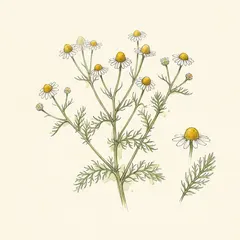 All books on Chamomilla →
Antidoted byAconitum NapellusAllium CepaAluminaAngustura VeraBelladonnaBorax VenetaCalcarea CarbonicaCamphoraChelidonium MajusCinchona Boliviana
All books on Chamomilla →
Antidoted byAconitum NapellusAllium CepaAluminaAngustura VeraBelladonnaBorax VenetaCalcarea CarbonicaCamphoraChelidonium MajusCinchona BolivianaGeneral
(The recent juice from the whole plant, to be mixed with equal parts of alcohol.)
Although the following symptoms do by no means pre- sent a complete list of the curative powers of Chamomilla, yet they are sufficiently numerous to show that Chamomilla be- longs to the class of the polychrests. For this reason Chamo- milla has been used in domestic practice for the cure of all sorts of recent affections. From a sort of ridiculous pride physicians have deemed Chamomilla inefficient as a remedial agent, and have permitted it in the shape of an infusion or injection sim- ultaneously with their prescriptions,' as if the character of Chamomilla as a domestic medicine deprived it of its powerful medicinal properties.
Physicians have also permitted, and do yet permit, the flowers of Chamomilla to be placed in warmed little bags upon painful parts, at the same time that the patients are directed to use internal remedies of a quite different nature. Teachers of midwifery and midwives permit their patients to mix almost every drink and nourishment which is given to the babies and nurses, with the tea of Chamomilla, as if it were a wholesome, never hurtful, or at the worst an indifferent and in- significant plant.
It is scarcely credible that physicians should have been so
' In order not to dishonor their elegant prescriptions by the appear- ance of such a vulgar name as that of the common Chamomilla matrica- ria, physicians have been in the habit of prescribing the more valuable Chamomilla Romana offic, without considering that this plant being a dif- ferent plant, and of a different species (Anthemis nohilis L.) it must have different properties and effects. What does a man who makes prescrip- tions out of mere names, care about the inherent medicinal properties of drugs 1
VOL. II. 2
2 CHAMOMILLA.
Utterly blind to the great powers and the objects of this plant, which it was their duty to investigate, not only for the purpose of learning themselves to employ it in a rational manner for the cure of disease, but also to prevent laymen from abusing it.
Physicians, on the contrary, have neglected their duty in this respect ; they seem to have vied with the ignorant lay- men in recommending the indiscriminate use of Chamomilla in every case of disease and in whatever dose the patient found convenient and agreeable.
And yet, any one that has but a small portion of common sense, comprehends that not any one medicine is capable of curing every disease, that every medicine must have a definite sphere of action, beyond which Chamomilla and any other me- dicinal agent, must be hurtful,, the more so the greater its pow- ers are. In order not to act like a quack, the physician ought not only to know the cases where Chamomilla would be use- ful, but he ought also to be able to point out the circumstances under which it would prove prejudicial ; he ought likewise to be able to determine the dose which would be neither too small nor too large for the nature and intensity of the affection which he desires to cure, and ought to cure with certainty and pre- cision.
The manner in which physicians have treated the chamo- mile, would be a sufficient evidence of the fact, that practition- ers have been living in an incomprehensible blindness for many centuries, and that they have not blushed to surpass the com- monest portion of mankind in folly.
Were the medicinal powers of a drug ever so various, they could not cure more than one-tenth of existing diseases, Cha- momilla not excluded.
But let us suppose the impossibility thaf Chamomilla has a curative effect in one-tenth of all existing diseases, does it not then follow that it must have been injurious in the remaining nine-tenths, for the cure of which it has been used indiscrimi- nately ? Is it wise to buy a single advantage by a nine times greater loss ? " What loss ?" replies the common practitioner ? •' I do not see that Chamomilla can do any harm." Indeed as long as he remains ignorant of the pathogenetic symptoms of Chamomilla, he cannot perceive the injury which Chamomilla may inflict upon the organism, and, in his ignorance, considers symptoms produced by that drug, as new phenomena of the disease, deceiving both himself and his patient.
Practitioners who are desirous of becoming acquainted with the true therapeutic properties of Chamomilla, will find them indicated in the subjoined fist of symptoms with sufficient ac-
CHAMOMILLA. 3
curacy to enable them to discriminate between ~the artificial morbid phenomena, produced by the excessive use of Chamo- milla, and the symptoms of the disease, and moreover, to learn that in those cases where Chamomilla was the proper, homoeo- pathic agent, the excessive dose of that drug did indeed remove the disease, but, at the same time, substituted in its stead a train of artificial morbid symptoms, whereas a small dose would have effected a cure without leaving a trace of its own medicinal ac- tion.
A drop of the third dilution is sufficient to a cure, in every instance ; in many cases it acts yet too powerfully.
Chamomilla has a short action, but a large dose acts for some days.
Antidotes are Coffea cruda, Ignatia, and Pulsatilla ; Aconite relieves tearing and drawing pains, when they are felt less during motion. Chamomilla is an excellent antidote to coftee, unless Nux v. corresponds more exactly to the symptoms to be removed. Persons who feel injurious effects from coffee whenever they take any, cannot be relieved by Chamomilla ; they must give up the use of coffee altogether,
A very small dose of Chamomilla seems to moderate ex- cessive sensitiveness to pain, or the disturbing influence which pain exercises in some persons upon the mind ; for this reason it relieves many of the morbid symptoms produced by the ex- cessive use of coffee and narcotic substances, and is, on the other hand, less beneficial to those who remain patient and composed during their sufferings. I consider this observation of great importance.
Recently I have seldom been able to employ Chamomilla as a remedial agent. Symptoms which seemed to point to Chamomilla were generally found to be produced by the abuse of Chamomilla, and had to be removed by antidotes.
FROM NOACK AND TRINKS.
According to Noack and Trinks Chamomilla is especially suitable to venous, bilious (and sometimes to scrofulous) consti- tutions and to the choleric temperament ; it is suitable for an irritated state of the nervous system, excessive sensitiveness to pain, inclination to spasms and internal grief, for an excessive bilious state induced by moral emotions, for the consequences from quarrel, anger, jealousy, vexation, and especially when these moral disturbances induce fits of anguish degenerating into the most violent spasms of the chest and throat ; or Cham.
4 CHAMOMILLA.
may be given for the ailments induced by chagrin with bursts of passion, especially when administered immediately (when not given immediately, Puis,, Ign., Nux v., Bryc, ought to be pre- ferred, according to Hartmann .) Hysteric females, or females in the climacteric age, pregnant females, lying-in women, nursing females, children, especially new-born babies and sucklings, are the fittest subjects for the use of Chamomilla. Affections of babies originating in moral disturbances of those who nurse them ; affections of babies characterized by green stools, colic, flatulence, restlessness and tendency to start, soreness under the arms and in the neighborhood of the genital organs ; the characteristic violent screaming of babies caused by violent pains in the abdomen, the screams lasting for hours, nothing can appease them, the babies bend double, and full of anguish, toss about on their mothers' arms ; they suffer with heat, the sweat of anguish breaks out in their faces, these symptoms being sometimes accompanied with diarrhoeic stools, emission of flatulence, etc., etc
Morbid phenomena brought on by colds Fainting Jits, a7id weaknesses of hysteric females Venous hemorrhages Spasms, especially of new-born babies, or of children during the period of teething, of pregnant females, lying-in women and hysteric persons ; convulsive condition of small children, with distention of the abdomen, greenish, fre- quent, white-hacked stools and vomiting of a sour-smelling liquid ; epileptic convulsions ; catalepsy after fright and cha- grin
Catarrhal affections with or without fever ; simple catarrh of children, with tenacious mucus which it is diflicult to get loose, cough (especially nightly), slight fever, great rest- lessness and nightly tossing about Acute rheumatism, with drawing or tearing pains, paralytic or numb feeling of the af- fected parts, (according to Hartmann Cham, is not suitable for muscular rheumatism ;) rheumatalgia Acute arthritis In- flammatory swelling and induration of tJie glands, (in sub- inflammatory conditions of the cervical and submaxillary glands, Hartmann prefers Dulcam. ;) induration of the mam- mary glands of new-born babies, or of full-grown persons when caused by a cold, or disturbance of temper ; erysipelatous in- flammation of the mammae inconsequence of fright or chagrin, (next to Phosphorus, according to Hartmann ;) sore breasts from weaning, and remaining nodosities
Strophulus (during dentition.) — Scarlatina miliaris Erythema intertrigo • sore skin of children, (when this affection is very obstinate' Gross recommends that the wet-nurse should take Graph, or Sulph. ;) sore nipples Erysipelatous inflammations ; erysipelas of the face with bilious complication, (brought on by tooth-ache ;) in-
CHAMOMILLA. 5
flamed chilblains with violent, especially burning pains, (also Arg., Puis., Snip.) — Variola, cough during the suppurative stage Rash of children and lying-in women Every wound inclines to suppurate Ulcers with stinging or burning pains, intensely painful redness round about, especially when aggra- vated by rheumatism
Ulcers in the mouth and of the tongue Feverish somnolence of children, with twitchings of the limbs, and starlings Intermittent Fevers, (see Boenninghau- sen's Essay by Dr. Hempel.) — Nervous fevers, characterized by diarrhoea, continual fermentation in the abdomen, fainting fits, convulsions, sleeplessness with anguish and vivid fancies, cold- ness of the whole body, and burning heat of the face ;
(in ner- vous fevers with diarrhoea, Schleicher recommends that the ChamonL should be given in alternation with Ars. ;) inflamma- tory and nervous fevers with delirium ; synochous or typhous fevers complicated with gastric or bilious symptoms ; (in this case Nux v. may also be used, especially when the gastric symptoms prevail.) — Gastric and bilious fevers, especially when brought on after violent chagrin or passion Sporadic cholera in children, (precededby Veratrum ;) Asiatic cholera in the stage of the precursory symptoms, especially when the tongue is coated with mucus, when accompanied by cholic in the umbili- cal region, oppresssion of the stomach extending as far as the pit of the stomach and combined with an indescribable anguish; or especially in children and weakly persons, when the attack is characterized by a fainting sort of nausea, moderate vomiting, green, watery diarrhoea and colic
Catarrhal fever Fever brought on hy teething Milk-fever Puerperal fever, the nervous system being greatly irritated, and characterized by vanishing of the milk, milky diarrhoea, excessive lochial dis- charge with labor-like pains from the small of the back to the front of the abdomen, headache and oppression of the chest
Hysteric and nervous headache ; headache with catarrhal con- ditions brought on by suppression of the cutaneous perspiration. Blepharospasmus Ecchyraoses of the eye ; hemorrhage from the eye Catarrhal ophthalmia
Inflammation of the eyes and lids of new-born babies, and when caused by a cold Otal- gia ; (also BelL, Merc, s., Nux v.. Puis., Rhus.) — Bleeding at the nose
Parotitis Difficult dentition with diarrhoea, fever, con- vulsions ; congestive toothache in the period of dentition ; toothache caused by the excessive use of coffee or by cold ; rheumatic toothache of one side, with violent, nightly exacer- bation, creeping darting, tearing, pricking, digging-up, corroding, grumbling, drawing, with swelling of the cheeks or the submax- illary glands, with burning sweUing of the gums, commencing
6 CHAMOMILLA.
after eating or drinking, aggravated by cold drinks or coffee ; lancinating toothache, beginning in carious teeth, spreading over all the teeth, and thence extending into the ear, aggravat- ed in the night or when at rest, improved by rising and by cold water Angina tonsillaris and pharyngea, with intense stinging, burning pain of the larynx, roughness of voice, op- pression of the chest, titillation inducing cough, inflammatory catarrhal affection of the tonsils and submaxillary glands
Gas- tric or bilious conditio7is caused by violent chagrin or other causes, with intolerable headache, red and hot countenance, vio- lent thirst, bitter taste in mouth, frequent bitter eructations, retch- ing, turning and griping in the distended pit of the stomach, op- pression of the chest and burning heat of the whole body Acid- ity in the primae vise of children, and diarrhoea resulting from it, etc. (in this case also Magn. carb. and Rheum.) — Spasm of the stomach in individuals who incline to internal grief: ach- ing pain with pressure in the stomach, as if a stone had got into the stomach, with shortness of breathing and anguish, sometimes with throbbing headache on the top of the head
Puerperal peritonitis Acute hepatitis Jaundice, with ill hu- mor, and a morbid irritability of the peripheral nerves, accom- panied with a disposition to inflammatory affections of the skin Abdominal sufterings of pregnant females, lying-in and nursing women
Abdominal spasms, especially flatulent colic ; colic, consisting of cutting, burning pains extending from the stomach to the umbilicus, with short breathing and pale coun- tenance Dysentery Diarrhoea, serous, catarrhal, rheumatic (also scrofulous and bilious, in the latter case the Cham, is tO" be preceded by Merc.,) watery, thin evacuations, yellow, green, or whitish mucus, without any smell, preceded and accompa- nied by tearing, cutting colic, which goes off with a sort of vio- lence and with emission of flatulence and leaves burning at the anus behind ; generally accompanied with dryness of the mouth and tongue, thirst, tension and bloatedness of the abdomen in- creased or excited by eating, followed shortly after by evacua- tions and sometimes slight fever ; diarrhoea accompanying dentition ; painful diarrhoea with measles ; disposition to, and precursory symptoms of inguinal hernia
Metritis Menstrual colic Threatening miscarriage Vehement, false labor-pains (also Hyosc, Cic, Ign., Bell.) — Violent after-pains
Suppres- sion of the secretion of milk Inflammatory condition of the air-passages Catarrhal cough Cough from teething,— Whooping-cough, with vomiting
Suffocative cough. Asth- ma spasticum et flatulentum, especially of children. Continual
rheumatic immobility of the upper arm ; Hartmann says that
he has cured a similar affection only when the pain became in- tolerable in the night in bed. — Ischias nervosa ; pains in the thigh, the whole thigh being weak, slow walk, sudden and entire paralysis and horrid pain, especially in the night. — Cramps in the calves.
Head
(Vertigo when stooping.) Vertigo, especially when talking (a. 16 h.) Vertigo after a meal.
Shortly after a meal, when walking, vertigo, as if the head were too heavy to main- tain its equilibrium. — 5.
Vertigo after taking coffee.
Vertigo in the morning.
Vertigo^ when rising from bed, as if one were intoxicated.
Vertigo with dizziness.' Vertigo in the evening, as if he were unable to collect his senses.— 10.
(Vertigo and dim-sightedness after lying down, with flushes of heat.) Ver- tigo as if one were fainting.
Slight attacks of vertigo with disposition to faint, {di. \ h.) (Dullness of comprehension.) a. 4, 5, 6 h.) Joyless dullness of sense, with droivsiness, without, however, being able to sleep. — 15.
He does not understand the question correctly, and gives a wrong answer, with a subdued voice, as if he were delirious, (a. 6 h.) He is easily worn out by reflection.
He does not understand any thing correctly, as if he were prevented by a sort of deafness, or a ivaking dream.
(a. 1^ h.) Absence of mind.
Vanishing of thoughts. — 20.
He omits whole words when writing or talking
He stammers and uses wrong expressions when talking, (a. 4 h.) Want of at- tention ; external things do not affect him ; perfect indifference, (a. 2 h.) Dull, aching pain in the head, when sitting or re- flecting.
Heaviness in the head. — 25.
Headache, the head be- ing heavy and feeling bruised, (a. 3 h.) Headache, felt even while sleeping.
Headache, in the morning when in bed and the eyes are yet closed, in a state of half waking ; it disappears entirely when waking and after rising.
Pain in the head as if it would burst, when waking, (a. 13 h.) Tearing pain in the forehead, returning^xby starts. — 30.
Excessively tearing pain in the head, about midnight, rousing him from sleep only mo- mentarily, the sleep being very sound.
Drawing head- ache on one side.
(a. 3, 4 h.) Tearing headache on one tem- ple.
Lancinating pain in the forehead, extending into the chest.
Bone-pain on both sides of tlie forehead, (a. 3 h.) — 35.
Tearings and lancinations in the temples from within out-
' Compare 232.
8 CHAMOMILLA.
wards.
Single stitches in one of the two hemispheres of the brain, especially the right, (a. 11 h.) Single violent stitches in the brain.
Violent stitches in one half of the head, as after a cold.
Stinging headache. — 40.
Pricking pain in the head, as if the eyes would fall out of the sockets.
Transitory at- tacks of throbbing in one of the hemispheres of the brain.
Throbbing headache, (a. 14 h.) Single beatings in the head.
(a. -J- h.) Darting pain in the forehead, especially after a meal. — 45.
Cracking in the left hemisphere of the brain.
The ^ left temple is swollen and painful to the touch, (a. 6 h.) Face #^ and hands' are bloated.
Eyes
Gnawing itching of the skin of the forehead.
The pupils become more dilated, after return of consciousness when waking from a nap.
(a. 7 h.)— 50.
Contracted pupils, with in- clination to contract still more.^ (a. several h.) Contracted pu- pils, (the first 4 h.) > Great dryness of the upper and lower Meibomian glands. ' (a. 1 h.) Sore feeling of the external canthi, and sore, excoriated lips.
(a. 36 h.) The canthi are full of pus in the morning. — 55.
Swelling and agglutination of the eyelids in the morning.
Agglutination of the eyelids after sleep.
Painless, ecchymosed condition of the inner canthus of the right eye.
(a. 14 h.
Pressure in the eyes, the eyes are in- flamed and full of gum in the morning.
Aching pain under the upper eyelid, when moving the eyes and shaking the head. — 60.
Violent stitches in the eyes.
Sensation as if fire and heat came out of the eyes^ (immediately.) Luminous oscillations before the eyes (immediately.) Obscuration of sight, on the sides of visual ray, when looking steadily at a white object.
In the niorning, the eyes are dim and dull, more rarely so in the eve- ning ; at candle-light a luminous ray appears to extend from the eyes to the light. — 65.
Dimsightedness, with chilliness.
Red rash on the cheeks.
Ears
Tearing in the ears, otalgia.
(Tearing in the right lobule.) Single, long stitches in the ear, especially when stoop- ing, accompanied with incfination to find fault, and getting an- gry about trifles.— 70.
A few stitches near the ear, in the neck.
When stooping, dull pressure in the ear, as if from a shock!
Sensation as if the ears were obstructed, and as if a bird had been fluttering and scraping in the ear.
Dull hearing in the evening.* (a. 24 h.) Humming in the ears, as from the rush- ing of water. — 75.
Tingling in the ears.
(a. 1, 3, 4 h.)
Nose
Bleeding from the nose.
Ulcerated nostrils!
The
' 46, 47, see 83, 96, 97. 2 See 392.
3 See 393. * See 391.
CHAMOMILLA. 9
lips become cracked and peel off.
(a. 16 h.) The middle of the lower lip cracks, (from 3d to 10th h.)— 80.
Scurfy ulcer- ations on the border of the lips, (from 1 to 4 hours.)
Teeth
Swellings of the gums.
Vacillation of the teeth.
Toothache with swelling of the cheeks.' At three o'clock in the morning a gnawing pain, as if the nerve were being scraped ; at seven he only feels a few jerks resembling stitches. — 85.
Grumbling and creeping in the upper teeth.
Grumbling
I and drawing toothache in the jaw. Drawing pain in the teeth.
I Toothache, as after a cold, when exposing one's self to the open air, being covered with sweat.
Toothache when taking warm things into the mouth. — 90.
(The toothache recommences in the warm room.) Toothache, which is especially violent af- ter warm drinks, especially coffee.
After taking something warm, (but sometimes also after taking something cold,) the toothache comes on, either immediately or in a few minutes.
Drawing pain of the teeth after eating or drinking.
Toothache after eating or drinking something of moderate temperature, (afterwards.) — 95.
When opening the jaws, pain as if the mas- seter muscles were affected with a painful cramp, which pain affects also the teeth.
Toothache, recurring by starts, with swelling of the cheeks and accumulation of saliva ; the pain darts hither and thither, and is aggravated by drinking cold water.
Tearing toothache, in the jaw, towards the ear, with swelling of the cheeks.
Drawing toothache, in the lower jaw, near the front part.
(a. ^ h.) Drawing toothache, without knowing what tooth is affected ; the pain goes off while eat- ing, and is especially violent in the night, the teeth feehng elongated. 2 — 100.
Single stitches in the jaw, extending into the inner ear.
Mouth, Pharynx, and (Esophagus : Cramp-like draw- ing pain in the palate, towards the fauces.
Vesicles with stinging pain, upon and under the tongue.
Severe smarting of the upper and hind part of the tongue and the velum pen- dulum palati.
(a. 1 h.) Simple pain in the posterior part of the throat, increasing when moving the throat and when swal-
' Comp. 96, 97. also 46, 47.
The toothache produced by Chamomilla (see 81 — 100) is similar to that excited by the excessive use of coffee ;
Chamomilla is therefore a specific and homoeopathic remedy for the lat- ter ache.
^ It is characteristic of Chamomilla-pains to be most violent in the night, when they frequently drive one to despair, and are frequently ac- companied with unquenchable thirst, heat and redness of one cheek, hot sweat about the head, even in the hair.
Chamorailla-pains generally seem intolerable.
(See 428.)
10 CHAMOMILLA. ^
lowing. — 105.
Sore throat as if a lump were in the throat, when swallowing, (a. 4. h.) Sore throat with parotitis.
Throbbing pain in the submaxillary glands, (a. 4 h.) Throbbing in the throat (a. -^ h.) Ptyalism. — 110.
Teeth covered with mucus.
Taste and Appetite : SUmy taste, (a. 2 and 12 h.) Sour taste, (a. 3 and 18 h.) The bread tastes sour.
Every aliment which he takes into his mouth, tastes to him like old, rancid grease, (a. 2 h.)— 115.
That which he hawks up, has a pu- trid taste.
(Putrid taste in the mouth in the night.) Fetid breath after dinner, (a. 3 h.) Bitter taste in the mouth, early in the morning, (a. 24 h.) Want of appetite.— 120.
Want of appetite, the appetite returns when eating.
No appetite.
He does not relish any food.
Aversion to food.
Want of appe- tite, as if he loathed food, which has, however, a good taste. — 125.
Neither hunger nor appetite.
(Aversion to broth.) Beer smells fetid to him.
Aversion to coffee.
Nausea, inclination to vomit, and suffocative fits after taking coffee for breakfast.— 130.
Heat over the whole body, early in the morning after taking coffee ; accompanied by sweat and vomiting of bitter mucus ; afterwards bitter taste in the mouth, weakness in the head and inclination to vomit.
Violent desire for coffee.' (a. 7 h.) (Desire for raw sour-krout.) Unnatural hunger, in the evening, (a. 3 h.) At supper the food seems to go down as far as the pit of the stomach and to be arrested there, with sen- sation of fullness, inclination to vomit, and eructations.
Gastric Symptoms : Empty eructations.
Sour eructations.
The existing pain is aggravated by eructation.
One single hiccough, frequently, (a. 1. h.) Fullness during the meal, and nausea afterwards.— 140.
Repletion of the stomach, after a meal, lasting even until next day ; inclination to vomit.
In- cHnation to vomit after breakfast, the whole morning.
Dis- tention of the abdomen, after a meal.
Nausea after a meal.
After a meal, repletion, anxiety and tearing pain in the back, extendmg afterwards into the abdomen.— 145.
Dryness in the mouth, early in the morning, followed by distention of the ab- domen, the evacuations being imperfect.
Inclination to vomit as if one would faint.
Qualmishness.
The qualmishness passes off by eating.
Inclination to vomit, with accumulation of saliva in the mouth.— 150.
Inclination to vomit, in the- morn- ing.
(Vomiting, without previous eructations.) (Sour vomit- ing ; a sour smell comes out of her mouth.) Regurgitation of the ingesta (a. 5 h.) Vomiting of the ingesta, caused, first, by the repletion of the abdomen, afterwards by intolerable
^ Seems to be an alternate effect of 12S.
CHAMOMILLA. 11
nausea. — 155. Heat and sweat of the face, after eating or drinking, (a. 14 h.) Pressure in the hypochondria and sto- mach, after a meal.
Stomach And Abdomen
He utters an anxious cry on ac- count of a pain in the pit of the stomach, as if the heart were being pressed down, and sweats profusely.' Painful bloated- ness of the epigastrium, in the morning. Incarceration of flat- ulence, with pressure upwards, in the hypochondria, (after- wards.) — 160. Oppression at the stomach, as if a stone were pressing downwards. Aching pain in the stomach, and under the short ribs, oppressing the breathing, especially after taking coffee, (a. 1 h.) Aching pain above the umbilicus.
Flatulent colic ; flatulence moves violently hither and thither, as if the ab- dominal muscles were on the point of being pierced, with rum- bling ; the flatulence presses especially towards the abdominal rings, when the colic subsides, only a little quantity of flatu- lence is emitted, nor can a«iy be discovered in the abdomen, (a. 3 h.) Flatulent colic, (a. 1 and several h.) — 165. Colic returning from time to time ; the flatulence accumulates in the hypochondria and stitches dart through the chest, (a. 8 h.) Continuous, tensive pain in the subcostal region, with tightness around the brain, (and dry catarrh in the chest.) (a. 1 h.) Bub- bling sensation in the side, down to the abdomen.
Bruised feeling of the abdominal muscles, (a. 9 h.) Hard, distended abdomen. — 170. Compressive pain in the abdomen (immedi- ately.) Intolerable colic, early in the morning, at sunrise. Excessive colic. Sensation as if the whole abdomen were hol- low, with continual motion in the bowels, (with blue rings around the eyes ;) when the attack comes on in the evening, it is accompanied for a short while with anxiety, (a. 24 h.) Colic, more cutting than pinching. — 175.
Colic, more cutting than pricking, with accumulation of saliva in the mouth. Drawing pain in the abdomen. Single attacks of violent pinch- ing in the abdomen, every attack lasting about one minute, (a. 12 h.) Pinching-tearing colic in the umbilical region, and lower down on both sides, with pain in the small of the back, as if it were broken. Continual tearing colic in the side of the abdomen, with sensation as if the parts there were rolled up into a ball. — 180.
Pain in the abdomen, such as is felt by per- sons who are costive, when pressing out the stool.^
Stool
Pain as from constipation, (a. 4 h.) Constipation.
' See 234, 236, 428.
2 180, 181, 182, 183. All pains, arising from costiveness, are second- ary effects, the primary being diarrhoea.
12 CHAMOMILLA.
Constipation from inactivity of the rectum, the prover being obliged to press out the faeces by bearing down with the abdominal muscles, (a. 1, 4 h.) Sharply pinching colic, with discharge of light-colored faeces, (a. 12, 24 h.)— 185.
(Undi- gested faeces.) (Hot, diarrhoeic stool, smelling like rotten eggs.) Painless, green, watery diarrhoea, a mixture of faeces and mucus.
Watery diarrhcea with (and without) diarrhoea.
Nightly diar- rhoea with colic, obliging her to bend double. — 190.
The faeces are covered with mucus, and mucus is passed between one piece of the fseces and the next.
Diarrhcea of white mucus with colic, (a. 1, 3 h.) Pricking pain in the rectum, after every stool.
Pressing towards the abdominal ring, as if her- nia would form.
(a. 3 h.) Sensation as if blind haemorrhoids would come on. — 195.
Flowing haemorrhoids.
Blind haemor- rhoids.
Itching pain at the anus.
(a. -^ h.)
Urinary Organs
(The emission of urine is prevented by pains in the abdomen.) Stitchftng pain in the neck of the bladder, between the acts of micturition, — 200.
Burning in the neck of the bladder, during micturition.
Smarting pain in the urethra, during micturition.
Anguish during micturition, with- out any mechanical obstacle.
Weakened strength of the blad- der ; slow and weak stream, (a. 20 h.) Anguish, with un- successful desire to urinate, without much urine being in the bladder. — 205.
Involuntary emission of urine, (a. 3, 4 h.)
Genital Organs : Itching of the scrotum, (a. 6 h.) Ex- cited sexual desire, (afterwards.) Nightly emission.
Erection in the morning. — 210.
Soreness of the border of the prepuce.
Itching-stinging pain of the margin of the prepuce, (a. 3 h.) Erosive burning in the vagina.
Yellow, corrosive, leucorrhma.
Acrid, watery leucorrhoea after dinner. — 215.
Pressure towards the uterus, like labor-pains, with frequent desire to urinate.
Cutting colic, and drawing in the thighs previous to the period.
Frequent discharge of coagulated blood, with tearing pains in the veins of the legs and violent labor-pains in the uterus.
Drawing, from the small of the back, followed by griping in the uterus, and discharge of large clots of coagulated blood.
Metrorrhagia. — 220.
Metrorrhagia, even of old females.
Out of humor and headstrong even unto quarreling, at the appear- ance of the menses.
Suppression of the menses, with disten- tion of the pit of the stomach, and a pain as if the heart were being pressed down, accompanied with swelling of the abdo- men, labor-like pains and anasarca.
Cold, Coryza : Obstruction of the nose.
(a. 1 h.) Ob- struction of the nose as from dry coryza, with discharge of muous from the nose. — 225.
Coryza for five to eight days.
(a.
CHAMOMILLA. 13
2 h.) Wheezing, whizzing, and subdued rattling in the tra- chea.
Hoarseness from tenacious mucus in the larynx, (a. 8 h.) Catarrhal hoarseness of the trachea, with dryness of the eyelids, (a. 1 to 8 h.) Hoarseness and cough, from ratthng mucus in the trachea ; the place from which the nm- cus has been hawked up, feels sore.
(a. 2 h.) — 230.
Burning in the throat.
Chest
Burning pain under the sternum, reaching to the mouth.
Burning in the chest, with dullness of the head,' as if he knew not where he was, with anxiety.
The inside of the chest feels bruised, (a. 24 h.) Aching pain under the sternum, not arresting the breathing, and neither aggravated by breath- ing nor by contact. — 235.
Aching pain under the sternum, oppressing the breathing, (a. 10 h.) Cardialgia.*^ Draw- ing pain, or sensation as if the right half of the chest were repeatedly drawn inwards, (a. 12, 16 h.) Contraction of the chest.
Oppression at the chest. — 240.
Tensive pain across the chest, when taking an inspiration.
Clawing pain, ob- liquely over the upper part of the chest, (evening.) (a. 5 h.) Oppression of the chest as from flatulence, becoming incarce- rated in the epigastrium, with aching pain ; accompanied by pain in the stomach, as in heart-burn ; afterwards burning in the spine.
Constriction of the upper part of the chest ; this symptom is accompanied with soreness when coughing, (a. 4 h.) Asthm,a as in suffocative catarrh, {constriction of the throaty) in the reg-ion of the pit of the throat, with cons ta7it de- sire to cough, (a. \ h.) — 245.
Fit of cough about midnight, she feels as if something had got into her throat which threatens to suffocate her.
Almost uninterrupted titillation under the up- lier part of the sternum,, without however cough being in- duced in every instance.
Dry cough, produced by titillation and continual itching in the trachea, about the pit of the throat, (a. 4 h.) Violent dry cough when sleeping, (a. 11 h.) Dry cough, four or five fits a day. — 250.
(The child becomes angry and coughs.) Stitches, irradiating from the abdomen into the chest, with constant thirst without heat, before midnight.
Stitches (rather dull) darting from the abdomen into the mid- dle of the chest, as if caused by flatulence.
Stitches from the abdomen into the chest, after starting as with fright, be it sleep- ing or waking.
Stitches in the side of the chest, under the ribs and scapulae, during an inspiration, (a. 4 h.)— 255.
Prickings in the chest.
Single violent stitches in the chest.
(a. 2, 4 h.) Stitches through the chest, at every inspiration.
1 See 8, 9, 13, 14, 15, 16, 17, as far as 23, 283. « See 157.
14 CHAMOMILLA.
Stitches from the middle of the chest to the right side, after every inspiration, (a.
I2 h.) Scirrhous hardness of the mam- mary glands. — 260.
Hard nodosity below the nipple, painful to the touch, sometimes affected with a drawing-tearing pain without being touched.
Tearing pain in the region of the cla- vicle and throat, (a. 2 h.) (Tensive stiffness of the muscles of the neck.) Drawing pain in the scapulae, chest and hands, as if from a cold.
(a. 15, 16 h.)
Back
Stinging pain in the back. — 265.
Tearing in the back.
Draiving pain in the back, for an hour.
(a. 1 h.) Con- tractive sensation in the spine.
Pain in the small of the back, especially/ in the night. — 270.
The small of the back feels bruised.
(A sort of furious labor-pains) from the small of the back into the thighs, a drawing-paralytic pain.
(a. 1, 2 h.) Painful stiffness in the loins, after sitting, (a. 16 h.) Intolera- ble pain in the loins and hip-joint, in the night, when lying on the opposite side.
Upper Extremities : Uninterrupted, fine, sensitively painful pressure in the ligaments and periosteum of the arm, from the shoulder to the fingers, similar to a drawing or tear- ing, (almost as severe without as with motion ;) worst in the night, especially when lying on the back, and least when ly- ing upon the painful arm.
(a. 8 h.) (after midnight.) — 275.
Creeping tearing in the long bones of the arms down to the fingers, as if the arm were numb or had gone to sleep.
When seizing something with the hand the arm, feels stiff, as if it would go to sleep.
Drawing-paralytic pain in the elbows and hands.
Drawing pain in the interior of the arm, from the el- bow to the tips of the fingers, late in the evening, (a. 1 h.) — 280.
Drawing pain in the wrist-joint.
Pain of the thumb and index-finger, as if sprained, strained, broken, over-fatigued, felt when moving it.
Burning pain in the hand, afternoon, (a. 72 h.) The hands are cold ; she feels a paralytic stiffness in the hands, with gloominess of the head ; she is sensitive to the open air, as if she could catch cold easily.
Cold hands with cold sweat in the palms of the hands, the body being naturally warm.
(a. 2 h.) — 285.
The fingers become cold, and incline to go to sleep, when sitting, (a. 1 h.) The fingers go to sleep, in the morning, (a. 12 h.)
Lower Extremities : Tearing pain in the thighs and legs.
Pain in the hip-joint, as if sprained, when standing up after sitting, (evening.) (a. 5 h.) Paralytic stiffness, with weakness, in the thigh. — 290.
Excessive pain in the thigh, when rising from a seat, or when stretching the legs in the re- cumbent position.
Transitory pain, as if bruised, in the thighs.
CHAMOMILLA. 15
(a. ^ h.) Cracking in the knee during motion, (a. 3 h.) Draw- ing pain from the knee through the leg, late in the evening.
Drawing-tearing pain in the knee, down to the malleoli. — 295.
Sensation in the legs as if they would go to sleep.
He is obliged to extend the legs from time to time, to become easy.
AVhen extending the feet too much, or when leaning them against something, he is attacked with cramp in the calves, abating when bendingj the knees, in the night, (a 8 h.) Cramp in the calves, (a. 10 h.) 'Inclines to cramp in the calves. — 300.
Tensive, cramp-like pain in the calves, when moving the feet, (a, 8 h.) Nightly, paralytic weakness of the feet ; they are weak, he cannot stand up, and when he does stand up, he falls down, with drawing pain in the leg, and numbness and pithy feeling of the sole.
The feet feel paralyzed.' Tearing pain in the feet, he cannot cover them.
Burning of the soles, in the night ; he puts the feet out of the bed. — 305.
Burning and itch- ing in the feet, as if they had been frozen, (a. 3 h.) Sudden swelling of one foot and of the sole.
Itching pain in the inte- rior of the heel.
(a. 3 h.) Itching of the sole of the foot.
Cramp-like contraction of the toes, with tearing pains in the limbs. — 310.
Sensation as if the toes would become curbed and numb, when sitting, especially the big toes.
(a. 1 h.)
General Symptoms : Great aversion to the wind.
Hands and feet become easily rigid in the cold, as if they would freeze, (a. 5 h.) Pain,' partly itching, partly stinging, here and there, at a small spot ; after scratching, the part feels sore.
(a. 4 h.} Eruption on the nape of the neck little elevated, causing a smarting sensation obliging one to scratch. — 315.
Pustulous pimples in the face ; they do not cause any pain, except when touched.
Red rash on cheeks and forehead, without heat.
Small, red spots upon the skin, the spots being covered with rash-pimples.
Thick clusters of red pimples upon a red spot on the skin, itching especially in the night, and somewhat smarting, in the region of the lumbar vertebrae and the side of the abdomen ; occasionally a shuddering is felt all around, es- pecially in the evening.
The skin becomes unhealthy, and every injury forms an ulcer. — 320.
An existing ulcer becomes painful, (a. f h.) Darting and lancinating pain in the ulcer.
Burning and smarting pain in- the ulcer, in the night, with creeping and excessive se?isitiveness to the touch.
Red-
' The paralytic sensation produced by Chamomilla in any one part, is always accompanied with drawing or tearing pain, and this drawing or tearinw pain is always accompanied with a paralytic or numb sensation in that part; see 271, 278, (274, 275,) 302, 329, (339, 346.)
16 CHAMOMILLA.
ness, swelling and bruised pain in the ulcer around the foot.
Itching pimples form round the ulcer, covered with scurf and suppurating ; the margin round the base of the ulcer is very red. — 325.
Cracking in the joints, especially those of the lower limbs, and pains in the same as if bruised, never- theless no real weariness, (a. 8 h.) Simple pain of all ihe joints during motion, as if they were stiti" and would break, (a. 6 h.) Bruised pain of all the joints, or as if worn out ; hands and feet have lost their strength, but without any real weariness.
Heaviness in all the limbs.
Pain in the perios- teum of all the limbs, with paralytic weakness. — 330.
Tearing pain in the limbs, which can only be appeased by constantly turning from side to side in the bed.
Evening-attack of tear- ing pains.
Single, rare, drawing, tearing jerks in the long bones of the limbs or in the tendons.
Fits, Weakness : Convulsive, single twitchings of the limbs, when on the point of falling asleep.
Twitchings in the limbs and eyelids. — 335.
Single twitchings of the limbs and head, during the morning slumber.
Convulsions of children : both legs alternately are moved up and down ; the child grasps at something, draws the mouth to and fro, with staring eyes.
The child lies insensible, with frequent changes in the coun- tenance, distorts the eyes, and facial muscles ; rattling in the chest, with much cough ; the child yawns and stretches the limbs.
General stiffness, for a short period.
Sensation of par- alysis in the parts, in which the pain had abated. — 340.
Wea- riness, especially of the feet.
(a. 10 h.) Weakness ; she wants to sit all the time.
(a. 5 h.) Dreads all kinds of labor.
Weakness which is greater during rest than motion ; he has tolerable strength during motion.
Excessive weakness in the morning when rising from bed. — 345.
Comfortable feeling af- ter breakfast, in a few minutes afterwards, faintish sort of failing of strength, (a. 8 h.) When the pain begins, he feels a weak- ness as if he would fall down j he has to lie down.
The child wants to lie down, does not want to be carried (a. 2. h.) The child does not want to stand up or to walk ; he cries dis- tressingly, (a. 4 h.) Excessive weakness and weariness, (a. 4 h.) — 350.
Fainting fits.
Qualmishness about the heart.
Faint- ing jits, recurring sooner or later, (a. ^, 3, 4, 5 h.) Kind of fainting; qualmish about the heart, the feet feel paralyzed all of a sudden, and the limbs feel worn out.
Heaviness of the limbs, yawning and drowsiness the whole day.
Sleep
Frequent wide yawnings, without drowsiness, with cheerful and merry mood.
(a. 1 h.) Frequent, incomplete yawning, (a. ^ h.) Drowsiness in day-time.
Drowsiness dur-
CHAMOMILLA. 17
ing a meal.
Excessive drowsiness, (a. ^ to 1^ h.)— 360.
When sitting he feels sleepy ; but when lying down, he is unable to fall asleep.
Nightly sleeplessness, accompanied by fits of an- guish ; vivid visions are hovering before his fancy, (a. 1 to 4 h.) AVhen waking up and being yet full of sleep, he mistakes one for some one quite different, (for some one bigger.) He imagines he hears the voice of absent j)e7S07is in the night.
In his sleep he talks about this or that obstacle to be removed. — 365.
In the night, while waking and shting in the bed, he says absurd things.
Sleep full of fanciful dreams.
Vivid dreams, as if he were doing something in a state of waking.
He delivers discourses in a dream, with vivid memory and re- flection.
Moaning when asleep. — 370.
Weeping and howling when asleej).
Q,uarrelsome, vexatious dreams.
Sleep appears troublesome fo him ; when he sleeps, his face looks gloomy, vexed and sad.
He starts in his sleep.
Starting, uttering sud- den cries, tossing about and talking while asleep, (a. 6 h.) — 375.
In the night he turns anxiously from side to side in his bed, full of fancies.
He cannot remain in bed.
He feels in excessive anguish when in bed, but none when out of it ; ac- companied with great mobility of the pupils.
The nightly pains may be moderated by warm poultices.
(The nightly- pains are relieved by sitting up in the bed.) — 380.
Snoring breathing when asleep.
Snoring inspirations when asleep; they are shorter than the expirations, the moutli being some- what opened, and the forehead being covered with hot, viscid sweat, (a. 3 h.) Moaning when asleep, with hot, viscid sweat in the forehead.
Coma vigil, or rather inability to open the eyes ; slumber without any sleep, quick expiration and tearing headache in the forehead, with inchnation to vomit, (a 1-^ h.)
Fever
Shuddering of some parts, which are not cold, with drowsiness, (a. 2-^ h.) — 385. He feels a shuddering in some parts, in the face., (a. jr h.) over the arms, (a. 2 h.) with- out or with external coldness. He is cold, with thrills of shud- dering from the back to the abdomen, (a. 1 and 4 h.) He shudders when uncovering himself Chilliness (immediately.) Thrills of shuddering in the open air. (a. 2 h.) — 390.
Cold- ness, in the evening when lying down, a sort of deafness, the sound appearing to come from a distance, inclination to vomit, uneasiness, tossing about in the bed, a sort of stupefaction of the head and diminished sensibility of the skin, the skin feel- ing numb and pithy when scratched. Icy coldness of the cheeks, hands and feet, with burning heat of the forehead, neck, chest; then again heat and redness of the right cheek, hands and feet becoming again naturally warm, with contrac-
VOL. II. 3
18 CHAMOMILLA.
tion of the pupils, the dilatation ceasing altogether ; afterwards sleep with snoring, (a. 1 to 3 h.) Coldness of the whole body with burning heat in the face, the eyes shining like fire.
Cold limbs, with burning heat in the face, burning heat in the eyes and burning breathing, (a. 5 h.)— 395.
(Violent, internal chilli- ness, without coldness of the outer parts, except the feet, with thirst; afterwards great heat with sweat; when putting an arm from under the cover, she feels chilly, and when putting it back again, she sweats ;
Avith tearing in the forehead.) (Chilliness all over, after a meal, afterwards heat in the cheeks.) Shuddering, on the back part of the body, arms, thighs and back, returning by starts, without external coldness, in the place of which he feels a dry heat within, and also without, especially on the forehead and in the face ; chilliness on the front part of the body.
(a. | h.) (Fever: during the chilly stage he is obliged to lie down, thirst during the chilly, none during the hot stage; sweat after the heat; during the sweat prick- ing headache in the left hemisphere of the brain ; next morn- ing bitter taste in the mouth.) — 400.
Chilliness in the afternoon, (uttering words which it was not his intention to utter,) with nausea in the abdomen, lasting until 11 o'clock at night, ac- companied by a throbbing-stinging headache in the forehead, aggravated by lying down.
(Fever : chills in the afternoon ; he is unable to get warm, with ptyalism, bruised pain in the back and side, and dull, aching pain in the forehead ; next night excessive heat with violent thirst and sleeplessness.) Chilliness in the evening ; much sweat and thirst in the night.
Burning cheeks in the evenings with thrills of chilliness.
Redness of one cheek, recurring hy starts, without shudder- ing or internal heat.
(a. 4 to 12 h.) — 405.
Internal heat with shuddering.
External heat with shuddering.
When laying himself upon his back, before midnight, he leels hot at once and sweats all over.
(a. 6 h.) The lips were dry in the night, and adhered to one another, without thirst.
Thirst, with fe- verish heat and redness of the cheeks. — 410.
Glowing heat of the cheeks, with thirst.
Feverish heat and redness of the cheeks, with tossing about and delirium, e^^es open.
Sensa- tion of external heat, without there being any.
(a. 1 and 3 h.) Feeling of heat, without any external heat, or without thirst.
Dry tongue, desire for water, want of appetite, flushes of heat, sweat in the face, palpitation of the heart, followed by an un- natural hunger. — 15.
Unquenchable thirst and dry tongue, (a. 5 h.) Thirst in the evening ; in the night he is waked by a pain.
He cannot bear being covered, on account of feeling hot externally.
(General morning-sweat, with smarting sensation
CHAMOMILLA. 19
of the skin.) General night-sweat, without sleep.— 420.
Sweat in the face, on the neck and hands, (a. 6 h.) Sweat during sleep, especially about the head.
Frequent, transitory sweats in the face and palms of the hands.
Involuntary moaning during the heat in the face.
Repeated attacks of anguish in day-time.— 425.
Anguish as if he had to go to stool.
Trem- ulous anguish, whh palpitation of the heart, (a 1. h.) Con- gestion of blood to the heart (immediately.) Excessive rest- lessness, anxious, agonizing tossing about, with tearing fains in the abdomen, (a. 1 h.) Afterwards dullness of sense and intolerable headache.
Moral Symptoms
Hypochondriac anxiety. — 430.
Car- dialgia, he is beside himself Avith anguish, moans and sweats profusely.
Crying and howling.
(Fits for some minutes, every two or three hours:) the child makes himself rigid, bends backwards, kicks with his feet while carried upon the arm, screams immediately, and throws every thing off.
Weeping un- easiness ; the child wants this and that ; when the things are given to him, he does not want them, or repels them.
(a. 4 h.) The child is not still till carried on the arm.— 435.
Distressing howling of the child, because the things which he desired were refused.
(a.3h.) Very anxious; nothingof what she undertakes is satisfactory ; she is irresolute ; flushes of heat in the face and cool sweat in the palms of the hands.
Tremulous tendency to start.
He inclines to start, (a. 24 h.) He starts at the least trifle.— 440.
Crying on account of a very trifling and often imaginary offence which frequently is very old.
Is unable to stop talking about old, vexatious things.
He suspects that he had been olfended.
His hypochondriac whrnis and his ill hu- mor about the least trifles, seem to him to proceed from dullness and heaviness of the head, and constipation.
Ill humor after a meal.— 445.
Ill humor for two hours.
Peevishness and ill humor ; he is dissatisfied with every thing that others do.
In- ternally he feels vexed about every trifle.
He inclines to be angry and out of humor.
Angry at every thing, with asthma. —450.
He cannot bear being spoken to, or interrupted, espe- cially after rising, the pupils being scarcely moveable, either for dilitation or contraction.' (a. lOh.) She cannot bear music.
Excessively sensitive to all odors.
Irritated mood.
Peevish,
' (See 69) The following symptoms, immediate consequences of vio- lent ano-er and resembling an acute bilious fever: flushes of heal, un- nuenchTiblc thirst, bilious taste, inclination to vomit, anirmsh, restlessness, etc correspond to the symptoms of Chamomilla. One drop of the above mentioned dilution cures these symptoms as by a charm.
20 CHAMOMILLA.
inclining to be quarrelsome, (a. 12 h.)— 455.
Inclining to be quarrelsome and angry, (a 2 h.) She seeks a cause for quar- reling, (a. 3 h.) Moaning and groaning from bad spirits, (a 5 h.) Taciturn ; does not talk except Avhen forced, (a. 6 h.) (Full of scruple about every thing.)— 460.
Earnest and taciturn ; resigned to his fate, which he feels deeply (after- wards.) Fixed ideas (afterwards.)
Head
Giddy when sitting straight, not when lying down.' Dullness of head.
Heaviness in the head.
(Tearing pains m the forehead, with sensation as if a lump were falling forwards, when sitting up or turning in the bed.)— 5.
Wrinkles on the forehead.
Eyes
Luminous oscillation before the eyes ; she saw- not where she was. Obscuration of sight.
Mouth and Gastric Symptoms : Red tongue. Vom- iting.
Stool
10. Stool.
Chest
Short, panting breath.
Short, deep breath, with great heaving of the chest.
Sudden stitches about the heart, oppressing the breathing during motion.
Extremities
The left arm goes to sleep. — 15.
Tension in the knee ; tension in the feet, along the calves.
She has to draw up the feet, owing to a pain in the calves and knees ; they go to sleep when stretching them.
Sleep and Fever : Early in the morning, when in bed, the eyes are half open, turned downwards, the pupils somewhat dilated, sopor.
Violent desire for water.- —20 Constant alterna- tion of heat and coldness in different parts ; the hands are now cold, now warm ; now the leg, now the thigh is cold or warm ; now the forehead is cold and the cheeks hot, etc.
Violent chil- liness immediately after uncovering one's self.
Even the slightly covered parts are burning hot, the uncovered parts are cold.
Excites a smarting heat.
Horrid feeling of heat in the night, with burning, unquenchable thirst, dry tongue, stupefac- tion. — 25.
Hot face with redness of the cheeks.
Great heat in the night, with sleeplessness.
General heat, in the forenoon from nine to twelve o'clock ; afterwards violent sweat.
Vio- lent sweat of the covered parts.
Weeping mood and discour- agement ; with sleeplessness owing to a general bruised feel- ing in all the limbs. — 30.
Her head totters to and fro.
Moral Symptoms : She sits like a statue, and does not seemto take notice of any thing roundabout, (a. 24h.) Taci- turn. Aversion to talking ; is very short.
In a girl of nineteen years, from a few cups of tea of chamomile.
CINCHONA. 21
CINCHONA.
(Next to Opium there is no medicine which has been more abused to the detriment of mankind than Cinchona. It has not only been consider- ed as harmless, but it has been employed as a specific against weakness, and has frequently been given for months, in large doses, several of which were taken every day.)
In the use of Cinchona physicians have constantly started from a false principle, and have thus confirmed the accusa- tion which I have brought forward against them before the enlightened portion of the public : that the generality of phy- sicians, have omitted to perceive that medicine is, by its object and nature, a science derived from and based upon experience, and that they have substituted delusive conjectures, theoretic dogmatism and accidental opinions in the place of impartial observations, pure experiments, and the wisdom acquired by practice.
Avoiding conjectures, and traditional, unverified opinions, I determined to ascertain by experiment the pathogenetic action of Cinchona upon the human bodj'-, and I found that, as cer- tainly as it cures certain cases of disease, as certainly may it produce morbid symptoms of the most violent kind in the hu- man organism, and lasting a long while. By this means I have refuted the erroneous notion which has been hitherto enter- tained of the harmlessness, innocent mildness and universality of the curative powers of Cinchona.*
' As early as the year 1790, (see W. Cullen's Materia Medica, Leip- zic, p. 109, Note,) I tried Cinciiona upon myself, for the sake of ascer- taining the relation existing between intermittent fever and the pathoge- netic action of Cinchona. This first trial was the dawn of that br ght light which now shines in the treatment of disease ; it led me to establish and to demonstrate the law that diseases can only be cured by remedies the pathogenetic action of which upon the healthy body is similar to the symptoms of the disease.
This law is so true, that all the venom which thousands of prejudiced practitioners have poured forth against it, is no more able to efface it, than the vile slanders of Riolan and Co. have been able to nullify Harvey's great discovery of the circulation of the blood. The opponents of Harvey's sublime discovery fought against him with the same wretched arms that they now employ against Homoeo- pathy. Avoiding, just as much as my own opponents to repeat Harvey's experiments in a faithful and correct manner, (lest they should be con- victed of error,) they relied upon slanderous vituperations and the re- mote age of their error, (for Galenus and his predecessors had arbitrarily established the feet that a sort of spiritual ether, nnv/na. was floating through the arteries, and that blood did not originate in the heart, but in
*
22 CINCHONA.
In looking over the subjoined list of symptoms, which have been elicited from Cinchona by conscientious and healtiiy pro- vers, it will be seen that the pernicious effects of that drug, and the frequently incurable aggravations of the original disease produced by prescriptions of which Cinchona was the chief ingredient, were owing to the excessive quantity in which the drug was administered, and because it was not suited to the case. Previous to these provings, physicians did not know that the aggravations which they, in their kindness to them- selves, mistook for a natural and unavoidable development of the disease, were medicinal symptoms inlierent in Cinchona.
But I forbear censuring those who have abused Cinchona, and I proceed to lay my own views of the nature and action of that drug before my readers :
1. Cinchona is one of the most powerful vegetable drugs. If Cinchona be indicated as the true specific, and if the pa- tient's organism be vehemently invaded by the disease which is to be cured by Cinchona, in that case one drop of the 12th potency of Cinchona, containing one quadrillionth part of a grain, is sufficient to cure the disease perfectly, without another dose being necessary, except in very rare cases. I was led to the use of such small doses neither by prejudice nor caprice ; experience and observation induced me to abolish the larger doses, which, even when they cured, acted still more power- fully than was necessary.
I therefore substituted smaller doses in their places, and continued to reduce the doses until I had arrived at a point in my subdivisions of the original substance, where the curative action of the dose was justly proportioned to the disease, without producing any unnecessary medicinal symptoms.
2.
A small dose of Cinchona acts only a short while, scarcely a few days ; a large dose for several Aveeks, unless the organism frees itself from the drug by vomiting, diarrhoea, etc.
This shows how foolish it is to take several large doses a day, as is the case in common practice.
the liver,) and they exclaimed: Malo cum Galeno errare, quam cum, Harveyo esse circulator. This infatuation, this obstinate boasting of the antiquity of cheir illusions, (some thirty years elapsed before Harvey enjoyed the satisfaction of seeing his doctrine universally recognized ) was not more foolish than the existing infatuation and gratuitous rancor against homoeopathy which exposes to the world the injurious rubbish of old and new arbitrary and untenable rules of practice, and teaches the great art of curing diseases speedily, mildly and permanently, with the certainty of success, and agreeably to the answers which interrogated nature makes with precision to the questions addressed to her by her disci- ples.
CINCHONA.
3. If the homoeopathic law be correct, which is the case ; if it be a truth founded in nature that diseases can only be safely and permanently cured by remedies the pathogenetic symptoms of which are similar to those of the disease, we shall find, in looking over the symptoms of Cinchona, that this drug will cure only a small number of diseases.
When I say " c?«-e," I mean a recovery undisturbed by sec- ondary ailments. Or do practitioners attach a different mean- ing to the word '' curing,^'' which is unknown to me ? Do they mean to consider intermittent fevers, which had been sup- pressed by means of Cinchona, cured? I know that almost all typical diseases, and also all intermittent fevers, although they do not correspond to Cinchona, may be suppressed by powerful doses of Cinchona ; but does this suppression mean that the poor sufferers are cured ?
Has not their original dis- ease been converted to a worse one, which does not, indeed, return at separate periods of an equal duration, but which is continuous, though more concealed ? The patients do no more complain of the regularly outbreaking type of the fever ; but behold the livid color of their bloated countenances, the dimness of their eyes ! Behold how asthmatic they are ; be- hold their hard and distended abdomen, the hard swelling of their loins, their lost appetite, their repulsive taste, the oppres- sion which every nourishment produces in their stomachs ; behold their undigested and unnatural stools, their anxious, unrefreshing sleep, interrupted by all sorts of dreams !
See, how they crawl about, as it were, faint, joyless, desponding, susceptible, out of humor and stupid, tormented by a greater quantity of ailments than was caused by their intermittent fever ! How long does such a Cinchona-disease frequently last, which can only be relieved by death !
Is that health ? It is not intermittent fever, I grant ; but I say, and I challenge contradiction when I say so, it is not health ; on the contrary, it is another and worse disease than intermittent fever ; it is a Cinchona-disease, worse than in- termittent fever, otherwise this could not have been suppressed or rather suspended by it.
And even if the organism recovers from this Cinchona- disease in a few weeks, in this case the intermittent fever re- appears in a worse form, the organism having suffered so much.
If then Cinchona be continued in larger doses, in order, as is said, to prevent future attacks, in this case a chronic Cinchona-cachexia is formed, the symptoms of which will be found feebly delineated in the subjoined list.
Our physicians, not knowing when Cinchona is suitable,
24 CINCHONA.
their cures by means of Cinchona are suppressions of the ori- ginal affection by exciting a more violent Cinchona-disease, which is said to be a development of new symptoms, and a proof of the obstinate and malignant nature of the disease, the genuine symptoms of Cinchona not being known.
Physicians who are unwilling to lull their consciences to sleep, and whose hearts still vibrate for the well-being of their fellow-men, may learn from the subjoined list of symptoms, under what circumstances and in what conditions of the sys- tem Cinchona can be used with benefit and success.
There is one species of abuse of Cinchona bark which is absolutely intolerable and unjustifiable ; it is practised by the adherents of the pretended rationalist school in medicine, in giving Cinchona for every sort oi weakness.
There is no disease which does not bring on a state of weakness either by its own influence, or by the pernicious and exhausting influence of the unsuitable mixtures which are em- ployed as curative means. For such states of weakness Cin- chona has been given in large doses, in the shape of an infu- sion, decoction, extract, electuary or powder, the patient being treated with Cinchona for weeks and months, as if it were really conducive to his preservation. I shall say nothing of the results of such treatment. Let the bills of mortality testify to the havoc that has been produced by the abuse of Cinchona, and let those innumerable wretches utter their complaints, upon whom the abuse of that substance has entailed asthma, swell- ings, jaundice, pains of every kind, spasms, degenerations, abdominal sufferings and hectic fevers.
Let me appeal to the conmion sense of those practitioners, and ask them how they can dare to use bark in that host of diseases which are characterized by weakness, either per sc, or where it has been superadded by the so-called regular treat- ment ? How can they imagine that a sick man can be strength- ened whilst he is yet suffering with his original disease, which is the source of his weakness ? Have they ever seen a patient recover from his original disease by the use of a really suitable remedy, who did not recover his strength in proportion as the disease left him ?
But if the weakness of the patient can only be removed by curing the disease, and if, on the other hand, that weakness must necessarily remain with the disease, how wrong and absurd must it appear to every intelligent man, that an attempt should be made to strengthen the patient by 'bark and wine, whilst the disease is yet upon him ! These prac- titioners are unable to ewe the patient, but they undertake to strengthen him, even when left uncured. If bark have power
CINCHONA. 25
to invigorate every patient, in that case it ought also to be a panacea for all diseases ! But the attempt to restore a patient's strength \t^hile he is yet under the influence of disease, is ex- tremely foolish.
It is true that, by the first doses of bark, the vital powers of the patient, were he ever so sick, are somewhat excited ; he raises himself in his bed alone ; he wants to get np and be dressed ; his voice becomes stronger, firmer ; he attempts to walk about the room ; he puts on a cheerful countenance ; he feels a sort of appetite, — but every careful and correct observer sees that this excitement is unnatural. (See below note [565.]) In a few hours the patient sinks back into his disease more deeply than ever, and death is frequently hastened on by such treatment.
The strength which is imparted to the patient by artificial stimulants, must be and will always be accompanied by the most pernicious consequences, except in those few cases where the totality of the symptoms corresponds to the symptoms of bark. In this case the weakness necessarily disappears together with the disease. But, as was said before, there are but few diseases in which Cinchona is a proper curative agent, curing speedily, permanently, and without leaving any secondary symptoms.
In all the other cases Cinchona must prove the more hurtful, either as a remedial or strengthening agent, the larger the doses in which it is administered. This is also true of any other agent improperly administered. ^
In order to administer a drug, Cinchona or any other, with benefit to the patient, physicians must, in the first place, ascertain its pathogenetic symptoms ; otherwise the patients will be injured more than benefited.
Wherever Cinchona is used as the true, homceopathic, cura. tive agent, (not in accordance with theoretical views, deceitful names, or the seductive authority of prejudiced leaders,) there it will impart strength to the patient ; it strengthens the pa- tient by removing the disease ; strength can only be supplied by the organism when it shall have been freed from disease; it cannot be infused as so much matter by a decoction of Cin- chona, or by wine.
There are cases where weakness is, so to say, the disease itself. Such cases are : weakness from the loss of humors, from hemorrhage, excessive blood-letting, excessive galactirrhoca, ptyalism, loss of semen, excessive suppuration, (copious sweats,) and frequent diarrhea ; in all those cases the other symptoms of the patient generally correspond to the symptoms of Cinchona. (See the notes to 299 and 326.) If these losses be not kept up
26 CINCHONA.
by some disease lurking in the back-ground, a few small doses of Cinchona, of the size mentioned above,' are sufficient to the cure, provided the action of the medicine is supported by nour- ishing diet, free air, cheering social intercourse, etc. Frequent and large doses would be as hurtful in this case, as the exces- sive use, even of the best things in the world, is hurtful in every instance.
' I mean to say here, as elsewhere, that minute doses are sufficient under certain, circumstances. Nevertheless common practitioners per- severe in misunderstanding me, because they do not know that a cure can be effected with one single, simple remedy, when no other artificial stimuli influence the treatment. They are instinctively prone to mix up, in idea, the proposed treatment by means of one remedy, with their usual accompaniments of stimulating substances. Even when a physi- cian sometimes prevails upon himself to give a patient suffering with an acute disease, one remedy at a time, nevertheless he accompanies it with all sorts of medicinal substances, considering them as mere domes- tic remedies.
He cannot get along without resorting, as accompani- ments, to a poultice of aromatic or dissolving herbs to lie applied to the affected part, (as if these herbs did not act upon the olfactory nerves of the patients and did not influence the system generally through the skin ;) or to a liniment, fomentation, gargle, mustard-plaster, vesicatory, baths either entire or partial, injections of Valerian, Chamomile, etc., (as if ail this amounted to nothing, and did not influence the general state of the patient through the skin, mouth, rectum, etc. ;) or to a tea of mint, chamomile, juniper, or so-called pectoral herbs, etc., (as if a decoction of* such herbs or flowers had no power.) In company with such accessory substances, Which, although they are looked upon as innocent, domestic remedies, are nevertheless violent medicines, the drug which is adminis- tered internally, even when given in a large dose, cannot possibly exert its genuine action, and a small homoeopathic dose would so much the more be ^vithout effect.
By administering only one remedy at a time, sensible men understand that the remedy shall he administered without any accompanying medicinal injliiences. To prescribe in this way it is neces- sary that a physician should know what is truly medicinal, and what not. As long as he is unable to distinguish these two orders of sub- stances, he must necessarily look upon herb tea, herb injections, herb poultices and baths, salts, etc., as non-medicinal. This point is still much more neglected in the treatment of chronic diseases.
Beside the medicine, the patient is permitted: spiced beer, vanilla chocolate, some- times even strong coffee, hyson, bishop, (under pretence of strengthen- ing the stomach.) liquors, all sorts of spices and spiced sauces — these things being supposed to merely strengthen the stomach without estab- lishing any medicinal influence — chopped herbs, wine, tooth-tinctures, tooth-powders composed of medicinal ingredients, and which are never- theless considered harmless because of their not being swallowed, as if medicines, when simply taken into the mouth or inhaled, did not act upon the whole organism through the irritable living fibre, just as much as when swallowed and brought into the stomach ! — and moreover a num- ber of perfumes: ambra, rose-water, peppermint, lavender, neroli, oil of cedar, eau de cologne, etc., besides smelling-bottles, scented soap, pow-
CINCHONA. 27
The usefulness of Cinchona in the treatment of diseases resuhing from the loss of humors, has led the older physicians as by instinct to a method of cure which has become more pre- valent than any other, the depleting treatment. Under pre- tence of loosening the morbid matter, and removing it from the body by means of frequent doses of so-called dissolving cathar- tics, by means of an increased secretion of urine and sweat, (through quantities of warm drinks and tepid and warm baths,) by venesection and bleeding, ptyalism, expulsion of pretended impurities through issues, setons, etc., the organism is weakened and even broken down. If this treatment had been kept up a sufficient length of time, which became an easy business, owing
ders, pomatum, and many other refinements of that sort. Is such a chaos of medicinal extras necessary or even only useful to the recovery of pa- tients and the maintenance of health ? It inflicts a thousand injuries, and has perhaps been invented by physicians for the sake of spoiling and stimulating the organisms of fashionable people. It is a shame that physicians should wink at the ruinous use of such articles of fashion.
This confused commingling of stimulating essences, tinctures, powders, both those consecrated at the shrine of fashion, and those introduced by the physician as concomitants of the leading remedies, has become so customary that no physician would dare to think of one remedy being able to cure disease, especially when this remedy is administered in a homcBopathic dose. Conradi, in his " Outlines of Pathology and Thera- peutics,'''' must have had reference to such a method of cure when he says that the action of such small doses, insisted upon by me, exceeds all belief.
If Conradi had known that the accessory stimulants which are used in common practice, exercise a powerful medicinal influence, he would not have made that remark. The diflerence between adminis- tering a remedy with or without those stimulants, is immense.
Whereas the gourmand after rising from a dinner, would scarcely perceive the sweetness of a grain of sugar upon his tongue, irritated by spices, the man who is satisfied by simple fare, would taste that sweet- ness in the morning to an excessive degree. In the midst of the move- ment and tumult of certain quarters of a city we may not even hear the- words Avhich a friend may shout into our very cars, whereas, in the depth of a silent night, we should even hear one single note of a flute at a great distance.
In the same way does an organism which is perfectly free from me- dicinal influences, perceive the slightest impression imparted to it by a remedy which corresponds to the symptoms of the disease by which the organism has become affected.
Small doses are so much more certain to exercise their specific effect, as the organism does not expel them by force ; whereas a large dose is expelled by vomiting, purging, by the bladder, by sweat, etc.
May I, in conclusion, hope that that which has been said above, will suffice to show practitioners, that homoeopathic medicines can perform the wonders which are claimed for them, only when their influence is left undisturbed by other stimulating agents ?
28 CINCHONA.
to the favorite use of mild cathartics, two things resulted from it : First, the irritation of the intestinal canal was kept up un- til the acute disease, which was hushed by that artificial irri- tation, had run through its natural course : and secondly, a state of weakness was induced by the depleting treatment, which could only be removed by Cinchona ; how this final cure was obtained, no one saw. In the same way, the ordinary tertian fevers of spring, and most other intermittent fevers, which run through their course in a few weeks, were protracted into months of rational (?) treatment, and, in the end, the igno- rant patient was glad to escape with his life, whereas a truly scientific cure might have been effected in a few days.
Hence the constantly repeated warnings in the so-called practical \vritings, not to give the bark in intermittent fevers, till all (pretended) impurities should have been washed out of the system, or, as modern practitioners term it, till the morbid matter should have been sufficiently dissolved, or, in other words, till the patient should have been sufficiently purged, which, in fact, amounts to this, that the artificial intestinal irritation ought to be kept up long enough to last longer than the natural dura- tion of the fever, and that the weakness consequent upon that loss of humors, should afterwards be cured by Cinchona.
This is what physicians call treating a disease methodically and rationally in very many cases.
It would be just as proper to rob widows and orphans for the purpose of building a poor-house out of the proceeds.
The primary effect of Cinchona is to open the bowels, (see 178 ;) hence it will cure certain kinds of diarrhoea, provided the other symptoms correspond.
In cases of humid gangrene on the outer parts, the other symptoms of the disease will be generally found to correspond to the symptoms of Cinchona ; hence it will cure that condi- tion.
The frequent and morbid excitement of the sexual organs, resulting in an involuntary emission of semen, and caused even by slight abdominal irritations, is permanently relieved by Cinchona.
Pain, which is excited by merely moving the affected parts, and which gradually rises to the most fearful height, and is in general similar to the pain produced by Cinchona, has fre- quently been cured by a single drop of the 12th dilution of Cin- chona, even when the attack had returned frequently ; the pain disappeared as by enchantment.
Cinchona being homoeopathic to that symptom.
(See note to [426.])
CINCHONA. 29
Bark will scarcely ever be found useful except when the nightly rest of the patient is disturbed similarly lo the disturb- ance which characterizes Cinchona.
Some cases of suppuration of the lungs (especially when characterized by stitches in the chest, increased or excited by pressure from without,) may be cured by bark, if all the other symptoms correspond. In that case a few doses of the above mentioned dilution, Avhen given at long intervals, are sufficient to a cure.
Certain forms of jaundice may likewise be cured by Cin- chona as their homoeopathic type.
Certain forms of intermittent fever are cured by one dose of bark, when all the symptoms correspond, and the dose is given directly after the attack, previous to the preparations for a new paroxysm having been accumulated in the system. In order to suppress the type of an intermittent fever to which Cinchona is not homoeopathic, it is customary to administer large doses shortly before the paroxysm sets in, in which case that violent suppression is more easily accomplished.
Marsh-intermittent can only be cured by Cinchona when the patient remains out of the fever-region during the whole of the treatment. The cure is impossible while the patient re- mains constantly exposed to the cause of the disease.
The attempt has been made to substitute drugs in the place of Cinchona, which has, however, a peculiar and perfectly cha- racteristic influence open the human organism. But how fool- ish to suppose that the medicinal virtues of Cinchona can be inherent in another totally different substance ! Is not every animal, every plant and mineral something individual and per- fectly distinct from all other beings of the same order ? Will a Cinchona-tree ever be confounded with a willow, or an ash, or a chesnut ?
And if these things are so different even on their surfaces, where the difference is only perceived' by one sense, the eye, shall their internal difference, their different and peculiar action upon the living organism, remain unheeded ? Is not this difference the highest which distinguishes one cre- ated substance from another in reference to man ? Or shall we with Cullen and others consider every thing Avhicli has a bitter and astringent taste, equivalent to Cinchona, something like Cinchona ; and shall we set up the sense of taste, which is scarcely fit to discriminate between the taste of one substance and another, as the highest judge of the medicinal efficacy of different plants ?
I should say that it is scarcely possible to proceed with less discretion in matters concerning the highest earthly good of man.
30 CINCHONA.
I grant that all the medicinal substances which have been resorted to in the place of Cinchona, have cured certain kinds of intermittent fever ; but the very fact that those substances have cured even when, according to the statements of those who employed them, Cinchona would do no good, shows, that the fevers which could only be cured by those substances, were different from those to which Cinchona corresponds.
Cinchona differs from other medicinal substances not only by its bitter and astringent taste, and by its so-called aroma, bnt there resides in its whole irmiost nature an mvisible, dyna- mic agent, which can never be separated as a mateiial some- thing from the body of the substance, and which distinguishes that substance from all others as respects their influence upon the human organism.
Every substance which is recommended in intermittent fever, has a peculiar influence upon the human organism, dif- ferent frorn that of any other substance, according to eternally imchangcable laws. God intended that evei'y medicinal agent should be distinguished from other agents, not only by its shape, taste, color, etc., but also by its internal dynamic properties, that we might be enabled, through this variety, to cure the endless number of morbid phenomena with which man is visited.
If any one of those agents has cured cases of intermittent fever, (which I am not disposed to deny, wherever the agent has been administered uncombined with others,) and if any other agent was unable to cure those same fevers, does it not fol- low that the fevers which could only be cured by certain agents must have been different from fevers which could only be cured by certain other agents ? There must certainly exist the same difference between the fevers that there is between the remedies used to cure them ; and vice versa, the remedies must differ as much as the diseases, and cannot, therefore, be used in the place of one another.
Boundless Nature is much more profuse in creating medi- cinal agents than the compilers of our systems of Materia Med- ica imagine ; and she produces a corresponding variety of abnormal states of the organism, a good deal more than a bungling pathologist is able to comprehend, who would like to reduce the legion of morbid states to a few names,' probably
' Scarcely any physician, except Hippocrates, took down the symp- toms of a disease, unmixed with the symptoms of drugs. Most other physicians, in their descriptions of cases, mix up natural and artificial symptoms. f
CINCHONA. 31
for the sake of facilitating the business of prescribing, commit- ting a certain number of prescriptions for each name.
We might leave the fact of iron being mixed in a great many prescriptions, and the patient being made to swallow a preparation looking very much like ink, unnoticed ; but it be- hooves us to tell physicians that such a preparation possesses neither the virtue of Cinchona, nor iron.
This follows from the fact that Cinchona and iron may be used, and are used to neutralize each othei's injurious eflects, provided those effects correspond to the pathogenetic symptoms of the drug to be used as antidote.
The protracted use of large doses of Cinchona frequently produces a cachectic state, which can only be removed with great difficulty by other remedies, especially by Ipec, Arnica, and sometimes Belladonna. Veratrum ought to be used when the abuse of Cinchona has produced coldness of the body, with cold sweats.
FROM NOACK AND TRINKS.
Cinchona may be used in the following affections : Atrophy
Asthenic inflammations
Congestions of the liver, spleen
Hemorrhages from weakness
Consequences of cold
Intermit- tent neuralgia
Scrophula
Rheumatic affections
Arthritis — Chlorosis
Ha3morrlioidal complaints
Dropsy
Jaundice
Hydrargyrosis
Morbus Hippocratis niger
Bad eflects from tea
Scurvy
After-diseases of small-pox and measles
Spon- taneous carbuncle
Dry and humid gangrene
Abscess of the psoas-muscle
Caries scrophulosa
Scrofulous ulcers
Sleep- lessness
Bilious, rheumatic, nervous fevers
Cholera Asiatica
Febres lenta;
Intermittent fevers
Scrofulous opthalmia
Photophobia without much redness
Affections of the eyes from sexual excesses, or drinking
Hemorrhage of old people
Pro- sopalgia, — Nervous toothache
Glandular indurations
Stom- acace
Gastric conditions
Saburral vomiting
Gastralgia andcardialgia
Chronic gastroenteritis
Induration of the liver and spleen
Tympanitis
Bilious diarrhoea. ^ — ^Hemorrhage from the bladder
Weakness of the sexual organs from onanism
Excessive irritability of the sexual organs
Swelling of the testicles
Amenorrhoca from chagrin, with vicarious swelling of the breasts
Amenorrhoea after a cold
Metrorrhagia from atony of the uterus
Metrorrhagia abortiva. ^Fainting fits during hemorrhages of parturient women
Protracted lochial discharges
Putrefaction of the uterus
Induration in the ab- domen, in hysteric females
Phlegmasia alba dolens
Leu-
32 CINCHONA.
corrhoea
Catarrh of the air-passages
Suffocative catarrh
Haemoptisis
Asthma after iin successful venesections
Pleu- ritis
Pneumonia, — Phthisis florida
Suppurations of the lungs
Palphation of the heart from loss of blood, humors
Pains in the back
Rheumatism of the muscles of the back
Acute rheumatism of the loins and hips
Acute articular rheu- matism
Acute articular gout- -(also Bry., Puis., Sulp.) Ar- throphlogosis interna chronica
Arthrocace
Hydrarthrus. — (also Puis.)
CINCHONA.
(The symptoms which have been iurnishedto Hahnemann by other provers, will be found annexed to Hahnemann's own symptoms. Fig- ures enclosed in brackets, refer to the symptoms of other provers.)
Head
Vertigo and nausea with vertigo, followed by a general feeling of heat. [Compare with (1) — (4).] The head feels affected as by vertigo from dancing, and when taking cold. [Comp. with 12 and (8).] His thoughts come slowly, he is averse to motion, and is more inclined to sit and lie down. Slovmess of thought. — 5. He is absorbed in thought (as if his ideas were arrested.) (a. 3 h.) He is unable to regulate his ideas, he makes mistakes in writing and talking ; he places words which ought to follow, before others ; he is very much disturbed by the talking of others. [6, 7, and (713)— (716) are alternate effects of 3, 4, 5, and (5).] A number of projects.
The head feels dull and desolate, as from sitting up over night, (a. 1 h.) [Comp. 8, 9, 10 ,with (6)— (12) and (16).] Stupefac- tion of the head, with pressure in the forehead, (a. ^ h.) — 10. Dull, stupefying headache early in the m.orning when waking from sleep. Headache, at times in one, at times in another part of the brain. Headache in the temples, like dry coryza. [Comp. with 2 and (8).] Headache over the orbits, coming on in the forenoon, aggravated by walking, going off by eating din- ner, (a. 18 h.) Heaviness of the head ;
(at noon the head is af- fected with a painless reeling sensation.) [Comp. 14, 15, with (13,) (14,) (15) — 15.] Headache, a sort of heaviness and heat in the head, worst when turning the eyes, accompanied by darting pains in the temples. Headache from afternoon till evening, a sort of pressure in the middle of the forehead. Ach- ing pain when walking, first above the forehead, afterwards in the temples, ^a. 6 h.) [Comp. with (20)— (26) and (28).] Pres- sure of the blood upon the brain. [Comp. 18, 19, with (27) and (29)— (35) and (53).] Headache as if the brain were being
CINCHONA. 33
pressed together from both sides and out of the forehead, in- creased by waliting in the open air, — 20.
Aching and pricking pain in the forehead and one temple, (a. 4 h.) Stitches on the left side between forehead and temple ; when touching the temple he felt a violent throbbing of the artery, and the prick- ing disappeared by this contact. [Comp. with (62) ; also with (57)— (61) and (63).] Darting headache, in the temple, extend- ing into the superior jaw. [Comp. with (49) (50), also partly with (46) — (48).] Headache, first of a spasmodic nature in the top of tlie head, afterwards on the side of the head, as if bruised, increased by the slightest motion.
Headache, when walking in the wind, a sore and bruised feeling. — 25.
Headache as if the brain were sore, increased by touching the head or parts of the head ever so little, but especially by continued attention and deep reflection, even by talking.
Sweaty hair.
Sweaty hair when walking in the open air.
(Creeping in the integuments of the forehead.) Frequent change of complexion. — 30.
Pale counte- nance. [Comp.
(30)— (33) with (78).] Wretched, livid com- plexion.
Sunken, pale countenance.
Hippocratic countenance (pointed nose, hollow eyes with blue margins,) indifference, insensibility ; he does not care about hearing any thing of things or persons that were otherwise very dear to him.
(a. 1 h.)
Eyes
Contracted pupils. — 35.
The pupils are movable, but more disposed to contract than to dilate, (a. 20 h.) Black points hover before the sight, (a. 4 h.) [Comp. with (112) to (114).] Smarting in one, afterwards in the other eye, with lachrymation.
Smarting pain in the eyes, as from salt, with pressure; she is obliged to rub them constantly, (a. ^ h.) [From the vapor, comp. with (105).] Eye-gum in the outer corner (after sleeping). — 40.
Boil upon the cheek.
Ears
Redness of the cheeks and lobules.
Tearing in the lobules. [Comp. with (121).] Heat of the external ear.
Vesicles behind the ears. — 45.
Eruption in the concha.
(Aching pain in the ear, like otalgia.) (a. 3 h.) A noise in the ear, like the tick of a distant watch.
Throbbing sensation in the ear, followed by long tingling. [Comp. 48, 49, with (115) (116) (118).] Tingling in the ears.— 50.
Humming in the ears. [Comp. with (119).] The internal ear feels closed up, as if deaf.
(a. 1 h.) [Comp. with (120).]
Nose
: Redness and heat of the nose.
(a. 12 h.) Aching pain in the root of the nose (after the heat of the cheek had passed ofi") the pain moves to one side.
(a. 5 h.) Tearing pain in the dorsum of the nose. — 55.
(He imagines he smells a corpse.)
VOL. II. 4
CINCHONA.
MnuTH, Jaws and Teeth: Shrivelled skin of the lips, (a. 5 h.) The lower lip cracks (when sneezing) (chapped lips).
The internal surface of the lower hp is sore and excoriated. [Comp. with (128,) (129).]— 60.
Drawing toothache comes on easily in the open air and in a draft.
Toothache, dry coryza and lachrymation.
Toothache, stitches through the anterior teeth from behind forwards. [Comp. with (137) and (148).] Throbbing toothache, (Comp. with (149).] Toothache with vacillation of the teeth, (a. 3 h.)— 65.
Vacillating teeth, only paivfid during mastication.
Tearing, with pressure, in the right upper and lower jaws, before midnight. [Comp. with (141) and (145) and (146), partly with (138) (140) (142) (144) (147).] The lower incisores are painful as if they had been knocked against something.
(Red rash on the forepart of the neck, no itch- ing.) The nape of the neck feels painful during motion. [Comp. with (74), also (424) (425).] — 70.
Pain in the nape of the neck, towards the front, when turning the head, as if the glands were swollen, althougli they are not ; the pain increased when touch- ing the parts as if bruised (after a walk).
Shooting pains in the parotid gland.
Simple pain in the submaxillary glands, especially when touching or moving the neck.
A sort of claw- ing or squeezing pressure in one of the submaxillary glands, especially when moving the neck, or when touching the parts.
Sensation in the pit of the throat, as if swallowing would pro- duce a feeling of soreness (although he docs not feel any pain when swallowing). — 75.
Swelling of the submaxillary glands, with painful deglutition, the glands are especially painful when swallowing.
Pharynx and Esophagus: stinging in the right side of the throat, only when swallowing.
The inside of the throat feels swollen ; stingirg, during deglutition, on the left side of the tongue ; an aching pain is felt here when talking or taking an inspiration.
Stitches in the throat, between the acts of deglutition, from a slight draft of air.
(Stinging in the throat, in the evening after going to bed, not during deglutition, but during an inspiration.) — 80.
Painless swelling of the velum pen- dulum palati and the uvula, (a. 3 h.) [Comp. 80, 81 with (152), partly with (151).] Painful swelling of the posterior border of the tongue.
Smarting pain on the middle of the tongue as if the place were sore or burnt.
Vesicle under the tongue, pain- ful when moving the tongue.
Fine stitches in the tip of the tongue. [Comp. with (158).]— 85.
Sensation on the tongue as if it were dry and covered with mucus, (a. 1 h.) [Comp.
(163) — (165).] (Yellowish tongue, not furred.)
Taste and Appetite : The mouth is slimy andt he taste watery and insipid. Slimy taste in the mouth, giving him an
CINCHONA. 35
aversion to butter.
Insipid taste in the mouth, after drinking. — 90.
Sahish taste in the mouth. [Comp. with (180), partly with (179) (184).] Sensation in the mouth similar to what one experiences after smelling of strong vinegar. [Comp. 91, 93, with (183) (185).] (Choking and contraction in the fauces without impeding respiration.) Sourish taste in the mouth, frequently, as if he had spoiled his stomach by fiuit.
Brown bread tastes sour.
(a. 3 h,) [Comp. 94, 99, with (182), partly with (181).] — 95.
Food, especially wheat-flonr, tastes bitter, (a. 6 h.) [Comp. 95, 96, 101 with (177) partly with (174) (178) (180.)] No bitter taste in the mouth, but food tastes bitter, not after it had been swallowed.
The taste in the mouth is always bitter. [Comp, 97, 98, with (172.)— (176.)] Bitter taste in mouth, early in the morning.
Coffee tastes sour. — 100.
Aver- sion to coffee, although food has a good taste.
Beer tastes bit- ter and affects his head.
Aversion to beer.
Aversion to water, desire for beer.
Great desire for wine. — 105.
Smoking, to which he is used, affects his nerves. [Comp.
(190), partly (187) (189).] He feels as if he had eaten, drunk and smoked enough, never- theless food and tobacco taste naturally (in a few h.) [Comp. 106, 108 with (195).] No desire for food, his taste being good.
He relishes supper, but he is immediately satiated, and can eat but little.
Indifference to food ; he gets a little appetite while he is eating, and relishes the food somewhat, (a. 6 h.) — 110.
He does not relish his dinner. [Comp. with 191), partly with (189).] Canine hunger with flat taste in the mouth.
He has a desire for food; but he knows not which. [Comp. 112, 113, 114, with (200).] He has a desire for many kinds of food ; but he does not know which.
A longing for things unknown. — 115.
Hunger, but no appetite.
No desire for either food or drink. [Comp. partly with (196) (197).] Excessive aversion and loathing to certain aliments which are not disagreeable, even when he hears them meiely spoken of, accompanied by dread of labor, continued drowsiness by day and yellowness of the eyeballs, (a. 8 h.) [Comp. with (194).] Sensation as if a putrid vapor came out of the mouth.
Bad, jmtrid smell out of the mouth towards morning, going off as soon as she eats some- thing. — 120.
Mucus in the mouth, early in the morning after waking, and after a somewhat fatiguing exercise ; he imagines that the mucus has a bad smell.
Gastric Symptoms and Stomach : A badly tasting mu- cus frequently rises into his throat.
Bitter eructations after a meal.
(a. 2 h.) [Comp. with (181).] Eructations tasting of the ingesta.
Risings of mere air.
(a. 2h.) [Comp. with (204) (205.)] — 125.
Scraping sensation in the fauces, especially about
CINCHONA.
the border of the larynx, as is felt after rancid eructations or heart-burn.
A sort of half sobbing, half eructation, (a. f h.) No appetite, nauseated, he wants to vomit, but cannot (fore and afternoon).
A sort of canine hunger, with nausea and inclina- tion to vomit, (a 2 h.) Inclination to vomit and vomiting.— 130.
During a meal stitches in the side and back, and constant inclination to vomit, (a. 5 h.) Drawing, darting pain during a meal in the side of the abdomen, (a. 2 h.) Fullness after a meal, good appetite before. [Comp. 133, 134 with (211).] Re- pletion after a meal for a long time.— 135.
Stool after a meal.
Drowsiness after a meal. [Comp. 136, 137, 138 with (218) (219).] Great desire to sleep after a meal.
Weakness after a meal, he would like to lie down.
After a meal, nausea, flushes of heat and orgasm of the blood disappear.— 140.
After the pressure at the stomach, a burning sensation is felt from the stomach to half way up the chest.
Hard pressure at the stom- ach after a meal. [Comp. 141, 143, with (225), and also the alternate elfect (224).] Pressure at the stomach, griping in the stomach. [Comp. with (221) to (224) and (226) to (230).] After eating a meal with good appetite, he is attacked with pressure at the stomach, afterwards accumulation of flatu- lence, and lastly vomiting.
Colic, after eating a moderate sup- per with good appetite ; distended abdomen, sharp, aching pains, with occasional pinching, in all the bowels. [Comp. with (220.)] — 145.
After a moderate dinner and supper he feels a pinching pressure somewhat above the umbilicus in the epigastrium ; motion makes this pressure intolerable, it is appeased again by complete rest.
Colic, before and shortly after dinner, as if from incarceration of flatulence.
Fermentation in the abdomen from eating fruit (cherries).
The nourishment which had been taken for supper, remains in the stomach undigested. [Comp. 148, 149, 150, and part of 151 with (217) and (231).] The stomach is easily spoiled by milk. — 150.
The stomach is easily spoiled by eating a little too much, were it ever so innocent, there appears an insipid taste in the mouth, a sense of full- ness in the abdomen, ill-humor, and headache.
Sense of emp- tiness and flatness in the stomach.
Feeling of coldness in the stomach.
Feeling of coldness in the epigastrium after every cold drink he swallows, recurring at every inspiration, (a. 4 h.) Stitch in the precordial region after every drink he swallows.
(Comp. with 251.) — 155.
Shuddering or chilli- ness with goose-flesh after every drhik he swallows, (a. 6 h.) Colic after drinking, as when one takes a cathartic.
Abdomen
Colic in the umbilical region, accompanied with shuddering. Painful distention of the abdomen and es-
CINCHONA. 37
pecially the hypogastrium. [Comp. 158, 159, with (264) — (267) and (269)— (274).] Distention of the abdomen, without flatulence. — 160.
Flatulent coUc (a. 2 h.) Flatulent colic in the hypogastrium : the lowermost intestines feel constricted, the flat- ulence endeavors in vain to escape, causing aching and tensive pains ; even under the short ribs this tension and an anxiety are felt in consequence.
Pressure in both sides of the abdomen, as if stool would come on and could not be expelled.
Cram]>pain in the abdomen, composed of pressure and constriction, (a. 24 h.) Pressure and heaviness in the abdomen.
Pinching in the hypo- gastrium, withincreaseof hunger and faintness.
(a. 3h.) When a flatus is about to be emitted, the abdomen is pinched together, causing violent pain. [s. 170, 171, and (305).] Pinching- pricking pains in the abdomen, (a. 1^ h.) [Comp. with (242) (254).] Shooting stitches in the stomach and abdomen. [Comp.
(247) (252) (253) (256) (257) (308) to (313).] (Desire for stool resulting merely in emission of flatulence.) — 170.
Colic previous to the emission of flatulence.
Previous to the emission of flat- ulence cutting pains dart through the abdomen in all directions, (a. 1 h,) [Comp. 196, and (314).] Accumulation and subse- quent emission of a quantity of flatulence, (a. -|- h.) [Comp. 268).] Discharge of violent^ fetidjlatulence.
(a. 10 h.) The abdominal muscles feel bruised, (a. 1 h.) — 175.
Sore pain in the abdominal ring, and sensation as if hernia would protrude through the ring.
(a. 4 h.) Colic previous to stool. [Comp, 176, 177, 179 with (316) (322).]
Stool
Stool with colic.
Diarrhoea of undigested food, a sort of lienteria. [Comp. 178, 179, 180 with (325) (326) (330) to (332).] Three times a soft diarrhoea with a smarting, burn- ing pain in the anus, and with colic before and after stool. — 180.
Thin stool resembling diarrhoea.
White stool and dark urine, (a. 48 h.) [Comp.
(538) (539),] Sensation in the anus, during stool, as if an acrid matter were passing over the parts.
Burning and burning itching of the anus (immediately).
Diar- rhoea with burning pain in the amis. — -185.
Stitches in the anus during stool which was mixed with blood, (a. 5 h.) (Comp. 185, 188, 195 with 33J.) Costiveness and accumulation of fffices in the bowels, with heat in the head and dizziness. [Comp. 186, 187 with (333) (335) to (337).] (The costiveness produced by bark is a reactive effect of the organism.) After long tenesmus stool is expelled with much pressure, the expul- sion causing a good deal of pain.
Piercing stitches in the anus and rectum, between stool, (a. 5 d.) Tingling in the rectum after stool. — 190.
Tingling in the rectum, with discharge of ascarides- Continual burning pain in the rectum, after the
CINCHONA.
siesta, (a. 4 d.) Pressure m the rectum, (a. 2, 6 h.) Tear- ings, and tearing jerks in the rectum, when lying in the bed.
(a. 10 h.) Contractive pain in the rectum, especially when sit- ting, (a. 72 h.)— 195.
Stinging pain in the perinaeum, espe- cially painful when sitting down.
Pressing and cutting in the intestines, during and after the emission of a whitish, turbid urine, [s. 171, and 314).]
Urinary Organs
Spasmodically contractive pain from the rectum through the urethra as far as the glans and through the testicles, in the evening.
Tingling in the anus.
Tingling creeping, and itching, in the anus and urethra, with burning in the glans.— 200.
Burning smarting in the forepart of the urethra, in the evening, during micturition. [Comp.
(343) (344).} Bubbhng sensation in the region of the bulb of the urethra, (a. 6 h.) Stitching in the urethra when urinating.
Painful sensi- tiveness in the urethra, especially during erection ; also per- ceptible when sitting or rising.
Pressing in the bladder after frequent and almost unsuccessful desire to urinate. — 205.
Diminished secretion of urine, the first twelve hours, after- wards increased.
Feeble stream and slow emission ofurine^ with frequent desire.
Frequent micturition, (a 24 h.) Fre- quent and urgent desire to urinate, the urine coming off invol- untarily.
Whitish, turbid urine with white sediment. [Comp, (342).] — 210.
Scanty urine with brick-red sediment, and red, spotted, hard, tense swelling of the foot. [Comp.
(348).]
Genital Organs : Swelling of the spermatic cord and testicle, painful to the touch.
Drawing pain in the testicles.
A sort of tearing pain in the left testicle and the left side of prepuce, in the evening when in bed.
Itching creeping in the scrotum, in the evening when in bed, obliging him to rub the part. [Comp.
(350).] — 215.
Darting pain between the glans and prepuce, when walking.
Pressing pain in the glans, be- fore micturition.
Itching of the glans. in the evening when in bed.
Fine pricking in the frsenulum, becoming more painful when touching the part, the pain then becoming stitching and tensive ; no change could be discovered externally.
Burning ])ain in the orifice of the urethra, during and 'after micturition, (a. 3 h.) — 220.
Continual burning in the orifice of the urethra.
The scrotum hangs down low.
(a. 1 h.) Frequent erections, (a. 6 h.) Nightly pollutions. [Comp.
(349).] Increased sexual instinct. — 225.
The existing menses were converted to me- trorrhagia ; the blood coming off in black lumps, (a. 1 h.) (225 appears to be the primary effect of Cinchona, and (351) the secondary effect of the organism ; hemorrhages from the nose (125)— (127), from the mouth (161), and from the lungs 242, are rather frequent primary effects of Cinchona.)
CINCHONA.
Respiratory Organs AND Chest: Sneezing (a. f 12, 3 h.) Sneezing with coryza.
(a. 1, 2 h.) The larynx is affected, making the voice to be deeper and impure when singing or talking, (a. 2 h.) [Comp. 228, 229, 230 with (358)— (361).] Whizzing and wheezing in the trachea during respiration, (a. 2 h.) — 230.
The chej^t feels oppressed during night ; wheezing, raUng, whizzing in the trachea, with- out the tenacious mucus obhging him to cough, (a. 5 h.) A sort of suffocative Jit, as if the larynx were filled with mucus, especially towards evening and night, when waking from sleep, (a. 8 h.) [Comp. 231, 232 with (363)— (372).] Difficult, painful inspiration and quick expiration.
Inclinations to deep inspirations before dinner.
Suffocative cough in the night at two and four o'clock (a sort of whooping-cough) ; she screams, but only after she had had a few fits. [Comp. 234, 235, 236 with (405) (406).] Aching pain in the chest and sore feeling in the larynx, from coughing. [Comp. 237, 244, 245, 246, with (374) — (380).] Violent pressure in the sternum after a meal, worse when stooping and raising his arms, while sitting.
Violent cough immediately after a meal.
(a. 4 h.) — 240.
Tick- ling, inducing cough, in the evening ; he was able to suppress the cough.
Cough excited by laughter.
(Cough, with bloody mucus.) [Comp. with (408).] (Creeping in one-half of the chest, as if something were crawling about in it.) (Sharp pressure, mingled with creeping, in one side of the chest.) — 245.
Pressure on the whole of the front part of the chest, during night, when lying on the back.
Aching pain in the side of the chest, oppressing respiration.
Tensive pain, especially in the external muscles of the chest (in the morning).
Burning pres- sure from without inwards, in the whole of the chest.
Bone- pain in the joint of the ribs, as if bruised, during an inspiration. — 230.
Pain in the side as if bruised, or contused.
Some stitches through the sternum towards the back, soon after drinking, (a. 8 h.) (Comp. with 184.) Violent stitches in the pit of the stomach during inspiration, (a. 3 h.) [Comp.
(246) (248).] Violent stitches under the last ribs, during an inspira- tion, arresting the breathing.
Under the last rib of the right side there is a small spot, causing a stitching pain when walking, or when pressing ever so slightly upon it. — 255.
Stitches in the side during night ; in day-time they are only felt during motion or when touched, (a. 13 d.) Boil on the muscles of the chest.
(Throbbing in the sternum, evening and morning.) Palpitation of the heart. [Comp. with (409) (411).]
Back
Intolerable pain in the small of the back, as if from a cramp, or as if bruised or pounded to fragments ; the pain causes one to shriek when making the least motion. [Comp.
40 CINCHONA.
(421).]— 260.
Creeping itching on the os coccygis, going off only for a short time by rubbing, (a. 1 h.) Sweat in the nape of the neck and back when moving about ever so little.
Pain in the back during the least motion, as if bruised, (a. 3 h.) Throbbing and stitching pain in the back. [Comp.
(410) (417.)] Pain in the scapula as if sprained, (a. 24 h.)
Upper Extremities: — 265.
Weakness in the arms, felt when clenching the hands. [Comp. with part of (429) and (433)— (435).] Tension in the arms and hands, (a. 2 h.) Tear- ing darting through the left elbow-joint, recurring frequently.
Tearing and drawing in the arm, when standing near the window.
Bone-pain, drawing, from the elbow to the fingers, in the evening, (a. 24 h.) [Comp.
(441)— (433).]— 270.
When moving the left hand, one feels a drawing pain over the dorsum of the hand, which is swollen.
When bending the fore-arm, it goes to sleep, with fine stinging in the tip of the fingers.
(Comp. 277, 308.) The hands are alternately warm and cold.
One hand is icy-cold, the other warm.
The knuckle of the middle- finger is swollen ; he is unable to move it, from stiffness and pain. — 275.
Drawing from below upwards, in the left thumb, index and middle finger.
Darting pain in the external parts of the left little finger. [Comp.
(448) (449) and (454) (455).]
Lower Extremities : The lower limbs go to sleep when sitting, (s. 308.) The posterior muscles of the thigh feel bruised, when sitting.
Tension when walking, in the anterior muscles of both thighs.— ^280.
Tearing in the thigh, in jerks.
Weak- ness in the thighs. [Comp.
(461).] (Burning in the anterior and superior parts of the thighs.) Hard swelling of the thighs, extending sometimes beyond the knees as far as the feet, be- coming thinner towards its termination, reddish, and painful when touched. [Comp.
(407) (502) (503).] Coldness and chilli- ness of the knees (a. -J- h.) — 285.
Daicting pain in the knees. [Comp.
(482) and part of (489).] Hot swelling of the right knee, with drawing, tearing pains, which rouse him from sleep during night.
Pain in the knee when moving it ever so little, as if bruised, (a. 3 h.) [Comp.
(481)].
Pain in the knee when bending it, preventing sleep, with nodosities under the skin. [Comp.
(478).] Pain on the side of the patella, when touch- ing it.
(a. 2 h.) — 290.
Pain in the bones of the leg, when setting down the foot as if bruised by blows, and worse still when touching the parts ; when feeling them, the whole foot was seized with a shuddering and chilliness, as if she had plunged it into cold water.
Sensation in the leg as if garters had been tied round it too fast, and as if it would go to sleep and become rigid.
Cramp-pain in the left calf during the
CINCHONA. 41
night, wher) extending and curbing the foot ; this pain hinders sleep, (a. 16 h.) Pain in the lower half of both legs, as if the periostenm had been bruised and were swollen, only when standing ; erosive pain when feeling the parts, as is felt in a sore and bruised spot.
Weariness of the feet as if bruised, (a. 4 h.)— 29'5.
Cold feet, in the evening.
Boring stitches in the tips of the toes. [Comp.
(501).] Very soft swelling of the soles of the feet.
General Symptoms : Bone-pain in the articulation of the ribs, limbs, shoulders, scapulae, as if bruised, when he stirs or moves ever so little. (298 is an alternate effect of 299, 3(i0, and 302.) Pain of the joints, when sitting or lying down ; the limbs cannot be left quiet in one position, as occurs when they have been excessively fatigued by a long journey, or when ex- hausted by blood-letting or excessive loss of semen ; the linibs require to have their position changed all the time, extending or bending them, etc. [Comp. 299 to 302 with (490.)] The weakness alluded to in this paragraph, as if it had been caused by a great loss of humors, and still more especially nidicated in 326, 328, 329, 331, (558) and (563), together with the moral symptoms (407) (409) (410) (416) to (423), the symptoms indi- cating a disturbance in the digestive organs 85 to 90, 94 to 98, 106 to 124, 128, 132 to 134, the ailments after a meal 136, 137, 141 to 146, 148 to 153, 158, 159, the easily excited sweat, es- pecially in the back, during motion and sleep 261, 365, 367, 368, 399, and the affections of the head 9, 10 and (6) to (16), is precisely that kind of weakness for which Cinchona is a specific, and which affects almost without an exception persons who have lost a portion of their strength by hemorrhages and fre- quent venesection, galactirrhoea, excessive lactation, coition, onanism, involuntary emission of semen, profuse natural or artificial sweats in disease, natural or artificial diarrhoea.
(When Cinchona is given for any other kind of weak- ness, which is not the disease itself, its exhibition may be followed by the most pernicious consequences, and may even endanger life. Indeed, even in these cases, it produces an excitement, but it is not a natural excitement, it is an over- straining of the vital powers of the patient, which may be followed by a perfect collapse, or may entail upon the patient a cachectic condition of the .system which it is either difficult or frequently impossible to cure.)— 300.
All the joints feel bruised during the morning-sleep ; the pain increases in proportion to their being left quiet ; the limbs therefore require to be moved frequently, because the pains diminish by motion ; they go off when wide awake. Pain in all the joints, as if they were
42 CINCHONA.
being pressed upon by a heavy weight, in the morning when in bed ; the pain goes off when rising.
Pain in the joints when sitting, as if pressed upon by a heavy weight ; the longer he sits the greater his weariness.
Ail the joints feel stiff when rising from his siesta.
When rising from bed, 'in the morning or after the siesta, he feels a paralytic stiffness in all the limbs, oppressing the mind. — 305.
Cracking in the joints.
He feels a pain all over, in the joints, bones and periosteum, as if he had strained the parts, or like a drawing and tearing, especially in the dorsal spine, small of the back, knee and thighs.
Oppression of all parts of the body, as if the clothes were too tight (after a walk in the open air).
The limbs, upon which he lies, go to sleep, (s. 271, 277.) The limbs feel numb and pithy. — 310.
Excessive, almost painful sensitiveness of the skin of the whole body, even of the palms of the hands, (a. 10 h.) [Comp.
(344.) (477).] Digging-np pain in the wound.
Boring pain in the .ulcer.
Stinging, itching pain in the wound (ulcer) for two hours (in a few hours). [Comp. 313, 314 with (519).] (Stinging, throbbing pain in the ulcer, even when at rest.) — 315.
The ulcer becomes painfully sensitive, a boring pain is felt in it.
Throbbing pain in the ulcer, when moving the part, not during rest.
(An ichor hav- ing a putrid snicll forms in the ulcer ; a burning and a pressure are felt in it ; he cannot let his foot hang down ; the foot is painful when standing.) Itching of the arms, loins and chest, especially in the evening ; scratching brings on pimples.
Smarting itching, almost only of those parts upon which he lies when in bed ; scratching relieves it momentarily ; when lying upon the unaffected sides so that the itching parts are uppermost, the itching soon disappears, (a. 8, 9 h.) — 320.
Smarting itching, almost only of those parts, upon which he does not rest (during the siesta) and which are turned upper- most, (a. 26 h.) Itching of the skin ; scratching brings on blisters the same as nettles.
Itching of the skin ; when scratching it, blood exudes from the pores.
Burning itching in the bend of the knee and on the inner surface of the arms, in a warm room, and at night, when in bed, with an eruption of small vesicles containing water and disappearing in the cold air.
He feels ill all over. — 325.
The whole nervous system is so to say morbidly excited, strained.
Excessive sensitiveness of all the nerves, with a morbid sensation of general weakness.
(Comp. 326 with the symptoms mentioned in the note to 299.) Internal feeling as if a disease were appioaching.
Excessive irritability, with discouragement and intolerance of noise.
Languid condition of the mind and body, with excessive sen-
CINCHONA. 43
sitiveness. [Comp.
(558).] — 330.
Ailments from a little draft of air.
Excessive sensitiveness of the nervous system ; sight, smell, hearing and taste are too strongly affected by every thing, it offends his internal sensations and affects his mind un- pleasantly.
The previous pains feel as if checked and sup- pressed violently, leaving a great heaviness in the whole body.
Fits, Weakness, Sleep : Lassitude.
Tremulous weak- ness of the limbs, with dilatation of the pupils. [Comp.
(560).] — 335.
Inclination to lie down.
Drowsiness, with palpitation of the heart.
Drowsiness in day-time. [Comp. 338 to 342, with (572,) (573).] Unceasing yawning ; without drowsiness, [337 and (596,) (597,) are alternate effects of (573).] The eye- lids are about to close, from weakness and drowsiness, (a. \ h.) — 340.
Continual drowsiness in day-time ; he falls asleep unawares.
Invincible drowsiness when sitting.
As soon ae she sits down, in day-time, she falls into a doze ; but as soon as she lies down, she becomes wide awake from the least noise.
She is unable to sleep, the whole night ; disagreeable thoughts crowd upon her one after the other.
He is prevented from go- ing to sleep by a number of ideas and reflections occurring in rapid succession ; in this way he wakes almost the whole night ; this makes him to be quite warm in the morning ; nevertheless he cannot bear being uncovered; no thirst, (a. 30 h.) — 345.
Sleeplessness after midnight ; although he is very sleepy, nevertheless his thoughts remain wide awake ; at the same time he closes his eyes and changes his position in the bed frequently.
He fell asleep late ; the thoughts which crowd- ed upon his mind prevented him from sleeping ; his sleep was not sound, and in the morning, when rising, he felt quite worn out.
When on the point of going to sleep, he is roused from sleep by frightful fancies.
(347, 348, 3.53, 354, 355.) Cinchona is characterized by restless night-sleep with dreams causing anx- iety and starting ; when waking from those dreams one finds it difficult to come to one's senses, or the anxiety contitnies. 349, 350 ; see (583) to (592,) (594.) Terrifying dream in the night, (a. 3 h.) Heavy dreams in the night, the anxiety continuing even after waking. — 350.
Dream causing anxiety ; he imagines he is to descend a steep precipice ; this rouses him from sleep ; but the dangerous spot remains so vividly before his fancy (especially when closing the eyes) that the fear which he felt continues yet a long while.
In the morning, when wa- king, he is tormented by anxious ideas and thoughts.
She has ugly dreams as soon as she closes her eyes.
He starts when about to fall asleep.
Restless sleep full of dreams and shrieks. — 355.
He is unable to collect his senses when waking
44 CINCHONA.
in the night.
Wlien waking in the night, he felt a giddiness, so that he dared not raise himself.
He starts in the night, when asleep.
Snoring and moaning, when asleep, in chil- dren.
(Comp. 354.) Snoring inspirations and expirations when asleep. — 360.
Snoring inspiration (throngh the nose) wheti asleep, (a. 3 h.) When asleep, the inspirations are somewhat snoring, the expirations pu/Jing.
When asleep, one eye is open, the other half closed, the eyeballs being tnrned backwards, as in dying persons, (a. 1 h.) When sleeping, he lies on his back, the head bent backwards, the arms extended above the head, with slow expirations and strong and quick pulse.
Heat in the head towards morning, and oppression of the chest. — 365, He sweats in the night unceasingly, even when but lightly covered.
When covering himself he gets into a profuse perspiration all over the body ; this is very disa- greeable to him ; nevertheless he feels so drowsy that he is unable to collect his senses and to rise.
Sweats when sleeping.
Sweats, early in the morning, while sleeping.
Greasy morn- ing sweat. — 370.
The face became sweaty, in the morning shortly after rising.
Fever
Dread of the open air. Cold hands, (a. -j- h.) Feeling of icy coldness in the left hand ; externally it feels as warm as tbe right. [Alternate effect of (610,) (611).] Cold hands, feet and nose. — 375. He is cold all over. [Alternate effect of (627) to (629).] Yawning. Stretching.
Yawning, with chilliness. Feverish attack, commencing with sneezing. — 380. (Thirst during the chills.) [This symptom, together with (661), does not seem to have been observed correctly ; for in all my other observations I have found that the Cinchona- fever is characterized by the thirst not appearing during the cold stage, either shuddering or chilliness 382, (618) (629) to (634) (658), that, on the contrary, thirst came after the cold stage, as is shown in 381, (635) (636), or, which is the same thing, that thirst came shortly before the hot stage set in (663).
There is likewise no thirst in the Cinchona-fever during tbe hot stage, see 394, 395, 403, (655) (656) (669) (670) (671), ex- cept some burning of the lips (668), or some dryness of that part 396, (670), which dryness accounts for the symptom (645) : sensation of slight thirst during the hot stage ; the " thirst ac- companying flushes of heat." (662) is not to be considered as characteristic of the perfect fever-heat. In the Cinchona-fever thirst sets in 'after the hot, (643) (664) (667), or, which is the same thing, during the sweaty stage, 399.
The fever-heat accompanied with stinging over the whole body, seems to form an exception (678) (679).] Thirst after the thrills of shudder- ing through the skin. Chills with shaking of half an hour's
CINCHONA. 45
duration early in the morning, without thirst, and without any subsequent heat. Shuddering and diilUness, when entering a warm room from the open air. (a. 5 h.) [A rather rare aUer- nate effect of 384, (598) to (602) and (643).] Chills on chest and arms, when -walking in the open air. — 385. ChilUness over the arms, with inclination to vomit about the stomach, after- wards cold limbs, with shuddering and returning nausea.
Pal- pitation of the heart, and shortly after chilliness, (a. 20 min- utes.) [The Cinchona-fever frequently commences with an accessory symptom, palpitation of the heart 386, or sneezing, 379, or great anxiety, 403 and (641), or nausea, 385, (642), or great thirst, (663), or canine hunger, (668,) (669), or aching pain in the hypogastrium, (639), or headache, (640).] Violent chills with shaking, in the evening when lying down.) Red- ness and heat of the cheek and lobule, with chilliness over arms and abdomen, (a. 1 h.) Redness and heat of the cheek and lobule of one or the other side ; before this has passed, a chilliness is felt over the whole body, and lastly over the lower limbs, (a. 4 h.) — 390.
Heat in the face, and, in a few hours, shuddering and chilliness, with coldness over the whole body. Heat in the head, with distention of the veins of the hands, (a. 4 h.) [In the Cinchona-fever the veins are generally distended, even when the head is merely hot, as in this instance, or, when there is a general increase of temperature of the body, 394, or when the patient feels a heat, without any heat being felt when touching him, 393, and also when there is a real external heat, (671).] The blood rises to the head, the forehead is hot and the limbs are cold. [391, 392.
One of the most frequent symp- toms of Cinchona-fever is the rush of blood to the head, gene- rally accompanied with redness and heat of the face, 390, (670), frequently with chilliness of the other parts of the body, 388, 389, (654), also when there is external coldness, (651) (652), or when there is merely coldness of the face perceptible internally, the cheeks feeling cold when touched, and there being a cold sweat on the forehead, (653).] Sensation of heat through the whole body, with distended veins, cold feet, the general exter- nal warmth of the body not being perceptibly increased.
The warmth of the body is somewhat increased, with distended veins, but no thirst, and easily dilated pupils, (a. 8, 12 h.) — 395. Heat over the whole body, without thirst, (a. 3 h.) Du- ring the hot stage, shortly after midnight, no thirst, only dry lips. In the hot stage he can scarcely uncover his hand with- out feeling a pain. In the morning, after the nightly sweat, the skin is not sensitive to the air, nor liable to catch cold ; he may uncover himself without any injury.
After waking (at three o'clock in the night) sweat of the body, with thirst, but
46 CINCHONA.
no sweat on the feet ; there is no sweat about the head, except on that cheek upon which he rests. — 400.
Violent sweat over the whole body, when walking in the open air.
Cold sweat in the face, with thirst.
Cold sweat over the whole body.
(a.
I h.) Moral Symptoms : Intolerable anxiety (at eight o'clock in the evening and two o'clock after midnight) ; he jumps out of the bed and wants to kill himself, and nevertheless dreads to approach the window or the knife, with heat of the body, no thirst.
He tosses about in the bed, beside himself and in des- pair. [Corap.
(694) (695).]— 405.
Inconsolable. [Comp.
(697,) (698).] Distressing moaning and screaming.
From time to time she has a weeping fit, without any external cause, brought on by some imaginary cause, an imaginary want, the idea that she cannot eat to satisfy her appetite, etc.
(a. 20 h.) Cheerful mood, with sudden, short-lasting shrieks and tossing about, without any apparent cause.
Lamenting ill-humor. — 410.
Moaning ill-humor. [Comp. 410, 411, 412, with (709,) (710).] Taciturn.
Obstinate silence.
Disobedience, want of docility.
His ill-humor is increased by caresses. — 415.
He despises all things, (a. 1 h.) [Comp. with (707).] Dissatis- faction ; he thinks himself unhappy atid imagines he is tor- mented and teazed by every body.
(a. 5 h.) He is vexed, and gets easily angry, (a. 4 h.) [Comp. 417, 418, 420 with (701,) (703).] Anger increasing to the most violent wrath, he could have stabbed one.
He gets vexed when excited, otherwise he is stupid, embarrassed, discountenanced. — 420.
Inclines to feel angry, and seeks opportunities for it; afterwards quarrelsome, and disposed to grieve and reproach others, (a. 2 h.) Ill hu- mor \vith irresoluteness : she is unable to attain her ends, this makes her angry (in a few hours).
Excessive and anxious cautiousness.
Excessive solicitude about trifles, (a. 1-^ h.) Ill-humored, but neither sad nor quarrelsome, (but not disposed to think fast. [Comp. with 4, 5 (5.) (704,) (705,) (711).]— 425.
Mood gloomy, has no desire to live.
Has no desire to work.
Desire to work, read, write, reflect ; extraordinary disposition to be industrious (curative eflEect).
OBSERVATIONS OF OTHERS.
Head
Vertigo.
Vertigo in the occiput v/hen sitting.
Vertigo, the head inclining to fall backwards, more violent during motion and when walking, less when lying down {in a few minutes).
Continual vertigo, the head inclines to-fall back- wards, in any position, but especially when walking or when moving the head.
(a. 6h.)— 5.
Periodical arrest of ideas.
CINCHONA. 47
Cloudiness of the head.
Obtusion of the head.
The head is affected as in a cold.
(a. 9 d.) (See 2 and 12.) The forehead feels dull. — 10.
The head feels heavy as after an intoxication, with pressure in the temples.
Gloominess spread over the whole head for half an hour, (a. f h.) Dull feeling in the lower and posterior part of the head, as when waking from sleep.
Heaviness of the head. [Comp.
(13) (14) (15) with 14, 15.] Heaviness of the head, which inclines to fall backwards. — 15.
When waking from sleep, in the morning, heaviness of the head and weakness in all the limbs.
In the morning the head feels dreary as after an intoxication, with dryness of the mouth.
Aching in the forehead.
Aching in the temples.
Headache, weakness, followed by some coldness. — 20.
Aching in the oc- ciput. [Comp.
(20) to (26) with 17 and.
(28).] Pressure in the outer farts of the left iemfle.
Compressive sensation in the temples, (a. 5 h.) Aching in the temple, in the evening.
Aching in the right side of the forehead. — 2.5.
Aching in the forehead ; when bending the head backwards, both temples felt that aching in an increased degree ; when sitting the aching was only felt in the forehead.
Headache, first a sort of pressure in the forehead, afterwards spreading over the whole head.
Violent aching deep in the brain, with feeling of constriction, especially in the right side of the forehead, and in the occiput, increased by walking- [See 18, 19, (29) to (53),] Aching pain in the head, especially the occiput.
Pressing headache, increased by the open air.
(a. 9 h.) — 30.
Hard pressure in the occiput, as if the little brain were being pressed out.
(a. 5^ h.) Painful pressure in the head, tovi^ards the fore- head, as if the parts inside were too heavy and were pressing forwards, relieved by pressing upon the parts with the hand.
(a. 8 h.) Pressing headache in that side to which he inclines, A sort of oppression of the head, with sweat on the forehead, (a. -J- h.) Pressure above the eyes, like a fullness in the head, (a. 2 h.) — 35.
Headache, as if the brain were pressed into a ball, with excessive mental excitement, inquietude, excessive and overstrained attention and fancy.
Tearing, with pressure, in the temporal region, as if the bone were being pressed out. [Tearing or (drawing) with pressure and pressure with tear- ing (drawing) appear to be a characteristic pain of Cincho- na ; see (427) (428) (466) (470) (492) (493).] Tearing ach- ing in the left temple.
Tearing in several parts of the head, increased by walking and moving the head.
Tearing head- ache from the right part of the occiput to the right frontal emi- nence. — 40.
Drawing headache from the occiput to the fore- head, as if the whole forehead were being contracted ; this pain terminated in the temples as a throbbing ; decreasing when
48 CINCHONA.
walking, increasing when sitting and standing, and ceasing when pressing upon the parts with the hand.
Drawing pain in the occiput, when sitting.
Drawing pain behind the ears, in the head, extending to the mastoid process.
Drawing pain in the left side of the occiput, going off by bending the head backwards.
Drawing pain in the forehead.— 45.
When touch- ing the forehead with the hgfnd, he feels in that part a pain which moves to and fro.
Violently darting tearing in seve- ral parts of the head, increased when moving the head or walking about, decreasing when lying down.
(a. 1 h.) Darting tearing in the frontal eminences.
Darting tearing in the right temporal region, for three days.
Dartings, from both parietal bones along the neck. [Compare (48) (49) with 22.]— 50.
Headache, a sort of darting towards the forehead, increasing until evening, when it disappeared, Digging-up pain in the left side of the forehead, when sitting down unoccupied, or when doing something which did not in- terest him.
Headache, a sort of digging-up in the left side of the head, when sitting, (a. 9] h.) Headache, so intense as if the skull would burst ; the brain seems to strike against the skull, like waves.
Violent hammering in the head towards the temples.
Headache in the left parietal bone, a beating pain.
Uninterrupted, dull, cutting pain, extending from both temples and the occiput as far as into the orbit, more intense when moving the parts and when stooping.
Stitching headache, es- pecially in the left side of the forehead, (a. 1^ h.) Burning violent stitches between the forehead and top of the head.
Con- tinual stitching sensation in the right temple. — 60.
Stitching headache, in the forehead, when sitting.
Stinging in the left temple.
Stitching headache between the right temple and fore- head, with violent pulsation of the temporal artery, (a. \ h.) (s. 21.) Single stitches, darting through the internal ear from above.
Lancinations in several parts of the head, increased when moving the head. — 65.
The scalp is so sensitive to the touch that every part of it becomes painful, and especially the roots of the hairs, (a. 36 h.) Painful drawing in the right side of the occiput.
Drawing pain in the articulation of the condyles and the atlas, when touching the parts, obliging him to incline the head backwards.
Painful drawing in the outer part of the occipital bone.
Contractive pain on the left side of the occiput in the skin.— 70.
Contractive, external pain inthe left side of Die occiput, sensation as if the skin were being drawn together in one point ; is not increased by touching the parts.
Pain as if the upper part of the scalp were grasped with the hand.
Contractive pain, with sensation as if the con-
CINCHONA.
traction took place in a circle, on the top of the head.
(a. ^ h.) Sharp stitches in the left side of the hairy scalp.
Several stitches in the nape of the neck (leaving a sort of stiffness be- hind.) [See 69 and (424) (425).]— 75.
Stinging itching on the hairy scalp, (a. 1 h.) Stitching pressure in the outer part of the left frontal eminence, accompanied with vertigo and some nausea in the throat.
Stitching- jyressure in the right frontal eminence, more violent when touching the parts, (a. 10 minutes.)
Face
Sunken, pointed countenance, pale, eickly, as after excesses, (s. 30 to 33.) Bloated, red countenance. — 80.
Heat in the face.
Burning heat in the face, when entering the warm room from the open air.
Alternate heat and redness of the face.
Momentary contraction of the integuments of the forehead, as if they became drawn together in one point in the centre of the forehead, (a. ^ h.) Burning pain on the fore- head and hot sweat on the forehead. — 85.
Pressure over the face, especially near the nose and cheeks, accompanied with drawing together of the eyelids, as if the upper and lower lids were drawn towards one another, (a. 3 h.) Stitching pres- sure on the forehead, above the nose and on the cheek, (a, 32 h.) A sort of pecking pain in the zygoma and in one of the right molares.
Fine stitches in the right malar bone, going off by pressing upon them.
Soft pressure from below upwards, aboA^e the root of the nose and in the region of the eyebrows, going off when touching the parts, the skin of the left wing of the nose feeling tense. — 90.
Pressure in both eyebrows, rather externally, aggravated by moving the muscles of the forehead, (a. 3 h.)
Eyes
Pain over the left orbit.
Tearing about the left outer canthus.
Fine-itching pain over the orbits.
Itching of the left eyelid. — 95.
Titillating sensation of the eyelids, (a. 5 h.) Violent pain of the eyelids.
Feeling of dryness be- tween the eyelids and eyeballs ; when moving the eyelids, the pain is like a rubbing, without any visible change about the eye.
Itching pain in the outer canthi.
Painless pressure in eyes, as is caused by weariness and privation of sleep (a. 10^, 12 h.) — 100.
When waking in the night, the right eye feels as if bathed in tears, (a. 19 h.) Sensation in the eyes as if they had sunk a good deal, which is not the case.
(a. | h.) Tremor^ winking, twitching in both eyes.
(a. 2} h.) The left lower eyelid is jerked to and fro.
(a. 6 h.) Lachrymation with ting- ling pain, of the inner surface of the eyelids. — 105.
The eyes are somewhat red, with aching, burning pain in the eyes and much heat (in the afternoon.) (a. 6 h.) Contraction of the
VOL II. 5
CINCHONA.
pupils, (immediately and a. 3^ h.) Contraction of the pupils, (a. 4 h.) Contraction of the pupils, (a. 1 h.) Dilatation of the pupils (a 1, h.)— 110.
Great dilatation of the pupils, (a. f h.) Excessive dilatation and almost staring of the pupils with weakness of sight, hindering him from distinguishing any- thing at a distance, the complexion being fresh and the spirits good.
(a. 6 h.) Obscuration of sight. [Comp.
(112) to (114) with 36.] Dimsightednes.
Amaurosis.
Ears
Frequent tingling in the right ear, accompanied with a tickling creeping in the same, as if an insect had got in. [Comp.
(115) (116) (118) with 48, 49.] Tinghng in the ears, with headache in the temple.
Ticking in the ear.
Humming in the ears.
(s. 50.) — 120.
Hardness of hearing, (s. 51.) Tear- ing in the cartilage of the ear and the meatus auditorius externus.
(s. 42.) Pain in the left ear only when touching it.
(a. 6 d.)
Nose
Biting sensation deep in the left nostril, becoming a painful stitch at every inspiration ; when compressing the nose, the biting increases, and then an itching is felt in the dorsum of the nose, in the evening, (a. ^ h.
Fine prickings in the cartilage of the septum. — 125.
Bleeding from the nose between 6 and 7 o'clock in the morning, after rising, several mornings in succession.
Frequent, profuse bleeding at the nose.
Bleeding at the nose, after violent blowing.
Mouth and Jaws : On the right side of the upper lip, near the corner of the mouth, a sore feeling, as is felt after wiping the nose a good deal when affected with a cold. [Comp.
(128) (129) with 59.] Pain in the lower lip, near the left corner of the mouth, as if a corroding ulcer had formed there. — 130.
Eruption on the lips and tongue, little ulcers which itch and burn.
Dry lips without thirst, (a. 7 h.) Blackish hps.
Neck drawn to one side.
Aphony. — 135.
Slight shuddering with subsequent speechlessness.
Cutting burning pain in the upper jaw, when standing, (a. 7 h.) Darting dull stitches in the right lower jaw. [Comp. 62 and (148).] Tearing in the left lower jaw.
Swelling of the gums and lips. — 140.
When biting the teeth together, he feels an aching pain in the crowns of the right raolares.
Toothache, resembling a pressing drawing in the left jaw. [s. 66, and (145) (146).] Jerking tearing in the upper and posterior molares of the left side.
(a. 5 h.) Digging- up in the upper molares, momentarily relieved by biting the teeth together and by pressing upon them (a. 40 h.) (When smokitjg, to which he is used) he feels a tearing pain in the upper jaw, moving upwards and backwards, and followed by a fainting fit. — 145.
Aching and drawing pain in the left up-
CINCHONA. 5 1
per row of the molares, with sensation as if the gums or the mterior of the cheeks were swollen, (a. 1 h.) Drawing ach- ing paia iti one of tlie upper molares, in fhe morning, with sensation as if they were numb.
(a. 24 h.) Drawing pain in the anterior incisores in the morning.
(Rhus tox. appears to be an antidote to both these last sj-mptoms.) Small, line stitches, with tearing, in the upper molares of the right side, neither increased nor diminished either by contact or by in- spiring the open air.
(a. 2^ h.) [s. 62, (137).] Pecking pain in one of the upper molares.
(s. 63.) Sore throat.
Contractive sensation in the throat. [Comp.
(151) (152) with SO, 81.] Dif- ficult deglutition, as if the oesophagus weie too narrow.
Ten- sion in the pharynx, when bending the head backwards ; this, however, does not impede deglutition.
Scraping sensation in the palate, also between the acts of deglutition, (a. 8 d.) — 155.
The smoke of tobacco seems to him uncommonly sharp and biting in the posterior part of the palate, (a. 24 h.) Tiouble- some feeling of roughness in the thioat.
Biting sensation on the tip of the tongue, as if caused by pepper, followed by conflux of saliva at that spot.
Burning stitches in the surface of the tongue, (s. 84.) Contractive sensation in the salivary glands ; ptyalism. — 160.
A quantity of saliva in the mouth with nausea, (a. 2 h.) Conflux of saliva, accompanied with nausea.
After an agreeable surprise a quantity of bright blood appeared in the mouth, (a. 24 h.) Dryness in the mouth. [Comp.
(163) to (165) with 85.] Dryness in the mouth with thirst. — 165.
Great feeling of dryness in the throat, with cool breath, (a. 1 h.) Tongue very much coated, especially in the afternoon, (a. 7 h.) Tongue coated white, early in the morning.
Tongue coated with a thick, dirty-yellow crust, (a. i h.) Tongue coated yellow.
170.
Tongue coated yellow.
Pure tongue with bitter taste.
Taste and Appetite : Bitter taste. [Comp.
(172) to (176) with 97, 98.] Bitter mouth.
Bitter taste in mouth ; even the tobacco tastes bitter when smoking. — 175.
Bitter taste in the throat, on account of which he has to swallow the saliva all the time, (immediately.) Bad, sometimes bitter taste in the mouth ; the food had no pleasant, nor had it a bitter taste.
Bitter taste in the mouth when drinking coff'ee.
Bread tastes well when chewing it, but it has a bitter taste when being swallowed.
The wheat bread and butter taste bitter and salt, with dryness in the palate, and thirst ; between the meaJs he has no strange taste in the mouth, only dryness and thirst. — 180.
All the food has an uncommonly salt taste, afterwards a bitter taste.
Bread and butter excite bitter- sourish eructjtions.
(a.
If h.) (s. 122.) Imperfect, sourish eructations after drinking
CINCHONA.
milk.
(a. 1^ h.) (s. 94, 99.) Acidity in the mouth, [s. 91, 93, also (185).] ' Sweetish-saltish taste in the mouth, (a. 3 h.)— 185.
First a sweetish, afterwards a sourish taste in the mouth, copious saliva.
Sweetish taste in the mouth.
Tobacco tastes sweetish when smoking.
Bad taste in the mouth, as after cheese.
(Comp. with 118 to 121.) Tobacco has no taste when smoking.— 190.
Tobacco has no taste when smoking, (s. 105.) Supper has little taste, (s. 110.) Want of appetite.
Little appetite.
Want of appetite as if owing to remote nau- sea, (s. 117.)— 195.
Little appetite at noon, from a feeling of repletion, (s. 106, 107.) Slight thirst, (s. 116.) No thirst when eating.
Hunger, and nevertheless no appetite ; the food which he put in his mouth, although liaving a natural taste, was nevertheless disagreeable to the mouth.
Hunger at an unusual period, in the afternoon. — 200.
In the morning, vio- lent hunger and appetite, without knowing for what.
(s. 112, 113, 114.) Great desire for sour cherries.
Sensation of emp- tiness in the pharynx and oesophagus (a 11 d.) First a burn- mg, afterwards an agreeably .. arming sensation from the upper part of the chest to the stomach.
Gastric Symptons : Eructation. [Comp.
(204) (205) with 124.] — 205.
Tasteless eructations after a meal.
Eructation, as if caused by nausea, with colic (a. | h.) Eructation, as if from inclination to vomit.
Nausea in the region of the pit of the throat, after a meal.
Nausea — 210.
Nausea with a good appetite.
Sensation as if some of the food reached as high up as the throat, (a. 3 h.) [Comp.
(211) with 133.] Inclination to vomit.
Nausea without vomiting.
Vomiting. 215.
Contin- ual vomiting.
Half an hour after dinner, a pressing head-ache, lasting until he goes to bed.
When sitting down afte a walk, succeeding a moderate meal, he feels an anguish, with nausea, at the stomach, as if the stomach had been overloaded and spoiled in consequence, nevertheless he is hungry, [s. 148, 149, 150, (151) and 231.] Weariness and laziness after a meal. [Comp.
(218,) (219,) with 136, 137.] Faintness and drowsiness after supper, (a. 12 h.) — 220.
After a meal, a hard aching pain in both sides of the abdomen below the umbilicus, (s. 144.)
Stomach
Pressure at the stomach. [Comp.
(221) to (224) with 142.] In the morning, when lying on one side, pressure at the stomach, (as if it had become constricted,) going off when lying on the back.
Pressure in the stomach as if from reple- tion.
Violent pressure in the stomach, going oif during a meal. [Alternate efl'ect of, (225).] Hard., long, lasting pres- sure in the stomach a fter eating, whatsoever it be.
(s.l41
CINCHONA. ^^ 53
143.) Heaviness and pressure in the stomach.
Heavy pres- sure in the stomach.
Oppression of the stomach.
FeeUng of repletion in the stomach. — 230.
Feehng of weight in the stomach.
Weakness of digestion.
Colic in the region of the stomach, resembUng a pressure, abating when rising from the seat, returning when sitting down again, and continuing two hours, (a. f h.) Pressure, with tearing, under the last true rib, on the left side of the xiphoid cartilage.
Sore feeling with pressure [or pain as when one presses upon a wound), in the prcBCordial region (several mornings). — 235.
Violent pressure under the prsecordial region, as if all the parts there were sore, the same in any position, or when touching the part ; shortly after violent diarrhoea, which did not relieve the pain in the praecordial region, (a. 7h.) Oppression in the prsBCordial region, arresting the breathing.
Clawing sensation in the praecordial region, arresting the breathing, (a.
I h.) Pains under the short ribs.
Pains, hypochondria. — 240.
Anxiety in the prsB- cordial region, especially after a meal.
Anxiety in the prse- cordial region.
Colic, pinching, (stitching,) aching under the praecordial region, as if diarrhoea would come on, with- out any evacuation taking place, in the evening, (a. 36 h.) [Comp.
(242) (243), especially (246) to (248) with 167, 168.J Darting stitches in the stomach, (a. 3 h.) Tearing drawing under the last rib, when standing. — 245.
Contractive pain, and as if bruised, under the last rib, only when walking, (a. 24 h.) [See 161, 163, also (294) to (301).] Sharp stitches in the pit of the stomach, (s. 252.) Sharp stitches in frotit, under the last ribs, uninjlue7iced either by inspiration or expiration. [See 168 (252) (253) (256) (257) and (308) to (313).] Stitching pain in the pit of the stomach, extending to the sternum.
Abdomen
Pressure, with sensation as of stitching, in sev- eral parts of the epigastrium, in the morning when in bed (four days in succession.) — 250.
Severe cutting in the umbilical regiqn, with cold sweat on the forehead, for a quarter of an hour ;
(in a few minutes.) Pressure, with cutting in the region of the spleen, as if the spleen were indurated.
Sharp stitches in the left side of the epigastrium, close under the ribs, from within outwards, more violent during an inspiration, (a. 7 h.) Splenetic stitches, even when walking slowly.
Pinching stitches in the left hypochondriac region, (a. 1^ h.) — 255.
Obstruction of the spleen.
Continuous stitches under the right ribs in the region of the liver, neither lessened nor made worse by either inspirations or expirations, (a. 4 h.) Violent stitches from within, outwards in the region of the liver, only during expiration, (a. 5 h.) Attacks of pressure in the region
54 CINCHONA.
of the liver, when standing, coming and going, passing oflF when bending the body forwards ; when touching the parts they are painful as from subcutaneous ulceration, (a. 5 h.) Swelling of the liver. — 2G0. • Obstructions of the liver.
Indu- rations in the abdomen.
Indurations of the intestines.
Sensa- tion as if the epigastrium had been pressed into a narrower space.
Fullness of the abdomen. [Comp.
(264) to (267) with 158, 159.]— 265.
Obstinate distention of the abdomen, causing anxiety.
Bloatedness.
Bloatednessof the abdomen, from flat- ulence.
Flatulence, with frequent emission, (s. 172.) Tym- panitis. [Comp.
(269) to (273) with 158, 159.]- 270.
Distention of the abdomen, as if from too much drinking or bloating ali- ments.
Distention of the abdomen, colic and diarrhoea.
At- tacks of hardness, distention and pains of the abdomen, — Troublesome, tensive distention of the abdomen.
Swelling of the abdomen.— 275.
Ascites.
Rumbling in the abdomen, (a. 1 h.) Rumbling in the epigastrium, (a. 2 h.) Cracking in the left side of the abdomen, backwards and downwards, apparently in the descending colon.
Grunting in the abdomen. — 280.
Horrid colic.
Colic.
Colic with nausea.
Colic with violent thirst, (a. 1 h.) Scorbutic colic. — 285.
Ineffable colic.
Ulcers in the abdomen.
Inflammation in the abdomen.
Heat in the umbilical region.
Pressure in the umbilical region. — 290.
Chilliness, with pressure in the abdomen.
Hard pressure in the left side of the hypogastrium.
(a. 3 minutes.) Aching pain in the region of the coecum (when sitting).
Violent pain in the abdomen with pressure, in the evening, as if diarrhoDa would set in, while sitting.
It goes ofl" by walking or when standing.
Contractive pain in the abdomen, in the evening when sitting, disappearing already when rising from the chair and still more when standing or walking. [Comp.
(294) to (301) with 161, 163, and (245.)]— 295.
On the right side of, and below the umbilicus, a contractive pressure as if there were an induration, when sitting.
Contraction of the abdo- men and the sides, when moving the scapulae up or down.
Pain in the abdomen, a sort of pinching together, and of drawing, mostly when sitting.
Sensation as of the intestinal canal being contracted, with grunting in the abdomen.
Cramp- pain in the groin, occurring by starts, when standing. 300.
Pinching and colicky constriction of the bowels above the umbi- licus, when raisitjg himself after stooping. A pinching together under the right side of the umbilicus, in the outer parts, as it were, when sitting, in the evening, (a. 13 h.) Violent pinch- ing in the epigastrium, (he had to bend double to obtain relief,) (a. 1 h.) alternating with incUnation to vomit and tenesmus
CINCHONA. 55
accompanied with shaking chills all over ; pressure in the epigastrium after the pinching.
Pinching aching pain in the abdomen, when walking, towards evening.
Violent pinching in the abdomen, going off when rising from a seat. — 305.
Pinching in the abdomen, moving to and fro, above the mons veneris, as if diarrhoea would come on, with emission of short flatus, when sitting, (a. 27 h.) Throbbing in the right side of the abdomen.
Excessive stitching, xoitli pressure, on the left side of and below the umbilicus, when walking" fast, and afterwards, (a, 2 h.) Dull-stitching pain in the region of the right kidney, more violent when bending the body.
(a. 24 h.) [Comp.
(308) to (313) with 1 68 and (247). ] Dull stitch- . es in the abdomen, round the left side of the umbilicus and likewise under the right nipple from without inwards, (a.
I h.) — 310.
Dull stitches in the lumbar region.
Stitches darting into the abdomen from above downwards, during an inspiration.
Colic, frequent attacks, in the umbilical region.
(s. 171. 196.) — 315.
Drawing pain in the right side of the abdomen, when walking.
Emission of a quantity of flatulence, accom- panied with drawing in the abdomen during hard stool, which goes off with difliculty.
(a. 48 h.) [See 176, 177, also (322) and (339.)] Between 6 and 10 o'clock in the evening, violent grunting and movement of flatulence in the abdomen, with a sensation of pressure, after which the flatulence passes off" with a fetid smell.
Tearing in the umbilicus.
Excessive tearing on the right side of the umbilicus, towards the groin, in the whole of the lumbar region, diminished when bending the body back- wards. — 320.
Tearing and grunting in the abdomen, below the umbilicus.
Tearing pain with pressure, on the left side of the mons veneris.
Increase of the peristaltic motion in the abdomen, accompanied with pressure.
Stool
Desire for stool.
Soft stool in day-time.— 325.
Stool thinner than usual, (a. 24 h.) [Comp.
(325), (326) with 178-180 and (330) to (332).] Diarrhoea.
Knotty, yellow, soft stool, early in the morning.
Bilious stool.
Emission of a quantity of fetid flatulence.— 330.
Frequent, black dianhoea.
Violent diarrhoea.
Diarrhoea ; the faeces look as if they were mixed with undigested food ; they come off in single fragments (a. 12h.); when he has done, the desire for stool continues yet, but nothing is expelled, (s. 178 ) He has to use his utmost strength to expel the faeces, although they are papescent; this is followed by painful, unsuccessful tenesmus. [Comp.
(333), (335), (337) with 186, 187.] Cessation of the evacuations. — 335.
Constipation during the day, and hard stool in the even- intr, [Comp.
(335), (337) with note to 186, 187.] Constipa-
56 CINCHONA.
tion.
Constipation ; hard fasces accumulate in the rectum for a long time.
Haemorrhage from the hasmorrhoidal vein.
Sharp stitches in the lower part of the rectum, especially in the sphinc- ter ani muscle ; also during and after stool, stitching drawing, for three days.
(See 185, 188, 195.)— 340.
Fine stitches in the bend of the groin, close to the mons veneris, almost only when walking.
Drawing, with pressure, when sitting, in the groin, especially in the tendon of the psoas-muscle.
Urinary Organs
The urine is not more copious, but paler, and nevertheless deposits a cloudy sediment, (a. 3 h.) Increased secretion of urine, with burning in the orifice of the urethra, (a. 2 h.) [Corap.
(343), (344) with 200.] Continual burning in the orifice of the urethra, with sore feeling in the border of the prepuce, both being especially painful when the clothes rub against the parts, (a. 2 h.) [Comp. with 310, (477).] — 345.
Promotes the secretion of urine.
Scanty, yel- low-greenish urine.
Light-yellow urine, depositing next morn- ing a dirty-yellow, rather loose sediment.
Dark-colored urine, with brick-dust-red sediment, (a. 24 h.) (s. 210.)
Genital Organs : Copious and involuntary emission of semen in the night at 3 o'clock, (s. 223.) — 350. Stinging itching of the scrotum, (s. 214.) Suppression of the menses, (s. 225.)
Cold, Catarrh : A few violent, dry sneezings, (a. 7 h.) Watery discharge from the nostril, which is nevertheless ob- structed, (a. 13 h.) Coryza, with sensitiveness of the nose, pimples on the borders of the nostrils and the septum, (a. 9 h.) — 355.
Coryza, his nose runs for two hours.
Symptoms of dry coryza.
Noisy breathing through the nose.
Respiratory Organs and Chest : Stitches and sensa- tion of roughness in the larynx. [Comp.
(358) to (361) with 228 to 230.] Sensation as if mucus had accumulated in the larynx. — 360.
Mucus in the larynx, which he hawks up all the time and which makes the voice hollow and hoarse.
Hoarse, rough tone of voice.
A sort of drawing in the trachea, under the larynx, after which he is attacked with a fit of cough.
Asthma. [Comp.
(273) to (372) with 231, 232.] Op- pression of the chest. — 365.
Oppression of the chest.
Feeling of oppression and uneasiness in the chest, in the evening • he is obliged to take a deep inspiration, and the expiration takes place with a sigh ; this relieves the oppression for a few mo- ments, the pulse being weak, scarcely perceptible, and the mood being anxious and impatient.
Gi-cat oppression of the chest in the prmcordial region^ as if something loere digging it up all over, (a, 4 h.) Asthma, with difficult, sometimes
CINCHONA. Sf
raling expiration, (mostly when walking,) and rougliness of the chest, (a. 4 h.) Arrest of breathing, for half an hour. — 370.
Suffocative asthma.
Fatal oppression of the chest (Cinchona having been given during the cold stage).
An agreeable full- ness in the chest, as if one had eaten enough, the saliva having a sweet and pleasant taste, (a. 1 h.) Jactitation of the mus- cles of the chest, here and there.
Pressure on the chest.
(See 237 and 244 to 246). — 375.
Aching pain in the chest.
Pressure on the left side near the xiphoid cartilage.
External pressure in the middle of the sternum, when bending the upper part of the body, also when standing, and disappeanng when pressing upon the part.
(a. 20 h.) Pressure from within outwards, in the region of the lowest ribs.
(a. 24 h.) When stooping while sitting, he feels a pressure upon the sternum, causing anguish and not allowing to take sufficiently deep breath, go- ing ofi'by raising one's self.
(a. 6 h.) — 380.
Hard-aching pain in the right side of the chest, in the region of the fourth and fifth ribs.
(See 237 and 244-246.) Drawing pressure in the right side of the chest, when sitting, abating when standing or walking.
Drawing pain behind the sternum.
Drawing pain, with pressure, across the lower part of the chest while sitting, the pain causing anguish, and going off when standing or walking.
Contractive pain in the right side of the chest, at a small spot in the middle ; this pain obliges him to expel the breath suddenly and almost involuntarily. — 385.
When stoop- ing while sitting, one feels a cutting pressure over the clicst, increasing and decreasing at intervals, and disappearing when raising one's self, still more when standing and walking.
Fine stinging on the left side of the chest, with pressure, (a. 8i h.) Pleuritic stitch.
Stitches in the chest, in the morning.
Stitches in the left half of the chest. — 390.
Stitches in the chest, when walking fast, going off when at rest.
A few violent stitches hi the chest, close above the 'precordial region, wit en at rest, especially when reading, (a. 3^, 16, 18 h.) Pleuritic stitches when sitting and reading.
Sharp stitches in the thoracic cavity from within outwards, in the region of the sixth and seventh true j'ibs, iminfliienced by inspiration or expiration.
(a. ^ h.) Dull stitches in the thoracic cavity from ivithin out- wards, at regular intervals, when at rest or in 'motion, and uniiifluenced by breathing, (a. 1 h.) — 395.
Stitching in the right side of the chest, in the region of the fourth rib under the arm, apparently in the pleura, almost like a continuous- stitch, going off when pressing upon the parts and when stoop- ing, (a. 6 h.) Sharp stitches between the seventh and eighth left ribs.
Sharp stitches near the right nipple, from within
58 CINCHONA.
outwards, (a. 10 h.) Sharp stitches in the sternum,., where the ribs join it., on both sides., from loithont inwards, uninjluenced by respiration, (a. 2 d.) Sharp-stitching pain on the loft side and near the xiphoid cartilage and in the pit of the stomach, only dnring an expiration, (a. 60 h.) — 400.
Stitclies in the left side of the chest (during an expiration) when sitting, (a. 2 h.) Titillating stinging in the left half of the chest, towards the prgecordial region.
Dull stitches in the chest, obliging one to expel the breath.
Dull stitches in the region of the cartilage of the third and fourth left false ribs, unintiuenced by respira- tion.
Pleuritic stitches with great heat, strong, hard pulse and staring eyes. — 405.
Fever, after a sort of spurious pleurisy. [Comp.
(405), (400) with 234 to 236.] (During the cold stage of a fever and ague) troublesome cough with stitches in the side.
Continual desire to haivk up, in the m^orning after rising, as if caused by the vapor of sulphur, not getting any thing loose for several mornings.
Suspicious cough.
(Conjp. with 242.) Palpitation of the heart and congestion of blood to the face, which became red and hot, accompanied with coldness of the hands, (a. 1 h.) — 410.
Violent palpitation of the heart, with low pulse and cold skin.
Violent palpitation of the heart, accompanied with a feeling of anxiety.
Tearing in the region of the left scapula, during an inspiration.
Drawing-tearing pain in the left scapula, (a. 9 h.) Contractive pain between the scapula3, when standing, (a. 3 h.) — 415.
Prickings over the right scapula and in the left side of the chest, (a. f h.)
Back
Small stitches in the middle of the spinal marrow, (a 5 h.) [Comp.
(416) (417) with 263.] Stitches in the left side of the spine, when sitting.
Darting tearing in the left side of the small of the back.
Violent, stitching .drawing pains in the middle of the os sacrum, towards the lumbar ver- tebrae. — 420.
Jerkings above the os sacrum, (a. \ h.) Pain- ful jerks in the os sacrum, (s. 259.) (Stretching) pain in the small of the back, as if from a heavy load or from .long stooping, (a. 23 h.) Slowly drawing stitches in the anterior cervical muscles, when at rest.
Drawing pain in the lower and right side of the neck, at the commencement of the nape of the neck, when standing, going off when stooping. [(424) (425) to compare with 69 and (74).] — 425.
Drawing pains in the nape of the neck.
Upper Exthemities : Paralytic jerking tearing on the ■top of the shoulder, sensitively painful when touched, and when the pain has passed off, it can be excited agaiti by con- tact ; it is excited even by the pressure of the coat upon the shoulder. [Cinchona is not only characterized by this, that
CINCHONA. 59
the pain which it occasions, is increased by motion and espe- cially by touching the affected parts : see 254, 255, 290, (310) (429) (434) (435) (438) (441) (448) (483) (522), but it is like- wise characterized by this, that the pain ahhoiigh it may have disappeared for the moment, may be excited again by simply touching the parts, as is seen from (425) and also from 289 (472), when it frequently becomes horrid and intolerable.] Tearing, with pressure, in the left axilla and in the anterior and internal border of the scapula.
Drawing pain, with pressure, at intervals, in the anterior border of the right axilla, (a. 3 d.) Paralytic darting tearing^ commencing at the head of the humerus^ and extending along the muscles and hones as far as the phalanges^ where it is less 'painful ; at the same time the whole arm is weaker ; the -pain increases by contact, (a. 3 h.) — 430. Stitching pains in the upper arm, disappearing as soon as the arm is moved, (a. f h.) Darting tearing in the humerus, upwards and inwards, (a. 2 h.) Tearing, first in the left,- afterwards in the right upper arm.
(a. \ h.) Para- lytic pain in the right upper arm., co?nme7ici7ig at the head of the h2im,erus, and terminatijig in the hand, in the shape of afitie and weak tearing ; the rest of the body, especially the forehead, being warm. (a. 8 h.) Paralytic, jerking tearings in the long bones of the upper limbs, more violent during contact (a. 1 h.) — 435. Paralytic tearing in the up- per limbs, extending into all the parts thereof, increased by contact m,ore than by motion. Stretching of the arms, xoith curbed fingers.
Sensation in the elbow-joint, as if it were ecchymosed. Painful drawing in the coronoid process of the left ulna, (in the bend of the elbow,) more violent when touch- ing the parts. Tearing pain in the left elbow-joint, more vio- lent during motion (a. 2 h.) — 440. Stitching in the left elbow-joint.
Tearing in botli ulnae, more violent when touching the parts. [Comp. (441) (442) (443) with 269.] Tearing, to and fro, now in the outer parts of the right, now of the left fore-arm (going off by friction), (a. 4 h.) Drawing pain along the bones of the fore-arms, as if the peri- osteum Avere being scraped with a dull knife. Sharp drawing stitching obliquely across the left wrist (evening), (a. 13, 14 h.) — 445. Drawing pain in the palm of the hand, obliquely across the roots of the fingers.
The hand is painful when seizing something, a sort of cramplike drawing. Tremor of the hands when writing, (a. 1 h.) Jerking tearing in the 7netacarpal bones and fingers, aggravated by contact. [Comp. (443) (449) with 276.] Jerking tearing in the metacarpus and wrist. — 450. Tearing along the line of contact of the metacarpal
60 CINCHONA.
and carpal bones, (a. 5 h.) Dull stitching in the metacarpal bone of the right index finger. Tearing in the last j)halangeal bones of the right handy especially violent in the joints, unin- fluenced by motion, (a. i h.) Stinging tearing in the ante- rior joint of the right thumb. [Stitching, lancinating, tearing and stitching drawing, which is sometimes increased to jerk- ing tearing, appear to be characteristic pains of Cinchona ; see (444) (465) (507) to (509).] Jerking tearing in the metacarpal bone of the right httle finger. [Comp. (454) with 276.] — 455. Jerking tearing in the joints of the fingers, (a. 24 h.) Blue nails.
Lower Extremities : When sitting, pressure in the fleshy part over the os coccygis, which increases, feeling like a pulse, and going off" when rising.
Tearing drawing in the left glutei muscles, when sitting. [Comp.
(458) (459) with 280.] Draw- ing in the glutei muscles and knees at the same time, when standing, going off when sitting. — 460.
Pain, a sort of stinging and bin^ning, simultaneously in different places of the lower limbs.
Weakness and weariness as after a distant journey on foot, in the thighs and legs.
Weakness and want of firmness in the hip and knee-joints, two mornings in succession, as if he had made a distant journey on foot the day previous ; by con- tinued exercise this feeling disappears from the joints, and is succeeded by a feeling as if bruised, which is felt in the thighs the next and in the legs the second day.
Weakness in the lower limbs, when walking, the whole day.
(a. 2 h.) Pain- ful drawing along the outer parts of the long bojies of the lower limbs, (a. 2 d.) (s. 280.) — 465.
Cramp-like (stitch- like) drawing in the thigh and leg.
(a. -^ h.) Drawing, with pressure, in the hip and knee-joint, disappearing when walk- ing or standing.
Pain in the hip-joint, in the knees and foot, as if they were sprained or cut to pieces.
Drawing pain in the outer parts of the femora, as if the periosteum were being scraped with a dull knife.
Slow, painful drawing in the inner side of the left thigh, which does not seem to affect the parts behind the skin. — 470.
Cramp-like drawing in the right thigh, commencing at the bend of the knee, (with sensation of pres- sure) as if the leg should be drawn up, in the evening when sit- ting, going off by standing and walking.
Jerking in the middle of the left thigh, (a. 5 h.) Jerking tearing in the outer parts of the right and left thigh, towards the anterior and external parts, excited only by contact, not by m,otiori.
Jerking tearing in the anterior part of the left thigh, (a. 2 h.) Tearing in the femora, from above downwards, when at rest and in motion, in paroxysms, for several days.
(a. 72 h.) —
CINCHONA. Qi
475.
Tearing, extending- from the knee-joint into the thigh, accompanied with weakness which m,akes walking and stand- ing difficult.
Painful drawing in the femur, from above down- wards, with pressure, mostly when sitting, in the afternoon.
Painful sensitiveness of the skin of the thighs, when rubbing the clothes against it, as if the skin were rough and covered with pimples, (a. 8 d.) Sensation in the left thigh, when standing, as if a hard nodosity were in the flesh, affected with a drawing pain.
(a. 2 h.) (s. 288.) Stitch in the posterior part of the right thigh from below upwards, when standing. — 480.
When rising from a seat, burning and tingling in the thigh upon which he was sitting, as if it had gone to sleep, especially in the bend of the knee, and particularly felt when standing.
Cramp-like, paralytic pain in the right thigh and the knee-joint, when rising from a seat after having been sitting for some time,, and when walking, (a. 5^ h.) Jerking tearing, within the patella.
Paralytic tearing in the right knee-joint, extending now towards the thigh, now towards the leg, with faint- ness of the part, and increased more hy contact than by mo- tion.
Sharp drawing pain in the right knee, when rising from a seat and when walking, going off again when sitting (in the afternoon).- -485.
Stitches in the left knee-joint.
Slight trem- bling of the knees when rising from a seat, disappearing while walking.
Sudden bending of the knees, especially wlien going upstairs.
Sudden bending of the knees when walking.
Jerk- ing drawing in the tendons of the hamstrings, synchronous with the pulse, (s. 285.) — 490.
An uneasiness in the legs obliged him to curb them, and to draw them up.
(s. 299- 302.) Drawing pain in the right tibia, near the heel, and after- wards in the whole foot, when sitting.
Drawing pain, with pressure in the upper and inner side of the tibia below the pa- tella, when extending the leg while sitting ; the pain goes otf when bending the leg.
Drawing, with pressure upon the tibia, in the evening, when sitting, disappearing when standing and walking.
Stitches in the tibim ivhen ivalking, and going off" when at rest.
(a. 5 and more h.) — 495.
Single, sharp, quickly recurring stitches in the upper part of the calf, when walking in the open air.
Tearing in the calf Hard, dark-red swelling on the calf, terminating in suppuration. [See 283, (502) (503).] Burning tension above the tendo Achillis.
Paralysis of the feet. — 500.
Violent, stinging burning of the dorsum of the foot, close to the tibia (when sitting).
Stitching in the left' foot.
Swelling of the foot.
Painful swelling of the foot.
Contract- ive, pinching pain in the outer side of the right foot, close to the sole of the foot.
(a. 6 h.)— 505.
Violent itching in the dorsum
^2 CINCHONA.
of the right foot, when walking or sitting, relieved for some time by scratching.
Stitching tingling, extending from the big toe to the dorsum of the fdot, as if the part had been frozen, in the evening when sitting, disappearing when walking or stand- ing. [Although the Cinchona-pains are, next to contact, (426) most frequently increased by moving the part, yet there is an alternate eftect of this symptom, wliich is not entirely rare, and which is its opposite ; here the Cinchona-pains are dimin- ished or appeased, as is tlie case in (506), and also in (424) (457) (466) (47U) (49U) (492) (493) ; sometimes the pains are mostly- felt in a state of rest.
(See 278, 299, 300, 301, (458) (476).] Stitching drawing in the heel.
(a. 48 h.) Stitching tearing in the sole, in the region of the heel, when sitting or walking.
Violently tearing stitching in the soles, when sitting or walk- ing. — 510.
Drawing pain in the metatarsal bones of the right foot.
Drawing, with sore pain, in the dorsum of the foot, when standing, going off when sitting.
Cramp-like drawing in the internal surface of the left foot, when sitting.
Jerking tearing in the tarsal and metatarsal bones.
Jerking tearing in the metatarsal bones and toes. — 515.
Jerking tearing, increased by contact, not by motion, in the m,etatarsal bones, and the phalanges of the toes, especially the joints, (a. 31 h.) Jerk- ing tearing, where the metatarsal and tarsal bones join one another, (a. 25 h.)
General Symptoms : Stitching, now in the tibia?, now in the back, now in the chest, when sitting, (a. 14 h.) Stinging in different parts of the skin.
Stitching in a cicatrix of the left foot.
(s. 313, 314.) — 520.
Pulling in the skin, on some parts of the abdomen, as if a hair were pulled at.
Spasmodic twitching of certain parts of muscles.
Jerking tearing^ in different parts of the limbs, especially of the hands and feet, aggravated by contact.
Drawing sensation in the outer parts of the bones.
Stretching, drawing pain iii almost all the bones, now in one, now in the other, causing an intense sensitivetiess to pain ; when lying down, it abated for a few moments, but returned afterwards with so much more violence.
(a. 14 h.) — 525.
Gout.
Rheumatic pains.
Pain in the limbs,
especially the joints. (See 298-302.)— Tensive pains.
Erratic rheumatism, now in one, now in another part, without swelling or fever, aUernating with pains in the internal body (after using the drug for a long time).— 530. Burning in differ-
» Jerking tearing appears to be characteristic of the pain excited by Cinch.
CINCHONA, 63
ent parts of the body, mingled with a creeping and itching in daytime.
Consumption.
Cachexia.
Hectic fevers.
Dropsy. — 535.
Anasarca.
Swelling of the limbs. [Comp.
(536) (537) with 283, 297, (497) (502) (503).] Erysipelatous swelling of the whole body.
Yellowish color of the skin.
Jaundice.
Weakness-Fits. — 540.
Weakness.
Weakness in the limbs.
Chronic weakness.
Failing of strength. — 545.
Feeling of weakness, especially when rising from the seat ; he prefers sitting down again ; he sometimes falls back upon his chair, unless he stretches the muscles.
This sitting down again is fol- lowed by an agreeable feeling of rest.
(a. 3, 4 h.) When walking he soon felt exhausted, as if his legs felt heavy and paralytic.
Heaviness in the body.
Heaviness in all the limbs, especially the thighs, as if lead were hanging on them. [Comp. with 281, and (461).] Laziness. — 550.
When he at- tempted to keep himself erect for a few moments, he felt stiff, turned pale and lost his senses.
Loss of senses and exhaustion, at the same time.
Slight attacks of apoplexy and loss of con- sciousness.
Weakness and prostration of the whole body.
Violent swoon (in the case of a robust man who had taken 16 grains of Cinchona at a dose ; the fainting fit was so violent that he did not recover from it till he had taken an emetic). — 555.
Fainting fits.
Fainting fit, death.
(Also Sydenham, Opera, l^ips. 1695. p. 379,) mentions the death of two men, brought on by giving them Cinchona a few hours previous to the attack.) Asphyxia, apparent death.
Faintness and prostration of both body and mind.
(a. 1 h.) Faintness; he is scarcely able to keep his head erect, and goes to sleep. — 560.
Exhausted condition of all the limbs, and tremor of the hands, (s. 334.) T/ie whole body feels weak, even when sitting, but much more when vmlking.
Now weakness, now feeling of great strength in the joints (Alternate elTects in a healthy per- son.) In the open air he feels quite faint about the stomach and chest, and he is weak, although he is abundantly strong enough to walk.
Extreme lightness of motion, as if he were a spirit, (a. 2 to 3 h.) (Alternate effect succeeding a feeling of weakness which had been previously excited by Cinchona.) — 565.
Cheerfulness, but with staring eyes, the whole evening.
(A sort of unnatural excitement, similar to the artificial strength which physicians excite in a patient when they fail in curing the disease.) Feeling of ease, in the evening.
Tremor in all the limbs, invisible, but perceptible and accompanied with a sensation of coolness.
Convulsions.
Sleep
Sleeplessness until midnight, with an aching pain over the whole head. [Comp. (569) (570) (575) with 343, 344,
64 CINCHONA.
(559) ; the aching pain in the head during the night appears to be characteristic of Cinchona ; comp. with (576,) (583) (595).
The pressure in the umbiUcal region, in the evening when in bed (582) is related to that aching.] — 570.
Wide awake until two at night.
Drowsiness, followed soon after by wakefulness.
Drowsy lassitude.
Drowsiness the whole day, with yawning and stretching of the limbs.
He wakes two hours before his usual hour. — 575.
Sleeps only from 3 till 5 in the morning.
Deep sleep, like that of a drunkard ; in the morning his head feels dreary, as if he had not slept enough, and, when shaking the head, he feels a pressure in the temples. [Comp. with (595).] Restlessness, sleeplessness.
Restless sleep, with toss- ing about, without waking.
Restless ^sleep. — 580.
Restless sleep; he was unable to fall asleep.; when asleep, he soon woke again, with sweat in the hair of the head and on the fore- head, with chilliness over the back.
Restless sleep, and after waking, a slight sweat all over the body.
In the evening, when in bed, a pressure in the umbilical region, with sensation as of pinching the parts together.
In the night, headache and dreams, causing him to start, in alternation. [Comp.
(583) to (592) (591) with note to 357.] Restless sleep, in the night, from which he started up from time to time, and afterwards remained unconscious of himself for a few moments. — 585.
Confused visions in his dreams, in the evening ; when dropping to sleep, they wake him again, (a. 16 h.) Feaifulness, at night, when waking from terrible dreams.
Frightful dreams about falling from a height ; when waking he is full of uneasiness, and is unable to collect his senses for a few moments.
Frightful dreams about misfortunes, they rouse him up ; still he is unable to collect his senses.
Anxious dreams "in the night ; roused from his sleep, he was in a state of half-con- sciousness, and remained yet for some minutes in a state of fear. — 590.
Sleep disturbed by confused and interrupted dreams, waking several times ; he woke, but remained unconscious.
Confused, unmeaning dreams after midnight, mixed with wakings in a state of half consciousness.
Confused, absurd dreams, which frequently rouse him from sleep.
Lascivious dreams, with pollutions.
Restless night-sleep, with vexa- tious dreams and tossing about, waking every time he dreams. — 595.
In his sleep he throws himself from side to side, unco- vers himself, and is tormented by all sorts of vexatious dreams about past things ; in the morning he is unable to become wide awake, owing to the dreary condition of his head ; he feels broken down in the morning, unrefreshed by sleep.
Fever
Inclination to yawn. Yawning and stretching
CINCHONA. 65
of the limbs, (a. ^ h.) In the open air he is attacked with more violent shudderings, accompanied with shaking chills and goose-flesh.
He is attacked with shuddering and thrills of chilliness in the open air, which is not cold ; they cease at once in the room, — 600.
In the open air, which is not very- cold, he is attacked with trembling of the limbs from chilliness, and with thrills of shuddering over the thighs.
He does not feel cold, although the room is cold.
(a. 9 h.) Cold hands, and chilliness over the whole body, externally, as if he had cold water poured over him, in the open air, where the chilli- ness finally increased to chattering of teeth ; the chiUiness passed off in the room, but the cold hands remained.
Cold hands and feet, even in the warm room.
Cold hands. — 605.
Cold feet in the evening.
Cold sensation of the left leg, from the knee to the foot.
Shuddering, immediately above both el- bows and above the knees.
Icy-cold feet, the other parts of the body being warm.
(a. 1 h.) Sensation of coldness of the lower limbs, whilst face and chest are yet warm.
(a. 1 h.) — 610.
The right hand is warm (when writing,) the left cold. [(610) (611) are alternate symptoms of 378.] The right hand is considerably colder than the left.
Cold hands and feet, early in the morning, and thrills of chilliness over the thighs, in- creasing when walking, (a. 28 h.) Slight chills, (a. -}- h.) Slight chills over the whole body. — 615.
Thrills of chilliness, over the back (immediately.) Shght chilliness in the back, (a. 3 h.) Chilliness of the whole body, with very cold feet.
(a. 2 h.) Chills over the whole body, without thirst.
Chilli- ness over the whole body, with cold hands, (a. i h.) — 620.
Slight chills through the whole body, without external cold- ness.
Chilliness through the whole body, rather internally, (a. 3i h.) Chills over the body, as if a cool wind were blowing upon him, especially when walking, rarely accompanied with shuddering ; this only comes on when sitting down and extends over arms, loins, and thighs, (a. 8 h.) Shuddering over the whole body, with goose-flesh, (a. 1 h.) Shuddering, and chills ivith shakes, over the whole body. — 625.
Chills, internal and external, through the whole body, sometimes more in the marrow of the bones of the feet ; these are colder than the hands, (a. i h.
Internal coldness, periodically accompanied with shuddering and chills over the whole body (immediately).
Internal chilliness, without any coldness being perceptible when touching the body.
(a. 4 h.) [(627) (629) are alternate effects of 375.] Internal feeling of coldness, mostly in the arms and hands.
Chilliness, without the body being cold, without thirst, the interval between the hot and cold stage being H h.,
VOL. II. 6
QQ CINCHONA.
and these intervals increasing more and more on the second and third day after taking the medicine.— 630. Internal chilU- ness, with external chills and shuddering, the left hand and foot being colder in the commencement, afterwards both hands and feet becoming equally cold, without thirst, (a. i to 1 h.) Shuddering over the whole body, less violent on the limbs ; no thirst ; the body is not cold ; only the hands are. (a. i h.) Shud- dering over the whole body, without thirst, (a. 2^ h.) Chills over the whole body, with icy-cold hands, without thirst, (a. 1-3 h.) Chills and internal coldness, for several hours, with- out thirst, (a. ^, 1 h.) — 635.
Thirst after the cold stage, with- out any subsequent heat. Feverish chilliness over the whole body, from time to time, during the whole day, especially on the forehead, which was covered with cold sweat ; violent thirst a quarter of an hour after the first chills, (a. 1 h.) Fe- verish chilliness (a. f h.), going and coming, accompanied with weakness of the knees and tibiae when walking or standing, less when sitting. Early in the morning, violent, feverish chills, with weakness of the feet.
(a. 12 h.) Aching pain in the abdomen, during the chills, (a. | h.) — 640. Slight chills through the whole body, without any internal coldness, after- wards dull, cutting headache extending into the orbit. Shud- dering, and chills with shakes through the whole body, with cold hands and mental oppression, (a. 1 h.) Shuddering, in the morning and forenoon, with cold hands, feehng of nausea and quick pulse. At five o'clock in the evening, coldness and shuddering when walking in the open air, going ofi" in the room (a. 10 h.) ; an hour after, great heat, especially in the face, increasing during motion and when walking ; thirst sets in one hour after the heat had ceased.
Two chills at different periods before the heat sets in. — 645. Heat alternating with chilliness ; the heat sets in about an hour or half an hour after the chilliness ; during the hot stage he feels a little thirst for cold water. Chilliness on the back when walking in the open air, afterwards heat in the back, with subsequent sweat, which is again followed by a sensation of coldness and chilliness. Gluick and hard pulse, with flushes of heat and alternate chil- liness in the back, which became covered with cold sweat the same as the forehead (in a few minutes) ; no thirst either in the hot or cold stage, for five hours.
Alternate chilliness and heat the whole afternoon, accompanied by weakness of the lower limbs ; all these symptoms are much worse when walking in the open air. The whole day, feeling of heat and redness of the face, mingled occasionally with attacks of feverish chilliness and sweat, with little thirst.— 650. Alternate warmth and cold-
CINCHONA. 67
ness over the whole body (a. i to 1 h.), the whole forenoon. In the evening cold hands and hot cheeks. Warmth and redness in the face, whilst the remaining yarts of the body were cold ; sometimes accom,panied with a disagreeable feel- ing of coldness (chilliness) on the warm, forehead. Great in- ternal heat in the whole face, trunk, thighs, with cold sweat on the forehead, cold cheeks and cold feet.
(a. lO^h.) Warmth in the face, and chilliness of the rest of the body ; shortly after, the forehead feels cold and the rest of the body warm. — 655. Great feeling of heat over the whole body, with red cheeks, heat of the trunk and arms, moderately warm thighs, legs and feet, the forehead being moist, and no thirst. FeeUng of heat and redness of the cheeks, without any warmth being percep- tible to the touch, no thirst, cold feet. (a. 9 h.) When going in the open air out of a room which was not warm, but the temperature of which had been increased a little, he feels a coldness around the tarsal joints, and the rest of the body is cold (before dinner).
He eats his dinner with a good appetite ; an hour after he feels cold, no thirst, afterwards heat. Heat and feeling of heat over the body ; in the commencement of the attack the limbs are cold, they feel cold to him (a. i h,), with but little thirst for cold water. — 660. Dry heat, the whole day. Unquenchable thirst during the hot and cold stages of a fever and ague.
Feeling of flushes of heat, with thirst for cold drinks. Great thirst, one hour (a. 9^ h.) followed by a burning heat over the whole body, with throbbing in all the arteries, without sweat or thirst, the ears being burning hot, with burning of the forehead ; cheeks, hands and feet are mod- erately warm ; nevertheless, these parts feel to him too hot (a. lOi h.) Dry palate, and thirst, in the evening, one hour after the heat. — 665. Thirst after the hot stage, while sweat had broken out on the back and forehead.
Fever, with want of appetite. In the evening, one hour after the hot stage, thirst and hunger; afterwards, after having eaten, coldness and grunting in the abdomen. Heat of the body, and redness and heat of the face, for three hours, with violent hunger ; the lips feel burning when bringing them in contact with one another ; the skin around the lips is likewise affected with a stinging burning pain (afternoon). Heat of the whole body (from 5 to 7 o'clock in the afternoon), increasing by a walk in the open air and producing sweat on the forehead, preceded by violent hunger, which continues even yet in the commence- ment of the heat and returns after the fever ; while walking, the abdomen feels as if hot water were running over it, (a flush of heat over the whole of the abdomen and thighs,) with red
68 CINCHONA.
cheeks, no thirst, (a. 12 h.) — 670. Warmth in the face and redness of the cheeks, with dry, viscid hps, without thirst, at 3 o'clock in the afternoon. Heat of the whole body, with dis- tended veins of the arms and hands, without sweat or thirst, (a. Ai h.) Irregular, acute fevers, with excessive sweat.
Pro- fuse sweat. Exhausting sweat at the termination of the heat. — 675. General, profuse sweat. The whole body is very warm, especially the face and chest, (a. ^ h.) Heat through the whole body, internally and externally, as if from drinking wine, with redness of countenance.
Heat all over, and fine prickings in the skin of the whole body, especially that of the neck, with violent thirst for cold water, (a 22 h.) Transi- tory sensation of heat, and heat over the whole body, and in some parts of the skin fine, slight prickings, with thirst for cold water, (a. 1 h.) — 680. Violent desire for cold water, with chilliness and heat, especially early in the morning, immediately after waking. In the morning the thirst is greater than in the afternoon. Some heat towards evening, no chilliness, pulse quicker, (a. 12 h.) duick, irregular pulsations, (a. 6 h.) The pulse is much slower and weaker (the first hour) (from taking half an ounce.) — 685, Slow, faint pulse, (a. 1| h.) Slow, weak pulses becoming gradually quicker and stronger, (a. ^ h.) (The fever anticipates,) (when employing the Cinchona in the treat- ment of intermittent fevers.) (Diminution of the chilliness, and increase of the heat.) Increased feverish heat, (when employing Cinchona in the treatment of intermittent fevers). — 690, (Delir- ium during the hot stage.) (Delirium) from the same cause as last mentioned.
Moral Symptoms : Anxiousness, fearfulness.
Excessive anguish.— 695.
Great anguish, death, (brought on by Cinchona administered in the cold stage.) Despondency, sadness, hope- lessness. [Comp.
(697) (698) with 405.] Discouragement.
Want of his usual cheerfulness ; he prefers being left alone.
700.
Things which appeared to him pleasant and interesting, now appear to him unworthy, shallow, and without any inte- rest.
Out of humor, disposed to quarrel. [Comp.
(701) (703) with 417, 418,- 420.] Internal ill humor.
Dissatisfied, suscep- tible, quarrelsome.
Not disposed to think, alternate cheerful- ness and gloom, for three hours, (a. 2 h.) — 705.
Want of dis- position to intellectual and serious occupations.
Serious mood.
Indifference to external impressions, taciturn, (s. 415.) Calm- ness of temper (seems to be a curative effect.) Silent ill hu- mor, not disposed to talk (on the first day). [Comp.
(709) (710) with 410-412.] Out of humor, taciturn.
Not disposed to men- tal labor, drowsy.
Aversion to bodily and mental labor.
He
CHELIDONIUM MAJUS. 69
forms a number of comprehensive plans for the future. [Comp.
(713) to (716) with 6, 7.] He forms many projects, and thinks upon executing them ; a number of ideas crowds upon his mind at once.
He builds castles in the air (in a few hours).
He forms a number of plans which he would like to execute.