 Homeopathy Library
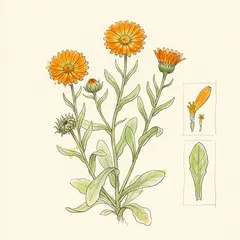
Calendula Officinalis
Hempel - Materia Medica and Therapeutics · Charles Julius Hempel · 77,967 chars
 All books on Calendula Officinalis →
General
[marigold, natural order, composite.]
Viscid-pubescent ; stem branched ; leaves oblong, acute, mucronate, sessile, subdentate and scabrous-ciliate on the margin ; heads term- inal, solitary ; achenia carinate, muricate, incurved. A common and handsome garden plant from southern Europe. It has double, lemon -colored, and other varieties. Flower large and brilliant, gen- erally orange-colored. (Wood).
Calendula is of particular interest to the medical profession from its apparent power to prevent or to diminish suppuration in case of mechanical injuries. As a remedy for wounds, the liquor calendulas, first introduced by Dr. Schneider of Eulda, deserves especial com- mendation. The fresh yellow flowers are introduced into an apothe- cary's flask, which is loosely filled with them, and then tightly corked.
It is suspended from a tree, exposed to the sun, where it is allowed to remain until late in the fall. The sun extracts from the flower a liquid, which collects at the bottom of the flask, and which has to be
CAMPHOR A. 629
poured off every now and then, to be carefully preserved in a tightly corked vessel. After the flowers have settled at the bottom, they are taken out and pressed, to extract the whole of the liquor. At first it is turbid, having an astringent, acrid and bitter taste, and the peculiar odor of the flowers ; later it becomes viscid and glutinous, deposits a gray sediment, and, if kept warm, is apt to become mouldy. Dierbach relates several instructive cures, which the apothecary Fluegge effected with this preparation.
In order to convince some visitors, who doubted the marvelous efficacy of its power to heal by the first intention, Fluegge made a deep incision in his hand with a carving-knife. He poured some of the calendula liquor into the wound, tied it up, and next day appeared before the company with the wound perfectly healed.
Ficeder, a boy of sixteen years, had his arm caught in the wheel of a machine driven by water and had the following injuries inflicted upon his person on the 6th of July, 1844: 1. The left upper arm was broken, the sharp points of the bone had pierced the skin and stood out. 2. A deep flesh wound in the bend of the elbow. 3. The left forearm was entirely deprived of its muscular coating, so that the ulna and radius were exposed through a soace of six inches. 4.
The hand was very nearly torn off, and was adhering to the arm by a small bundle of flesh. 5. The skin and the anterior muscles of the right leg were torn off, exhibiting a large and deep flesh-wound, which penetrated to the bone. 6. A number of small flesh-wounds were discovered in the ecchymosed face and on the contused cnest. Extravasation of blood in the eyes.
The horribly mutilated boy was exhausted to the highest degree by the pain and loss of blood. I [Thorerj at once amputated the arm at the point where the splinters of the broken upper arm had pierced the flesh. Without going into a detailed description of the case, I will simply state, that the fleshy parts of the right leg were covered with compresses, which had been moistened with calendula tea. These compresses were continued until the cure was completed, which took place toward the end of August.
Granulation took place without suppuration, whereas the usual suppurative process set in in the stump of the upper arm, which was subjected to the usual surgical treatment. I had not been acquainted with this property of calendula, and at once treated the amputated limb in the same manner. The cicatrizing process went on as favorably in the stump as it had done in the leg. Every wound healed admirably, closed by granulation and was covered by new skin.
The boy recovered entirely in seven weeks.
OAMPHOEA.
This volatile resin is obtained in China and Japan from the leaves, branches and trunks of different trees by evaporation. In the Laurus Camphora it is said to exist in its genuine form. The camphor which is shipped from Japan and China is refined by sub- limation. Kefined camphor is met with in the form of large, hemi- spherical or convex-concave cakes perforated in the middle.
It is translucent, has a crystalline granular texture, a strong, peculiar and aromatic odor, and an aromatic, bitter and afterward cooling taste.
630 CAMPHOR A.
Canmhor is readily dissolved in alcohol ; we use such a tincture in our prai^ce. In excessive doses, camphor acts as a powerful poison.
One of the best related cases of poisoning is that of Mr. Alexander, who swallowed two scruples in syrup of roses. In about twenty minutes he experienced lassitude and depression of spirits, with frequent y awnings ; at the end of three-quarters of an hour, his pulse had fallen from 77 to 67. Soon after, he felt giddy, confused, and almost incapable of walking across the room.
He became gradually insensible, and, in this condition was attacked with violent convul- sions, frothing at the mouth, wild and staring looks, desire to grasp at things and draw them toward him. From this state he awoke as from a profound sleep; his pulse was 100, and he was able to reply to interrogatories, though he had not completely recovered his recollection. Warm water being administered, he vomited up the ' greater part of the camphor, which had been swallowed three hours previously; from this time he gradually recovered.
We learn from this case that camphor has a powerful action upon the sensorium, and likewise upon the circulation ; and that these primary effects of camphor are characterized by depression, followed by an opposite reaction of the organic vitality.
In another case, which is reported in the London Medical Gazette, a man swallowed four ounces of the spirits of camphor, containing in all one hundred and forty grains of the crude drug. The symp- toms were : burning heat of the skin ; frequent, full and hard pulse, brilliancy of the eyes, redness of the face, heaviness of the head, anxiety, agitation, violent feeling of heat in the stomach ; then intense headache, giddiness, scintillations, indistinctness of sight, and ocular hallucinations.
The patient complained particularly of the heat which he said was intolerable. In the night, copious sweat- ing came on, followed by sleep. The pulse continued full and frequent, and the voiding of urine difficult.
In this case, the symptoms of vascular congestion and cerebral irritation are well marked. The irritating action of camphor upon the bladder is likewise a prominent symptom. The patient was troubled with strangury.
Several cases of poisoning recorded in Frank's Magazine, show that camphor has a powerful action upon the pneumogastric nerve, which is characterized by spasm. In one case, a child came very near dying of asphyxia in consequence of inhaling the vapors of camphor which the mother had applied to her breast in order to suppress the secretion of milk.
Many cases show the extraordinary power inherent in camphor, of producing cerebral congestions of a peculiar order :
CAMPHOR A. 631
A robust and plethoric woman, for instance, swallowed several large doses of camphor for a supposed strain from lifting a heavy weight. Shortly after, she was attacked with violent congestions of the head, delirium, and at a later period by a comatose stupor, fre- quent startings of the extremities. Her tongue was of a deep-red color, the buccal cavity entirely dry and hot, without thirst ; pulse feverish, hard, tense ; skin hot, dry, like parchment. Emetics and injections quieted her considerably, but for six days she had a fever which had all the characteristics of a genuine typhoid ; about this period the obstinate constipation of the bowels was superseded by copious diarrhceic stools ; on the twenty-second day after the poison- ing, critical sweats broke out which smelled strongly of camphor.
The experiments which Professor Joerg instituted upon his own person, illustrate in a most striking manner the action of camphor upon the abdominal ganglia.
Half a grain, which was taken at ten o'clock in the morning, caused a sensation of warmth in the stomach, frequent emission of fetid flatulence, and in the night, between one and two o'clock, such a violent aching pain exactly in the region of the cceliac plexus that the prover apprehended the supervention of an inflammation; the pain was accompanied by a feeling of anxiety which caused a profuse sweat to break out for one hour; the pulse in the meanwhile increased five beats; but was rather softer than usual. The whole of the following day he was troubled with an oppressive headache, at times in the forehead, at other times in the sides of the head. The urine had a dark and saturated appearance.
One grain induced similar symptoms, with trembling of the hands ; the pain in the region of the cceliac ganglion was less intense.
One grain and a half induced a pleasant sensation of warmth proceeding from the stomach and terminating in a general rise of the cutaneous temperature and exhala- tions; in the afternoon the prover experienced, at times on the right and at other * times on the left side, sometimes in the anterior and at other times more in the posterior region of the abdomen, an acrid sensation somewhat like a burning, periodi- cally going and coming, and passing about half-past six in the evening into the above- mentioned aching pains in the region of the cceliac plexus, which became so intense about eight o'clock that the prover was drenched with perspiration and overcome by a feeling of anxiety; at the same time he experienced slight creeping chills, and it seemed to him that an inflammation of the abdominal viscera was developing from the region where the pain was felt. During the height of this paroxysm, he had several turns of cough, with a painful sensation on the inner surface of the vertebral column from the diaphragm upward; the pulse was soft and small, but increased ten beats, and accompanied by a buzzing sensation in the head ; the night was tolerable, but next morning a dull distress in the region of the cceliac plexus reminded him of his previous suffering ; the stool was torpid, scanty, the urine rather dark-colored, but of the normal quantity.
Two grains, which were comminuted with the teeth and kept in the mouth for some time, induced the above-mentioned sensation of warmth: slight cutting pains in the umbilical region, and a simultaneous urging to evacuate the bowels, bladder and seminal vesicles. This sensation was accompanied by a sensation of trembling in the bowels; after this ceased, he experienced a pressure upward and downward below
G32 CAMPHOR A.
the diaphragm, followed by the troublesome pain in the region of the coeliac plexus ; afterward fetid flatulence, and dark-brown, thin, scanty stool; urine saturated and pungent ; next morning the head felt dull, and a passing burning was experienced in the eyelids ; the sleep in the following night was restless and interrupted by constant thirst.
CEREBRO -SPINAL GROUP.
Experiments have shown that camphor induces vertigo, marked signs of congestion, and that it deranges the intellectual faculties. In some of our provers these symptoms were developed prior to the symptoms in the abdominal range, and in cases where camphor is swallowed in poisonous doses, the cerebral symptoms seem to com- pletely overshadow all the rest. We feel therefore justified in recom- mending camphor in
VERTIGO, more particularly when arising from some sudden cause, such as exposure to the sun's rays; it may be accompanied with a sensation of warmth and tightness in the head, sickness at the stomach, depression and thinness of the pulse, feeling of extreme languor and weariness.
SUNSTROKE may require the exhibition of camphor, more par- ticularly at the commencement of the attack ; the patient experiences a violent distress in the head, complains of vertigo, or is suddenly deprived of his consciousness, with great depression of the pulse, paleness of the face ; these symptoms may be speedily followed by opposite signs of reaction, flushed face, glistening eyes, hot and dry skin, and a full, strong, and somewhat accelerated pulse.
Camphor is capable of producing convulsions. In Professor Alex- ander's case the following paroxysm occurred while one of his students was in the same room with him : A. had fallen backward upon his bed, where he laid quietly for a few minutes ; he then jumped up, laid on one side and attempted to vomit without being able to raise anything, after which he again threw himself backward on the bed, had violent spasms, frothed at the mouth, looked about with wild and staring eyes, and attempted to catch and draw objects to him. An attack of
CONVULSIONS embodying all the characteristic symptoms of this group, may occur among children in consequence of some acute gastric irritation or an irritation occasioned by worms.
Camphor affects the sensorium and the intellectual faculties in a manner that may prove serviceable in the treatment of various forms of mental derangement. It causes a loss of recollection and a loss of memory which assumed an exceedingly striking character in Pro-
CAMPHORA. 633
fessor Alexander's case. Upon recovering bis consciousness, the recollection of his previous actions, and a knowledge of every object present in the room returned to him, but the impression was that his present occupations had never been performed by him previously; he knew every member of his family, but he did not know what the different pieces of furniture in his room were used for, and it seemed to him that everything about him was strange and novel, and had never been there before. These symptoms may characterize some forms of insanity, or they may develop themselves as the sequelae of sunstroke, or some other form of acute cerebral irritation. Camphor may be of use to us in treating such cases.
Purkinje swallowed forty grains at 4 o'clock in the morning. This dose acted veiy similarly to the effects experienced by Professor Alexander. Very soon after swallow- ing the drug he felt impelled to leave his bed. All his motions were executed with more ease ; in walking, his legs were raised beyond the ordinary height, without their inherent vigor being either increased or diminished.
The dermoid and muscular tissues were less sensible to external impressions ; he was unable to perform any literary labors; a crowd of ideas was rushing upon him; one thought quickly followed the other, but he was unable to fix his attention upon any of them ; he lost the conscious- ness of his personality, the thoughts chased each other more and more furiously ; after vomiting, his consciousness returned, but the distracted condition of his intellect, his forgetfulness and the crowding of his ideas continued.
Time seemed very long to him and full of events which he was unable to recollect. This continued three hours, during which period he was not sick, but had his senses whenever he made an effort. The impressions received by the sense of vision were evanescent; those received by the sense of hearing were more lasting ; finally, an oppressive warmth spread through ■the head and body, he lost his consciousness and fell down, his face was flushed and he showed signs of spasms ; for half an hour he breathed slowly and remained uncon- scious.
On waking, he had to make a persistent effort to recover the consciousness of his personality and a knowledge of his surroundings. In spite of these violent effects, he felt well, was not weak or tired, walked about, and there were no after- symptoms.
INSANITY. — It matters not by what name this group of symp- toms is designated as a pathological unit. There are cases of insanity where this remarkable action of camphor upon the sen- sorium and the intellect may suit the general character of the derangement, or the nature of its paroxysmal exacerbations.
The following case of poisoning, for which we have the authority of Dr. Toothaker, shows that camphor is possessed of powers which eminently fit it as a remedy for some forms of
ACUTE MANIA, and even for chronic mania characterized by paroxysmal fits of violence.
The patient was a man who generally enjoyed good health; he
634 CAMPHORA.
swallowed half a wine-glassful of a saturated solution of the spirits of camphor which he supposed to be the well-known preservative against cholera. After having laid in bed for half an hour, he sud- denly shrieked, jumped out of bed, and in great anguish and despair bent double. A physician was sent for who administered an emetic, after which he felt easier snd was able to resume his business on the following day. At night another violent paroxysm took place ; he fancied that he was able to fly about, and that, in spite of his opposi- tion, he was carried away through the air ; he felt a drawing around the whole head, as though the nerves were drawn up, with short remissions; attended with chilly creepings, an indescribable feeling of malaise, an exceedingly timorous disposition, whereas he had never known before what fear was ; he was more especially tormented by a dread of being alone in the dark, a dread of the looking-glasses in room, and of the thoughts of seeing himself in them ; his sleep was restless, disturbed by frightful visions of ghosts, etc., frequent tossings about and startings ; even when waking he frequently started as in affright, with palpitation of the heart, disposition to scream even during work and in the street, without any apparent reason ; he felt impelled to attack people in the street and to kill them.
These sen- sations which always became more intense in the darkness and at night, and likewise in the cold, but which did not interfere with his pursuits in the day-time, continued for nearly two years in spite of every thing which he had tried to obtain relief ; even five years after the poisoning occurred, these feelings still troubled him somewhat, especially in the night and after taking cold. Nor had he entirely overcome his fearfulness, although he had never known fear previous to the accident.
CHYLO-POIETIC GEOUP.
OAEDIALGIA. — Our provings have shown that camphor causes a feeling of warmth and even burning in the region of the stomach, whence the sensation may spread over the abdomen, and terminate in a general rise of the cutaneous temperature and exhalations, the pulse being more or less involved in this apparent increase of physio- logical action. These symptoms may be considered typical of an attack of cardialgia, or slight indigestion ; the brain may be involved in the attack, the patient complaining of a feeling of dullness in the forehead and temples.
COLICODYNIA. — The beautiful provings of Professor Joerg shows that camphor may be of eminent service in an attack of colicodynia, the outlines of which are so fully and coherently given in his provings that we refer the reader to the Professor's own statement.
CHOLERA. — Hahnemann recommended camphor in the treat-
CAMPHOR A. G35
ment of cholera. "Where cholera makes its first appearance it usually commences with the first stage (of tonic convulsions) ; sud- denly the strength of the patient gives way, he can hardly stand, his features are distorted, the eyes sunken, the countenance bluish and icy cold, as well as the hands and the rest of the body. All his actions express hopeless dejection and anxiety, as if he would suffo- cate ; partially robbed of consciousness and of sensation he whines and moans in a hollow, hoarse voice, without complaining of any- thing, if he is not questioned ; burning in the stomach and oesoph- agus and pains in the calves of the legs and other muscles ; he screams when touched at the pit of the stomach ; has no thirst, no nausea, no vomiting, no diarrhoea.
Here camphor will relieve quickly. But this stage passes quickly to death or to the second stage, which is far more difficult to manage and cannot be cured by camphor. Dose : one drop of spirits of camphor (1 part of camphor to 12 parts of alcohol, by weight) on sugar every five minutes. At the same time external applications of camphor, fumigations of camphor and if the mouth is spasmodically closed, enemata with camphor.
(Archtv. paer d. Horn. HeilJcunst, xi, 1. 123.)
Dr. Kubini, an Italian physician of large experience in the treat- ment of cholera, looks upon a saturated tincture of camphor as the great remedy in this disease.
URINARY GROUP.
Camphor has induced strangury, tenesmus of the bladder, burning urine. It will be found to antidote the strangury caused by canthar- ides, and to cure these affections homceopathically, when occurring as natural diseases.
SEXUAL GROUP.
IMPOTENCE. — It is commonly supposed that camphor has an aphrodisiacal properties. This is true of large doses ; small doses may have an opposite effect, as is abundantly shown by the beautiful provings of Professor Joerg. Hence we may avail ourselves of the curative virtues of camphor in the treatment of apparently opposite conditions of the sexual system. We may use camphor as a remedy for impotence.
Kopp, in the second volume of his Memorabilia, reports a case of cure of sexual weakness, which was effected with one-eighth of a grain doses of camphor. A major in the army, forty -two years old, a married man and veiy much prostrated by previous excesses, had been incapacitated from all sexual intercourse for upward of a year in consequence of an utter absence of erections. At the same time he was afflicted with
030 CAMPHOR A.
urinary difficulties. Being consulted by this patient, Kopp advised camphor in doses of one-eighth of a grain. The major was not only freed from his urinary troubles, but the erections likewise reappeared the very next day.
Professor Joerg's experiments have shown that camphor may assist us in the restoration of the sexual instinct, from a condition of excessive excitement to that of a normal state. Abnormal sexual excitement may be the prominent symptom in a group of abdominal turgescence, characterized by inclination to stool, pressure upon the bladder, and a fulness and unnatural sensation of warmth in the abdomen. Con- sensual symptoms, such as dullness and heaviness in the head, drowsiness, a feeling of lassitude and listlessness may be present.
CATARRHAL GROUP.
APNOEA We have seen that camphor may cause a state of asphyxia or apnoea. In Professor Joerg's case, camphor caused cough and a painful sensation along the internal surface of the vertebral column, from the diaphragm upward. It is evident that camphor acts very powerfully upon the pneumogastric nerve, causing suffoca- tive spasms.
We may avail ourselves of these indications in a case of apnoea from suppressed catarrh, or the symptoms might be described as a case of suppressed catarrh with apnoea, coldness of the extremities, feeble and hurried pulse. Against
SPASMS OF THE CHEST caused by the inhalation of the vapors of arsenic or copper, camphor may act as an antidote.
INFLUENZA may be cut short by camphor, if the drug is admin- istered during the preliminary stage before the attack lias broken out. The patient feels a dull pain in the forehead, complains of giddiness, a burning dryness of the eyeballs and lids, dryness of the throat, lassitude, loss of appetite, creeping chills ; the pulse is weak and soft.
FEVER GROUP.
INTERMITTENT FEVER— Camphor may be administered in violent attacks of intermittent fever, with long chills and sopor, the so-called apoplectic intermittent of Hufeland ; if administered during the chill, it may hasten the reaction. Camphor may be used as an intercurrent palliative in
ASTHENIC FEVERS, with tremulous pulse, coldness, prostra- tion ; it may likewise be instrumental in restoring the vital reaction after the retrocession of an acute rash.
TYPHOID FEVER. — Our cases of poisoning furnish a group of symptoms simulating in all respects a case of typhoid fever. You
o ly
CAMPHOR A. 63
recollect the case of the woman who swallowed a quantity of camphor for a supposed strain. She was attacked with violent cere- bral congestions, delirium, stupor, subsultus of the extremities. The tongue had a deep-red color, the mouth was dry and hot, pulse fever- ish, hard and tense, skin hot and dry as parchment. During the first six days her bowels were constipated ; after the lapse of six days she was seized with diarrhoea, and the attack terminated on the twenty-second day amid the breaking out of copious sweats.
A typhoid fever of this character may occur as an epidemic dis- ease simultaneously with, or subsequently to an epidemic influenza, or indpendently of it ; or a vitiated state of the body, in consequence of improper or deficient nourishment, want of pure air, absence of cleanliness, and similar causes may give rise to it. Sporadic cases of typhus to which camphor is homoeopathic, are not very frequent.
Hahnemann informs us that he had good results from the use of camphor, given in large doses, in a prevailing type of remittent fever. He writes :
Camphor surpassed all the expectations that could have been formed of it ; it was efficacious, and I may say specific, in all stages of the disease, accompanied or not by fever, especially when it was given as early as possible and in large doses. At the commencement I was very cautious in its use and did not give to adults above from fifteen to sixteen grains per diem, in almond milk ; but I soon perceived that, in order to produce a speedy recovery, it was necessary to give, even to weak subjects, thirty grains, and to more robust individuals forty grains in the twenty-four hours.
The favorable result was never long delayed ; the constipation ceased ; the bad, or at least the bilious taste, rapidly went off, together with the nausea and discomfort ; the weight and pain in the head diminished from hour to hour ; the febrile rigor was smothered in its birth ; the heat diminished ; and in those cases where there had been no pers- piration, or where it had been abundant, there occurred a mild general diaphoresis, with diminution of all the drawing tensive pains in the external parts.
The strength soon returned along with appetite and sleep ; the despondency changed into strength and hope, and the patient recovered his health without a drawback. I am afraid that this rapid disappearance of the symptoms, the yellow, brown or black coat- ing of the tongue, the nauseous and bitter taste, the constipation and the sickness, removed often within the twenty-four hours by the use of camphor alone, given in large doses, will not please the orthodox partisans of the Saburral school.
Nature, to be sure, often refuses to conform to the requirements of systems; the more's the pity for the dogmatic physician who attempts to fight against her ! When I had been summoned in time, and the disease, in spite of the gravity of its commencement, had radically disappeared at the end of four days, or six at the most, there did not remain a single morbid symptom, not even lassitude. (Lesser Writings, p. 390.)
EXANTHEMATOUS GROUP.
Camphor has caused a violent itching and burning of the skin, which may therefore be relieved by this agent ; it may be necessary to wash the skin with a weak, watery solution of the drug.
The external application of camphor to the skin has caused an erysipelatous inflammation of this organ. We may avail ourselves of this indication in a case of rhus-poisoning, where the inflamed
638 CANNABIS INDICA.
parts may be bathed with an alcoholic solution of camphor; the drug may at the same time be administered internally.
Camphor should be used in the alcoholic tincture or in the lowest dilutions and should be given at short intervals. If triturations are to be used, they must be prepared at the very moment when they are required.
CANNABIS HSTDIOA.
[INDIAN" HEMP. NATURAL ORDER, URTICE^.]
This near relative of the American hemp is a native of India and is commonly called haschisch. Botanically it resembles our own variety closely. It affects more particularly the sensorium. We find these, its peculiar effects summed up in Teste's Materia Medica, page 602 of Hempel's translation, in the following synopsis extracted from various authors :
The first effects of haschisch are a vague and full feeling in the brain, without pain or malaise ; whizzing in the ears, increasing more or less rapidly to a real boiling sensation, that seems to raise the skull-cap, accompanied with flashes of heat and flushes of color in the face, animation and swelling of the eyes. Soon after, the whizzing and the buzzing cease ; now the first paroxysm is on the point of setting in. It breaks out suddenly. The prover wants to speak, but the tongue feels heavy ; he forgets what he was going to say ; the words and the ideas become confused ; a burst of laughter cuts short the phrase which has just been commenced ; it is in vain that one tries to complete it ; the idea has escaped from the memory.
One laughs at everything, at one's self, in fact at nothing, and for some minutes this laughter, which induces those present who had taken haschisch, to laugh likewise, continues for some minutes. It gradually ceases, but breaks out afresh in a few moments, without any apparent cause. After a certain interval the symptoms become still more striking. Unless a very large dose had been taken, the consciousness remains undisturbed, and one's reason beholds, as it were, the dissolution of its own government.
Whilst a sweet languor overpowers you, whilst the muscular power grows torpid, the knees give way under the weight of the body, it seems impossible to move, and one has taken leave of one's body, as it were ; every thing around one looks embellished ; the commonest faces look like angels' faces; the ideas come and go so rapidly that all notions of time seem to disappear, as though a century and a minute lasted equally long. These illusions are often followed by real hallucinations, and this caps the climax of our bliss.
The imagination, however, is no more excited than the other faculties. On the contrary, it is precisely those faculties which in a state of perfect health are most active, that are most powerfully affected by the haschisch. Hence the mental effects of haschisch may be very different in different provers, and may give rise to many odd extravagances in company. One may become talkative and noisy, the other quiet and thoughtful; one makes verses, another one sings, calcu- lates, talks about political economy, philosophy, medicine, etc.
But all are, as a
CANNABIS INDICA. 039
general rule, satisfied with themselves. All they hear, say, see, were it ever so trifling, seems to them new, marvellous, or exceedingly ludicrous. In a word, they seem as happy as can be, they seem to be absorbed in a fairy dream. In some rare cases, of which not one has come under my notice, the haschisch is said to have pro- duced sadness, despair, and even a furious delirium.
In a few hours the exaltation passes off, and drowsiness takes its place. Some- times a little nausea, borborygmi, cutting colic, are felt, these symptoms pass oft" after a copious half-liquid stool ; the prover experiences an irresistible desire to lie down. After a single night's rest, all traces of this intoxication, which has none of the con- sequences and features of any other intoxication, and which I should call delightful, if my reason did not tell me that the continued use of such an intoxicating agent must finally prove injurious, disappear entirely, and without leaving the least un- pleasant sensation.
In Erlenmeier's " Corresponded zblatt fur Psychiatrie " the follow- ing interesting proving of haschisch which was instituted by two students, A and D, is reported by Dr. Drosse :
Each swallowed about eighty grains of this substance. After the lapse of half an hour, both experienced vertigo and a desire for locomotion. Not long after, they were attacked by a disagreeable shuddering tremor which quivered through all their limbs ; by a painful feeling of weight in the occiput, and by tetanic muscular con- tractions at the nape of the neck which seemed to come and go by turns. After some time D. sank into a condition of voluptuous indolence and erotic delirum.
A., who had a dry and irritable constitution, became the prey of a boisterous exaltation and of the strangest hallucinations, strange visions and sensations were followed by a desire for restless and unceasing changes of locality. Raising himself wildly, as if swung aloft by elastic springs, and expanding his chest, A. commenced to sing and dance in the most extravagant manner. This state of restlessness continued almost without an interruption from one to five o'clock in the afternoon.
There was no perspiration, nor any frequency of the pulse ; the consciousness of his condition and of everything that had taken place around him, had never been disturbed. Mustard foot-baths, ice-water and affusions of water soon roused D. from his torpor, and A. became more quiet. About six o'clock he began to feel weaker, his ideas became confused, the power to move had become extinct, for the extremities seemed paralyzed ; whenever he closed his eyes, he fell into a swoon. He felt like one who had to die and he prepared himself accordingly.
These sensations all disappeared after a cool bath. In the night he had restless dreams, but on.|ihe second day all the symptoms had disappeared except a feeling of uucomfortableness and languor. D. slept for fourteen hours in succession calmly and soundly.
Dr. Berridge reports in the Halm. Monthly, May, 1868, a number of interesting experiments with various preparations of haschisch. They substantiate the above-recorded effects, with a few additional symptoms, as follows: Indescribable sensation of oppression about the heart ; feeling of sickness at the heart ; the beating of the heart seemed to him very much embarassed, sharp and quick, weak and small, its contractions seemed jerky.
Felt sick at the heart. Dry- ness at the mouth, with thirst, for some time. Burning sensation in
640 CANNABIS 1NDICA.
the stomach. Frequent micturition of much urine. Conjunctiva congested, without any abnormal sensation there. The blood- vessels of the upper eyelids became very full and distended, with a feeling of heat.
Scalp and skin of forehead felt as though tightly stretched over the skull, as a bladder is stretched over a jar. Intermittent headache in a spot on the left side of the head, near the anterior inferior angle of the parietal bone. The conjunctiva is covered with distended vessels; the feeling of burn- ing heat is more marked in the eyes than in the lids, and severe. Cannabis is therefore homoeopathic to
ALCOHOLIC INTOXICATION and to certain phases of
DELIRIUM TREMENS, corresponding, as it does in rare cases, with the pathogenetic symptoms of Indian hem}}.
MANIA, characterized by spasmodic and uncontrollable laughter or by a desire to be constantly on the move ; or where the patient imagines himself a king or some other important personage.
ECSTASY of the mind, such as may be induced by opium, where the fancy is filled with pleasing or soaring images, may be controlled by this drug. So may be
CHRONIC VERTIGO, coming on in paroxysms, and character- ized by a sensation as if one were floating off like a balloon.
CATALEPSY. — Perhaps no drug presents in its pathogenesis so complete a counterpart to catalepsy as Indian hemp.
Pereira, in his article on the drug, mentions this remarkable property, quoting from a paper by Dr. O'Shaughnessy, as follows: At 2 o'clock, p. m., a grain of the resin of hemp was given to a rheumatic patient. At 4 P. M. he was very talkative, sang, called loudly for an extra supply of food, and declared himself in perfect health.
At 6 P. M. he was asleep. At 8 P. m. he was found insensible, but breathing with per- fect regularity, his pulse and skin natural, and the pupils freely contractile on the approach of light. Happening by chance to lift up the patient's arm, the professional reader will judge of my astonishment when I found that it remained in the posture in which I placed it.
It required but a very brief examination of the limbs to find that the patient had, by the influence of this narcotic, been thrown into that strange and most extraordinary of all nervous conditions, into that state which so few have seen, and the existence of which so many still discredit, the genuine catalepsy of the nos- ologist. We raised him to a sitting posture, and placed his arms and limbs in every imaginable attitude. A waxen figure could not be more pliant or more stationary in each position, no matter how contrary to the natural influence of gravity on the part.
To all impressions he was meanwhile almost insensible. Of another patient under the influence of the drug the same writer says : We now observed that the limbs were rather rigid, and in a few minutes more his arms and legs could be bent and would remain in any desired position. He was removed to a separate room, where he soon became tranquil, his limbs in less than an hour gained their natural condition, and in two hours he expressed himself perfectly well and excessively hungry.
NEURALGIA. — In certain cases of neuralgia cannabis indica may prove of service, especially if the patient is of nervous temperament, has been laboring under an exhausting disease, or, if a woman, is a
CANKABI8 SATIVA. 041
victim to uterine disorders. We must look for the peculiar or mental symptoms of the drug to confirm the choice of the remedy.
BRIGHT'S DISEASE.— Provers of this drug have experienced a remarkable increase of the urinary secretion, hence it has been recom- mended in Bright's disease where cerebral complications, even to actual convulsions, form a prominent feature of the case. "I have recently witnessed a most excellent cure of an almost hopeless case of post-scarlatinal uraemic convulsions with this remedy. Under its per. sistent use in the 1st dilution for four days, the convulsions gradually ceased, the urine became abundant and natural in color, having lost all traces of albumen, blood-globules and other abnormal appear- ances." (Marcy and Hunt, Vol. h\, p. 35.)
Our eclectic friends have given it with good success in catarrhus senilis. They claim that it has the power to relieve by producing copious expectoration.
QAjOTABIS SATIVA.
[HEMP. NATUEAL OEDEE, UETICE.E.]
This is an annual plant, with a stem from six to eight feet high ; the leaves are composed of five to seven leaflets, digitate, opposite. The male flowers are in small, loose racemes or spikes. We make a deep green tincture of the leaves.
Wibmer made some interesting experiments with this tincture, which he reports as follows :
Toward evening, about five o'clock, I swallowed ten drops, and half an hour after another ten drops. In ten minutes I was seized with slight headache, a slightly- throbbing and aching pain ; the mouth, fauces and lips felt dry. At six o'clock, I swallowed twenty drops, with the same results. In half an hour I felt quite well again.
I then took forty drops ; there was no headache, but on rising I felt tired ; this feeling left me after walking a little The secretions were left unaltered. On the day following, the 21st of April, I swallowed fifty drops, at a quarter of twelve in the morning, pulse eighty. In seven minutes I experienced some drawing through the forehead. In fifteen minutes I was attacked with frontal headache which gradu- ally disappeared again until one o'clock.
For three days, however, I experienced an increasing lassitude in the limbs, more particularly in the lower extremities, with violent backache ; after the least exertion I was obliged to sit down ; I felt drowsy and looked pale. On the sixth day I was taken with a violent throbbing headache which went on increasing and was accompanied with heat in the head and fever, which obliged me to lie down. The violence of the headache was mitigated by bleeding, leeches and cold applications, but the backache, weariness and fever con- tinued.
These symptoms were accompanied by complete loss of appetite, thick coat-
VOL. I. — 40.
642 CANNABIS SATIVA.
ing of the tongue and constipation, although I had been suffering with diarrhoea a few days previous.
I was confined to my bed for nearly a fortnight, during which period these symp- toms gradually decreased. The long-continuing anorexia and the complete atony of the bowels were very remarkable. Even large doses of cathartics were unable to remove the existing infarctions. Injections and bitter medicines gradually restored my appetite, but the weariness in the extremities, the impaired digestion, and the remarkable paleness and thinness of the face continued for some time longer.
The use of the Ragozy Springs completed my recovery.
CONGESTIVE HEADACHE. — Hahnemann's own provings confirm Wibmer's experience regarding the influence of hemp upon the brain. His pro vers record more or less violent throbbing, press- ing pain in the head, rush of blood to the head, nose-bleed, dizziness. This remarkable property of exciting cerebral congestions similar to those which alcohol is capable of exciting, may make cannabis a valuable counter-poison against the chronic effects of intoxication, ' more especially congestive headache, with aching pain in the frontal region, pale and sunken face, somewhat excited pulse, general feel- ings of languor and sickness, anorexia, difficulty of articulating.
AMBLYOPIA. — Cannabis causes weakness of sight, and may prove useful in amblyopia, from straining the sight too much. It has been recommended for incipient
CATAEACT, when objects begin to look hazy, with dimness of the cornea, especially when resulting from hard drinking.
According to Wibmer's experiments, cannabis causes complete and lasting anorexia, with atony of the bowels and inveterate constipation.
Morgagni says that hemp has caused paroxysms of the most violent cardialgia, with paleness and sweat of the face, collapse of pulse, rattling breathing, as if the person were dying.
It also causes vomiting of green bile, and uneasiness in the pit of the stomach, with flashes of heat in the face.
ANOEEXIA These symptoms show that hemp may be used for
anorexia, more particularly when the result of hard drinking, with inveterate constipation.
CAEDIALGIA, characterized by the previously-mentioned symp- toms, vomiting of green bile, uneasiness, flashes of heat about the head. Drinking may cause such paroxysms. The constipation of drunkards may be benefited by cannabis.
The action of cannabis upon the urinary organs is remarkable.
CANNABIS SATIVA. 643
We have testimony showing that hemp has caused a difficulty of urinating, a sort of paralytic weakness of the bladder. Morgagni states that, in one case, the urine had to be drawn off with the catheter, and that this finally became impossible in consequence of the instrument becoming clogged with pus and mucus.
Cannabis develops all the signs of stricture of the urethra, such as, spreading stream, like a fan; chordee during an erection. Combining these with such symptoms as : burning in the urethra before and after urination, stinging-smarting pain in the urethra after urination, we have a right to infer that this agent may prove a valuable remedy in
GONOKRHCEA, during the acute stage, when the following group of symptoms occurs : Discharge of pus from the urethra ; ulcerative soreness of the urethra when touching it ; difficulty of urinating, with constant urging; sensation of tearing in the fibres of the urethra; the urethra feels as if drawn up into knots. The glans penis may be sore, swollen, inflamed. These symptoms may be accom- panied by symptoms of vascular erethism, rush of blood to the head, frontal headache, etc.
We are told that hemp excites the sexual instinct, but that, at the same time, it causes sterility. The menstrual discharge is likewise hastened by the action of this agent. These symptoms may be of use as therapeutic indications.
Hemp is said to have caused asthma, orthopncea, with wheezing inspirations in the trachea ; inflammation of the chest and lungs, pneumonia, with vomiting of green bile, delirium.
A gentleman, subject to catarrh, and a sufferer from frequent attacks of humid asthma, was entirely cured by the administration of drop doses of the 6th attenuation of cannabis sativa in water, repeated at intervals of three hours. (Dr. A. E. Small, U. S. Med. Journal, July, 187 1.)
This agent seems likewise to have a marked action upon the heart. Hahnemann has recorded the following symptoms :
Shocks in both sides of the thorax, recurring frequently and arresting the breathing, most painful in the region of the heart; sen- sation, during exercise and when stooping, like shocks in the region of the heart, as if the heart would start out, accompanied with a feel- ing of warmth about the heart; troublesome prickling over the whole body, at night, while covered in bed and perspiring, accom- panied with great anxiety in the region of the heart, and sensation as if hot water were repeatedly poured over him.
These pulmonary and cardiac symptoms certainly show that can- nabis must be of great use in functional derangements of the heart
644 CANTHARIS VESICATORIA.
and lungs. In a case of poisoning, related by Morgagni, suppurating tubercles and pus were discovered in the lungs ; the pleura and diaphragm were found inflamed, and polypi in the ventricles of the heart.
If these post-mortem, appearances are rightfully ti 'bated to hemp, we cannot help believing that this agent must be in homoe- opathic rapport with organic degenerations of the lungs and heart. We shall find cannabis useful in
BILIOUS PNEUMONIA, with vomiting of green bile, delirium; also in the empyemia of drunkards.
OANTHAEIS TESICATOEIA.
[BLISTER BEETLE, SPANISH-FLY.]
This fly is supposed to be a native of the southern countries of Europe, especially of Italy and Spain. In the summer they often migrate to more northern countries, France and Germany. Pereira informs us that in the summer of 1837 they were abundant in Essex and Suffolk.
Oantharides are liable to being attacked by mites. If worm-eaten, they are no longer fit for use. They should be preserved in well stoppered bottles ; the addition of a few drops of acetic acid will pre- vent them from being attacked by mites.
These insects have a greenish-gold yellow color, mingled with a coppery, bluish tint. We make an alcoholic tincture, having a yellowish-green color and a burning taste.
A very interesting case of poisoning with the Spanish-fly is copied into the Medical Investigator, August, 1872.
Dr. Palle relates that last May, at Fort Boghar, in Algeria, some soldiers found in a closet a bottle of tincture of cantharides, which they mistook for brandy. About one-half of the supposed cognac was mixed with some two or three quarts of coffee, which the men drank, reserving the balance to drink as brandy straight. After a short time, varying from fifteen minutes to four hours, the soldiers were taken sick and sent to the hospital, where they were first taken care of by Dr.
Vigenaux, aid major. I shall never forget, says Dr. Palle, the sight that struck my eyes as I entered the ward ; scattered in the room, some, squatting, were making painful efforts toward micturition and defecation, passing with difficulty bloody urine and red and viscid matter ; others, bent on their beds, were vomiting repeatedly, and a few, pale and str.'cken down, were suffering intense
CANTHARIS VESICATOKIA. 6 1 5
agony. In general, the face was congested, the eyes sparkling, the pulse frequent, the skin covered with sweat; the features, distorted on all sides, showed the most intense terror. The state of the urino- • genital organs was worthy of special attention. The penis was swelled and painful, hut not rigid ; none of the patients were affected with the slightest amatory desire or priapism; vesicle and rectal tenesmus and dysuria were noticed in all the patients.
As to the digestive organs, a feeling of burning and constriction in the throat, epigastralgia, vomiting of biliary and alimentary matter were noted, but no convulsions or delirium, nor other cerebral symptoms except the excitement caused by the sufferings and terror of the patients. The treatment was emetics, followed by warm baths ; afterward cam- phor and opium in emulsion, flax-seed tea, oleaginous injections, and poultices on the hypogastric region, under which all the patients eventually recovered.
Dr. Lardner reports the following: Six students, taking their meals together, seasoned their food with powdered cantharides instead of pepper, and the mistake was only discovered after several months of daily use. During all that time their appetite remained good and they experienced no other disorder than some light pains in the renal and lumbar regions, with some vesical tenesmus and slight burning feeling. One of them was affected with an abundant, but simply mucous, urethral discharge; none of them experienced the least priapism.
All the patients of Dr. Palle discharged abuminous urine in vari- able quantities. In the beginning the water was sanguinolent and albuminous in the same time, and when, the renal haemorrhage hav- ing ceased, the liquid assumed its natural color, all traces of albumen had disappeared. The duration of the symptoms varied from four to eight days.
The improvement was very rapid ; as soon as the irritation of the urinary organs subsided, the medulla recovered its normal excitability, and the paralysis of the inferior members dis- appeared in a short time. Only one of the patients was affected with incontinence of urine, which still existed six months after the accident. As this infirmity did not exist before, it must have been caused by the cantharides. {Journal de Phar. et de Ghemie, June, 3 871.)
Cantharides act specifically
1. Upon the brain, and more particularly upon the cerebellum, the vessels of which are found turgid with blood, and which is covered with a thick coating of exuded lymph, with a quantity of serum col- lected at the base of the skull.
2. Upon the mucous membrane of the digestive tube, causing a destruction of the mucous membrane of the mouth and tongue, in flam niation of the oesophagus, stomach, and all the abdominal viscera.
646 CANTHARIS VESICATOKIA.
3. Upon the urinary apparatus, causing inflammation, suppura- tion, ulceration and gangrenous disorganization of the mucous lining and even of the external parts.
Upon The Nervous System
This effect of the drug seems sec- ondary, showing itself only after the poison has become fully taken into the system generally. Then delirium, epileptic convulsions, etc., set in, or great prostration takes place, which latter condition is almost a key-note in many diseases, which fall within the curative range of the Spanish-fly.
CEREBRO-SPINAL GROUP.
Pereira sums up the action of cantharides upon the cerebro-spinal system in the following general statement : " The affection of this system is proved by the pain in the head, disordered intellect, mani- fested in the form of furious or phrenitic delirium, convulsions of the tetanic kind, and subsequently coma. It is deserving of especial notice that sometimes several days elapse before the nervous symp- toms show themselves : thus, in a case related by Giulio, they ap- peared on the third day; in another instance, mentioned by Graef, on the eighth; and in a case noticed by Dr. Ives, they were not observed until the fourteenth day." Post-mortem examinations have shown that the vessels of the brain are turgid with blood, particularly those of the cerebellum, which is covered with a thick coating of exuded lymph, with a quantity of serum collected at the base of the skull.
TETANIC CONVULSIONS.— The terminal points of the series of phenomena which marks the action of cantharides in the human organism, seem to be the genito-urinary system and the cerebellum; the symptoms of cerebral congestion seem to occur incidentally to cerebellar irritation. This irritation of the cerebellum and spinal system may culminate in paroxysms of tetanic convulsions, with hydrophobia ; the convulsions abate periodically, but soon reappear as emprosthotonos or opisthotonos, the delirium, rage and frenzy continuing uninterruptedly ; they are accompanied with violent lock- jaw ; gritting of the teeth ; discharge of a frothy and sometimes blood-streaked saliva ; inability to swallow and convulsive contrac- tion of the larynx at every attempt to swallow ; expression of terror and despair in the face, with the hair standing on end during the convulsions ; staring look ; sparkling, fiery, frightfully and convul- sively rolling eyes ; the convulsions are excited by the least pressure upon the larynx or upon the epigastric region.
CANTHARTS VESICATORIA. 647
In an attack of hydrophobic convulsions to which cantharides are homoeopathic, the co-existing irritation of the urinary and sexual sys- tems will undoubtedly complete the therapeutic picture.
CHYLO-POIETIC GROUP.
"Wibmer sums up the symptoms which cantharides excite in this direction, in the following series : Nauseous taste and smell, burning of the palate, fauces, stomach and bowels, difficulty of swallowing, sometimes increasing to hydrophobia ; loathing, vomiting, sometimes even vomiting of blood, diarrhoea, bloody evacuations with tenesmus, meteorism, violent colic, and all the signs of gastritis and enteritis.
A post-mortem examination shows inflammation, ulceration, extra- vasations, gangrene of the fauces, but more especially of the stomach and bowels ; the mucous membrane is found detached.
These are, so to say, local symptoms, arising from the direct con- tact of the poison. Their presence alone would not justify the use of cantharides ; symptoms of inflammation in the throat, stomach or bowels, for which cantharides seem specifically adapted, do not occur without the specific inflammation of the genito-urinary apparatus developing itself more or less in every case. It is the presence of this specific inflammation which imparts a definite meaning to the inflammatory symptoms simultaneously occurring in other organs or tissues.
GENITO-URINARY GROUP.
"If absorption takes place," writes Wibmer in his unpretending and yet comprehensive manner; "if the absorption of the poison is not prevented by the excessive local inflammation, where the poison was first applied, the following symptoms develop themselves, more especially after the internal exhibition of the drug : increased and more frequent desire to urinate, with discharge of only a small quan- tity of dark urine in every case ; difficulty of urinating, retention of urine, strangury, bloody urine, frequent erections, itching and burn- ing of the sexual organs and urethra, increased sexual desire, in- creased seminal secretion, priapism, satyriasis, nymphomania, mis- carriage, inflammation and swelling of the external sexual organs, which sometimes terminates in fatal gangrene. These symptoms are accompanied by general restlessness, hurried pulse, heat, thirst, flushed face, red and sparkling eyes, pain in the region of the urinary blad- der, lumbar and renal region ; headache, delirium, rage, tetanic con- vulsions, are frequently present as signs of the cerebellar and spinal irritation.
648 CANTHA.RIS VESICATORIA.
A post-mortem examination reveals inflammation, ecchymosis, and even gangrene of the internal and external, sexnal parts, urinary organs, kidneys, ureters, bladder, uterus, etc.
CYSTITIS
These remarkable symptoms constitute a series of most important therapeutic indications.
They point to cantharides as a remedy for cystitis of the most dangerous character, with utter inability to pass a drop of urine in spite of a continual and most agonizing desire to do so ; discharge of blood from the urethra ; swelling and intense painfulness of the region of the bladder ; violent fever, flushed face, glistening eyes, delirium; consensual vomiting, retching, etc.
In
ISCHURIA and strangury, this agent may be necessary, if the affection remains after mismanaged inflammation of the bladder, or after some acute fever, such as typhus.
On the other hand, if cantharides cause strangury by their primary action upon the urinary organs, we may rest assured that this primary effect, if kept up for a sufficient length of time, would be ultimately followed by a paralytic inability to retain the urine. The continued use of small doses of cantharides would produce the same effect, a sort of incontinence of urine.
We are not without historical proofs, that cantharides have caused such weaknesses.
Frank quotes a case from a medical publication by the physicians of Petersburg, which the reporter, Dr.
Weisse, pub- lished as a case of "artificial diabetes."
A child of four years was afflicted with swelling of the cervical glands to which a fly-blister had been applied by mistake in the place of a plaster of cicuta. After the blister had been drawing for eighteen hours, the child began to become delirious ; the blister was then removed, and the mistake was discovered, when the large blisters were seen. For some days after, fever was present, and the patient discharged a small quantity of blackish urine amid great distress ; this was followed by increased secretion of urine to four times the amount of the liquid the patient drank ; at the same time she complained of great thirst, and had a ravenous appetite for meat.
In a few days the urine lost the blackish color, became inodorous and had a slightly saltish taste. The patient became very thin, the face and feet became cedematous, and she craved animal food exclusively as if impelled by a sort of instinct. Little by little the quantity of the urine decreased, the natural odor returned, and health was completely restored in six weeks. The glandular swellings disappeared in the mean- while.
ENURESIS NOCTURNA— In that exceedingly annoying form of incontinence, enuresis nocturna, cantharides has effected many beautiful cures.
A girl of seventeen years, for instance, of a lymphatic habit of body but otherwise healthy, tall and rather fleshy, had been afflicted with nightly enuresis from her earliest childhood.
She took the powder of cantharides in doses of one-twelfth of a grain morning and night.
After the very first powder the trouble stopped for four nights, then returned once more after which she remained permanently cured.
CANTHARIS VESICATORIA. G49
HEMATURIA. — In hematuria, both acute and chronic, canthar- ides may be of great use ; of course the totality of the accompanying symptoms has to be considered; excessive burning in the urethra, violent erections amounting even to chordee, urging to urinate with difficulty of passing any urine, may be present. Whether we describe the affection as a case of hematuria, or ischuria or stranguria, the trouble remains the same in its essential nature, and cantharides is the remedy for it.
GONORRHOEA
These symptoms are so frequently met with in gonorrhoea, that cantharides may prove of great use in many cases of this disease, even in the chronic form.
Frank quotes a case, from the Edinburgh Medical Journal, which was cured by the tincture of cantharides.
The patient was a man of fifty-five years; there, was constant discharge, impotence, pain in the back, seminal losses after the least erection or hard stool. Cantharides first produced strangury, chordee-like erections, etc. ; the remedy was discontinued, and he remained cured, got married and had children.
BRIGHT'S DISEASE
In renal diseases cantharides may prove useful.
We have shown before that it may stimulate diabetes, and we see no reason why we should not prescribe this agent in Blight's disease, if the symptoms at all justify such a proceeding.
Canthar- ides act very specifically upon the kidneys, inducing inflammation and suppuration of this viscus ; an investigation of their therapeutic virtues in this direction seems desirable.
NEPHRITIS, chronic as well as acute, may require cantharides.
INFLAMMATION OF THE PENIS
We have seen that cau^ tharides may powerfully affect the sexual system.
It causes, and may therefore cure, inflammation of the penis, with tendency to ffan orenous termination.
SATYRIASIS, of the most furious kind, with frightful priapism and insatiable desire for sexual intercourse, with discharge of blood in the place of semen.
IMPOTENCE, with coldness of the penis and utter absence of erections, the result of previous lasciviousness ; with loss of the sem- inal fluid ; hence in
SPERMATORRHOEA, with impotence, and inability to retain the urine, a sort of paralytic debility of the genito-urinary apparatus, cantharides may do us much good. Involuntary emissions may bo arrested by the use of cantharides.
NYMPHOMANIA, in the last stage of the disease, with continual manifestations of sexual frenzy, may call for the exhibition of can-
650 CANTHARIS VESICATORIA.
tharides.
What dose may be required in this disease?
I have no doubt that a very high attenuation of this drug will be found suffi- cient in many cases to manifest curative results ; in other cases very large quantities may be required.
A girl of twenty-six years, who had been attending a hat store for years, of exem- plary conduct and cheerful temper, had conceived an affection for a gentleman above her position whom she could not marry. In consequence of this passion she was attacked with furor uterinus, and had to be carried to a hospital, where she indulged in the vilest obscenities without a particle of shame. After the ineffectual use of nervines, antispasmodics, etc., without the least benefit, including the cauterization of the clitoris, social amusements, pleasant work, the attending physician bethought himself of the well-known formula " similia similibus," in conformity with which he selected cantharides as the remedy in this case.
He prescribed ten drops three times a day. This dose had no effect ; it did not even produce a burning during urination. The dose was gradually increased to ninety drops three times a day. Under the influence of this dose the patient became quiet, and was discharged cured in four weeks.
For some time after, she continued to manifest a certain aversion to company, and she had a peculiar staring, searching look, but she lived quietly in the bosom of her family, attending to her domestic duties.
SWELLING OF THE NECK OF THE UTERUS, attended with burning in the bladder, pain in the abdomen, constant vomiting and acute fever, are symptoms which cantharides have caused and may therefore cure.
OVARITIS, with burning pain and swelling in the region of the ovaries, may require cantharides.
STERILITY may be successfully treated with cantharides, the primary effect of these insects being to excite the sexual system of the woman ; hence cantharides is in homoeopathic rapport with the organic reaction called forth by this primary effect of the drug.
BXAKTHEMATOUS GROUP.
Cantharides, if applied to the skin, develop an erysipelatous active inflammation of the skin, with more burning than itching, and exu- dation of a serous liquid raising the epidermis in the shape of blisters. May not this fact justify the application of a weak solution of can- tharides to a burn?
Cantharides have caused carbunculons and gangrenous inflamma- tion of the part to which the drug was applied locally. We may derive good results from the local application of a graduated solution of the tincture to carbunculous or gangrenous sores, if the constitu- tional condition of the patient is in homoeopathic affinity with the constitutional action of cantharides upon the healthy tissues, more especially upon the brain, the genito-urinary apparatus, and the cir- culatory fluid.
CAPSICUM ANNUUM. 651
CAPSICUM AlfNUUM, PIPEE IKDIOUM.
[SPANISH OR CAYENNE PEPPER. NATURAL ORDER, SOLANEJE.]
The berries of this plant, which, according to some writers, is a native of the East and West Indies, and, according to others, of South America, are not only used as a condiment, but likewise as a medicine. We prepare a reddish tincture of these berries ; it has a burning taste, but is without smell.
Hahnemann and his disciples have furnished us some excellent provings of black pepper, which we will examine with reference to their corresponding pathological conditions, under the following categories:
CEREBRO-SPINAL GROUP.
Here we notice the following characteristic symptoms: Vertigo, a sensation of staggering from side to side.
Headache as if the skull would fly to pieces, when moving the head and when walking.
Throbbing headache in one temple and in the forehead.
Pressing ache in the forehead, the pressure seeming to proceed from the occi- put, accompanied with a cutting sensation from the occiput.
This pain was felt immediately after taking the drug.
Sometimes the ache was felt above the root of the nose, and was accom- panied by a few stitches through the ear and above the eye.
The headache likewise took the form of hemicrania; the pain was a press- ing, stitching pain, aggravated by raising the eyes and head, or by stooping, and accompanied with forgetfuilness when stooping.
The stitching headache was increased by rest and ameliorated by motion.
The scalp was likewise affected by the drug. The prover experi- enced a gnawing itching, and at other times a slight shivering over the scalp, which was followed by a burning sensation ; after scratch- ing, the roots of the hairs felt painful, as if they had been pulled at.
HEADACHES. — These symptoms lead us to infer that capsicum is possessed of curative powers in catarrhal, gastric, rheumatic and nervous headaches, which are characterized by similar symptoms.
ORBITAL AND AURICULAR GROUPS.
In this range Hahnemann reports the following effects of the drug: A pressing ache in the eyeballs as from a foreign body.
Early in the morning, burning in the eyes ; they look red and weak.
Dimness of sight, early in the morning, as if a foreign substance were floating
652 CAPSICUM ANNUUM.
over the cornea and obscured it.
Everything before his eyes looked black.
Dilatation of the pupils.
In the case of two young men to whom Professo Ohiappa gave piperine for fever and ague, it produced redness of the eyes; the lids, nose and lips were swollen.
CATARRHAL OPHTHALMIA
These symptoms point to the use of capsicum in mild forms of catarrhal ophthalmia, especially when complicated with amaurotic symptoms.
It may perhaps be well to add that this agent may be particularly serviceable in this form of ophthalmia, if the patient is of a strumous habit and liable to attacks of this kind.
Capsicum has painful swelling behind the ear, tearing pressive pain behind the left ear ; pressive pain in the ear, especially felt when coughing. The remedy is indicated in
CHRONIC SUPPURATION OF THE MIDDLE EAR, especially in adults when there is acute, shooting, pressing pain, with bursting headache, great thirst, with chilliness and shiverings. It is of great value when acute symptoms occur in chronic cases, and there is danger of a breaking down of the mastoid cells.
CARIES OF THE MASTOID PROCESSES, with similar symptoms.
CHYLO-POIETIC GROUP.
The action of capsicum upon the digestive tube is characterized by a series of instructive and valuable symptoms.
Hahnemann reports the following symptoms: Altered taste in the mouth, which is as of foul water, or insipid and flat, imparting a taste as of clay (to butter for instance) ; at times the prover experiences a sour taste in the mouth, and likewise an acrid taste.
Heartburn, sometimes preceded by a watery, flat taste.
Eructations, only when walking ; every eructation is accompanied by a stitch in the side ; when sitting down, there is no eructation and consequently no stitch.
Coldness in the stomach; sensation as if the stomach contained cold water, followed by a sensation of trembling in the stomach.
Anorexia, the food having a natural taste.
Frequent yawning after eating.
Desire for coffee, but after drinking coffee he feels sick at the stomach, with inclination to vomit.
Qualmishness in the pit of the stomach, early in the morning and after dinner, with inclination to vomit.
Pressure in the pit of the stomach, with inclination to vomit.
Fulness and anxiety in the chest, after eating, followed by sour risings and finally a loose stool.
Burning sensation from the stomach to the mouth, after breakfast.
A burning-stitching pain deep in the abdomen, on
CAPSICUM ANNUU.M. 653
stooping and when walking ; the pain puts him out of humor.
Op- pressive distention between the umbilicus and epigastrium, aggravated by motion.
Sensation as if the abdomen were enormously distended.
Distension of the abdomen, followed by headache in the occipital region, and copious perspiration.
This series of symptoms points to the following pathological conditions, with which the provings correspond homoeopathically :
PYROSIS or heartburn ; the watery and sour risings from the stomach and the burning from the stomach along the oesophagus sufficiently indicate the use of our drug in this affection.
DYSPEPSIA and cardialgia, characterized by oppression after eating, distention of the bowels, feeling of repletion in the pit of the stomach, qualmishness, inclination to vomit, anorexia, burning in the stomach and epigastrium, flushes in the face, tendency to stool.
GASTRO-ATAXIA, the stomach feels cold, as if full of water, with a sensation of quivering in the organ.
GASTRITIS. — The poisonous effects of large doses of pepper upon the coats of the stomach show that this agent may be adapted to the milder forms of gastritis or to the severer forms of cardialgia or gastrodynia.
A boy of sixteen years swallowed thirty berries of white pepper in brandy. In a few hours he experienced, a painful burning in the stomach, with thirst and feverish chills ; the pain was confined to a circumscribed locality and resisted the exhibition of anodynes ; the bowels seemed completely torpid, and could not even be moved by large doses of castor-oil. Finally on the seventh day the bowels were moved, the berries came away and the patient recovered.
According to Professor Chiappa's experience, piperine generally causes a burning in the oesophagus and stomach, and very frequently even in the bowels and anus.
DIARRHOEA
The provings show that capsicum may be advan- tageously employed in diarrhoea, with or without tenesmus.
The following effects of the drug characterize its action in this range: Cutting pain in the umbilical region, with discharges of tenacious mucus, which is sometimes mixed with black blood ; after every dis- charge from the bowels he feels thirsty, and every time he drinks, he is attacked with shuddering.
Slimy diarrhoea, with tenesmus.
Diarrhoea, with smarting, stinging pain at the anus.
OOSTIVENESS. — Capsicum may be indicated in costiveness, for the record reads, "costiveness as from too much heat in the bowels.',
654 CAPSICUM AJOTUUM.
HAEMORRHOIDS — Capsicum may prove useful in haemorrhoids, where its use is indicated by the following symptoms: Discharge of blood from the anus for four days.
Burning and itching pain at the anus.
Blind piles, varices at the anus which are very painful during stool.
URINARY GROUP.
The symptoms which characterize the action of this drug upon the lining membrane of the urinary apparatus, are of considerable patho- logical importance.
We have : Frequent and almost ineffectual urging to urinate.
The urine is emitted with great straining, the emission is rather a dribbling of the urine, and takes place by fits and starts.
Burning in the urethra during and after micturition.
Stinging in the orifice of the urethra immediately after urination* Stinging in the anterior portion of the urethra between the acts of micturition.
The urethra is painful when touched.
The urine de- posits a whitish sediment.
Discharge of a yellowish and thick mucus from the urethra.
CATARRH OF THE BLADDER.— These symptoms show that capsicum may be useful in catarrh of the bladder, and in chronic gonorrhoea or gleet, although it is not safe to expect much from our drug in this latter affection.
Sexual Organs
The action of large doses of capsicum upon the sexual organs seems to be of a depressing character ; small doses produce an oppo- site effect.
Hahnemann reports the following symptoms as the result of his provings with a few drops of the tincture : Continual pressure and prickling sensation in the glans, morning and evening.
Nocturnal emission.
Violent erections in the morning.
Excessive trembling of the whole body in dallying with a woman.
Fine stinging itching at the glans, like a mosquito-bite.
These symptoms show the character of the organic reaction de- veloped by comparatively small doses. The following group of symp- toms is the result of large quantities of the solanum capsicum of Egypt, and is communicated by Baron Larrey, Surgeon-General to the French army in Egypt. He writes in his work entitled : Obser- vations on several Maladies to which our Troops in Egypt were sub_ ject : " Those among our soldiers who drank brandy that had been poisoned with solanum capsicum, were afflicted with the following
CAPSICUM ANNUUM. 05 5
Symptoms
' loss of sensibility in the testicles, softening and gradual dwindling in those parts. At first this was not noticed by the patient, until the testicles were reduced to the size of a bean, insensible, hard, and drawn up close to the abdominal ring, and suspended by a shriv- eled spermatic cord.'"
This important indication may render the solanum capsicum of Egypt an admirable agent for the restoration of the testes, when they have become atrophied by abuse or other causes.
RESPIRATORY GROUP.
CATARRH
Capsicum is not without importance as a remedy for catarrhal affections of the air-passages ; for, among the provings recorded by Hahnemann, we observe a number of symptoms which point to catarrh and influenza, as corresponding pathological condi- tions.
Some of the leading symptoms are : Tingling in the nose, as in dry coryza.
Hoarseness.
Frequent barking cough, with tingling in the larynx.
Cough, with painful pressure in the throat as if an ulcer would break.
The cough is accompanied by a headache as if the skull would fly to pieces.
The cough is accompanied by sudden pains in various parts of the body, the ear, thigh, etc.
The air which is expelled during a fit of cough, has a fetid smell.
The prover com- plains of various rheumatic pains in the chest, stitching pains between the shoulder-blades during an inspiration, and similar pains in the side of the abdomen ; severe stitches in the region of the heart.
Oppression of breathing which is relieved by a deep inspiration.
Asthmatic oppression, with flushed face, eructations and sensation as if the chest were distended.
Oppressive tightness on the chest, aggra- vated by the least motion.
Throbbing pain in the chest.
The curative action of capsicum in the respiratory range, is most probably confined to catarrhal and rheumatic affections of a very simple nature, and very fully delineated by the provings furnished by Hahnemann and his disciples.
FEVER GROUP.
SIMPLE RHEUMATISM— I am not aware that capsicum is much used in rheumatic affections, yet the results of Hahnemann's experiments show that this agent may be usefully employed in the milder forms of simple rheumatism of a congestive and neuralgic order. Some of the more characteristic symptoms recorded by Hahnemann will be sufficient to authenticate our statement :
Drawing-tearing pain in the spinal column ; painful stiffness of
656 CAPSICUM ANNUUiL
the nape of the neck when moving the part; dislocation -pain in the shoulder-joint ; stitching-tearing pain along the whole of the right arm to the tips of the fingers ; painful stitch in the left elbow-joint, darting into the hand with a sensation of flashing heat, and causing a feeling in the arm as if it had gone to sleep ; painful twitching in the palm of the left hand ; contractive pain in the left index-finger ; violent pain in the right thigh, as if it had been sprained, felt only when turning the thigh outward ; tearing pain on the internal sur- face of the right thigh ; drawing, stitching, digging pain in the left thigh, posteriorly and in the middle region, passing off by moving the part ; drawing pain in the right hip-joint aggravated by motion ; stitching-tearing pain from the hip-joint to the feet ; tensive pain in the knee ; stitches darting through the tips of the toes ; transient wandering pains in the extremities, back, nape of the neck, scapulae and hands ; they are excited by motion and continue for hours ; after lying down he feels stiff, the joints feel lame and as if swollen ; sen- sation in the skin, here and there, as if a fly were crawling over it j tingling sensation in the upper and lower extremities; lassitude, especially during rest.
FEVER AND AGUE
For years past capsicum has been used as a remedy for fever and ague, more particularly when characterized by excessive shuddering and chilliness, pain in the small of the back.
An infusion of pepper taken shortly previous to the chill, has fre- quently prevented the outbreak of the paroxysm.
A characteristic of the capsicum -fever is a sensation of shuddering and shivering after drinking water ; the patient feels out of humor and depressed ; the attack is not accompanied by those violent signs of congestion which are so often present during a paroxysm of fever and ague, requiring quinine or arsenicum as their true specifics ; the heat and chill may be mingled ; the chill is accompanied by anxiety, restlessness, intolerance of noise, inability to collect one's thoughts ; the thirst generally occurs before and during the chill, not so much during the hot stage.
CARBO ANIMALIS. 057