 Homeopathy Library
Lachesis
Hempel - Materia Medica and Therapeutics · Charles Julius Hempel · 59,666 chars
 All books on Lachesis →
Antidoted byAceticum AcidumAluminaAmmoniacum GummiArsenicum AlbumBelladonnaCarbo VegetabilisCedronCocculus IndicusCoffea CrudaEuphorbium Officinarum
All books on Lachesis →
Antidoted byAceticum AcidumAluminaAmmoniacum GummiArsenicum AlbumBelladonnaCarbo VegetabilisCedronCocculus IndicusCoffea CrudaEuphorbium OfficinarumGeneral
The profession is under obligation to the late Dr. Hering for the introduction of lachesis, and other serpent-poisons, into the homoe- opathic materia medica.
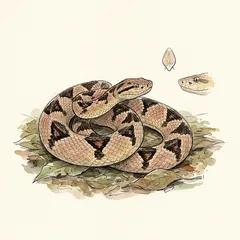
The viper lachesis trigonocephalus is a native of Guiana and is supposed to be the largest poisonous snake known, its length vary- ing from three to fourteen feet.
Toxicologists have taught, that the poison of serpents, introduced into the stomach, does not develop poisonous effects. The latest researches are fully in accord with the statements made by Dr. Higgins, who informs us that a person whose digestive organs are perfectly sound, can take two or three drops of the poison of the crotalus horridus in a teaspoonful of water, without producing fatal effects ; but should an organic lesion exist, such as an abrasion of the mucous membrane, or an ulceration, the poison would then act toxically by being absorbed into the part where the lesion exists, and prove fatal in precisely the same manner as the bite of the snake.
While we cannot ignore the result of proviugs made in the usual manner, we are strongly inclined to believe that provings made by hypodermic injections of dilutions of the poison would add very much to our positive knowledge of its action upon the healthy; we are also ready to assert that the highest curative powers of lachesis, and of other serpent poisons, would be developed, if the medicire were administered to the sick in a similar manner.
It has been thought that the poison of these reptiles acts in the manner of soluble ferments. Very recent investigations, made by M. Lacerda, at Kio de Janeiro, show "that the matter in question contains what is called figured ferments, the analogy of which*with bacterides is very remarkable. From a young and vigorous crotalus, subjected to the action of chloroform, he obtained a drop of the venom on a chemically clean piece of glass, and at once placed it under a microscope.
Almost immediately he observed the forma- tion of filamentous pulp of an aborescent disposition. Gradually
272 LACHESIS.
the thickened filament, after having pushed out spores, dissolved and disappeared, and the liberated spores swelled and enlarged visi- bly, each of them sending out a minute tube, which lengthened rapidly. After a very short period, the latter separated from the first spore and constituted another nucleus for engendering the deadly contamination. In the examination of the blood of animals killed by the bite of one of these snakes M. Lacerda noticed that the red globules of the blood commenced to present some small brilliant points on the surface, which spread with great rapidity, and ultimately the globules melted one into the other, forming a sort of amorphous paste, which could no longer circulate in the veins.
Other animals, into which that blood was injected immediately after the death of the first, expired in a few hours, presenting all the symptoms of having themselves been bitten, and their blood showed the same alteration." {Homoeopathic Times, June, 1879.)
It has also been taught that alcohol wholly destroys the poisonous qualities of the venum. Higgins declares such teaching to be erro- neous, and states that the mixing of the venom with alcohol, sulphuric acid, etc., in a diluted or undiluted state, does not rob the venom of its poisonous properties. Nor does age lessen the force of the poison. Magendie's experiments show that the poison of a viper may be kept in a vial for a long time without loosing its terri- ble power.
Poison, kept in this way for twenty-two and even twenty-six months, was still able to cause a swift death, when intro- duced into the current of the circulation. It has been mixed with water, frozen and kept for half an hour at 4° below zero, without losing its virulence any more than it did by being kept at a temper- ature of 212° F. It has been boiled before being injected; there was simply a lessening in the intensity of local action, but its constitutional effects were, as usual, fatal.
It has been kept, diluted with water, until decomposition of the animal matter set in and animalcules made their appearance ; upon testing the poison, it dis- played its usual promptness of action.
We must not overlook the fact that all of the serpent poisons ha^ many effects in common, while each group has its own char- acteristics. While all cause death with more or less certainty and promptness, one strikes a deadly blow at life with the rapidity of a flash of lightning, while the other produces prolonged suffering ; one aims at the heart and speedy death follows; another causes the living mass of human flesh to rot and drop off, until the bone is
LACHESIS. 273
laid bare, a large vein is readied, the opening of which at last closes the scene, (see Higgins on Ophidians, page 99). A differential study of these poisons, then, becomes a matter of necessity.
One difficulty in the study of serpent poisons and their effects upon the system arises from contradictory statements made by various authors. To explain these, we must remember that at cer- tain seasons of the year the poisonous properties of the venom are more developed than at others ; hence the bite of the same animal may produce different results at different times. "Just at the time when the snake begins to change its skin and enters into the state of semi-torpidity consequent upon this change, the poison loses its venomous principle, and what is still more singular, the gall loses its bitter principle and becomes sweet to the taste.
The poison ex- tracted from the reptile in this state is a milky, thick, viscous fluid, which soon separates itself into a white, ropy sediment, and a super- natant, transparent, slightly viscous liquid, showing no trace of acidity. Neither the sediment nor the colorless liquid alone or in combination causes death in pigeons or dogs, but a septicaemia is produced which is limited and not profound in its action. The poison continues in this condition until the state of torpidity ceases, and when the colors on the new skin are very brightly marked and distinct, the venomous principle is again restored to the poison and the bitter principle to the gall." (Ophidians, page 135.) Another point of importance is the fact, that in all probability the poison loses much of the intensity of its action when the animal is in a state of captivity.
The student of animal life knows how effectually a state of compulsory confinement changes the nature of animals ; Why should it not. then qualify the nature of its physiological products?
In the study of cases of poisoning it is also necessary to observe the locality of an injury received, for the nearer the heart the loca- tion of a bite is, the more rapidly will fatal results show themselves. Again, constitutional peculiarities of the wounded person must be properly estimated, and in the cases of animals, sight must not be lost of the fact, that the poison acts more swiftly in warm-blooded animals than in those of the other class.
Dr. Kuehn relates the following case of poisoning by the trigono- cephalus lachesis in a Dutch magazine :
"A young soldier, at the moment he was bitten by this serpent, felt as if he had been struck by lightning and fell down without
VOL. II.— 17.
274 LACHESIS.
consciousness. In this condition he vomited and passed stool. After the lapse of an hour he recovered his senses, complained of great oppression and anxiety on the chest, with constant inclination to vomit. 'Che hand and arm became inflamed and swollen ; there was dryness in the mouth, constant thirst, great pain in the arm, continual fever and dryness of the skin. For seven days the urinary and alvine secretions were entirely interrupted ; the face was bloated and swollen, the eyes dull, the pulse small and hurried, the skin dry and burning, the tongue coated and thirst unceasing.
The pains from the hand to the chest were intolerable ; the hands and fingers were very much swollen and insensible ; the place where the bite had been inflicted was gangrenous ; the arm, as far as the shoulder, was inflamed and swollen ; here and there the arm was covered with gangrenous blisters, so that it became necessary to amputate it.
The case just cited illustrates the differential points between the action of lachesis and that of other serpent poisons. It is, as Dr. Hughes remarks, generally admitted that the constitutional phenom- ena resulting from snake-bites depend partly upon blood-poisoning and partly upon distress of the nerve centers. While the crotalus horridus, of all the serpents, seems to exert its most specific effect upon the blood, the lachesis attacks the great nerve centers.
The person wounded drops as if a bolt from heaven had smitten him ; con- sciousness leaves him to return only after the lapse, of an hour. And as we carefully examine the symptoms which follow, we do not only recognize, in unmistakably plain language, the powerful effect of the poison upon the sympatheticus and vagus, but are inclined to look upon the subsequent changes in the sanguineous fluid as depend- ing largely upon this primary disturbance in the nervous system, making due allowance for the direct effect of the venom upon the blood.
"Lachesis, in common with other serpent poisons, produces, first, direct weakness of the heart's action ; second, weakened respiration and difficult deglutition ; third, an incoagulable condition of the blood, and, fourth, actual disorganization of the muscular tissue. Locally, it produces gangrene." (Dunham.) "Lachesis, aside from its specific action upon the nerve-cells and fibres, impairs the phys- iological fitness of the blood-cells and acts with decomposing effect upon the blood. It causes pains of various kinds and sensation of pulsation in various parts of the body, uncommon weariness of body and mind, relaxation and total collapse of strength and great desire to lie down, especially in the forenoon and after dinner; general condition impaired and suffering, and longing for absolute rest.
LACHESIS. 275
Paiu as from bruises in the muscles, attacks of fainting, trembling and jerking; general jerks through the body and spasmodic par- oxysms with stretching of the body, appearance of the complaints on alternate sides. Spring air, riding in a carriage, drinking of wine and smoking, aggravate ; many complaints announce themselves in the morning and also immediately after awaking (also from an after-dinner nap) ; the open air affords relief." (Heinigke, Patho- genetic Outlines.)
Among the characteristics $f lachesis the following are of especial value : Great depression of body and mind ; profound sadness ; sore throat, beginning on the left side, extending to the ear, and accompanied by tightness in the larynx ; cannot bear the slightest pressure around the throat ; aggravation of symptoms after sleep, or, as has been recently stated, "the patient's suffering waken him from sleep."
CEREBRO-SPINAL AND NERVOUS GROUPS.
Lachesis has caused : Vertigo, from looking at any object, mo- mentary, on closiug the eyes, with pale face ; with heaviness in the head, like lead, worse about the occiput. Severe pains all over the head, so he cannot see or stand, must lean against the wall. Fre- quent congestion to the head, with dullness of the head. Headache over the eyes and forehead, pressing, hammering, bursting, throb- bing, worse after awaking from sleep ; aggravated by pressure and stooping.
Pale or bloated and red countenance ; stupid expression of the countenance. Pressing, burning pains in the temples, better when lying down. Numbness and crawling on the left side of the head, when touched or on moving the muscles. Distorted features.
Languor, weariness ; trembling all over. Neuralgic pains, changing locality, usually darting from left to right. Tearing, pricking pains in various parts of the body. Numbness of the left arm, with pal- pitation of the heart and anxiety about the heart; small, weak unequal, intermittent pulse ; pulse alternately full and small.
Vertigo
Lachesis had been employed in the treatment of vertigo, with staggering to the left side, inability to see or to stand, obliging one to lean against the wall for support, vanishing of thought, frequent momentary vertigo, worse after waking from sleep, from stooping, from exposure to the rays of the sun. Char- acteristic headache.
HEADACHE, especially on the left side, intense, running down into the neck and shoulders ; frontal headache, throbbing, hammer-
276 LACHESIS.
ing, from within outward ; pale, or dark-red bloated face ; worse in the morning, after waking from sleep at any time of the day ; from exposure to the sun. Vertigo.
PARALYSIS, left-sided, with characteristic headache ; vertigo ; awkward, stumbling gait.
Pricking and tingling in the extremities.
Characteristic tightness about the throat.
After apoplexy.
APOPLEXY, preceded by vertigo, with blue color of the face, tremor of the extremities, convulsive movements ; blowing expira- tion ; when conscious, loquacity, with constant jumping from one subject to another. Characteristic tightness at the throat ; brought on by exposure to the sun, abuse of stimulants, violent mental emotions ; left-sided.
SUNSTROKE, with similar symptoms.
EPILEPSY, in persons who suffer much with vertigo and lachesis- headaches.
The patient utters a cry and falls down unconsciously, as if struck by lightning.
Convulsions, foaming at the mouth.
Said to be of especial value in masturbators and- in persons who labor under violent sexual excitement.
Caused also by violent mental emotions, especially jealousy.
Preference for left side.
SUPRA-ORBITAL NEURALGIA
We may also mention its use in supra-orbital neuralgia, preceded by flushes of heat, followed by faintness and prsecordial uneasiness ; heaviness of the eyes, which feel as if they had been taken out and squeezed, and then put back again (Dr.
Martin) ; left-sided, worse from stooping, after waking from sleep.
In
NERVOUS AFFECTIONS OF THE HEART lachesis is often a useful remedy.
We find a tendency to rheumatic affections, with palpitation of the heart, uneasiness in the region of the heart; con- striction about the heart ; frequent, deep sighing, fits of suffocation and fainting, weak, and often intermittent pulse, stitches in the left side of the chest.
(Stitches from the right os ilium, through the abdomen and chest, as far as the shoulders, after which the stitches strike from the left lower to the right upper side
Dr.
Gregg).
OEBITAL AND AURICULAE GEOUPS.
Dimness of vision ; black flickering before the eyes.
Itching, pressing, burning, stinging in the lids and in the eyes ; pains above the eyes; the symptoms are aggravated from touch and motion.
We have also the following : the flame appears to possess a fiery glare and to be surrounded by a light blue ring.
Numbness in the external ear, with itching and painful drawing in the meatus ; sore-
LACHESIS. 277
ness of the mastoid region ; tearing pains extending from the zygoma into the ear. Deafness, seemingly from obstruction, with chirping, roaring and a hammering sensation in the ear.
ULCERATION OF THE CORNEA While these symptoms
are mainly of value when found in connection with other indications, they have led to the use of lachesis in ulceration of the cornea, and in
SCROFULOUS INFLAMMATIONS of the eye, in persons whose constitutional symptoms justified the selection of the remedy. Also in
DEAFNESS, where the symptoms described are present, with dryness of the ears, hardness of the cerum, and relief from the dis- turbing noises in the ear by inserting the finger in the external meatus and shaking it.
UUCCAL GROUP.
Lachesis has : Tearing and throbbing pains about the roots of the teeth, with swelling and suppuration of the gums, bluish, swollen, bleeding gums, worse from warm drinks; decaying, crumbling teeth.
TOOTHACHE. — These symptoms point to the use of lachesis in toothache where the periosteum is affected and where death of the nerve exists.
AVe find also : Soreness of the roof of the mouth ; bad odor from the mouth ; ptyalism, the saliva being tenacious and ropy.
Sour, bitter, fiat taste in the mouth.
Difficult speech.
The tongue trembles when protruded, or catches behind the teeth.
It is white and swollen, or dry, red and cracked at the tip; red tip and brown center; or dry, black and stiff.
The papillae are enlarged.
Elonga- tion of uvula ; swollen or ulcerated condition of the fauces.
Diffi- cult deglutition ; painful empty swallowing ; sensation of a lump in the throat, which descends upon swallowing, but returns again.
When swallowing fluids, they escape through the nose.
Constant desire to swallow, a sharp pain running into the ear when making the effort.
Miich phlegm in the fauces, with painful hawking.
The tonsils are swollen, especially on the left side.
Constriction of the throat, which feels as if tied, worse from the least external pres- sure ; suffocating spells, worse during or on awaking from sleep.
Sensitiveness (nervous) of the external throat to touch.
SORE THROAT. — These symptoms suggest the use of lachesis
278 LACHESIS.
in sore throat of various degrees of intensity, characterized by the symptoms described.
One very reliable indication of lachesis in all inflammatory conditions of the throat, is the following : The severity of the symptoms is out of proportion to the morbid appearance seen on inspection ; the nervous element preponderates.
Lachesis is of great value in the treatment of
TONSILLITIS presenting the above symptoms, but nearly always beginning on the left side.
A well-known lady of P. had been subject to-attacks of quinsy, which had occurred many times during an elapse of five years after her first and only confinement.
During each attack she suffered all the while with great soreness and sensitiveness of the pharynx and tonsils, and a sensation as if she had a plug in her throat.
So sensi- tive was the exterior of her throat, that she was unable to endure the slightest touch or pressure upon the surface.
Lachesis50 was prescribed to be taken in globules upon the tongue every two hours.
The effect of the first day's treatment was to relieve the great sensitiveness externally and internally.
The second day she was unable to swallow fluids, and yet the tumor in her throat was less painful.
The third day she was able to swallow food in the form of a custard.
The fourth day she felt the tumor to be less, and each succeeding day it gradually diminished until the whole disappeared, it having terminated by resolution and she never had another attack of this disease.
(Dr.
A.
E.
Small in U.
S.
Med. and Surg.
Journal, October, 187 1.)
DIPHTHERIA, the membrane spreading from left to right ; dry, dull, livid appearance of the parts, with comparatively little swelling.
Great uneasiness, the patient changing position constantly.
Deep reduess of the tongue and fauces ; painful empty deglutition, the pain running into the ear.
Fluids swallowed are returned by the nose.
Extreme sensitiveness of the external throat to touch.
The pain in the throat is far more severe than is warranted by the appearance of the parts.
Great depression of the physical and intellectual forces.
Foul odor from the mouth ; bitter, flat, putrid taste in the mouth.
Hard aching all over, seeking relief in change of position.
Cardiac debility.
Cold, clammy perspiration.
Muttering delirium.
Symp- toms worse when waking from sleep.
During the prevalence of diphtheria on the banks of the Hudson in 185S-60, many cases occurred in which the severity of the constitutional symptoms was very much greater than the local manifestations of disease in the pharynx would have led one to anticipate. In some cases in which the tumefaction in the throat was slight, and the redness of the mucous membrane hardly noticeable, and in which the diphtheritic deposits consisted merely of two or three little patches hardly larger than a pin's head, the prostration of strength was quite alarming; the pulse became, in a very short time, slow, feeble and compressed, a cold, clammy sweat frequently cov- ered the forehead and extremities, the breath was fetid, the appetite entirely destroyed — indeed, the patient passed with alarming rapidity into a completely asthenic condi- tion.
Not infrequently the prostration had become quite considerable even before any local evidences of disease could be detected. In such cases— in all in which the constitutional symptoms thus predominated over the local symptoms — lachesis pro- duced prompt and lasting improvement, so that very rarely was any other medicine given subsequently. (Dr. Carroll Dunham.)
LACHESIS. 279
CHYLO-POIETIC GROUP.
Lachesis has caused : Sour, flat, foul taste.
Loss of appetite.
Feeling of emptiness and of faintuess at the stomach.
Gnawing in the stomach, relieved after eating, but returning as soon as stomach is empty.
The pit of the stomach is sensitive to touch.
Painful disten- tion, flatulence.
Abdomen hot, sensitive, painful.
Cutting in the right side of the abdomen, causing fainting attacks.
Acute pain in the liver, extending toward the stomach.
Constrictive feeling in the region of the liver ; ulcerative pain in the liver.
Beating in the anus, as from hammers.
Tormenting urging, but not to stool.
Itching at the anus, worse after sleep.
Costive, ineffectual urging; anus feels closed.
Stools offensive, even if formed.
Thin, offensive stools ; stools watery, light-yellow, fecal ; or dark, chocolate colored, cadaverous smelling; or of decomposed blood, looking like charred straw ; or mixed blood and slime ; worse at night, after acids ; during warm weather.
We prescribe lachesis in
INDIGESTION, with gnawing in the stomach, relieved by eating and returning again within a few hours, long-continued faintness, sensitiveness to touch in the pit of the stomach, constipation with hard and difficult stools ; characteristic vertigo and headache, etc.
Gastric difficulties of drunkards.
Dr.
Hoi combe gives "a percepti- ble trembling in the epigastric region " as characteristic of lachesis.
CAEDIALGIA with flatulence, constipation, hard, gnawing pain in the stomach, great melancholy of the patient, sensitiveness to touch in the epigastric region, and other symptoms given at the head of this group.
CONSTIPATION, with constriction in the rectum ; urging, but not to stool ; sensation of a plug in the anus ; beating in the anus, as from hammers; constipation alternating with diarrhoea; pro- lapsus recti ; characteristic gastric difficulties. The stools are very offensive.
DIARRHOEA of undigested, light-yellow, watery, or of dark, chocolate-colored, very offensive stool.
Humbling in the bowels ; burning at the anus ; sensation of constriction in the rectum ; aggravated by sour fruit, and worse at night, and immediately after waking from sleep.
Said to be of especial value in spring, when the first warm weather makes its appearance.
DYSENTERY with a tormenting, constant urging in the rectum without a stool ; the pain is increased by an effort at stool and the patient is obliged to desist. "The discharges are chocolate-colored,
280 LACHESIS.
of a cadaverous smell ; burning at the anus during the evacuations, cramp-like pain in the abdomen ; coldness ; thirst ; abdomen very hot ; tongue red and cracked at its point, or black and bloody." (Eaue.)
RESPIRATORY GROUP.
We find the following under lachesis : Hoarseness, rawness, dry- ness of the larynx ; sensitiveness to touch.
Sensation as of a plug which moves up and down, with short cough.
Constriction of the chest.
Short cough, with scanty, difficult expectoration.
Hoarse- ness, worse in the evening, with a sensation as if something ought to be hawked up.
Gagging, persistent cough, from tickling in the throat, under the sternum or in tho stomach; worse on falling asleep or from smoke, pressure on the larynx, from eating, change of temperature, from taking alcoholic drinks.
Expectoration scanty, difficult, salty, must be swallowed again.
Cough, with slimy, bloody sputum.
Paroxysmal, suffocative fulness in the chest.
Sore, burn- ing, stitching pain in the chest, especially in the left chest.
Great dyspnoea upon making an exertion.
We prescribe lachesis in the following :
APHONIA with sensitiveness of the larynx to touch ; the larynx feels swollen, contracted. Suddenly something runs from the neck to the larynx and completely interrupts breathing; worse upon waking from sleep.
NASAL CATARRH. — "Coryza preceded for one or two days by a feeling of soreness, rawness and scraping of the throat ; excessive sneezing ; extremely copious discharge of watery mucus ; swelling and soreness of the nares and lips; plugs in the nostrils ; lachryma- tion, or, instead of discharge, obstruction of the nose, with buzzing in the ears, headache, ill-humor, and inability to drink." (Lilienthal.)
COUGH, excited by constant tickling under the sternum, or in the stomach ; expectoration scanty, difficult, saltish, must be swal- lowed; sense of fulness and of contraction in the larynx; sensitive- ness of larynx to touch, and other symptoms previously described. Implication of the vagus.
CHRONIC BRONCHITIS, presenting the same group of symp- toms, with characteristic catarrhal symptoms.
PNEUMONIA, with hepatization, especially of the left lung; "useful in removing deposits resulting from inflammations in lungs already invaded by tubercles, or from low-graded chronic inflamma- tions, developing during the progress of other diseases." (Lilienthal.) See symptoms at the opening of this group.
LAcnESis. 281
PHTHISIS with characteristic symptoms, great loss of strength, cough excited by tickling under the sternum, aggravation of fever in the afternoon ; hard coughing spells upon waking from a nap ; fetor of breath : soreness of the mouth during the last stage.
CROUP with patches of exudation in the fauces, with character- istic cough and sensitiveness of the throat to even the lightest touch ; aggravation of the cough after waking from sleep ; cough excited by tickling under the sternum and in the stomach.
Dyspnoea.
Scanty expectoration.
Depression of the heart's action.
TUSSIS CONVULSIVA with hoarseness, dyspnoea, hard cough- ing spells, excited by the characteristic tickling under the sternum, inability to expectorate — the scanty amount of mucus dislodged must be swallowed. Emaciation ; exhaustion.
ASTHMA. — We may also be called upon to prescribe lachesis in asthma, with symptoms repeatedly described under this group.
R.
H.
S., aged forty-two years.
Sanguine temperament.
Mother of two children, usually in good health, is subject to attacks of asthma, which is somewhat hereditary.
Was taken, November 2d, with a most violent attack of spasmodic asthma, characterized by the following symptoms, viz. : sharp pain through the lungs, with great dyspnoea; both pain and dyspnoea are aggravated by sitting erect or by lying down, alleviated by bending forzoard and throwing the head back.
There was a feeling of intense constriction in all parts of the chest, as if the lungs were being pressed tip into the throat, causing such extreme agony that she despaired of life.
These symptoms were accompanied by a feeling of constriction about the neck, as though a cord was tightly tied around it.
The sensation of constriction necessitated loosening the clothes at the neck and waist.
At times during the paroxysms she suffered from a sensation as though the heart turned over and ceased beating for a moment, then commenced again with increased force.
Auscultation revealed numerous cracking, whistling sounds, induced by the passage of air through a tenacious, glary mucus in the smaller bronchise, as was evident when the paroxysm was relieved and the mucus began to be expectorated.
The lungs seemed full of mucus, yet none could be raised.
The paroxysms are sometimes induced by rapid walking or by laughing.
When the paroxysm was most severe, the face was so congested as to be almost purple.
After administering ipecacuanha, arsenicum, cuprum and hyoscyamus with- out benefit, I selected lachesis as the similimum to the case, and gave one dose of lachesis3000.
The remedy was given about 5 P.
M. of a cold, cloudy, damp evening of November, in the increasing stage of a most violent paroxysm, with-a fearful fore- boding in the mind of the patient, that she would suffer intensely through the night.
In less than ten minutes I saw an evident amelioration of the symptoms.
The wheezing, whistling sounds in the chest and throat began to yield.
The patient gradually improved and was able to sit erect with comfort when I left.
The dose was repeated after an interval of three to four hours, when the remedy was discon- tinued with the exception of an occasiodal dose for two or three weeks and no par- oxysm has since appeared, though nearly ten months have elapsed.
(Dr.
C.
L.
Hart, Med.
Investigator, April, 1874.)
EEVEK GKOUP.
Lachesis cannot be depended upon as a remedy in inflammatory fevers, but it becomes a most important agent in the treatment of those fevers which depend upon, or are characterized by profound
282 • LACHESIS.
depression of vitality and by disorganizing processes. To this class belong the following:
SCARLATINA, especially the malignant type.
Ulceration of the tonsils ; tendency to gangrene.
Sensitiveness of the external throat to the slightest touch ; stitching pain, running into the ear ; great difficulty of swallowing, especially of liquids ; empty deglutition excessively painful, and constantly invited by a sensation of a plug in the throat ; liquids swallowed escape through the nose ; saliva abundant, tenacious, ropy.
Accumulation of dried mucus in the nose ; suppuration of the glands of the neck.
All the throat symp- toms worse on the left, side and aggravated after sleep.
Intermittent, weak, frequent pulse ; sleep light ; the patient lies on his back, groans and mutters in his sleep ; stupor ; pale, sunken face, with dropping of the lower jaw.
The tongue looks dry, red and cracked • it often bleeds and trembles when an attempt is made to protrude it, or the tip of the tongue remains under the lower teeth and does not come out.
Paralysis of the muscles of deglutition.
Passive haemorrhages of dark, fluid blood.
Scanty, black urine ; terribly offensive stools.
Indistinct speech.
Increase of fever in the afternoon.
L.
M. had been sick for twenty-four hours when first seen.
I found him in the following condition: Great heat of the head and face; the face red and swollen ; eyes injected; tongue, mouth and throat red and much enlarged; tonsils, fauces and palate inflamed and much swollen; swallowing difficult; body and extremities warm, but not so warm as the head ; rash of the miliary variety, appearing on the face, neck and chest ; pulse frequent with slight irregularity in the strength of the beat.
He had lain in a soporous condition for over twelve hours ; with the excep- tion of a slight occasional moan the patient gave no sign of pain, but lay quiet.
Prescribed belladonna.
The patient, for eighteen hours, continued to grow worse, the soporous condition advancing to the comatose ; the swelling of the tonsils, fauces, palate and uvula is constantly increasing; the redness is asuming a darker shade and swallowing has become more difficult.
The rash is developing slowly and appears in patches on the body and limbs; the color is becoming darker and returns more slowly when removed by pressure.
Prescribed lachesis.
The condition of the patient has not changed during the last twelve hours.
But in another twelve hours the coma has become less profound, the swallowing somewhat easier and the rash is out better.
Prescribed lachesis.
In twelve hours the sopor is much less ; the swal- lowing has improved and the swelling has diminished.
The general appearance is decidedly better.
Under the continued use of lachesis the patient made a good recovery.
(Dr.
E.
Fish.)
E.
F., aged twelve years, had been prostrated some eight days with malignant scarlatina, which went on with disintegrating influences until the canker and ulcers spread from the mouth to near the chin, with sanious discharges from the nostrils and throat.
Under jaw dropped, and the patient, when first seen by the writer, was having constantly-recurring spasms of almost the entire muscular system.
The movements might be characterized as short and tremulous.
Attending physicians had given up using remedial measures and thought patient in a dying state.
Gave lachesis200.
Spasms abated in a few minutes, and passed away entirely in a few hours.
Reaction was thoroughly established in twenty-four hours, and lachesis was all the remedy needed in the case.
(Dr.
G.
N.
Brigham, Am.
Horn., April, 1879.)
LACHESIS. 283
It is sometimes necessary to diagnosticate between belladonna and lachesis, whose sphere of action differs widely. The symptoms of belladonna are of an actively-congestive character, acute and ener- getic, with a full, strong and active pulse ; great heat and dryness of the skin ; glowing redness of the face, with injected eyes and all the symptoms of an active congestion. Lachesis presents symp- toms of a low state of the vital forces ; a condition of great prostra- tion ; a pulse small, weak, frequent and uneven in volume ; the surface is often cool and the extremities decidedly so ; the face is pale, dusky and even death-like.
The skin symptoms of the two remedies are also of much diagnostic' value. Belladonna has that smooth, shining, scarlet rash, so well known ; the eruption of lache- sis is dark-colored, apt to come out tardily and often in patches, interspersed with petechias ; the redness of belladonna returns quickly after the removal of pressure, that of lachesis comes back slowly ; belladonna acts more particularly upon the cervical glands and their enlargement is often accompanied by acute inflammation of the tonsils and fauces of a bright, red color.
Lachesis produces a very marked swelling of both the external neck and the internal throat ; the congestion is venous in its nature, causing a dark, vivid appearance of the throat, and there is a strong tendency to sup- puration.
TYPHOID FEVER calls for lachesis, when there exist all the symptoms of thorough blood-poisoning, with muttering delirium, dropping of the lower jaw; dry lips, which are cracked and bleed- ing ; trembling of the tongue when attempting to protrude it, or the tip of the tongue remains under the lower teeth ; sunken, cadaverous countenance ; cough, with bloody, slimy expectoration. Thirst ; deafness ; gurgling and rumbling in the bowels ; diarrhoea of choco- late-colored, very offensive stools ; dark urine ; haemorrhages from the nose and bowels of dark, fluid blood ; great restlessness ; fever worse in the afternoon ; sweat without alleviation of symptoms.
YELLOW FEVER, with a similar group of symptoms. After the abuse of quinine and calomel.
INTERMITTENT FEVER
Lachesis is also a valuable remedy in the treatment of intermittent fever, especially in cases where the paroxysms recur every spring after previous suppression by quinine.
The chill, which is preceded by thirst and shuddering, commences in the small of the back, runs upward and is greatly relieved by external warmth.
Oppression in the chest, with pleuritic stitches in
284 LACHESIS.
the chest, relieved by firm pressure.
Slight nausea and vomiting.
Heat, with thirst, violent headache, oppression of the chest, altern- ating with spells of shivering and characterized by a desire to uncover.
The sweat is not very marked and does not relieve the fever.
Oppression in the chest, with frequent sighing.
Usual characteristics of lachesis.
PUERPERAL FEVER and puerperal convulsions, with offensive discharges from the uterus ; unconsciousness ; muttering delirium ; excessive tenderness in the uterine and abdominal region, making the pressure of the bed-clothes unbearable ; pains relieved by a flow of blood ; all the symptoms are worse after a short sleep. Suppres- sion of urine.
Mrs.
G., aged twenty-four years, small in stature, of fair complexion, nervous- sanguine temperament, was confined July 6, 1867.
On the third day she was taken with convulsions.
At first they returned about once in six hours, but soon continued uninterruptedly, in spite of all treatment, for forty-eight hours.
At last lachesis, high, was given.
After the first dose the convulsions ceased for nine hours, when she had another.
A repetition of the dose sufficed to cure.
The symptoms suggesting lachesis were: the convulsions commenced upon the left side, in the face and con- tinued longer and were more severe about the neck and throat than elsewhere.
She had sixty-five distinct convulsions.
(Dr.
H.
Minton in the Am. your, of Horn.
Mat.
Med., March, 1868.)
INFLAMMATORY GROUP.
For the sake of convenience we will range the following under this group :
MASTITIS with lancinating pains extending into the arms.
Chilliness, shivering, etc.
Bluish, mottled appearance of the breast.
PERITONITIS with great abdominal heat and tenderness ; con- stipation; dry, hard, offensive stools; scanty, turbid, foaming urine, with reddish sediment.
Oppression of the chest, and irregular action of the heart.
Stupor or loquacious delirium.
The patient lies on his back with his knees drawn up.
In complication with typhilitis.
RHEUMATISMUS— Rheumatic swelling of the index finger and wrist joint ; rheumatic pains in the knees, stinging, tearing, and sense of swelling; swelling of the knees, with sense of tension in the bend of the knees, difficulty in stretching the limb, and pain of the thigh (posteriorly) as if swollen; bluish-red swellings. The pains are generally worse after sleeping ; they do not improve after profuse sweat; the left side is generally the most affected, or the affection commences on the right and goes over to the left side. Arthritic con- tractions of the limbs after the abuse of mercury and quinine. (Raue.)
LACHESIS. 285
GANGRENE, especially traumatic gangrene. Dark, blackish looking blisters, with intense itching and burning; tingling and numbness of the part, coldness of the affected part; rubbing is followed by the appearance of sore, painful spots, with dark borders and dry scurfs, distortion of the mouth and face toward the left side ; itching and twitching of the hands and lower limbs while sitting; constant sopor after the cessation of pain; con- vulsions and spasms with violent shrieks ; trembling ; anguish ; oppression of the chest.
Boy, nine or ten years of age; severe injury from the explosion of a pistol, held in the clenched hand.
Small finger with its metacarpal bone blown from the hand, and left hanging at the wrist by a small bundle of flesh, skin and tendons.
The soft parts in the palm of the hand loosened from the bones, allowing my finger to pass through to the thumb border of the hand, as into a pocket.
Dressed the hand ; applied arnica and water; gave arnica internally.
Dressed with a view of saving the little finger.
Inflammation followed, and the whole hand much swollen and painful.
On the filth day, removed the dressings ; union by the first intention had taken place in some portions of the wound, in others granulation was proceeding finely ; but at the junction of the finger with the hand, on the lower part of the palm, there was a spot nearly the size of a twenty-five cent piece, puffed up, of an ash-gray color, emitting an exceedingly offensive odor.
Gangrene had commenced.
One dose of lachesis8, arrested the process in a few hours.
The dead portion sloughed off shortly after, and the healing process went on uninterruptedly to a favorable termination.
The cure was complete, and the finger saved.
(Dr.
J.
P.
Dake, Sen.)
Young man, aged twenty- two; ankle badly injured by being caught under a large grindstone; tibia and fibula both broken, about three inches above the ankle joint; severe contusions of parts, which were also much lacerated, leaving openings down the tibia (compound fracture). Adjusted the parts, dressed and applied arnica, as usual in such cases ; gave arnica internally. All things went on well, seemingly, until the seventh day, when on entering the room, my attention was arrested by an exceedingly offensive fetor;
I recognized it as an indication of gangrene, and exposure of the parts confirmed my suspicion. For some distance around the borders of the flesh wounds appeared bluish-purple vesicles, covering a dirty-looking ash-gray ground ; and it really appeared as if amputation would be forced upon me as the only rule of practice. An experienced physician, who saw it at the time with me, said as much ; but I determined upon trying lachesis, and gave one dose of the 6th, which acted as if by magic.
In six hours, the nature of the case was entirely changed ; in twenty-four, the blisters had disappeared and the swelling gone down, and two days later the dead portions sloughed off, bringing to view a healthy granu- lating surface. The wounds henceforth healed kindly, and in due time the cure was complete and a foot saved which, but for lachesis, would, in all probability, have been sacrificed. (I6id.)
EXANTHEMATOUS GROUP.
Lachesis has : itching aud burning of the whole body ; yellow or purplish blisters; miliary eruption; rash appears slowly or turns livid and black ; bullae, dark from serum within ; swelling of the skin and connective tissue on the head or face ; falling off of the hair of the head.
Connecting these seemingly unimportant symptoms with other and more striking groups, we use lachesis in a large number of im- portant conditions which we may note under this heading.
286 LACHESIS.
HERPES, and other forms of skin disease, with vesicles which are at first white or yellow, then turn black, painful, burning, itch- ing.
When scratched they break and leave behind them a raw, sore surface, often exquisitively painful to touch.
Periodical erup- tions, coining on in spring and fall.
MALIGNANT BOILS, PUSTULES AND ULCERS on various parts of the body, with much pain, unhealthy granulation, secretion of thin, bad pus; destruction of the deep-seated tisssue; bluish-black appearance of the margin of the sore and of the sur- rounding tissue ; sallow, cachectic appearance of the face ; suspicion of syphilitic taint.
If on the leg, a varicose condition of the limb is often present.
Great prostration.
In the year 1S53 there prevailed, quite extensively, in Brooklyn, an epidemic of what was called " malignant pustule." A furuncular formation appeared, generally upon the lower lip, attended with severe pain, and frequently surrounded by an erysipelatous areola. The most marked constitutional symptom was a very rapid and excessive loss of strength, the patient being reduced from vigor to absolute prostration within the space of from twenty-four to thirty-six hours. * * In eight cases treated by myself, lachesis was the only remedy used. It relieved the pain within a few hours after the first dose was given, and the patients all recovered very speedily.
I have three times been called to cases of chronic ulcers of the lower extremities (probably of syphilitic origin), in which the discharge had ceased, the extremity had become cedematous, and a hard, slightly red swelling extending up along the course of the principal veins, together with a great and sudden prostration of strength, low muttering delirium and general typhoid symptoms, gave good reason for supposing that the secondary phlebitis had occurred. In these cases a careful study of the symptoms induced me to give lachesis. The effect was all that could be desired, the patients rallying promptly, all symptoms of phlebitis speedily disappearing. (Dun- ham's Lectures on Materia Medica.)
CARBUNCLES, of bluish -purplish appearance, surrounded at the base with little vesicles, which form fistulous openings.
Discharge of thin, watery or thick, dark, bloody pus.
Great burning pain, worse at night, relieved by the application of cold water.
Tendency to gangrene.
Characteristic constitutional sympton ^.
CANCER, especially of the colloid and encephaloid variety.
Cancer of the breast and of the uterus, with burning, lancinating pains, the latter developing during the change of life.
The consti- tutional symptoms (such as : sentitivencss to pressure, aversion to tight clothing, etc.) furnish our most reliable indications.
GLANDULAR ENLARGEMENTS and tumors, with sharp, lancinating pains, burning pain upon being touched, pains in old cicatrices, mottled and livid appearance of the skin about the tumor, in persons with a suspicious family history.
ERYSIPELAS in its more serious forms, with well-marked cere-
LACHESIS. 2h>7
bral symptoms and a preference for the left side.
Burning pain.
Tendency to faint.
Loquacious delirium.
DROPSY
We may also mention here the use of lachesis in dropsy, more particularly post-scarlatinal dropsy.
Utter and rapid prostration of strength ; great difficulty of breathing, waking the patient from sleep; foulness of the secretions; scanty, black urine; constipation ; dark-colored, very offensive stools ; cardiac, spleenic, hepatic complications.
UEINARY AND SEXUAL GROUPS.
Lachesis is characterized by frequent voiding of dark, black, foamy urine.
Stitches from the kidneys through the ureters.
Ineffectual urging to urinate ; burning when it does pass.
Feeling as of a ball rolling in the bladder or abdomen, when turning over.
Discharge of offensive mucus during micturition.
DIABETES. — These symptoms may justify the occasional use of lachesis in diabetes with great despondency and physical exhaustion, characteristic constipation, tendency to bleeding from the gums, paroxysms of dyspnoea, and the urinary symptoms just described.
URINARY DIFFICULTIES.— Also in urinary difficulties (dys- uria, etc.,) with specific indications.
Lachesis increases the sexual desire in both men and women.
It further produces upon women : Redness and swelling of the ex- ternal genitals, with discharge of mucus.
Pains like a knife thrust into the abdomen.
Copious, smarting leucorrhoea, stiffening the linen and staining it greenish.
"Menstruation scanty, feeble, reg- ular; blood lumpy, black, acrid." Great sensitiveness to pressure in the uterine region, cannot even bear the pressure of the bed- clothes.
Bearing-down pains.
LEUCORRHCEA
Lachesis is a useful remedy in leucorrhoea, as above described, with great weariness, despondency, chilliness at night, with flashes of heat during the day; tendency to faint; sensitiveness to pressure ; scanty menstruation with discharge of black, fluid blood.
Keen, lancinating pains in the abdomen.
MENSTRUAL AND UTERINE DIFFICULTIES which exhibit the symptoms just described ; the uterus feels as if the os uteri were open ; useful in uterine affections at the change of life ; prolapsus uteri.
OVARIAN INFLAMMATION, with keen, lancinating pains, relieved by a flow of (black, fluid) blood.
288 LACUESIS.
METRITIS, particularly at the critical age ; distention of the abdomen ; excessive sensitiveness of the abdomen to pressure, even the weight of the bed-covering makes her nervous; sharp, lancinat- ing pains in the womb, relieved by now of blood ; the mouth of the womb gaps wide. Lochial discharge thin, corroding, offensive.
UTERINE HAEMORRHAGE with bearing-down pain, relieved by a profuse discharge of black blood, which, at times, looks like charred straw.
Chilliness at night, fever during the day.
Pain in the right ovarian region.
At the climacteric period.
CHANCRE
We use lachesis in the treatment of chancre, especially of the phagadenic chancre.
Constitutional symptoms, which will not bear repetition, must determine the choice of the remedy here as well as in
SYPHILITIC AFFECTIONS generally. The mental depression so peculiar to this remedy, the presence of characteristic ulcers on various parts of the body and that nervous sensitiveness to touch so often mentioned are worthy of particular consideration.
NYMPHOMANIA: — Lachesis may be consulted in the treatment of nymphomania in connection with derangements of the sexual apparatus which come within its curative range, and in the treat- ment of
ONANISM, with nightly emissions with a thrill of delight, epilepsy, excessive sexual desire and characteristic disturbances of the nervous system.
SLEEP AND MENTAL GKOUP.
The sleep of lachesis is either very profound, or exceedingly rest- less ; the latter is particularly the case with children.
There is great depression ; melancholy, nervous irritability.
Loquacity, the patient changing from one subject to another.
Sadness.
Jealous disposition.
Imagines herself under superhuman control.
Delirium muttering, rarely noisy.
ANTIDOTAL TREATMENT.— The rapidity with which serpent poisons destroy life, and the futility of any but immediate means of relief, makes them a scourge of terrible severity to the countries which they inhabit.
Native physicians consider inoculation with the tincture of the aristolochia columbiana (?) a valuable propbylactic.
To substantiate these claims, Dr.
Higgins inoculated several dogs by making slight incisions on the inner side of one or more legs and introducing into
LACHES IS. 2S9
it a small plug of cotton saturated with a drop of the tincture. "They would tear in pieces any of the most venomous snakes, and, if bitten, appeared to suffer little or no inconvenience from the bite, which healed of itself in three or four days ; not one of them has, however, been killed by a snake-bite, when previously almost every dog, bitten by a snake, died."
Dr. Higgins claims also that each serpent carries in its gall the antidote of its own poison and of the poison of kindred serpents. He inoculated himself with lachesis-gall and states that snakes, unless provoked, have made no attempt to bite him; that similar results have been observed in the case of others inoculated by him, and that such inoculation proved a protection from the annoyance of the bites of flies, fleas and sand-flies, an item of no small im- portance in a tropical climate.
It is even claimed by the same observer that the attenuated gall, administered internally, will remove the effects of serpent poisoning. Among other cases he mentions that of a blacksmith who, thoroughly drunk and conse- quently somewhat protected against the accident which soon followed, received several bites from a rattlesnake. In consecpience of the injury he suffered with severe rheumatic pains, which made him almost helpless and were followed by an epistaxis of three or four days' duration.
A few doses of the diluted gall of the crotalus horridus cured him promptly.
Among the antidotes, usually employed, we may mention the fol- lowing : Ammonia, which is usually used hypodermically ; iodine ; olive oil; bromine; alcohol in some form and Fowler's solution of arsenic.
A man was bitten by a rattlesnake on exhibition in Phila- delphia.
He was treated with Fowler's solution and was quite well again a few days after the occurrence.
Sucking of the wound as soon as possible after a bite has been in- flicted is a common means used to prevent fatal results. If alcohol, in some form or other, is employed, it should be given in doses large enough to intoxicate, if possible.
vol. n. — 18.
290 LAUKOCEKASUS.
LAUKOOEKASTJS.
[CHERRY LAUREL. NATURAL .ORDER, ROSACEA.]
This fine evergreen, perennial shrub is a native of Asia Minor and Persia, but has been naturalized in every country of middle and south Europe.
It is from fifteen to twenty feet high.
The flowers are white, slightly tinged with yellow, long and clustering ; it bears berries of a deep purplish black, larger than the common cherry ; they have a sweetish taste.
Leaves of a beautiful glossy, shining green, elliptic, oblong, four to eight inches in length, stiff and leathery; if bruised, they emit a strong odor.
From the leaves, which are gathered in April and May, we obtain a dark reddish- green tincture.
It is generally supposed that the leaves of the cherry-laurel owe their poisonous property to the hydrocyanic acid which they contain. This must not be understood as though they contained hydrocyanic acid in its genuine form. We undoubtedly obtain a hydrocyanated oil from the leaves, but Christison informs us that " this oil does not exist in the leaves ready formed, but seems to be produced by some mutual reaction of principles brought in contact with one another, when the cells of the plant are crushed and broken up."
Goeppert, another distinguished toxicologist, likewise informs us, that the poisonous effect which the distilled water of cherry-laurel has on almost all vegetables, is owing to some quality peculiar to it, and not to the hydrocyanic acid it contains, as its activity is greater than that of water containing the same quantity of the acid.
Laurocerasus seems to act upon the brain and spinal marrow, and to destroy life by paralyzing these nervous centres.
Several cases are recorded of its poisonous effects on the human subject.
One of the earliest happened in Dublin in 1728 :
Martha Boyce, servant to a person who sold large quantities of the water, gave to her mother a bottle of it, and by the latter it was given to Frances Eaton, her sister. Mrs. Eaton was a shop keeper and thinking it a compliment to her customers, offered- them some ; among others, one Mary Wlialey drank of it, went to another shop, and in about a quarter of an hour complained of violent disorder in her stomach ; she was carried home and from that time lost her speech and died in about an hour, without vomiting, purging or con- vulsions.
Mrs. Ann Boyce was informed of this and came imme- diately to her sister ; she affirmed it could not be the cordial that caused death, and to convince her of it, she filled out three spoonfuls
LAUROUERA.SUS. 291
and drank it, and shortly after two more ; in a few minutes she died without a groan or convulsions.
(Phil.
Trans., vol. xxxvii.)
In these two cases the brain must have been paralyzed quite sud- denly, and in the second case almost instantaneously.
Fodere reports several cases where the patients died almost instantly, but in convulsions. The stomach was found highly in- flamed, but the rest of the organs were in a sound state.
The leaves are frequently used by cooks for the purpose of flavor- ing sweetmeats and puddings. Fatal consequences have, on more than one occasion, resulted from this pernicious practice.
Professor Joerg and his disciples have furnished us some very use- ful provings of the water of lanrocerasus prepared according to the rules of the Saxon Pharmacopoeia: one pound of the leaves, one ounce of strong alcohol, and six pounds of distilled water; three pounds of this mixture are distilled over, which constitutes the officinal preparation. The cherry-water, prepared according to the Prussian Pharmacopoeia, has double the strength of the former.
The water was proved in doses of five to one hundred and thirty drops.
It caused slight vertigo, a dull pressure in the forehead, over the eyebrows, which, in a few of the provers who were sensitive to the action of the drug and took large doses of it, increased to a violent boring pain in the forehead, and extended, in some, over the whole head.
Flying stitches in the temples and occiput were experienced in some cases.
These cerebral symptoms were accompanied by a decrease of the pulsations at the wrist, and sometimes by a general feeling of languor and dullness of perception.
In accordance with these symptoms, we may consider lanrocerasus indicated in an attack of
CHRONIC HEADACHE, with pressure, stitches, and even boring pain in the forehead, and occasionally with a sensation in the orbits as if the eyeballs were too large for their sockets. The pulse is slower, the patient may even complain of a feeling of qualmish- ness or nausea at the pit of the stomach ; an irresistible drowsiness, especially after dinner, may likewise trouble the patient.
Jcerg and his provers subjected an infusion of bitter almonds, pre- pared in the same way as the water of laurocerasus, to systematic provings. The effects of this substance were so exactly analogous to the effects of the cherry-laurel water, thai one preparation might very readily be mistaken for the other. The only difference seems to have been that the bitter almonds did not act with the same degree of intensity as the cherry-laurel.
292 LAUKOCERASCS.
The therapeutic range of the water of laurocerasus, as well as the alcoholic tincture, may be summed up in the following series of affections :
CONGESTIVE HEADACHE, with depression of the pulse or the pulse much smaller than usual, accelerated, the last mentioned change only in exceptional cases ;
APOPLEXY, with bloated countenance, collapse of pulse, or ex- cessively slow pulse.
PARALYSIS of special senses, remaining after apoplexy ; paralysis of the organ of speech after apoplexy, has been cured by lauro- cerasus.
CHOEEA "after fright; unable to stand, sit or lie down on account of constant motion ; clonic spasms of all the limbs, with paralytic weakness; constant jerking; indistinct speech; the patient gets angry when not understood ; gasps for breath." (Dr.
J.
C.
Burgher in Transactions Am.
Inst.
Horn., 1877.)
H.
A., aged twelve years, passed in June through a slight attack of remittent fever, with some typhoid symptoms.
Hardly recovered, she was severely frightened by a fire in their own house.
Soon after, she was violently startled by the falling ,down of the ceiling of the room in which she was sitting.
She now became very irritable, fretful, trembling, sleepless and began to twitch with her whole body.
I was called to see her a few days after.
" Chorea major " was easily diagnosticated.
She took ignatia, cuprum, pulsatilla, cocculus, getting worse every day.
She tore everything she had on ; striking about at every thing ; spasms of deglutition came on and in- creased fearfully, so that we were afraid of suffocation ; her articulations became indistinct and hard to be understood, and she was terribly angry when not under- stood; her face became idiotic in expression, but her appetite kept up; her bowels were regular; there was no thirst, no fever, but cold, clammy feet up to her knees.
She could neither stand, sit, nor lie down with this incessant motion ; she wasted away and paralysis seemed imminent.
After giving also belladonna, stramonium and agariciis, she received laurocerasus10, later in the 500th and 1000th dilution.
She took one dose every week and was fully cured.
(Dr.
S.
Lilienthal in Am. your.
Horn.
Mat.
Med., November, 1867.)
PROFUSE MENSTRUATION
Heriug records: menses too early and too profuse ; blood thin ; with nightly tearing in the vertex.
When these symptoms occur in the sickroom and are accompanied by the characteristic headache of this drug, it acts often with much promptness.
We have also found it of service in
PASSIVE UTERINE HAEMORRHAGE of the same nature, especially in women who have miscarried repeatedly.
TYPHOID PNEUMONIA, if paralysis of the lungs threatens, with great dyspnoea, hurried and rattling breathing, compressible pulse, cold extremities.
PHTHISIS PULMONALIS— " Constant short, irritating cough, which may be dry or loose in character, aggravated on lying down,
LEDUM r A LUSTRE. 293
and accompanied with some dyspnoea; it frequently gives relief in the rattling, difficult breathing which comes on for a few hours before death ; sputum dotted aud specked with blood." (Dr.
B.
G-.
Carleton.)
ANTIDOTAL TREATMENT.— Ammonia, strong black coffee and cold affusions.