 Homeopathy Library
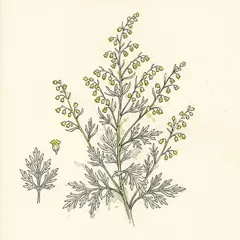
Cina Maritima
Tyler - Homoeopathic Drug Pictures · Margaret Lucy Tyler · 15,949 chars
 All books on Cina Maritima →
Antidoted byBryonia AlbaCamphoraCapsicum AnnuumCinchona OfficinalisHyoscyamus NigerIpecacuanhaPiper NigrumSantoninum
All books on Cina Maritima →
Antidoted byBryonia AlbaCamphoraCapsicum AnnuumCinchona OfficinalisHyoscyamus NigerIpecacuanhaPiper NigrumSantoninumGeneral
("Wormseed " so-called : but not seed — unopened buds )
Hahnemann , in the preface to his provings of Cina, tells us that " for centuries no other use had been made of this very important vegetable substance, except for the expulsion of lumbrici in children in doses of 10, 20, 30, 60 and more grains.
I will pass over the not unfrequently dangerous, or even fatal effects of such doses, nor will I dwell on the fact that a few lumbrici are not to be considered as an important disease in otherwise healthy children, and are common in childhood (where psora is still latent) and are generally unattended by morbid symptoms.
On the other hand, this much is true, that when they are present in large numbers, the cause of this is always some morbid condition of the body . . . and unless this be cured, though large numbers of the lumbrici may be expelled by Cina, they are soon reproduced.
Hence, by such forcible expulsion of the worms, not only is nothing gained, but such improper treatment, if persisted in, often ends in the death of the tortured children.*
[* And Clarke says of Santonin " the favourite anthelmintic of the old school — chiefly against lumbrici " — " from 2-5 grains are the ordinary doses, but these have caused severe and, in one or two instances, fatal poisonings — convulsions, left-side paralysis, delirium, vomiting and purging."
In Lectures on Materia Medica as students, we were warned against the doses of 2-5 grains given in Hale White for Santonin (the active principle of Cina). "
They had caused the death of children, and we should modify them."
Recently a child was seen who, after dosing with Santonin for worms, had become deaf.
Provings showed effects on the ears, but not, apparently, deafness.]
" This vegetable substance has much more valuable curative - properties, which may be easily inferred from the subjoined characteristic morbid symptoms pr o duced by it in the healthy.
" Experience of what it can do, for instance in whooping-cough and in certain intermittent fevers accompanied by vomiting and ravenous hunger, will excite astonishment. . . .
" Formerly I used to employ the tincture potentized to the trillion-fold dilution, but I have found that when raised to the decillion-fold dilution" (the 30th potency) " it displays its
medicinal powers still more perfectly. ."
Cina and Santonin seem to have been used chiefly for the expulsion of round worms, but here one recalls a rather dramatic experience from the use, not of Cina but of Natrum phos. 6, a few doses. This is Schuessler's great medicine for rheumatism — and round worms.
A housemaid with an acutely swollen and inflamed knee got Nat. phos., one evening, and in the morning the knee was practically well, and she had passed a couple of round worms.
The drug was naturally looked up as to worms and remembered.
For thread-worms, however, with the Cina symptoms, restless nights, dilated pupils, grinding of teeth, boring in nose, irritation at anus, one has given, again and again, Cina 200 ; and so far as one remembers " worms " have not cropped up again in later reports.
But there is another trick to help to get rid of thread-worms : smear the anus, inside and out, getting well into the folds, with olive oil, or (? better) vaseline.
It is said, with what truth one cannot say, that the worms come down to breed, and bite — hence the itching : that where the lubricant is, they fail to get a hold, and are gradually passed, when the trouble ends.
Numbers of mothers have been instructed in this simple measure : and, so far as one remembers, either the Cina, or the vaseline, or the two combined, have been successful.
One does not remember troublesome cases of worms returning for treatment ; just once complained of and then, either no further mention, or the report, " no more worms seen ".
And while on the subject of " worms " everybody does not know the trick to catch a tape-worm ! — simplicity itself ! — and it works.
The tape-worm seems to have a great liking for pumpkin seed ! Get one ounce of fresh pumpkin seed, take off the shell and pound and mix with two ounces of honey.
Give fasting in the morning in three doses one hour apart.
The worm may come away or it may need a dose of castor oil.
And here a caution : if the worm is coming away, it is necessary not to stir till it is passed, head and all, otherwise the worm will grow again from the head.
One has had such tape-worms brought in a bottle for examination as to the presence of the small head.
The explanation given is that the tape-worm gormandizes on the pumpkin seed till stupid and comatose, when its hooks relax, and it gets passed on and out.
But, " Cela arrive ! " for that one can vouch.
It is always a mistake, to say the least of it, " to do harm that good may come ", and to us' harmful measures, when simple and harmless ones succeed.
Give Cina 200 to children, with the trying Cina symptoms, and they are not only rid of their threadworms, but of all the nervous symptoms, dependent on them, or accompanying them, or permitting their continuance ; because healthy children probably would make short work with " worms ".
A healthy mucous membrane would not provide them with a suitable habitat.
As Kent says : " The old routine of giving Cina for worms need not go into your notes, for if you are guided by the symptoms, the patient will be cured and the worms will go."
Hughes , Pharmacodynamics, says, " Hahnemann refers to this use of it " (to expel worms) ; " and very justly, as it was then given in doses of from ten to sixty grains, warns against its danger. . . . He says nothing about the dynamic use of Cina in helminthiasis.
But his experiments and citations revealed the curious fact that Cina produces on the healthy body nearly, if not quite, all those symptoms whose presence leads us to suspect the existence of worms.
There are the dilated pupils, with dimness of the sight and twitching of the eyelids, the ravenous appetite, the pinchings in the abdomen, the itching at the nose and anus, the frequent micturition, the spasmodic cough with vomiting, the restless sleep, the fever anti the twitchings in various parts of the body.
General convulsions also have frequently resulted from the large doses of Cina or Santonin given as a vermifuge. Homoeopathic practitioners thus came to give this drug in minute doses to children suffering from worm affections.
They calculated that, on the principle similia similibus it might at least relieve the symptoms caused by the presence of the parasites, though they themselves remained in situ. It fully answered their expectations, and a curious result followed.
By some inexplicable influence these infinitesimal quantities of Cina not only relieved worm symptoms, but promoted the death and, expulsion of the worms themselves. This occurred so often, that at length it became a recognized homoeopathic practice to dispense with vermifuges, and to rely upon dynamic remedies alone.
Cina " seems beneficial in all varieties of the malady, as Dr. Bayes says he has repeatedly killed tapeworm with it, as well as the lumbrici and ascarides for which it is generally given ; and it acts omni dosi, from the 12th dilution of Cina of this writer to the l0th of a grain recommended by Dr. Dyce Brown."
Nash is quaint in what he says about Cina.
" Here is a truly unique remedy that none but the homoeopath knows how to use.
The old school, chagrined at our success with it, and not willing to resort to our small doses, have bungled with its alkaloid, doing more harm than good, and at last have come to sneer at the idea of children being troubled with worms at all.
I have known of several instances of the kind and it has become so common in the region where I practice that the people often ask me : Doctor, do you believe in worms ?
Old School doctors don't.
I have found several worms that my child has passed, and have come to see if you can do anything for them.
It is a great advantage to cure the little patients, whether we believe in worms or not."
And he says, " Another thing I have proven to my entire satisfaction, and that is, that it is more efficacious for these cases in the tooth or highest potencies than in the alkaloid or lower potencies."
Here Nash follows Hahnemann .
If you only thought of poisoning worms, you would naturally give the biggest dose you dared risk ; whereas if you merely provide the vital stimulus for the patient, the most-like remedy to his symptoms, and so, causing him to cure these, leave no vantage ground any longer for the troublesome parasites, you will have to do this à la Hahnemann , in regard to preparation and dosage.
The unit dose generally suffices, in our experience, in the incredibly fine potency which we label the tooth.
We will let Nash describe the leading symptoms that spell " Cina ".
He says : " The wormy child will be very restless at night, ' screams out sharply in sleep ', making one think of Apis, but other symptoms appear which rule Apis out.
The child is cross and ugly like Chamomilla.
Kicks and strikes at the nurse, wants to be carried (Cham.) or rocked, or don't want to be touched or looked at (Antimonium crud.), desires things and then refuses them when offered (Bry. and Staphisagria), or, unlike Chamomilla, if anyone tries to take hold of it or carry it, it cries.
Isn't that â perfect picture of the mind of a wormy child ? "
Then he diagnoses further between Cham. and Cina.
The Cham. face is frequently red and hot on one side, and pale and cold on the other.
Cina has glowing redness both sides, or is pale and sickly, with dark circles round eyes, or red with great paleness round mouth and nose.
Then Cina has, in addition, boring and picking its nose, gritting its teeth in sleep, jerking in sleep, and frequently swallowing, or even coughing and choking.
Such a combination is not found under any other remedy.
Then Cina has alternating canine hunger and no appetite at all. . . .
Clarke says, " It is pre-eminently a worm medicine as it causes all the symptoms which characterize helminthiasis, both mental, nervous and bodily.
There is irritation of the nose, causing constant desire to rub, pick, or press into it.
In children there is extreme ill-humour and naughtiness.
Nothing pleases them for any length of time.
Gritting teeth during sleep, wetting the bed (when accompanied by picking nose, great hunger, restless sleep) tossing all about the bed in sleep ; crying out as if delirious.
Sherbino has found ' getting on hands and knees in sleep a strong indication for it. . . . Child lies on belly or on hands and knees during sleep. . . . " — [Medorrhinum has this also.]
Among the symptoms of Cina Hughes also stresses " Canine hunger : hungry soon after a full meal.
Craves sweets : refuses mother's milk.
" Cough, dry with sneezing : spasmodic : periodic, spring and fall.
Child is afraid to speak or move for fear of bringing on a paroxysm."
" Hahnemann indicates it in whooping-cough (in which Dr . Jousset esteems it the principle remedy), and in certain intermittents accompanied by vomiting and canine hunger . . . Dr. Bayes commends it in the gastralgia of empty stomachs."
H. C. Allen says, " Compare Ant. c., Ant. t., Bry., Cham., Kreos., Sil., Staph., in irritability in children.
" In pertussis when Dros. has relieved the severe symptoms.
" Has cured aphonia from exposure, when Acon., Phos., and Spong. had failed.
" Frequently to be thought of in children, as an epidemic remedy, when adults require other drugs."
" Guernsey adds, Complaints that come on whenever one yawns.
Troubles that cause a constant desire to rub, pick, or bore into the nose." (Arum triph.)
Black Letter Symptoms
(From Hahnemann , Allen's Encyclopedia and Hering's Guiding Symptoms.)
Child exceedingly cross , cries and strikes at all around.
Pitiful weeping, when awake.
Cannot be quieted by any persuasions : proof against all caresses.
Children wake in evening or before midnight with fear or fright, jump up, see sights, scream, tremble and talk about it with much anxiety.
When walking in open air stupefying, internal headache , especially in sinciput, afterwards also in occiput.
Dull headache, affecting the eyes, in the morning.
Looks sickly about the eyes, with paleness of face.
Optical illusions in bright colours, blue, violet, yellow, green.
Palpitation in muscles of eyebrows, a kind of spasm.
In external ear , cramp-like twitchings.
Dull stitches — a pinching pressure, under the mastoid.
Child frequently bores into nose till blood comes.
Itching of nose.
Child picks its nose very much, is very restless, cries and is very unamiable.
Face pale and cold.
White and blue about the mouth.
Burning heat over whole face : rising heat and glowing redness of cheeks, without thirst, after sleep.
Adherent mucus in larynx , in a.m. on rising : must often hawk.
Great hunger soon after a meal : feeling of emptiness.
Desires many and different things.
Gnawing sensation in stomach , as from hunger.
Very short breath, with interruptions : some inspirations are omitted.
A kind of oppression of chest : the sternum seems to press on the lungs, and breathing is somewhat impeded.
Hoarse hacking cough consisting of a few impulses, with long pauses before exciting irritation recurs : in the evening.
Before coughing child raises herself suddenly, looks wildly about the body becomes stiff, she loses consciousness, as if she would have an epileptic spasm, then follows the cough.
After coughing the child cries out, and a noise like gurgling is heard going down.
Back and limbs. Bruised pain in sacrum, not worse by movement.
Drawing, tearing pain downwards through whole spine.
Boring, cramping pain in left upper arm.
Single, small, twitching stitches, in right, or left hand.
Paralytic pain left thigh, not far from knee.
Obtuse stitches here and there in the body.
In body, limbs, arms, feet, toes, sometimes in the side, or on the back, or in nasal bones, but especially on the hip, obtuse stitches or squeezing, or aching, or like knocks or jerks : on pressing the part it pains, as if sore or bruised.
Convulsions of extensor muscles : child becomes suddenly stiff : there is a clucking noise, as though water were poured out of a bottle, from throat down to abdomen.
Worm spasms, the child stiffens out straight.
When yawning, trembling of the body with shuddering.
Some Peculiar Or Characteristic Symptoms
Child wants to be carried.
Cannot bear least touch : cannot bear to have head touched : paroxysms of chorea reproduced by touch.
Taking hold of child, it cries piteously.
Must be rocked, carried, dandled on knee constantly day and night : will not sleep unless rocked or kept in constant motion.
Or, desire to remain perfectly still in the dark.
Child discharges worms ; picks nose or anus ; has a hacking cough ; is continually making attempts as if to swallow something ; is very hard to please.
Santonin , a derivative of Cina, has produced and cured nocturnal enuresis in children — " not necessarily connected with worms ".
Like Cina it disorders vision.
Sees colours, especially yellow and green : and it has some reputation for cataract.
A few days ago a patient with cataract said eagerly, " Yes, I can always see green," when a green Hospital card was shown her.
It remains to be seen whether Santonin can help. In her case one eye was lost, after an operation for cataract, and the second was nearly blind.
Hughes (Pharmacodynamics) gives some interesting eye cases and experiments with Santonin (see p. 392) where the late Dr. Dyce Brown in conjunction with an occulist, treated forty-two cases, of which thirty-one were cured or improved.
They included choroiditis, retinitis, atrophy of the optic disc, pure amblyopia, and retinal anaesthesia.
And in one case of undoubted double cataract, vision was greatly improved.