

 Homeopathy Library
Plant · Myrtaceae · simple
Angophora
Angophora lanceolata
1 entry across 1 books
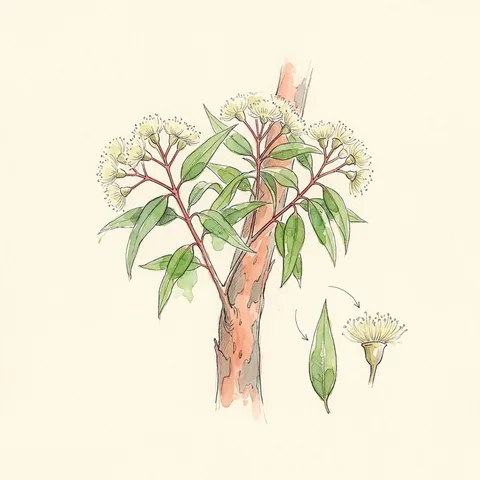
HabitatAustralian bush. PreparationTincture or trituration of dried sap or gum. Clarke
—
No dose stated in the library’s booksDose · Clarke
Reason for Use
Proved by F. Kopp, Angophora (which resembles Eucalyptus in appearance) produces the following symptoms: Bearing-down and constant inclination to stool. Dry, hard evacuations, accompanied with blood; diarrhoea, headache, nausea, flatulent distension, and colicky pains. For nearly a week there was obstinate constipation; then nausea, sickness and diarrhoea, with vertigo and debility. Pains and tenesmus only > by lying down flat on the face.
The Full Clarke Text, by Section
General
Angophora.
Angophora lanceolata. Metrosideros costatus. Red Gum. (Australian bush.) N. O. Myrtaceae. Tincture or trituration of dried sap or gum.
Clinical
Constipation. Dysentery.
Relations
Antidoted by: Ipec.
Complete text of the Angophora entry in Clarke - Dictionary of Practical Materia Medica; origin and preparation from Clarke. Historical text from the classical materia medica (1828–1950). Not medical advice, and not a claim that any remedy works.
homeopathylibrary.com/remedy/angophora

