

 Homeopathy Library
Barosma Crenulatum
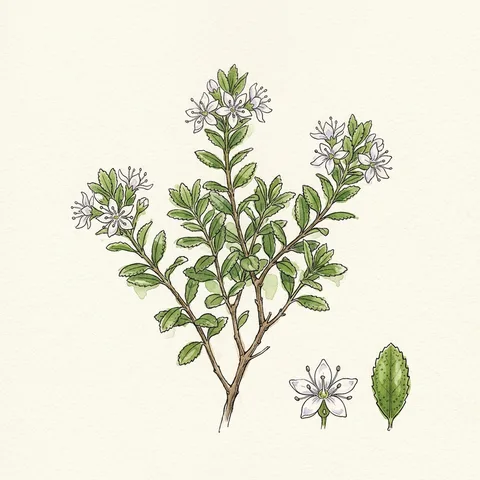
Reason for Use
The leaves of several species of Barosma contain in vittae a volatile oil, having a warm camphoraceous taste and an odour something like mint. There are no provings of the remedy, and the only uses made of it have been with the tincture. But it has a markedly specific effect on mucous membranes generally, and especially on the genito-urinary system, closely resembling that of Sabal ser., Populus, Copaiva, and Thuja. Hale gives as indications: chronic affections of genito-urinary organs having muco-purulent discharges, abundance of epithelium mixed with pus and mucous corpuscles. Irritable bladder, with vesical catarrh or gravel; with spasmodic stricture. Prostatic disorders. Vaginal Leucorrhoea. Undue secretions from mucous follicles of urethra, vesiculae seminales, or prostate produced by excessive venery or self-abuse.
The Full Clarke Text, by Section
General
Barosma.
B. betulina, B. crenulata, B. sanatifolia. Buchu (South Africa). N. O. Rutaceae (Genus, Diosmeae). Tincture of dried leaves.
Clinical
Bladder, affections of. Calculus. Catarrh. Gravel. Leucorrhoea. Prostate, disorders of.
homeopathylibrary.com/remedy/barosma-crenulatum

