 Homeopathy Library
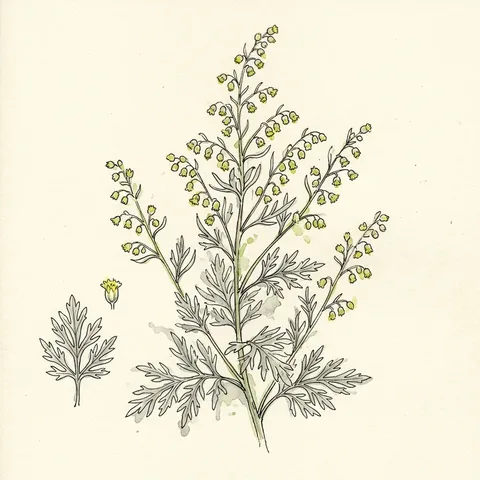
Cina Maritima
Reason for use
(This semen, even the best, looks like small, oblong, light, yellow- green blossoms, mixed with a few stems, and coming from the bush known under the name of Artemisia Contra.
The tincture is prepared by mixing twenty parts of alcohol with one part of the entire blossoms, and extracting their virtue during a whole week, without applying any heat.)
For centuries past this important drug has been used only to expel worms, being given in doses of 10, 20, 30, 60 and more grains. I shall say nothing of the dangerous and even fatal consequences attending the administration of such doses, and I would merely make the passing remark, that a few worms, in lively children, cannot be considered an important disease ; they are quite common in childhood, and cause but little inconvenience in an age where the psoric miasm is yet in a latent condition ; on the contrary, however, where worms are found in a large quantity, they originate in a morbid con- dition of the system, in the psoric miasm which has been roused from its latent state, and which must be cured ; other- wise the worms are speedily re-produced. By such im- proper reiterated expulsions of the worms nothing is gained, and, in very many instances, they end in the death of the sufferer.
The following list of symptoms shows that this agent has many more powers than that of expelling worms.
It possesses great curative powers in whooping-cough, and in certain intermittent fevers accompanied with vomiting and canine hunger.
Formerly 1 was in the habit of using the 9th potency, but I know now, that the 30th potency exhibits the curative powers of Cina in a more appropriate degree. One, two or three pellets may be given at a dose.
Accordmg to Noack and Trinks this drug may be used in convulsions fiom worms, worm affections, intermittent fevers, cerebral affections, encephalitis, acute hydrocephalus ; chronic weakness of the eyes, with pressure in the eyes, and photopho- bia, when brought on by onanism.— Gastric affections.— Chronic vomiting in children affected with worms — Bloated abdomen of children, congestions to the head a7id chest. — Wettino- the bed, when atrophic conditions are present. Whooping-cough,
The full Hahnemann text, by section
Antidotes
Bry. Chin. Hyosc. Ipec.
Head
Obscuration of sight when rising from bed in the morning ; dizziness, faintishnesSj staggering, reUeved when ly- ing down- Violent headache- Headache with a general feel- ing of uncommon forgetfulness. Intermitting pressure on the top of the head, as if from a heavy load, as if the brain were being pressed down ; the pain is increased or brought on again by pressing upon the parts. —5. Pain in the outer parts of the forehead, pressing from above downwards, as if something were gradually pressing downwards, (a. f h.) Headache the whole day, a sort of pressure with tearing ; extending into the zygoma. Aching pain in the head, the whole day, in the evening the pain is also felt in the forehead. Wheti walking in the open air, stupefying, internal headache, especially in the forepart of the head, afterwards in the occiput, (a. 3 h.) When waking, pain in the right parietal bone and the right side of the forehead, pressing, from within outwards. — 10. When sitting, stupefying, aching pain in the forehead and temples, externally, finally affecting the whole head (a. 36 h.) Pressure on the frontal bone, with undulating sensation inter- nally. Headache, as if the whole head were screwed in, with obtusion of the head. Pain in the upper part of the frontal bone, as if it were being violently pressed together. Imme- diately after a meal and afterwards, a dull, drawing pain in the interior of the head, increased by reading and mental labor- — 15. The headache increases by reading and by reflection, and is diminished by stooping. Cramp-likedrawing in the temples, increased by pressing upon the parts. Stretching and tearing pain in the right temple. Drawing pressure on the left side of the sinciput. Aching pain in the left temporal region, resemb- ling a fine tearing, going off by moving the head. (a. 11 h.) — 20. Drawing, causing gloominess, from the left frontal emi- nence to the root of the nose. Paralytic tearing in the left frontal eminence, with stupefaction of the head ; immediately after, the same pain is felt in the right frontal eminence. Draw- ing tearing pain in the whole left side of the head. A small spot of the right parietal bone feels numb and as if gone to sleep. Dull stitches in the brain, especially the left half of the vertea. (a. 1^ h.)— 25. Violent dull stitches above the right temple, in the frontal bone, extending deep into the head and nearly causing stupefaction. As the headache disappears, an oppressive pain in the abdomen sets in; the headache return' ing after the disappearance of the latter pain.
'W
86 CINA, SEMEN SANTOCINI.
Eyes
Slow, dull stitch above the upper margin of the orbit, extending deep into the brain. Jactitation of the orbi- cularis palpebrarum muscle ; a sort of convulsive twitching. Dull headache, the eyes being affected, in the morning. — 30. Dull pain in the eyes, while reading or performing some other mental labor. Pushing pressure in the interior of the eyes, generally accompanied with dilatation of the pupils. Dilata- tion of the pupils, (a. i h.) Contraction of the pupils, (a. 3i- h.) Great contraction of the pupils, (a. 1 h.) — 35. In the evening, when attempting to look at a thing steadily, he sees it through a gauze ; when wiping the eyes, his sight is clearer for a short time. When reading a book, his eyes were dim ; he was not able to continue his reading till he had rubbed the eyes with the fingers. Faint eyes (in the morning) ; the upper eyelids were so weak that he was scarcely able to open them, continuing the whole afternoon. Burning pain in the outer canthus, mixed with itching, also in the margin of the upper eyelid, (a. 2 h.) (Burning in the eyelids, especially in the inner canthus, in the evening, at candle-light.) — 40. Dryness of the eyelids, in the evening, at candle-light, and a feeling of pressure in the eyes, as if sand had got in. Feeling of dry- ness in the inner eye, and an aching, with drawing in the eyes, when exerting them ever so little in reading. Tingling in the eyelids, he has to rub them. Titillating itching in the internal canthus of the right eye, obliging one to rub. (a. 1 h.) Titil- lating itching of the left external canthus, obliging one to rub. (a. 36 h.) — 45. (Agglutination of the inner canthi, in the morning, after rising.) He looks sick around the eyes and pale in the face. Dull pressure upon the lower margin of the orbit ; the pressure increases, and may be excited again, by pressing upon the part.
Face
Pain as if the two zygomata were seized by pin- cers and compressed ; the pain increases by external pressure. Cramp-like jerking in the zygoma ; the pain, even after having disappeared, may be excited again by strongly pressing upon the parts ; in this case, however, it is felt like a continuous cramp-like or paralytic pain. — 50. Pain in the zygomata, ex- tending and tearing, coming on at intervals, erratic, increased by pressing upon the part.
Ears
Cramp-like jerking in the external ear, like otal- gia. Dull stitches under the mastoid process, a sort of claio- ing pressure ; when pressing upon the parts, the pain is as: that of a bruise or contusion. White and blueish color around the mouth. Bloated, blueish countenance.
CINA, SEMEN SANTOCINI. 37
Nose
55. The child bores in the nose, until blood comes out.
Mouth, Jaws and Teeth : Ulcer upon the cheek, with hardness all round. Aching pain in the submaxillary glands. Dull, stitching pain in the right ramus of the lower jaw, increas- ed by pressure. Single fine prickings in the left lower jaw, increased by pressing upon the part. — 60. Jerking pain in the left lower jaw. Toothache, as if the teeth were sore. The inspired air and cold drink aftect the tooth painfully. The child's head inclines to one side. Paralytic feeling in the nape of the neck. — 65. Boring stitches in the right cervical muscles, synchronous with the pulse, disappearing when moving the neck. (a. 11 h.) Dryness and roughness of the mouth, espe- cially of the palate, with nauseous qualmishness, (a. 3^ h.)
Pharynx, CRsophagus, Taste and Appetite : Inability to swallow ; the drink is pushed to and fro in the mouth for a long time. Violent hunger shortly after a meal. — 70. Thirst.
Gastric Symptoms : Empty eructations, early in the morning. Eructations, tasting of the ingesta, after a meal. Gulping up of a bitter-sour fluid, shortly after a meal. Qualm- ishness in the pit of the stomach, with thrills of shuddering, (immediately.) — 75. Several lumbrici creep along the oesopha- gus, and make their appearance at the mouth of the child. In- clination to vomit, with emptiness of the head. Frequent hic- cough, (a. 11 h.) Con-stant pressure in the stomach, in the night.
Abdomen
Clawing, or cramp-like pressure after a meal, transversely across the epigastrium, in the praecordial region. — 80. Pain in the praecordial region, oppressing the breathing, (a. 4 h.) Digging up pain in the epigastric (praicordial) region, with sensation as of numberless confused motions, and as if the parts were bruised. Dull stitches on the left side and be- low the pit of the stomach, increased by pressing upon the. part, and diminished by deep inspirations. Boring pain over the umbilicus, going off" when pressing upon the parts. Con- tinual pinching in the abdomen. — 85. Intermittent prickings in the left side of the abdomen, a sort of pinching, when sitting, (a. 10 h.) Sudden, deep, sharp, intermittent stitches internally, and on the left side of the umbilicus, especially during an inspi- ration accompanied by simultaneously occurring stitches on the inner side of the scapulae, towards evening, (a. 12 h.) Cut- ting pinching in the abdomen, which did not abate until he had been to stool, (a. 48 h.) Violent pain in the umbilicus and the umbilical region, as if the umbilicus were pressed for- cibly into the abdomen, or as if one had knocked it against
^ CINA, SEMEN SANTOCINl.
something, first for a short, afterwards for a longer time, when it became more violent during an inspiration. Painful twist- ing around the umbilicus ; pain is likewise felt when pressing upon the umbilicus. — 90. After a meal, a painful pressure upon the umbilicus, also when pressing upon it. Cutting pain in the small intestines, in the morning. Disagreeable feeling of warmth in the abdomen, which terminated in pinching, (a. 4 h.) Labor-like, frequently recurring pains in the abdomen, as if the menses would appear, (a. 2 h.) Pulsation in the hypogastrium, close above the mons veneris. — 95. Low and short reports and movement of flatulence. Violent, single stitches in the lower part of the rectum, during emission of flatulence. • Feeling of emptiness in the abdomen, with silent emission of flatulence, (a. 1 h.) (Voluptuous itching of the front part of the anus.) (a. 4 h.) Frequent desire to urinate, with copious emission, the whole day. (a. 3 h.) — 100. Turbid urine (immediately). Urine becoming turbid immediately.
Genital Organs : Hemorrhage from the uterus during the whole of the time that she used the semen Santocini, (in a girl of ten years.)
Cold, Coryza : Deep in the left nostril a burning sensa- tion, not disagreeable, as if blood would come, or as if brandy had been drawn up into the nose. Burning soreness of the septum in the left nostril, as if a scurf had been scratched off; worse when touching the parts fron> without. — 105. Violent sneezing, (a. g h.) Violent sneezing, which produced a shock in the head pressing through the temples ; the headache which pressed through the temples, remained for some time after the sneezing. Violent sneezing, which affected the chest as if it would burst on both sides ; even afterwards he feels a pain from it, especially in the right side. Fluent coryza. (a. ^ h.) A sort of coryza ; in the morning he is frequently obliged to blow his nose, the nose is always full of loose mucus (after some days.) — 110. Discharge of a purulent matter from the nose. Obstruction of the nose, in the evening, after having been affected with fluent coryza in the forenoon.
Respiratory Organs and Chest : Mucus in the throat, which he throws up by voluntary hawking, (a. 6 h.) When walking in the open air, short, rattling breathing, as if he had much mucus in the chest, without being obliged to hawk it up. (a. 6 h.) Heavy, loud breathing, (a. i h.)— 115. Short, rat- tling breathing. Short breathing, sometimes interrupted, a few inspirations being wanting. The child's breathing is very short, with loud rattling in the chest. During inspiration, loud wheezing in the trachea, not audible during an inspiration.
CINA, SEMEN SANTOCINI. 89
Mucus in the larynx, after rising ; he is frequently obliged to hawk it up, after which it speedily returns. — 120. Contin- ual hawking up of mucus in the morning, which is constantly reproduced and adheres to the larynx. Great dryness in the back part of the throat (trachea) ; sort of catarrhal feeling. Deep breathing excites a disposition to cough. Titillation low down in the trachea, inducing cough ; if he then coughs, he throws up whitish mucus, (a. 24 h.) Titillation in the trachea below the handle of the sternum, inducing cough and expectora- tion of a whitish mucus, (a. 16 h.)— 125. Previous to coughing the child raises herself suddenly, and stares all around ; the whole body looks rigid ; she is without consciousness, as if she were to have an epileptic fit ; these appearances are followed by cough. The child moans after coughing ; a sort of gurgling noise from above downwards is heard ; she is anxious, gasps for air, and turns quite pale in the face ; in paroxysms of two minutes. Violent coughing fits from time to tiine. Hoarse cough with vomiturition, only a few fits at a time, the suc- ceeding fit being excited after a longer pause ; in the evening. Hoarse cough, with vomiturition, in the morning, after rishig; after a pause it is excited again by an inspiration, as if particles of dust had got into the throat.— 130. Hollow cough, in the morning after rising ; violent shocks against the upper part of the trachea, mucus being detached but with difficulty (in a few days). In the morning he is obliged to cough so violently, in order to get the mucus loose, that his eyes become moist. Du- ring the morning-cough the upper part of the chest, under the sternufii, feels sore ; if he then succeeds in coughing something loose, this place continues to be painftiUy sore and burning, as if something had been torn off. Clawing sensation in the chest, during an inspiration. Asthma while standing (continuing half an hour) with anxiety ; he sweated very much on the chest.
135. A kind of oppression of the chest ; sensation as if the
sternum were too close to the chest, the breathing is somewhat oppressed. Cramp-like drawing together in the left half of the chest. Soreness under the sternum, per se. Clawing pain on the sternum, when running. Sudden oppressive pain in the left side of the chest.— 140. Cramp-like, digging-up pain under the sternum, as if the chest were to be burst asunder. Fme clawing on the clavicle, as if pressure were made upon the part by a dull point. Pain, especially during an expiration, pressing from within outwards, at times in the left side of the chest, at times in the small of the back ; the pain in the back is like a pain from long stooping, (a. 4 h.) Painful digging-up under the upper part of the sternum. Pinching pains m the
90 CINA, SEMEN SANTOCINI.
left side of the chest, mcreased by every inspiration, (a. 30 h.) — 145. Pinching pain in the left side of the chest between the second and third rib. Pinching-stitching pain in the left side of the chest (continuing -j- h.) Single stitches in the chest from time to time. Prickling, bm-ning, fine stitches in the side, in the region of one of the true ribs, intermittent. Dull stitches by the side of the sternum, on the cartilage of a rib, increased by pressing upon them and by expiration, diminished by inspi- ration. — 150. Two dull, piercing stitches, in quick succession, near the sternum beneath the left clavicle, during a deep inspi- ration ; he does not feel any thing during an expiration ; he feels much pain when pressing upon the part. Darting pains in the right chest between the sixth and eighth rib, not influ- enced by pressing upon the parts, or by inspirations or expira- tions. Sudden darting in the left side of the chest, between the fifth and sixth rib. Boring, stitching pain in the middle of the right side below the ribs, disappeanng when pressing upon the parts.
Back ; Pain, as from bruises, in the small of the hack, not increased by motion, (a. 35 h.) — 155. Tearing in the left hip and glutei muscles. Paralytic drawing in the loins. Sen- sation after a meal, as if the lumbar region above the hips were being constricted by means of a tight bandage. Painful wea- riness in the loins, as if he had been standing a long while. Pain in the loins and the dorsal spine, when inclining sideways or backwards, as if he had fatigued himself a good deal. — 160. Tearing-jerking pains in the middle of the spinal column, going off by moving the body, returning when at rest. In the eve- ning, when lying on one side, the dorsal spine aches as if broken. When lying on the back, in the bed, the dorsal spine is painful, as if broken. Drawing -tearing pain along the whole of the dorsal spine, (a. 29 h.) — 165. Lancinating pain in the upper part of the spinal column, towards the right scapula. Stitching pain in the outer border of the right scapula. Aching in the scapulae, when moving them.
Upper Extremities: Clawing on the top of the shoulder. Pricking on the top of the shoulder. — 170. Stitching pain on the top of the left shoulder, not going off by pressing upon the parts or by moving the arm. (a. 32 h.) Single stitches in the front part of the left shpulder. Paralytic drawing through the right arm, from above downwards, especially when letting it hang down or when leaning it upon something ; in this latter case especially in that part which is pressing hard upon the subjacent body. Paralytic pain in the arm, he is obliged to let it hang down. Paralytic feeling in the whole of the right arm,
CINA, SEMEN SANTOCINI. 91
the joint felt rigid, so that it could not be moved, (a. 29 h.) — 175. Stretching-tearing pain in the arms, with paralytic feeling ; when touching it, it felt bruised, as after a violent muscular effort. Paralytic drawing through the upper arm, from the commencement to the middle, he scarcely dares move it ; when pressing upon the affected part, it feels bruised and contused. Boring, cramp-like pain in the left upper arm, not going off by motion, (a. 25 h.) Drawing-tearing pain in the right upper arm, going off by pressing upon it, but returning immediately, (a. 27 h.) Violent, clawing pain in the right upper arm, disappearing by motion, but returning when at rest. — 180. Pain as from a bruise or contusion, in the upper arm, over the elbow-joint. Paralytic pain in the bend of the elbow, to- wards the outer side, a sor of jerking, intermittent. Tearing pain in the right elbow-joint, when at rest, uninfluenced by motion, (a. 27 h.) Digging-up pain in the left fore-arm, moving from the wrist-joint to the elbow-joint, (a. 1|.) A drawing-tearmg pain in the whole right fore-arm, not going off by motion, (a. 7 h.) — 185. Cramp-like painful pressure in the muscles of the fore-arm, especially when bending it. Paralytic jerking, from above downwards, in the lower surface of the fore- arm, but especially violent at the place where it began. Early in the morning, when stretching the arms violently, cramp-like pain in the fore-arms, especially from the elbow-joint ; when bending the hands backwards and forwards while the arms are stretched, he feels a similar pain in the wrist-joints. Contractive tearing, like cramp, in the lower muscles of the left fore-arm, close to the wrist, going off speedily during motion, (a. 17 h.) Drawing pains in the joints of the hands, (a. 12, 24 h.) — 190. The wrist-joint feels sprained. Pinching-boring pain in the right wrist, (a. 3 h.) Intermittent, cramp-like contraction of the hand. Jerking-tearing pain in the palm of the left hand, increasing by stretching the hand. Single stitches in the left hand towards the little finger. — 195. Single, small, jerking stitches at times in the right, at times in the left hand. (a. 33 h.) Itching of the dorsum of the left hand, obliging him to scratch, and going off by scratching, (a. 6 i h.) Itching titillation of the border of the right hand, externally, near the thumb and index- finger, (a. 35 h.) Fine stitches in the proxi- mal extremity of the metacarpal bone of the ring-fingers ; when pressing upon it, it feels painful, as if bruised. Spasmodic con- traction of the right middle-finger, with cramp-like pain ; the finger was bent in wards. — 200. Sudden jerking inwards of the fingers of the right hand. Cramp-like jerking in the fingers. Drawing in the fingers, (a. 48 h.) Cramp-like pain in the
92 CINA, SEMEN SANTOCINI.
muscles of the outer side of the left little finger, going off during motion, (a. 12 h.) Burning pain of the proximinal joint of the middle finger. — 205. Paralytic drawing in the ring-finger both when at rest and in motion. Tingling in the distal joint of the thumb, as if it had gone to sleep. Tingling in the tip of the thumb as if it had gone to sleep ; it feels numb. Pain in the ball of the thumb, as if it had been knocked upon hard, the pain being felt when pressing upon the part, and also when moving the metacarpal joint of the thumb towards the palm of the hand.
Lower Extremities : Pain beneath the glutei muscles, boring, from within outwards, while sitting, going off by motion •and by pressing upon the part, but speedily recurring when at rest. — 210. When sitting the nates feel painful, as if fatigued by long sitting. Pain in the great trochanter, when walking, as if he had fallen upon it. Thrills of shuddering over the thighs. When standing, cramp-like pain in the anterior muscles of the left thigh, (a. | h.) Drawing-tearing pain on the ante- rior surface of the right thigh, going off by violent motion. — 215. Paralytic pain in the left thigh, not far from the knee. The child stretches out his feet spasmodically. The left foot of the child is in constant spasmodic motion ; at last it remains lying immovable and turned away from the body. Single, dull stitches in the knees, now and then. Single prickings in the region of the patella. — 220. A sudden suffusion of heat over the knee, not disagreeable, as if a hot body, for instance a glowing coal, were brought into the neighborhood of the knee. Paralytic jerking in the front part of the leg, between the tibia and fibula. Cramp-like pain when walking in the open air, now in the muscles of the right, now in those of the left leg, soon disappearing when standing or sitting, (a. 30 h.) Digging-up pain beneath the left knee, upon the tibia, (a. 8^ h.) Inter- mittent sti'ches, as with a fork, in the left tibia, close below the knee. — 225. Tearing pains in the middle of the left calf (when sitting). Jerking-tearing in the interior of the foot. Stitches in the ball of the right foot. Cutting pain in all the toes of the right foot, as if they were being amputated, not dis- appearing by motion, (a. 2 h.) Lancinating pain in the left heel (when sitting).
General Symptoms : Painful stitches, here and there in the outer parts of the trunk, but especially in the outer parts of the abdomen ; when sitting, (a. 8 h.) Dull stitches in the outer parts of the body, here and there, (a. several days.) Dull stitches, sometimes as if clawing, sometimes pressing, sometimes conveying the sensation of a shock or jerk, some-
CINA, SEMEN SANTOCINI. 93
times feeling like an itching, in different parts of the body, now in the limbs, arms, feet, toes, now in the side, or in the back, now in the nasal bone, but especially in the posterior portion of the crest of the ilium, and always in the outer parts of those organs ; when pressing upon the jyart, it feels bruised or sore. Burning, fine stitches in different parts, go- ing off by scratching. Prickhng, itching-tingling sensation in different parts of the body, soon disappearing after scratching. — 235. Violent itching in the night, in different places of the skin. In the evening, eruption of red, itching pimples, disap- pearing speedily. Translucent rash. When sitting, he experien- ces cramp-like, contractive stitches alternately in the muscles of the right and left thigh, now in the muscles of the left, now m those of the right upper arm, and sometimes along the small of the back from below upwards, resembling pain in the back, disap- pearing when walking in the open air. (a. 27 h.) Cramp-like tearing when sitting, at times in the muscles of the lefty at times in those of the right leg, or now in the muscles of the left, now in those of the right fore-arm, disappearing when walking in the open air. (a. 52 h.) — 240. Tearing, sometimes cutting pains in the limbs, the head and jaws, frequently only for a moment. Stretching-tearing pains in the scapulae, upper arms, head and nape of the neck, increased by contact ; after a meal, at which time the symptoms are most violent in the first days.
Fits: Convulsions and contortions of the limbs. Paralytic twitchings of different parts of the body, especially the limbs. Epileptic convulsions, with consciousness (eclampsia). — 245. At 4 o'clock in the afternoon, he was seized with a fit of spas- modic stretching of the body, afterwards trembling of the whole body, with blue lips and lamentations about pain in the chest, neck, and all the limbs. Paralytic pain in the arms and legs (for several days). The child is faint and sick. Moaning and groaning (in the afternoon). Painful sensitiveness in all the limbs of the body, when moving or touching them. — 250. Morning and evening the symptoms are most violent.
Sleep
Frequent yawning, as if he had not slept enough, (a. 5 h.) Great drowsiness when sitting ; he was obliged to lie down, (a. 6^ h.) In the afternoon he is attacked by unusual drowsiness. Drowsy the whole day. — 255. Invincible drow- siness in the evening (for several days). Nightly restlessness, frequent change of position in order to be more comfortable. The child tosses from side to side, even while awake. Sleep- less. Tossing about when asleep, lamenting and complaining
Q. CINA, SEMEN SANTOCINI.
of colic, (a. 8—12 h.)— 260. Wakes up moaning, lamenting, sobbing, with restlessness, (a. 2 h.) A number of absurd dreams. Sleeping while sitting erect, the head being inchned backwards or to the right side. (a. 2h.) Frequent wakmg from disagreeable or busy dreams. Dreams full of anxiety.— 265. Sleep, with dreams full of trouble. Suffusion of heat, after sleep, and glowing redness of the cheeks, without thirst.,,
Fever
Tremor of the body lohile yawning, with sensa- tion of shuddering. Shuddering over the upper part of the body towards the head, as if the hair would stand on end, even near the warm stove (immediately). Feverish shivering over the whole body. (a. i h.)— 270. Thrill of shuddering over the trunk, he trembles even near the warm stove. Cold face with warm hands. Pale, cold countenance ; cold cheeks. Cold sweat on the forehead.— 275. Cold sweat on the forehead and hands. Cold sweat on the forehead, nose and hands, (a. 12, 20 h.) Fever : vomiting of the ingesta, afterwards chilliness over the whole body, followed by heat, with great thirst. (In a few h.) Cluotidian fever, at the same hour ; chilliness, fol- lowed by heat, without thirst, (a. 24 h.) (Quotidian fever at the same hour, with very short breathing, (a. 48 h.) — 280. Fever, several attacks of chilliness, with thirst, with coldness of the hands and feet, every afternoon (from 1 o'clock) ; afterwards heat, with pallor of the countenance, but especially hot hands and feet, with cutting colic. Early in the morning, cold hands and thrills of chilliness, without thirst, even near the warm stove. Violent fever and heat. Feverish shuddering over the whole body, with hot cheeks, without thirst, (a. 25 h.) Violent fever, with vomiting and diarrhoea. — 285. Heat in the evening and during the night. Heat in fever, mostly about the head, with yellow complexion and blue margins around the eyes. (Heat, with redness of the face, accompanied with sweat from the commencement, without thirst, (a. 8 h.) Feeling of heat, and heat, with redness in the face. (a. 2 h.) Burning heat over the whole face, with redness of the cheeks and thirst after cold drink, (a. 35 h.)— 290. Trembling motion of the heart.
Moral Symptoms : Delirium. W^hen walking in the open air, great anguish about the heart, as if he had committed some evil deed. (a. 37 h.) The child is extremely disposed to weep and complain. He cries piteously when one attempts to touch him or take him by the hand. (a. 3 h.)— 295. Very serious and susceptible ; he was disposed to take offence at the least jest. Indifferent ; both agreeable and disagreeable things left him perfectly indifferent. Uneasiness. Desires a great
MENISPERMUM COCCULUS. 95
number of various things. — 300. Scorns every thing which is offered to him, even those things which were most agreeable to him. Cannot be cahned by persuasions, is indifferent to all caresses.
MENISPERMUM COCCULUS.
(Pulverize the seed and extract the tincture at a moderate tempera- ture, by adding twenty parts of alcohol.)
This plant, which had been heretofore used merely for the purpose of destroying a few hurtful animals and stupefying fishes, in order to facilitate their being caught with the hands, had never been employed as a remedial agent previous to the provings which I instituted with that drug upon the healthy body. This drug is indispensable in many forms of lentescent nervous fevers, in certain abdominal spasms and spasmodic pains of other parts, disposing the mind to sadness, especially in females, in many cases of paralysis and certain moral af- fections.
Camphor is its chief antidote. In chronic diseases, this drug acts many days.
FROM NOACK AND TRINKS.
Cocculus is useful in affections from onanism, from the movement of carriages or ships, anger, the abuse of coffee or chamomile. — Spasms of hysteric females, or spasms from men- strual irregularities ; convulsions from wounds ; tetanus ; epi- lepsy ; St. Vitus' dance of one side. — Paralysis, total or par- tial. — Cerebral congestions and apoplexy. — Fainting fits of hysteric persons. — Arthritic conditions. — Articular rheuma- tism. — Lichen simplex. — Prurigo formicans. — Gastric and bilious fevers ; bilious fever from chagrin. — Nervous fevers. — Typhus abdominalis. — Melancholy, imbecility. — Vertigo. — Megrim and hysteric headache. — Amblyopia amaurotica. — Pressure at the stomach, with coated tongue. — Spasms of the stomach, when Nux v, had done no good. — Inflammation of the bowels of lying-in women. — Bilious colic. — Spasmodic atid flatulent colic. — Stitching pain in the side from flatulence. — Menstrual colic. — Painful, scanty menstruation, (giving Verat. during the flow of the menses, and Cocc. in conjunction
96 MENISPERMUM COCCULUS.
with Sulph., Graph., and Lye, between the menses.) — Metrorr- hagia of pregnant females. — Leucorrhoea with distention of the abdomen, flatulent colic, pain of the urnbihcal or hypogastric region, when touching the parts, as if there existed subcutane- ous ulceration. — Frequent desire to urinate of pregnant females. — Hydruria with nervous spasms (also Bismuth). — Inguinal hernicB, forming gradually by a spasmodic dilatation of the abdominal rings. — Incarcerated hernia?. — Spasms of the chest and palpitation of the heart of hysteric females — Tabes dorsa- lis ; affections of the spinal marrow.
COCCULUS.
Head
Vertigo as from intoxication, and stupid feeling in the forehead, as if he had a plank before it. Vertigo as from intoxication (when sitting), (a. 1^- h.) Disposition to vertigo. (8 d.) Vertigo for six hours. — 5. When raising himself in the bed, he is attacked with vertigo, as if every thing turned round, and inclination to vomit, obliging him • to lie down again. Headache with inclination to vomit, as if he had been taking an emetic. Stupid feeling in the head. Stupid feeling in the head, with cold sweat on the forehead and hands, and repug- nance to food or drinks. He forgets easily what he had been thinking of a moment ago. — 10. Stupid and obtuse feeling of the head, increased by reading, obliging him to read a sentence several times before he understood it. Heaviness in the head. Sensation as if something heavy were lying upon his head, but without any pain. Thinking fatigues his head very much. In the morning the head feels affected, as if one had been in- toxicated the evening before. — 15. Cloudiness of the head, mostly increased by eating or drinking. The head is pain- ful, as if tied all round. Headache', as if the brain were con- stricted. Headache in the temples, as if the head were between two screws. — 20. (Painful concussion in the brain when walk- ing, when moving the head or when talking.) Headache, con- strictive, burning, tearing, digging-up and boring. Violent pressure through the whole head, mostly in the forehead (fore- noon), increasing into loss of sense by reading or meditating, (a. 60 h.) Aching pain in the forehead. Aching pain in the vertex, (a. 10 h.) — 25. Dull compression in the right half of the forehead. Aching, as if the brain were being compressed, (a. 5 h.) Sensation in the right temple, as if a blunt body were slowly pressed into the brain. Pressing into the left temple. Violent pressing in the whole head, especially the forehead, from above downwards, increased when walking, (a. 6i h.)
MENISPERMUM COCCULUS. 97
—30. Dull, wavelike pressing together in the left half of the forehead, tearing, throbbing headache in the forehead in the evening (from seven till nine o'clock), (a. 38 h.) Fre- quent attacks of headache in a small place of the left fron- tal eminence, the pain lasting but a few minutes and being first a fierce, throbbing-lancinating pain, after which a tingling is experienced in the right frontal eminence, and then the whole symptom disappears. Fine stinging in the temples. Severe stitch in the head above the right eye. (a. 12 h.) — 35. Several stitches in the right side of the brain, (a. 24 h.) Intermittent, boring prickings in the right side of the forehead. Fine prick- ings in the left teniple. (a. 6 h.) Headache as if the eyes were being torn out. Cramplike pain in the left temporal muscle, (a. li h.) — 40. Headache, as if the eyes were being forcibly closed. Convulsive trembling of the head. Sensation of shud- dering on the left side of the occiput, as if the hairs would stand on end.
Eyes
Dull pressure upon the margin of the orbits (imme-. diately). Pressure in both eyes, as if dust had got in. (a. 7 h.) — 45. Aching pain in the eyes, with inability to open the eye- lids, in the night, (a. 5 h.) Stitches in the eyes from within outwards, (a. 24 h.) (In the morning, swelling of one eye and of one half of the nose, after having suffered with a violent headache during the night.) Dryness of the eyelids. — 50. Dimsightedness. Sensation as if flies and black spots were hovering before the eyes, as if amaurosis would come on. She sees a black figure before her eyes, walking in front of her to and fro ; when she turned, the figure turned likewise ; never- theless she saw every thing in a full light. Contraction of the pupils, (a. 5 h.) Blue margins around the eyes. — 55. Sensa- tion of pressure in the left zygoma, more stupefying than pain- ful. Cramp in the region of the zygoma, in the masseter mus- cles, (a. 2 h.) Cramplike pain in the masseter muscles, in- creased by opening the jaws. (a. 3 h.)
Ears
(Heat in the outer and inner right ear, early in the morning when in bed.) His ears feel alternately closed and deaf. — 60. Noise in the ears, as when one applies a shell to the ears. Noise as that of the rushing water, with hard hearing, (a. 1 h.) The right ear feels closed up, as if he Avere rather deaf.
Nose
Swelling of the right half of the nose.
Face and Teeth : Stitches in the external parts of the cheek, and in the muscles thereof —65. Flushes of heat of the cheeks, without thirst, (a. 27 h.) Redness of the cheeks and heat in the face, without thirst, in a room entirely cold. Pus- tule beneath the right, outer corner of the mouth, with a red
VOL II. 8
98 MENISPERMUM COCCULUS.
areola, experiencing a tensive pain when touched, (a. 24 h.) SwelHng of the parotid gland. Fine stitches in the outer parts of the neck. (a. 1 h.) — 70. Swelling and hardness of the sub- maxillary glands, and nodosities in the forearm, painful when moving the hand along them. Painless swelling of the sub- maxillary glands, (a. 8 h.) Paralytic drawing in the side of the neck and other places, sometimes resembling an intermittent paralytic pressure. Painful stiffness of the cervical muscles, when moving the neck or when yawning. Fine stitch, exter- nally, in the side of the neck. — 75. Pulsative stitches in the outer parts of the left side of the neck. Weakness of the mus- cles of the neck, with heaviness in the head, for several days ; the cervical muscles appear too weak to support the head ; he had to lean his head now against this, now against that, other- wise the cervical muscles felt painful ; he was most relieved by leaning with his back against something. Tearing-digging- up pain in the lower jaw. Biting sensation in the upper and lower molar teeth, as when a person eats a quantity of sea-salt ; this becomes an agreeable sensation when biting the teeth together. The anterior teeth feel as if raised out of their sock- ets, and so heavy as if they would fall out. — 80. The carious tooth seems to have become elongated ; it vacillates ; the gums are swollen, (a. 12 h.) The hollow tooth is painful only when eating soft food, as if it were quite loose ; it is not painful when biting the teeth together, between the meals. (The gums are more sensitive and feel sore.)
Mouth
(When talking, she experiences a contractive sen- sation in the mouth, and has to talk more slowly.) Roughness of the tongue, in the morning. — 85. Dryness of the mouth, in the night, without thirst. Dryness of the tongue, with a yel- lowish-white coating, without thirst, (a. | h.) Feeling of dry- ness in the mouth, with foam-like saliva and violent thirst. Collection of water in his mouth, without inclination to vomit. (a. H h.) Sensation as if water were accumulating in his mouth for a long time, without inclination to vomit. — 90. When stretching the tongue far out of his mouth, the back part feels bruised.
Pharynx and (Esophagus : Dryness and roughness in the pharynx and oesophagus, especially perceptible during deglutition, without thirst, (a. 2 h.) Scraping sensation in the throat, going off during deglutition. Great sensitiveness in the throat ; the food which she swallows, appears acrid to her, as if too much peppered and spiced. Dryness in the back and up- per part of the throat, and as if these parts, together with the tongue, were rough,— 95. Dryness of the cesophagus. Dry- ness of the throat, with a feeling of heat in the oesophagus and
%r
MENISPERMUM COCCULUS. 99
Stomach, (a. 2 h.) Burning in the veniim pendulum palati. Burning in the oBsophagus, extending up to the vehim pendu- lum palati in the evening, accompanied by shuddering about the head. Pain in the upper part of the oesophagus, with a sensa- tion of swelling about therootof the tongue, painful during de- glutition. — 100. Aching pain in the tonsils, worse when swal- lowing saliva than when swallowing food. A sort of choking constriction in the upper part of the oesophagus, oppressing the breathing and inducing cough at the same time. (a. 1 h.) A sort of paralysis of the oesophagus, preventing deglutition.
Taste and Appetite : Taste in the mouth as if he had been fasting a long time. Metallic taste on the root of the tongue. — 105. Copper taste in the mouth. Metallic taste in the mouth, with loss of appetite. Sourish taste in the mouth, after a meal. When coughing she has a sour taste in the mouth. Tobacco tastes bitter while smoking. — 110. Slimy taste in the mouth ; but the food has a natural taste. Food tastes as if it were unprepared, or without salt. Sensation in the mouth, as if smelling from the mouth, (a. 6 h.) Bitter taste on the root of the tongue.
Gastric Symptoms : Frequent^ empty eructatioiis. (a. 3i h.) — 115. Bitter eructations, (a. ^ h.) Bitter eructations (immediately). Acrid, scraping eructations, especially in the evening. Empty eructations, leaving a bitter taste in the mouth and throat, (a. 24 h.) Eructations tasting of the iijgesta. (a. 18 h.) — 120. Putrid eructations in the forenoon. Rising of musky, spoiled air. (a. 8 h.) Motion in the stomach as if eructations would come on, causing pain in the stomach, (a. -}■ h.) Pain in the pit of the stomach, at every eructation, as if one had received a blow in that part. A short, stitching pain in the pit of the stomach, during an eructation. — 125. Pressure against the inner wall of the chest during an eructa- tion. Motions as if eructations would set in, followed by im- perfect, unsuccessful eructations, terminating in hiccough, which lasted an hour. (a. 3 h.) Hiccough (after 10 minutes). Hic- cough (immediately). Disposition to hiccough. — 130. Hic- cough, (a. J- h.) No appetite for breakfast ; she feels a ful- ness high up. Excessive repugnance to food, excited even by the smell of food, accompanied by hunger. Feeling of hunger in the pit of the stomach, little diminished by eating, almost the whole day. Great thirst -at every hour of the clay, but especially during a meal. — 135. Aversion to food and drink. Want of appetite, food has no taste. Aversion to sour, bread tastes sour. (a. 3 h.) Sensation in the stomach as of a worm moving about in that organ. — 140. Nausea, as when eating too
100 MENISPERMUM COCCULUS.
much. Nausea, (when smoking tobacco, to which he was used,) very nearly exciting vomiting, (a. 4 h.) Nausea (im- mediately). Inclination to vomit. She feels an inclination to vomit when eating. — 145. Nausea after drinking, in the after- noon ; it appears chiefly to be in the mouth. Frequent incli- nation to vomit, (a. several hours.) Excessive nausea and inclination to vomit, when riding in a carriage. Early in the morning, when in bed, she is scarcely able to raise herself, owing to sick feeling and inclination to vomit, (a. 48 h.) When be- coming cold, or when catching cold, an inclination to vomit comes on, exciting a copious accumulation of saliva. — 150. Inclination to vom,it, accomjianied by and related to headache, and a paifi in the intestines, as if bruised, (a. i h.) (Vo- miting towards midnight with suflbcative fits, he vomits food and mucus, with bitter and sour taste in the throat.)
Stomach
Sensation in the stomach as if one had been for a long time without food, until the hunger was gone. Pain beneath the stomach, immediately after dinner. Gurgling sen- sation (below) in the praecordial region. — 155. Pecking and gnawing sensation below the praecordial region. Pressure in the stomach after a meal. Aching pain in the stomach, praecordial region and hypochondria, a few hours after a meal or in the night when in bed. Pressure in the pit of the stom- ach, arresting the breathing, (a. 1 h.) — 160. Clawing and ten- sion in the pit of the stomach when walking. Violent spasm, of the stomach, griping sensation in the stomach. Clawing sensation in the stomach. Constrictive pain in the stomach, hiridering sleep.
Abdomen
Compressive pinching in the epigastrium j arresting the breathing. — 165. Clawing, constrictive pain in the epigastrium after a meal, extending towards the left side of the abdomen and chest, (a. 100 h.) Pressure in the epigas- trium. Excessive aching pain under the last true rib of the left side, increasing when bending the body forwards, by cough or an inspiration, but not by external contact. (Pain in the hy- pochondria, as if bruised.) (a. 12 h.) Continuous, fine stitch in the skin, in the left region of the stomach, going off when rubbing the parts. — 170. Intermittent, dull stitches on the left side of and near the umbilicus. Fine pinching on the right side of and above the umbilicus. Pinching pain in the left abdominal muscles. Empty and hollow sensation in the ab- domen, as if she had no intestines. Clawing sensation in the abdomen, (a. f h.)— 175. Audible rumbling in the abdomen. Drawing pain in the intestines. Drawing pain in the abdo- men from the right to the left side. (a. 4 d.J Violent colic af- ter dinner, when walking, with sensation ot chilliness and ver-
MENISPERMUM COCCULUS, 101
tigo. (8 d.) Cutting in the hypogastrium in the direction of the epigastrium, diminished by standing. — 180. Continuous stitch in the right side of the abdomen. Several prickings in the left side of the abdomen. Stitches in several parts of the abdomen, only when stooping, (a. 15 h.) Tearing in the in- testines. Burning in the abdomen. — 185. Considerable disten- tion of the abdomen. Troublesome flatulence shortly after supper ; the flatus distend now this, now that part of the intes- tines, and are emitted with diflicuUy. (a. 5 h.) Flatulent colic about midnight ; incessant formation of flatulence dis- tending the abdomen, causing an aching pain now here now there, and going ofi" one by one without producing much relief, and being continually reproduced for several hours ; he has to turn from side to side in order to obtain relief, (a. 20 h.) Early in the morning, when in bed, she experiences a sharp and hard pressure in the lumbar region and the region of the kidneys, going off" after rising. The flatulence becomes incarcerated and presses from below upwards. — 190. Constrictive pain in the hypogastrium, with pressing towards the genital organs, and qualmishness in the pit of the stomach with inclination to waterbrash. Nausea (without inclination to vomit) coming from the right side of the abdomen and moving towards the umbilicus (immediately).
Stool
Constipation, lasting several days. Hard stool every other day, which can only be expelled with great diffi- culty. After stool, violent tenesmus of the rectum, even unto fainting. — 195. Precursory symptoms of inguinal hernia, (a. 8 h.) Dilatation of the left abdominal ring, and disposition to inguinal hernia, with sore pain. (a. 14 h.) Continuous stitch in the right groin. Painful disposition to inguinal hernia, es- pecially after rising from a seat. Paralytic pain in the right abdominal ring, as if something would press through ; pain as from hdrnia, only when sitting, and going off" when rising. — 200. Pressing pain in the groins, as if the menses would make their appearance. Fulness within the groins, as if crammed ; only in the sides, not in the middle, except when making a step forwards, then the thick parts felt as if they were being pushed along, and there was a feeling as of the whole going to pieces (in a few hours). Soft stools, diarrhoea, (a. i h.) Frequent small evacuations (in a few hours). (Several, light- colored, pale stools every day.) — 205. (Slimy stools.) Emis- sion of hot flatulence previous to the diarrhaea. Desire for stool, followed by fetid diarrhoea. Soft, thin stool, (a. 1 h.) Desire for stool and flatulence at the same time, the emission of flatu- lence being accompanied with a sudden expulsion of diarrhoeic
102 MENISPERMUM COCCULUS.
Stools, ill small portions and at short intervals. — 210, Unsuc- cessful desire for stool, with constipation, for three days ; hard stool on the fourth day, expelled with great difficulty. Incipi- ent desire for stool in the rectum ; but the peristaltic motion in the upper intestines is wanting, on account of which stool is delayed thirty-six hours, (a. i h.) Tingling and itching in the rectum, as if from ascarides. Contractive pain in the anus, hindering sitting, in the afternoon, (a. 20 h.) Burning itching of the anus.
Urinary Organs
(Retention of urine for ten minutes.) Watery urine, (a. 2\ h.) (He emits a quantity of watery urine at very short intervals, and the pressure upon the blad- der is constantly renewed owing to fulness. Frequent desire to urinate, every quarter of an hour, with scanty emission, for thirty hours, (a. 4 h.) Pain in the urethra, with desire to urinate. — 220. Stinging itching in the forepart of the urethra. (a. 13 h.) Tensive, aching pain in the orifice of the urethra, between the acts of micturition, (a. 1 h.) Stinging pain in the urethra, (a. 12 h.)
Genital Organs : Stinging pain in the margin of the pre- puce. Itching of the scrotuTn. Itching burning of the scro- tum. Violent pains in both testicles, as if bruised, especially, when touched. (8 d.) Stinging pain in one of the two testicles. Drawing pains in the testicles. — 230. The menses appear too early by seven days, with distention of the abdomen, and con- tractive pain, with cutting sensation, at every motion and in- spiration ; accompanied by a contractive feeling in the rectum, (a. 48 h.) The menses appear eight days too soon, with dis- tention of the abdomen and pain in the epigastrium, which is felt not only at every motion — every step she makes causing pain — but also when sitting ; as if the inner parts suffered a sharp pressure from a stone ; when touching the parts they ex- perience a pain as if there were ulcers internally. (Metrorr- hagia.) Leucorrhoea. The menses which had been suppressed a whole year, reappear immediately in two cases. — 235. Excitation of the genital organs and desire for an embrace. In- creased excitability of the genital parts. Nightly emission of semen, (a. 6 h.) The genital organs become relaxed during the night, and the prepuce retreats behind the glans. (a. 12 h.)
Cold, Catarrh : Sneezing. — 240. He is unable to sneeze when walking in the open air. (She blows bloody mucus out of her nose.) The anterior corner of the nostril near the tip of the nose is painful to the touch. Violent coryza the whole day. — 245. Ulcerative pain in the left nostril, without touching the parts. Violent coryza for four days.
MENISPERMUM COCCULUS. 103
Respiratory Organs and Chest : Tenacious mucus in the larynx, obliging him to hawk it up. Irritation in the upper part of the larynx, inducing cough. Cough, fatiguing, owing to an oppression of the chest which was brought on by the cough (in 48 h.). — 250. Irritation in the larynx, posteriorly, in the evening when in bed, inducing cough, two single expul- sions at a time. Every fourth night he is roused from sleep by cough, at midnight or at two o'clock, with dryness of the mouth ; when coughing the throat did not seem Avide enough. Contractive sensation in the trachea, as if irritated by smoke, inducing almost constant cough. Sensation in the pit of the throat, as if something were lodged in that part, which arrested the breathing ; the throat feels constricted. Audible rumbling apparently in the left side of the chest, as if owing to an empti- ness, especially felt when walking, (a. 3 h.)— 255. She has no breath, her breathing is very short. Asthma and difficult breathing. Tensive constriction of the right side of the chesty oppressing the breathing, (a. i h.) Oppression of the chest especially in the region of the upper part of the sternum, arrest- ing the breathing, (a. 4 h.) Sibilant, snoring breathing, with oppression unto suffocation, especially during an inspiration ; the breathing is very slow and sometimes entirely arrested, and the face is distended as in apoplexy.— 260. (Rawness and sore feeling in the chest.) Aching pain in the middle of the sternum, with anxiety, afterwards the pain in the sternum, becomes stitching, (a. 3 h.) Pain in the middle of the sternum as if a dull instrument were being pressed upon it. Sudden pressure in the sternum, as if a fist were knocking against it. Dull, drawing pain in the right side of the chest, when mclmmg the body to the right side, sitting or standing, the pain continues as long as the inclination of the body lasts.— 265. His chest be- came so tired from loud reading, that he was not able to con- tinue the reading without making a great effort. Stitches in the interior of the chest synchronous with the pulse, when sit- ting, continuing without interruption for at least a quarter of an hour. When walking he feels a violent stitch through the chest extending to the back. Intermittent, dull stitches in the forepart of the false ribs of the right side. Stinging pain in the left half of the chest, during an inspiration, in paroxysms.
270. A few stitches in the right side of the chest, (a. 2 h.)
Stinging pain in the sternum when walking. (a. 48 h.) Stitches in the right side. (a. 1 h.) Stitches in the left side, (a. 3 h.) Stinging in both nipples, (a. i h.)— 275. Shivering over the mammae, (a. ^ h. A few stitches in the left side of the chest, near the praecordial region, in the evening, (a. 24
] 04 MENISPERMUM COCCULUS.
h.) Piercing pain in the articulations of the chest and all the dorsal vertebrae, as if they were sprained or were being spas- modically drawn together, especially during motion, (a. 20 h.)
Back
Paralytic pain in the small of the back. Par- alytic pain in the small of the back, with spasmodic draw- ing across the hips, hindering walking, with anxious, ap- prehensive mood. — 280. Paralytic, aching pain in the lum- bar region. The bones in the small of the back feel bruis- ed, this pain is not increased by contact. Several stitches through the abdomen and the lower part of the back, from before backwards, early in the morning when in bed. Tremor in the back. Itching in the back, in the evening after undress- ing, with eruption of red pimples. — 285. Drawing pain in the side, towards the back, when talking, walking or stooping ; when lying down the drawing increases for a few minutes, and ceases afterwards entirely. Aching pain in the back, especially the left side of it (when sitting), (a. 5 h.) Drawing pain in the back. Tearing pain in the back. Boring pain in the back. — 290. Pain in the back when standing, as if one had made too great an effort, Qr as if one had strained the parts, (a. 12 h.) Pain in the spine as if it would break. Tearing pain between the shoulder and the spine, in the evening previous to lying down. (a. 36 h.) Drawing pains under the left scapula, when standing or lying down, worse in the morning, (a. 6 h.) Intermittent, aching, par- alytic pain, when at rest, under the left scapula. — ^295. When moving the shoulders, the parts behind feel stiff and painful. Stitching pain in the nape of the neck, when bending the head either forwards or backwards. Stitches in the scapulae from the right to the left. Pressure in the scapulae and the nape of the neck. Painful cracking of the cervical vertebrae, when mov- ing the head.
Upper Extremities: — 300. When lifting the arm, after a meal, he feels an excessive, drawing bone-pain in the shoul- der-joint and the long bones of the arm ; when touching the parts they feel bruised and contused. Single stitches in the shoulder-joint and the musdes of the upper-arm, when at rest. (a. 1 h.) Itching stitch in the left axilla, like a flea-bite. Pimple below the shoulder, itching under the feather-bed. A sort of creeping as of something living, and a throbbing and- burning, under the right shoulder, extending as far as the fin- gers, (a. 1 h.) — 305. A breaking, tearing or stitching pain in the shoulder and elbow-joint, and in the humerus, the pain be- ing intolerable when at rest, with a sensation of pain ; he is afraid of moving his arm, although the pain decreases by mo- tion, (a. 5 h.) Burning pain in the left arm, in paroxysms. Convulsions of the arms, with clenching of the thumb. Paia
MENISPERMUM COCCULUS. J 05
in the arm as if gone to sleep and paralytic, during and after a meal. (a. 3 h.) The arm goes to sleep, with tingling sensa- tion. — 310. A sort of paralysis of the arm while writing ; he was scarcely able to hold his pen. (a. 4 h.) Intense, paralytic pain, as if the bones were broken in two, during a violent mo- tion of the arm. When lifting the upper arms, they feel a pain as if broken. The humerus, immediately above the elbow, feels bruised and a paralytic pain during motion. The arm, upon which he rests, feels painful as if bruised. — 315. Digging- up pain, with sensation as of wave-like drawing, and as if bruised. Drawing in the upper part of the humerus, wath pain as if bruised. Jerking in the muscles of the left upper arm. Pulse- like, visible jerking in the muscles of the left upper arm, and immediately after, over the elbow of the right upper arm. Stitches in the right upper arm. — 320. Intermittent, dull shocks on the outer side of the left upper arm, below the head of the humerus. When eating, the right arm pains him a good deal ; it feels heavy and weary when she attempts to raise it high up. Sudden paralytic pain in the bend of the right elbow. Continuous stinging in the left elbow. (4 d.) Stinging pain in the outer side of the left fore-arm, extending down to the little finger. — 325. Aching pain in the upper surface of the right fore-arm. Intermittent, intense, almost tearing, paralytic pressure in the anterior muscles of the lower arm, especially when at rest. Pain in the glenoid cavity of the fore-arm, as if dislocated, during motion and contact. The fore-arm goes to sleep, with sensation in the hand as if swollen, and a constrict- ive pain in the muscles ; the fingers are cool, the interior feel- ing icy-cold. (a. 3 h.) Cold sweat, now of one, now of the other hand. — 330. Sweaty hands (immediately). Both hands, now the one, now the other, are insensible, and as if they had gone to sleep. Both hands, now the one, now the other, are alternately hot or cold. (a. \ h.) A blister on the border of the hand, where the little finger terminates ; it forms in the night and runs out next day. (a. 5 d.) Her hands tremble when eating, the trembling increasing in proportion as she lifts the hand higher up. — 335. Spasmodic pain in the outer surface of the right hand and four fingers, the hand feeling somewhat hot. Cramp-like contraction of the finger. Cramp-like pain of the right little finger when writing. Spasmodic, stitching pain from behind forwards, in the right index-finger. Painful, par- alytic drawing through the fingers. (6 d.) — 340. Tearing, bor- ing, drawing pain in the fingers. Titillating itching of the ball of the thumb, going deep into the part, not diminished by scratching and friction, (a. 16 h.)
106 MENISPERMUM COCCULUS.
Lower Extremities : Pinching in the right ghitei mus- cles, when sitting ; afterwards the pinching is converted to dull shocks. Stitching pain in the left hip-joint, when walking. (5 d.) Cracking and painful sensation in the left hip-joint, when turning the thigh, especially perceptible Avhen walking, (a. 24 h.) — 345. Repeated stitches in the outer parts of the left hip-joint. Twitchings in the muscles around the right hip- joint. Paralytic pain, aching at intervals, in the left os inno- minatum. Pain as if bruised, at times aching, in the middle of the left thigh. Stitching pain in the whole of the right femur, only when walking. — 350. When sitting, violent, pulsative stitches in the outer side of the left thigh, occasioning involun- tary motions. A paralytic, rigid feeling goes through the left limb at intervals, from the middle of the thigh down to the foot. Rigid feeling from the thigh downwards over the knees. Paralytic drawing in the thighs, with weakness in the knees, as if they would bend suddenly. Paralytic sensation in the left thigh, worst when at rest. — 355. The thighs feel paralyzed and bruised. When walking in a circle from left to right, the internal side of the left thigh feels painful as if bruised. When raising the thighs, they feel a pain as if broken. When com- mencing to walk, after sitting, the thighs feel painful as if bruised. When raising the limbs while sitting, the thighs are intensely painful as if bruised. — 360. Constrictive, painless sensation along the thigh, occasionally with a sensation as if the thigh would become rigid ; afterwards the constrictive sen- sation descends into the muscles of the leg below the bend of the knee. Drawing pains in the feet. Tearing pains in the feet. Boring pains in the feet. Paralytic immobility of the lower limbs, (a. 24 h.) — 365. A boil on the inner side of the thigh, (a. 12 h.) Tremor in the thighs, when kneeling. Cracking of the knee during motion (immediately). Intoler- able drawing pain in the knee, after sitting, when rising. Stitches in the knee. — 370. Drawing, tearing pain in the pa- tella. Severe stitch in the left knee-joint, (a. 27 h.) Contin- uous stitch when walking, in the outer part of the left knee- joint. (6 d.) Cramp in the calves, in the night, when bend- ing the knees. Tensive pain in the calves during motion.
375, Violent stitches in the skin of the left knee when sitting, every stitch causing him to move the limb involuntarily. Itch- ing in the left knee-joint, the calf and tarsal joint when walk- ing ; the itching disappeared when standing, and returned when walking. Great weariness in the knees, as after a vio- lent journey, frequently returning (immediately). Sensation below the left knee as if he had tied his feet too fast with a
MENISPERMUM COCCULUS. 107
garter. Constrictive sensation in the outer side of the left leg, more stupefying than painful. — 380. Dull, undulating, paralytic pain in the external side of the left leg from above downwards. When walking, after sitting, the left foot goes to sleep, and ex- periences prickings. Both feet go to sleep when sitting. Swelling of the foot in the evening. Cold sweat of the feet. — 385. Heat and swelling of the feet, with continual, corrosive itching. Itching of the tarsal joint, violent pain in the tarsal joint, as if sprained, during motion. Pain, as if bruised, in the dorsum of the feet, when bending the foot from below upwards, and when touching the foot. (a. 3 h.) Tearing jerks and tear- ings in the otherwise painless corn, in the evening when at rest. — 390. Pain in the posterior joint of the big toe. as if a chilblain or a boil would form ; painful to the touch. Tearing pain in the big toe, even when at rest. Drawing pain in the right toes. (a. 4 h.) Corrosive pain in the toes. (a. 3 h.) Pain of the interior of one heel, apparently in the os calcis, as if bruised, (a. ^ h.) General Symptoms : The muscles of the limbs are pain- ful to the touch, (a. 24 h.) Burning, dull stitches in different parts. Burning-itching stitches, like flea-bites, in various parts of the skin. When touching the affected part (which had been swollen and inflamed) with his fingers, it experiences a fine stinging, as if he pressed the point of a needle upon it. Itching of the skin of the body, especially in the evening, when taking off" the clothes. — 400. Violent smarting itching of the skin of the whole body, as after copious sweat, when undressing, (a. 16 h.) Itching of the skin under the bed-clothes ; the itching increases after scratching. Itching and burning of the skin, especially the inner side of the thighs, as of nettles ; that part is also covered with pimples, becoming affected with a stinging pain when touched. Itching of various parts in the night ; the parts are painful after the scratching. Itching during the night, partly of the chest, from the praecordial region up to the throat, partly of the parts covering the tibia, and in the axillae ; after scratching bloody lymph oozes through the pores, (a. 4 h.) — 405. Single pimples, becoming filled with pus, and afterwards drying up and disappearing, over the nose, on the temples, chest, and between the scapulae. Red, miliary pimples in the face on the back and chest, itching in the warmth, but not when undressing. A sort of hard blotches, containing no fluid, surrounded with a red border, burning and itching the whole day, on the limbs, the wrist, and the back of the fingers. Red, irregularly shaped spots upon the skin, upon the whole of the chest, and on the sides of the neck behind the ears, as if colored with red wine, without heat or sensation. Cocculus excites
108 MENISPERMUM COCCULUS.
tearing pains in hard glandular swellings. — 410. Excites stitching pains and heat in cold glandular swellings, at least when touched. All the syinptoms and pains, especially in the head, become aggravated by drinking, eating, sleeping, or talking. The symptoms are extremely aggravated by smoking. The symptoms are increased by coffee. Flushes of heat in the face after drinking. — 415. The symptoms, espe- cially the headache, are extremely aggravated by cold air. Hemorrhages. He avoids the open air. The open air is too cold for him. Intolerance of both the cold and warm air. — 420. He cannot bear the open air, with heat and redness of the cheeks, (a. 4 h.) The limbs are painful when moved, as if they were broken or crushed by bending. Subsultus of muscu- lar parts, especially in the lower limbs, as after a long journey on foot. Intensely painful paralytic drawing, continuing for a tim,e, and beginning with a jerk, in various parts of the limbs, apparently in the bone. Digging-up bone- pain, in the interior of the limbs. — 425. Pain in the interior of the limbs, increasing by contact and external pressure, (a. 24 h.) Drawing pain in the limbs of the left side. Drawing pain in the limbs and abdominal muscles, as after a cold. Crack- ing in the joints. Cracking in the joints when walking. — 430. Painful stiffness of all the joints, at times in the hands and fingers, at times in the knees and tarsal joints, for two days, (a. 24 h.) Painful stiffness of the joints, (a. 8 h.) Alternate going to sleep of the feet and hands, in transitory paroxysms. Fits, Weakness : Disposition to tremble, (a. 1 and 6 h.) Trembling of all the limbs. — -435. Want of vital energy. The limbs feel paralyzed. Paralytic immobility of the limbs, with drawing pains, apparently in the bones. Attacks of paralytic weakness with pain in the small of the back. Apoplexy of the left side. — 440. A sort of epilepsy : He enters the room with a cheerful countenance and sits down, feeUng intoxicated as it were ; afterwards he becomes quite still and stares for a long while at one spot, without answering any questions ; he then falls down without consciousness, writhing and muttering un- intelligible things ; involuntary emission of urine ; spasmodic, paroxysmal concussions of the limbs and the whole body, con- vulsive clenching of the fingers, the hands being stretched out ; paroxysmal choking in the throat, the mouth being half open as if he would vomit, with foam at the mouth, in the shape of bubbles; the hands are cold, ttie face is covered with cold sweat and spasmodically distorted, the eyes look glassy and protruded ; after this j&t he rises, without however answering any questions, clenches his teeth, looking at those who inter-
MENISPERMUM COCCULUS. 109
rogate him, with his teeth clenched, does not suffer himself to be touched, tries to push away those who surround him, to wrestle with them ; his face has an expression of wild rage ; finally he groans and moans ; after fifteen minutes he gradu- ally recovers from his fit, and recovers his senses, feeling, however, an aversion to every kind of food or drink, even those that he was generally very fond of (a. ^ h.) He feels weak after the least motion ; every trifle aflfects him. He feels very weak from a little walk. She is so weak that she had to sit down in performing a light work which she was in the habit of doing standing. He came near falling over from weariness in the knees, he staggers when walking, and threatens to fall to one side. — 445. Painful paralytic weakness in arms and legs ; she is scarcely able to rise ; with want of appetite. Faint- ness of the body, especially when sitting. Excessive weakness of the body when walking. Great weakness of the body, he found it difficult to stand firmly. At nine o'clock in the morning, her limbs felt so heavy and her whole body so weary, that she was unable to keep herself from sleeping, for several days, at the same time. — 450. Fainting fit. Fainting fit, with spasmodic distortion of the facial muscles, when moving the body. Excessive weakness.
Sleep
Indolent, and taciturn. If he sleeps ever so little less than usually, he feels weak. — 455. Disposition to lie down. Continual yawning and stretching of the limbs after lying down in the bed. Short yawnings, one is not able to take sufficiently deep breath when yawning. A good deal of yawning towards evening. Violent yawning. — 460. Violent yawning, with cracking in the left ear. Sopor. Coma vigl. When sleeping he lays himself upon his face. When sleeping he lays one arm under the head. (a. 4 h.) — 465. Frequent waking from sleep. Frequent waking, with a start. He fre- quently wakes in the night, with a sensation as if he were too warm. Sleepless night, restlessness of the whole body ; sting- ing and biting in various parts. Ideas about his daily business crowded upon his mind and hindered sleep for an hour, he woke at one o'clock, without being able to fall to sleep again. — 470. He wakes in the night with a sort of fear, as if he had to dread ghosts. Vivid dreams, exciting fear. (a. 2 h.) Dreams about life and death. He dreams he had committed an evil deed. Vivid dreams which he is unable to recollect. — 475. He dreams his knees were swollen and painful. She screams when asleep calls to her mother and sisters with hurried, anxious breathing ; she moves her hands over the cover of her bed, grasping at things and pushing things away from her ; at the same time she
no
MENISPERMUM COCCULUS,
opens her eyes, distorts them without waking, and continu- ally moves her head, especially towards the left side. Sleep is interrupted by frequent startings. Frightful anguish which seems like a dream, hindering sleep. He is drowsy during the day. — 480. He wakes up late in the morning : he finally woke, but he was unable to open his eyes. Laziness and want of disposition to speak, in the morning after waking. He has not slept enough, when waking in the morning, and yawns unceas- ingly.
Fever
Shivering in the back, in the evening, chilliness in the back, as if he were touched with ice here and there, not yielding to the warmth of the stove. — 485. Shuddering of the lower parts of the body (very soon) chills over the whole body in the afternoon. Chills of half an hour (at 8 o'clock) in the morning, without thirst or subsequent heat. General coldness, without shuddering, with bluish hands (the first hours). Re- turning, although short shuddering, especially through the low- er limbs (immediately). — 490. Thrills of shuddering through the whole body. In the evening he is suddenly attacked with chiUiness, he trembles, without feeling cold to the touch, being at the same time desirous of strong, stimulating nourishment. When touching the face with the hands, they appear cold ; when touching one hand with the other, they appear warm. Trembling of all the limbs, always accompanied with chilli- ness, which does not even pass off in the warm room, espe- cially in the evening. Cold thrill over his back, although he sits near the warm stove. (8 d.) — 495. Chilliness, and feel- ing of coldness in the back. Chilliness, not going off by the warmth of the stove, with violent colic. (8 d.) Violent chilli- ness over the whole body, in the evening (7 d.) Feeling of cold on the shoulder, without any cold being perceptible exter- nally, (a. 4 h.) Fever : frequent chills, afterwards flushes of heat about the head. — 500. Fever : alternation of heat and chilUness of the body (in some hours). (Fever : chilliness in- creasing progressively, with little or no thirst, warm forehead, cold malar bones, cold nose and icy — cold hands, afterwards heat with great anxiety, as if he had not sufficient breath, with nausea and violent thirst, until sweat broke out ; the sweat was not copious, cool, only about the head and hands, anxiety con- tinuing.) Fever : frequent thrills of shuddering during the day, as when one warms one's-self near the fire in the cold air ; these thrills are followed by heat, he grows faint, has to lie down, but without either thirst or sweat. Fever : in the eve- ning hot hands, with sensation of dry heat over the whole body, with sleeplessness until 4 o'clock in the morning, after-
MENISPERMUM COCCULUS. 1 1 1
wards shuddering and cold hands the whole day. (The out- side of the body feels hot, without the prover experiencing any heat himself, without thirst.) (a, 5 h.) — 505. Burning heat in the cheeks, with cold feet. The pulse is not moie frequent, but very small and hard. Heat in the forehead. Increased feel- ing of heat, quick pulse. (a. 24 h.) Redness of the left hand, with drawing in the middle finger (4 d.) — 510. Glow- ing cheeks, with chilliness of the whole body. Quick alterna- tion of heat and chilliness ; she is suddenly attacked by heat, extending from the feet over the whole body ; acccompanied with a sensation as if the blood were rushing to the face, al- though she looks at the same time more pale than red ; in a few minutes she experiences a thrill of icy coldness from the head to the feet, and the heat disappears for a moment ; these paroxysms occur several times a day. Frequent and violent flush of heat over the whole body. Frequent flushes of a disa- greeable, burning heat and redness of the cheeks, as is felt du- ring a fit of chagrin or upon the reception of a disagreable piece of news. Heat and redness in the face, with thirst. — 515. Desire for cold things, especially heer. Sweat over the body (immediately) from evening till morning, with cold sweat in the face. General morning-sweat, mostly on the chest and the af- fected part. Exhalation and slight sweat over the whole body, during the slightest motion, (a. 1 h.)
Moral Symptoms : Discouragement. — 520. His thoughts are exclusively directed to one disagreeable object ; she is absorbed in her own thoughts, and sees nothing around her. He is absorbed in the saddest thoughts, and offences which were committed against him aflect the very inmost of his heart. She is absorbed in reveries. Time passes too quickly for him, and several hours appear to him so short as if they were but one. He is continually absorbed in sad thoughts, as if he had suffered an insult. — 525. He cares for nothing, no- thing gives him pleasure. Weeping. Great dissatisfaction with himself. — 530. He is very serious, afterwards he breaks out in lamentations. He is serious, and not very apprehensive about his own health, but very anxious about the indispo- sition of others. She is slow, fritters away her time, achieves nothing, her pupils being contracted, (a. 12 h.) Restless eagerness to do something. Anxiety. — 535. In the morning he feels an anxiety about a little injury, as if it were incurable. Anxiety, as if she had committed a great crime. Great anxiety, as if he had committed an evil deed. (a. 29 h.) Anguish about the heart, anguish of death (immediately.) Pal- pitation of the heart. — 540. Sudden, violent anguish. Des-
W1^
1 12 CYCLAMEN EUROPIUM.
pairing mood. Hypochondria, especially in the afternoon. Excessive sensitiveness, (a. 24 h.) A slight noise caused all his limbs to start.— 545. He starts at every unexpected little occurrence, noise, eic. He is easily offended. He cannot bear being interrupted, by talking, noise, etc. He is irritated by every little trifle. — 550. Every thing untoward vexes him ; in a few hours he becomes cheerful and jesting. Sheg cts easily angry, and is easily offended, (a. 24 h.) Excessive disposi- tion to feel vexed and to be offended, (a. 1 h.) She feels vexed at the least trifle, unto crying, the pupils becoming contracted ; loss of appetite after weeping. He is highly offended and ag- grieved by the slightest omissions and untruths of others. — 555. Cheerful, contented ; he becomes witty and jesting, (a. 6 h.) (Partially a curative effect.) Cheerfulness and content- ment (curative effect). Irresistible disposition to warble a song, and sing ; a sort of monomania.
CYCLAMEN EUROPiEUM.
(Express the juice out of the recent root, in the commencement of the fall season, and mix it with equal parts of alcohol.)
This valuable drug has, from time immemorial, been un- justly suspected of acting in too powerful and unsafe a man- ner. Suppose what Dioscorides says of this drug, is meant of our Cyclamen, he speaks after all from mere hearsay. The Arabians employed this root under the name of Arthanita as a component part of a cathartic, which was rubbed upon the ab- domen in the shape of an ointment [unguentum de Jirthanita\ containing a quantity of the most violent drastics. This pro- cured for our Cyclamen the reputation of being a drastic, which is not the case.
Modern physicians know nothing of this drug, excepting scarcely what the ancient physicians had imagined.
The homoeopathic method being opposed to taking any thing for granted, I have deemed it my duty to prove this drug, and to record the symptoms which I and my disciples have obtained from it.
We can no more determine the medicinal virtues of a drug from its appearance, its color, shape, etc., than we can judge of the intrinsic worth of a man by his dress, his manners, his speeches. As we can only judge him by his deeds, so can we
k
CYCLAMEN EUROPiEUM. 113
know the remedial properties of a drug only by trying it upon the healthy organism.
I have so far used a very small portion of a drop of the third attenuation at a dose, but in many cases this dose is too powerful.
According to Noack and Trinks it may be given for arthri- tic, stitching-boring tooth-ache, and for frequent sneezing with copious flow of mucus.
CYCLAMEN.
Hahnemann has furnished the following symptoms : Continual stitches in the forepart of the brain, when stoop- ing. After dinner or supper, he feels a qualmishness and incli- nation to vomit in the region of the stomach, as if he had eaten too much fat. Drawing pain in the left arm, extending as far as the fingers : The child wants to lie down continually. When lying in bed, in the evening, he feels the pulse in the brain, and falls asleep late.
OBSERVATIONS OF OTHERS.
Moral Symptoms and Head : The memory becomes sud- denly weak, and he is scarcely able to recollect the things that had just taken place ; but it soon becomes quick again ; these opposite states alternate at short intervals. — His mind is con- stantly in a state of stupor ; he is neither able to be glad nor sorry, although he constantly feels as if he had suffered great affliction ; only when stirred up, his head feels a little clearer, and he then behaves like one that has just waked and has understood only half what people had told him (second day). Dullness of mind ; he is neither disposed nor able to perform any sort of labor (third day). Vertigo ; when leaning against something he feels as if the brain were in motion, or as if he were riding in a carriage with his eyes closed. —5. Dizziness. Dull ache in the occiput. Painful drawing in the brain, from the left occiput, through the left temple, as far as the forehead, in one line. (a. 1 h.) Slight pressure in the vertex, as if the brain were enveloped with a cloth, and as if this deprived him of his senses (second day). Aching pain in the middle of the vertex, sometimes causing dizziness.— 10. Oppressive and drawing pain from the right side of the forehead to the left, and thence back again to the right ; afterwards into the left temple ; the pain went off after contact, (a. 9 h.) Dull stitches in the right temporal region, in every position, (a. 3 h.) Single drawing stitches in the left temporal region, going off when
VOL. II. ^
114 CYCLAMEN EUROPIUM.
touching the parts, (a. 16 h.) Jerking stitches, first in the right, afterwards in the left temporal region. Headache with yawning, without drowsiness, (a. 5 h.) — 15. Tearing pain, with pressure, in the outer parts of the head. Fine, sharp, itching stinging in the hairy scalp, which constantly reappears in another place after scratching. A few pimples on the occi- put, painless even when touched, (a. \\ h.) Rheumatic drawing in the left side of the nape of the neck, felt only when bending the head backwards, (a. ^ h.) Erosive and sore feeling in the outer and inner parts of the nape of the neck. — ■ 20. Paralytic aching pain in the nape of the neck, disappearing when bending the head backwards. Drawing-rheumatic pain in the left side of the neck, in the evening, when moving the head, with a feeling of heat in the muscles of the neck and in the left ear.
Eyes
Dilatation of the pupils, (a. 1^ h.) Excessive dilatation of the pupils, especially of the right eye. (a. 15| h.) Oppressive stupefaction of the whole head, with obscuration of sight ; sensation as of a fog before his eyes, the lids feeling drawn towards one another, (a. 1 h.) Obscuration of sight. (a. 1^ h.) (This is the reason why the root of Cyclamen was successfully employed against dimsightedness by Simon Paulli and by Jos. Lanzoni, in Mis. Nat. Cur. Dec. II. an. 10, obs. 133.) Sicelling of ihe upper eyelids, without dilatation of the pupils, (a. 1 h.)^ The eyes lie deep in the orbits and look faint, (a. \\ h.) Dryness and pressure in the eyelids as if swollen, with violent, itching stinging in the lids and eyeballs, (a. 7 h.) Dull stitches in the outer part of the right eyeball and the upper eyelid, (a. 4 h.) — 30. Fine, stinging, piercing itching in the eyes and eyelids.
Ears
Fine tearing in the left meatus auditorius internus. Draiving pain in the right Tneatus auditorius internus ; when this drawing occurs he hears less distinctly with this ear. (a. i h.) Sensation in the right ear as if stopped up with cotton or as if closed, preventing the sound from entering, (a. 36 h.) Itching stitch in the right cheek, increasing in vio- lence, afterwards disappearing of itself, and leaving a burning behind.
Nose
35. Diminution of smell.
Mouth, Jaws and Teeth : Dry lip, without thirst. Sensa- tion of numbness in the upper lip, or as of an indurated spot in the same. Violent stitches in the posterior hollow molar tooth of the upper jaw. (a. 15^ h.) Tearing pain in the three left molar teeth, as if being torn out. — 40. A dull-drawing toothache, having lasted the whole night, went off in one mi-
CYCLAMEN EUROPIUM. 1 IS"
nute (curative effect). Tongue coated white, for three days. (a. 8 h.) Fine stitches in the surface of the tongue, (a. 2 h.) Drawing pain deep in the cervical muscles, as if bruised, extending down to the oesophagus, and causing a stretching sensation in that organ, (a. 10 h.) Aching drawing pain in the submaxillary gland, when bending the neck forward.
Gastric Symptoms : — 45. Nausea with accumulation of water in the mouth, like waterbrash. (a. 1 h.) Frequent ac- cumulation of water in the mouth, in the evening and the whole of the next day, with eructation, tasting of the ingesta. Nausea and waterbrash. (a. 5 h.) Great dryness in the pa- late, in the evening, with thirst and hunger. Rough, slimy sensation in the mouth, as if he had not cleaned it in the morning. — 50. Empty eructations, shortly after a meal. (a. 7^ h.) Frequent eructations, sometimes sour. Eructations after supper, terminating in hiccough.; a fluid, very much as in heartburn, rising at the same time into the throat. Nausea and fullness in the chest, in the morning, and after smoking (to which he was used), accompanied with an unusual hunger, (a. 3 h.)
Appetite AND Taste : Little himger and appetite. — 55. No appetite for breakfast. If he eats ever so little of some aliment, the rest is repulsive to him, and he feels nauseated in the palate and throat, (a. 27 h.) Complete want of appe- tite, especially at breakfast and supper. Repletion in the stomach, as if he had eaten too much ; six hours after a meal he suffers with imperfect eructations tasting of the ingesta. He had no appetite for eight days, ate but little. — 60. Bad, putrid taste in the mouth, suddenly. Repugnance to bread and butter, less to warm food. He relishes his meal, but while taking it, and afterwards, he is attacked with hiccough, a sort of hiccough-like eructations. Food has a flat, or no taste. No thirst, for four days.— 65. Thirst returned after the lapse of four days ; it was sometimes more violent than before taking the drug. Drowsiness after a meal. (a. 6i h.) Drowsiness and weariness after dinner. Hiccough after a meal. (a. 14^ h.)
Stomach And Abdomen
Oppression and fulness in the. pit of the stomach, as if one had eaten too much.— 70. Tearing, piercing stitches in the epigastrium, below the stomach, during motion. Grunting in the abdomen, after a meal, returning every day. (a. 24 h.) Uncomfortable sensation in the abdo- men, with some nausea in that part. Colic, (a. 14 h.) Pinch- ing pain in the abdomen, (a. i h.)— 75. Pinching, cutting bain in the abdomen ; it comes on suddenly at different pe- riods and passes off shortly, (a. 2 h.) Dull stitching pain in
IIQ CYCLAMEN EUROPiEUM. -
the bowels, below the region of the liver. Paralytic, oppressive sensation in the epigastrium, as if one part of the intestines were loose, and as if a stretching sensation occurred in the neighboring part. Clawing pain in the abdomen, with pres- sure from without inwards. Single stitches dart through the abdomen, when he moves about. — 80. Pinching in the epigas- trium, as if diarrhoea would come on, followed shortly after by a yellow, soft stool, the pinching in the abdomen returning and continuing ; (a. f h.) this is succeeded by a constipation lasting three days. The right side of the abdomen, below the umbili- cus, appears to him swollen and bloated in the morning; this is an illusory sensation. The abdomen is painful when touched ever so little ; the pain is either oppressive or pinching, or a mingling of both.
Stool
Grunting in the abdomen, preceded by emission of flatulence, (a. 1 h.) Papescejit stool, (a. 15 h.) Frequent ex- pulsion of hard stool, (a. 10 h.) — 85. No stool the second day. Drawing-aching pain in and about the anus and perinaeum, as if there were subcutaneous ulceration, when walking or sitting.
Urinary Organs
Frequent, painless desire to urinate. (a. 1 h.) Frequent, copious emission of whitish urine, (a. 4. h.) — 90. Two emissions of urine on the second day. Frequent desire to urinate, with scanty emission, (a. 15 h.) Stitching pain in the forepart of the urethra, during micturition, (a. 7ih.)
CoRYZA : Sneezing (when smelling the juice), (a. i h.) Sudden and violent coryza. (a. 1^ h.) — 95. Coryza and sneez- ing, (a. 7 h.) Short and hacking cough, (a. f h.)
Chest
Oppression of the chest, with oppression of breath- ing. Suffocation. Great weakness and shortness of breathing in the evening ; he feels as if he were too weak to draw a full breath, (a. 8i h.) — 100. Oppressive pain in the left half of the chest, especially about the heart, as if too much blood had accumulated in this part, with perceptible palpitation of the heart. Paralytic pressure in the chest, upper arm and tibia, when sitting still, (a. S h.) Sharp, flat stitches in the upper part of the sternum, recurring at unequal periods, (a, 32 h.) Tear- ing stitches in the chest, during motion and rest, with asthma and short breathing (second day). Tearing stitches in the region of the last true rib, when stooping.
Back
105. Some piercing, pinching, dull stitches, recur- ring at equal periods of some seconds, on the right side of the spinal column (between the os innominatum and the last false rib), in the region of the kidney, more violent during an inspi- ration, which is interrupted by the extreme pain. (a. 28 h.)
CYCLAMEN EUROPIUM. 117
Stitch-like pains in the back, when sitting, on the left side, in the region of the false ribs, going off when touching the parts. (a. 15 h.) Drawing along the spinal column, from above down- wards, diminishing when moving the scapulae backwards, biat increasing by advancing the shoulders, (a. 7 h.) Rheumatic drawing in the left gluteus maximus, near its insertion, to- wards the small of the back, when sitting, going off when rising, (a. 7 h.)
Upper Extremities : Tearing across the scapulsB, termi- nating in a stitch, with paralytic pain in the arm. — 110. A kind of paralytic hard pressure on the right upper and lower arm^ apparently in the periosteum and in the interior of the muscles] the pain thence moves into the fingers, hindering toriting, (a. 37 h.) Pain above the elbow-joint, on the outside, as if contused or bruised, increasing when moving the arm or when touching the part, for three days, (a. 25 h.) Painful drawing in the inner surface of the ulna and wrist-joints, (a. 38 h.) A sort of paralytic, hard pr.es- sure, commencing feebly in the fore-arm, and gradually ex- tending to the fingers, where it becomes so violent that he is not able to write except with the greatest e/br^.— Stitch-like pain in the muscles of the right fore-arm, during rest as well as motion, (a, 2 h.)— 115. Fine tearing in and near the left wrist-joint, in the left trochlea, in the periosteum to judge from the sensation, (a. ^ h.) Pressure on the dorsum of the left hand.— Tearing in the little finger, the ring and middle- finger of the left hand, in the periosteum to judge from the feeling, (a. ^ h.) Cramp-like, slow contraction of the right thumb and index, the tips whereof approach to one another and have to be stretched again forcibly, (a. 5i h.) Sudden, fine prickling itching between the fingers, going ofi' by scratch- ing immediately, (a. 6 h.)— 120. Red vesicle on the middle- joint of the little finger of the left hand, coming on after vio- lent itching. (a. 15i h.)— Violent itching, forcing him to scratch ; the scratching brought on a red pimple on the poste- rior joint of the ring finger, turning white soon after, and look- ing like a blister surrounded with a red areola, (a. li h.)
Lower Extremities : Weakness of the thighs and legs ; when standing a long time, they stagger to and fro. (a. i h.) Cramp-like pain in the posterior surface of the thigh, above the bend of the right knee. (a. 8 h.) Bright-red spots of the size of half an inch ; like burns, on both thighs, (a. lOi h.)— 125. Jerking in the interior of the left leg below the knee.— Pain as if bruised, with pressure, at times in one, at times in the other knee, disappearing when moving the
1X8 CYCLAMEN EUROPIUM.
part, (a, 11 h.) Stretching drawing, with pressure, in the ham-strings, \vhen sitting or standing, — Heat in the whole of the left leg, in the evening, and a drawing pain in the same, when sitting. — Stitch-like pain in the muscles of the right calf, when at rest and in motion, (a. 2 h.) — 130. Itching in the skin of the calf (a. 6 h.) Violent itching in the skin of the right calf ; he had to scratch until the blood came ; after the scratching he experienced hot burning pains in the part, in the evening, (a. 6i h.) Violent itching of the right calf, in the morning, with swelling of the veins down to the feet ; he had to scratch the parts until they bled, after. which the part re- mained red and bleeding, (a. 23 h.) Tearing, paralytic pain with pressure, in the region of the tibiae, with want of power and inactivity in the knees (second day). — Drawing pressure in the region of the tibiae, now when sitting, now when walk- ing ; the pressure disappears in walking when it had come on while sitting, and disappears in sitting when it had come on while walking, (a. 9 h.) — 135. Drawing pressure in the dor- sum of the foot when sitting, going off when rising. — Pain in the foot as if sprained^ especially near the heel and in the ankles, when sitting or standing, but worse when walking, (a. 3 h.) Pain as if sprained, in the tarsal-joint, when walk- ing or standing, disappearing when sitting down. (a. 4^ h.) Pain as if sprained in the right foot, disappearing again when touching the part or when walking, (a. 4^ h.) Pain as if sprained in the foot, only when walking, (a. 6 h.) — 140. Itching above the ankles and of the toes, commencing sudden- ly with a fine stitch, now increasing, now decreasing, and leav- ing at times a sensation of warmth, at times of numbness of the skin. (a. 3 h.) Violent itching in the dorsum of the right big toe ; scratching brings on white pustules, itching still more violently ; the itching did not abate till he had rubbed the toe sore. (a. 5 h.) Burning sore pain when walking in the open air, felt yet when standing or sitting, (a. 24 h.) Violent itching not only in the skin, but also in the bones of the toes of the left foot, in the evening, (a. 16^ h.) After walking the toes feel dead ; nevertheless, when resuming his walking, he feels a sore pain in the toes, and still greater when leap- ing.— 145. Fetid sweat between the toes of the left foot, some days in succession, (a. 16 h.) Hard pressure in the left big toe.— Drawing pain in the big toe. — Hard, drawing pressure in the left small toe, from within outwards in the periosteum to judge from feeling.— Drawing from without inwards, in the metacarpal joint of the left big toe. (a. 30 h.)
General Symptoms : Itching of different parts of the
CYCLAMEN EUROPiEUM. ng
body, consisting of a sudden, sharp, gurgling, continuous pricking ; after it had disappeared, it leaves for a long time a numb sensation behind. — Itching gnawing in many parts of the body. — Pressing drawing, or tearing pains, more during motion than when at rest, in those parts of the body, where the bones are immediately covered by the skin, for instance the tibiae and clavicles. In the evening when in bed, he feels an intolerable stinging itching in all the parts of the body. Itching (sometimes in the forenoon) in different parts of the body, consisting in a coarse stitch, which is converted into a drawing and tearing pain (second day). — 155. As long as he moves about, he feels nothing except weakness ; but when sitting down, he feels an itching and a quantity of other ail- ments (towards evening).
Weakness : Sometimes he is exceedingly ill-humored and indolent of mind, with weakness of body ; this alone disap- pears when beginning to move. — Great weakness of the body, especially of the knees, the mind being strong and lively, (a. 1^ h.) His limbs feel heavy, as if they could not move easily. — Relaxation in the whole body ; he dreaded to stir. — 160. Excessive weariness in the evening ; he has to lie down and slumber ; when rising again his limbs feel bruised and stiff, with drawing-aching pains in the thighs and knees.
Sleep
Drowsiness when sitting, (a. 3^ h.) Great drow- siness the whole forenoon. Great drowsiness in the evening. Nightmare as soon as he had gone to sleep ; he was unable to scream, even when yet awake. — 165. Restless sleep, dreams about money, (a. 22 h.) Frequent waking in the night, as if the sleep had gone. Sleep towards morning, with light dreams. Interrupted sleep, with many dreams towards morning, and an emission (third night). Wakes up early in the morning, is unable to fcill asleep again ; when attempting to get up, feels too tired and sleepy. — 170. Irresistible desire to sleep in the eve- ning, with constant chilliness.
Fever
Continual chilliness, renewed by every new dose, and coldness of the whole body ; after the chilliness left, the nose remained cold ; but when the nose became warm, the hands, which had got warm, became cold again, (a. i h.) Sudden shuddering in the evening, with feeling of chilliness. Shuddering through the whole body, with yawning, without coldness and without goose-skin, early in the morning, (a. 24 h.) Chilliness without thirst, towards evening ; great sensi- tiveness to cold, with frequent and sudden shakes and shud- derings, afterwards heat of single parts with anxiety, as if threatened by a misfortune. — 175. Cold hands, the face and
120 CYCLAMEN EUROPIUM.
hands being hot, without thirst, in the morning, (a. f li.) To- wards evening chilliness for a few minutes, and great sensi- tiveness to cold : afterwards heat in some parts of the body, the dorsa of the hands and the nape of the neck, but not in the face. In the morning feeling of heat in the hands, face and whole body, without any great increase of warmth and with- out thirst, (a. f h.) Heat of single parts, hands, nape of the neck and neck under the jaw ; an hour after, dryness of the palate and thirst. Feeling of heat in the hands, perceptible also to others, with swelling of the veins, whereas the rest of the body and the forehead were merely warm and the clieeks cold. (a. 15i h.) — 180. When waking from his night's sleep, the whole body is covered with a slight sweat, (a. 10 h.) The feverish chilliness and coldness are gradually converted to a heat without thirst over the whole body ; especially in the face, with redness increasing after dinner, (a. 2 h.) No thirst the whole day, except in the evening, when hands and face bepame warm.
Moral Symptoms : Taciturn, sometimes in paroxysms of several hours. — 185. Not disposed to any kind of work, until evening ; he cannot prevail upon himself to undertake the least thing. Indisposition to work in paroxysms of seve- ral hours, then the desire to work returned : suddenly serious and somewhat out of humor, (a. 2 h.) After a while he be- came again cheerful, soon after out of humor again. Out of humor, peevish, he got easily offended on account of trifles. Absorbed in reverie, seeking solitude, and meditating over his future fate. (a. 1 h.) — 190. Deep meditation over the present and future, almost unto weeping, (a. 12 h.) Internal grief and anxiety of conscience, as if he had not done his duty or had committed a crime, (a. 1 h.) Contented with himself (a. 3 h.) (curative effect). Internal tranquillity (cur. effect). — 195. Sometimes he is out of humor and low-spirited; but he sud- denly feels again a joyous sensation, which even ''manifests itself by a slight tremor in the joints. — Taciturn and out of hu- mor the whole day, and insensible, having very little feeling in the body. — Towards evening he suddenly feels an unknown joyous sensation, and has vivid fancies, full of pleasant images.
DROSERA ROTUNDIFOLIA. ]21
homeopathylibrary.com/remedy/cina-maritima