 Ομοιοπαθητική Βιβλιοθήκη
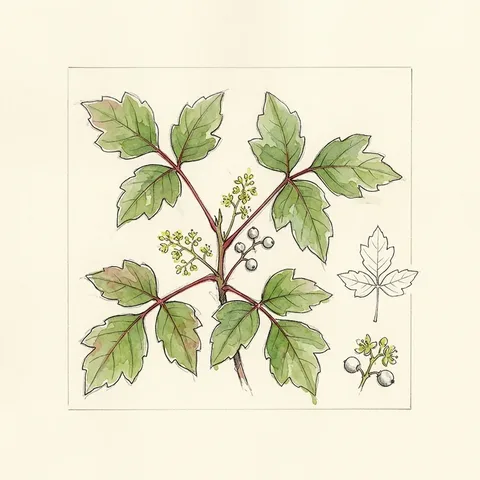
Rhus Toxicodendron
Λόγος χρήσης
(“Rhus radicans, also called toxicodendron.” HAHNEMANN.)
RHUS IS A native of North America, and is one of those most valuable medicines which we owe to the domestic practice of the North American Indians:—Baptisia, Gelsemium, Caulophylum, etc. It was proved and included in his Materia Medica Pura by Hahnemann, as “a remarkable and valuable medicinal substance”. He notes “a great number of characteristic peculiarities in its action”, and says: “To mention one only: we observe this curious action (which is found in very few other remedies, and in these never to such a great degree), viz. the severest symptoms and sufferings are excited when the body or the limb is at rest and kept as much as possible without movement.” And adds, “the opposite, an increase of the symptoms by movement, is much more rarely observed”. Then he contrasts the action of Rhus with that of Bryonia. Here, “with almost identical symptoms”, there is “the striking amelioration by avoiding all movement” of Bryonia, “exactly the opposite of what Rhus does”. Hahnemann calls them “these two antagonistic sister remedies” and tells of their inestimable value in the disastrous war pestilence of 1813, when these patients were “dying in thousands while the doctors carried on vain disputations as to the presumed internal nature of the disease”.1 Hahnemann treated it symptomatically with Rhus alternated with Bryonia, as the symptoms changed and demanded the one or the other remedy. And he says that, of the 183 cases he treated in Leipsic, not one died, “which created a great sensation among the Russians then ruling in Dresden, but was consigned to oblivion by the medical authorities.” He says, “If ever there was a triumph for the only true, the homoeopathic treatment, this was one.” Farrington says: “You must remember Rhus as complementary to Bryonia, a fact discovered by Hahnemann in his experience with an epidemic of war- typhus. . . . The success he gained was acknowledged on all sides. Many lives have since been saved by the exhibition of these two remedies in alternation; i.e. an alternation which consists in giving Bryonia when Bryonia symptoms are present, and Rhus tox, when the patient manifests symptoms calling for that remedy. This is a legitimate alternation.” Farrington tells us that Boenninghausen’s2 son had typhoid, and was attended by his father. Among his symptoms was the Rhus restlessness, yet Rhus gave no relief. Looking up the Materia Medica Boenninghausen found that Taraxacum had this same restlessness of limbs with tearing pain, and in addition a symptom present in his son’s case, mapped tongue. He gave Taraxacum with prompt relief. Farrington describes the use of Rhus in FEVERS. . . . “Rhus, when acute diseases take on a typhoid form—dysentery—scarlet fever—diphtheria—pneumonia. . . . He says, “Rhus is indicated in DYSENTERY, when there are tearing pains down the thighs during defaecation. I once cured a case of small-pox which had degenerated into a haemorrhagic type, the pustules containing bloody pus, with Rhus; the indications for the remedy were, Stools of dark blood, with pains tearing down the thighs during stool.” He describes Rhus, in TYPHOID . . . “mild temperament, delirium mild: though may try to jump out of bed to escape. Restlessness: cannot lie still. Sometimes the hallucination, fear he will be poisoned. Will not take the medicines, or food, as fears people desire to poison him (Hyos., Lach.). Tongue dark-brown, dry, cracked: cracks may gape and bleed. Triangular red tip. Typhoid pneumonia, rusty sputum. Almost intolerable backache”. Dunham says, “These remarks” (i.e. to above effect) “will suffice to give an idea of the application of Rhus in FEVERS. They have included no name except that of typhoid fever—but surely I need not at this hour remind you that, no matter how different may be the names that are applied to morbid conditions, if the conditions be similar the remedy may be the same. It often happens that in the course of the exanthematous fevers, measles and scarlatina, a similar train of symptoms to those already described makes its appearance and calls for Rhus. Especially is this the case with scarlatina, a disease in which the value of Rhus is not well understood by the profession.” Farrington says, “In INTERMITTENT FEVER it is very important to note the point at which the chill starts. “Rhus starts in one leg, usually in the thigh, or between the shoulders, or over one scapula. “Eupatorium, sometimes Nat. mur., begins in small of back. “In Gels, it runs up the spine.” In regard to the extraordinary action of Rhus on the SKIN—even the exhalations of the plant will effect this in sensitives, Carroll Dunham says: “Rhus produces a most remarkable imitation of vesicula erysipelas and is our most valued remedy here. . . . But its grand rôle is in the treatment of the pustular form.” And he quotes Trousseau, “no advocate or friend of Homoeopathy”, who “relates an interesting proving of Rhus” (which accords with its other provings). . . . “‘Dr. Savini applied two drops of the juice of Rhus rad. to the first phalanx of his forefinger; he left it there only two minutes, and yet, at the end of an hour, it had produced two black spots. Twenty-five days afterwards the following symptoms suddenly manifested themselves: great heat, mouth and gullet; rapid swelling of left cheek, upper lips, and eyelids. The following night, swelling of forearm, which had acquired double its normal volume; the skin was rough, the itching intolerable, the heat very great, etc. ‘This singular action of Rhus’, says Trousseau, ‘induced the homoeopaths to use it in skin diseases; but already, before them, Dufresnoy, of Valenciennes, had published a pamphlet extolling the virtues of this plant against cutaneous diseases, and subsequently against paralysis . . .’ and Trousseau says that he had often used Rhus radicans for paralysis of the lower extremities ‘succeeding on a concussion of the spinal marrow, or a lesion of that organ, which did not destroy its tissue. On this point we have collected facts enough to place beyond a doubt the therapeutic efficacy of Rhus radicans.’” SKINS, then, and TRAUMATIC PARALYSIS without destruction of nervous tissue! We shall amplify, and detail some of its other uses. Dunham points out that “in fevers, the special senses are dulled, but not perverted”. Dunham also explains the apparently contradictory symptoms of Rhus, as hinted by Hahnemann. “The great and characteristic peculiarity of Rhus is that, with few exceptions, they occur and are aggravated during repose, and are ameliorated by motion . . . “Rhus has symptoms which resemble paralysis, also groups of symptoms resembling muscular and articular rheumatism. These latter come on with severity during repose and increase as long as the patient keeps quiet, till they compel him to move. Here the first movement is exceedingly painful: but by continuing to move the stiffness is relieved and pains decrease, and he feels much better. But, after a period of continuously moving and finding comfort therein, the paralytic symptoms interpose their exhausting protest, and he is compelled by lassitude and powerlessness to suspend his movements and come to repose. This repose is at first grateful and relieves, not the aching pains, but the sense of prostration. Before long the pains come on again and the patient is forced to move again, as before. . . . This will explain the seeming contradictions in the symptoms of Rhus.” Kent says of Rhus, “He is never perfectly at ease, and never finds rest.” In regard to the Rhus characteristic, worse first morning, then better, Guernsey says, “We are led to think of this remedy where we find an irresistible desire to move, or change the position every little while, followed by great relief for a short time, when they must again move, and again experience the same relief for a short time. After resting, when first moving a painful stiffness is felt which wears off from continued motion.” He says “a nursing mother may have sore nipples, and when the child begins to nurse, the nipple hurts exceedingly, but on continued nursing it becomes much easier”. And Kent has it, “Hoarseness on first beginning to sing which wears off on singing a few notes, or wears off after talking a little while.” DILATATION OF HEART with distress; from over-exertion (Arn.). Uncomplicated hypertrophy of heart, i.e. not associated with valvular lesions . . . from the effects of over-exertion—athletes and men who handle heavy tools. (Arn.) Palpitation of heart following over-exertion, with usually numbness of left arm and shoulder. Farrington tells us that Rhus is the great remedy of over-exertion. “Over-exertion. A player of wind instruments gets pulmonary haemorrhage: Rhus will be his remedy. If from violent exertion a patient is seized with paralysis, his trouble may yield to Rhus tox.” (Arn.,—but Arn. has not the strained feeling of Rhus. Hill-climbing, Ars. Rhus is almost the specific of STRAINS and SPRAINS.) But of Lumbago he says, “Here Rhus is the remedy whether the patient is better from motion or not. Rhus has ‘great pains in attempting to rise: stiff neck from sitting in a draught; interscapular pains, better from warmth and worse from cold.’” And he says, “Rhus is especially indicated in what has been termed rheumatic gout. Especially indicated in a rheumatic hard swelling of the big- toe joint, often mistaken for bunion.” Rhus has “Colic, better by bending double and moving about. (Coloc. better bending, but not from motion.)” “In orbital cellulitis, Rhus is almost a specific.” Rheumatism of maxillary joints, as if jaw would break. Easy dislocation of jaw. “RHUS is very freaky. For instance, hunger without appetite: hungry sensation, or sensation of emptiness in the stomach without desire for food. Dryness of the mouth and throat with great thirst; unquenchable thirst for cold drinks, especially at night, with great dryness of the mouth. Yet many times the cold drinks bring on chilliness, and bring on the cough.” KENT. The relentless periodicity of Rhus poisoning, on sensitives, is instanced by one case where the symptoms returned on the same day—even hour, for sixteen years, till Tuberculimum stopped the trouble (Clarke); and another case (Hering) where the burning itching of skin, lasting twenty-four hours, recurred on May 13th each year. In a previous number of HOMOeOPATHY we quoted a letter to Dr. Kent, alluding to his statement that “when a person was poisoned by Rhus it was because he was in need of that poison, and had it been given in a high potency, he would not have been poisoned by contact with the plant”; and saying, that in travels in northern and western parts of New York, the writer, a Dr. Peters, “learned from the farmers that as soon as the leaves come out, they pick off two or three and chew them, after which they can handle the plant with bare hands with impunity”. Personally, one would not care to risk either! Farrington speaks of Rhus as useful in various forms of PARALYSIS, especially in rheumatic patients from over-exertion, or exposure to wet (as lying on damp ground (Dulc.). He thinks it originates in a rheumatic inflammation of the meninges of the cord. The three drugs he contrasts for paralysis from cold are Rhus, Sulph. and Caust. Rhus especially affects fibrous tissues, tendons, fasciae, sheaths of nerves, ligaments and tissues external to joints, rather than the joints themselves (Bry.). It has a great record in the treatment of lumbago and sciatica, where not from mechanical cause; and, as Hahnemann insists, Sprains. We seem to remember that it was the prompt relief from a very bad sprained ankle that caused one of our doctors to look into Homoeopathy.
BLACK LETTER SYMPTOMS
(Allen, Hering and Hahnemann).
Worse in the house, relieved by walking in open air (Puls.). Sad, begins to weep without knowing why. Very restless mood. Great apprehension at night; cannot remain in bed. On rising such dizziness, it seemed she was going to fall forward and backward.
Inflammation of the EYES. Very sore around the right eye. The eyes are closed, or greatly swollen and inflamed. Great swelling of the lids. Left eye closed from swollen lids. Inflammation of the lids. Eyes red and agglutinated with matter in a.m. Eyes agglutinated with purulent mucus in a.m. Heaviness and stiffness of lids, like a paralysis: difficult to move the lids. Nasal mucus runs in profusion out of nose, as in the most severe coryza in a.m., after rising from bed (Nux). Frequent, violent, spasmodic sneezing.
Great swelling of the FACE.
Yawning so violent and spasmodic: causes pain in maxillary joint which is in danger of being dislocated.
Sore sensation with redness at apex of TONGUE.
Tongue dry. Salivation.
THROAT much swollen externally, maxillary and parotid glands greatly enlarged. Parotid and submaxillary glands hard and swollen.
Great thirst. Thirst and dryness of throat.
Acute diseases take on a TYPHOID form—dysentery. Peritonitis, Pneumonia, Scarlatina, Diphtheria. Typhoid fever: mild temperament; mild delirium; at times may try to jump out of bed or try to escape. . . . Mental and physical restlessness. Constantly tosses about bed, lies first on one side then the other, one moment sitting up, the next lying down. At beginning of disease wants to lie perfectly quiet on account of great weakness—prostrate—indifferent. Hallucinations: fears he will be poisoned; refuses medicine and food. Short COUGH, from severe tickling and irritation behind the upper part of sternum, followed the feeling of discouragement and apprehension. Pneumonic cough, rust-coloured sputum.
Stiffness in small of BACK, painful on motion. Small of back feels bruised. While sitting the small of back aches, as after long stooping and bending the back. Pain as if bruised in small of back, whenever he lies quietly upon it or sits still: on moving about he feels nothing. Heaviness and pressure in small of back, as if one had received a blow, while sitting.
The LIMBS tremble after exerting them.
All the limbs feel stiff and paralysed, during and after walking; with a sensation of a hundred-weight on nape of neck. Sensation of stiffness on first moving the limb after rest. The limbs upon which he lies, especially the arm, fall asleep. A sensation as of trembling in arms and lower extremities, even while at rest. Drawing in all the limbs, while lying down. Trembling of arms after moderate exertion of them. Violent tearing pain in arm, most violent while lying still. Drawing and paralysed sensation left arm, at night. Sticking and drawing in left arm extending from above downward and out at tips of fingers. Pain in left upper arm as if muscles or tendons were unduly strained, when the limb is carried by them far upwards and backwards, at 2 and 3 p.m. Jerking tearing in elbow and wrist joints, during rest, better during motion. Loss of power and stiffness in forearms and fingers on moving them. A powerless sensation in upper right forearm, on motion, and pain as if sprained in wrist, when grasping anything. Sensation on upper surface left wrist on bending it, as if it had been sprained. When grasping, feeling as if pins were pricking tips and palmar surface of first phalange: of fingers. Great weakness of legs while walking in open air (afternoon), hardly able to proceed, because they are so heavy and weary (Gels.): after sitting an hour, weariness disappears. Great heaviness in legs while sitting, disappeared on walking. Aching pains in legs, inability to rest in any position but for a moment. Pressive pain in both hip-joints on every step, and paralysed sensation in anterior muscles of thighs. Tension, left hip-joint, while sitting. When lying on the side the hips hurt, and when lying on the back, the small of the back hurts. Stiffness, especially knees and feet. Tension left knee joint, when rising from seat. Tension knee, as if it were too short. Uneasiness in foot (from pulling and tension in tendons.) Tearing in knee and ankle, worse during rest. Legs heavy and weary, as if he had walked a long distance. Pain like a tingling in tibiae at night, when feet are crossed. Constantly obliged to move legs back and forth, and so unable to sleep. Heaviness and tension in feet while sitting, but only weariness when walking. Feet painful, as if sprained or wrenched on rising in a.m. A drawing, like paralysis, in whole foot, while sitting. Unusual weakness of limbs, mostly during rest. Very great weakness, especially walking in open air. Weariness, worse sitting, relieved while walking: decided stiffness on rising from seat.
Unusual RESTLESSNESS at night. Great restlessness. Could not sit still on account of internal uneasiness, but was obliged to turn in every direction on the chair, and move all her limbs (Pyrogen). Great uneasiness at night. Stiff on rising from a seat. Soreness in every muscle, passes off during exercise.
SKIN: erysipelas, with numerous vesicles that burst, and secreted for eight days a slimy liquid. After 24 hours itching and burning commenced, lasting from half-an-hour to two hours. After 36 hours, swelling of the parts, with violent itching and burning, increased on touching or moving; the parts affected as if pierced by hot needles (Ars.) White transparent vesicles appeared on the highly red and inflamed skin (Ran. bulb.). Covered from head to foot with a fine red vesicular rash, itching and burning terribly, especially in the joints; worse at night causing constant scratching, with little or no relief, and which felt very hard when pressed with the finger: skin burning hot. The face became red, enormously swollen and Oedematous, then also the hands and the skin of the whole body became covered with a scarlet-like exanthema, with intolerable itching biting; on the fourth day, the backs of the hands and legs became covered with blisters, which burst and slowly desquamated. Violent vesicular erysipelas of the face and hands, attended with a high state of fever. Burning, itching eruptions. Urticaria from getting wet: during rheumatism: with chills and fever. Worse in cold air. Eczema: raw, excoriated: thick crusts, oozing and offensive. Burning, itching, tingling pains. Incessant itching and scratching. The more they scratch, the greater the urgency to scratch.
Acts on fibrous and muscular TISSUES. Flesh of affected parts sore to touch. Pain as if flesh torn loose from bones: or bones being scraped. Pains as if sprained: disposition to sprain a part by lifting heavy weights, or stretching up to reach things. Inflammation of tendons and muscles from over-exertion, or sudden wrenching as in a sprain. Bad effects of getting wet, especially after being heated. Smooth red and shining swellings, the inflamed skin being covered with small painful, white vesicles. Glands swollen, hot, painful; indurated: suppurating.
PARALYSIS: after unwonted exertion: parturition: rheumatic, from getting wet or lying on damp ground: after ague or typhoid. Parts painless, or painfully stiff and lame, with tearing, tingling numbness. Twitchings of limbs and muscles. Restless at night, has to change position frequently.
Bad consequences from getting wet, especially after being heated.
Το πλήρες κείμενο (Tyler), ανά ενότητα
Fever
Cough during chill: dry, teasing, fatiguing. Slow fevers: tongue dry and brown, or red as if skinned; sordes on teeth; bowels loose; great weakness; powerlessness of lower limbs, can hardly draw them up. Great restlessness after midnight; must move often to get relief.
***
As we have seen, Rhus has very definite spheres of action. SKIN, to vesication and erysipelas; glands throughout the body, enlarging and inflaming them, including the parotids and Peyer’s patches (Dros.), which suggests its deep utility in typhoid. It “depresses nutritional activity; depresses the sensorium, and the capability of the mind for continuous thought; thus a patient meaning to write the number 12 will write the figure 1, but cannot recollect the figure which should follow” (DUNHAM). The Rhus powerlessness, approaching paralysis, is more pronounced in the lower extremities (DUNHAM). And Dunham sums up the action of Rhus, as follows: “It produces a kind of rheumatic affection of muscles and ligaments, alleviated by motion; a paralysis aggravated by motion; an apparent passive congestion of head, relieved by repose; a debility of the organs of nutrition marked by deficient and depraved appetite and by tympanitis; a serous infiltration of the cellular tissue in various parts, as face, fauces, genital organs, feet; a vesicular eruption generally; an acrid state of the secretions generally, tears, nasal mucus, urine, menstrual flow, contents of cutaneous vesicles; general depression of sensorium.” But Rhus is practically only prescribed on its peculiar modalities and that in any disease: its restlessness: its temporary relief from motion; its intolerance of damp and cold: and the etiology of most of the conditions it causes and cures—A COLD WETTING: A CHILL FROM DAMP, especially when warm (Dulc.).
*** There are other species of Rhus used in homoeopathic medicine. Rhus radicans (Poison Ivy), which Jahr makes much of, and which has seemed to us a more potent remedy in lumbago, sciatica, and even headache, than Rhus tox. (Poison Oak), but which Hahnemann, as seen from our heading, has included in his provings with Rhus tox. Then there is Rhus aromatica (Fragrant Sumach), a non-poisonous shrub, which has a reputation, in the tincture, for diabetes. Rhus venenata (Poison Sumach), said to be more poisonous than Rhus tox. and which has to be handled with extreme caution, and it is said to be more actively curative in skins. It seems to affect bones more than Rhus tox. especially where bones are near the surface, “directly covered with skin”. Rhus diversiloba, again, a remedy of eczema and erysipelas, and Rhus glabra—all to be found in Clarke’s Dictionary.
1 See Hahnemann’s account of this epidemic, HOMOeOPATHY, Vol. IV., p. 202. 2 Hahnemann’s friend and great disciple.
homeopathylibrary.com/el/remedy/rhus-toxicodendron