Αρχική / Φάρμακα Α–Ω / Pulsatilla Pratensis
Κάρτα τσέπης →
Φυτό · Ranunculaceae · simple

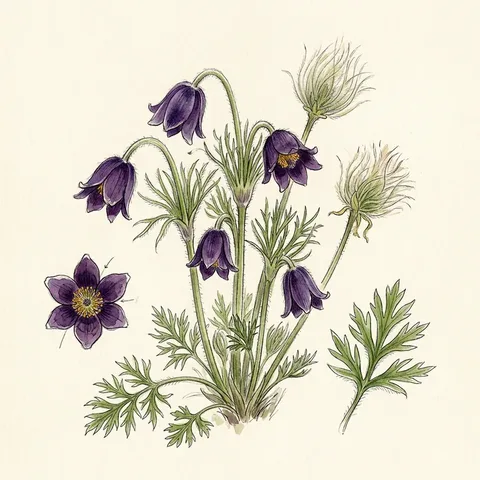
Pulsatilla Pratensis

Pulsatilla nigricans
PULS · 21 λήμματα σε 21 βιβλία
Pulsatilla Pratensis
ΒιότοποςSunny, sandy pastures in Central and Northern Europe and parts of South of England. ΠαρασκευήTincture of entire fresh plant when in flower (it flowers in spring and again in autumn). Clarke
3X–30X
Τρίτη έως τριακοστή αραίωσηΔόση · Boericke

Λόγος χρήσης

Ήπιος, πράος, υποχωρητικός χαρακτήρας· λυπημένος και απελπισμένος, κλαίει εύκολα, ξανθά μαλλιά, γαλάζια μάτια, χλωμό πρόσωπο, μαλακοί και χαλαροί μύες.

Αλλάξιμο φάρμακο, οι πόνοι μετακινούνται από ένα άρθρωση σε άλλο· αιμορραγίες ρέουν και σταματούν και ξαναρέουν, καμία δύο κόπρανα δεν είναι ίδια, καμία δύο ρίγη δεν είναι ίδια, ούτε κεφάλι ούτε ουρά στην περίπτωση-μικτή.

Κακή γεύση στο στόμα, < πρωί, με μεγάλη ξηρότητα, αλλά χωρίς δίψα.

Στομάχι εύκολα διαταράσσεται, ιδίως από κέικ, ζαχαροπλαστικά ή λιπαρά φαγητά.

Πυκνές ήπιες εκκρίσεις από όλες τους βλεννογόνους.

Έμμηνος ρύση καθυστερημένη, ολιγομήνη ή κατασταλμένη, ιδίως από βρεγμένα πόδια.

▲ Χειρότερα

in warm room, warm applications, abuse of Iron; chilliness with the pains

▼ Καλύτερα

by cool open air, walking slowly around, cold food or drink, tying up tightly > the headache

Το πλήρες κείμενο (Nash), ανά ενότητα

Modalities

Pains accompanied with constant chilliness, and the more severe the pain the harder the chill (with profuse sweating, Cham.; with fainting, Hepar sulph.; with frequent micturition, Thuja; with delirium, Verat. alb.).

The mental picture of Pulsatilla is almost the opposite of that of Nux vomica. Nux vomica is called the man's remedy and Pulsatilla the woman's remedy. This means simply that the complaints of one are found oftener with men, while those of the other are found oftener with women.

Now to call attention to another of Hering's characteristics, and I know of no one who has expressed them better, we have -"Mild, gentle and yielding disposition; cries et everything; is sad and desponding; creeps about everything; can hardly give her symptoms on account of weeping.") And again: "Sandy hair, blue eyes, pale face, inclined to silent grief with submissiveness." (Silicea is its chronic). Here we have a description of the Pulsatilla temperament as near as words can express it, and it is a fact that when you find it in a patient, no matter what the pathological condition, Pulsatilla will almost surely help. There are few exceptions. So we learn not to put too much stress on pathological states to the neglect of symptomatological conditions.

Pulsatilla is a remedy of wide range of action. Farrington mentioned its use in seventy-three different affections, and has not by any means exhausted them all; and if you study Pulsatilla in Hughes' Pharmacodynamics you will notice that, although he recommends it in many diseases, he does not, and evidently is not able to, talk as much from a pathological standpoint especially from the provings of the drug as he does of many other remedies. It seems to me like folly to undertake to pose as either an exclusive pathologist or symptomatologist. Both pathology and symptomatology are valuable and inseparable; neither can be excluded. Pathology is what the doctor can tell (sometimes); symptomatology is what the patient can tell.

There is another condition of Pulsatilla which may be considered Characteristic, and which Hering does not mention in his cards, viz., changeableness of symptoms (Ignat., Nux mosch.). All that Hering said was "wandering pains shift rapidly from one part to another, also with swelling and redness of the joints." Now if this occurs in rheumatism (Manganum acet., Lac caninum, Kali bichrom., Kalmia lat.), and especially if in the Pulsatilla temperament we may perform a miracle of curing with this remedy. But this shifting or changeableness is not confined to the pains, which may be either rheumatic or neuralgic, but is found in the disposition. The patient is now irritable, then tearful again, or mild and pleasant; but, even with the irritableness, is easily made to cry. The haemorrhages flow, and stop, and flow again; continually changing. The stools in diarrhoea Constantly change in color; they are green, yellow, white, watery or slimy; as Guernsey expresses it -"no two stools alike." (Sanicula). This is often found in the so-called cholera-infantum or entero-colitis of children in hot weather.

We sometimes have patients come into the office, and find, in trying to take their case, no "head to tail" to it. It is mixed. The suffering and pain is now here, now there. The symptoms are contradictory, as we term them. This condition should always call attention to Pulsatilla and it will often clear up and cure the case. Ignatia also has these ever-changing, hysterical and contradictory symptoms, both pre-eminently woman remedies.

Pulsatilla like Nux vomica is a great remedy for disorders. of digestion. Symptoms -"Bad taste in the mouth, especially early in the morning, or nothing tastes good, or no taste at all." (Bryonia, bad taste with coated tongue and thirst; Pulsat., no thirst).

"Great dryness of the mouth in the morning, without thirst. Stomach disordered from cakes, pastry, rich food; particularly fat pork." (I would say -fat meats generally). These are reliable symptoms, as given in Hering's cards, and are not very much like the symptoms of Nux vomica, which is not disturbed by fats, but on the contrary likes them and they agree. With Nux vomica warm food agrees best; with Pulsatilla, cold things.

The bad taste in the mouth is persistent and the loss of taste is frequent, as is also the loss of smell. How peculiar that Pulsatilla should have dry mouth and no thirst, while Mercurius should have characteristically moist mouth with intense thirst. There is no accounting for taste, as the man said when he saw a fellow kiss his mother-in-law.

I do not know that I could give a satisfactory pathological reason for this. Is it not a good thing that we do not have to give the pathological explanation for such a symptom before we can use it to cure our patients? To be sure there is always a reason for these things, but we do not need to know what it is before we can utilize the symptom.

The merest tyro in prescribing could hardly mistake the symptoms of Pulsatilla for those of Nux vomica and yet I have found physicians prescribing these remedies in alternation, at intervals of two or three hours.

Having called attention to the action of Pulsatilla on the digestive organs, which are lined with mucous membranes, we now wish to notice that it has a peculiar action on mucous surfaces generally. This peculiarity consists in the character of the discharges from them. They are thick, bland and yellowish green. These are found in nasal catarrh; leucorrhoea; expectoration; gonorrhoea; in ulcers; from the ears and eyes; in short, from every mucous outlet of the body.

The expectoration of pulsatilla, which is thick, green and bland, tastes bitter, while that of Stannum is sweet and that of Kali hydroiodicum and Sepia salty. One of Schuessler's tissue remedies (Kali sulphuricum) greatly resembles Pulsatilla in the character of its discharges, and not only that, but also in its wandering pains, evening aggravations and ameliorations in cool, open air. Kali hydroiodicum is also ameliorated in open air and worse in a warm room. Now that we are on the subject of greenish discharges, especially the expectoration, we will mention also Carbo veg. Lycopodium, Paris, Phosphorus and Sulphur. Of course, the other symptoms must decide the choice between several remedies having one symptom in common.

A certain physician in Albany, N. Y., was called in consultation on a so-called case of phthisis pulmonalis. The case was in allopathic hands. After carefully examining the case, he was asked: "What is your diagnosis, doctor?" "Stannum," said the doctor. "What!" "Stannum," replied the doctor. Stannum was the diagnosis of the remedy, not the disease. It was given and cured the patient.

Now we come to the curative action of Pulsatilla in affections of the female genital organs. The fact that it has such a decided action upon these, added to the womanish disposition of this remedy, is additional reason why it is called the woman's remedy, as we said when writing upon the disposition and temperament. "Catamenia too late and scanty, or suppressed, particularly by getting feet wet," and "Painful menstruation with great restlessness, tossing in every possible direction," and we have already mentioned the changeable characteristics in the flow of the menses, viz., they stop, and flow, stop and flow again, etc. So, also, the menorrhagia.

In these menstrual troubles of Pulsatilla the wetting or chilling of the feet is of prime importance and, acting upon it, you may save your patient from consumption as a result of such exposure and suppression. Now don't pour down mother tincture of Pulsatilla by the ten-drop doses, as is the manner of those who do not believe in potentized remedies. You may give Pulsatilla in the high, higher, and highest potencies, and confidently expect the best results. I have often seen the delayed menses of young girls of Pulsatilla temperament appear promptly and naturally under the M. M. of Swan and C. M. of Fincke (also with Kali carbonicum, Tuberculinum, and others). so also have I seen them restored after suppression, by the same. Now if you should try one of these very high potencies in a case of menstrual difficulty, and it should not succeed, don't jump to the conclusion that I have been mistaken, for Pulsatilla is not the only remedy for such cases. Homoeopathy is too often blamed when the blame lies in the stupidity and malpractice of the prescriber. Magnesia phos. will relieve more cases of painful menstruation than Pulsatilla, and that is not a cure-all, either. Study up your case.

But after all, the prime characteristic of this wonderful remedy lies in its modality. "Better in cold air and from cold applications." The patient is not only better generally in the open, cool air and worse in a warm, closed room, but local affections also, as, for instance, the vertigo; pain in head, eyes, ears; itching of eyelids; roaring; coryza; pain in face; toothache; colic; labor pains; sciatica; ulcers, are all better in open air. These affections that are > in cold air are also especially > while walking or moving slowly about (Ferrum) in open or cool air. Remember that Pulsatilla as well as Rhus toxicodendron is ameliorated by motion, but Pulsatilla in cold or cool open air, while Rhus tox. wants motion in warm dry air.

With Pulsatilla warm applications aggravate, warm room oppresses, heat of bed aggravates itching (Mercurius) and chilblains; cold drinks retained, warm vomited.

Other remedies have aggravations from heat; but Pulsatilla leads them all. The relief from cold and cool, open air is as positive as that of warmth or heat is for Arsenicum.

Now to close our remarks on Pulsatilla we will give a few choice symptoms without any particular comments upon them.

"Affections consequent on the abuse of Iron." "Chronic affections following cases of badly managed measles." "Pressure, or tying up tightly, relieves the headaches." (Argentum nit., Apis mellifica). "Increased inclination to micturate, < when lying." "Metastasis of gonorrhoea to testicles." "Chilliness, with pains, yet wants cool room." "One-sided sweats." "Inflamed parts bluish," (Lachesis, Tarantula Cub.) "Pulsations through the whole body." "Metastasis of mumps to mammae or testicles." In any of these local affections we should expect to find the mind and modality of this remedy present or not be very confident of a brillant cure.

Πλήρες κείμενο του λήμματος Pulsatilla Pratensis στο Nash - Leaders in Therapeutics· προέλευση και παρασκευή από τον Clarke. Ιστορικό κείμενο από την κλασική materia medica (1828–1950). Δεν αποτελεί ιατρική συμβουλή ούτε ισχυρισμό ότι κάποιο φάρμακο δρα.
homeopathylibrary.com/el/remedy/pulsatilla-pratensis

Περισσότερα για Pulsatilla Pratensis

Απλό φάρμακο · Φυτό

21 λήμματα σε 21 βιβλία · συντομογραφίες: PULS, PULSATILLA, PULSATILLA NIGRICANS · Οικογένεια: Ranunculaceae

Φάρμακα που λέγεται ότι τερματίζουν ή μειώνουν τη δράση του Pulsatilla Pratensis, για παράδειγμα αν έχει προκαλέσει ανεπιθύμητη αντίδραση. Τι είναι το αντίδοτο;

Φάρμακα των οποίων τη δράση το Pulsatilla Pratensis λέγεται ότι τερματίζει ή μειώνει.

ΑντιδοτείAntimonium Tartaricum Clarke, HeringBelladonna Clarke, HeringCalcarea Phosphorica ClarkeChamomilla Clarke, Hering, LippeCinchona Officinalis Clarke, Hering, LippeCoffea Cruda Clarke, Hahnemann, HeringColchicum Autumnale Clarke, HeringCopaiva Officinalis Clarke
+64 ακόμηFerrum Clarke, GrossGelsemium Sempervirens ClarkeIgnatia Amara Clarke, HahnemannKali Bichromicum LippeLycopodium Clavatum Clarke, HeringMagnesium Carbonicum ClarkeMercurius Solubilis Clarke, Gross, LippeNux Vomica Clarke, DeweyPlatinum Metallicum Clarke, HeringSabadilla Clarke, HeringSepia Officinalis LippeStramonium HeringSulphur Clarke, Gross, Hering, LippeSulphuricum Acidum ClarkeAgaricus Muscarius Clarke, HeringAgnus Castus ClarkeAlumina ClarkeAlumina Or Argilla HeringAmbra Grisea Clarke, Guernsey, Hering, SerorAnthracinum Clarke, SerorArgentum Metallicum Boericke, Clarke, HeringArgentum Nitricum HeringArum Triphyllum ClarkeAsafoetida Clarke, HeringAurum Metallicum HeringBryonia Alba Clarke, HeringCalcarea Arsenicosa ClarkeCantharis Vesicatoria Boericke, HeringCereus Bonplandii T. F. AllenChininum Sulphuricum BoerickeCitrus Limonum ClarkeCramps FarringtonCurare HeringCyclamen Europaeum Clarke, HeringErythroxylon Coca HeringEuphrasia Officinalis Boericke, Clarke, HeringHamamelis Virginica ClarkeJacaranda Caroba HeringKali Muriaticum Clarke, HeringKalmia Latifolia KentLilium Tigrinum Clarke, HeringMagnesia Carbonica Clarke, HeringNatrium Hypochlorosum BoerickeNatrum Hypochlorosum ClarkePiper Methysticum ClarkePlatina Guernsey, HeringPlatinum ClarkeRanunculus Bulbosus Clarke, HeringRanunculus Sceleratus ClarkeRheum Palmatum Clarke, HeringSabal Serrulata ClarkeSabina Guernsey, RobertsSelenium Metallicum Boericke, Clarke, Guernsey, HeringSpigelia Clarke, HeringSpigelia Anthelmia BoerickeSpigelia Anthelmintica GuernseyStannum Clarke, Guernsey, HeringSulphuric Acid GuernseyTabacum Clarke, HeringThuja Occidentalis Clarke, HeringValeriana Officinalis Clarke, Guernsey, HeringVeratrum Viride Clarke, TylerViola Tricolor ClarkeZizia Aurea Clarke

Λήμματα

1 Boericke

PULSATILLA PRATENSIS · William Boericke · 7,178 χαρακτήρες

2 Kent

Pulsatilla · James Tyler Kent · 44,028 χαρακτήρες

3 Clarke

Pulsatilla · John Henry Clarke · 66,363 χαρακτήρες

4 Hering

Pulsatilla · Constantine Hering · 200,035 χαρακτήρες

5 Allen

Pulsatilla · Henry C. Allen · 3,693 χαρακτήρες

6 Nash · εμφανίζεται παραπάνω

Pulsatilla · E. B. Nash · 11,239 χαρακτήρες

7 Hering

PULSATILLA · Constantine Hering · 23,743 χαρακτήρες

9 Farrington

Pulsatilla · Ernest Albert Farrington · 15,034 χαρακτήρες

10 Lippe

Pulsatilla pratensis · Adolph zur Lippe · 15,873 χαρακτήρες

11 Dunham

Pulsatilla · Carroll Dunham · 30,745 χαρακτήρες

12 Hahnemann

Pulsatilla · Samuel Hahnemann · 108,530 χαρακτήρες

14 T. F. Allen

PULSATILLA · Timothy Field Allen · 438 χαρακτήρες

15 Tyler

Pulsatilla · Margaret Lucy Tyler · 14,246 χαρακτήρες

16 Guernsey

Pulsatilla Pratensis · Henry Newell Guernsey · 7,601 χαρακτήρες

17 Cowperthwaite

Pulsatilla Pratensis · Allen Corson Cowperthwaite · 17,303 χαρακτήρες

18 Dewey

Pulsatilla Nigricans · Willis Alonzo Dewey · 10,205 χαρακτήρες

19 Gross

Pulsatilla · Gustav Wilhelm Gross · 298,970 χαρακτήρες

20 Hempel

Pulsatilla · Charles Julius Hempel · 59,355 χαρακτήρες

22 Roberts

Pulsatilla · Herbert Alfred Roberts · 4,932 χαρακτήρες

23 T. F. Allen

Pulsatilla Pratensis · Timothy Field Allen · 10,207 χαρακτήρες

33 Gladstone Clarke

Pulsatilla Pratensis · A. Gladstone Clarke · 2,061 χαρακτήρες

Σχέσεις (αυτό το φάρμακο →)

Αντίστροφες παραπομπές (άλλα φάρμακα → αυτό)

σύγκριση 201Abies NigraAconitum LycoctonumAconitum NapellusActaea RacemosaActea RacemosaAletris FarinosaAllium CepaAmbra GriseaAmmoniacum GummiAnacardium OrientaleAnagallis ArvensisAntimonium ArsenicicumAntimonium CrudumApis MellificaAranea ScinenciaAranearum TelaArgentum NitricumArsenicum Album
+183 ακόμηArtemisia VulgarisAsarum EuropaeumAsarum EuropoeumAurum MetallicumBaryta CarbonicaBerberisBerberis VulgarisBismuthumBlatta OrientalisBorax VenetaBovista LycoperdonBromiumCactus GrandiflorusCaladium SeguinumCalcarea ArsenicaCalcarea ArsenicosaCalcarea CarbonicaCalcarea OstrearumCantharidesCantharis VesicatoriaCapsicum AnnuumCarbo AnimalisCarbo VegetabilisCarlsbad AquaCaulophyllum ThalictroidesChamomillaChelidonium MajusChimaphila MaculataChininum SulphuricumCimicifuga RacemosaCinchona BolivianaCinchona OfficinalisClematis ErectaCocculus IndicusCoffee CrudaColchicum AutumnaleCollinsonia CanadensisColocynthisConium MaculatumCrampsCroton TigliumCuprum AceticumCuprum MetallicumCurareCyclamen EuropaeumDaphne IndicaDaphne OdoraDaphne OdorataDiadema AraneaDigitalis PurpureaDirca PalustrisDulcamaraEquisetum HyemaleErechthites HieracifoliaErythroxylon CocaEugenia JambosEuphrasia OfficinalisFagopyrum EsculentumFerrumFerrum PhosphoricumGambogiaGentiana CruciataGnaphalium PolycephalumGossypium HerbaceumGraphitesHamamelis VirginianaHamamelis VirginicaHelonias DioicaHydrastis CanadensisHyoscyamus NigerIgnatia AmaraIodumIpecacuanhaIris VersicolorJambos EugeniaKali BichromicumKali FerrocyanatumKali IodatumKali MuriaticumKali PhosphoricumKali SulphuricumKalium CarbonicumKalium SulphuricumKalmia LatifoliaLac FelinumLachesisLachesis MutusLachnanthes TinctoriaLactic AcidLacticum AcidumLaurocerasusLedum PalustreLilium TigrinumLithium CarbonicumLobelia SyphiliticaLycopodium ClavatumMagnesia PhosphoricaMagnesia SulphuricaMagnesium MuriaticumMagnetis Poli AmboMenyanthes TrifoliataMercurius ProtoiodatusMezereumMitchella RepensMorbillinumMorphinumMoschusMurex PurpureaMuriaticum AcidumNatrum CarbonicumNatrum MuriaticumNatrum SulfuricumNatrum SulphuricumNiccolumNitricum AcidumNux MoschataNux VomicaOleum Animale AethereumOpiumOxalicum AcidumPancreatinumPenthorum SedoidesPhosphoric AcidPhosphoricum AcidumPhosphorusPhytolacca DecandraPicric AcidPlantago MajorPlatinumPodophyllum PeltatumPolygonum HydropiperoidesProvings Of The X RayPsorinumRadium BromatumRanunculus BulbosusRanunculus SceleratusRatanhia PeruvianaRhododendron FerrugineumRhus VenenataRicinus CommunisRobinia PseudacaciaRumex CrispusRuta GraveolensSabadillaSabinaSambucus NigraSanicula AquaSaponinumSarsaparilla OfficinalisScilla MaritimaSecale CornutumSenecio AureusSepia OfficinalisSilica MarinaSilicea TerraSinapis AlbaSinapis NigraSpigeliaSpongia TostaStannumStaphisagriaStellaria MediaStramoniumStrontium CarbonicumSulphurSumbulSyphilinumTaraxacum OfficinaleTellurium MetallicumTerebinthinaTheridion CurassavicumThuja OccidentalisUrtica UrensUstilago MaydisValeriana OfficinalisViburnum OpulusVinca MinorViola OdorataViscum AlbumXanthoxylumZincumZincum MetallicumZizia Aurea

Άλλα φάρμακα της οικογένειας Ranunculaceae

Έρευνα (25)

Δημοσιεύσεις στο PubMed που αναφέρουν αυτό το φάρμακο μαζί με την ομοιοπαθητική, από τις νεότερες προς τις παλαιότερες.

Εμφάνιση 25 δημοσιεύσεων
  1. Homeopathic Medicines in Third (Omicron) Wave of COVID-19: Prognostic Factor ResearchManchanda RK, Miglani A, Kalsi A et al. · Homeopathy : the journal of the Faculty of Homeopathy · 2024 · Observational Study · doi
  2. Homeopathic Medicines in Second Wave of COVID-19: Prognostic Factor ResearchManchanda RK, Miglani A, Chakraborty M et al. · Homeopathy : the journal of the Faculty of Homeopathy · 2023 · Observational Study · doi
  3. A Case of Recurrent Urinary Tract Infection Successfully Treated during Homeopathic Supportive Care in OncologyBagot JL, Stahl G · Homeopathy : the journal of the Faculty of Homeopathy · 2023 · Case Reports · doi
  4. Efficacy of individualized homeopathic medicines in irritable bowel syndrome: A double-blind randomized, placebo-controlled trialDas AD, Ghosh S, Palanisamy C et al. · Explore (New York, N.Y.) · 2023 · Randomized Controlled Trial · doi
  5. Impact of Bias in Data Collection of COVID-19 CasesManchanda RK, Miglani A, Chakraborty M et al. · Homeopathy : the journal of the Faculty of Homeopathy · 2022 · Observational Study · doi
  6. Counting Polar Symptoms: How to Represent Results?Rutten L, Eizayaga J, Kaur H et al. · Homeopathy : the journal of the Faculty of Homeopathy · 2021 · Observational Study · doi
  7. Individualized Homeopathic Medicines in Chronic Rhinosinusitis: Randomized, Double-Blind, Placebo-Controlled TrialMisra P, Nayak C, Chattopadhyay A et al. · Homeopathy : the journal of the Faculty of Homeopathy · 2021 · Randomized Controlled Trial · doi
  8. Clinical Characteristics and Remedy Profiles of Patients with COVID-19: A Retrospective Cohort StudyJethani B, Gupta M, Wadhwani P et al. · Homeopathy : the journal of the Faculty of Homeopathy · 2021 · doi
  9. Homeopathic Remedies in COVID-19: Prognostic Factor ResearchManchanda RK, Miglani A, Gupta M et al. · Homeopathy : the journal of the Faculty of Homeopathy · 2021 · Observational Study · doi
  10. My best case: homeopathic management of adverse effects of tamoxifenBagot JL, Delègue C · Wiener medizinische Wochenschrift (1946) · 2020 · Case Reports · doi
  11. Homeopathic Treatment of Overweight and Obesity in Pregnant Women With Mental Disorders: A Double-blind, Controlled Clinical TrialVilhena EC, Castilho EA · Alternative therapies in health and medicine · 2016 · Randomized Controlled Trial
  12. Complementary and alternative medicine (CAM) use in an Italian cohort of pediatric headache patients: the tip of the icebergDalla Libera D, Colombo B, Pavan G et al. · Neurological sciences : official journal of the Italian Neurological Society and of the Italian Society of Clinical Neurophysiology · 2014 · doi
  13. Clinical verification in homeopathy and allergic conditionsVan Wassenhoven M · Homeopathy : the journal of the Faculty of Homeopathy · 2013 · doi
  14. Feasibility study of nonclinical safety assessments on homeopathic preparations using the example of protoanemonin in Pulsatilla pratensis LSchrenk D, Merz KH, Jochims K · Regulatory toxicology and pharmacology : RTP · 2013 · Review · doi
  15. Acute electroencephalographic effects from repeated olfactory administration of homeopathic remedies in individuals with self-reported chemical sensitivityBell IR, Brooks AJ, Howerter A et al. · Alternative therapies in health and medicine · 2013 · Randomized Controlled Trial
  16. Anxiolytic effect of homeopathic preparation of Pulsatilla nigricans in Swiss albino miceLakshmipathy Prabhu R, Ruckmani A, Venkatesan D et al. · Homeopathy : the journal of the Faculty of Homeopathy · 2012 · doi
  17. Multiweek resting EEG cordance change patterns from repeated olfactory activation with two constitutionally salient homeopathic remedies in healthy young adultsBell IR, Howerter A, Jackson N et al. · Journal of alternative and complementary medicine (New York, N.Y.) · 2012 · Randomized Controlled Trial · doi
  18. Can homeopathy bring additional benefits to thalassemic patients on hydroxyurea therapy? Encouraging results of a preliminary studyBanerjee A, Chakrabarty SB, Karmakar SR et al. · Evidence-based complementary and alternative medicine : eCAM · 2010 · doi
  19. Pulsatilla · 2006 · Review
  20. The use of simplified constitutional indications for self-prescription of homeopathic medicineSteinsbekk A, Bentzen N, Fønnebø V et al. · Complementary therapies in medicine · 2004 · doi
  21. Gas discharge visualization evaluation of ultramolecular doses of homeopathic medicines under blinded, controlled conditionsBell IR, Lewis DA 2nd, Brooks AJ et al. · Journal of alternative and complementary medicine (New York, N.Y.) · 2003 · doi
  22. Antiviral action of Euphorbium compositum and its componentsGlatthaar-Saalmüller B, Fallier-Becker P · Forschende Komplementarmedizin und klassische Naturheilkunde = Research in complementary and natural classical medicine · 2001 · doi
  23. Independent replication of pre-clinical research in homeopathy: a systematic reviewVickers AJ · Forschende Komplementarmedizin · 1999 · Systematic Review · doi
  24. The homoeopathic treatment of otitis media in children--comparisons with conventional therapyFriese KH, Kruse S, Lüdtke R et al. · International journal of clinical pharmacology and therapeutics · 1997 · Clinical Trial
  25. [Acute otitis media in children. Comparison between conventional and homeopathic therapy]Friese KH, Kruse S, Moeller H · HNO · 1996

Αναζήτηση απευθείας στο PubMed →

Κλινικά (Clarke)

ΑκμήΑμαύρωσηΑμηνόρροιαΑναιμίαΌρεξη, διεστραμμένηΚύστη, κατάρρος τηςΒλεφαρόσπασμοςΣτήθος, πόνος πίσω απόΒρογχίτιδαΚαταρράκτηςΚαταρροήΡαγάδεςΠόνοι στο θώρακαΠαγωτικές πληγές (chilblains)ΚλάβοςΚρυολόγημαΒήχαςΔιάρροια· της φθίσηςΔιάτασηΔυσμηνόρροιαΔυσπεψίαΩταλγίαΕπιληψίαΕπισταξίαΜάτια, δακρυϊκός σάκος, φλεγμονή του· κοκκώδης οφθαλμίαΦόβοςΠόδια, πόνοι στις πατούσεςΈμβρυο, κακή θέση τουΕφηλίδεςΓονόρροιαΠοδάγραΑιμορροΐδεςΧέρια, πόνοι σταΚαρδιά, αίσθημα παλμών τηςΠυρωσίαΥδροκήλη· εκ γενετήςΥστερίαΠυρετός υποτροπιάζωνΑρθρώσεις, αρθρική υμένα φλεγμονήΤοκετός, ψευδείς ωδίνες τουΘηλασμός, διαταραχές τουΛευκόρροιαΙλαράΈμμηνος ρύση, ανώμαλη· ετεροτοπικήΣπίλοιΠαρωτίτιδαΝευραλγίαΝυμφομανίαΩοθήκες, πόνος στις· φλεγμονή τωνΛευκή φλεγμονή των κοιλιακών φλεβώνΠριαπισμόςΠροστάτης, φλεγμονή τουΠροστατόρροιαΛοχιακές σπασμοίΛοχείακός πυρετόςΛοχείακή μανίαΚαθυστερημένος πλακούνταςΡευματισμός· γοννορροϊκόςΠόνος στο πλάιΌσφρηση, ψευδαισθήσεις τηςΣπονδυλική στήλη, καμπυλότητα τηςΚριθήΣυνοβίτιδαΤαινίαΓεύση: διεστραμμένη· χαμένηΓλώσσα, επιχρίσματαΟδονταλγίαΟύρα, ακράτειαΜήτρα· φλεγμονή της· πτώση τηςΦλέβες, φλεγμονή των· κιρσώδειςΠαναρίτιο